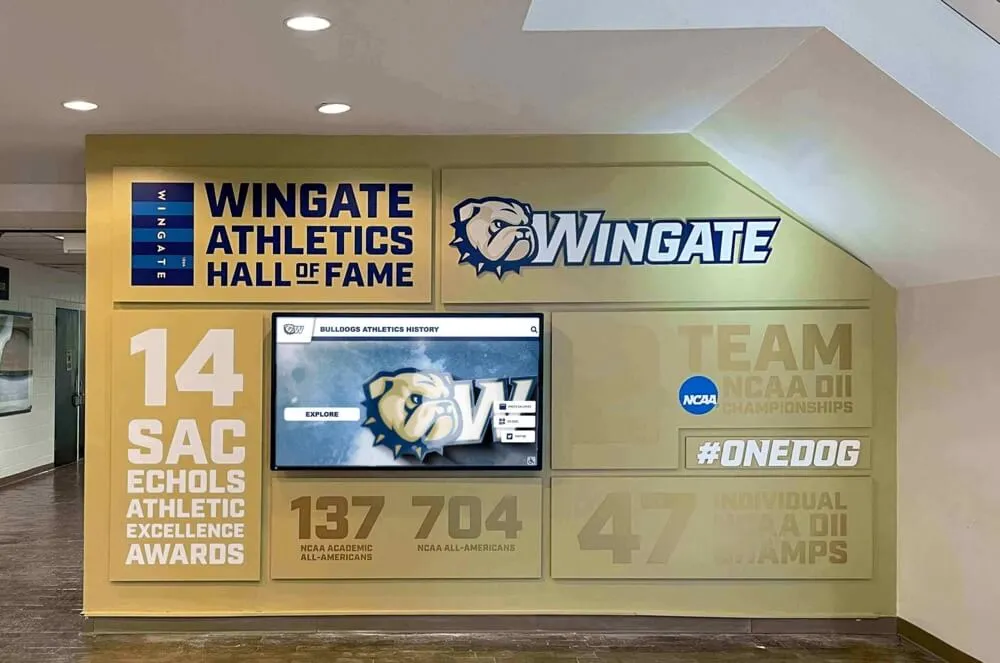




Walk into almost any competitive high school or university athletic facility and you’ll find the same story told on the walls: plaques crowded together, photographs yellowing in frames, championship banners curling at the edges, and somewhere in the corner, a glass trophy case that hasn’t been opened since the last janitor retired. These spaces hold real history — generations of athletes who competed hard, represented their institution with pride, and often gave back to their programs for decades after graduation. They deserve better.
An athletic alumni recognition wall done right becomes one of the most visited spaces on campus. Current athletes study it before practice. Recruits linger there during unofficial visits. Alumni who return for homecoming pull their kids over to find their own names. The difference between a recognition wall that earns that attention and one that gets ignored isn’t budget — it’s intention.
This guide covers the most effective athletic alumni recognition wall ideas, how to decide what belongs on your display, the design principles that drive engagement, and how schools at every competitive level are building permanent tributes to the former players who shaped their programs.
Few things energize a current roster like walking past photographs of former players who earned national honors, competed professionally, or simply gave decades of volunteer service back to the school they loved. A well-built recognition wall doesn’t just celebrate the past — it actively motivates the athletes in the building today.

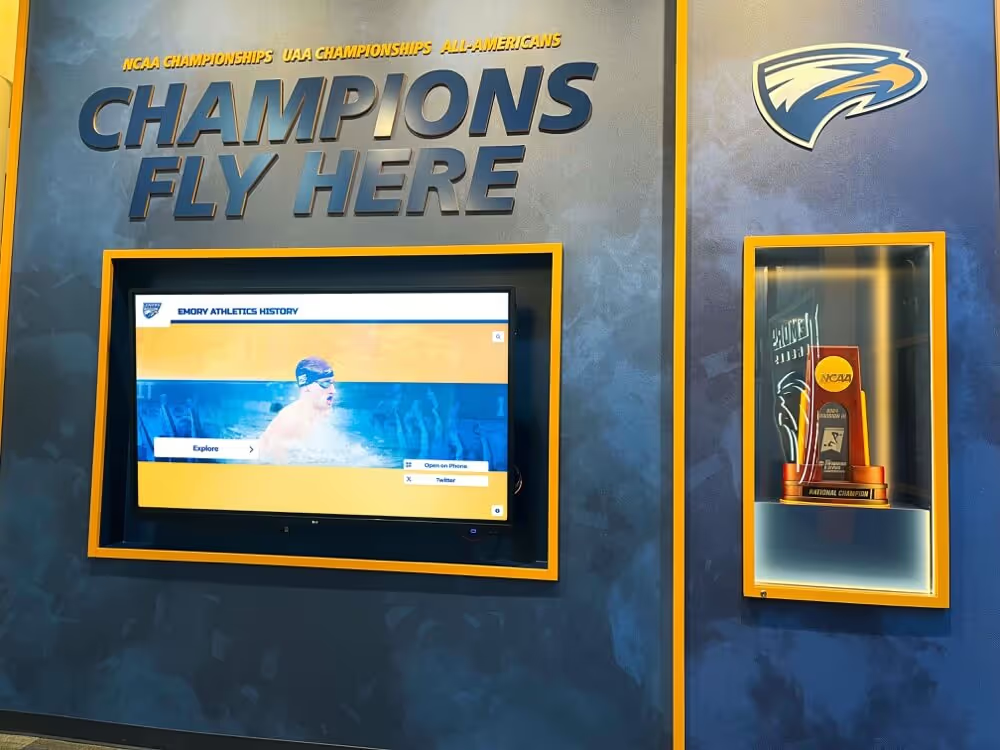
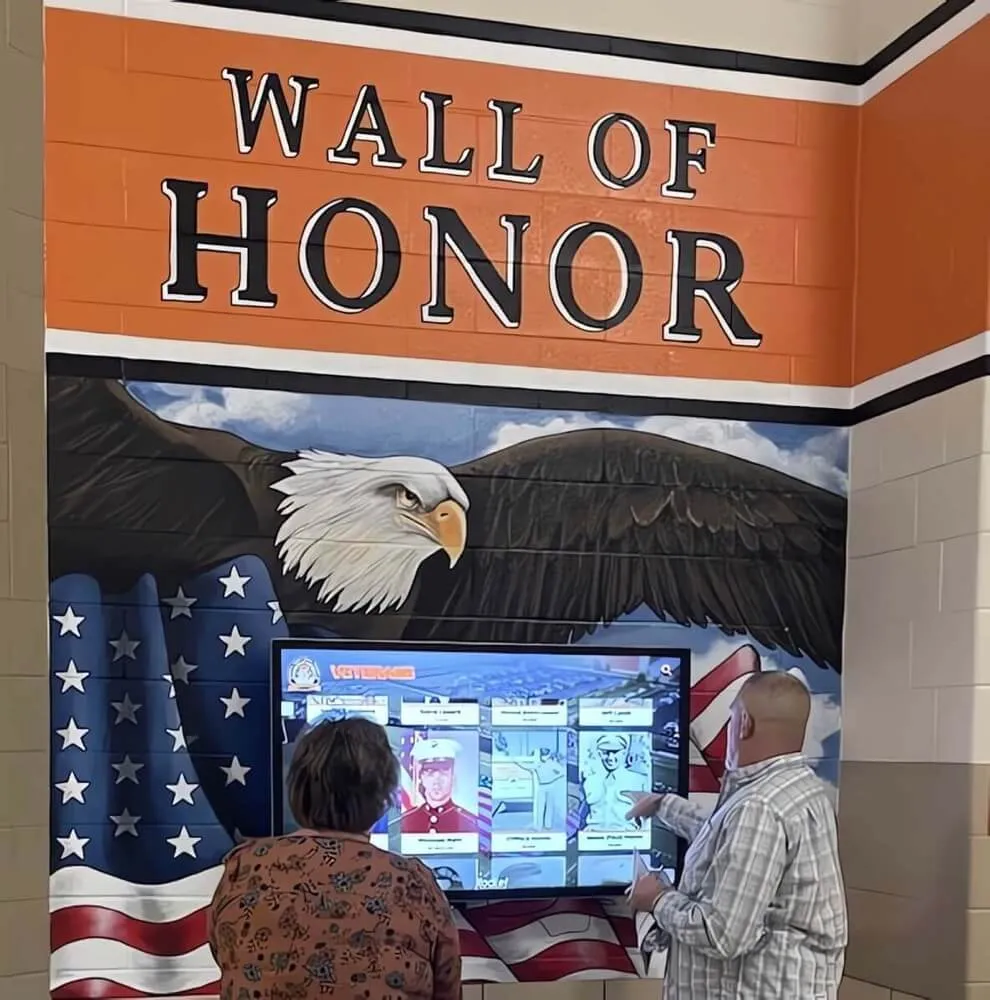
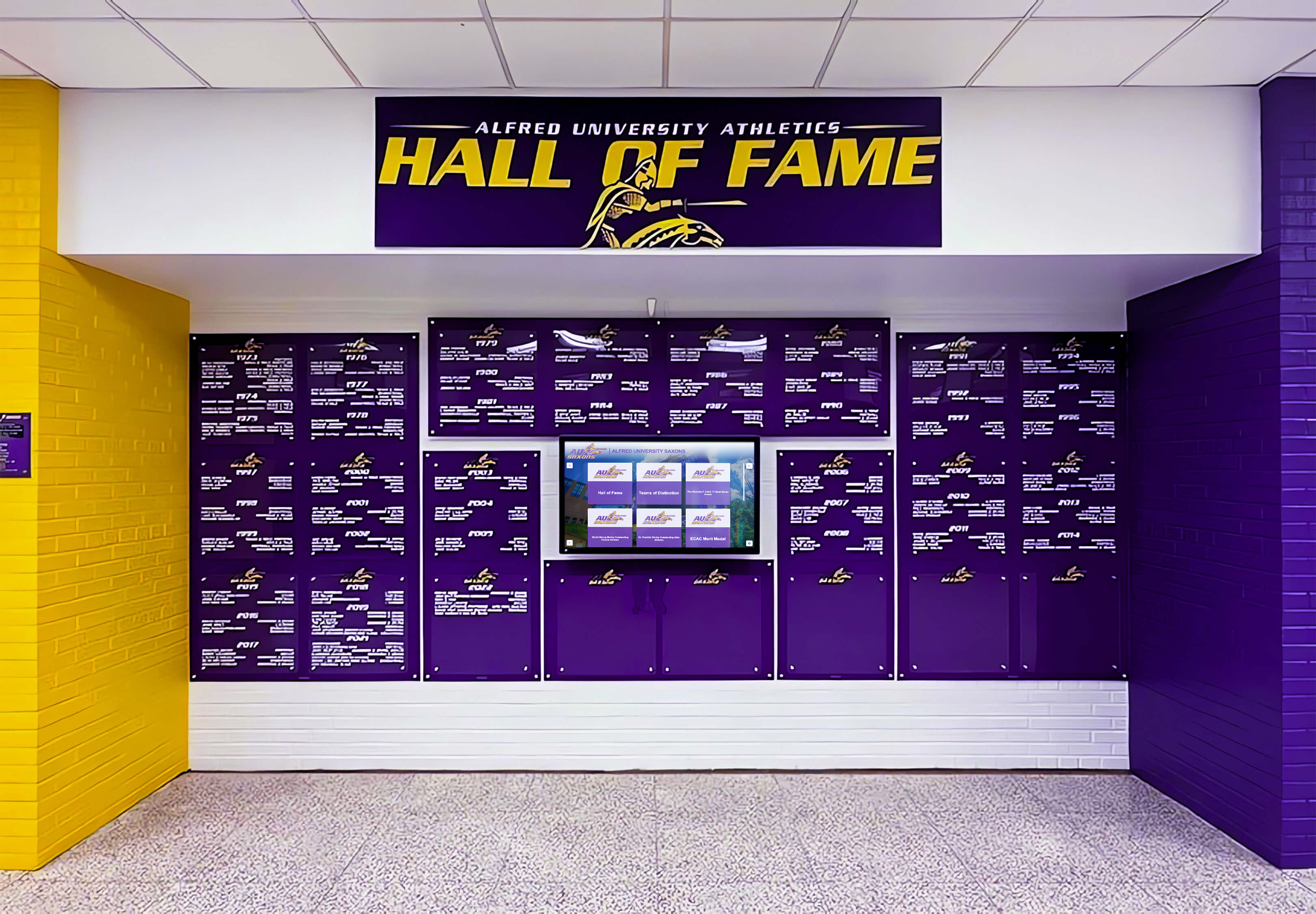
Athletic alumni recognition walls like this one at Alfred University become permanent anchors of program identity — visited by current athletes, recruits, and returning alumni alike
Why Athletic Alumni Recognition Walls Matter
Athletic recognition walls serve functions that extend well beyond decorating a hallway. Understanding those functions helps athletic directors and committees make design decisions that maximize impact across multiple stakeholder groups.
Program Identity and Culture
The athletes displayed on a recognition wall tell the story of what your program values. A wall that features every letter winner signals that the program honors everyone who committed fully. A more selective hall of fame format communicates that exceptional achievement is what earns permanent recognition. Neither approach is wrong — but each communicates something specific to every person who sees it.
Programs with strong athletic cultures use recognition walls to transmit values across generations. When current players see alumni from the 1980s honored alongside those from last decade, they understand they’re part of something continuous — not just one season, but a legacy that preceded them and will outlast them.
Recruitment and First Impressions
Prospective athletes notice what’s on the walls during campus visits. A well-maintained recognition display featuring compelling player profiles, championship history, and notable alumni careers signals that the program tracks achievement, celebrates contributors, and maintains lasting connections with former players.
Athletic directors who have upgraded from static plaques to interactive digital displays consistently report that recruits spend significant time exploring the system during unofficial visits — finding former players from their hometown, reading about championship seasons, and forming emotional connections to what the program represents before they’ve even met the coaching staff.
Alumni Engagement and Annual Fund Support
Former players who find their names recognized during homecoming visits develop stronger ongoing connections to the institution. Recognition walls that allow alumni to find themselves, explore their teammates’ profiles, and show the display to their own families create powerful emotional moments that drive both event attendance and philanthropic support.
Understanding what tools athletic administrators use to manage recognition programs helps departments integrate recognition walls with broader alumni relations and development workflows.
Athletic Alumni Recognition Wall Ideas by Format
The physical and technical format of your recognition wall shapes every downstream decision about what content you can feature, how you update it over time, and what the visitor experience actually feels like.
Traditional Plaque and Photo Walls
The most established format features individual plaques or framed photographs arranged in a designated hallway or trophy area. Traditional walls carry institutional gravitas and require no technology, making them straightforward to maintain and durable over decades.
Best applications:
- Small athletic programs with limited initial budgets
- Spaces where a classic aesthetic fits the architecture
- Supplemental recognition in weight rooms, locker rooms, or coaches’ offices
- Short-term installations while permanent systems are planned
Limitations to plan around: Traditional plaque walls eventually run out of wall space. Programs that began inducting athletes in the 1960s often find their hallways saturated by the time they try to add recent induction classes. Budget for expansion from the beginning, and consider whether the designated space can accommodate 20-plus years of future inductees before committing to a traditional-only approach.
Tiered Recognition Systems
Most programs benefit from multiple recognition levels that honor different achievement thresholds without requiring every honoree to meet the same bar.
Common tiered structures:
- Hall of Fame: Most selective tier, reserved for exceptional achievement in competition, coaching, or sustained contribution. Typically includes a formal induction ceremony with permanent display.
- Letter Winners Wall or Hall of Honor: Broader recognition for all who lettered or contributed substantially. Honors commitment and participation at the highest level without requiring Hall of Fame-caliber achievement.
- Champions Gallery: Recognition specifically for state, conference, or national championship teams — honoring collective accomplishment alongside individual achievement.
- Record Holders Board: Auto-updated display tracking current program records by sport, event, and category.
Tiered systems allow programs to honor broadly while maintaining selectivity at the highest level — a balance that satisfies multiple stakeholder groups simultaneously.
Sport-Specific Recognition Wings
Larger athletic programs sometimes dedicate spaces to individual sports — a basketball hallway, a football entryway, a swimming showcase. Sport-specific wings allow deeper recognition within each program: more photographs, more statistics, more championship history, and recognition structures tuned to each sport’s culture.
When sport-specific wings work best:
- Programs with distinct facilities for different sports
- Athletic departments where revenue sports drive separate donor investment
- Programs where individual sports have strong alumni communities seeking dedicated recognition
- Schools with enough inductees per sport to fill dedicated spaces meaningfully
Design coordination: Sport-specific wings require consistent standards across spaces. Uniform typography, color palette, plaque format, and display technology ensure the athletic department reads as cohesive even when different sports have separate recognition areas.
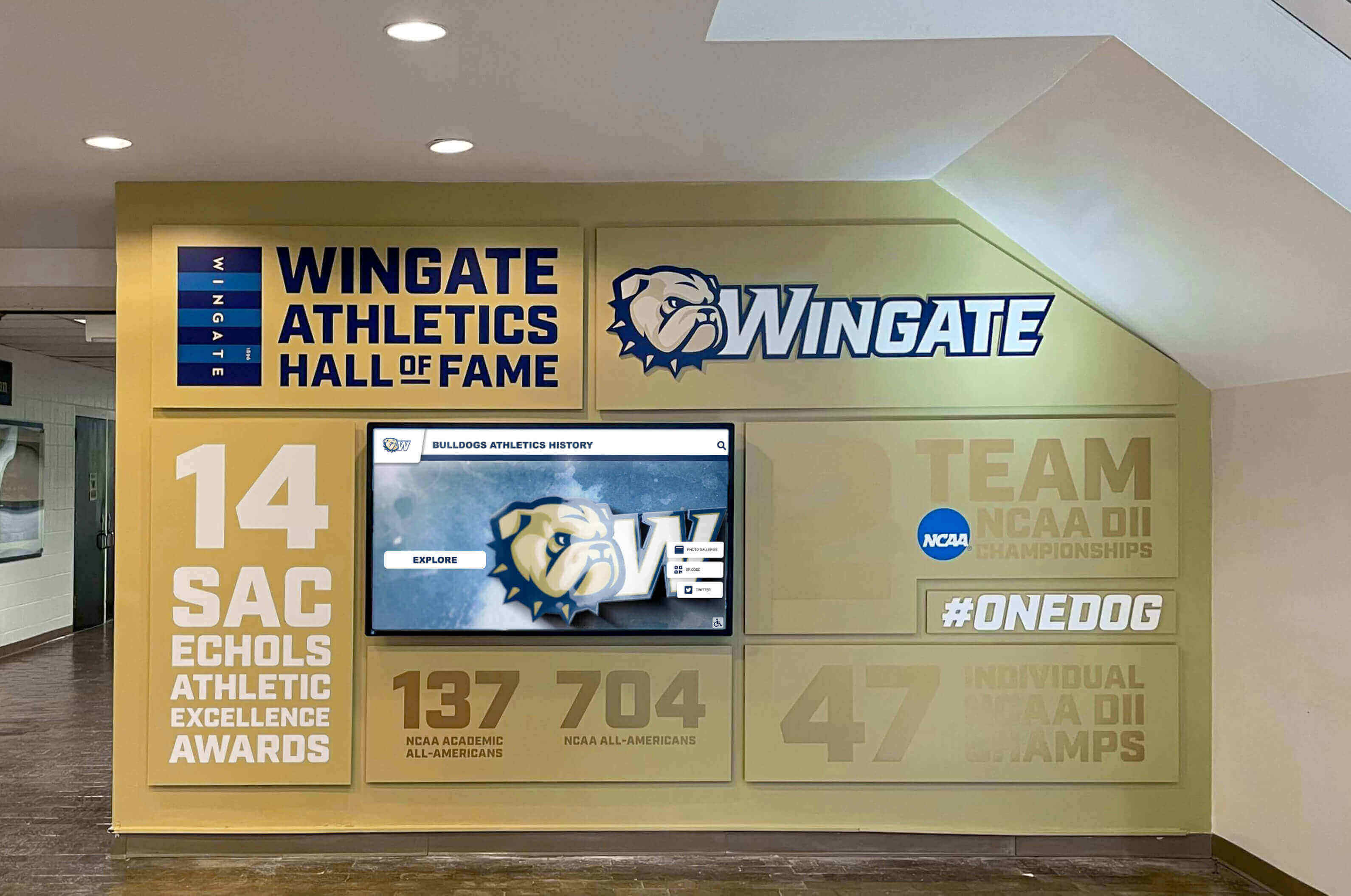
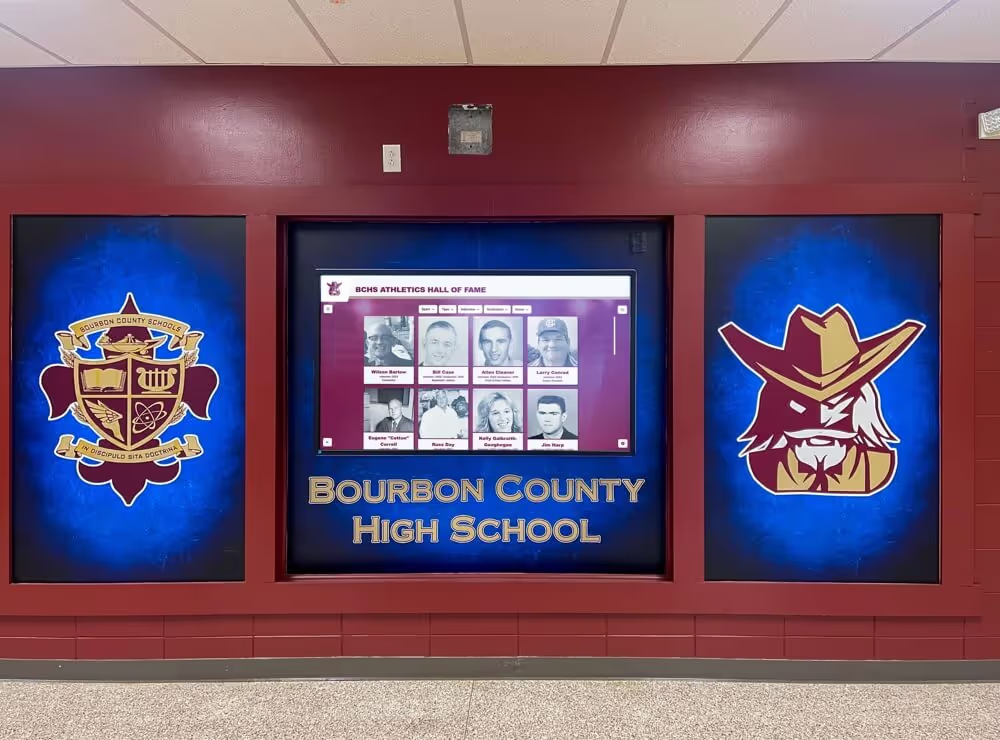
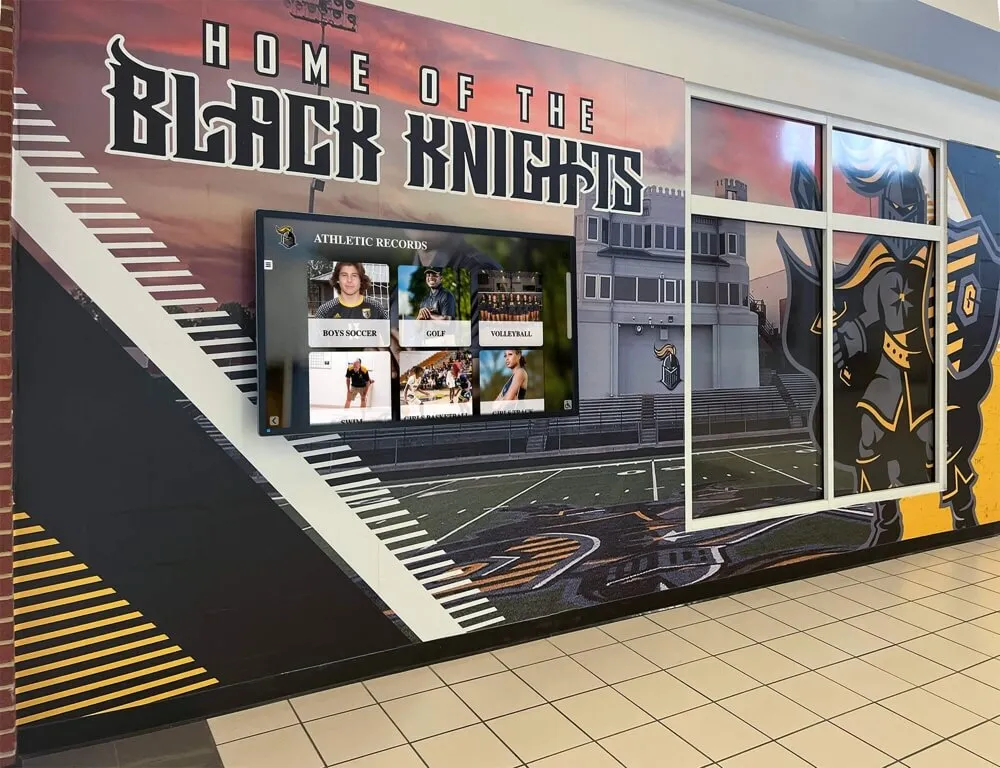
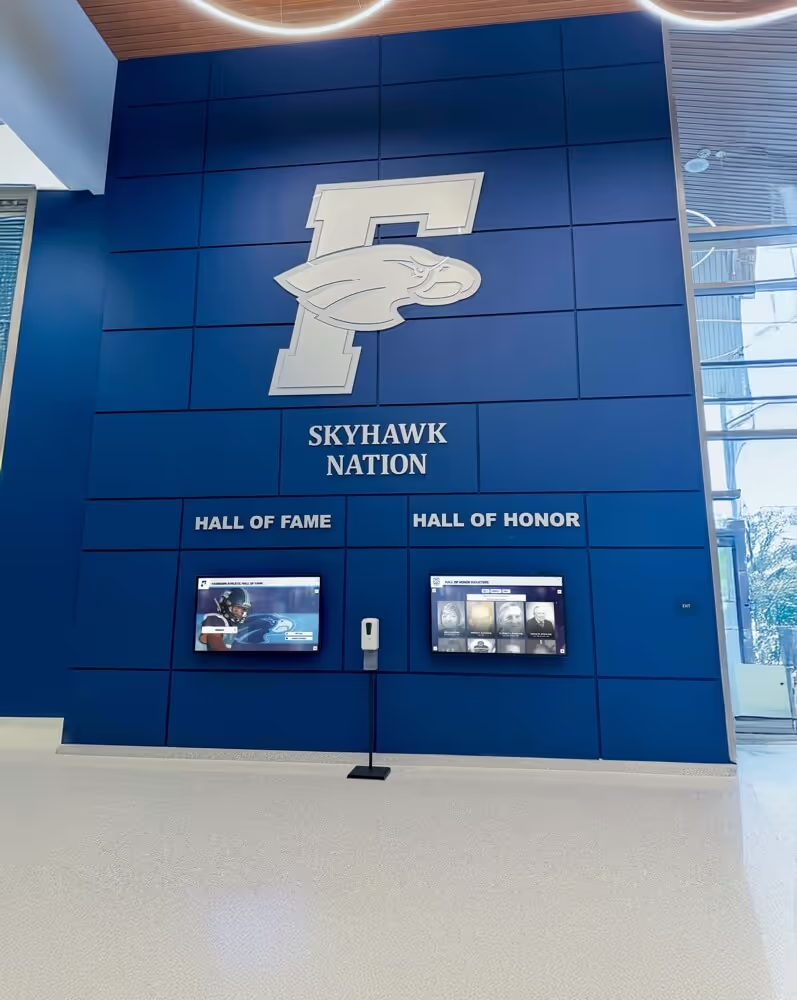
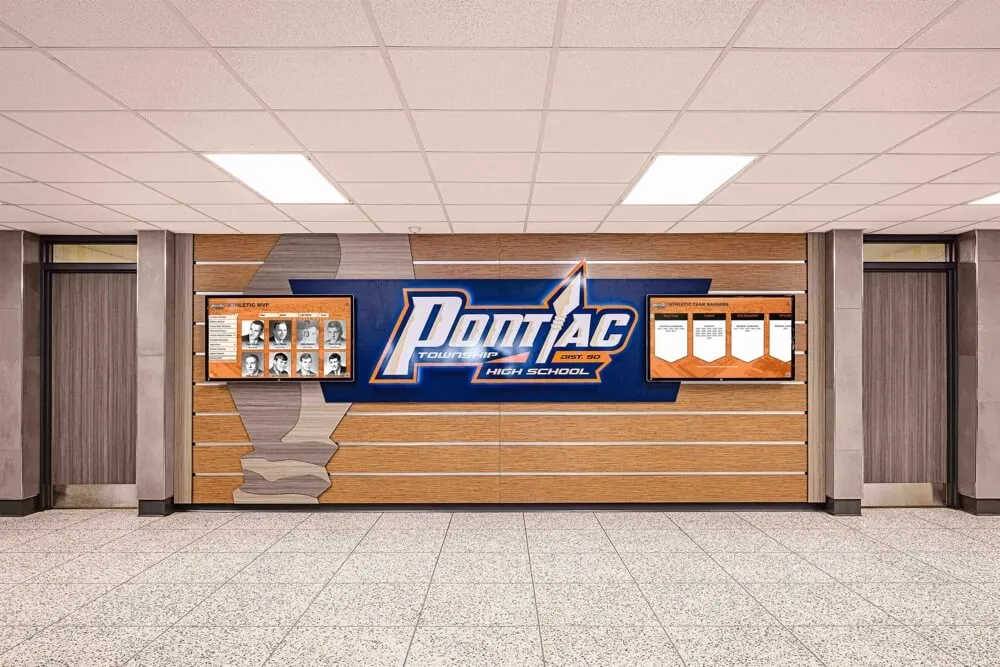
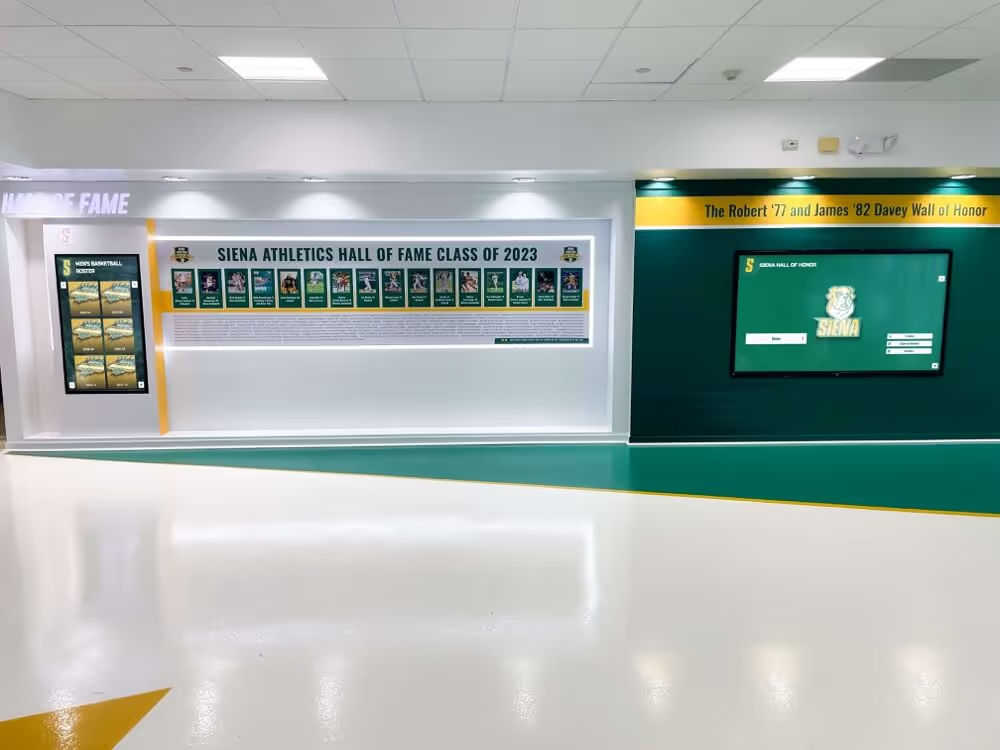
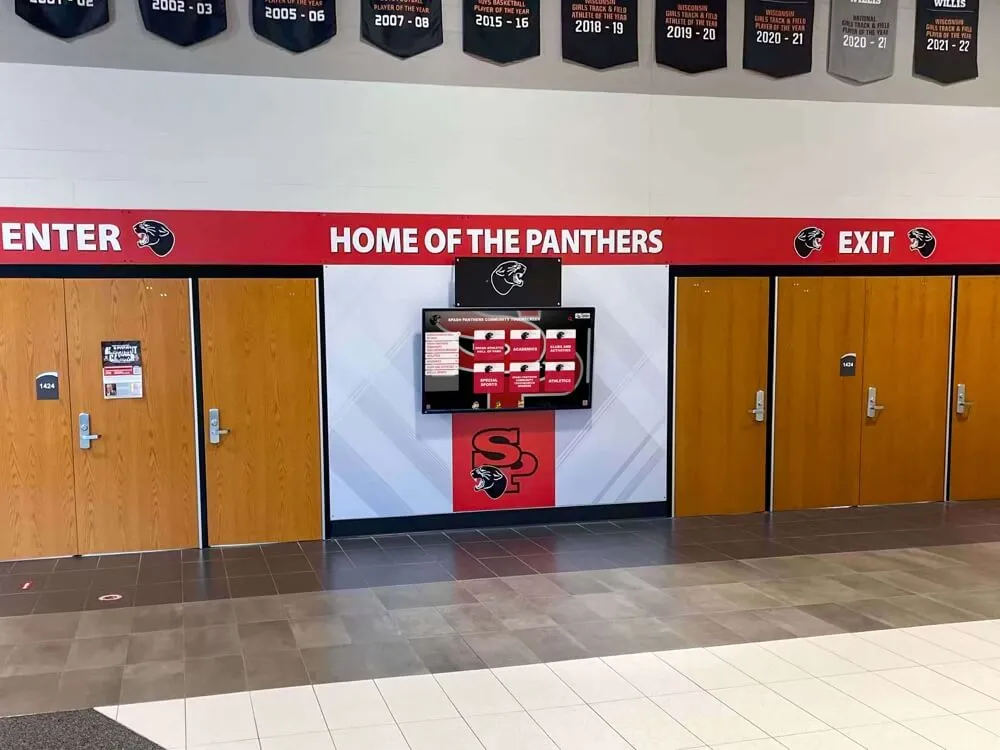
Sport-specific and institution-wide displays both benefit from consistent design language — mascot branding, school colors, and uniform typography create visual cohesion
Digital Touchscreen Athletic Alumni Walls
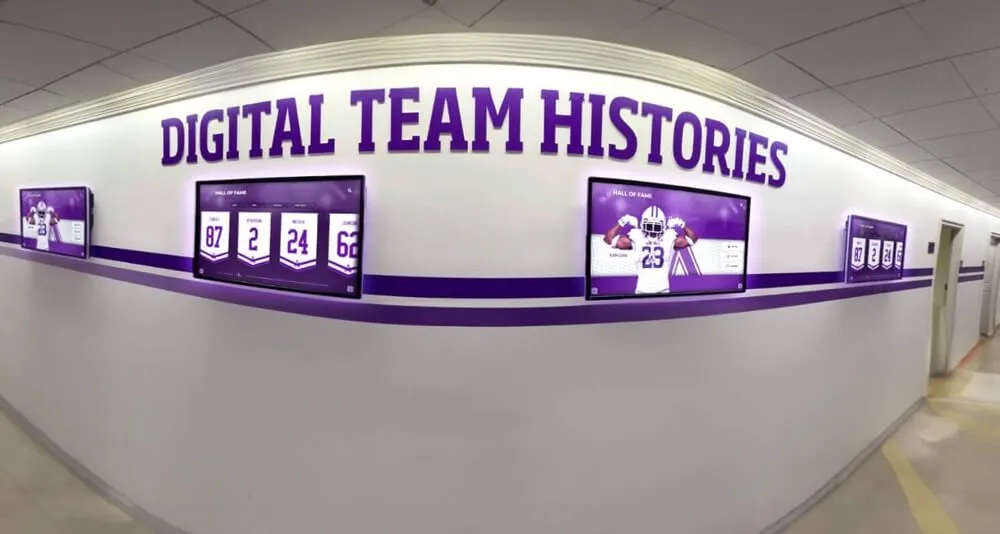
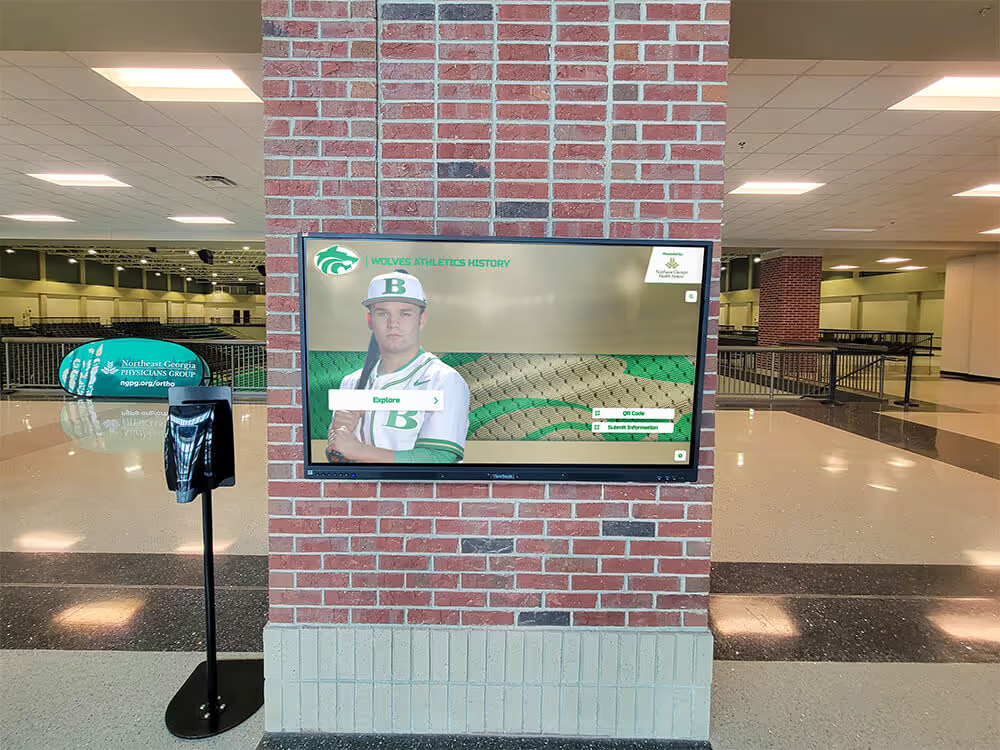
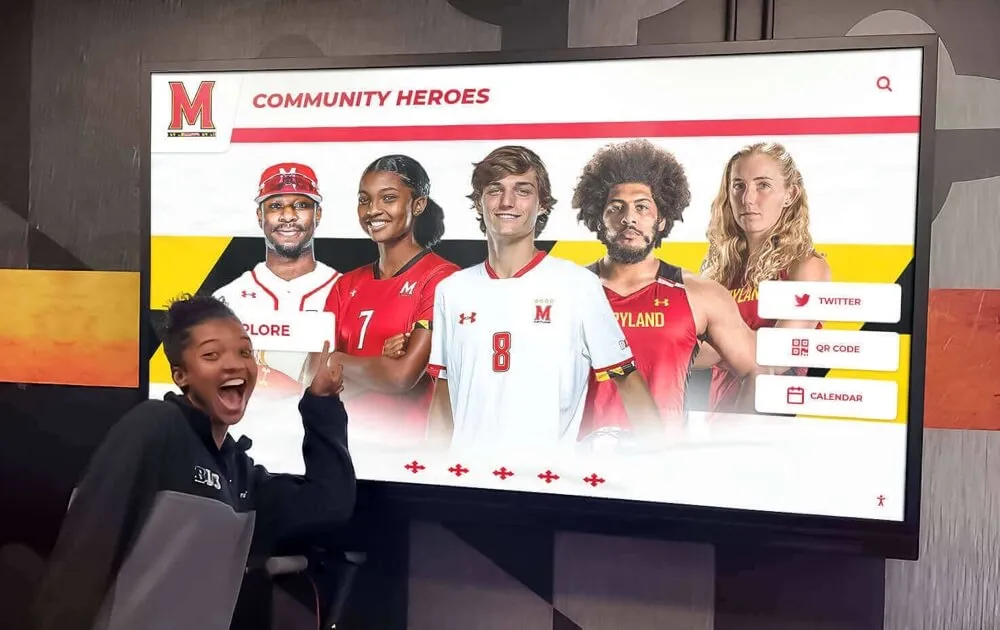
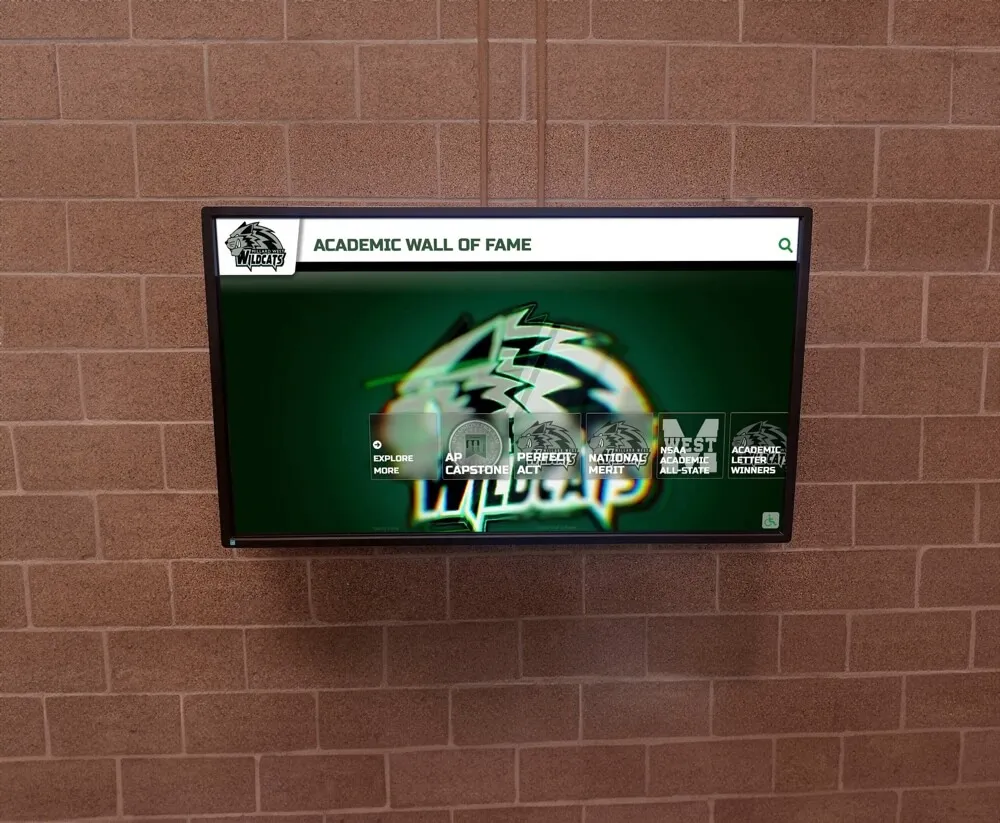
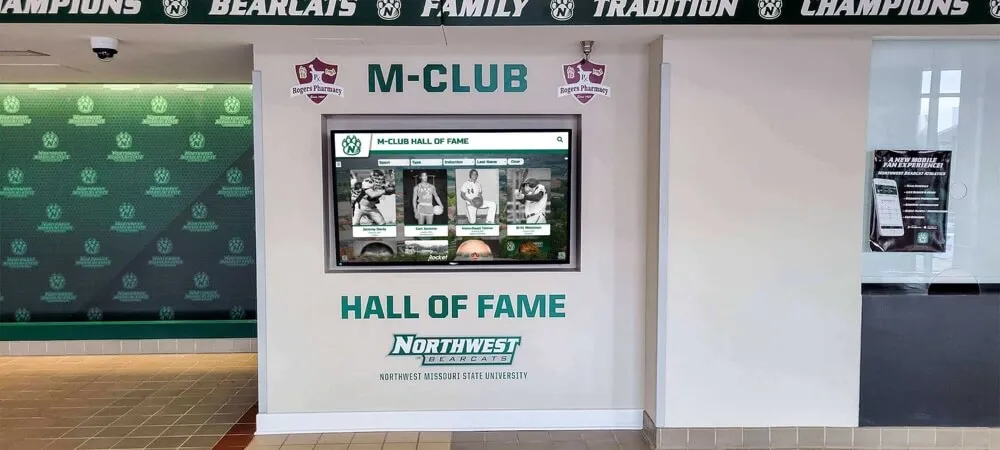
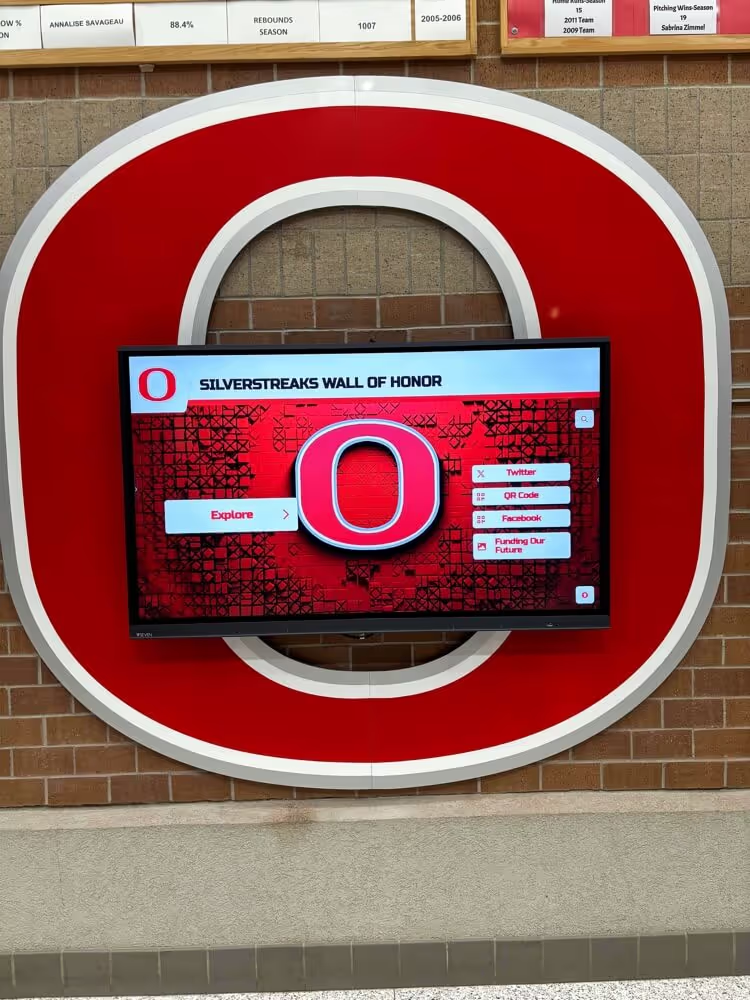
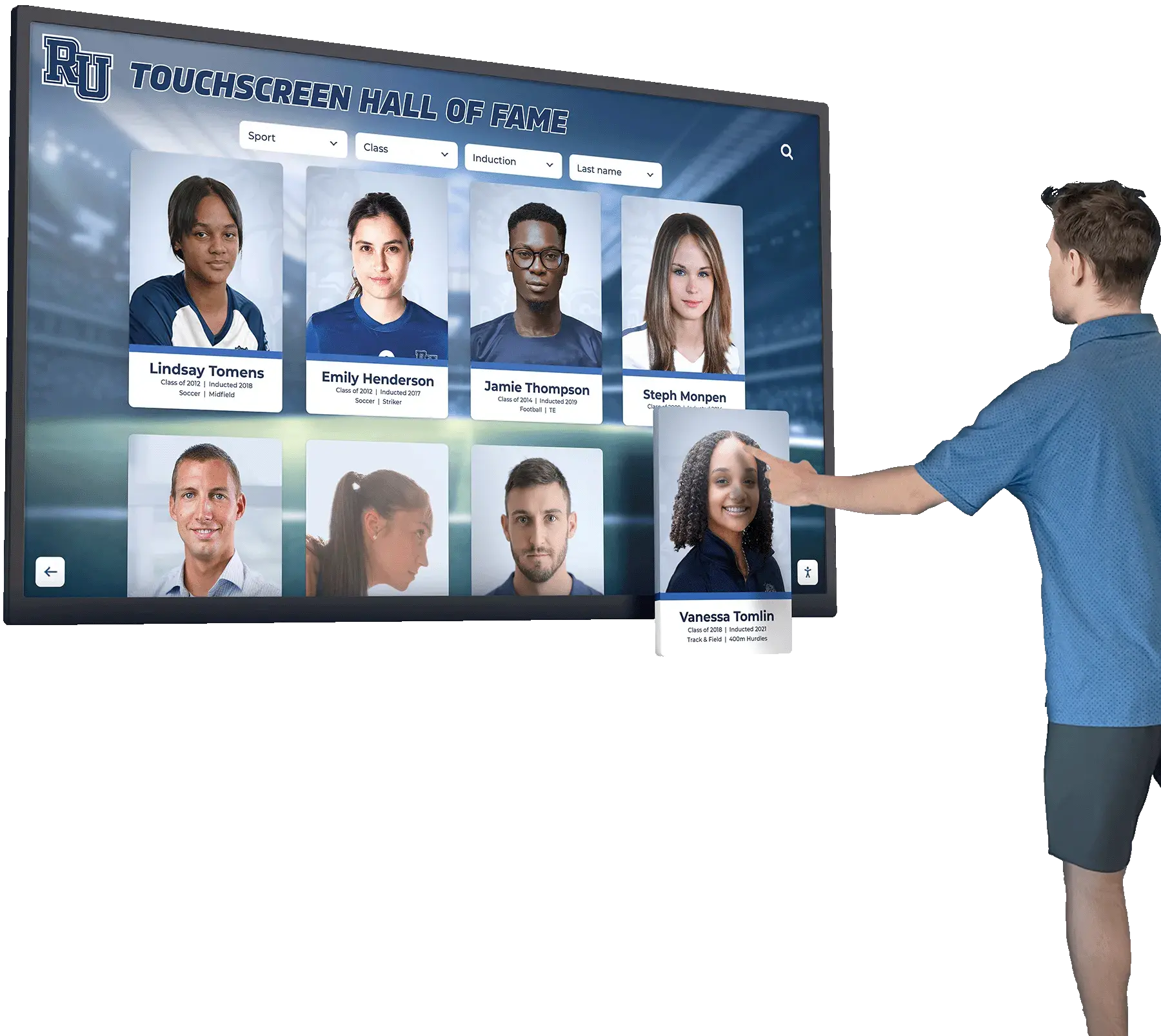
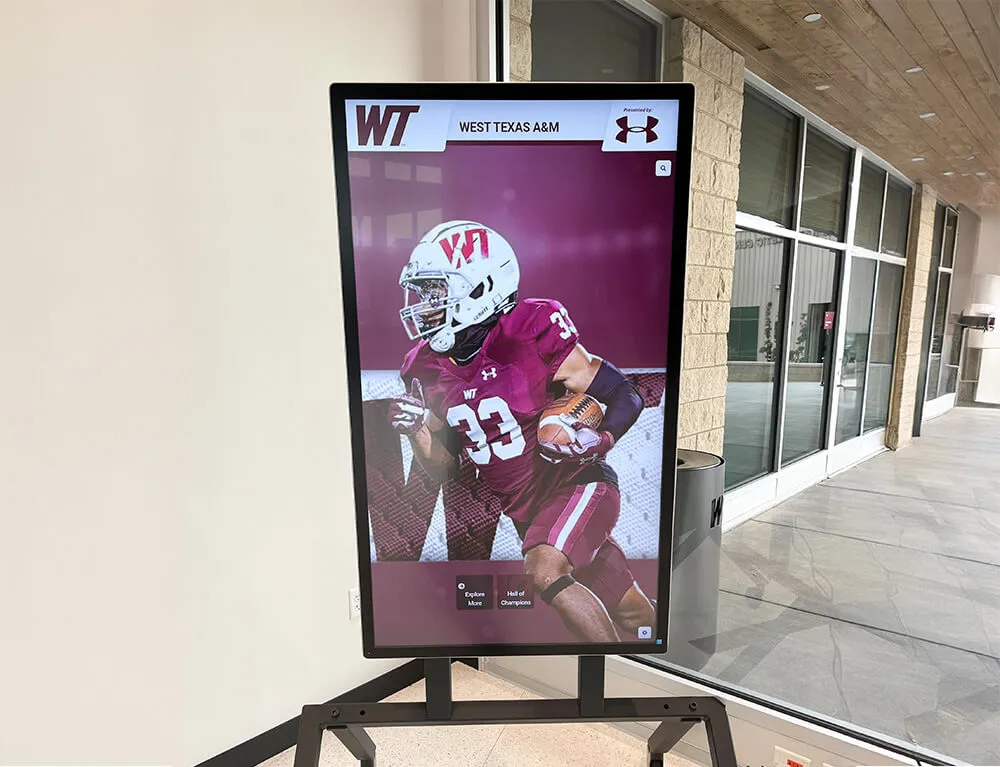
Interactive touchscreen walls represent the fastest-growing format in athletic recognition, and the capabilities explain the momentum. A single display unit can hold the complete history of an athletic program — every inductee, every championship, every record — and present it in searchable, media-rich profiles that static plaques simply cannot approach.
Comprehensive guides to the best touchscreen hall of fame solutions in 2026 cover the leading platforms in detail, but the core capabilities that matter for athletic recognition programs include:
- Unlimited inductee capacity — no wall space constraints; every athlete who earned recognition can have a complete profile
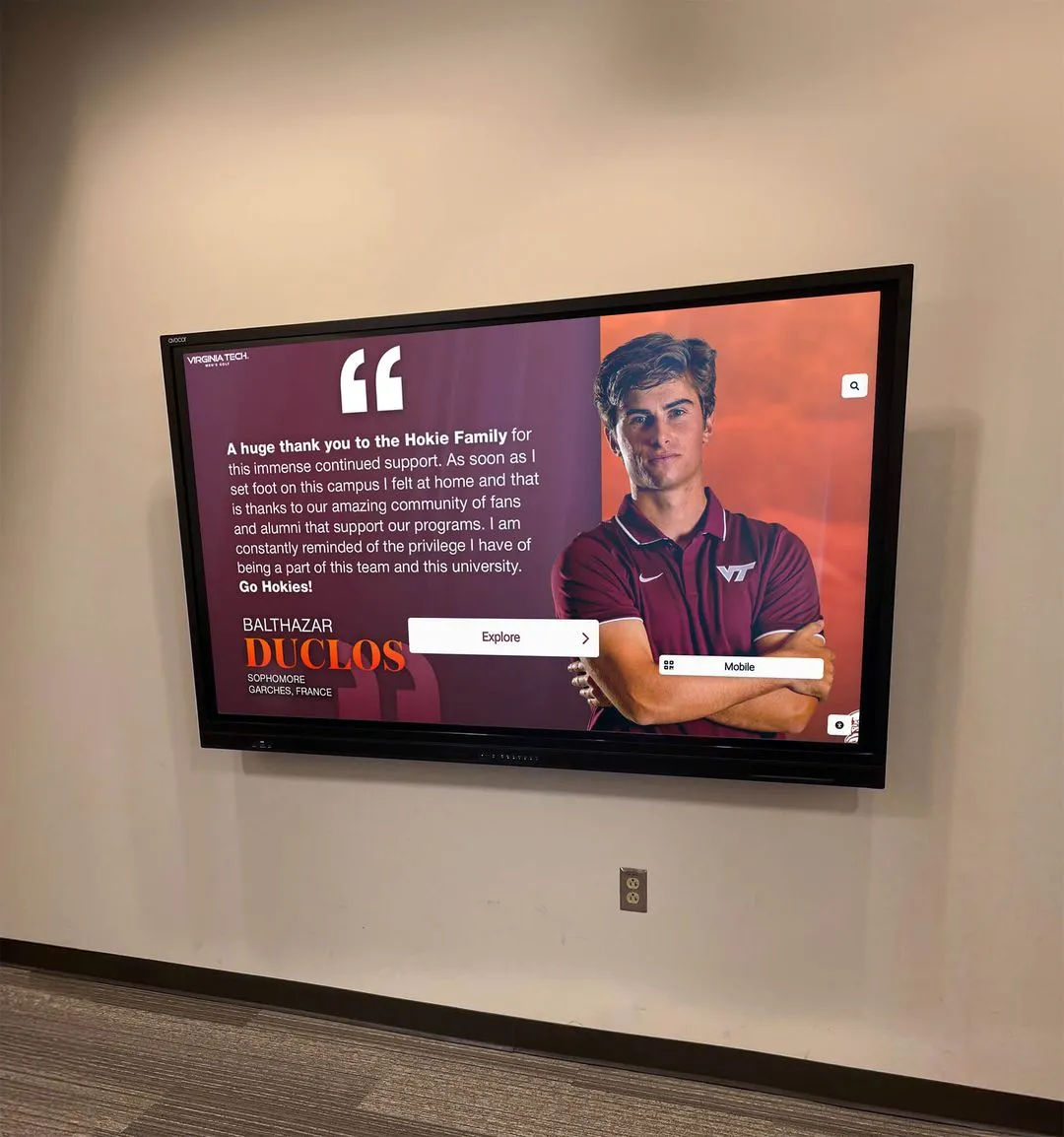
- Rich multimedia profiles — photos, video highlights, statistics, and career biographies within each inductee’s record
- Searchable databases — visitors find alumni by name, sport, graduation year, or achievement type
- Remote content management — add new inductees or championship content without on-site fabrication; changes publish immediately from any browser
- ADA WCAG 2.1 AA compliance — built-in accessibility features including adjustable text size, high-contrast modes, and height-appropriate mounting
- QR code unlocks — visitors pull up full athlete profiles on their own phones, extending engagement beyond the physical display
- Auto-ranking record boards — performance records update automatically as they’re broken, keeping the display current without manual intervention
For athletic programs managing recognition across many sports and multiple decades, the shift from static plaques to interactive digital systems often represents a fundamental change in what recognition can accomplish — not an incremental upgrade.
Combined Physical-Digital Installations
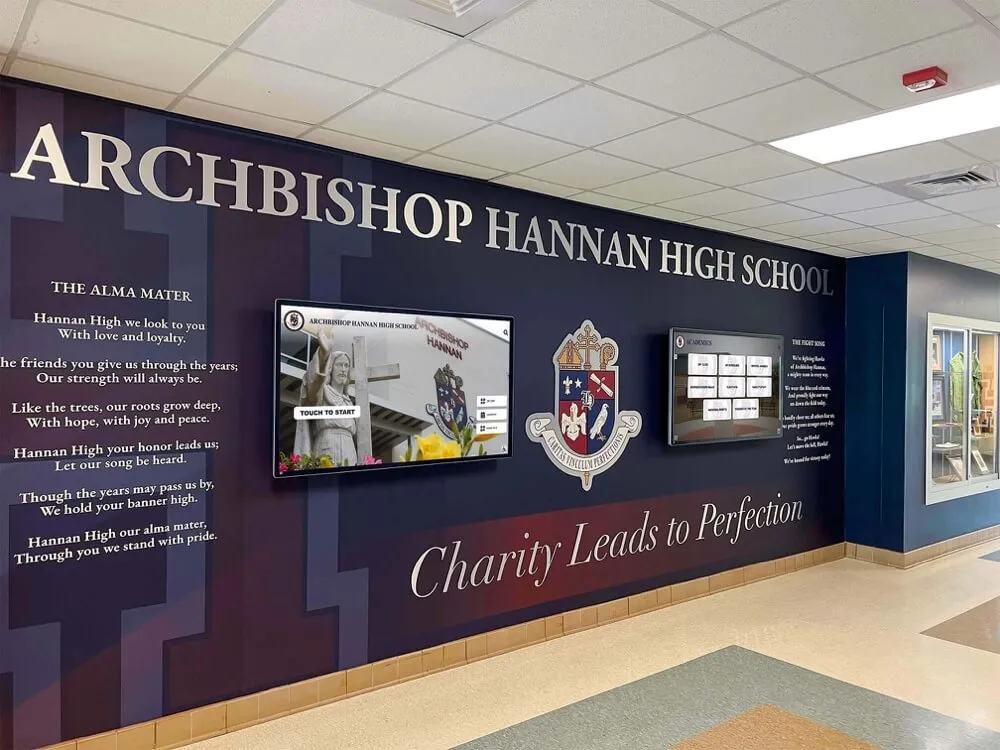
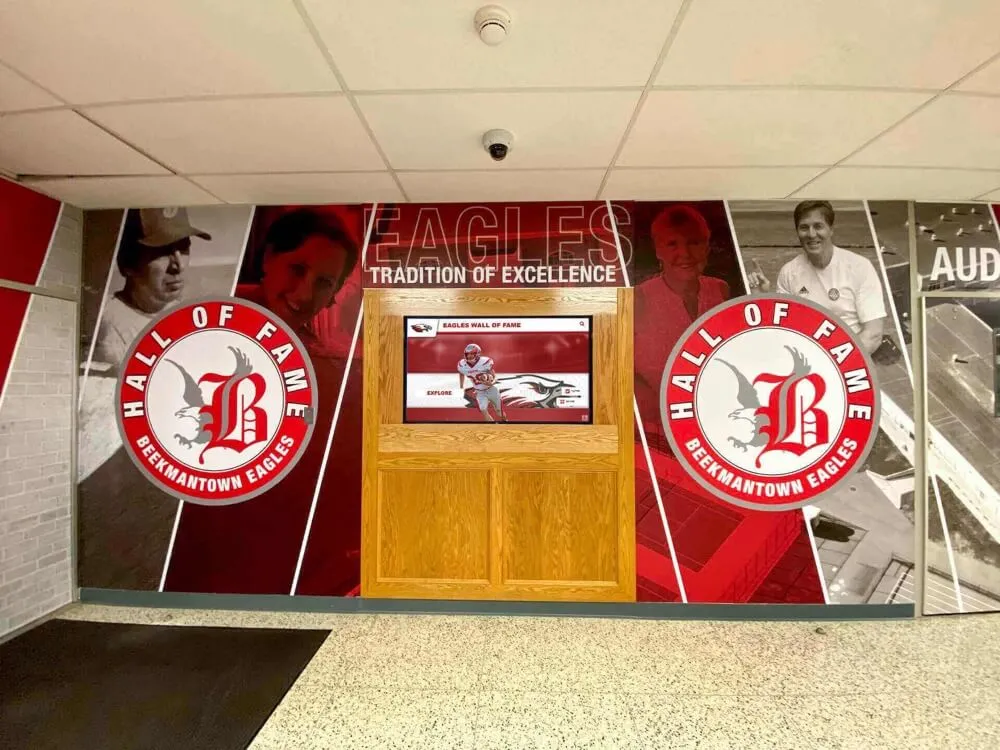
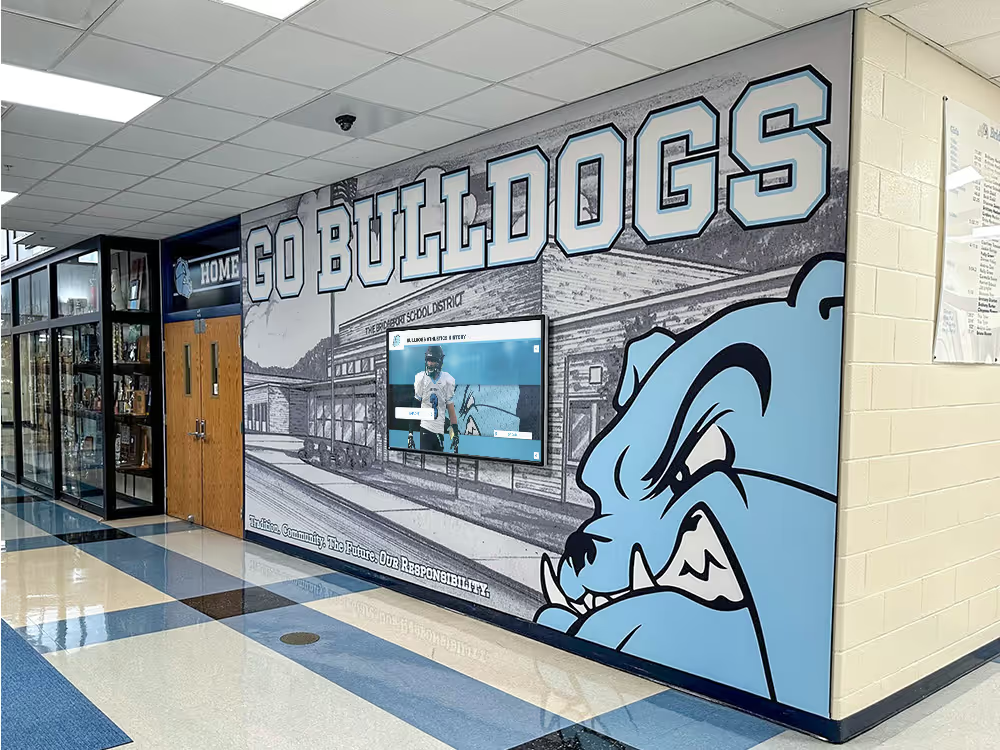
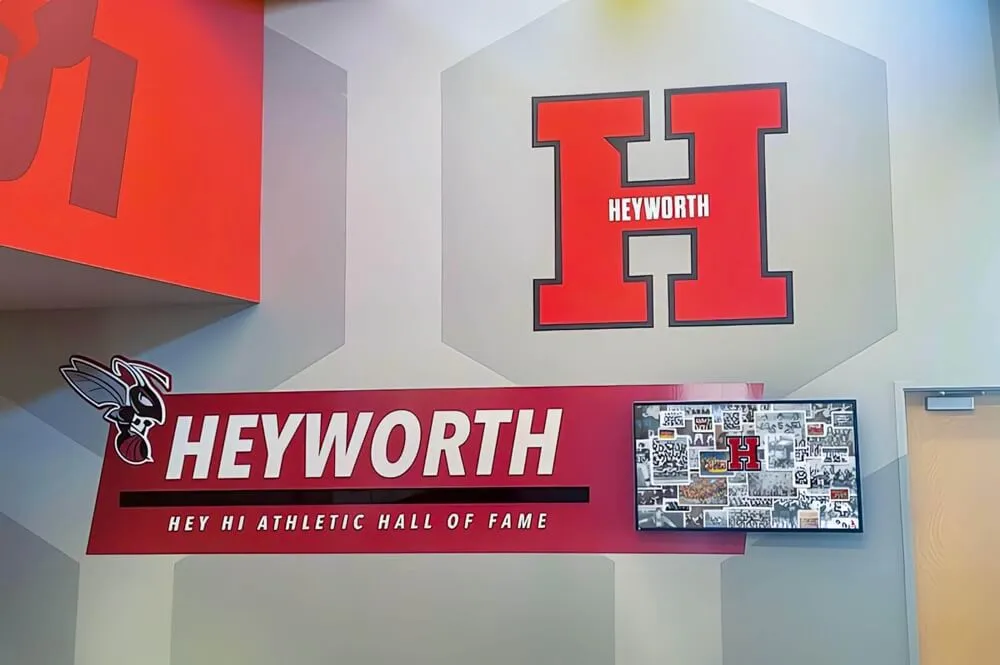
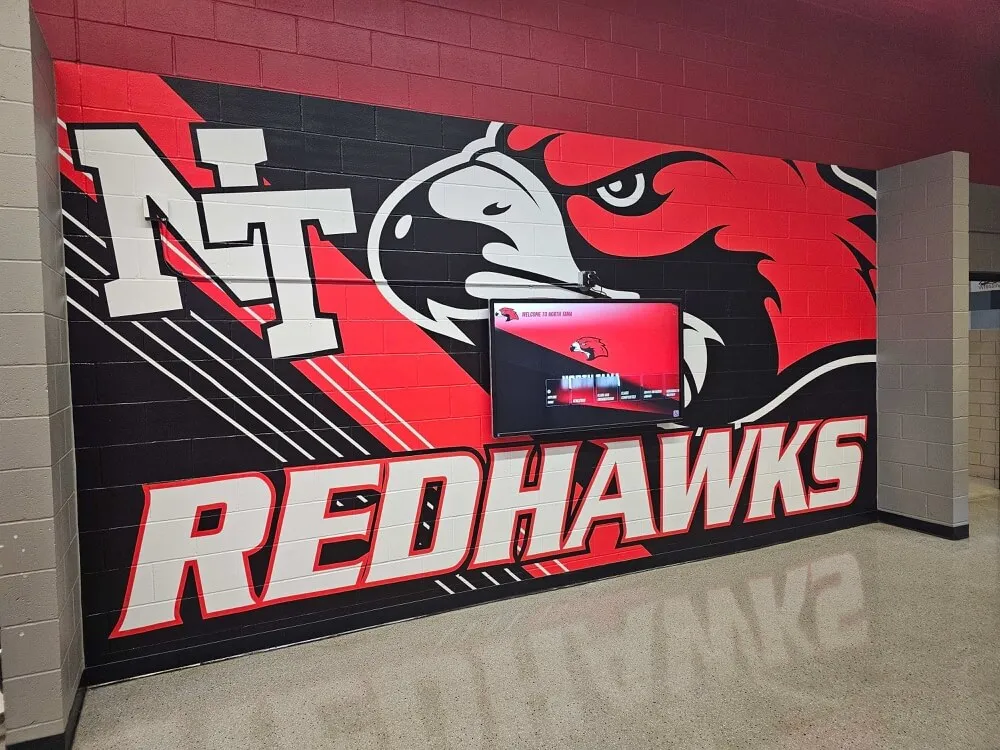
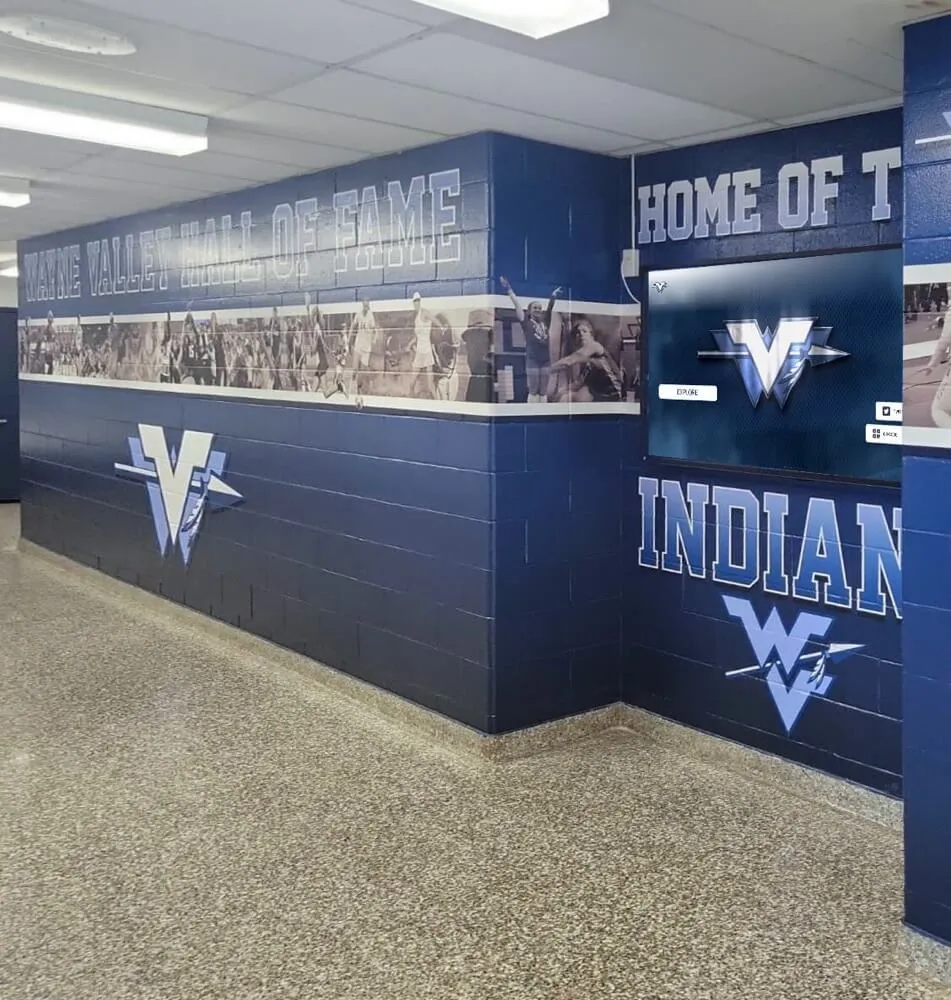
The most impactful athletic recognition spaces frequently blend traditional and digital elements. A prominent physical display — custom murals, championship banners, vintage photographs, and signature plaques for the most celebrated alumni — creates the visual anchor of the space. Adjacent or embedded touchscreen displays then provide the depth and interactivity that physical elements alone cannot deliver.
Building an alumni legacy digital wall with this combined approach honors the institutional gravitas of traditional recognition while extending the content library far beyond what wall space allows. New construction and renovation projects increasingly incorporate digital recognition systems as integral design elements rather than afterthoughts.
What to Include in Athletic Alumni Profiles
The content of each inductee profile determines whether your recognition wall tells compelling stories or simply lists names and numbers.
Core Profile Elements
Every athletic alumni recognition profile should include at minimum:
Personal and athletic background:
- Name, sport(s), and years of participation
- Graduation year and degree program
- Position, jersey number, and relevant performance context
- Quality photographs — ideally both an action image from their playing years and a current portrait
Achievement documentation:
- Career statistics with context (records set, all-time rankings, era comparisons)
- Conference, state, regional, or national awards received
- Championship teams and individual tournament accomplishments
- Academic honors earned alongside athletic achievement
Legacy and post-career story:
- Professional or post-collegiate athletic career where applicable
- Career path with brief description
- Involvement with the institution after graduation
- Connection to current program as donor, volunteer, or mentor

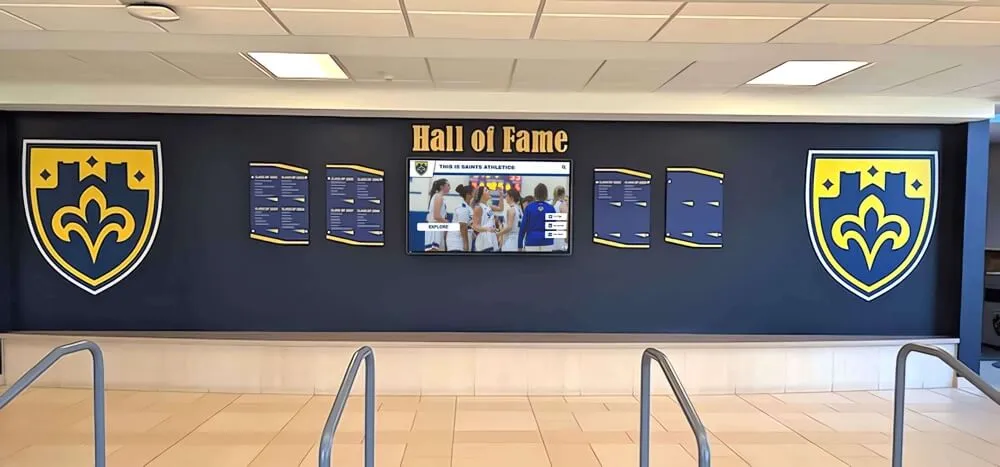
Digital athlete profiles combine photographs, career statistics, award histories, and post-graduation stories in a format that physical plaques cannot match
Championship and Team History
Individual profiles gain meaning from team context. Championship seasons deserve dedicated recognition space — complete roster photographs, season records, memorable game moments, and the full story of what made that team exceptional create collective recognition that honors every contributor.
Consider including in championship records:
- Season record and margin of victory in postseason runs
- Complete roster (every player who contributed, not just starters)
- Coaching staff at the time of the championship
- Historical photographs and period newspaper coverage
- Contemporary reflections from players and coaches written for the display
Records and Statistical History
An active record board integrated with your recognition wall creates a living document of program achievement. Visitors see not only who is honored historically but where current records stand and how close today’s athletes are to joining the all-time lists.
Displaying school history comprehensively requires systematic archival work, but the payoff is a recognition wall that connects every era of program history through the continuous thread of performance benchmarks. Digital systems that auto-rank records as they’re broken ensure the display stays current without manual intervention — a critical capability for programs managing records across multiple sports simultaneously.
Design Principles for Athletic Recognition Walls
Physical and visual design shapes whether visitors engage with your recognition wall or walk past it.
Location and Traffic Flow
Place your athletic alumni recognition wall where traffic naturally occurs: main athletic facility lobbies, hallways between locker rooms and competition venues, entrances to gyms or stadiums. The best recognition spaces are encountered naturally rather than requiring a deliberate detour.
High-impact placement locations:
- Main athletic building lobby or entrance vestibule
- Hallway connecting locker rooms to the competition floor
- Athletic department reception area
- Corridor between multiple sport facilities
- Weight room or training facility entrance
- Alumni gathering spaces used for events and reunions
Visual Design and Brand Alignment
Recognition walls should reflect school colors, typography, and graphic identity consistently. Well-designed installations feel intentional — uniform framing, consistent typography for names and dates, and a color palette that matches institutional identity create the visual coherence that signals sustained institutional investment in recognition.
Exploring digital boards that incorporate photos and videos provides practical guidance on presenting media-rich content in ways that enhance rather than clutter athletic recognition spaces.
Scalability Planning
The most common recognition wall regret athletic directors express is not planning for growth. A wall that looks appropriately full at installation becomes overcrowded within five to ten years as new inductee classes are added annually. Traditional plaque walls require physical expansion or difficult decisions about what to remove to make room.
Digital recognition systems sidestep this problem entirely — a single screen unit can hold hundreds or thousands of inductee profiles with no physical constraint. When evaluating formats, weigh the long-term cost of physical expansion against the platform cost of a digital system over a comparable timeframe. Athletic director budget guides for managing recognition investments on tight budgets break down this comparison in useful detail.
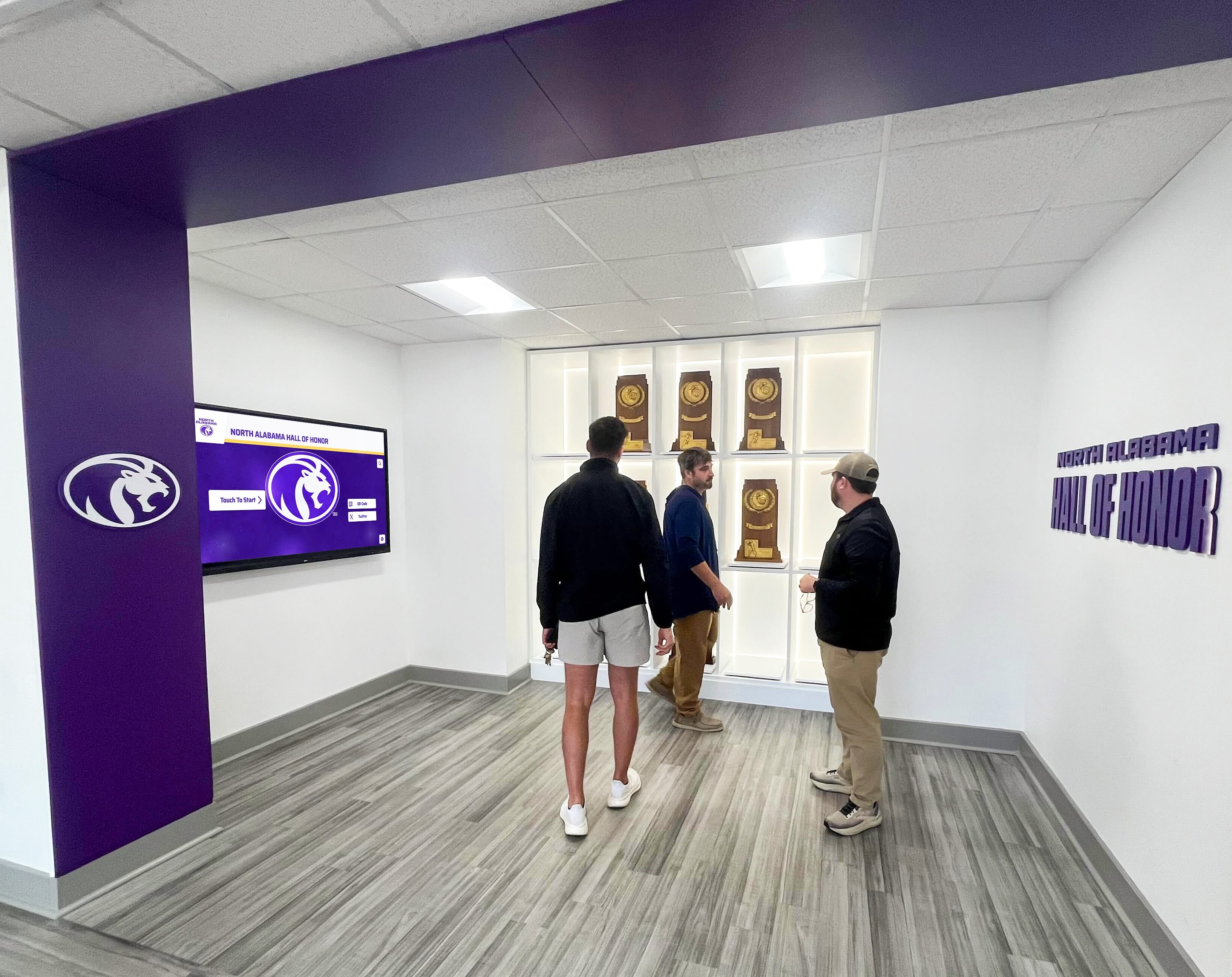
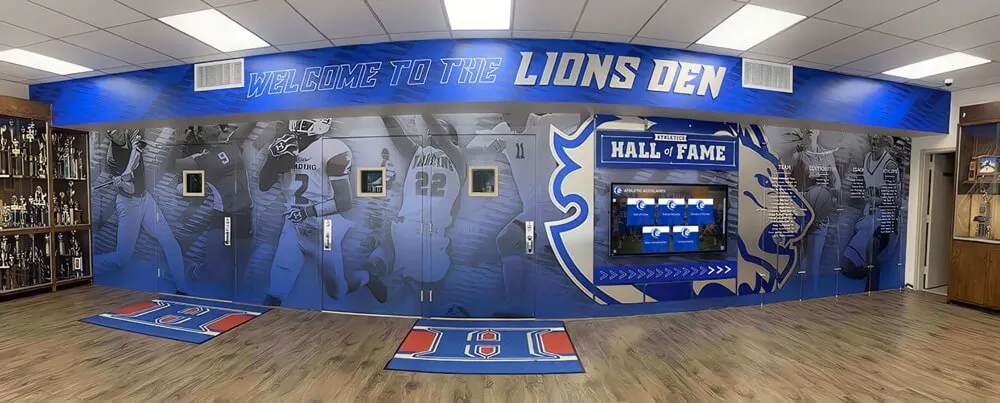
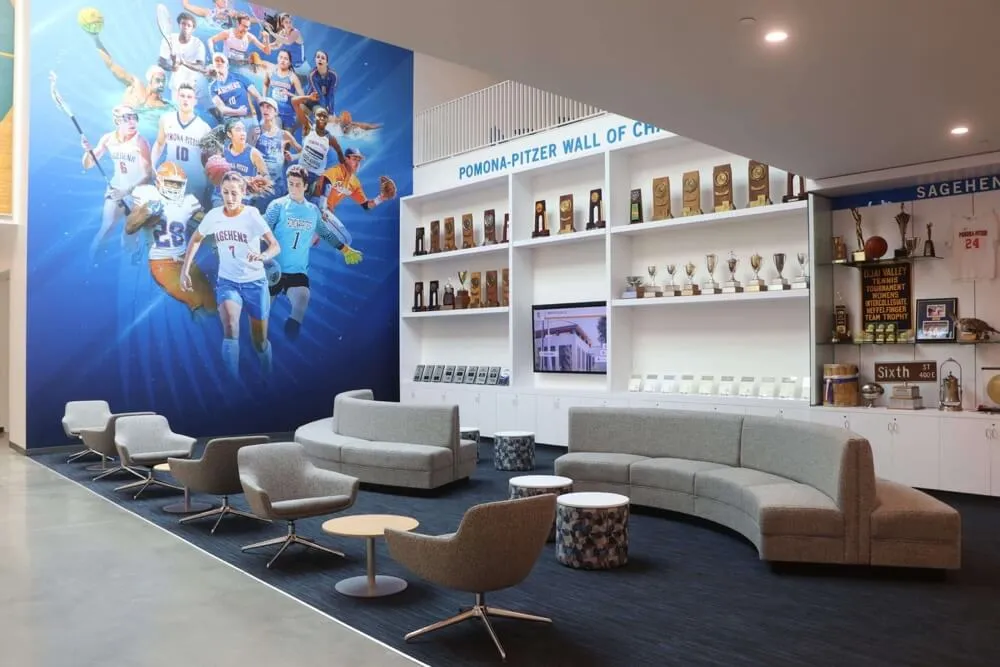
Trophy displays and Hall of Honor installations create destinations where alumni naturally gather during events and campus visits — a powerful function beyond simple recognition
Accessibility Requirements
ADA compliance matters for both legal requirements and genuine visitor experience. Recognition walls that require crouching to read small text, reaching over shoulder height for touchscreen controls, or navigating without audio description options fail a segment of your audience.
Modern touchscreen recognition platforms built to WCAG 2.1 AA standards include adjustable text size, high-contrast display modes, screen reader compatibility, and height-appropriate mounting for wheelchair users. Building accessibility into your original installation costs far less than retrofitting after complaints arise.
Building the Nomination and Induction Process
The long-term health of an athletic alumni recognition wall depends as much on the process for adding honorees as on the initial installation.
Establishing Clear Criteria
Committees that publish clear eligibility criteria avoid difficult conversations when borderline candidates are submitted. Common eligibility elements include:
- Minimum years post-graduation: Most programs require 5–10 years before a former player is eligible, allowing time to assess the durability of achievement and post-athletic trajectory
- Achievement standards: Define what constitutes exceptional statistical performance, leadership, or contribution for each candidate category (athlete, coach, contributor)
- Character and conduct standards: Hall of fame membership represents the institution permanently — conduct standards that consider post-athletic behavior are common and appropriate
- Eligibility exceptions: Clarify whether posthumous nominations follow the same timeline and whether extraordinary circumstances permit expedited consideration
Reviewing the top hall of fame tools available to athletics departments, donors, and arts programs helps committees understand the operational software that supports nomination management, committee voting, and display publishing.
Managing the Nomination Cycle
Annual or biennial nomination cycles create predictable windows for community submission while giving committees manageable review workloads. Effective cycles include:
- Open nomination period — published window when community members submit nominations
- Eligibility screening — staff confirms nominees meet minimum criteria
- Committee evaluation — structured review against published standards
- Selection and notification — committee vote, honoree notification, and public announcement
- Induction ceremony — public celebration introducing inductees to the broader community
- Display addition — formal publication of new inductee profiles on the recognition wall
Digital platforms make the transition from selection to display immediate — new inductee profiles publish the same day as the ceremony via remote cloud management tools.
Alumni Outreach and Nomination Development
Strong recognition programs actively cultivate nominations rather than waiting passively for community submissions. Effective strategies include:
- Annual letter winners reunion events where older alumni are asked to nominate worthy contemporaries who may not have self-advocates in current networks
- Decade retrospective reviews that systematically examine each era for overlooked candidates
- Sports information archive dives that identify athletes with strong statistical cases whose names haven’t surfaced through community nominations
- Coach outreach asking former coaches — who often remember contributions that statistics don’t capture — to identify athletes deserving permanent recognition
Creating meaningful alumni welcome areas that prominently feature the recognition wall as a destination during homecoming and reunion events naturally generates nomination energy from returning alumni who want to advocate for their teammates.
Connecting Athletic Alumni Walls to Broader Program Development
Athletic recognition walls don’t exist in isolation — they function as part of broader alumni relations and development ecosystems.
Using Recognition Walls in Fundraising Contexts
Capital campaigns for facility improvements leverage recognition walls as both donor incentives and naming opportunities. Programs that offer named recognition — individual plaques, sponsored sport galleries, or naming rights on digital display sections — create tangible recognition for donors while funding the infrastructure that benefits all athletes.
Interactive touchscreen kiosk software comparison guides help athletic departments evaluate platforms that can integrate recognition management with development workflows, allowing departments to track which honored alumni are also active donors.
Honoring Coaches Alongside Athletes
Recognition walls focused exclusively on athletes miss the people who shaped those athletes’ development. How schools honor the coaches who led their programs matters enormously for the culture that recognition walls convey. Programs that include coaches, trainers, and long-serving contributors alongside athletes communicate a broader understanding of what it takes to build something lasting.
Most institutions include coaches and contributors in the same recognition system but distinguish them through clear labeling — separate sections, different design elements, or distinct tiers that maintain the context for each honoree’s type of contribution.
Induction Ceremonies as Relationship Events
Induction ceremonies aren’t just recognition moments — they’re relationship development events that reconnect former athletes with the program, introduce them to current coaches and athletes, and create natural opportunities for ongoing engagement.
Programs that invest in meaningful ceremonies — formal dinner events, video tributes, opportunities for inductees to address current teams — see substantially stronger post-induction alumni relationships than programs that notify inductees by mail and add plaques to a wall. The ceremony is the beginning of the relationship, not the end of it.
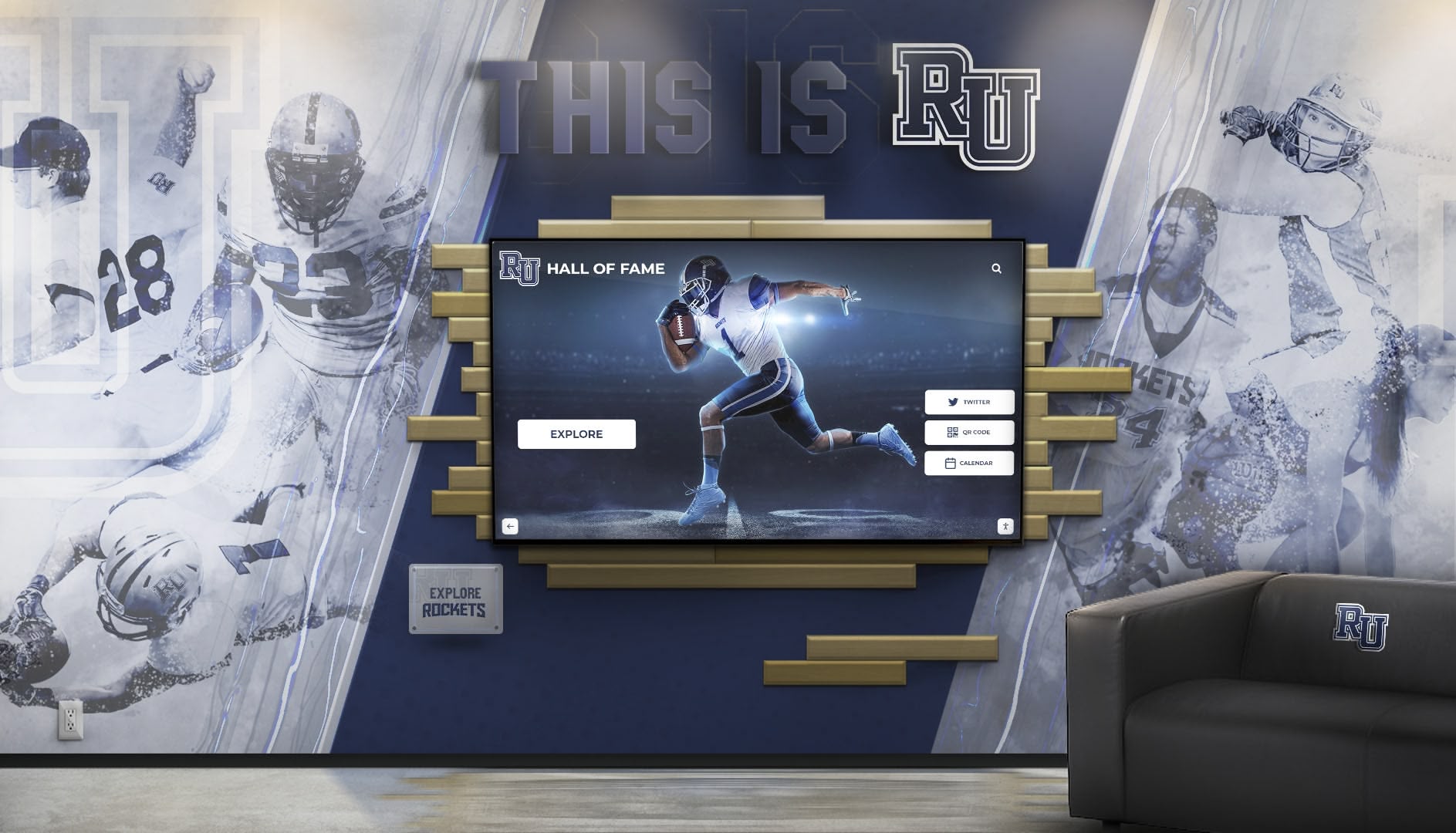
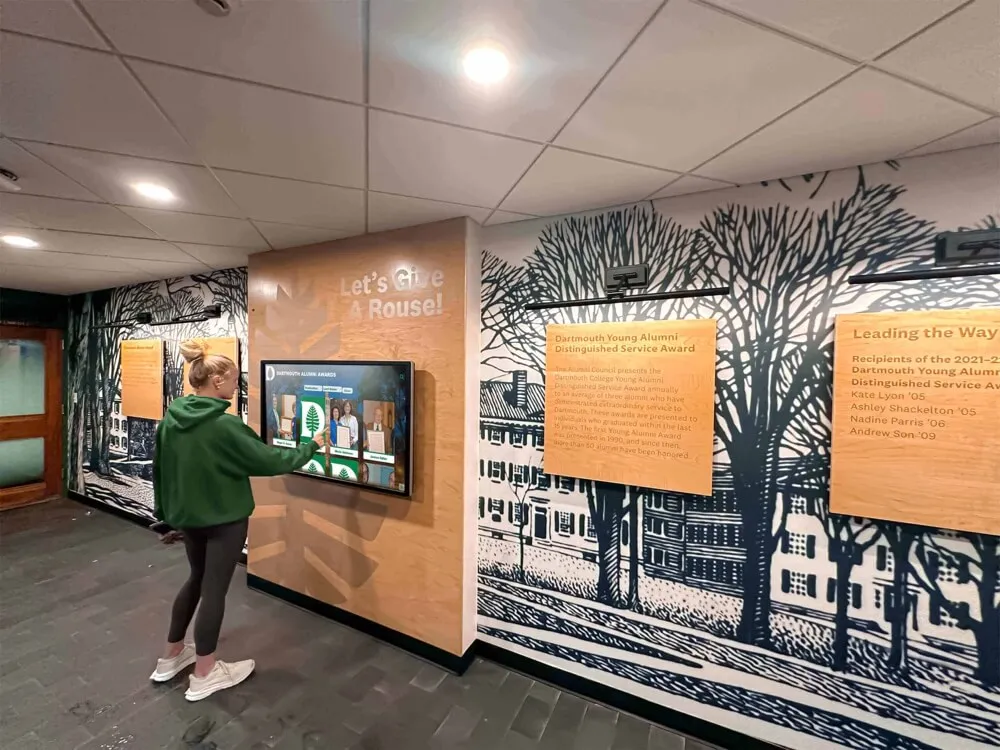
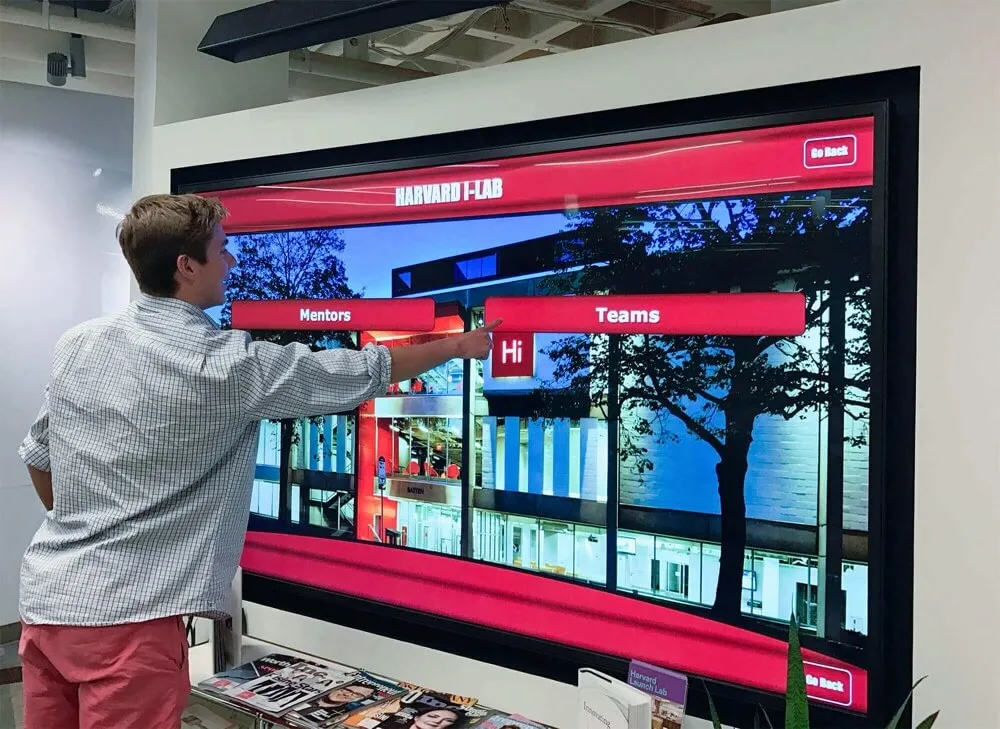
Interactive touchscreen displays positioned alongside traditional murals and physical recognition elements create the combined physical-digital experience that drives the highest visitor engagement
Build an Athletic Alumni Recognition Wall Your Program Will Be Proud of for Decades
Rocket Alumni Solutions designs and installs custom touchscreen athletic alumni recognition walls for schools and universities — unlimited inductee profiles, auto-ranking record boards, remote cloud management, ADA WCAG 2.1 AA compliance, and professional installation at 600+ institutions nationwide.
Request Your Custom DemoFrequently Asked Questions About Athletic Alumni Recognition Walls
What is the difference between an athletic alumni recognition wall and a hall of fame?
A hall of fame is typically the most selective recognition tier — reserved for athletes, coaches, or contributors meeting rigorous achievement standards through a formal nomination process. An athletic alumni recognition wall is a broader term that can encompass hall of fame inductees alongside other recognition categories: letter winners, championship teams, record holders, and notable contributors. Many programs have a wall that includes multiple recognition levels, with the hall of fame as the highest tier.
How much does it cost to build an athletic alumni recognition wall?
Costs vary considerably based on format and scale. Traditional plaque walls for a small program might run $5,000–$20,000 for initial installation. Custom murals with integrated digital displays at larger institutions can range from $50,000–$200,000 or more depending on screen count, mural complexity, and installation scope. Digital recognition systems generally include ongoing platform fees for content management, updates, and support, which replace the recurring cost of physical plaque fabrication for new inductees.
How often should content on a recognition wall be updated?
At minimum, annual updates after the induction ceremony add new honorees and refresh any record boards. Digital systems allow more frequent updates — adding recent championship content, updating records as they’re broken, or publishing biographical updates as alumni achieve new career milestones. Evaluating touchscreen software options for web-based versus native app deployment helps departments choose a platform architecture that supports the update frequency their program needs.
Can a small high school afford a meaningful athletic alumni recognition wall?
Yes. Even modest budgets produce impactful recognition spaces when the design is intentional. A well-organized photo wall with consistent framing, clear typography, and organized tiering by category costs far less than a touchscreen installation but still creates meaningful recognition. The ultimate buying guide for digital hall of fame systems at high schools walks through options at every price point, including digital solutions that have become accessible to smaller programs.
What should we do about athletes from eras before digital records exist?
Historical athletes with incomplete documentation are common in programs with long histories. Effective approaches include reaching out to era-appropriate alumni for recollections and statistical documentation, researching local newspaper archives and yearbook collections, acknowledging that evaluation criteria for historical nominees should account for documentation limitations, and creating “pioneer recognition” categories for athletes from the earliest program years whose complete records aren’t fully recoverable.
How do we handle athletes who need to be removed from the wall after post-graduation conduct issues?
Most institutions address this in their governing documents before issues arise — establishing that hall of fame membership is subject to review and potential removal for conduct that violates institutional values or brings significant reputational harm to the institution. Having these policies in writing before any specific situation occurs is far better than making removal decisions without established procedures. Digital systems make profile removal or modification substantially simpler than physically replacing plaques.
Should the athletic recognition wall be in the main school building or in the athletic facility?
Placement depends on your traffic goals. Athletic facilities reach athletic audiences — coaches, athletes, recruits, and sports-focused alumni — most consistently. Main school buildings reach the broader community: parents, non-athlete students, faculty, and general visitors. Programs with substantial recognition content often choose athletic facility lobbies for their primary installation, with secondary touchpoints in the main building for broader visibility.
Building Recognition That Lasts
The athletic programs that have built lasting legacies didn’t do so by accident. They were built by players who committed to something larger than individual seasons, coaches who invested in athletes as people, and community members who showed up year after year because they believed the program mattered.
An athletic alumni recognition wall is the institution’s way of saying: we remember. We honor the people who competed when the stands were half-empty, who came back for decades of alumni games, who donated to annual funds and volunteered to help with summer camps, who passed the program’s values to their own children.
The format — traditional plaque wall, interactive digital touchscreen, or a combined physical-digital installation — matters less than the commitment behind it. The best recognition walls are built with the conviction that every person featured deserved to be there, that every future inductee will be evaluated by the same clear standards, and that the institution will maintain and update the display for decades to come.
Rocket Alumni Solutions has helped more than 600 institutions build athletic recognition systems that honor this commitment — touchscreen walls of fame with unlimited capacity, professional installation, cloud-based management, and the technical infrastructure to ensure your program’s history is preserved and celebrated long after any individual administrator’s tenure.
See What a Digital Athletic Alumni Recognition Wall Can Do for Your Program
From concept to installation, Rocket Alumni Solutions builds custom interactive recognition walls that showcase your complete athletic history — unlimited inductee profiles, searchable databases, auto-ranking record boards, and remote content management. ADA-compliant and built for decades of use.
Request a Custom Demo Today