Athletic Awards Slowly Changing Dimension Policy for Historical Recognition Data
- Home /
- Digital Wall of Fame Blog - Recognition Display Insights & Resources /
- Athletic Awards Slowly Changing Dimension Policy for Historical Recognition Data

The Easiest Touchscreen Solution




Live Example: Rocket Alumni Solutions Touchscreen Display
Interact with a live example (16:9 scaled 1920x1080 display). All content is automatically responsive to all screen sizes and orientations.
A slowly changing dimension (SCD) policy tells every person who manages athletic awards data—athletic directors, IT staff, alumni coordinators, and display system administrators—exactly how to handle a record when its underlying attributes change: whether to overwrite the old value, preserve it alongside the new one, or archive it with a clear date boundary. Without that policy, a coach’s legal name change, a school renaming, or an award category restructure silently corrupts historical recognition records. The right athletic awards slowly changing dimension policy defines Type 1 (overwrite), Type 2 (version history), and hybrid handling for every attribute class in your recognition system, so inductee profiles, team championships, and award citations stay historically accurate no matter what changes downstream.
Every school athletic program is a living institution. Coaches retire and their names change. School mergers create new names and mascots. Award categories get consolidated, split, or retitled by governing bodies. Conference realignments shift classification tiers. Each change is routine—but each one poses the same quiet data governance risk: if the recognition database updates the current value without preserving what was historically true, the past is rewritten instead of honored.

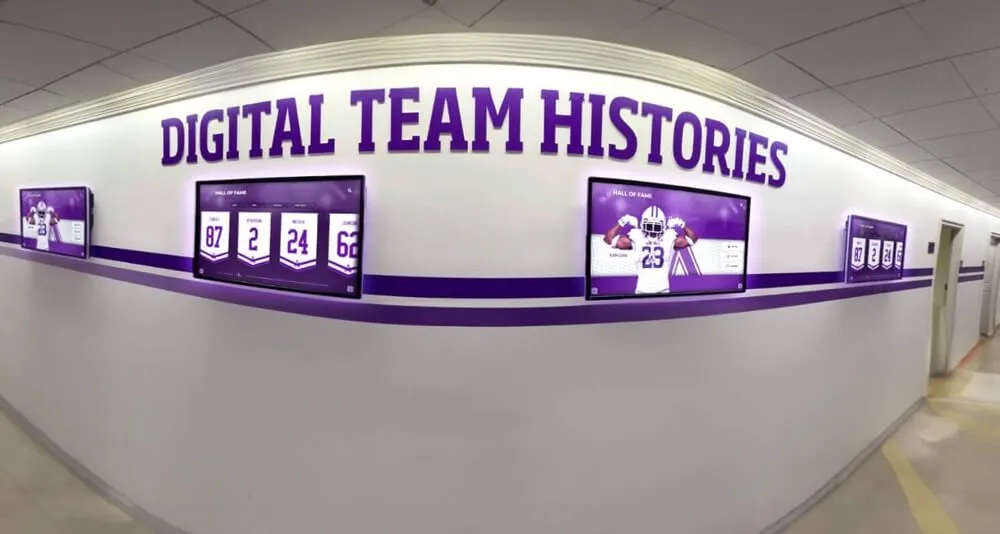
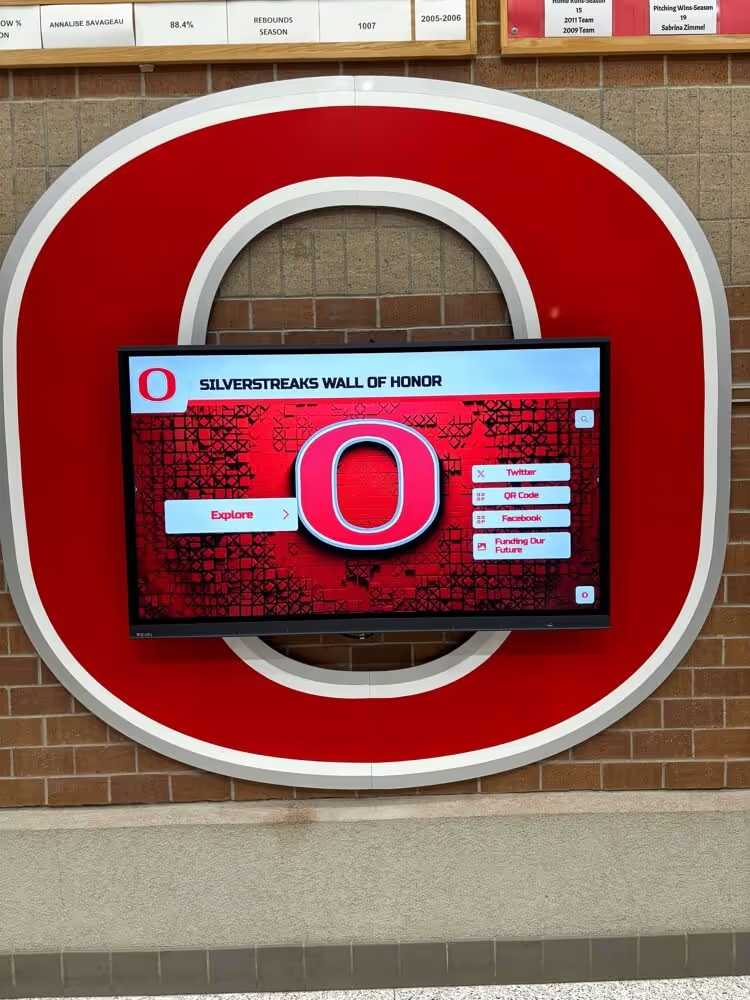
A hall of fame recognition wall preserves decades of achievement—but only if the underlying data governance policy keeps historical names, award categories, and team labels accurate as institutional records evolve
What Is a Slowly Changing Dimension in Athletic Recognition Data?
The term “slowly changing dimension” (SCD) comes from data warehousing and business intelligence practice. A dimension is a descriptive attribute—a name, a category, a classification—that gives context to a measurable fact. “Slowly changing” means the attribute changes infrequently but does change over time, and the system must decide how to record each change without losing the historical context of prior records.
In an athletic recognition database, slowly changing dimensions include:
- Coach and staff names — Legal name changes, maiden-to-married name transitions, and preferred name corrections
- School and program names — Rebranding, school mergers, consolidations, or district reorganizations
- Team names and mascots — Mascot changes driven by community decisions, state policy, or cultural sensitivity reviews
- Conference and classification — Reclassification cycles (Class 3A to Class 4A, for example), conference realignment, or governing body restructuring
- Award category titles — Recognition categories renamed, merged, or newly created by athletic associations
- Sponsorship and named award titles — Endowed awards whose donor naming may change due to estate decisions or institutional policy
When one of these dimensions changes, three questions arise: What value should appear on historical records from before the change? What value should appear on current and future records? What should the display system show when a user queries a historical record alongside a current one?
An SCD policy answers all three questions with explicit rules—before any specific change occurs, not after it creates a data integrity problem.
The Three SCD Types Compared
Data governance frameworks recognize three primary strategies for handling slowly changing dimensions. The right choice depends on whether preserving historical context matters for each specific attribute.
| SCD Type | What It Does | When to Use | Athletic Awards Example |
|---|---|---|---|
| Type 1 — Overwrite | Replaces the old value with the new value; prior history is not preserved | Correcting a genuine data entry error with no historical significance | Fixing a misspelled coach surname that was never the correct legal name |
| Type 2 — Add Version | Preserves the old value with effective dates; adds a new record version for the new value | When historical records must reflect what was true at the time of each achievement | School renamed mid-decade: championships won as “Central High” stay labeled “Central High” even after the school becomes “Riverside Academy” |
| Type 3 — Add Column | Adds a new column for the new value while keeping the original column intact | When quick current/prior comparison is needed but a full version history is not | Tracking a conference’s former name alongside its current name in a single record row |
| Hybrid Type 1+2 | Applies Type 1 to minor attributes (typos, formatting errors) and Type 2 to significant ones (names with historical identity) | When a system contains both correction-only and historically significant attributes side by side | Correct a data entry error with Type 1; handle a legal name change with Type 2 on the same record |
For most school athletic recognition programs, a hybrid Type 1/Type 2 policy is the right default. Type 1 handles genuine corrections that carry no historical meaning—a misspelled award title, a wrong graduation year entered by mistake. Type 2 handles changes that reflect a real shift in institutional or personal identity, where the historical record should show what was true at the time of achievement.
For context on how recognition systems manage physical award records alongside digital data, athletic awards plaques programs for schools offer a useful parallel to the layered historical data that digital recognition systems must govern.
Which Attributes Require Type 1, Type 2, or Hybrid Treatment?
Not every field in an athletic recognition database deserves the same handling. The following table provides a working classification guide for the most common attribute types encountered in school athletic records:
| Attribute | Recommended SCD Type | Rationale |
|---|---|---|
| Athlete legal name | Type 2 | Legal name changes deserve full historical versioning—old records stay accurate to the time; new records use the updated name |
| Coach name | Type 2 | Performance records tied to a coaching tenure should reflect the name under which the coach served |
| School name | Type 2 | Championships won under a prior school name are historically significant and should display the name the team competed under |
| Award category title | Hybrid | Renaming an award category for clarity is Type 1; restructuring into a new category with different criteria warrants Type 2 |
| Conference and classification | Type 2 | Records achieved in a specific classification or conference should carry that label permanently |
| Mascot name | Type 2 | Team championships should reflect the mascot name under which they were won, particularly for programs with multiple changes across decades |
| Graduation year | Type 1 | A wrong year is a data entry error, not a historical identity—overwrite and correct |
| Sport designation | Type 1 with caution | Usually an entry error; if a sport was genuinely reclassified by the governing body, treat as Type 2 |
| Sponsorship name on a named award | Type 2 | Donor legacy matters; a named award should reflect the donor’s name at the time of each recipient’s selection |
| Record board performance values | Type 1 after verification | Correct genuine entry errors with Type 1; use separate versioning for records retroactively adjusted by a governing body |
Building Your Athletic Awards SCD Policy: A Step-by-Step Framework
A policy document is only as useful as its implementation workflow. The following framework gives athletic directors, IT managers, and recognition program coordinators a structured path to developing and maintaining an SCD policy for athletic awards data.
Step 1: Inventory your recognition attributes
List every field that appears on an inductee profile, team championship record, award citation, or record board entry. For each field, ask: can this value change over time, and if it does, does the historical record need to preserve the original value?
Step 2: Classify each attribute by SCD type
Using the table above as a starting point, assign each attribute to Type 1, Type 2, or hybrid handling. Document the rationale for each assignment—this record helps future staff apply the policy consistently when edge cases arise that were not anticipated at drafting.
Step 3: Define the trigger conditions
For each Type 2 attribute, define what event triggers a new version: a legal name change (requires documentation), a governing body reclassification (requires official notice), a school board vote on renaming. Not every update to a field is a slowly changing dimension event—some are data entry corrections that should be handled with Type 1 regardless of the attribute class.
Step 4: Define effective-date fields
Every Type 2 record needs effective start and end dates. Decide how your system will store them: as explicit date fields on each record version, as a version number with date metadata, or as a separate historical record linked to the current active record. Match this approach to whatever your recognition platform supports natively.
Step 5: Assign update authority
Only named roles should have authority to trigger a Type 2 event. Type 1 corrections can often be delegated more broadly. Establish that legal name changes, school renamings, and category restructures require athletic director or administrator approval before the change is entered—preventing accidental Type 2 events from data entry staff working without full context.
Step 6: Establish the documentation requirement
Every Type 2 change should be accompanied by documentation: the source of the change, the date it was authorized, who authorized it, and what the previous value was. This documentation lives in the record’s version history—not only in email threads or meeting notes that may not survive staff turnover.
Step 7: Set a review schedule
Classification and conference changes follow predictable governing-body cycles. Schedule an annual review of the attribute inventory against the list of upcoming reclassifications, conference realignments, and award category reviews from relevant governing bodies. Proactive identification prevents retroactive data corrections.
Step 8: Define the display behavior
Decide how your recognition display system should handle historical records when a Type 2 change has occurred. The most common approaches are: show the historical value on historical records and the current value on current records; show both values with a clear label (for example, “Formerly: Central High School”); or show only the current value across all records, which erases historical accuracy. Only the first two approaches are consistent with a historically accurate athletic recognition program.
For schools considering modern recognition platforms that support attribute versioning natively, digital awards display ideas for schools illustrates how digital systems can surface historical context alongside current recognition data in a single user interface.
A Practical SCD Policy Checklist for Athletic Directors and IT Teams
Use this checklist when developing or auditing your athletic awards slowly changing dimension policy:
Policy foundation:
- Written policy document exists and is version-controlled
- Each recognition attribute is classified as Type 1, Type 2, or hybrid
- Trigger conditions are defined for each Type 2 attribute
- Effective-date field requirements are specified
- Update authority is assigned by role, named explicitly
Operational controls:
- Data entry staff are trained on the difference between a correction (Type 1) and a dimension change (Type 2)
- A change request workflow exists for Type 2 events, including required documentation
- Administrative approval is required before any Type 2 change is entered
- All Type 2 changes are logged with date, authorizing role, and documentation reference
Display system alignment:
- The recognition platform supports effective-date versioning for Type 2 attributes
- Historical records display the historically correct value, not the current active value
- Display administrators understand how the platform resolves attribute versions for a given record date
- A test case library exists showing expected display output before and after a Type 2 change
Governance cycle:
- Annual attribute inventory review is scheduled
- Governing body reclassification calendar is tracked proactively
- Policy document review cycle is defined (every two to three years is common practice)
- Change log is retained permanently as part of the institutional record

Digital recognition platforms that display athlete records, classifications, and award citations must resolve historical attribute values correctly—a capability that requires a written SCD policy before data entry begins
Common Scenarios and How to Handle Them
The following scenarios illustrate how an SCD policy translates into specific decisions for the people who manage athletic recognition data day to day.
Scenario 1: A Coach’s Legal Name Changes
A longtime volleyball coach is recognized in the hall of fame under her maiden name. She later changes her name legally. The recognition program receives a request to update the display.
SCD treatment: Type 2. A new record version is created with her updated name, effective from the date of the legal change. All historical records—awards given during her tenure under the prior name, championship records she coached—remain labeled with the name under which they occurred. Her current active profile displays her updated name. The version history in the database records both, with effective dates, so the record is fully accurate for every period.
Scenario 2: School Rebranding After a District Merger
Two high schools merge. The new consolidated school adopts a new name and mascot. Historical championships were won by both predecessor schools under their respective names.
SCD treatment: Type 2 for school name and mascot. Championships won by “Jefferson High Wildcats” and “Madison High Bears” before the merger remain labeled with those names and mascots in the historical record. Championships won by the merged institution after the merger are labeled with the new name. The recognition system links all three program histories under the consolidated institution profile, with clearly dated boundaries showing which records belong to which era.
Scenario 3: An Award Category Is Restructured
The athletic association restructures its Scholar-Athlete award into two distinct awards—Academic Excellence and Athletic Achievement—effective with the next academic year. Recipients from prior years were recognized under the original unified award.
SCD treatment: Hybrid. Prior recipients retain their “Scholar-Athlete Award” citation—that is the historically accurate label for what they received. Future recipients are labeled under whichever of the two new categories applies to their recognition. No retroactive reclassification of prior recipients is made, because their award was genuinely different in structure and criteria from the new categories.
Scenario 4: A Conference Realigns
A school moves from one regional conference to another. Historical conference championships won in the prior conference are part of the school’s record.
SCD treatment: Type 2 for conference affiliation. The school’s record board and championship history preserve the conference name under which each title was won. Current conference affiliation is updated in the school’s active profile. A user viewing the school’s full championship history sees each title labeled with the conference in which it was achieved—the only historically accurate display approach.
For programs managing complex multi-sport award histories, guidance on structuring award recognition for extracurricular programs—such as the FBLA awards recognition guide—offers a useful parallel for how category and classification data can be managed across changing governance structures.
How Digital Display Systems Handle SCD Changes
The practical test of any SCD policy is whether your recognition platform can actually implement it. Not all display systems are designed with data versioning in mind.
Systems without native versioning—static spreadsheets, basic website CMSs, or simple database tables—can only implement Type 1 handling natively. They overwrite the current value. To support Type 2, these systems require custom workarounds: manually appended historical notes, separate archival tables, or external documentation files. This approach is error-prone and breaks down as records accumulate across decades.
Systems with native versioning—cloud-based recognition platforms designed for institutional history management—support Type 2 and hybrid handling natively. Effective dates are stored as fields on each record version. The display layer resolves the correct attribute version for any given date query automatically. When an administrator triggers a Type 2 event, the platform creates a new record version, preserves the previous version, and updates the active display in a single workflow.
For programs evaluating their recognition infrastructure, employee recognition awards digital display capabilities provides a useful reference for how versioning and historical data management features differ across recognition platform types.
The practical implication: an SCD policy is only as effective as the platform that implements it. Before writing detailed procedures for Type 2 handling, confirm that your recognition platform supports effective-date versioning natively. If it does not, the policy will be unenforceable without significant manual workarounds that introduce their own data integrity risks.
Learn more about Rocket Alumni Solutions’ Digital Wall of Fame platform to see how cloud-based athletic recognition systems support historical data versioning across inductee profiles, record boards, award citations, and team histories.

Cloud-based recognition platforms allow administrators to version inductee attributes and award citations while keeping historical records accurately labeled—a critical capability for any SCD policy implementation
Integration with Touchscreen and Interactive Display Systems
Schools using touchscreen interactive walls of fame face specific SCD implementation questions that differ from traditional static displays.
Query behavior: When a visitor searches for a coach by name, should the system return results for both the historical name and the current name? Most institutions handle this by linking both name versions to the same inductee record, so either name surfaces the complete profile regardless of which version the visitor enters.
Display labels: The touchscreen interface should clearly indicate when a displayed name or classification reflects the historical value at the time of achievement, not the current active value. A brief label—“As of [year]” or “Competed as [prior name]"—prevents confusion without requiring a lengthy explanation that disrupts the visitor experience.
Record board auto-ranking: Touchscreen record boards that auto-rank performance data need to resolve attribute versions correctly. If classification is a Type 2 dimension, the record board should filter records by the classification in effect at the time of performance—not by the school’s current classification, which may be different.
Alumni and family searches: Alumni searching for their own records benefit from both the historical name (what they knew themselves as during their athletic career) and any updated name (what they currently go by). The SCD policy should specify whether the platform exposes historical names in search results and how prominently it surfaces version history to the end user.
For programs developing alumni-facing digital recognition infrastructure, the FBLA awards recognition digital display guide and FBLA awards recognition display guidance illustrate how award versioning and display presentation decisions affect the alumni experience on interactive platforms.

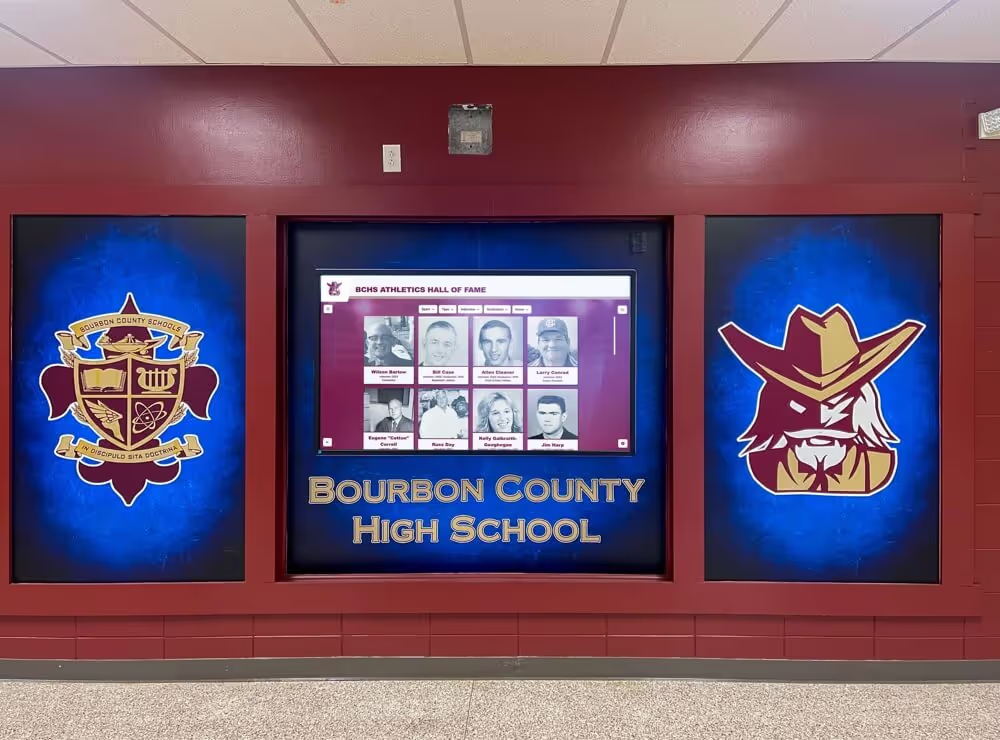
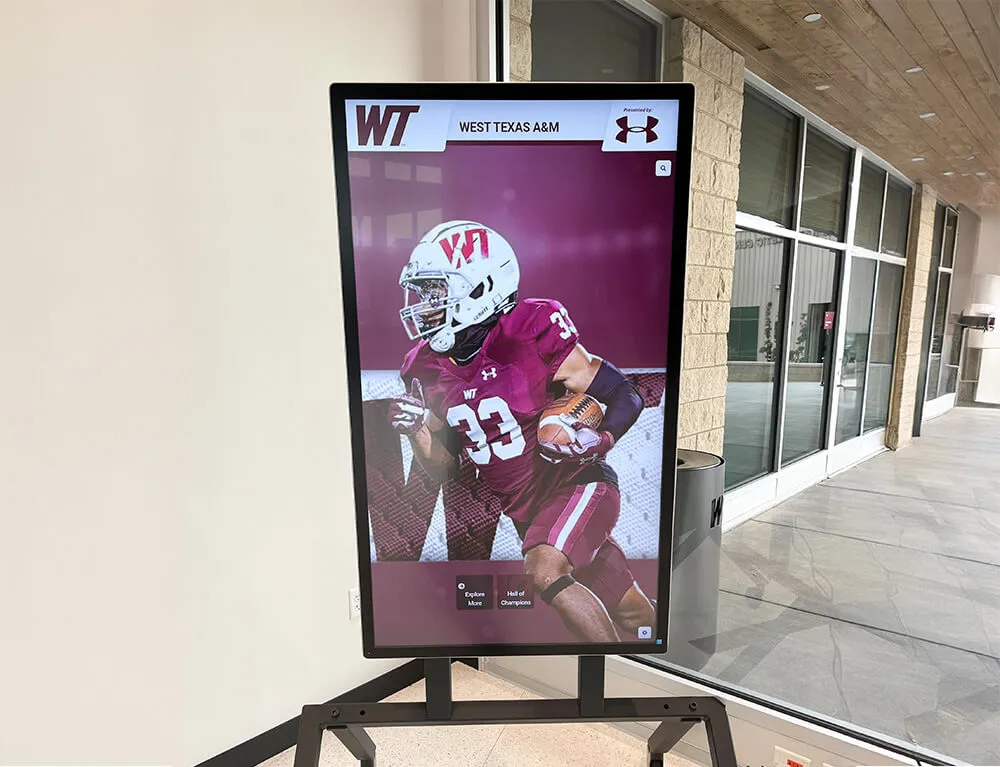
Interactive touchscreen systems must resolve the correct historical attribute value for each record—showing the team name, classification, and award category that was accurate at the time of achievement, not only the current institutional values
Building the Policy Document: Eight Required Sections
A written SCD policy for athletic awards data should address each of the following sections. Gaps create inconsistency in implementation and force staff to improvise when edge cases arise:
1. Purpose and scope — Define which data systems, display platforms, and record types are covered by the policy and which are excluded.
2. Attribute inventory — A complete list of every field subject to SCD classification, with the assigned SCD type for each attribute.
3. SCD type definitions — Plain-language definitions of Type 1, Type 2, and any hybrid or Type 3 handling used in the system, with examples drawn from the athletic recognition context.
4. Trigger conditions — For each Type 2 attribute, a specific definition of what event triggers a new version: legal documentation received, governing body official notice, school board vote, or other defined source.
5. Update authority — Roles authorized to initiate Type 2 changes and roles authorized to approve them, named explicitly with no gaps.
6. Documentation requirements — What documentation must accompany each Type 2 event, where it is stored, and how long it is retained.
7. Display behavior specifications — How the display platform should resolve attribute versions for historical records versus current records, and what labels appear in the user interface.
8. Review schedule — A defined cycle for reviewing the attribute inventory, the SCD type classifications, and the policy document itself.

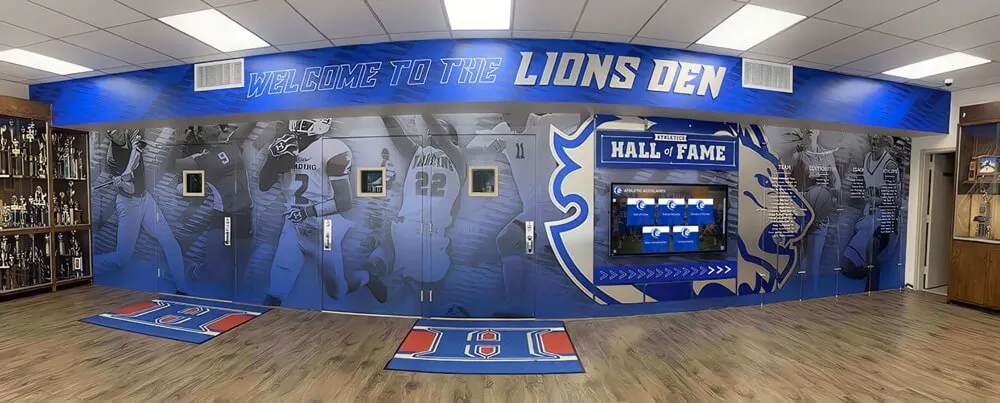
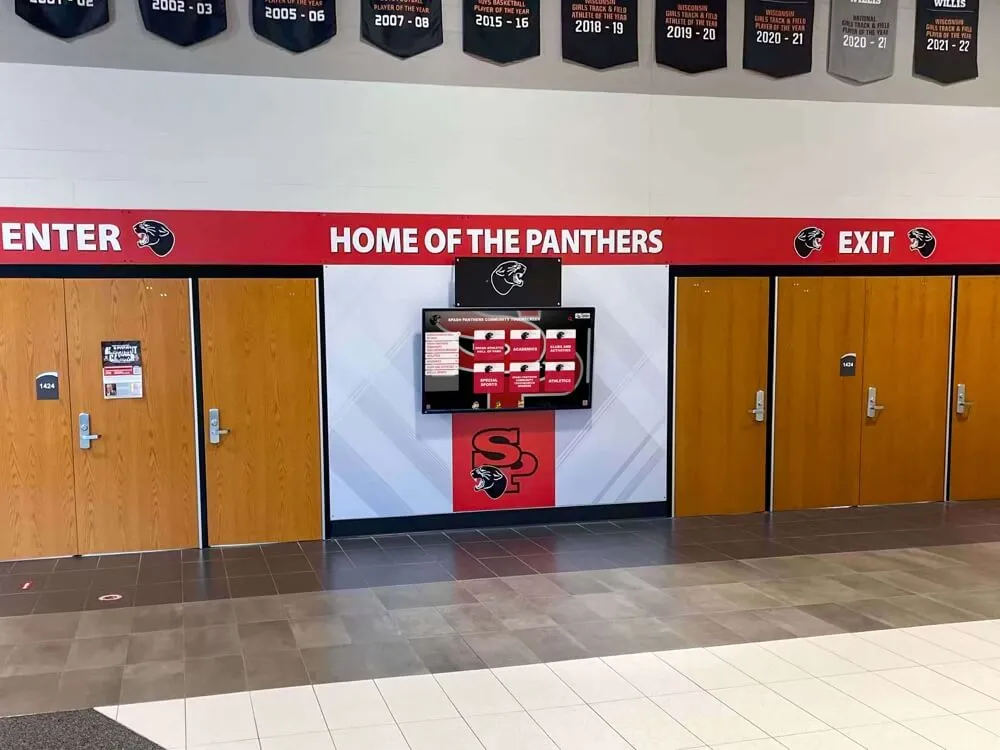
Athletic records displayed in school hallways represent decades of institutional history—accurate only when the underlying data governance policy preserves original team names, classifications, and award categories for every era
Frequently Asked Questions
Q: Is “slowly changing dimension” a concept I need to explain to my athletic director or school board?
A: You do not need to use the technical term. The underlying concept is intuitive to most people managing recognition programs. Present it as a data governance question: “When a coach’s name changes, should we update all historical records to the new name, or keep each historical record accurate to the time?” Most athletic directors immediately understand why preserving historical accuracy matters—and why a written policy prevents inconsistent decisions across staff members.
Q: How does an SCD policy differ from a records correction policy?
A: A records correction policy addresses genuine data entry errors—wrong dates, misspelled names, transposed statistics. A slowly changing dimension policy addresses legitimate changes to attribute values over time. The distinction matters because corrections are applied retroactively (fix every instance of the wrong value), while Type 2 dimension changes are applied prospectively (add a new version; preserve the old one). An institution needs both policies, clearly cross-referenced so staff know which applies to each situation.
Q: Does our recognition platform need to support database versioning to implement this policy?
A: Your platform needs some form of historical record preservation—it does not have to be a formal database versioning system. What matters is that the system can display the historically correct value for a given record date, not just the current active value. Many cloud-based recognition platforms store attribute history as version records linked to each inductee or award profile. Confirm this capability with your vendor before writing detailed Type 2 procedures.
Q: How should we handle records where we cannot determine the historically accurate value?
A: When historical documentation is incomplete, document what is known and flag the record as containing an unverified historical value. Avoid overwriting with a best guess. A clearly labeled uncertain record is more defensible than a confidently incorrect one. Schedule a review to locate source documentation—yearbooks, media guides, governing body archives, or athletic association records from the relevant period.
Q: How often should the attribute inventory be reviewed?
A: At minimum, once per year. Schedule the review before any known reclassification cycle from your governing athletic association and after any significant institutional event—a merger, renaming, or conference change. If you use a cloud-based recognition platform, confirm with your vendor whether any system updates changed how attribute versioning is stored or displayed.
Q: What should we do with records that predate the policy’s adoption?
A: Conduct a one-time historical audit using available source documentation—media guides, yearbooks, championship certificates, and governing body records. Classify each historical change by the type it would have received under the new policy, and create retroactive version records where documentation supports it. Document the audit process and its limitations in the policy file. Future changes follow the defined process; historical records are made as accurate as available source documentation allows.
Q: Can this policy apply to physical award displays, or only digital systems?
A: The policy applies to any authoritative record of athletic recognition, digital or physical. For physical displays—plaques, banners, trophy cases—the policy defines how historical accuracy is preserved in the accompanying documentation even when the physical object cannot be easily updated. The practical advantage of cloud-based digital platforms is that Type 2 changes can be implemented immediately and consistently across all display points in a single administrative action, while physical displays require separate fabrication or annotation procedures.
Q: What happens when a booster club or alumni organization maintains its own award records?
A: The policy covers records managed by or on behalf of the institution. Records maintained independently by booster clubs or alumni organizations on their own platforms are outside the school’s direct control. The policy should specify a coordination process—notifying these organizations of approved Type 2 changes—without implying that the school can compel updates to independently managed records. Acknowledge this limitation explicitly in the policy scope section.
Athletic recognition data is institutional memory. When team names, coach names, and award categories change over time, the question is not whether to update the records—it is how to update them without losing what was historically true. A written athletic awards slowly changing dimension policy answers that question explicitly, attribute by attribute, before any specific change creates a governance crisis. Paired with a cloud-based recognition platform that supports native data versioning, the policy ensures that every inductee profile, championship citation, and record board entry is as accurate fifty years from now as it is the day it is entered.
Preserve Historical Award Data with a Platform Built for It
Rocket Alumni Solutions' interactive touchscreen wall of fame gives schools a cloud-based content management system designed to preserve accurate historical recognition data as institutional records evolve over time. See how it handles attribute versioning for inductee profiles, award citations, and record boards at your school.
Request Your Custom DemoLive Example: Rocket Alumni Solutions Touchscreen Display
Interact with a live example (16:9 scaled 1920x1080 display). All content is automatically responsive to all screen sizes and orientations.