Athletic History Takedown Request Policy: A Fair Process for Photos, Bios, and Records
- Home /
- Digital Wall of Fame Blog - Recognition Display Insights & Resources /
- Athletic History Takedown Request Policy: A Fair Process for Photos, Bios, and Records
The Easiest Touchscreen Solution




Live Example: Rocket Alumni Solutions Touchscreen Display
Interact with a live example (16:9 scaled 1920x1080 display). All content is automatically responsive to all screen sizes and orientations.
When a school publishes athletic history on a hallway display, a digital wall of fame, a touchscreen kiosk, or a public website, it invites the community to celebrate the people and achievements that define the program. Most of that content stays published for decades without issue. But occasionally, a former athlete, a family member, or a coach submits a request to remove, correct, or restrict something—a photo taken before a name change, biographical information that became inaccurate, a performance record linked to a difficult personal period, or an image the subject never consented to display publicly. Without a written athletic history takedown request policy, schools handle each of these situations differently, inconsistently, and sometimes in ways that create legal exposure or damage the trust of the very people the recognition program is meant to honor.
A formal policy gives athletic directors, archives staff, and display coordinators a defined, fair process for receiving requests, reviewing them on the merits, deciding whether and how to respond, and handling appeals. It also signals to alumni and families that the institution takes the responsibility of publishing personal histories seriously.
This guide walks school administrators through the purpose, structure, and practical implementation of a complete takedown request policy for athletic history content—whether that content lives on a physical trophy case plaque, a printed program archive, or an interactive touchscreen recognition wall. Note that applicable privacy laws, FERPA obligations, and other legal requirements vary significantly by jurisdiction, institution type, and the age of the individuals involved; this guide is informational and does not constitute legal advice. Consult your institution’s legal counsel to confirm how your policy should be shaped by local requirements.

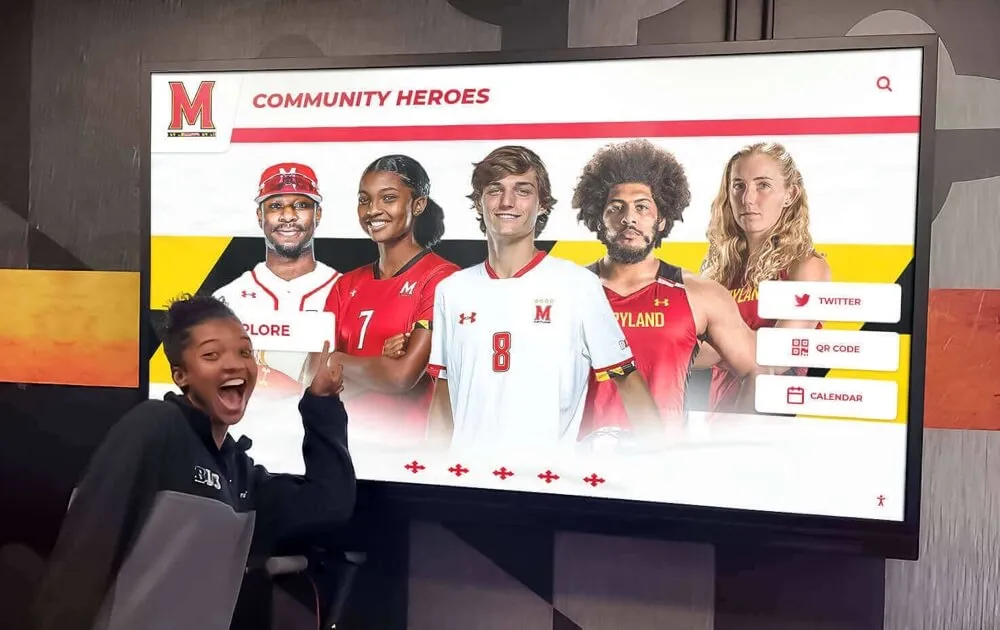
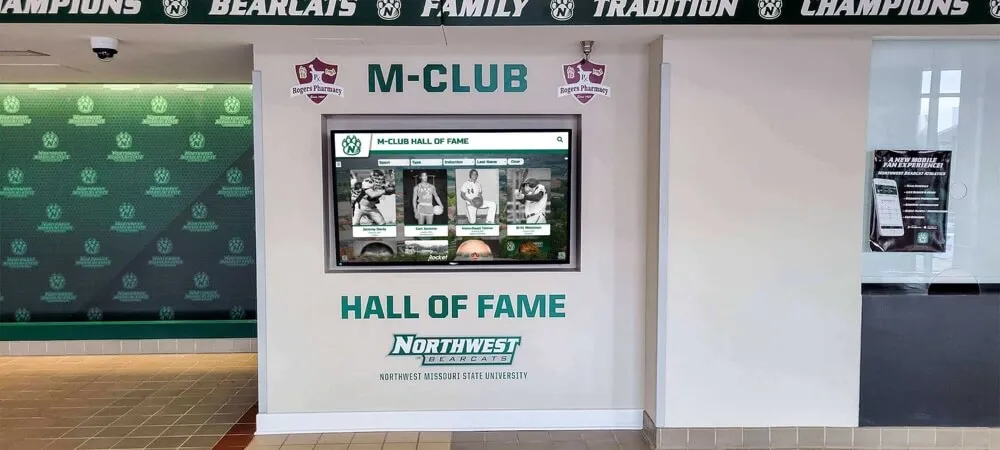
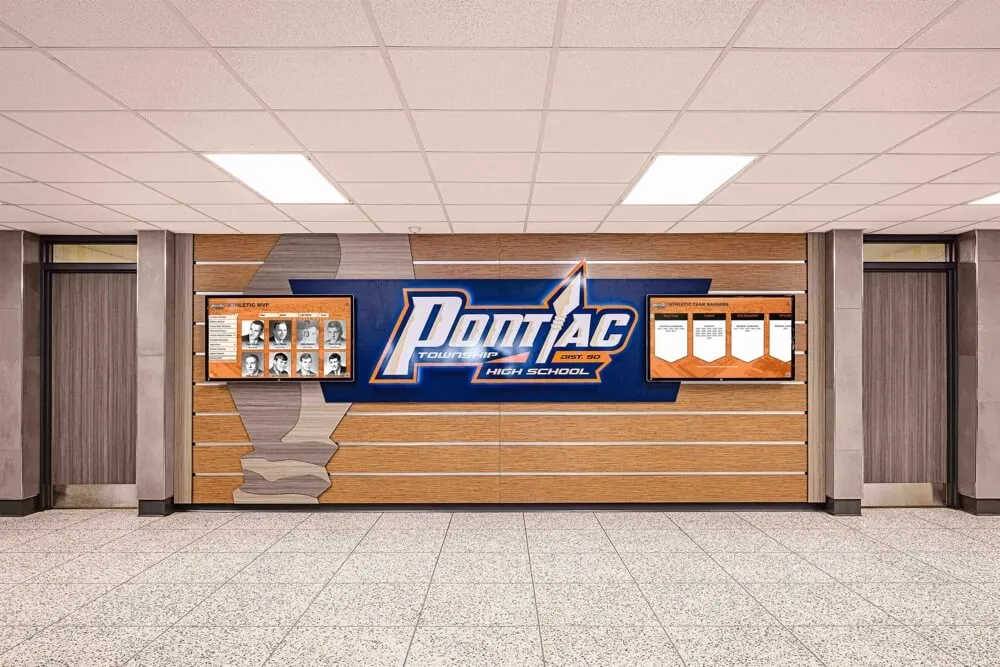
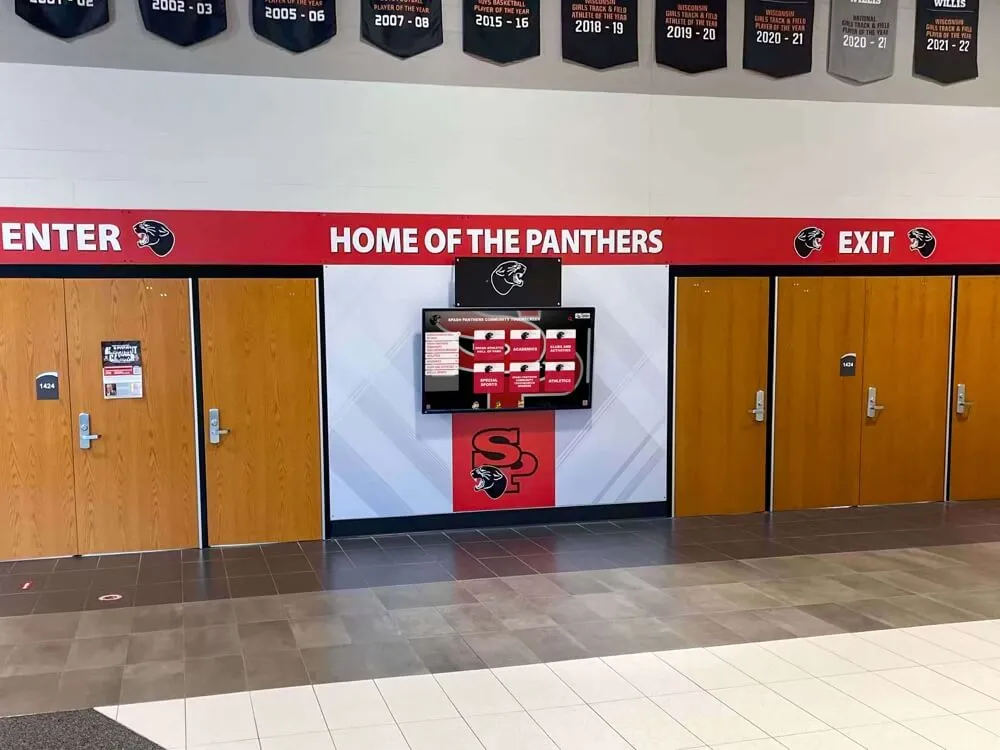
Schools that display athletic histories on physical and digital platforms need a clear, written process for responding to review, correction, restriction, and removal requests
Why Schools Need a Written Takedown Request Policy
Many schools operate without a formal process for handling content review requests. When a request arrives—typically by email or phone—it lands with whichever staff member happened to receive it, who then improvises a response based on personal judgment, institutional culture, and whatever precedent they can recall. That approach produces different outcomes for similar requests, creates no documentation trail, and gives requesters no clear expectations for timeline or grounds for review.
A written policy does four concrete things:
It sets consistent standards. Every request is evaluated against the same criteria, regardless of who submitted it, how prominently they were featured, or how recently they were inducted. Consistency protects both the institution and the people whose histories are displayed.
It documents decisions. A policy requires that decisions be recorded with supporting rationale. That documentation protects the school if a decision is later challenged and gives future administrators context for applying the policy in similar cases.
It gives requesters a fair process. Knowing that a request will be reviewed within a defined timeframe, by identified decision-makers, against stated criteria, with a right to appeal—that transparency builds trust even when the final answer is no.
It limits legal exposure. Schools that handle content on an ad hoc basis can find themselves making commitments they cannot keep, removing content they had legitimate grounds to retain, or retaining content they had an obligation to update. A policy, reviewed by legal counsel, reduces those risks.
For context on how athletic programs manage the broader category of published records, the athletic record verification form process that schools use before publishing content illustrates why accuracy at the point of publication reduces the frequency of downstream correction requests.
What Content Is Covered
An athletic history takedown request policy should specify exactly which types of content fall within its scope. Vague scope language creates ambiguity about whether a particular request is subject to the formal process or handled outside it.
Content types typically covered:
| Content Type | Common Display Locations |
|---|---|
| Athlete photographs (team, individual, action shots) | Touchscreen displays, trophy cases, hallway murals, website profiles |
| Biographical narratives | Inductee profiles on digital kiosks, printed programs, alumni directories |
| Performance records and statistics | Record boards, auto-ranking digital displays, program media guides |
| Coach and staff biographies | Administrative recognition walls, department history pages |
| Team photographs | Championship display cases, digital archive galleries |
| Donor and sponsor recognition panels | Lobby recognition walls, digital donor displays |
| Ceremonial or event photographs | Induction ceremony archives, booster club media |
Content typically outside scope:
News articles and media coverage published by third-party outlets are not within the school’s control and are not subject to this policy. Student-run publications, unless they are archived as part of the official athletic history program, are typically governed by separate editorial policies. Content published by alumni or booster organizations on their own platforms is also outside the school’s direct control, though the policy may address coordination with those organizations.
Schools should also clarify whether the policy covers content in storage (physically removed from display but held in the archives) as well as content actively displayed.
Who May Submit a Request
The policy should define which individuals have standing to submit a takedown, correction, or restriction request. Without defined standing, schools receive requests from people with no direct connection to the content—and must decide how to respond without a framework.
Primary standing categories:
- The featured individual — The athlete, coach, or staff member whose image, biography, or record is the subject of the content
- Legal guardian — For minors depicted in historic content, or for individuals who are incapacitated
- Estate representative — For deceased individuals, an executor or administrator of the estate with appropriate documentation
- Parent or immediate family member of a minor — For content depicting minors who are not yet adults at the time of the request
Secondary standing (at institutional discretion):
- Immediate family member of a deceased individual — Requests by family members regarding deceased individuals are common and often carry significant emotional weight; the policy should address whether and how the institution honors these requests absent a formal estate process
- Legal representative — An attorney submitting on behalf of a primary standing individual, with proper documentation of representation
Requests from individuals without standing—a classmate who objects to another person’s recognition, a community member who disputes a record—may be received and logged but should be handled outside the formal review process. The policy should state clearly that only those with standing can trigger a formal review.
The Three Types of Requests
A takedown request policy should recognize that removal is not the only possible response to a content concern. Defining three distinct categories of requests—correction, restriction, and removal—gives administrators a proportionate response toolkit and gives requesters realistic expectations.
Correction Requests
A correction request asks the school to fix inaccurate information: a misspelled name, a wrong graduation year, an incorrect record entry, a biographical detail that was never accurate or has since changed. Corrections are the most common request type and are generally the most straightforward to process.
Correction requests do not require the same level of review as removal requests. A defined fast-track process—requiring only documentation of the accurate information and approval by the athletic director or designee—keeps simple corrections from waiting in a longer queue.
Restriction Requests
A restriction request asks the school to limit access to specific content without removing it entirely. Examples include: moving content from an actively displayed touchscreen profile to an archived state accessible only on request; removing a photograph from a public-facing digital display while retaining it in the internal archive; or limiting the biographical detail visible in a public profile.
Restriction is often the appropriate middle ground when an individual has a legitimate privacy interest but the institution also has a legitimate historical interest in the record. Digital recognition platforms with cloud-based content management systems make restriction practical—content can be archived at the display level while remaining in the institutional record.
Removal Requests
A removal request asks the school to permanently remove content from the active display and, in some cases, from the institutional archive entirely. Permanent removal is the most consequential action a school can take under this policy and warrants the most thorough review process.
Schools should recognize that permanent deletion from a digital archive is often technically irreversible. The policy should specify whether “removal” means removal from active display only (with archival copy retained) or true permanent deletion, and under what circumstances each applies.
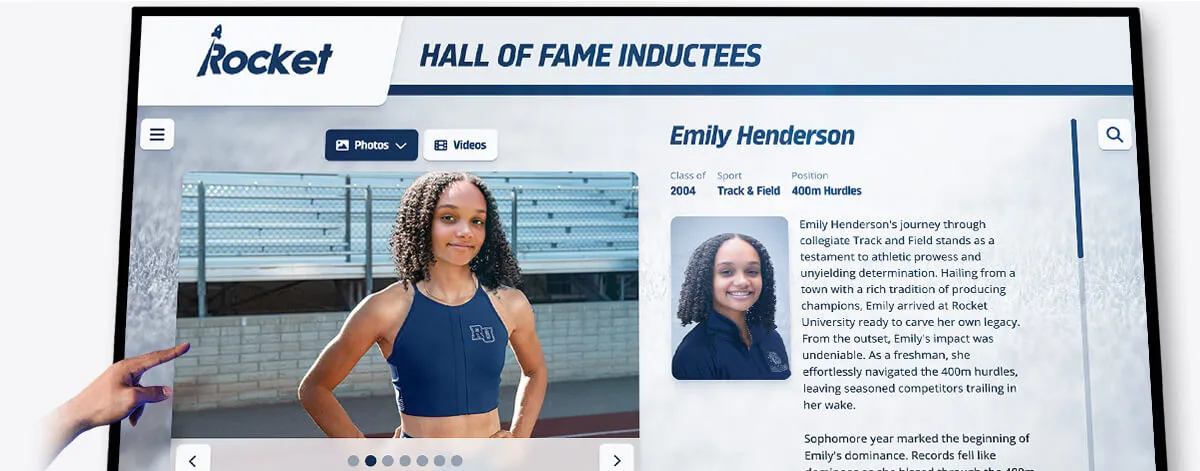
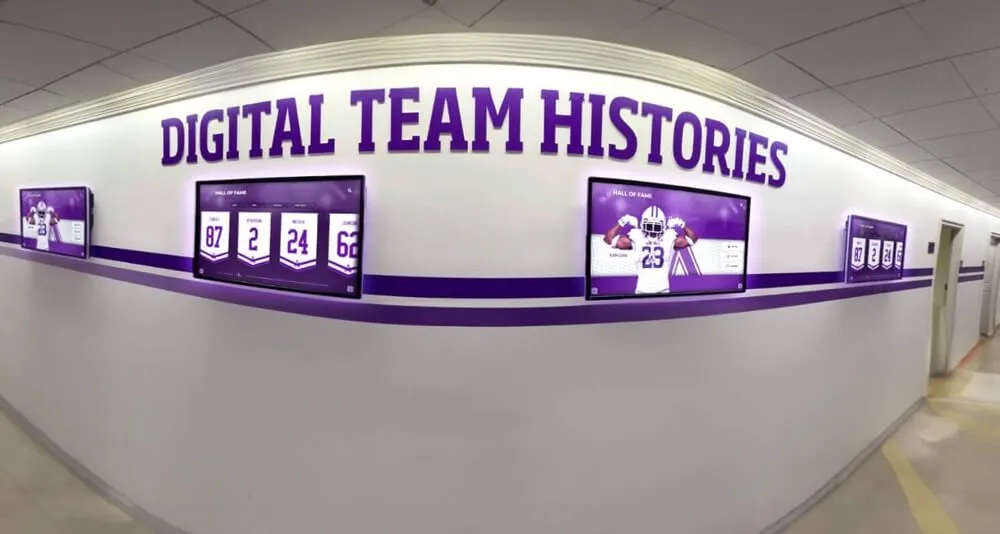
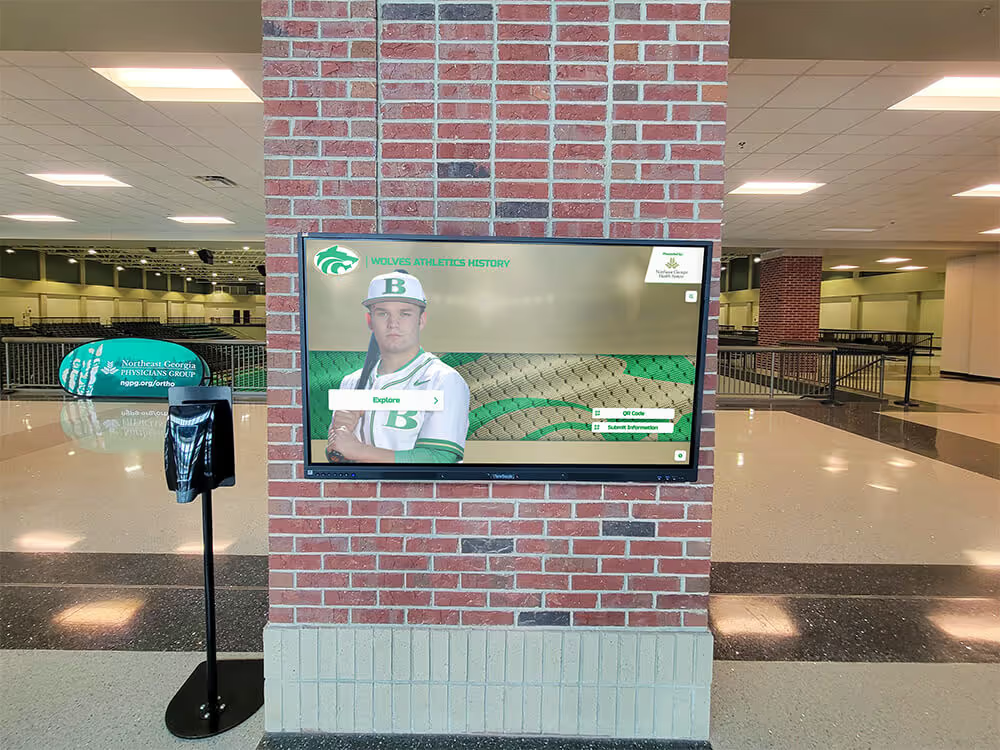
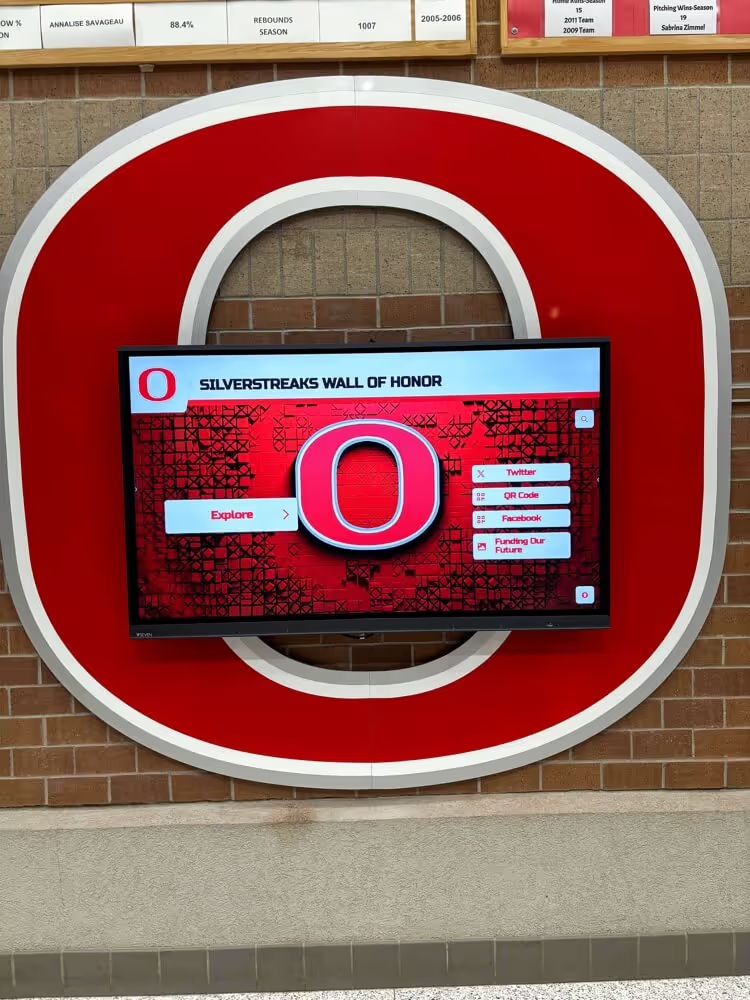
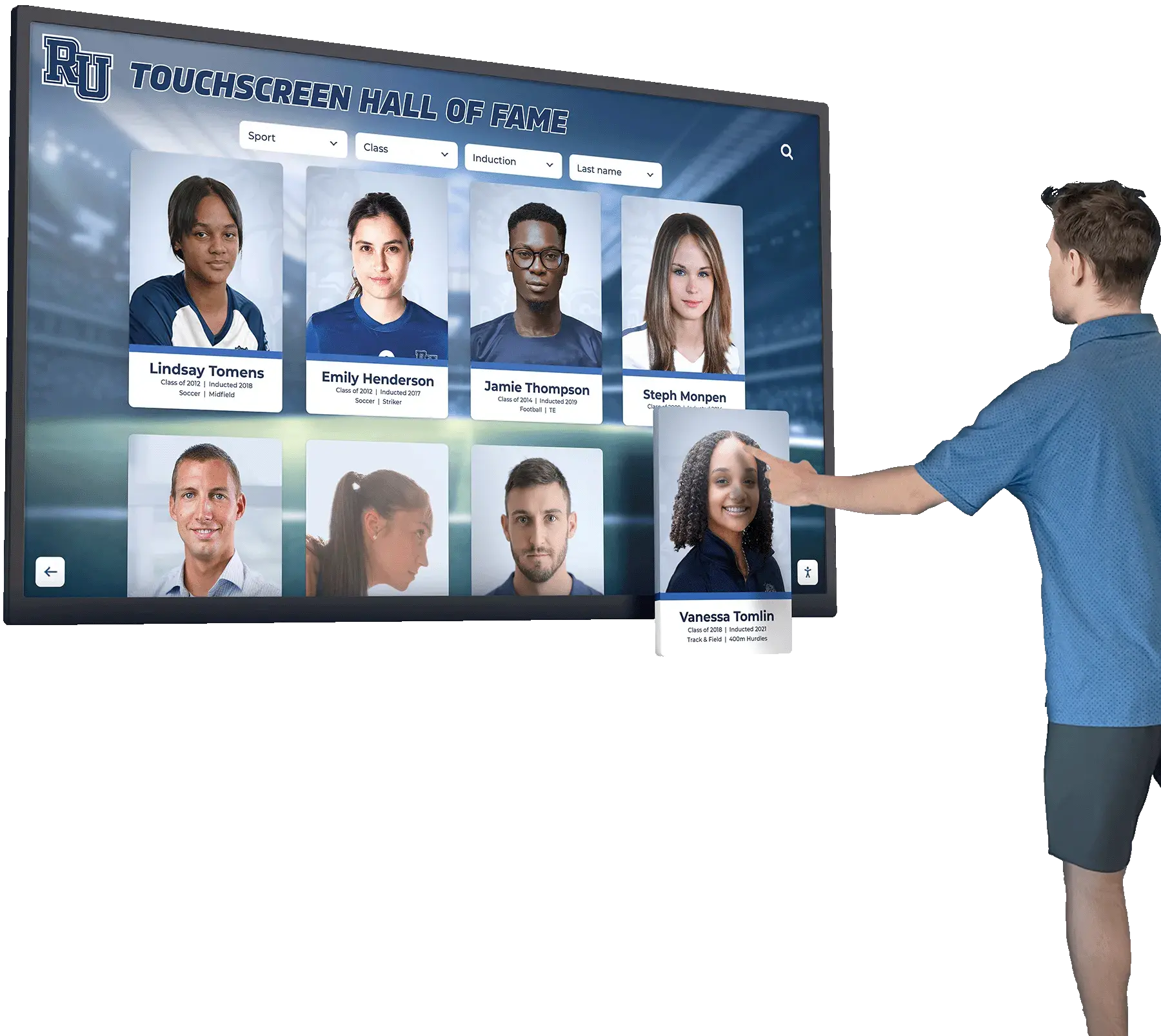
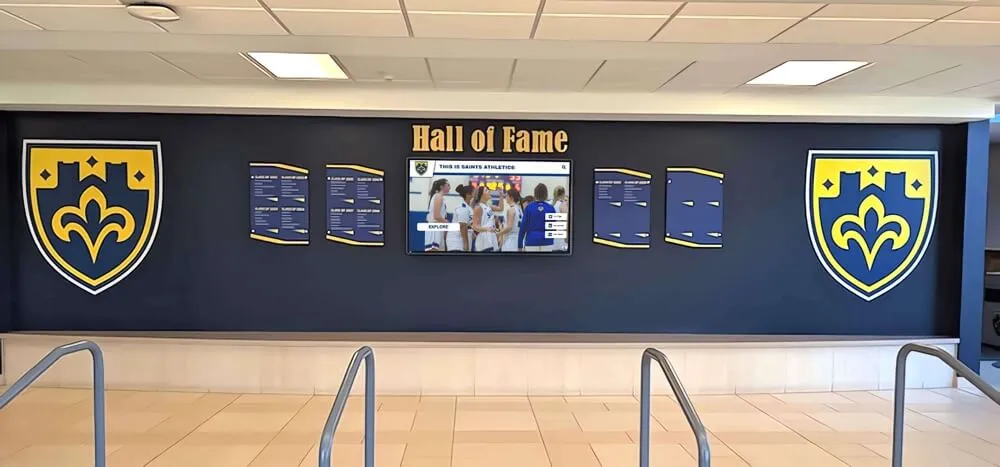
Athletic records displayed on interactive touchscreen systems can be corrected, restricted, or updated through a cloud-based CMS without replacing physical plaques or reprinting materials
The Five-Step Review Process
A structured review process protects the institution, the requester, and the integrity of the historical record. The following five-step process reflects common governance practices; adapt role titles to match your institution’s structure.
Step 1: Submission and Acknowledgment
All requests must be submitted through a defined channel—an email address, a web form, or a written letter to a named office. The policy should specify who receives requests and commit to an acknowledgment timeline. Acknowledging receipt within five to ten business days is a common practice. The acknowledgment confirms that the request has been logged, names the staff member responsible for the review, and provides an estimated timeline for a decision.
Step 2: Identity Verification and Standing Confirmation
Before the substantive review begins, the responsible staff member confirms that the requester has standing under the policy. This step may require documentation: a government-issued ID confirming identity, estate documentation for deceased individuals, or legal representation credentials. The staff member also identifies all content covered by the request—including content on platforms the requester may not have known about.
Step 3: Substantive Review
The responsible staff member reviews the request against the criteria defined in the policy. The review considers: the accuracy of any factual claims in the request; the nature of the requester’s interest (privacy, safety, correction of error, name change, other); the institution’s interest in maintaining the historical record; and any applicable legal obligations. For correction requests, this step may be brief. For removal requests, it typically requires consultation with the athletic director and, for sensitive cases, legal counsel.
If the request involves content that recognizes an inductee—a hall-of-fame profile, a championship record, a named award—the review should also assess whether granting the request would affect the recognition itself. Removal of an inductee’s photographs and biography from a public display is a different decision from removing an individual event photograph from a gallery.
Step 4: Decision and Notification
The responsible staff member issues a written decision within the timeline specified in the policy. The decision states: whether the request is granted, denied, or partially granted; the specific action to be taken (or not taken); the rationale for the decision; and the requester’s right to appeal and the process for doing so. Common decision timelines range from 30 to 60 days for standard requests, with a defined extension process for complex cases.
Step 5: Implementation and Documentation
If the request is granted, the approved action is implemented within a defined period following the decision—typically 15 to 30 days. For digital displays with cloud-based content management, updates can often be made quickly across all display locations at once. For physical displays, timelines may depend on fabrication schedules. The implemented change is documented, and the requester is notified of completion.
Grounds for Granting and Denying Requests
The policy should state explicitly what factors favor granting a request and what factors favor denying it. Undefined standards lead to inconsistent decisions.
Factors that typically support granting a request:
| Factor | Notes |
|---|---|
| Documented factual error | The information is verifiably inaccurate and should be corrected regardless of any privacy interest |
| Legal name or gender marker change | The person’s displayed identity does not reflect their current legal identity |
| Safety risk | Displaying the content creates a documented safety concern for the requester |
| Content depicts a minor without prior consent | Photographs or information collected when the individual was a minor, without adequate consent |
| Legal obligation | A court order, applicable privacy law, or other legal requirement directs removal or correction |
| Significant privacy interest with limited historical value | The content’s value to the institutional record is low relative to the privacy burden it places on the individual |
Factors that typically support denying a request:
| Factor | Notes |
|---|---|
| Content is accurate and historically significant | The request is motivated by preference rather than error or legitimate privacy interest |
| No standing | The requester is not the featured individual, their guardian, or their estate |
| Request would erase recognition the individual earned | Removing an inductee profile entirely is a much higher bar than restricting access to specific content |
| Content is part of a public record | Championship records, award histories, and team rosters are part of the institutional record and carry strong presumption of retention |
| Third-party interests | Other individuals appear in the same content; their interests must also be considered |
Schools should also specify that the policy does not apply retroactively to content removed before the policy’s effective date, unless separate review is granted.
For schools building digital archive infrastructure, best practices for building online high school digital archives offers useful context on how content governance and archival standards work together.
The Appeals Process
Every takedown request policy should include an appeals process. A requester who disagrees with the initial decision should have a defined path to a second review before turning to external remedies.
Recommended appeals structure:
- Submission deadline — The requester submits a written appeal within 30 days of receiving the initial decision
- Grounds for appeal — The appeal must identify a specific basis: new information not considered in the initial review, a procedural error in the initial review, or a claim that the decision conflicts with the stated policy criteria
- Appeals reviewer — Appeals are reviewed by a different decision-maker than the initial reviewer, typically at a higher administrative level (principal, vice principal of athletics, or a designated appeals committee)
- Timeline — The appeals reviewer issues a written decision within 30 to 45 days of receiving the appeal
- Finality — The appeals decision is the institution’s final decision under this policy; further recourse, if any, lies outside the policy process
The policy should state what options exist beyond the formal appeals process—for example, relevant state agencies or applicable legal remedies—without characterizing those options as part of the institutional process. Acknowledging external options while clearly limiting the policy’s scope protects the institution from an expectation that the internal process is the only available remedy.
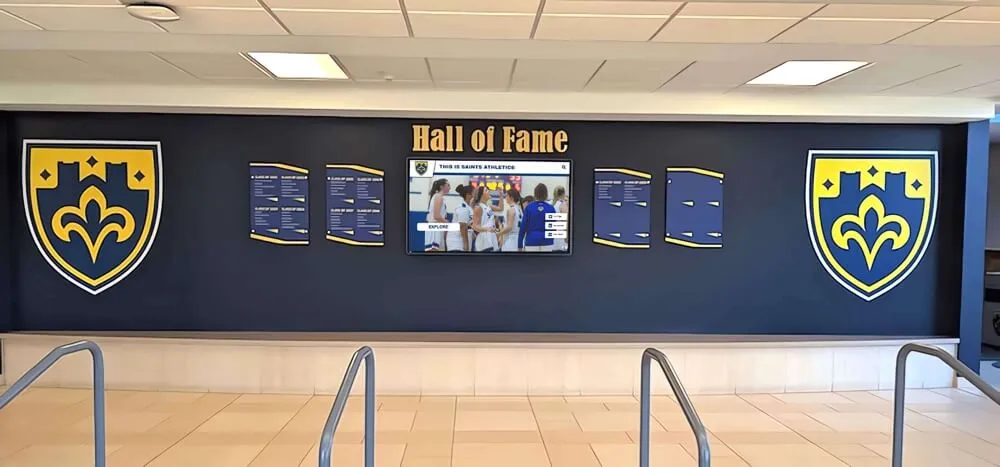
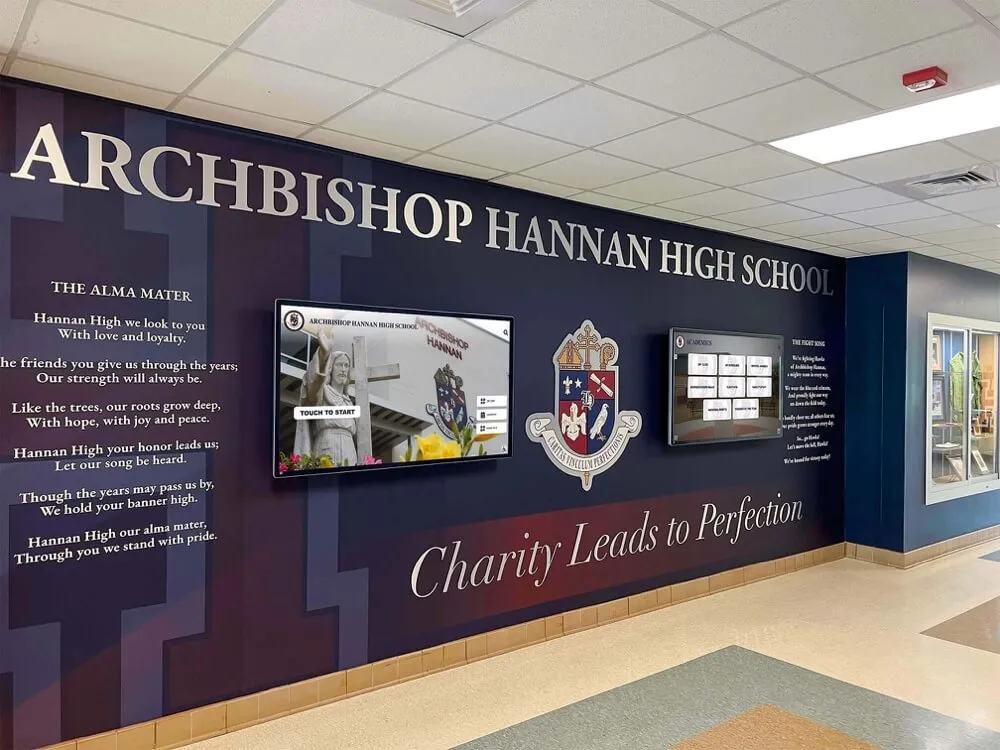
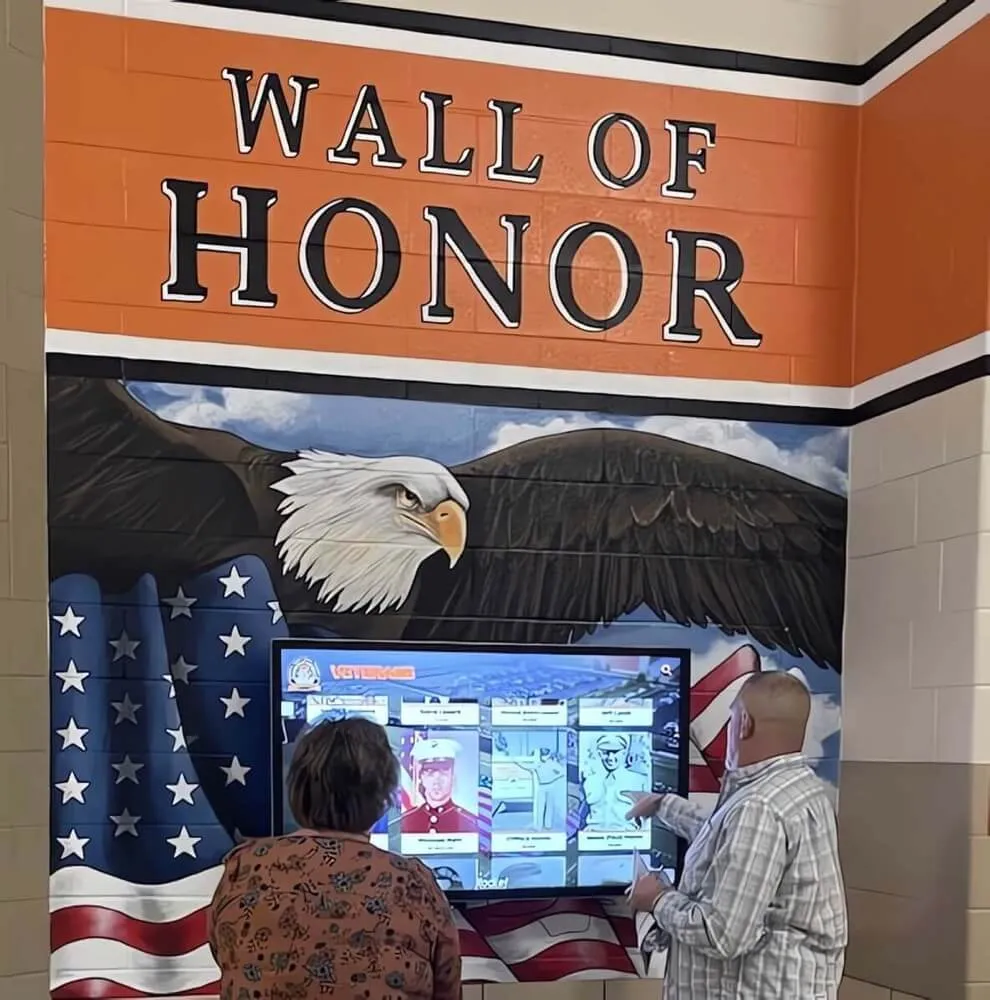
A formal appeals process gives requesters a fair path to a second review without requiring schools to relitigate every initial decision
Managing Requests Across Physical and Digital Displays
One of the most practical challenges in implementing a takedown request policy is that the same content often appears in multiple places—a physical trophy case, a hallway mural, a printed media guide, an interactive touchscreen display, and a publicly accessible website. A policy that does not address each display type leaves implementation gaps.
Physical displays (plaques, frames, banners, trophy cases): Physical changes require fabrication or removal. The policy should specify who authorizes the physical change, who executes it, what happens to removed items (archived, returned to the requester, or documented and disposed of under the deaccession policy), and what replacement content, if any, is installed. Physical changes typically take longer than digital updates and may require budget allocation.
Printed materials (media guides, programs, yearbooks): The policy should acknowledge that retroactive changes to already-printed materials are generally not feasible. The focus for printed materials is typically on future print runs and on digital versions of previously printed documents.
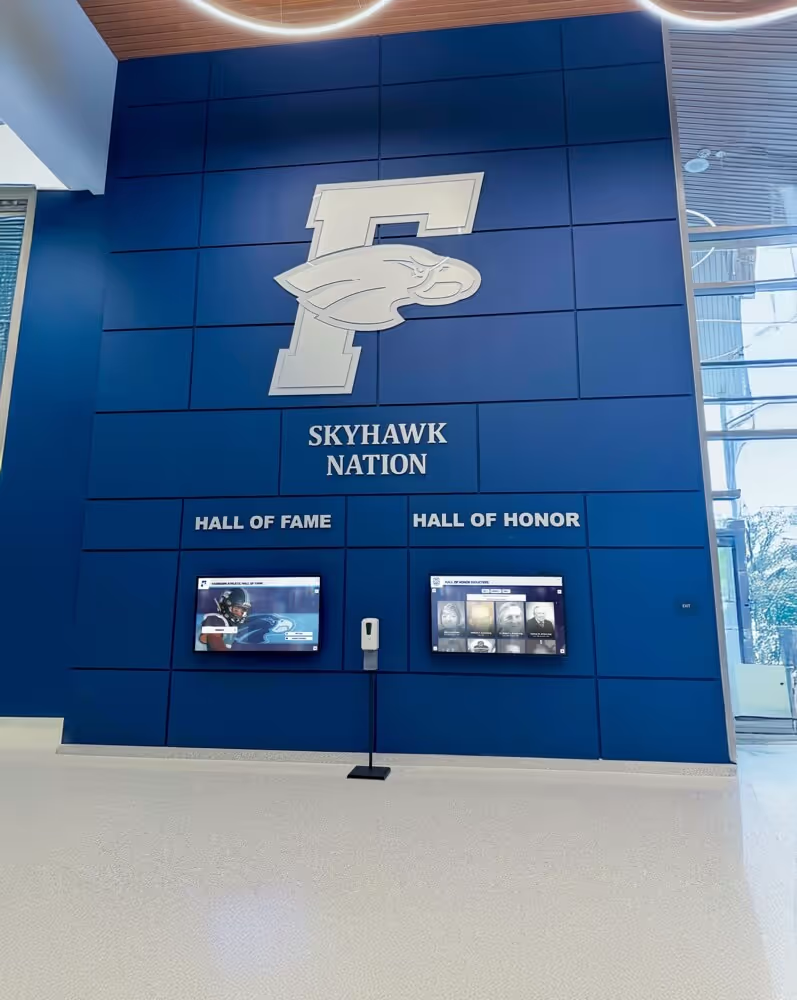
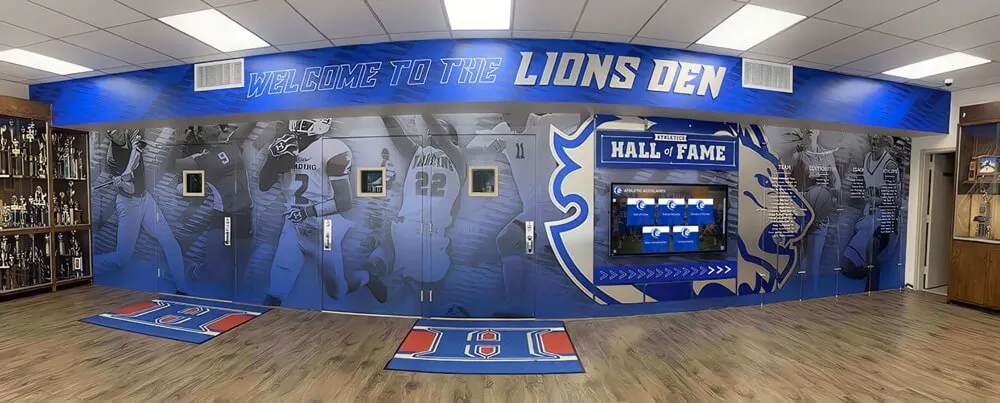
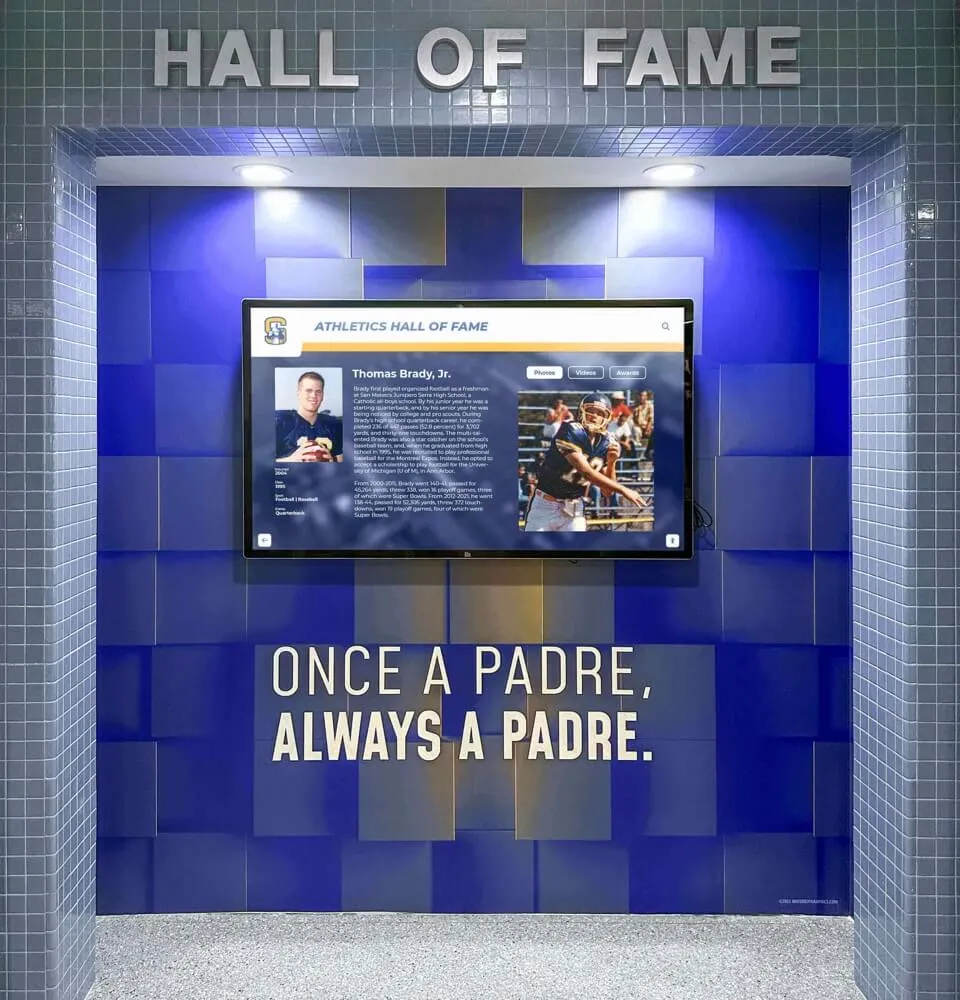
Digital touchscreen displays and cloud-based systems: Digital recognition platforms—including touchscreen walls of fame, interactive kiosks, and cloud-based content management systems—offer the most practical implementation path for approved requests. Content can often be updated, archived, or removed remotely across multiple display locations simultaneously. Schools using these platforms should document which staff members hold administrative access and are authorized to implement approved changes.
Websites and online archives: The policy should address whether the school’s public website, any online hall of fame, and any archived PDFs are subject to the same process as physical displays. Most schools that maintain a public-facing digital presence for their athletic history program should include it in scope.
The development of college history timelines using digital platforms offers perspective on how institutions structure content governance across digital display formats—an approach equally applicable to high school athletic programs.
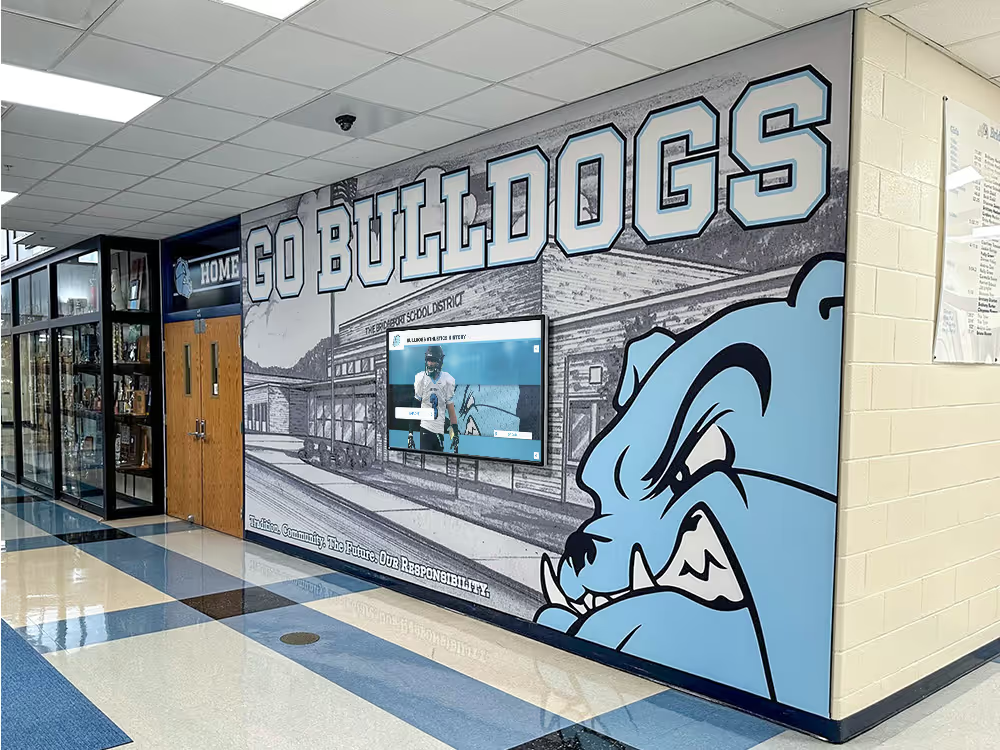
The practical advantage of modern touchscreen recognition platforms is that a single approved decision can be implemented across every digital display point in one cloud-based update—without replacing physical hardware, reprinting materials, or scheduling separate changes on each device.
Donor and Sponsor Recognition Content
Athletic history displays frequently include recognition content for donors and sponsors—named spaces, campaign donor walls, and named award funds. Requests related to this content raise distinct considerations.
A donor who asks to have their name removed from a recognition display may have contractual grounds depending on the original gift agreement. Some donors give anonymously and later have their anonymity breached; others give publicly and later wish to revoke that public recognition. The policy should address whether donor recognition content is subject to the same review process as athlete or coach content, and whether gift agreements take precedence over a general removal request.
For guidance on how schools structure donor recognition programs and manage donor relationships over time, capital campaign recognition programs and how they connect donors to school history provides useful context.
Named awards and perpetual funds present a related challenge: a donor’s name on an award is part of the award’s identity, and removing it may require separate governance consideration beyond the takedown request policy. Coordinate with your development or advancement office before granting any request to modify named award recognition.
Record-Keeping Requirements
Decisions made under a takedown request policy become part of the institutional record. Future staff, legal counsel, and potentially external parties may need to trace what happened and why. Minimum records for every reviewed request should include:
- A copy of the original request, including the submission date and channel
- Identity and standing verification documentation
- All communications with the requester during the review
- The written decision, with rationale, signed by the decision-maker
- For granted requests: documentation of the action taken, the date of implementation, and confirmation sent to the requester
- For appeals: a copy of the appeal submission, the written appeals decision, and the appeals decision-maker’s name and role
- A log entry in the policy’s master request log, noting the request date, request type, decision, and implementation date
Store these records in a designated file separate from general administrative correspondence. Define a retention period consistent with your institution’s records management policy—permanent retention for decisions that affect hall-of-fame recognition, and a defined period (often five to ten years) for standard correction and restriction requests.
For athletic directors navigating the administrative workload of recognition program governance, a comprehensive look at the role and responsibilities of an athletic director provides context on how policy management fits within the broader scope of the position.
How Digital Recognition Platforms Simplify Policy Implementation
Schools that manage athletic history entirely through physical displays face significant friction when implementing approved requests. Changing a name on a trophy plaque requires fabrication. Removing a photograph from a framed hallway display requires physical work. Updating a record board may require replacing engraved panels.
Schools using cloud-based touchscreen recognition platforms can implement most approved requests within minutes of a decision. A corrected biographical entry is updated in the content management system and published immediately to every display in the building. A restricted photograph is moved from the public-facing profile to the institutional archive with a single access-level change. A record corrected after a verification review updates automatically on every touchscreen where it appears.
This responsiveness matters. A takedown request policy that promises a 30-day implementation window builds credibility only when the technology can actually meet that timeline. Digital recognition infrastructure is what makes the promise real.
The guide to Division I athletics digital recognition systems illustrates how large-scale athletic programs use cloud-based display infrastructure to manage content at scale—principles that apply equally to high school programs managing a smaller but no less important archive.
Learn more about Rocket Alumni Solutions’ Digital Wall of Fame platform to see how the cloud-based content management system supports remote updates, granular content access controls, and archival management across every touchscreen display in a facility.
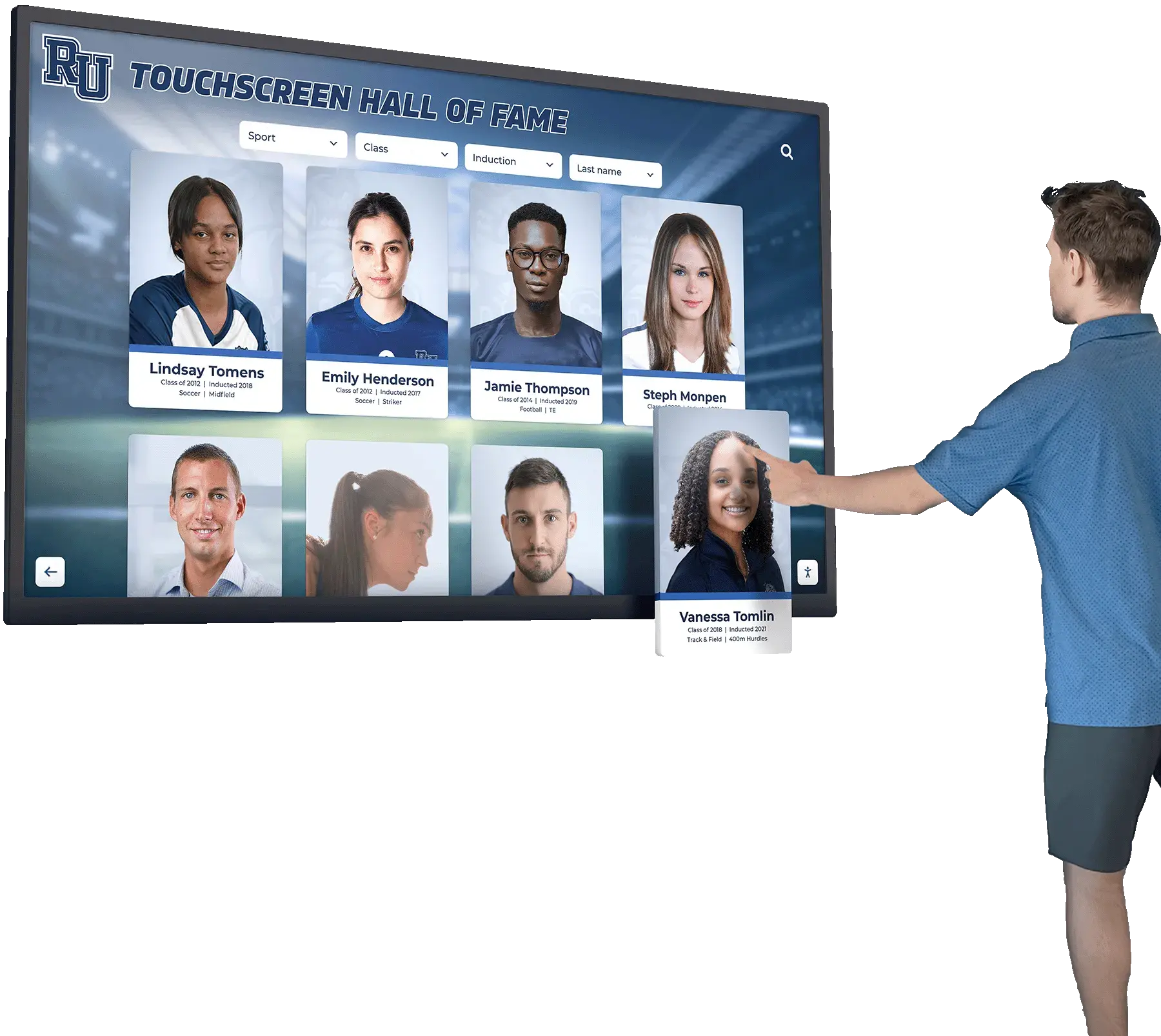
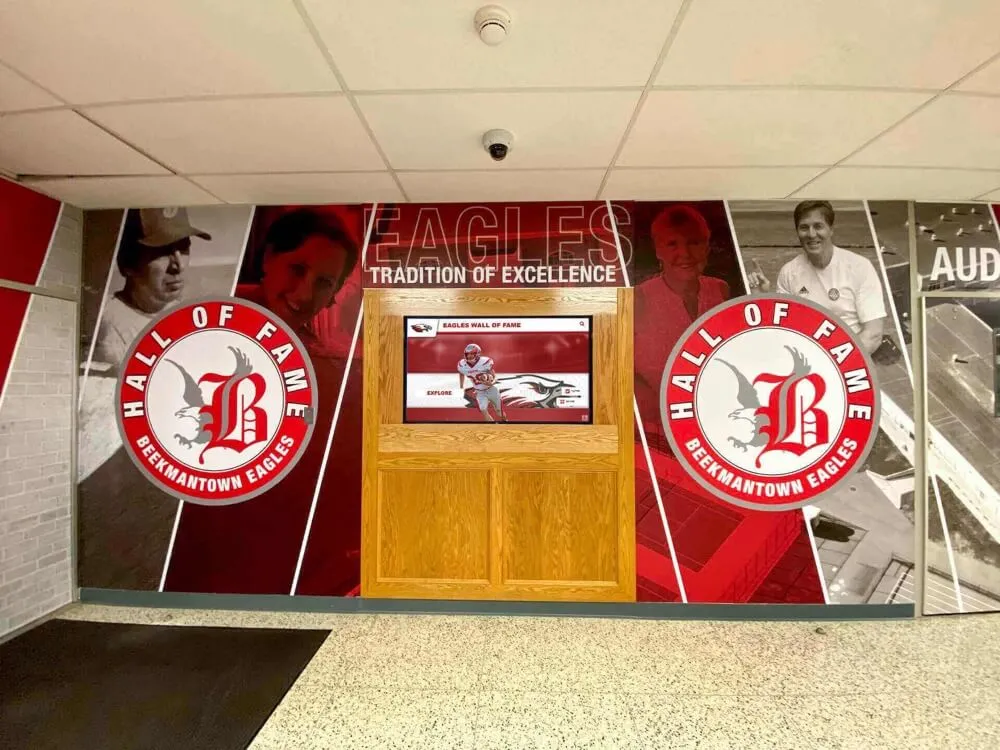
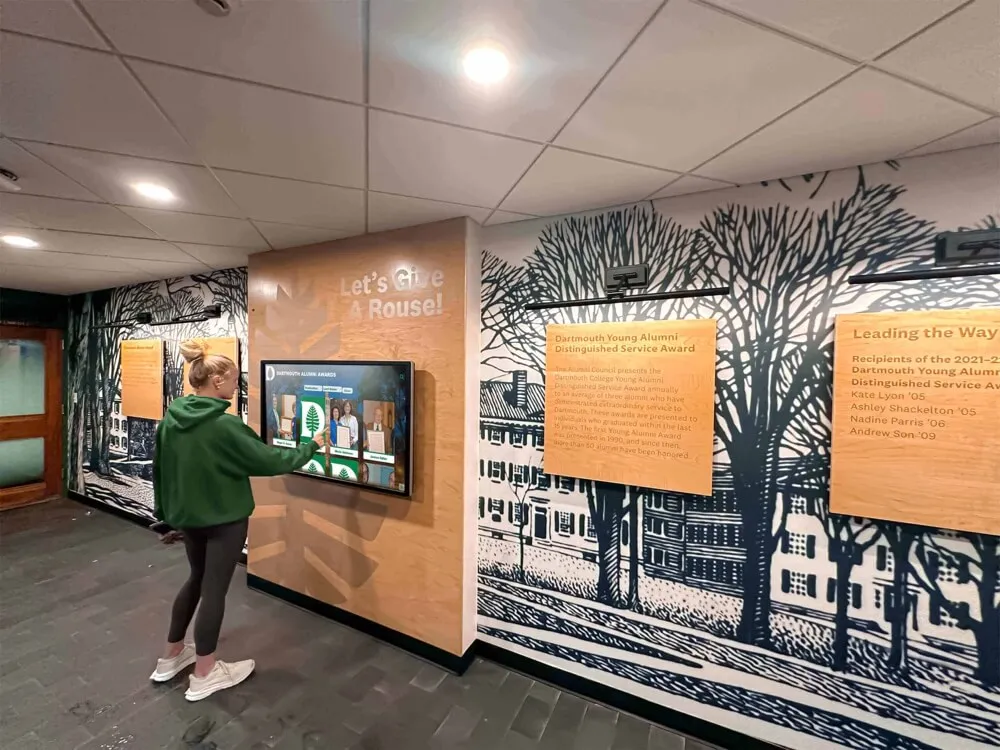
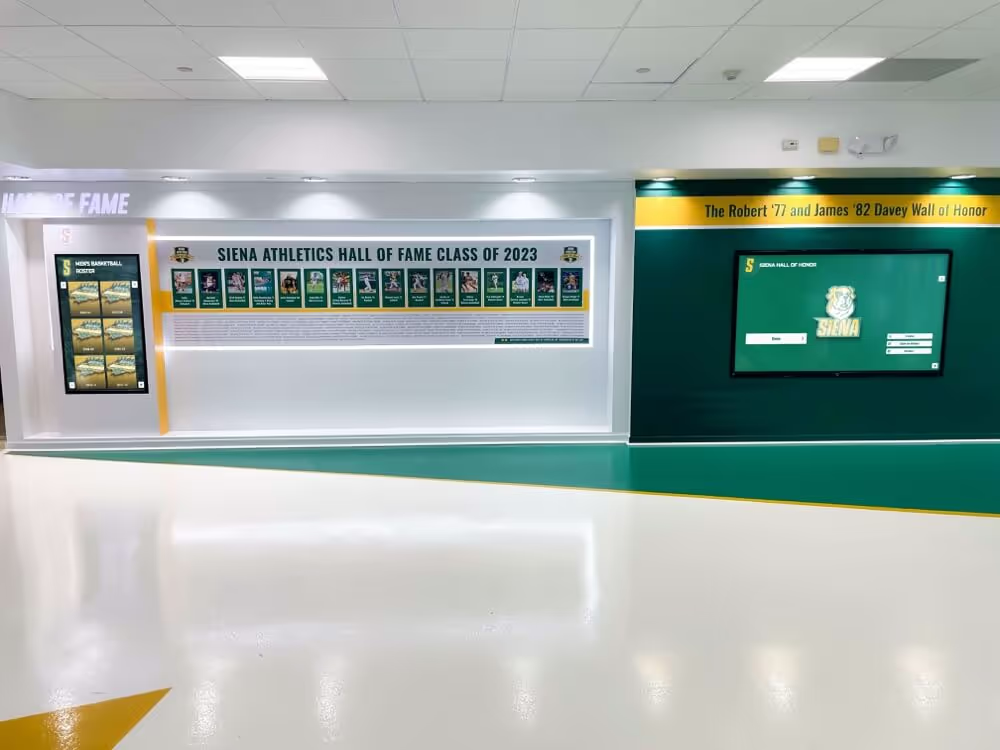
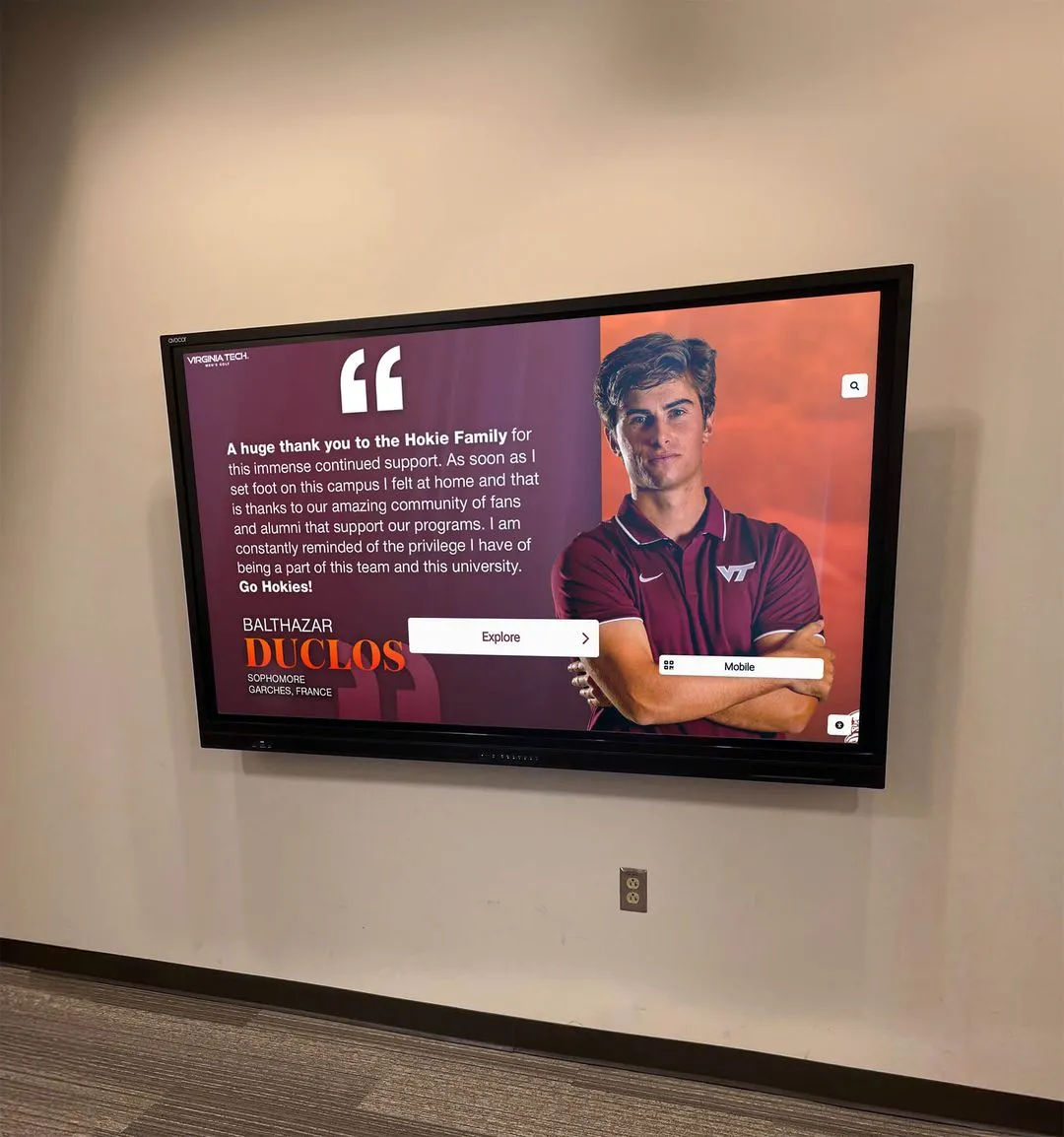
Cloud-based touchscreen platforms allow schools to implement approved content corrections, restrictions, or removals across every display location in a single update
Building the Policy Document: Ten Required Sections
A written takedown request policy should address each of the following sections. Gaps in any section create ambiguity that complicates implementation.
- Purpose and scope — What the policy is for and which content, platforms, and individuals it covers
- Definitions — Clear definitions of correction, restriction, and removal; of standing; and of any other key terms
- Standing requirements — Who may submit a request and what documentation confirms their standing
- Submission process — How to submit a request, which channel to use, and what information to include
- Acknowledgment commitment — The timeline within which the school acknowledges receipt
- Review process — Who conducts the review, what criteria apply, and what the school may consider
- Decision timeline — The standard timeline for a decision and the process for requesting an extension
- Grounds for granting and denying — The explicit factors the school considers in each direction
- Appeals process — How to appeal, on what grounds, who hears the appeal, and the timeline for an appeals decision
- Records management — What is documented, where it is stored, and how long it is retained
Schools building or revising their broader hall-of-fame governance framework may find it useful to review how coaching legacies are preserved through structured recognition programs for perspective on why the historical integrity of athletic records matters to the communities they serve.
Frequently Asked Questions
Q: Does a takedown request policy mean the school will remove anything a former athlete requests?
A: No. A policy creates a fair process for reviewing requests, not an obligation to grant them. Many requests—particularly those seeking to remove accurate, historically significant content—will appropriately be denied. The policy ensures every request is considered fairly and documented thoroughly.
Q: What if the requester is deceased and has no known estate representative?
A: The policy should address this scenario explicitly. Many schools extend limited standing to immediate family members for deceased individuals regardless of formal estate status, particularly for requests based on privacy or safety grounds. Define a process for verifying the family relationship and handling competing requests if multiple family members disagree.
Q: Does FERPA apply to athletic history content?
A: FERPA applies to education records maintained by schools that receive federal funding. Whether specific athletic history content qualifies as an education record under FERPA depends on how it was created and maintained, and how the individual involved is categorized. Consult your institution’s legal counsel and FERPA compliance officer for guidance specific to your situation.
Q: What if content appears on a display managed by a third party—for example, a booster organization’s website?
A: Content published by independent third parties is outside the school’s direct control and is not subject to this policy. The policy may include a provision for the school to notify the third party of an approved request, but the school cannot compel the third party to act. This distinction should be clearly communicated to requesters.
Q: Can a school charge a fee for processing requests?
A: Practices vary. Some institutions charge an administrative fee for non-urgent correction requests; others process all requests without charge. Any fee structure must be disclosed prominently in the policy and in the submission process. Consider whether a fee creates a barrier that is inconsistent with the program’s values before implementing one.
Q: How should the school handle a request that arrives before the policy is formally adopted?
A: Process the request using the best available judgment and document the process and rationale thoroughly. Once the policy is adopted, apply it prospectively. The policy may specify whether requests submitted prior to adoption can be reviewed under the new process if unresolved.
Q: What happens if a digital platform vendor updates or migrates content without the school’s authorization?
A: Vendor agreements should specify the school’s ownership of content, the vendor’s obligations for content preservation and confidentiality, and notification requirements before any content migration or deletion. This is a contract matter to confirm with legal counsel when selecting or renewing a vendor agreement.
Q: Should the policy be posted publicly?
A: Yes. A policy that is not publicly accessible is not a fair process. Post the policy on the athletic department’s website, link to it from the hall of fame page, and provide a copy on request. Transparency about how the school handles content review requests reinforces the program’s credibility.
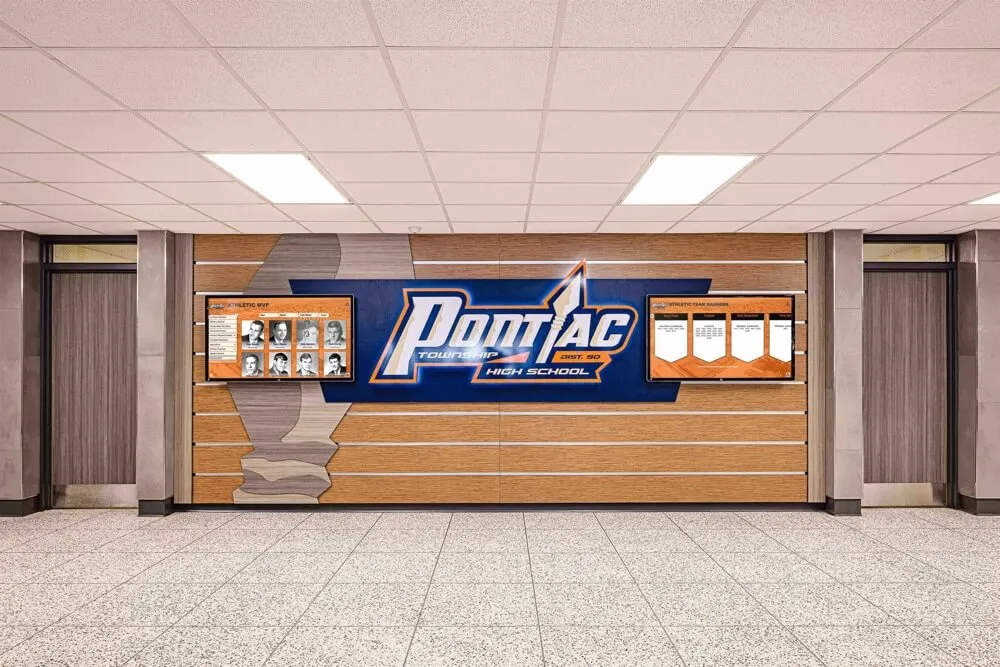
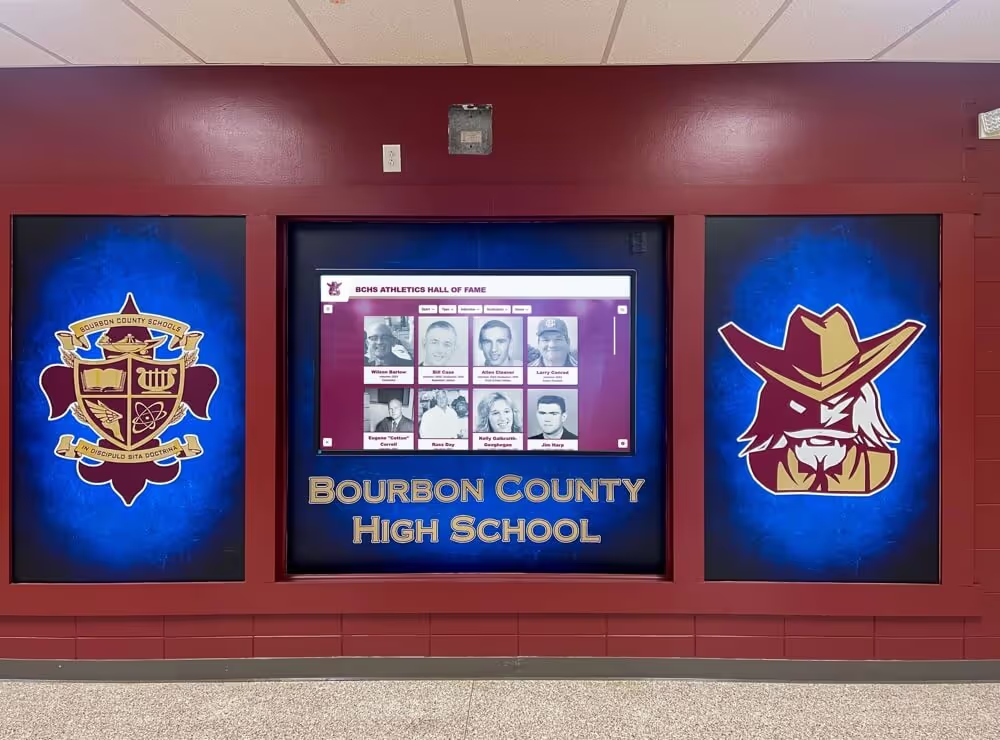
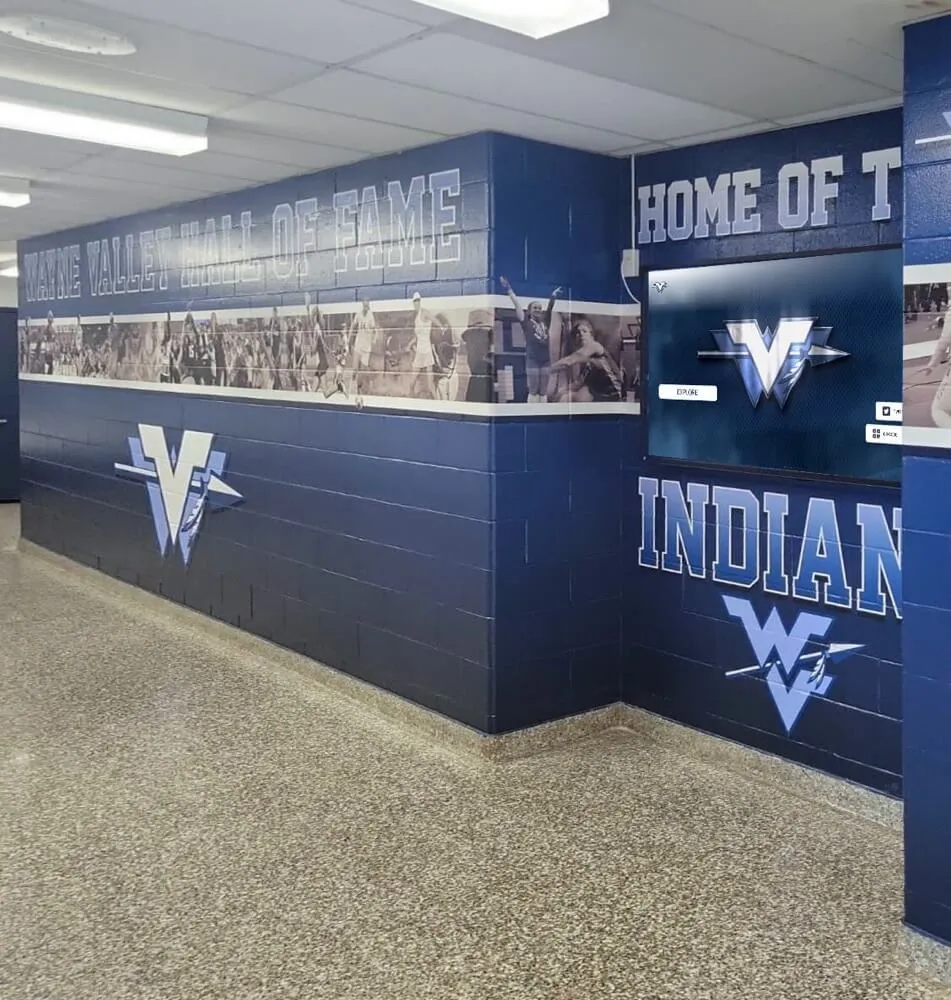
A publicly posted takedown request policy signals that the school takes the responsibility of displaying personal histories seriously—and gives the community a defined, fair process for raising concerns
A formal athletic history takedown request policy is not an admission that the school’s content is problematic. It is evidence that the school understands it is a steward of real people’s stories and has built a responsible, transparent process for managing that stewardship over time. Schools that adopt a written policy—and pair it with digital recognition infrastructure that makes implementation practical—build stronger community trust, reduce legal exposure, and preserve the integrity of the athletic record for the long term.
Make Content Governance Practical with a Modern Digital Display Platform
Rocket Alumni Solutions' interactive touchscreen wall of fame gives your school a cloud-based content management system that makes approved corrections, restrictions, and updates fast, documented, and consistent across every display. See how it supports responsible athletic history stewardship for your program.
Request Your Custom DemoLive Example: Rocket Alumni Solutions Touchscreen Display
Interact with a live example (16:9 scaled 1920x1080 display). All content is automatically responsive to all screen sizes and orientations.