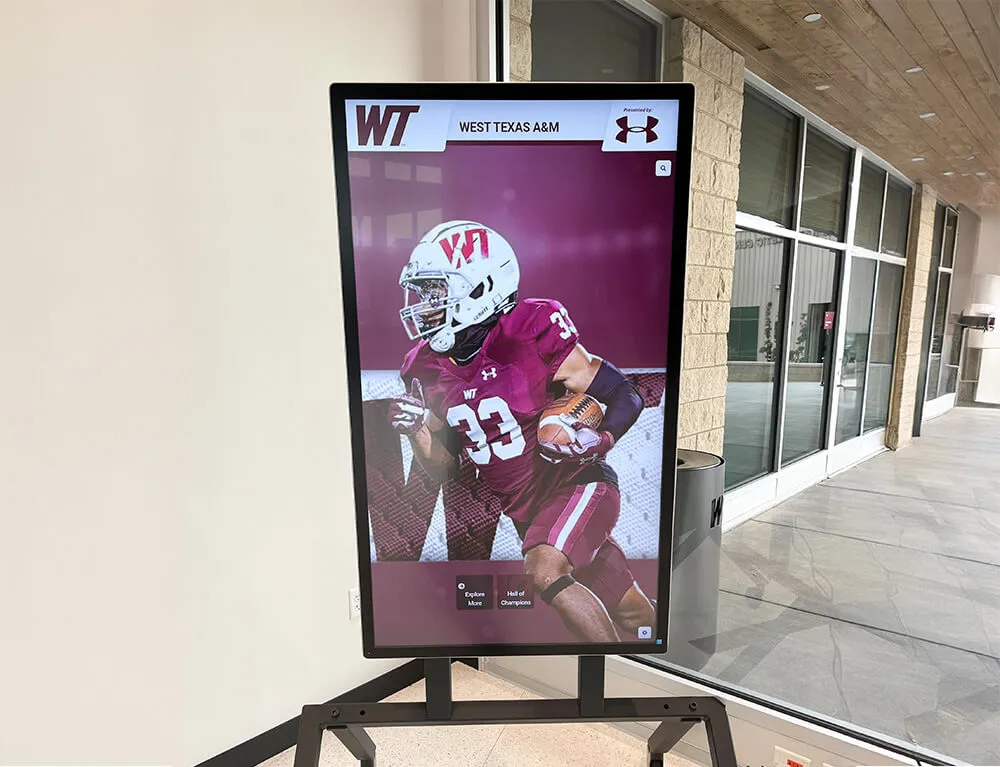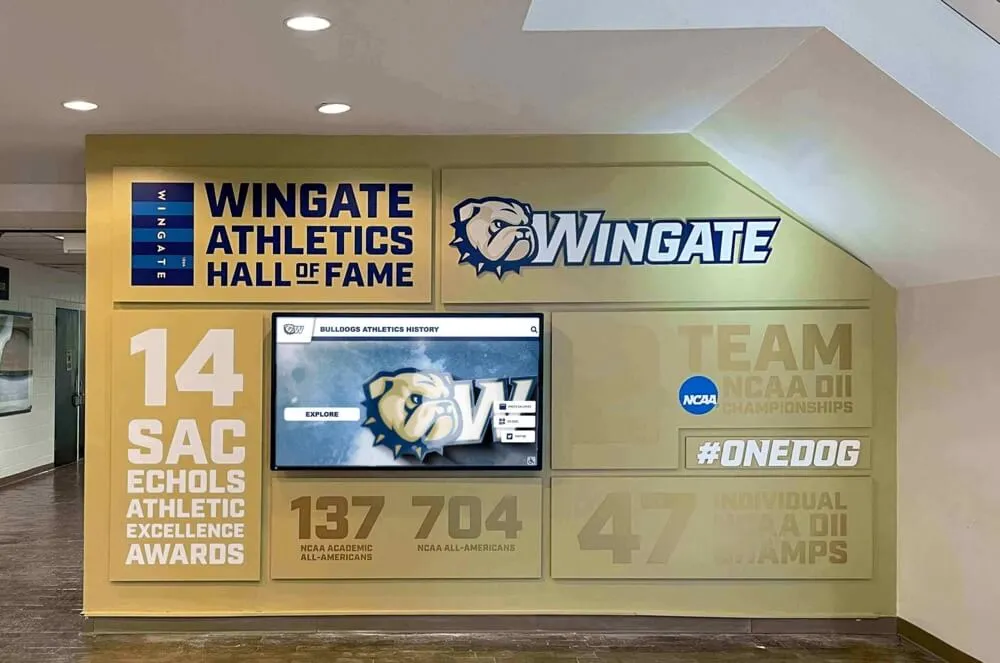




An athletic mission statement is more than organizational boilerplate posted above a coaches’ office door. At its best, a well-crafted mission statement becomes the governing document for every recognition decision an athletic department makes — from which athletes earn sportsmanship awards to what criteria a hall-of-fame committee uses when evaluating nominees, from what captions appear on digital displays in the lobby to which values get etched into championship rings.
Yet most athletic directors inherit mission statements they didn’t write, selection committees apply criteria they can’t trace back to any stated philosophy, and recognition programs celebrate achievement in ways that have no clear connection to what the department actually claims to value. The result is a gap between aspiration and action that athletes, families, and alumni notice even if they can’t name it.
This guide provides concrete athletic mission statement examples for schools at every competitive level, explains the structural components that make a statement useful rather than decorative, and shows how mission language flows directly into the award criteria, hall-of-fame standards, and public recognition displays that define a program’s identity.
A mission statement earns its place on the wall only when it shapes decisions — and recognition programs are among the clearest tests of whether a department actually lives by what it claims to value.

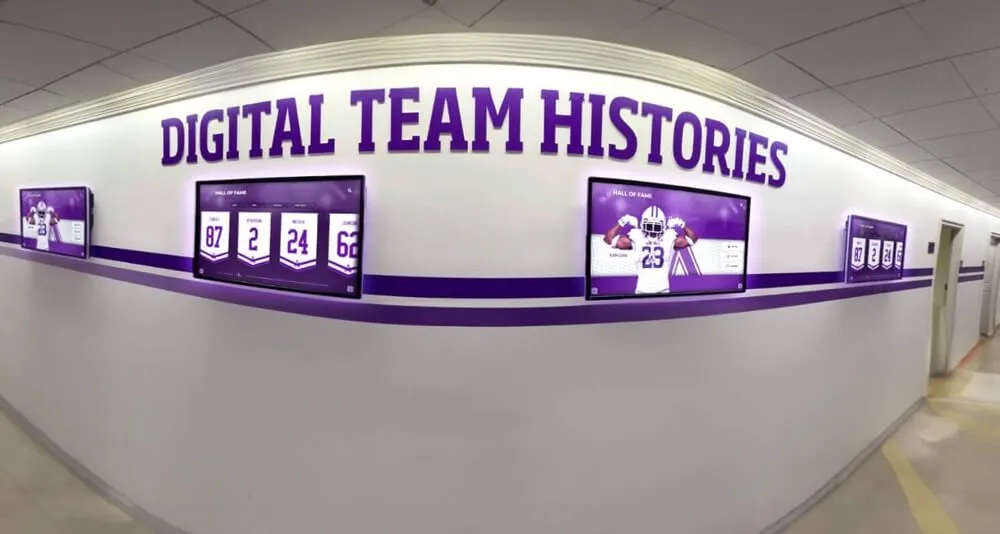
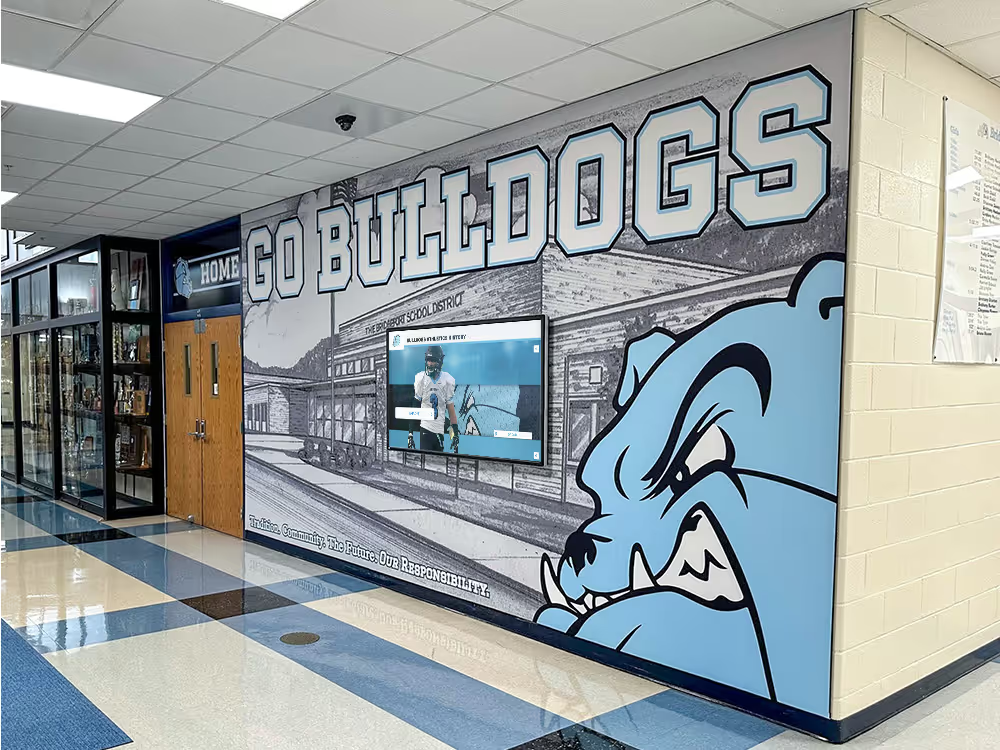
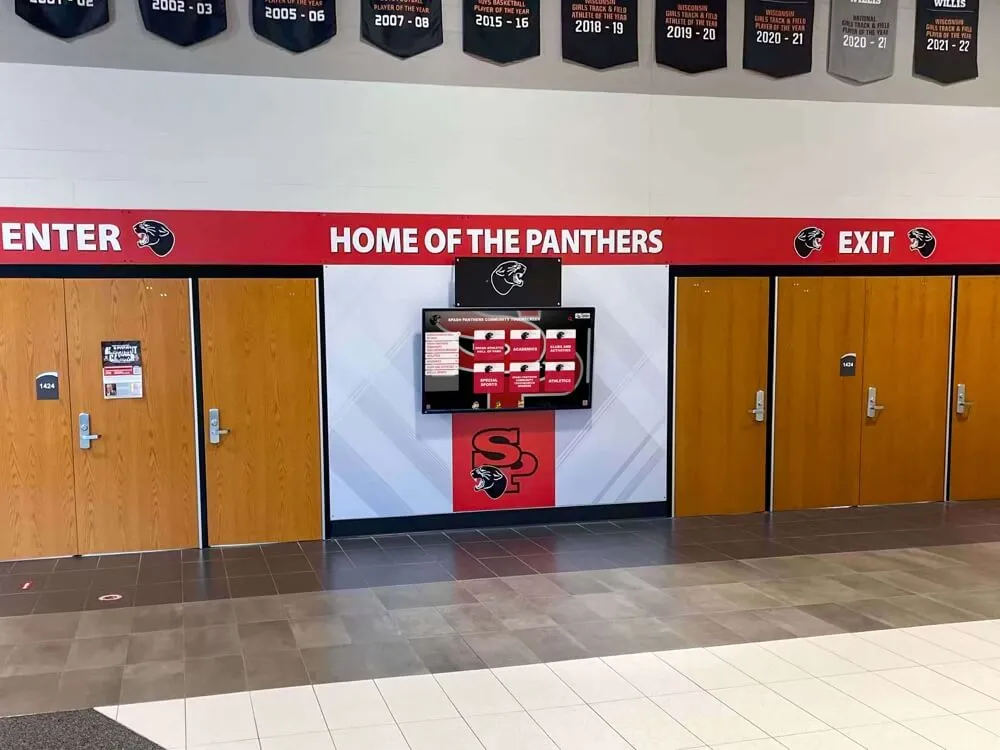
The values enshrined in an athletic mission statement should be visible in every recognition decision — from hall-of-fame inductee selection to what gets displayed in a school's public spaces
What an Athletic Mission Statement Actually Does
Before examining specific examples, it helps to understand what makes an athletic mission statement operationally useful versus merely aspirational.
The Core Function
An athletic department mission statement defines the purpose of athletic competition within an educational institution — why the program exists, who it serves, what outcomes it pursues, and what principles guide decisions when tradeoffs arise. Unlike a vision statement (which describes a desired future state) or a set of values (which lists principles in isolation), a mission statement answers the question: What are we trying to accomplish, and how?
For recognition programs specifically, the mission statement answers:
- Award criteria: What qualities should a sportsmanship award celebrate? What does “excellence” mean in this program?
- Hall-of-fame standards: Should selection weight athletic statistics equally with character? What does this institution honor permanently?
- Public displays: What does the lobby wall communicate about program identity to recruits, parents, and alumni?
- Banquet language: How do coaches frame the season’s meaning when presenting awards to athletes and families?
The Four Structural Components
Effective athletic mission statements share a common architecture:
| Component | What It Addresses | Example Language |
|---|---|---|
| Purpose | Why the program exists | “to develop complete student-athletes” / “to build character through competition” |
| Population | Who it serves | “all athletes regardless of ability level” / “the entire school community” |
| Method | How goals are pursued | “through competitive excellence and academic integrity” / “by fostering teamwork and resilience” |
| Outcome | What success looks like | “graduates who lead with integrity” / “a program the community is proud to support” |
Statements that include all four components give selection committees, coaches, and program administrators the language they need to make consistent recognition decisions across years and leadership transitions.
Athletic Mission Statement Examples for Schools
The following examples are organized by institutional level and emphasis. Athletic directors can adapt these templates to reflect local mascots, conference affiliations, and community values.
High School Athletic Mission Statement Examples
Character-forward statement:
“The [School Name] Athletic Department exists to develop student-athletes of strong character, competitive spirit, and academic integrity. We pursue excellence in competition while teaching the values of teamwork, resilience, and respect — qualities that serve our athletes long after the final whistle.”
Community-centered statement:
“Athletics at [School Name] connects our entire community through shared competition, mutual support, and pride in what our student-athletes achieve. We are committed to providing every athlete with opportunities to develop physically, academically, and personally — competing hard, winning with humility, and losing with grace.”
Excellence-and-equity statement:
“The [School Name] Athletic Department strives to provide all student-athletes with an environment of competitive excellence and personal growth. We honor commitment at every level, celebrate achievement in all its forms, and build teams that reflect the values of our school: hard work, integrity, and respect for every participant.”
Mission-and-recognition-linked statement:
“We compete to develop the whole person. At [School Name], our athletic program measures success not only in wins, records, and championships, but in the character our athletes demonstrate — on the field, in the classroom, and in the community. This belief governs every team we field, every award we present, and every athlete we celebrate.”
College and University Athletic Department Mission Statement Examples
Academic-athletic integration statement:
“The [University Name] Department of Athletics is committed to providing student-athletes with a nationally competitive athletic experience integrated with academic excellence. We develop leaders — athletes who perform at the highest level of their sport while fulfilling their academic obligations, representing their university with distinction, and graduating prepared to contribute to society.”
Broad participation statement:
“Athletics at [University Name] serves the educational mission of the institution by developing student-athletes who excel in competition, in the classroom, and in life. We are committed to equitable opportunity across all sports, fair and transparent governance, and a culture in which every athlete is valued for their contribution to our community.”
Values-explicit statement:
“The [University Name] Athletic Department advances the institution’s mission by cultivating excellence, integrity, and leadership through competitive athletics. Our program prepares student-athletes to win in sport and in life — through rigorous preparation, ethical competition, and a commitment to serving something larger than themselves.”
Service-and-legacy statement:
“We build athletes who become leaders and alumni who remain connected. The [University Name] Athletic Department exists to develop student-athletes of exceptional character, competitive excellence, and deep institutional loyalty — competitors who represent this university proudly during their years of eligibility and long after graduation.”
Athletic Department Mission Statement Examples by Value Emphasis
Different programs may need to weight specific values depending on their competitive culture, community context, or strategic priorities:
Sportsmanship-forward:
“At [School Name], we believe how we compete matters as much as whether we win. Our athletic program develops student-athletes who pursue excellence with sportsmanship, resolve conflicts with integrity, and represent our school as role models in every competitive setting.”
Academic achievement emphasis:
“The [School Name] Athletic Department exists to help student-athletes achieve at the highest level in sport and scholarship. We support our athletes in meeting rigorous academic standards while competing at the highest level our program can sustain — because our athletes are students first.”
Inclusion and access emphasis:
“Athletics at [School Name] welcomes every student who is willing to work. Our mission is to provide meaningful athletic opportunity to all students who demonstrate commitment — developing competitive teams while ensuring that no student-athlete is left behind because of economic circumstance, prior experience, or background.”
Alumni and legacy emphasis:
“We honor those who competed before us and invest in those who will compete after us. The [School Name] Athletic Department builds programs that create lifelong athletes and engaged alumni — competitors who stay connected to this institution long after they have exhausted their eligibility.”
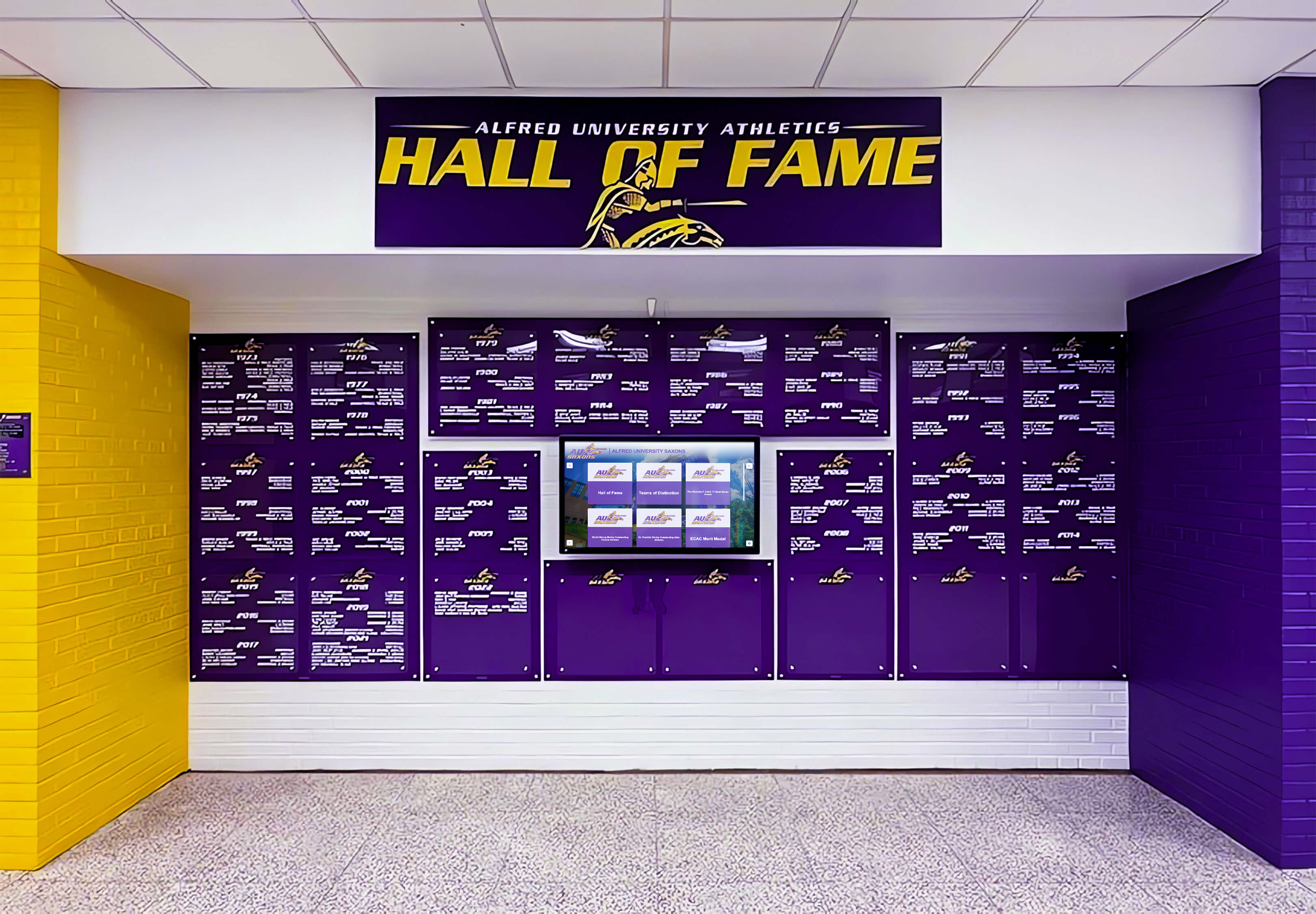
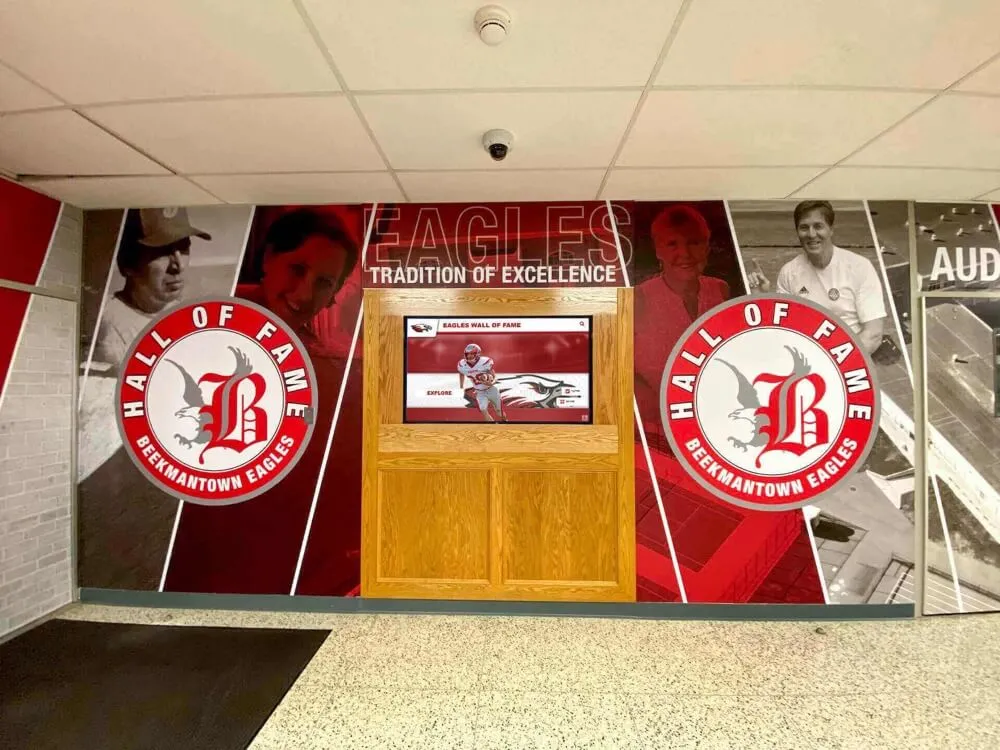
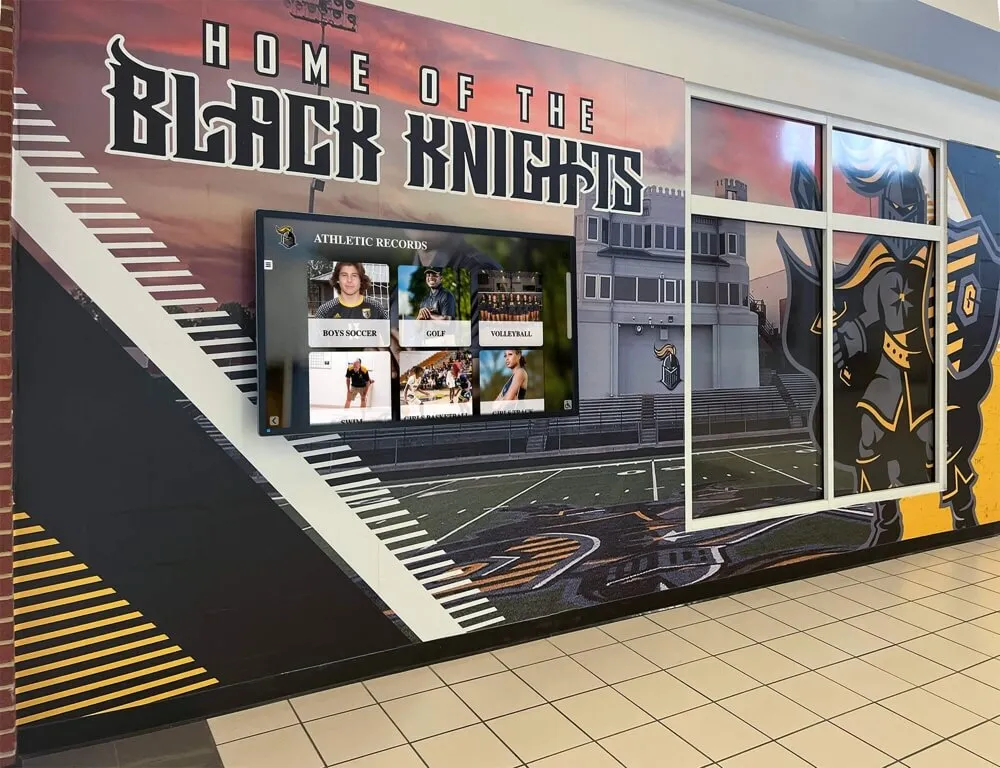
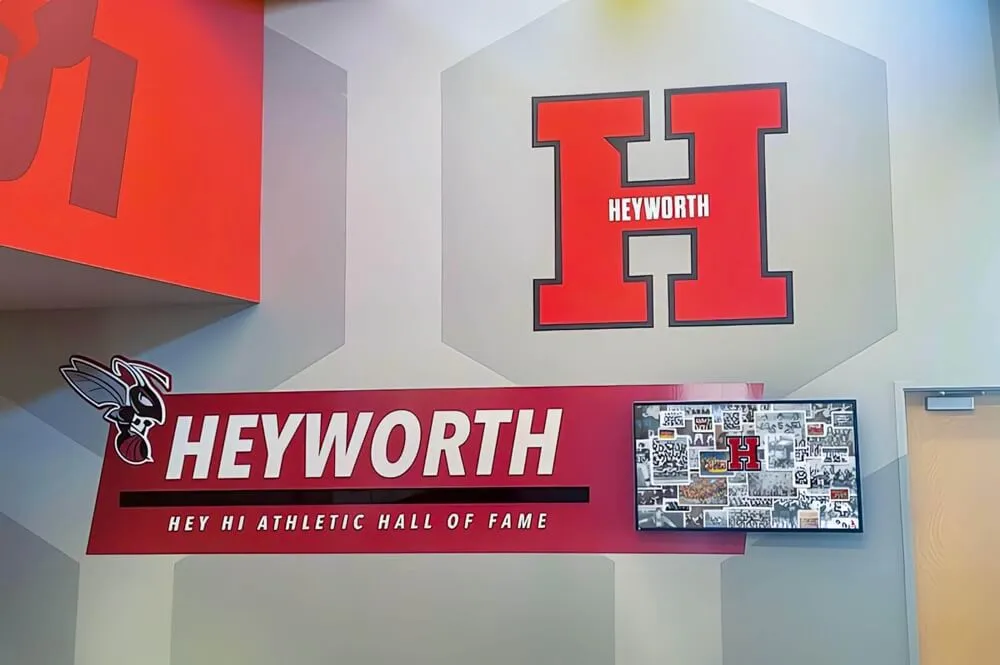
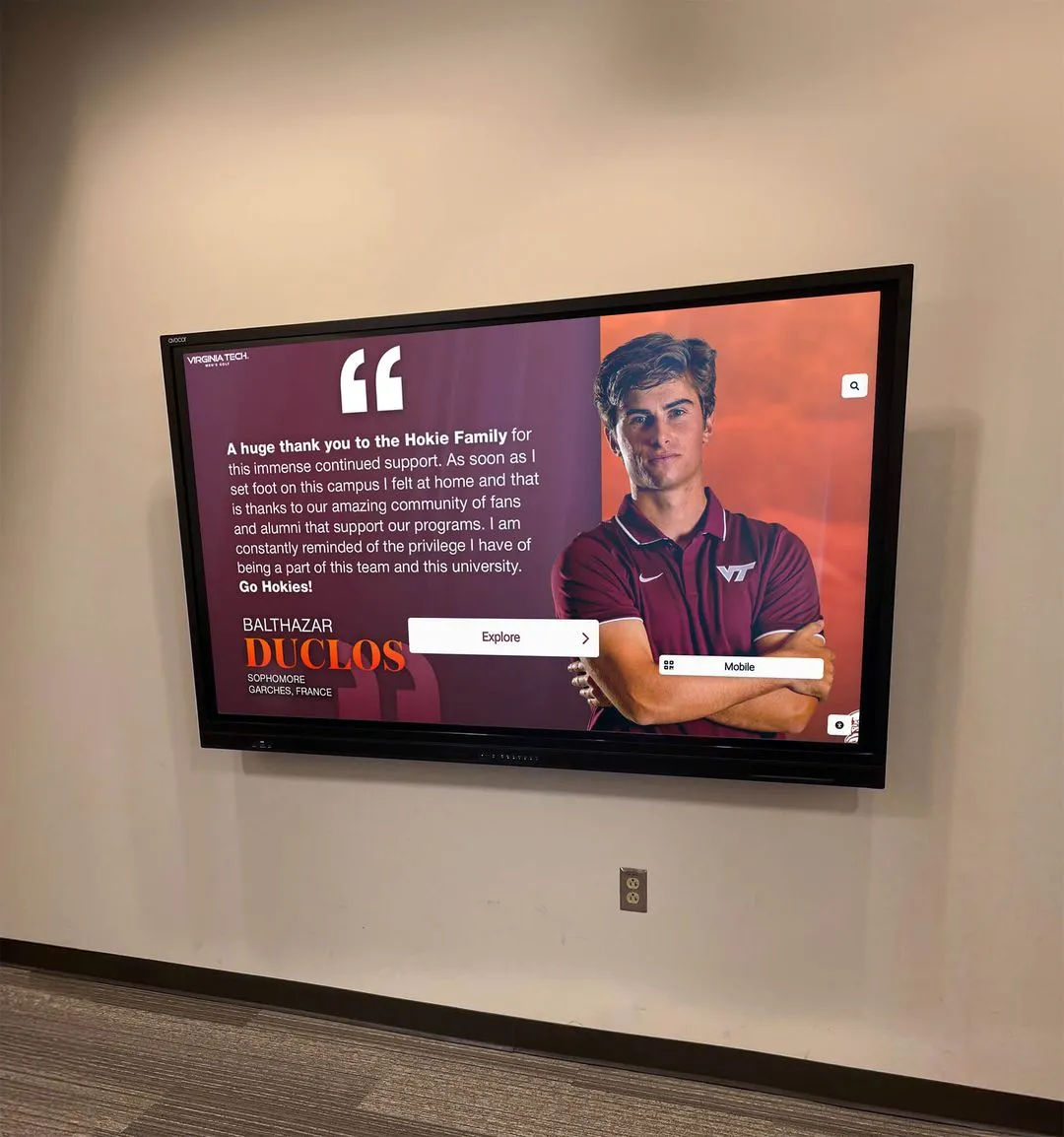
The language of an athletic mission statement shapes which achievements get permanently honored — and how those honorees are described on hall-of-fame walls for decades to come
How Mission Statements Shape Award Criteria
The most operationally important application of an athletic mission statement is translating its language into specific, measurable award criteria. Programs that do this well create award categories that feel coherent and consistent; programs that skip this step end up with awards named after values they don’t actually evaluate.
Mapping Values to Award Categories
Work through your mission statement and identify every value claim it makes. Then ask: What award do we give that actually measures this?
Mission language → Award category mapping:
| Mission Value | Potential Award Category | What Evaluators Actually Measure |
|---|---|---|
| Academic integrity | Scholar-Athlete of the Year | GPA, academic honors, AP/IB coursework |
| Teamwork | Team First Award / Unsung Hero | Coach and teammate nominations for non-statistical contribution |
| Resilience | Comeback Athlete | Documentation of significant obstacle overcome |
| Community service | Community Impact Award | Documented volunteer hours, community leadership |
| Sportsmanship | Sportsmanship Award | Absence of conduct violations, opponent/official feedback |
| Leadership | Captain’s Award | Captain elections, leadership roles, peer evaluations |
| Commitment | Most Improved / Four-Year Award | Attendance, participation longevity, growth metrics |
When award categories map directly to mission language, the annual banquet becomes a coherent expression of program values rather than a collection of trophies assigned to the most statistically accomplished athletes.
Creating Mission-Aligned Selection Criteria
For each award, document the specific criteria evaluators will apply. Vague awards produce inconsistent decisions and stakeholder dissatisfaction. Specific criteria produce transparent, defensible selections.
Example: Sportsmanship Award criteria (derived from a character-forward mission statement)
Eligible candidates must demonstrate:
- Zero technical fouls, ejections, or conduct-related suspensions during the season
- Two or more nominations from coaches, officials, or opposing coaches for on-field conduct
- Documented instances of positive sportsmanship (helping an injured opponent, postgame acknowledgment, positive sideline behavior during losses)
- Academic standing of 2.5 GPA or higher
- No athletic department disciplinary actions during the academic year
When criteria are this specific, the selection process is consistent, defensible, and aligned with what the mission statement actually promises.
Learn about weekly top performer recognition programs that build throughout the season toward year-end award selections tied to program values.
How Mission Statements Shape Hall-of-Fame Standards
Hall-of-fame selection is where mission statement language faces its most rigorous test. When an institution says it values character alongside achievement — and then selects inductees based almost entirely on statistical performance — the gap is visible to everyone who knows the program’s history.
Translating Mission Language into Hall-of-Fame Criteria
The criteria an athletic hall of fame uses to evaluate nominees should flow directly from the department’s stated mission. Common mission elements and their hall-of-fame implications:
“We develop the whole person” → Hall-of-fame criteria should include character evaluation, not just athletic statistics. Selection committees should explicitly review conduct, sportsmanship, and post-graduation engagement alongside performance metrics.
“We honor commitment at every level” → Hall-of-fame categories may need to include contributors and coaches alongside athletes, with separate evaluation criteria for each. A dedicated long-service award or contributor category prevents athletes from competing against coaches in a single undifferentiated pool.
“We build alumni who remain connected” → Post-graduation alumni engagement — mentoring current athletes, returning to campus events, contributing to annual funds — may appropriately factor into hall-of-fame selection for programs whose mission emphasizes lifetime connection.
“We compete with integrity” → Conduct standards should be explicit in governing documents. A candidate whose competitive record is exceptional but whose conduct history is problematic should be evaluated against a standard derived from the mission statement, not invented ad hoc when the case arises.
Building a Mission-Consistent Selection Rubric
Athletic hall-of-fame selection committees benefit from a scoring rubric that translates mission values into weighted criteria:
Sample rubric (weights are illustrative — adjust to match your mission emphasis):
| Criterion | Weight | Evidence Required |
|---|---|---|
| Athletic achievement (statistics, records, awards) | 40% | Career statistics, all-conference/state/national recognition |
| Program impact (championships, team contributions) | 20% | Championship rosters, coach and teammate testimonials |
| Character and sportsmanship | 20% | Conduct history, sportsmanship awards, peer references |
| Post-graduation engagement | 10% | Alumni event attendance, mentorship, giving history |
| Academic achievement | 10% | GPA, academic honors, graduation completion |
Programs whose mission emphasizes character heavily may weight the character criterion at 30–35% and reduce athletic achievement weight correspondingly. The key is that the rubric reflects the stated mission — not the reverse.
Explore how college football hall of fame traditions balance statistical excellence with institutional values across different selection models.

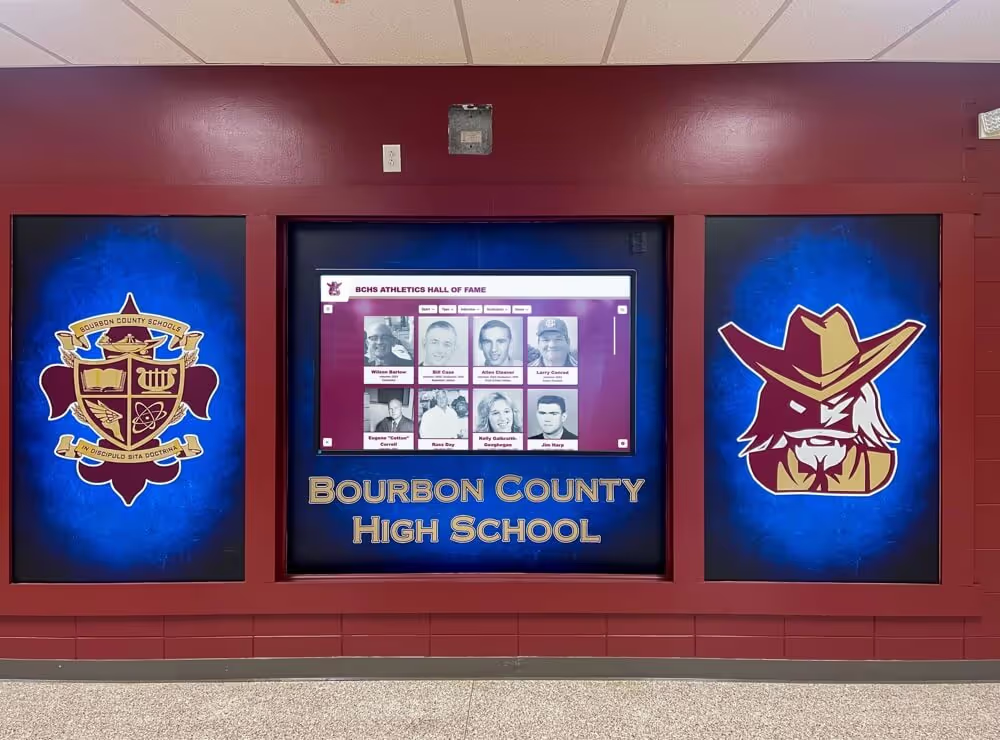
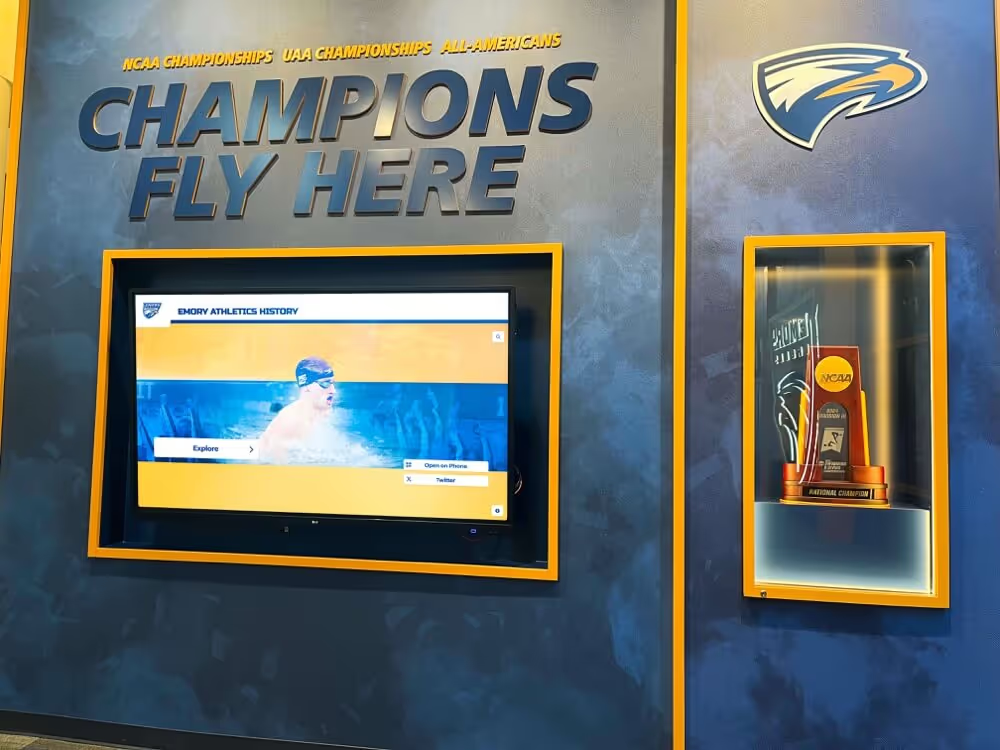
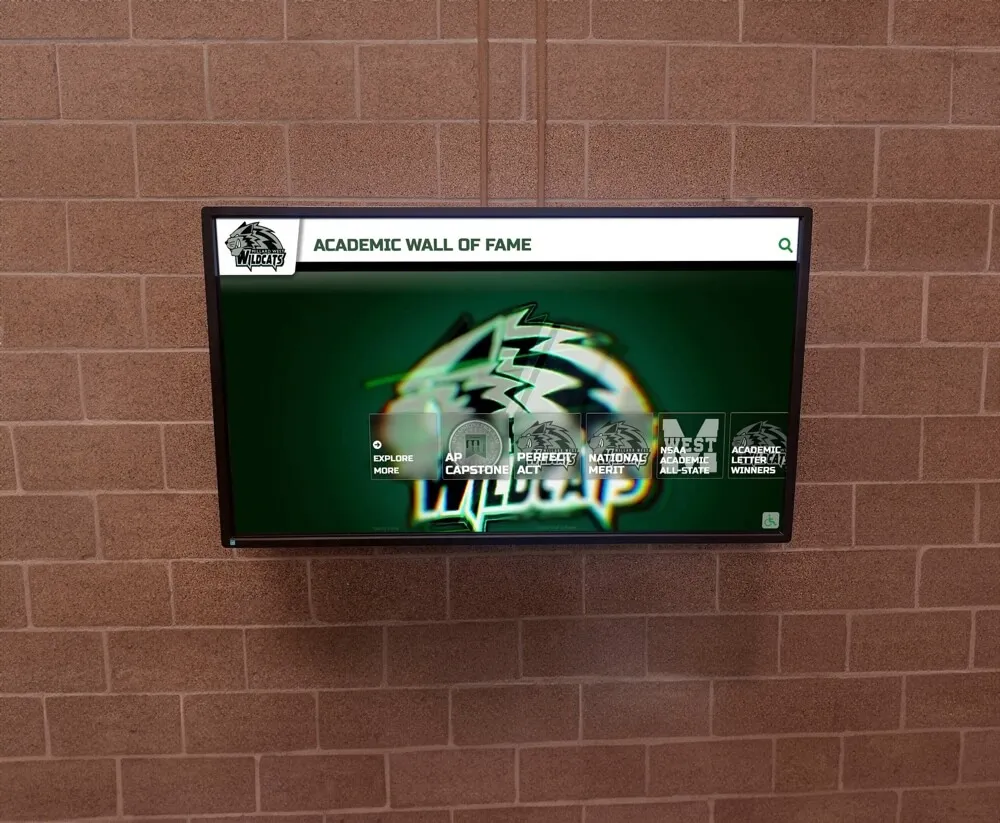
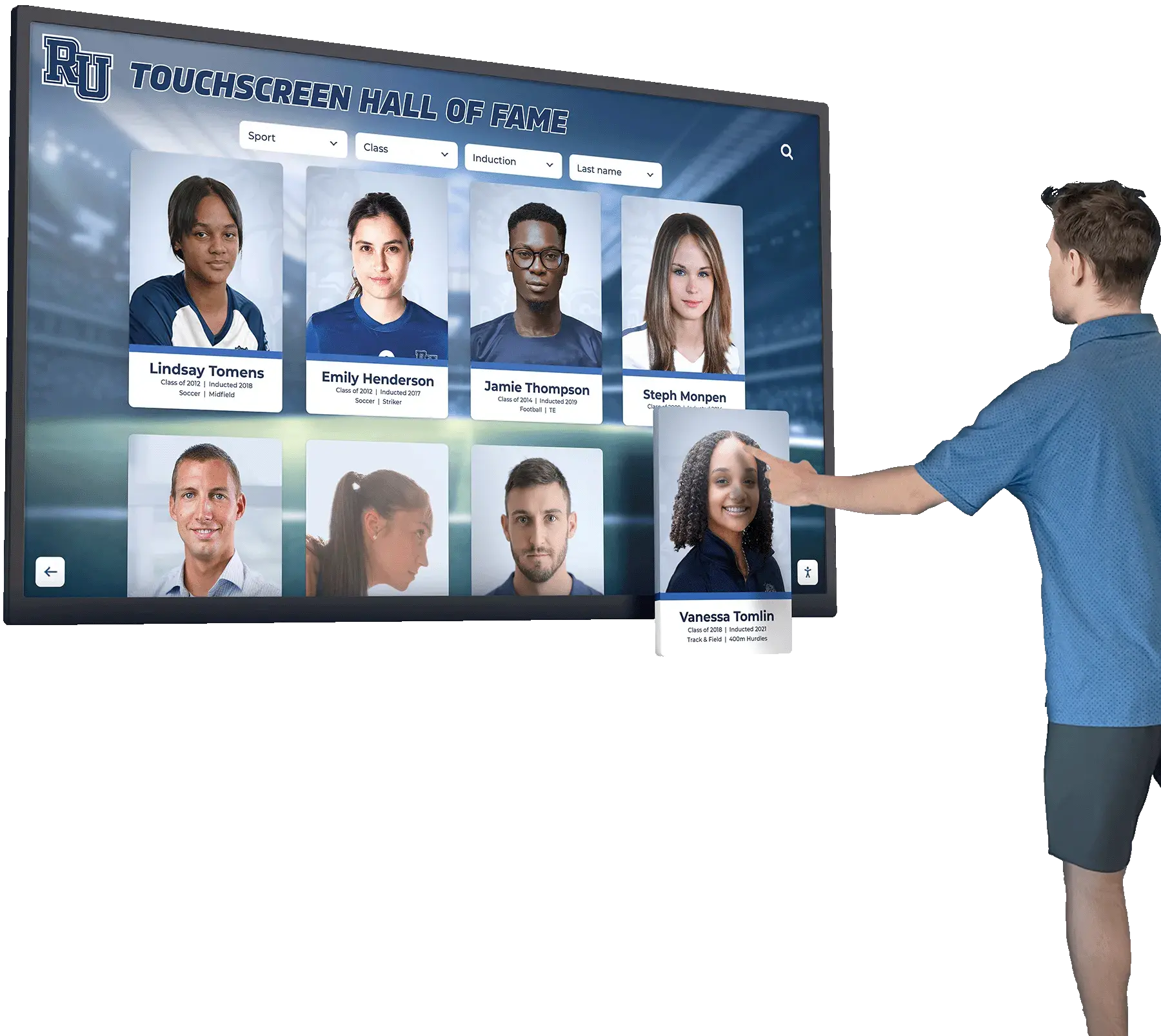
Digital hall-of-fame displays make mission-aligned selection criteria visible to every visitor — showing not just who was inducted, but why, through rich profile narratives
Sportsmanship Recognition Tied to Mission
Sportsmanship awards are among the most mission-revealing recognition decisions an athletic department makes. Nearly every athletic mission statement mentions integrity, respect, or character — and sportsmanship awards are the primary mechanism for measuring and celebrating those values in competitive settings.
Why Sportsmanship Recognition Often Falls Short
Most athletic departments present a sportsmanship award at the end-of-season banquet, but few have documented criteria for how the recipient is selected. In practice, the award often goes to:
- The athlete the coaching staff liked most
- The athlete who expressed the most positive attitude in difficult situations
- An athlete whose statistical contribution was small but whose presence was valued
None of these selection approaches is necessarily wrong, but without documented criteria derived from the mission statement, the sportsmanship award communicates nothing coherent about what the program actually values. Different coaches make different selections in different years, and the award loses meaning.
Building a Sportsmanship Recognition Program from Mission Language
Step 1: Extract the specific sportsmanship claim from your mission statement If your mission says “we compete with integrity and respect for all participants,” the award criteria should evaluate integrity and respect — not general niceness or popularity.
Step 2: Define observable behaviors for each value
- Integrity: Honoring officials’ calls, self-reporting rule violations, acknowledging errors honestly
- Respect for participants: Postgame acknowledgment of opponents, supporting injured players regardless of team, positive sideline behavior during losses
Step 3: Create a nomination mechanism Peer nominations produce more meaningful sportsmanship selections than coach-only designations. A brief nomination form asking teammates to identify and describe a specific sportsmanship incident creates a paper trail and builds awareness.
Step 4: Recognize publicly and connect explicitly to mission When presenting the award at a banquet or ceremony, read the mission language directly and explain how the recipient embodies it. This makes the connection between stated values and recognition decisions visible to every athlete in the room.
Explore how cheer banquet awards can reflect program values when selection criteria are tied to specific mission language rather than subjective impressions.
See how homecoming court selection processes and traditions apply similar value-alignment principles to school-wide recognition.
What Schools Choose to Display Publicly Based on Mission
What an athletic program displays in its lobbies, hallways, and public-facing digital screens tells a story about institutional values as clearly as any written mission statement. The two should be coherent — and often aren’t.
Common Disconnects Between Mission and Display
The “statistics only” wall: A program whose mission emphasizes character development and the whole person displays only records and championships, with no mention of academic achievement, sportsmanship awards, or character-based recognition. The wall says: we value winning. The mission says something different.
The “elite only” display: A program that claims to honor commitment at every level features only All-State athletes and state champions in its lobby. The display communicates exclusivity; the mission promises inclusion.
The “recent only” problem: A program that claims to build lifelong alumni connections displays only current season content, with no historical recognition and no visible acknowledgment of former athletes. Alumni who return for homecoming see no evidence that the program remembers them.
Aligning Public Displays with Mission Language
Athletic programs whose displays authentically reflect their mission make deliberate decisions about what appears in each space:
For character-forward missions: Display academic honor roll athletes alongside athletic record holders. Feature sportsmanship award recipients with the same visual prominence as statistical leaders. Include quotes from coaches that articulate values, not just victories.
For community-centered missions: Include recognition tiers that go beyond the top performers — letter winner displays, team photographs from every season, and recognition for athletes who contributed without starring. Make the display feel like a community document, not an elite roster.
For legacy-and-alumni missions: Historical displays that span multiple decades communicate continuity. Interactive touchscreen systems allow visitors to search by decade, explore championship seasons from before living memory, and find themselves or their parents in a program that tracks everyone.
For inclusion-and-access missions: Displaying athletes across all sports — not just revenue sports — and recognizing multiple achievement types signals that the mission’s inclusion promise is genuine.
Learn how digital archive collections support comprehensive public recognition across different institutional settings.
What Touchscreen Displays Can Show That Plaques Cannot
Physical plaque walls have physical constraints — they run out of space, they can only hold text and a photograph, and they require expensive fabrication for every update. Mission-aligned recognition often requires more nuance than a plaque can carry.
Modern touchscreen athletic displays change what’s possible:
- Layered profiles that include athletic stats and academic record and sportsmanship awards and community service — the full picture a character-forward mission demands
- Searchable recognition tiers so letter winners appear alongside hall-of-fame inductees without diluting the highest tier’s significance
- Coach’s voice — video or text narratives from coaches explaining why specific athletes embodied program values
- Mission statement integration — the department’s stated mission displayed contextually alongside inductee profiles, connecting the individual recognition to the institutional principle
Learn more about Rocket Alumni Solutions’ Digital Wall of Fame platform to see how schools translate complex mission-aligned recognition into interactive public displays that serve every visitor.
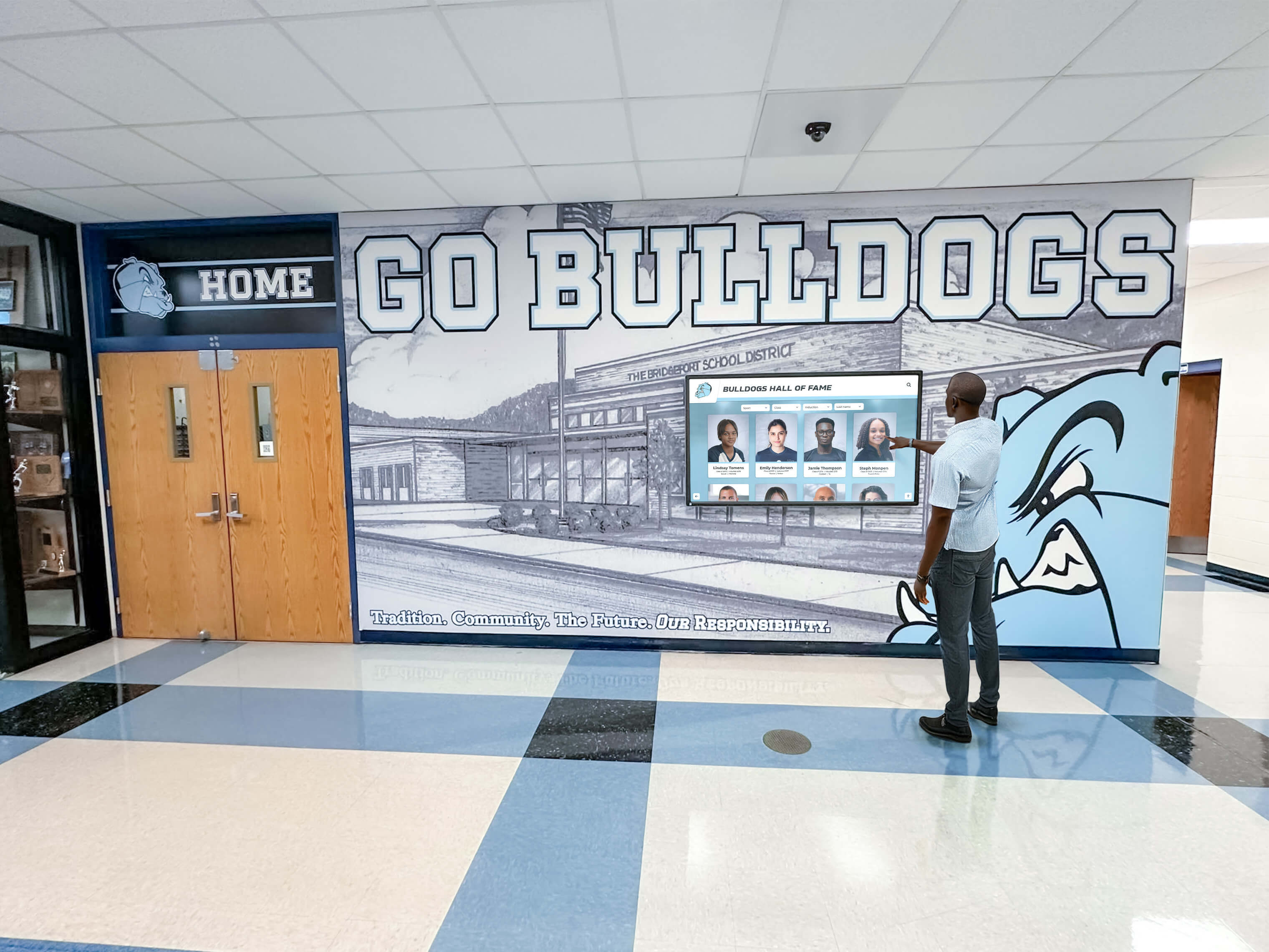
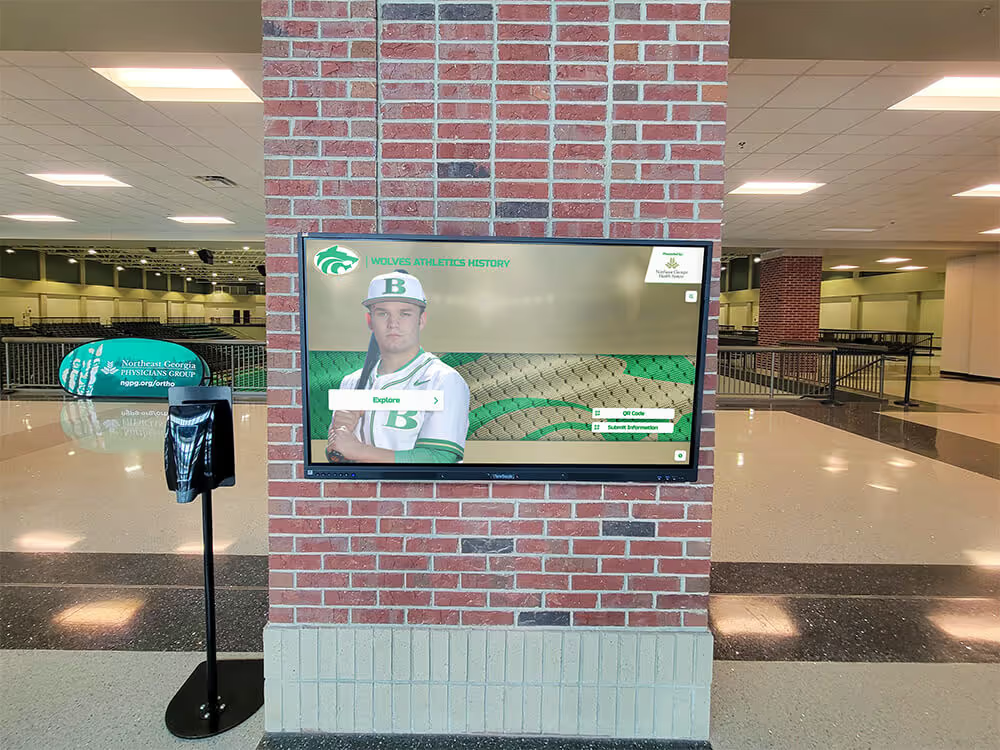
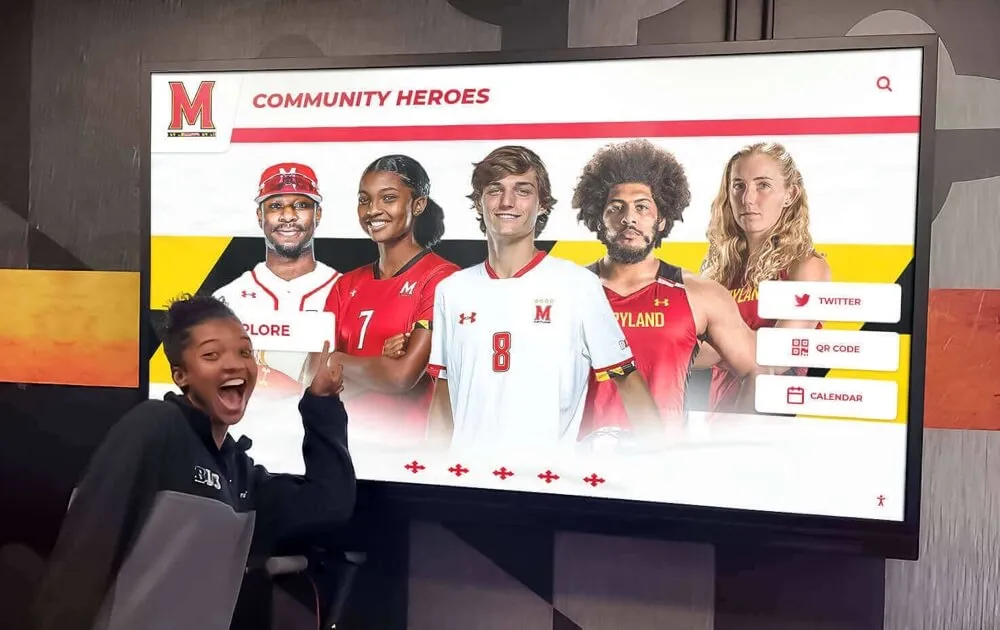
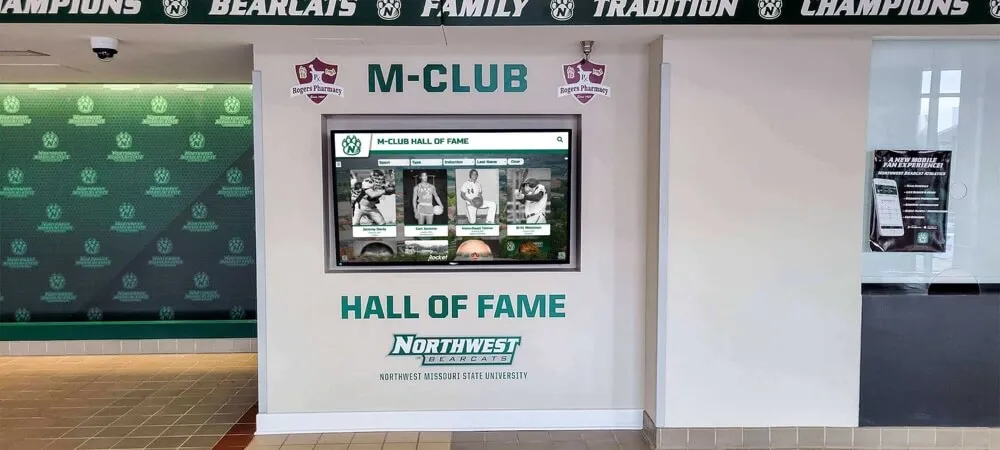
Interactive touchscreen displays can surface sportsmanship awards, academic honors, and character-based recognition alongside athletic statistics — telling the full story a mission statement promises
A Template Guide for Writing Your Own Athletic Mission Statement
If your current mission statement cannot be used to make a hall-of-fame selection decision or defend an award criterion, it needs revision. The following template structure has been tested across multiple program types and competitive levels.
The Four-Sentence Mission Statement Template
Sentence 1 — Purpose statement (Why does this program exist?)
“[Department/Program] exists to [primary purpose] for [population served].”
Example: “The Riverside High School Athletic Department exists to develop student-athletes of strong character and competitive excellence for our entire school community.”
Sentence 2 — Method statement (How do you pursue that purpose?)
“We pursue this mission through [primary method], [secondary method], and [tertiary method].”
Example: “We pursue this mission through rigorous athletic preparation, a commitment to academic integrity, and a culture of respect for teammates, opponents, and officials.”
Sentence 3 — Values statement (What principles guide decisions when tradeoffs arise?)
“Our program is guided by the values of [value 1], [value 2], and [value 3] — principles we apply in every competitive setting and every recognition decision.”
Example: “Our program is guided by the values of hard work, sportsmanship, and personal accountability — principles we apply in every competitive setting and every recognition decision.”
Sentence 4 — Outcome statement (What does success look like?)
“We measure success by [outcome 1] and [outcome 2], knowing that [aspirational statement].”
Example: “We measure success by the character our athletes demonstrate under pressure and the community they build around shared competition, knowing that the lessons learned in athletic programs last far longer than any season record.”
Mission Statement Revision Checklist
Before finalizing any athletic mission statement, confirm it can answer these questions:
- Can a selection committee member cite this statement when defending a hall-of-fame decision?
- Can a coach read a portion of this statement when presenting a sportsmanship award?
- Can an athletic director use this language to explain why the lobby display includes the content it does?
- Does this statement differentiate this program from a generic description of “student-athlete development”?
- Would this statement still be true if the head coach changed tomorrow?
- Does this statement include at least one claim that could be evaluated — something a recognition program can actually measure?
A statement that passes all six tests is operational. One that fails more than two needs revision before it can drive recognition decisions.
Connecting Mission to Recognition: An Action Checklist
Once a mission statement is finalized (or revised), translate it into recognition practice:
- Extract every value claim from the mission statement and list them
- Map each value to an existing award category — or create a new one if no award covers it
- Document selection criteria for every award using mission language
- Audit the hall-of-fame rubric against mission values and adjust weighting if needed
- Review lobby and hallway displays for coherence with stated mission
- Update banquet scripts to explicitly connect awards to mission language
- Publish the mission statement where athletes, families, and alumni can find it — website, lobby display, award nomination forms
Discover how creative donor recognition walls apply similar value-alignment principles to philanthropic recognition programs.
Explore donor stewardship matrix templates and gift-level recognition for approaches to tiered, criteria-based recognition that schools can adapt for athletic programs.
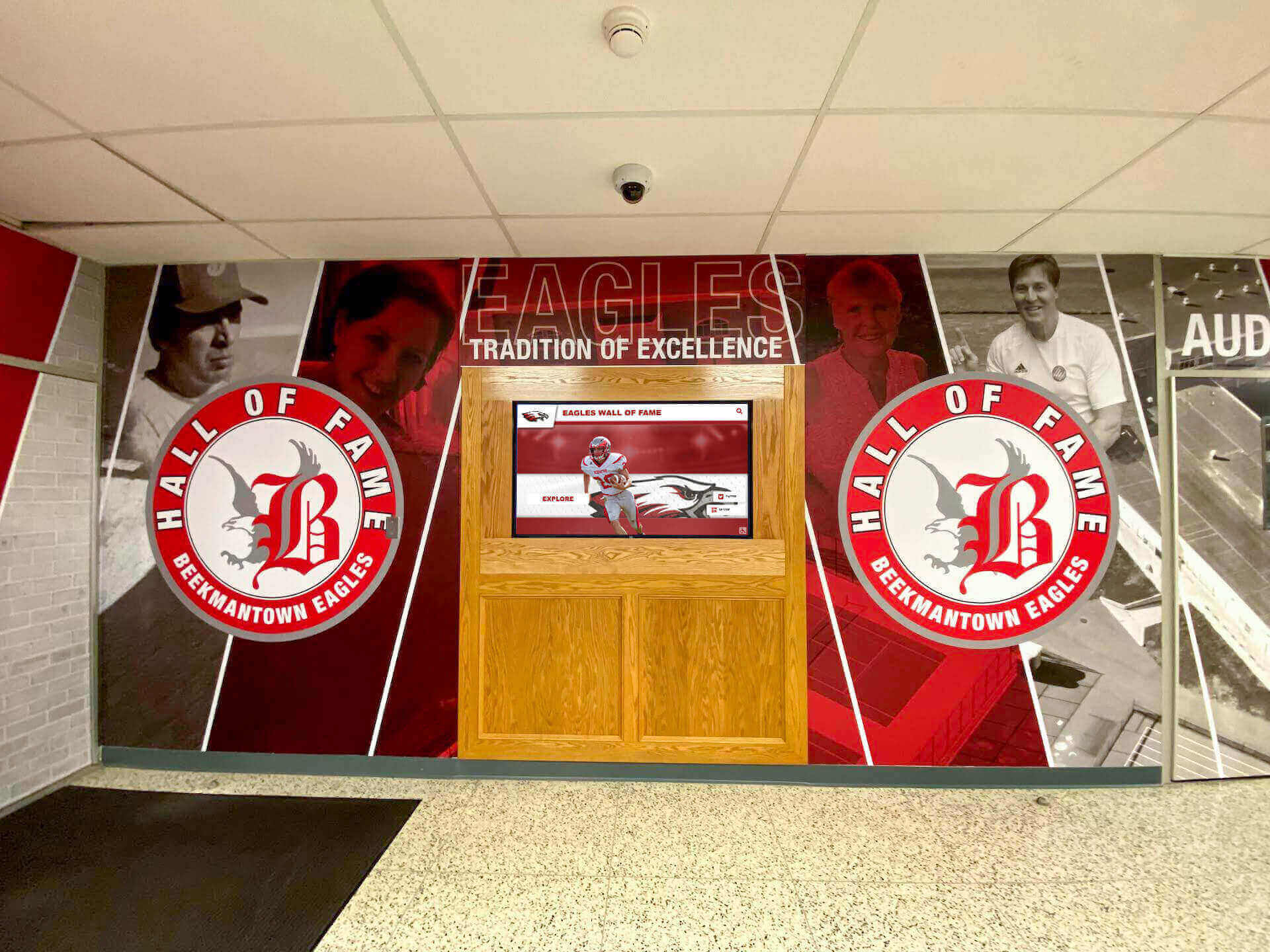
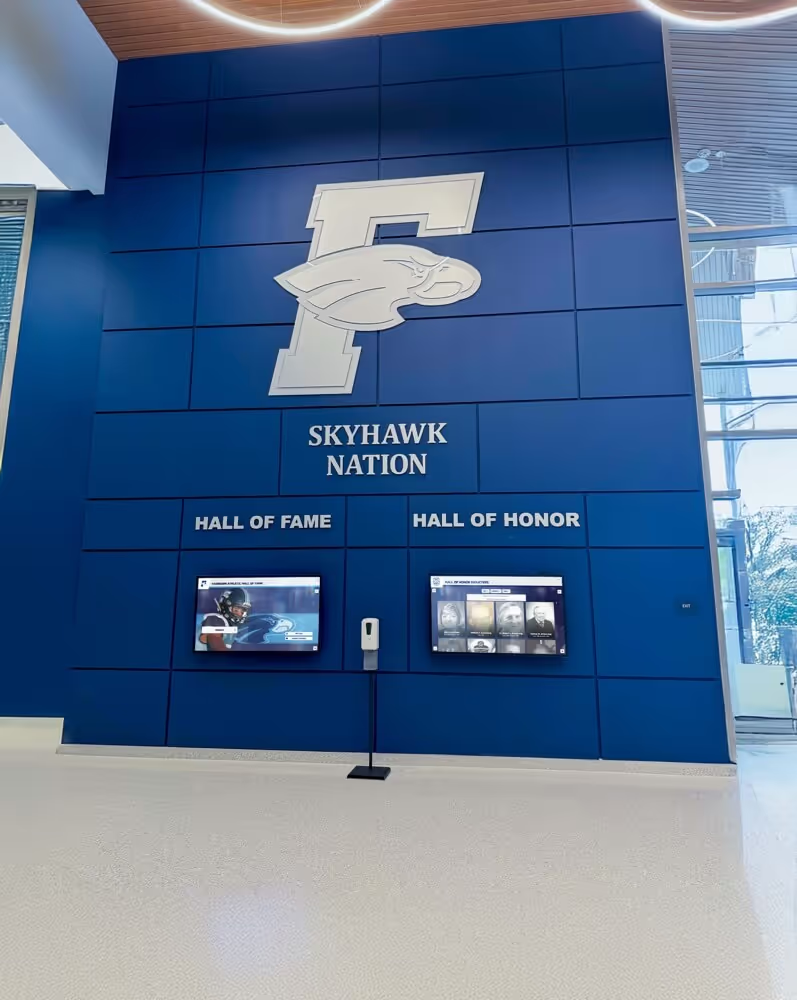
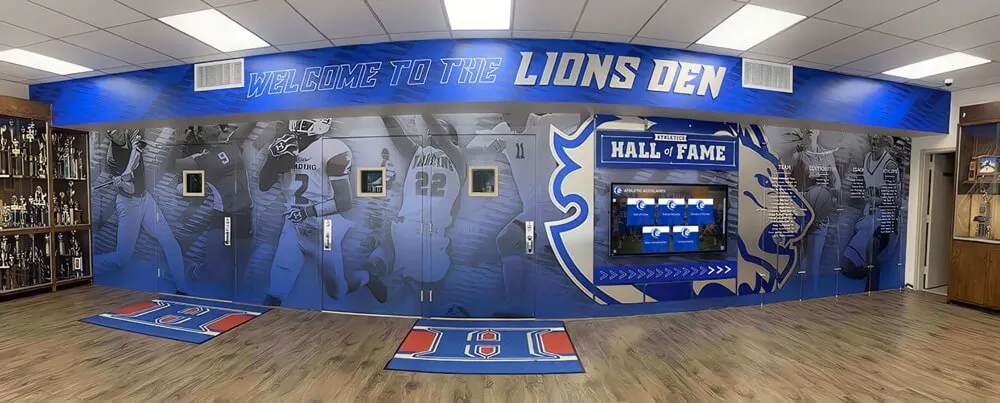
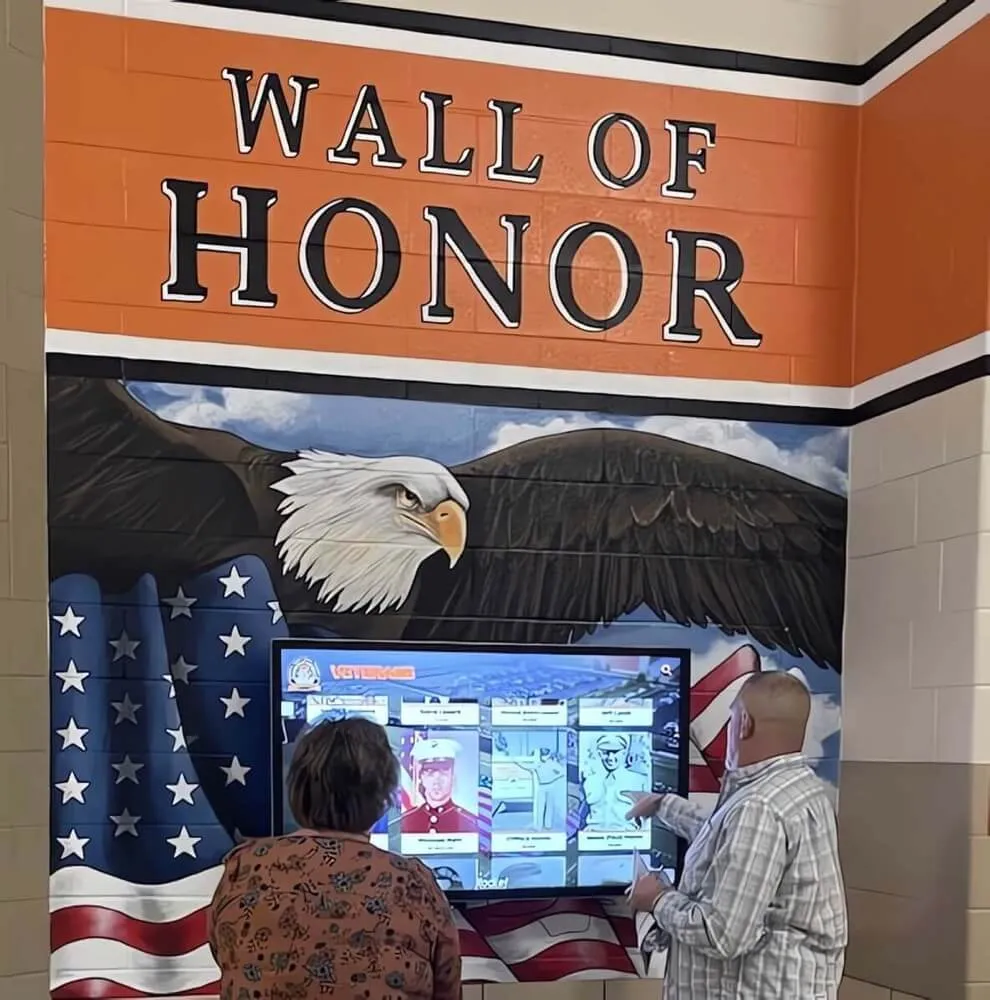
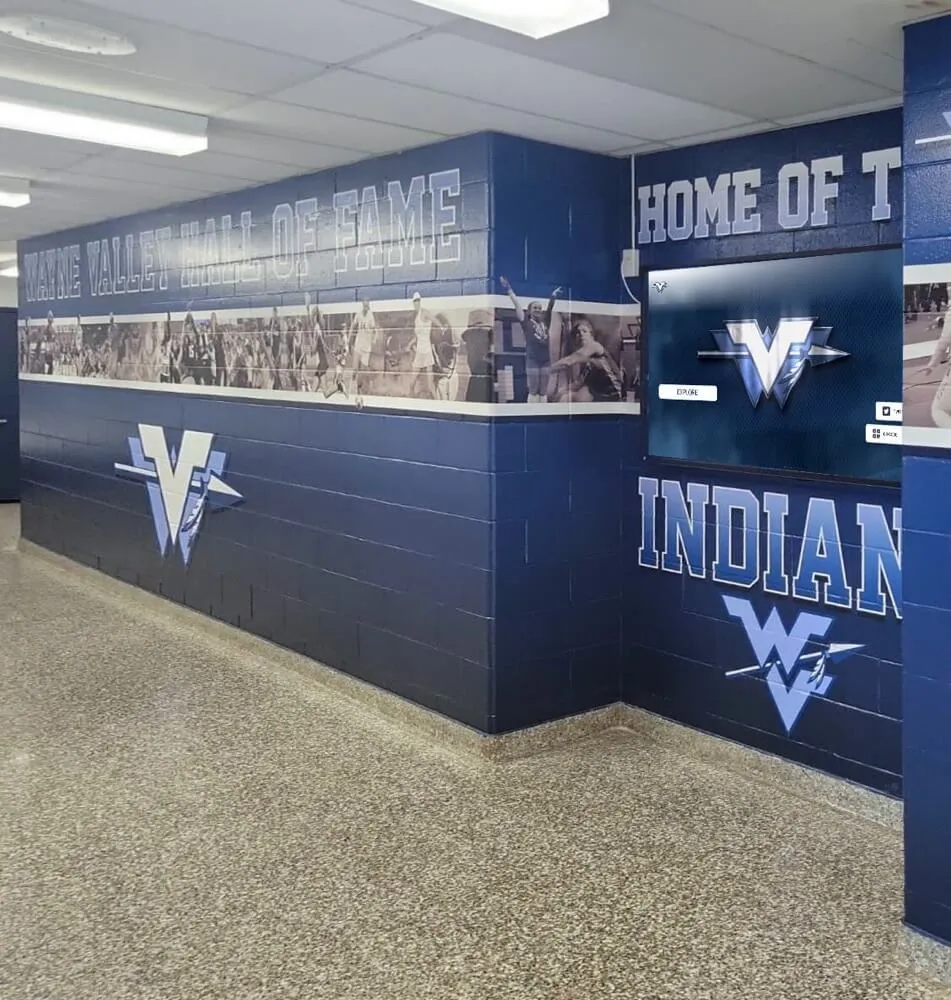
Physical hall-of-fame installations communicate institutional values to every visitor — making the case for mission-aligned displays that reflect what programs actually celebrate
Athletic Mission Statement Examples by Competitive Level: A Quick Reference
NAIA and NCAA Division III Programs
These programs often emphasize the integration of athletics and academics most explicitly, since athletes at this level receive no athletic scholarships and participate for primarily educational and personal development reasons.
“Our athletic department exists to enrich the educational experience of every student-athlete through competitive sport, developing the intellectual, personal, and physical capacities needed for meaningful contribution to society. We pursue competitive excellence within the framework of our academic mission — believing that the discipline, teamwork, and resilience developed in athletic competition amplify rather than compete with the goals of a liberal arts education.”
NCAA Division II Programs
Division II programs frequently balance competitive aspiration with community connection and accessibility values.
“The [University Name] Athletic Department prepares student-athletes to compete at a high level while graduating with the academic credentials and personal development outcomes that a [University Name] degree represents. We build competitive programs that connect our institution to the regional communities we serve, develop lifelong athletes and engaged alumni, and honor the tradition of those who competed before our current generation.”
High School Programs in Resource-Constrained Settings
“The [School Name] Athletic Department is committed to providing every student who shows up, works hard, and competes with integrity with a meaningful athletic experience. We believe that competitive sport develops character traits — resilience, teamwork, accountability — that our students carry into adulthood. We celebrate athletic achievement, academic commitment, and personal growth — measuring our program’s success by who our athletes become, not only by our win-loss record.”
See how these principles connect to broader school recognition through programs like field day activities that reinforce athletic values across all student participation levels.
Frequently Asked Questions
What is the difference between an athletic mission statement and a statement of athletic values?
A mission statement explains what the program exists to do and how it pursues that purpose — it’s action-oriented and includes population, purpose, method, and outcome. A values statement lists the principles that guide behavior without necessarily explaining how they’re applied. Mission statements are more useful for making recognition decisions because they’re more specific; values statements are often used alongside mission statements to provide more explicit character guidance.
How long should an athletic department mission statement be?
Four to six sentences is the practical working length. Shorter than that, and the statement lacks enough specificity to guide recognition decisions. Longer than that, and it becomes difficult to cite or remember — which means it won’t actually influence decisions. A paragraph of 60–100 words is a useful target.
Can an athletic mission statement drive hall-of-fame selection criteria?
Yes — and it should. If your mission states that the program develops character alongside athletic achievement, hall-of-fame criteria should evaluate both. If your mission mentions academic integrity, the rubric should include academic standing. Selection committees that can point to mission language when explaining inductee decisions build more trust with stakeholders than committees who rely on undefined “overall impact” criteria.
How often should an athletic mission statement be revised?
Mission statements should be reviewed every three to five years, or when the athletic department undergoes significant leadership transition. They should not change so frequently that they lose institutional authority, but they should be updated when the program’s competitive level, community context, or strategic priorities shift substantially. Recognition criteria and display content should be updated simultaneously when the mission statement changes.
What should an athletic mission statement not include?
Avoid specific win-loss aspirations (“to compete for state championships”), references to specific sports or teams, and language that would exclude any athlete or sport from the department’s stated purpose. Mission statements should be durable and institution-wide — capable of governing decisions across all sports, coaching staffs, and competitive eras.
How do we use our mission statement in hall-of-fame display content?
Many programs include a brief excerpt from the mission statement on their hall-of-fame display — physically on a plaque at the entrance, or digitally as a contextual element in each inductee profile. The most effective approach ties inductee narrative language directly to mission values: “Jane Doe exemplified our program’s commitment to competing with integrity in every setting…” This makes the mission visible in action, not just on paper.
Where should the athletic mission statement be displayed?
Mission statements should appear in the athletic department website, in every team handbook, in nomination forms for awards and hall-of-fame consideration, in banquet programs, and — ideally — in the physical or digital recognition display space where athletes, families, recruits, and alumni spend time. Making the mission visible makes recognition decisions legible.
Turn Mission Language Into a Recognition Display Your Community Will Remember
Rocket Alumni Solutions builds custom touchscreen digital walls of fame that bring athletic mission statements to life — unlimited inductee profiles with narrative bios, sportsmanship award documentation, academic honors integration, auto-ranking record boards, and ADA WCAG 2.1 AA-compliant displays installed at 600+ schools and universities nationwide.
Request Your Custom DemoPutting Mission Statements to Work
The most powerful thing an athletic mission statement can do is generate consistent decisions across years, leadership changes, and competitive ups and downs. A program whose selection committee, coaching staff, and athletic director all reach for the same language when making recognition decisions has something real — an institutional identity strong enough to outlast any individual.
Building that consistency requires doing the translation work: taking the aspirational sentences of a mission statement and turning them into specific award criteria, weighted hall-of-fame rubrics, documented sportsmanship standards, and display content decisions that coherently communicate program values to every visitor.
Athletic recognition programs — banquets, halls of fame, record boards, lobby displays, digital touchscreen walls — are not separate from the mission statement. They are the mission statement made visible. Every inductee biography, every award presenter’s remarks, every image on a recognition wall expresses something about what this program claims to value.
Making those expressions intentional starts with a mission statement that’s specific enough to guide them, followed by the disciplined work of connecting that statement to every recognition decision the department makes.