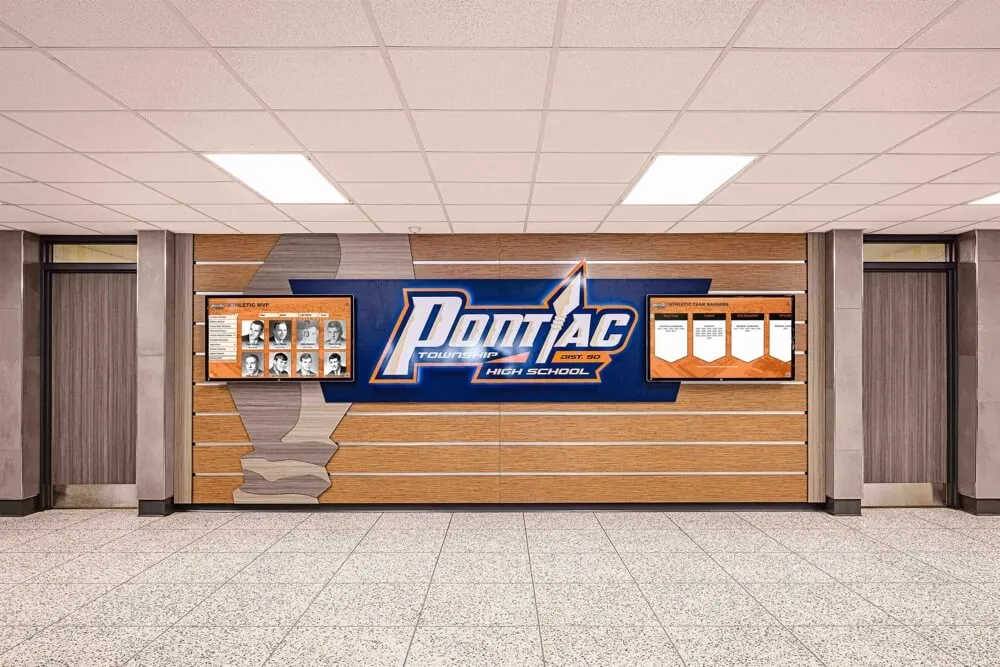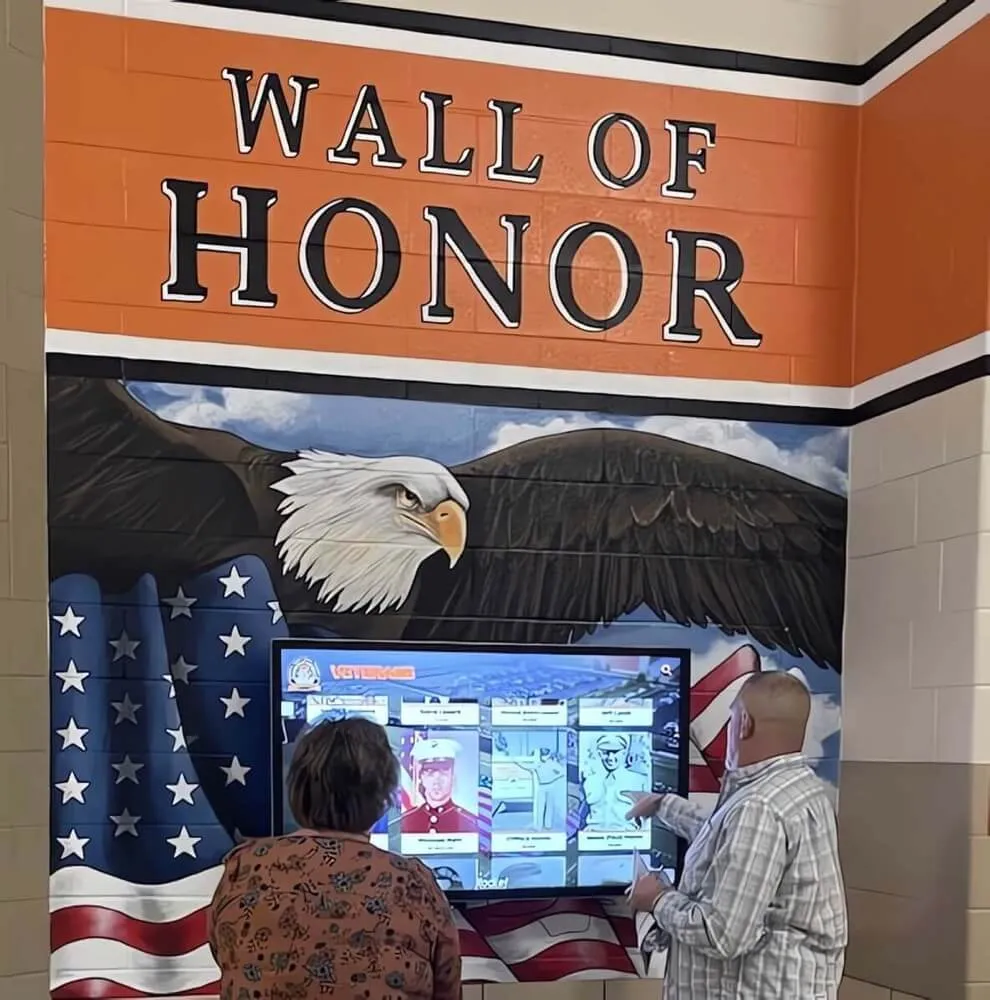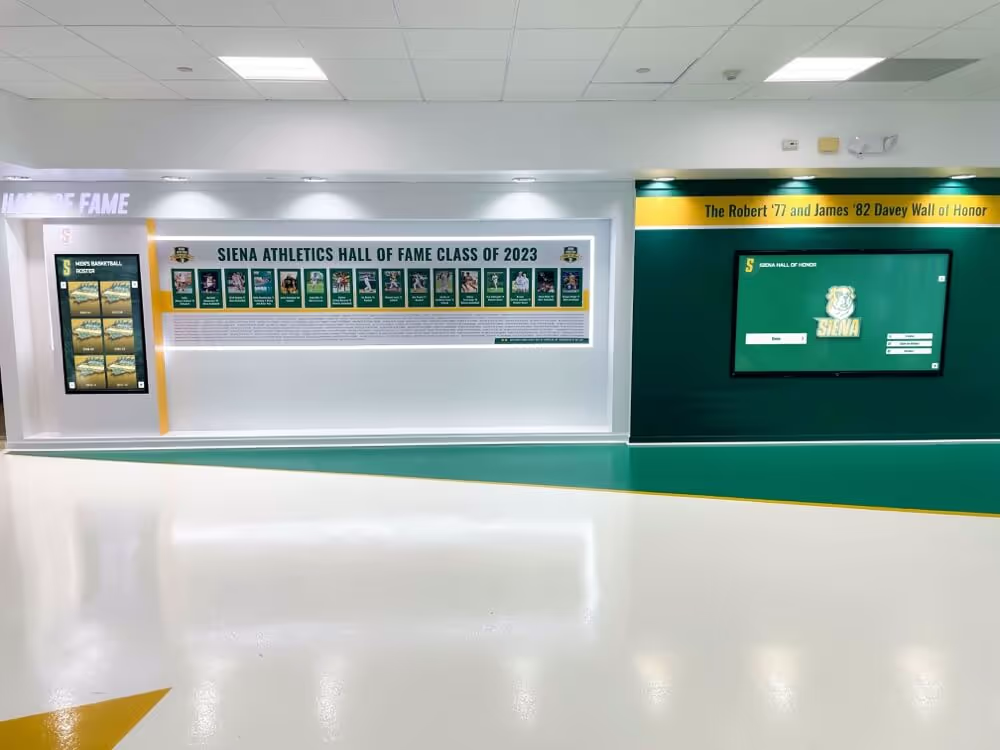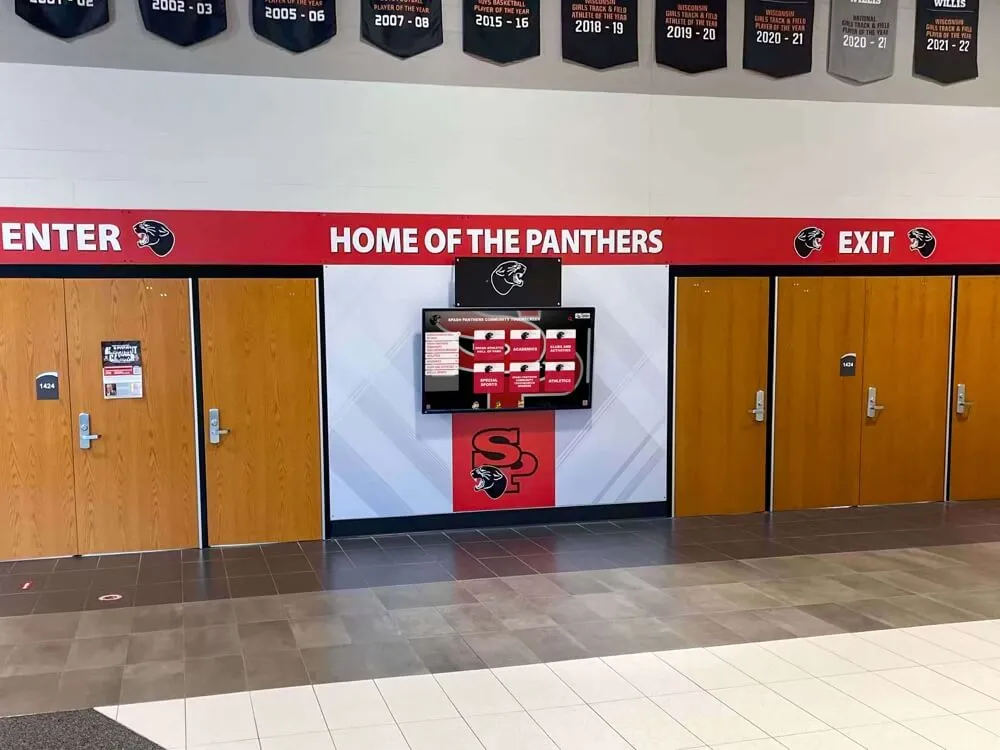




Walk into a team room that has been designed with intention and you can feel the difference before you read a single name on the wall. The championship banners hang at exactly the right height. The record boards are current and legible. The hall of fame wall draws your eye the moment you step through the door. Current athletes walk that hallway before every practice, and recruits linger there during campus visits — absorbing the program’s history through everything the space communicates about what it means to compete here.
Walk into a team room that has been neglected and you feel that difference too. Mismatched frames. A record board with entries from five seasons ago. Trophies crammed into a glass case no one has opened in years. The message sent to a 17-year-old on a recruiting visit is quiet but unmistakable: this program does not invest in its own legacy.
Athletic team room design sits at the intersection of program culture, alumni relations, and recruiting strategy. The decisions made about what goes on those walls — and how it’s displayed — ripple outward in ways that most athletic departments underestimate until they see the difference a well-designed space makes. This guide covers the practical decisions involved in designing a team room that serves all three functions effectively.
A team room done right becomes the physical heart of program identity. It’s where current athletes develop pride in what came before them, where alumni feel the connection that drives ongoing giving, and where recruits make emotional commitments to what they want to be part of. The design choices that produce that response aren’t accidental — they’re the result of deliberate decisions about space, content, and technology.

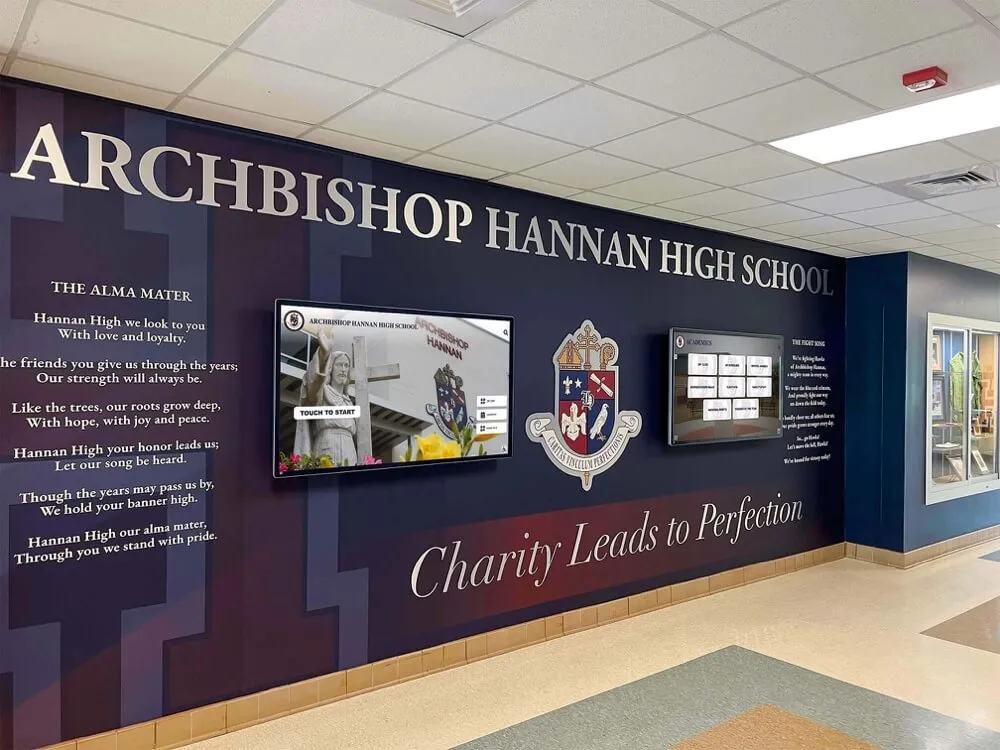
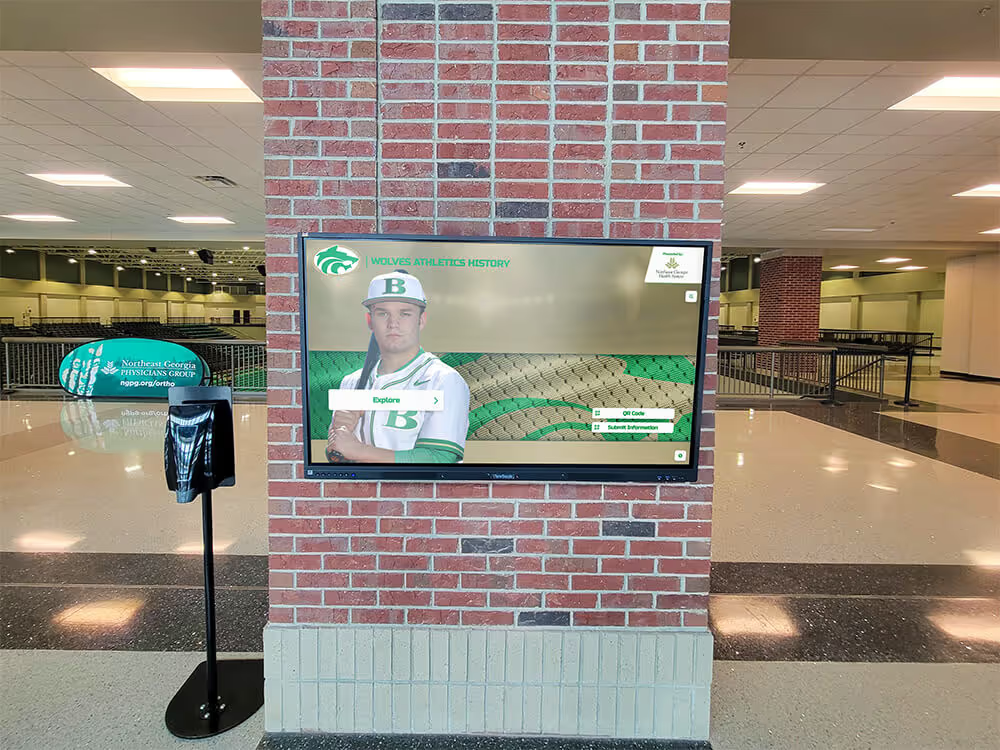
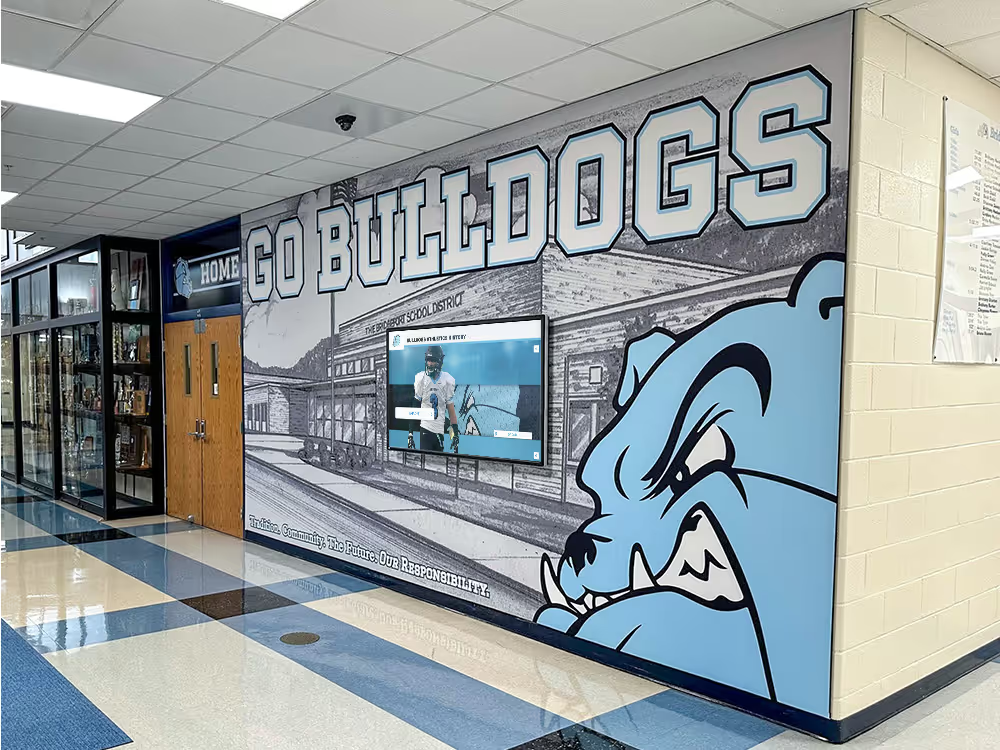
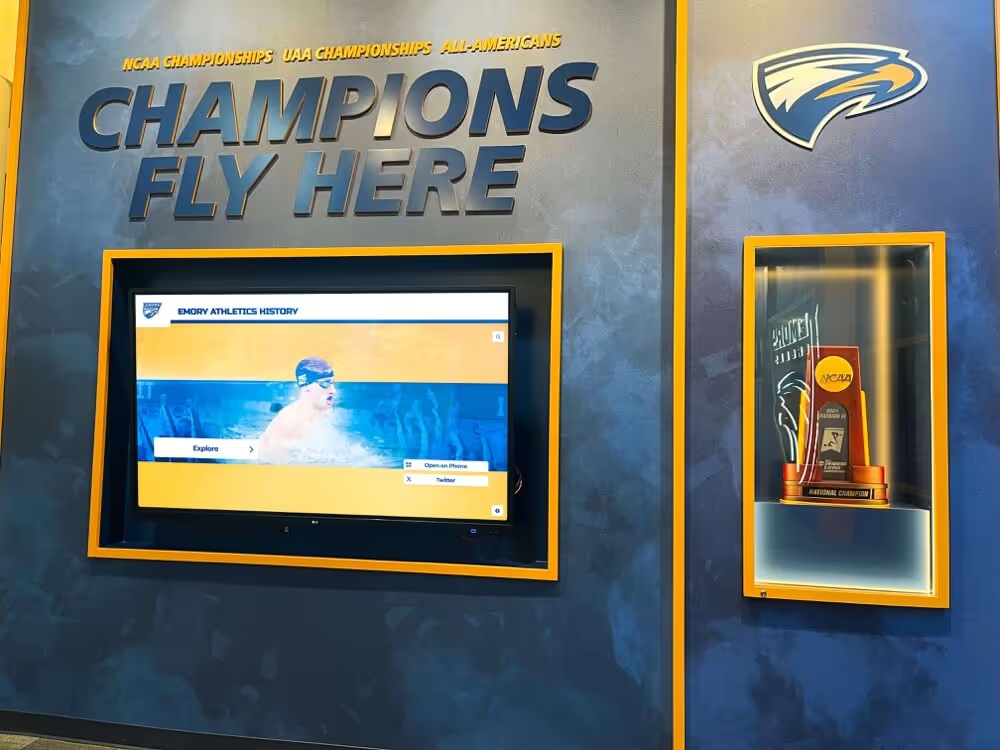
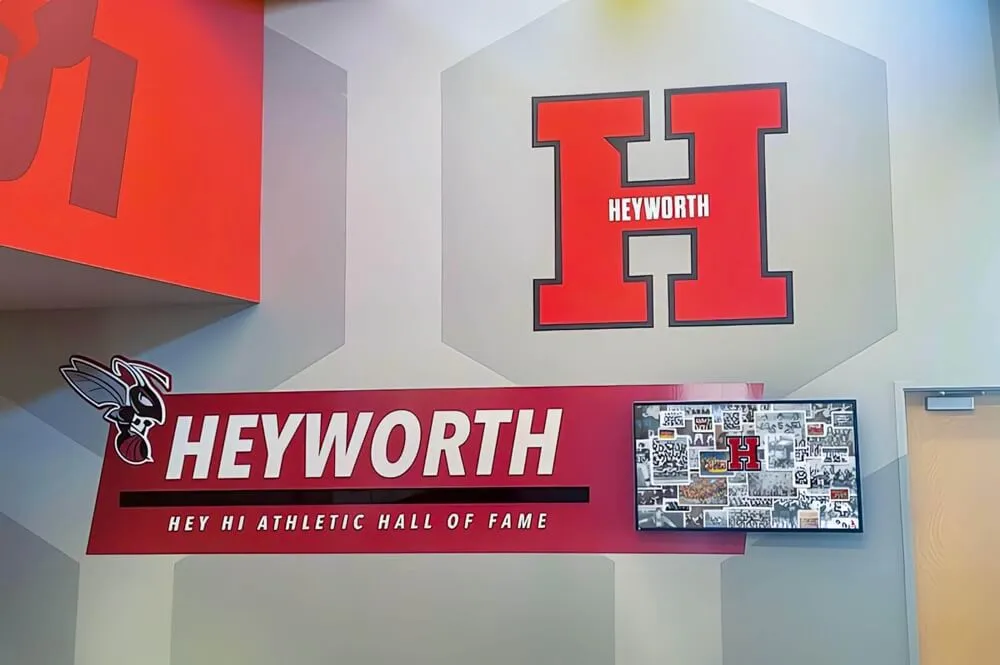
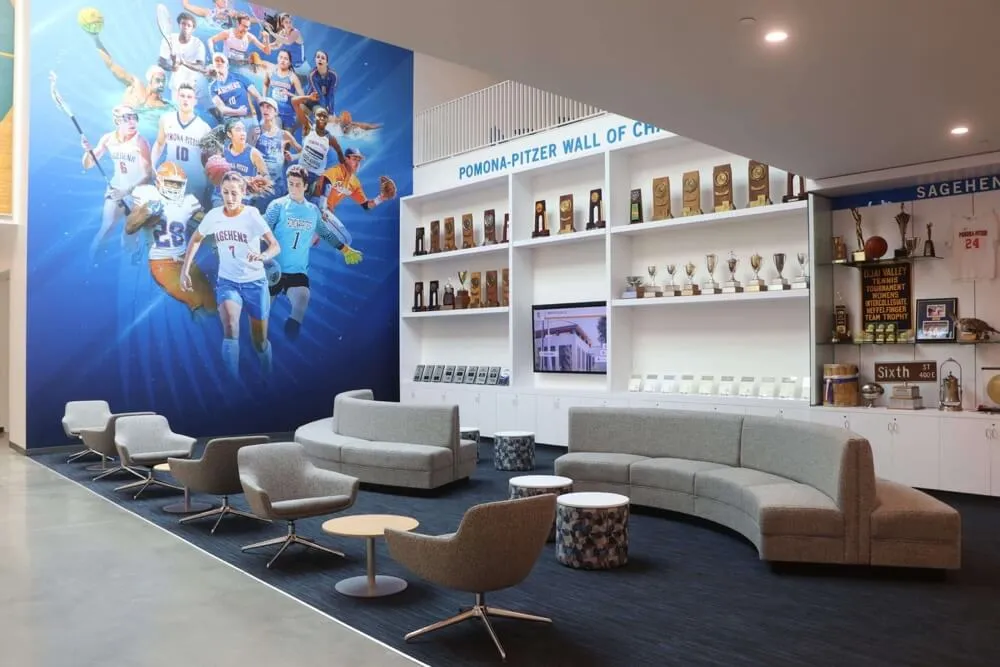
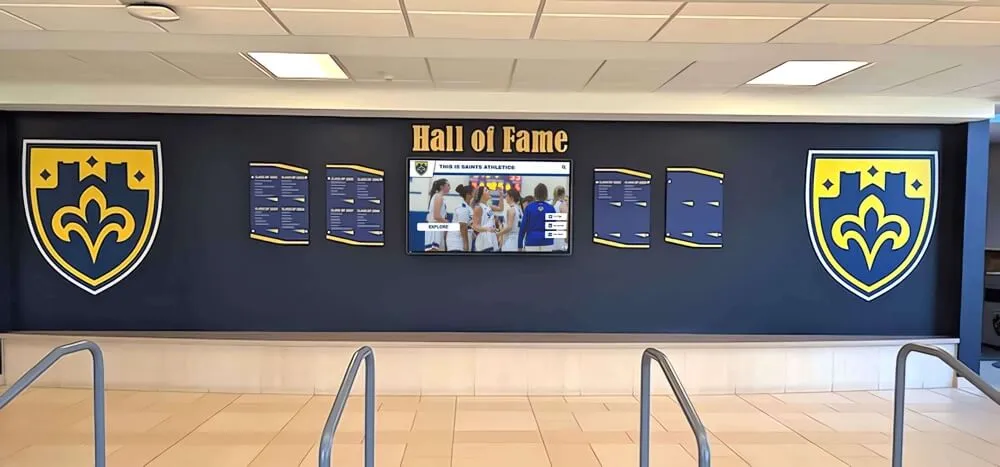
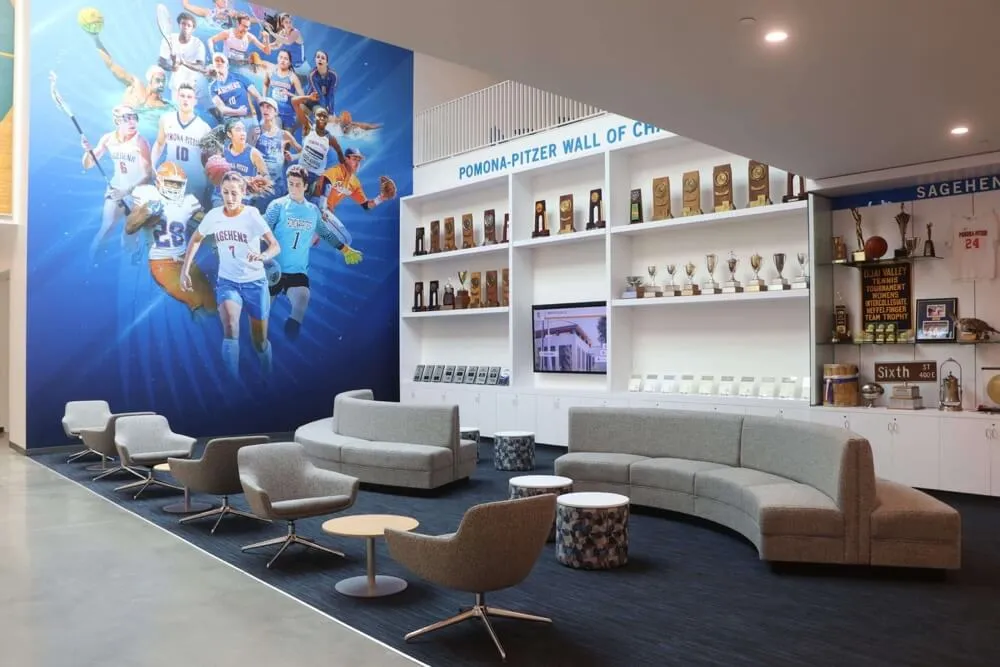
Athletic team rooms that combine traditional trophy displays with mural artwork and recognition walls create environments that communicate program identity at a glance
Why Athletic Team Room Design Matters More Than Most Programs Realize
The argument for investing seriously in athletic team room design is often framed around recruiting — and recruiting matters — but it undersells the full case. A well-designed recognition space operates simultaneously across several dimensions that compound over time.
The Culture Argument
Current athletes who see their predecessors honored on the walls develop a relationship with program history that changes how they carry themselves. They understand they’re part of a continuum. The 2019 state championship team’s photograph isn’t just a picture — it’s a standard, a benchmark, a story about what this program can accomplish when it’s at its best.
Programs with strong athletic cultures consistently cite recognition spaces as one of the tangible mechanisms through which culture transmits from generation to generation. Coaches come and go. Athletic directors change. But the walls remain — and what’s on them shapes how each new cohort of athletes understands what they’ve joined.
The Recruiting Argument
For programs that recruit actively, the team room is a designed environment that communicates in the 90 minutes a prospect spends on campus what years of coaching relationship might otherwise require to convey. Recruits notice:
- Whether the trophies are recent or ancient
- Whether the record boards show current marks or outdated ones
- Whether the hall of fame wall features athletes who went on to succeed or just names on plaques
- Whether the digital displays are functioning and current or dark and ignored
- Whether the space signals that the institution invests in its program
Exploring how college commitment day digital boards work gives a sense of how recognition display moments can serve recruiting purposes — and how the most effective programs design their spaces to tell that story proactively.
The Alumni Engagement Argument
For every alum who returns to campus for homecoming and finds their name recognized, there’s a stronger case for continued giving, volunteering, and advocacy for the program. Recognition walls that make alumni feel permanently honored — not just acknowledged once in a ceremony — drive the ongoing engagement that sustains athletic programs across economic cycles and administrative transitions.
The Five Zones of a High-Impact Athletic Team Room
Most athletic team rooms can be organized around five functional zones. Not every program has the space for all five at full scale, but understanding the zones helps prioritize investment when space and budget require tradeoffs.
Zone 1: The Hall of Fame Wall
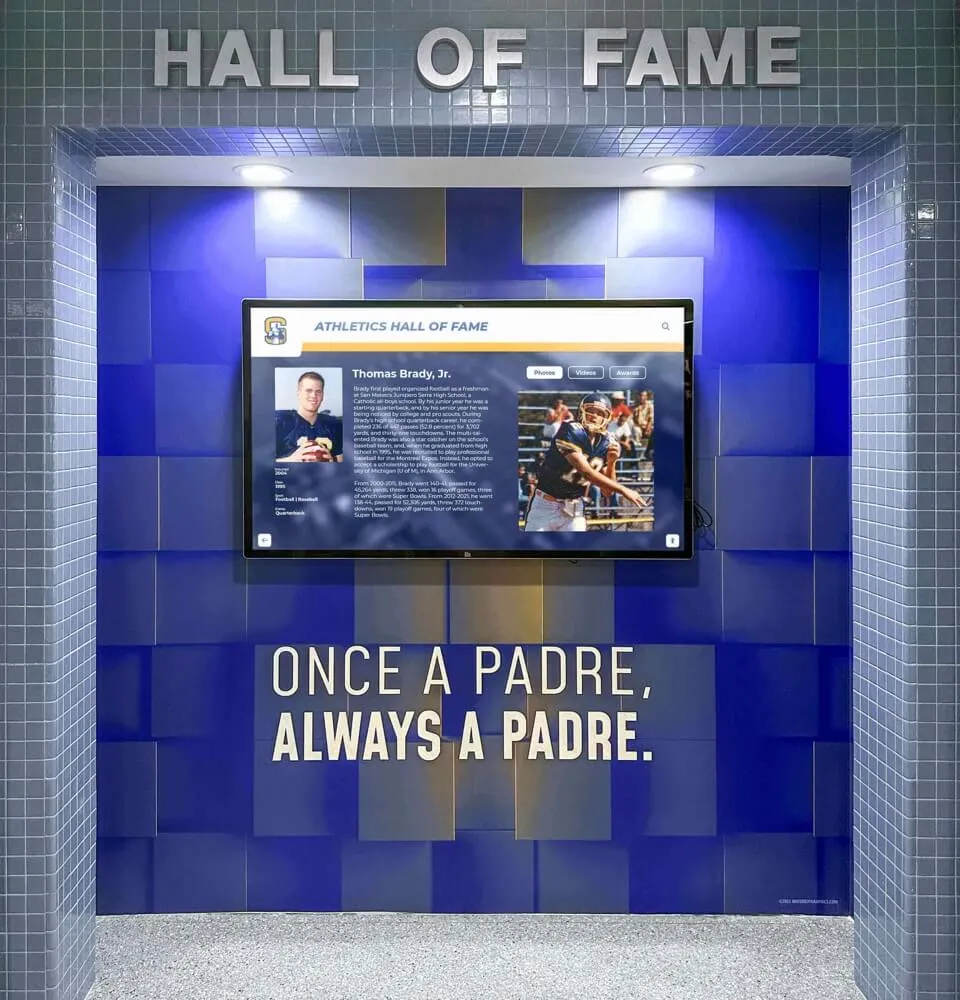
The hall of fame wall is the centerpiece — the most prominent recognition display in the space, typically positioned on the main wall a visitor faces upon entering. It honors the athletes, coaches, and contributors the program has officially inducted into its highest recognition tier.
Effective hall of fame walls share several characteristics:
- Visual hierarchy that draws the eye: The most celebrated honorees should be prominent through portrait size, placement, or design treatment — not buried in alphabetical rows
- Content depth: Name and year alone doesn’t tell a story; position, career statistics, post-graduation notes, and awards provide the context that makes an inductee’s story meaningful to someone who wasn’t there
- Current induction classes: An empty space at the bottom of the wall signals that inductions have stopped; a wall that clearly shows room for and expectation of future classes signals an active, living program
- Consistent quality: Mismatched frames, different-sized photographs, and inconsistent typography create visual noise that undermines the dignity of the recognition
Complete guides to the digital hall of fame explore the options available when programs move beyond traditional plaques to interactive systems capable of holding complete program histories with multimedia profiles for every inductee.
Zone 2: The Championship and Banner Gallery
Championship recognition deserves its own space. State championships, conference titles, national honors — these are collective achievements that honor every athlete, coach, and supporter who contributed to those seasons. Championship galleries work best when they:
- Distinguish clearly between championship levels (conference vs. state vs. national)
- Include the complete roster for each title year, not just the starters
- Feature photographs from the championship run, not just the final moment
- Display the year and record prominently alongside the banner
- Create a visual narrative of how the program’s championship history has built over decades
How state championships recognition and banner exhibits are designed covers the physical and digital display options for championship recognition in athletic facilities.
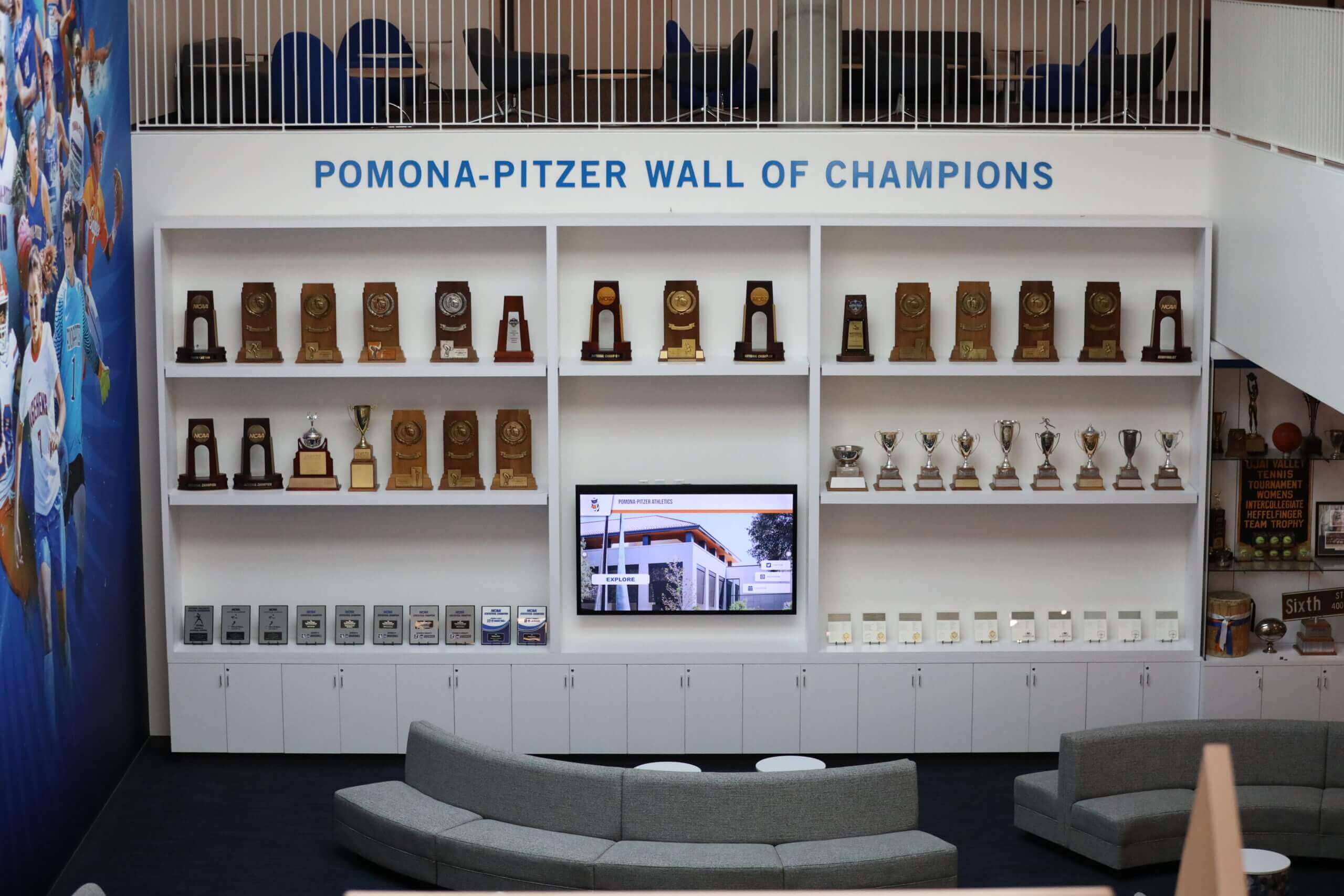
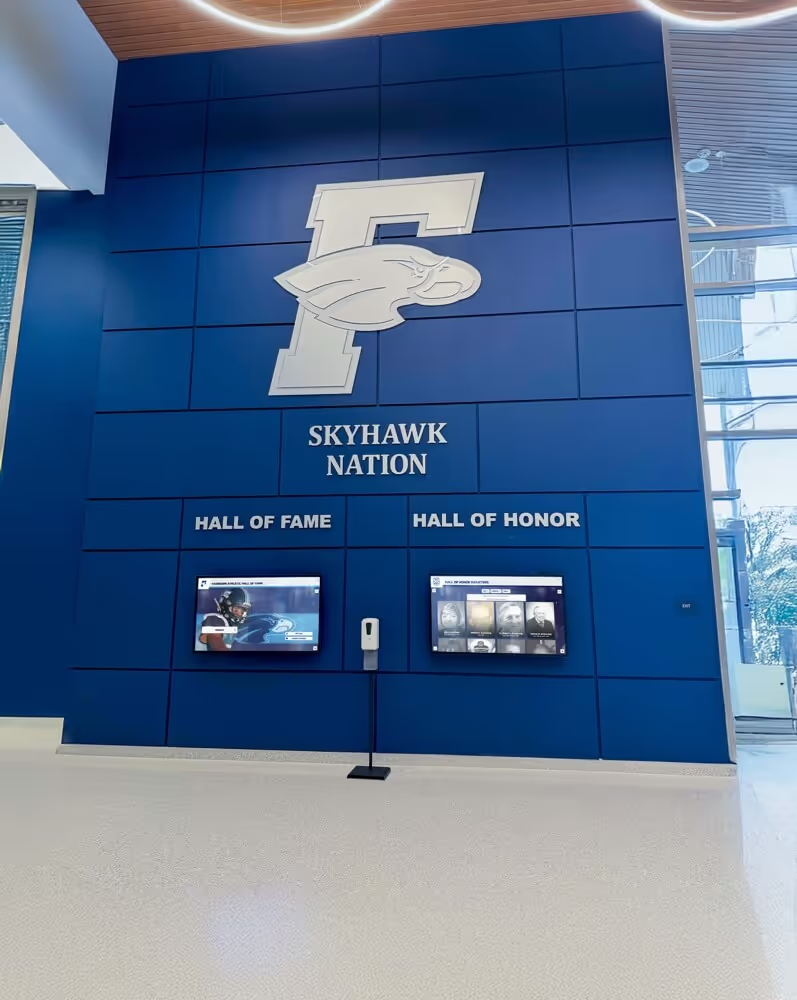
Championship display lounges that integrate trophy cases with wall recognition create gathering spaces where alumni and recruits naturally pause and engage
Zone 3: The Record Board Section
Record boards are among the most actively engaged displays in any athletic facility — athletes check them before and after practice, coaches reference them in conversations with recruits, and parents study them during campus visits. An effective record board section includes:
- Current marks: A record board with outdated entries actively undermines credibility; if the board shows records from three seasons ago, it signals that the program doesn’t maintain its own history
- Context for records: Raw times and statistics mean more when they’re placed in context — the year set, whether it’s a school or conference record, how it compares to all-time program bests
- Multiple sport and event coverage: A swimming program, for example, should display records for every event, not just the marquee ones; how diving record boards are designed for accuracy and legibility illustrates the design considerations for event-specific display
- Auto-update capability: Digital record boards that update automatically when new records are entered eliminate the maintenance burden that causes traditional boards to fall behind
Zone 4: The Digital Display Hub
Digital displays have transformed what’s possible in athletic team rooms. Where a traditional wall can only hold so many plaques and photographs, a digital system can hold the complete history of an athletic program — searchable, media-rich, and always current — in the footprint of a single screen.
The most effective digital display installations in team rooms serve multiple functions simultaneously:
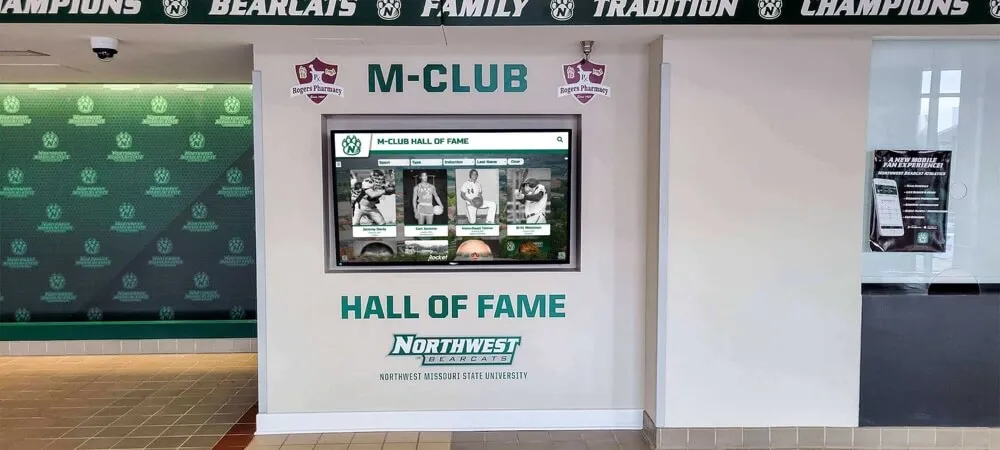
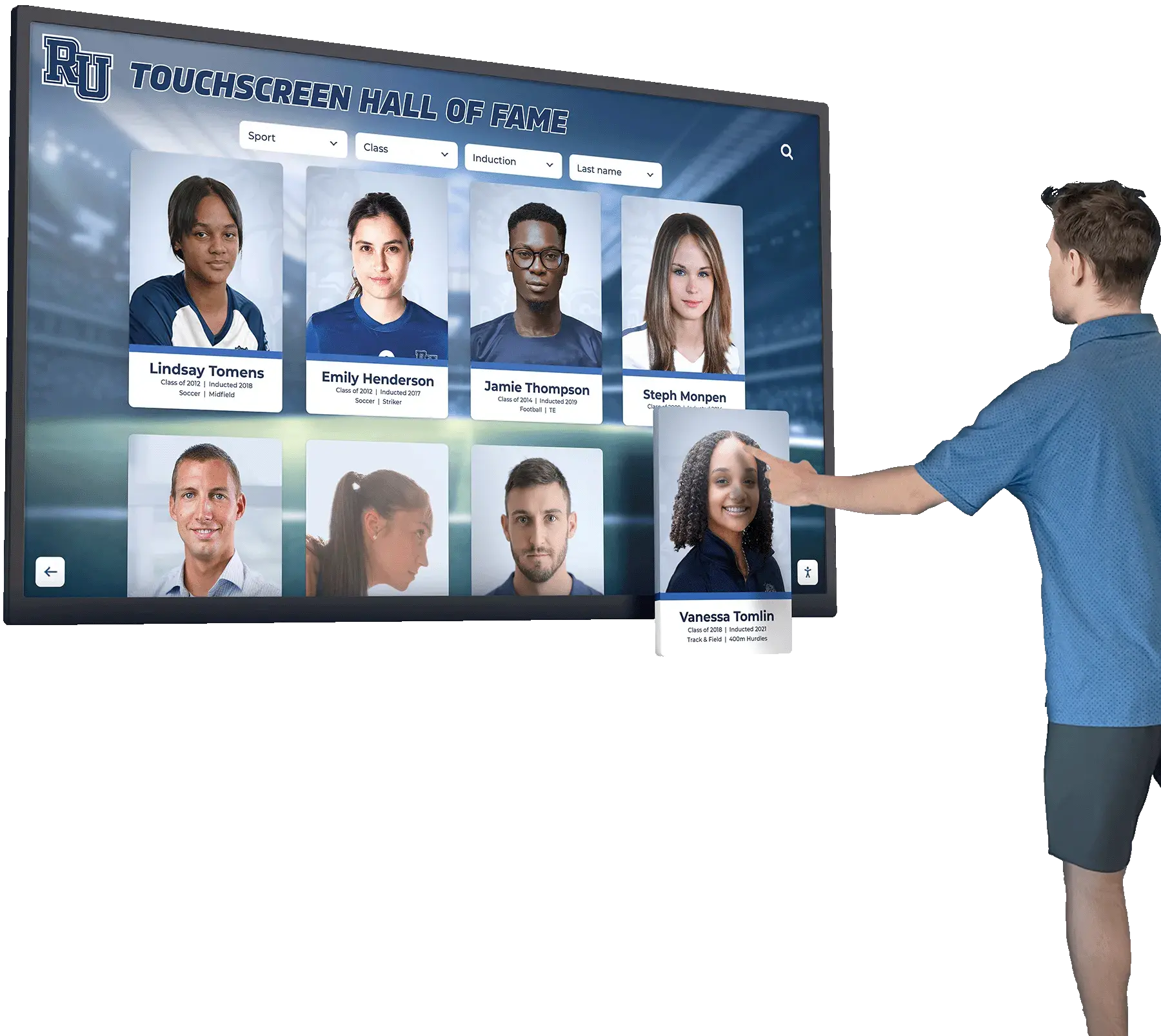
- Interactive hall of fame: Athletes, recruits, and visitors explore inductee profiles, find athletes from specific eras, and watch career highlight videos
- Current season content: Rotating slides featuring this season’s schedule, scores, and player spotlights keep the display relevant to today’s athletes, not just historical recognition
- Record boards with auto-ranking: Performance records update as they’re broken, maintaining accurate real-time data without manual intervention
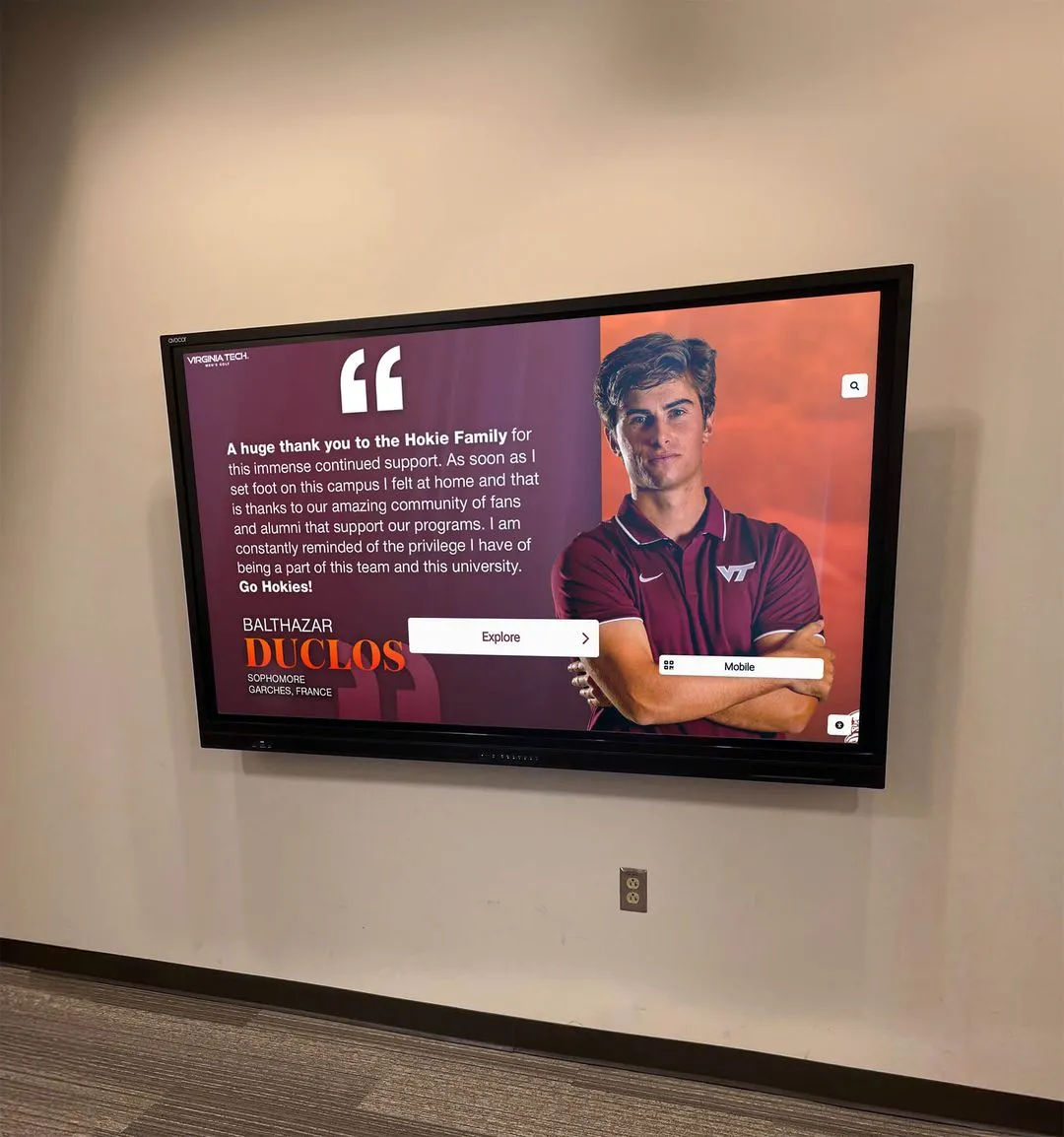
- QR code mobile access: Visitors pull up complete profiles on their own phones — a particularly effective feature during recruiting visits when prospects want to show family members what they’ve explored
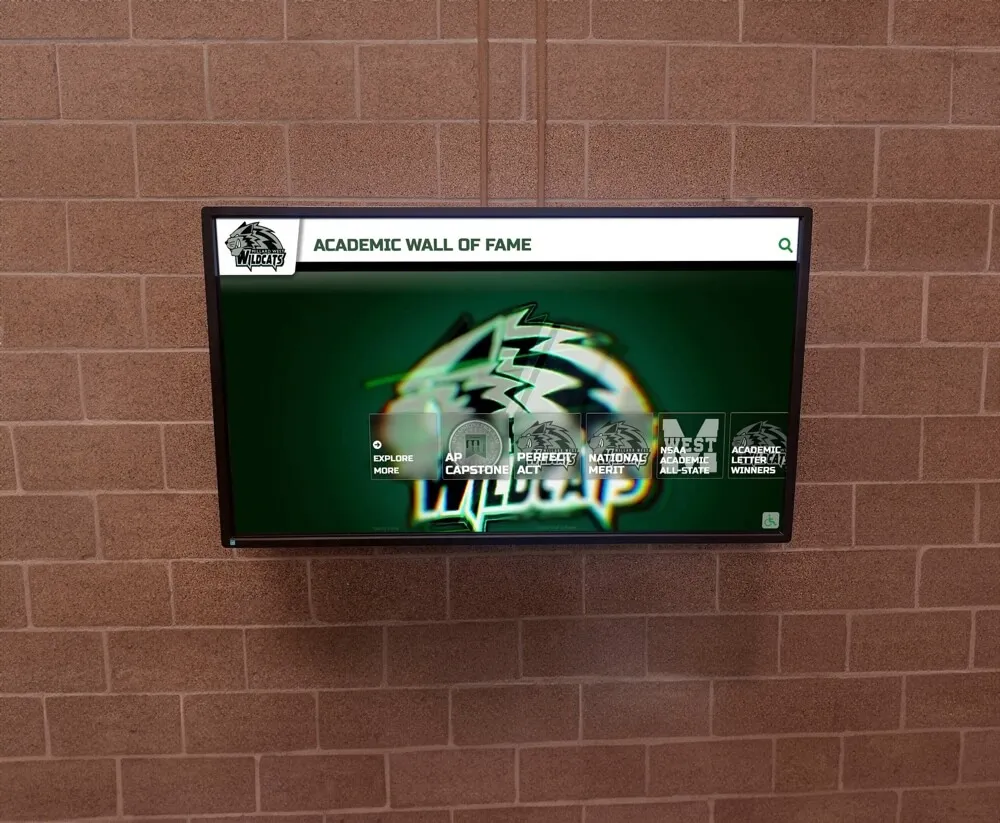
Interactive digital signage and engaging display options for organizations covers the technical considerations when selecting display hardware and software for high-traffic athletic spaces.
Zone 5: The Donor and Booster Recognition Wall
For programs supported by active booster clubs and individual donors, dedicated recognition is both appropriate gratitude and effective fundraising strategy. Donors who see their names honored in a dedicated, well-designed space are significantly more likely to continue giving and to increase their contribution levels over time.
Understanding what booster clubs do and how they fund athletic programs provides context for why donor recognition in athletic spaces is a strategic investment as much as an expression of gratitude. Effective donor recognition walls in team rooms typically:
- Distinguish giving levels clearly (platinum, gold, silver, bronze tiers with corresponding display treatment)
- Feature major gift donors prominently, with endowed space naming where applicable
- Include recent donors alongside legacy contributors — showing a donor base that is active, not historical
- Integrate digital elements that can be updated immediately when new gifts are made, rather than requiring physical fabrication for each addition
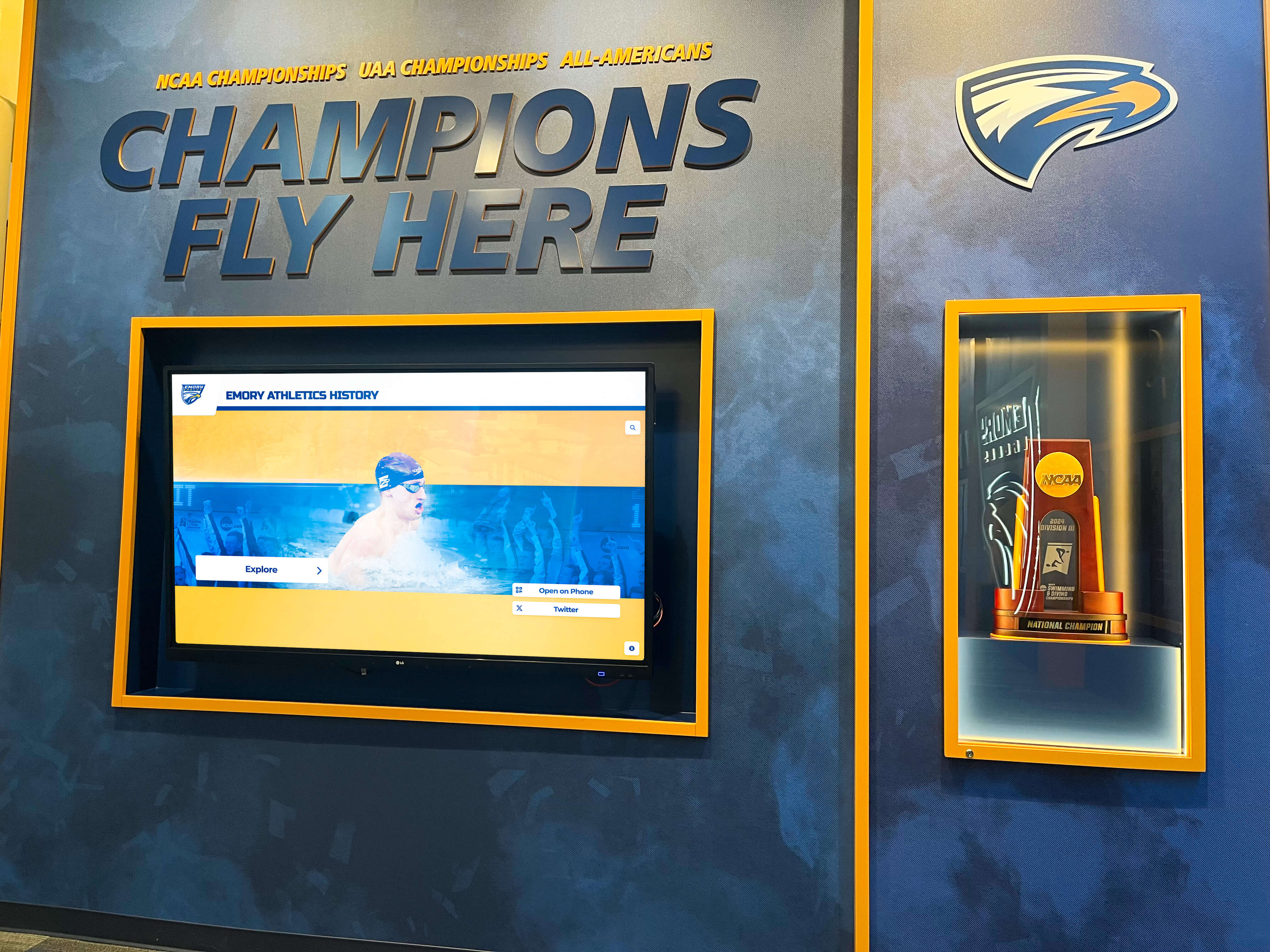
Championships walls that integrate physical trophy displays with comprehensive program history recognition create the most powerful athletic facility statements
Designing the Hall of Fame Wall: Practical Considerations
The hall of fame wall is where most athletic programs focus their initial recognition design investment, and for good reason — it’s the element with the broadest impact across all three audiences (current athletes, recruits, and alumni).
Traditional vs. Digital Hall of Fame Formats
The choice between traditional plaque-based and digital touchscreen hall of fame formats isn’t a simple binary. Most programs find that the most impactful installations combine both:
Traditional elements — physical plaques, framed photographs, championship banners, jersey displays — create the visual anchor and institutional gravitas that signals permanence. A recruit standing in front of a wall of framed inductees understands immediately that this program has history.
Digital elements extend the content depth far beyond what physical wall space allows. A single touchscreen can hold:
- Complete profiles for every inductee in program history, not just those who fit on the wall
- Video highlights, career statistics, and post-graduation stories that plaques cannot convey
- Search functionality that lets a recruit from a specific hometown find program alumni from that region
- Championship history with complete rosters and season documentation
- Record boards that auto-update as new marks are set
How Rocket Alumni Solutions software handles unlimited screens without hidden costs is a useful reference for programs comparing platform options as they plan the digital component of a hybrid installation.
What to Include in Each Inductee Profile
Strong hall of fame profiles in team rooms should cover:
- Name, sport(s), and years of competition
- Key statistics with context — career totals, records set, rankings achieved
- Awards received: conference honors, all-state selections, national recognition
- Championship teams contributed to
- Post-graduation story: professional career, coaching, continued involvement with the program
- Quality photographs — action images from playing years and, where available, current portraits
The post-graduation story is often what resonates most with recruits. Seeing that program alumni go on to professional careers, earn advanced degrees, and maintain lifelong connections to the program answers the question recruits are actually asking: what does this place do for the people who come here?
Comprehensive student-athlete high honors recognition profiles offer detailed guidance on structuring profiles that honor the whole person — athletic achievement, academic distinction, and post-graduation trajectory together.
Digital Displays: Maximizing the Recruiting Impact
Recruiting visits are time-compressed. A prospect might spend 90 minutes in your athletic facility. The physical spaces they move through, the quality of the displays they encounter, and the stories those displays tell are doing significant persuasive work before the coaching staff says a word.
Digital touchscreen displays that function as recruiting tools should be designed with the prospect’s perspective in mind:
Intuitive navigation: A 17-year-old exploring the display on their own needs to find what interests them without assistance. Clear categories, obvious search functions, and well-organized content matter.
High-quality photography and video: Low-resolution photographs and poorly shot highlight videos undercut the impression of a well-resourced program. Every image visible on a recruiting visit display should reflect the program’s standard.
Recent content: A display featuring prominently this season’s achievements signals that the program is active and successful now, not just historically. Current schedules, recent results, and current athlete spotlights keep the display feeling alive.
College commitment features: Displays that feature current athletes’ college commitments and post-high-school destinations tell recruits exactly what the program produces — the clearest possible message about what a commitment here leads to.
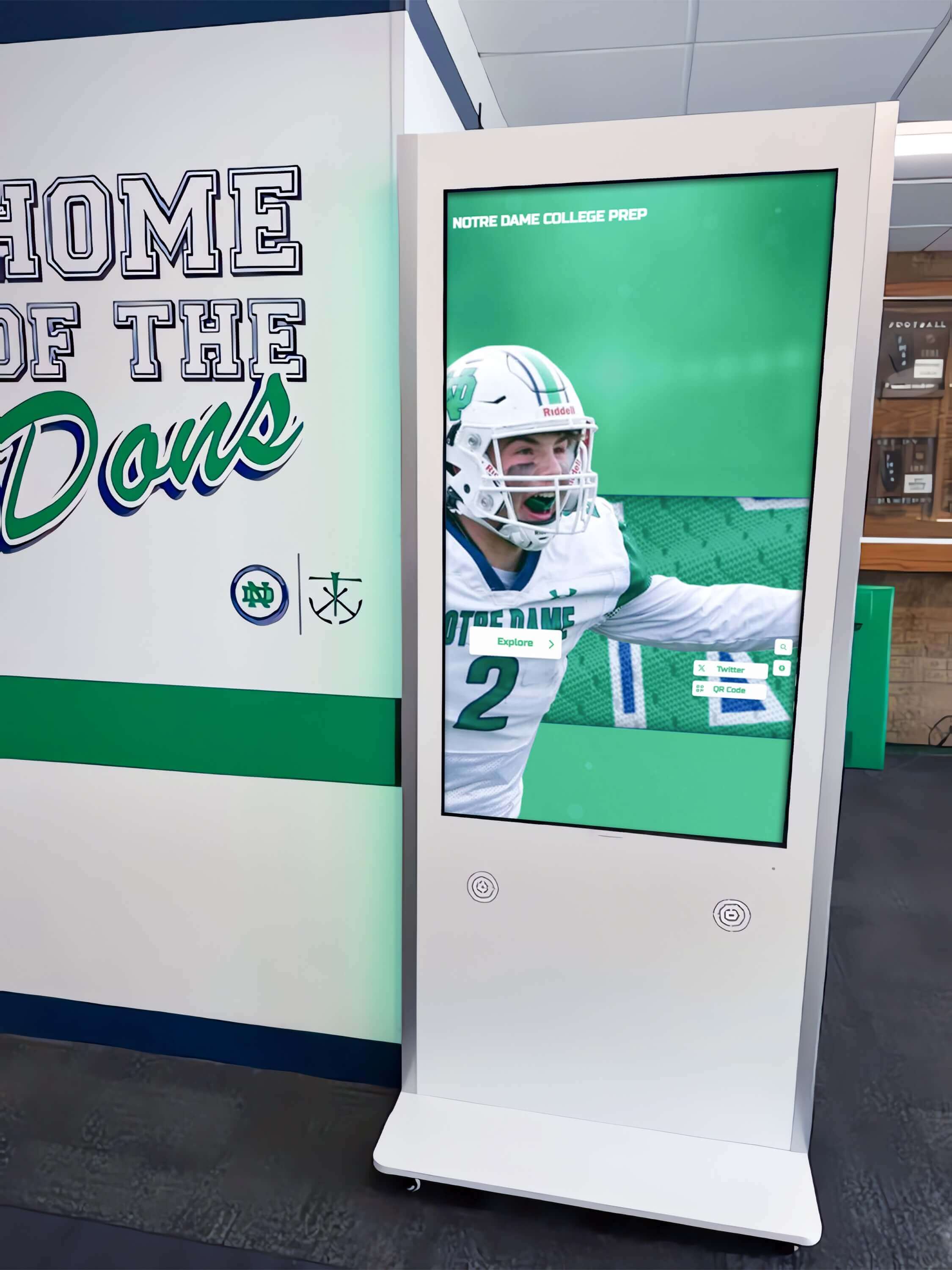
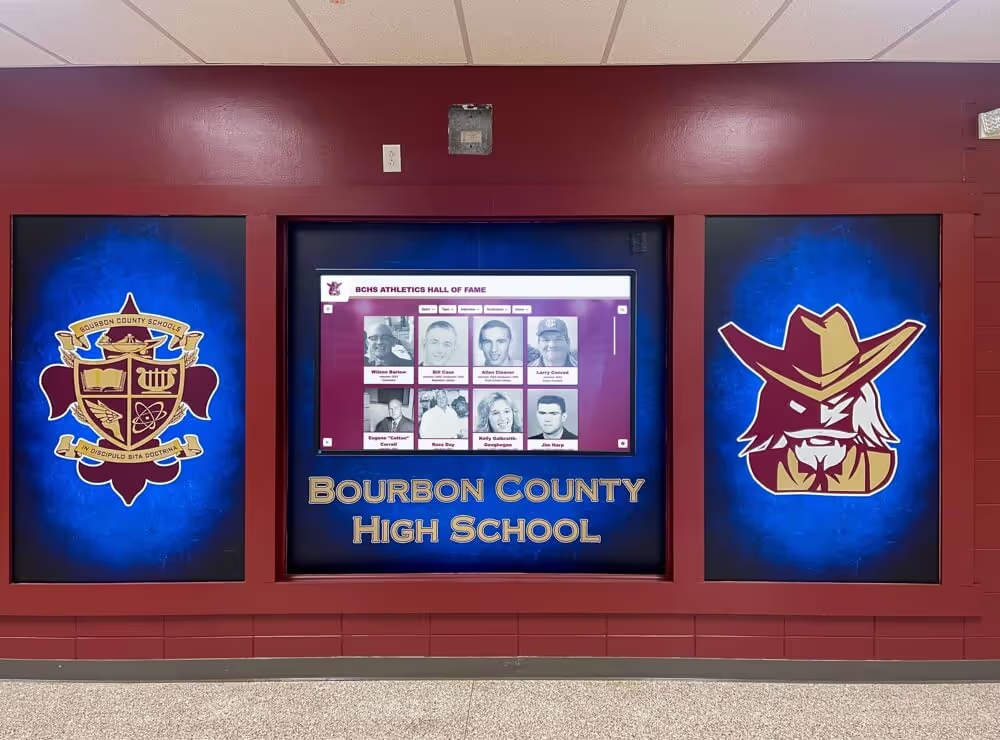
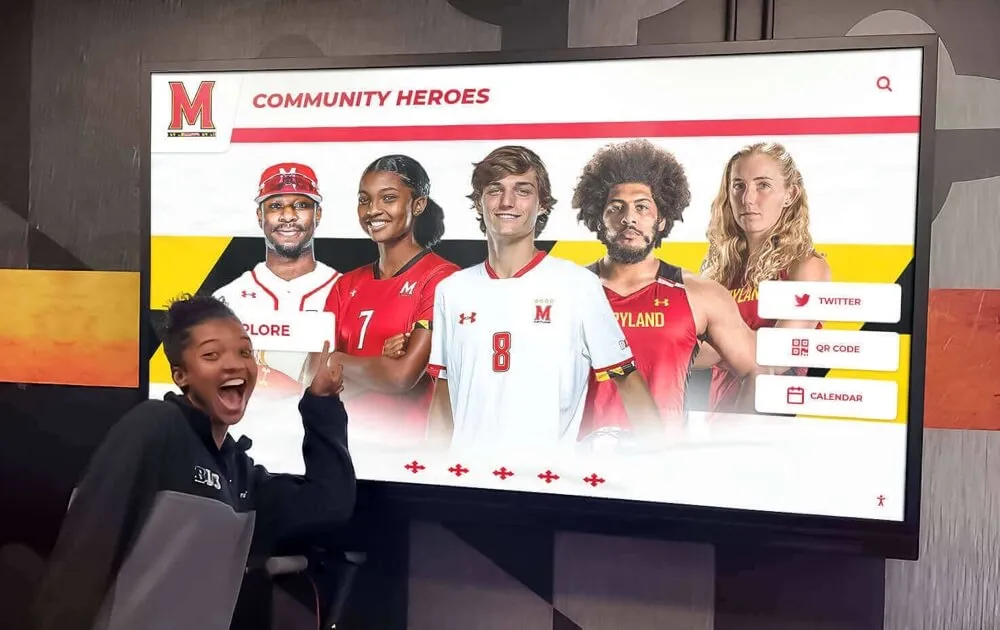
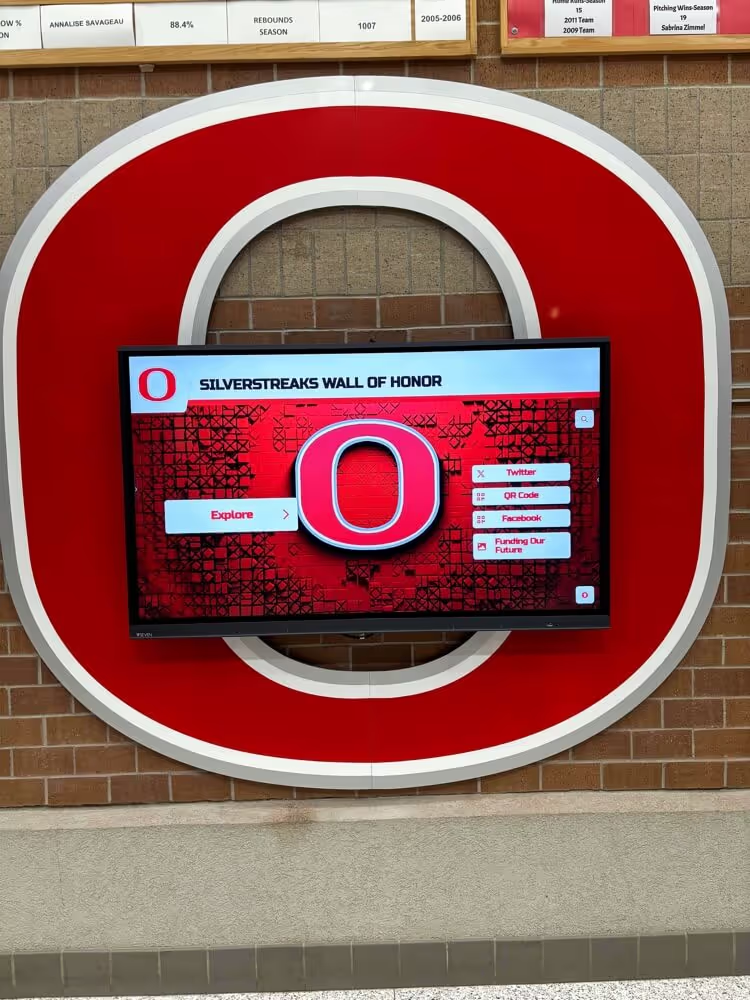
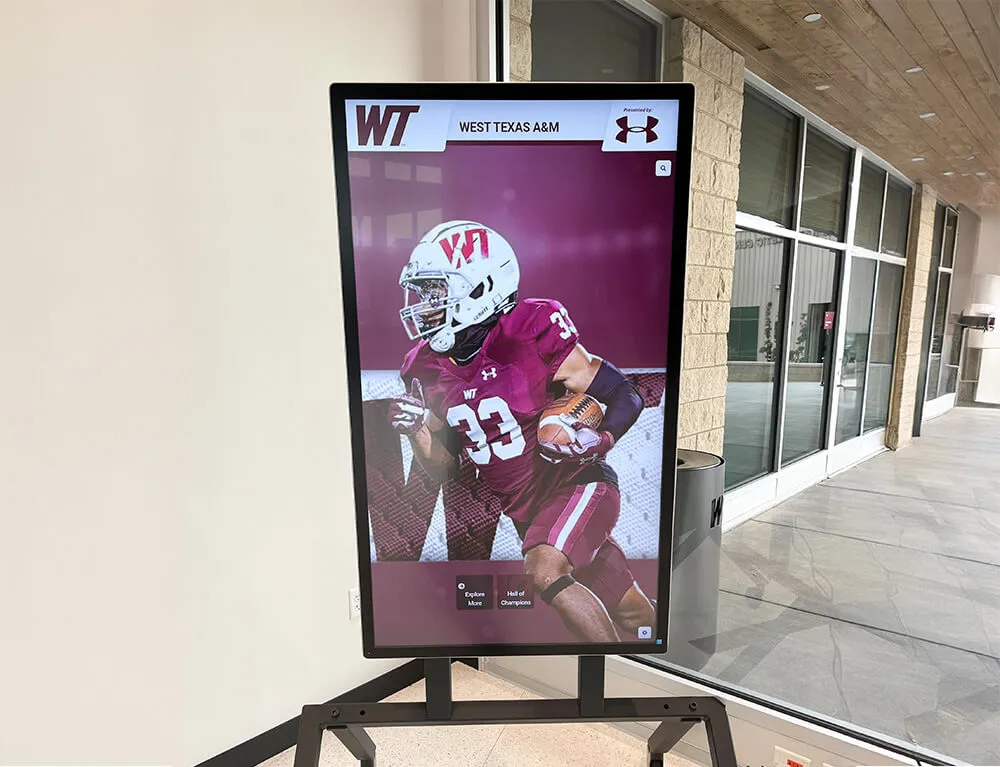
Interactive kiosks positioned in hallways near team room entrances create natural stopping points where recruits explore program history at their own pace during campus visits
Comprehensive digital signage options for athletic screens and kiosks explore the full range of content and hardware configurations available for team room installations.
Record Boards: Making Performance Data Visible and Motivating
Record boards are among the highest-ROI elements in athletic team room design because they serve multiple audiences simultaneously and require ongoing engagement to maintain effectiveness. An athlete who sees their own performance approaching a program record is experiencing something fundamentally motivating — and that motivation loop only works if the board is accurate and current.
Types of Record Boards for Team Rooms
Season records: Current-season performance leaders by event or category, updated after each competition. The competitive nature of these boards within a roster can drive practice intensity.
Career records: All-time program records that survive across seasons, representing the permanent standard of excellence for the program. Athletes in a program for four years measure themselves against these marks throughout their careers.
Championship records: Year-by-year championship results that show the arc of program success over time — whether the program has been building, maintaining, or rebuilding through different coaching eras.
Academic records: Honor roll achievements, academic all-conference selections, and GPA recognition that honors the full picture of athlete success — particularly relevant for programs that recruit academically.
Keeping Record Boards Current
The most common record board failure is staleness. A board that hasn’t been updated in two or three seasons actively discourages the engagement it’s designed to produce. Digital record board systems that update automatically when new records are submitted solve this problem fundamentally — new marks appear immediately, and outdated records never persist through staff transitions or administrative gaps.
Physical Design Elements That Elevate Team Rooms
The recognition content on the walls matters enormously, but the physical design elements that surround and frame that content determine whether the overall effect is impressive or merely adequate.
Color, Branding, and Visual Identity
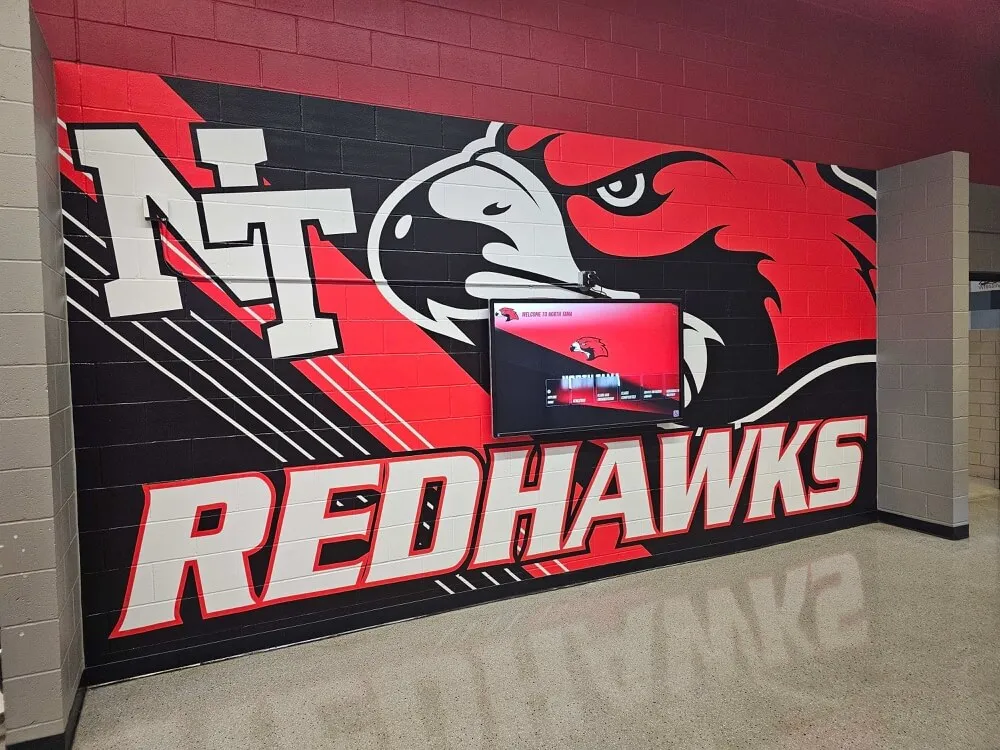
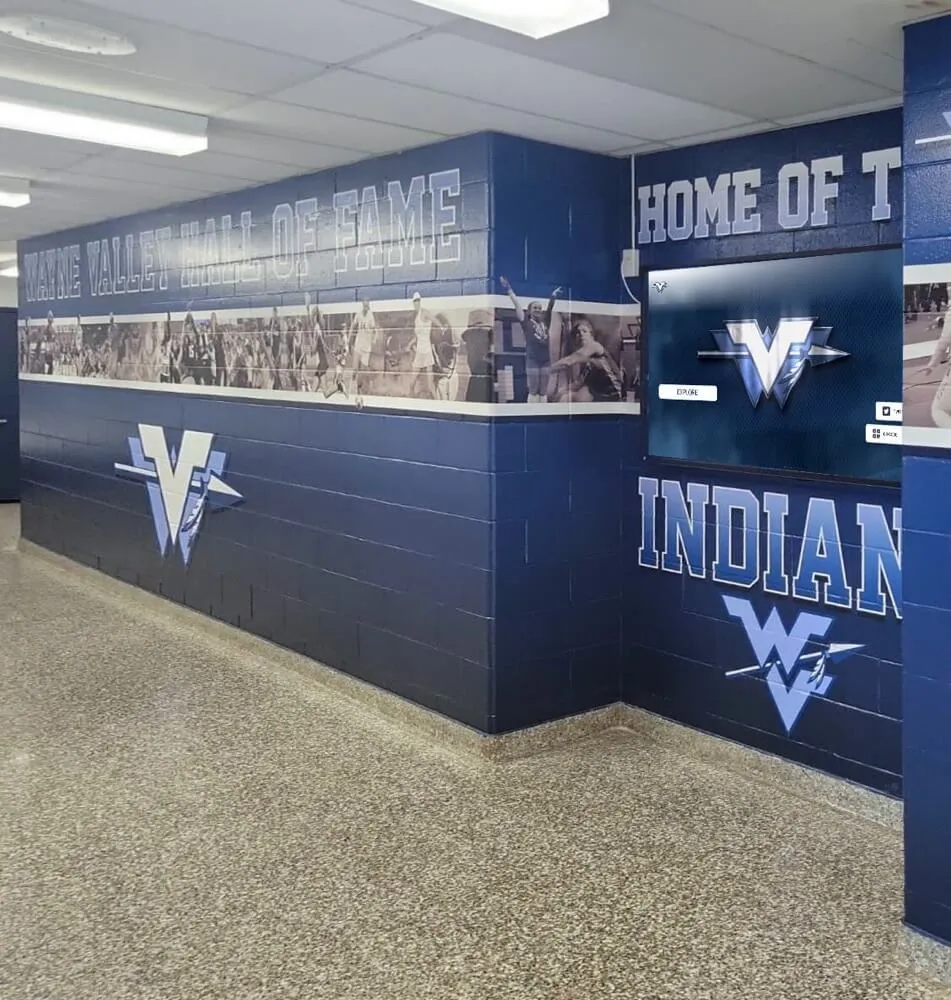
The team room is a branded environment. School colors, mascot imagery, and typography should be consistent throughout the space — not just on individual displays, but in the wall treatment, flooring, lighting choices, and spatial design. Programs that invest in custom mural work, branded wall graphics, and consistent typography achieve a visual cohesion that signals the entire space was intentionally designed rather than assembled piece by piece.
A few principles that separate effective branded environments from cluttered ones:
- Lead with the school color, not every shade simultaneously: Pick the primary color as the dominant visual element and use secondary colors as accents, not competing presences
- Mascot imagery should be large enough to command the space: Small mascot applications scattered across multiple displays look incidental; a well-placed large mural or wall graphic makes the brand statement clearly
- Typography consistency matters more than most programs realize: Different fonts across different display elements create visual noise; a consistent typographic standard across all recognition elements creates visual cohesion
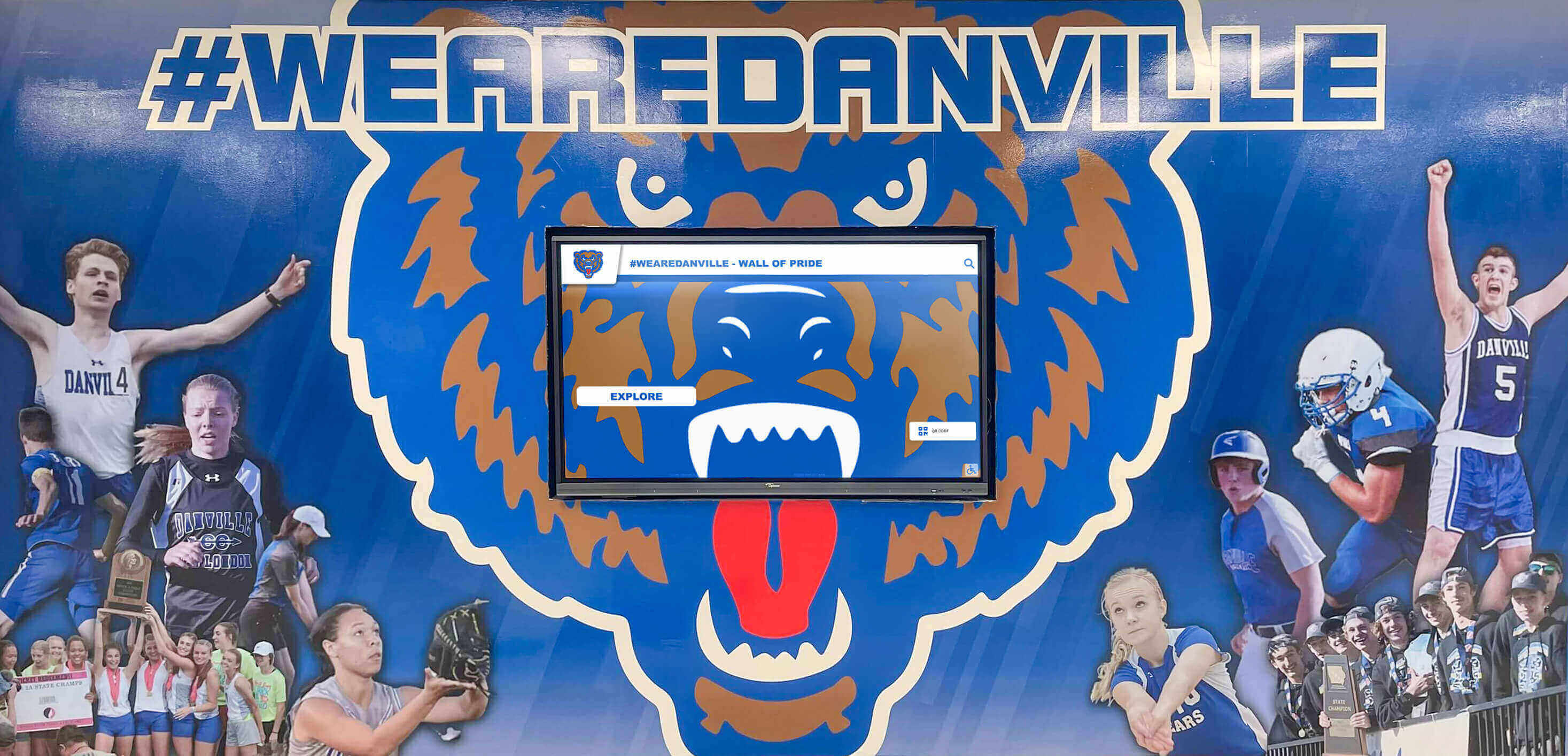
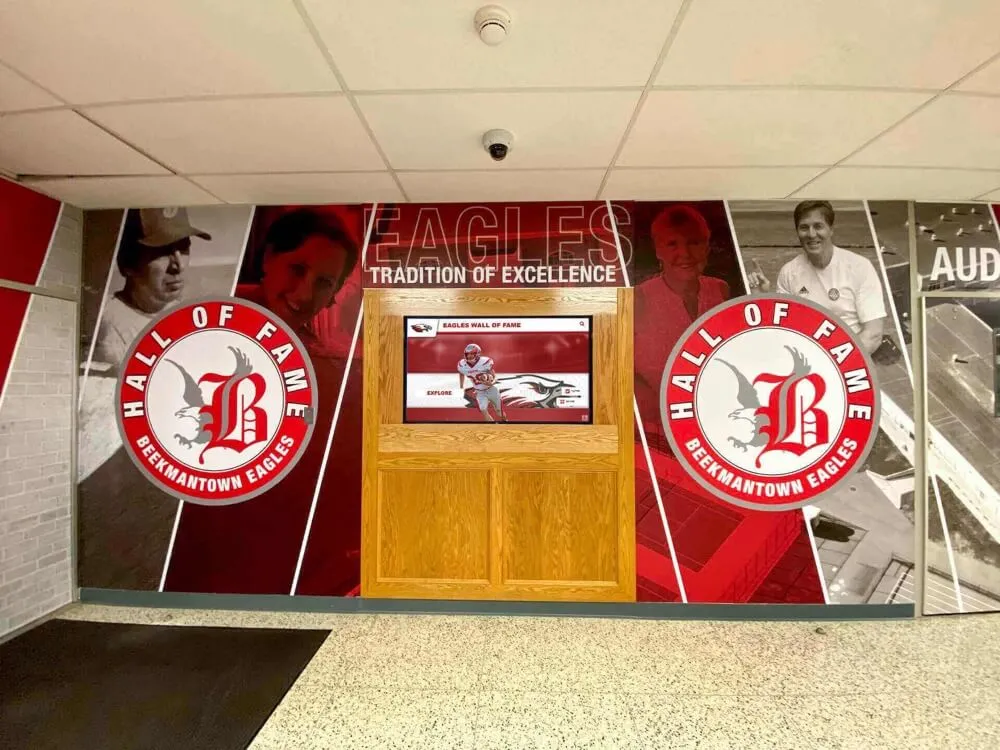
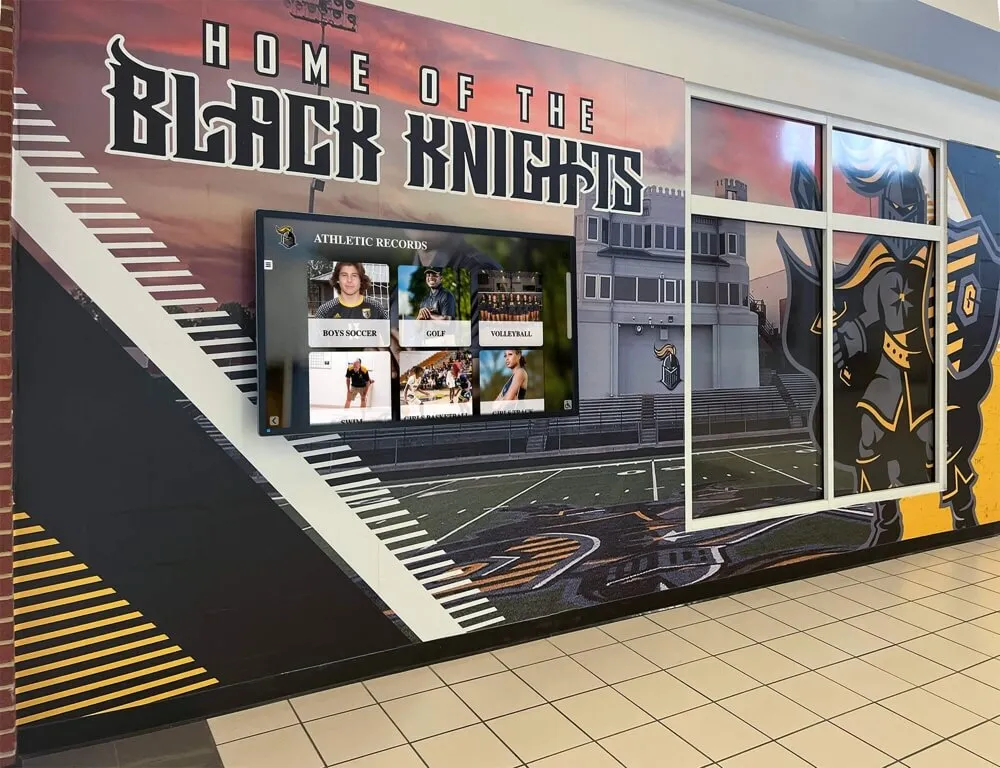
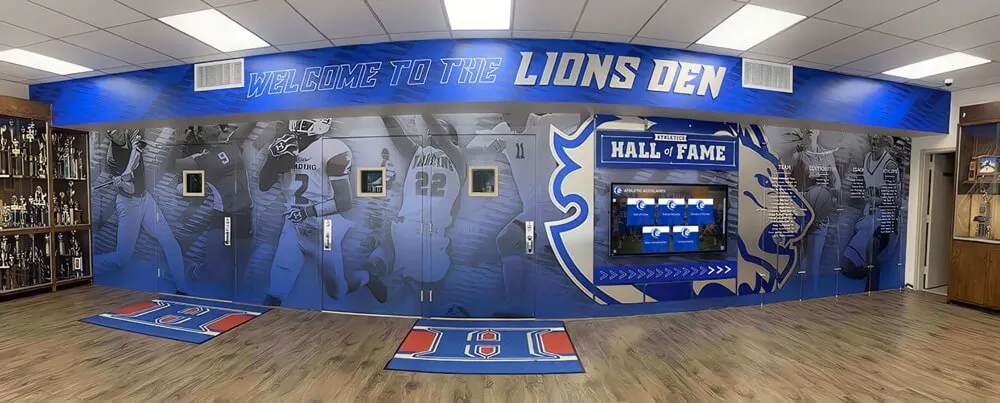
Custom mural artwork combined with digital display integration creates brand-consistent environments where every element reinforces program identity
Lighting Considerations
Recognition walls perform very differently under different lighting conditions. Key considerations:
- Natural light management: Direct sunlight on display screens causes glare that makes them unreadable; orientation and window treatment should account for display placement
- Accent lighting for physical recognition: Spotlighting or under-lighting for trophy cases and physical plaques creates the museum-quality presentation that elevates the perceived value of what’s being honored
- Display brightness for ambient conditions: Commercial-grade displays rated for high-ambient-light environments maintain visibility in well-lit lobbies and hallways; consumer-grade screens become washed out under the same conditions
Traffic Flow and Placement
The recognition wall that gets ignored is usually the one placed where traffic doesn’t naturally flow. High-impact placement locations for athletic team room recognition include:
- The wall a visitor faces immediately upon entering the primary athletic facility lobby
- The hallway connecting the locker room to the competition floor — athletes see it before every event
- Adjacent to the coaches’ offices where recruiting conversations happen
- Near the weight room or training facility entrance, where athletes spend daily time
- In the team room or film room where athletes gather for meetings
Donor Recognition Integration
Athletic programs increasingly build donor recognition directly into team room design — acknowledging the financial supporters whose investments make the facility and program possible. When done well, donor recognition in team rooms serves the program’s fundraising goals while enhancing the visual environment rather than cluttering it.
Donor wall design ideas that work for athletic programs cover the range of approaches from traditional engraved brick programs to fully interactive digital donor recognition systems.
Key design principles for donor recognition in athletic spaces:
Scale appropriately to giving level: Major facility donors deserve named recognition at a scale commensurate with their gift — prominently displayed, large enough to be noticed. Annual fund donors can be recognized collectively in a supporters gallery that honors breadth of participation without overwhelming the space.
Design donor recognition as part of the space, not an addition to it: Donor walls that clearly were added to an existing design after the fact feel like afterthoughts. Donor recognition integrated from the initial design of the space feels intentional and appropriate.
Keep it current: Digital donor recognition displays that add new donors immediately and update giving level rosters in real time demonstrate to prospective donors that their contribution will be promptly and accurately acknowledged.
Connect giving to impact: The most effective donor recognition connects the gift to what it makes possible — a named weight room, an endowed scholarship, a funded championship travel budget. This context gives the recognition meaning beyond a name on a wall.
Transform Your Team Room Into a Recognition Space That Recruits and Inspires
Rocket Alumni Solutions designs and installs custom interactive touchscreen recognition systems for athletic facilities nationwide — unlimited inductee profiles, auto-ranking record boards, ADA WCAG 2.1 AA accessibility, remote cloud management, and professional installation at 600+ institutions. See what your program's history looks like on a display built to honor it.
Request Your Custom DemoDigital Team Histories: Displaying Program Depth
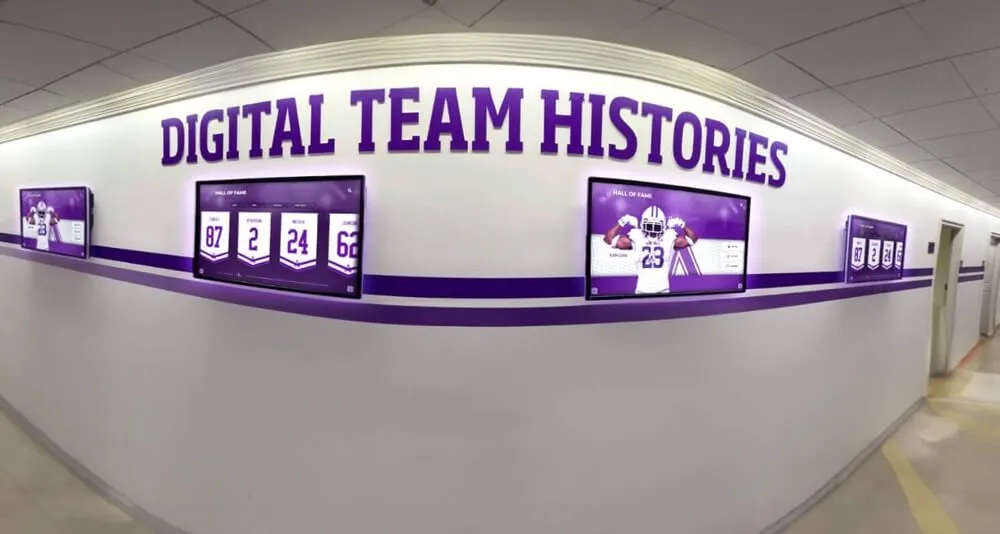
Beyond individual inductee recognition, team rooms benefit enormously from displays that convey the depth and breadth of program history. Digital team history displays — screens or interactive systems showing season-by-season records, coaching staff histories, and program timeline milestones — give visitors the sense that this program has been building something for a long time.
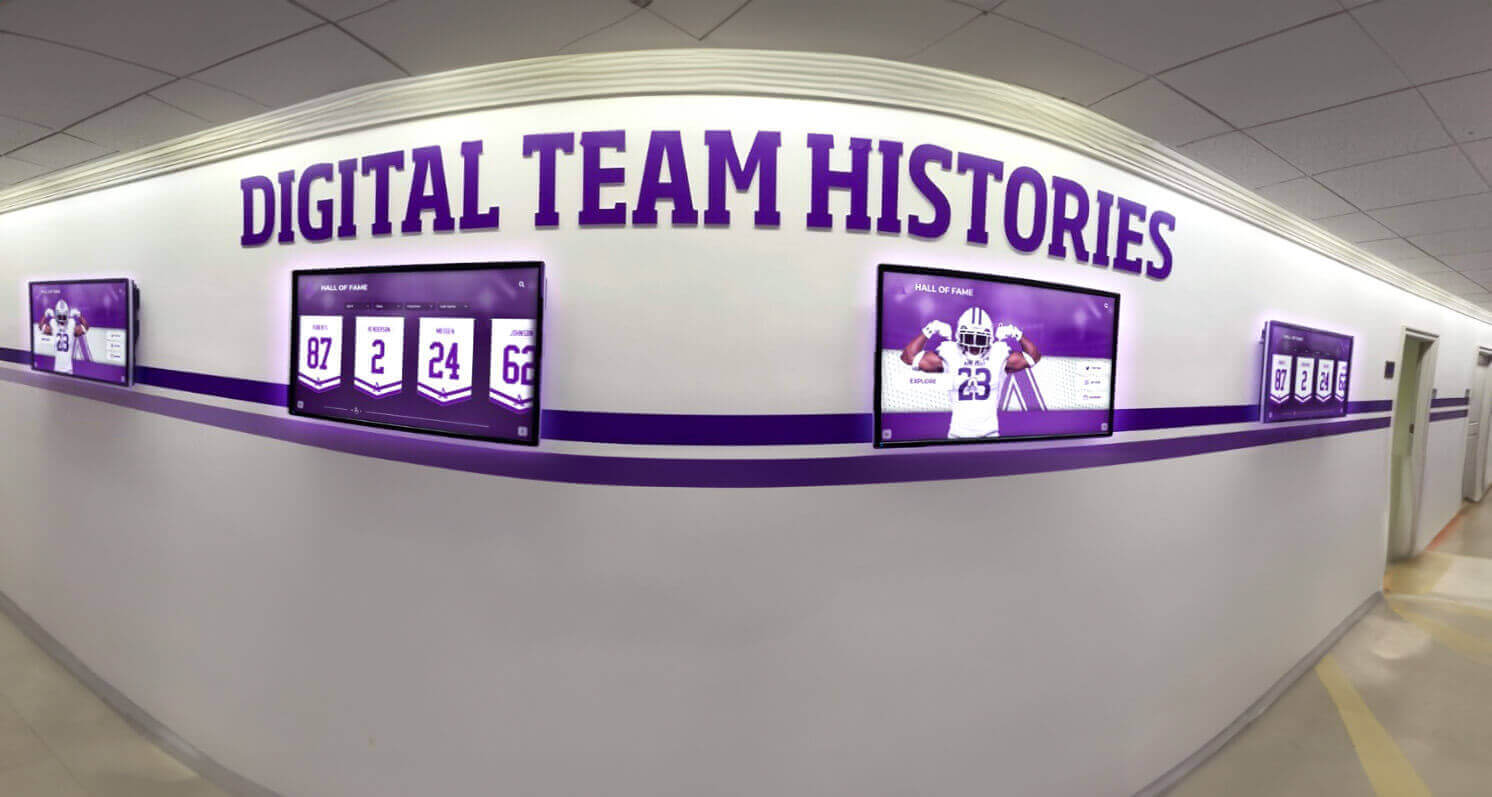
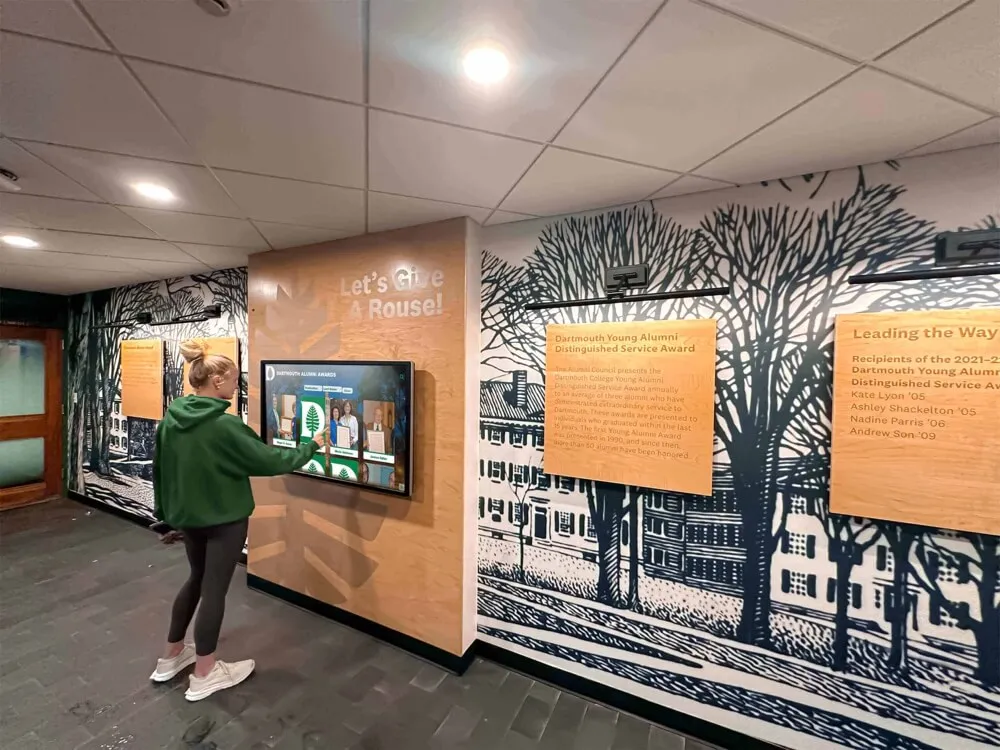
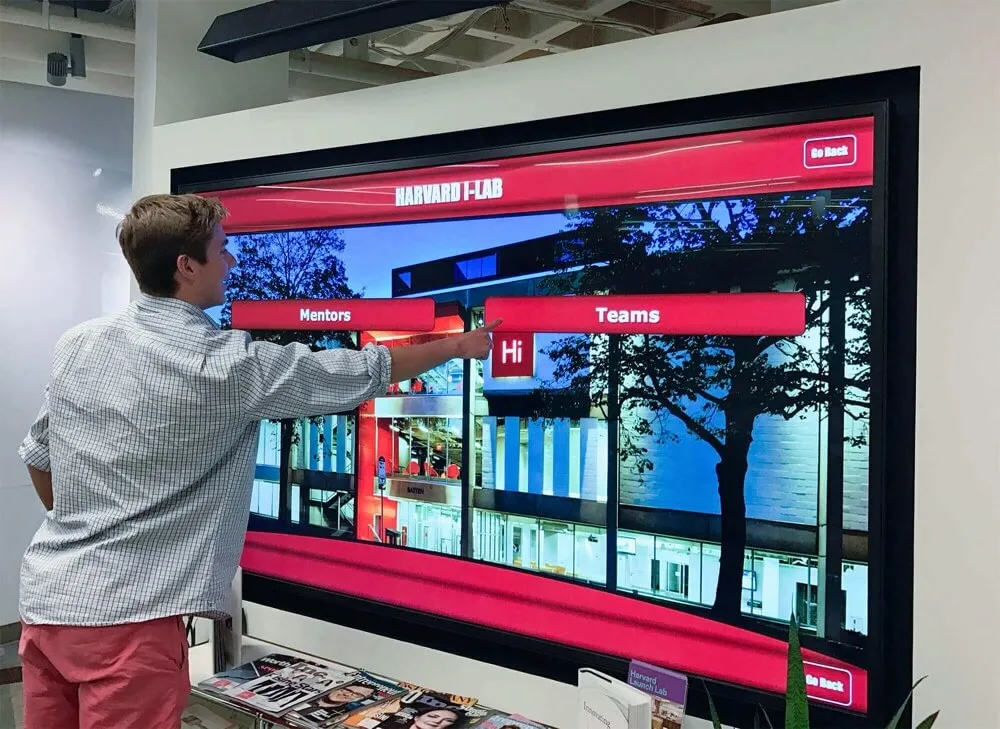
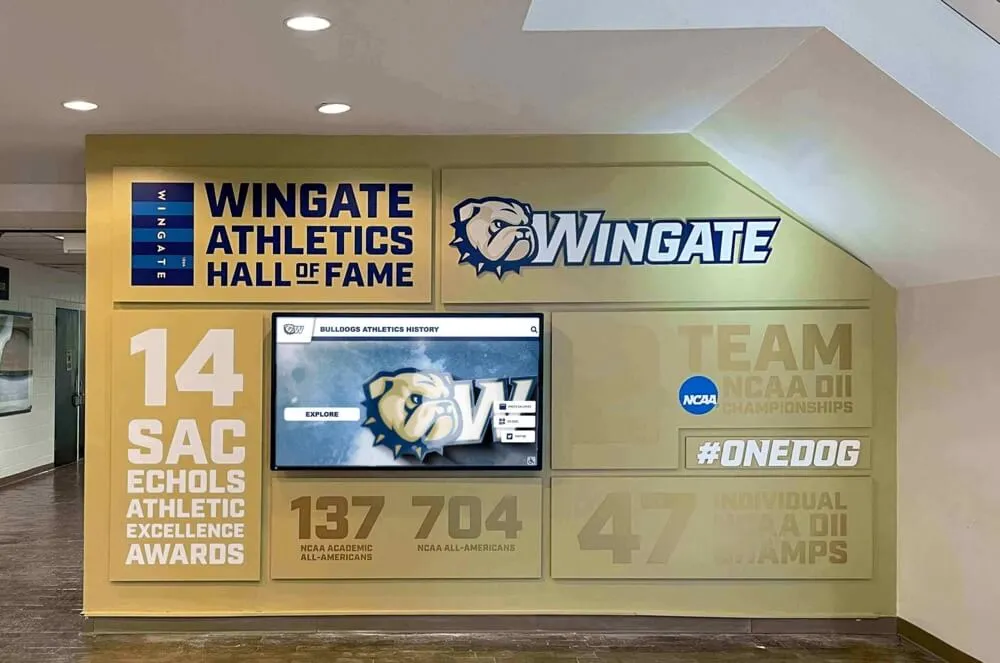
Digital team history displays installed in athletic hallways create immersive program storytelling environments that engage current athletes, recruits, and returning alumni
Effective team history displays include:
- Year-by-year season results: Win-loss records with championship notations that show the program’s trajectory over time
- Coaching history with tenure and record: Context for how the program has evolved through different coaching eras
- Notable season milestones: First conference championship, first state title, milestone victories
- Alumni achievement timeline: Post-graduation achievements of program alumni organized chronologically
- Facility history: When the gym was built, when additions were made, what community members funded key facility improvements
The goal is to help every visitor — current athlete, recruit, alumni, parent — understand that they’re engaging with something that has been built over decades and will continue being built long after the current season ends.
Accessibility in Athletic Recognition Spaces
ADA accessibility requirements apply to athletic recognition displays as much as to any other public space, and designing for accessibility from the beginning costs substantially less than retrofitting after the fact.
Key accessibility considerations for athletic team room recognition:
- Touchscreen mounting height: Interactive displays should be mounted so the primary interface area is accessible to users in wheelchairs; the ADA-recommended touch zone is between 15 and 48 inches from the floor
- Text size and contrast: Recognition content should be legible from standing and seated positions, with sufficient contrast between text and background for visitors with visual impairments
- WCAG 2.1 AA compliance: Digital recognition platforms should meet or exceed Web Content Accessibility Guidelines 2.1 Level AA standards, covering screen reader compatibility, keyboard navigation alternatives, and adjustable text sizing
- Audio description options: Video content in recognition displays should include captions or audio description tracks for visitors who are deaf or hard of hearing
WCAG 2.2 AA compliance and accessibility standards guides explain the specific technical requirements and why building them into recognition systems from the start matters for both legal compliance and visitor experience.
Budget Planning for Athletic Team Room Design
Athletic team room design projects span a wide range of budgets, from modest improvements to comprehensive renovation projects. The most useful framework for planning isn’t asking “what can we afford?” but rather “what is the right investment level given the recruiting and alumni relations impact this space will generate over the next ten years?”
Budget Ranges by Project Scope
Targeted recognition wall upgrades ($5,000–$25,000)
- New plaque sets with consistent framing and typography
- Digital record board to replace a static chalkboard or painted board
- Single interactive display for hall of fame inductee profiles
- Championship banner replacement and gallery organization
- Improved lighting for existing recognition displays
Mid-scale team room redesign ($25,000–$75,000)
- Custom mural or wall graphic installation
- Multi-screen digital display system with hall of fame and current season content
- Comprehensive trophy case redesign and custom cabinetry
- Donor recognition wall with tiered naming
- Complete rebranding of recognition elements with consistent typography and color
Full facility recognition transformation ($75,000–$250,000+)
- Architect-designed team room renovation
- Multi-screen interactive touchscreen wall spanning the primary recognition space
- Custom fabricated physical recognition elements integrated with digital systems
- Named spaces with donor recognition at major gift levels
- Complete athletic facility branding program across all spaces
Understanding Rocket Alumni Solutions pricing and subscription options for digital recognition systems helps athletic departments plan budgets that account for both initial installation and ongoing platform costs.
Prioritizing Investment
When budgets require prioritization, a few principles help direct resources toward highest-impact elements:
Hall of fame wall first: The hall of fame wall is the element with the broadest impact across all three audiences. If forced to choose, invest in getting this right before other elements.
Current content over historical content: A display with well-designed, current content about this season is more effective than a historically comprehensive display with outdated or poorly organized material. Build depth over time from a strong current foundation.
Maintenance plan before installation: A display that falls into disrepair after installation does more harm than no display at all. Budget for ongoing content management and technical support before committing to the display itself.
Frequently Asked Questions About Athletic Team Room Design
What is the most important element of athletic team room design for recruiting purposes?
The most impactful single element for recruiting is a hall of fame or recognition wall that clearly shows program history, alumni success after graduation, and championship achievement. Recruits are implicitly asking “what does this program do for the athletes who come here?” — and a well-designed recognition wall answers that question more effectively than any conversation can.
Should team room recognition focus on the sport’s best performers or honor all contributors?
Both approaches work, and many programs maintain multiple recognition tiers: a highly selective hall of fame for exceptional achievement alongside a broader letter winners wall or honor roll that recognizes everyone who contributed fully. The key is having clearly distinguished tiers with defined criteria so the recognition system makes logical sense to everyone who sees it.
How do digital touchscreen displays compare to traditional plaques for team rooms?
Traditional plaques provide institutional gravitas and permanence that digital displays don’t fully replicate. Digital touchscreen systems provide content depth, search capability, multimedia profiles, and unlimited capacity that plaques cannot approach. The most effective team room installations combine both: physical plaque elements create the visual anchor, while adjacent interactive digital systems extend the content depth and provide the up-to-date content that keeps the display relevant.
How often does team room recognition content need to be updated?
At minimum, annual updates are required after each induction ceremony and at the end of each season. Digital systems enable more frequent updates — records can be updated immediately as they’re broken, recruiting commitments can be added throughout the signing period, and current season content can rotate on a weekly or monthly basis. Static installations require more planning to avoid falling behind, since physical fabrication for new inductees takes longer than digital publishing.
What size display is appropriate for an athletic team room installation?
Display size depends on the viewing distance and ambient light conditions of the specific space. High-lobby installations where visitors view from 15+ feet typically warrant displays in the 65–85 inch range. Closer-viewing hallway installations might use 43–55 inch displays effectively. Rooms with high ambient light require commercial-grade displays with higher brightness ratings (typically 700–2500 nits) rather than consumer-grade screens that wash out under bright lighting.
What accessibility requirements apply to athletic recognition displays?
The ADA requires that interactive displays in public spaces be accessible to users with disabilities, including wheelchair users and those with visual or hearing impairments. WCAG 2.1 AA standards apply to digital content. Practically, this means mounting touchscreens at appropriate heights, ensuring sufficient text contrast, providing captions for video content, and building navigation that doesn’t rely exclusively on touch gestures.
Can a small high school budget produce an effective team room recognition space?
Yes. Budget constraints shape options, not outcomes — a thoughtfully designed recognition space with consistent framing, organized content, and maintained record boards at a $10,000 budget outperforms a neglected $100,000 installation. Start with what you have, organize it well, and build depth over time. The commitment to maintaining and updating the space matters more than the initial investment level.
Building a Team Room That Lasts
The athletic team rooms that have the greatest impact over time share something beyond design quality or budget level: they’re built with conviction. Conviction that the athletes who gave this program their best efforts deserve permanent, dignified recognition. That every recruit who walks through the door should understand what they’re being asked to join. That every alumni who returns for homecoming should find their own story reflected in the walls.
The design decisions — format, content, technology, physical materials — are means to that end. A wall of framed photographs maintained with care over decades can accomplish it. A sophisticated interactive touchscreen system that holds the complete history of a hundred-year program can accomplish it. What matters is that the space is built and maintained with the understanding that it represents the institution’s commitment to the people who have competed under its banner.
Rocket Alumni Solutions has helped more than 600 schools and universities build recognition spaces that honor this commitment — from custom interactive touchscreen hall of fame walls to integrated digital record boards and donor recognition systems. The platform combines unlimited inductee capacity, auto-ranking record boards, remote cloud content management, ADA WCAG 2.1 AA compliance, and professional installation with ongoing support.
See What Your Program's History Looks Like on a Display Built to Honor It
From concept to installation, Rocket Alumni Solutions builds custom interactive athletic recognition systems that showcase your complete program history — unlimited inductee profiles, auto-ranking record boards, champion galleries, donor recognition walls, and remote cloud management. ADA-compliant, professionally installed, built for decades of use at 600+ institutions.
Request a Custom Demo Today