Award Walls: How Schools Organize Plaques, Photos, Winners, and Digital Recognition
- Home /
- Digital Wall of Fame Blog - Recognition Display Insights & Resources /
- Award Walls: How Schools Organize Plaques, Photos, Winners, and Digital Recognition

The Easiest Touchscreen Solution




Live Example: Rocket Alumni Solutions Touchscreen Display
Interact with a live example (16:9 scaled 1920x1080 display). All content is automatically responsive to all screen sizes and orientations.
An award wall is a curated display—physical, digital, or both—where a school organizes plaques, photos, trophies, and winner records so students, families, alumni, and visitors can find and celebrate recognized achievements in one place. Done well, an award wall functions as a living archive: easy to update each year, searchable by name or category, and capable of honoring every program without running out of wall space.
This guide gives school administrators, athletic directors, advancement teams, and communications staff a step-by-step framework for planning, organizing, and maintaining award walls that hold their value across decades—whether you are starting from scratch, renovating a hallway of aging plaques, or evaluating a move to digital display technology.
What Makes an Award Wall Effective
Before moving a single plaque, clarify what the display needs to accomplish. Most school award walls serve four overlapping purposes:
- Archive — preserve an accurate historical record of winners, dates, and categories
- Motivation — show current students what excellence looks like and who achieved it
- Community — give alumni, donors, and families a reason to engage with the school
- Navigation — help visitors find specific people, teams, or years without staff assistance
An award wall that fulfills all four is far more valuable than a random collection of dusty plaques in a hallway nobody uses. Naming those goals up front also tells you which formats, categories, and maintenance workflows to prioritize.

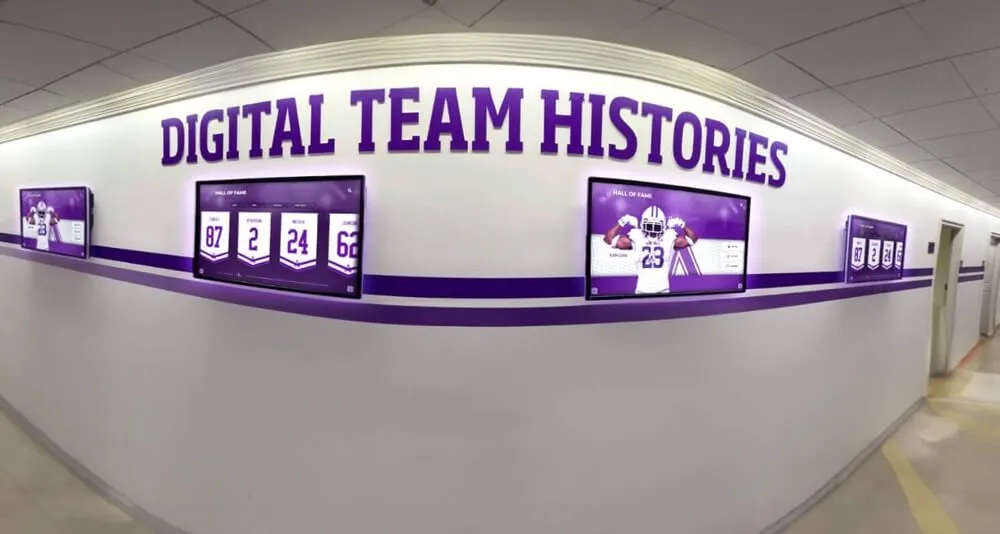
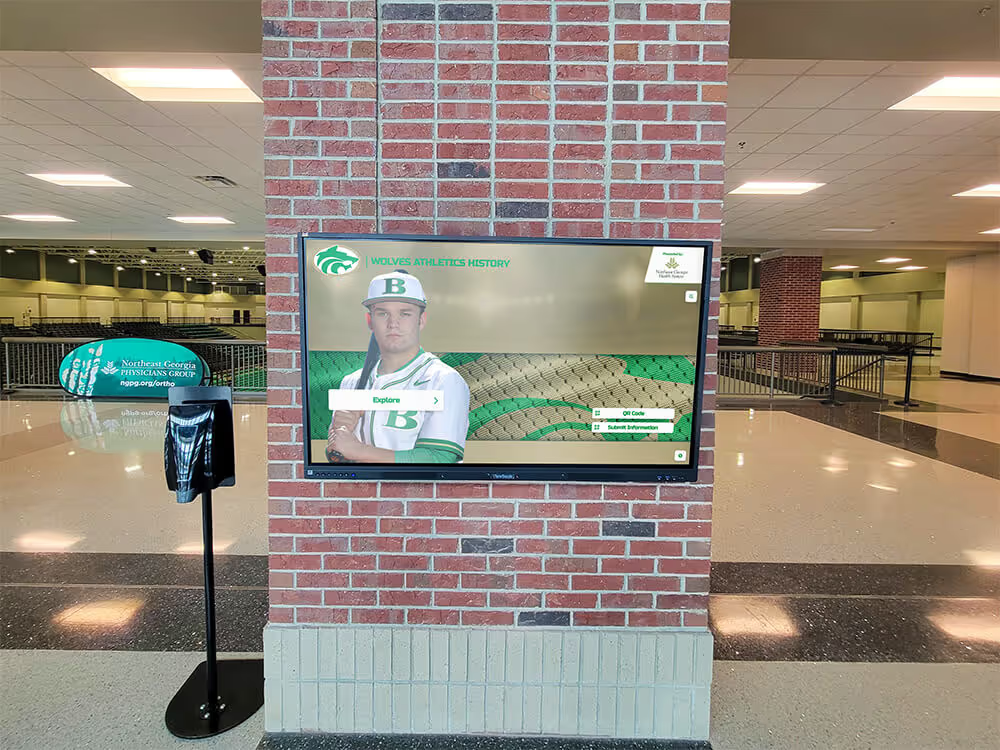
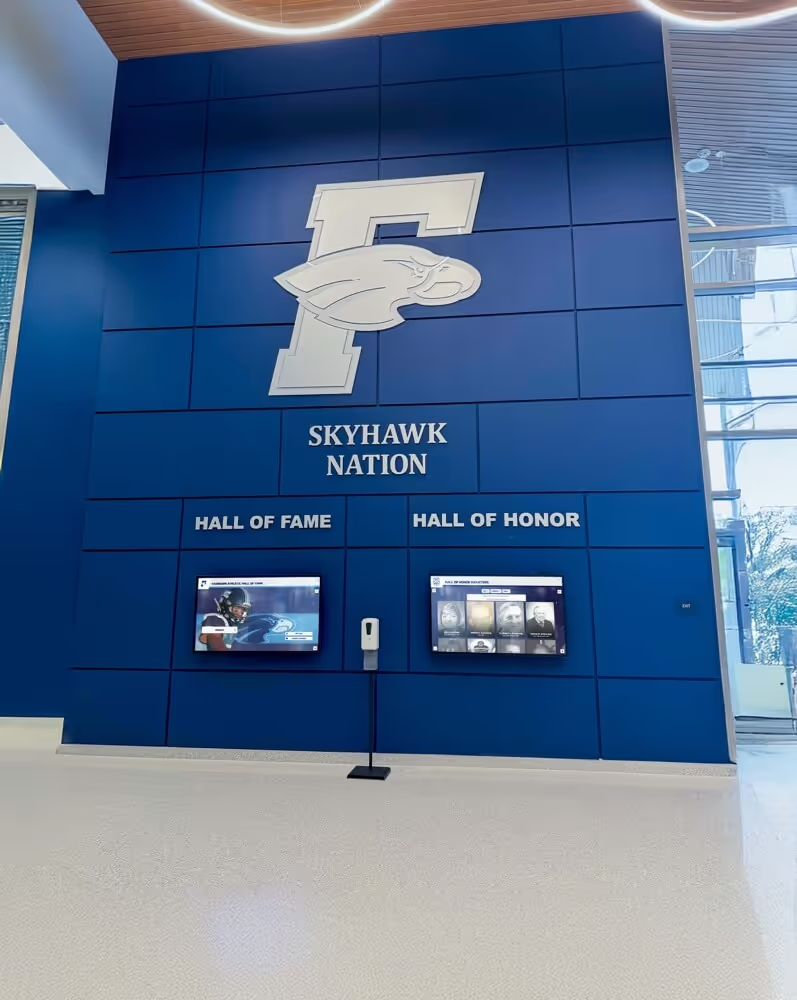
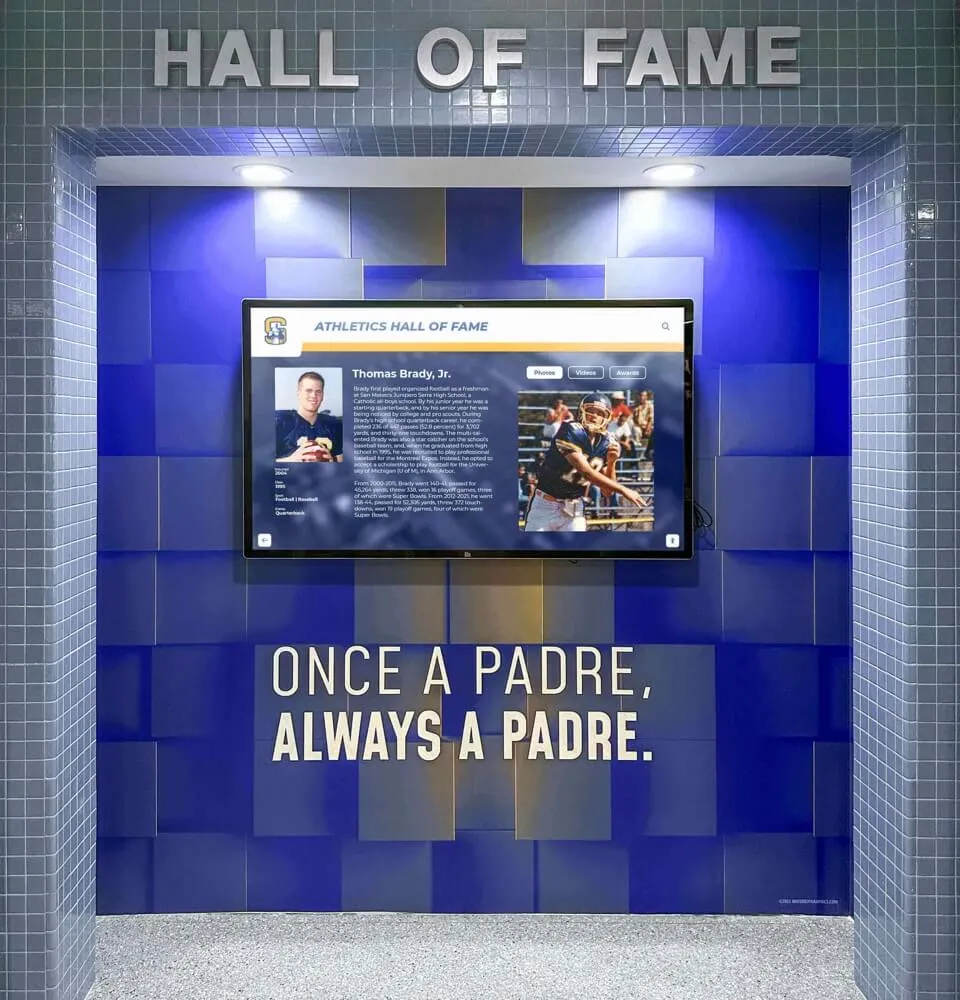
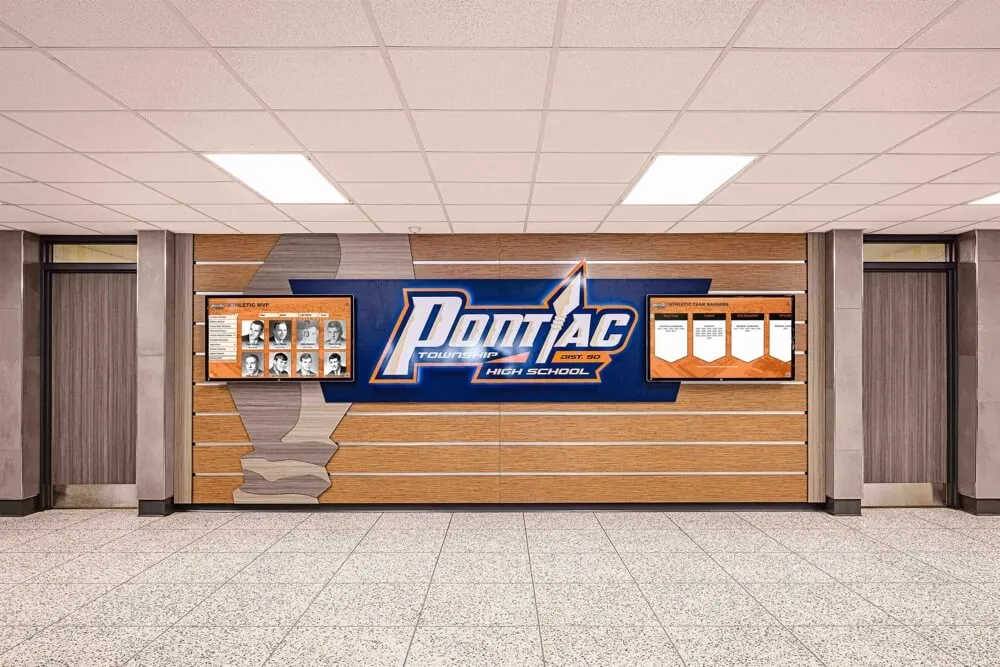
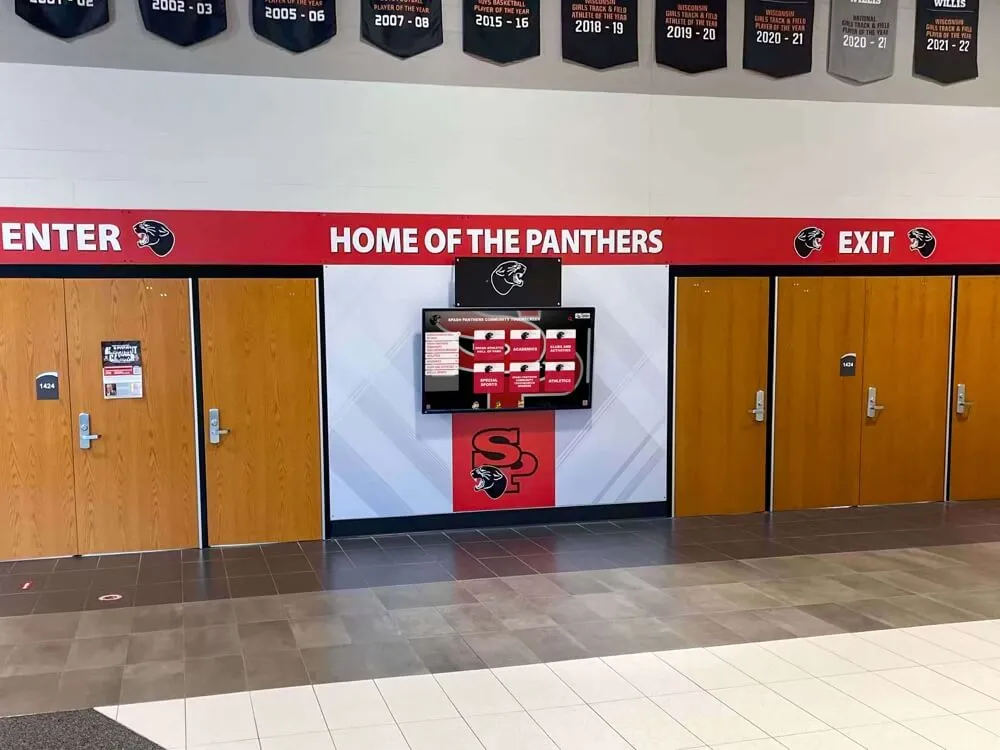
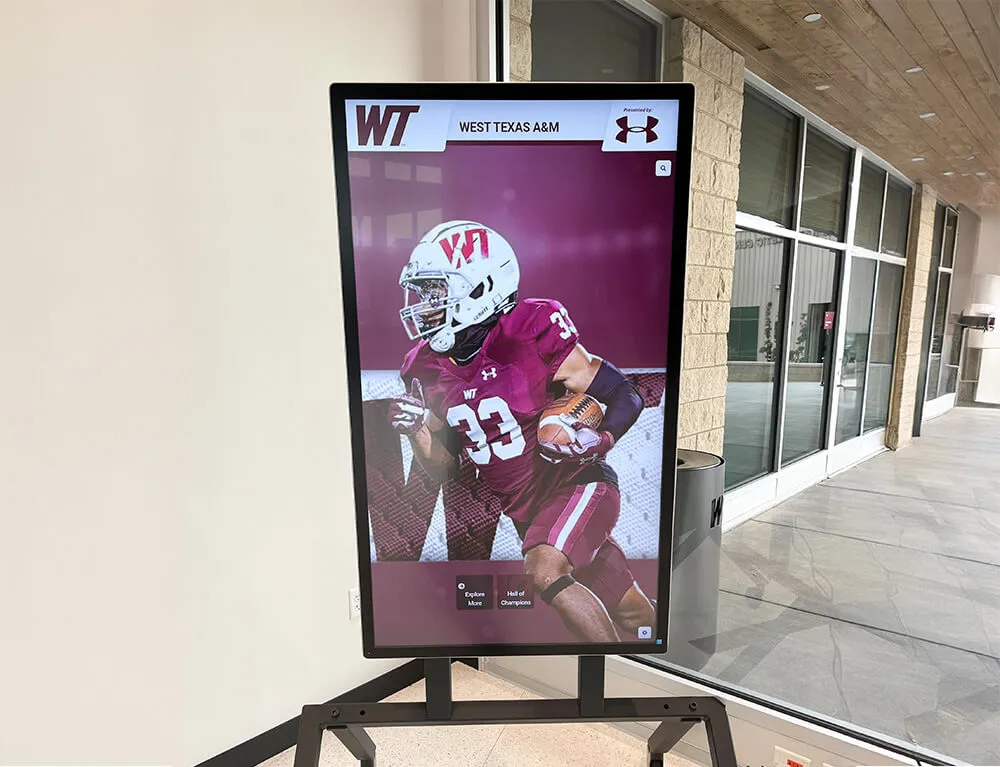
A well-designed award wall in a high-traffic school lobby serves as both archive and daily inspiration for current students
Step-by-Step Planning Checklist
Use this checklist before committing budget or wall space to any new award wall project.
Step 1: Conduct an Inventory Audit
Walk every hallway, trophy case, office, and storage room. Document:
- Every existing plaque, photo, trophy, banner, and framed certificate
- Current condition (faded, broken, duplicated, misattributed)
- Location and approximate date range covered
- Which categories are represented and which are missing
You will almost always find achievements scattered across six different locations with no single source of truth. The audit turns chaos into a data set.
Step 2: Define Your Award Categories
Group recognitions into logical categories before deciding on layout:
- Athletic — team championships, individual records, MVP honors, all-conference selections
- Academic — valedictorians, honor roll milestones, scholarship recipients, academic all-conference
- Leadership — student government, class officers, club presidents, community service
- Arts and Performance — music soloists, drama leads, visual arts awards, debate champions
- Donor and Alumni — named gifts, endowments, distinguished alumni designations
- Staff — teacher of the year, coaching milestones, retirement tributes
A clear category structure prevents the most common award wall problem: a jumbled display that visitors cannot read or navigate.
Step 3: Establish Update Cadence and Ownership
Decide now who updates the award wall and how often, or it will immediately fall behind:
- Assign a named owner (communications coordinator, athletic director, registrar)
- Set an annual update window (summer is typical for most award cycles)
- Create a simple intake form that coaches, advisors, and department heads submit each year
- Define what documentation is required before a new winner is added
Without a process, an award wall becomes an embarrassment within three years—showing winners from 2019 while the current season’s champions appear nowhere.
Step 4: Choose a Format
See the comparison table below before committing to physical plaques, digital displays, or a hybrid approach.
Step 5: Design for Findability
Whether physical or digital, visitors should be able to locate a specific person or year within sixty seconds:
- Physical walls: organize by category, then chronologically within each section; use consistent label fonts and sizes
- Digital displays: build in search by name, year, sport, or award type
- Hybrid: use QR codes on physical plaques that link to the full digital profile
Step 6: Plan for Growth
Award walls that cannot grow become bottlenecks. Budget for:
- Additional physical space or modular panel systems that can expand
- Digital storage and subscription costs for cloud-based platforms
- Annual photography and digitization of new winner materials
Static vs. Digital Award Wall: Quick Comparison
| Factor | Traditional (Plaques / Photos) | Digital Display |
|---|---|---|
| Upfront cost | Lower | Higher |
| Per-winner cost over time | Accumulates each year | Minimal after setup |
| Space required | Grows every year | Fixed footprint |
| Capacity | Limited by wall space | Unlimited |
| Searchability | None without a directory | Full search by name, year, category |
| Video and multimedia | Not possible | Championship footage, interviews, slideshows |
| Annual updates | Physical installation required | Remote CMS update, same day |
| Photo quality over time | Fades; reprinting costly | Consistent; easily replaced |
| ADA accessibility | Limited | Screen reader / touchscreen capable |
| Alumni remote access | None | QR code or web URL |
| Donor recognition integration | Separate plaques | Combined display, filtered by gift level |
For most schools, the real question is not whether to go digital but when. A hybrid approach—keeping signature plaques for championship banners and milestone trophies while moving annual winner lists and individual honoree profiles to a digital platform—is the practical middle path.
Organizing Plaques and Photos on a Physical Award Wall
Even schools moving toward digital displays still maintain physical plaques for prominent milestones. Here is how to organize them so the wall is legible and maintainable.
Layout Principles
Lead with the most important recognition. Championship banners, retired jersey numbers, and endowed donor plaques belong at eye level in the center or at the entrance. Annual winner lists and individual award plaques radiate outward from there.
Use consistent sizing. Mixing five different plaque formats makes the wall look assembled by accident. Standardize on one or two plaque sizes per category and stick to them going forward.
Group by category, then by year within each group. Visitors searching for a 2012 soccer championship should not have to scan the entire wall; they should be able to go directly to the soccer section and find chronological ordering.
Leave intentional white space. Overcrowded walls read as clutter. Leave 20–30 percent of the wall empty so new inductees and annual additions have room without requiring a full redesign.
Photo Display Standards
Photos deserve their own standards so the wall remains visually cohesive over time:
- Use the same frame style and color across all eras (retrofit old photos if needed)
- Print at a consistent size—mixing wallet-sized photos with 8×10s looks chaotic
- Include a caption label beneath every photo: name, year, award or title
- Replace faded prints on a scheduled cycle rather than waiting for them to become unreadable
Annual Winner Plaques vs. Perpetual Honor Plaques
Annual winner plaques list each year’s recipient and accumulate year over year. They work well for awards like Student of the Month or Most Valuable Player but consume significant wall space over a decade.
Perpetual honor plaques show a single award name with a running list of all past recipients on one panel. They are space-efficient and immediately show the lineage of an award. The trade-off is that they eventually fill up and require replacement or a supplemental panel.
A common best practice is to use perpetual plaques for annual awards (new engraving added each year) and reserve individual framed plaques or photos for inductees into a hall of fame or for championship teams.
How Schools Handle Award Wall Categories in Practice
Athletic Award Walls
Athletic award walls are typically the largest and most complex section in a school. High-volume categories like state qualifiers, all-conference selections, and season records accumulate quickly.
What works:
- Team championship banners hung from rafters or mounted at the top of the wall (permanent, visible from a distance)
- Individual record boards showing the school record, holder, and year—updated whenever a record falls
- Seasonal MVP and all-conference plaque lists by sport
Common problems:
- Record boards becoming outdated because no one is assigned to update them
- Separate hallways for different sports making the overall athletic legacy hard to grasp
- No recognition for non-varsity or JV championships, even when teams win at the state level
For schools with large athletic programs, a digital wall of fame with category filters solves the space and navigation problem more elegantly than any physical layout can.
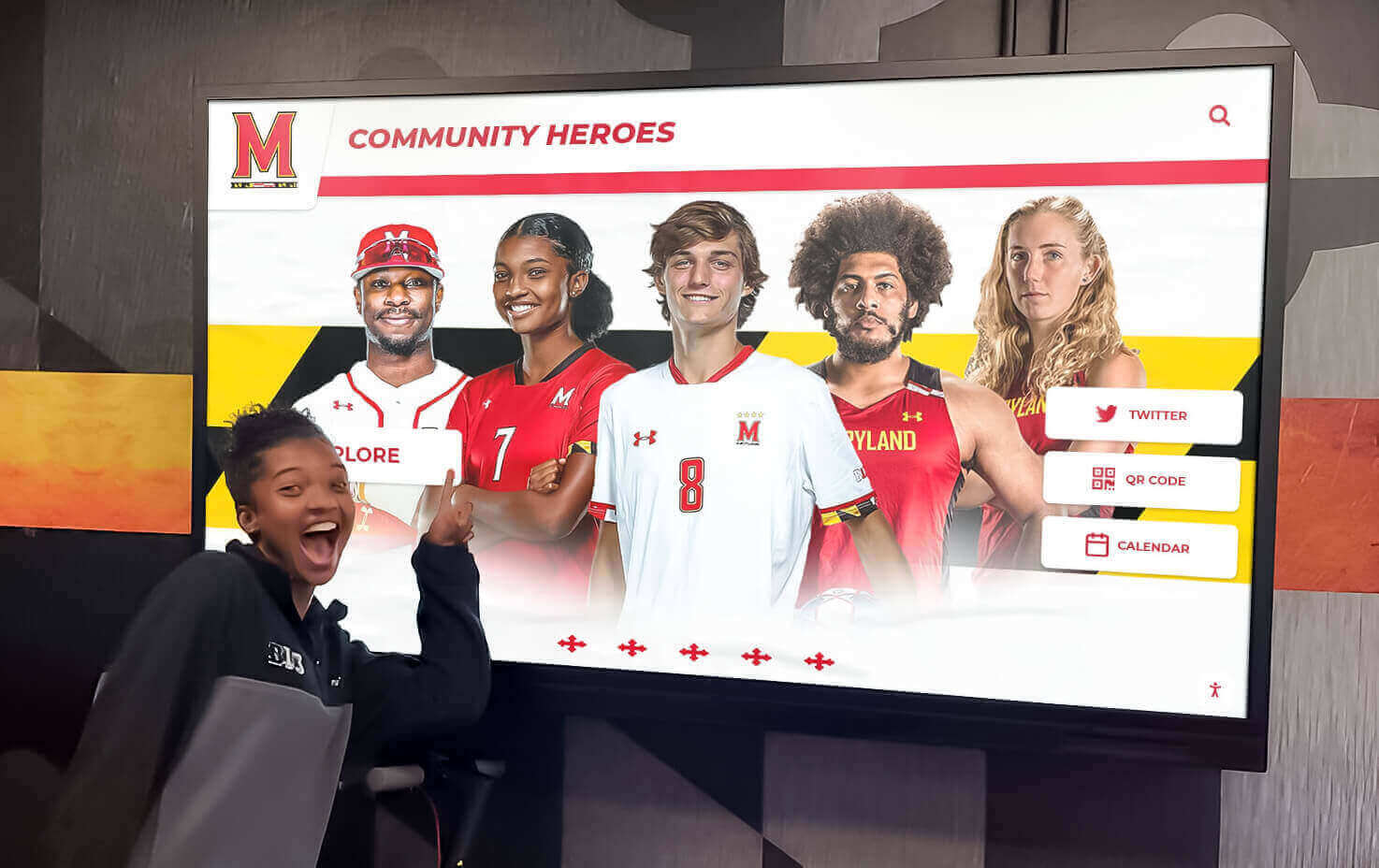
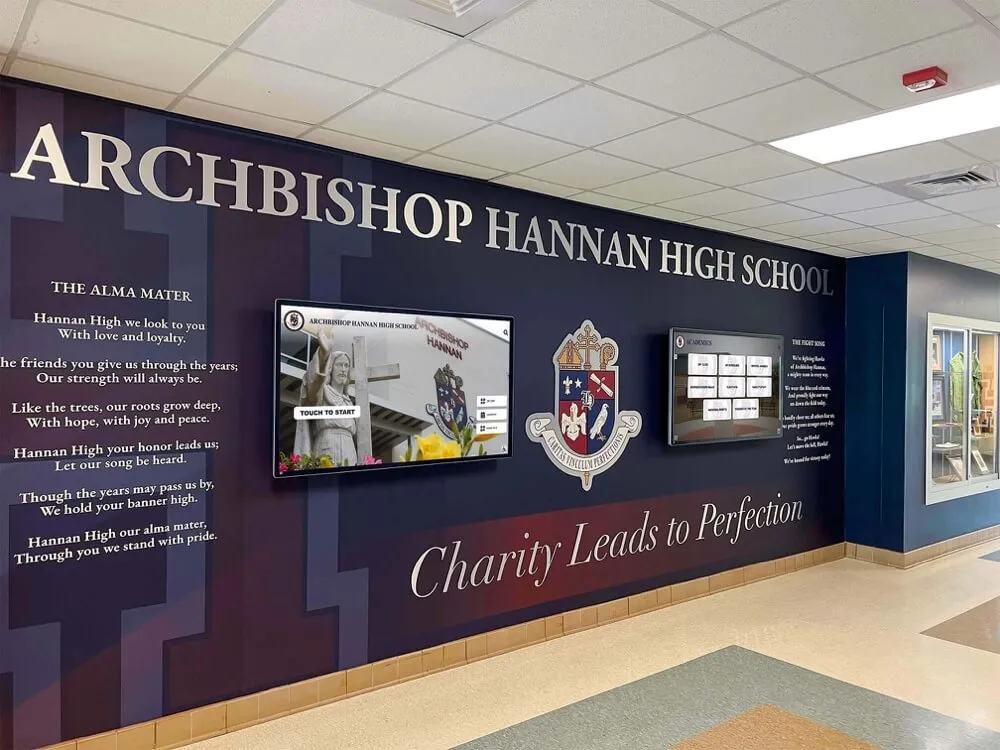
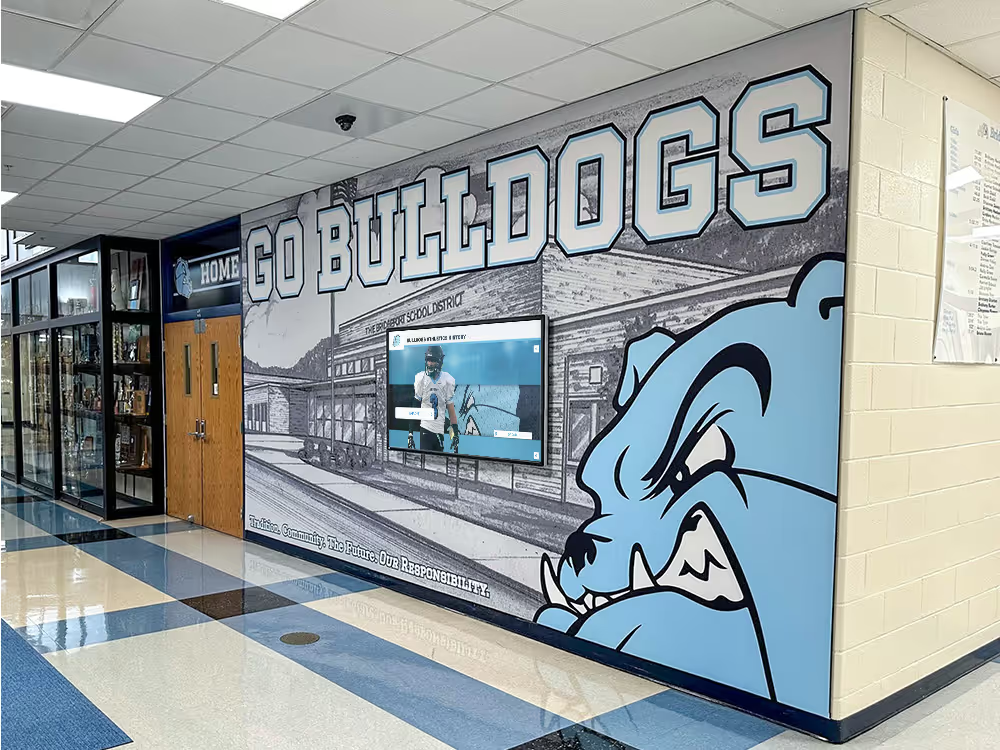
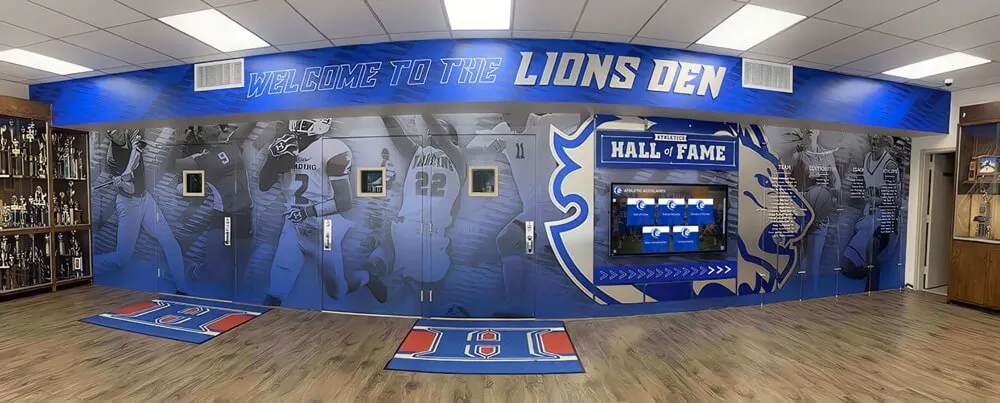
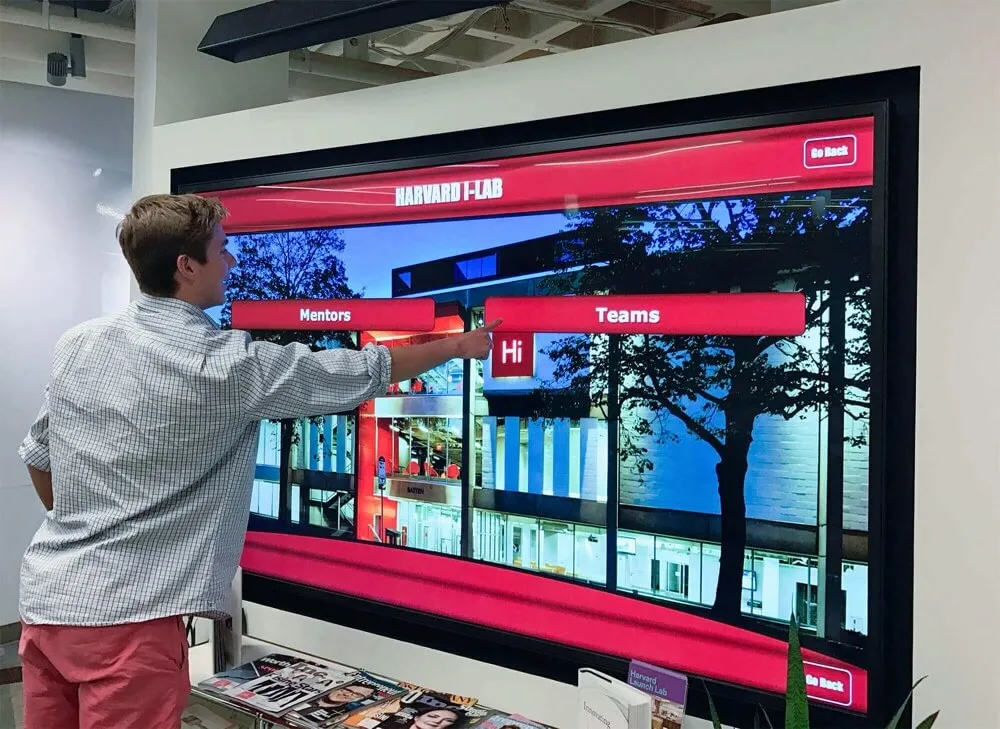
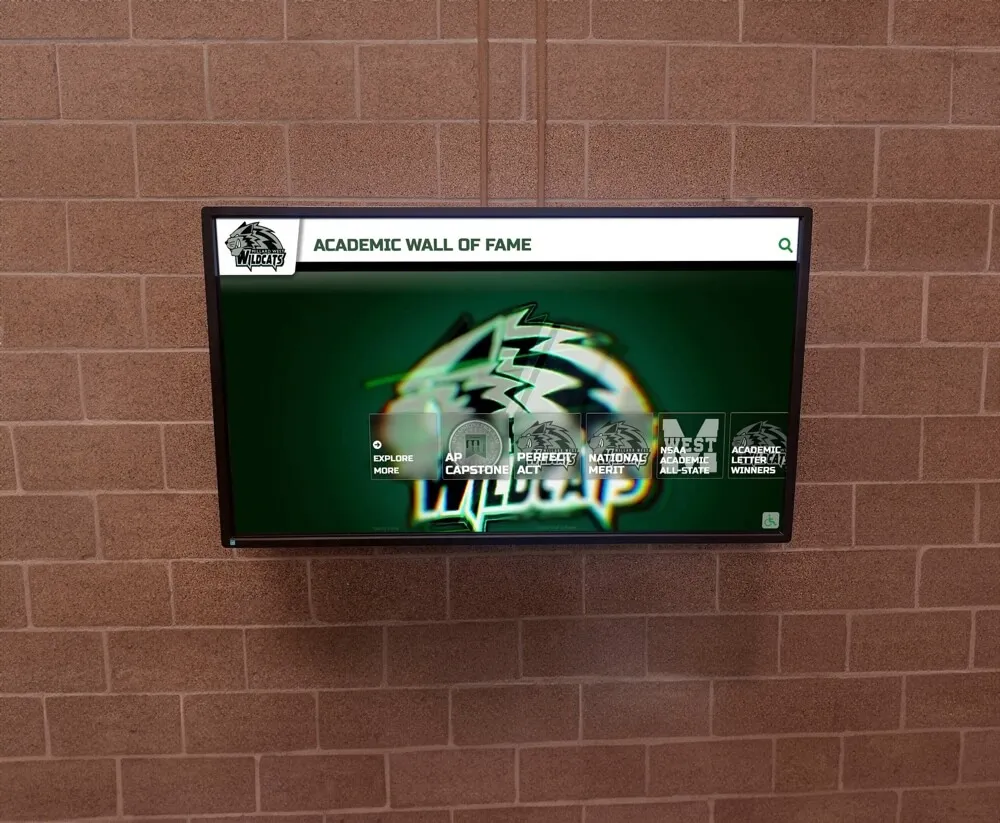
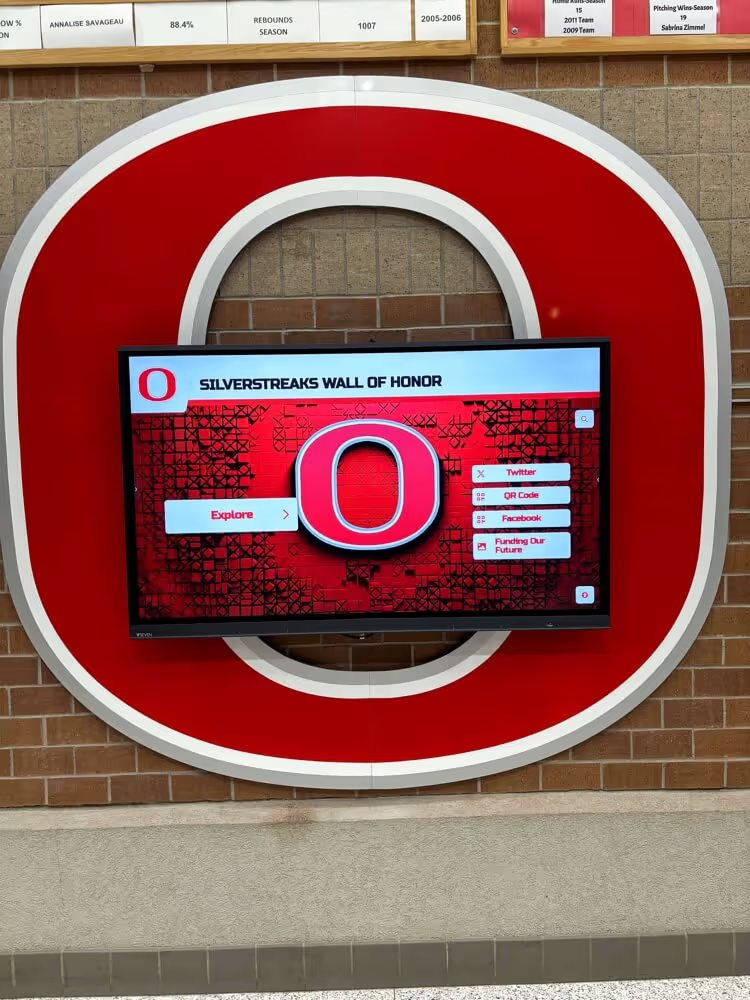
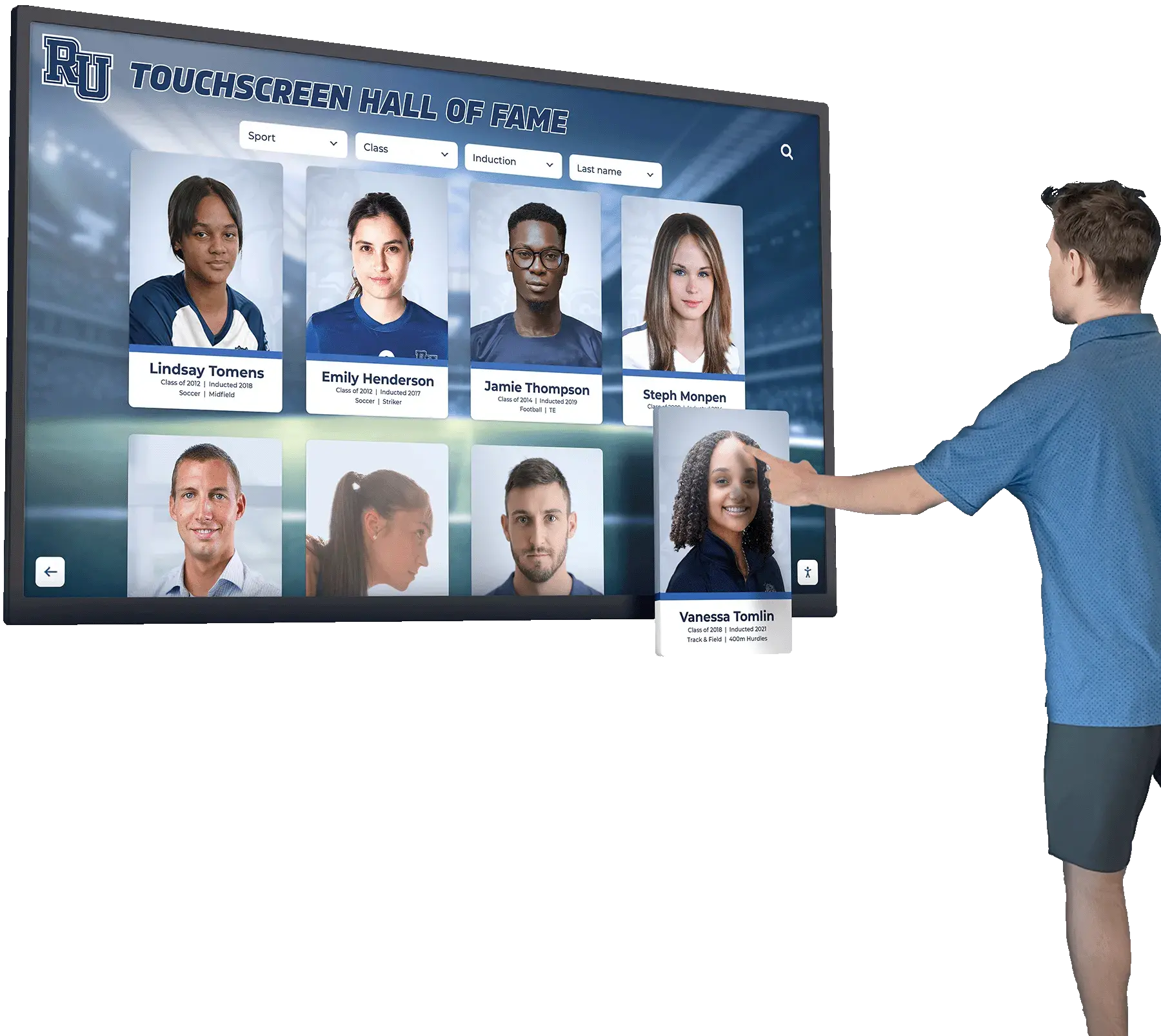
Interactive displays let students search athletic award history by sport, year, or individual name without staff assistance
Academic Award Walls
Academic award walls are frequently underinvested compared to athletic displays, despite representing the school’s core educational mission.
What to include:
- Valedictorian and salutatorian roster with graduation year
- National Merit Scholars and scholarship recipients
- Academic all-conference or all-state designations
- Departmental awards (science olympiad, debate, math league)
- AP Scholar and similar standardized achievement milestones
A clean academic award wall sends a direct message to prospective students, parents, and accreditation reviewers about the school’s academic culture. Schools that have built robust class president and student leadership archives alongside academic recognition have found that honoring student government leadership across generations strengthens alumni engagement long after graduation.
Donor and Alumni Recognition Walls
Donor walls occupy a unique position: they are partly archival, partly relational, and partly fundraising tools. A donor who sees their name displayed prominently is more likely to give again; a prospective donor sees what level of recognition to expect.
Best practices:
- Tier giving levels visually—larger plaques or more prominent placement for lead donors
- Use a naming convention that is consistent across decades so gift levels are comparable over time
- Keep the list accurate; a misspelled name or missing donor does more damage than no display at all
- Plan for updates—laser-engraved panels are expensive to redo; etched acrylic inserts or digital displays allow low-cost additions
Schools that have modernized donor recognition as part of a broader capital campaign find that digital donor recognition wall displays offer better flexibility for tiered giving levels, real-time updates, and the rich multimedia storytelling that encourages continued giving.
Moving From Physical Plaques to Digital Recognition
Many schools reach a tipping point where the physical award wall simply cannot grow further—every inch of hallway is covered, storage rooms contain boxes of surplus plaques, and updating takes weeks each year. A move to a digital platform does not have to be abrupt or complete.
Phase 1: Digitize the Archive
Start by digitizing existing records before decommissioning any physical displays:
- Photograph every existing plaque, trophy, and photo at high resolution
- Enter winner names, years, and categories into a structured spreadsheet
- Identify gaps where records are incomplete and research using yearbooks or alumni contacts
- Store source files in a managed digital asset repository—schools that have built a proper digital asset management system make this transition far smoother
Phase 2: Pilot a Digital Display in One High-Traffic Location
Choose a lobby, gymnasium entrance, or alumni hallway and install a single touchscreen display. Load it with the digitized archive and run it for one full academic year before expanding.
Track:
- How often visitors interact with it
- Which categories and names are searched most
- What information is missing that visitors expect to find
- Staff time saved on annual updates vs. physical plaque installation
Phase 3: Expand and Integrate
After validating the pilot, expand the digital display network and retire physical displays that are purely archival. Keep signature physical pieces—championship banners, milestone donor plaques, trophy cases—that serve a different emotional and ceremonial function.
Platforms like Rocket Alumni Solutions handle the content management side, allowing communications staff to push updates from any device without vendor involvement, so the display stays current through every award cycle.
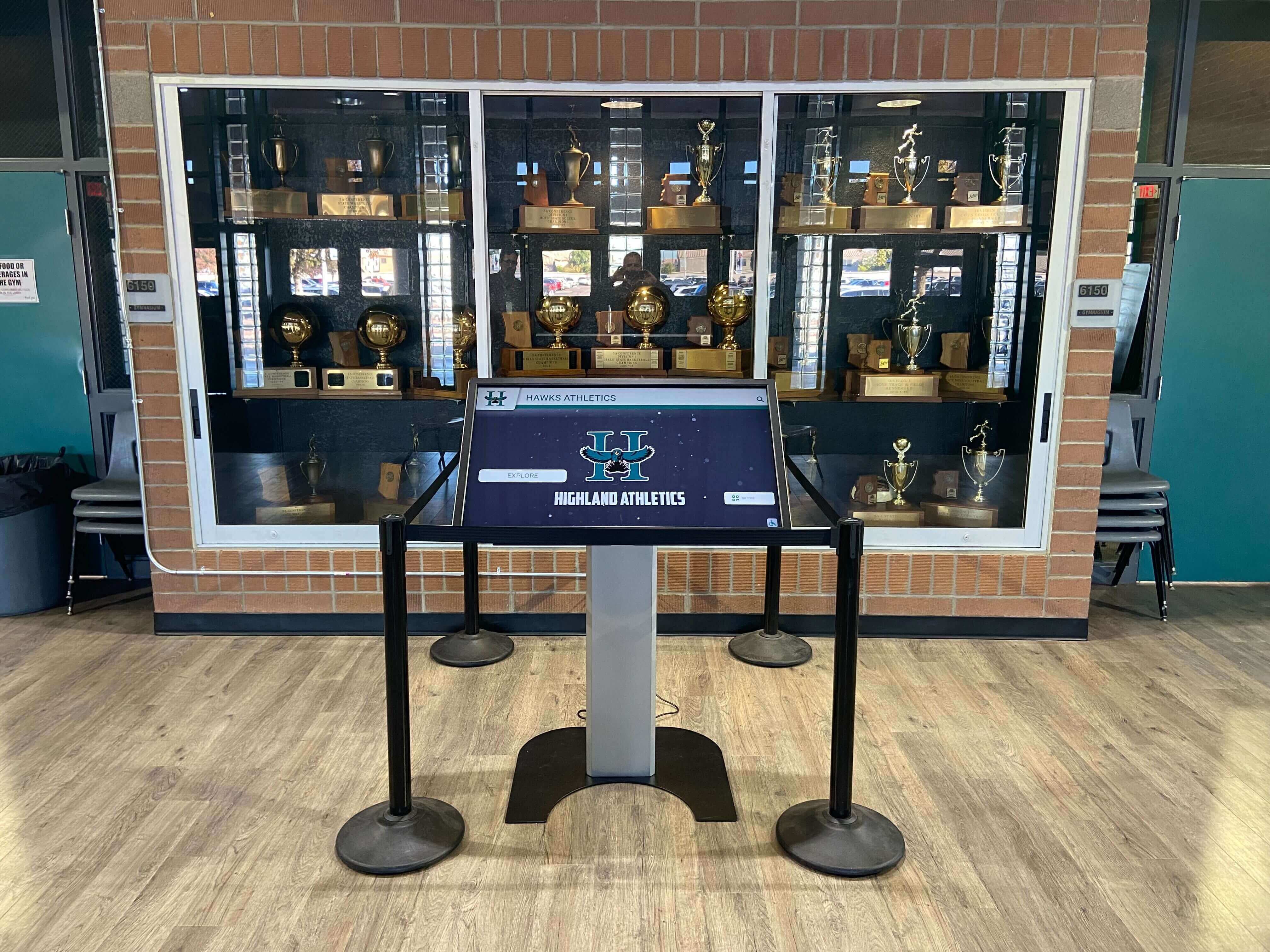
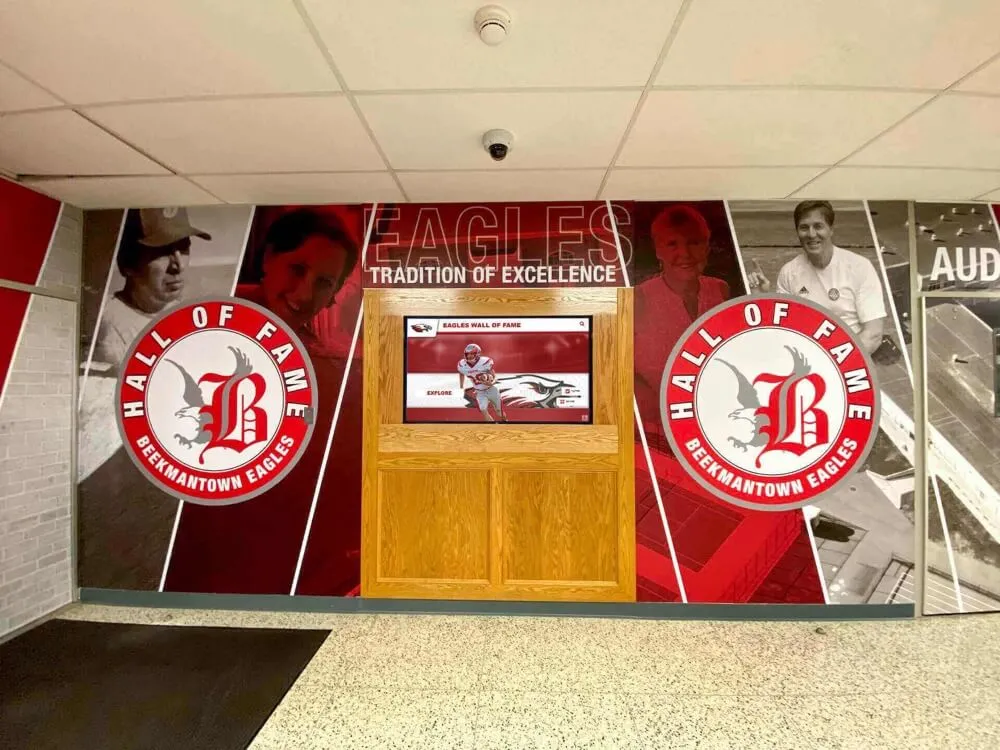
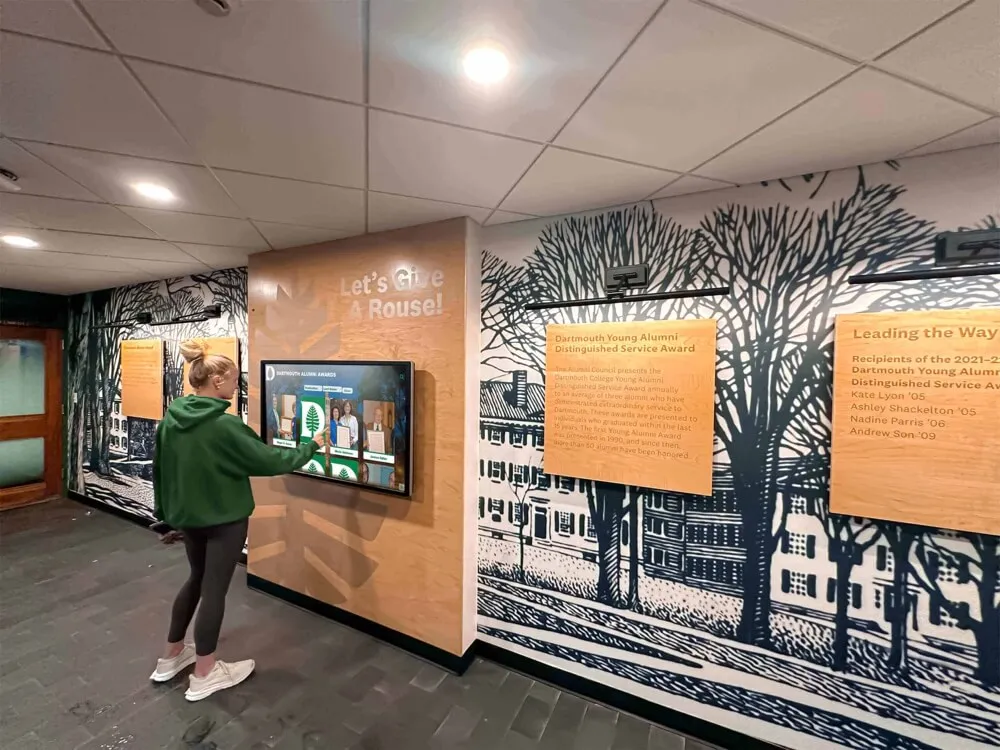
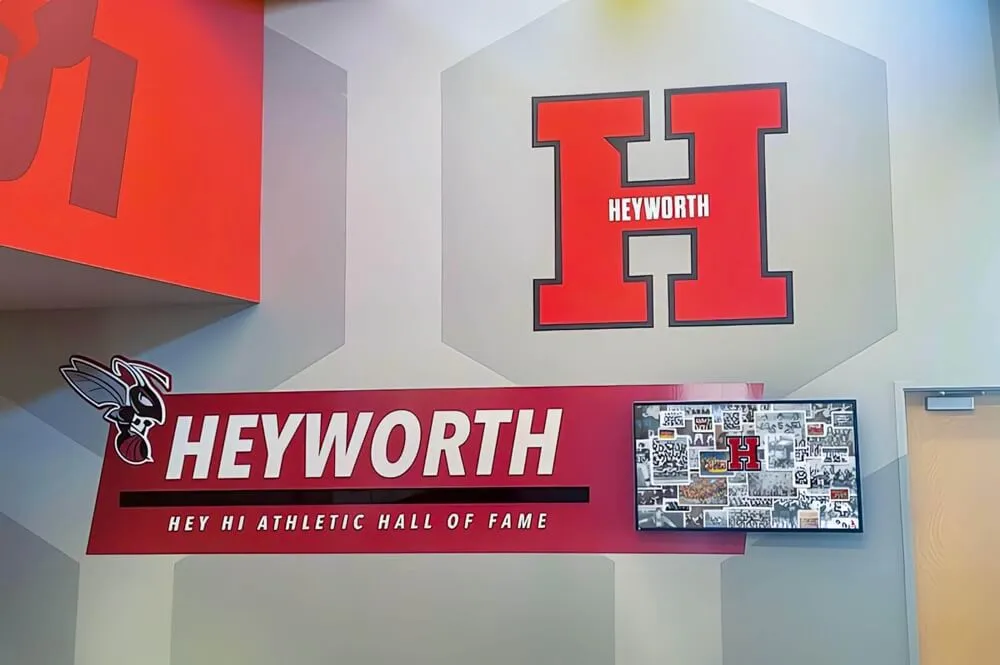
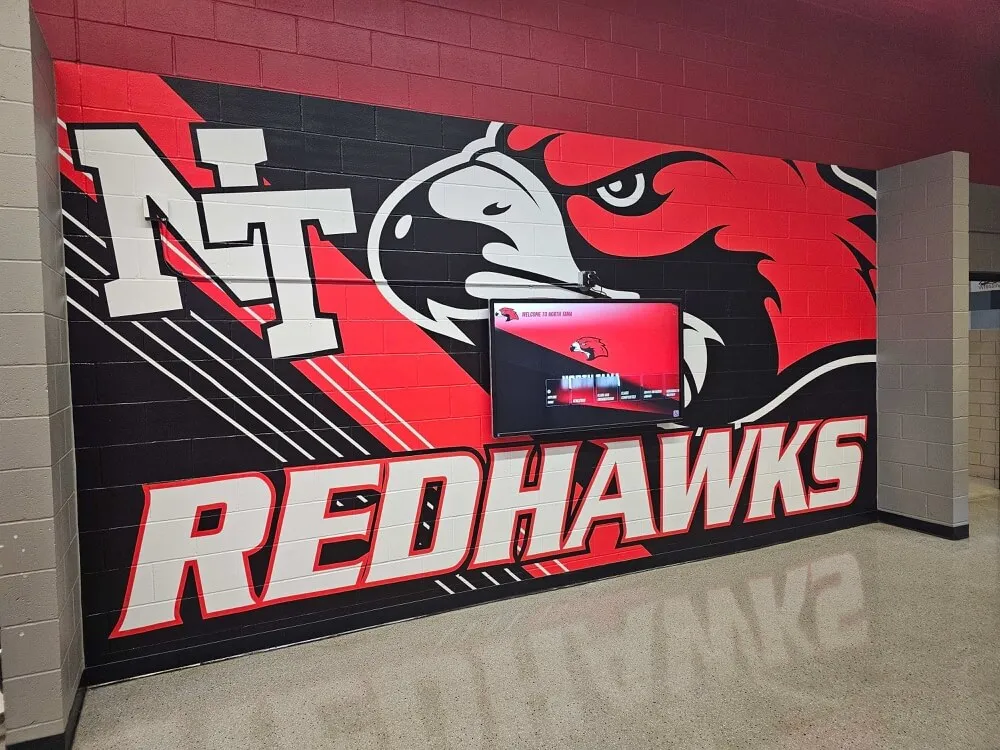
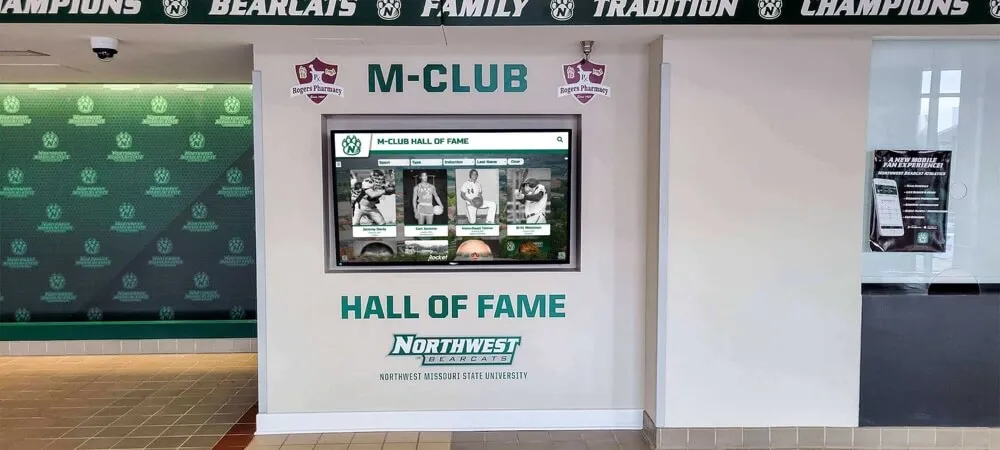
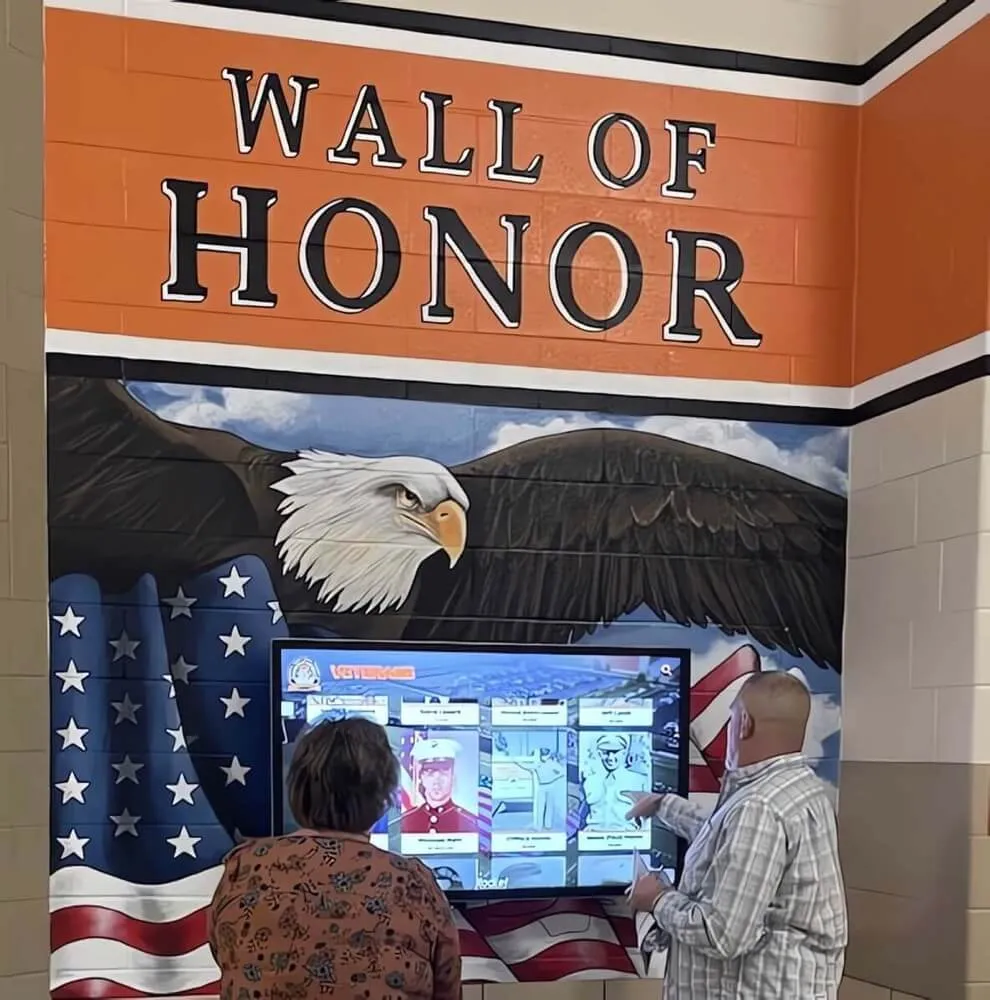
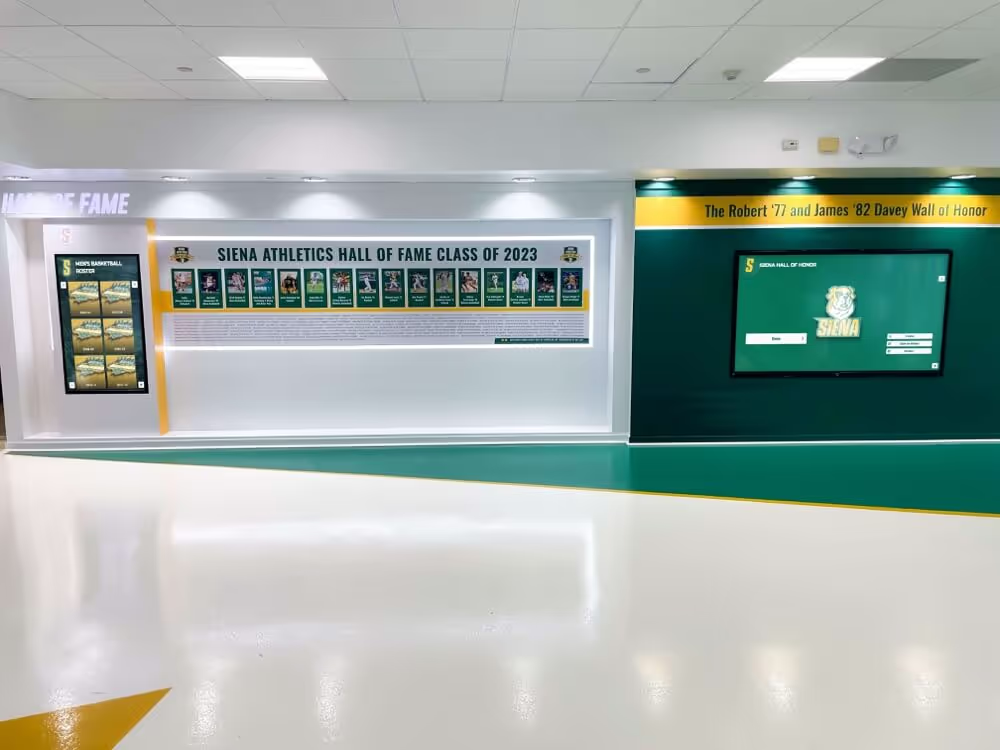
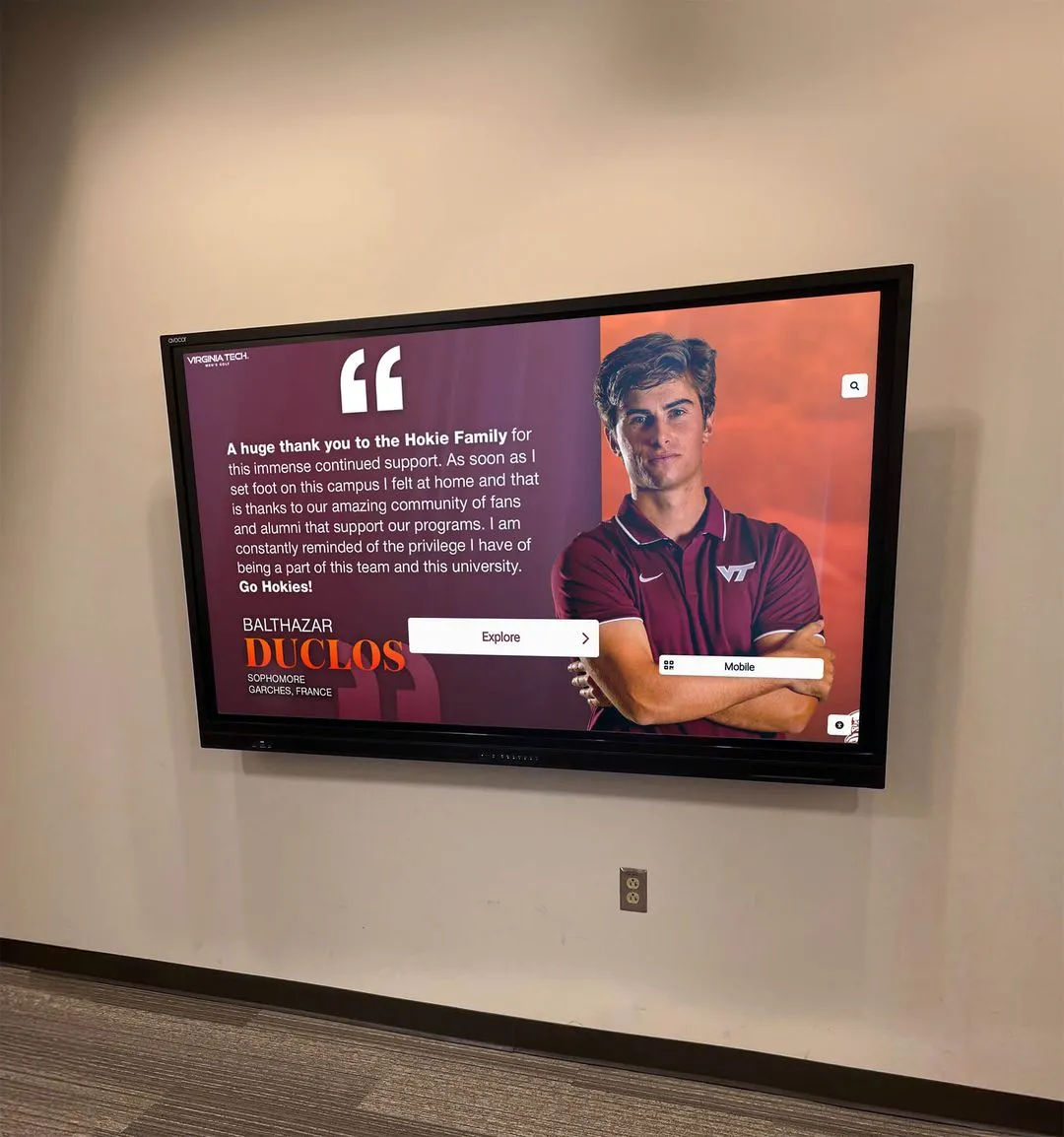
A touchscreen display integrated into an existing trophy case preserves the physical aesthetic while adding searchability and multimedia depth
Annual Update Workflow: Keeping Award Walls Current
An award wall that is accurate on opening day but never updated becomes a liability. Here is a repeatable annual workflow.
Pre-Season (June–August)
- Send an award intake form to every coach, department head, and advisor
- Set a submission deadline with a two-week buffer before the display update window
- Review submissions for completeness: name spelling, award name, year, any supporting photo
Update Window (August–September)
- For physical walls: send engraving orders to vendor; schedule installation before the first school day
- For digital platforms: upload new winner profiles, photos, and any video content via the CMS
- Audit existing entries for errors and make corrections while the workflow is active
Post-Update Communication (September)
- Announce the updated award wall in the school newsletter and alumni communications
- Post spotlights on social media featuring new inductees or annual winners
- Update any printed directory or hallway signage that references the award wall
Year-Round
- Keep the intake form live so mid-year awards (state championships in winter sports, spring academic honors) can be submitted immediately rather than waiting for the annual cycle
Award Wall Accessibility and Wayfinding
A display that is hard to find or hard to read defeats its own purpose.
Physical wayfinding:
- Post directional signage at building entrances pointing to the award wall location
- Use consistent header labels above each category section so visitors can orient quickly
- Ensure lighting illuminates every section—dark corners make plaques illegible
Digital accessibility:
- Touchscreen displays should meet ADA height and reach requirements (15–48 inches from the floor per ADA guidelines)
- Provide sufficient contrast between text and background; avoid light gray text on white
- Include screen reader compatibility or an accessible web-based version reachable by QR code
- For schools with multilingual communities, digital platforms support translated content far more easily than physical plaques
FAQ: Award Walls for Schools
What is the difference between an award wall and a hall of fame? An award wall typically displays annual or ongoing recognition across many categories—sports, academics, arts, leadership—and updates every year. A hall of fame is a more selective, permanent honor recognizing lifetime achievement or exceptional legacy. Many schools have both: an award wall tracking annual winners and a hall of fame for inductees selected by a committee. They can coexist on the same physical or digital display, organized as separate categories.
How much wall space does a school award wall typically require? That depends entirely on how many categories you track and how many years of history you want to display physically. A single sport’s annual MVP list adds roughly one perpetual plaque per decade. Multiply that across ten sports, five academic categories, and student leadership, and a comprehensive physical award wall can easily require 400–600 square feet of wall space over thirty years. This is the primary reason many schools transition to digital displays, which consolidate unlimited history into a footprint as small as one or two screens.
How do you handle award wall records for sports or programs that no longer exist? Preserve them. Past teams and athletes earned their recognition regardless of whether the program continues. On a physical wall, label the section clearly with the program’s active years. On a digital platform, keep the category active but mark it as “legacy”—this makes historical records searchable without implying the program is current. Retiring or removing records erases institutional memory and can alienate alumni from those eras.
How often should award wall information be audited for accuracy? At minimum, conduct a full accuracy audit every five years, with annual updates for new winners. Errors compound over time—a misspelled name in 2010 is still misspelled in 2030 unless someone catches it. Digital platforms make corrections easy; physical plaques require reordering, which is why accuracy at the time of engraving is especially important for traditional displays.
Can a school award wall include recognition for non-athletic, non-academic achievements? Absolutely—and it should. Community service, performing arts, vocational programs, and student entrepreneurship all represent school achievement worth celebrating. Schools with narrow award walls (athletics only, or academics only) inadvertently communicate that only certain types of excellence matter. A broader award wall creates a more accurate and inclusive picture of the school’s culture, and typically generates stronger engagement from the full range of students, families, and alumni.
Building an Award Wall That Lasts
The best award walls share a few qualities regardless of format: they are accurate, navigable, inclusive across all program types, and maintained by someone who owns the process. Start with a thorough inventory, define your categories, assign ownership, and choose a format—physical, digital, or hybrid—that your school can sustain through annual update cycles.
For schools with growing archives, heavy alumni engagement, or donor recognition needs, a digital display workflow removes the space and cost barriers that make physical-only award walls unsustainable over time. The transition does not have to be all-or-nothing: keeping ceremonial physical pieces alongside a searchable digital platform gives schools the permanence and gravitas of traditional recognition with the depth and accessibility that modern audiences expect.
If your school is rethinking its recognition displays from the ground up, the digital wall of fame design ideas and layouts guide is a practical next step for understanding how to plan content, layout, and features before committing to a platform.
Live Example: Rocket Alumni Solutions Touchscreen Display
Interact with a live example (16:9 scaled 1920x1080 display). All content is automatically responsive to all screen sizes and orientations.