Backstroke Technique: Mastering Body Position, Arm Stroke, and Kick for Faster Times
- Home /
- Digital Wall of Fame Blog - Recognition Display Insights & Resources /
- Backstroke Technique: Mastering Body Position, Arm Stroke, and Kick for Faster Times
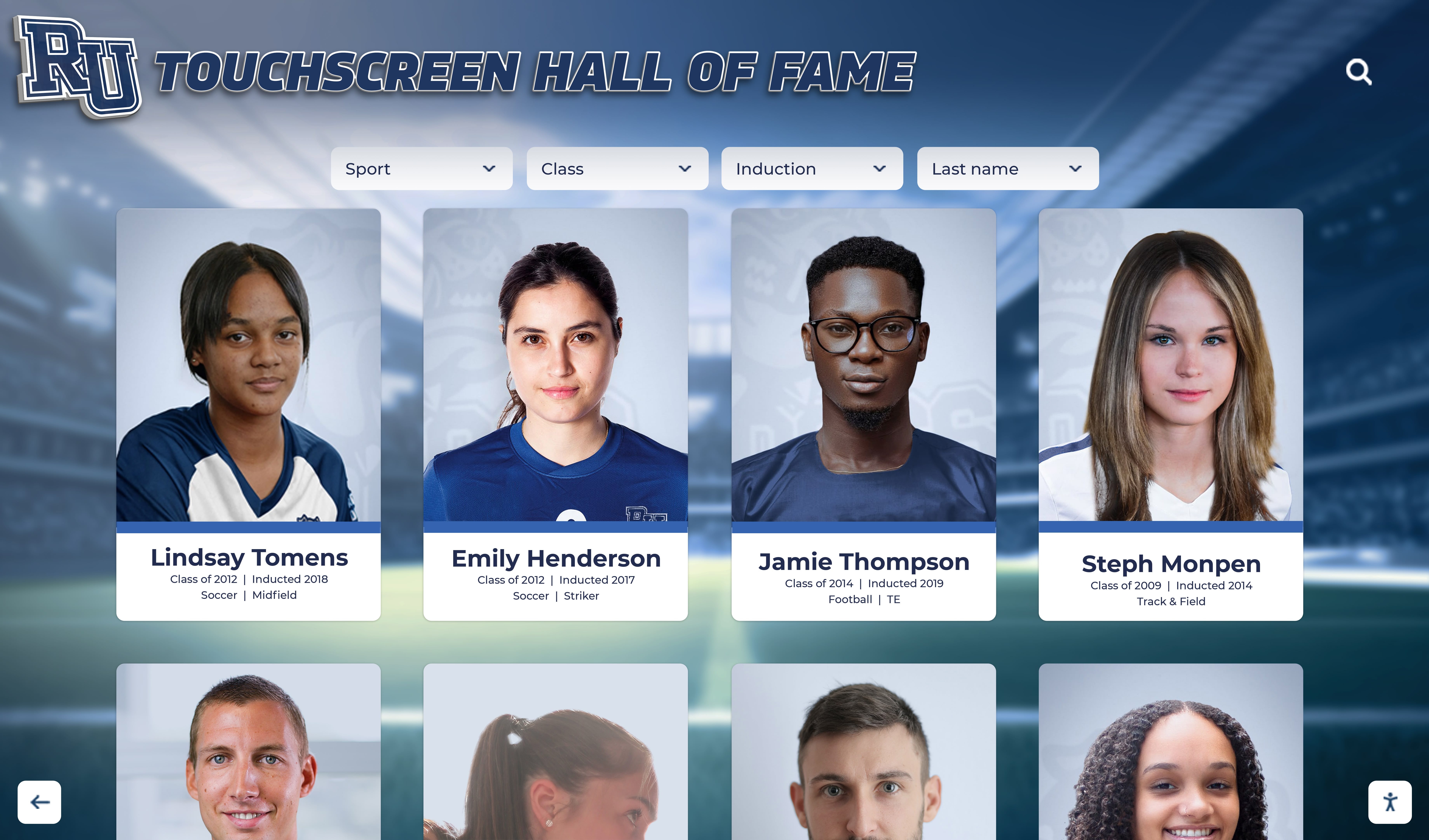
The Easiest Touchscreen Solution




Live Example: Rocket Alumni Solutions Touchscreen Display
Interact with a live example (16:9 scaled 1920x1080 display). All content is automatically responsive to all screen sizes and orientations.
Backstroke stands as the only competitive stroke swum on your back, creating unique technical challenges that separate efficient swimmers from those struggling to find speed and rhythm. Mastering backstroke technique requires precise coordination of body position, arm mechanics, and kick timing—elements that, when properly executed, transform an awkward back-paddle into a powerful, streamlined stroke capable of delivering championship-caliber times.
For swimmers, coaches, and parents navigating competitive swimming, backstroke often presents the steepest learning curve of the four competitive strokes. The inverted position challenges spatial awareness, breathing patterns differ from freestyle, and subtle body position errors create massive drag penalties invisible to untrained eyes. Yet backstroke remains essential: it’s one of four strokes in Individual Medley events, anchors medley relays, and offers crucial versatility for well-rounded competitive swimmers.
The path to faster backstroke times doesn’t require extraordinary strength or flexibility—it demands technical precision. Small adjustments in head position, hip height, or hand entry angle can shave seconds off race times, while proper arm recovery and kick timing unlock efficiency gains that reduce fatigue across longer distances. Understanding backstroke fundamentals transforms frustrating practice sessions into measurable progress toward personal bests and qualifying times.
This comprehensive guide breaks down backstroke technique into its essential components, providing swimmers and coaches with actionable instruction on body position, arm stroke mechanics, kick fundamentals, starts, and proven training drills. Whether you’re a novice learning proper backstroke body position or a competitive swimmer refining technique for championship meets, these insights provide the foundation for faster, more efficient backstroke swimming.
Backstroke technique development follows a systematic progression from fundamental body position through integrated stroke mechanics, with each element building upon previous skills to create fluid, efficient swimming.

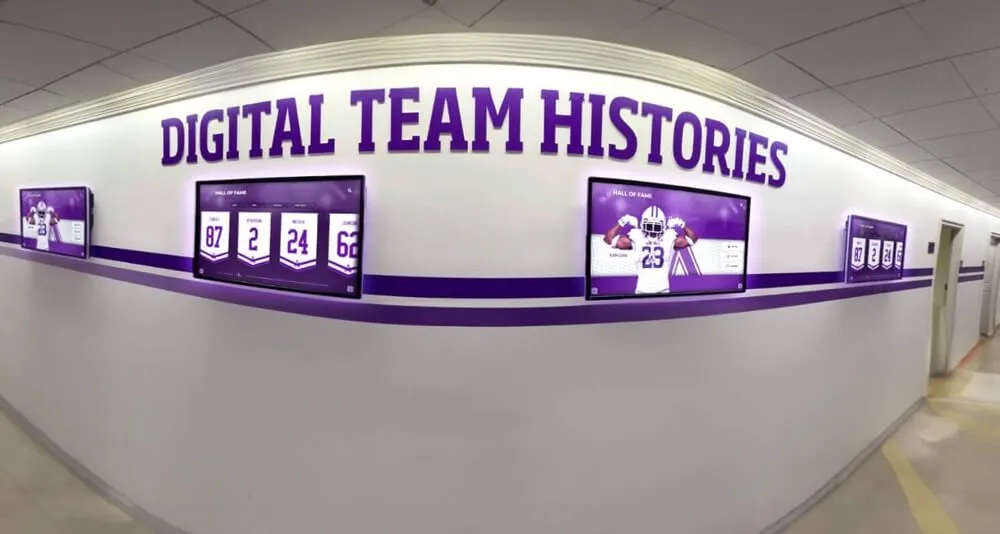
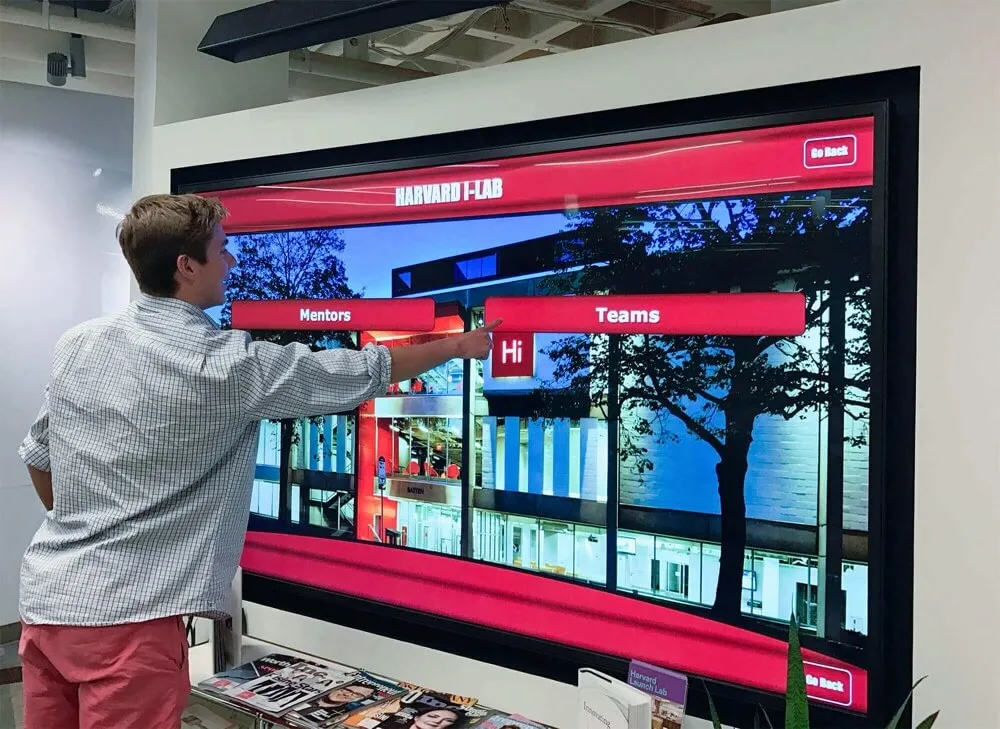
Competitive swimming programs celebrate backstroke specialists and record-holders through comprehensive athletic recognition displays
Backstroke Body Position: The Foundation of Speed
Proper body position creates the streamlined platform enabling all other backstroke techniques to function efficiently. Poor body alignment generates drag that no amount of arm power or kick strength can overcome.
Head Position and Alignment
Critical Head Placement
Your head position determines your entire body’s alignment in backstroke:
- Eye focus: Look slightly backward toward the wall behind you, not straight up at ceiling
- Water line: Water should break across your forehead and cheekbones, ears submerged
- Chin position: Slight tuck bringing chin toward chest, not extended backward
- Neck tension: Relaxed neck muscles allowing natural head stability
- Common error: Lifting head to see forward creates hip drop and increased drag
Correcting Head Position Issues
When swimmers struggle with head placement:
- Drill: Backstroke with small water bottle balanced on forehead
- Focus cue: “Eyes to the back wall, not the ceiling”
- Coach feedback: Video analysis showing head position from side angle
- Feel-based learning: Swimmer identifies how proper position feels different
Head position sets the foundation—get this right before progressing to other technique elements.
Hip Height and Body Line
Achieving Optimal Body Position
High hip position minimizes drag and maximizes propulsion:
- Hip elevation: Hips should ride just below water surface, nearly breaking through
- Core engagement: Strong core muscles maintain hip position without excessive tension
- Body angle: Nearly horizontal position from head through feet
- Streamline: Narrow body profile minimizing frontal resistance
- Rotation: Body rolls 30-45 degrees on each stroke, never remaining completely flat
Developing Hip Height Awareness
Progressive training sequence:
- Streamline kick: Push off wall on back, maintain perfect streamline position for maximum distance
- Streamline with rotation: Add gentle rotation while maintaining hip height
- Single-arm backstroke: One arm stroking while focusing on hip position
- Full stroke with awareness: Integrate all elements maintaining hip elevation
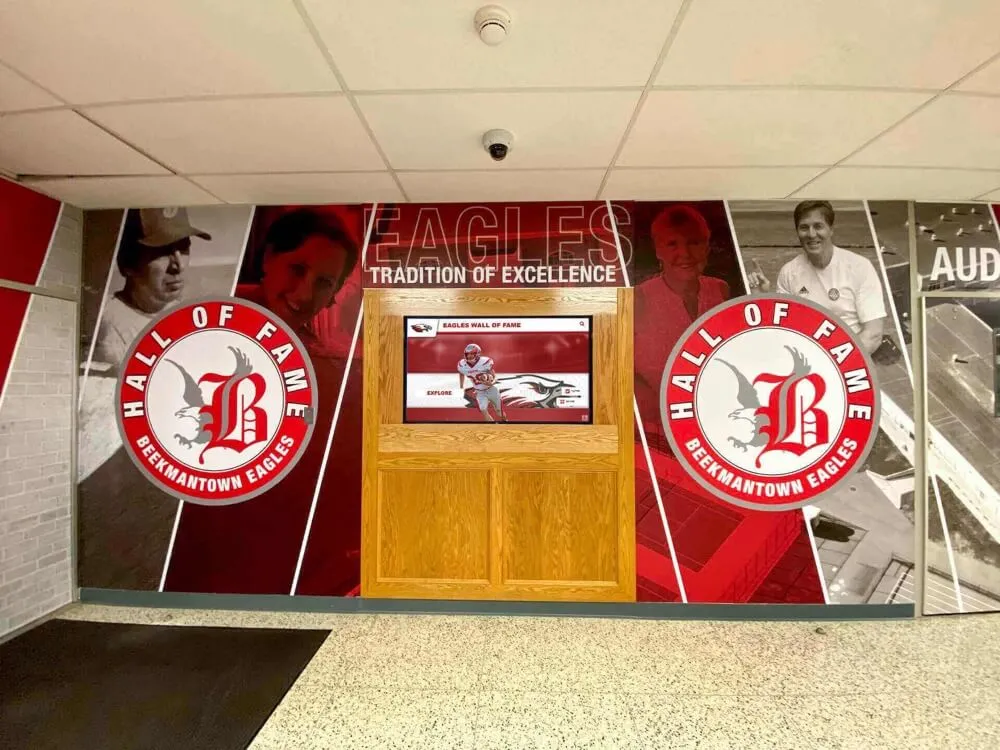
Many swimming programs document athlete progression through interactive digital displays tracking personal records and achievements across all competitive events.
Body Rotation Fundamentals
Proper Rotation Mechanics
Body rotation generates power and reduces drag:
- Rotation degree: 30-45 degrees to each side with each stroke
- Rotation axis: Body rotates along spine, head remains stable
- Timing: Rotation coordinates with arm entry and recovery
- Hip drive: Hips initiate rotation, shoulders follow
- Balance: Equal rotation to both sides maintains straight swimming line
Benefits of Effective Rotation
Proper rotation delivers multiple advantages:
- Engages core and back muscles generating additional power
- Reduces shoulder strain by optimizing arm recovery angle
- Decreases frontal drag area compared to flat position
- Enables deeper, more powerful arm catch and pull
- Improves breathing efficiency and rhythm

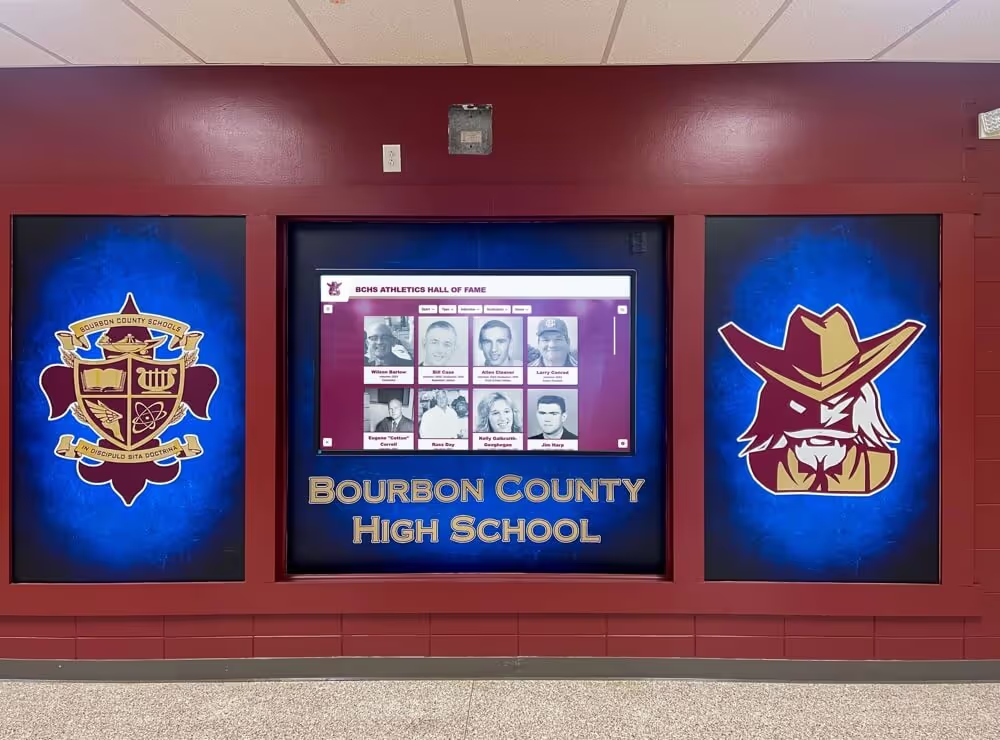
Interactive displays engage athletes by showcasing swimming achievements and inspiring continued technical development
Rotation Training Drill
Isolated rotation practice:
- Swimmer performs backstroke kick with arms at sides
- Focus entirely on hip-initiated rotation, 30-45 degrees each side
- Maintain stable head position throughout rotation
- Progress to single-arm backstroke emphasizing rotation timing
- Finally integrate full stroke with conscious rotation awareness
Proper body position—stable head, high hips, effective rotation—creates the platform for efficient arm stroke and kick mechanics.
Backstroke Arm Stroke: Mechanics for Maximum Propulsion
The backstroke arm stroke follows a continuous, alternating pattern where one arm always provides propulsion while the other recovers. Understanding each phase enables technical refinement that directly translates to faster times.
Arm Entry: Setting Up the Stroke
Optimal Entry Mechanics
Proper arm entry initiates effective underwater pull:
- Entry point: Arm enters directly in line with shoulder, not crossing centerline
- Hand position: Pinky finger enters water first, hand rotated outward
- Arm angle: Arm fully extended but not locked, slight elbow softness
- Entry depth: Hand slides into water smoothly 6-8 inches below surface
- Shoulder position: Shoulder rotates upward as arm enters, maximizing reach
Common Entry Errors
Mistakes that sabotage stroke efficiency:
- Crossing centerline: Arm enters past head centerline causing snaking and drag
- Thumb-first entry: Creates immediate loss of propulsion setup
- Splashing entry: Indicates hand entering at wrong angle or with too much force
- Short reach: Failing to maximize extension reduces distance per stroke
Entry Correction Drill
Fingertip drag drill for entry improvement:
- During arm recovery, drag fingertips along water surface
- Ensures hand stays in proper position (pinky leading)
- Creates awareness of straight-line recovery path
- Transitions smoothly into proper entry position
- Perform 50-100 meters focusing exclusively on entry position
The Catch and Pull Phase
Establishing the Catch
The catch phase sets up maximum propulsion:
- Catch timing: Immediately after entry, hand begins pressing downward and outward
- Elbow bend: High elbow position, forearm pitching to catch water
- Hand path: Sweeps slightly outward initially, then pulls toward hip
- Wrist position: Firm wrist maintaining hand pitch throughout pull
- Depth: Pull occurs 8-12 inches below surface for optimal leverage
Pull Mechanics Through Power Phase
Maximum propulsion generation:
- Pull pattern: Slight S-curve path, not straight line
- Acceleration: Hand speed increases through pull phase
- Elbow position: Elbow bends to approximately 90 degrees mid-pull
- Hand orientation: Palm faces backward and slightly downward throughout pull
- Finish: Pull completes as hand reaches thigh, thumb brushes leg
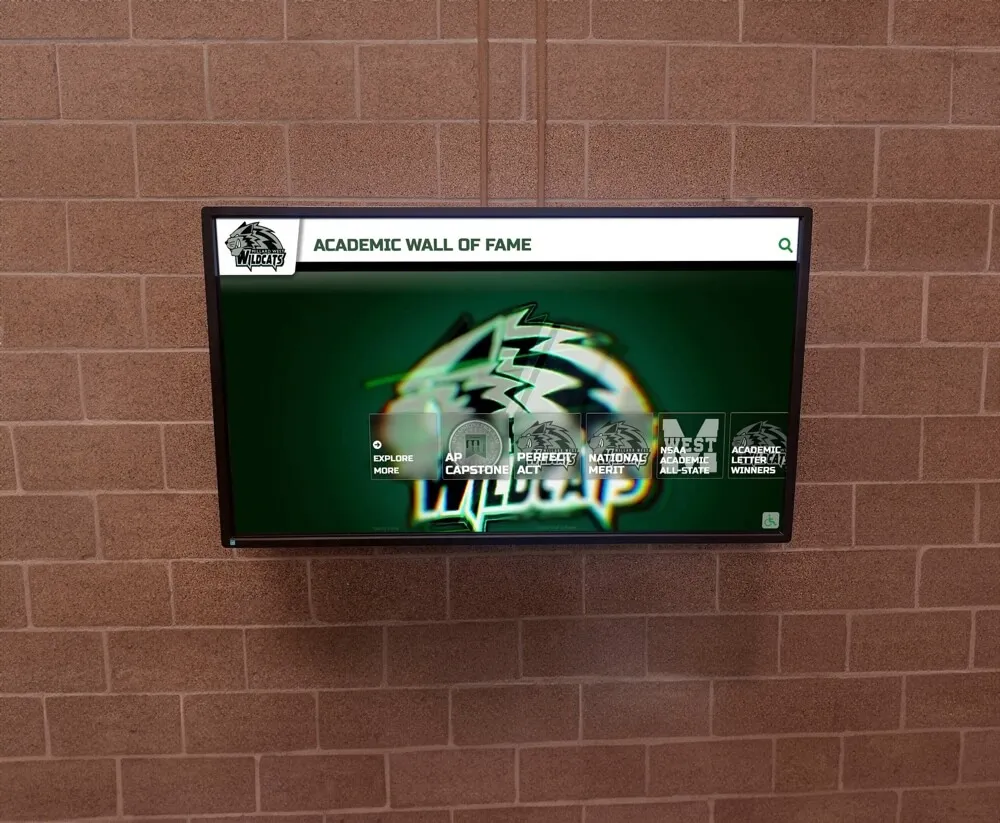
Schools implementing comprehensive athletic record-tracking systems often see increased athlete motivation and technical improvement focus.

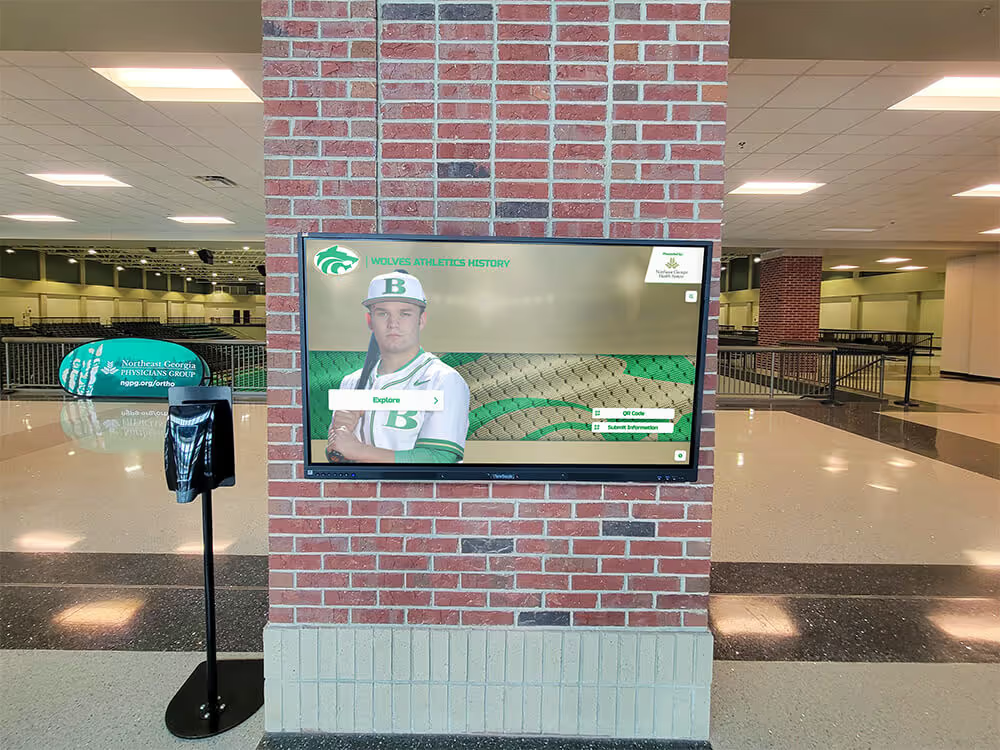
Modern recognition technology enables detailed documentation of swimmer achievements including stroke-specific records and technical milestones
Catch and Pull Development Drill
Sculling drill for improved water feel:
- Float on back, arms at sides
- Small sculling motions with hands, palms facing feet
- Feel water pressure against palms and forearms
- Progress to single-arm backstroke focusing on catch pressure
- Full stroke with heightened awareness of catch and pull mechanics
Arm Recovery: Efficiency and Rhythm
Optimal Recovery Mechanics
Efficient recovery prepares next stroke without creating drag:
- Recovery path: Arm exits water thumb-first at thigh, sweeps straight back overhead
- Arm position: Straight arm recovery (not bent) with relaxed shoulder
- Hand height: Arm recovers just above water surface, not excessively high
- Shoulder roll: Body rotation coordinates with recovery, shoulder lifts from water
- Relaxation: Recovery arm completely relaxed, conserving energy
Recovery Timing and Rhythm
Coordination creates continuous propulsion:
- One arm always pulling while opposite arm recovers
- Hands pass each other at hip and shoulder—one entering as other exits
- Consistent tempo maintains rhythm and efficiency
- Faster tempo for sprints, controlled tempo for distance events
- Bilateral symmetry ensuring equal stroke length and power both sides
Recovery Correction Techniques
Common recovery issues and solutions:
Problem: Bent-arm recovery reducing reach and creating timing issues Solution: Fingertip drag drill emphasizing straight arm throughout recovery
Problem: Hand crosses centerline during recovery causing snaking Solution: Recovery directly in shoulder line, imagine swimming in narrow lane
Problem: Choppy, inconsistent rhythm disrupting stroke efficiency Solution: Count stroke tempo (1-2-3-4), establish consistent rhythm pattern
Backstroke Kick: Power and Propulsion from the Legs
The backstroke kick provides approximately 30-40% of total propulsion while maintaining body position and supporting rotation. Efficient kick mechanics separate smooth swimmers from those struggling against self-created drag.
Fundamental Kick Mechanics
Proper Kick Technique
Flutter kick fundamentals for backstroke:
- Kick origin: Kick initiates from hips, not knees
- Knee bend: Slight knee bend on downbeat (upward motion), straightens on upbeat
- Ankle flexibility: Loose, flexible ankles with toes pointed
- Kick depth: Feet stay within body profile, not breaking surface excessively
- Kick width: Narrow kick maintaining streamlined body position
- Tempo: Typically 6-beat kick (six kicks per arm cycle) for most swimmers
Upbeat vs. Downbeat Understanding
Backstroke kick terminology (inverted from freestyle):
- Upbeat: Foot kicks upward toward surface (equivalent to downbeat in freestyle)
- Downbeat: Foot pushes downward into deeper water (recovery phase)
- Power phase: Upbeat generates primary propulsion
- Foot position: Toes pointed, feet slightly inverted (pigeon-toed)
Kick Timing and Coordination
Six-Beat Kick Pattern
Standard kick timing for most backstroke swimmers:
- Six kicks completed during one full arm cycle (both arms)
- Three kicks per single-arm stroke
- Kick emphasizes on same side as stroking arm
- Opposite leg provides balancing kick
- Creates rhythmic propulsion supporting body rotation
Crossover Kick Coordination
Elite technique for advanced swimmers:
- Timing: Kick emphasizes as opposite arm enters water
- Rotation support: Kick coordinates with body rotation
- Hip drive: Strong hip rotation initiates coordinated kick
- Power transfer: Kick timing maximizes total propulsion during each stroke cycle

Swimming facilities utilize digital displays to celebrate stroke specialists and maintain visible records inspiring technical excellence
Developing Kick Strength and Flexibility
Kick-Focused Training Sets
Progressive kick development:
Beginner Progression:
- 4 × 25 meters backstroke kick with board
- Focus: Pointed toes, kick from hips, narrow kick width
- Rest: 20 seconds between repeats
Intermediate Progression:
- 8 × 50 meters backstroke kick without board, arms streamlined
- Focus: Maintain body position, consistent tempo, hip-initiated kick
- Rest: 15 seconds between repeats
Advanced Progression:
- 6 × 75 meters backstroke kick, alternating 25m with board/25m streamline/25m full stroke
- Focus: Kick power transfer into full stroke, consistent kick through fatigue
- Rest: 30 seconds between repeats
Competitive programs often recognize training dedication through modern display systems celebrating athletic commitment across all sports.
Ankle Flexibility Exercises
Critical for efficient backstroke kick:
- Seated toe points: Sit with legs extended, point and flex ankles 20 repetitions
- Ankle circles: Rotate ankles through full range of motion both directions
- Resistance band work: Loop band around feet, point toes against resistance
- Wall stretches: Kneel with tops of feet against wall, gently press improving plantar flexibility
- Consistency: Daily ankle work shows improvement within 4-6 weeks
Improved ankle flexibility directly translates to more effective propulsion and reduced knee strain during backstroke kick.
Backstroke Start: Explosive Beginnings
The backstroke start presents unique challenges as the only stroke beginning in the water. Mastering start mechanics provides crucial early race advantages.
In-Water Starting Position
Optimal Setup Fundamentals
Proper starting position for maximum power:
- Grip: Both hands gripping starting block or wall, thumbs underneath
- Foot placement: Feet on wall, toes at or just below water surface
- Body position: Compact tuck, knees bent, body coiled for explosion
- Head position: Neutral, looking slightly upward toward starting position
- Weight distribution: Even weight on both hands and feet
Starting Block Utilization
Modern backstroke starting blocks (ledge):
- Foot placement: One or both feet on submerged ledge (depends on personal preference)
- Ledge advantages: Provides solid push-off platform improving starts by 0.1-0.3 seconds
- Adjustment: Practice finding optimal foot position during warm-up
- Legality: Check meet rules; some age group competitions don’t use backstroke ledges
Explosive Push-Off Mechanics
Backstroke Start Sequence
Phase-by-phase breakdown:
1. Ready Position (At the whistle)
- Establish grip and foot placement
- Body coiled, ready for signal
- Mental focus on explosive reaction
2. Reaction Phase (At start signal)
- Explosive pull with arms driving body backward and upward
- Simultaneous powerful push with legs
- Head drives backward, hips lift upward
- Arms swing backward overhead during flight
3. Flight Phase
- Body extends fully, achieving maximum reach
- Slight arch in back preparing for water entry
- Arms extending straight beyond head into streamline
- Head between arms before water entry
4. Entry and Glide
- Hands enter first, body follows through same entry point
- Deep streamline position, typically 12-18 inches below surface
- Maintain tight streamline while momentum carries body forward
- Initiate first kick when speed drops below swimming pace
Many competitive programs showcase start technique improvements and racing achievements through digital recognition systems tracking athlete development over time.
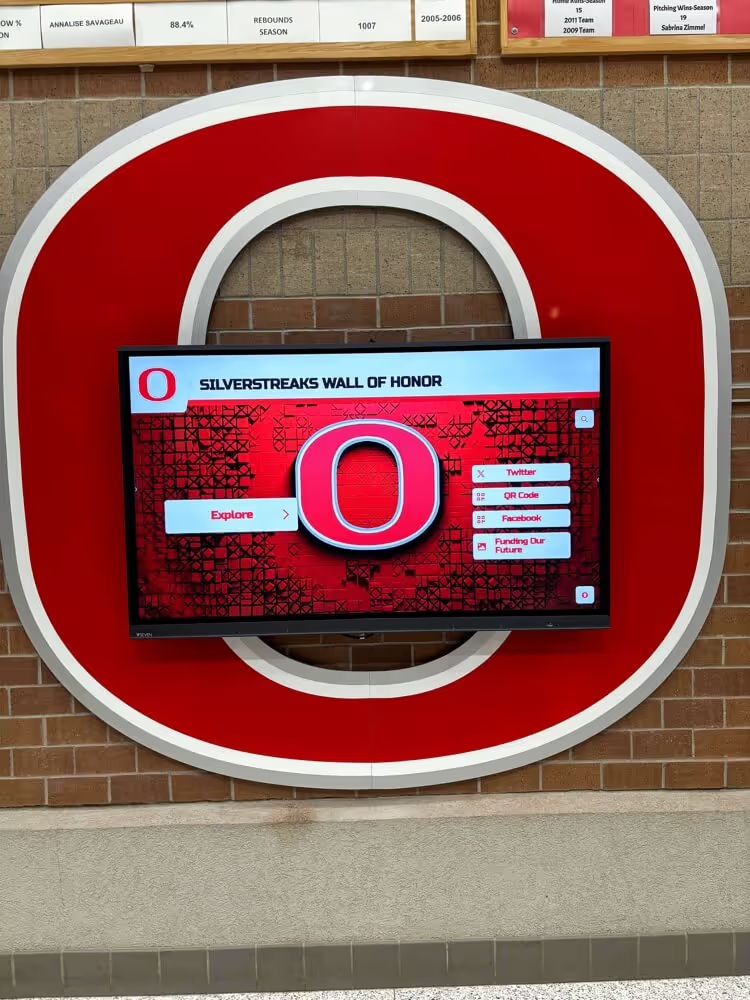
Athletic programs integrate digital displays showcasing swimming records and individual achievements in high-traffic areas inspiring daily excellence
Underwater Phase After Start
Maximizing Underwater Distance
Backstroke allows 15 meters underwater off starts and turns:
Streamline Fundamentals:
- Arms locked straight overhead, biceps behind ears
- Hands overlapped, one hand covering other
- Core tight, body fully extended
- Toes pointed, body forming straight line
Dolphin Kick Underwater:
- After entry, initiate dolphin kicks in streamline position
- Typically 4-6 dolphin kicks before surfacing
- Powerful kicks from core, not just legs
- Stay below turbulent surface water maximizing efficiency
- Surface by 15-meter mark (legal limit)
Transition to Swimming
Smooth breakout technique:
- Final dolphin kick transitions to flutter kick
- First arm stroke begins as body approaches surface
- Head maintains neutral position, water breaking across forehead
- Establish immediate stroke rhythm and body rotation
- No pause or glide—transition directly into race-pace swimming
Backstroke Drills: Technical Development and Refinement
Targeted drills isolate specific technique elements, enabling focused improvement more effectively than full-stroke swimming alone.
Body Position Drills
Streamline Kick Drill
Developing optimal body position awareness:
- Setup: Push off wall on back in perfect streamline position
- Execution: Flutter kick maintaining streamline, hands overhead
- Focus: High hip position, stable head, efficient narrow kick
- Distance: Maximum distance off each wall before body position degrades
- Goal: Progressively increase distance maintaining perfect position
Single-Arm Backstroke
Isolation drill for rotation and position:
- Execution: One arm performs full stroke while other remains at side
- Focus: Body rotation coordinating with stroking arm
- Benefit: Heightened awareness of rotation, entry, and pull mechanics
- Variation: Alternate 25 meters right arm only, 25 meters left arm only
- Sets: 4-8 × 50 meters alternating arms each length
Arm Stroke Drills
Catch-Up Backstroke
Timing and stroke length development:
- Execution: One arm remains extended overhead while other completes full stroke cycle
- Pattern: Arms “catch up” to each other in extended position before alternating
- Focus: Maximum extension on entry, complete pull through to hip
- Benefit: Develops stroke length and entry precision
- Challenge: Requires strong kick maintaining momentum during pause
Fingertip Drag Drill
Recovery and entry precision:
- Execution: During recovery phase, drag fingertips along water surface
- Focus: Straight-arm recovery, proper pinky-first hand position
- Benefit: Prevents crossing centerline, ensures direct recovery path
- Feel: Creates tactile feedback reinforcing proper recovery mechanics
- Application: 25-50 meter intervals focusing entirely on recovery precision
Programs celebrating technical excellence often implement recognition systems showcasing skill development milestones alongside competitive achievements.
Kick Development Drills
Vertical Kicking
Core strength and kick power:
- Setup: Treading water in deep end, hands above water surface
- Execution: Flutter kick keeping body vertical, hands out of water
- Duration: 30-second intervals with 20-second rest
- Focus: Hip-initiated kick, pointed toes, powerful upbeat
- Progression: Begin with hands at surface, advance to hands overhead
Backstroke Kick with Board
Fundamental kick isolation:
- Execution: Kickboard held on chest/stomach, flutter kick on back
- Focus: Body position, kick tempo, ankle flexibility
- Benefit: Isolates kick without arm coordination complexity
- Distance: 50-100 meter repeats maintaining consistent tempo
- Goal: Travel same distance as freestyle kick demonstrating efficient backstroke kick
Integration Drills
3-3-3 Drill
Gradual stroke integration:
- Pattern: 3 strokes right arm only, 3 strokes left arm only, 3 strokes full backstroke
- Focus: Feeling difference between isolated and integrated movements
- Benefit: Develops bilateral stroke symmetry
- Application: Warm-up sets or technical focus sessions
- Distance: 100-200 meter repeats
Descending Backstroke
Building speed while maintaining technique:
- Set Structure: 4 × 100 meters descending (each faster than previous)
- Focus: Maintain technique quality while increasing speed
- Challenge: Resist technique breakdown under fatigue and speed pressure
- Goal: Negative split each 100 (second 50 faster than first)
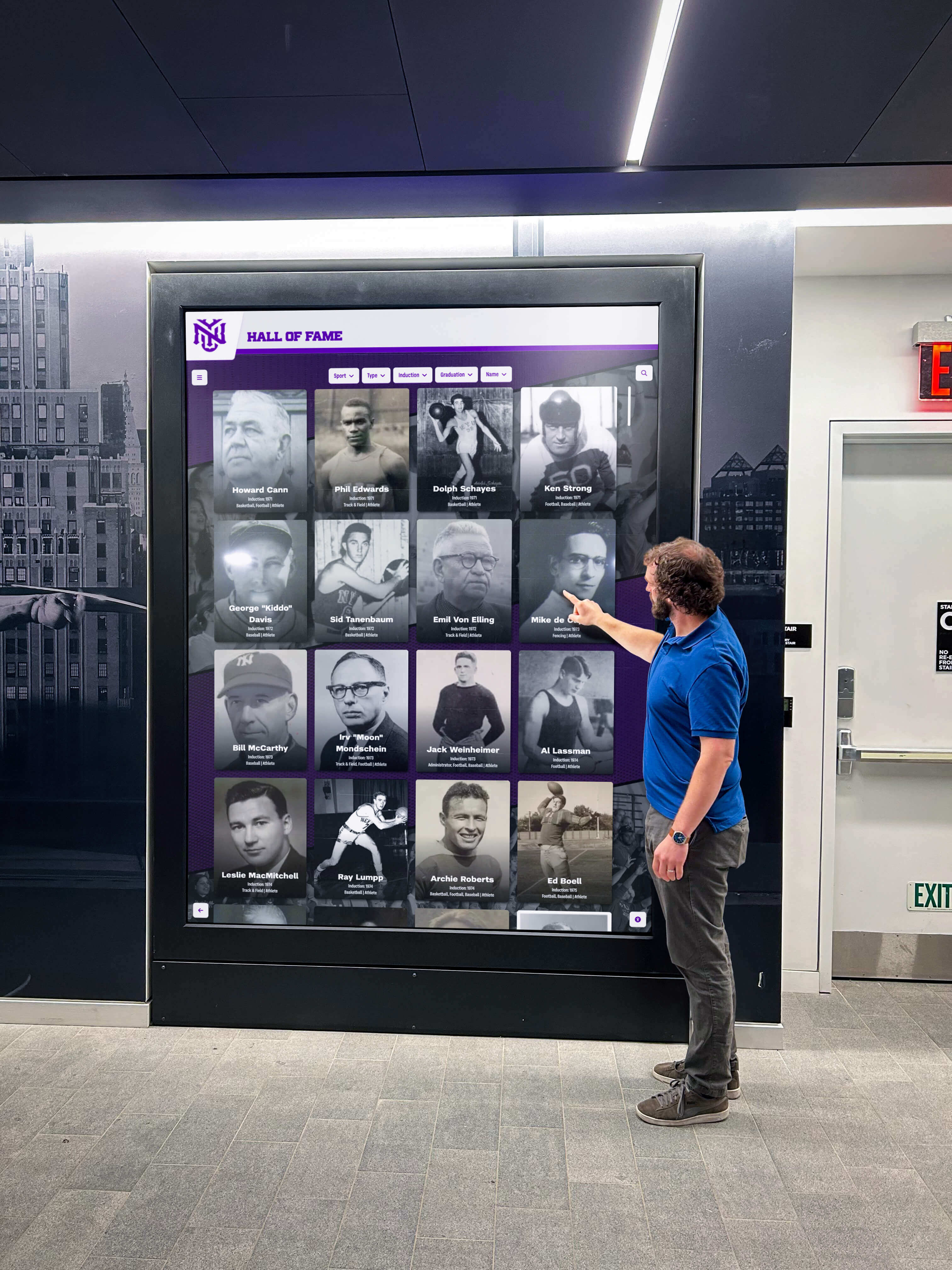
Interactive recognition displays allow swimmers and families to explore detailed achievement histories and technical progression
Consistent drill work—dedicating 20-30% of practice time to technical development—yields measurable improvements in efficiency, speed, and stroke quality over 6-8 week periods.
Common Backstroke Mistakes and Corrections
Identifying and correcting frequent errors accelerates technical development more effectively than simply swimming more volume with flawed technique.
Head and Body Position Errors
Mistake: Head Too High (Looking Forward)
Problem: Causes hips to drop, creates massive drag, reduces efficiency
Identification: Water line above forehead, excessive splashing at feet, swimmer can see feet
Correction:
- Eyes focus on wall behind, not ceiling
- Chin slightly tucked toward chest
- Water breaks across forehead and cheekbones
- Drill: Balance small object on forehead while swimming
Mistake: Hips Too Low
Problem: Increases frontal drag, requires more energy to maintain speed
Identification: Body angle approaching 45 degrees, feet visible above water, excessive kick splash
Correction:
- Core engagement lifting hips toward surface
- Press chest slightly downward allowing hips to rise
- Streamline kick drill emphasizing hip height awareness
- Reduce excessive kicking that pushes hips downward
Arm Stroke Errors
Mistake: Crossing Centerline on Entry
Problem: Creates snaking motion, reduces efficiency, causes neck strain
Identification: Hand enters past head centerline, body weaves side to side, loss of forward momentum
Correction:
- Entry directly in line with shoulder
- Imagine swimming in narrow lane
- Fingertip drag drill reinforcing straight recovery
- Video analysis showing overhead view of stroke path
Mistake: Straight-Arm Pull (No Elbow Bend)
Problem: Reduces propulsion significantly, increases shoulder strain, limits power generation
Identification: Arm remains straight throughout pull, hand pushes down not backward, limited forward progress per stroke
Correction:
- High elbow catch immediately after entry
- Elbow bends to approximately 90 degrees mid-pull
- Sculling drill developing feel for proper pull pattern
- Focus on accelerating hand speed through pull phase
Schools implementing comprehensive athletic recognition programs often see improved athlete engagement and technical focus.
Kick Technique Errors
Mistake: Bicycle Kick (Excessive Knee Bend)
Problem: Creates drag from knees, reduces propulsion, causes excessive splash
Identification: Knees break water surface, cycling motion visible, limited forward propulsion
Correction:
- Kick initiates from hips, not knees
- Slight knee bend only during upbeat, leg straightens on downbeat
- Streamline kick drill with board focusing on straight-leg action
- Ankle flexibility exercises enabling pointed-toe position
Mistake: Wide, Scissor-Like Kick
Problem: Pushes water sideways not backward, increases drag, disrupts body rotation
Identification: Feet spread wider than shoulder width, visible side-to-side leg motion
Correction:
- Narrow kick keeping feet within body profile
- Toes remain pointed and close together
- Kick within imaginary narrow tube
- Vertical kicking drill developing straight-line kick pattern
Training Sets for Backstroke Improvement
Structured training combining technique work, endurance development, and speed training creates comprehensive backstroke improvement.
Technique-Focused Sets
Stroke Count Reduction Set
Developing efficiency through distance per stroke:
Set: 6 × 50 meters backstroke
- Odd 50s: Maximum distance per stroke (count strokes, aim to reduce)
- Even 50s: Normal stroke count, focus on maintaining reduced count
- Rest: 20 seconds between
- Goal: Reduce total stroke count by 2-3 strokes over 6-week period
Drill Progression Set
Gradual integration from drill to full stroke:
Set: 400 meters continuous backstroke
- 100m: Alternating 25m single-arm drill / 25m full stroke
- 100m: Alternating 25m catch-up drill / 25m full stroke
- 100m: Alternating 25m fingertip drag / 25m full stroke
- 100m: Full stroke with heightened technical awareness
- Focus: Carry drill-developed awareness into full stroke swimming
Endurance Development Sets
Aerobic Base Building
Foundation for distance backstroke:
Set: 10 × 100 meters backstroke
- Pace: Moderate, sustainable across all repeats
- Rest: 10-15 seconds between
- Focus: Consistent technique quality, controlled breathing rhythm
- Goal: Build aerobic capacity while maintaining technical precision
Threshold Training
Lactate threshold development:
Set: 5 × 200 meters backstroke
- Pace: Comfortably hard, approximately 80-85% maximum effort
- Rest: 30 seconds between
- Focus: Maintain stroke efficiency as fatigue increases
- Goal: Develop ability to hold race pace for longer distances
Speed and Power Sets
Sprint Development
Maximum velocity training:
Set: 8 × 25 meters backstroke sprints
- Pace: Maximum effort, perfect technique
- Rest: 45-60 seconds full recovery between
- Focus: Explosive starts, maximum tempo, strong finish
- Goal: Develop top-end speed and power
Descending Ladder
Progressive speed increase:
Set: 300-200-100-50 backstroke descending
- 300m: Moderate pace establishing rhythm
- 200m: Faster than 300m pace
- 100m: Faster than 200m pace
- 50m: Sprint effort
- Rest: 45-60 seconds between distances
- Focus: Maintain technique quality at increasing speeds

Competitive programs utilize modern recognition technology celebrating swimming achievements and motivating continued technical development
Racing Strategy and Competitive Backstroke
Applying technical skills in competitive settings requires strategic understanding beyond pure stroke mechanics.
Pacing Strategies by Distance
50-Meter Backstroke Sprint
Maximum effort race strategy:
- Start emphasis: Explosive start and underwater work establishing early lead
- First 25: Maximum tempo and power, establish rhythm immediately
- Turn: Fast, efficient turn maintaining momentum
- Second 25: Hold maximum tempo, resist breathing frequency increase
- Finish: Strong finish to wall, maintain stroke through touch
100-Meter Backstroke
Controlled speed strategy:
- First 50: Strong but controlled, approximately 95% maximum effort
- Turn: Critical halfway point, maintain efficiency
- Third 25: Hold pace, resist slowing, focus on technique
- Final 25: Maximum effort, increase tempo and kick intensity
- Breathing: Establish rhythm, avoid excessive breathing late in race
200-Meter Backstroke
Strategic distance race:
- First 50: Controlled, establishing sustainable pace and rhythm
- Second 50: Build slightly, approximately 90% effort
- Third 50: Hold pace through difficult middle phase
- Final 50: All-out effort, empty the tank, maximum tempo
- Mental approach: Break race into four 50s, specific goals for each
Turn Technique and Efficiency
Flip Turn Mechanics
Modern backstroke turns utilize freestyle-style flip turns:
Approach:
- Count strokes from flags (typically 5 flags, 5 meters from wall)
- Establish consistent approach distance
- Final stroke initiates turn sequence
Turn Execution:
- Roll to stomach during final stroke
- Tuck and flip as in freestyle turn
- Plant feet on wall in streamline position on back
- Explosive push-off maintaining tight streamline
- Dolphin kicks (up to 15 meters) before surfacing
Turn Practice Drill:
- Flags to flags backstroke (5 meters past each wall)
- Focus: Consistent turn approach, explosive push-off, quick transition
- Sets: 10-15 repetitions emphasizing turn speed and efficiency
Programs showcasing competitive excellence often implement modern recognition displays celebrating championship performances and record-breaking achievements.
Mental Preparation and Race Focus
Pre-Race Visualization
Mental rehearsal improving performance:
- Visualize perfect start sequence: setup, reaction, push-off, streamline
- Mental walkthrough of entire race at race pace
- Practice feeling of perfect technique at high speed
- Envision successful execution of race strategy
- Mental preparation 24-48 hours before competition
In-Race Focus Cues
Simple mental reminders during competition:
- “High hips” - maintaining optimal body position
- “Fast hands” - emphasizing quick hand speed through pull
- “Kick strong” - maintaining kick intensity through fatigue
- “Reach and rotate” - emphasizing stroke length and body rotation
- One cue per race preventing mental overload
Celebrating Backstroke Excellence and Swimming Achievement
Recognizing technical development and competitive success motivates continued improvement and celebrates the demanding journey toward backstroke mastery.
Documenting Progress and Milestones
Personal Achievement Tracking
Measurable progress indicators:
- Time improvements across distances (50m, 100m, 200m backstroke)
- Stroke count reduction demonstrating efficiency gains
- Training set performance improvements
- Qualifying time achievements (sectional cuts, state qualifying, national standards)
- Technical milestone completion (mastered flip turn, reduced stroke flaws)
Team Recognition Systems
Celebrating individual and collective achievements:
- Backstroke event record holders by age group
- Fastest times across all competitive distances
- Most improved backstroke times season over season
- Technical excellence awards for superior form
- Individual Medley recognition including backstroke leg contributions
Many successful swimming programs implement permanent digital recognition displays showcasing backstroke specialists, record holders, and championship performances that inspire current athletes while honoring program history.
Building Culture of Technical Excellence
Program-Wide Emphasis
Creating environments valuing technique alongside results:
- Regular video analysis sessions reviewing technique
- Recognition for technical improvement not just competitive results
- Drill proficiency standards establishing expectations
- Senior swimmers mentoring developing backstrokers
- Coach emphasis on process goals (technique) alongside outcome goals (times)
Schools fostering comprehensive athletic development often showcase achievements through integrated recognition systems celebrating diverse accomplishments across sports and skill development.
Long-Term Development Perspective
Patient progression toward excellence:
- Technical mastery before speed emphasis (especially youth swimmers)
- Age-appropriate expectations matching developmental stages
- Celebration of incremental improvements not just breakthrough performances
- Focus on sustainable development preventing burnout and injury
- Building complete swimmers with all four strokes including backstroke mastery
Effective recognition creates motivation while maintaining healthy perspective on athletic development as long-term journey requiring patience and consistent effort.
Conclusion: The Path to Backstroke Mastery
Mastering backstroke technique transforms one of swimming’s most challenging strokes into a weapon for competitive success and personal achievement. The journey from awkward beginner struggling with body position to confident competitor executing flawless mechanics with speed and efficiency requires patient, systematic development across all technical elements—body position, arm stroke, kick, starts, and turns.
The backstroke technique fundamentals outlined in this guide—proper head position and hip height, efficient arm entry and pull mechanics, powerful hip-initiated kick, explosive starts, and targeted drill work—provide the foundation for measurable improvement at every competitive level. Success comes not from massive training volume with flawed technique but from deliberate practice emphasizing quality movement patterns, progressive skill development, and consistent correction of common errors that sabotage efficiency.
As you implement these techniques through structured training, remember that backstroke improvement follows predictable patterns: early gains come quickly as major flaws get corrected, intermediate progress requires refining subtle mechanics, and advanced development demands maintaining technical precision under race-pace fatigue and competitive pressure. Video analysis, stroke count monitoring, and qualified coaching feedback accelerate development by identifying specific areas requiring attention before bad habits become ingrained patterns.
Celebrate Your Swimming Program's Backstroke Excellence
Discover how modern digital recognition displays can showcase your swimmers' backstroke records, highlight championship performances, and preserve your program's competitive history—creating inspiring environments that motivate current athletes while honoring the technical excellence that defines successful swimming programs.
Explore Swimming Recognition SolutionsWhether you’re a novice swimmer establishing fundamental backstroke body position, an intermediate competitor refining arm mechanics and kick timing, or an advanced athlete pursuing championship qualifying times, the technical principles remain constant: maximize streamline, minimize drag, generate propulsion efficiently, and maintain technique quality regardless of speed or fatigue. Commit to the process, embrace targeted drill work, celebrate incremental improvements, and trust that consistent technical development delivers the time drops and competitive results you seek.
Championship backstroke doesn’t require extraordinary physical gifts—it demands technical precision, thoughtful training, and persistent refinement of fundamental skills. Build your backstroke systematically, recognize progress along the journey, and create training environments where technical excellence receives the celebration it deserves. The investment you make mastering backstroke technique pays dividends throughout your swimming career, providing versatility for Individual Medley events, anchoring medley relay teams, and developing the complete swimmer profile coaches value and competitive swimming demands.
Live Example: Rocket Alumni Solutions Touchscreen Display
Interact with a live example (16:9 scaled 1920x1080 display). All content is automatically responsive to all screen sizes and orientations.