Cheer Senior Night Ideas: Gifts, Posters, and a Meaningful Game-Night Tribute
- Home /
- Digital Wall of Fame Blog - Recognition Display Insights & Resources /
- Cheer Senior Night Ideas: Gifts, Posters, and a Meaningful Game-Night Tribute
The Easiest Touchscreen Solution


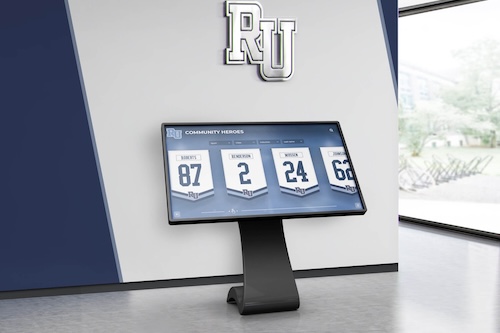
Live Example: Rocket Alumni Solutions Touchscreen Display
Interact with a live example (16:9 scaled 1920x1080 display). All content is automatically responsive to all screen sizes and orientations.
Graduating cheerleaders carry years of early morning practices, competition travel, and game-day dedication into their final home athletic event. A well-planned cheer senior night honors that commitment in front of the school community that benefited from it—without reducing the seniors to a half-time decoration or folding the ceremony into another team’s spotlight. This guide focuses on the specific task of coordinating recognition at a home game: who to confirm the schedule with, what personal touches resonate, how to run the moment smoothly, and how to extend the story into your school’s lobby display after the night is over.
Cheerleaders are participants being honored in their own right, not supporting cast for a different team’s senior recognition. That distinction should shape every planning decision, from when you request ceremony time to how the announcer introduces each senior.

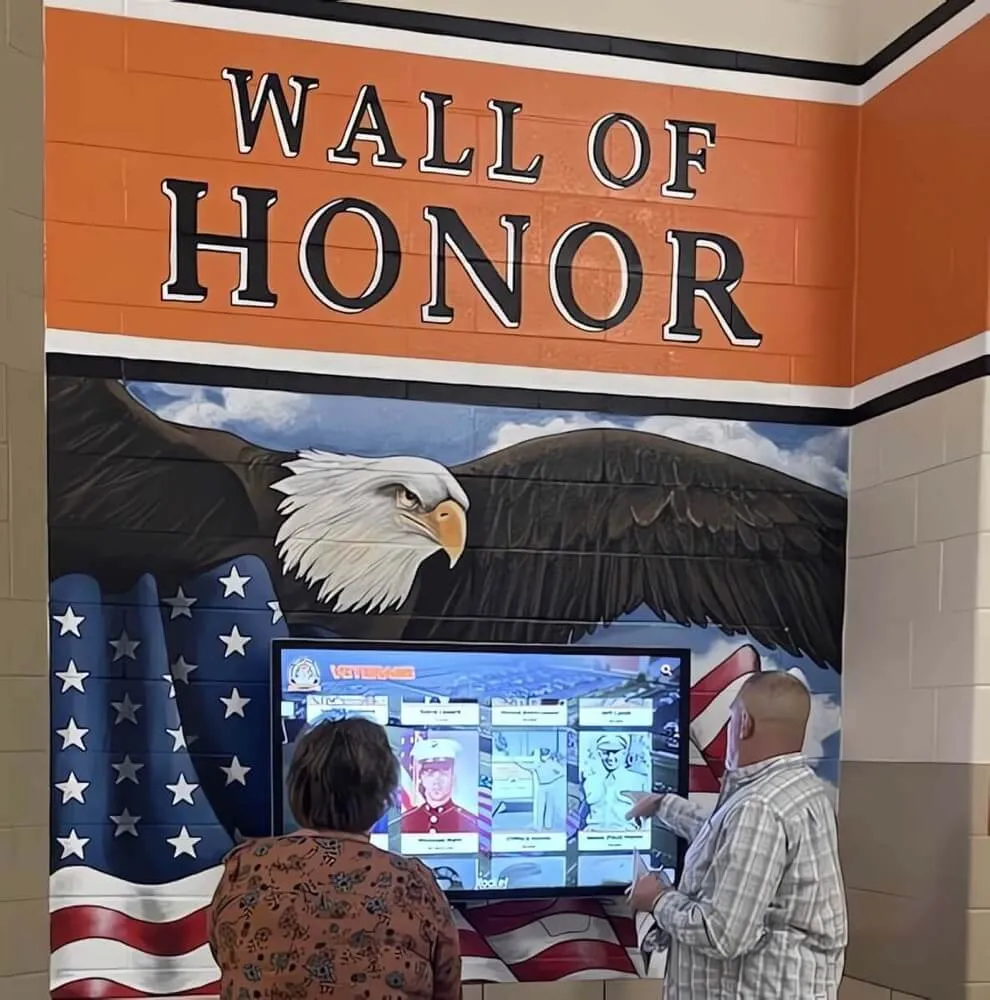
Recognizing cheer seniors publicly—on the floor and on permanent displays—sends a clear message about which contributions the school values
Confirming Your Place on the Game-Night Schedule
Before you purchase a single flower or print a single poster, secure a confirmed time slot. Cheer senior night shares the venue with another team’s event, and the athletic director’s office coordinates the full evening. Missing this step can reduce your ceremony to a rushed afterthought.
Whose approval you need:
- Athletic director or event coordinator — They own the master run of show. Ask specifically how much floor time is available for cheer recognition, whether it runs pre-game, at halftime, or at another break, and who controls the public address system.
- Host-team coaching staff — The head coach of the home sport being played that night has a stake in timing. A brief conversation (or a note through the athletic director) prevents scheduling friction on game night.
- Your own cheer program’s advisor or head coach — Confirm the number of seniors on the active roster, including any who joined mid-season or who are not competing that evening due to injury. Everyone on the team who qualifies as a senior should be included.
What to put in writing once confirmed:
- Date, specific time window, and duration for cheer recognition
- Whether cheer seniors will walk to a designated spot on the court, field, or track, or remain on the sideline
- PA announcement format and who will read it
- Any setup restrictions (no props on playing surface, certain entry doors locked, etc.)
- A rain or indoor alternative if the event is outdoors
Having a written confirmation from the athletic director removes ambiguity if there is a scheduling conflict on game night.
Gathering Information Respectfully
Each senior’s recognition should feel personal without putting pressure on families or athletes to share information they prefer to keep private.
Information worth collecting in advance:
- Preferred pronunciation of the senior’s first and last name (ask the senior directly, then rehearse with the announcer)
- Whether the senior wants family members to walk with them, walk alone, or have a teammate escort them
- Who is attending that the senior would like acknowledged by name — but do not require it or assume two parents are present; some seniors will name a grandparent, sibling, coach from a club program, or no one at all
- One short, approved quote or memory they are comfortable having read aloud — optional, never required
- A photo they approve for use in printed materials or displays
A simple one-page form works. Give seniors at least two weeks to return it, and make all fields optional except for name pronunciation.
Personal Cheer Recognition Ideas for the Game-Night Ceremony
These recognition elements are meant to complement the ceremony itself. Adapt to your budget and squad culture; not every idea fits every program.

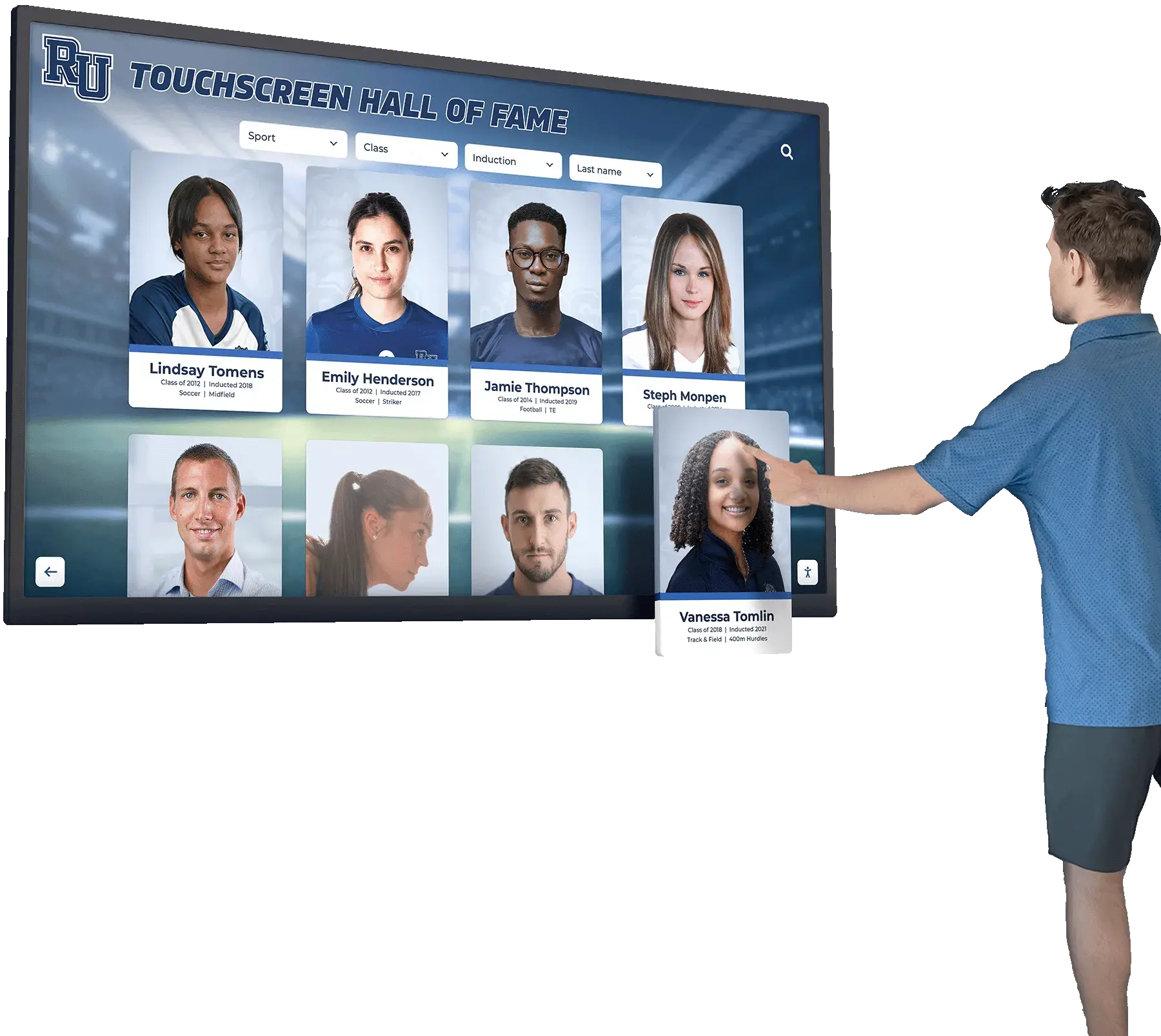
Personal portrait cards give each senior a tangible keepsake that is easy to transport and display at home
Teammate notes. Ask each returning squad member to write a few sentences about something specific they witnessed the senior contribute — a skill they taught, a moment they steadied the group, a habit that set the tone at practice. Gather the notes in an envelope and give them to the senior before or after the ceremony. This costs nothing and is often the gift seniors mention years later.
A memory booklet. A small, printed booklet (even a folded cardstock insert) with photos from practices, competitions, and games across the senior’s time on the squad creates a keepsake that is personal without being expensive. Collect only photos the senior and school have approved for use, and list photo contributors so credit is clear.
A photo with a personal caption. A single, high-quality photo of the senior in uniform — printed and framed in school colors, or mounted on poster board — with a caption written by the head coach or advisor that names one specific moment or quality worth remembering. Specific beats generic: “Emma held the stunt that won us second place at regionals” lands differently than “Emma was a great leader.”
A school-color keepsake. A small tangible item in the program’s colors — a letter charm, a ribbon, a printed bookmark with the season roster — can serve as a token without crossing into product endorsement territory. The intent is something the senior can tuck into a scrapbook, not something purchased to signal budget. If your booster organization has a per-senior allocation, this is a reasonable use of it. Whatever amount you set, label it clearly as a planning estimate, not a market price.
A senior photo or poster. A printed poster — made from an approved photo the senior submits — displayed at the venue and taken home afterward is one of the most common cheer senior night elements. The poster does not need to be elaborate: name, years on squad, and one photo is enough. For design guidance on format options, the existing guide on senior-night poster designs, including cheer covers sport-specific layouts and DIY creation in detail.
A thank-you from younger squad members. Ask underclassmen to sign a card or contribute a line to a shared note. This is especially meaningful in programs where seniors have directly coached or mentored less experienced members. Keep it voluntary — a forced signature carries no weight.
Planning Checklist for Cheer Senior Night
Use this checklist as a starting point; your school’s own event policies and traditions take precedence.
Six or more weeks out:
- Identify your senior roster (confirm with coach/advisor)
- Request ceremony time from the athletic director; confirm which home game
- Introduce yourself to the host-team coaching staff’s point of contact
- Determine your budget and who manages it (booster club, athletic department, parent coordinators)
Four to five weeks out:
- Distribute the information-gathering form to seniors (name pronunciation, escort preference, optional quote, approved photo)
- Order any items requiring production lead time (printed booklets, framed photos, engraved keepsakes)
- Draft the run sheet and share with the athletic director for feedback
Two to three weeks out:
- Confirm photo collection is complete; share files with the designer or printer
- Finalize the announcer script with correct name pronunciations marked
- Brief whoever will escort or stand with each senior on the logistics
- Identify and plan a weather or indoor alternative if the game is outdoors
Week of the event:
- Confirm setup access time with facilities staff
- Deliver posters and materials to the venue in advance if possible
- Run through the order of seniors with the announcer; correct any pronunciation issues
- Brief a parent or coordinator volunteer to manage post-ceremony photo opportunities and poster distribution
Day of the event:
- Arrive early to set up displays before the crowd enters
- Confirm the PA announcement timing with the event coordinator one more time
- Designate someone to hand posters to families or hold them at a pickup spot after the ceremony
Example Run Sheet (Adapt to Your School’s Event Plan)
The following is an illustrative template, not an official rule or standard duration. Coordinate it with the athletic director’s existing event schedule before you finalize any timing.
| Time from ceremony start | Action |
|---|---|
| 0:00 | Announcer opens: thanks crowd, introduces cheer senior recognition |
| 0:45 | Senior 1 announced by name; walks to designated spot; brief personal note read; family acknowledged if applicable |
| ~1:30 | Senior 2 proceeds (same format) |
| (Repeat for each senior — allow enough time so no one feels rushed) | |
| End | Group photo of all cheer seniors; announcer closes recognition; transition to next event segment |
Notes for this template:
- Pace is a planning starting point only. A squad with four seniors runs faster than one with twelve.
- Do not schedule stunts, tumbling, or new choreography as part of a senior-recognition run sheet. This is a recognition ceremony, not a performance slot, and safety always takes precedence over spectacle.
- The order seniors are announced should be discussed with the squad in advance. Alphabetical order is neutral; letting seniors choose their position avoids any implication of hierarchy.
- Build a short buffer into your estimate when presenting it to the athletic director so you are not cutting into game time.
Sample Announcement and Story Prompts
Use this as a starting template. Replace every bracketed placeholder before the event.
“We pause now to recognize the graduating seniors of [School Name] Cheer. These athletes have represented [School Name] with dedication throughout their high school careers, and tonight we celebrate each of them.
[Senior’s Full Name] has been a member of the squad for [number] years. [Optional: One sentence about a moment of mentorship, a school-spirit contribution, or a team memory — gathered from the senior’s form or coach notes.] Please welcome [Senior’s First Name] and [names of accompanying family members or escort, or ‘joining us from the squad’ if walking with a teammate].”
Optional story prompt ideas (to fill the bracket above — use only what the senior approves):
- A moment they steadied a nervous teammate before a competition
- A tradition they started or upheld that became part of squad culture
- A game where their energy visibly lifted the crowd
- A year they returned after an injury and what they brought back with them
- How a younger member of the squad described what they learned from this senior
Story prompts work best when they are specific and submitted by someone who was actually present for the moment. Prompts that sound generic or promotional undermine the personal quality you are trying to create.
Extending Recognition into Your School-Lobby Touchscreen Display
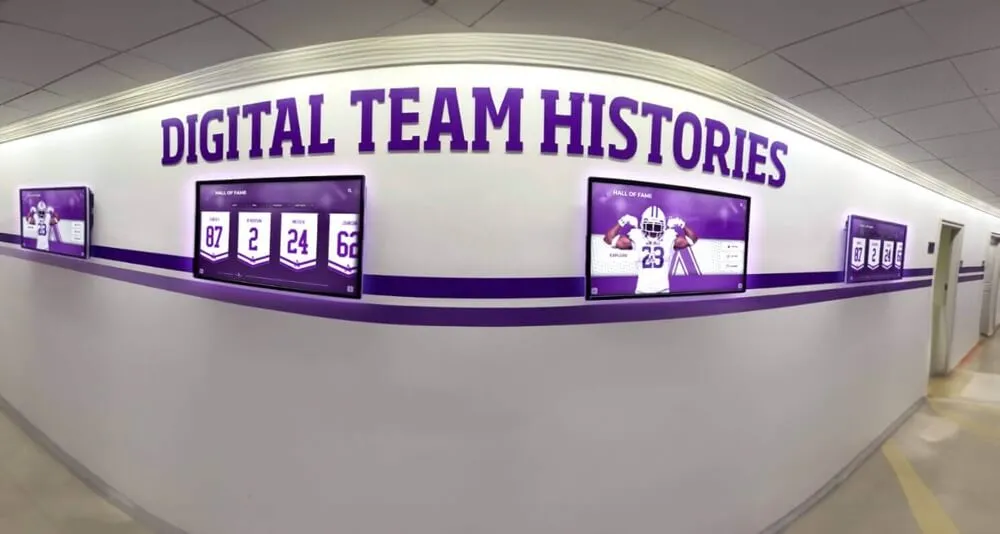
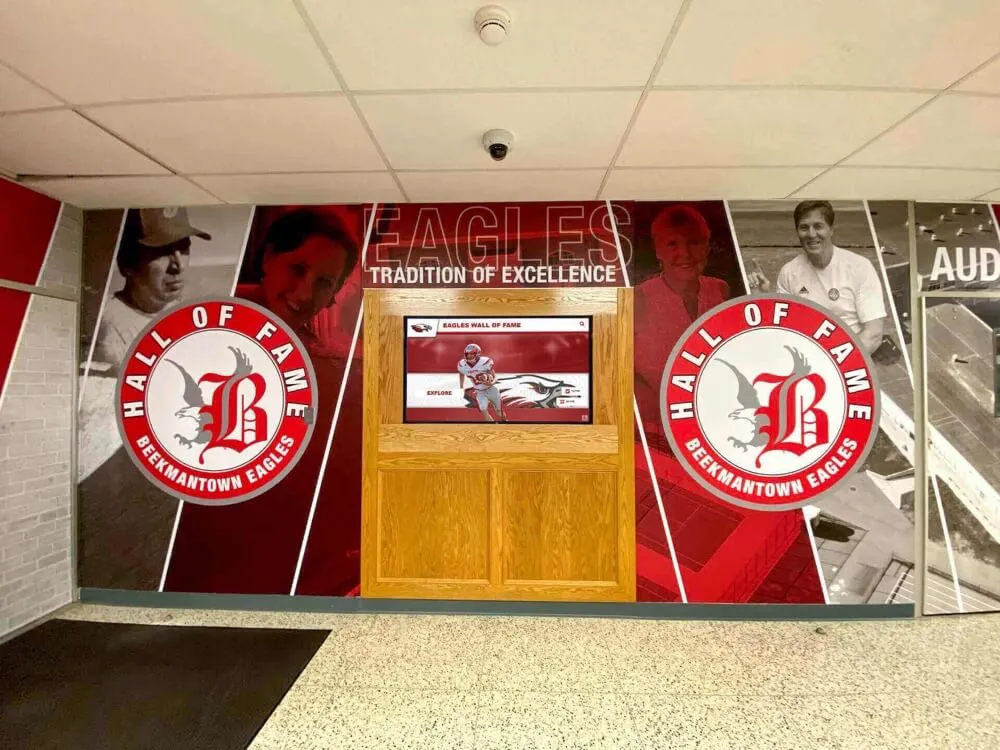
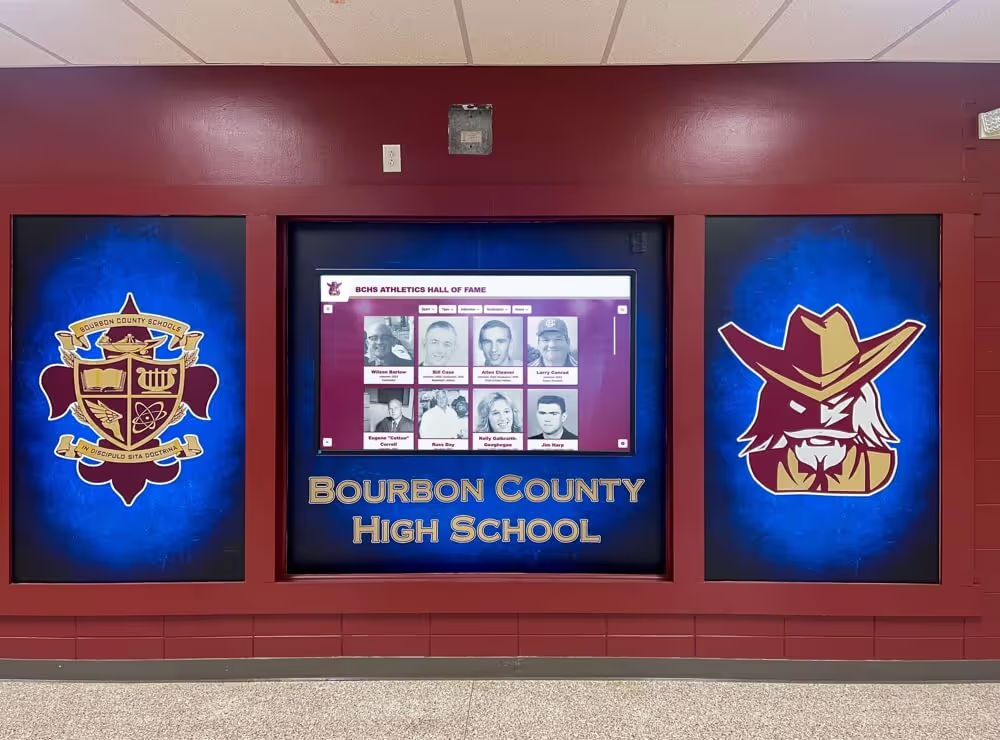
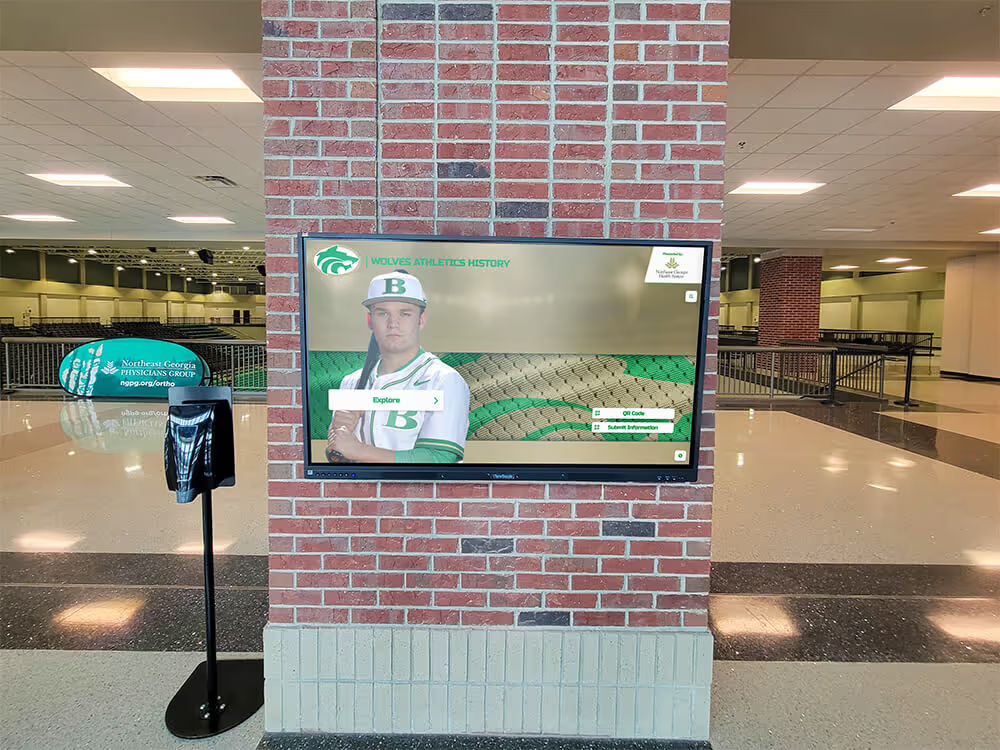
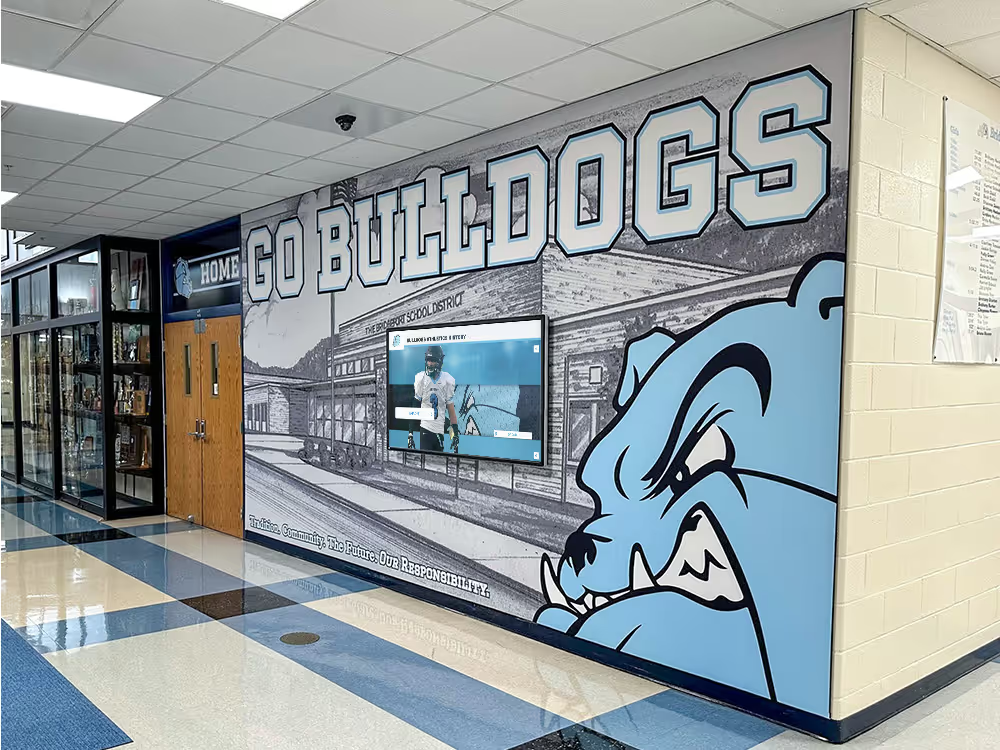
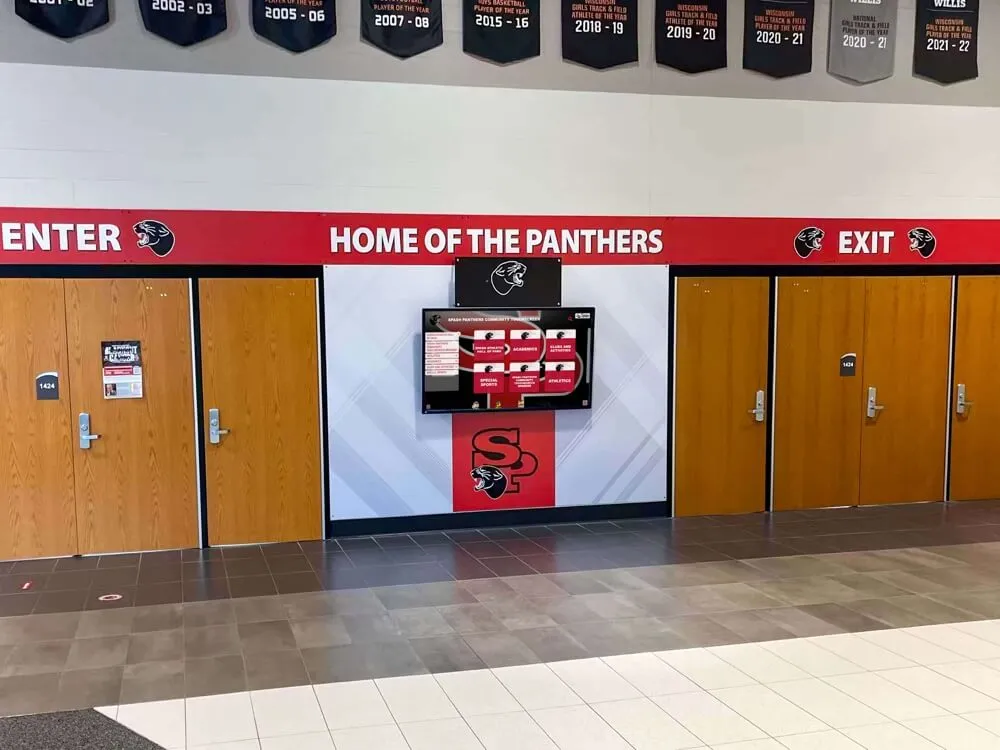
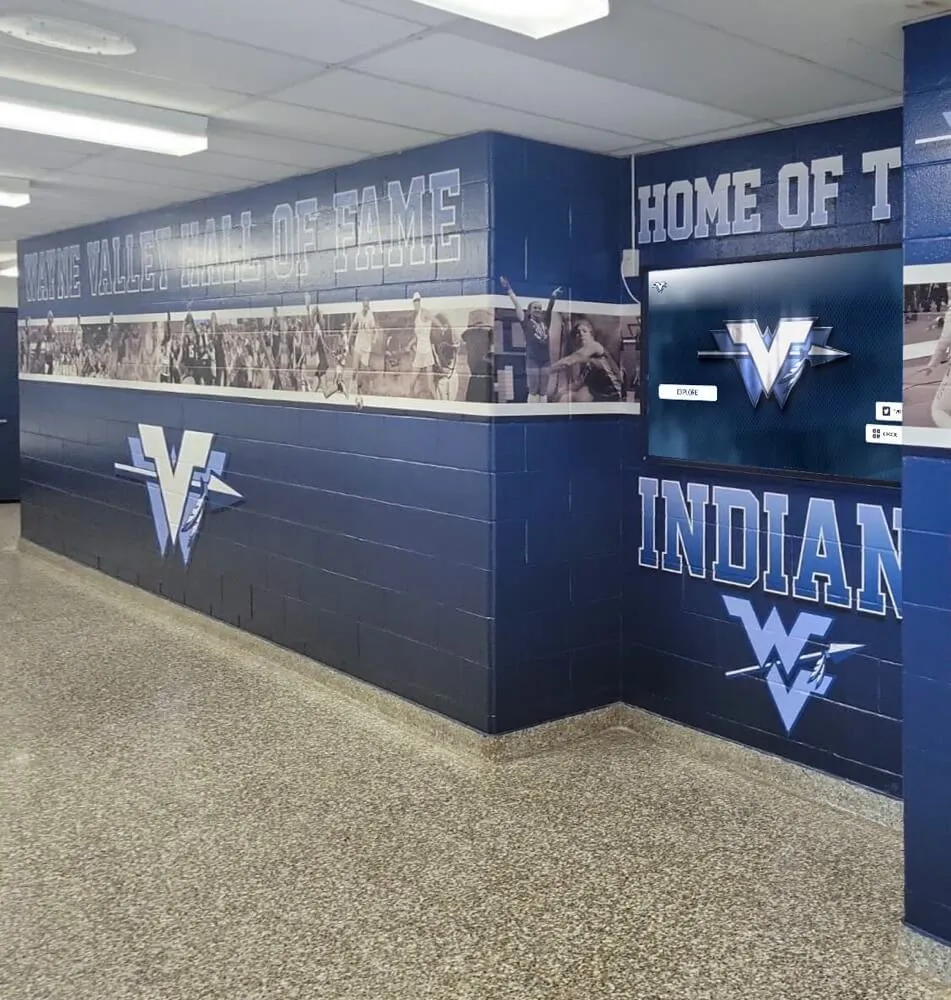
The game-night ceremony lasts one evening. A school-lobby touchscreen display — if your program has one or is considering one — can carry each senior’s story forward for the rest of the year and beyond.
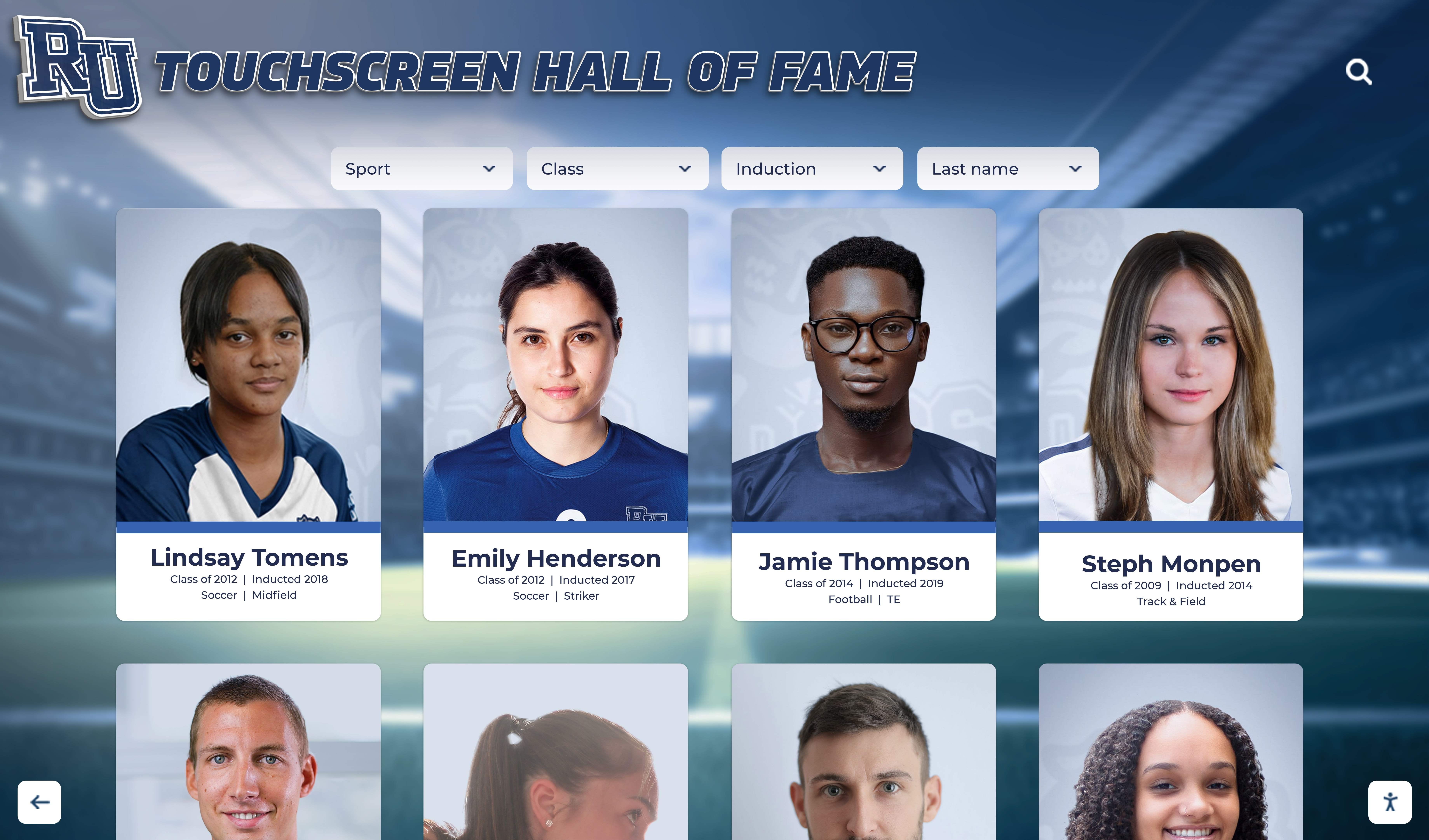
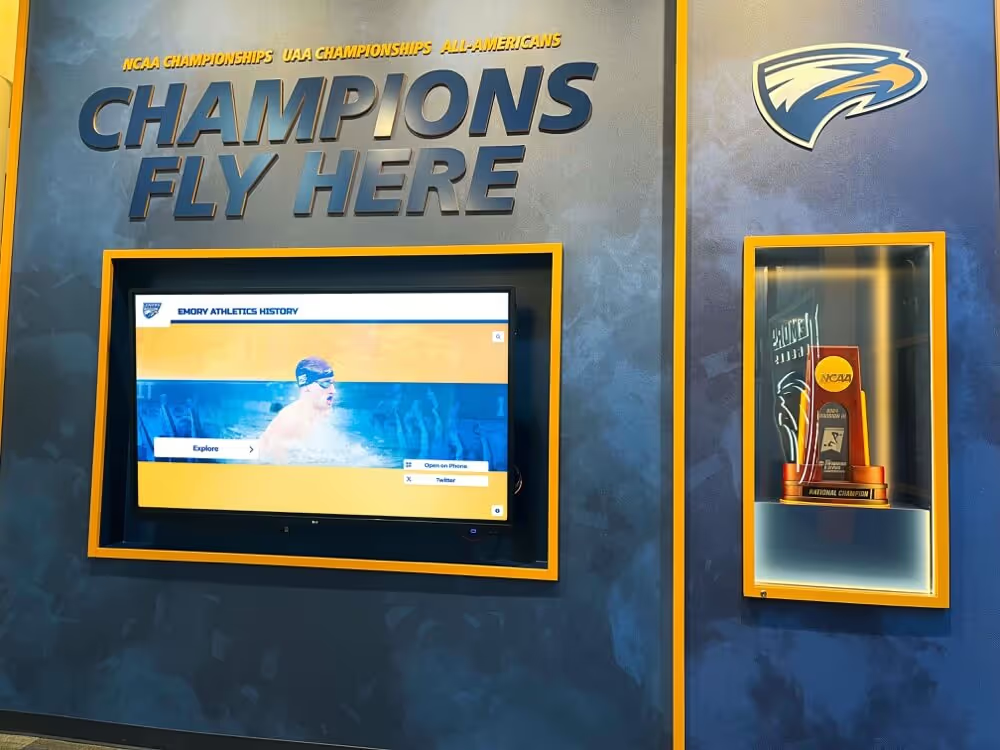
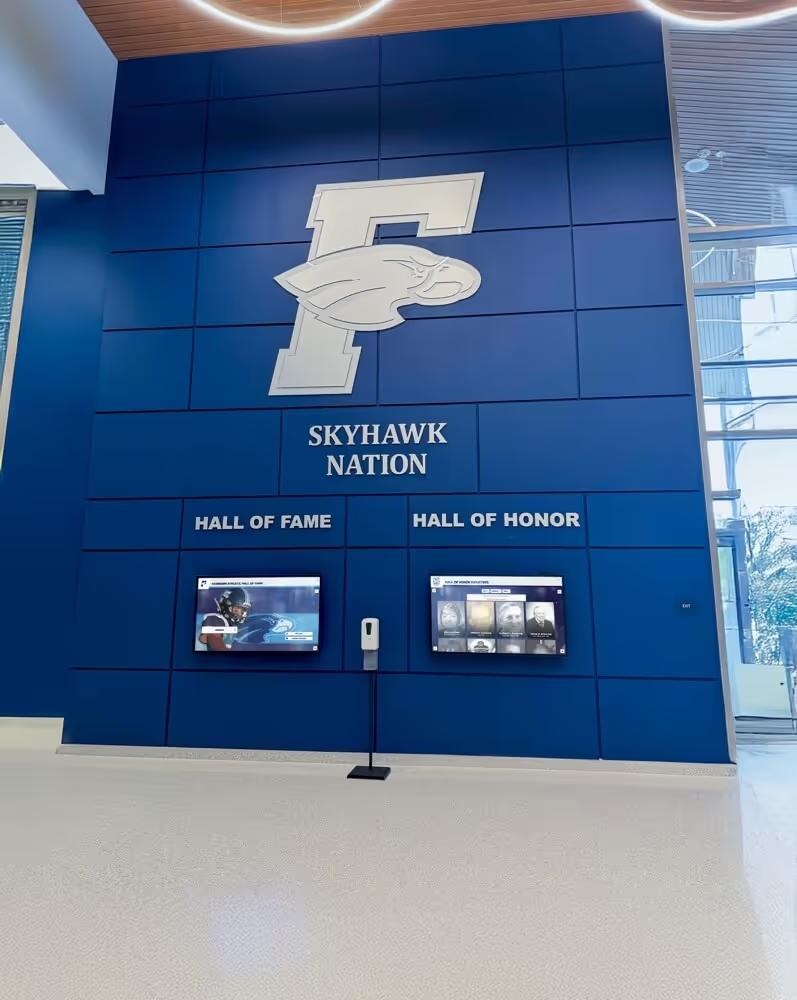
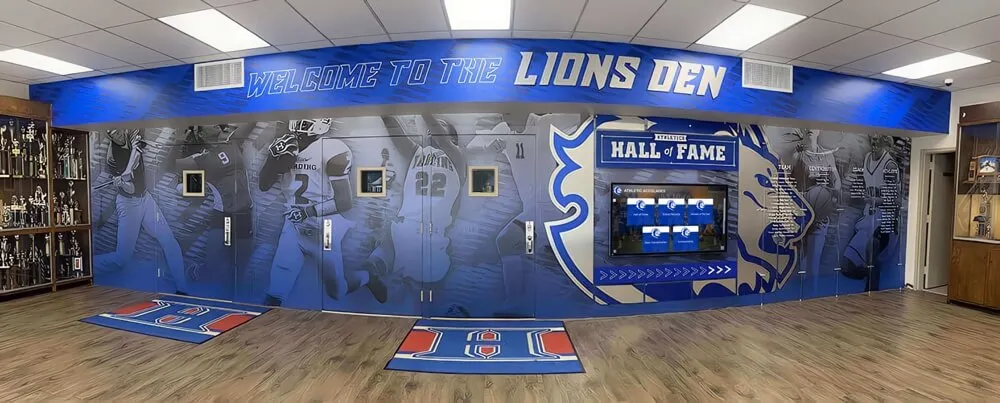
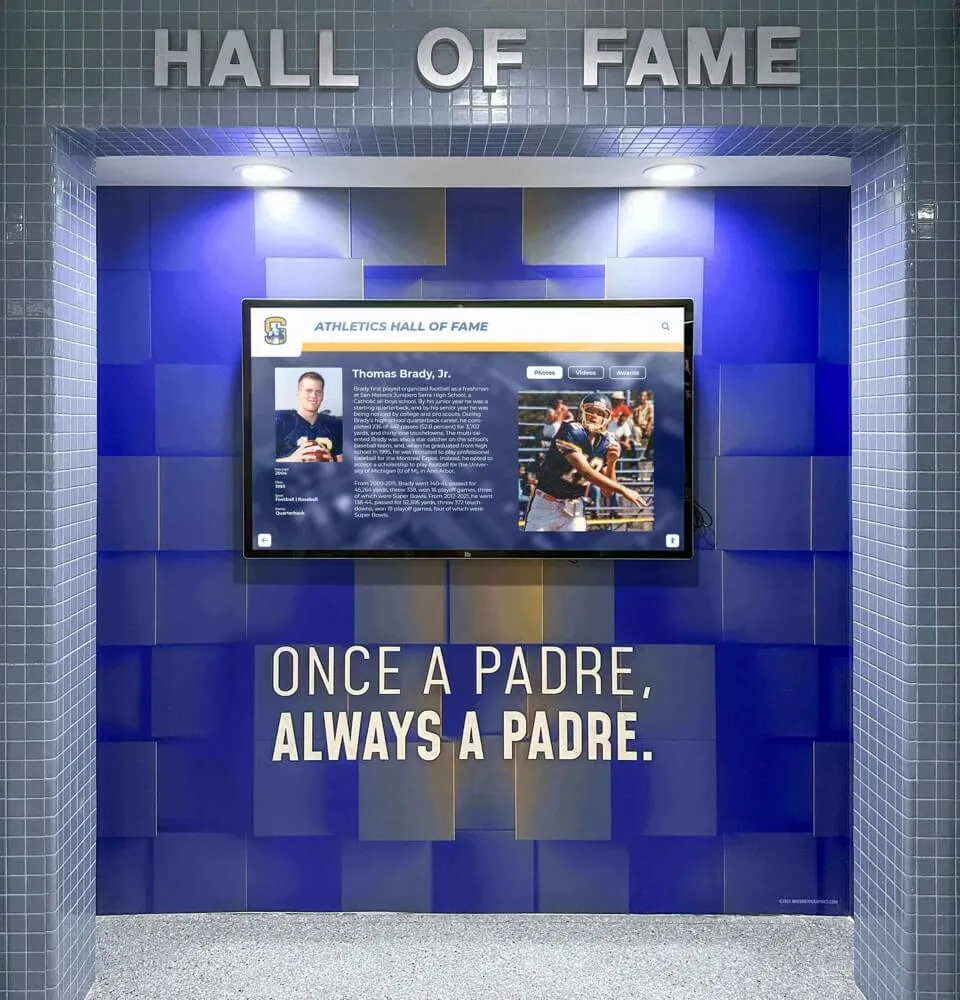
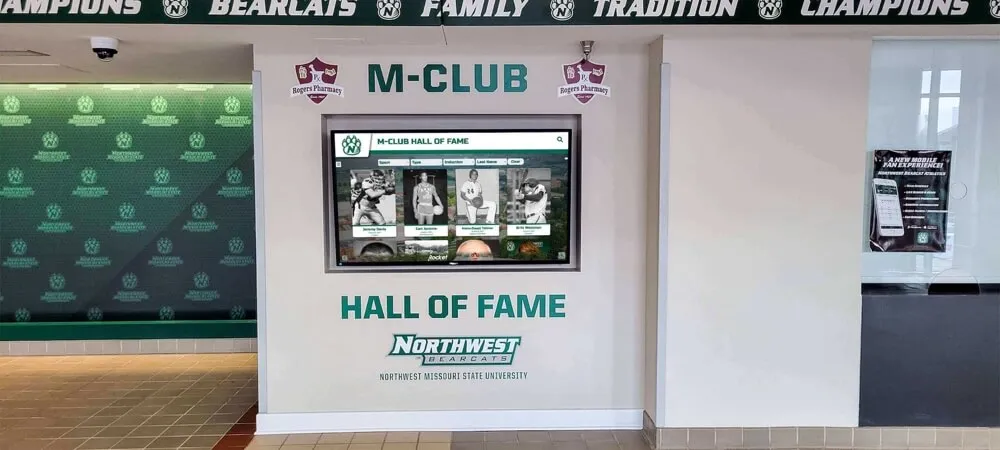
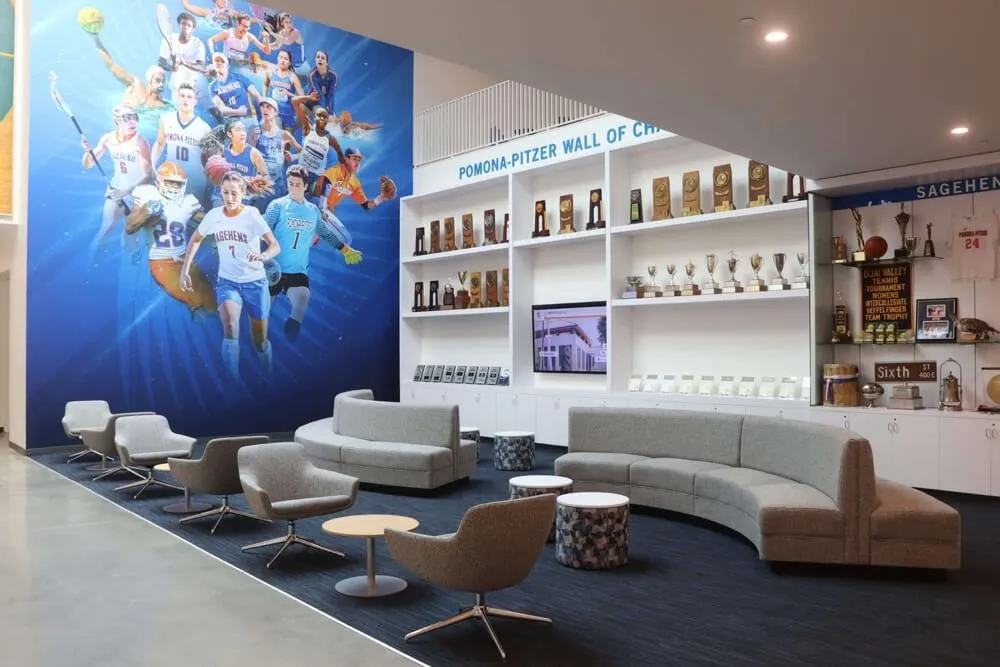
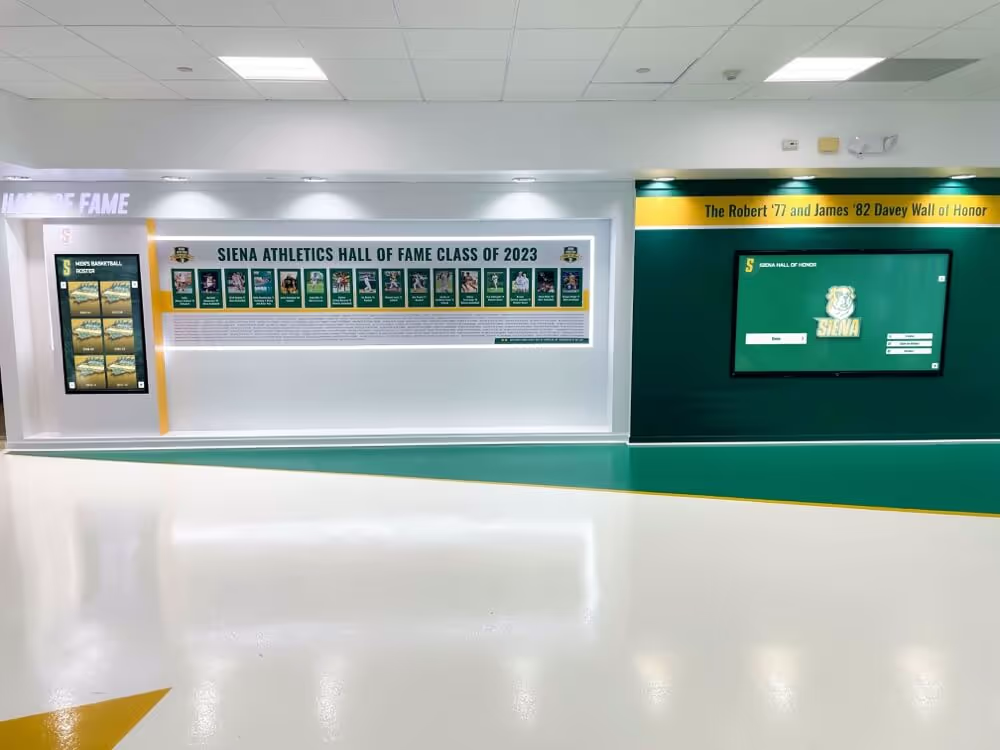
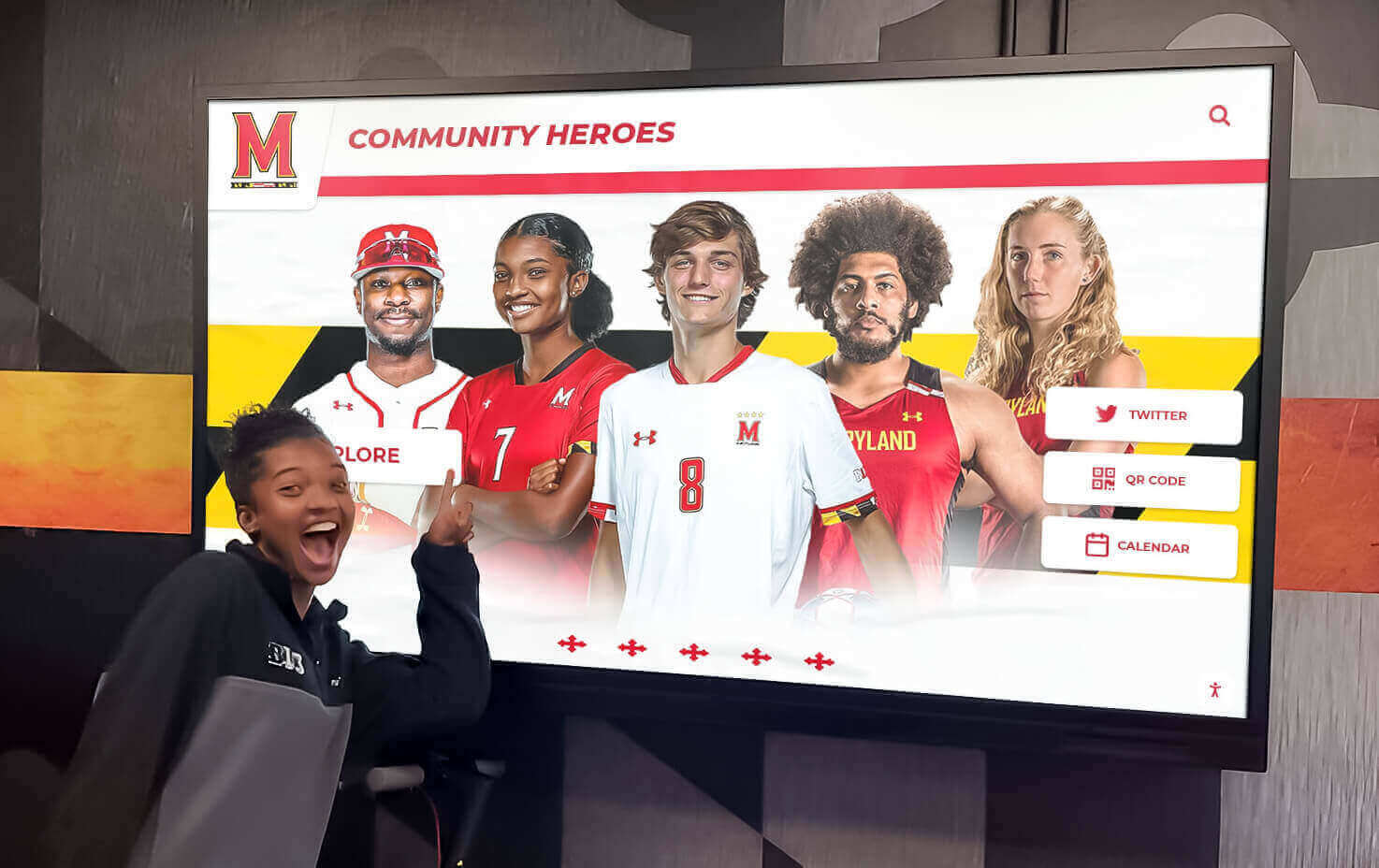
A lobby display can extend cheer senior recognition from one game night into a lasting part of the school's athletic history
Here is a practical way to approach this, whether your display is already installed or you are planning one:
Content to include for each senior:
- An approved senior photo (the same one used on the game-night poster works well)
- A brief individual story — two to four sentences, drawn from what the senior submitted or what the coach wrote for the ceremony — reviewed by the senior before it goes up
- The season, years on squad, and any relevant team achievements from that year
Content for the squad as a whole:
- A season group image, taken at an appropriate time with all members’ consent
- A note about the graduating class as a cohort (optional; keep it general unless seniors have approved specific details)
Practical ownership:
Before you start collecting content for a display, assign a staff member — the athletic director, cheer advisor, or a designated administrative contact — as the person responsible for reviewing and updating entries. This person should approve what goes up, handle any correction requests, and know how the display is managed. School media and publication policies govern what student content may be shared publicly; your school’s administration can clarify what consent or review steps apply.
What to keep in mind about the display itself:
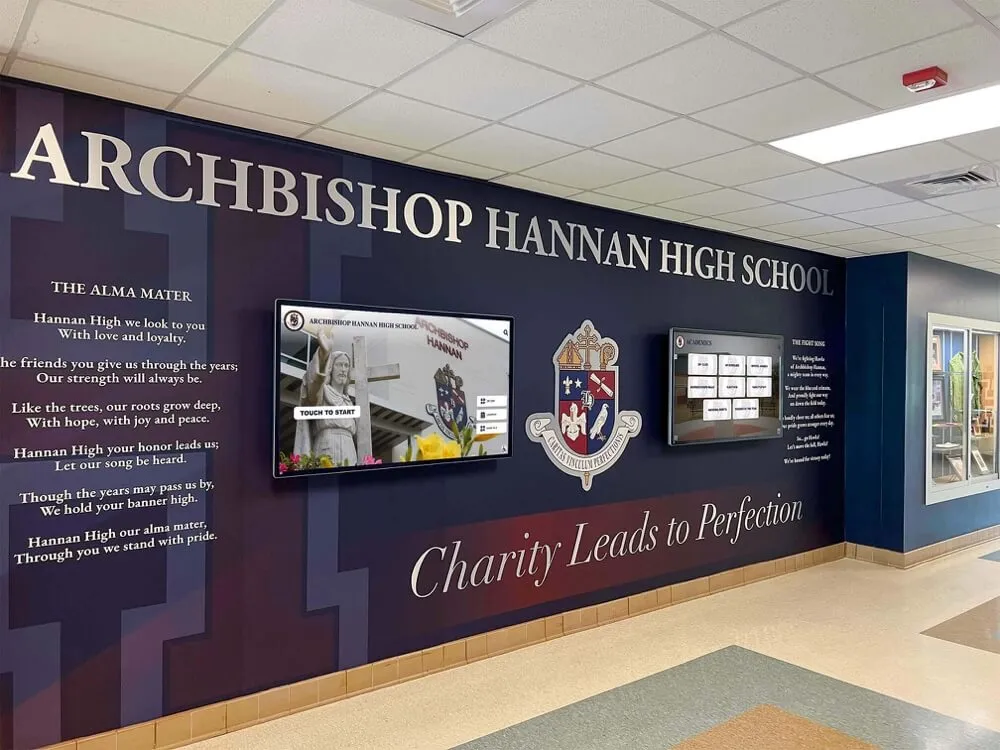
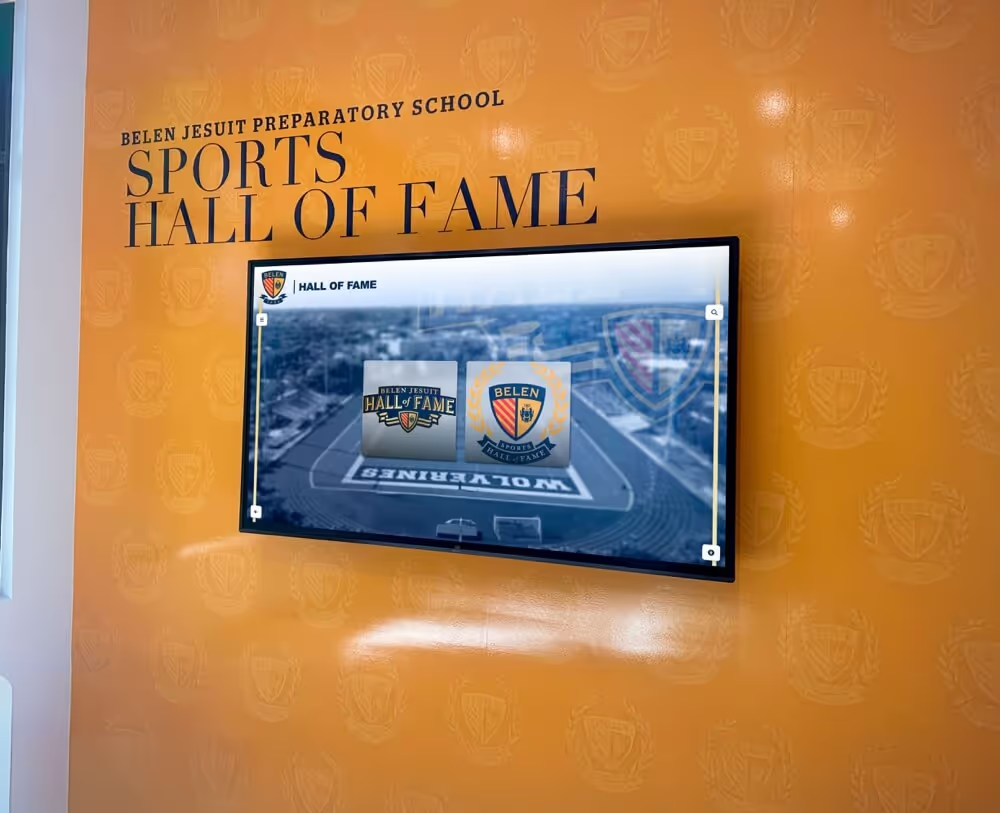
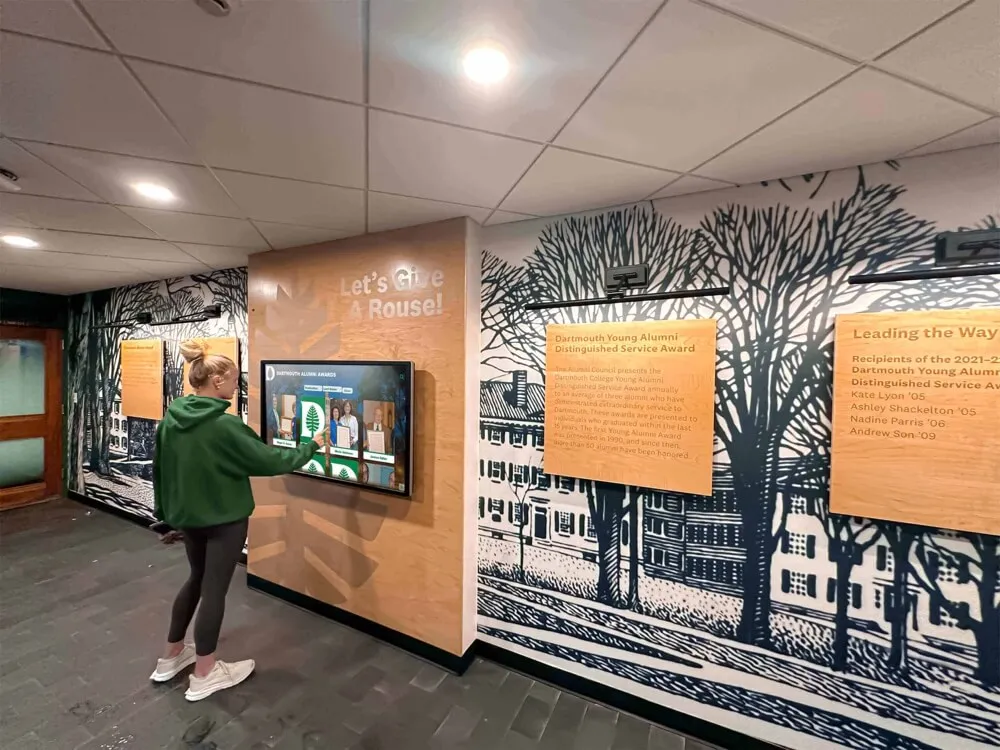
What a school-lobby touchscreen can practically do depends on the specific system your school has or is evaluating. Treat any capability — how content is loaded, how it is updated, how visitors access profiles, and what accessibility features are supported — as a question to ask the vendor, not an assumption to build around. The planning ideas above apply broadly; the technical specifics depend on your system.
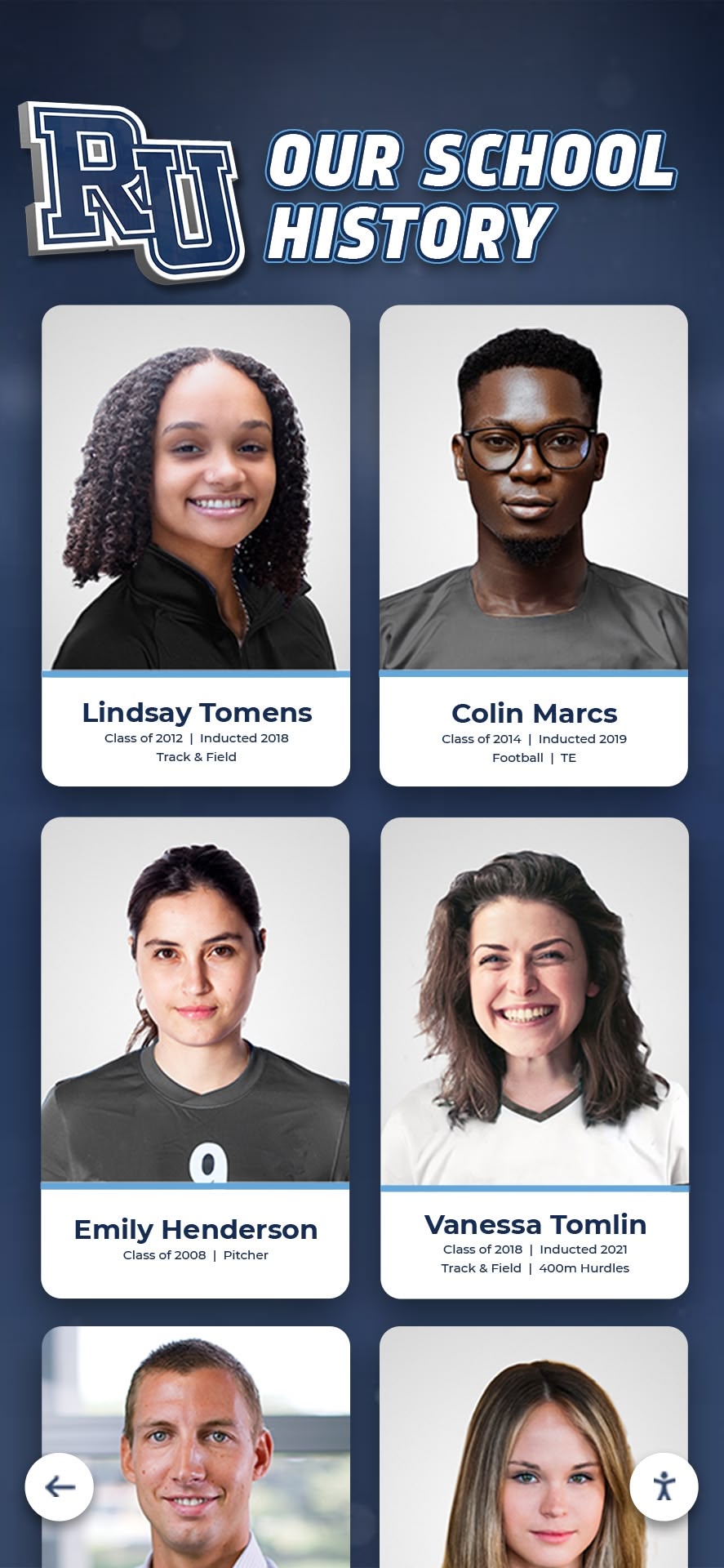
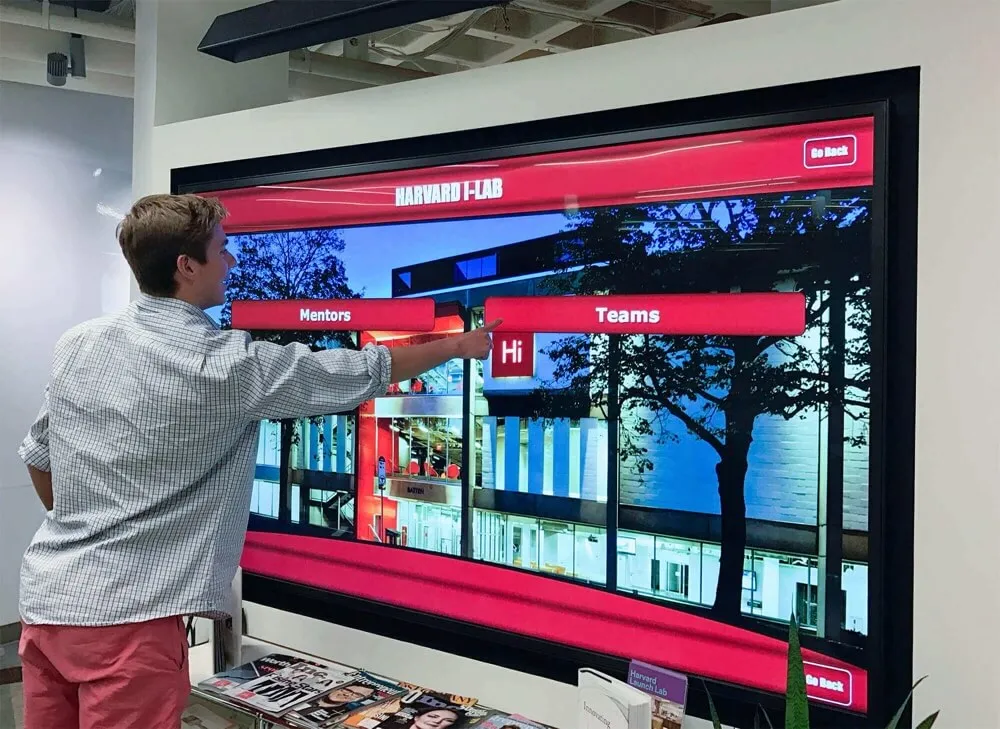
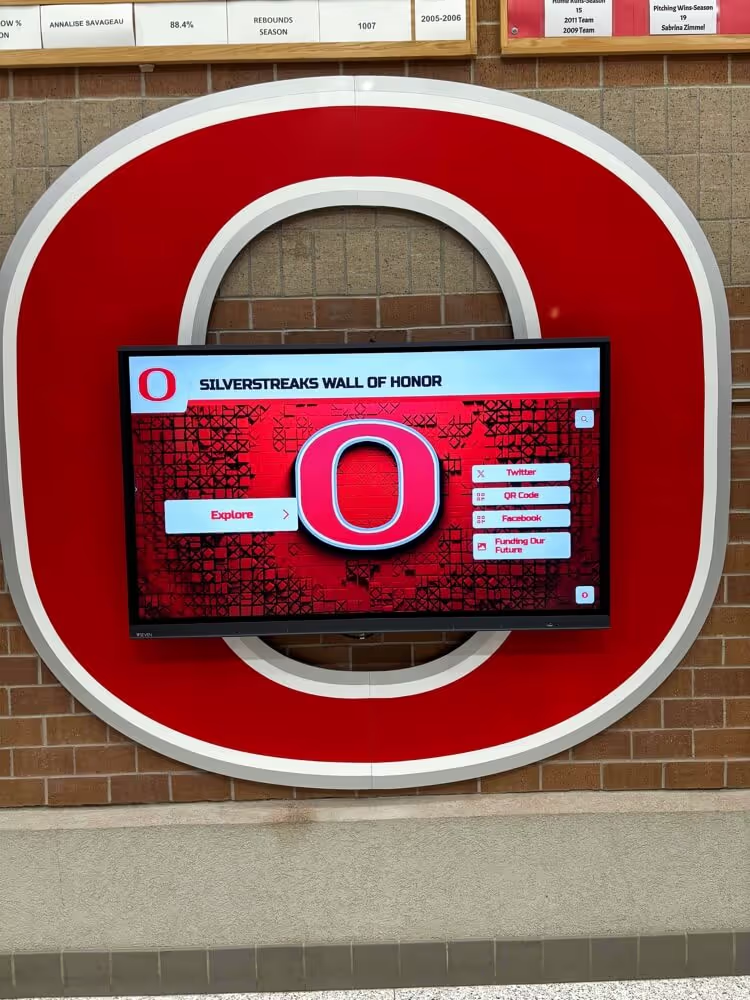
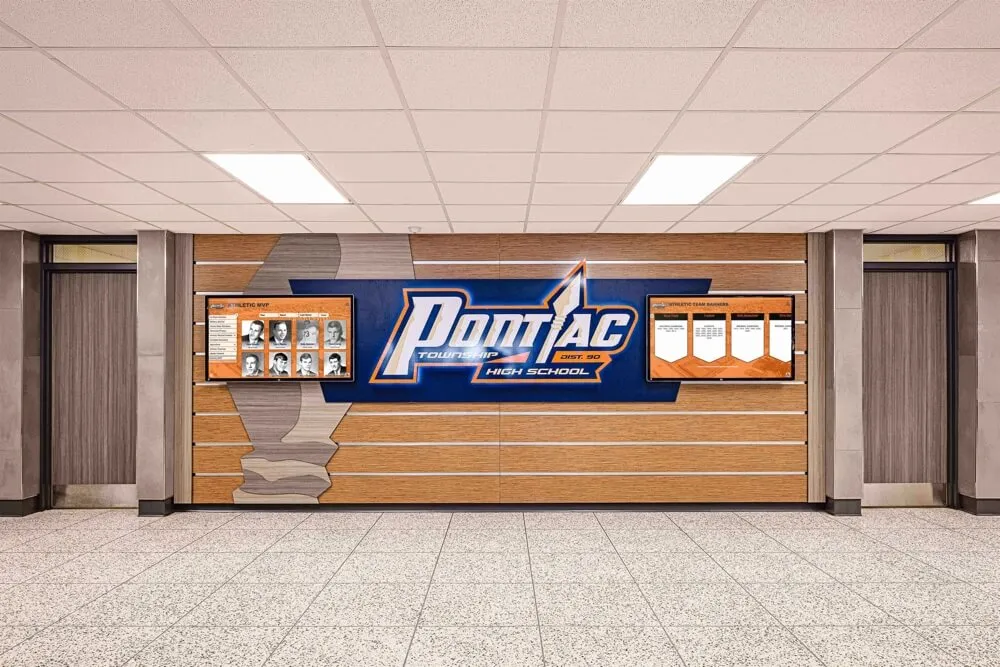
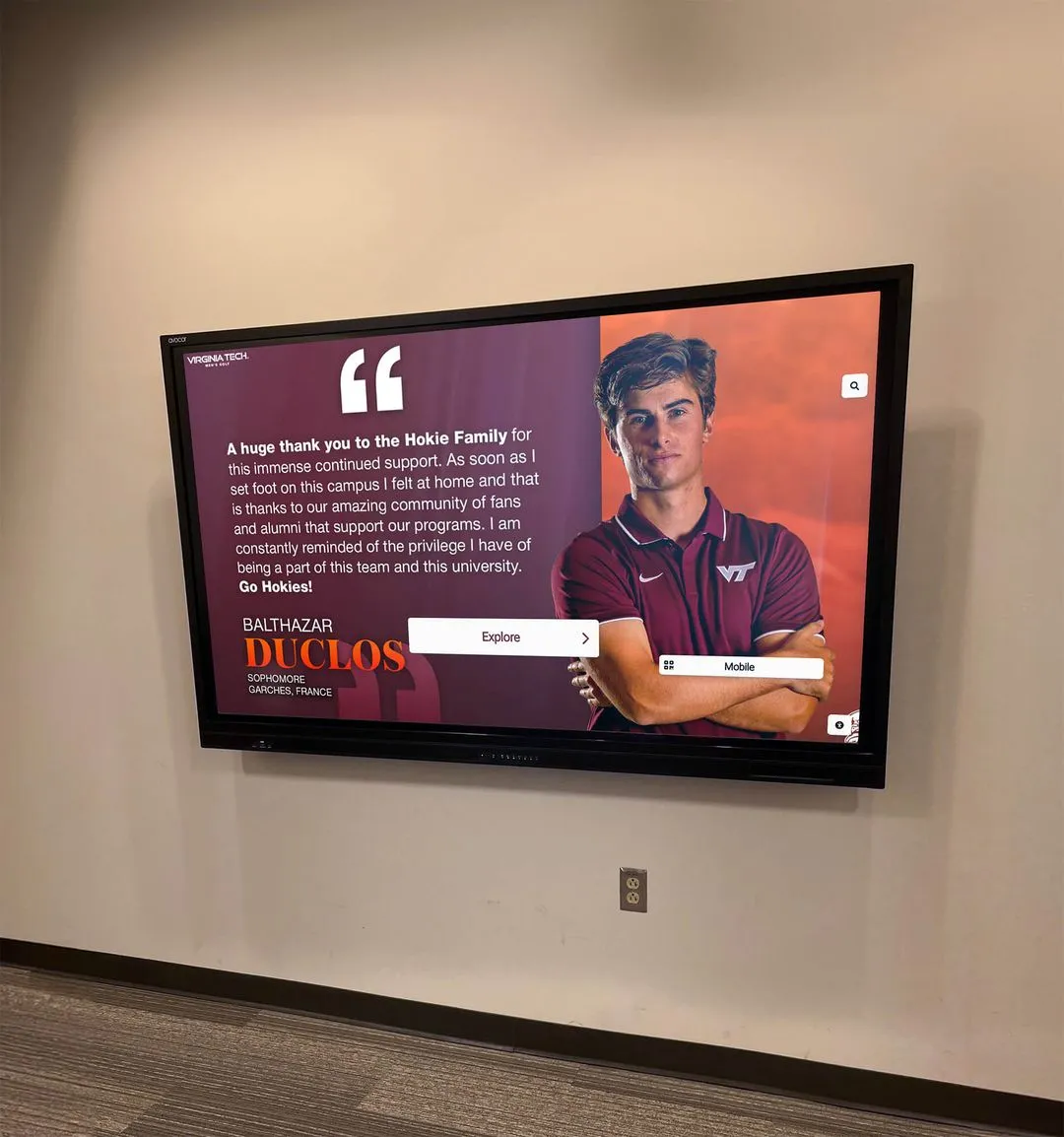
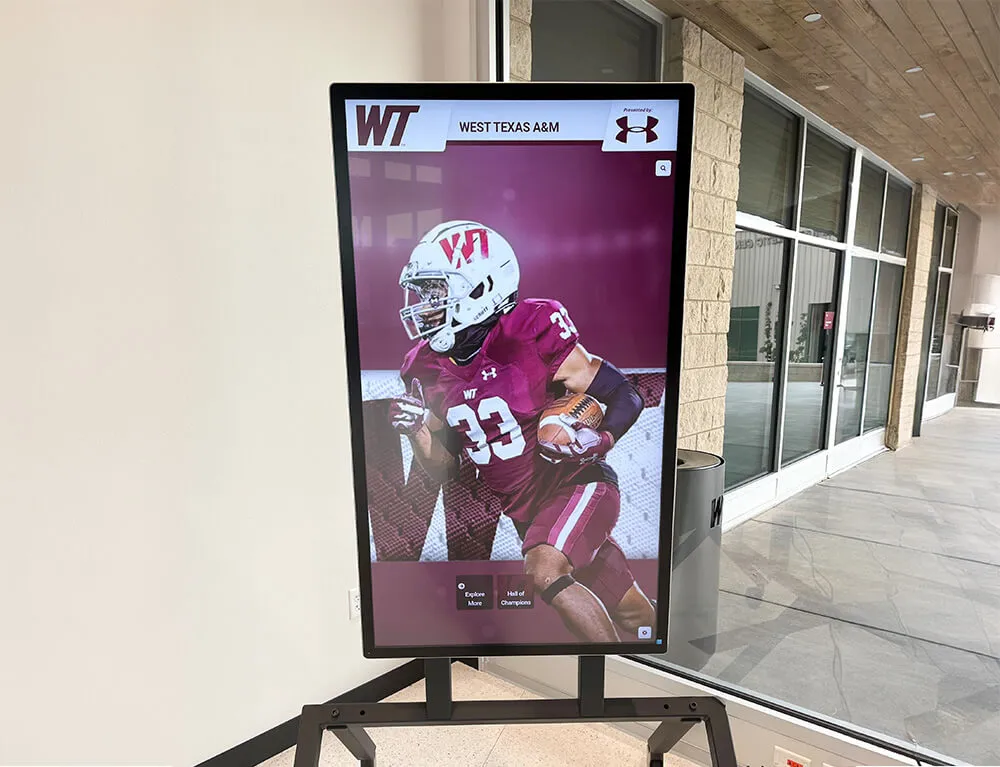
Portrait-based displays let current students and returning alumni see recognition that extends beyond a single season
Related Resources
If your planning extends beyond the game-night ceremony, these guides address adjacent topics in detail:
- For the end-of-season award program and venue planning: planning a separate cheer banquet
- For comparing keepsake and gift options across sports and budgets: meaningful senior-night gift ideas
- For design formats and DIY creation of recognition posters: senior-night poster designs, including cheer
Frequently Asked Questions
When does cheer senior night typically happen? Most programs hold it during the last regular-season home game of the athletic season the cheer squad primarily supports — often football or basketball. The exact timing is set by the athletic director in coordination with the host sport’s coaching staff. Confirm the date as early as possible; popular home-game dates fill quickly with other senior night requests.
Do we need a separate ceremony, or can cheer seniors be recognized alongside the host sport? Both arrangements exist. Some schools hold a combined ceremony honoring all senior athletes present at a given game; others give cheer its own dedicated slot. Either way, confirm with the athletic director that cheer seniors receive equal recognition time, not a brief acknowledgment tucked at the end of another team’s ceremony.
How long does a typical cheer senior night ceremony take? Duration depends almost entirely on the number of seniors and how much personal commentary is included for each. A ceremony for four seniors with a short individual statement for each might run six to eight minutes. A larger squad with more commentary will take longer. Discuss your estimated length with the athletic director before the event so it fits within the event schedule without pressure.
What if a senior’s family cannot attend? The recognition still happens. A teammate escort, a brief acknowledgment that the senior’s family sends their congratulations, or simply walking alone are all reasonable options. Ask each senior in advance how they want to handle it, and make the choice feel like a preference rather than a fallback.
What happens if the game is outdoors and the weather is bad? Plan a clear indoor alternative before the event, not on game night. Work with the athletic director to identify a backup location and decide in advance at what point the switch would be made. Communicate the backup plan to senior families so no one is surprised.
How do we make sure every senior gets equal recognition? Set the ceremony format before you know which seniors will participate, and apply it consistently. If one senior gets a personal story read aloud, all seniors do. If one senior gets a framed photo, all seniors do. Consistency protects you from any perception that recognition is tied to playing time, popularity, or family connections.
Can we post game-night photos of seniors on social media? Follow your school’s existing policies on student image publication. When in doubt, ask the senior and their family for confirmation before posting, and follow whatever approval process your school’s administration requires.
Take Your School’s Recognition Program Further
If your school has a lobby touchscreen display — or is exploring one — a staff member from Rocket Alumni Solutions can walk you through how the platform works and what realistic setup looks like for a program your size.
Live Example: Rocket Alumni Solutions Touchscreen Display
Interact with a live example (16:9 scaled 1920x1080 display). All content is automatically responsive to all screen sizes and orientations.