Class President Recognition: How Schools Honor Student Government Leadership Across Generations
- Home /
- Digital Wall of Fame Blog - Recognition Display Insights & Resources /
- Class President Recognition: How Schools Honor Student Government Leadership Across Generations
The Easiest Touchscreen Solution




Live Example: Rocket Alumni Solutions Touchscreen Display
Interact with a live example (16:9 scaled 1920x1080 display). All content is automatically responsive to all screen sizes and orientations.
Walk the hallways of almost any American high school and you will find athletic banners, championship trophies, and letterwinner displays honoring the school’s most celebrated competitors. But look harder and you will notice a conspicuous gap in most institutions’ recognition infrastructure: there is rarely a formal, lasting tribute to the men and women who led their classmates from the front of a meeting room rather than from a playing field.
The class president is one of the most foundational leadership roles in American education. Since student government associations took root in schools in the early twentieth century, the class president has represented the bridge between student life and school administration—learning to advocate, organize, communicate, and build consensus under the direct observation of an entire class of peers. Those who held the role remember it for a lifetime. Many alumni describe their experience as class president as the moment they first understood what leadership actually felt like.
Yet for all that formative weight, most schools archive class presidents in yearbooks and nowhere else. The senior who organized the prom, led the homecoming campaign, stood at the microphone during assemblies, and gave the voice to a graduating class’s shared concerns receives the same permanent recognition as any other student: a yearbook photo and a title caption beneath it.
This guide is for schools that want to change that. It covers the history of class president recognition, the methods schools use to honor student government leaders across generations, how to build a class president archive or wall of fame, and how modern digital display systems have made it possible to create recognition programs that honor every class president a school has ever produced—without running out of wall space.
Whether you are a principal thinking about how to strengthen alumni engagement, an activities director looking to create a more comprehensive recognition culture, or a student government advisor who knows these students’ contributions deserve lasting acknowledgment, this resource covers the landscape of class president recognition from traditional approaches to modern interactive systems.

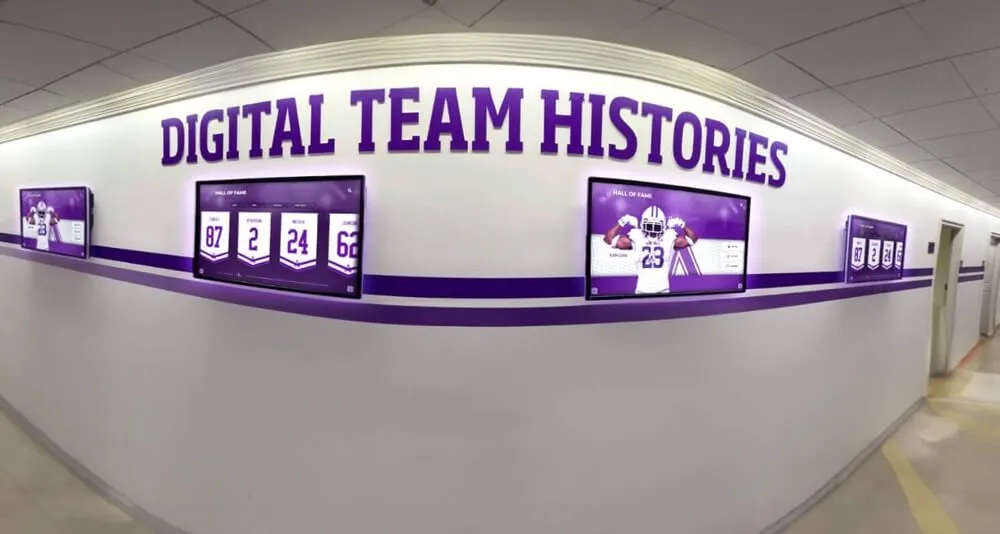
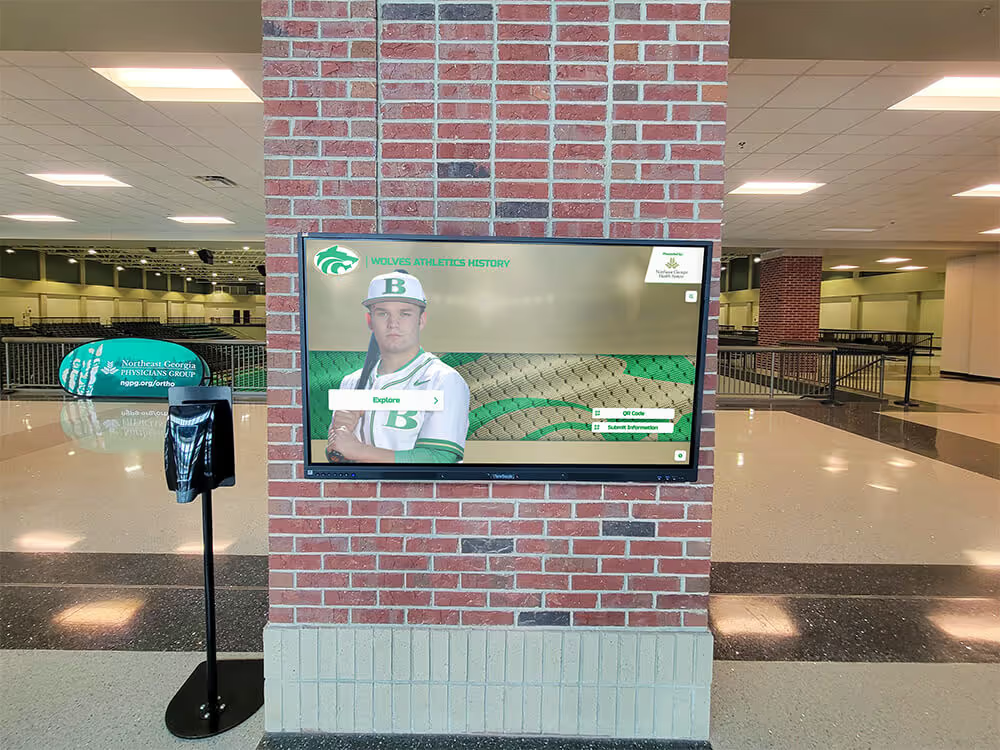
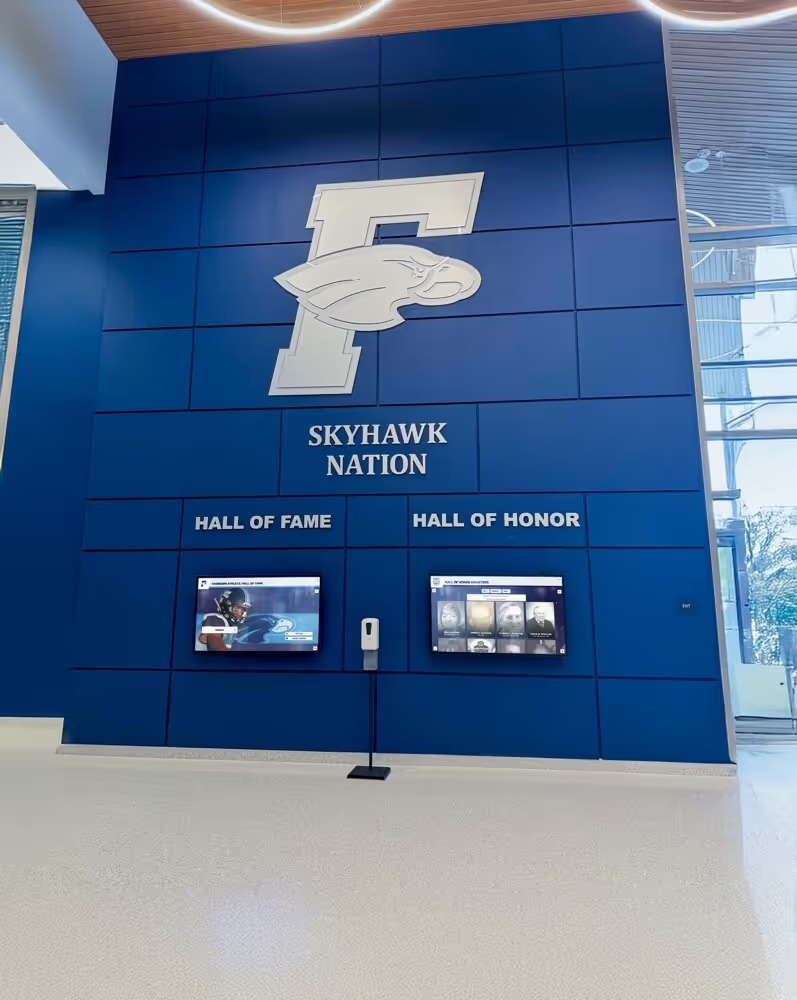
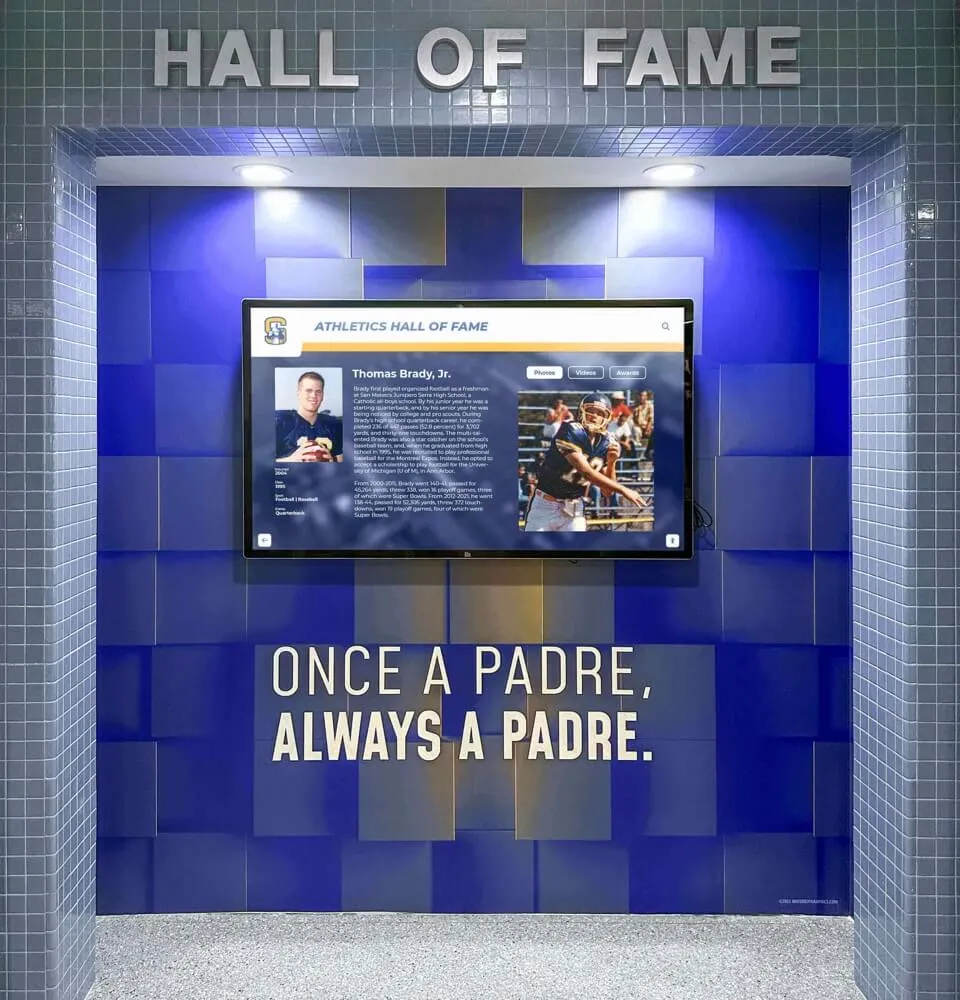
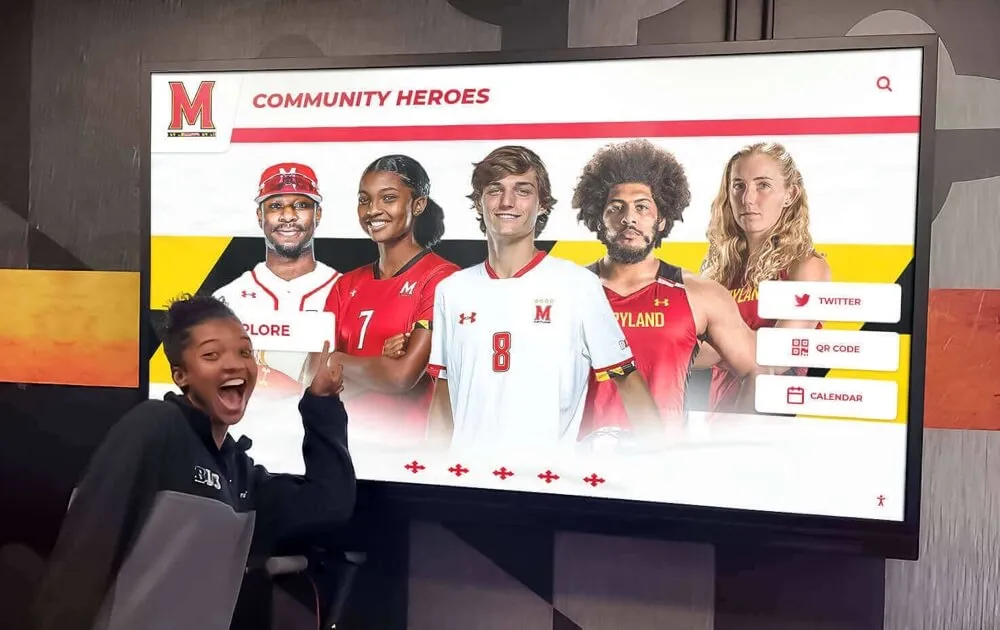
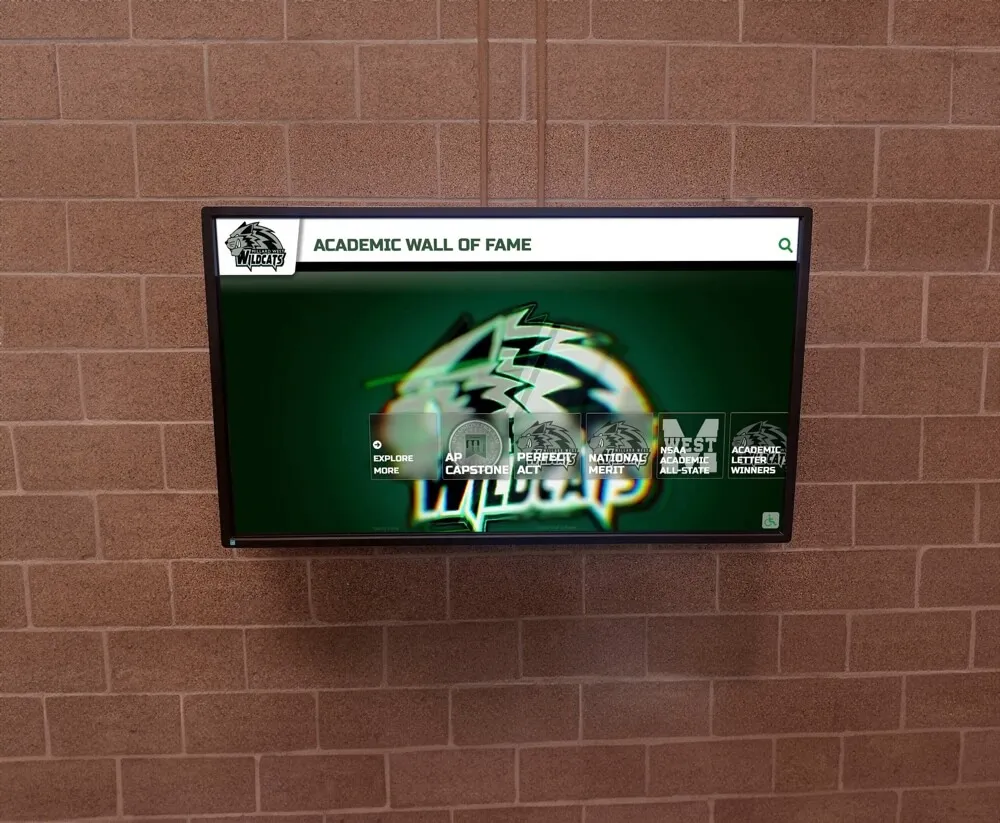
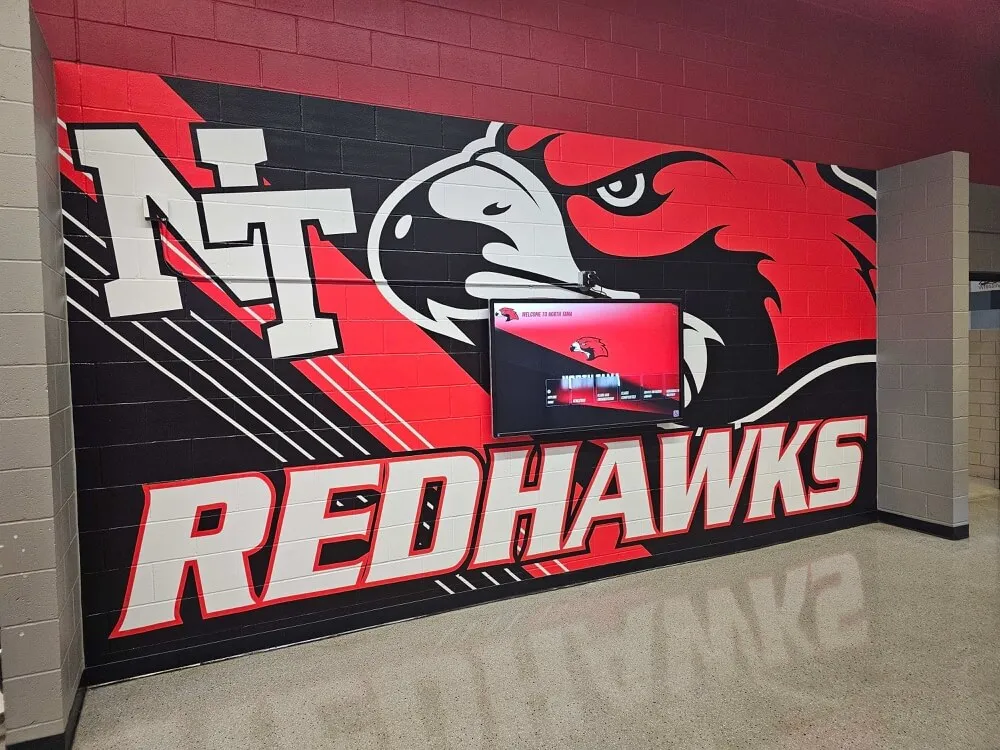
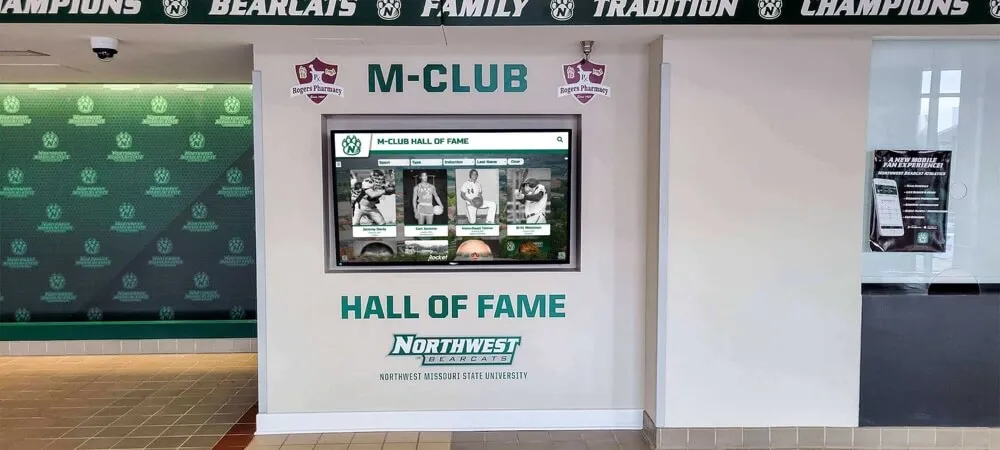
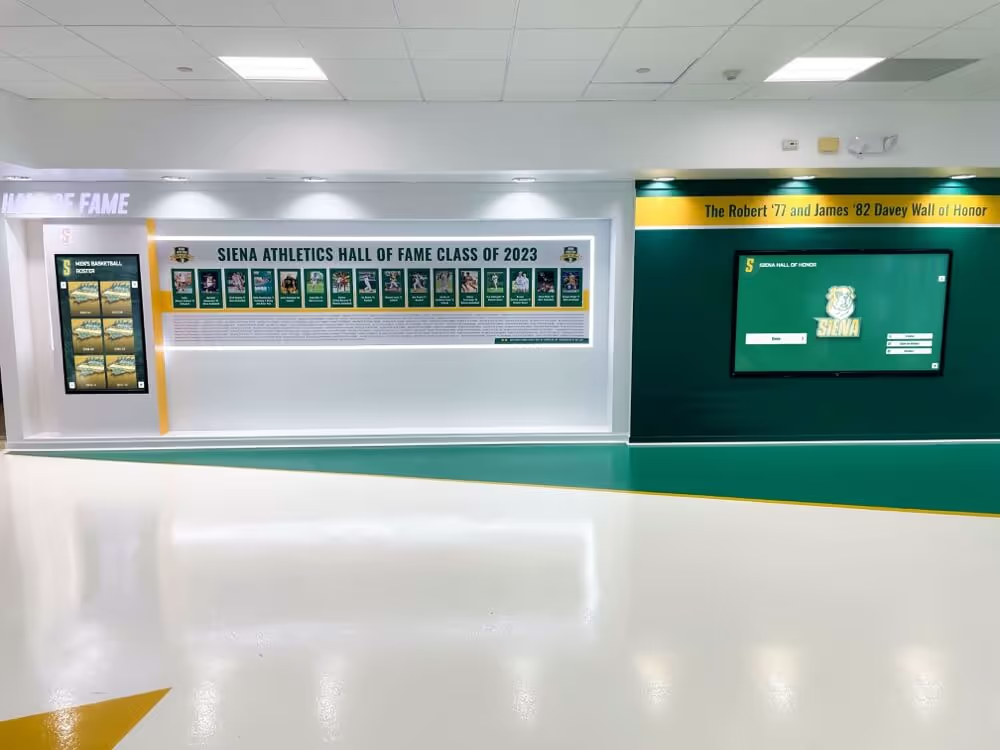
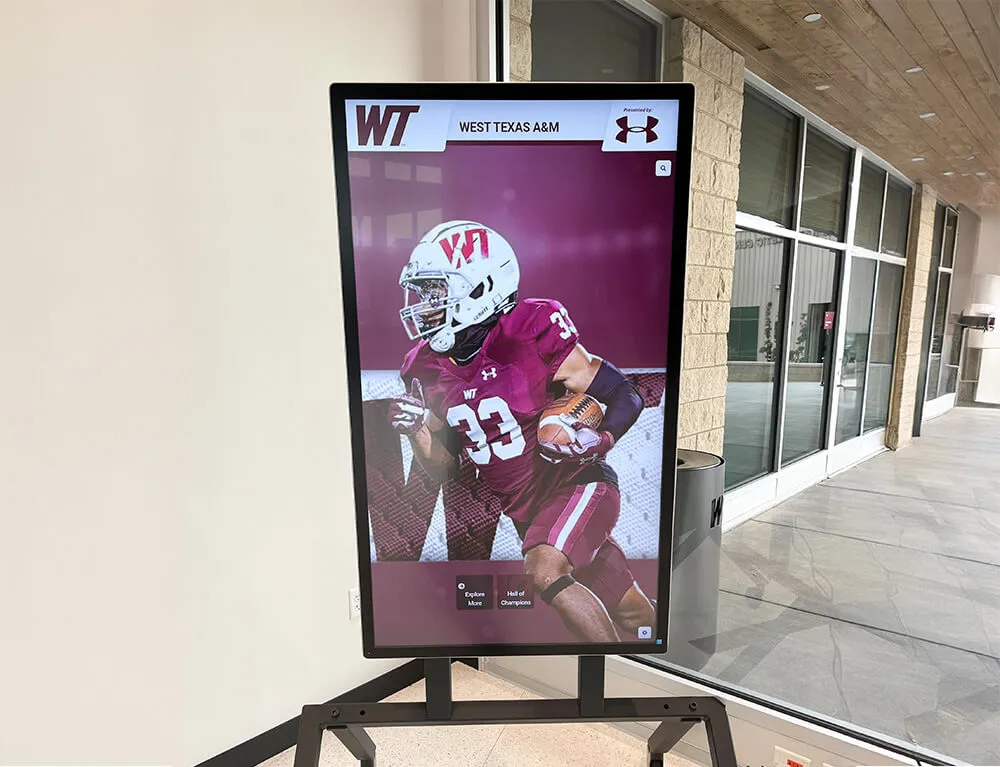
Schools across the country are building recognition displays that honor academic and leadership achievement alongside athletic accomplishment—giving class presidents a permanent home in the school's story
Why Class President Recognition Matters
Before exploring implementation strategies, it is worth understanding why class president recognition deserves dedicated institutional attention—and why the absence of it represents a meaningful gap in how schools communicate their values.
The Role That Teaches Leadership by Doing It
The class president position is among the few roles in secondary and post-secondary education that places a student in genuine leadership responsibility before they have been formally trained for it. Most leadership development happens through curricula, workshops, and mentorship programs. The class president learns by leading: organizing events that depend on peer cooperation, presenting proposals to administrators who hold real decision-making authority, managing competing interests among classmates with different priorities, and standing accountable to an electorate of their peers who chose them and can remove them.
The skills developed in student government—public speaking, constituent communication, budgetary negotiation, project management, consensus building—are precisely the skills that employers, graduate programs, and community organizations prize in new professionals. Schools spend considerable resources developing these capabilities. The class presidency is one of the few venues where students practice them in a genuinely consequential setting.
Acknowledging this with the same institutional weight applied to athletic achievement sends a clear message to current and future students: leadership matters here. We honor it. We remember who led us.
The Alumni Connection and Nostalgia Factor
For most alumni, the class president was a person who mattered. Whether the alumnus voted for them or not, the class president’s face, voice, and campaign slogans are embedded in the memory of graduation years past. For alumni who held the office themselves, the recognition is deeply personal—it represents a pivotal chapter in their own identity formation.
When schools create visible, permanent recognition for class presidents, they tap into a powerful vein of alumni nostalgia and connection. An alumnus who walks into a school lobby and finds a professionally displayed archive of every class president from the school’s history is almost certain to search for their own graduating year. They will linger. They will photograph the display. They will share it. And they will feel, perhaps for the first time in decades, that the school remembers who they were and what they contributed.
That emotional resonance is not merely sentimental—it is the foundation of alumni giving and engagement. Schools that make alumni feel remembered and valued are the schools that attract alumni support when campaigns, programs, and initiatives need backing.
Equity in the School’s Story
Athletic recognition programs at most schools are extraordinarily well developed. Championship banners, record boards, hall of fame installations, and trophy cases document athletic achievement in detail across decades. Academic recognition has grown in recent years through honor roll displays, academic all-star boards, and subject-specific honor society recognition.
Student leadership recognition—particularly at the class government level—has largely lagged behind. A school that invests in honoring its athletes and scholars but provides no lasting recognition for its student government leaders is telling an incomplete story about who its graduates are and what the institution values.
Building class president recognition programs alongside existing athletic and academic displays creates a more complete institutional narrative, one that reflects the full range of ways students can achieve something meaningful during their school years. Schools that recognize chess club presidents and executive teams on dedicated displays understand that leadership recognition across all programs strengthens the school’s culture of achievement.
The History of Student Government and Class President Traditions
Understanding where class president traditions come from helps schools recognize both the depth of the role’s history and the opportunity to honor it with appropriate institutional formality.
Origins in American Schools
Student self-governance in American schools emerged in the late nineteenth and early twentieth centuries, influenced by democratic ideals and the progressive education movement’s belief that schools should prepare students for civic participation. Early student government associations were modest—small councils advising administrators on student activities—but they established the template for the class officer roles that persist today.
By the mid-twentieth century, class officer elections had become a meaningful ritual in American school culture. The campaign, election, and installation of class presidents gave students their first direct experience of the democratic process at a scale they could actually influence. Class presidents gave speeches at assemblies, organized social events, represented students in disciplinary discussions, and served as the most visible symbol of class identity.
The tradition spread from high schools to middle schools and, eventually, to college campuses where student body presidents became significant figures in institutional governance. But throughout this expansion, formal recognition systems for class presidents have remained underdeveloped. Schools have relied on yearbooks, occasional assembly acknowledgments, and institutional memory—none of which create lasting, accessible records of who led the school’s students over the decades.
What Class Presidents Actually Do
The class president role varies significantly by school level and institution, but most share a common core:
Representation and advocacy — articulating the needs, concerns, and priorities of classmates to school administration, faculty, and staff. Class presidents are often the first point of contact between student voices and institutional decision-making.
Event organization — leading or supporting the planning of class-specific events including dances, fundraisers, service projects, graduation ceremonies, and reunions. The operational skills required for these events—budgeting, logistics, vendor coordination, promotion—are practical and transferable.
Symbolic leadership — representing the class in public ceremonies, welcome programs, alumni events, and community functions. The class president is often the face of a graduating year’s collective identity.
Peer conflict resolution — navigating the social and interpersonal dynamics of a class whose members have diverse backgrounds, interests, and priorities. Class presidents who serve effectively often develop genuine emotional intelligence in managing these relationships.
These contributions deserve recognition that reflects their scope. A single yearbook caption does not capture four years of advocacy, organizational work, and public service. Schools that take student government seriously should build recognition systems that take it seriously too.
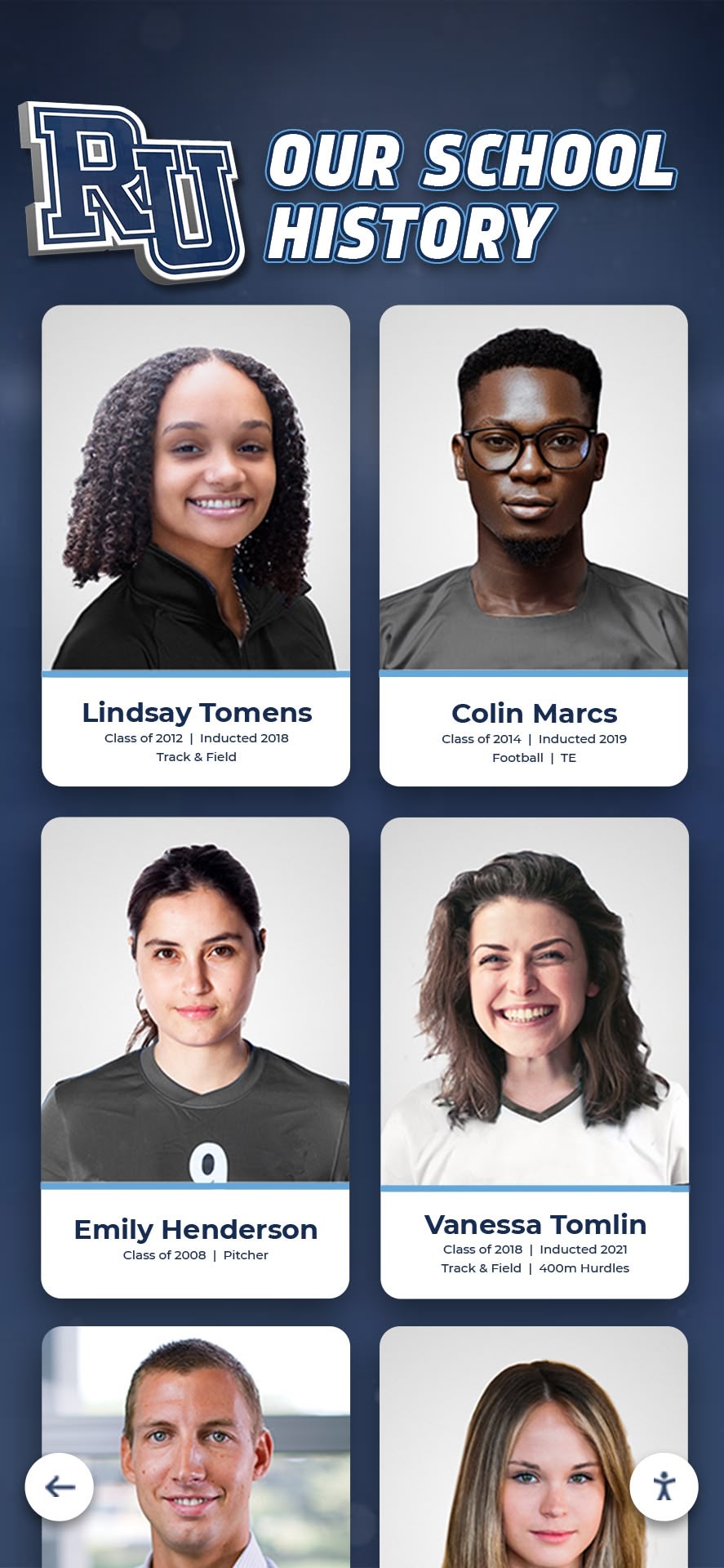
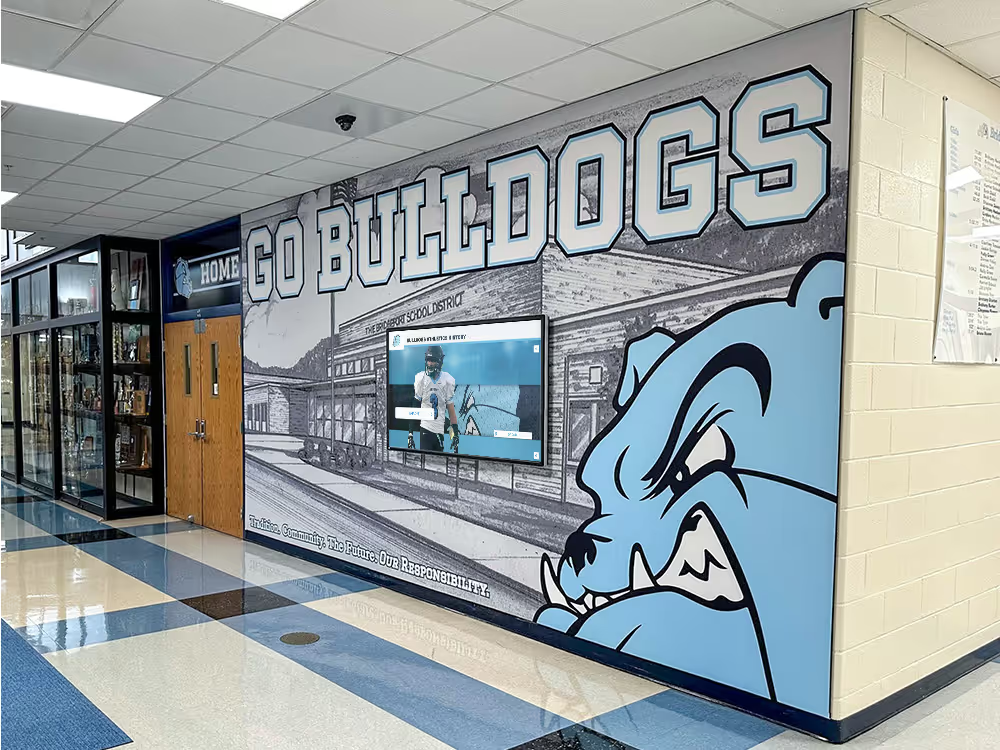
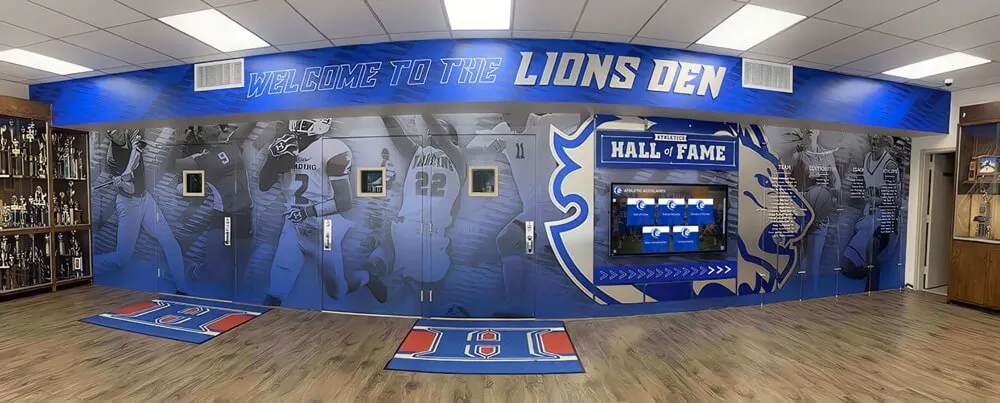
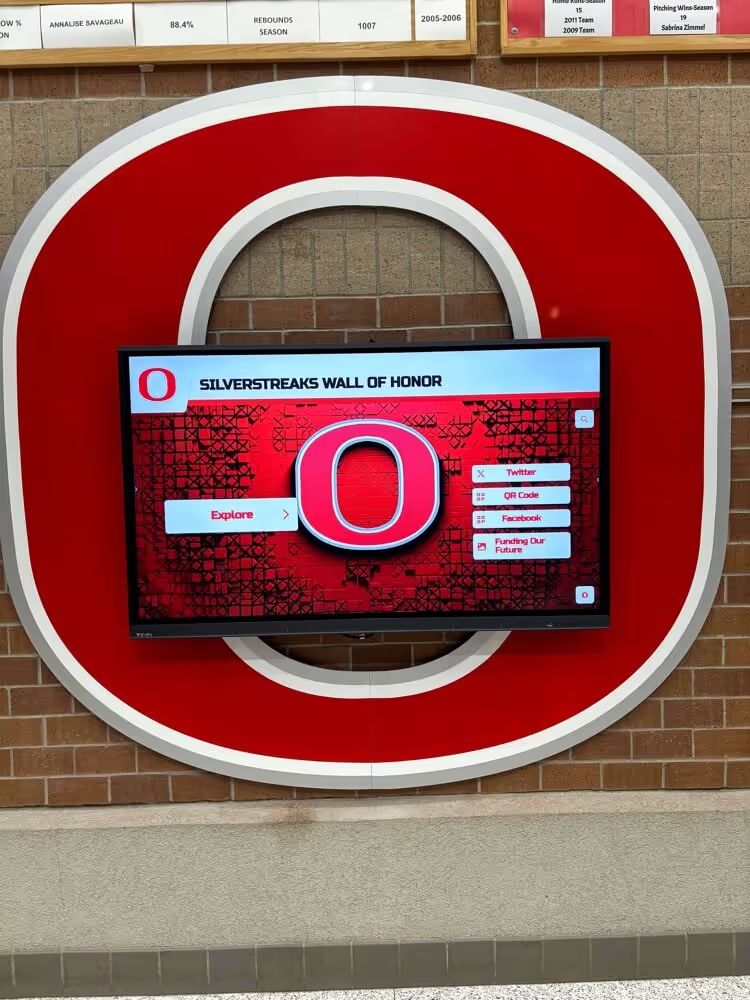
Comprehensive school history displays document the full range of student achievement across decades—class presidents belong in this story alongside athletes and academic honorees
Traditional Approaches to Class President Recognition
Before exploring digital and modern systems, it is helpful to understand what traditional recognition looks like—and where those approaches succeed and fall short.
Yearbook Documentation
The yearbook remains the most universal form of class president recognition at most schools. Class officer pages typically feature a photograph, name, and brief biography for each officer, usually organized by grade level. Some yearbooks include a statement from each president; others simply list officers among the class pages.
The yearbook is valuable as a historical record, but it has significant limitations as a recognition tool. Yearbooks live in personal collections and libraries, not in the main hallways and lobbies where they can be seen by the full school community. They are inaccessible to visitors, prospective students, and community members who have not purchased a copy. And the physical medium degrades over decades—yearbooks from the 1960s and 1970s are often faded, brittle, or simply lost.
For alumni recognition purposes, the yearbook alone is insufficient. It documents, but it does not display.
Class Officer Plaques and Boards
Some schools maintain physical plaque systems in hallways, offices, or student government rooms listing class presidents by year. These boards occupy a dedicated institutional space and provide more visibility than yearbooks, but they face practical limitations:
- Space constraints limit how far back the record extends
- Engraving or fabrication costs increase over time
- Updating requires physical modification of the display
- Photo inclusion is difficult or expensive with traditional plaque systems
- Accessibility is limited to those who physically pass by the display
Well-maintained plaque boards communicate genuine institutional respect for student government history. They also tend to become outdated quietly—a board that goes from 2010 to 2018 with nothing added sends an unintended message about current institutional priorities. Schools exploring recognition plaque programs and how to display them effectively will find that thoughtful display design significantly affects how recognition is perceived by the community.
Induction and Ceremony Recognition
Some schools build ceremony-based recognition into class president service—end-of-year recognition events, senior night acknowledgments, graduation ceremony special mentions for outgoing class officers. These moments create meaningful in-the-moment recognition and are often remembered fondly by recipients and their families.
The limitation is that ceremony recognition is transient. It exists fully in the moment and then lives only in photographs and personal memory. A student recognized at senior night in June may find, by September, that no visible evidence of that recognition remains in the school building.
Effective recognition programs combine ceremony moments with permanent, visible displays that ensure the acknowledgment outlasts the event.
Student Government Office Displays
Many school student government offices maintain informal recognition collections—photographs of past officers on the wall, framed portraits of student body presidents, bulletin boards celebrating current and former leaders. These displays are meaningful to the students who work in those spaces, but they are invisible to the broader school community.
Student government offices tend to be low-traffic, tucked-away spaces. A class president display located in the student government office reaches student council members and their advisors—not parents, not prospective students, not alumni visiting the school for the first time in twenty years.
Recognition that deserves community visibility needs community placement.
Building a Class President Wall of Fame
Creating dedicated, lasting recognition for class presidents requires thoughtful design across several dimensions: what to recognize, who to include, what the display will contain, and where it will live.
Defining the Scope of Recognition
The first decision in building a class president wall of fame is scope: who gets included, and how far back does the record go?
Comprehensive inclusion — Every class president in the school’s history, going back to the founding of student government. This approach creates a complete institutional record and allows alumni from any era to find themselves in the display. It requires research and documentation work to fill in historical gaps, but the investment creates a richer, more meaningful archive.
Tiered recognition — A primary display for class presidents with additional tiers for vice presidents, student body officers, and student government veterans who served in other capacities. This approach acknowledges the collaborative nature of student government without diluting the specific significance of the presidency.
Merit-based supplementary recognition — For schools that want to honor class presidents who demonstrated exceptional service or whose contributions were historically significant, a supplementary “notable alumni in student government” section adds depth without changing the baseline recognition for all presidents.
Most schools that implement class president recognition programs begin with comprehensive inclusion—every president gets listed—and add rich biographical and photo content for as many as documentation allows.
Content to Include in Class President Profiles
What makes a class president recognition display compelling is not simply that it lists names, but that it tells the story of who these people were and what they did. When documentation allows, effective class president profiles include:
Portrait photograph — A yearbook-quality photo or, for recent graduates, a professional headshot. The photo is the most important element in making a recognition profile feel like a genuine tribute rather than a database entry.
Name and graduating class year — The fundamental identification, displayed prominently.
Class president term — Whether the student served one year or, at some schools, multiple terms.
Legacy statement — A brief account of what the class accomplished under their leadership, what issues they advocated for, or what events they organized. This narrative context transforms the profile from a listing into a story.
Quote or personal statement — For current or recent presidents, a brief statement from the student about their experience in the role adds authentic voice to the profile.
Post-graduation achievements — Where alumni have authorized their information and achieved notable success, brief notes about careers, community service, or continued leadership contextualize the class presidency as the beginning of a leadership journey rather than an isolated high school milestone.
Activities and service — Other recognitions the student earned, connecting their class presidency to their broader school involvement.
Placement and Visibility
Where a class president recognition display lives determines who sees it and how often. The highest-value placements are:
Main lobby and entrance areas — The first space visitors, prospective students, and returning alumni encounter when entering the building. A class president archive in the main lobby reaches everyone, sends an immediate signal about what the school values, and invites exploration from any visitor.
Administrative hallways near the principal’s office — High-traffic areas for staff, students, and parent visitors. Placement near institutional leadership spaces reinforces the message that student leadership is continuous with school leadership.
Student government activity areas — A display near or adjacent to the student government room creates a meaningful connection between the history of past leadership and the work of current student officers.
Alumni spaces and reunion areas — If the school has a dedicated alumni center, hallway, or gathering space, a class president archive there directly serves the alumni engagement function that motivates the recognition in the first place.
Research and Documentation for Historical Presidents
Building a comprehensive class president archive often requires archival research, especially for schools with decades of history behind them. Common sources for historical class president information include:
School yearbook collections — Most schools maintain complete or near-complete yearbook archives, either in the library or administrative offices. Yearbooks from every year provide names, class officer photos, and often brief biographical notes.
Newspaper archives — Local newspapers frequently covered school elections, student government activities, and graduation ceremonies. Historical newspaper archives, available through libraries and online digitization projects, can fill gaps in yearbook documentation.
Alumni association records — Schools with active alumni associations often maintain historical records including class officer listings. Alumni newsletter archives and membership directories can supplement yearbook information.
Administrative records — School board minutes, superintendent reports, and administrative archives sometimes document student government activities, particularly for notable events or significant class initiatives.
Alumni outreach — A direct call to alumni through social media, email newsletters, and reunion networks can generate both documentation and photographs from graduates who remember their class president years vividly.
The documentation work is the most time-consuming part of building a historical class president archive. But schools consistently report that the research process itself generates meaningful alumni engagement—graduates who are contacted for historical information often become the program’s most enthusiastic supporters.
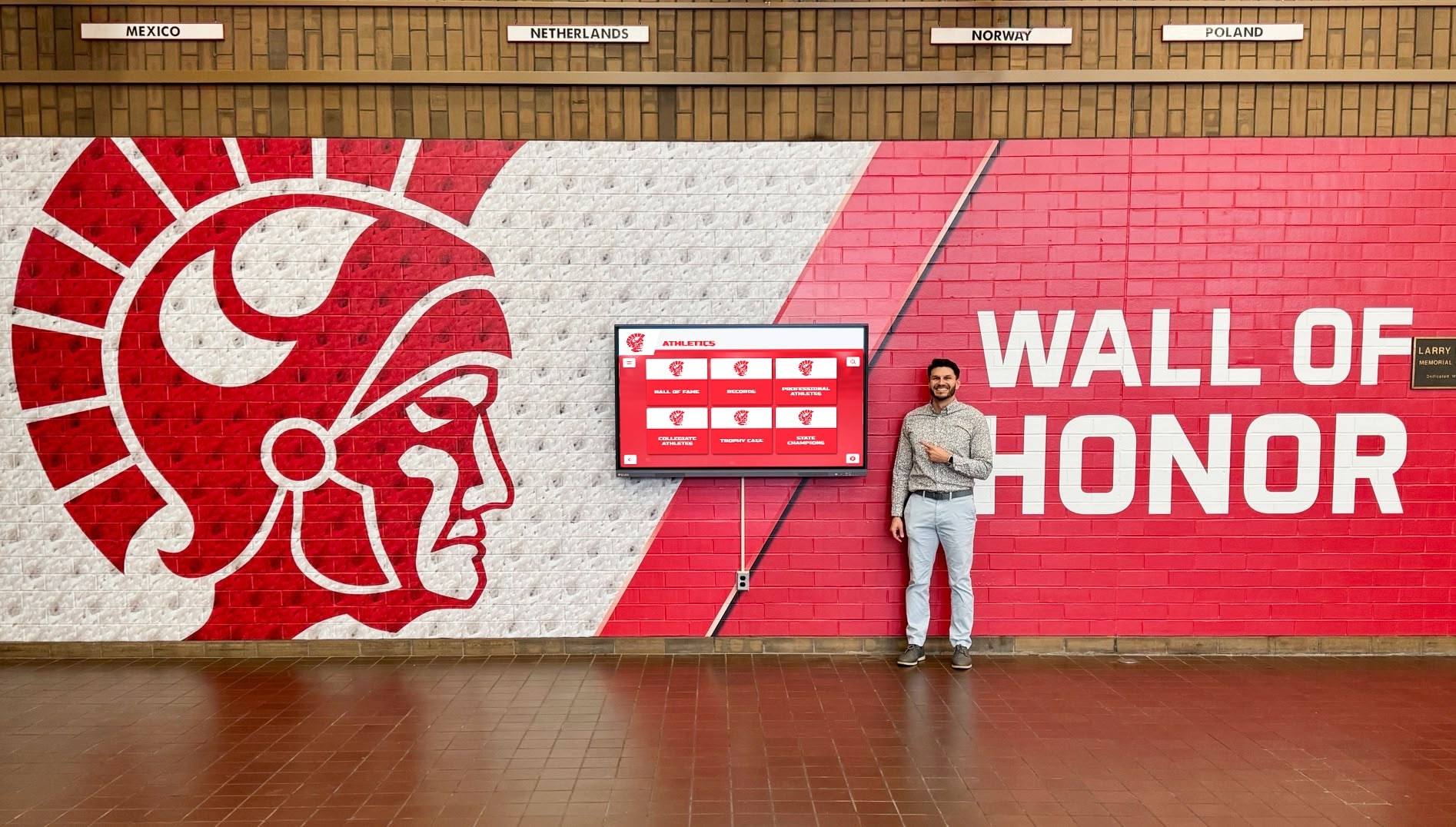
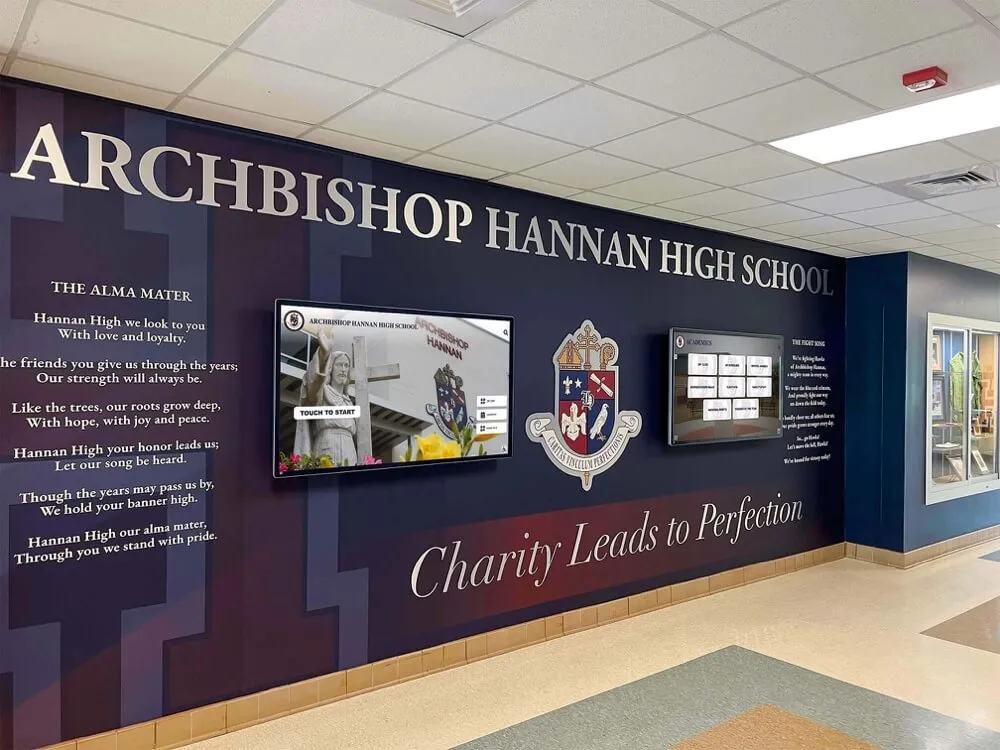
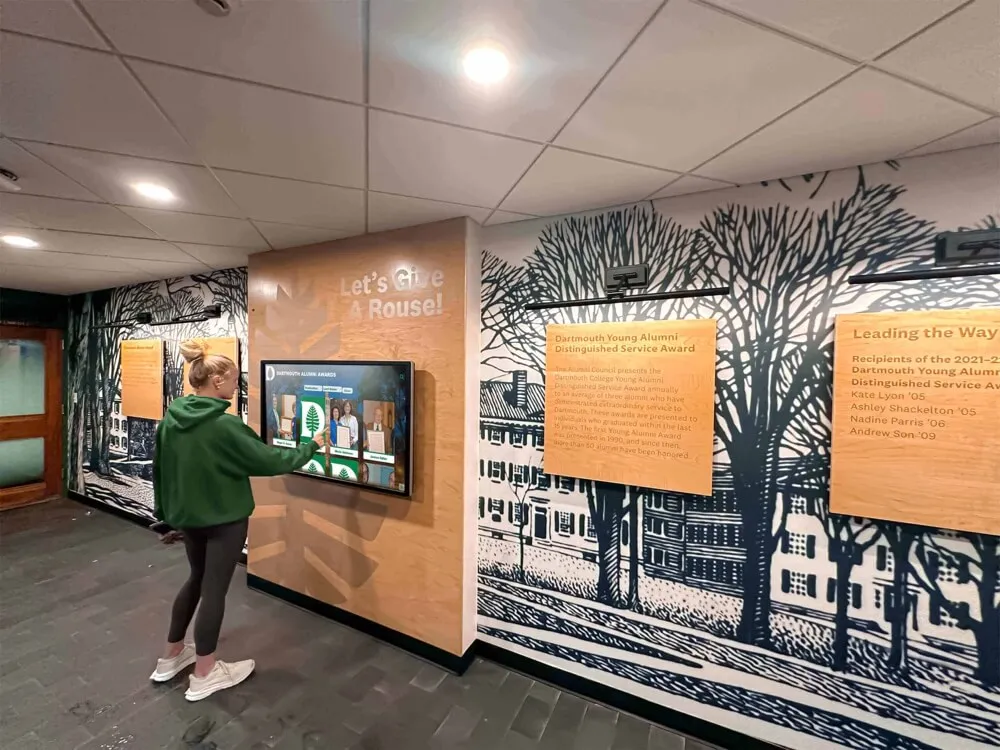
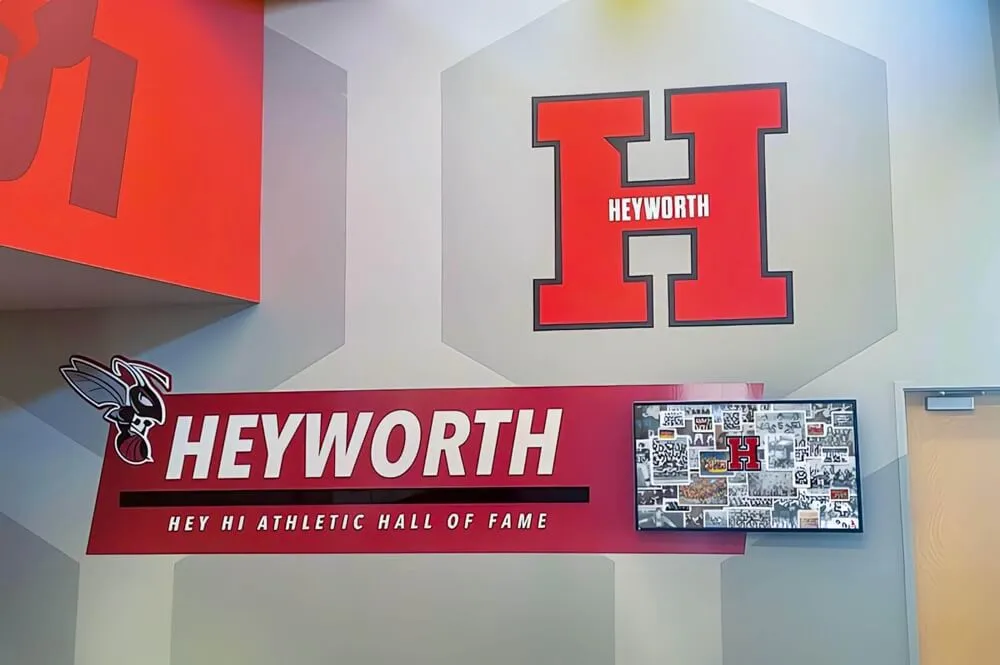
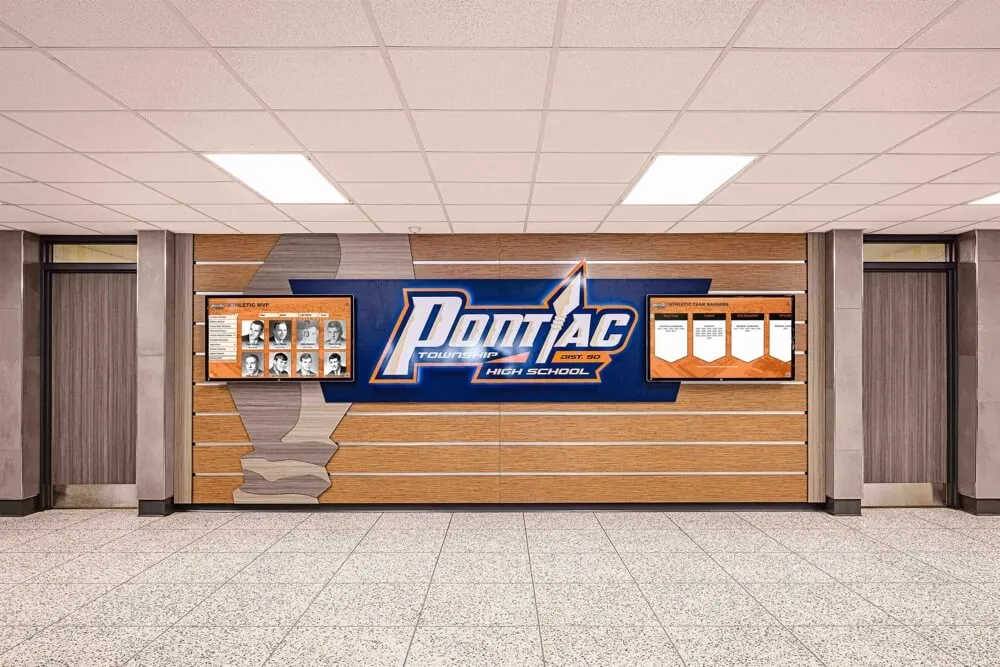
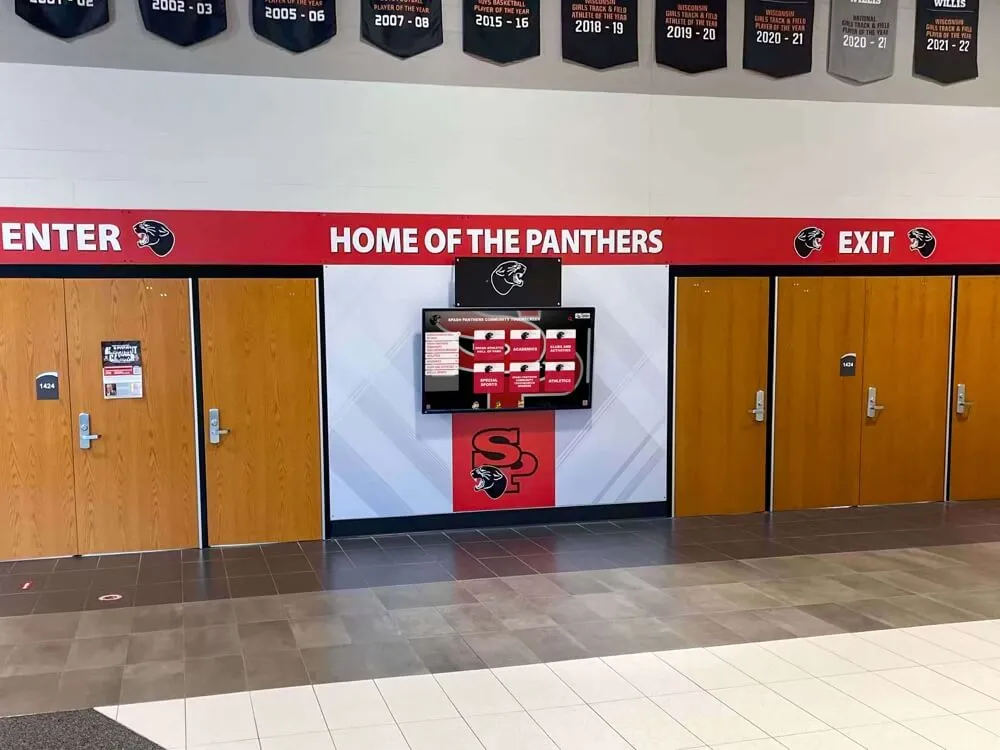
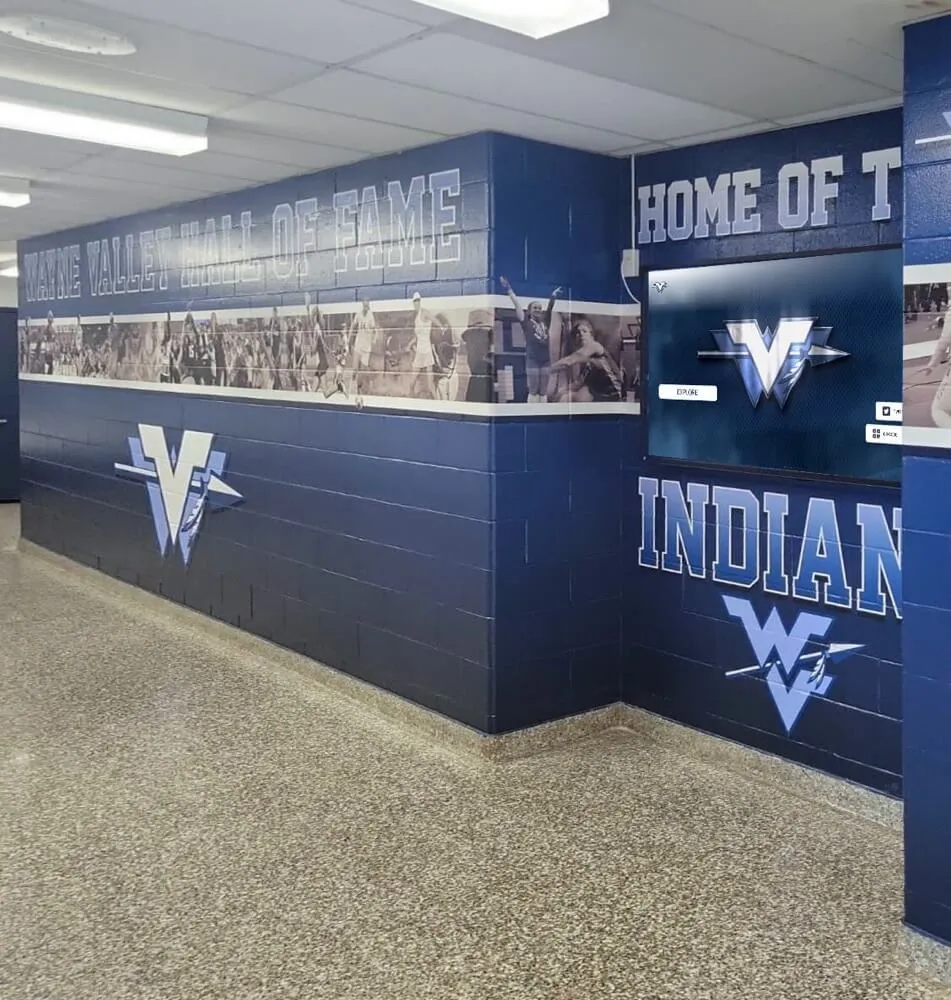
Permanent wall of honor installations in school hallways create focal points for community pride, alumni engagement, and conversations about the school's leadership legacy
Digital Displays: The Modern Solution for Class President Archives
Traditional plaque systems and bulletin boards face an inherent limitation that becomes acute when building a class president archive: space. A school with eighty years of class presidents across four grade levels has potentially hundreds of individuals whose recognition deserves permanent, visible placement. Physical wall space is finite; digital display systems are not.
Why Digital Systems Are Ideal for Class President Recognition
Interactive touchscreen displays solve the core problems that traditional recognition systems face:
Unlimited profile capacity — A touchscreen hall of fame display can hold every class president a school has ever produced without any concern about wall space. The class president from 1947 receives the same quality of presentation as the class president from this year, because the digital system does not run out of room.
Rich multimedia profiles — Digital systems support photographs, written biographies, video interviews, audio recordings, and document attachments. A class president profile can include a scanned copy of a campaign speech, a photograph from a major event they organized, and a brief video interview with the now-adult alumnus reflecting on their experience—all accessible from a single touchscreen profile.
Searchability and navigation — Visitors can search by name, browse by year, filter by class level, or explore by keyword. An alumnus visiting the school can find their own profile in seconds. A prospective student can explore decades of leadership history in a few minutes. A parent can browse the record of student government presidents from the school’s founding to the present.
Remote content updates — New class presidents can be added to the display at the end of each school year from any computer with cloud access. No physical fabrication, no contractor scheduling, no outdated boards with missing entries.
QR code mobile access — Students and alumni who interact with the touchscreen can scan a QR code to access class president profiles on their personal devices, extending the recognition experience beyond the physical display location.
ADA compliance — Quality touchscreen recognition systems meet WCAG 2.1 AA accessibility standards, ensuring that the class president archive is accessible to all community members including those with visual or mobility impairments.
Schools looking to understand the full range of what digital recognition can do will find that comprehensive digital trophy wall guides outline capabilities that apply directly to class president and student government archives.
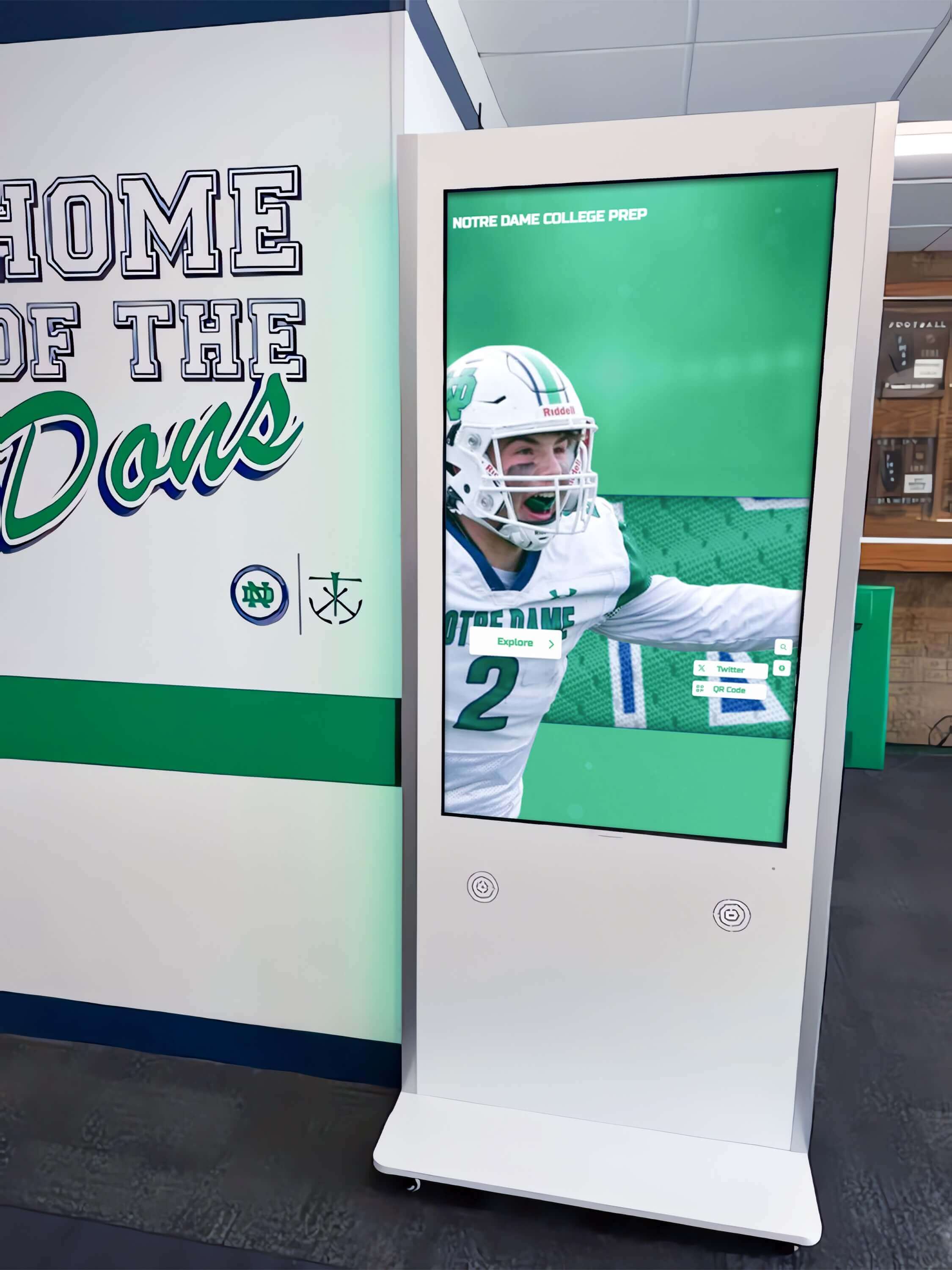
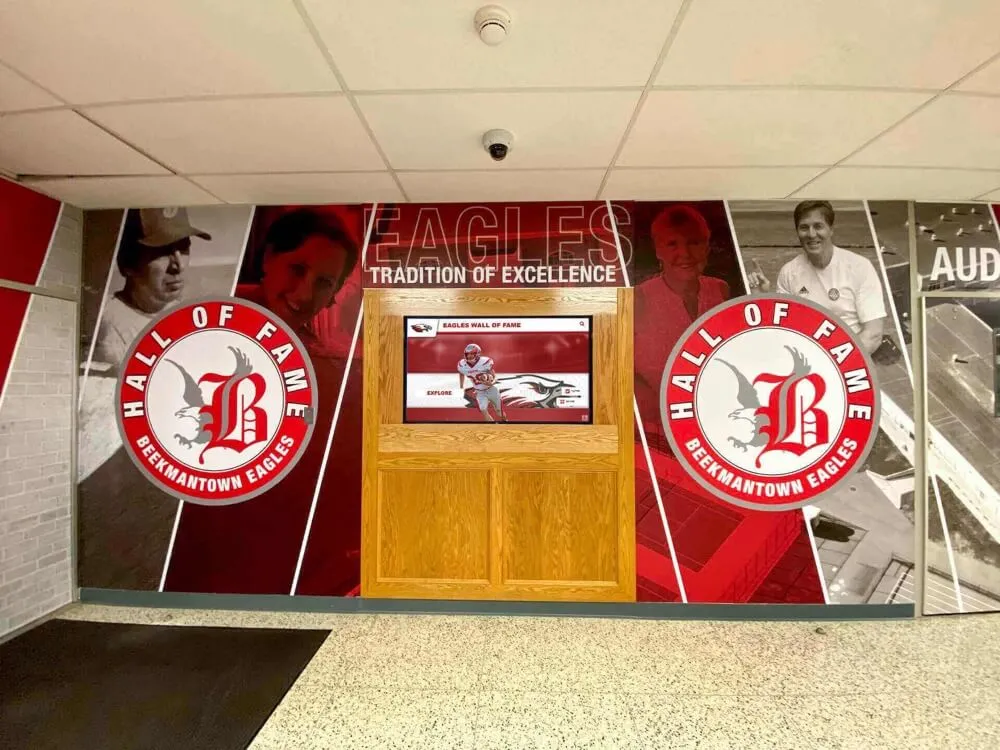
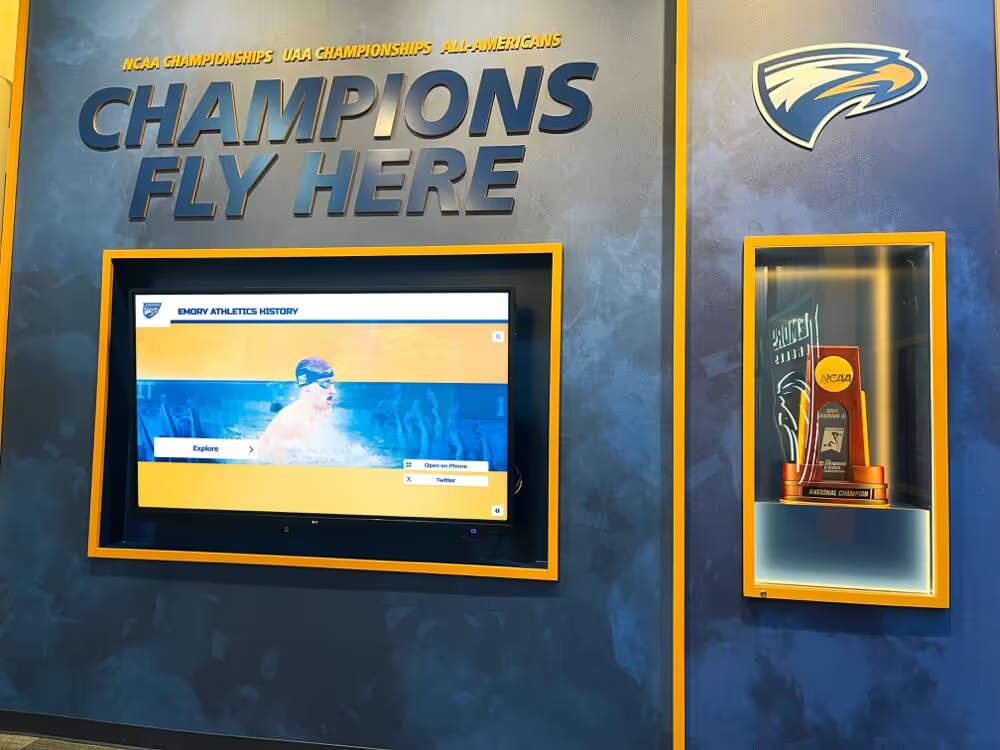
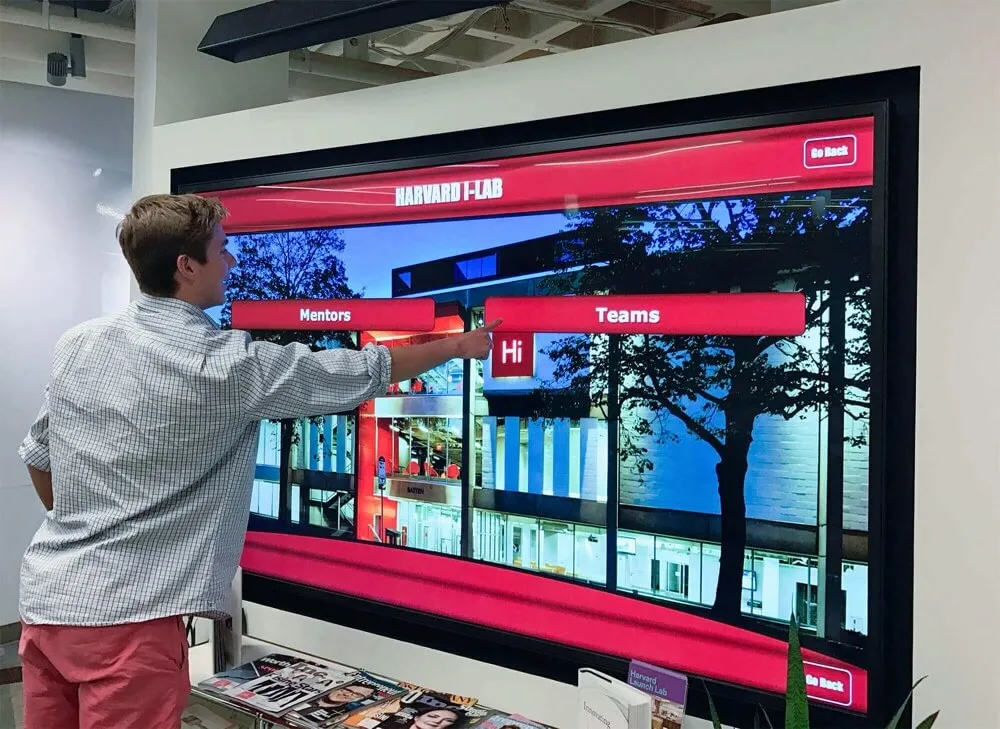
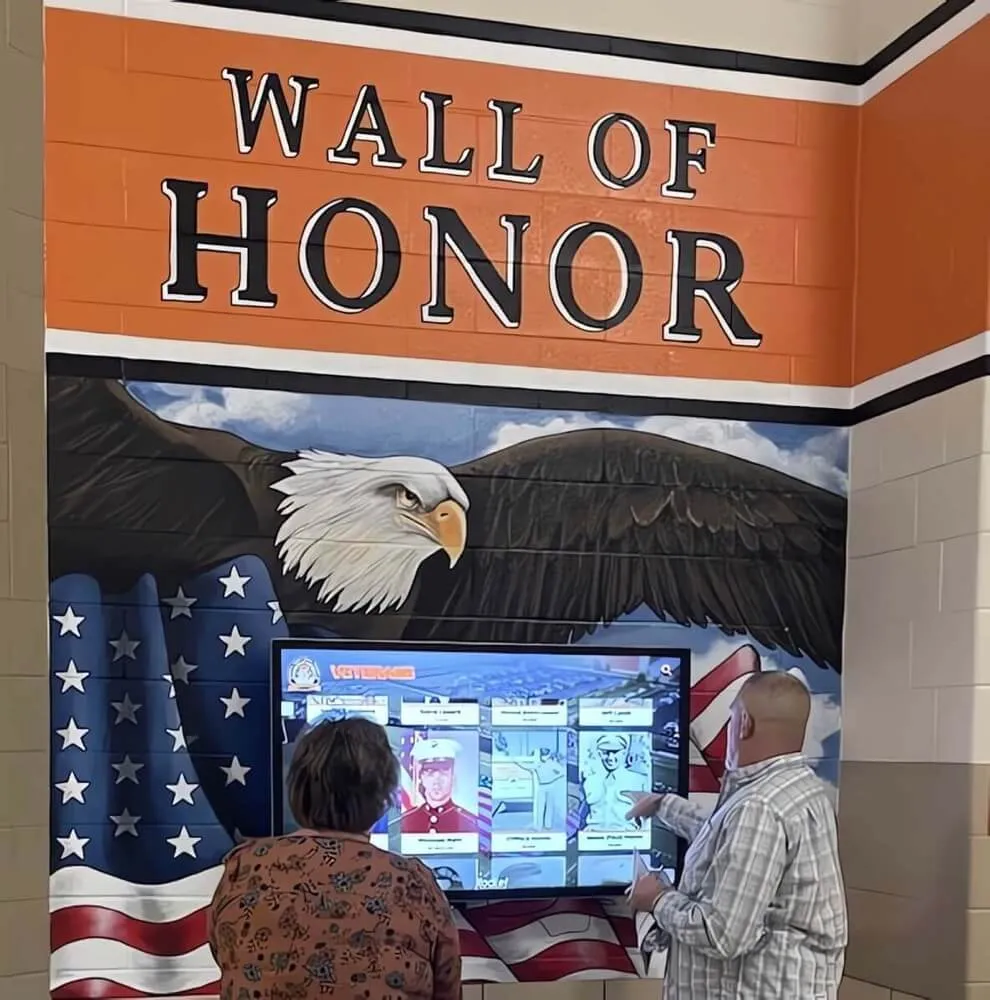
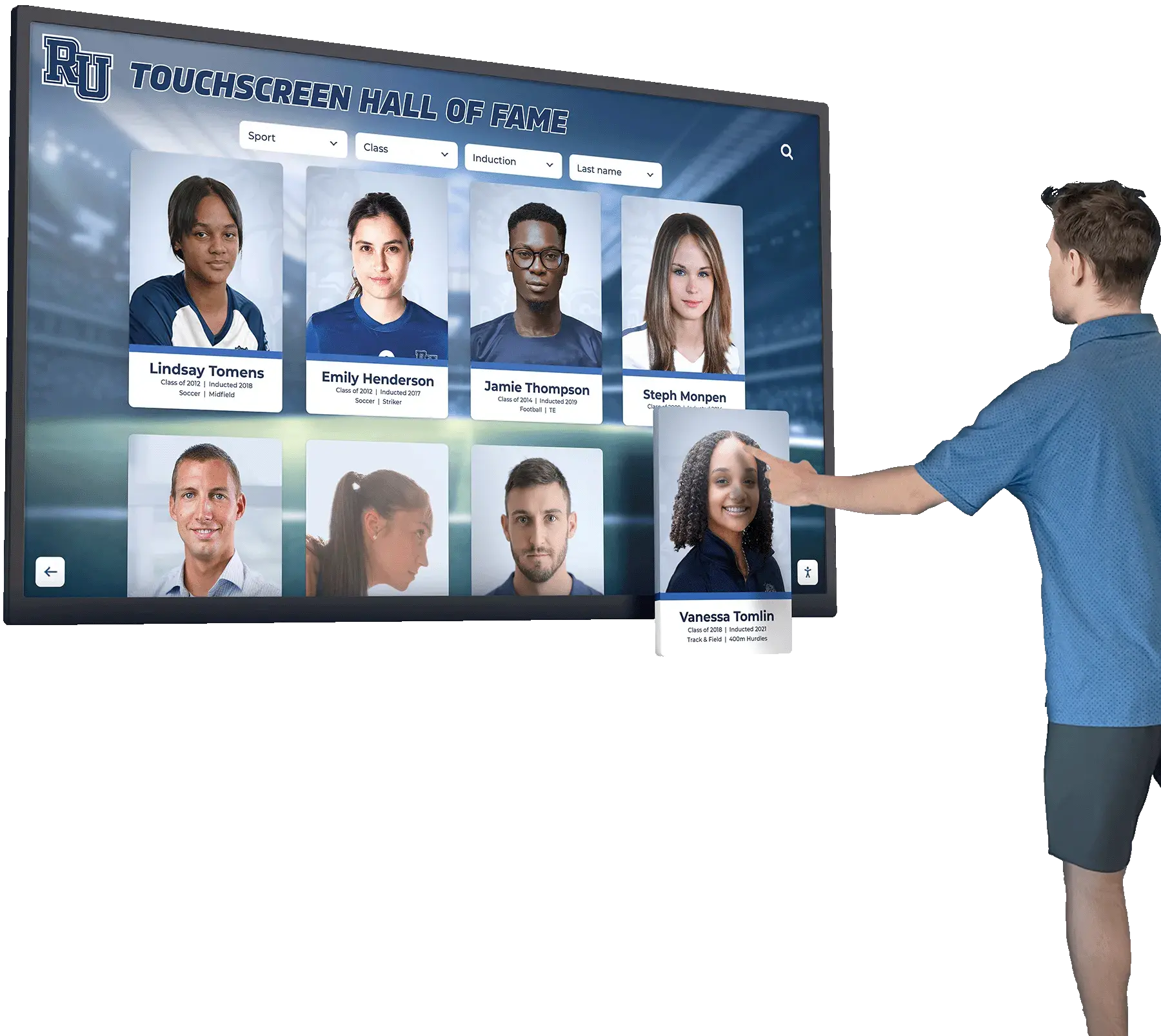
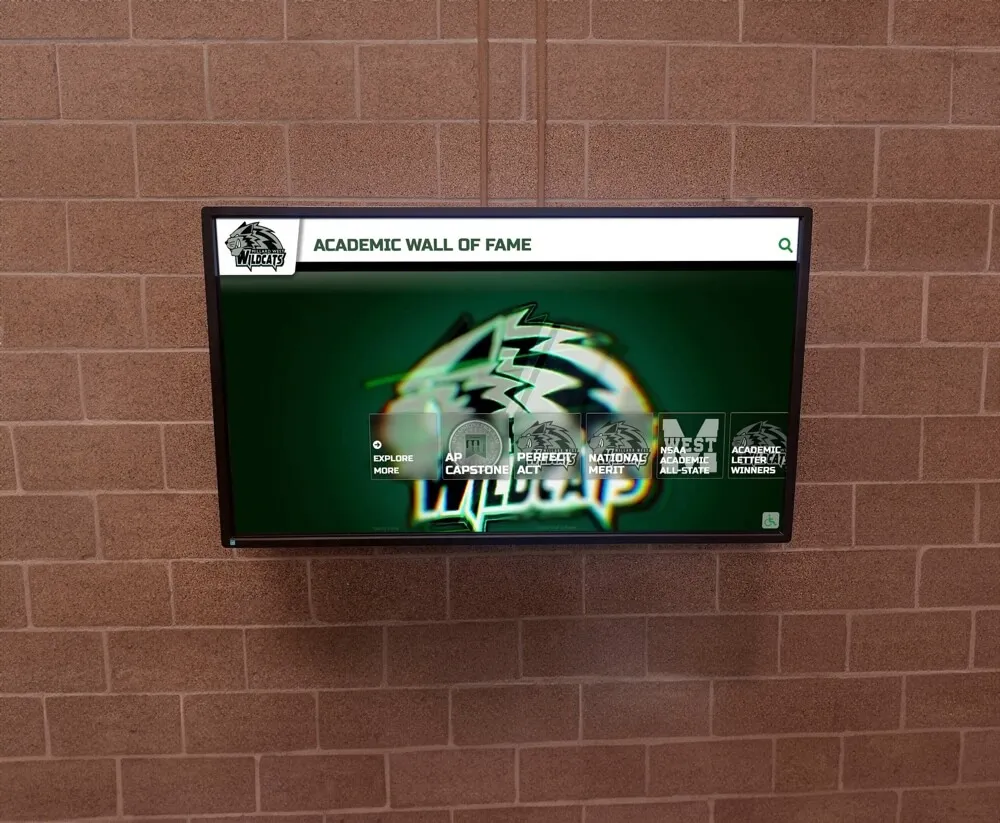
Interactive touchscreen kiosks installed in school hallways let any visitor—current students, alumni, parents, community members—explore class president history with intuitive touch navigation
Interactive Features That Strengthen Class President Recognition
The interactive capabilities of touchscreen displays are particularly valuable for class president archives because student government history is inherently contextual—the significance of who led a class is inseparable from what was happening at the school during that year.
Timeline navigation — A chronological timeline display allows visitors to explore class president history within the context of school milestones, major events, and institutional changes. A class president who led during a school renovation, a state championship year, or a significant community event is more fully understood when their record appears alongside that historical context.
Cross-referenced profiles — Class president profiles can link to teammates, classmates, and co-officers who served alongside them. A student government class from 1998 can be explored as a cohort, not just as individual names.
Alumni spotlight integration — Class president profiles can integrate with broader alumni recognition content, linking to information about graduates’ careers, achievements, and ongoing connections to the school community.
Nomination and submission portals — Digital systems can include secure submission portals where alumni can contribute photographs, corrected information, or personal statements to their own profiles, turning the recognition archive into a living document shaped by community participation.
Announcement feed integration — Schools that maintain digital announcement systems can connect class president recognition content to broader recognition feeds, featuring “on this day” historical spotlights or recognizing current class presidents in real-time alongside institutional news. Schools building connected recognition ecosystems will find value in interactive announcement feed systems designed for schools that can integrate with hall of fame display infrastructure.
Kiosk Placement and Installation Considerations
Touchscreen kiosks for class president recognition are physical installations that require thoughtful placement planning. The considerations that matter most are:
Traffic patterns — Displays placed in high-traffic areas generate more engagement. School lobby entrances, hallways adjacent to the gymnasium or auditorium (where events bring large audiences), and cafeteria-adjacent hallways are all strong candidates.
Dwell time — Class president archives benefit from placement in areas where visitors naturally pause or wait—near office check-in areas, outside auditorium doors before events begin, or in alumni gathering spaces where returning graduates have time to explore.
Power and connectivity — Most touchscreen kiosk systems require a power source and, for cloud-based content management, a network connection. Early coordination with facilities staff ensures these infrastructure requirements are met without compromising display placement decisions.
ADA compliance — Interactive kiosk systems should be placed at heights and in orientations that meet ADA accessibility requirements for touchscreen displays, ensuring full community access.
Schools considering kiosk installations will benefit from a thorough understanding of interactive touchscreen kiosk use cases and implementation considerations for school lobbies, which covers both technical requirements and strategic placement decisions.
Building Class President Recognition Into the School Calendar
Recognition that happens once—at installation or at graduation—is quickly forgotten. The most effective class president recognition programs build ongoing acknowledgment into the school’s annual rhythm.
Annual Induction and Transition Ceremonies
The moment of transition between outgoing and incoming class presidents is a natural ceremony opportunity. Most schools already manage this transition at the end of the school year or at the beginning of the next, but many handle it informally. Formalizing the transition with a brief ceremony—an installation moment, a public acknowledgment in assembly, a physical or digital profile update on the recognition display—creates a repeating tradition that communicates institutional respect for the role.
Key elements of effective class president installation and recognition ceremonies include:
Public acknowledgment — Recognition delivered in a setting where the student body, faculty, and administration can witness the honor. Assembly programs, all-school gatherings, and graduation ceremonies all provide appropriate audiences.
Outgoing president recognition — Before installing a new class president, formally acknowledging the departing officer’s service. Specific notes on accomplishments, events organized, and advocacy undertaken during their term are more meaningful than generic thank-you language.
Digital profile activation — Simultaneously adding the newly recognized president’s profile to the school’s class president display at the time of ceremony creates a direct connection between the ceremony moment and the permanent recognition.
Family inclusion — Inviting the family of newly recognized class presidents to installation ceremonies, and ensuring families can photograph the moment of recognition and the display itself, creates lasting memories and generates the alumni engagement that begins with family pride.
Student of the Month and Ongoing Recognition Integration
Class president service should not be recognized only at the beginning and end of the term. Schools with robust recognition cultures find ways to acknowledge student government leaders throughout the year, integrating class president recognition into broader student recognition infrastructure.
Schools that have built thoughtful student of the month recognition programs with creative display systems often discover that the display infrastructure already in place can accommodate ongoing class president spotlights, project highlights, and leadership achievement features throughout the academic year.
The key is building class president recognition into the school’s recognition calendar deliberately—not leaving it to ad hoc acknowledgment whenever someone remembers to say something nice. Schools planning their annual recognition calendars should consider school recognition day calendars and celebration opportunities that identify natural moments throughout the year to feature student leadership alongside other forms of achievement.
Connecting Recognition to Graduation
For seniors who have served as class president, graduation represents the final and most public moment of institutional recognition. The ways schools acknowledge outgoing class presidents at graduation ceremonies communicate institutional values to every family, community member, and guest present.
Effective graduation recognition for class presidents includes:
Ceremony roles — Many schools invite class presidents to play specific roles in graduation ceremonies, including delivering an address, leading the procession, or reading the names of honorees. These roles are visible to the entire graduating class community.
Acknowledgment in programs — Listing class president service in the graduation ceremony program, alongside academic honors, athletic letters, and other recognitions, communicates that student government service carries the same institutional weight.
Regalia recognition — Some schools create specific graduation regalia—a pin, cord, or medallion—for class presidents that identifies their service visibly during the graduation ceremony. Students who wore leadership regalia at graduation often describe it as one of the most meaningful recognition moments of their school career. The broader tradition of graduation honor regalia and what each piece represents is worth understanding when designing recognition for class presidents—a guide to graduation honor cords, their colors, and how to wear them properly provides useful context for designing class president-specific graduation recognition.
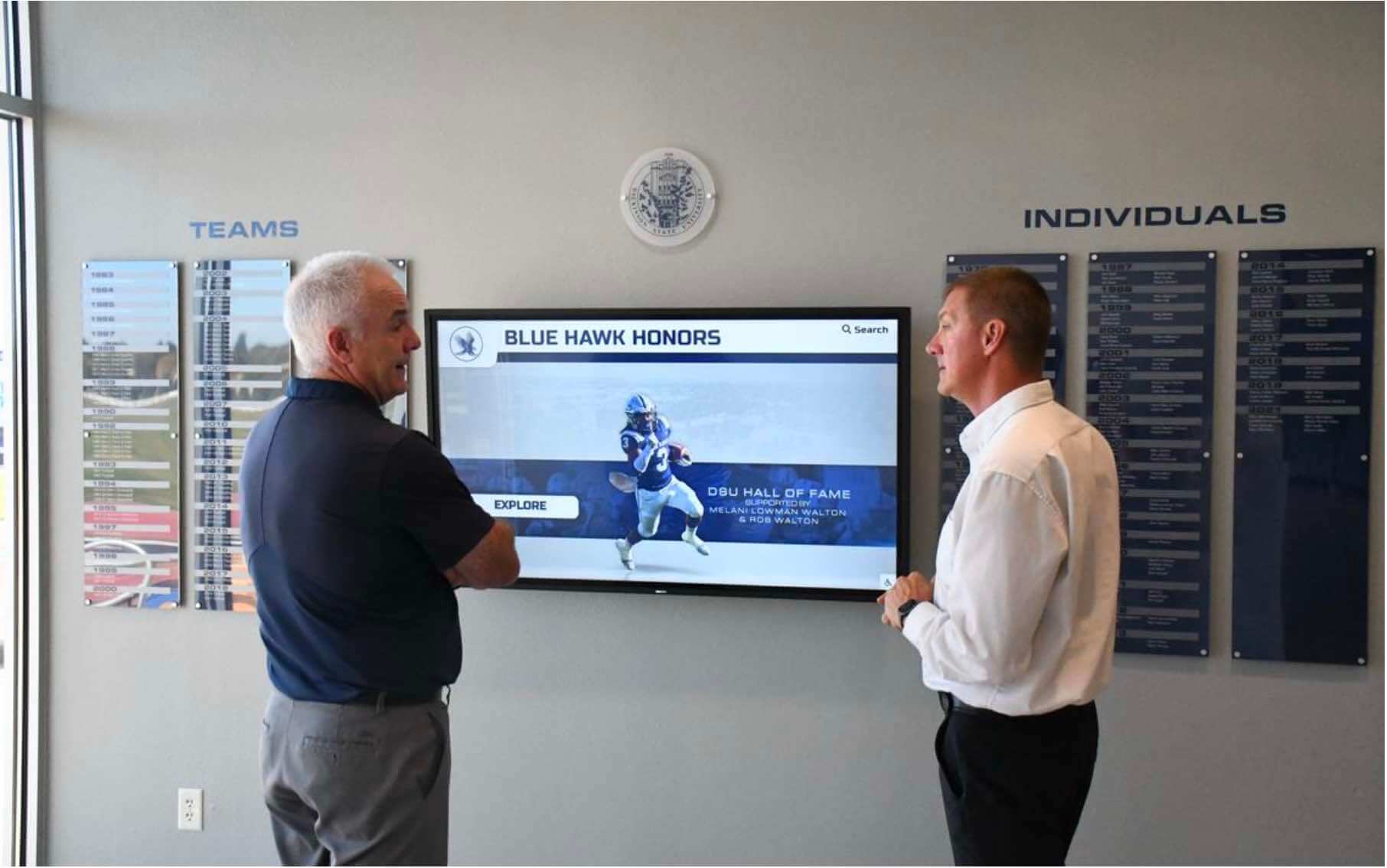
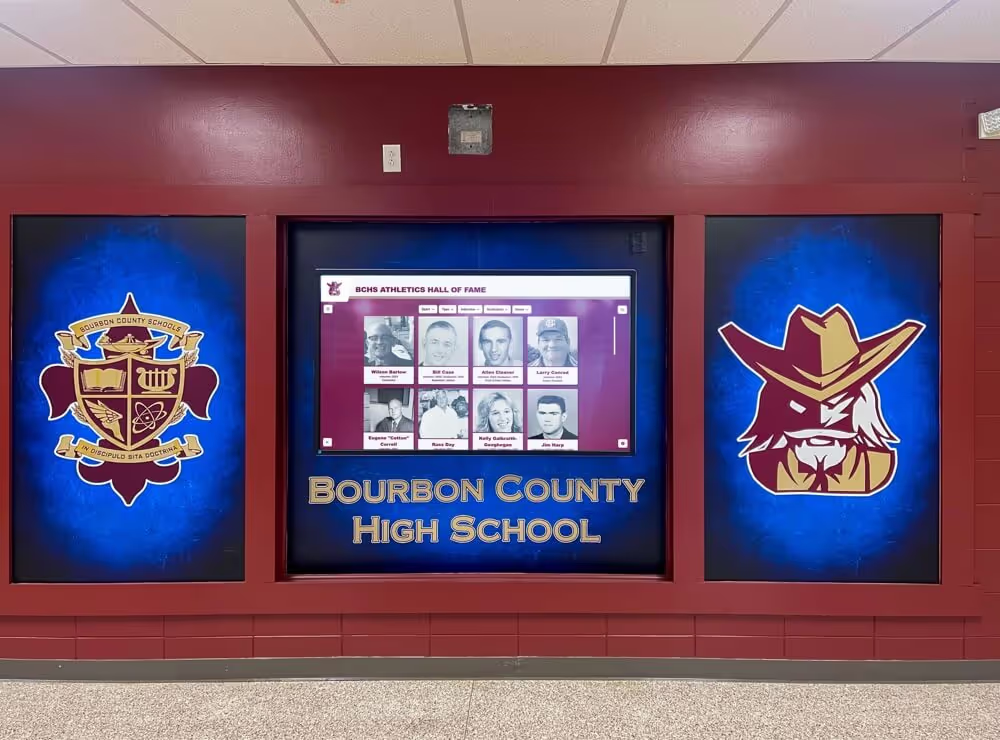
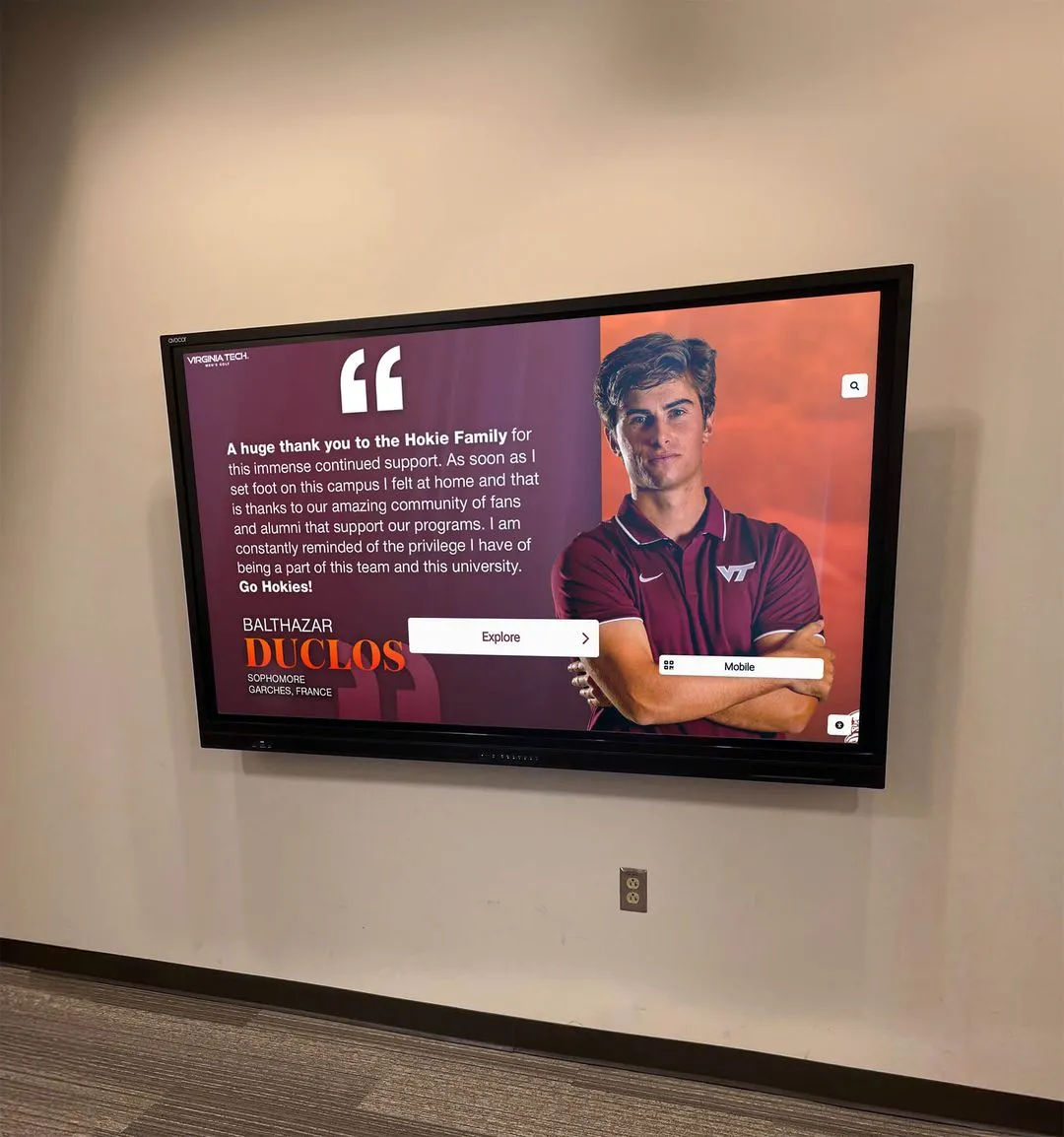
Digital hall of fame displays invite visitors to explore recognition records together—families, alumni, and community members all find connection in shared institutional history
Class President Recognition and Alumni Engagement
One of the most compelling cases for building a comprehensive class president recognition program is the alumni engagement it generates. For many alumni, discovering that their school has created a formal, visible tribute to every class president in its history is an emotionally significant experience.
Why Class Presidents Make Ideal Alumni Ambassadors
Former class presidents share several characteristics that make them particularly valuable as alumni partners:
Leadership instinct — The same traits that led students to run for class president—initiative, advocacy, organizational ability—tend to persist into adult life. Former class presidents are often community leaders, civic participants, and professionally successful individuals who have resources and motivation to give back.
Intense institutional loyalty — The class presidency is a role that creates deep identification with the institution. Former presidents often feel a stronger sense of belonging to their school than peers who did not hold the office, because their leadership identity is bound up with the school itself.
Public recognition comfort — Class presidents are accustomed to being publicly acknowledged. Reaching out to former class presidents with formal recognition—an invitation to return for a recognition event, a profile added to the school’s digital archive, a spotlight in the alumni newsletter—lands on well-prepared recipients.
Peer network influence — Former class presidents often remain connected with their classmates in ways that extend their individual reach. Engaging a former class president meaningfully often activates their entire social network within the alumni community.
Schools building alumni engagement programs should consider class presidents as a primary segment for targeted outreach, recognition, and partnership development.
Recognition Walls as Alumni Touchpoints
A well-designed class president recognition display functions as an alumni engagement touchpoint every time a former student enters the building. Schools that have invested in permanent, prominent class president archives consistently report:
- Alumni who visit for events lingering at the display well beyond the event itself
- Former class presidents bringing spouses, children, and friends to see their profile
- Alumni contacting the school to contribute photographs and updated information after discovering the display
- Social media sharing of display photographs generating broader alumni awareness
- Reunion planning conversations that center around the class president archive as a destination
The recognition display is not just a tribute—it is a conversation starter, a community builder, and an alumni engagement tool that continues working long after installation.
Schools evaluating recognition wall display options will benefit from understanding the full range of wall display case and recognition installation ideas for school settings that can be adapted for class president and student government archives.
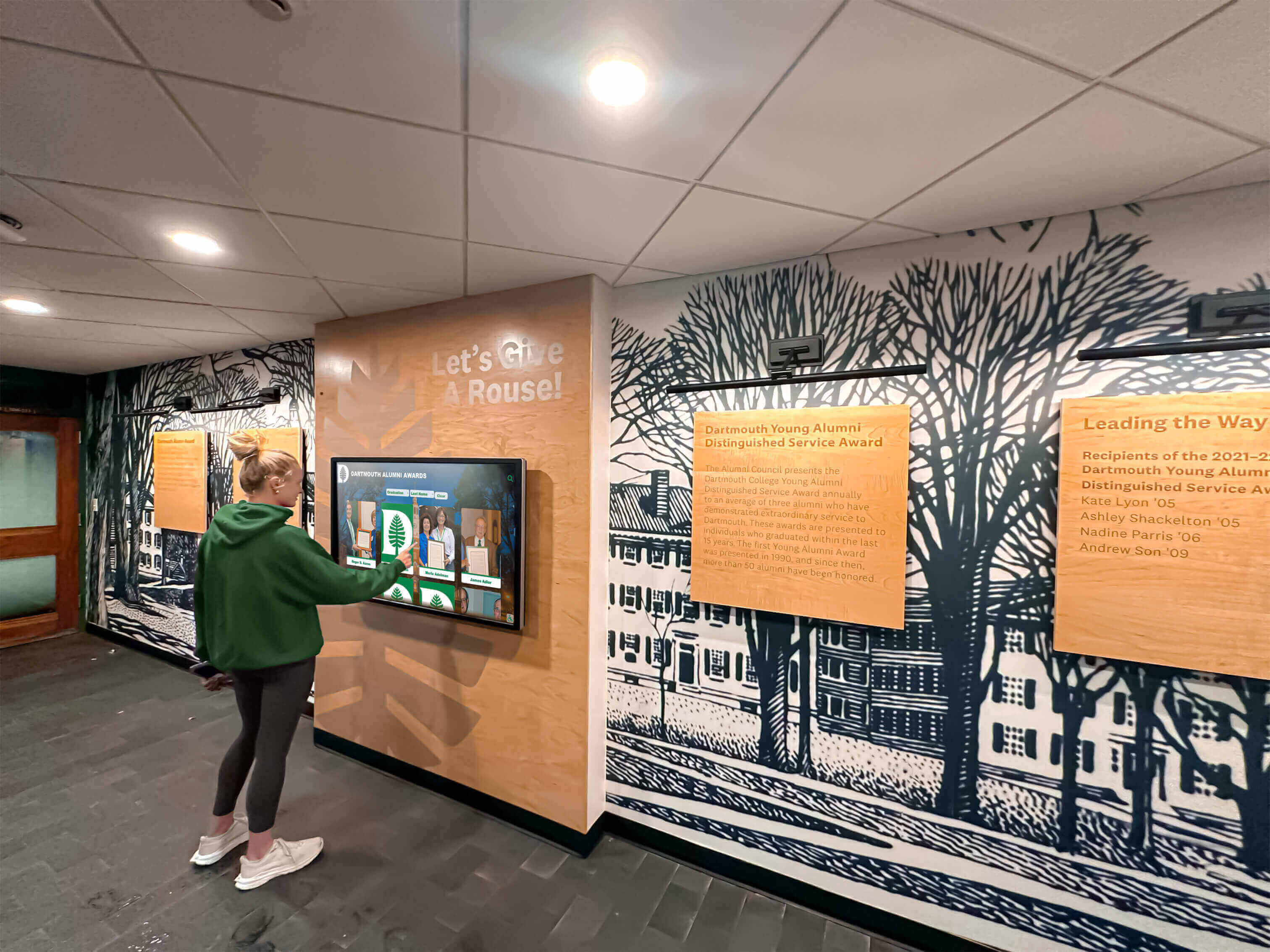
Interactive recognition displays serve current students and alumni equally—current students discover their school's leadership legacy while alumni reconnect with the institution that shaped them
Designing the Class President Recognition Experience
Creating class president recognition that genuinely resonates—with the presidents themselves, with their classmates, and with the broader school community—requires attention to the qualitative dimensions of recognition design.
The Language of Recognition
How recognition is phrased matters as much as whether it exists. Class president recognition that describes the role in meaningful, specific terms creates more impact than generic acknowledgment.
Compare these two approaches:
Generic: “John Smith, Class President, 2018.”
Meaningful: “John Smith, Class President, 2018. Led the class through a year of record community service hours and organized the school’s first student-led mental health awareness week.”
The second approach requires more documentation work, but it transforms a database entry into a tribute. It tells the reader—whether it is John Smith himself, his former classmate, or a student who never knew him—what this person actually did and why it mattered.
Schools building class president archives should invest in developing legacy statements even for historical presidents where yearbook and archival sources provide enough context to construct a meaningful description of each officer’s service.
Visual Design Principles
Effective class president recognition displays communicate institutional respect through their visual quality:
Portrait prominence — The photograph should be large enough to recognize the subject and treated as the visual centerpiece of the profile, not a small thumbnail alongside text.
Consistent formatting — Across all class president profiles, consistent typography, color treatment, and layout signals that every president receives equal institutional respect regardless of graduating year.
School identity integration — Colors, fonts, and design elements that connect to the school’s visual identity anchor the class president archive within the school’s broader recognition ecosystem rather than making it feel like a standalone add-on.
Legibility and accessibility — Text at appropriate size and contrast for easy reading by visitors of all ages, meeting accessibility standards that ensure the display serves all community members.
Connecting Recognition Across Student Government
While the class president holds the most visible student government role, most schools have robust student government structures that include vice presidents, secretaries, treasurers, senators, and committee chairs. A comprehensive student government recognition program acknowledges the full team:
Featured president with full profile — The class president receives the primary recognition treatment: full photograph, complete profile, legacy statement, and prominent placement.
Supporting officer recognition — Vice presidents and other officers appear alongside their president, identified by role and graduating year, acknowledging the collaborative nature of effective student government.
Advisor and faculty recognition — The faculty advisor who supports student government programs year after year often serves for decades, building institutional knowledge and continuity that makes each class’s leadership possible. Recognition programs that include faculty advisors tell a more complete story of how student government actually works.
Notable alumni spotlights — Former class presidents who have gone on to achieve significant professional, civic, or community success can be featured in a supplementary alumni spotlight section, demonstrating the long-term return on investing in student leadership recognition.
Schools that have implemented recognition programs celebrating staff contributions alongside student achievement understand how staff appreciation and recognition opportunities throughout the school year can be integrated with broader recognition infrastructure to create a comprehensive culture of acknowledgment.
Implementing Your Class President Recognition Program
Moving from concept to implementation requires a clear project plan addressing timeline, documentation, display selection, and launch strategy.
Phase One: Documentation and Research
The first phase of any class president recognition program is assembling the historical record:
Establish the record period — Determine how far back the recognition archive will extend. The full history of student government at the school is ideal; a practical starting point might be the last twenty-five or fifty years if documentation gaps make full coverage difficult.
Yearbook audit — Systematically review yearbooks from every year in the intended coverage period, documenting class president names, photographs, and any available contextual information.
Gap identification — Note years where yearbook documentation is incomplete, photographs are missing, or information is unclear. These gaps become research priorities.
Alumni outreach campaign — Contact the alumni association and use available networks to reach former class presidents, requesting photographs, biographical information, and permission to display their information in the recognition archive.
Photography collection — Gather the best available photograph for each class president, scanning yearbook images at high resolution where originals are not available.
Profile drafting — Write brief legacy statements for each class president based on available documentation, focusing on what each officer accomplished and what made their service distinctive.
Phase Two: Display Design and Installation
With documentation assembled, the design and installation phase begins:
Display system selection — Evaluate digital touchscreen systems, traditional plaque formats, or hybrid approaches based on the school’s budget, facility constraints, and long-term goals. Digital systems offer the most flexibility and scalability for archives spanning multiple decades.
Content loading and formatting — Enter all class president profiles into the chosen display system, ensuring consistent formatting, high-quality image presentation, and complete information for all entries.
Placement confirmation — Finalize the display location in coordination with facilities, administration, and student government advisors, ensuring high-traffic visibility and ADA-compliant installation.
Installation coordination — Schedule and execute the physical installation with appropriate technical support, including network and power infrastructure if required for digital systems.
Phase Three: Launch and Celebration
The display launch is itself a recognition moment deserving ceremony:
Launch event planning — Invite current and former class presidents to the recognition display unveiling. A dedicated ceremony or event centered around the launch creates community energy and generates media coverage.
Alumni invitation — Reach out specifically to the class presidents represented in the new archive, inviting them to attend the launch event and see their profiles for the first time.
Student government involvement — Have current class officers help host the launch event, creating a visible connection between the school’s historical leadership legacy and its present-day student government.
Documentation and sharing — Photograph the launch event, create a social media and newsletter feature, and share the news through all available school communication channels.
Phase Four: Ongoing Maintenance
The class president archive is a living document requiring regular maintenance:
Annual updates — At the end of each school year, add new class presidents to the archive. Digital systems make this straightforward; traditional plaque systems require advance planning for fabrication timelines.
Profile enrichment — As new photographs, alumni updates, and biographical information become available, enrich existing profiles with additional content.
Anniversary features — Use milestone anniversaries—the display’s founding, a school anniversary, a reunion year—as opportunities to spotlight historical class presidents and generate renewed engagement.
Alumni contribution mechanism — Maintain a process through which alumni can submit updated photographs, corrections, or personal statements for their own profiles, keeping the archive accurate and engaging.
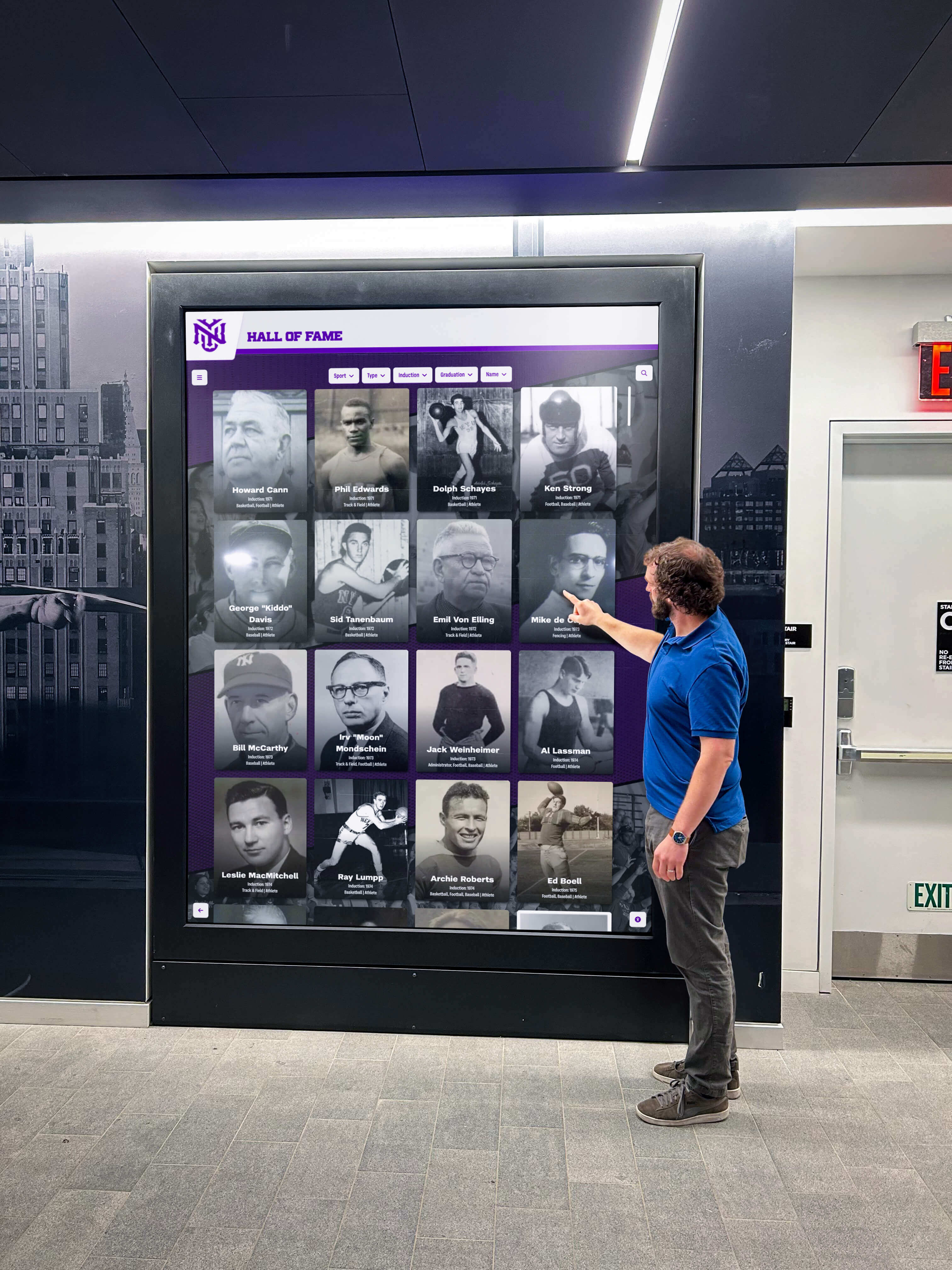
Well-placed interactive recognition displays invite spontaneous engagement from every visitor who enters the school—turning institutional history into accessible community connection
Frequently Asked Questions About Class President Recognition
Why should schools create a dedicated class president recognition program?
Class presidents serve in genuinely significant leadership roles that develop skills schools spend considerable resources trying to build in students. Acknowledging that service with the same institutional weight given to athletic and academic achievement sends a clear message about the school’s values, supports alumni engagement, and honors a tradition with real educational importance.
How far back should a class president archive go?
As far back as documentation allows. The ideal is a complete record from the founding of student government at the school. Practical considerations around yearbook availability and photograph quality may limit the initial coverage period, but documentation work often reveals more historical information than schools expect to find.
What is the best way to handle missing historical information?
Start with what is documented—names and graduation years—and add photographs and narrative content as they become available. An alumni outreach campaign specifically targeting former class presidents often surfaces photographs, documents, and memories that do not exist in institutional archives.
Should vice presidents and other officers be included?
Yes, with distinction. A tiered approach works well: class presidents receive full profiles with photographs and legacy statements, while other officers receive smaller acknowledgments alongside their president. This honors the team without obscuring the significance of the presidency specifically.
How does digital display technology change what is possible for class president recognition?
Digital touchscreen systems eliminate the space constraints that limit traditional plaque recognition, support rich multimedia profiles including photographs and video, allow remote updates without physical fabrication, and enable searchable navigation that lets any visitor find specific presidents instantly. They are the most scalable and content-rich option for archives spanning decades of student leadership history.
How should schools approach alumni outreach for historical presidents?
Start with the alumni association and yearbook committee contacts, who often maintain informal networks of class officers. Social media platforms—particularly Facebook groups organized around graduating classes—are highly effective for reaching former class presidents directly. Local community organizations and school reunion committees are also valuable channels.
What does an effective class president recognition launch event look like?
The strongest launches combine a formal unveiling ceremony with alumni guest attendance, a student government presence connecting historical and current leadership, and media coverage through school and local community channels. Giving current class presidents a role in the ceremony creates a living connection between the school’s leadership legacy and its present.
Conclusion: Class Presidents Deserve Lasting Recognition
The class president is a student who stood up, ran for something, won the trust of their peers, and spent a year—or more—doing the unglamorous work of student advocacy, event organization, and institutional representation. In a school culture that takes recognition seriously, that service deserves something more than a line in a yearbook.
Building a class president recognition program is an investment in school culture, alumni engagement, and the message your institution sends to every current student about what kinds of achievement it values. The student body is watching the school’s recognition displays every day—noticing who is honored and who is absent. A school that honors athletes, honors scholars, and honors student government leaders tells a complete story about what it means to excel at that institution.
The tools available today—digital touchscreen archives, cloud-based content management, interactive profile systems—make comprehensive class president recognition more achievable than ever before. Schools no longer face the choice between recognizing everyone and having wall space. A display that holds every class president in the school’s history, beautifully presented with photographs and legacy statements, searchable and accessible to any visitor, is now an achievable goal for institutions of any size and budget.
The gap in most schools’ recognition programs is not unavoidable. It is a design choice that can be changed.
Build a Class President Recognition Display That Honors Every Leader Your School Has Ever Produced
Rocket Alumni Solutions provides interactive touchscreen recognition systems designed for schools that want to honor the full range of student achievement—including every class president across generations of student government history. Unlimited profile capacity, rich multimedia support, remote content management, and ADA-compliant installation make it possible to create the comprehensive archive your students and alumni deserve.
Explore Digital Recognition SolutionsLive Example: Rocket Alumni Solutions Touchscreen Display
Interact with a live example (16:9 scaled 1920x1080 display). All content is automatically responsive to all screen sizes and orientations.