



Screen readers select a text-to-speech engine and pronunciation dictionary based on a single HTML attribute—lang—declared on the <html> element of every page. When a school’s digital hall of fame omits that attribute or sets it incorrectly, every athlete name, induction citation, career statistic, and navigation label is read aloud using the wrong language rules: English text pronounced with French phonetics, Spanish names mispronounced using English stress patterns, or—on some assistive technology configurations—the content read in the operating system’s default voice with no language context at all. A digital hall of fame html lang attribute audit is a structured review confirming that the page-level lang value is present and correct on every page type in a recognition collection, and that individual inductee profiles or multilingual content blocks carry inline lang overrides where appropriate. The short answer: open each key page type in your browser, view its page source, confirm <html lang="en"> (or your language code) appears on line one, then check that any embedded foreign-language text—a French-Canadian athlete name formatted with accents, a Spanish dedication paragraph—carries a matching inline lang attribute on its wrapping element.
A school’s online hall of fame may honor hundreds of athletes across decades, and the names in those records reflect the full linguistic diversity of the communities those athletes came from. Screen reader users who rely on JAWS, NVDA, VoiceOver, or TalkBack to navigate the induction archive deserve accurate pronunciation for every name they encounter—not an approximation produced by a speech engine given no language context. Setting the lang attribute correctly is one of the least technically demanding accessibility improvements available to a recognition program, yet audits consistently find it absent or incorrect on a significant share of pages.

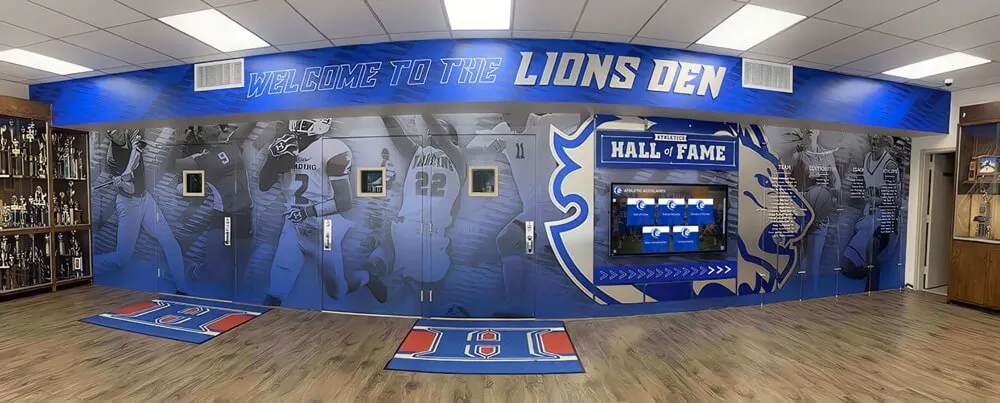
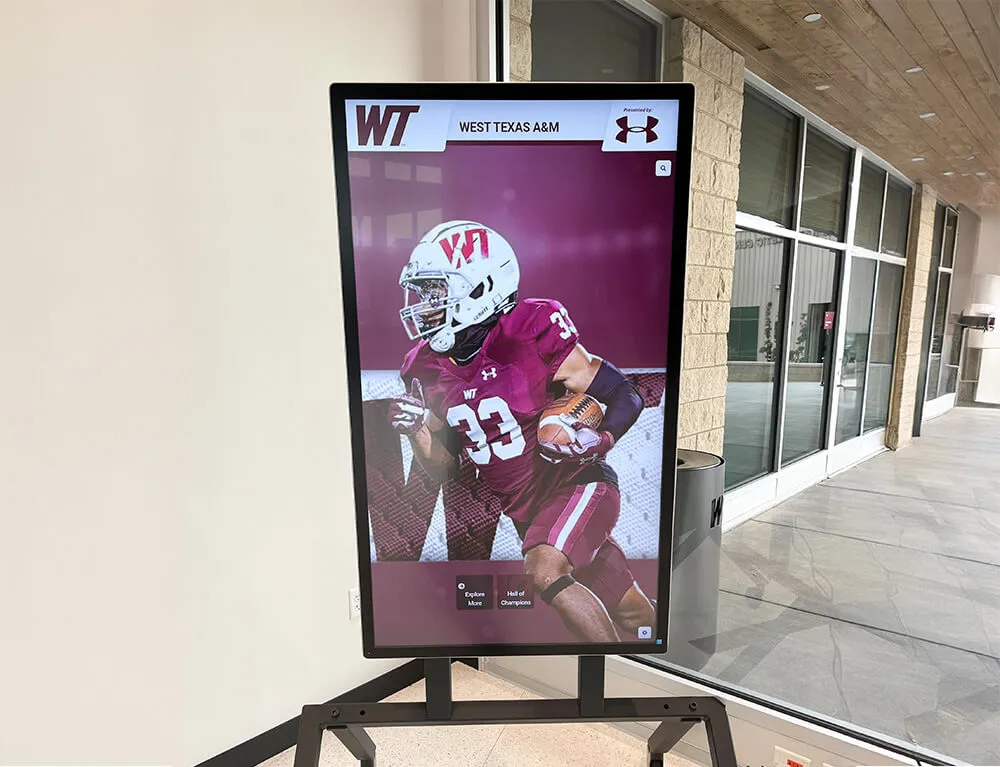
A digital hall of fame recognition collection spans many page types—gallery indexes, inductee profiles, search result pages, and archive pages—each of which must carry a correct page-level lang attribute for screen readers to select the right pronunciation engine
Why the HTML lang Attribute Matters for Hall of Fame Screen Readers
Text-to-speech engines built into modern screen readers do not analyze sentence structure or cultural context to guess a language; they use the lang value declared in the page markup. When a user’s default screen reader language is set to Spanish and the hall of fame page is written in English without a lang="en" declaration, some configurations will attempt to read the English text using Spanish phonetic rules—producing mispronunciations that make names, academic credentials, and sport descriptions difficult to follow.
For recognition programs specifically, the pronunciation stakes are high. Inductee surnames that cross phonetic traditions—a Vietnamese family name, a Hawaiian place name in a school mascot story, a Polish athlete’s surname using digraphs that English TTS engines handle poorly—are all processed through the speech engine associated with the page’s declared language. A correct page-level lang attribute does not guarantee perfect pronunciation of every name, but it ensures that the closest available engine is selected, and that inline lang overrides on specific elements can further narrow pronunciation accuracy for bilingual content blocks.
WCAG 2.1 Success Criterion 3.1.1 (Language of Page) at Level A requires that the default human language of each web page can be programmatically determined. Level AA conformance—the standard referenced by most school ADA compliance policies—includes 3.1.2 (Language of Parts), which requires that the language of each passage or phrase that differs from the page’s primary language be programmatically determinable. Both criteria are satisfied by correct lang attribute implementation and can be verified without developer tools in most cases.
Schools that operate academic sports banquet programs for student-athletes face the same requirement on banquet program pages and award listing documents published to the web, not only on the hall of fame platform itself.
What the HTML lang Attribute Controls: A Quick Reference
| Attribute | Where It Appears | What It Controls |
|---|---|---|
lang="en" on <html> | Page source, first line | Default TTS engine and pronunciation dictionary for the entire page |
lang="es" on <html> | Page source, first line | Tells screen readers the page is in Spanish; English passages need an override |
lang="en" on a <span> or <p> | Inline element wrapping foreign-language text | Switches TTS engine for that specific passage only |
lang="fr" on a <blockquote> | Inline element wrapping a French citation | Applies French phonetics to the quote without affecting surrounding English |
Missing lang attribute | <html> with no lang | Screen reader falls back to user’s OS language—may mispronounce entire page |
The lang value follows the IETF BCP 47 language tag format. For most school recognition programs publishing in American English, the correct value is en or the more specific en-US. Canadian institutions publishing primarily in English use en-CA; bilingual Canadian programs may use fr-CA for French-language pages.
Step 1: Confirm the Page-Level lang Attribute Without Writing Code
The most reliable no-code method for auditing the page-level lang attribute is viewing the page source in any desktop browser.
Method A: View Page Source (works in all desktop browsers)
- Open a hall of fame page in Chrome, Firefox, Edge, or Safari.
- Right-click anywhere on the page and select View Page Source (Chrome/Firefox/Edge) or Show Page Source (Safari).
- The very first line of the HTML document should begin with
<!DOCTYPE html>followed immediately by the<html lang="...">tag. - Confirm the
langvalue is present and matches the primary language of the page content. - Repeat for each page type: the inductee gallery index, an individual inductee profile, the search or directory page, any class-year archive page, and the hall of fame home page if it is separate from the main site.
Method B: Browser Address Bar Inspection (Chrome DevTools, no code)
- Open the page in Chrome and press F12 to open DevTools.
- Click the Elements tab.
- The first element visible in the Elements panel is the
<html>tag—confirm it carries alangattribute with the correct value. - This method is especially useful for pages served through a CMS where the source may be minified or difficult to read.
What to record: For each page type, note the URL, the lang value found (or “missing” if absent), and whether the value matches the page content language. This becomes the working record for the rest of the audit.
Step 2: Audit Inductee Profile Pages and Archive Pages
Hall of fame recognition collections typically include several distinct page types, each generated from a template. Because the lang attribute is usually set at the template level rather than page by page, finding one page with a missing or incorrect lang value typically means all pages generated from that template share the error.
Page types to include in the audit:
- Hall of fame home or index page — The landing page for the recognition collection
- Inductee gallery or directory page — Paginated or filtered listing of all inductees
- Individual inductee profile page — Biography, career statistics, photos, and induction year details for a single inductee
- Search results page — The page displayed after a visitor searches by name, sport, or class year
- Class-year archive page — Inductee listings filtered by induction year or graduating class
- Sport-specific record board page — Auto-ranked statistical leaders by sport category
- Nomination or contact form page — Pages that include the hall of fame’s nomination process
For each page type, document the result using the table below. One representative page per template is sufficient unless pages within the same template type have been individually customized.
Audit documentation table:
| Page Type | URL Checked | lang Value Found | Pass / Fail | Notes |
|---|---|---|---|---|
| Gallery / Index | — | — | — | — |
| Inductee Profile | — | — | — | — |
| Search Results | — | — | — | — |
| Class-Year Archive | — | — | — | — |
| Record Board | — | — | — | — |
| Nomination Form | — | — | — | — |
A “Pass” result requires that lang is present, uses a recognized BCP 47 tag, and matches the primary language of the page content. A “Fail” result is recorded when lang is absent, uses an unrecognized tag (such as lang="english" instead of lang="en"), or contradicts the page language (such as lang="fr" on an English-primary page).
Step 3: Check for Inline lang on Multilingual Content
After confirming the page-level lang attribute, the second phase of the audit looks for passages or phrases that differ in language from the declared page language. This is especially common in school recognition programs because:
- Inductee surnames from non-English language backgrounds appear throughout English-language bios
- Latin honors phrases (
magna cum laude,summa cum laude) appear in academic achievement bios - School mottos in Latin or other languages may appear in the hall of fame header or about section
- French or Spanish dedications appear in programs serving bilingual communities
- Transliterated or romanized names from languages with non-Latin scripts appear in athlete profiles
Schools that recognize academic inductees alongside athletic ones frequently include Latin honors designations in inductee bios. The phrase magna cum laude should ideally carry lang="la" on its wrapping element so that a Latin TTS engine—where available—applies the correct pronunciation rather than treating it as English text.
To check for inline lang attributes:
- On any page containing a passage that differs from the page’s primary language, right-click the specific text and select Inspect (Chrome/Firefox/Edge) or Inspect Element (Safari).
- In the Elements panel, look for a
langattribute on the highlighted element or any parent element wrapping only that passage. - If the passage has no
langattribute and differs from the page’s declared language, record it as a finding for the development team or CMS administrator.
For non-technical administrators using a cloud CMS, this check can be performed by the platform’s accessibility team or vendor support rather than requiring local code access.
Pass/Fail Examples for Common Hall of Fame Pages
The following examples show correct and incorrect implementations for the page types most commonly audited in school recognition collections.
Page-Level lang — Pass Examples
<!-- Correct: English-primary hall of fame page -->
<html lang="en">

<!-- Correct: More specific American English -->
<html lang="en-US">

<!-- Correct: French-Canadian bilingual program, French-language version -->
<html lang="fr-CA">
Page-Level lang — Fail Examples
<!-- Fail: Missing lang attribute entirely -->
<html>

<!-- Fail: Unrecognized tag format (not a valid BCP 47 tag) -->
<html lang="english">

<!-- Fail: Incorrect language declared for an English-language page -->
<html lang="de">

<!-- Fail: Empty lang attribute provides no information -->
<html lang="">
Inline lang — Pass Examples
<!-- Pass: Latin phrase carries its own lang override -->
<p>Inducted <span lang="la">magna cum laude</span> recognition class 2023.</p>

<!-- Pass: French-language dedication in an English page -->
<blockquote lang="fr">Pour tous les athlètes qui ont honoré notre école.</blockquote>
Inline lang — Fail Examples
<!-- Fail: French phrase embedded in English page with no inline lang -->
<p>Coach Rodriguez's motto: Toujours plus haut—always higher.</p>

<!-- Fail: School motto in Latin rendered as plain English text -->
<p class="motto">Veritas et Lux</p>
Multilingual Exception Table for School Recognition Programs
Most school halls of fame publish primarily in English, but recognition collections serving diverse communities contain recurring multilingual patterns that warrant inline lang exceptions even on English-primary pages.
| Content Type | Language | BCP 47 Tag | When to Apply Inline lang |
|---|---|---|---|
| Latin honors phrases | Latin | la | Any time magna cum laude, summa cum laude, cum laude, or similar appear in bio text |
| School motto in Latin | Latin | la | Header, footer, or about-section displays of the school’s Latin motto |
| Spanish dedication paragraph | Spanish | es | Any Spanish-language dedication, tribute, or quote block on an English-primary page |
| French-Canadian name with accents | French (Canadian) | fr-CA | Inductee names or captions where the full name is formatted in French orthography |
| Hawaiian place names or mele | Hawaiian | haw | School names, mascot names, or campus locations drawn from Hawaiian language |
| Transliterated Korean names | Korean | ko | When a romanized Korean name appears alongside its original hangul script |
| Navajo/Diné phrases | Navajo | nv | School acknowledgments or tributes in programs serving Navajo Nation communities |
| Portuguese names with diacritics | Portuguese (Brazilian) | pt-BR | Inductee surnames from Brazilian Portuguese backgrounds with distinctive diacritics |
For recognition programs serving multilingual communities, the same pattern applies to yearbook senior pages and other student recognition publications: any language switch within an otherwise English document should carry an appropriate inline lang attribute on its wrapping element.
CMS-Based Checks for Non-Technical Administrators
Most school recognition programs run on a cloud CMS rather than a hand-coded website, which means administrators cannot directly edit the <html> tag. The following checks work within a CMS environment without requiring access to server-side templates.
Check 1: Review your CMS platform documentation
Most commercial hall of fame and recognition CMS platforms set the page-level lang attribute at the theme or template level. Locate the platform’s accessibility documentation to confirm whether lang="en" is set by default and whether it can be configured per page for multilingual content.
Check 2: Ask your platform vendor for an accessibility conformance report
Request a VPAT (Voluntary Product Accessibility Template) or WCAG 2.1 conformance report from your platform vendor. The section covering SC 3.1.1 (Language of Page) will indicate whether the platform correctly implements the lang attribute. For touchscreen recognition displays configured with HDMI-CEC that also serve a companion web presence, request conformance documentation for both the kiosk interface and the web-based inductee collection.
Check 3: Submit a support ticket for any lang failures found
If the page source audit in Step 1 reveals missing or incorrect lang values, submit a support ticket to the CMS vendor identifying the affected page templates and requesting correction. Include the WCAG 2.1 SC 3.1.1 citation so the vendor can prioritize it under their accessibility roadmap.
Check 4: Verify the fix after the vendor deploys it
After the vendor reports the fix, repeat the view-page-source check on each page type documented in the audit table. Confirm the lang value is correct before closing the support ticket.
For programs that also maintain physical lobby touchscreen displays, the kiosk interface is typically a separate implementation from the web-based recognition collection and requires its own platform-level audit. A digital touchscreen recognition display color calibration review provides a useful model for the kind of vendor-documented verification protocol that works equally well for accessibility attribute audits.
Common Errors and How to Resolve Them
Error: lang attribute missing entirely
Why it happens: CMS themes ported from older frameworks sometimes omit the lang attribute because older HTML4 pages did not require it. The fix is a single attribute addition to the template’s <html> element—a one-line change that any front-end developer or CMS administrator can make.
Error: lang=“en” on a page with significant Spanish content
Why it happens: Administrators add Spanish-language induction dedications directly into an English-language page without adding an inline lang override. The resolution is to wrap the Spanish content in a <div>, <p>, or <span> with lang="es" rather than changing the page-level declaration.
Error: lang set to the wrong region code
Why it happens: A page template originally configured for a Canadian bilingual institution uses lang="fr-CA" but the page content is primarily English. The fix is to change the page-level lang to lang="en-CA" and apply lang="fr-CA" only to the French-language content blocks.
Error: lang attribute duplicated with contradictory values
Why it happens: A page template sets lang on the <html> element and a CMS plugin also injects a lang attribute on the <body> element with a different value. Screen readers resolve this by preferring the closest ancestor’s lang declaration, but the ambiguity should be corrected by removing the conflicting declaration.
Error: lang value uses an unrecognized format
Why it happens: Template developers write lang="english", lang="EN" (uppercase is valid but inconsistent), or lang="en_US" (underscore instead of hyphen). The IETF BCP 47 format requires a hyphen separator: en-US, not en_US. Most screen readers are tolerant of these variations, but validators will flag them as failures.
Schools coordinating youth athlete of the year recognition programs that publish award announcements and honoree profiles online face the same lang attribute requirements on those program pages.
Digital Hall of Fame HTML Lang Attribute Audit Checklist
Use this checklist during the initial launch of a new recognition collection, before each annual induction cycle, and whenever a CMS platform update is applied to the recognition system.
Page-Level lang Audit
- Hall of fame home / index page has
langattribute on<html>element - Inductee gallery page has correct
langvalue - Individual inductee profile page (check one per sport category) has correct
langvalue - Search results page has correct
langvalue - Class-year archive page has correct
langvalue - Record board page has correct
langvalue - Nomination or contact form page has correct
langvalue - All
langvalues use valid BCP 47 tags (e.g.,en,en-US,es,fr-CA) - No page has an empty
lang=""attribute
Inline lang Audit
- Latin honors phrases carry
lang="la"on their wrapping element - School motto in Latin or another language carries the appropriate inline
lang - Any Spanish-language dedication block on an English-primary page carries
lang="es" - Any French-language passage on an English-primary page carries
lang="fr"orlang="fr-CA" - Inductee names in non-English scripts or with diacritics are reviewed for inline
langneed - No foreign-language phrase longer than a single word is embedded in body text without an inline
langoverride
CMS and Platform Verification
- CMS vendor’s WCAG 2.1 conformance report reviewed for SC 3.1.1 status
- Platform template confirmed to set
langattribute at the<html>level automatically - Any third-party widgets embedded in the recognition collection (video players, social feeds, map embeds) reviewed for their own
langhandling - Fix verified in page source after any vendor update to the template
Frequently Asked Questions
Does the lang attribute affect SEO as well as accessibility?
Search engines use the lang attribute and the hreflang link element to understand the language and regional targeting of a page, which can influence which results are shown to users in different locales. For most school halls of fame publishing in a single language, the primary benefit is accessibility rather than multilingual SEO, but correct lang implementation supports both goals simultaneously.
What happens if we have a bilingual hall of fame collection—pages in both English and Spanish?
Pages that are fully in Spanish should have lang="es" on the <html> element. The English and Spanish pages are separate documents with separate page-level declarations. If a single page mixes the two languages substantially, declare the dominant language at the page level and apply inline lang overrides to every passage in the other language. If the split is roughly equal, choose the language used in the main body content as the page-level value.
Our CMS automatically generates pages—can we set lang through the CMS settings rather than editing templates?
Most modern hall of fame CMS platforms expose a language or locale setting in the site configuration that propagates the lang attribute to the <html> element of all generated pages. Check the platform’s site settings, internationalization, or accessibility configuration section. If no such setting exists, contact the vendor and request it be added as a platform update, citing WCAG 2.1 SC 3.1.1.
Does the lang attribute apply to PDF documents linked from the hall of fame page?
PDF documents published to the web—such as printed induction programs, award ceremony booklets, or historical archive scans—should have their document language set in the PDF’s Document Properties. Screen readers accessing PDF content use the document’s language metadata rather than the referring web page’s lang attribute. If your recognition program publishes downloadable PDF induction programs, audit those separately using a PDF accessibility checker.
How often should we run a lang attribute audit? Run a full audit at the initial platform launch, again after any CMS or template update, and as part of an annual accessibility review before the induction season. The checklist above takes less than an hour to complete for a typical recognition collection and can be delegated to any staff member with basic browser access—no developer tools or coding experience required. Schools that also manage middle school yearbook programs alongside athletic recognition platforms should extend the audit to cover published yearbook web content as well.
What tool can automatically detect a missing lang attribute?
Several free browser-based accessibility evaluation tools will flag a missing or incorrect lang attribute as part of a basic WCAG audit. WAVE (by WebAIM), axe DevTools (Deque), and the Lighthouse accessibility panel built into Chrome DevTools all check for SC 3.1.1 compliance and will report the error with a reference to the specific element. These tools supplement the manual source-view check rather than replacing it, as automated tools may not flag incorrect (but present) lang values where the declared language does not match the content.
Does the screen reader itself ever override the lang attribute?
Screen reader users can configure their software to read all content in a single voice regardless of embedded lang declarations. This is a user preference, not a failure of the page markup. The page’s responsibility is to provide correct lang information; how a given user’s assistive technology processes that information is under the user’s control. Providing accurate lang markup ensures that users who rely on automatic language switching receive the best possible result.
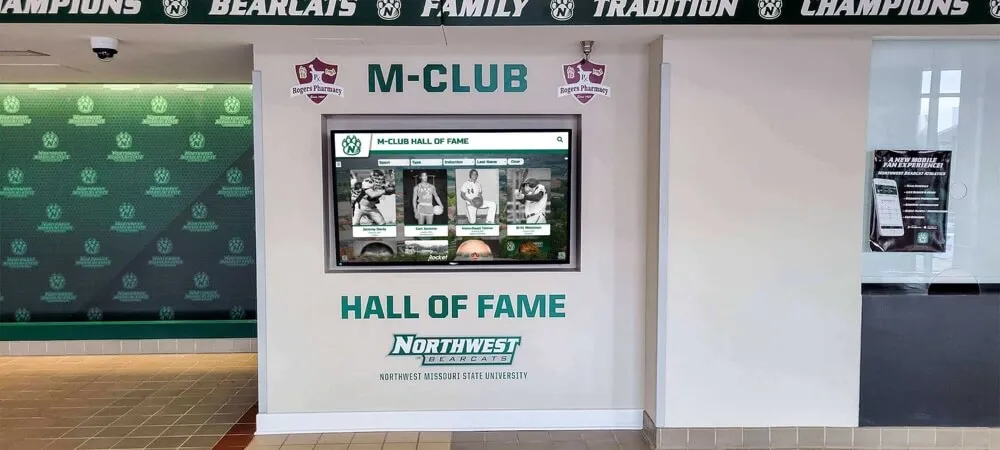
Does the lang attribute apply to the recognition displays on lobby touchscreen kiosks?
Hall of fame kiosk interfaces rendered in a browser-based environment—which describes the majority of modern touchscreen recognition systems—are subject to the same HTML lang attribute requirements as web-based pages. Kiosk content served through a web view should have the lang attribute set on the root HTML element just as a standard web page would. Physical display interfaces that run as native applications rather than browser views are outside the scope of HTML lang requirements but should implement their platform’s equivalent accessibility language metadata for TTS features. For touchscreen displays, reviewing the recognition display color fringing test alongside an accessibility attribute audit helps build a comprehensive pre-installation verification record.
A correct lang attribute is the smallest structural change that produces an immediate, measurable improvement in screen reader accuracy across every page of a recognition collection. For school administrators and athletic directors who want a platform that handles accessibility metadata—including language declarations—correctly from the first day of deployment, Learn more about Rocket Alumni Solutions’ Digital Wall of Fame platform to see how the cloud CMS manages accessibility at the template level so recognition teams can focus on honoring athletes rather than auditing markup.
Ready to see a fully accessible hall of fame platform in action? Request your custom demo today and explore how a cloud-based recognition system supports WCAG 2.1 AA compliance across every page type.