



Schools investing in recognition displays face a critical decision that affects their budget, operations, and community engagement for years to come. The choice between digital walls of fame and traditional physical displays involves more than aesthetic preference—it represents fundamentally different approaches to honoring achievement with distinct financial implications, maintenance requirements, and community impact.
While physical plaques and trophy cases have served institutions for generations, digital recognition technology has matured into a proven alternative that addresses longstanding limitations. Understanding the real-world differences in total cost of ownership, ongoing maintenance demands, and measurable engagement impact enables informed investment decisions aligned with institutional goals and resources.
This comprehensive comparison examines digital walls of fame versus physical displays across three critical dimensions: upfront and ongoing costs, maintenance and update requirements, and community engagement impact. By exploring real implementation scenarios, you’ll gain the clarity needed to select the recognition approach that delivers the best value for your institution.
Every school administrator knows the frustration of running out of wall space for recognition, facing costly plaque updates, or watching community members walk past static displays without stopping. The recognition format you choose shapes not just what achievements you can celebrate, but how effectively you inspire current students and maintain alumni connections.

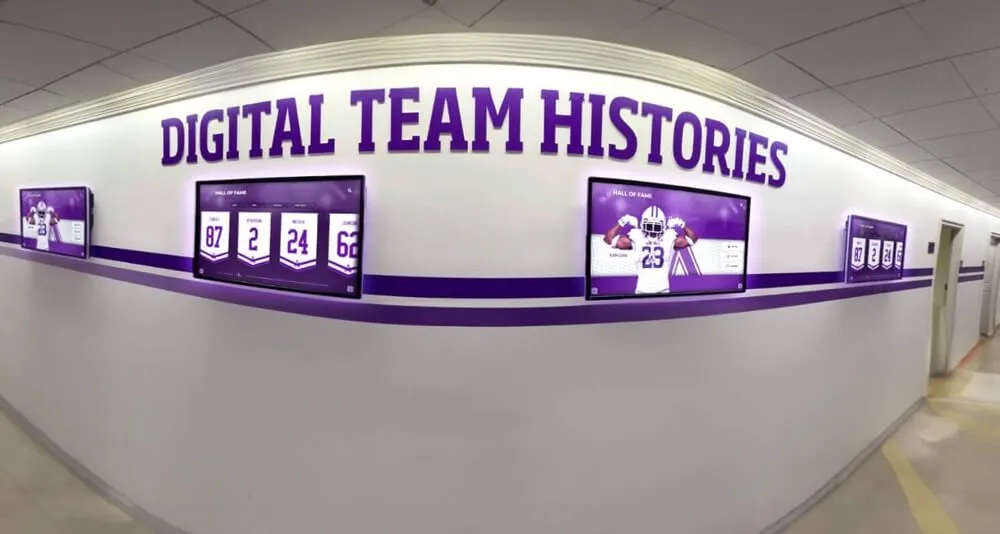
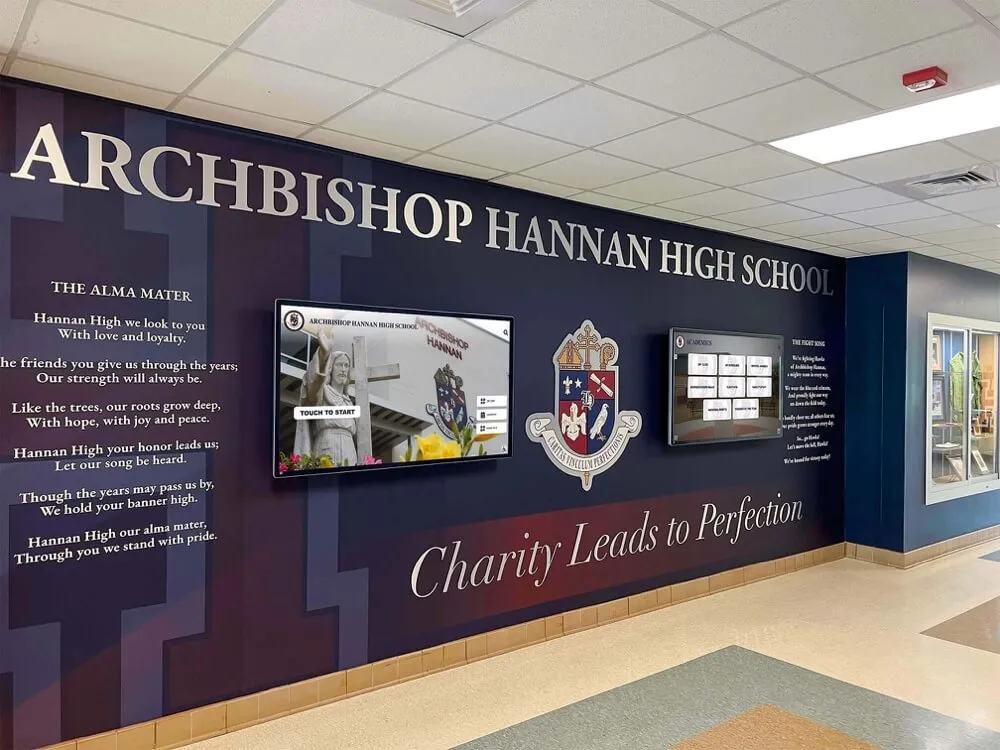
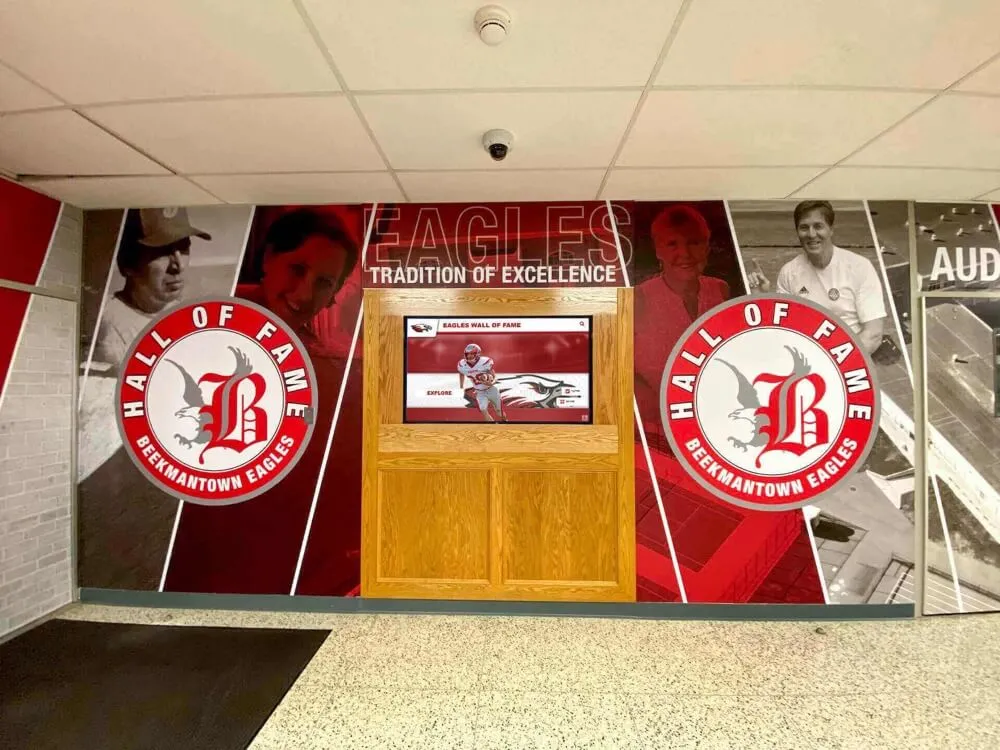
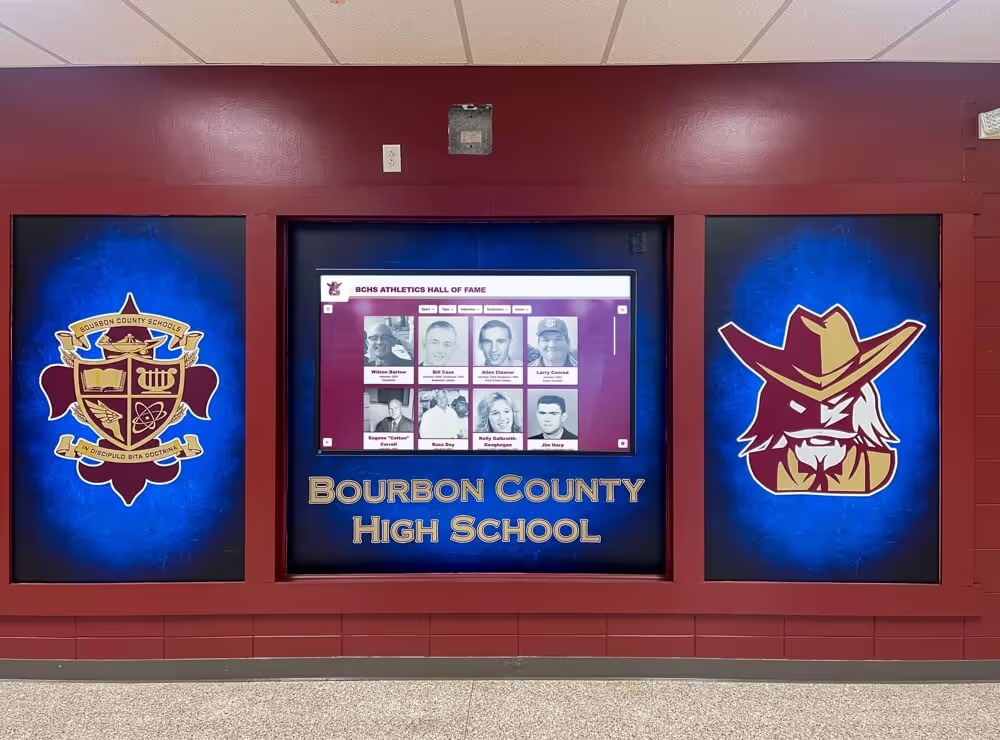
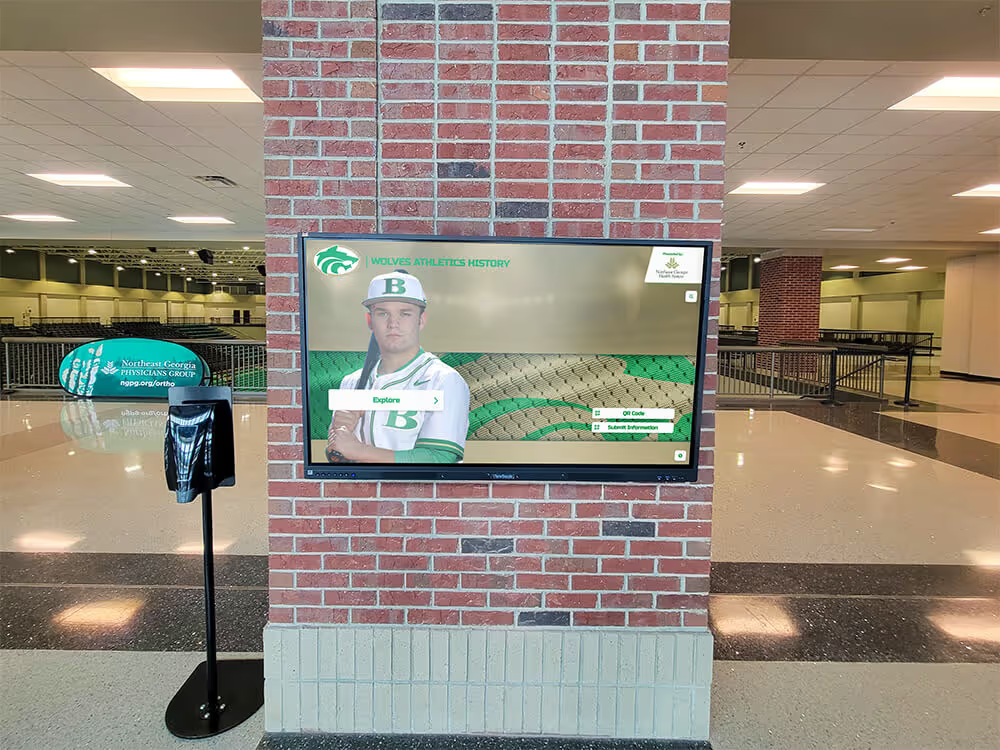
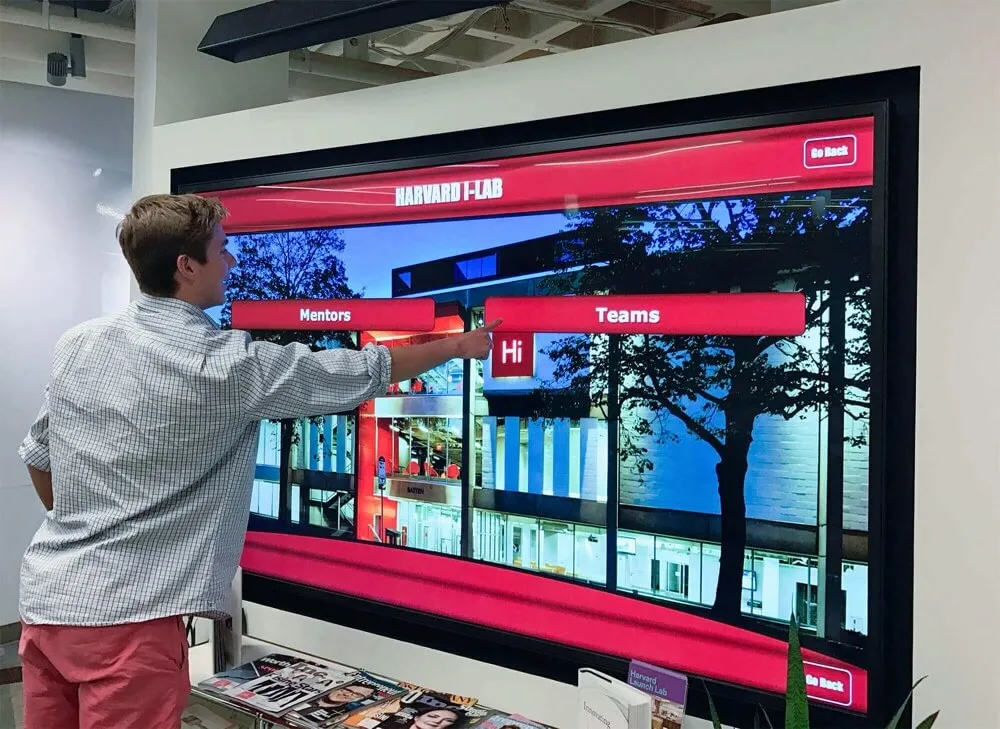
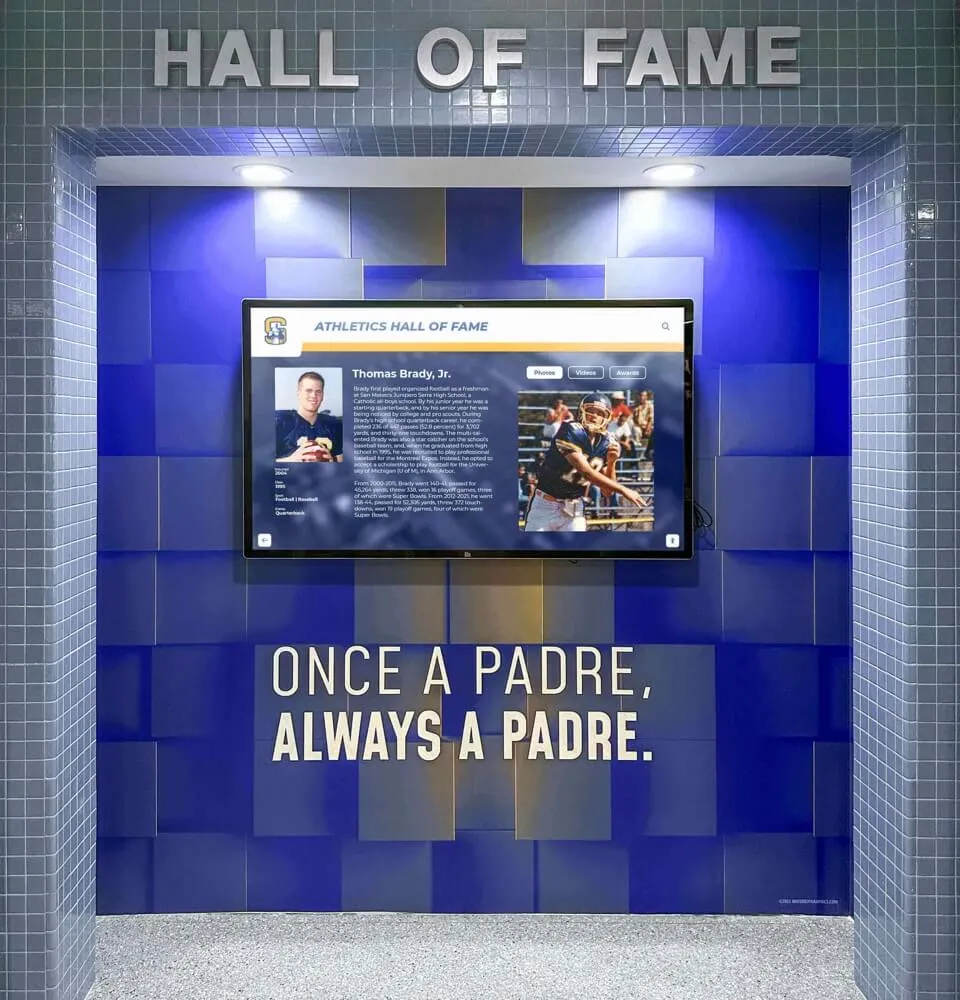
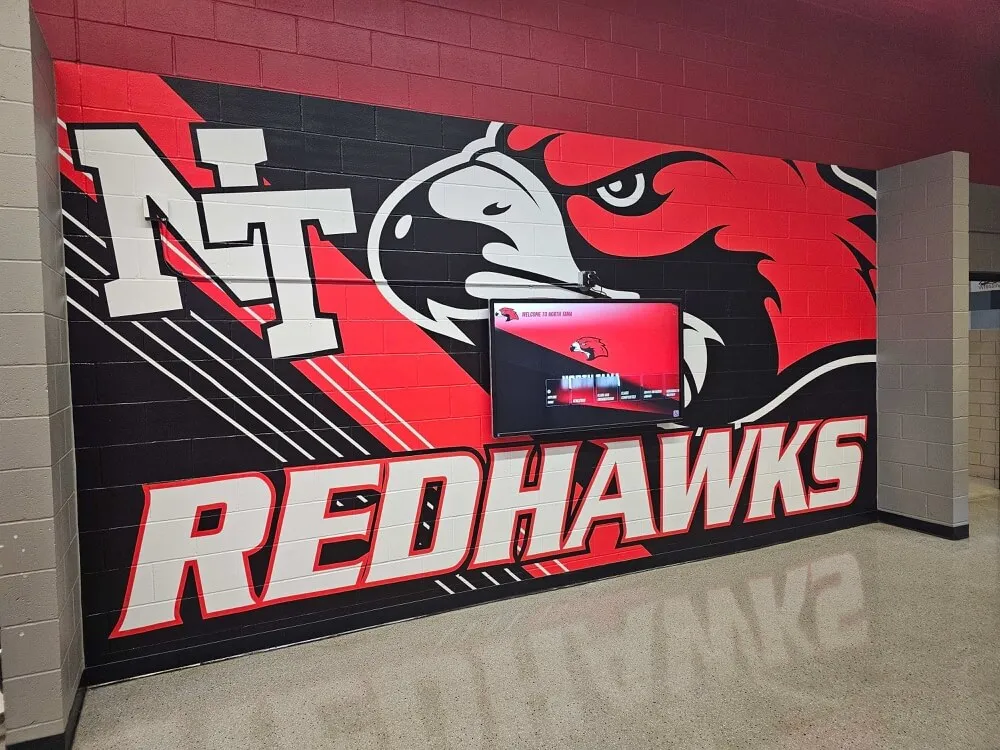
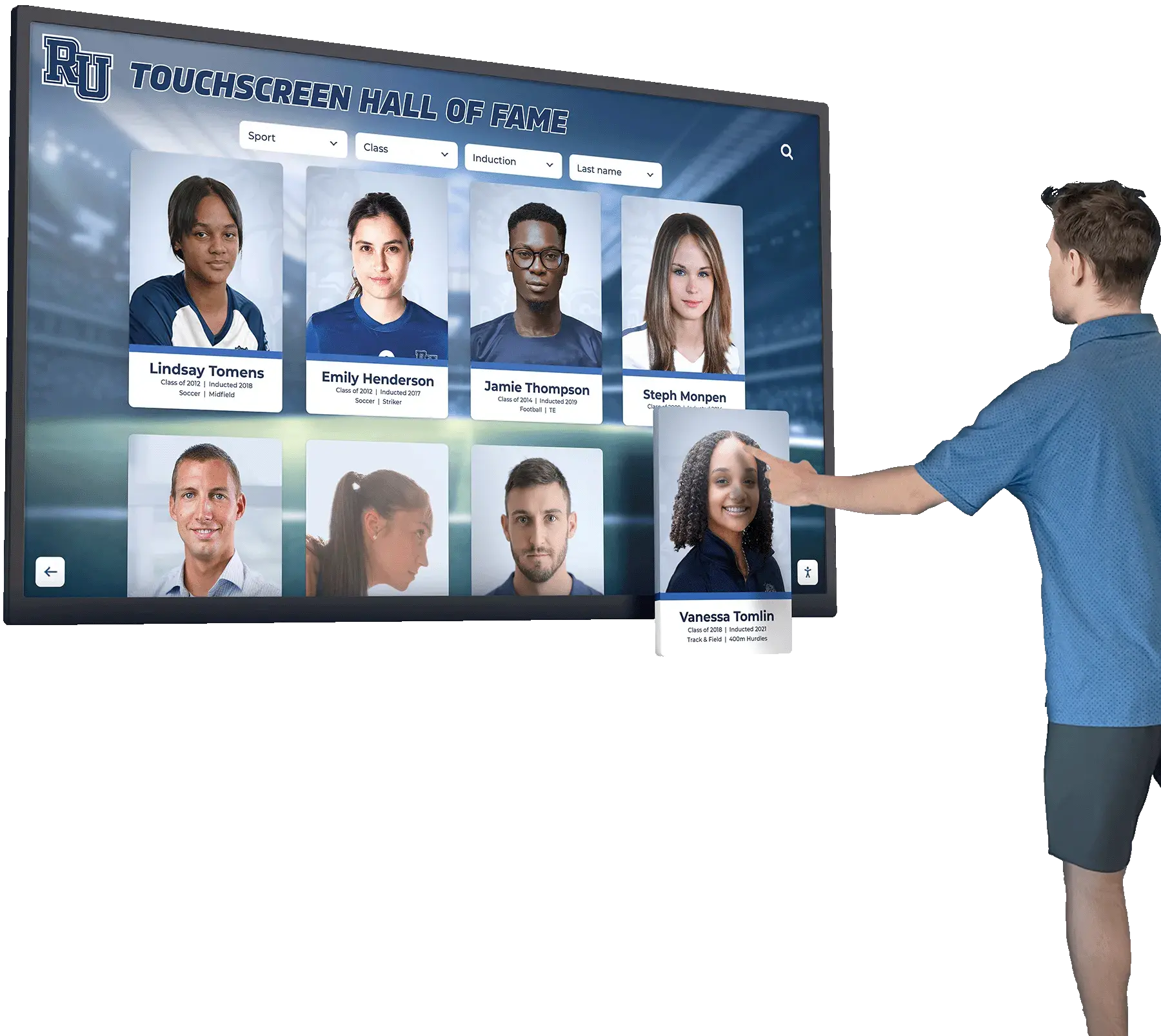
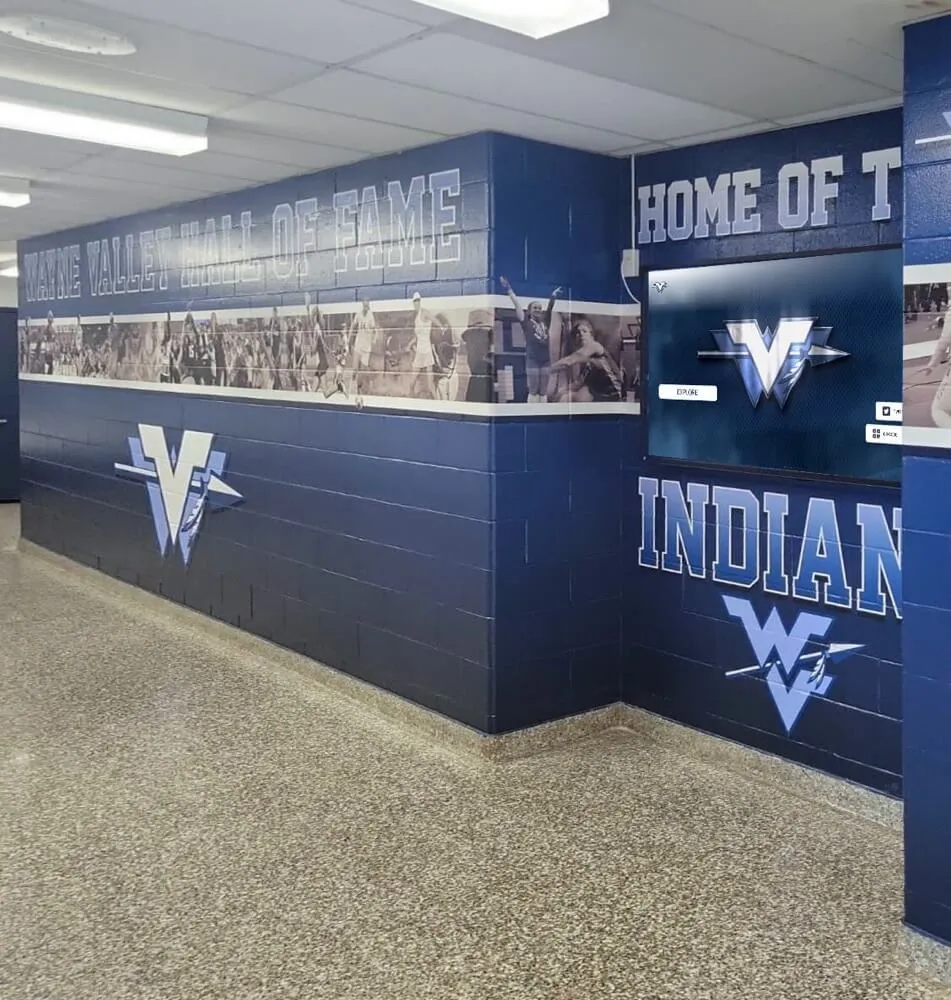
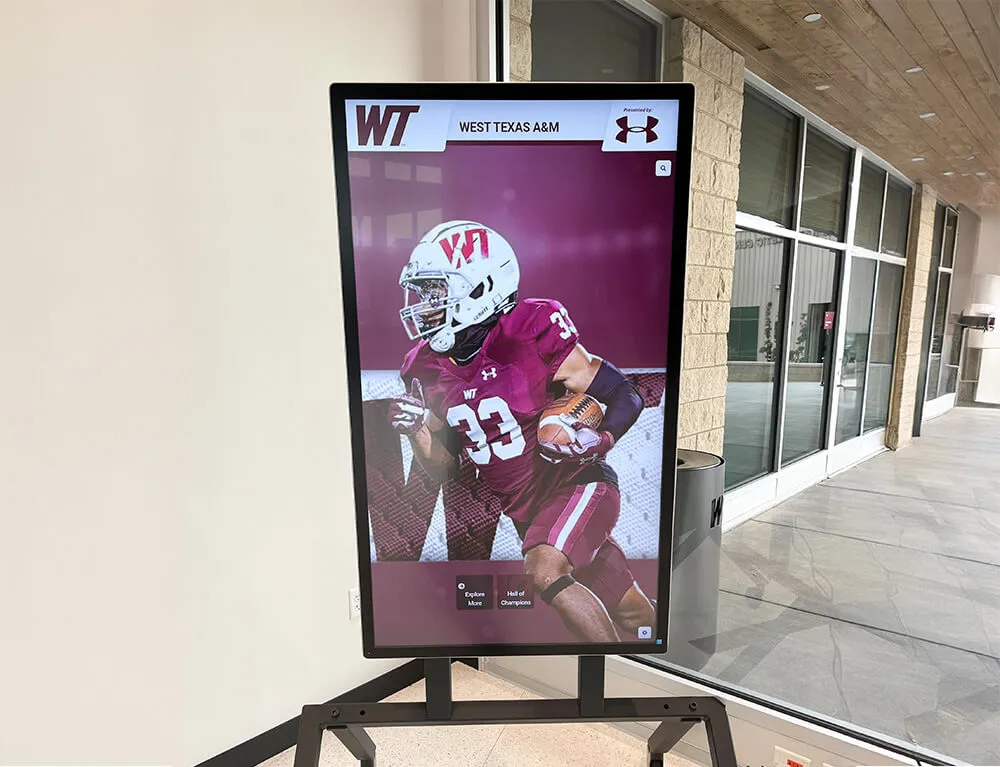
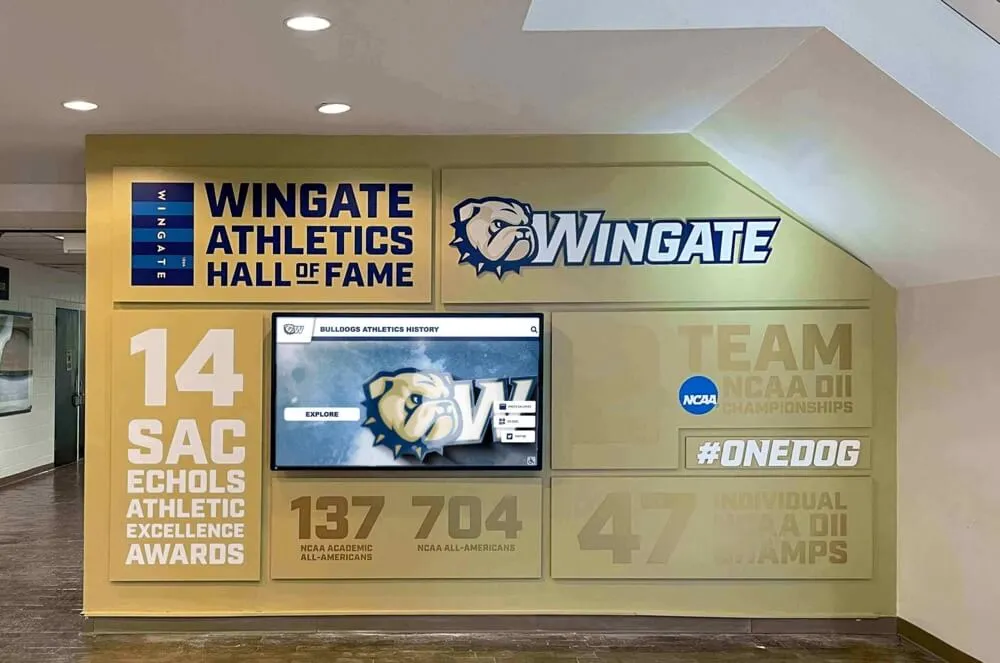
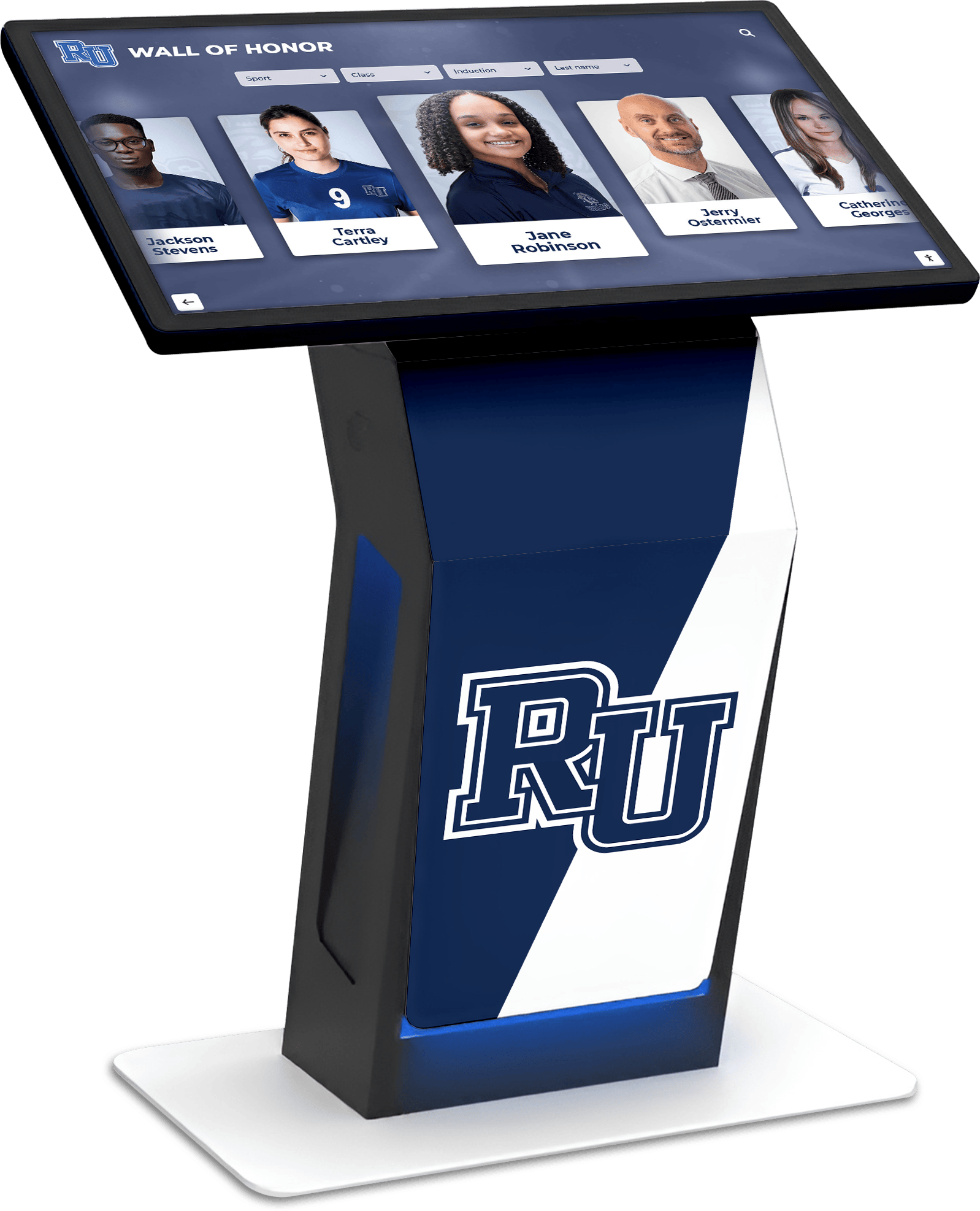
Interactive digital displays offer unlimited recognition capacity with engaging touchscreen interfaces
Understanding Total Cost of Ownership: Initial Investment Through Five-Year Lifecycle
Evaluating recognition display costs requires looking beyond purchase price to examine total ownership expenses including installation, updates, maintenance, and eventual replacement or expansion needs.
Physical Display Costs: The Hidden Expenses That Accumulate
Traditional recognition displays appear straightforward, but true costs extend well beyond initial fabrication.
Initial Implementation Investment
Physical recognition installations typically include:
- Custom fabrication: $8,000-$35,000 for quality wall-mounted displays
- Premium materials (bronze, brass, mahogany): $15,000-$50,000 for prestigious installations
- Trophy cases with lighting: $5,000-$25,000 depending on size and finish
- Professional installation: $1,000-$5,000 for mounting and electrical
- Design and layout services: $1,500-$5,000 for custom designs
- Architectural integration for lobbies: Additional $3,000-$15,000
A comprehensive traditional hall of fame installation for a typical high school frequently ranges from $15,000-$60,000 initially, with variation based on materials, size, and design complexity.
Per-Inductee Addition Costs
The ongoing expense structure creates long-term financial burden:
- Individual name plaques: $150-$400 per inductee
- Engraved plates for existing displays: $75-$250 each
- Trophy case nameplate additions: $100-$300 per item
- Rush fabrication fees: Additional 25-50% for expedited service
- Installation visits for updates: $150-$500 per service call
- Minimum order quantities forcing batch updates
Schools typically add 5-25 inductees annually across athletic, academic, and service recognition programs. At $200 average per addition, that represents $1,000-$5,000 in annual update costs before accounting for maintenance.
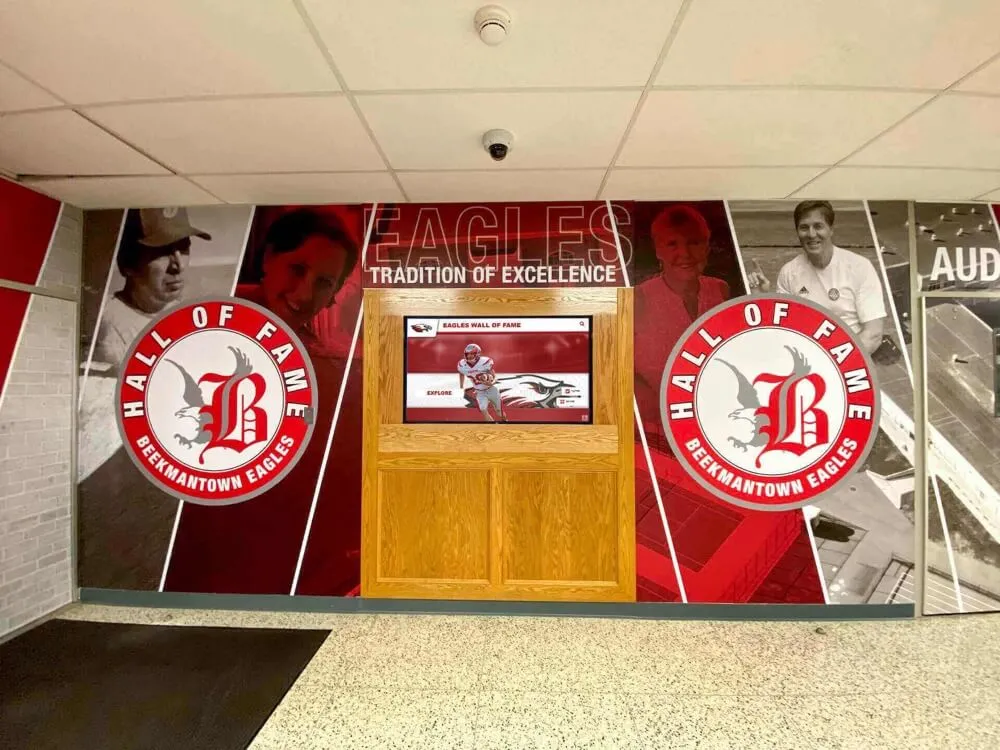
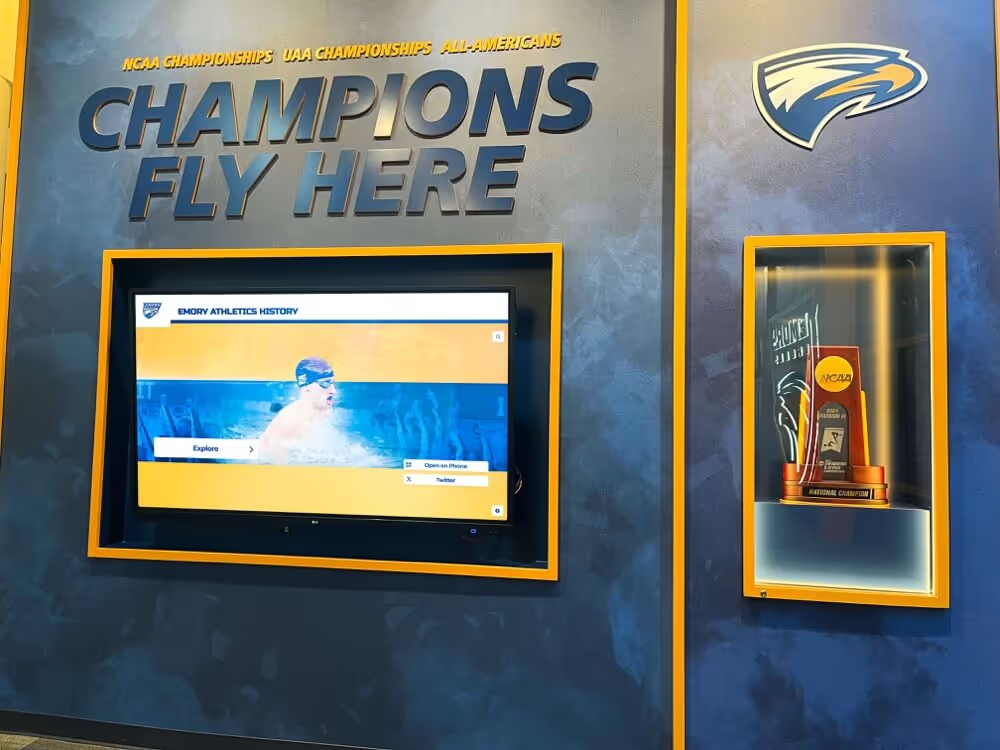
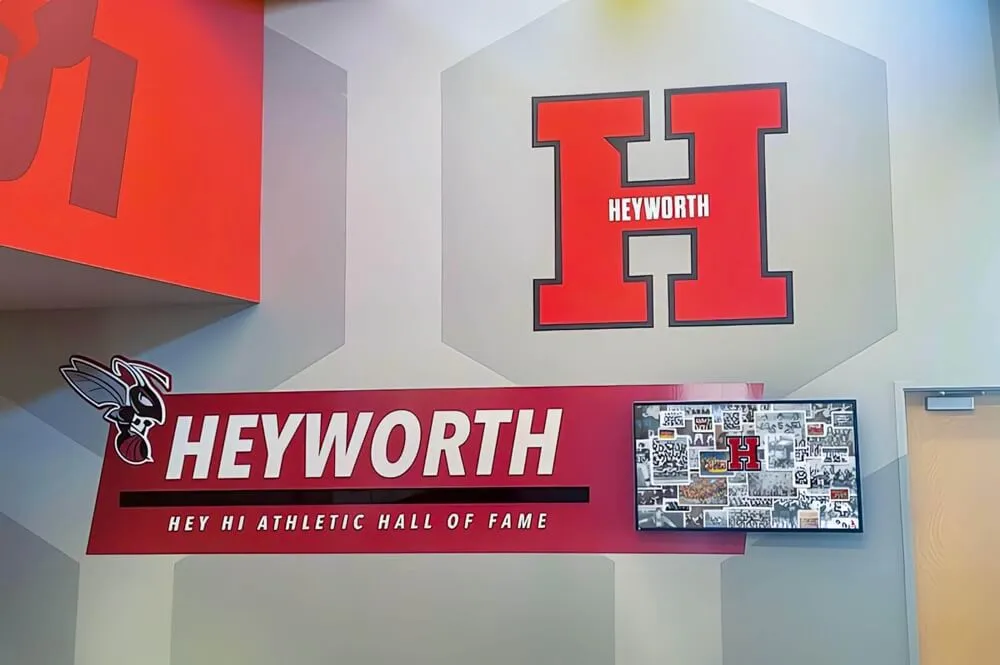
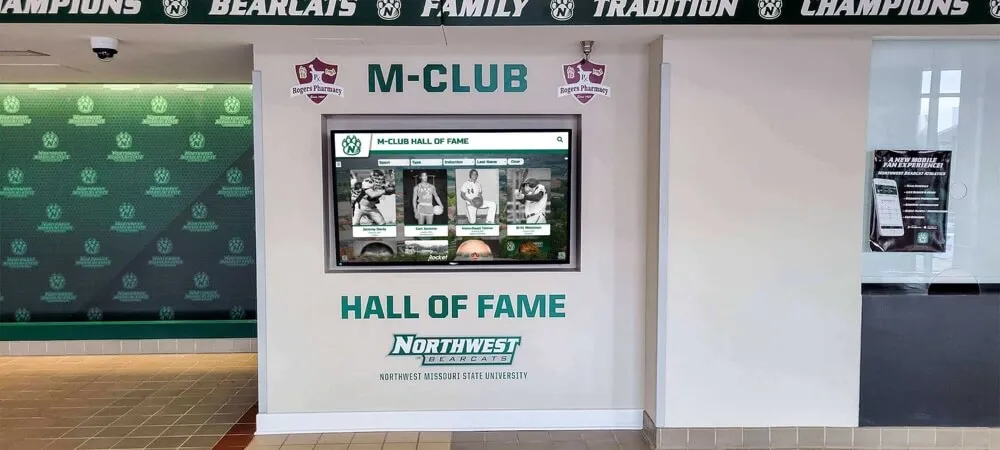
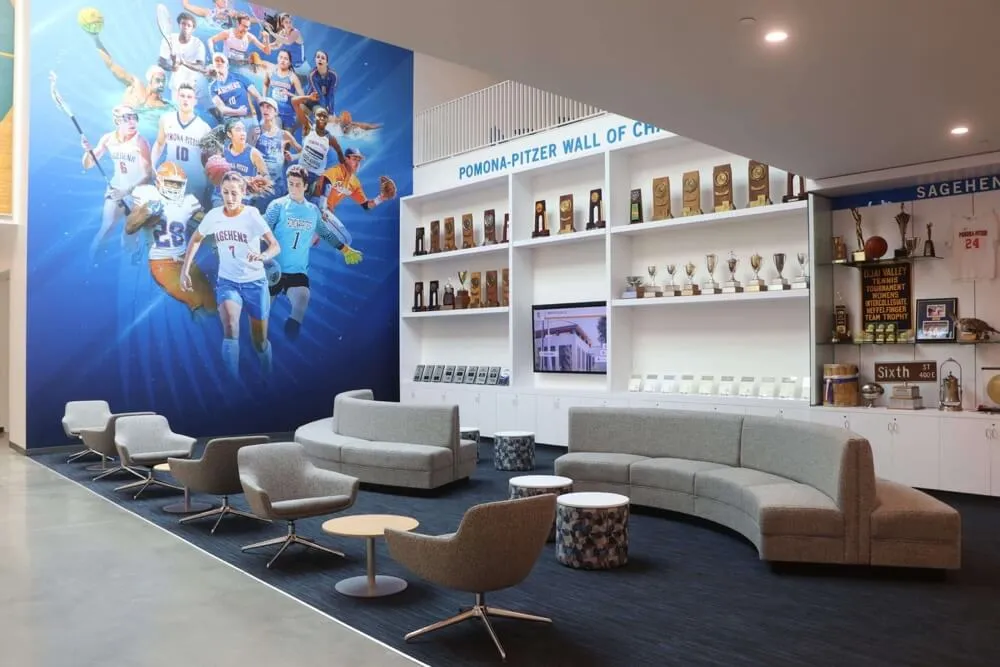
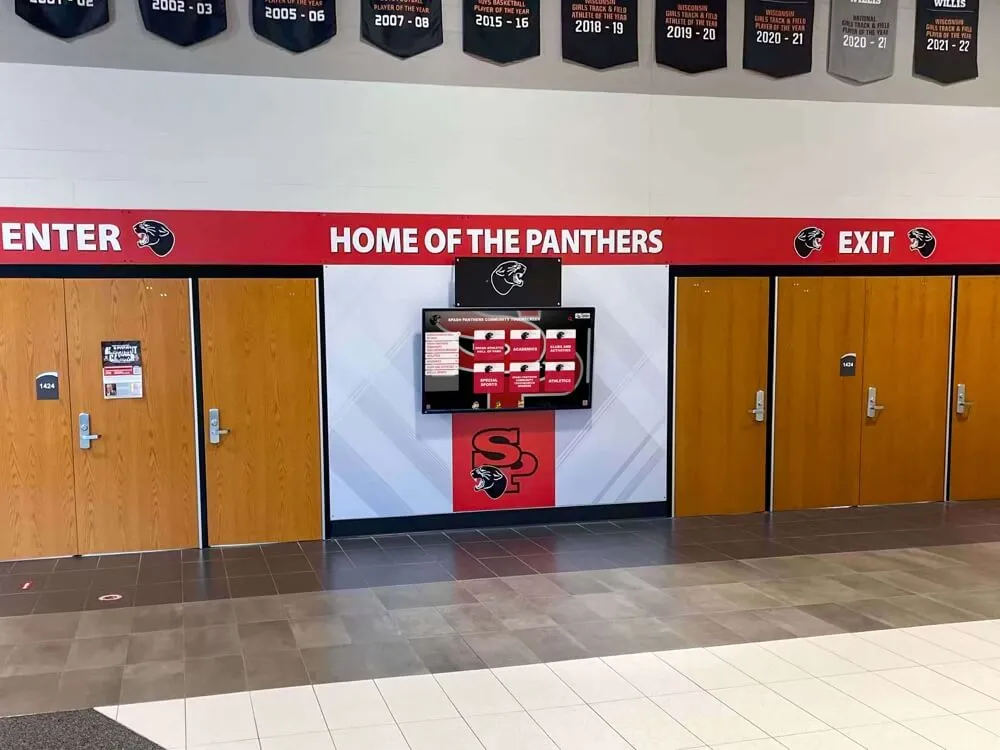
Traditional displays offer timeless aesthetics but face space and update limitations
Modification and Correction Expenses
Errors, changes, and updates create additional costs:
- Spelling or information corrections: $150-$400 per plaque replacement
- Category reorganization: $3,000-$15,000 for significant layout changes
- Design updates to match renovations: $5,000-$20,000 for consistency
- Historical plaque restoration: $100-$300 per item requiring refinishing
- Removal and disposal of replaced items: $500-$2,000 depending on scope
Space Expansion Requirements
Physical constraints eventually force expensive decisions:
- Additional wall display sections: $8,000-$25,000 per expansion
- New trophy case additions: $5,000-$20,000 per case
- Architectural modifications for space: $10,000-$50,000+ for structural changes
- Rotating older inductees to storage: Degrading recognition value
- Limiting new inductees: Damaging morale and institutional culture
Digital Display Costs: Comprehensive Investment Analysis
Digital recognition systems follow different economic models emphasizing upfront technology investment with minimal ongoing addition costs.
Initial Technology Investment
Digital wall of fame implementations include:
- Commercial touchscreen display (43"-55"): $3,000-$8,000
- Professional kiosk enclosure: $2,000-$6,000
- Content management software platform: $2,000-$8,000 initial setup
- Cloud hosting and infrastructure: Often included in software
- Professional installation and integration: $1,500-$4,000
- Staff training and content migration: $1,000-$3,000
Complete initial investment for quality digital wall of fame: $10,000-$30,000 for single-location implementation, with multi-display installations ranging $25,000-$75,000 depending on scope and customization.
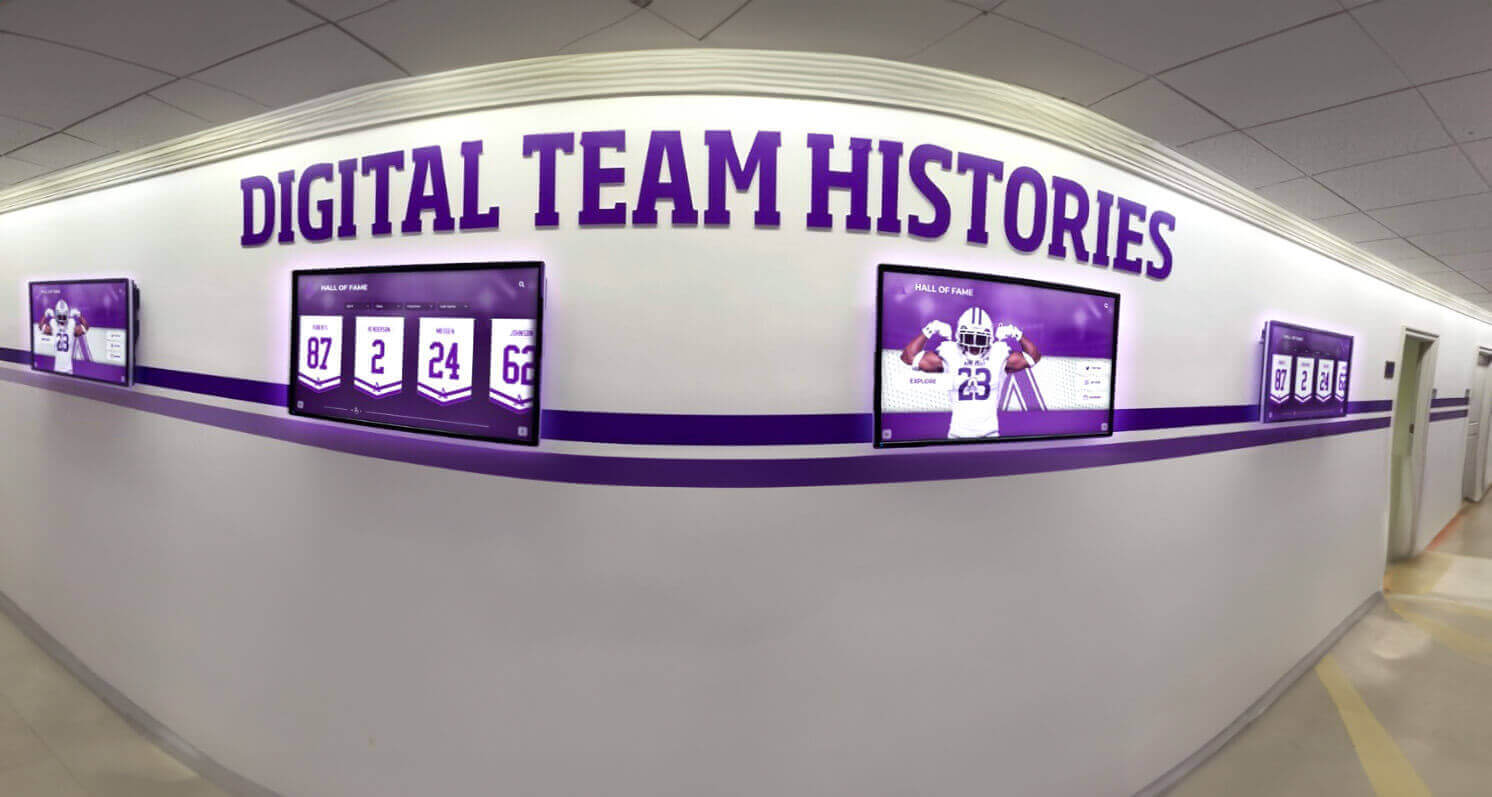
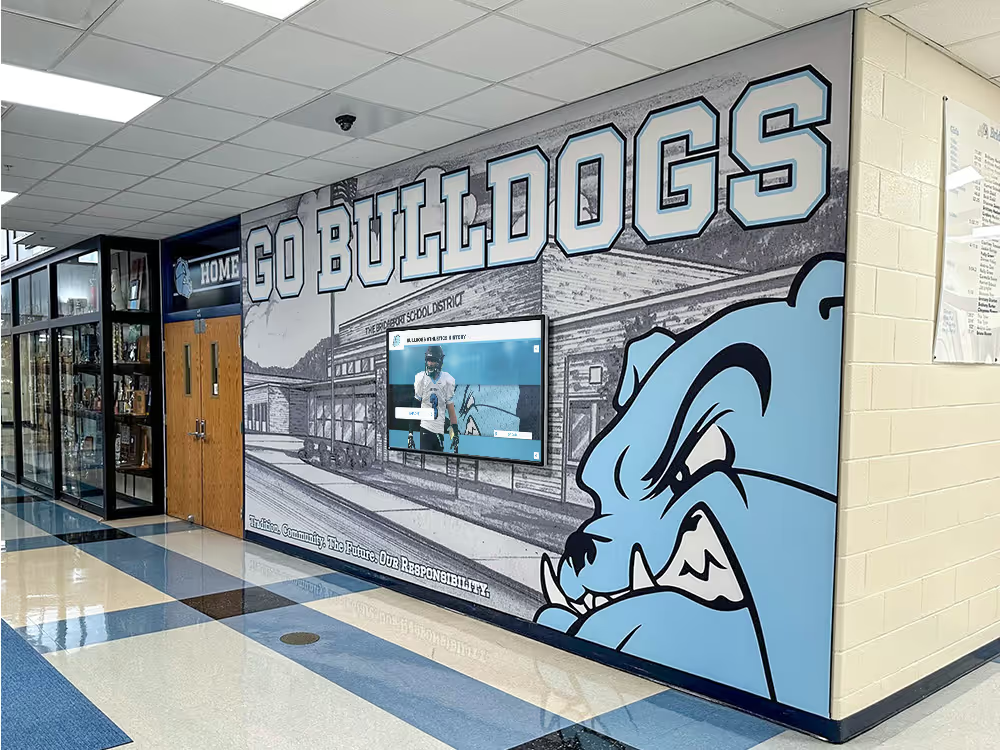
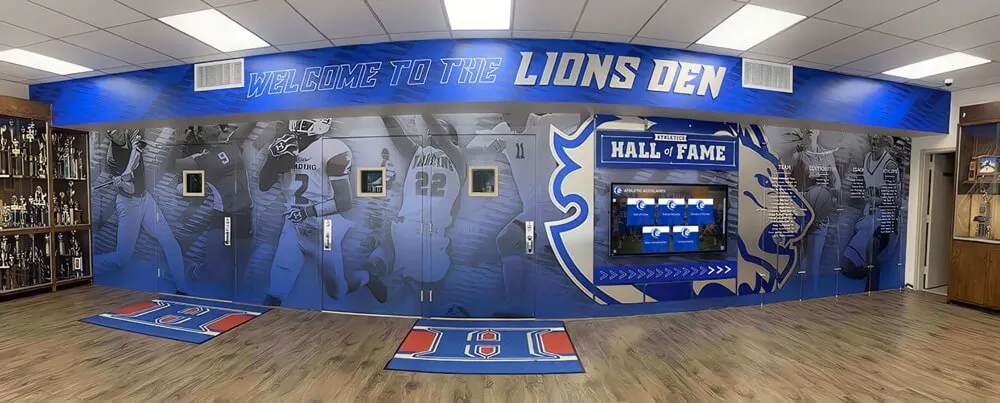
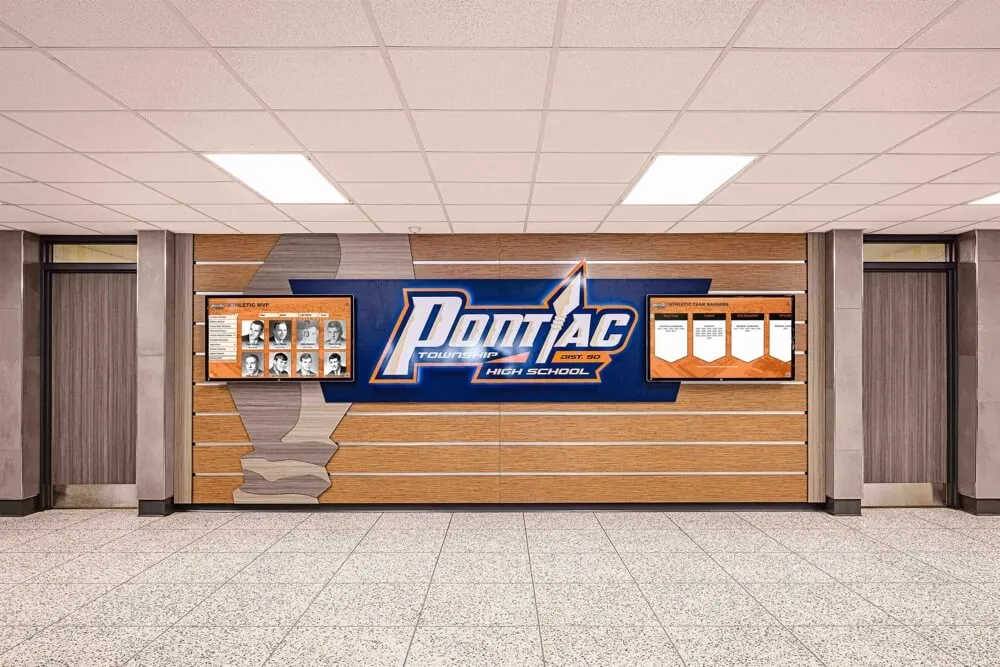
Digital systems enable multiple synchronized displays throughout your facility
Per-Inductee Addition Costs
Digital platforms fundamentally change the economics:
- Additional inductees: $0 incremental cost per person
- Content updates and edits: Administrative time only
- Photo and biography additions: Unlimited at no additional charge
- Category creation and reorganization: Free through content management
- Bulk imports for historical data: No fabrication delays or costs
The economic advantage compounds over time—50 new inductees cost $0 in digital systems versus $7,500-$20,000 in traditional plaque fabrication and installation.
Ongoing Platform and Maintenance Costs
Annual digital system expenses include:
- Software subscription/licensing: $1,200-$5,000 annually
- Cloud hosting and support: $500-$2,000 annually (often bundled)
- Hardware warranty/protection: $300-$1,200 annually (optional)
- Electricity consumption: Approximately $50-$150 annually
- Technical support access: Frequently included in subscription
- Platform updates and improvements: Automatic with subscription
Explore comprehensive digital recognition platform features in this complete digital wall of fame buying guide.
Five-Year Total Cost of Ownership Comparison
Real-world cost analysis reveals significant differences over typical planning horizons:
Physical Display Five-Year Total
- Initial installation: $25,000
- Annual additions (15 inductees × $250): $3,750/year × 5 years = $18,750
- Corrections and updates (avg): $1,500/year × 5 years = $7,500
- Maintenance and cleaning: $500/year × 5 years = $2,500
- One expansion/modification: $12,000
- Five-Year Total: $65,750
Digital Display Five-Year Total
- Initial installation: $20,000
- Annual software/hosting: $2,500/year × 5 years = $12,500
- Additional inductees: $0
- Updates and corrections: Administrative time only
- Maintenance: $100/year × 5 years = $500
- Five-Year Total: $33,000
The digital approach saves approximately $32,750 over five years in this representative scenario, with savings increasing as recognition program scale grows.
Consider implementation approaches in this installation guide for digital hall of fame displays.
Maintenance Requirements and Operational Efficiency
Beyond direct costs, the time and effort required to maintain and update recognition systems significantly impacts institutional resources and recognition effectiveness.
Physical Display Maintenance Realities
Traditional displays require ongoing attention across multiple dimensions:
Routine Cleaning and Preservation
- Weekly dusting of plaques and display surfaces
- Quarterly deep cleaning of trophy cases and glass
- Annual polishing of metal plaques to prevent tarnishing
- Replacement of deteriorated felt backing or matting
- Repair of damaged frames or mounting hardware
- Cleaning of accumulated debris in trophy cases
Athletic directors report spending 3-6 hours monthly on physical display maintenance, with additional time during events when displays receive heightened visibility.
Update Process Timeline and Logistics
Adding inductees to physical displays involves complex multi-step processes:
Planning Phase (2-4 weeks)
- Compile inductee information and verify accuracy
- Measure available space and determine layout
- Obtain quotes from engraving vendors
- Secure budget approval for additions
- Finalize design and placement decisions
Fabrication Phase (4-8 weeks)
- Submit orders to engraving companies
- Wait for production scheduling and completion
- Review proofs and approve final designs
- Account for shipping and delivery delays
- Coordinate installation scheduling
Installation Phase (1-2 weeks)
- Schedule contractor or maintenance staff
- Remove existing elements if modifications needed
- Install new plaques or nameplates
- Verify alignment and quality
- Clean and prepare for visibility
Total timeline from decision to display: 7-14 weeks minimum, with delays extending this significantly during busy seasons or when errors require re-fabrication.
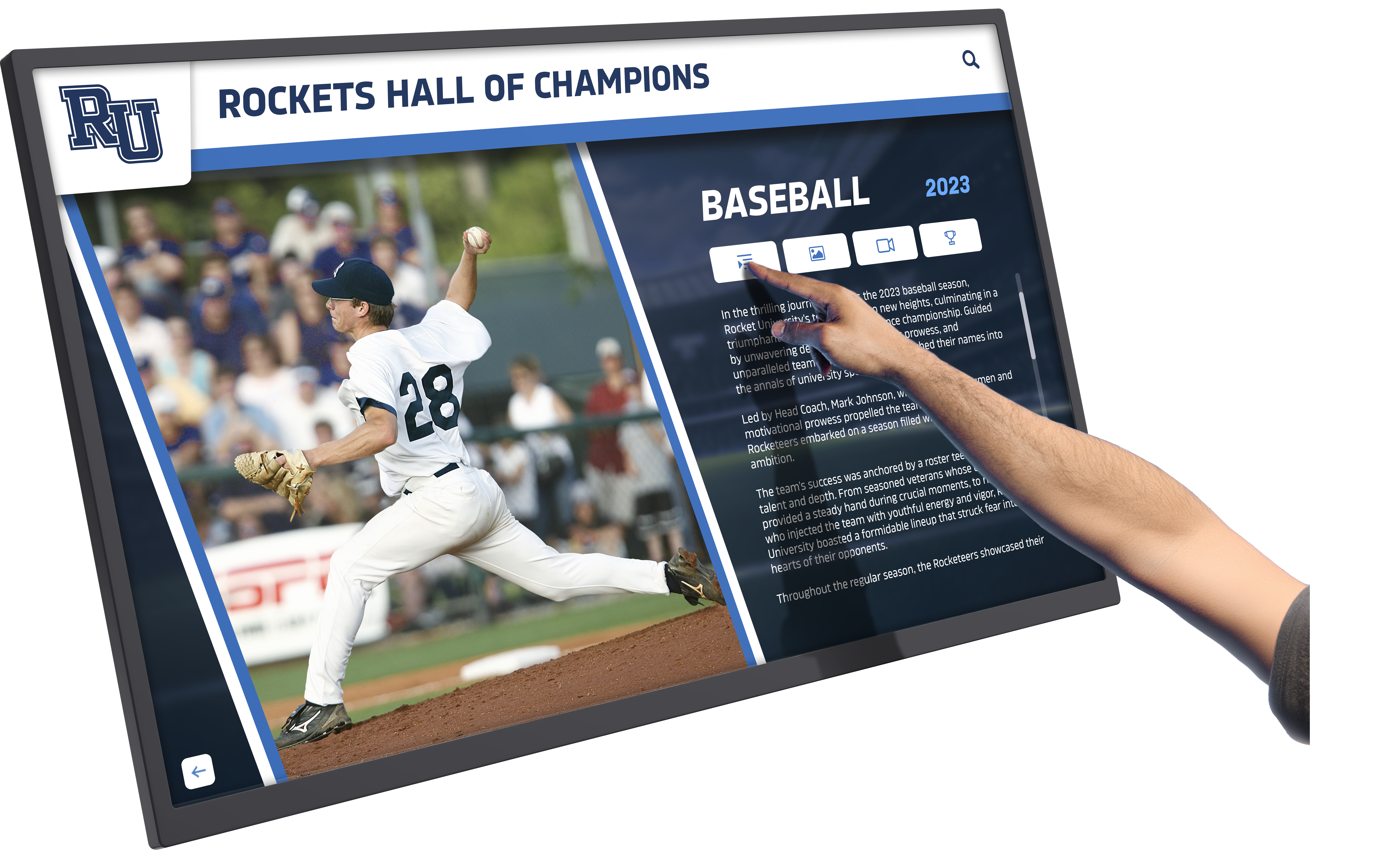
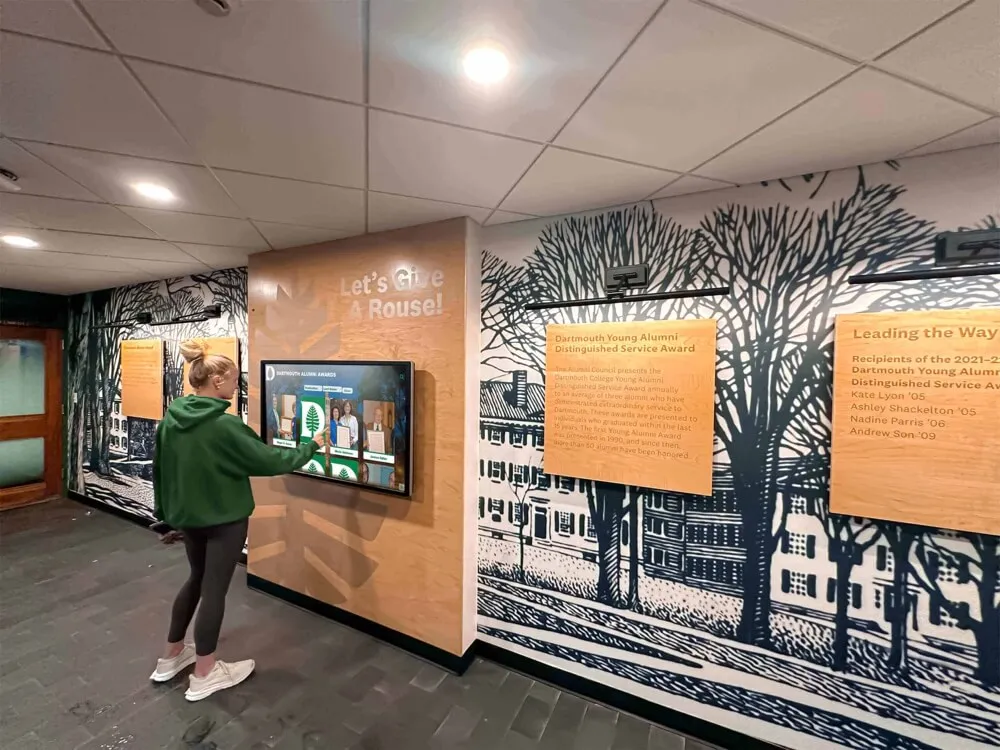
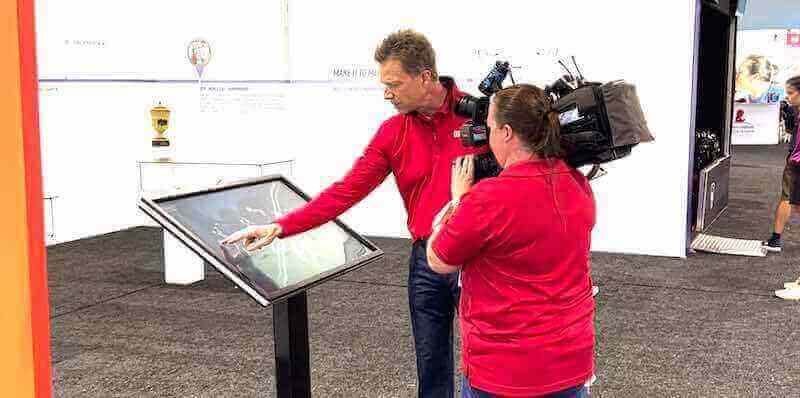
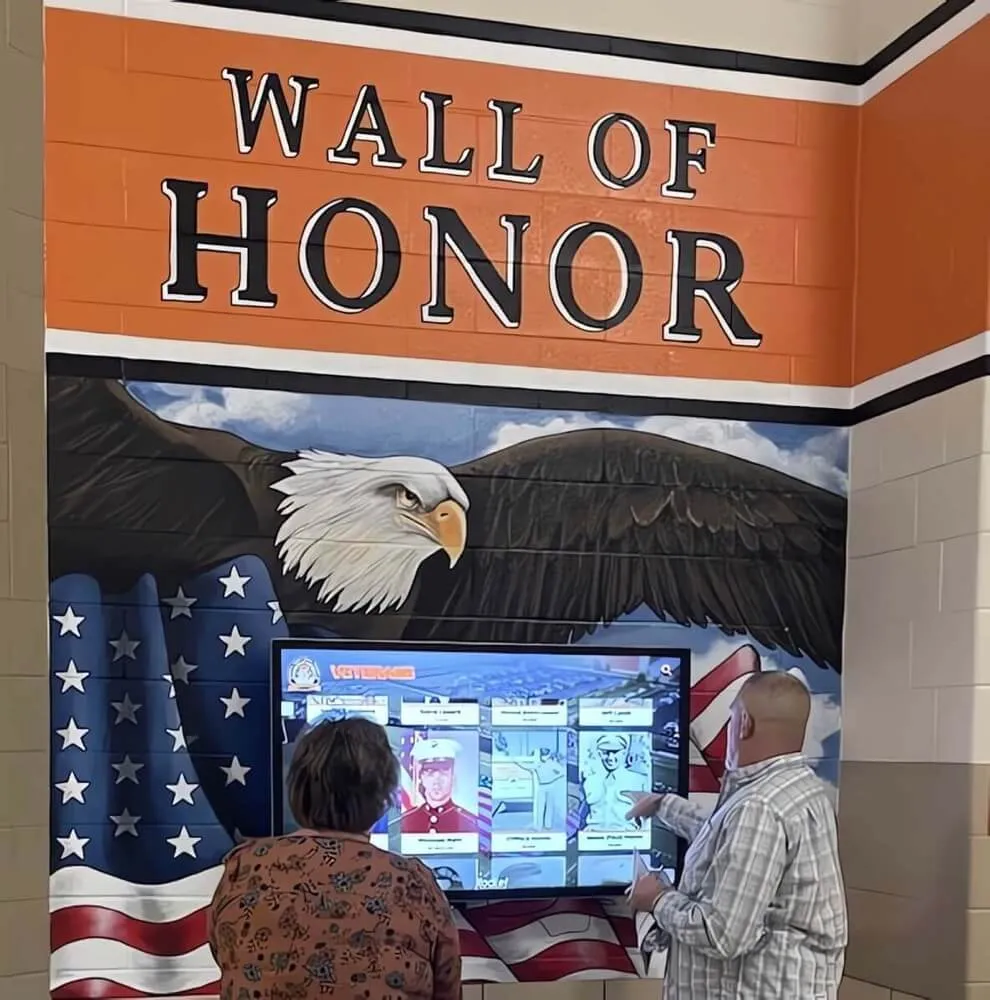
Digital touchscreens enable instant updates without fabrication delays or installation coordination
Error Correction Challenges
Physical display errors create particularly frustrating situations:
- Misspelled names requiring complete plaque replacement
- Incorrect dates or achievements needing re-fabrication
- Missing inductees discovered after installation completion
- Category changes requiring physical reorganization
- Layout improvements needing architectural modifications
Each error correction follows the same lengthy fabrication-installation cycle, with rushed timelines adding 25-50% premium costs and quality concerns.
Digital Display Maintenance Advantages
Digital systems dramatically simplify ongoing maintenance and update requirements:
Technical Maintenance Requirements
- Screen cleaning: Monthly with microfiber cloth (5-10 minutes)
- Software updates: Automatic via cloud platform
- Hardware checks: Quarterly inspection of connections
- Backup verification: Automatic cloud redundancy
- Touch calibration: Rarely needed with quality displays
- Remote monitoring: Alerts to potential issues
Total hands-on maintenance time: Approximately 30-60 minutes quarterly, representing 85-90% reduction compared to physical displays.
Update Process Efficiency
Digital recognition updates follow streamlined workflows:
Content Preparation (Same Day)
- Gather inductee information and photos
- Enter details into cloud content management system
- Preview appearance before publishing
- Schedule publication date if desired
Publishing (Instant)
- Click publish button for immediate display
- Updates appear within seconds across all connected displays
- No fabrication, shipping, or installation required
Verification (Same Day)
- Review live display for accuracy
- Make immediate corrections if needed
- No reinstallation or vendor coordination
Total timeline from decision to display: Hours instead of months, enabling timely recognition that honors inductees appropriately and maintains program momentum.
Review comprehensive approaches in this academic recognition programs guide.
Error Correction Simplicity
Digital platforms make corrections effortless:
- Login to content management system
- Edit affected field or information
- Save changes for immediate display update
- No costs, delays, or vendor coordination
This eliminates the anxiety around errors since corrections require minutes rather than weeks and hundreds of dollars.
Multi-Location Synchronization
Digital systems enable coordinated recognition across locations:
- Update content once, display everywhere simultaneously
- Maintain consistency across multiple buildings or campuses
- Coordinate recognition with events automatically
- Schedule seasonal or thematic content changes
- Manage distributed displays from single dashboard
Schools with multiple athletic facilities, academic buildings, or campus locations particularly benefit from centralized management impossible with physical displays.
Community Engagement and Recognition Impact
Recognition effectiveness extends beyond internal administration to how displays engage students, alumni, visitors, and community members.
Physical Display Engagement Characteristics
Traditional displays offer certain engagement advantages while facing inherent limitations:
Tangible Permanence and Prestige
Physical plaques and trophies convey institutional gravitas:
- Substantial materials communicate lasting importance
- Traditional formats align with formal recognition expectations
- Physical objects create “real” sense of achievement
- Trophy cases showcase three-dimensional awards
- Brass and wood suggest permanence and history
- Architecture integration demonstrates institutional commitment
Alumni and donors particularly value these tangible elements, often associating physical displays with the recognition they received during their own student years.
Passive Viewing Limitations
Static displays create predictable engagement patterns:
- Average viewing time: 20-45 seconds for casual viewers
- Limited information: Name, year, achievement only
- No search capability: Must visually scan entire display
- Spatial organization only: Chronological or alphabetical
- Photography challenges: Glass glare and lighting issues
- Accessibility barriers: Height, spacing, and visibility constraints
Administrators report that while traditional displays maintain institutional tradition, they rarely generate extended engagement or deeper exploration of honorees’ achievements and stories.
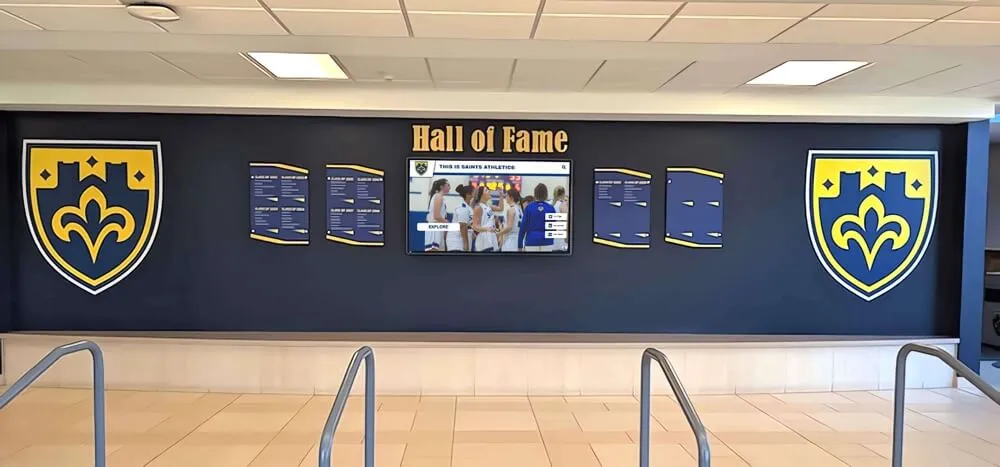
Traditional displays provide dignified recognition but limited engagement depth
Space Constraints Affecting Recognition Equity
Physical limitations create difficult decisions:
- Limited space forcing selection of “most important” achievements
- Hierarchical placement based on physical position
- Older inductees eventually removed to make space
- Inability to recognize all deserving individuals
- Different treatment for different achievement categories
- No capacity for comprehensive historical preservation
These constraints inadvertently create perceptions of favoritism or forgotten contributions that can damage institutional culture.
Digital Display Engagement Advantages
Interactive digital recognition creates fundamentally different engagement experiences:
Extended Interaction and Deep Exploration
Touchscreen interfaces transform casual glances into meaningful engagement:
- Average session time: 3-8 minutes for engaged users
- Search functionality: Find specific inductees instantly
- Rich profiles: Photos, videos, detailed biographies
- Filter and sort: Explore by year, sport, achievement type
- Related content: Discover connections between inductees
- Media galleries: Game highlights, championship moments, career photos
Schools implementing digital recognition report 10-15x increase in average engagement time compared to physical displays, with visitors actively exploring rather than passively viewing.
Multimedia Storytelling Capabilities
Digital platforms enable rich recognition experiences impossible with plaques:
Visual Content
- Professional portrait photography
- Action shots from competitions and performances
- Team photos and group recognition
- Historic images showing era and context
- Career progression photo timelines
- Video highlights and championship moments
Narrative Elements
- Detailed achievement descriptions
- Personal statements and reflections
- Coach and teammate testimonials
- Career statistics and records
- Post-graduation accomplishments
- Family legacy connections
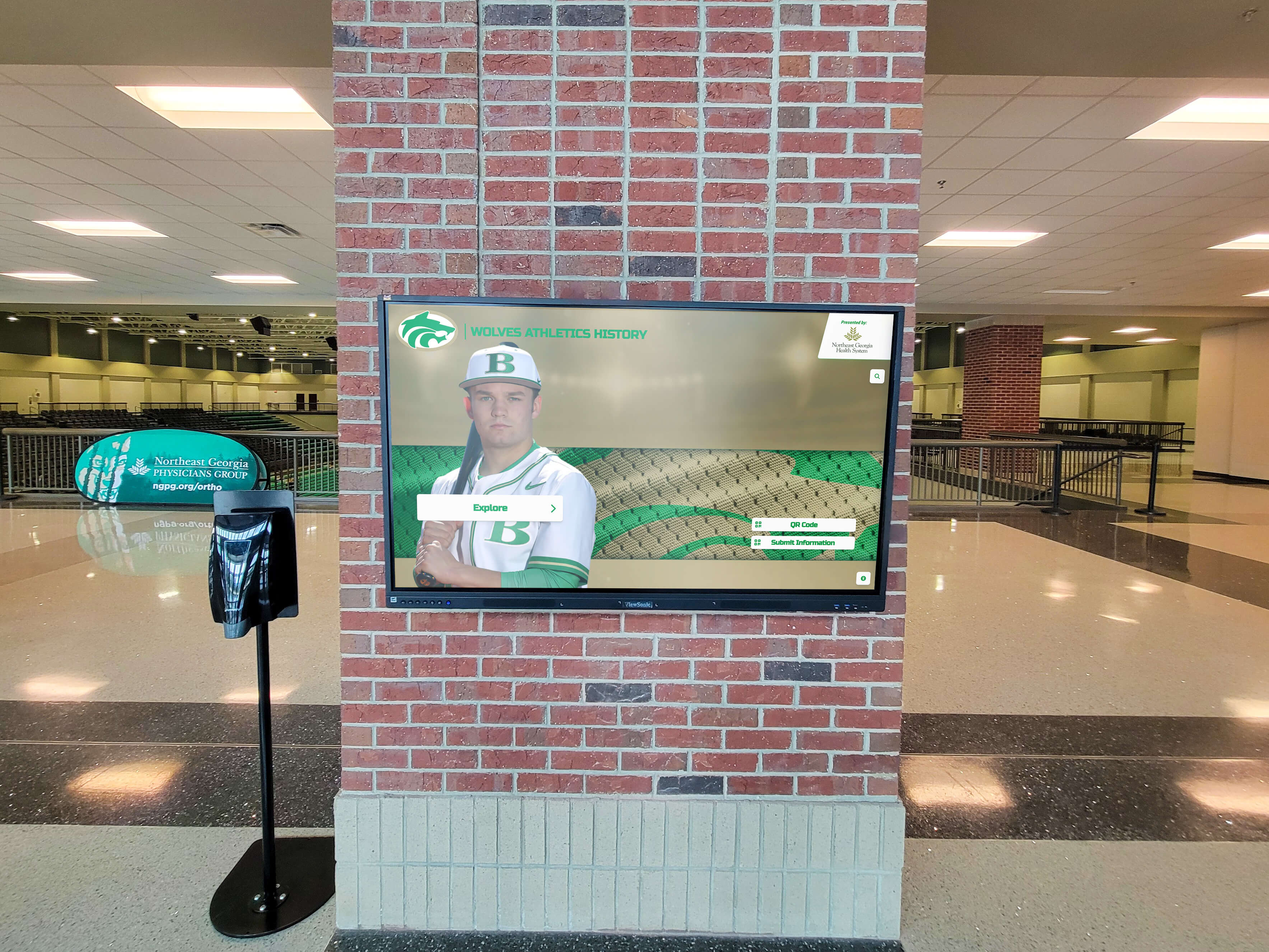
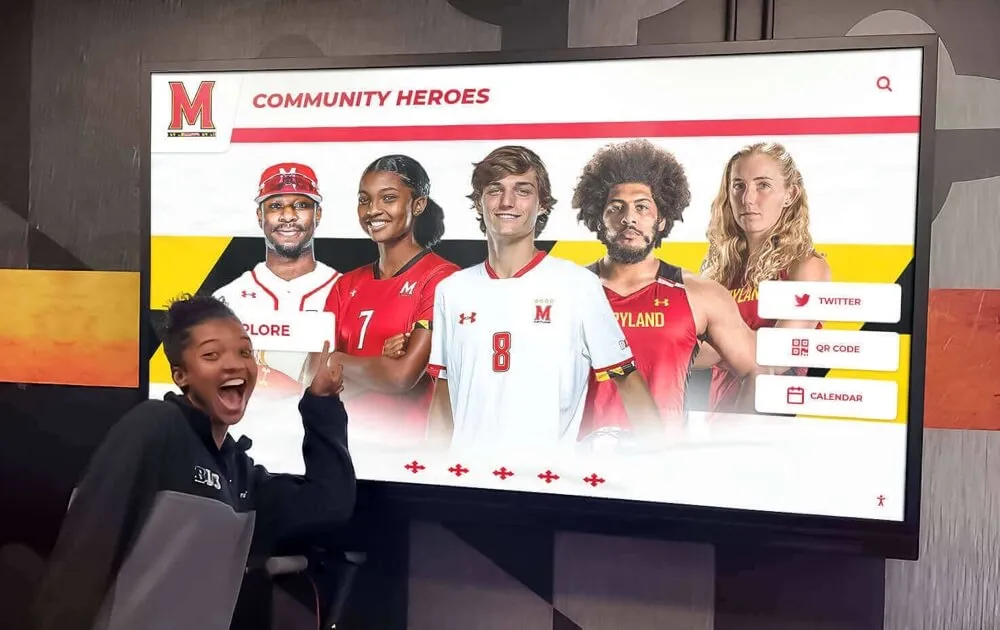
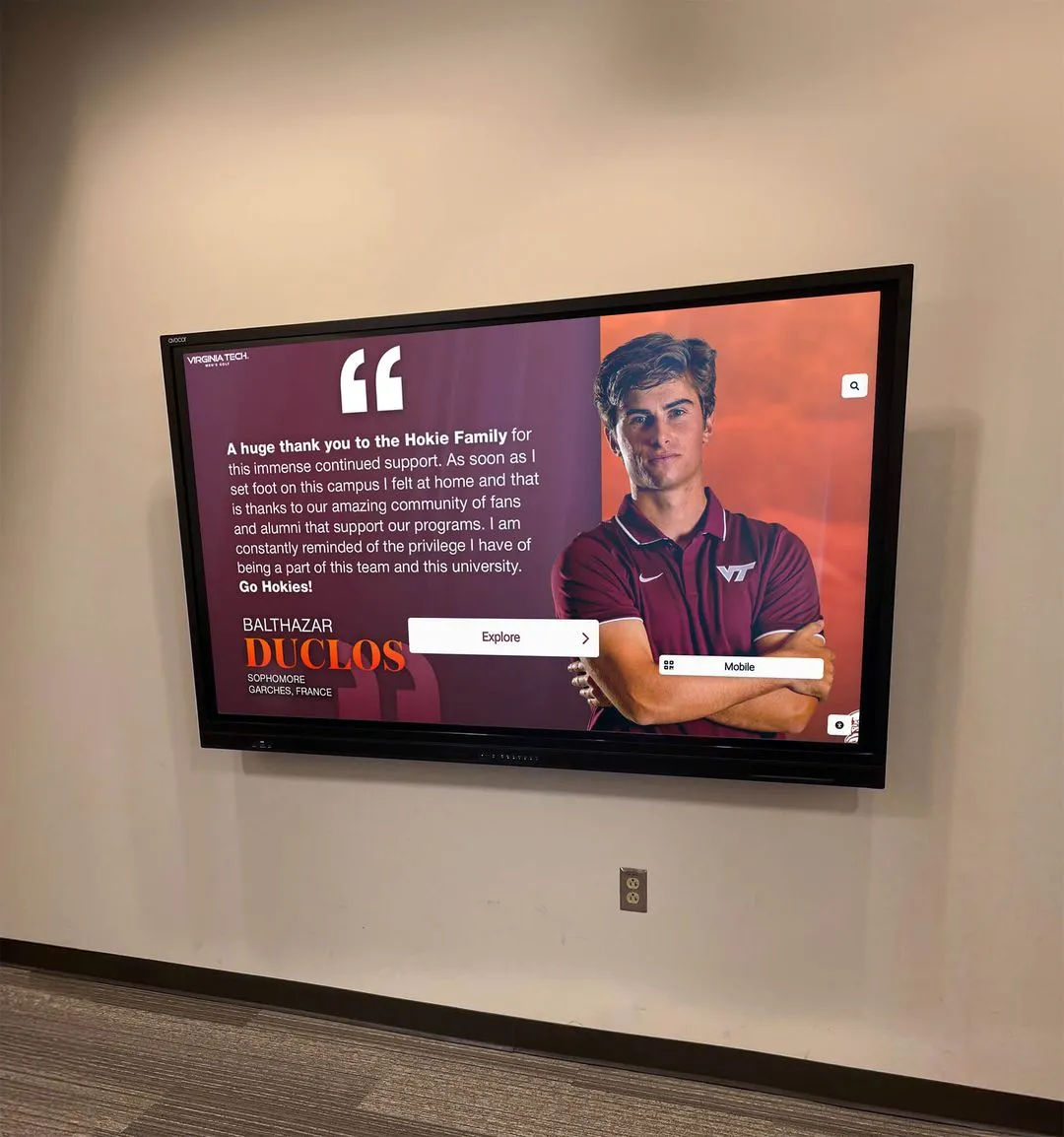
Digital displays bring achievements to life with full-screen imagery and rich media content
This storytelling depth creates emotional connections and inspires current students by showing complete achievement journeys rather than just names and dates.
Discover additional engagement strategies in this team bonding and recognition ideas guide.
Universal Recognition Without Space Constraints
Digital capacity enables comprehensive recognition:
- Unlimited inductees across all categories
- Every deserving individual recognized appropriately
- Complete historical preservation indefinitely
- Multiple simultaneous recognition frameworks
- Specialty categories without additional space
- Equitable treatment regardless of era or achievement type
This comprehensive approach strengthens institutional culture by ensuring no deserving achievement goes unrecognized due to physical limitations.
Mobile and Remote Access Extension
Modern digital systems extend recognition beyond physical location:
- QR codes enabling mobile access from anywhere
- Web-based viewing for remote alumni
- Social sharing of individual profiles
- Email recognition announcements with links
- Reunion accessibility for distant alumni
- Continuous engagement beyond campus visits
This extended reach maintains recognition visibility and alumni connections independent of physical campus access.
Review comprehensive digital approaches in this digital wall mount display guide for organizations.
Measurable Impact Differences
Schools tracking recognition effectiveness report quantifiable engagement differences:
Physical Display Metrics
- Average viewing duration: 25-45 seconds
- Repeat visitors: 15-20% return for second look
- Information depth: Name, year, basic achievement
- Accessibility: Physical presence required
- Search capability: Visual scanning only
- Update timeliness: 2-6 months delay typical
Digital Display Metrics
- Average session duration: 3-8 minutes for engaged users
- Repeat usage: 35-50% return visitors exploring different content
- Information depth: Unlimited photos, videos, detailed biographies
- Accessibility: Physical display plus mobile/web access
- Search capability: Instant name, year, category, keyword search
- Update timeliness: Same-day publication possible
The engagement quality difference significantly impacts recognition program goals—inspiring current students, maintaining alumni connections, and celebrating institutional excellence.
Strategic Considerations for Different Institutional Contexts
The optimal recognition approach depends on institutional priorities, resources, and community characteristics.
When Physical Displays Remain Advantageous
Traditional recognition formats continue serving specific institutional needs:
Historic Building Preservation Schools in heritage buildings or with architectural restrictions may find:
- Physical displays better match historic aesthetics
- Technology installations require modifications violating preservation standards
- Traditional formats align with institutional character
- Alumni expectations favor familiar recognition approaches
- Donor preferences lean toward tangible permanence
Limited Technical Infrastructure Rural schools or older facilities facing:
- Unreliable internet connectivity affecting cloud-based systems
- Insufficient electrical infrastructure for display installations
- Limited staff technical expertise for content management
- Budget constraints making initial digital investment challenging
- Maintenance concerns without nearby technical support
Specific Recognition Contexts Certain use cases suit physical formats:
- Retired jersey displays showcasing actual garments
- Trophy cases exhibiting three-dimensional awards
- Donor brick pavers in outdoor settings
- Commemorative building plaques at entrances
- Championship banners in gymnasiums
When Digital Recognition Delivers Superior Value
Interactive digital displays provide optimal solutions when:
High-Volume Recognition Programs
- Schools adding 15+ inductees annually across categories
- Comprehensive recognition of academics, athletics, arts, service
- Multiple year classes requiring simultaneous honor
- Growing programs with expanding achievement recognition
- Need to preserve complete institutional history
Space-Constrained Environments
- Limited wall space already fully utilized
- Renovation projects eliminating existing display areas
- Multi-building campuses needing distributed recognition
- Hallways and lobbies with minimal available surfaces
- Desire for prominent location with maximum visibility

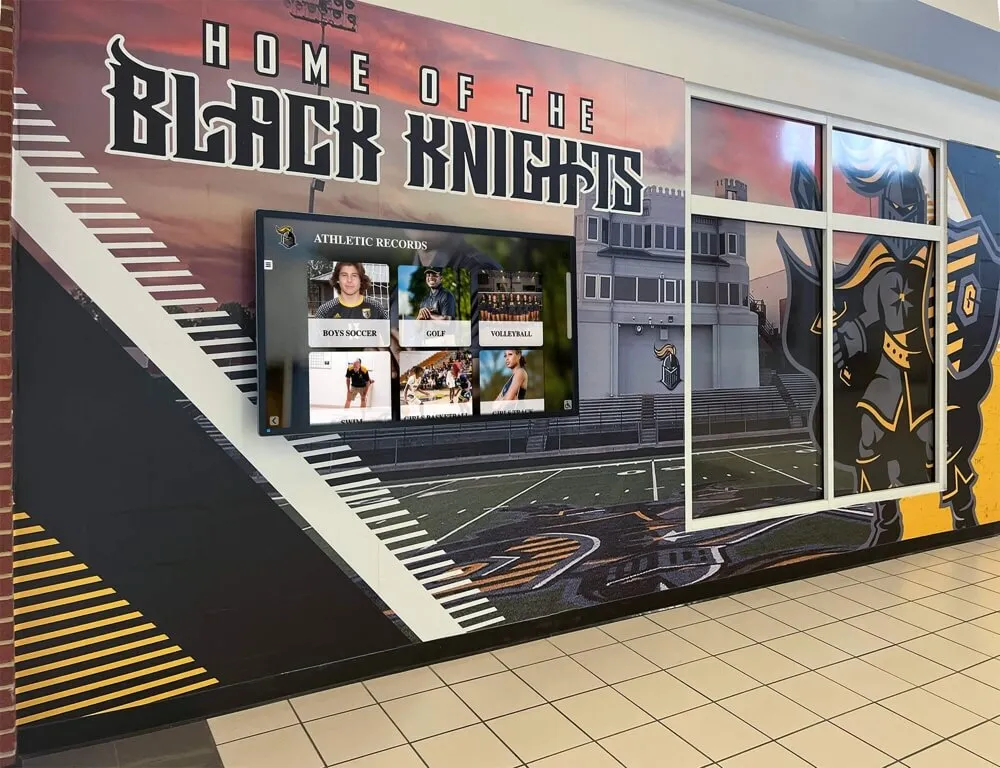
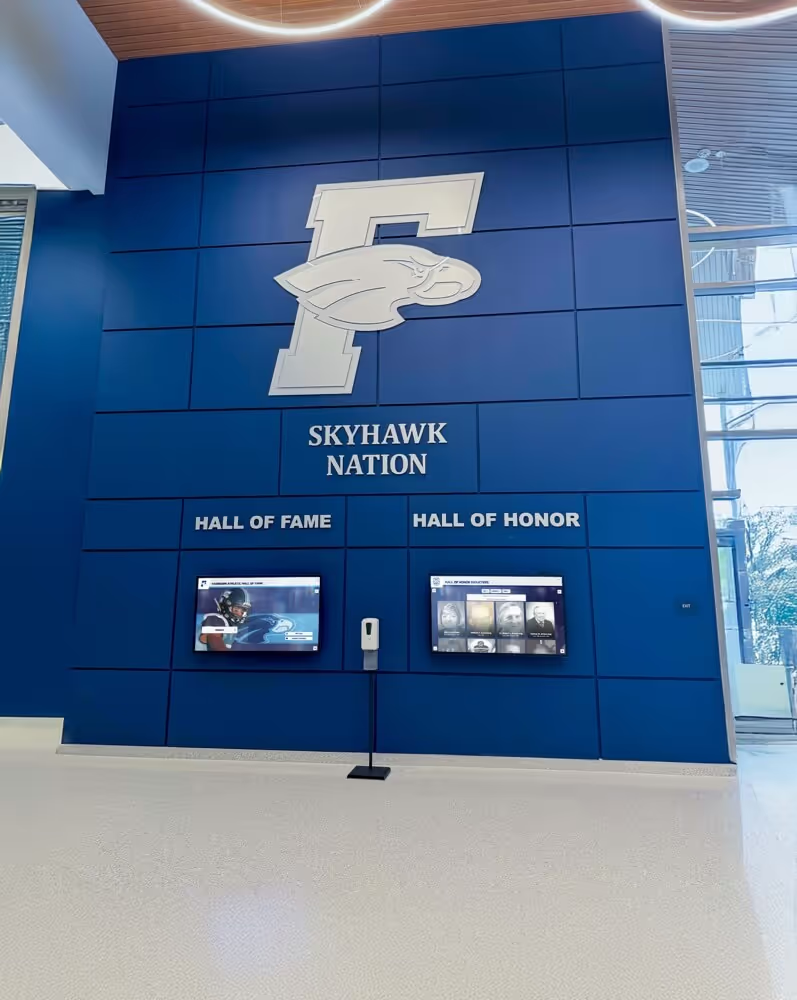
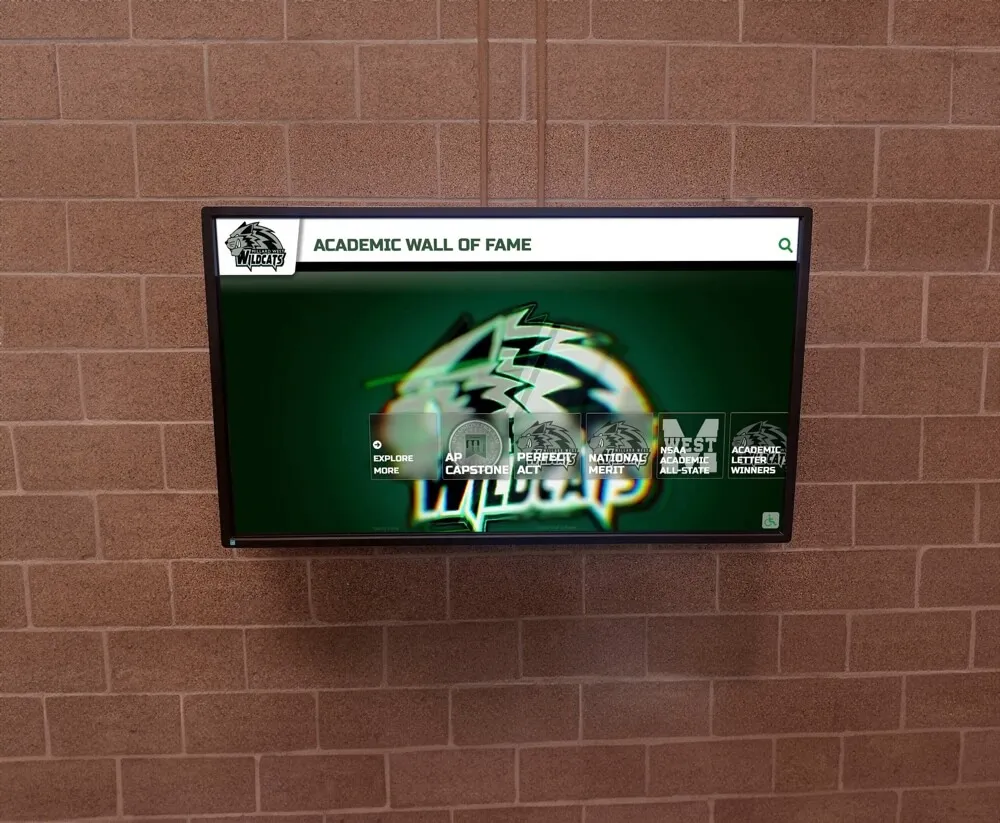
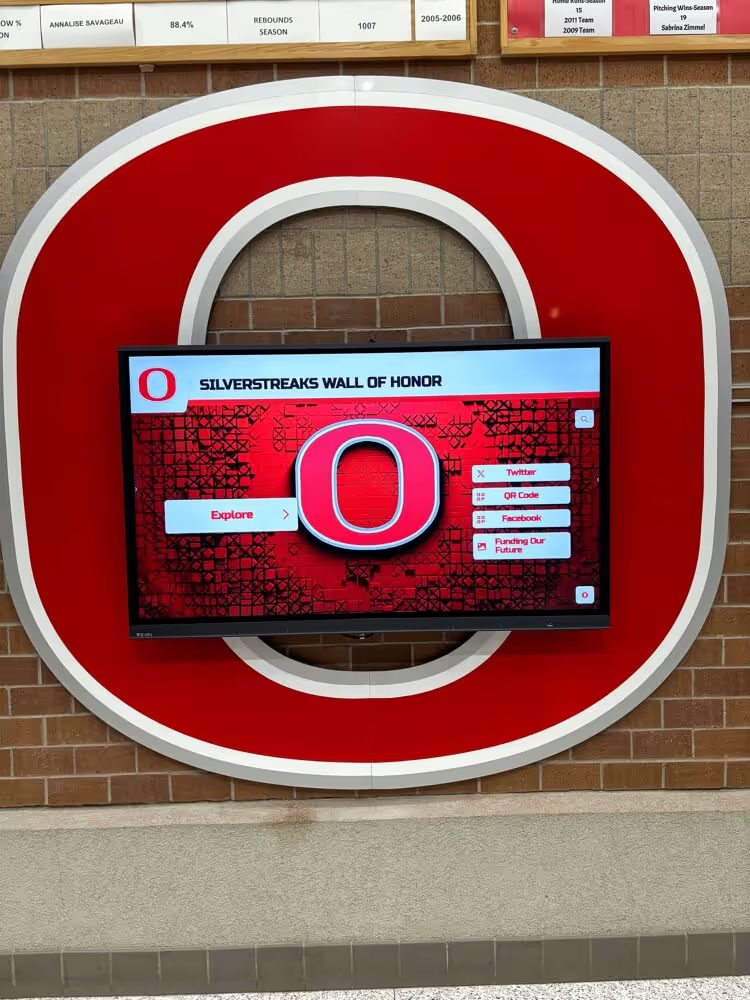
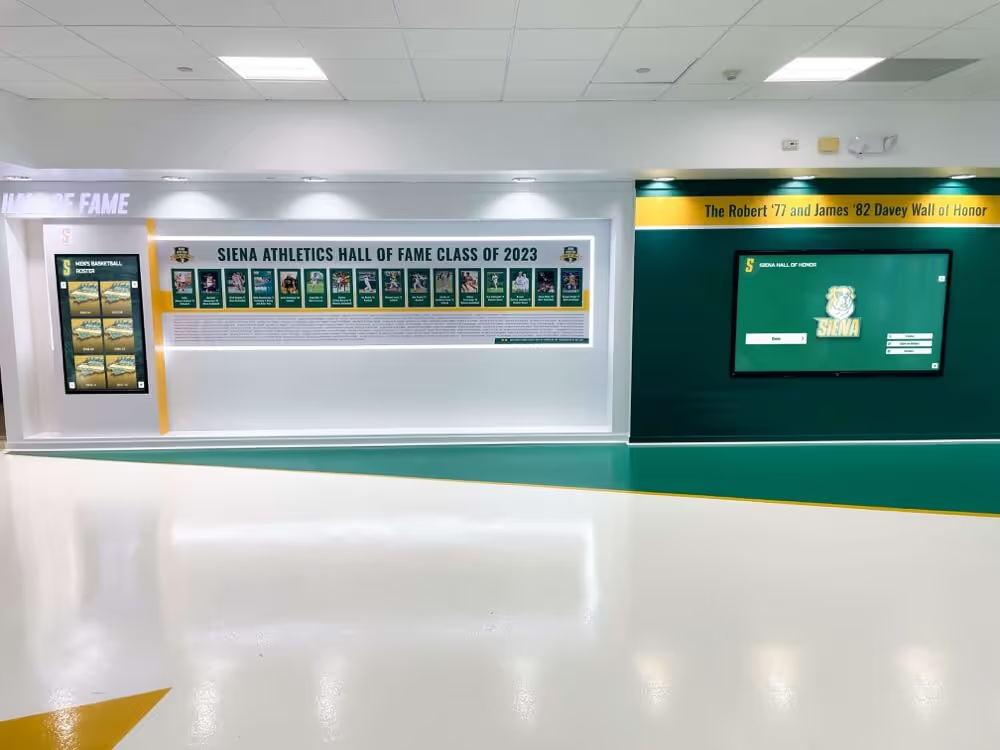
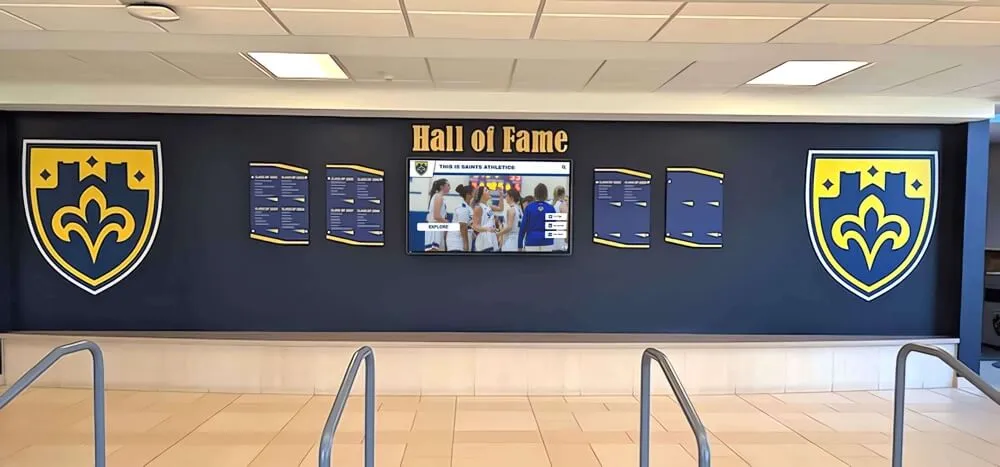
Digital displays integrate seamlessly into modern school environments while maximizing recognition capacity
Engagement-Focused Institutions
- Schools prioritizing student inspiration and role modeling
- Alumni relations programs seeking deeper graduate connections
- Marketing and advancement efforts showcasing institutional excellence
- Development programs using recognition to inspire philanthropy
- Community engagement through storytelling and achievement celebration
Explore creative implementation ideas in this alumni wall concepts guide.
Hybrid Approaches Combining Both Formats
Many institutions find optimal results through complementary implementation:
Strategic Format Assignment
- Digital displays for comprehensive, searchable recognition
- Physical elements for featured inductees or championship trophies
- Traditional plaques at building entrances and naming opportunities
- Interactive touchscreens for detailed exploration and storytelling
- Trophy cases for three-dimensional awards alongside digital profiles
Gradual Transition Strategies
- Maintain existing physical displays while adding digital capacity
- New inductees added exclusively to digital platforms
- Historic recognition preserved in traditional format
- Eventual migration to primarily digital with select physical elements
- Cost-effective expansion without eliminating valued traditions
Location-Specific Approaches
- Main lobby featuring prominent digital installation
- Auxiliary locations using traditional displays
- Athletic facilities with sport-specific trophy cases
- Academic buildings with digital achievement recognition
- Alumni center with comprehensive interactive system
Making the Right Decision for Your Institution
Selecting between digital and physical recognition formats requires assessing institutional priorities, resources, and community needs.
Decision Framework: Key Questions
Recognition Program Scope
- How many inductees do you add annually across all categories?
- What’s your total number of individuals deserving recognition?
- How many different recognition programs do you operate?
- Will recognition volume increase, decrease, or remain stable?
Physical and Technical Resources
- What wall space is currently available for recognition?
- Do you have reliable internet connectivity and electrical infrastructure?
- What’s your five-year facility renovation plan?
- Who will manage recognition content and updates?
Budget and Financial Constraints
- What initial investment budget is available?
- How much annual recognition maintenance budget exists?
- What’s more valuable: lower upfront cost or lower total ownership cost?
- Can you redirect annual plaque costs toward one-time technology investment?
Community and Engagement Priorities
- How important is extended engagement versus simple acknowledgment?
- Do alumni and donors expect traditional formats?
- Would multimedia storytelling strengthen institutional marketing?
- Is mobile/remote access valuable for your community?
Explore broader recognition strategies in this comprehensive donor recognition examples collection.
Cost-Benefit Analysis Template
Calculate Your Five-Year Physical Display Costs:
- Initial installation or expansion needed: $_______
- Annual inductee additions (number × avg cost): $_______/year
- Updates and corrections budget: $_______/year
- Maintenance and restoration: $_______/year
- Anticipated space expansion: $_______
- Total Five-Year Physical Cost: $_______
Calculate Your Five-Year Digital Display Costs:
- Initial technology investment: $_______
- Annual software/support subscription: $_______/year
- Additional inductees cost: $0
- Hardware maintenance budget: $_______/year
- Total Five-Year Digital Cost: $_______
Compare Non-Financial Factors:
- Update timeline requirements (hours vs months)
- Staff time commitment for maintenance
- Recognition capacity limitations
- Engagement and storytelling capabilities
- Mobile and remote access value
- Flexibility for future program changes
Implementation Readiness Assessment
Before committing to either approach, verify organizational readiness:
For Physical Displays:
- Sufficient permanent wall space identified
- Commitment to multi-month update timelines
- Budget for ongoing plaque additions
- Acceptance of recognition capacity limits
- Plan for eventual space exhaustion
For Digital Displays:
- Reliable network connectivity verified
- Staff member identified for content management
- Training commitment for platform operation
- Understanding of technology refresh cycles
- Comfort with non-traditional recognition format
Conclusion: Choosing Recognition Solutions That Honor Achievement Effectively
The decision between digital walls of fame and physical displays represents more than technology adoption—it reflects institutional values about how recognition serves your community and advances your mission. Both approaches offer distinct advantages, with the optimal choice depending on your specific circumstances, priorities, and resources.
Physical displays provide tangible permanence, traditional prestige, and alignment with institutional heritage that many communities value deeply. Digital recognition delivers unlimited capacity, instant updates, rich multimedia engagement, and total cost advantages that compound over time. Understanding these fundamental differences enables selections aligned with both current needs and long-term institutional goals.
The comparison across cost, maintenance, and impact reveals clear patterns: digital solutions offer superior economics over multi-year horizons, dramatically reduced operational burden, and measurably increased community engagement. However, these advantages must be weighed against community expectations, technical capabilities, and the inherent value many institutions place on traditional recognition formats that have served them well historically.
Explore Modern Recognition Solutions for Your Institution
Discover how digital wall of fame technology can expand your recognition capacity, reduce long-term costs, and create engaging experiences that celebrate achievement and inspire excellence.
See Digital Recognition PlatformsMost schools find their optimal path involves honest assessment of recognition program scale, honest evaluation of available resources, and clear understanding of what recognition aims to accomplish beyond simple acknowledgment. Whether you choose traditional displays, digital platforms, or strategic combinations of both, the goal remains constant: honoring achievement in ways that inspire current students, strengthen alumni connections, and celebrate the excellence that defines your institutional community.
Begin your decision process by calculating your true five-year costs for current approaches, identifying recognition program limitations affecting your community, and exploring how modern solutions address challenges you face. The right recognition investment delivers value far beyond the display itself—it shapes institutional culture, maintains historical connections, and creates visible evidence of the achievement standards your community aspires to reach.