Girls Wrestling Recognition Ideas: Preserve Your School's First Team and Milestones
- Home /
- Digital Wall of Fame Blog - Recognition Display Insights & Resources /
- Girls Wrestling Recognition Ideas: Preserve Your School's First Team and Milestones
The Easiest Touchscreen Solution


Live Example: Rocket Alumni Solutions Touchscreen Display
Interact with a live example (16:9 scaled 1920x1080 display). All content is automatically responsive to all screen sizes and orientations.
The first girls wrestling team at your school is a moment worth preserving carefully. There are no decades of trophy cases to anchor the story, no faded championship banners from a title won two generations back—only the athletes who showed up, the coaching staff who built something from scratch, and a school community that decided girls wrestling belonged. That is exactly why documentation matters most in a program’s first years. A thoughtful girls wrestling recognition collection built now becomes the foundation every future team and every future athletic director will build on. This guide is written for the athletic director ready to start that work: how to document what happened, what display content best serves a new program, how to plan content carefully with your staff, and how an interactive hallway display can make the story visible.
Whether your program launched this past fall or is heading into its third season, the time to build your recognition archive is before institutional memory fades. Coaches move on, seniors graduate, and photographs disappear from personal phones. The sections below walk through what to capture, how to display it responsibly, and how to keep the record growing year after year.

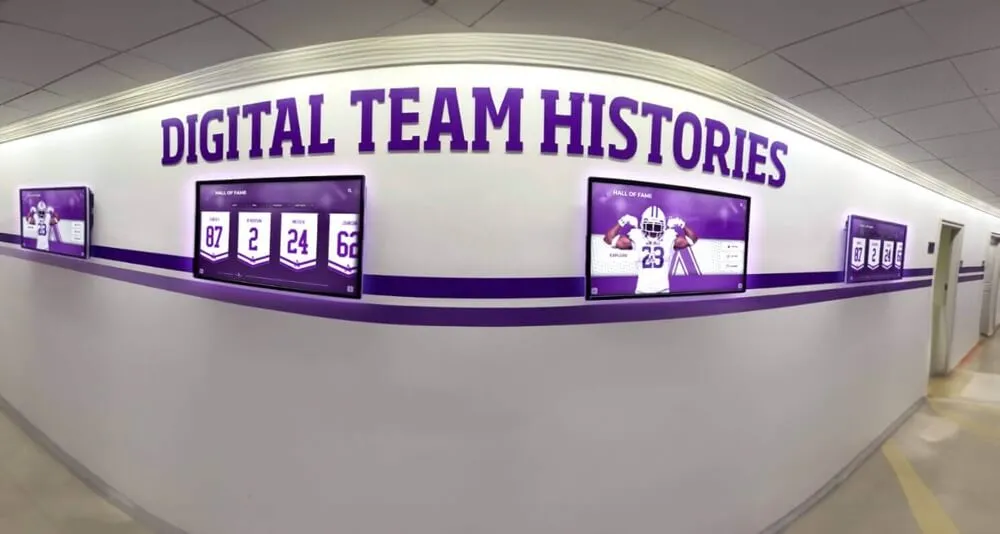
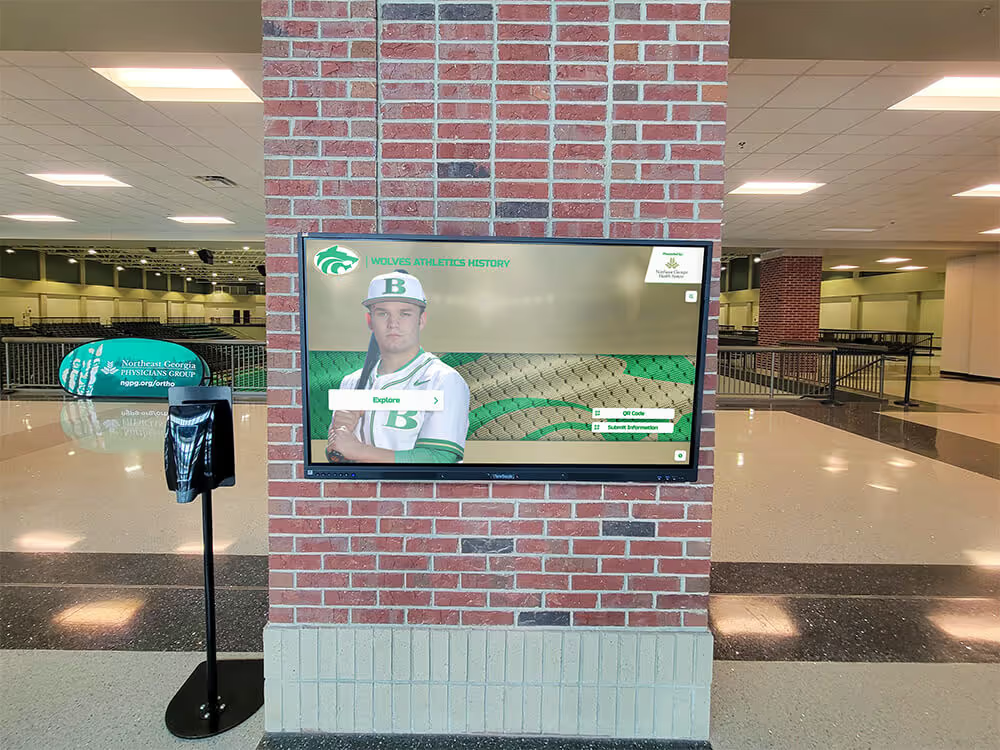
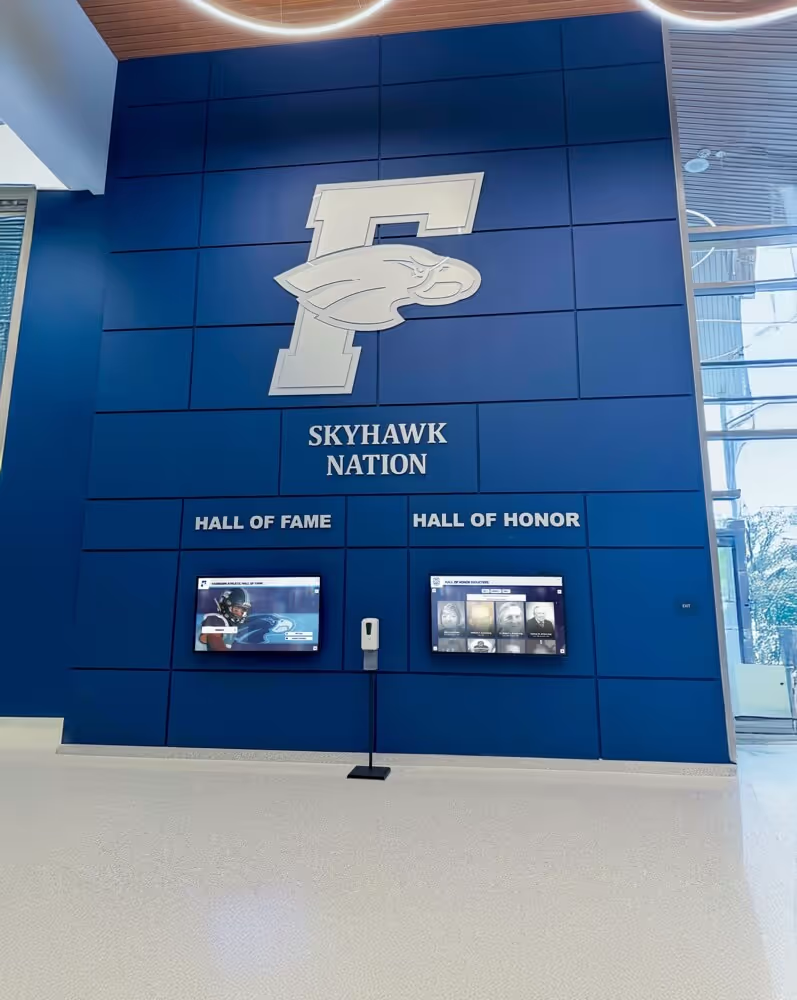
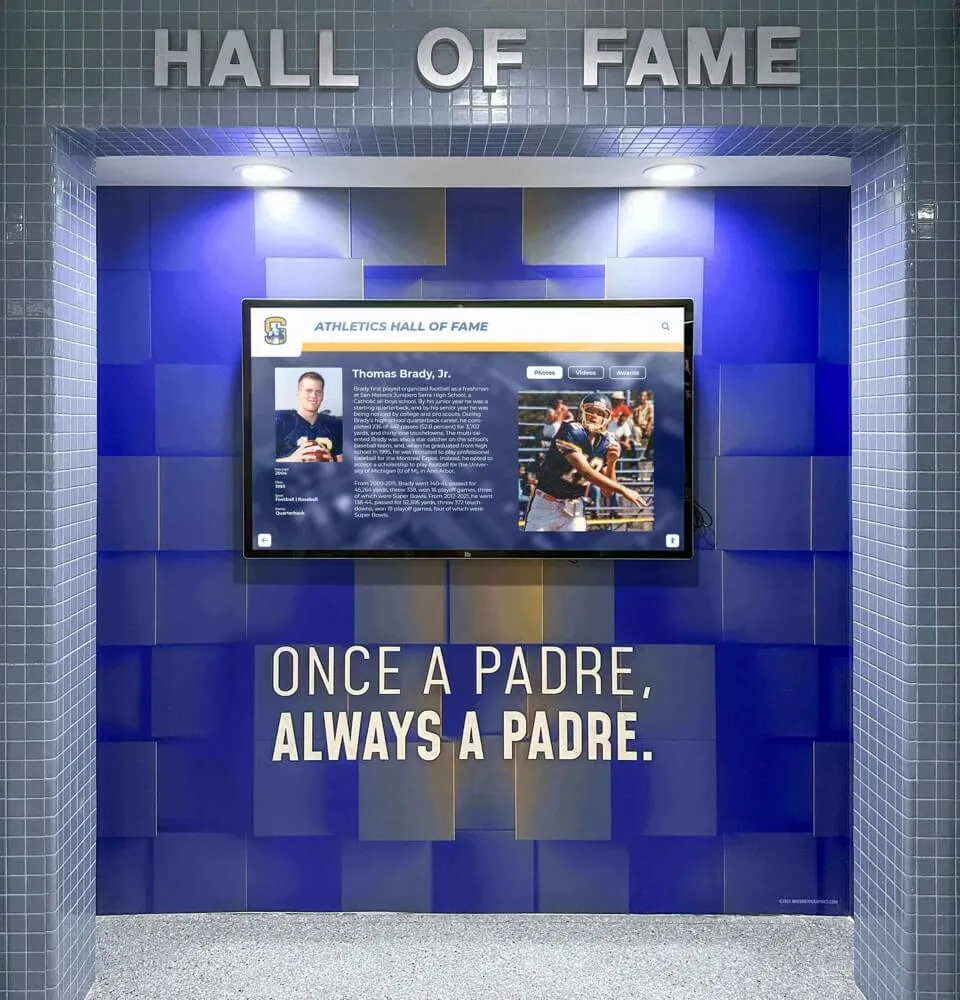
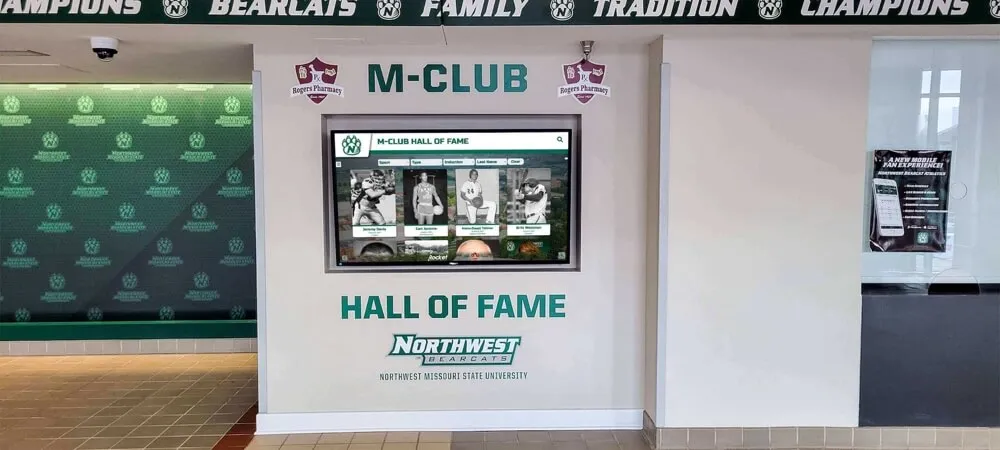
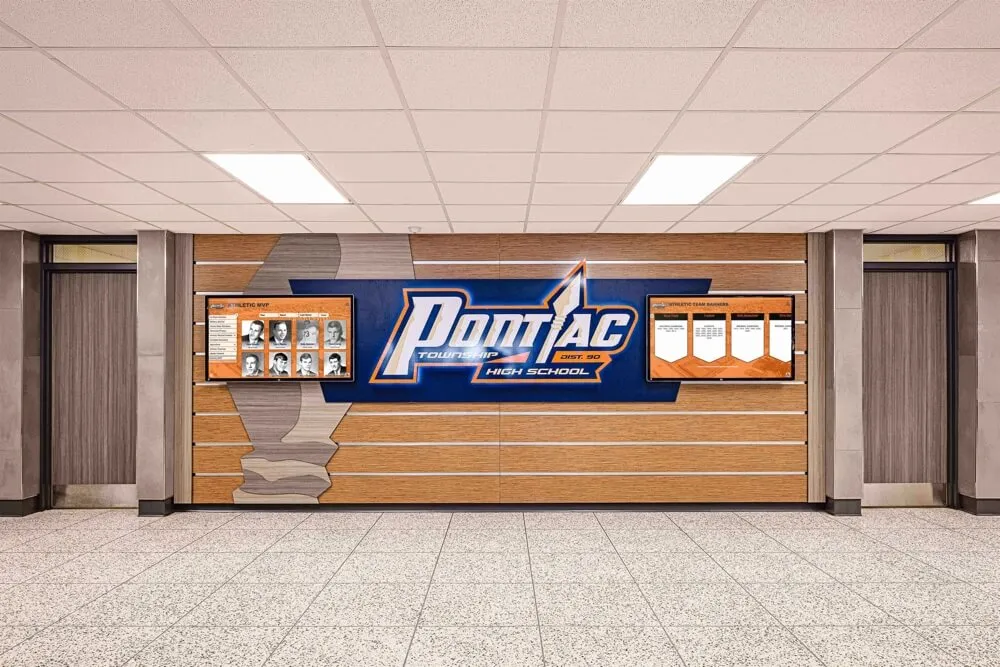
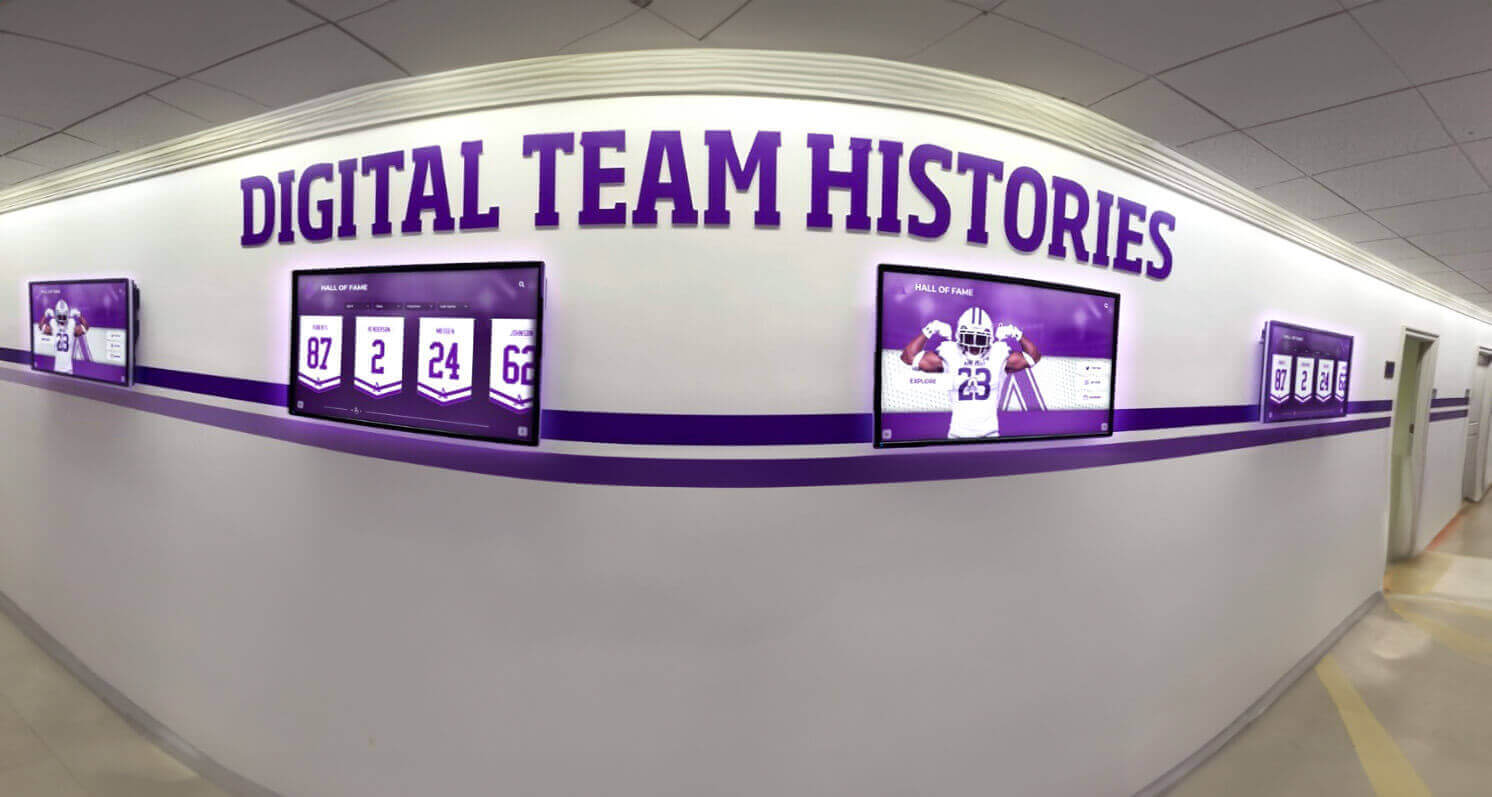
An athletic hallway display organized around team season histories gives a new program a permanent, visible home from its very first year
Honoring a Program Before the Trophy Case Fills Up
According to the National Federation of State High School Associations, girls wrestling grew 19.9 percent in the 2025–26 school year, reaching 88,771 participants at 8,853 schools, with all states reporting some participation and 40 state associations now conducting a state championship. For many of those schools, this is a first or second official season. Your school’s story begins with what happened on your mat this year, and it is worth capturing now.
A complete inaugural-season record should include:
- Full roster — each athlete’s name verified and spelled as the student prefers for public display
- Coaching staff and program contributors — head coach, assistants, trainers, and administrators who made the program possible
- Approved team and action photographs — gathered with written consent from school communications staff and from students or their families
- A brief school-specific timeline — the season dates, conference or association affiliation, and scheduling notes that mark this program’s founding context
- Verified milestones — the first scheduled dual meet, the first sanctioned tournament entry, and any earned results your coach can confirm against official documents
One distinction worth making carefully: some schools had girls competing on a co-ed roster, in open tournaments, or as individual entrants before a school-sponsored girls team officially existed. Those earlier athletes are part of your program’s background story, and their participation deserves acknowledgment. But do not call any athlete “the school’s first” without records that actually support the specific claim. If you cannot verify from official documentation that a given student was the first to compete under a sanctioned girls wrestling program at your school, describe what you know accurately and note what records are still being confirmed.
The National Wrestling Hall of Fame uses dated milestones to document women’s and girls’ wrestling history at the national level—a model that illustrates why local documentation matters. Your school’s first-season records are part of the larger story of a sport still writing its history.
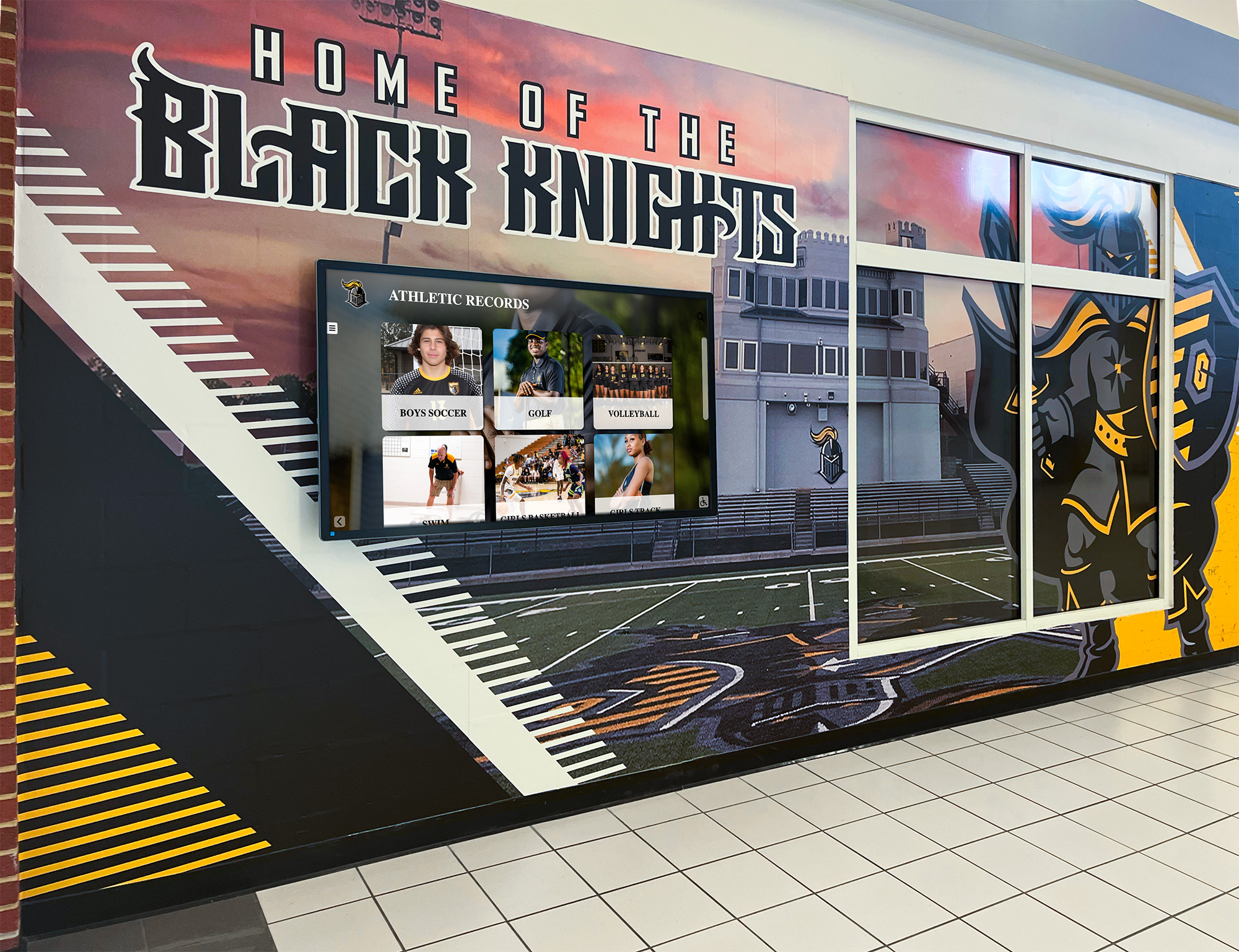
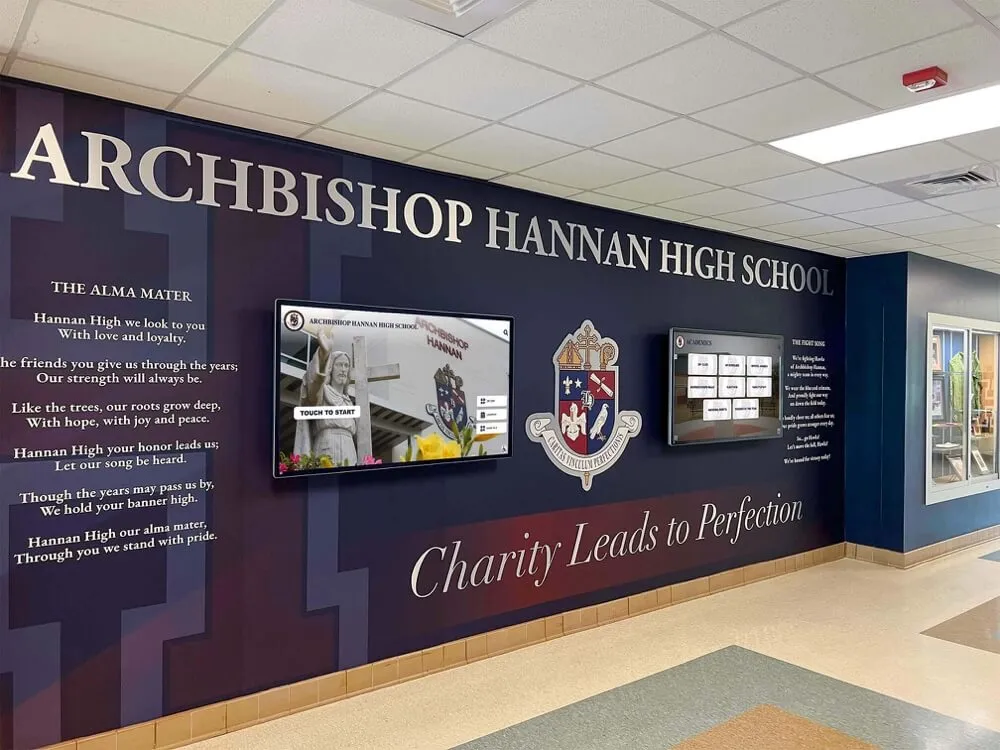
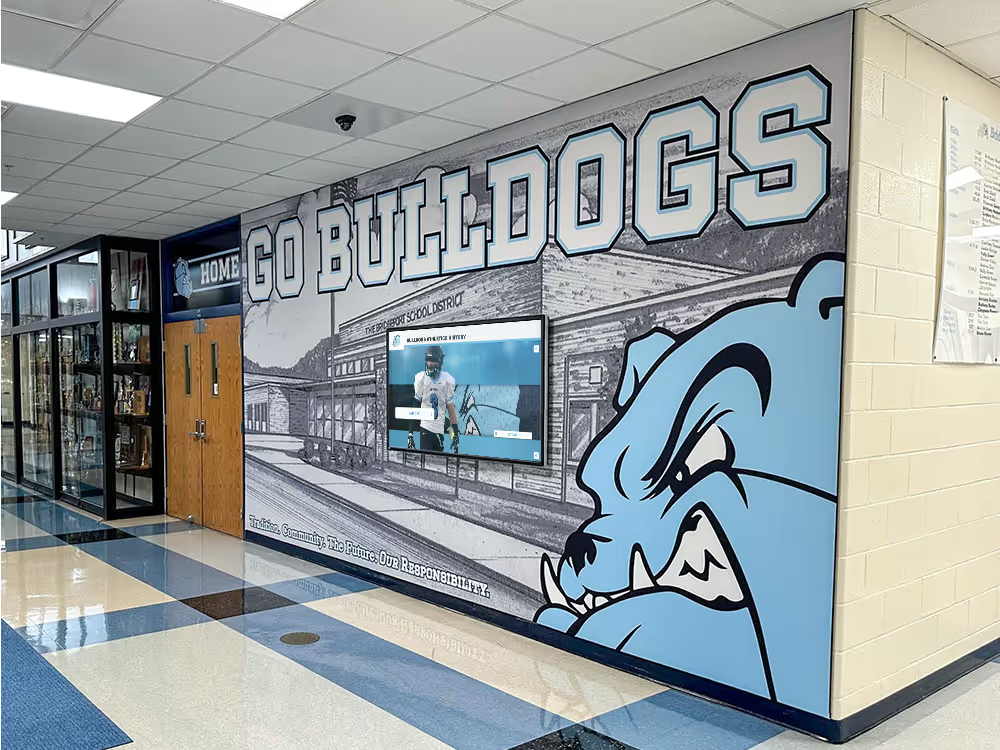
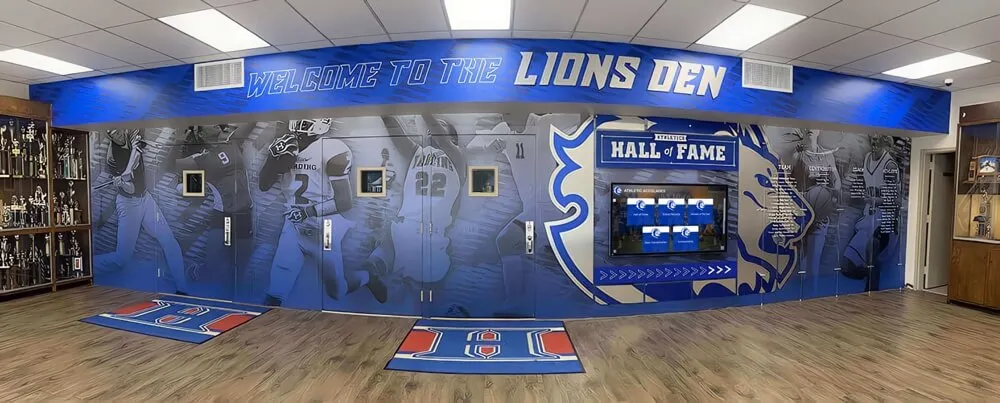
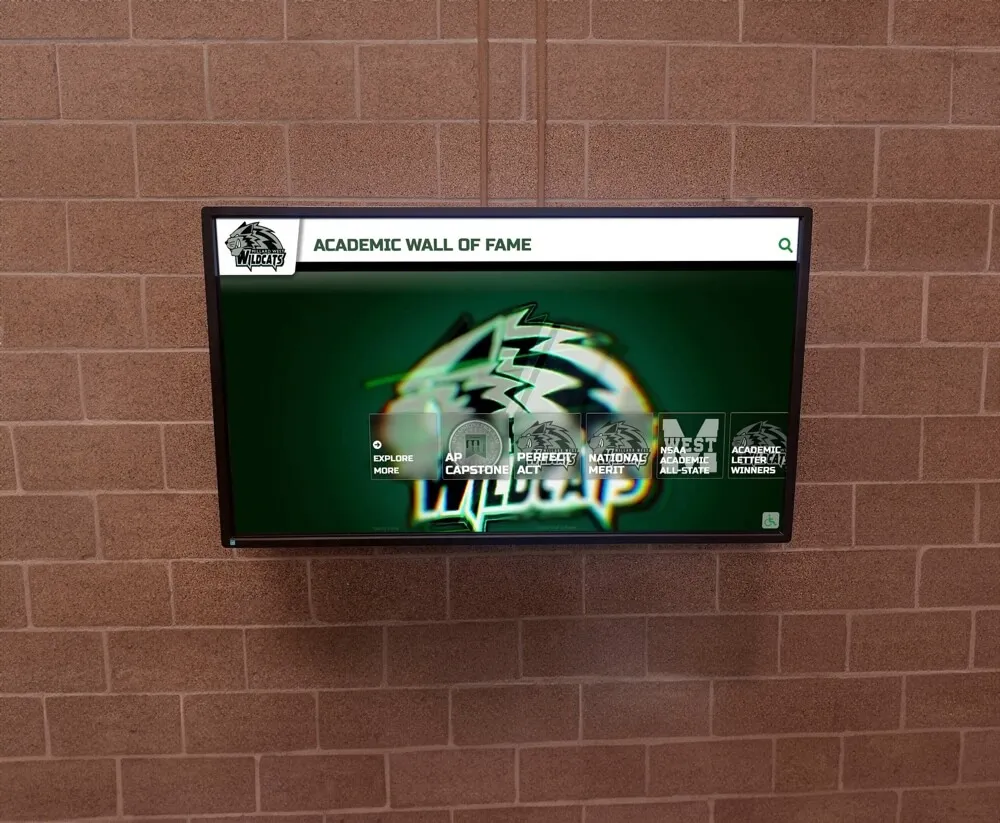
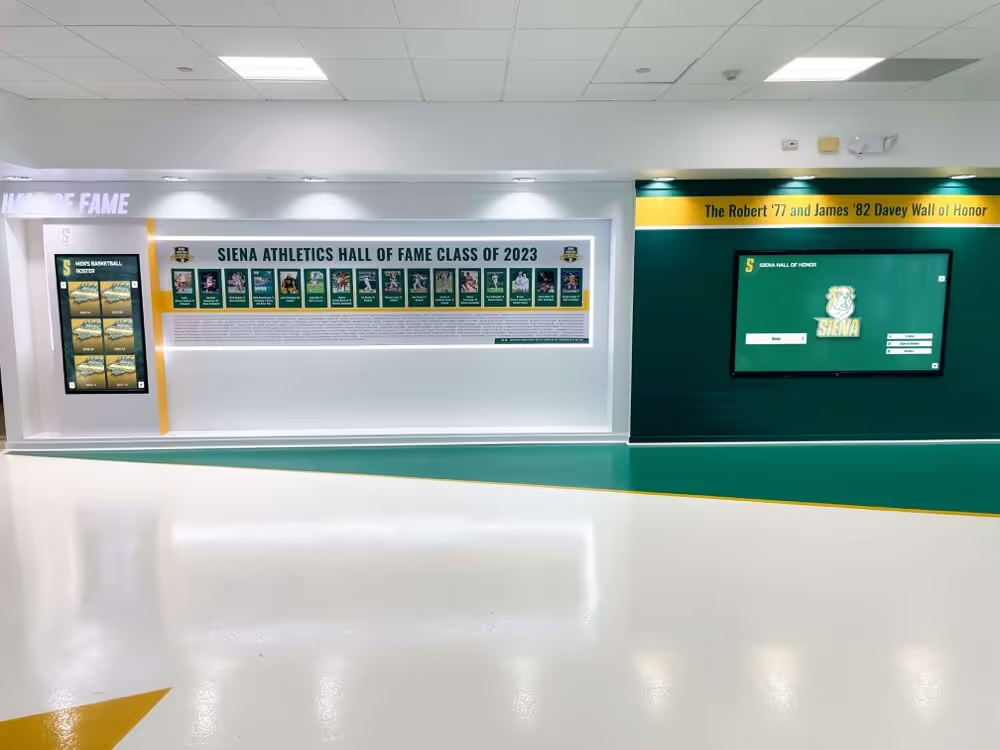
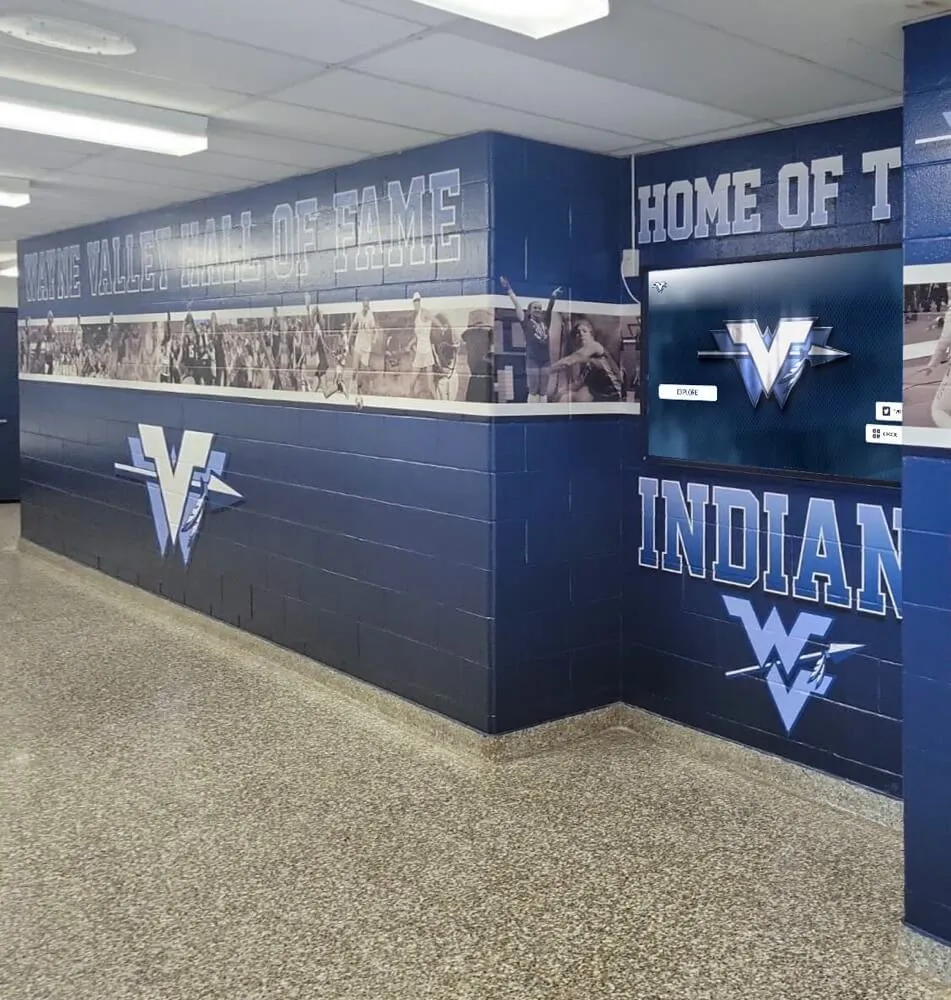
Athletic hallway displays can pair school visual identity with verified season records and team photographs, creating a cohesive recognition environment that reflects a program's growth from its founding season forward
Five Display Content Ideas for a New Girls Wrestling Program
A recognition display for a new program does not need a hall of fame nominee or a state championship before it has something meaningful to show. The following five content ideas work from a program’s first season and build naturally into a richer archive over time.
1. The Inaugural Season Record
Create a dedicated display section for the program’s first official school-sponsored season. Include the full team roster with verified names, the coaching staff, the season’s dual-meet schedule, and results from each contest. Label every result type clearly:
- Dual-meet team result: Team A versus Team B, date, location, team score
- Individual tournament placement: athlete name, event name, competitive level, date, individual finish
- Team tournament result: team entry, event name, level, team score or finish if available, date
These are different types of results and should not be merged into a single undifferentiated record. The event name, competitive level, awarding body, and season all belong in any display copy that references a specific result.
2. The First Documented Contest or Dual Appearance
A dedicated milestone card for your school’s first sanctioned contest is one of the most meaningful pieces of recognition a new program can offer. Work with your coach to identify the first scheduled dual meet or tournament appearance in the official record. Note the event name, date, opposing school or event field, and result. If the exact date is uncertain, describe what is known and leave room for the record to be corrected as documentation is confirmed. A milestone entry that reads specifically and accurately—first dual meet, event name, date, result—gives future athletes something concrete to point to.
3. Coach-Verified Individual or Team Milestones When Earned
If any athlete earned a verified placed finish at a sanctioned tournament, district event, or conference championship during the season, that record belongs in your display—after it is confirmed against the official results sheet from the awarding body. Record the athlete’s name (with consent and preferred naming), the event name, the competitive level, the season, and the placing. Do not use approximation or memory in place of official documentation. When a milestone is not yet confirmed, mark it pending verification rather than publishing an unverified claim.
4. Students’ Voluntary Reflections
A short, student-contributed statement about the first season adds a voice to the display that a roster list alone cannot. Ask athletes—voluntarily, with no pressure—whether they would like to contribute a brief reflection on what starting a girls wrestling program meant to them. Provide a simple form, collect written consent for publication, and ask each student how they want to be named and whether they consent to a photograph. Review submissions with the school’s communications staff before any statement is published. Never solicit personal information beyond what the student volunteers.
5. Season-to-Season Continuation
From the first season forward, add a consistent annual record. Each season entry follows the same structure: roster, coaching staff, dual-meet results, sanctioned tournament entries and results, and any milestones earned. Over five or ten seasons, this becomes a genuine program history your school community can explore. It also makes it straightforward to track program growth year over year—how many athletes competed, which events the program entered, and where the team placed at each competitive level.
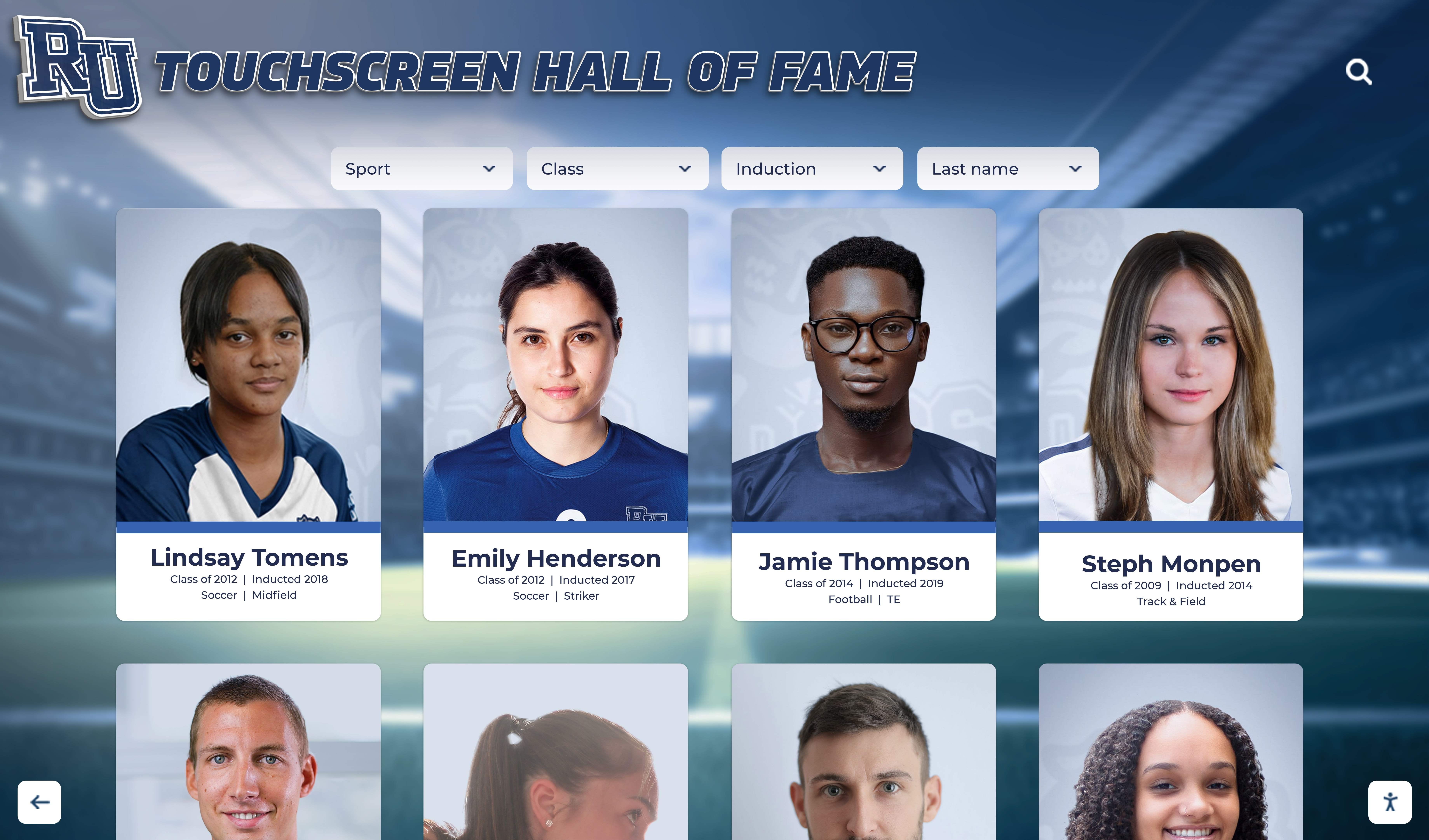
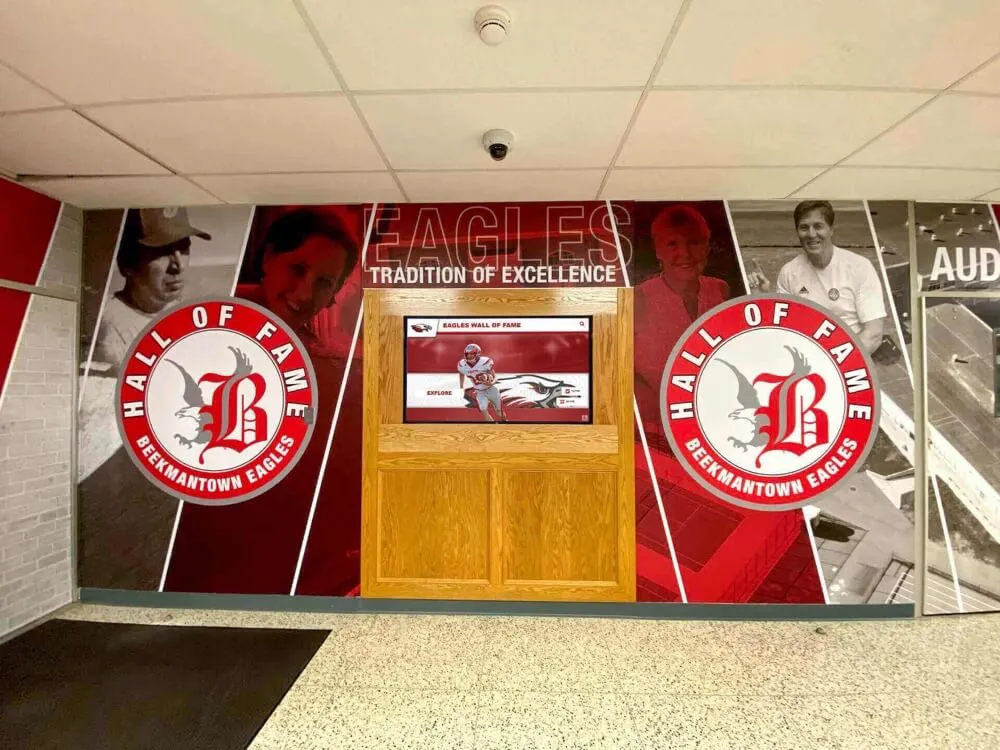
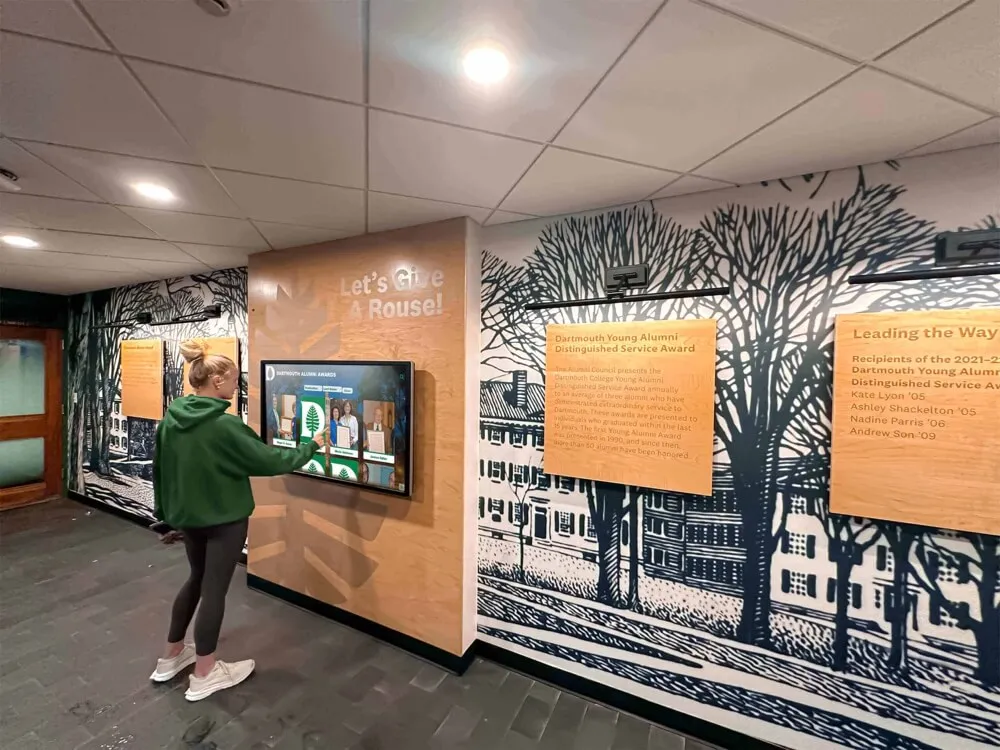
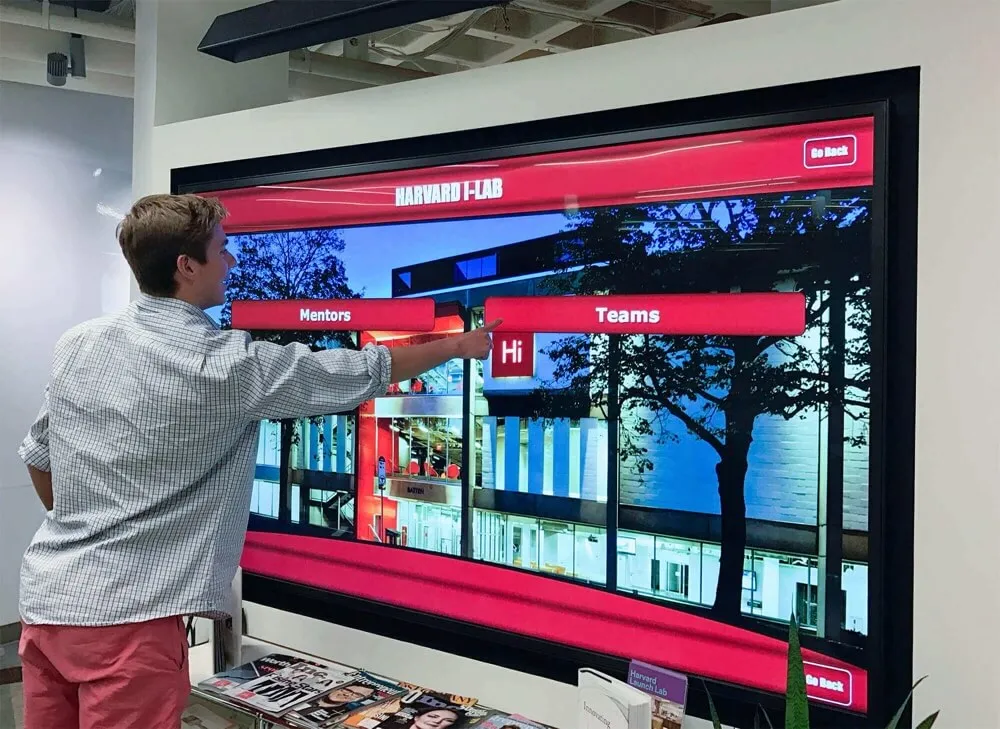
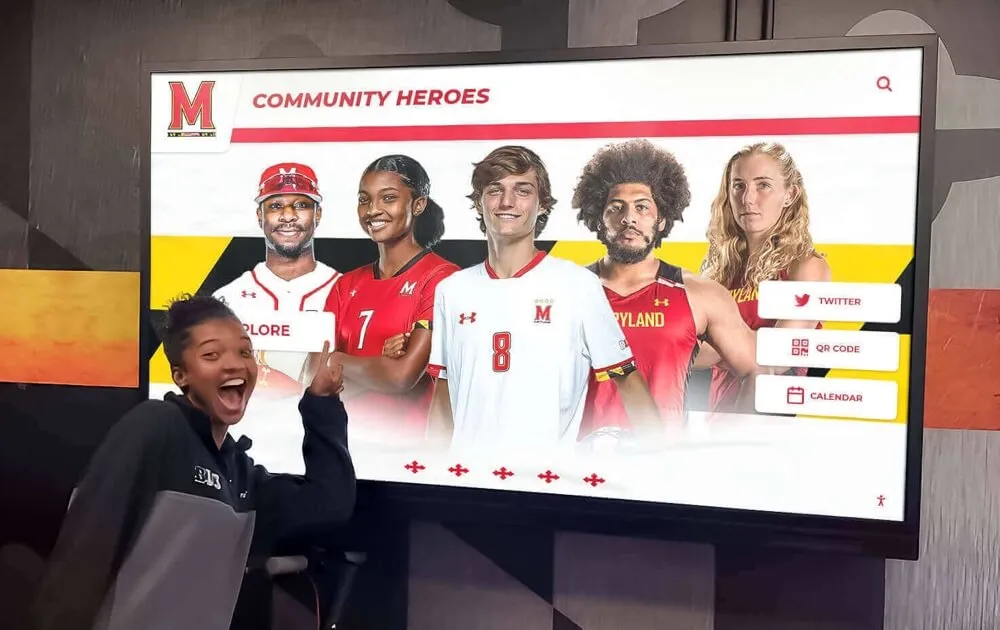
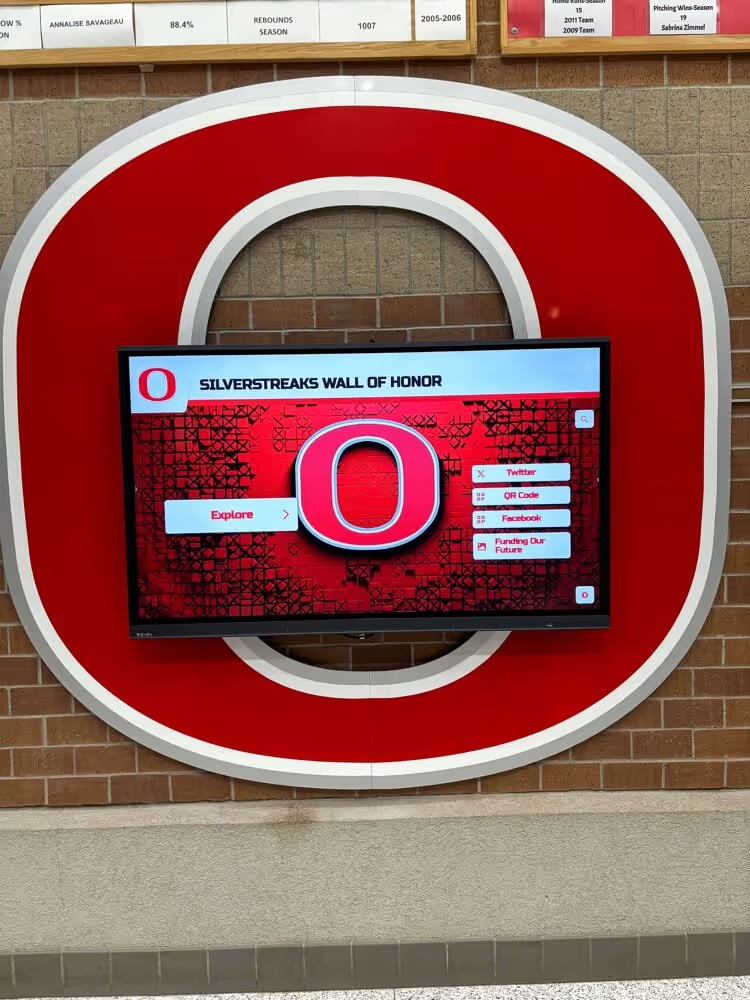
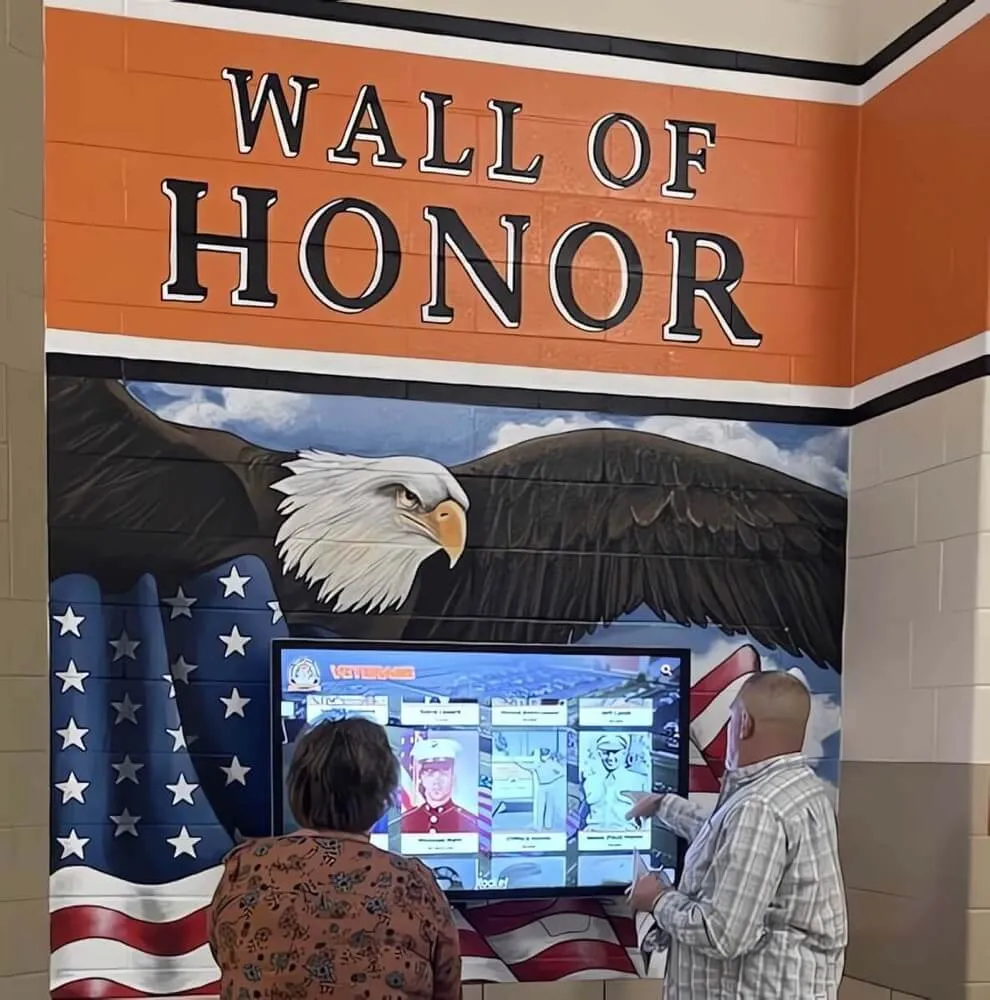
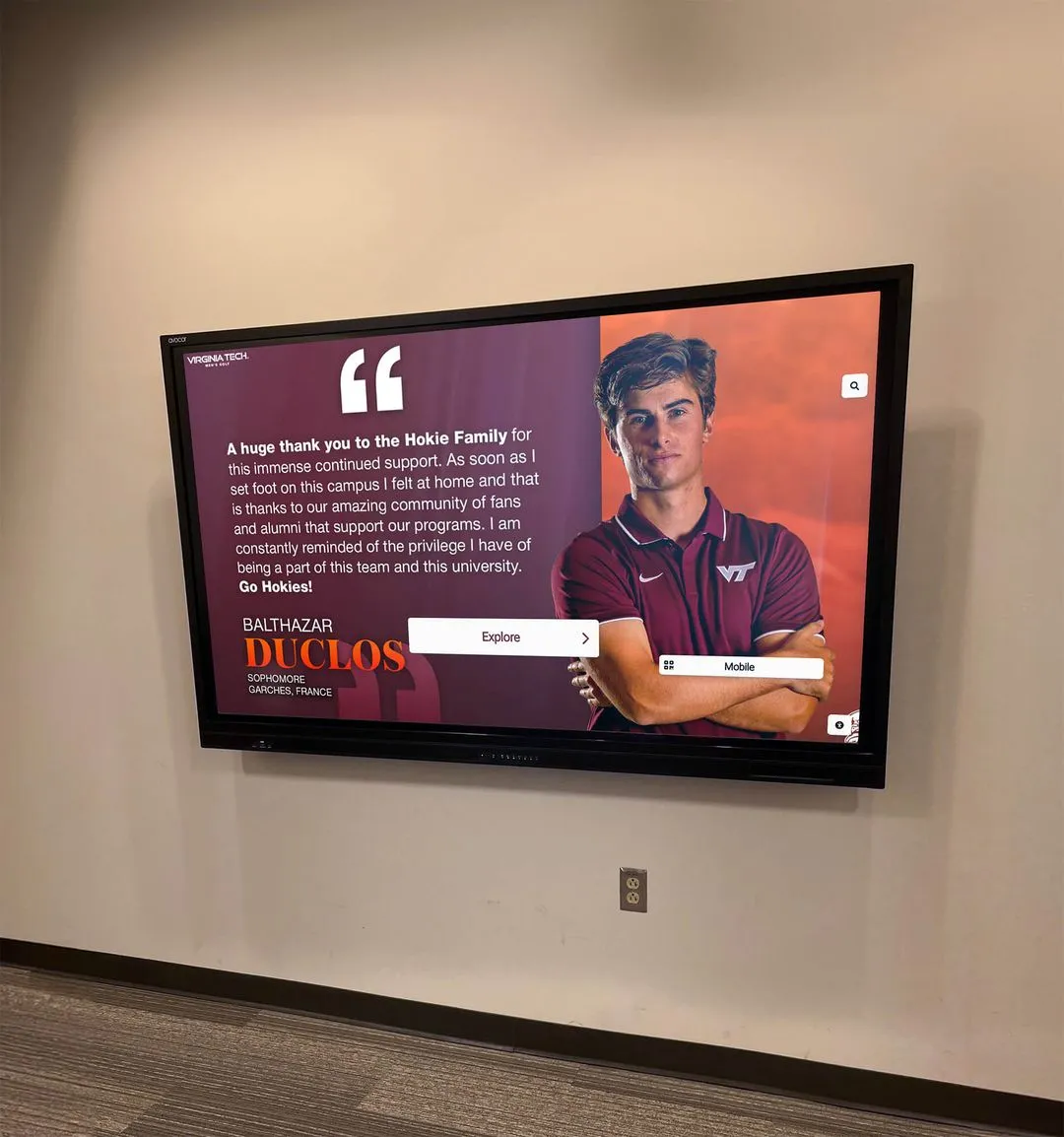
A touchscreen recognition display can surface individual athlete profiles alongside team season records, letting visitors explore both the collective story and individual contributions at their own pace
Content-Planning Table
Use this blank table as a starting point for organizing girls wrestling recognition content before it goes to design or publication. Complete one row for each story or milestone. Review each row with your coach and communications staff before any name, photograph, or result is published publicly.
| Story / Milestone | Season / Date | Exact Verified Claim | Roster or Result Source | Name / Photo Approval | Proposed Display Copy | Staff Reviewer | Archive Location |
|---|---|---|---|---|---|---|---|
Suggested field guidance:
- Story / Milestone — What this row documents (e.g., “Inaugural team roster,” “First dual meet result,” “Individual tournament placing”)
- Season / Date — The academic year and specific date or date range of the event
- Exact Verified Claim — The precise, documentable statement you plan to publish; no approximations or unconfirmed details
- Roster or Result Source — Where the information was verified: official result sheet, athletic office record book, archived program
- Name / Photo Approval — Who approved each individual’s name or photo for display, and on what date
- Proposed Display Copy — The exact wording intended for the recognition display
- Staff Reviewer — The coach or communications staff member who reviewed this entry before publication
- Archive Location — Where the original source document or photo file is stored in the institution’s records system
This table is an adaptable planning tool, not a prescribed data entry format for any specific software platform. Adjust the fields to fit your school’s workflow and approval process.
Working With Coach and Communications Staff
The review step is not a formality. Before any name, photograph, caption, or result appears on a public recognition display, it should go through the people who know the records best.
With the head coach:
- Confirm the official season roster against the school’s athletic office records before any names go to design
- Review dual-meet results against official score sheets or the record book maintained by the athletic office
- Verify any individual placements against official result documents from the sanctioning body
- Identify any athletes who competed in earlier co-ed or open programs and confirm how they should be described accurately in relation to the first school-sponsored team
With school communications staff:
- Confirm which photographs have been cleared for school publication — team photos taken by a staff photographer with appropriate consent are the most reliable starting point, but any photograph of a minor requires proper authorization
- Ask students directly how they want their names to appear on a public display, and whether they consent to a photograph being included
- Follow your school’s publication policies for student-identifiable information
What should never appear in a recognition display: Do not include medical information, eligibility status, body weight, or weight class information framed as a defining personal characteristic. Do not include private family details a student did not volunteer. Do not celebrate weight cutting, playing through injury, or attendance through illness or physical pain. Do not reference any student’s health or physical condition in ways that go beyond what is directly relevant to a verified athletic achievement. If current weight divisions provide useful context for a verified placing, they may be noted simply and accurately — but a weight-class table or ruleset belongs in a rulebook, not a recognition display.
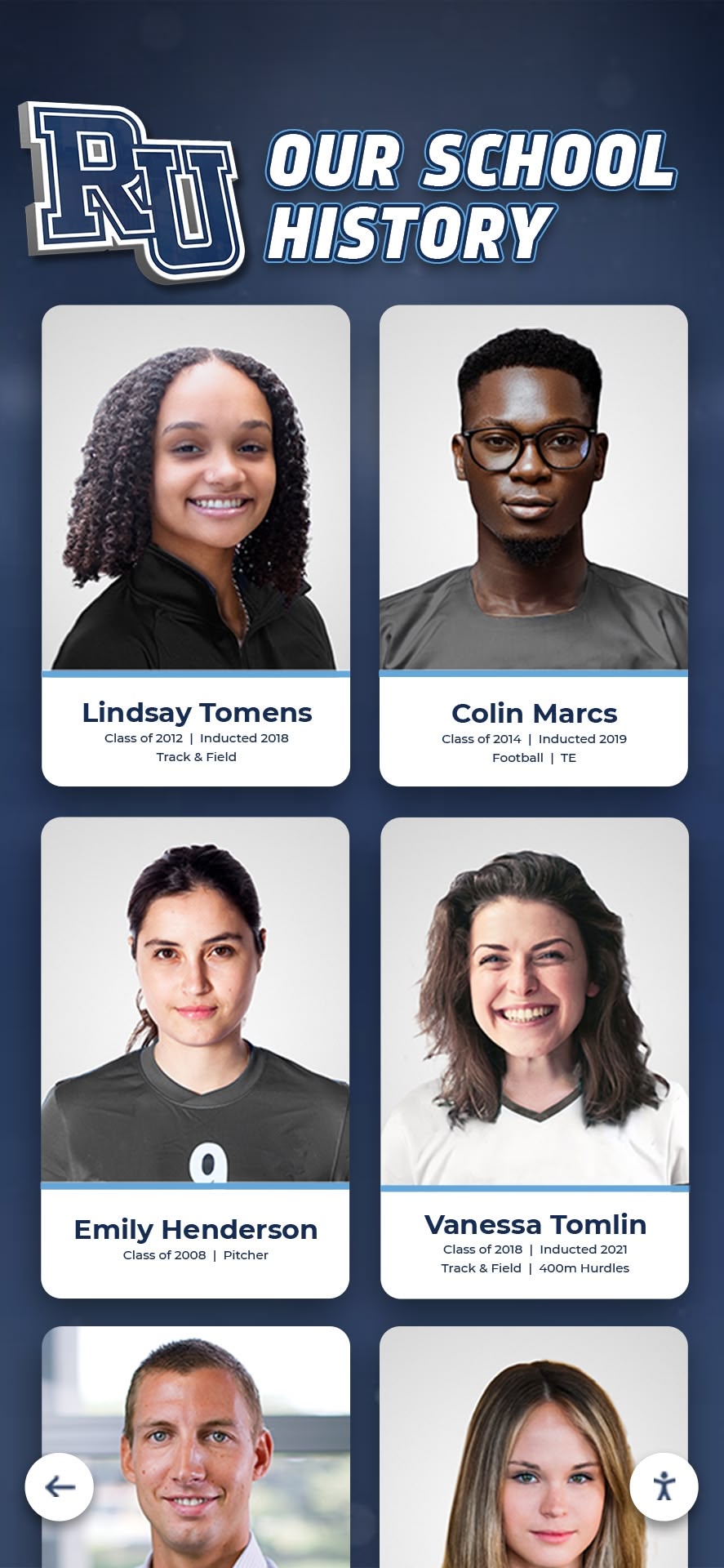
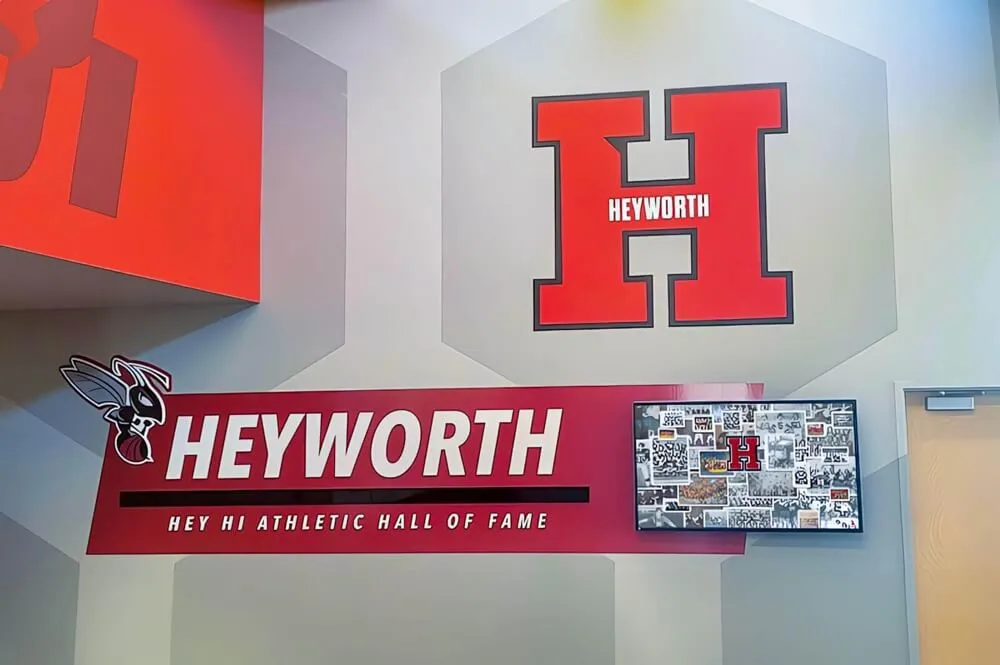
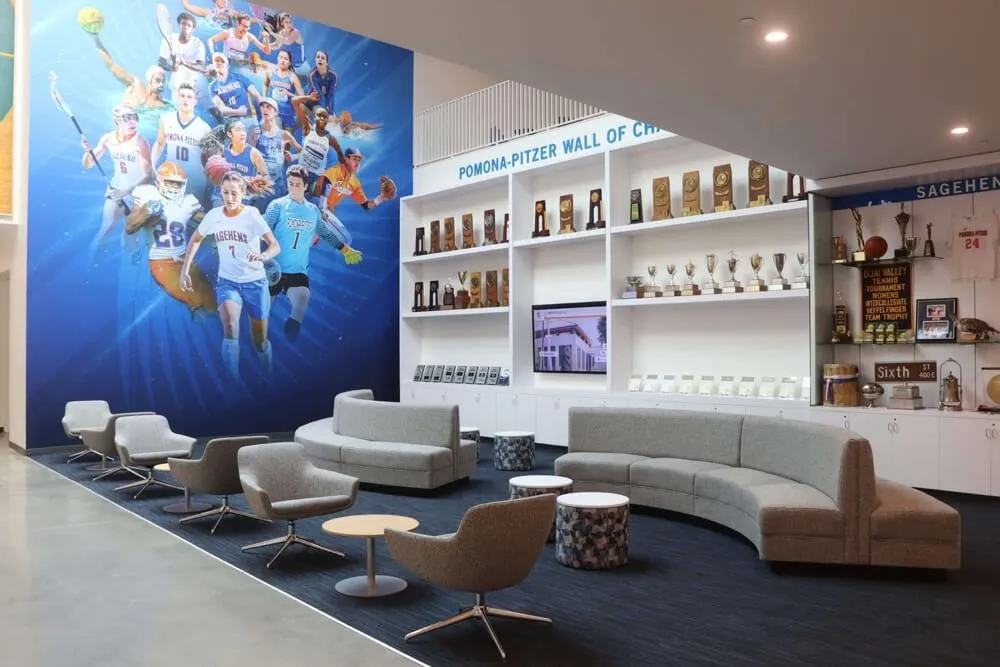
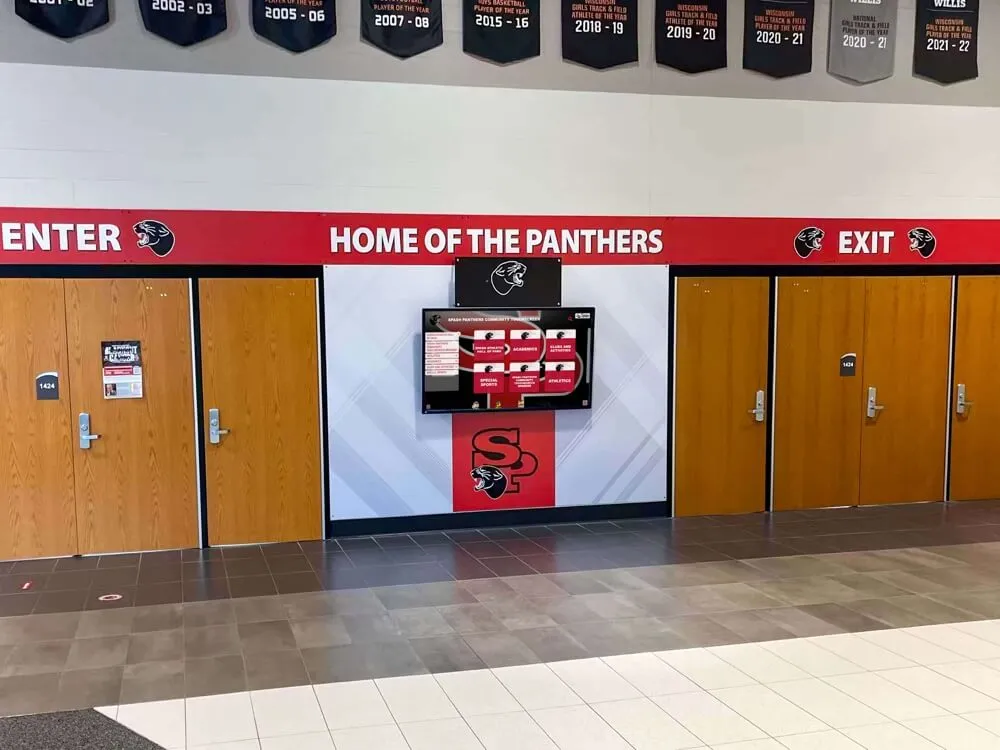
A season-history recognition collection works best when it applies consistent, verified information across all years—making accurate records easy to find for students, families, and alumni who return to the building
Checklist: Collection, Review, Launch, and End-of-Season Archive
The following checklist is a practical starting point, not a universal deadline standard or legal compliance requirement. Adapt each item to your school’s timeline, staffing, and approval processes.
Collection Phase
- Obtain the official season roster from the athletic office for each season to be documented
- Collect approved team photographs from the school communications office or designated photographer
- Gather official dual-meet result sheets from the coaching staff
- Gather official result documents for any sanctioned tournament entries
- Review prior yearbooks that may supplement or help verify records
- Confirm whether any earlier co-ed or open-program participation should be described separately and accurately
Review Phase
- Coach verifies all roster names and results against source documents
- Communications staff confirms photo and name approvals for each individual featured
- Student-contributed reflections reviewed with the student and a staff member before publication
- Content-planning table completed and reviewed for each milestone or record
- Any unverified claims removed or marked pending until documentation is confirmed
Launch
- All display copy reviewed by a designated staff member before publication
- Names and earned honors double-checked against approved source documents
- Captions and photo attributions reviewed for accuracy
- Students and families notified when their information will appear publicly
End-of-Season Archive
- Original source documents — result sheets, photo files, signed consent forms — stored in the institution’s designated archive system, not solely on the display unit or a student’s personal account
- New season record added to the ongoing program history collection
- Content-planning table updated and saved alongside source documents
- Any corrections to prior seasons documented with the source of the correction
Designing an Interactive Display Around a First-Season Story
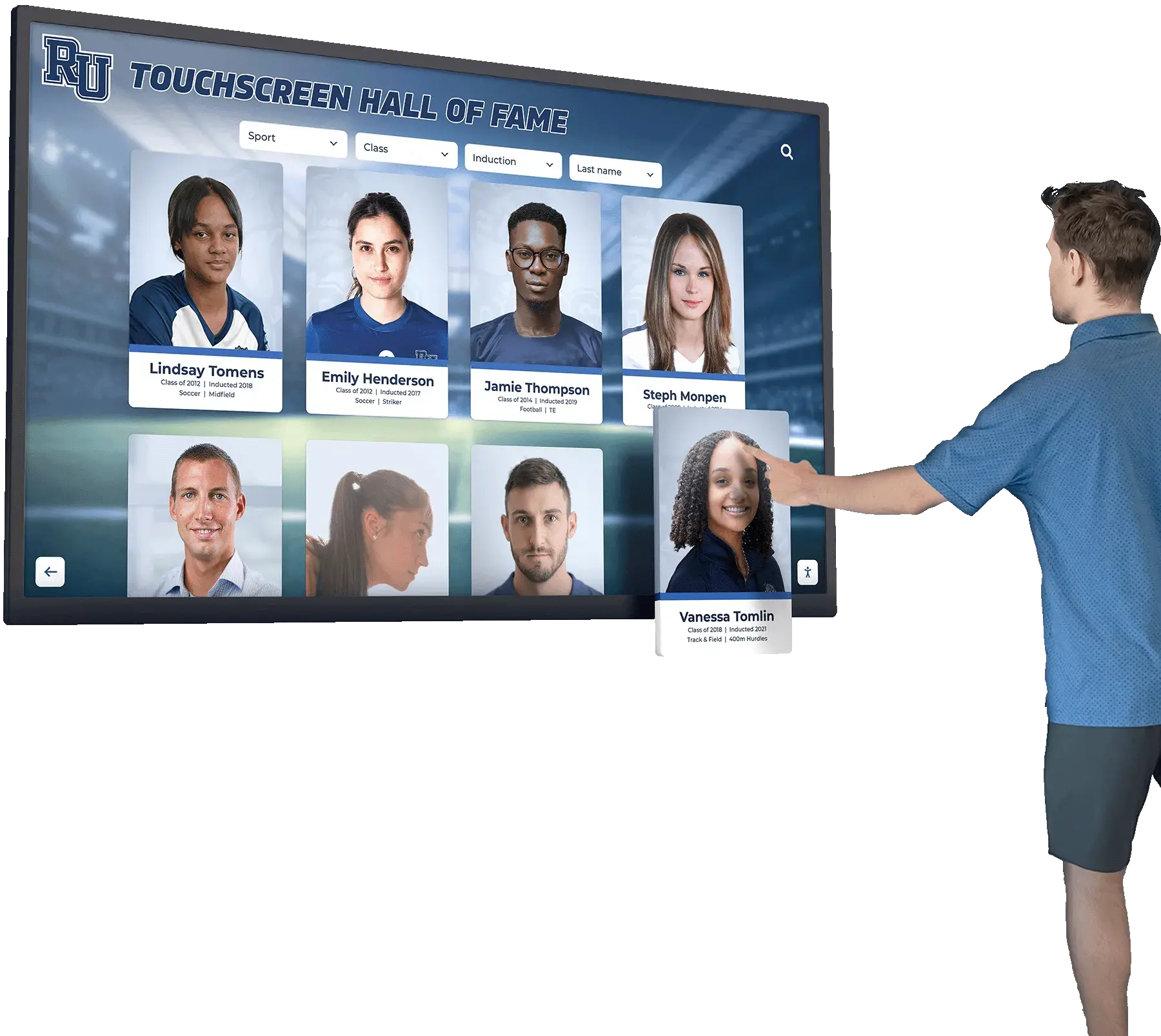
A touchscreen recognition display in an athletic hallway or school lobby can place a team photograph directly beside the story of that team’s season. Visitors who want to know more can move from the team photo to individual athlete records, from a dual-meet result to the season’s full schedule, from one year to the next. That layered navigation is what makes a recognition display useful to current athletes who are studying what came before them, to families who arrive on game nights, and to alumni who return to find their own names years later.
A few content-design principles worth keeping in mind as you plan what sections and screens to include:
- Proposed screen sections are content decisions, not automatic outputs. The labels and organization you plan on paper may need to adjust based on the volume of material your program generates each season and the physical space available in your installation.
- A recognition display does not grant formal award status. Appearing in a first-season display is not equivalent to earning a varsity letter, all-star selection, or hall of fame admission. Clarify with your athletic administration how the display relates — or does not relate — to your school’s formal awards programs before publishing.
- Store originals in your institution’s archive. What appears on the display is a presentation layer. Authoritative records belong in your school’s records system, accessible to future staff and coaches regardless of what display technology the school uses in future years.
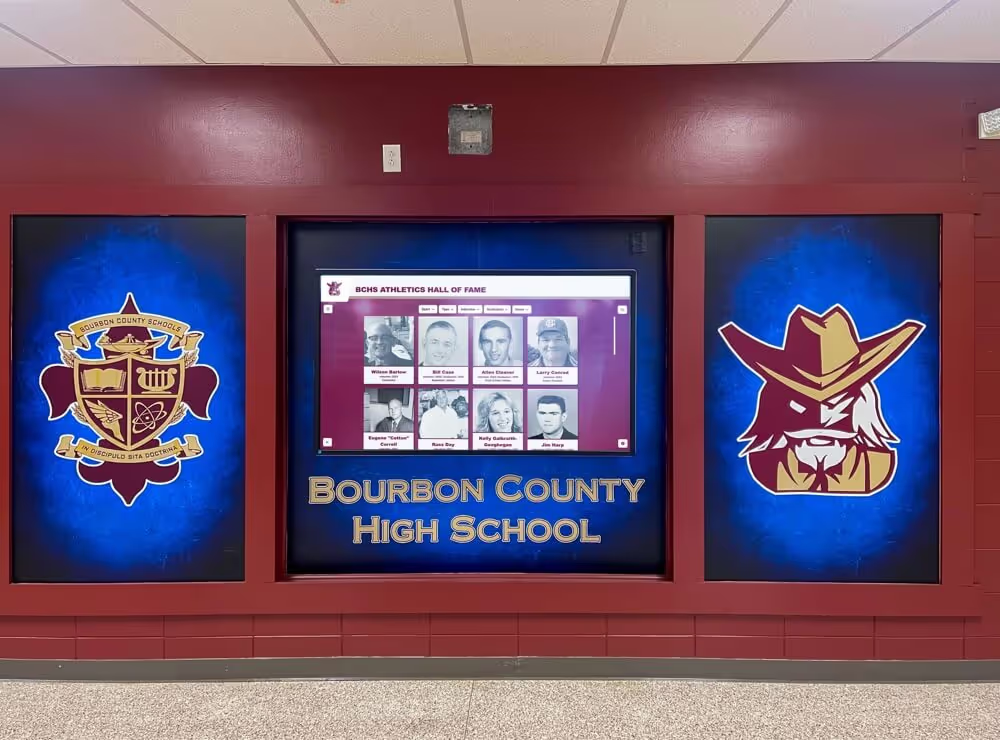
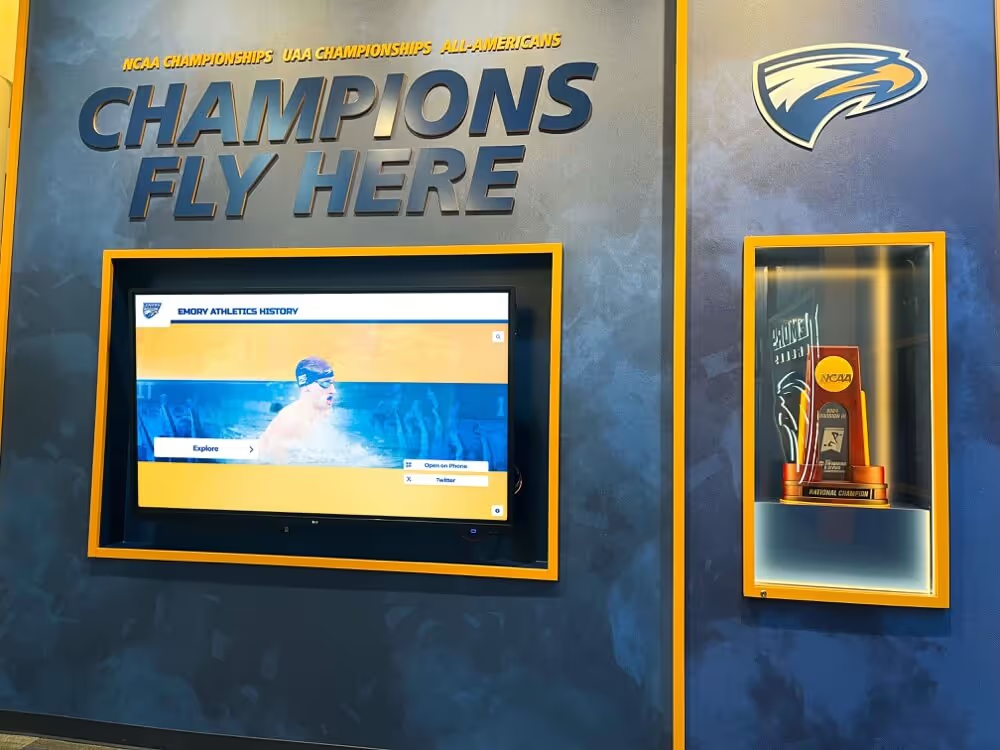
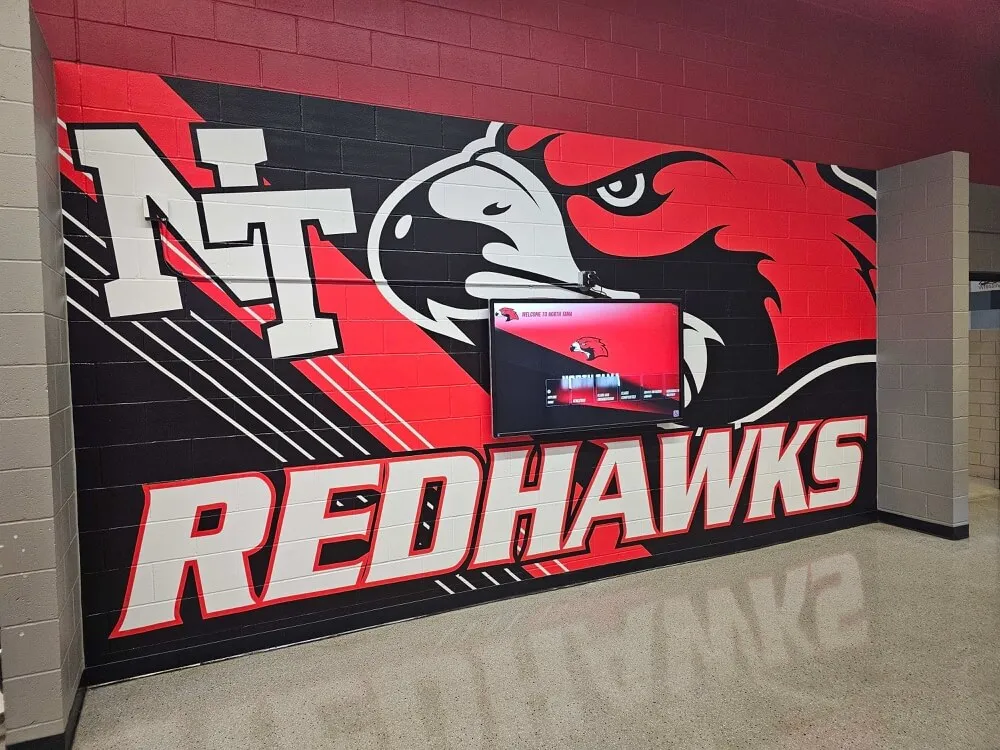
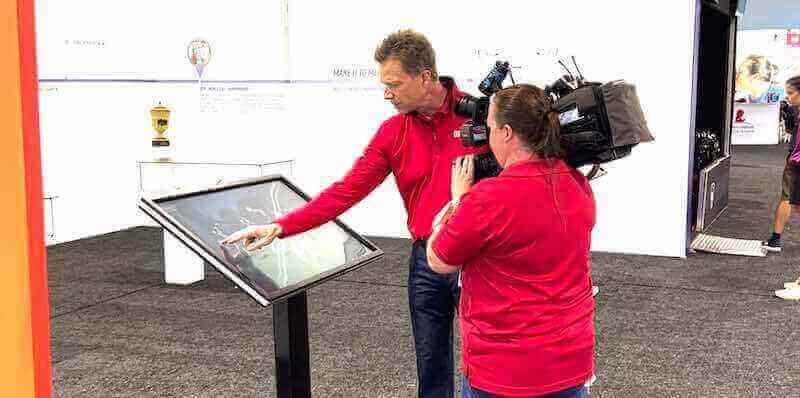
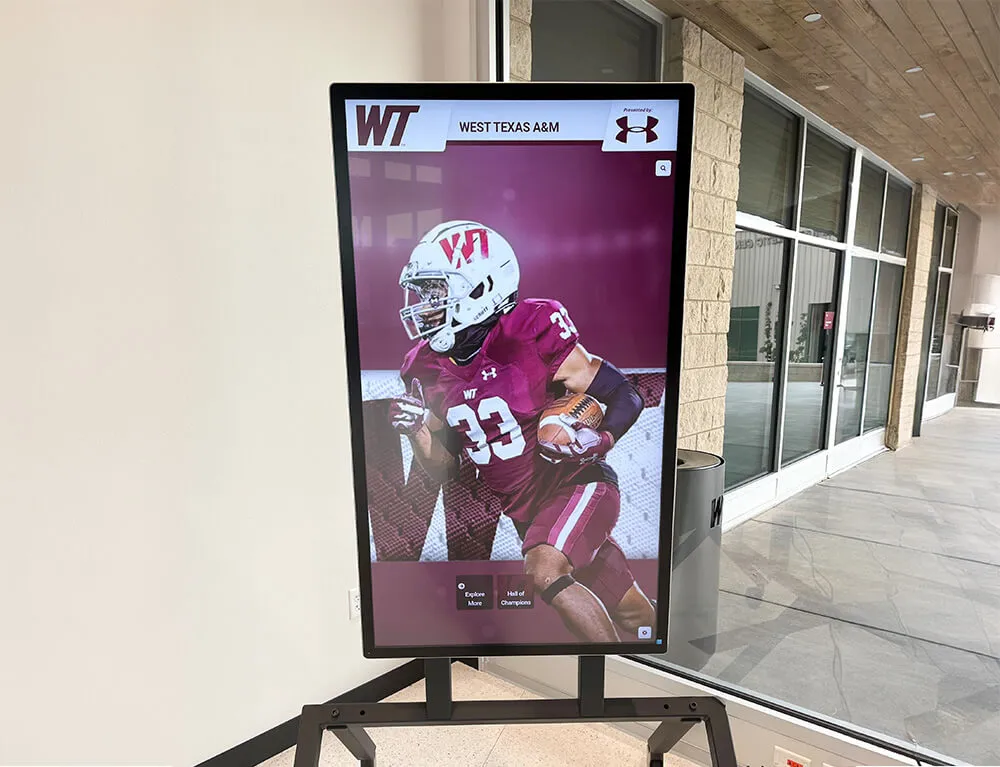
An interactive touchscreen lets each visitor choose which athlete records, season results, or program milestones to explore—giving parents, current athletes, and alumni a way to connect with the program's story on their own terms
Related Resources
- Understanding a High School Wrestling Tournament Bracket — How tournament structures work and how to contextualize earned tournament recognition within a school recognition display
- Athletic Archive: Born-Digital Records Policy — Collecting original team photos, video files, and season records in a form that supports a long-term athletic archive
A girls wrestling program’s first few seasons are the hardest to recover later if the records are not kept from the start. The athletes who built your program deserve a display that treats their story with the same care and permanence you would give a decade-old championship banner. If you are planning a recognition display for your girls wrestling program and want to see what a school lobby touchscreen installation looks like in practice, connect with the Rocket Alumni Solutions team to start the conversation.
Live Example: Rocket Alumni Solutions Touchscreen Display
Interact with a live example (16:9 scaled 1920x1080 display). All content is automatically responsive to all screen sizes and orientations.