How Gymnastics Scoring Works: The Code of Points, Deductions, and Judging Explained
- Home /
- Digital Wall of Fame Blog - Recognition Display Insights & Resources /
- How Gymnastics Scoring Works: The Code of Points, Deductions, and Judging Explained

The Easiest Touchscreen Solution




Live Example: Rocket Alumni Solutions Touchscreen Display
Interact with a live example (16:9 scaled 1920x1080 display). All content is automatically responsive to all screen sizes and orientations.
If you’ve ever watched your child compete in gymnastics and wondered why a seemingly flawless routine received a lower score than expected—or conversely, how a routine with visible wobbles still earned impressive marks—you’re not alone. The gymnastics scoring system can feel mystifying to parents, new judges, and even athletes themselves. Unlike sports with straightforward scoring, gymnastics operates on a complex framework that evaluates both difficulty and execution, transforming every routine into a mathematical equation of risk, precision, and artistry.
The current gymnastics scoring system, governed by the Code of Points, revolutionized how routines are evaluated when it replaced the traditional “perfect 10” system in international competition. Today’s open-ended scoring rewards gymnasts who attempt more difficult skills while still maintaining execution quality. Understanding this system not only helps you appreciate your gymnast’s performance more deeply but also enables more meaningful conversations about goal-setting, competition strategy, and long-term athletic development.
This comprehensive guide demystifies gymnastics scoring—from how judges calculate D-scores and E-scores, to common deductions you’ll see at meets, to why your Level 4 gymnast’s scoring works differently than elite competitions. Whether you’re a gymnastics parent trying to decode score sheets, a new judge learning evaluation protocols, or a high school athlete aiming to understand how to maximize competitive scores, this guide provides the clarity you need to navigate gymnastics’ intricate scoring landscape.
Gymnastics scoring represents one of the most sophisticated athletic evaluation systems in youth sports, requiring judges to simultaneously assess difficulty, execution, artistry, and technical precision within seconds of a routine’s completion. Understanding this system transforms confusing numbers into meaningful feedback about your gymnast’s progress and competitive standing.

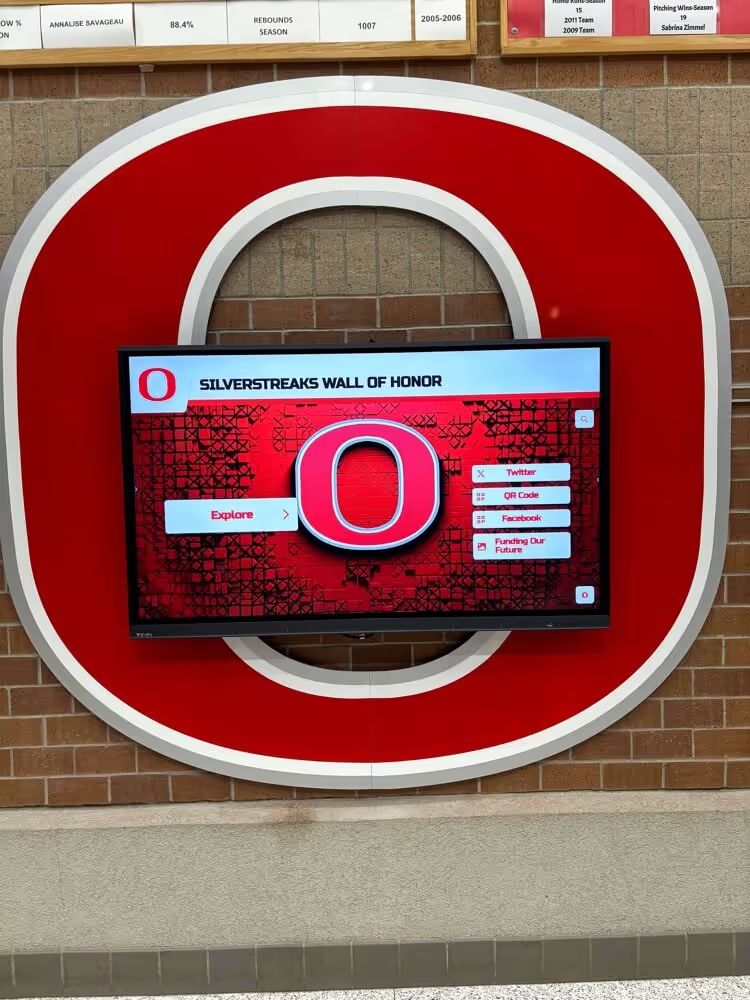
Modern recognition systems help schools celebrate gymnastics achievements and preserve competitive accomplishments
The Evolution of Gymnastics Scoring: From Perfect 10s to Open-Ended Scoring
Understanding current gymnastics scoring requires context about how the system has transformed over decades.
The Perfect 10 Era (Pre-2006)
Traditional Scoring Framework For generations, gymnastics operated on the iconic 10.0 scale:
- Routines started from a theoretical perfect score of 10.0
- Judges deducted points for execution errors, form breaks, and composition issues
- Special requirements and bonus connections could offset some deductions
- The highest possible score remained 10.0, achieved by legends like Nadia Comăneci and Mary Lou Retton
This system created memorable moments and easy comprehension for spectators, but it also created significant problems as gymnastics difficulty progressed.
Limitations of Closed-End Scoring By the early 2000s, the 10.0 system struggled to differentiate performance quality:
- Gymnasts performing vastly different difficulty levels received similar scores
- Strategic devaluation of difficulty to minimize execution deductions became common
- Score compression at elite levels made meaningful differentiation nearly impossible
- Innovation stagnated as risk-taking offered minimal competitive advantage
The Code of Points Revolution (2006-Present)
Open-Ended Scoring Structure The International Gymnastics Federation (FIG) implemented revolutionary changes:
- Separation of difficulty (D-score) from execution (E-score)
- Open-ended difficulty scoring with no maximum limit
- Standardized execution scoring starting at 10.0
- Final score = D-score + E-score (minus deductions)
This fundamental restructuring transformed competitive strategy and routine construction.

Digital systems enable comprehensive documentation of gymnastics achievements across competitive careers
Impact on Gymnastics Development The open-ended system created immediate effects:
- Dramatic increase in difficulty as gymnasts pursued higher D-scores
- Enhanced differentiation between skill levels
- Greater emphasis on routine composition and connection value
- More strategic decision-making about risk versus execution quality
Learn more about comprehensive athletic recognition in state championship display systems for gymnastics teams.
Level-Based Scoring Systems in the United States
Compulsory vs. Optional Levels USA Gymnastics operates multiple programs with distinct scoring approaches:
- Compulsory Levels (1-5): Predetermined routines scored from 10.0 with standardized deductions
- Optional Levels (6-10, Xcel divisions): Athlete-created routines using modified Code of Points scoring
- Elite/NCAA: Full open-ended Code of Points implementation
Most recreational and high school gymnasts compete in USA Gymnastics Junior Olympic (JO) program levels or Xcel divisions, each with scoring modifications making the system more accessible than international elite competition while still maintaining rigor and differentiation.
Understanding the Two-Score System: D-Score and E-Score
The foundation of modern gymnastics scoring rests on evaluating difficulty and execution separately.
D-Score (Difficulty Score): What It Measures
Calculating Difficulty Value The D-score reflects routine composition and technical ambition:
Skill Values Each skill in gymnastics receives a difficulty rating:
- A skills: Simplest elements (0.1 difficulty value at elite level)
- B skills: Basic difficulty (0.2 value)
- C skills: Intermediate difficulty (0.3 value)
- D skills: Advanced difficulty (0.4 value)
- E skills: Elite difficulty (0.5 value)
- F skills: Exceptional difficulty (0.6 value)
- G skills: Extremely rare difficulty (0.7 value)
- H and I skills: Virtually unprecedented difficulty (0.8-0.9+ value)
D-Score Components At elite levels, D-score calculation includes:
- Eight highest-valued skills on floor, beam, and bars (ten on vault)
- Composition requirements (specific element groups that must be included)
- Connection value (bonus points for linking difficult skills in sequence)
- Dismount value (final skill from apparatus)
Level-Specific D-Score Modifications Lower competitive levels use simplified approaches:
- Level 6-7: Maximum start values (typically 9.0-9.5) with bonus opportunities
- Level 8-10: Increasing start values based on composition and difficulty
- Xcel divisions: Start values based on skill requirements for each division (Bronze through Diamond/Sapphire)
Understanding D-score helps explain why two routines with different difficulty levels can’t be directly compared on execution alone.
Explore recognition systems for gymnastics achievements at athletic record boards for tracking competitive milestones.

Interactive displays make gymnastics achievements accessible and celebrated throughout school communities
E-Score (Execution Score): Evaluating Performance Quality
Starting from Perfect Execution Execution scoring operates on deduction principles:
- All routines theoretically start at 10.0 for execution
- Judges deduct for every error, form break, and execution issue
- Final E-score reflects accumulated deductions subtracted from 10.0
- Higher E-scores indicate cleaner, more precise execution
Execution Judging Panel At major competitions, multiple judges evaluate execution:
- Typically 5-6 execution judges per apparatus at elite levels
- Highest and lowest scores dropped, remaining scores averaged
- This system reduces individual judge bias impact
- Lower-level competitions may use 2-4 judges with different averaging methods
What Execution Judges Evaluate Every movement receives scrutiny:
- Form and Technique: Pointed toes, straight legs, body alignment, proper body positions
- Amplitude: Height on jumps and leaps, distance on tumbling passes, dynamics of movements
- Precision and Control: Exact foot placement, balanced positions, controlled landings, wobble-free beam work
- Rhythm and Continuity: Smooth transitions, maintained flow, confident execution
- Artistry (floor and beam): Expression, musicality, dance quality, presentation
Each error category carries specific deduction values, creating an intricate system of evaluation.
The Deduction System: Understanding What Costs Points
Deductions fall into standardized categories with specific point values assigned to each error type.
Small, Medium, and Large Deductions
Deduction Scale Execution errors receive graduated penalties:
Small Deductions (0.1 points)
- Minor foot position errors on landings
- Small amplitude reduction
- Slight form breaks (small bent knee, flexed foot)
- Minor rhythm hesitations
Medium Deductions (0.3 points)
- Significant form breaks (bent legs on multiple skills)
- Noticeable amplitude reduction
- Balance adjustments (small steps, arm movements for balance)
- Moderate technique errors
Large Deductions (0.5+ points)
- Severe form breaks throughout skills
- Major balance errors (multiple large steps, near-falls)
- Significant amplitude deficiency
- Substantial technical execution problems
Fall Deduction The most significant deduction:
- 1.0 point for falling from apparatus or failing to land on feet
- Applies regardless of routine difficulty or other execution quality
- Multiple falls accumulate (two falls = 2.0 deduction)
Apparatus-Specific Deduction Considerations
Balance Beam The most unforgiving apparatus for execution scoring:
- Wobbles and balance adjustments (0.1-0.5 depending on severity)
- Foot placement errors on the 4-inch-wide surface
- Extra arm movements for balance
- Failure to hold landing positions for required duration
- Lack of confidence visible through hesitation or excessive caution
Beam routines often receive lower E-scores than other events due to inherent difficulty of maintaining perfect execution on a narrow surface.
Floor Exercise Complex evaluation combining tumbling and dance:
- Landing deductions for steps, hops, or form breaks
- Out-of-bounds penalties (0.1 per infraction)
- Lack of pointed toes during dance elements
- Insufficient amplitude on leaps and jumps
- Artistry deductions for lack of expression or musical connection
- Line or directional errors in tumbling passes
Vault Split-second evaluation of a single explosive skill:
- Pre-flight deductions (approach, board contact, body position to table)
- Support phase deductions (hand placement, table contact, repulsion quality)
- Post-flight deductions (height, rotation, body position)
- Landing deductions (steps, form, control)
- Distance from table considerations
Vault scoring happens rapidly, with judges trained to identify specific technical errors in under two seconds of performance.
Uneven Bars Technical precision evaluation throughout continuous movement:
- Release move execution (height, rotation, catch quality)
- Handstand positions and line
- Swing amplitude and extension
- Transition smoothness between elements
- Cast heights and body positions

Modern display technology ensures gymnastics accomplishments remain visible and celebrated long-term
- Dismount execution and landing control
Bars routines require maintaining extension and form while executing continuous complex movements, making consistency particularly challenging.
Discover ways to celebrate gymnastics achievements through volleyball awards and recognition ideas that transfer across sports.
Neutral Deductions: Beyond Execution
Separate Deduction Categories Some penalties come from non-execution issues:
Time Violations
- Floor routines exceeding or falling short of required time range (0.1 per second over/under in most levels)
- Excessive preparation time before vault (0.3-0.5)
Composition Errors
- Missing required elements or element groups (0.5-1.0 per omission)
- Insufficient compositional variety
- Failure to meet Special Requirements (SR) in each category
Coaching/Behavioral Deductions
- Unauthorized assistance from coaches (0.5)
- Spotting or touching athlete during routine (0.5-1.0)
- Inappropriate behavior or unsportsmanlike conduct (variable)
- Excessive coach communication during competition (0.3)
Attire and Presentation Deductions
- Inappropriate leotard or attire (0.3)
- Jewelry or unauthorized accessories (0.3)
- Music violations (inappropriate content, wrong format) (0.5)
These neutral deductions apply separately from execution scoring, further reducing final scores.
How Judges Calculate Your Gymnast’s Final Score
Understanding the calculation process helps decode score sheets and competition results.
The Judging Panel Structure
Panel Composition at Elite Levels Major competitions employ specialized judging teams:
D-Panel (Difficulty Judges)
- Typically 2 judges evaluating routine difficulty
- Identify all skills performed and assign difficulty values
- Verify composition requirements and connection value
- Calculate total D-score
- Scores usually displayed with two judges’ assessments averaged
E-Panel (Execution Judges)
- Usually 5-6 judges evaluating execution quality
- Each judge independently assigns deductions
- Highest and lowest scores dropped
- Remaining scores averaged for final E-score
- System design reduces individual bias impact
Reference/Head Judge
- Oversees judging panel accuracy and consistency
- Can intervene for obvious scoring errors
- Handles inquiry processes
- Ensures proper procedures followed
Lower Level Competition Modifications Most youth gymnastics operates with simplified panels:
- Single judge evaluating both difficulty and execution
- Two-judge panels with scores averaged
- Four-judge panels with high/low dropped
Step-by-Step Score Calculation
Elite/Optional Level Scoring Process
Step 1: D-Score Determination Difficulty judges evaluate:
- Identify the 8 (or 10 for vault) highest-valued skills
- Add difficulty values of those skills
- Add composition requirement fulfillment values
- Add connection bonuses for linked elements
- Total = D-score (displayed immediately after routine)

Integrated recognition systems preserve gymnastics achievements alongside other athletic accomplishments
Step 2: E-Score Determination Execution judges evaluate:
- Each judge starts at 10.0
- Each judge subtracts deductions for every error observed
- Judges submit their scores (typically ranging 7.5-9.5 for solid routines)
- Highest and lowest scores dropped
- Remaining scores averaged = E-score
Step 3: Apply Neutral Deductions Head judge applies additional deductions:
- Time penalties (if applicable)
- Composition errors (missing requirements)
- Coaching infractions
- Behavioral or attire violations
- Total neutral deductions
Step 4: Final Score Calculation The arithmetic is straightforward:
Final Score = D-Score + E-Score - Neutral Deductions
Example Calculation:
- D-Score: 5.2 (difficulty and composition)
- E-Score: 8.650 (averaged execution after drops)
- Neutral Deductions: 0.3 (coaching violation)
- Final Score: 13.550
Compulsory Level Scoring Levels 1-5 use simplified traditional approach:
- Start from maximum value (10.0)
- Apply all execution deductions
- Apply composition requirement deductions
- Apply neutral deductions
- Final score
Since compulsory routines are predetermined, difficulty doesn’t vary—only execution quality differentiates competitors.
Reading and Interpreting Your Gymnast’s Score Sheet
Score sheets provide detailed breakdowns helping identify specific strengths and improvement areas.
What Information Appears on Score Sheets
Standard Score Sheet Components
Athlete Identification
- Gymnast name and club affiliation
- Level and age group
- Session and rotation information
- Assigned competitor number
Apparatus-Specific Scores For each event performed:
- Start Value or D-Score (depending on level)
- Execution Score or total deductions
- Neutral deductions (if applicable)
- Final apparatus score
- Ranking for that apparatus within session/flight
All-Around Information
- Total score across all four events
- All-around ranking (if applicable)
- Comparison to qualification standards
Judge Assignments
- Panel composition
- Individual judge identifications (at some competitions)
Using Scores for Progress Assessment
What Scores Reveal About Development
Consistency Indicators Compare scores across competitions:
- Execution score trends showing improvement or regression
- Apparatus-specific patterns revealing strengths and weaknesses
- Deduction consistency suggesting technical issues needing attention
Competitive Positioning Context matters more than absolute numbers:
- Placement relative to competitors at similar levels
- Score gaps indicating areas needing most attention
- Progression toward qualification scores for next level or championships
Strategic Insights Scores inform training priorities:
- Low D-scores suggest need for skill upgrades or better composition
- Low E-scores indicate execution quality needing refinement
- Specific apparatus weaknesses requiring focused training time
- Fall patterns suggesting mental preparation or technical consistency work
Learn about comprehensive recognition for athletic achievement at offensive player of the year awards and recognition.

Modern recognition technology enables schools to celebrate gymnastics achievements with comprehensive, accessible displays
Common Score Interpretation Mistakes
Misconceptions Parents and Athletes Should Avoid
“A Higher Score Always Means Better Performance” Context determines score meaning:
- Scores vary significantly across competition levels and locations
- Regional judging differences create scoring inconsistency
- Different competitive fields make direct score comparisons misleading
- Season progression naturally improves scores as skills develop
Focus on placement within specific competitions rather than comparing raw scores across different meets.
“Falls Don’t Matter If Other Elements Look Good” While partially true, falls carry multiple costs:
- The 1.0 deduction itself
- Psychological impact potentially affecting remaining routine
- Demonstration of inconsistency judges notice across apparatus
- Impact on team scores when applicable
Falls represent the single most impactful deduction in gymnastics scoring.
“My Gymnast’s Score Should Match Their Practice Performance” Competition introduces variables absent in training:
- Pressure and nerves affecting execution quality
- Unfamiliar equipment and environmental conditions
- Single-attempt performance versus multiple practice repetitions
- Judge subjectivity and varying interpretation of Code of Points
Expecting identical gym-to-meet execution sets unrealistic standards causing unnecessary disappointment.
“Higher Difficulty Always Produces Higher Scores” The difficulty-execution balance matters critically:
- Upgraded skills with poor execution often score lower than cleaner easier routines
- Strategic difficulty choices matching current execution capacity optimize scores
- Connection value and composition bonuses require successful completion
- Risk-reward analysis should guide routine construction
The Code of Points rewards difficulty but not at execution’s expense.
Team Scoring in Gymnastics Competition
Understanding team scoring adds another layer to comprehending gymnastics competitions, particularly at high school and club levels.
How Team Scores Are Calculated
Basic Team Scoring Structure
Most gymnastics team competitions follow similar frameworks:
Team Composition Requirements
- Minimum and maximum number of athletes per team (typically 3-6)
- All-around competitors versus event specialists
- Level consistency or mixed-level allowances
Score Counting Systems Different competition formats use varied approaches:
Count-All System
- Every athlete’s score contributes to team total
- No dropped scores regardless of performance
- Highest team cumulative total wins
- Places premium on consistent team depth
Top-N Counting
- Only specified number of top scores count per apparatus
- Common formats: “top 3 of 4” or “top 5 of 6”
- Allows team to absorb one weaker performance per event
- Rewards team depth while providing buffer
Qualifying vs. Finals Formats Championship competitions often use multi-session structures:
- Preliminary session determines team advancement
- Finals reset or continue scores differently across competitions
- Strategic lineup decisions in each session
Learn about comprehensive team recognition at digital record board engagement ideas for schools.
Strategic Lineup Decisions
Optimizing Team Performance
Coaches make strategic choices maximizing team scores:
Event Specialist Utilization
- Athletes competing fewer than four events focusing on strengths
- Strongest apparatus specialists competing early for team momentum
- Rotation order considerations based on athlete strengths
- Risk management balancing difficulty and execution
Alternate Deployment When team size allows alternates:
- Last-minute lineup changes based on warm-up performance
- Substitutions for injured or struggling athletes
- Strategic positioning of most consistent performers
Pressure Management Lineup order impacts performance psychologically:
- Leadoff performers setting team tone and expectation
- Anchor positions for most consistent, pressure-resistant athletes
- Mid-lineup protection for less experienced competitors
- Rotation scheduling relative to competitors
These strategic elements transform gymnastics from individual sport to complex team chess match.
Level-Specific Scoring Differences: What Changes as Gymnasts Advance
Gymnastics scoring evolves significantly as athletes progress through competitive levels, with each tier introducing additional complexity.
Compulsory Level Scoring (Levels 1-5)
Standardized Routine Evaluation
Compulsory levels feature predetermined routines all athletes perform:
Scoring Structure
- Start from 10.0 base value
- Deductions for execution errors following standardized deduction charts
- Deductions for missing or incorrectly performed required elements
- Neutral deductions for time, behavior, attire
Judge Focus Areas Compulsory judges evaluate:
- Precise execution of prescribed elements
- Exact body positions and form requirements
- Timing and rhythm matching prescribed choreography
- Completion of all required skills and sequences
Benefits of Compulsory Scoring This simplified approach serves developmental purposes:
- Focuses athletes on execution fundamentals before difficulty advancement
- Provides clear standards for progression to optional levels
- Enables direct peer comparison on identical content
- Teaches judges evaluation fundamentals
Optional Level Scoring (Levels 6-10, Xcel)
Customized Routine Evaluation
Optional levels permit athlete-created routines within parameters:
Modified Start Values Rather than fully open-ended scoring:
- Base start value assigned to each level (e.g., 9.0 for Level 6, 9.5 for Level 7)
- Bonus tenths available for skill difficulty and composition (typically 0.5-1.0 possible bonus)
- Maximum start values capping potential D-scores
- Specific value part requirements that must be fulfilled
Skill Value Systems Each level defines which skills earn bonus value:
- A, B, C valued skills with point values assigned
- Connection bonuses for linked elements
- Special requirement fulfillment adding value
- Dismount requirements and values
Progressive Complexity Higher optional levels approach elite scoring:
- Level 6-7: Simple bonus structures, lower required difficulty
- Level 8-9: Increased complexity, more sophisticated connection values
- Level 10: Closest to elite Code of Points implementation with modified values
Explore recognition systems for advancing gymnasts through academic recognition programs applicable to athletic achievement.
Elite and NCAA Scoring Distinctions
Highest Competitive Level Adaptations
Elite (FIG Code of Points) Full international scoring implementation:
- Completely open-ended D-scores with no maximum
- Eight counted elements on floor, beam, bars (all vaults on vault)
- Full connection value matrix
- Complete composition requirement structure
- Most stringent execution standards
NCAA Collegiate Gymnastics Modified scoring balancing difficulty with format constraints:
- 10.0 maximum maintained for tradition and spectator accessibility
- Start values based on skill difficulty and requirements (typically 9.5-10.0)
- Bonus opportunities reaching 10.0 start
- Execution deductions from 10.0 following modified guidelines
- Team format emphasis creating strategic complexity
Key NCAA Differences from Elite
- More forgiving execution standards encouraging risk-taking
- Emphasis on entertainment and crowd engagement
- Strategic value of 10.0 maximum for team scoring impact
- Modified deduction scales promoting dynamic gymnastics
These variations ensure scoring systems match competitive level demands and developmental appropriateness.
Common Gymnastics Scoring Questions Answered
Parents, new judges, and athletes frequently ask specific questions about scoring intricacies.
“Why Do Scores Vary So Much Between Competitions?”
Multiple Factors Create Score Variability
Judging Panels Different judges interpret Code of Points differently:
- Regional judging cultures and tendencies
- Experience levels affecting consistency
- Individual judge standards varying slightly
- Panel composition changes across meets
Competition Levels Meet difficulty affects scoring:
- Local invitationals versus regional championships versus national qualifiers
- Larger competitions typically feature more experienced, stringent judges
- Qualifying competitions sometimes score more conservatively
Seasonal Timing Scores naturally improve throughout season:
- Early season: new skills being refined, lower execution
- Mid-season: routine polishing showing score improvements
- Late season: peak performance yielding highest scores
Competitive Field Impact Relative competition affects perception:
- Stronger fields may indicate tighter judging or higher difficulty baseline
- Weaker fields might show inflated scores or inconsistent standards
- Regional differences in competitive depth
“Can Coaches Challenge Scores?”
Inquiry and Appeal Processes
Most gymnastics competitions permit formal challenges:
Inquiry Procedures When coaches question scoring:
- Coach submits formal inquiry with fee (typically $50-300 depending on level)
- Inquiry filed within specified time window after score posted (usually 4-15 minutes)
- Head judge reviews difficulty judges’ calculation and element identification
- Score adjusted if calculation error found; fee returned
- Score stands if calculation correct; fee retained
What Can Be Challenged Inquiries typically address:
- D-score calculation errors
- Element identification mistakes
- Connection value miscalculations
- Composition requirement crediting errors
What Cannot Be Challenged Most systems exclude:
- Execution deductions (subjective judgment)
- Neutral deduction applications
- Individual judge bias claims
Strategic Inquiry Considerations Coaches evaluate:
- Cost versus potential score improvement
- Remaining budget for subsequent competitions
- Score impact on placement or advancement
- Time constraints within competition schedule
“How Do Judges Stay Consistent Across Athletes?”
Judge Training and Accountability Systems
Gymnastics federations implement extensive judge development:
Certification and Education
- Multi-level certification processes (typically 4-10 judge rating levels)
- Required continuing education and recertification
- Regular clinics reviewing Code of Points updates
- Practical evaluation exams assessing judging accuracy
Evaluation and Monitoring
- Judge performance reviews at major competitions
- Scoring consistency analysis comparing judges’ assessments
- Rating adjustments or discipline for persistent inconsistency
- Mentorship programs pairing experienced and developing judges
Scoring Standardization
- Pre-competition judge meetings reviewing specific expectations
- Standard deduction charts and guidelines
- Video review systems at major competitions
- Statistical analysis identifying outlier judges
These systems promote consistency while acknowledging inherent subjectivity in execution evaluation.
Discover recognition approaches for judging achievement at academic achievement and awards recognition.
Supporting Your Gymnast: Using Scoring Knowledge Constructively
Understanding scoring helps parents and coaches support athletes more effectively, but application matters as much as knowledge.
Productive Score Conversations
Discussing Meet Results Effectively
Focus on Controllables Redirect attention to factors within athlete control:
- Execution quality and specific skills performed well
- Improvement areas with concrete technical solutions
- Effort and presentation regardless of score outcome
- Process goals achieved independent of judging
Avoid Blame and Negativity Counterproductive responses to disappointing scores:
- Criticizing judges’ competence or fairness
- Comparing to other athletes or past performances dismissively
- Expressing frustration about score magnitude
- Dwelling on mistakes rather than progress opportunities
Ask Open-Ended Questions Encourage athlete reflection:
- “What felt best about your beam routine today?”
- “What’s one thing you’d like to improve before next meet?”
- “How did you handle that fall on bars?”
- “What made you most proud today?”
These approaches build resilience and intrinsic motivation rather than external validation dependence.
Setting Score-Based Goals Appropriately
Balancing Outcome and Process Goals
Outcome Goals (score-focused) Use score goals judiciously:
- Qualification scores for championships or level advancement
- Personal records celebrating improvement
- Competitive placement relative to prior performances
Process Goals (performance-focused) Emphasize controllable execution elements:
- Landing specific skills without falls
- Achieving certain technical positions
- Completing difficult connections
- Performing with confidence and presentation quality
Balanced Goal Framework Combine approaches strategically:
- “Achieve 34.5 all-around by landing all beam skills and performing floor choreography with full expression”
- “Qualify to state championship through clean bar routine execution and upgraded vault”
- “Improve floor score by 0.5 by adding B-skill leap pass and reducing landing deductions”
This framework acknowledges score importance while emphasizing actionable performance elements.
When to Seek Coaching Guidance
Appropriate Parent Involvement Boundaries
Productive Parent Engagement
- Asking coach for interpretation of score patterns
- Requesting clarification about progression requirements
- Discussing long-term development strategy
- Seeking guidance on appropriate goal-setting
Overstepping Boundaries
- Coaching during meets or practices
- Questioning routine construction decisions without coach invitation
- Comparing coach’s approach to other programs
- Demanding specific score outcomes or placements
Trust coaching expertise while maintaining supportive, informed parent role.
Modern Technology in Gymnastics Scoring and Recognition
Technology increasingly shapes both competitive scoring processes and how schools and clubs celebrate gymnastics achievements.
Digital Scoring Systems
Competition Management Technology
Modern meets rely on sophisticated scoring platforms:
Real-Time Score Processing
- Electronic judge entry replacing manual calculation
- Automated D-score and E-score calculation
- Immediate posting to display boards and mobile apps
- Live streaming integration showing scores instantly
- Reduced calculation errors through automation
Enhanced Competition Experience
- Live scoring apps enabling family remote viewing
- Historical score databases tracking athlete progression
- Statistical analysis tools for coaches
- Digital score sheets replacing printed versions
- Video review integration at elite levels
Permanent Recognition Solutions for Gymnastics Programs
Celebrating Gymnastics Achievement Long-Term
Beyond competition scoring, schools and clubs increasingly recognize gymnasts’ accomplishments through permanent displays:
Digital Recognition Displays Modern touchscreen systems enable comprehensive gymnastics program celebration:
- Showcase state qualifiers, championship teams, and record-holders
- Document complete competitive histories with photos and achievements
- Highlight individual gymnasts’ progression from compulsory through optional levels
- Feature team accomplishments alongside individual recognition
- Update easily with current season results without physical space limitations
Integrated Athletic Recognition Schools implementing digital hall of fame and recognition systems report significant benefits:
- Gymnastics receives equal visibility to traditionally higher-profile sports
- Multi-year athlete documentation showing complete competitive careers
- Accessible displays in athletic facilities engaging current athletes
- Alumni connection through preserved historical achievements
- Recruiting advantages showcasing program excellence
Comprehensive Program Documentation Digital platforms preserve:
- Season-by-season team accomplishments and records
- Individual athlete career statistics and progression
- Championship team rosters and results
- State and regional qualifier recognition
- Level advancement documentation and athlete development timelines
This technology ensures gymnastics achievements receive lasting celebration beyond fleeting competition moments, motivating current athletes while honoring program tradition.
Schools seeking comprehensive athletic recognition explore creating halls of fame displays for gymnastics programs that showcase competitive excellence permanently.
Conclusion: Mastering Gymnastics Scoring to Enhance Your Experience
Understanding the gymnastics scoring system—from Code of Points fundamentals to apparatus-specific deductions to the D-score/E-score calculation process—transforms you from confused spectator to informed supporter capable of truly appreciating your gymnast’s competitive journey. This knowledge enables more meaningful conversations about performance, more realistic goal-setting, and deeper understanding of why certain routines score as they do despite apparent execution quality or difficulty differences.
The current open-ended scoring system, while complex, serves important purposes: rewarding innovation and difficulty, differentiating skill levels meaningfully, and providing clear technical feedback through detailed deductions. As you watch your gymnast compete—whether they’re mastering compulsory routines at Level 4 or competing optional skills at Level 9—you’ll now recognize that every tenth of a point reflects specific technical execution, difficulty choices, and composition decisions that judges evaluate within seconds using sophisticated standardized criteria.
Remember that scores represent single moments in much longer athletic journeys. While understanding scoring mechanics helps contextualize competitive results, the most important outcomes happen beyond score sheets: discipline development, goal-setting skills, resilience building, and confidence growth that gymnastics cultivates regardless of specific numerical outcomes. Use your scoring knowledge to ask better questions, provide more informed support, and appreciate the intricate athletic and artistic elements judges evaluate, but never lose sight of the developmental benefits that transcend competitive placements.
Celebrate Your Gymnastics Program's Achievements
Discover how modern digital recognition systems can showcase your gymnasts' competitive accomplishments, championship teams, and program excellence with permanent displays that inspire current athletes and honor your school's gymnastics tradition.
Explore Recognition SolutionsWhether you’re a gymnastics parent decoding your child’s first meet results, a new judge learning evaluation protocols, a high school gymnast strategizing routine construction, or an athletic director seeking to elevate your gymnastics program’s visibility, mastering scoring fundamentals provides the foundation for meaningful engagement with this demanding, beautiful sport. The scoring system reflects gymnastics’ complexity—simultaneously evaluating power and grace, difficulty and precision, athletic skill and artistic presentation—creating one of the most sophisticated evaluation frameworks in all of sports.
As your gymnast continues developing skills, advancing through levels, and pursuing competitive goals, your understanding of how judges translate those performances into scores will help you appreciate every achievement—from a cleaned-up beam series reducing deductions, to an upgraded vault increasing D-score, to a confident floor performance improving execution quality. Each improvement represents tangible progress toward gymnastics excellence, regardless of how judges ultimately score the routine.
Live Example: Rocket Alumni Solutions Touchscreen Display
Interact with a live example (16:9 scaled 1920x1080 display). All content is automatically responsive to all screen sizes and orientations.