Hall of Fame Correction Notice Policy: Fix Profiles Transparently and Preserve Trust
- Home /
- Digital Wall of Fame Blog - Recognition Display Insights & Resources /
- Hall of Fame Correction Notice Policy: Fix Profiles Transparently and Preserve Trust

The Easiest Touchscreen Solution




Live Example: Rocket Alumni Solutions Touchscreen Display
Interact with a live example (16:9 scaled 1920x1080 display). All content is automatically responsive to all screen sizes and orientations.
Errors in hall of fame profiles are discovered more often than most programs expect—a graduation year is off by one digit, a record is attributed to the wrong season, a middle name is misspelled on a plaque that has been on display for a decade. The impulse is to fix the mistake quietly and move on. A written hall of fame correction notice policy explains why that impulse, however well-meaning, can damage alumni trust more than the error itself did—and it establishes a transparent, consistent process for acknowledging corrections so that inductees, families, donors, and the broader school community know that the recognition record is actively maintained and honestly governed. A policy built around transparency does not draw attention to every trivial typo, but it ensures that material corrections to the record are handled with the same care the program gives to induction itself.
A hall of fame is only as trustworthy as the accuracy of its records. When a discrepancy surfaces—whether reported by an inductee’s family, identified during an annual review, or discovered by an archivist—the way a program handles that discovery sends a clear signal about how it treats the people it has pledged to honor.

A correction notice policy ensures that material errors in hall of fame profiles are acknowledged and corrected transparently across every display format—physical and digital
What a Hall of Fame Correction Notice Policy Covers
A hall of fame correction notice policy is a governance document that defines:
- Which types of errors require a formal correction notice and which can be corrected silently as routine maintenance
- Who has authority to approve a correction and at what level of review
- How the correction is documented internally before any display is updated
- Where and how the correction notice is published when one is required
- How the original erroneous content is preserved in the internal record
- How inductees, families, and the public are notified when material information has changed
This policy sits within a broader governance framework alongside nomination criteria, obituary update procedures, and any deaccession or removal policy your program maintains. It addresses a different and narrower question: not who belongs in the hall of fame, but how the record for each inductee is maintained accurately after recognition is granted.
The Core Distinction: Material Errors vs. Routine Corrections
Not every fix requires a public notice. A clear correction notice policy draws an explicit line between two categories of change:
Routine corrections are factual errors that are minor, do not change the substance of an inductee’s recognition, and were not widely visible in the erroneous form. Examples include a misspelled middle name on an internal database record that never appeared on the physical display, a metadata tag assigned to the wrong photograph before the profile was published, or a formatting inconsistency in a list of honors.
Material corrections are changes to information that was published in an erroneous form, that is factually significant to the inductee’s recognition, and that a reasonable person in the inductee’s community would notice or care about. Examples include:
| Category | Example Error | Why It Is Material |
|---|---|---|
| Statistical record | A swimming time is listed as a state record, but the inductee held a conference record | Changes the nature of the achievement displayed |
| Identification | A photograph is labeled with the wrong inductee’s name | Another person is publicly misidentified |
| Achievement attribution | A team championship is credited to the wrong season year | Historical fact is incorrect |
| Name or title | A maiden name is used when the inductee has used a different name publicly for years | Affects how the inductee is identified in their community |
| Dates | An induction year is listed incorrectly by more than a rounding error | The inductee’s place in the program’s history is misrepresented |
| Sport or position | An athlete is listed in the wrong sport or position | The basis for their recognition is wrong |
The policy should state this distinction explicitly. Without it, staff will apply inconsistent judgment—sometimes issuing notices for trivial changes, sometimes silently correcting material ones—and neither approach serves the program well.
Why Transparency Builds More Trust Than Silence
The instinct to quietly fix errors is understandable. No institution wants to publicize its own mistakes. But a silent correction to a published record creates a different problem: if anyone notices the change—a family member who downloaded the old profile, a journalist reviewing the archives, an alumni organization that reproduced the erroneous information in its own materials—the absence of any acknowledgment looks worse than the original error.
Transparency in correction handling signals three things that matter to donors, alumni, and inductee families:
The program takes accuracy seriously. An institution that acknowledges corrections demonstrates that it cares enough about the record to fix it and say so. That is a mark of seriousness, not weakness.
The program respects the people it honors. An inductee whose record contains a material error has a legitimate interest in knowing the error occurred and that it was corrected. Fixing it silently denies them that knowledge and implicitly treats the recognition record as the institution’s property rather than the inductee’s history.
The program can be trusted with future inductions. Donors who fund recognition programs and alumni who participate in nomination processes need confidence that the organization managing the record has active quality control. A documented correction policy—even one they hope never to invoke—provides that confidence.
Well-designed digital hall of fame donor wall and sponsor recognition programs depend on exactly this kind of institutional credibility. Donors whose names appear on a recognition wall are trusting the institution to maintain that record accurately and to handle discrepancies with integrity. A correction notice policy extends that commitment explicitly to every inductee profile.
When a Correction Notice Is Required
The following circumstances require a formal correction notice under a sound policy:
The erroneous information was displayed publicly in any format. This includes touchscreen kiosk displays, website archives, printed programs, physical plaques, and any materials distributed to the community. If the error was in a draft that was caught before publishing, no notice is needed—but document the catch.
The error was present long enough to be seen. If a profile was live for less than 24 hours before an error was caught and corrected, the program may decide that a correction notice adds more confusion than clarity. The policy should set a threshold—24 or 48 hours of live exposure is a reasonable baseline.
The error was significant enough to change the substance of the recognition. Use the material vs. routine distinction defined in your policy.
The inductee, their family, or another identifiable party reported the error. Whenever an error is reported by someone outside the program, a correction notice is required regardless of the error’s severity. The reporter deserves acknowledgment that the concern was taken seriously and resolved.
The erroneous information was reproduced in other materials. If a press release, a printed program, a school newsletter, or an outside publication repeated the error, a correction notice creates a reference point that recipients of those materials can find.
The Correction Notice Workflow: Six Steps
The following six-step process applies whenever a material correction is identified and a notice is required. The workflow should be consistent regardless of how the error was discovered or how long ago it was introduced.
Step 1: Identify and document the error before changing anything
When a potential error is reported or discovered, write down exactly what the current content says and what evidence supports the correction. Do not alter the published profile until the documentation is complete. This preserved record of the erroneous content is the basis for the correction notice and the internal audit trail. Include the date the error was identified, the source of the identification, and the staff member who received the report.
Step 2: Verify the correct information from a primary source
The correction is only as good as the information replacing it. Before approving any change, confirm the accurate version from a primary source: original award documentation, official athletic department records, the inductee’s own file, or a contemporaneous news account. Secondary sources—memories, informal accounts, later summaries—are not sufficient for material facts. Document the source used to verify the correction.
Step 3: Notify the inductee or family before publishing the correction
When the error involves an inductee’s personal information—their name, position, achievement, or photograph—notify the inductee or, if deceased, their family before publishing the correction. This step does two things: it gives the person most affected a chance to confirm the correction before it goes live, and it demonstrates the care with which the program manages their recognition. Set a response window—five business days is appropriate for most situations—and document the outreach and any response received.
Step 4: Obtain written approval from the designated administrator
Material corrections require sign-off from a named administrator—typically the athletic director, hall of fame committee chair, or the designated program administrator depending on your institution’s governance structure. No material correction should be published without written approval. This prevents individual staff members from making significant changes to the record without oversight.
Step 5: Apply the correction and archive the original content
Publish the corrected information through your content management system and verify that it appears correctly on every display format where the profile is presented. Simultaneously, archive the original erroneous content in the inductee’s permanent governance file. The archive copy should note: what the erroneous content said, when it was introduced, when it was identified, and when it was corrected. Do not delete the record of what the profile previously contained.
Step 6: Publish the correction notice
Publish a brief correction notice according to the format and placement standards defined in your policy. File the notice in the governance archive alongside the original erroneous content. If the error was reported by the inductee, family, or an outside party, notify that person when the correction and notice are live.

A cloud-based content management system allows authorized administrators to apply profile corrections across every display format simultaneously, with a full audit trail of changes
What the Correction Notice Should Say
A correction notice is not an apology letter, a press release, or a lengthy explanation. It is a brief, factual statement that identifies what was wrong, what is now correct, and when the change was made. The notice should include:
- The inductee’s name and the field affected
- What the profile previously stated (the erroneous content)
- What the profile now states (the corrected content)
- The date the correction was made
- A brief note of how the error was identified, if that information is not sensitive (for example: “identified during our annual records review” or “reported by the inductee’s family”)
What the notice should not include: speculation about how the error was introduced, extended apologies, or any language that draws more attention to the error than the correction warrants. The notice should be factual, brief, and professional.
Sample format:
Correction — [Inductee Name], inducted [Year]: The profile previously listed [erroneous content]. The profile has been corrected to reflect [accurate content] as of [date]. The correction was identified [brief source description] and verified against [primary source type].
Adapt this language to your institution’s voice. The goal is a clear, searchable record that any person who saw the original erroneous content can find if they look for it.
Where and How to Publish the Correction Notice
The notice should appear wherever the erroneous content was displayed—and in any additional channels needed to reach people who may have encountered the error:
On the digital profile itself: Add a brief correction note at the end of the inductee’s profile or in a dedicated “Profile history” section, if your platform supports it. This is the most important placement because it is visible to anyone who finds the inductee’s profile in the future.
In the hall of fame program’s official communication channel: If the program publishes a newsletter, annual report, or equivalent communication to inductees and their families, include a correction notice in the next edition.
In any materials that reproduced the error: If a school newsletter, printed program, or external publication carried the erroneous information, notify the editor or publisher with the correction so they can append a correction notice to their own record. You cannot control what others do with the information, but you can demonstrate that you made the effort.
Not on social media as a separate post: Unless the error was broadly shared on social media in a way that requires correction at the same scale, a social media correction post typically draws more attention to the error than warranted. If you do need to correct a social media post, edit or append the original post rather than creating a new standalone correction.
Donor recognition programs that pair hall of fame recognition with philanthropic acknowledgment are especially sensitive to accuracy in published records. When a donor’s name appears in a recognition program, errors in adjacent profiles can undermine confidence in the entire display’s reliability. A published correction notice counteracts that concern by demonstrating active, documented quality control.
Handling Corrections Across Physical and Digital Displays
One of the most practical challenges in managing corrections is that the same inductee profile may appear in multiple formats with very different update timelines:
| Display Format | Correction Speed | Special Consideration |
|---|---|---|
| Cloud-based touchscreen kiosk | Immediate (CMS publishes to all screens) | Verify on a live display after publishing |
| Web archive | Same day | Confirm appearance across device types |
| Physical engraved plaque | Weeks to months | May require fabrication cost and facilities scheduling |
| Printed program or media guide | Next print run | Flag the correction for inclusion in next edition |
| Framed display case with printed insert | Days to weeks depending on print process | Update insert when correction is finalized |
When a physical display contains an erroneous fact that cannot be immediately updated—because re-engraving a plaque takes eight weeks, for example—the correction notice should note which formats have been updated and which remain in process, with an expected timeline. This prevents the correction notice itself from creating a confusing inconsistency between what the website says and what the plaque in the hallway still says.
Schools using interactive touchscreen systems with cloud-based content management avoid the worst version of this problem: a single approved update propagates immediately to every screen in the building, without printing costs, scheduling delays, or the risk of some displays being current while others show the old information. Digital interactive museum display technologies demonstrate how this kind of centralized, remotely updatable infrastructure is now standard practice for institutions that maintain public-facing recognition records at scale. The same principle applies to school hall of fame programs: the platform that makes corrections fast and consistent is also the platform that makes a correction notice policy practical to implement.
Learn more about Rocket Alumni Solutions’ Digital Wall of Fame platform to understand how cloud-based content management with unlimited inductee profiles and remote publishing capabilities supports a correction workflow that keeps every display format synchronized without requiring staff to update each screen individually.
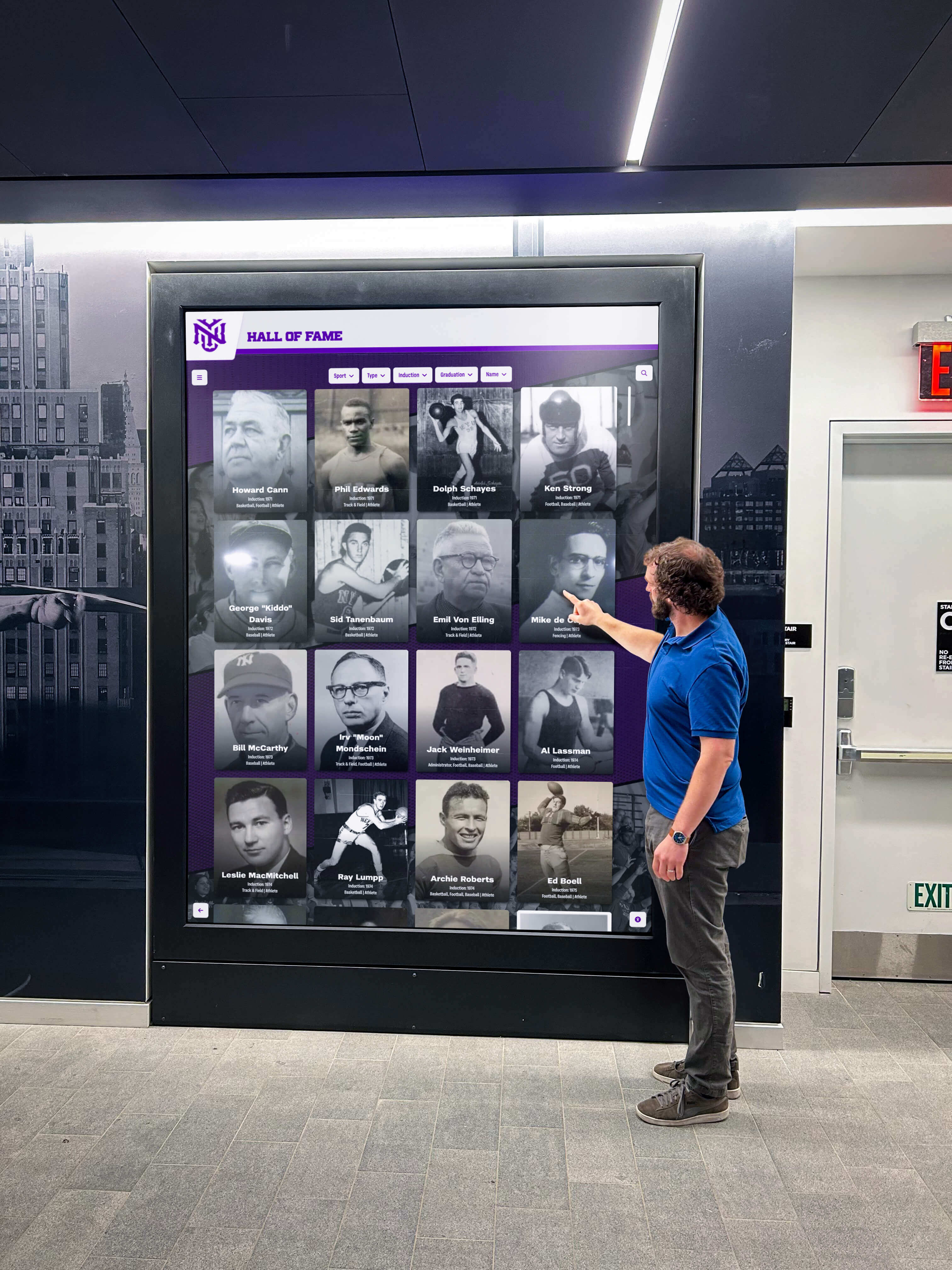
A hall of fame correction notice policy protects the trust of community members who interact with recognition displays—making transparent error handling part of what it means to honor someone well
Inductee and Family Notification Standards
How you communicate a correction to the affected inductee or their family matters as much as what you say. A notification that feels cold or bureaucratic can damage trust even when the correction itself is handled correctly. The following standards apply to every material correction involving an individual’s personal recognition:
Notify before publishing, not after. The first communication with the inductee or family should happen before the corrected profile is live, not as a retrospective report. This gives the affected person a chance to review the correction and confirm it is accurate before it becomes public.
Use direct communication for material corrections. A phone call or personal email is appropriate for material corrections. A form letter or automated notification is not. The person who contacts the family should be the athletic director or program administrator, not a junior staff member.
Acknowledge the error plainly. The communication should identify what was wrong, explain how it was discovered, and confirm what the correction will say. Do not use language that minimizes the error or deflects responsibility. A plain acknowledgment—“we found an error in your profile; here is what it said and here is how we are correcting it”—is more respectful than carefully hedged language.
Invite input before the profile is finalized. Ask the inductee or family whether the proposed correction is accurate and whether they have any additional information that would help confirm the right content. This step often surfaces other information that improves the profile beyond just fixing the original error.
Follow up when the correction is live. Send a brief confirmation when the correction has been published, so the inductee or family knows it is resolved. Include a link or instruction for viewing the updated profile.
Programs that pair hall of fame recognition with donor appreciation events and community recognition know that trust with alumni and donors is built through accumulated interactions, not single gestures. A correction handled with transparent communication and genuine care for the inductee’s experience is one of those interactions. Done well, it can actually strengthen the relationship between the institution and the honoree’s family.
Special Situations
Errors Introduced at Induction
When an error is discovered in a profile that was incorrect from the moment of induction—meaning the erroneous content was approved through the nomination and induction process itself—the correction requires additional sensitivity. The inductee or their family may have received official materials containing the wrong information. In these cases:
- Notify the inductee or family first, as described above
- Identify what other documents—programs, plaques, announcements—contain the error
- Coordinate with your communications office if any official induction announcement contained the error
- Consider whether any physical artifacts (plaques, programs, display cases) need to be updated and on what timeline
The correction notice in this situation should acknowledge that the error predates the current correction and that the accurate information reflects what the recognition was always intended to honor.
Corrections Requested by the Inductee
When an inductee contacts the program to report an error in their own profile, treat the report with the same verification process as any other correction—do not simply accept the inductee’s stated preference as the source of record. Some requested changes reflect genuine errors; others reflect updated preferences, new perspectives on old information, or disputes about how events should be characterized. The correction notice policy governs factual errors in the official record, not preferred reframings of accurate information.
Verify the requested change against primary sources. If the inductee’s request is supported by the primary source evidence, proceed with the correction workflow. If the request reflects a preference rather than a factual error, explain to the inductee what the policy covers and offer a separate channel for discussing concerns about how their recognition is characterized.
Historical Profiles with No Living Contact
When an error is discovered in a historical inductee’s profile and there is no living family member or contact on file, proceed with verification and correction using the standard workflow, but note in the change record that family notification was not possible due to the historical nature of the profile. Publish the correction notice, preserve the original content in the archive, and document the primary sources used to verify the correct information. This approach demonstrates the same care for historical inductees that the program applies to current ones.
Systematic Errors Affecting Multiple Profiles
Occasionally, a data migration, a template error, or an import from an external system introduces the same error across multiple profiles simultaneously. When a systematic error is identified:
- Conduct a full audit of every profile that may have been affected before correcting any individual one
- Issue a single correction notice that describes the systematic nature of the error, what types of content were affected, and how many profiles were corrected
- Document each affected profile individually in the governance archive
A single clear correction notice for a systematic issue causes less confusion than separate notices for each affected profile and makes the scope of the correction easier for the community to understand.
Connecting Correction Policy to Donor and Alumni Trust
Hall of fame programs that accept philanthropic support—whether through named sponsorships, donor recognition walls, or event underwriting—carry an implicit promise to their supporters that the recognition program is governed responsibly. A fundraising event or gala that celebrates inductees and donors together is also an opportunity where errors in public recognition become visible to exactly the people who care most about institutional credibility.
Donors who fund recognition programs or give to athletic endowments are not just providing financial support—they are lending the institution their trust. When they see that the program has a documented correction policy, that corrections are acknowledged transparently, and that the people honored have their records maintained with genuine care, their confidence in the program as a whole grows. When errors are handled quietly and inconsistently, donors eventually notice, and the erosion of trust is harder to repair than any individual error would have been.
The same applies to alumni relations. A graduate who was inducted years ago and whose profile contains a factual error has a direct personal stake in how the program responds. A correction handled with genuine transparency and personal communication is the kind of institutional interaction that alumni remember positively. A silent fix—or worse, a defensive response to a family member’s concern—is the kind that gets repeated in alumni circles long after the original error is forgotten.
End-of-season and ceremonial recognition programs remind us that recognition cultures are built through repeated, consistent demonstrations of care—not single grand gestures. A correction notice policy is part of that culture: it is how the institution demonstrates, in the unglamorous administrative work of maintaining accurate records, that it takes recognition seriously as an ongoing commitment rather than a one-time event.
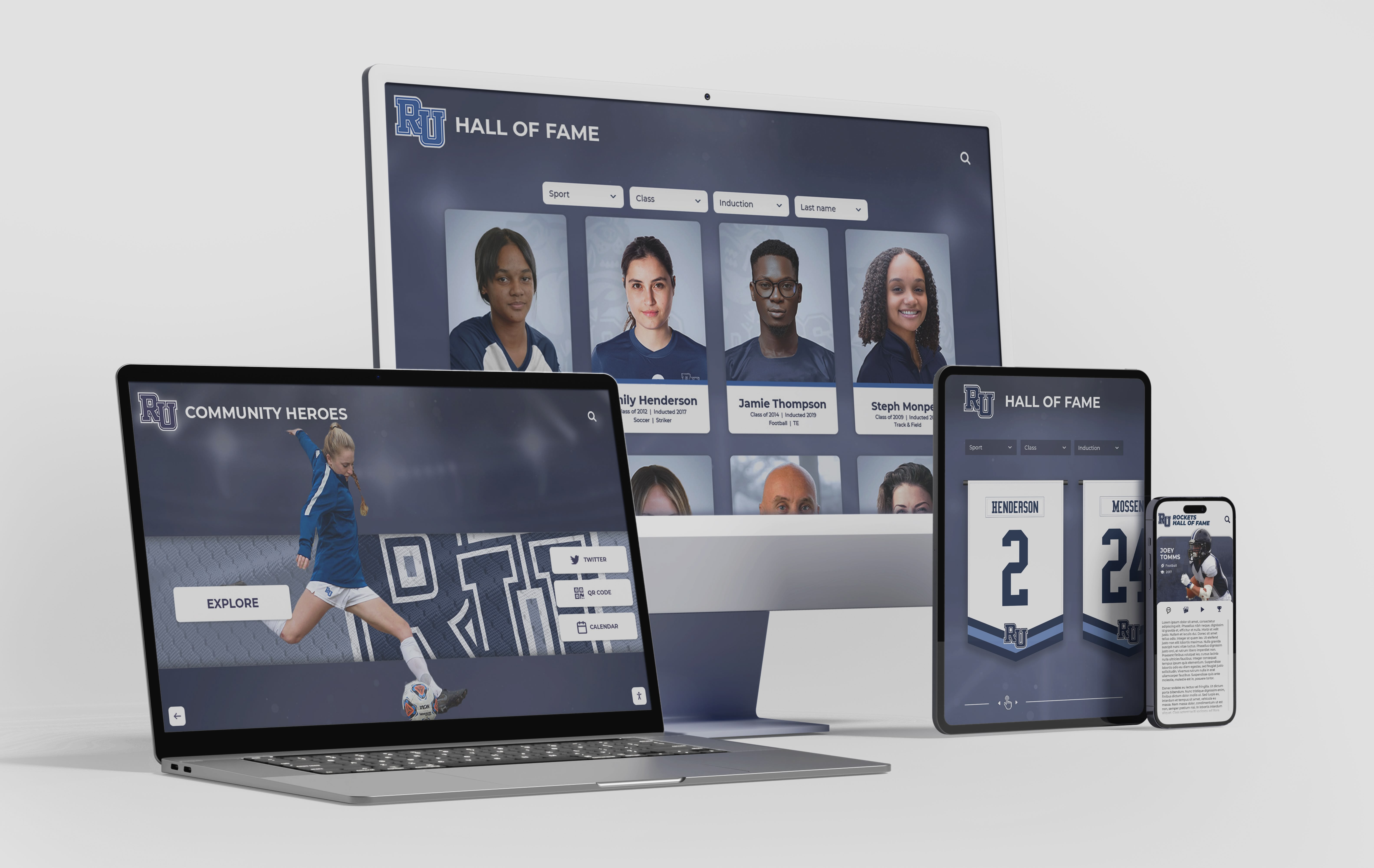
Digital recognition platforms that display inductee profiles across multiple devices require correction policies that account for every format where an error may have appeared
Writing Your Correction Notice Policy: Nine Required Elements
A complete policy document should address each of the following sections. A policy that omits any of these elements creates gaps that staff will fill with inconsistent judgment:
1. Purpose and scope — State that the policy governs how the program identifies, verifies, corrects, and acknowledges factual errors in published inductee profiles and recognition records. Specify which display formats and platforms it covers.
2. Error classification — Define the distinction between material corrections (requiring formal notice) and routine corrections (handled as maintenance without notice). Provide examples of each category appropriate to your program.
3. Verification standards — Specify what constitutes an acceptable primary source for verifying a correction, and prohibit applying corrections based solely on secondary sources, individual memory, or informal accounts.
4. Approval authority — Name the role or roles authorized to approve material corrections before they are published. Specify any thresholds—errors affecting certain categories of information, errors of a certain age, or corrections requested by the inductee—that require a higher level of review.
5. Inductee and family notification process — Define when notification is required, who conducts it, in what timeframe, and through what channel. Specify the minimum content of the notification.
6. Correction notice format and placement — Define what the notice includes, where it is published, and how it is formatted. Provide a standard template that staff can adapt.
7. Archive and documentation requirements — Specify what records are created and retained: the original erroneous content, the primary source used to verify the correction, the change record, the approval documentation, the notification record, and the published correction notice itself. Specify that these records are retained permanently.
8. Physical display coordination — Address how the policy applies when the correction affects physical plaques, display cases, or printed materials—including what language should appear in the correction notice when physical updates are still pending.
9. Policy review schedule — Commit to reviewing the policy on a defined cycle, typically every two to three years or when significant changes occur in the program’s display infrastructure or governance structure.
Frequently Asked Questions
Q: If an error was on a physical plaque for ten years before anyone noticed, does the program still need to issue a correction notice?
A: Yes, if the error is material. The length of time the error was present does not eliminate the obligation to acknowledge it accurately—it may actually strengthen the case for a clear notice, because more people may have encountered the erroneous information. The correction notice should note how long the error was present and confirm that the physical display is being updated on the timeline your facilities process allows.
Q: What if the inductee or family disputes the correction and prefers the original version?
A: Verify the accurate information against primary sources. If the primary source evidence clearly supports the correction, explain that process to the inductee or family and proceed with the correction. The record reflects the documented historical facts, not the inductee’s preferred characterization of those facts. If the dispute concerns the interpretation of a legitimate factual ambiguity—for example, how a record should be categorized—consult with your committee and legal counsel as appropriate.
Q: Can the correction notice appear only on the inductee’s profile page, or does it need to be published more broadly?
A: The placement should match where the error appeared. If the erroneous information was visible only on the digital profile, a notice on that profile is sufficient. If the error appeared in a printed program, was announced at an event, or was reproduced in external media, the correction should reach the same audience through available channels. Match the scope of correction to the scope of the original error.
Q: Should every correction be reported to the hall of fame committee?
A: Routine corrections do not require committee involvement. Material corrections should be reported to the committee chair at minimum, and significant corrections—those involving the substance of an inductee’s achievement or recognition—may warrant a brief committee report at the next scheduled meeting. The policy should define which types of corrections trigger committee notification.
Q: How does the correction notice policy interact with a request to remove an inductee entirely?
A: These are entirely separate processes. The correction notice policy governs factual errors in the record. A request to remove or revoke an inductee’s recognition is governed by your revocation policy or bylaws, which requires its own due process, committee review, and governance pathway. A correction notice policy should not be used as a mechanism for accomplishing what is effectively a revocation decision.
Q: What documentation must exist before the correction can go live?
A: At minimum: the written record of the erroneous content, the primary source used to verify the correction, written approval from the designated administrator, and a record of inductee or family notification (or documentation of why notification was not possible). All of this should be in the permanent governance file before the correction is published.
Q: Does the policy apply to corrections on a website that is separate from the physical hall of fame display?
A: Yes. Any public-facing platform where inductee profiles appear is covered by the policy. That includes the hall of fame website, the touchscreen kiosk, the cloud-based profile archive, any QR-code-accessible mobile content, and any printed materials distributed by the program.
A hall of fame correction notice policy will not prevent all errors from occurring. What it does is ensure that when errors are found, the program responds in a way that honors the institution’s commitment to the people it recognizes. Transparent correction, careful documentation, respectful communication with inductees and families, and a clear public record of what changed and why—these are not bureaucratic burdens. They are the practical expression of what it means to take a recognition program seriously. Pair that policy with a digital recognition platform that makes corrections fast, consistent across every display, and permanently documented, and you have the governance infrastructure to maintain a hall of fame that the school community can trust for decades.
Maintain a Hall of Fame Record Your Community Can Trust
Rocket Alumni Solutions' interactive touchscreen wall of fame gives your school a cloud-based content management system with remote publishing, version history, and unlimited inductee profiles—so corrections are applied accurately across every display, documented completely, and communicated with the transparency your inductees and donors deserve.
Request Your Custom DemoLive Example: Rocket Alumni Solutions Touchscreen Display
Interact with a live example (16:9 scaled 1920x1080 display). All content is automatically responsive to all screen sizes and orientations.