Hall of Fame Obituary Update Policy: How to Maintain Inductee Profiles Respectfully
- Home /
- Digital Wall of Fame Blog - Recognition Display Insights & Resources /
- Hall of Fame Obituary Update Policy: How to Maintain Inductee Profiles Respectfully
The Easiest Touchscreen Solution




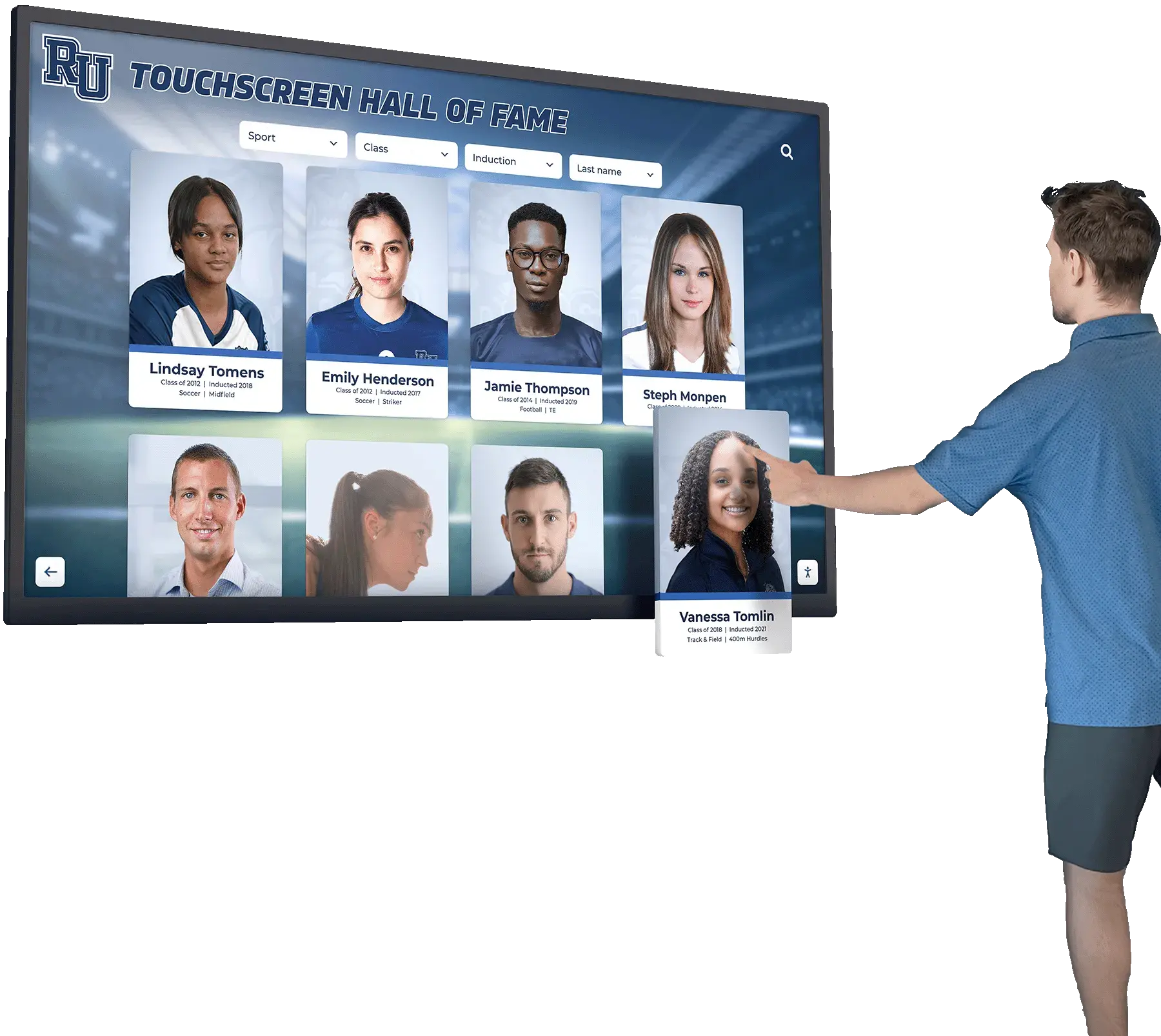
Live Example: Rocket Alumni Solutions Touchscreen Display
Interact with a live example (16:9 scaled 1920x1080 display). All content is automatically responsive to all screen sizes and orientations.
When a hall of fame inductee passes away, their profile on a school display or digital recognition platform becomes something more than a biographical record—it becomes part of a living memorial. A written hall of fame obituary update policy tells every staff member exactly what changes, what does not, who approves each update, and how the original recognition record is preserved alongside any new information. Without this policy, well-meaning staff make inconsistent edits, families receive no notification before a profile changes, and the historical record that made the recognition meaningful becomes muddled. A clear policy protects the integrity of the inductee’s recognition and the trust of the family members who carry that legacy forward.
Every hall of fame committee eventually confronts the death of an honored inductee. For programs that have operated for decades, that moment arrives regularly. The question is not whether profiles will need updating—it is whether the school has a documented, repeatable process for doing so with care.

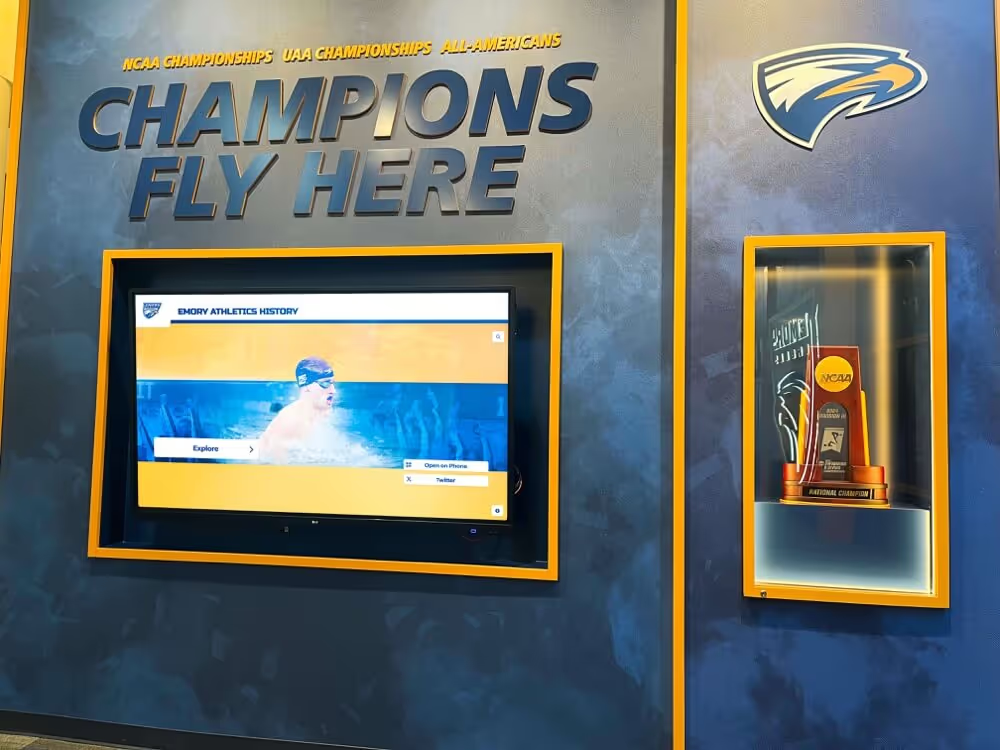
A hall of fame obituary update policy ensures that every inductee's recognition remains accurate and dignified after their passing—without altering the original record
What a Hall of Fame Obituary Update Policy Covers
A hall of fame obituary update policy is a governance document that defines:
- Which profile fields are updated when an inductee passes away (death date, biographical text, photo archive)
- Which fields remain unchanged regardless of when or how the person died
- Who has authority to approve and publish each type of change
- How the family is notified and consulted before any updates go live
- What documentation is retained to create a permanent record of the change and its basis
This policy sits alongside related documents—nomination criteria, selection standards, and any inductee revocation policy your program maintains—as part of a complete governance framework for managing the recognition record over time.
The policy does not govern whether an inductee’s recognition should be removed after death. That is a separate and much more consequential question governed by your revocation policy and bylaws. The obituary update policy governs only how a profile is respectfully maintained to reflect the person’s passing while the recognition record itself remains fully intact.
Why the Policy Must Exist Before It Is Needed
The moment a prominent inductee passes away is not the time to improvise. Families watch how institutions treat their loved one’s recognition in the days and weeks after a death. Inconsistent updates, errors in dates, or unauthorized changes to biographical text that the inductee crafted during their lifetime all send a message—even when the intent was entirely honorable.
Schools and programs that establish a written policy before it is needed gain four concrete benefits:
Consistency across induction cycles. A program that has honored inductees for thirty years may have dozens of deceased honorees. Without a policy, the profile for an inductee who died ten years ago looks different from one updated last month, because different staff handled each case under different informal expectations.
Family trust. When a family knows there is a formal process—with a contact person, a defined timeline, and a step that invites their input—they experience the institution as a careful steward of their relative’s legacy rather than an organization that updated a website without telling them.
Record integrity. The original recognition text, photographs, and achievement records published at induction carry historical weight. A policy that distinguishes preservation from update protects that original record from being inadvertently overwritten by well-meaning staff who add memorial language without realizing they have altered a document of record.
Donor and sponsor confidence. Recognition programs that receive philanthropic support or carry sponsor partnerships earn goodwill by demonstrating responsible stewardship of the record. When donors and sponsors see that the institution maintains inductee profiles with documented care—even in difficult circumstances—their confidence in the program’s professionalism grows.
The Seven-Step Process for Updating an Inductee Profile After Death
The following steps apply when any hall of fame inductee is confirmed deceased. The process should be the same regardless of how recently the person was inducted, how prominent they were, or how their death occurred.
Step 1: Confirm the information from a reliable source
Do not update any profile based on social media posts, word of mouth, or unverified news coverage. Reliable confirmation includes an official obituary published by a funeral home or news organization, a direct communication from an immediate family member, or notification through a school district authority. Document the source and the date it was received.
Step 2: Notify the designated profile administrator
Route all confirmed death notifications to a single named role—typically the athletic director, hall of fame committee chair, or the school’s designated digital content administrator. This prevents multiple staff from making parallel changes without coordination.
Step 3: Contact the family before any changes are made
Before publishing any update, reach out to the family through the contact information on file from the nomination record, or through a school district channel if direct family contact is unavailable. The purpose of this contact is to:
- Confirm the information the school has received
- Invite the family to suggest any updates to the biographical narrative
- Share what the school plans to add to the profile and give the family an opportunity to review it
- Ask whether there is a preferred photograph or memorial image they would like included alongside the existing recognition photos
Set a defined response window—five to ten business days is appropriate for most situations, with flexibility for immediate family circumstances. Document the outreach, the response received, and any information provided by the family.
Step 4: Apply only the approved changes
Once family contact has been completed (or the response window has closed), apply only the changes that fall within the policy’s defined scope. A well-designed policy specifies exactly which fields may be updated:
| Field | Permitted Update | Who Approves |
|---|---|---|
| Death date | Add confirmed date of passing | Profile administrator |
| Biographical narrative | Add brief memorial note at end of existing text | Athletic director or committee chair |
| Profile status label | Add “In Memoriam” or equivalent label | Profile administrator |
| Photo archive | Add one current photograph per family request | Athletic director |
| Original induction text | No changes permitted | Not applicable |
| Awards and records listed at induction | No changes permitted | Not applicable |
| Original induction photograph | No changes permitted | Not applicable |
| Career statistics | No changes permitted | Not applicable |
Step 5: Document the changes in writing before they are published
Before any update goes live on a display, digital platform, or physical case, create a written change record that includes:
- Inductee name and induction year
- Date of passing and source of confirmation
- Specific changes made and the staff member who made them
- Approving administrator’s name and the date of approval
- Family contact record (date contacted, response received, information provided)
This document becomes part of the permanent hall of fame file for that inductee.
Step 6: Publish the update and confirm accuracy on all display formats
Update the profile through the content management system and verify that changes appear correctly on every format where the inductee’s profile is displayed: the touchscreen kiosk, the web archive, printed materials scheduled for reprinting, and any physical plaque or display case. For schools using a cloud-based platform, changes published through the CMS propagate to every display automatically—verify that the update is visible on at least one physical screen before closing the change record.
Step 7: Archive and notify
File the written change record in the inductee’s permanent file. If your program has a practice of notifying the broader inductee community of a colleague’s passing, coordinate that communication with your communications or alumni office using the school’s standard practices. The hall of fame profile update and any broader memorial communication are separate actions; the policy governs only the profile update.

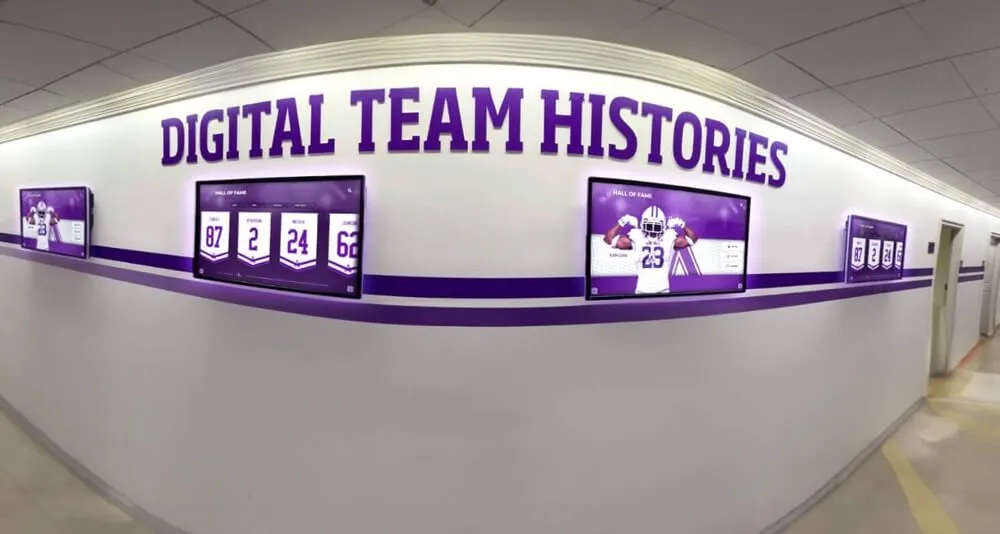
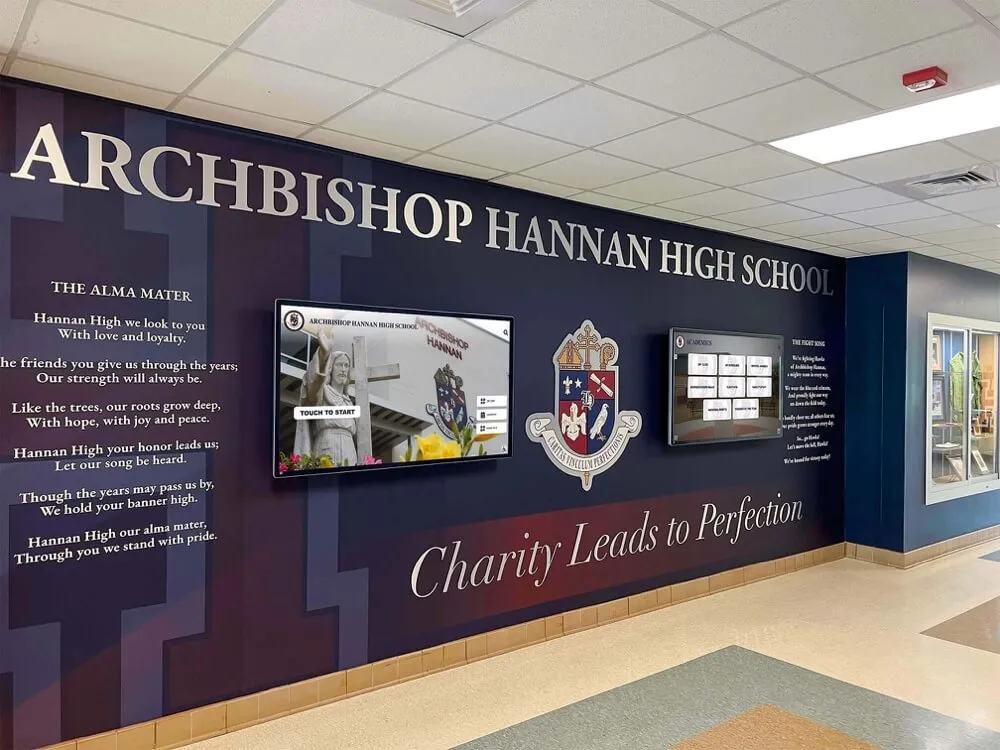
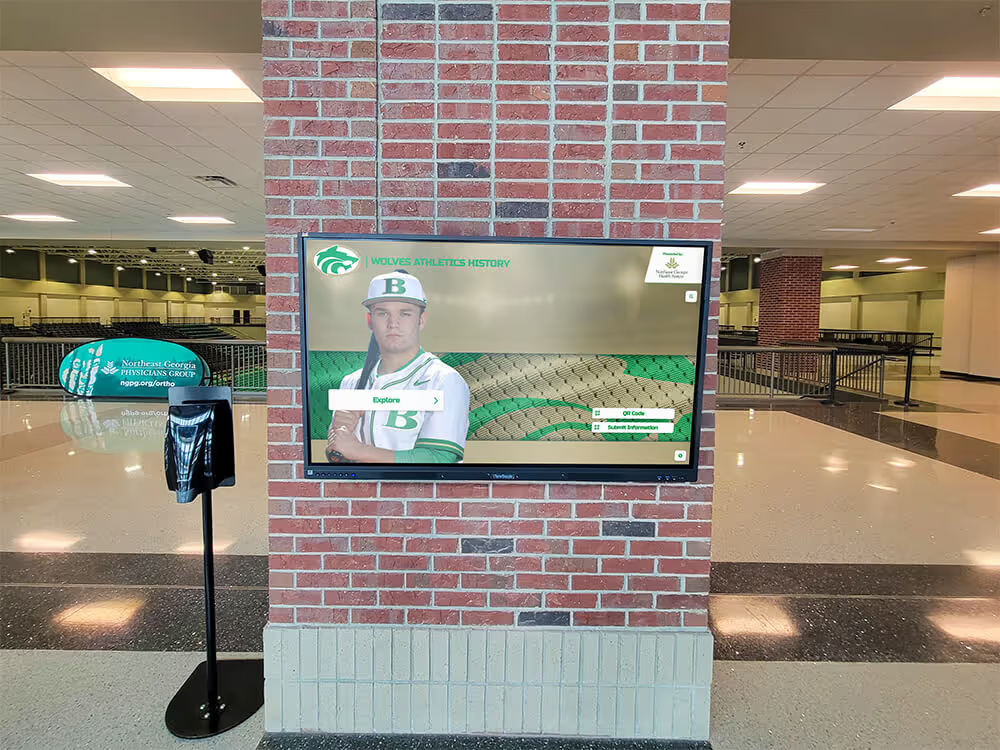
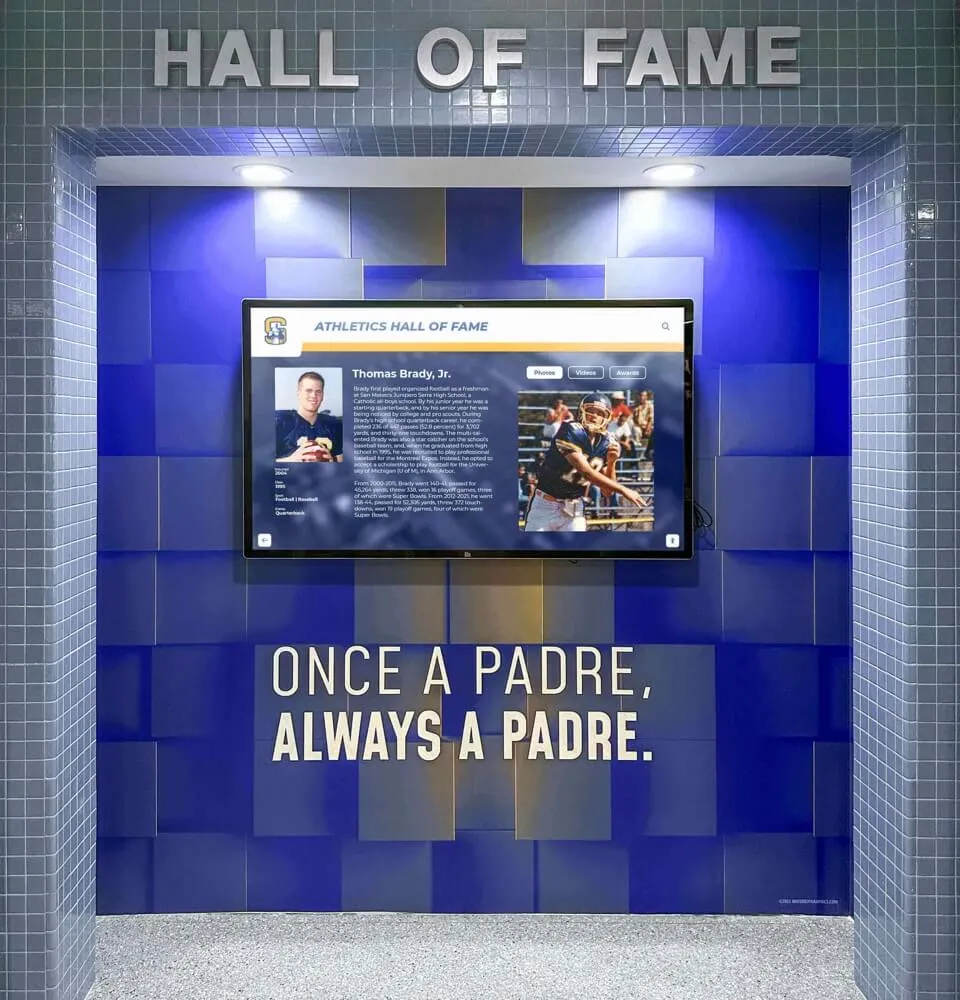
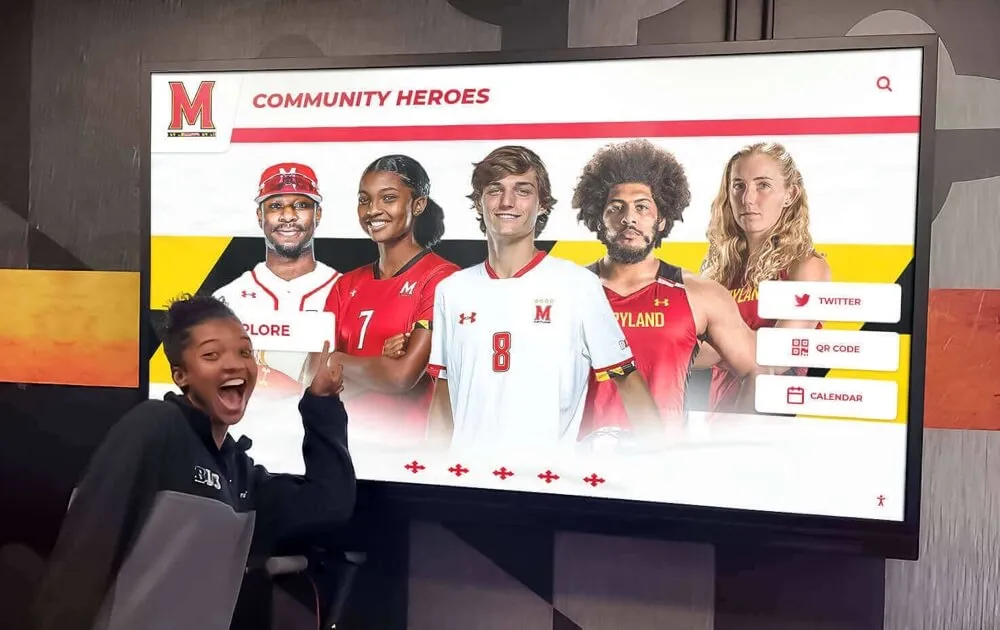
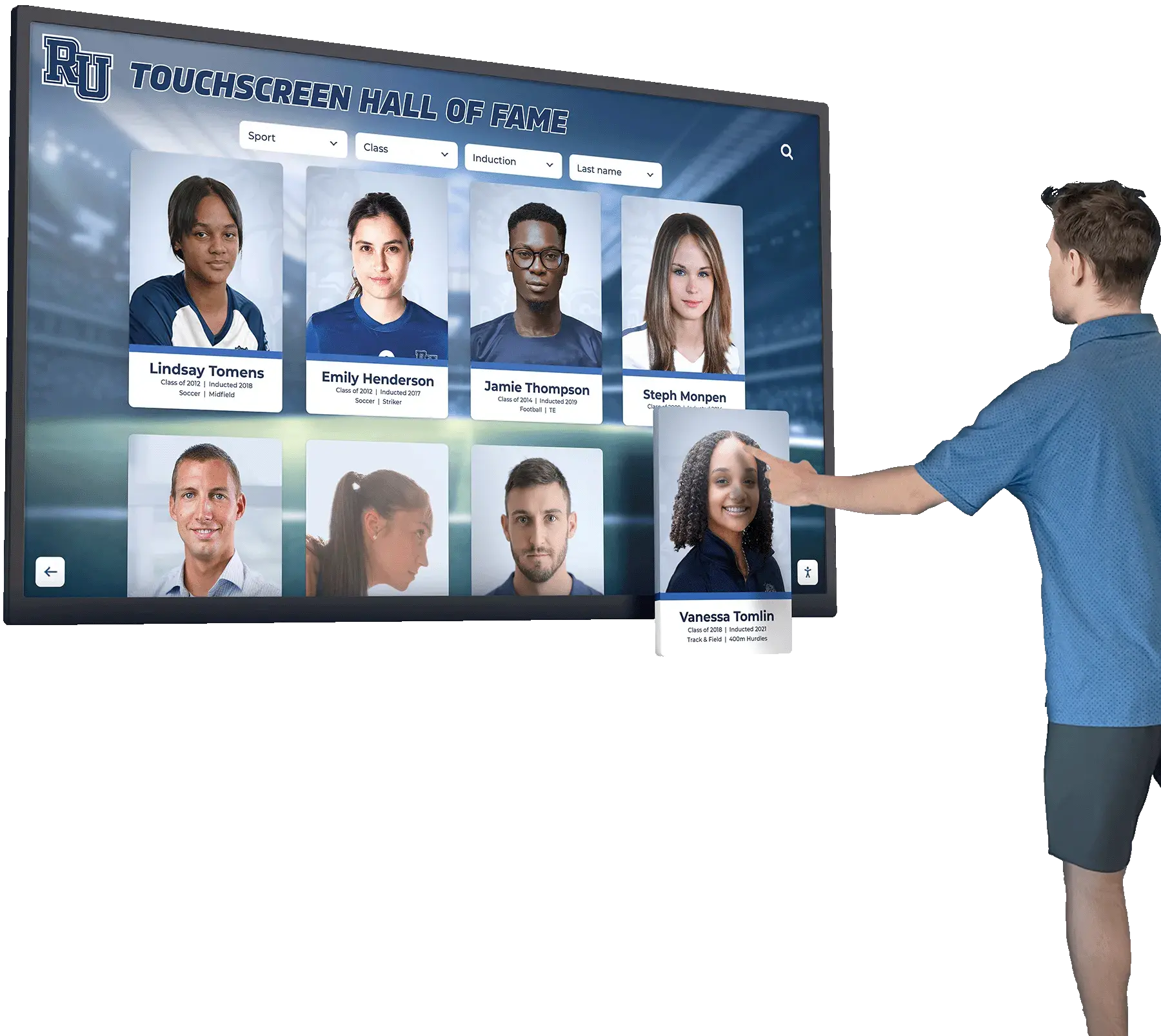
A cloud-based content management system allows profile administrators to update inductee records accurately and consistently across every display format from a single interface
Profile Content: What to Add, What to Preserve, and What to Review
The biographical text added to a profile after an inductee’s passing should honor the person without rewriting the recognition record. The following guidance applies to schools standardizing memorial language across existing profiles or writing it for the first time.
What to include:
- The date of passing, in plain language (for example, “passed away on [date]” rather than clinical or euphemistic language, unless the family has a preference)
- A brief note of continued appreciation for the person’s contributions to the program, if the athletic director or committee wishes to add one
- Any information provided directly by the family that they have requested be included
What not to include:
- Cause of death, unless the family has explicitly requested it be documented on the profile
- Information about family survivors beyond what the family has specifically requested
- Any language that suggests the recognition has changed, ended, or been diminished—the person remains an inductee and the recognition stands in full
- Any revision to the original induction narrative, even if newer biographical information has come to light
For guidance on the photo standards that apply to profile images—including memorial photographs added at a family’s request—athletic hall of fame photo requirements and image specifications for inductee profiles provide a technical and editorial framework that keeps profiles visually consistent regardless of when a photograph was contributed.
Connecting the Obituary Update Policy to Broader Governance
A hall of fame obituary update policy does not stand alone. It connects to and should be coordinated with the following related documents:
- Nomination and induction policy: The family contact information collected during nomination is the first resource when family outreach is needed after an inductee’s death. Confirm that the induction intake process captures reliable family contacts.
- Content correction policy: If the family identifies an error in the existing profile during the obituary update process, route the correction through the standard content correction workflow rather than handling it as part of the obituary update. The two processes have different approval requirements.
- Revocation policy: The obituary update policy should explicitly state that it does not apply to situations where a program is considering modifying an inductee’s recognition status. Those situations are governed by the revocation policy and require a separate process with distinct due-process protections.
- Physical artifact policy: If a physical display case, plaque, or retired jersey is associated with a deceased inductee, updating the physical artifact requires coordination with whoever manages the physical collection and may require its own authorization separate from the digital profile update.
Understanding the hall of fame selection criteria and display process that governs how inductees are chosen and presented also shapes what information appears in profiles—knowing that framework helps administrators identify what is part of the original recognition record versus what was added later.
Managing Updates Across Physical and Digital Displays
One of the most common complications in obituary updates is maintaining consistency across formats. The same inductee may appear on a physical plaque in the trophy corridor, a touchscreen kiosk in the lobby, a web-based archive, and a printed program. Each format has a different update speed and cost:
| Display Format | Update Speed | Key Consideration |
|---|---|---|
| Cloud-based touchscreen kiosk | Immediate (CMS update propagates to all screens) | Verify on a live screen after publishing |
| Web-based archive | Same day (CMS or manual update) | Confirm update across all devices |
| Physical plaques and engraved panels | Slow; may require re-engraving or added panel | Coordinate with facilities; may require budget authorization |
| Printed program or media guide | Next print run only | Note the update for inclusion in next edition |
| Display cases with printed inserts | Days to weeks depending on print process | Update insert when profile is confirmed final |
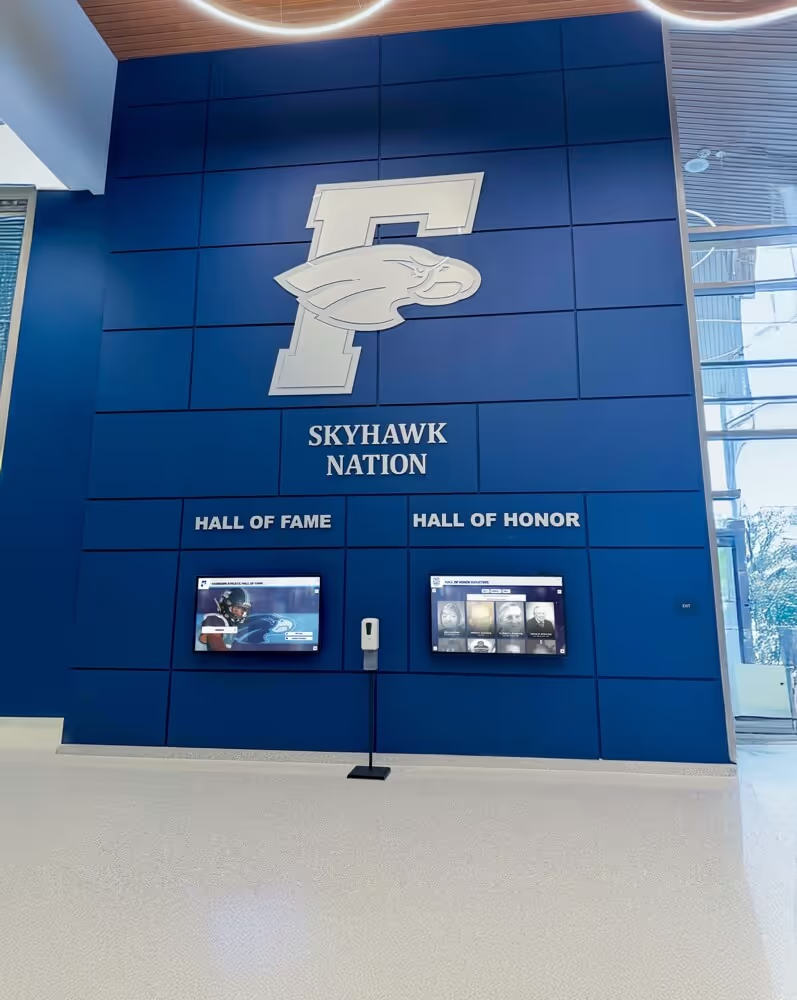
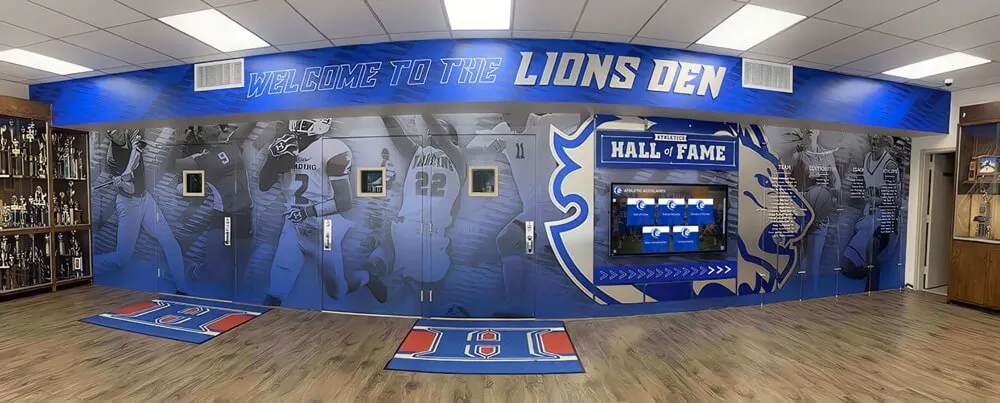
The asymmetry between digital and physical update speeds is one reason schools with well-designed digital hall of fame touchscreen display layouts can respond to an inductee’s passing more quickly and consistently than programs relying primarily on physical materials. A cloud-based CMS allows a profile administrator to apply all approved changes once and have them appear correctly on every touchscreen in the building—without fabrication costs, without scheduling a facilities crew, and without risking inconsistency between display locations.

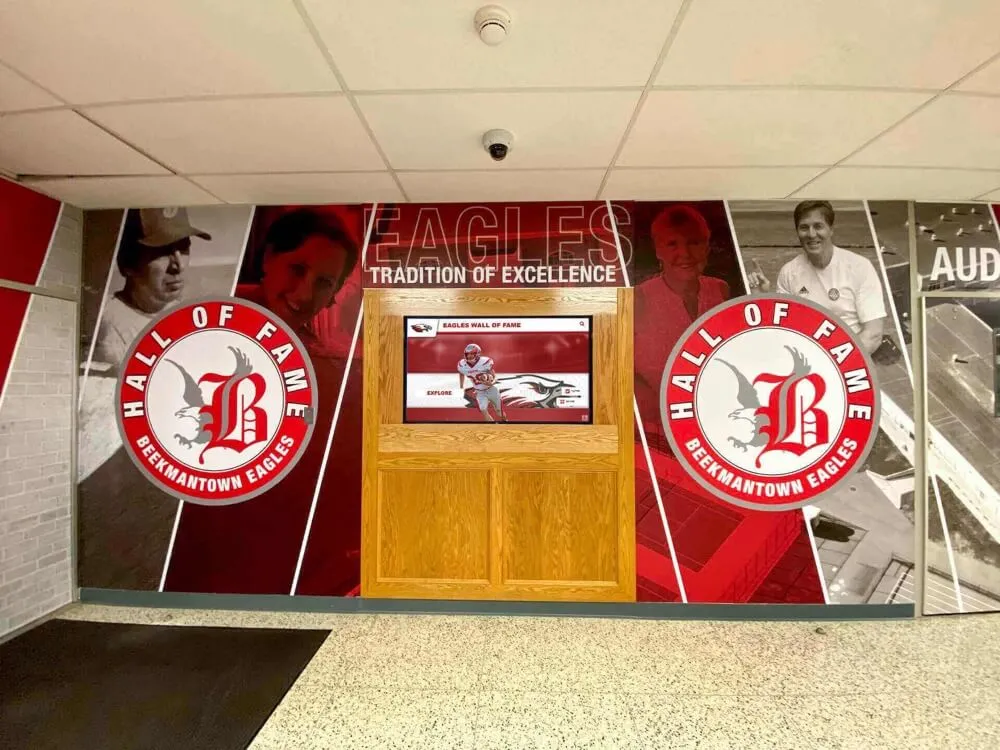
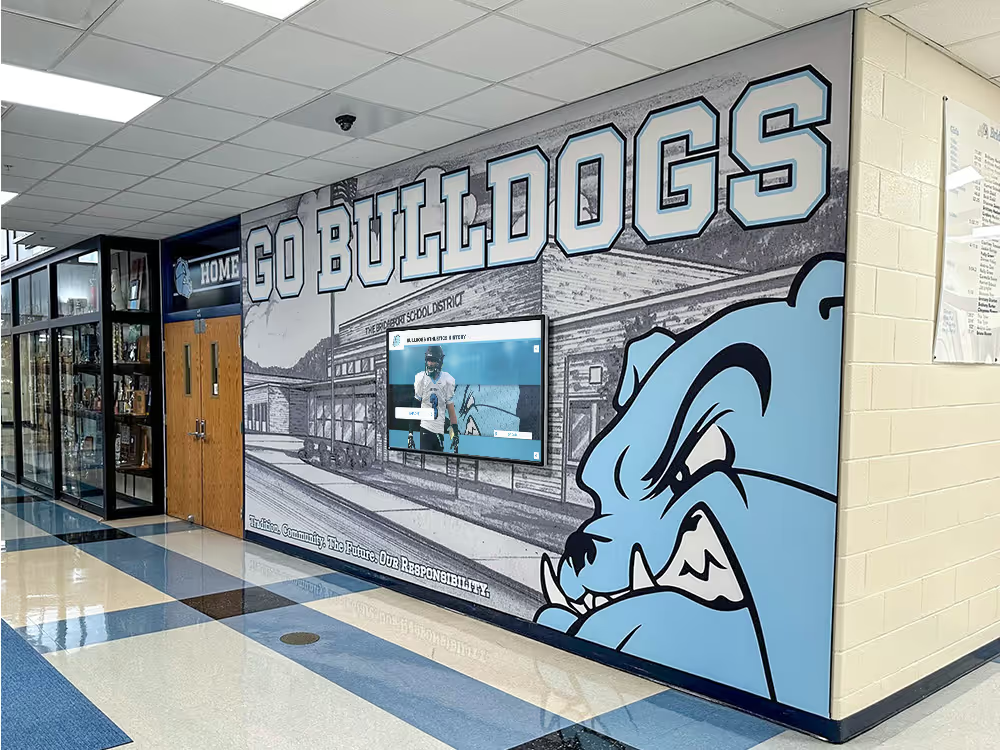
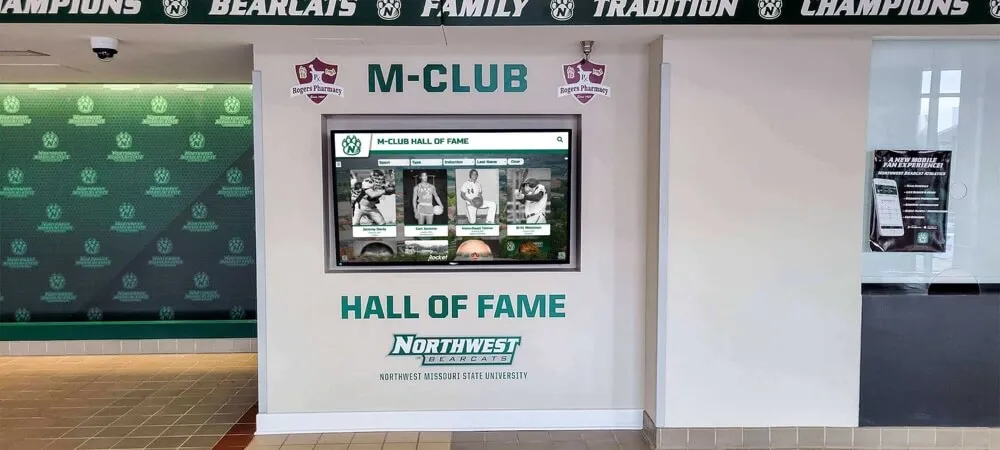
Physical and digital displays require different update timelines; a policy that accounts for both ensures families see consistent, accurate recognition across every format
How Digital Recognition Infrastructure Supports the Policy
Learn more about Rocket Alumni Solutions’ Digital Wall of Fame platform to see how a cloud-based recognition system with unlimited inductee profiles, remote update capability, and QR-code mobile access supports the kind of careful, field-specific profile management that an obituary update policy requires.
Schools with interactive touchscreen platforms designed for hall of fame management gain several concrete advantages when a profile update is needed:
- Field-level controls: Well-designed platforms allow administrators to update specific profile fields without touching others—the original induction text can remain protected while the death date and memorial note fields stay accessible to authorized staff.
- Version history: A platform with version tracking allows administrators to see exactly what the profile contained before any update, creating a natural audit trail that supplements the written change record.
- Remote publishing: Profile administrators can apply and verify changes from any authorized device without needing physical access to the display location.
- Family-facing QR links: Inductee profiles accessible via QR code mobile links allow family members to review the updated profile on their own devices before it goes live on the lobby display—a small but meaningful step in the family consultation process.
For programs considering how display design affects profile visibility and accessibility over time, designing a hall of fame display that tells your school’s story provides practical guidance on layout choices that keep individual inductee profiles legible and accessible as the program grows across years and decades.
Frequently Asked Questions
Q: Should the school notify the family before updating a profile, or is it acceptable to update first and notify afterward?
A: Notify before updating, whenever possible. The family consultation step is not merely a courtesy—it is a governance checkpoint that protects the school against publishing information the family would not want on a public display. The only exception is narrow: if urgent circumstances require adding a status label immediately (for example, if the death is widely known and the profile still shows the person as living), make only that minimal change and complete the full family consultation process before adding any biographical content.
Q: What if the school cannot locate family contact information?
A: Document the outreach attempts made. Check the original nomination file, school district records, and any alumni organization contacts. If no family contact can be established after reasonable effort, the profile administrator and athletic director may approve a minimal update—death date and status label—based on documented confirmation of the passing. Note in the change record that family contact was attempted but not established, and that the update was made on that basis.
Q: How should the profile handle a deceased inductee who later becomes the subject of controversy?
A: An obituary update is not the vehicle for addressing controversy. If a concern arises about an inductee’s recognition status, route that concern to the process governed by your revocation or removal policy, which has its own due-process requirements and approval pathway. The obituary update policy governs only routine profile maintenance after a death, not the evaluation of recognition status.
Q: Can a family request that the death date not appear on the profile?
A: Yes. If a family has a specific, documented reason for this preference, the profile administrator and athletic director should consider it seriously. The policy should include a clause allowing the approving administrator to accept such requests with documented rationale. The recognition is for the family as much as for the institution; their reasonable preferences deserve respectful consideration.
Q: Who maintains the permanent change record after staff turnover?
A: The permanent change record for each inductee is part of the hall of fame’s governance archive, not the property of any individual staff member. The policy should specify the location of this archive—a named folder in the school’s document management system, a specific file cabinet in the athletic director’s office, or an equivalent durable location—so that incoming staff can locate it regardless of who handled a previous update.
Q: How often should the policy itself be reviewed?
A: Review the policy every two to three years, or whenever a significant change occurs in the school’s display infrastructure, content management platform, or governance structure. Changes in digital platform vendors, for example, may require updating the step that covers publishing and verification. A policy review cycle ensures the document reflects current practice rather than becoming a historical artifact.
Q: Should the obituary update policy address inductees who died before the hall of fame program began keeping digital records?
A: Yes. Historical inductees who predeceased the program’s digital record-keeping era should have profiles that accurately reflect their dates of passing, sourced from available historical records such as school archives, local newspaper obituaries, and published sports histories. The policy should specify a process for retroactively adding this information to historical profiles using the same confirmation-and-documentation standard that applies to current updates.
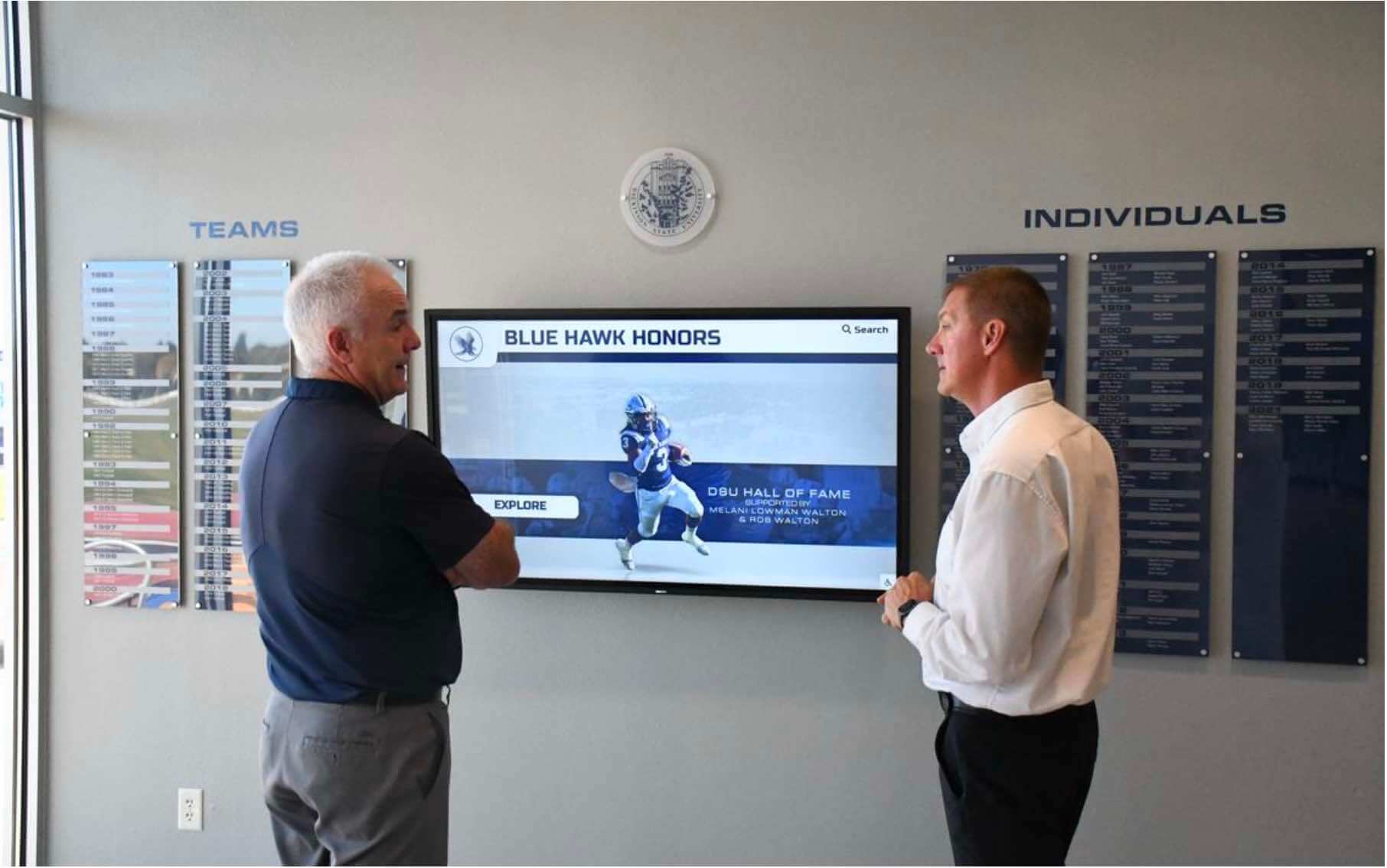
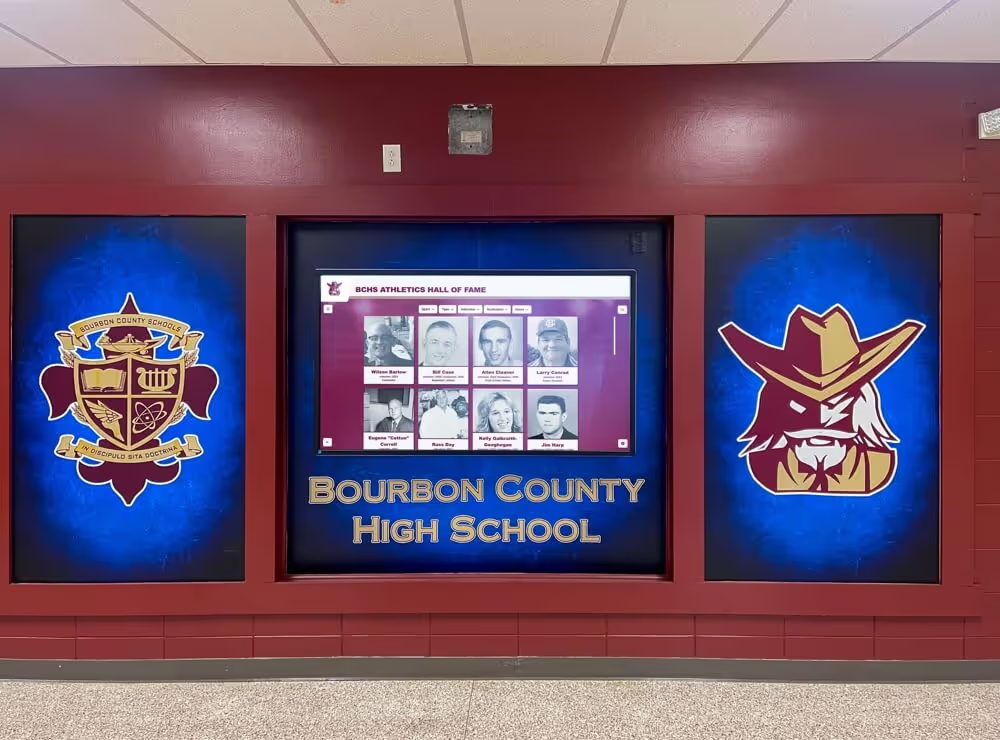
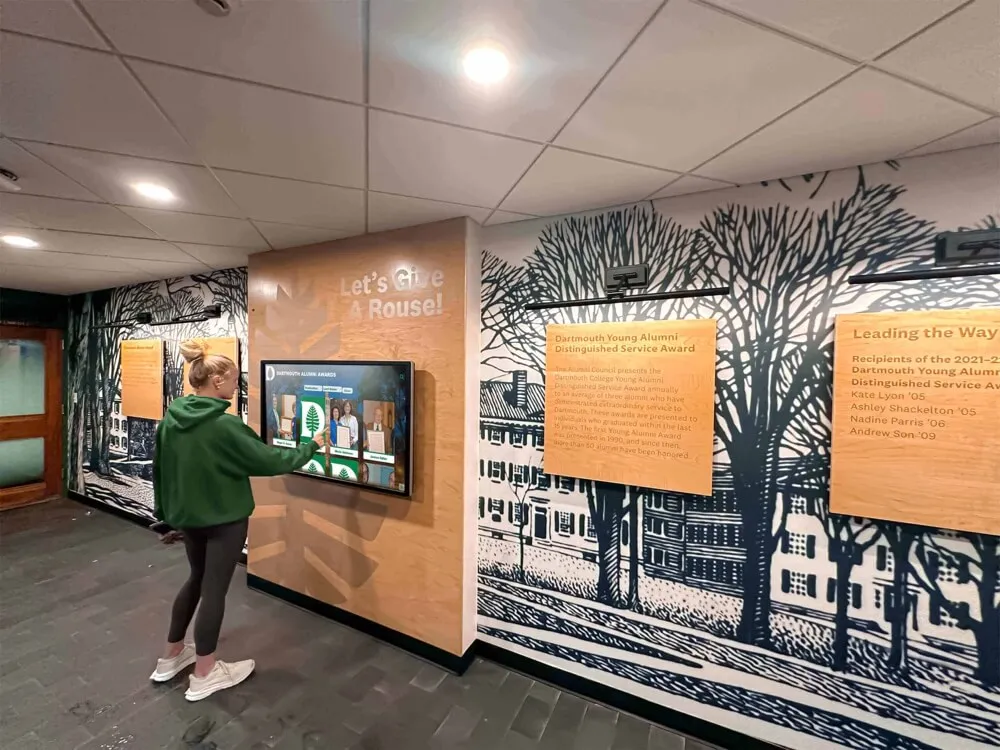
A documented obituary update policy gives administrators a consistent, defensible process for maintaining inductee profiles that families can trust
Writing the Policy Document: Eight Required Sections
A complete hall of fame obituary update policy document should address the following sections. Schools without a written policy can use this structure as a starting point:
1. Purpose and scope — State that this policy governs the maintenance of inductee profiles after death, and specify which display formats and platforms it covers. Note explicitly that it does not govern recognition status decisions.
2. Confirmation standards — Specify what constitutes reliable confirmation of an inductee’s passing, and prohibit profile changes based solely on unverified sources.
3. Notification routing — Name the role responsible for receiving all death notifications and initiating the update process.
4. Family consultation process — Define the outreach steps, the response window, what information is shared with the family, and how family input is incorporated.
5. Permitted and prohibited changes — Use a table or explicit list to specify exactly which profile fields may be updated and which must remain unchanged. This section is the policy’s operational core.
6. Documentation requirements — Specify what written records are created for each update, where they are stored, and that they are retained permanently.
7. Physical display coordination — Describe how updates to physical plaques, display cases, and printed materials are coordinated separately from digital updates, including who has authority to approve physical changes.
8. Policy review schedule — Commit to a review cycle and name the position responsible for initiating it.
For programs building a broader governance framework, how to choose a touchscreen system for your school hall of fame helps administrators evaluate platforms that support the field-level control and version tracking that makes obituary update policies practical to implement and audit over time.
Programs that have invested in scalable digital display infrastructure—with the right screen size and layout for a digital hall of fame display to make inductee profiles genuinely readable in the spaces where families, students, and visitors encounter them—find that the obituary update process becomes a manageable routine rather than an ad hoc event each time it is needed.
A hall of fame obituary update policy is one of the less celebrated documents in a recognition program’s governance library. It exists for moments that no one anticipates with eagerness, and it is most valuable precisely when the people involved are least prepared to think through procedures. A clear, well-documented policy protects inductees’ legacies, honors families at a difficult time, maintains the integrity of the athletic history and achievement records the program has assembled, and demonstrates that the institution takes its stewardship responsibilities seriously. Pair that policy with a digital recognition platform that makes field-level updates fast, documented, and consistent across every display, and the program is prepared to honor every inductee—through every stage of their legacy.
Keep Every Inductee Profile Complete, Accurate, and Respectfully Maintained
Rocket Alumni Solutions' interactive touchscreen wall of fame gives your school a cloud-based content management system with field-level controls, version history, and remote publishing—so your hall of fame obituary update policy is easy to implement consistently, every time it is needed.
Request Your Custom DemoLive Example: Rocket Alumni Solutions Touchscreen Display
Interact with a live example (16:9 scaled 1920x1080 display). All content is automatically responsive to all screen sizes and orientations.