



Every quarter, millions of American students open an envelope, check a school portal, or hear their name called at an assembly—and discover they made the honor roll. For many students, that recognition is the first time a school institution has publicly acknowledged their hard work. For others, it marks another milestone in a long record of academic excellence. Either way, the honor roll is one of the most universal academic recognition programs in American education, and the way schools design, announce, and celebrate it has a direct effect on student motivation, school culture, and community pride.
This guide covers everything educators and administrators need to know: what honor roll actually means, how schools structure recognition tiers, what research says about the impact of academic recognition, and how forward-thinking schools are moving beyond the printed list to create lasting celebrations of student achievement.
Every school that takes academics seriously maintains some version of an honor roll—but the programs vary dramatically in their design, rigor, and execution. Whether you are evaluating your school’s existing program or building one from scratch, the decisions you make about eligibility criteria, tier structure, and recognition methods matter more than most administrators realize.

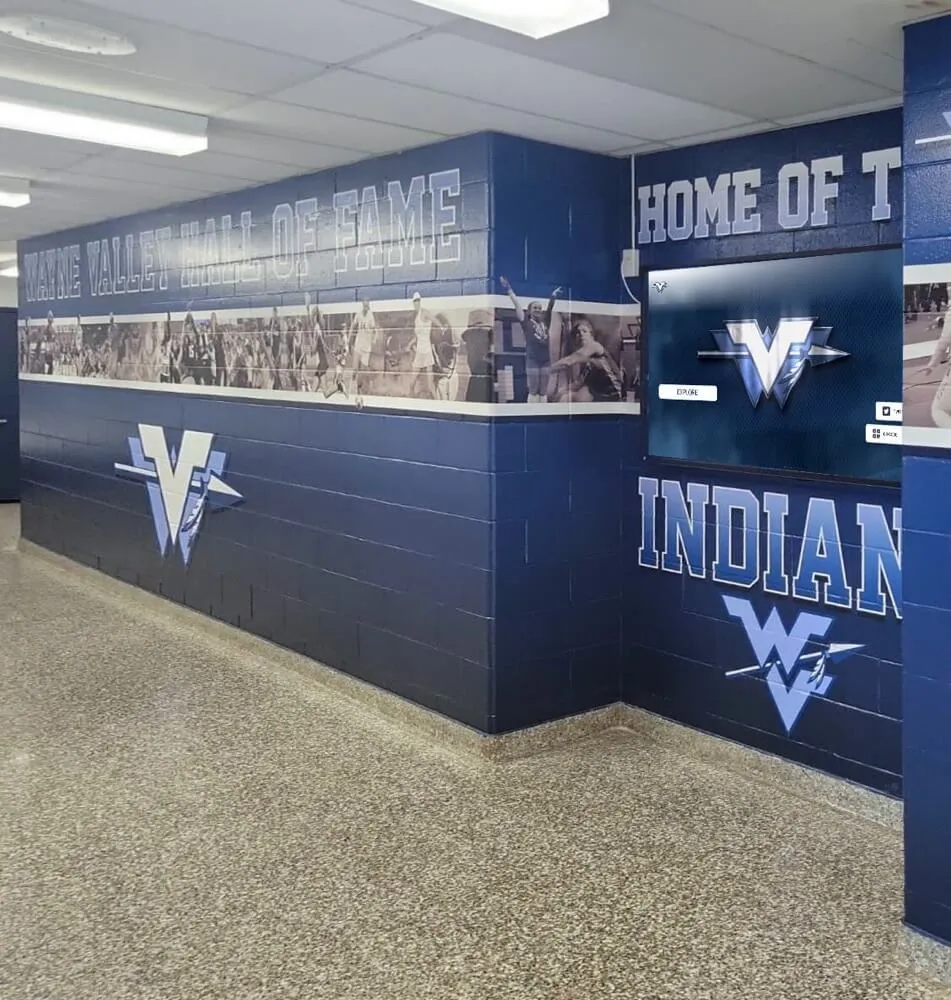
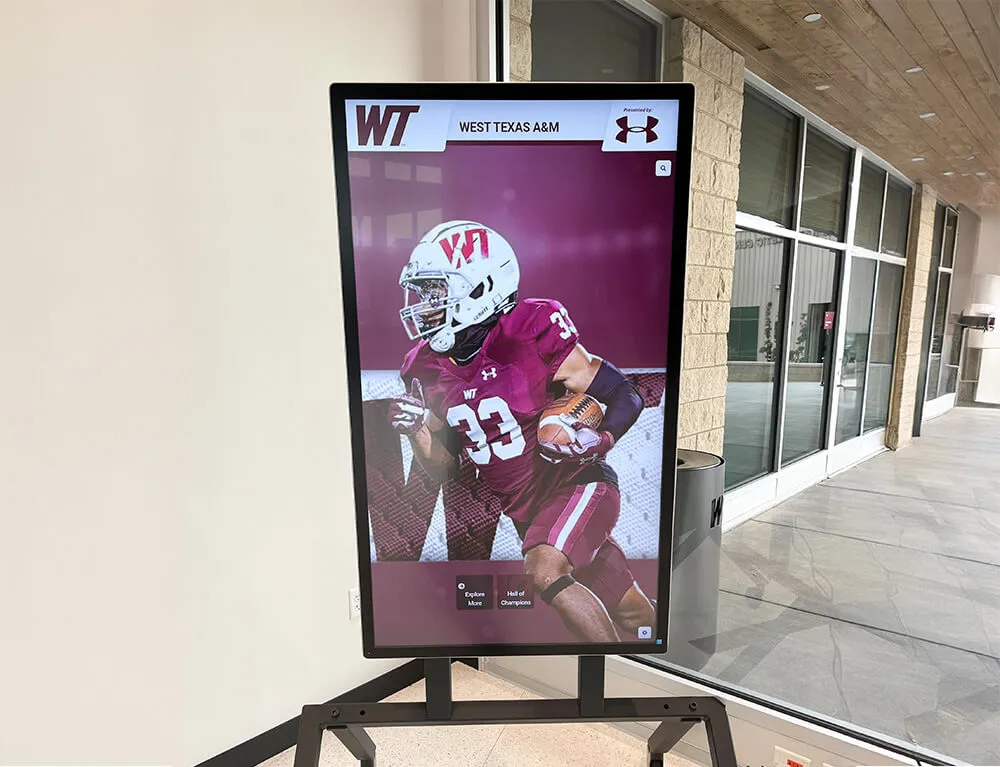
Student portrait cards have long been a hallmark of honor roll recognition—a tangible, personal acknowledgment of each student's academic accomplishment that gives their name and face a place in school history
What Is the Honor Roll?
The honor roll is a formal recognition program that identifies students who have achieved a specified level of academic performance—typically measured by GPA—during a defined grading period. Most commonly tied to quarterly or semester reporting cycles, honor roll programs publicly acknowledge students who meet or exceed the school’s established academic thresholds.
The concept has roots in American higher education, where Dean’s List recognition became a widespread institutional tradition in the early twentieth century. Secondary schools adopted similar practices across the mid-century decades, and by the latter half of the twentieth century the honor roll had become a near-universal feature of American public and private high schools.
Today, the honor roll serves three interlocking purposes:
- Recognition — formally acknowledging the work students invest in achieving strong academic results
- Motivation — establishing a visible, attainable goal that encourages continued effort from all students, not just top performers
- Community signaling — communicating to families and the broader school community which students exemplify the school’s academic values
How Honor Roll Differs from Other Academic Honors
The honor roll is distinct from related programs like the National Honor Society (which adds service, leadership, and character criteria), class rank, or graduation distinctions such as valedictorian and salutatorian designations. The honor roll is specifically tied to periodic academic performance—not cumulative standing over an entire school career. This means a student who struggled early can still make the honor roll, and that accessibility is part of what gives the program its motivational power. Students and families exploring academic achievement awards for high school will find that the honor roll is almost always the foundation on which more selective honors are built.
Honor Roll Tiers: Principal’s List, High Honor Roll, and Standard Honor Roll
Most schools use a two- or three-tier recognition structure. Understanding how these tiers work helps administrators set thresholds that are meaningful without being so exclusive that they discourage the students who most need recognition.
Tier 1: Principal’s List
The highest tier in many schools, the Principal’s List typically requires a 4.0 unweighted GPA—or its equivalent in pure A grades across all subjects. Some schools set this at 3.9 or higher to accommodate fractional grading scales that distinguish between A and A− performance. This tier carries significant prestige and is often published separately, recognized at assemblies, or celebrated with distinct certificates or regalia.
Tier 2: High Honor Roll
The High Honor Roll is generally awarded to students achieving between a 3.5 and 3.89 GPA—an A−/B+ average across all coursework. This tier is motivationally powerful because it captures students performing at a high level across all subjects, not just their strongest areas. Students on the High Honor Roll have demonstrated consistent effort and competency, and this tier often drives the most academic growth because it gives students who are close to the top a clear, attainable next level to reach.
Tier 3: Honor Roll
The standard Honor Roll tier typically requires a GPA between 3.0 and 3.49, representing solid B-average academic performance. Some schools set this floor at 3.2 or even 3.5 depending on their student population and institutional philosophy. This tier is intentionally designed to be inclusive enough to recognize a meaningful share of the student body—research on motivation consistently shows that recognition programs have the most cultural impact when a substantial percentage of students can realistically achieve them.
Some schools also include conduct or citizenship requirements, making honor roll eligibility contingent on no disciplinary infractions during the grading period.
How Schools Calculate Honor Roll Eligibility
GPA calculations vary significantly by school, and the choice of calculation method has real consequences for which students qualify and what the recognition signals.
Weighted vs. Unweighted GPA
Unweighted GPA treats all courses equally on a 4.0 scale. A student who earns an A in Advanced Placement Chemistry and an A in standard English contributes the same grade points from both classes.
Weighted GPA gives additional grade points—typically 0.5 to 1.0—for Advanced Placement, International Baccalaureate, Honors, or Dual Enrollment courses. Schools that use weighted GPA for honor roll calculations often need to set higher thresholds to maintain meaningful selectivity, or maintain a separate unweighted calculation specifically for recognition purposes.
The core question: weighted GPA rewards course rigor, while unweighted GPA rewards performance consistency. Schools sometimes address this by calculating honor roll on unweighted GPA while separately acknowledging rigorous course loads at awards ceremonies. Understanding academic scholarship requirements and how colleges evaluate academic records can inform how schools structure these thresholds—since the downstream impact of honor roll eligibility reaches well beyond the school building.
Incomplete Grades and Course Exclusions
Policies around incomplete grades, pass/fail courses, and elective categories like physical education vary from school to school. Schools running rigorous honor roll programs typically exclude physical education from GPA calculations and maintain explicit published policies about how incompletes and course withdrawals are treated. Transparency here is not optional—students and families should never be surprised by how eligibility is calculated.
How Schools Recognize Honor Roll Students
Recognition is where honor roll programs either thrive or fall flat. A technically sound eligibility policy means little if students, families, and the community never experience a meaningful moment of acknowledgment. Schools use a range of strategies to make honor roll recognition feel genuine and valued.
Announcement and Publication
The most basic form of recognition is publication. Schools publish honor roll lists through:
- School newsletters sent home — reaching families directly and creating a keepsake record
- Local newspapers — many community papers still publish quarterly honor roll lists, extending recognition beyond the school building
- School websites and social media — digital publication reaches a wide audience quickly but typically lacks persistence
- Automated family communications — emails or text alerts sent directly to families at the moment results are finalized
The core limitation of list-based publication is that it creates a moment, not a memory. A name in a newsletter is read once and filed away. Schools that treat honor roll recognition as a genuine institutional priority invest in formats that persist long after the quarter ends.

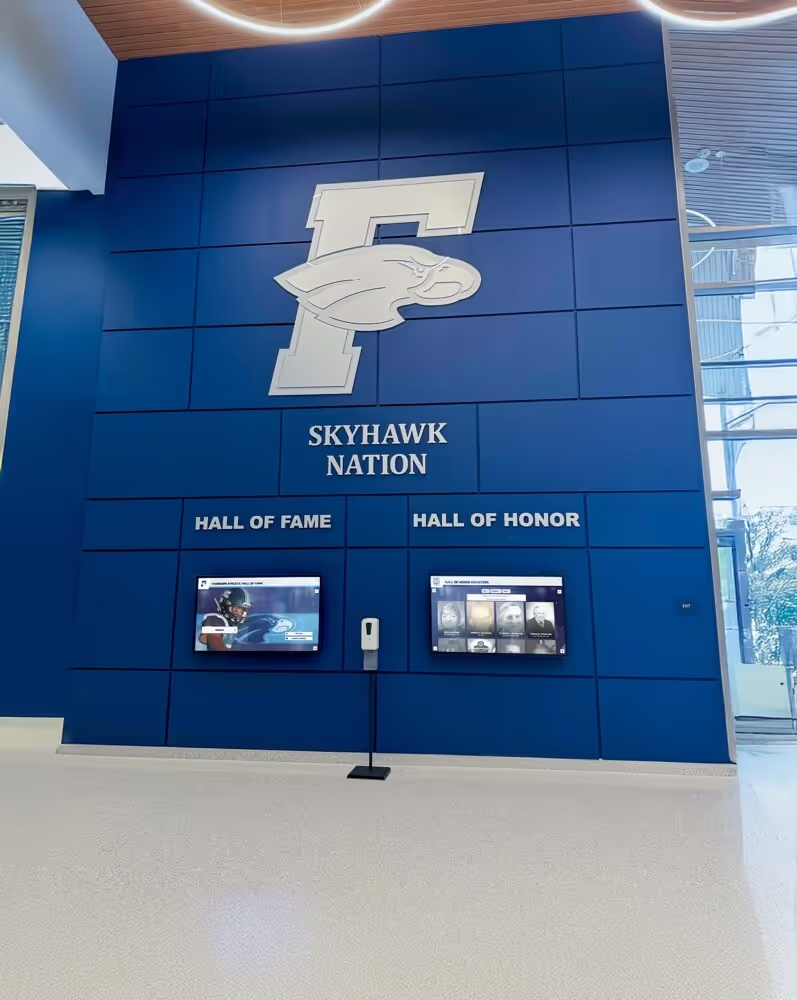
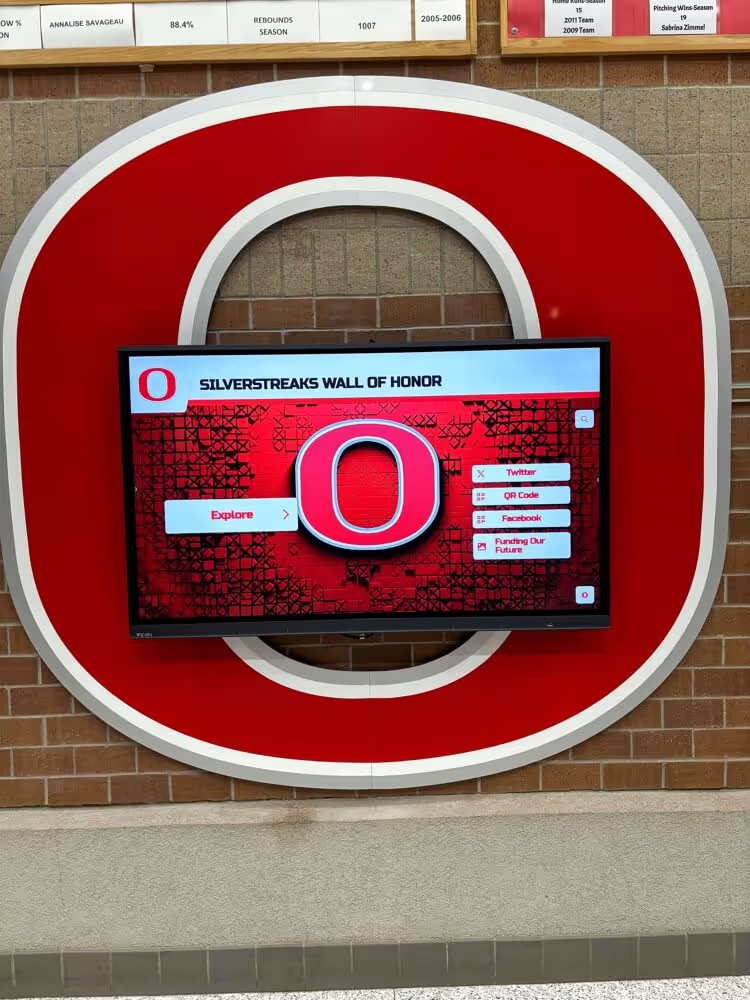
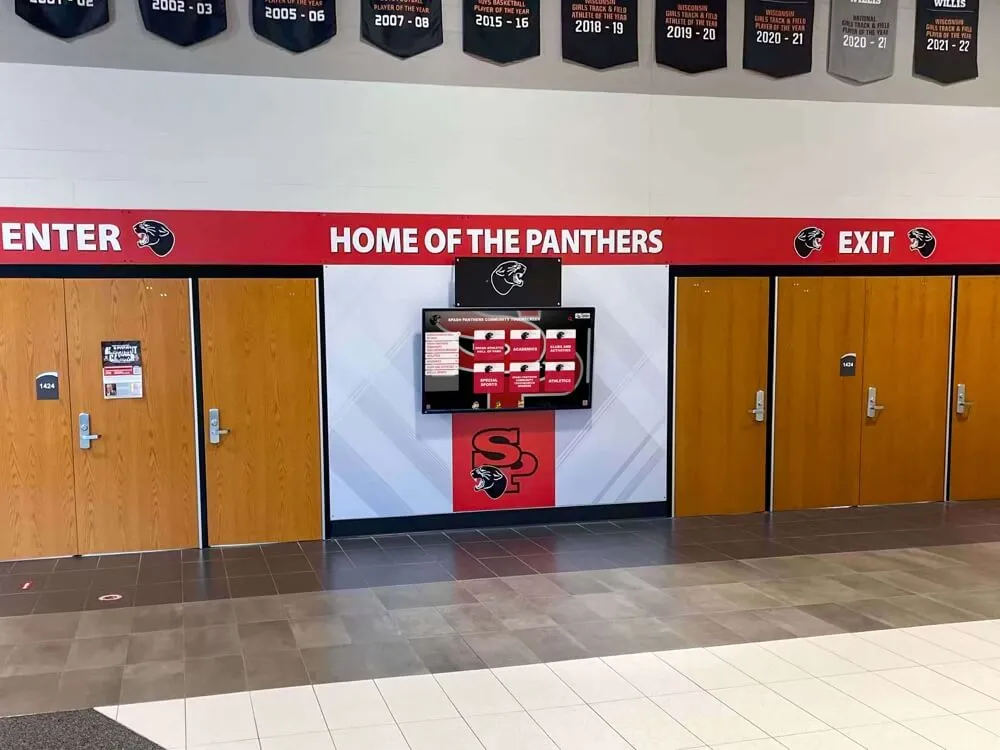
Honor walls in school hallways transform a seasonal acknowledgment into a permanent part of the school's identity—visible daily to every student, family member, and visitor who passes through
Assemblies and Ceremonies
Many schools hold quarterly or semester academic assemblies where honor roll students are publicly recognized. The most effective ceremonies share a few common characteristics:
- Students are named, not just counted — calling each student by name is the difference between recognition and tallying
- Families are invited — parental witness dramatically increases the motivational impact of recognition
- Tangible certificates or artifacts are distributed — something students can take home and display reinforces the permanence of the achievement
- Administrators speak to effort, not just outcomes — framing recognition around work ethic rather than natural ability sends a growth mindset message to every student in the room
Looking at how schools recognize graduates at end-of-year ceremonies offers useful models that can be scaled down for quarterly academic recognition events throughout the year.
Physical Recognition Displays
Some of the most enduring forms of academic recognition are physical displays—honor boards, banner systems, or dedicated recognition walls installed in prominent school locations. When students see their names in the hallways they walk through every day, recognition becomes part of their daily experience rather than a single moment that fades.
Traditional honor roll boards use printed name cards, plaques, or vinyl lettering that must be updated each marking period. The logistics of maintaining these displays—removing outdated names, adding new ones, managing printing and installation—creates recurring work for staff and often results in displays that fall out of date between updates.
The Psychology Behind Academic Recognition
Research on student motivation consistently points in the same direction: recognition is a powerful driver of academic behavior, but only when students perceive it as genuine, fairly administered, and publicly meaningful.
Recognition extends effort beyond the recognized students. When students see their peers publicly acknowledged, they are more likely to increase their own academic investment. The honor roll is not only about the students on it—it signals to the entire student body what the school values and what is within reach.
Public recognition is more motivating than private acknowledgment alone. While direct teacher feedback is valuable, public recognition tied to clear, objective criteria creates a social proof effect that private acknowledgment cannot replicate. This is why the published list matters—not as a vanity metric, but as a visible community standard.
Recognition should be accessible but not trivial. Programs that include nearly every student lose motivational force. Programs so selective they seem unattainable to typical students miss the motivational sweet spot entirely. The standard two- or three-tier model, when calibrated correctly, gives most students a realistic target and rewards those who reach it with genuine distinction.
Frequency keeps goals present. Quarterly honor roll recognition keeps academic goals visible throughout the year. Annual-only recognition leaves long stretches where students have no near-term milestone to work toward—and motivation research shows that near-term attainable goals are more behaviorally effective than distant abstract ones.
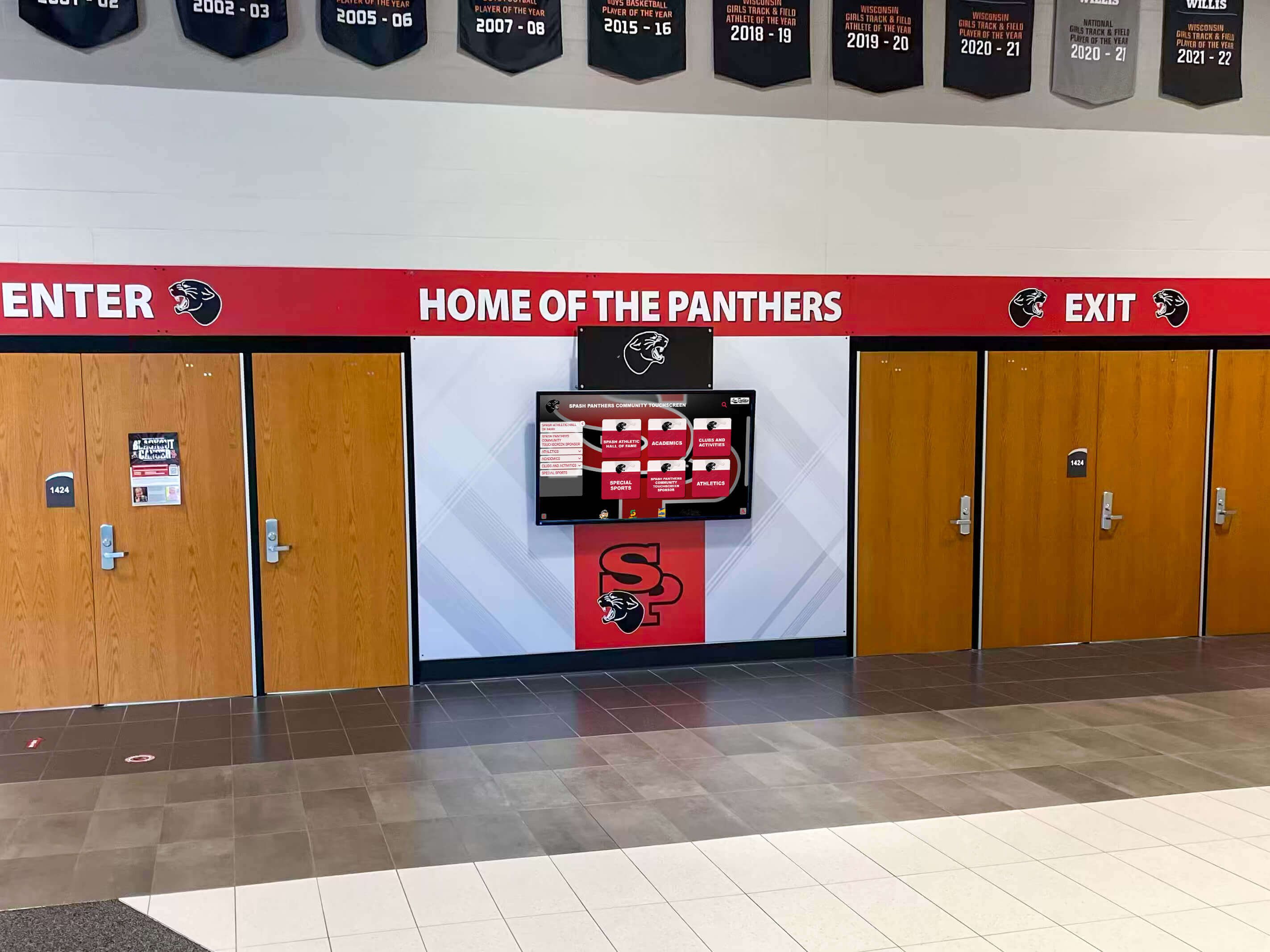
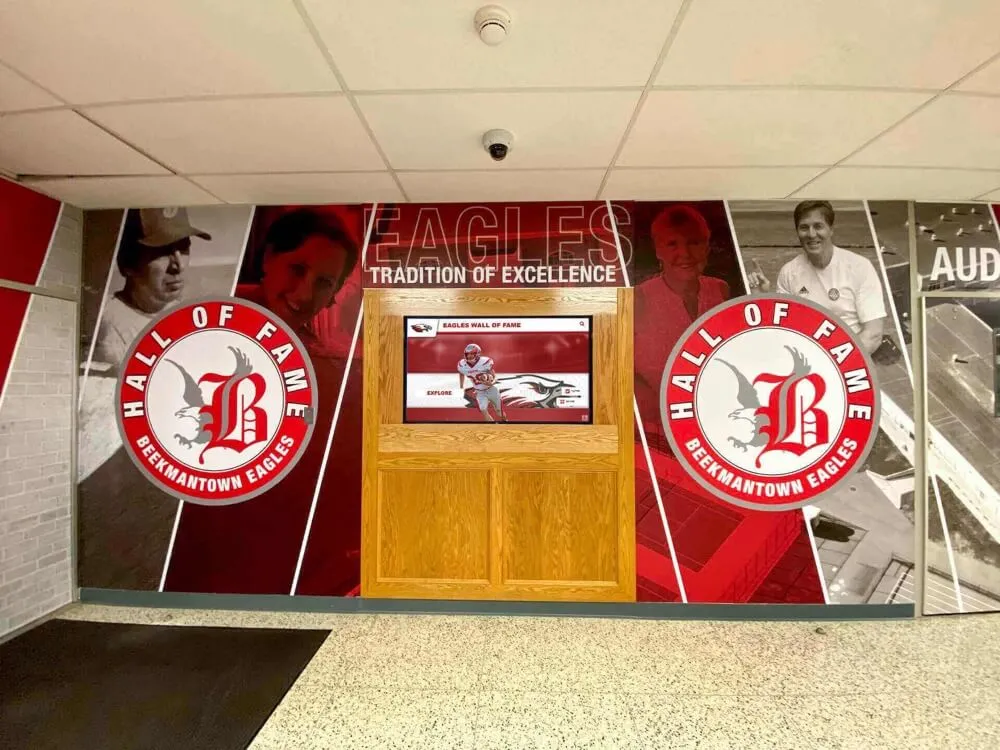
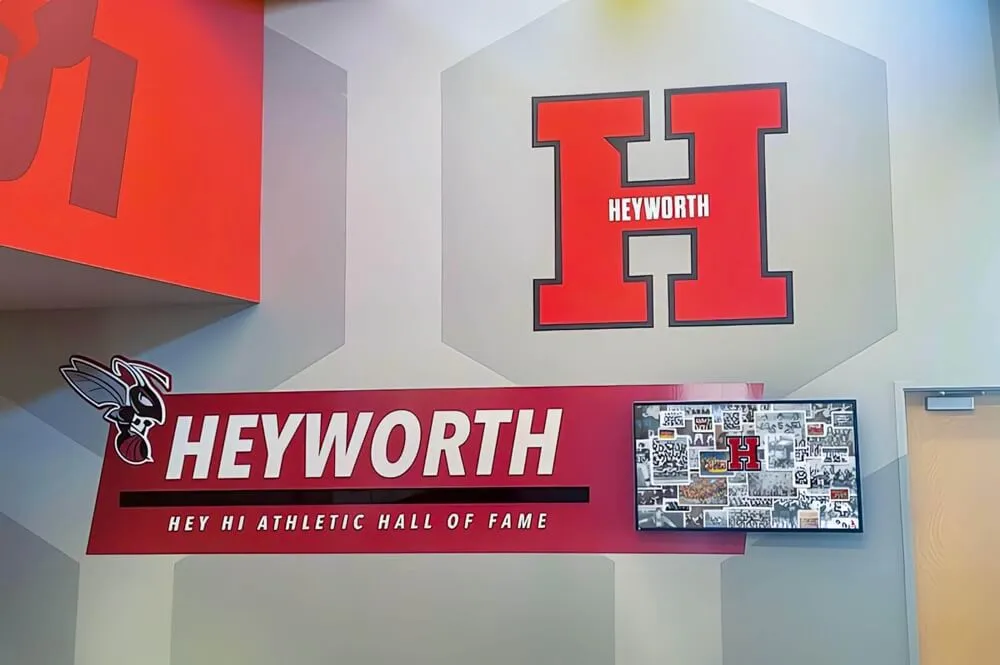
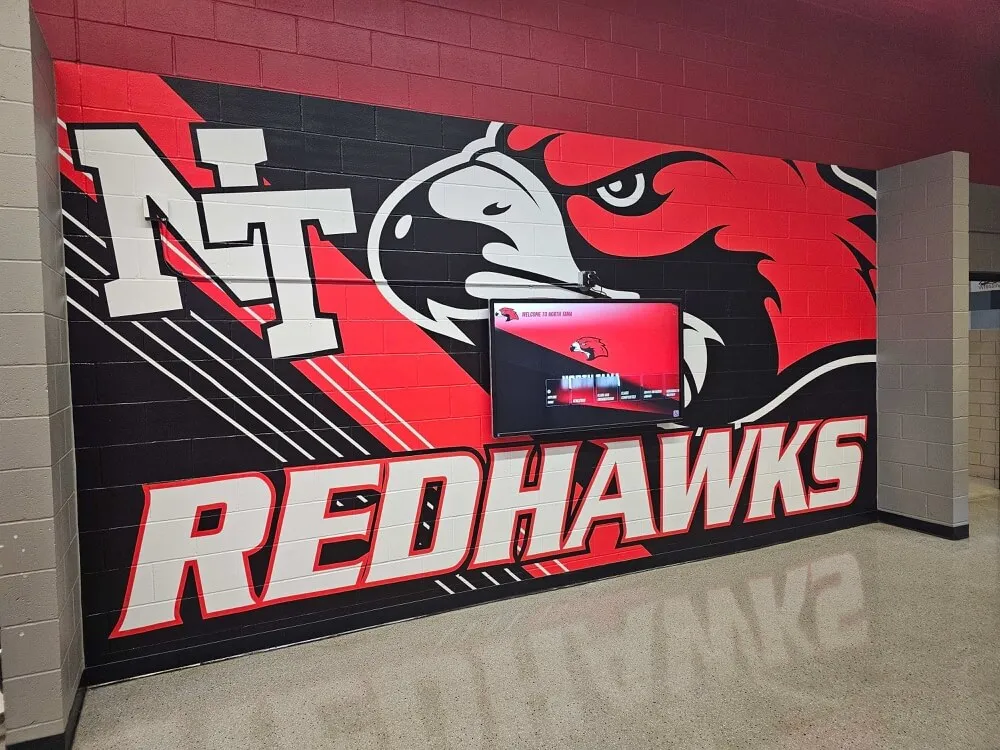
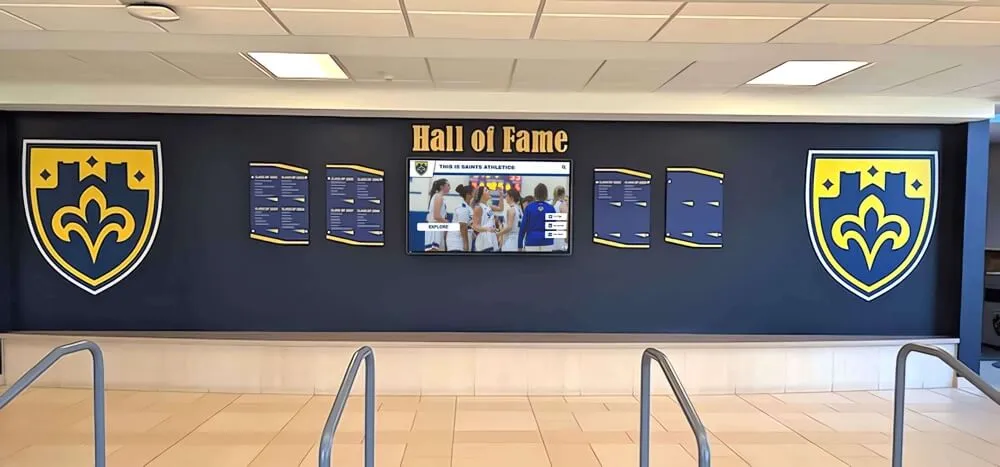
Digital screens positioned at school entrances create high-visibility recognition moments that reach every student, family member, and visitor from the moment they walk through the door
Digital Honor Roll Displays: Moving Beyond the Printed List
The most significant evolution in honor roll recognition over the past decade has been the shift toward digital and interactive displays. Schools that once relied on bulletin boards, printed newsletters, and glass-enclosed paper lists are discovering that digital recognition infrastructure solves the structural challenges of traditional programs—and opens recognition possibilities that simply did not exist before.
The Limits of Traditional Honor Roll Systems
Traditional paper-based honor roll systems share several structural weaknesses:
- They expire. A bulletin board with last semester’s names sends an inadvertent message: your achievement was temporary. Students who visit the school years later find no trace of their academic accomplishments.
- They require constant maintenance. Staff must print, laminate, install, and remove recognition materials each quarter—a significant time cost that often leads to displays falling out of date.
- They do not scale gracefully. A school that wants to recognize students with photos rather than just names faces steep logistical challenges with print-based systems.
- They are static. A paper list cannot include a student’s quote, a brief biography, or context about the path they took to academic excellence.
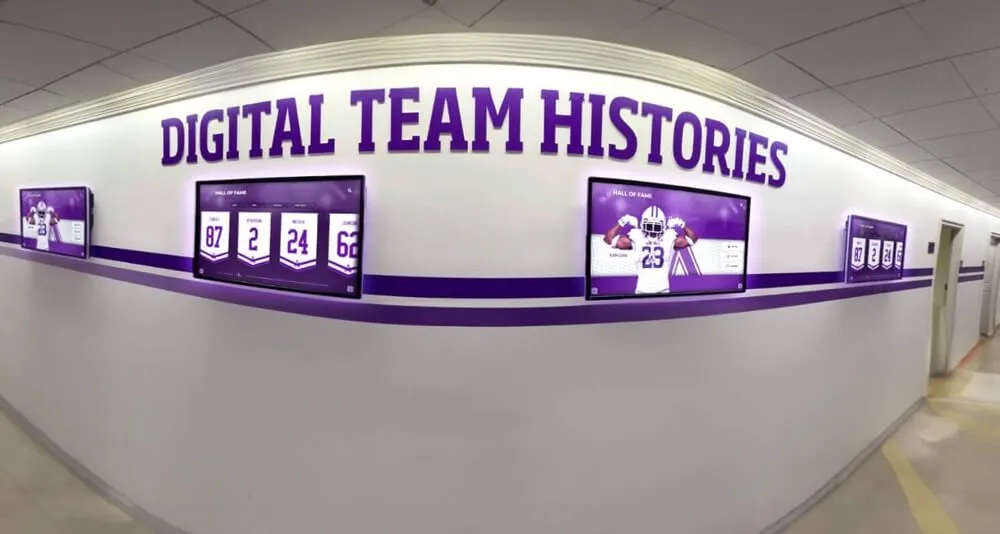
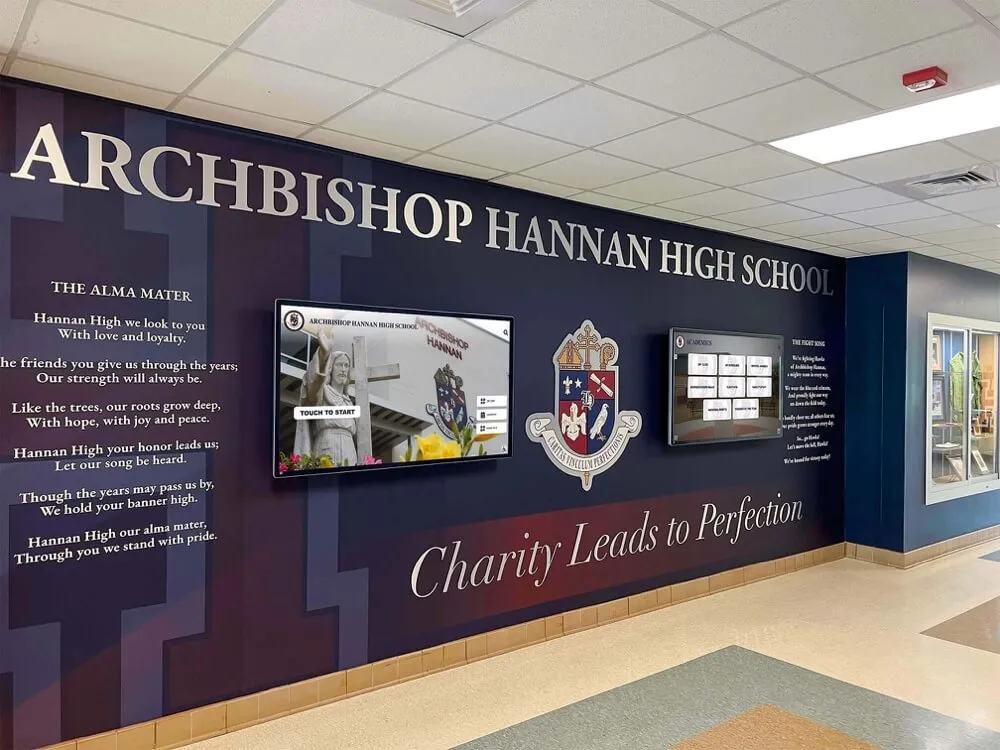
Digital recognition infrastructure addresses each of these limitations. Platforms built for school recognition allow administrators to upload student photos and achievement data, manage honor roll lists across grading periods, and display that information on interactive screens in hallways, lobbies, and common areas—permanently and dynamically. Celebrating academic achievement digitally gives schools a way to make recognition both immediate and lasting—not one or the other.
Interactive Achievement History Software
Modern school recognition platforms go further than digital bulletin boards. Interactive achievement history software allows schools to build searchable, browsable archives of academic recognition—so a student inducted into the honor roll in 2024 can be found by a prospective student, a curious parent, or the student themselves a decade later. This kind of institutional memory transforms the honor roll from a transient list into a permanent component of school legacy.
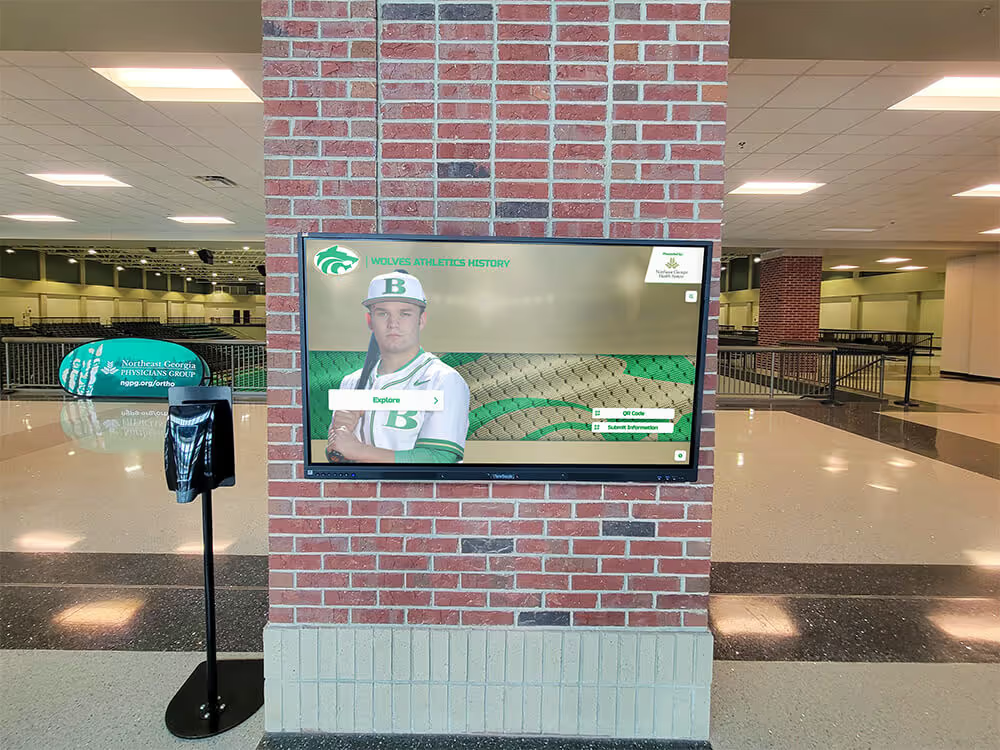
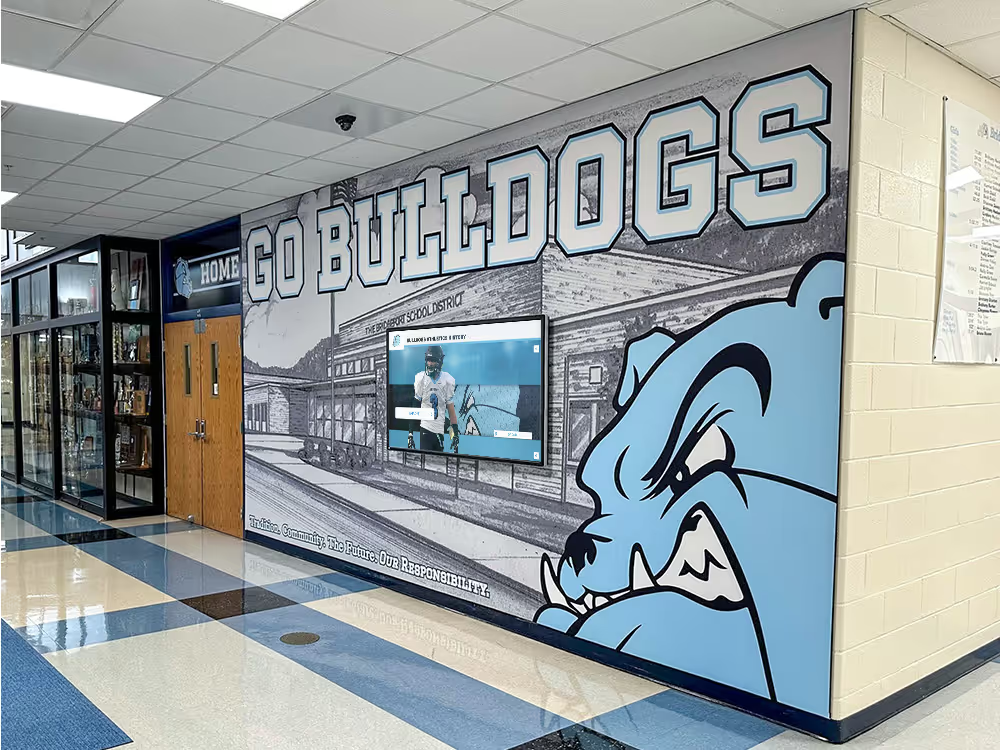
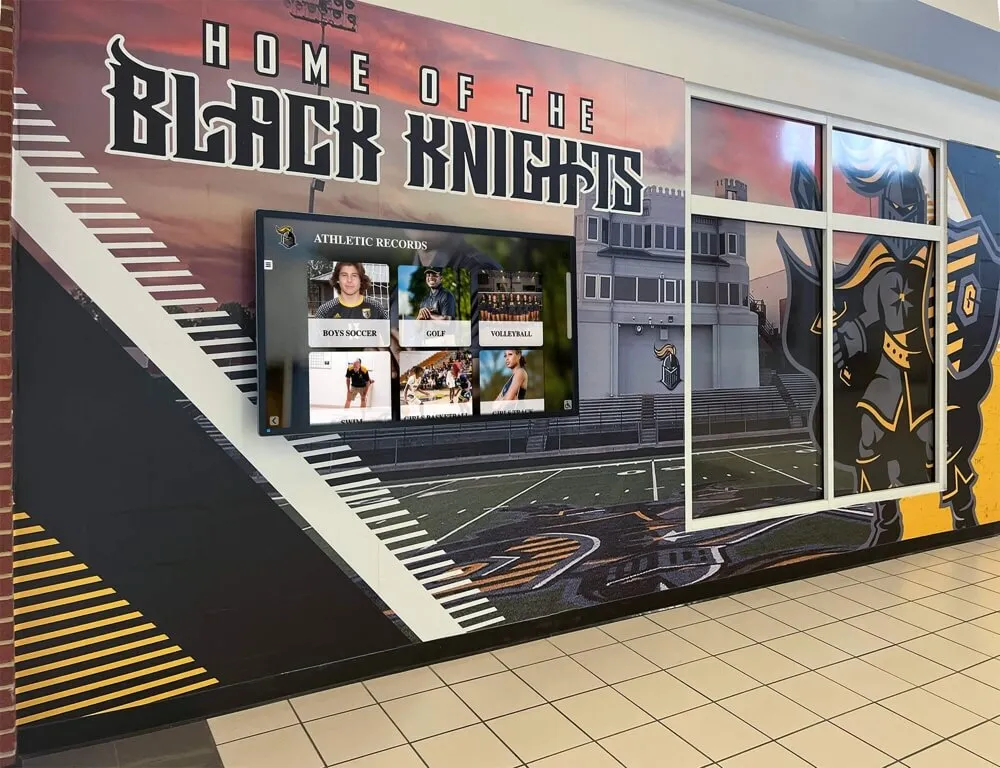
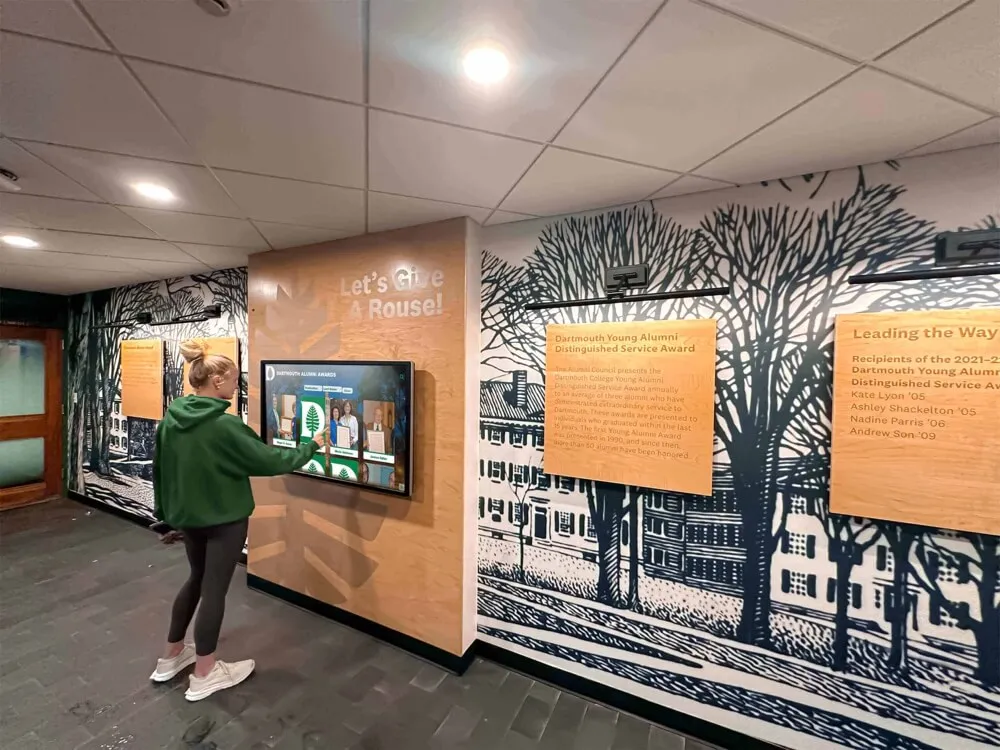
Touchscreen displays in school lobbies and gyms make this archive accessible to everyone who visits the school—without requiring IT support or administrator intervention. A parent attending back-to-school night can search for their child’s recognition. An alumnus touring the building can find their name in the record. A student visiting for a shadow day can see the full depth of academic achievement at their potential future school.
Turn Your Honor Roll Into a Permanent Celebration
Rocket Alumni Solutions builds interactive digital recognition displays that make academic achievement visible, searchable, and lasting—not just for a semester, but for the lifetime of your school community. See how a touchscreen honor roll wall transforms the way your school celebrates its students.
Schedule Your DemoBuilding an Effective Honor Roll Program: A Practical Guide
Whether you are redesigning an existing program or creating one from the ground up, these principles guide the most successful honor roll programs in American schools.
1. Set Clear, Published Criteria
Students and families should be able to find honor roll eligibility requirements in the student handbook, on the school website, and in communications at the start of each academic year. Ambiguity undermines trust—when students feel that criteria are applied inconsistently or not fully disclosed, the recognition loses motivational value almost entirely.
2. Design Your Tier Structure Intentionally
The right tier structure depends on your specific student population. A school where 80% of students maintain a 3.0 GPA may need to raise thresholds to maintain meaningful selectivity. A school serving a diverse academic population may want a broader base tier to ensure recognition is accessible to students across ability levels. Review your academic performance data before finalizing thresholds—and revisit them periodically as your school’s demographics or academic culture shifts.
3. Create Multiple Recognition Touchpoints
The most effective honor roll programs recognize students through multiple channels: a public ceremony, a formal letter home, a hallway display, and a mention on the school’s social media or website. Each touchpoint reinforces the message and reaches a different audience. Designing end-of-year academic awards ceremonies to incorporate quarterly honor roll recognition creates a natural capstone moment that connects the year’s academic story without requiring entirely separate programming.
4. Involve Families Meaningfully
Sending honor roll notifications directly to families—rather than leaving communication entirely to students—ensures that parents share in the recognition moment. Family witness of academic achievement has a well-documented positive effect on student motivation and academic identity. Some schools invite families to honor roll assemblies; others send a formal letter signed by the principal. Both approaches signal that the school takes parental partnership seriously.
5. Connect Recognition to the Broader School Culture
Honor roll should feel like part of a school culture that genuinely values academics—not an isolated program running in the background. When honor roll recognition is visible in hallways, discussed in advisory periods, included in school communications, and celebrated at public events alongside athletic and arts achievements, it sends a consistent message about institutional values. Schools that build scholarship recognition programs alongside their honor roll create a pipeline that helps students see the direct connection between quarterly academic performance and longer-term opportunity.
6. Preserve the Record
One of the most underused opportunities in honor roll programs is historical preservation. Schools that maintain searchable records of past honor roll recipients build an institutional archive that becomes more valuable over time. Alumni who earned recognition years ago are often deeply moved to discover their names still preserved in the school’s recognition system—and that emotional connection is one of the most powerful drivers of ongoing alumni engagement. Schools that invest in recognizing top graduates understand that the moment of recognition is only the beginning of a lifelong relationship between the institution and the student.
7. Plan Ceremonies with Intention
The most successful academic award ceremonies share common design principles: every recognized student is named individually, the tone is celebratory rather than perfunctory, and ceremonies are kept at a length that maintains the audience’s attention and energy. A focused thirty-minute ceremony where every name is called beats a ninety-minute event where students disengage before their recognition moment arrives.
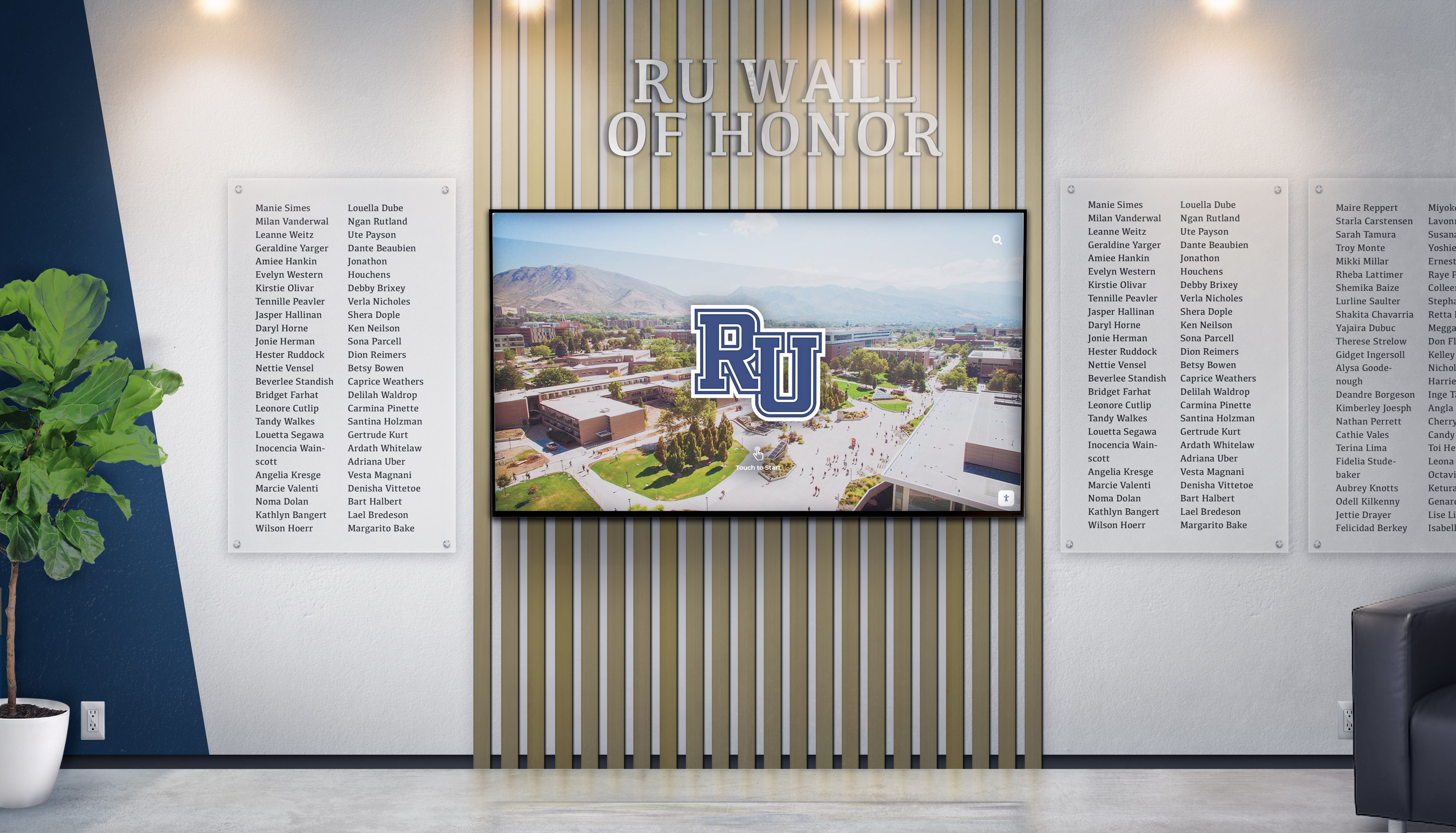
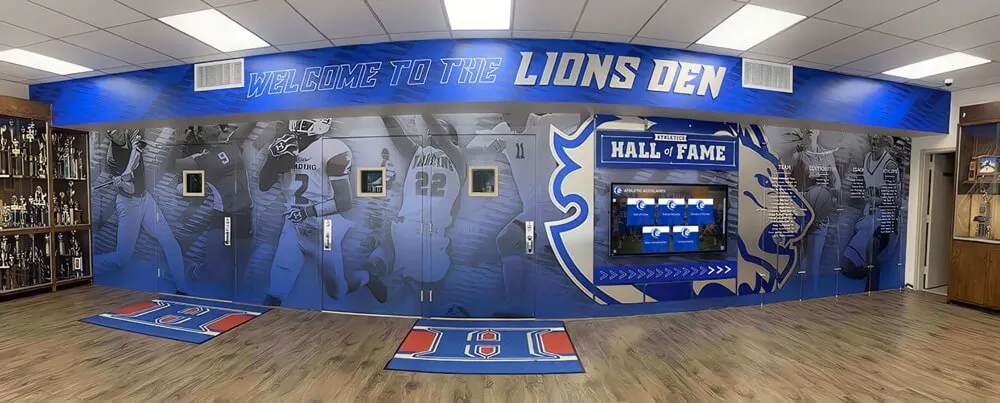
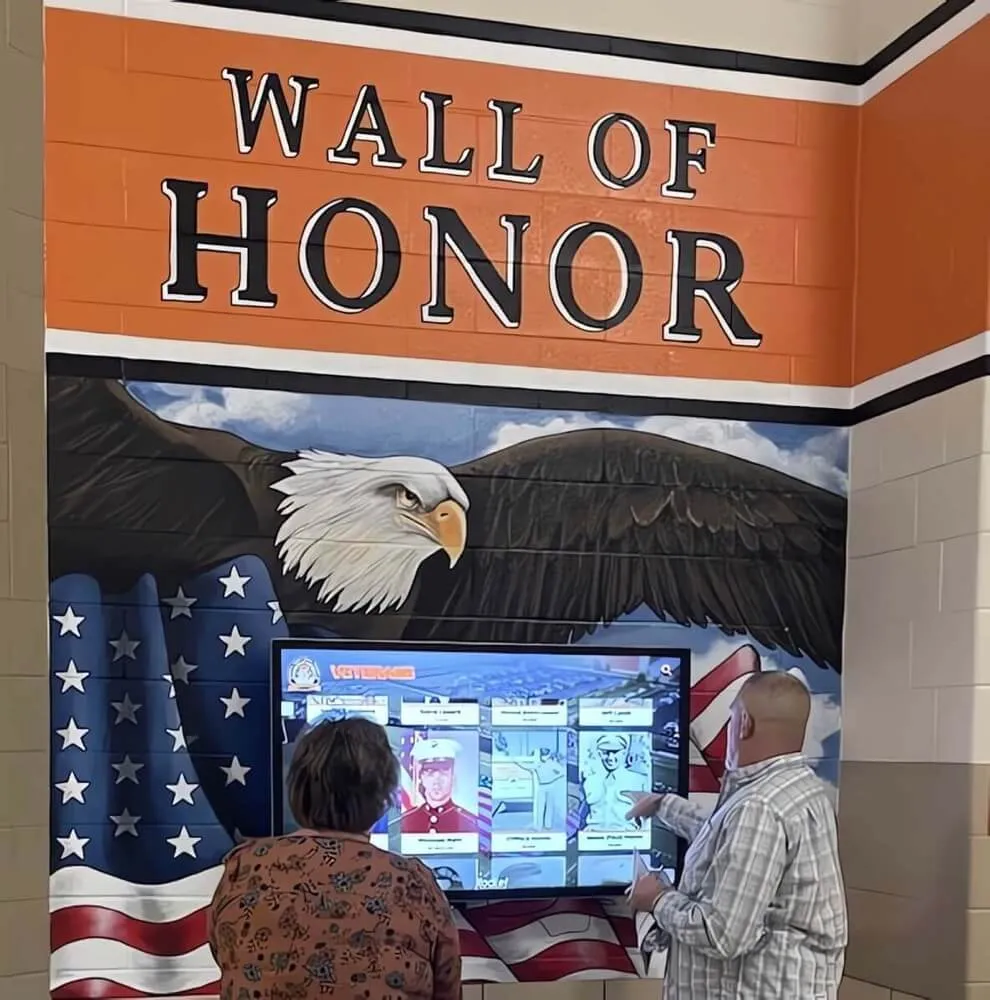
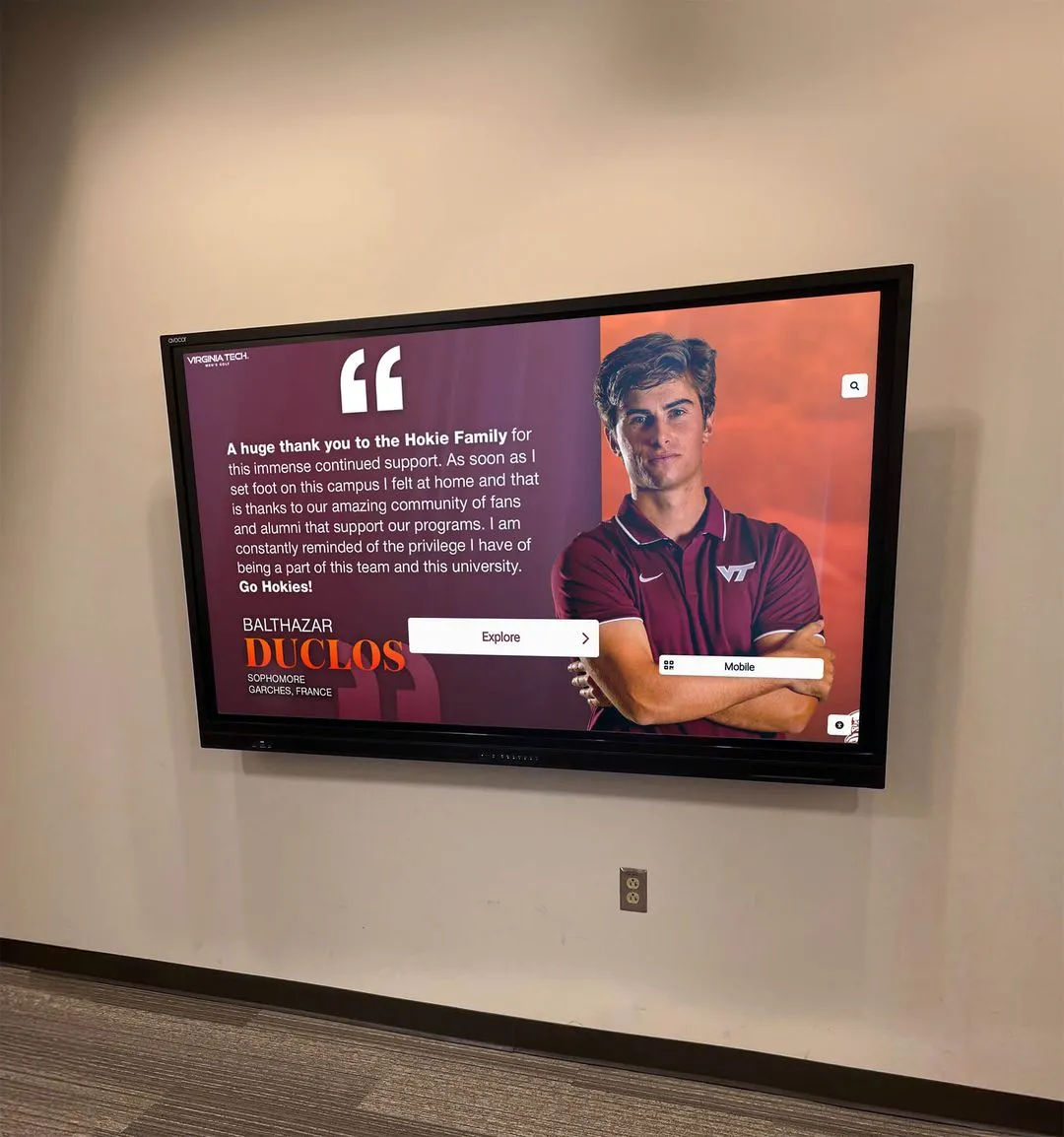
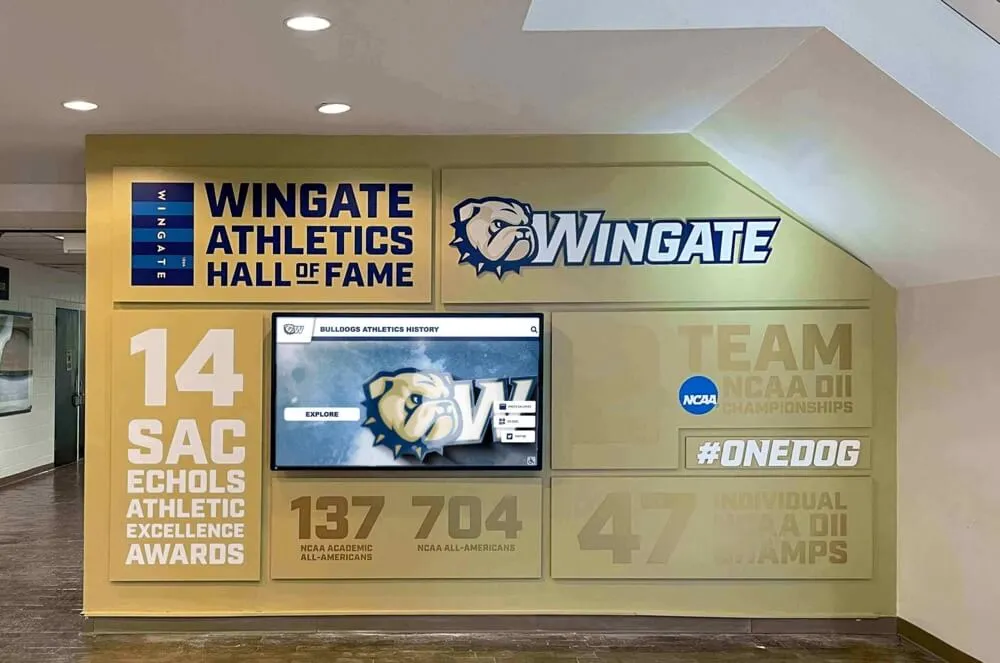
Preserving individual names in a permanent campus display—whether through digital screens, name plaques, or both—creates recognition that outlasts the marking period and becomes part of the school's living history
The Digital Honor Roll Wall: What Schools Are Building
The emerging standard for academic recognition infrastructure combines purposeful physical design with digital technology. Schools invest in dedicated wall installations or hallway display systems that feature:
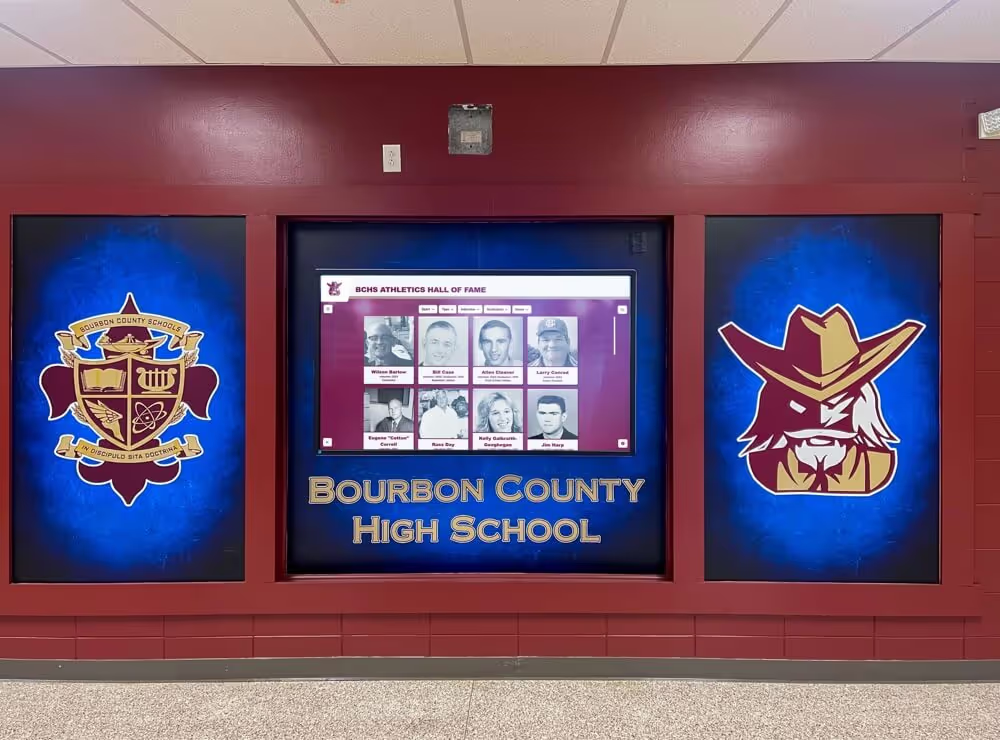
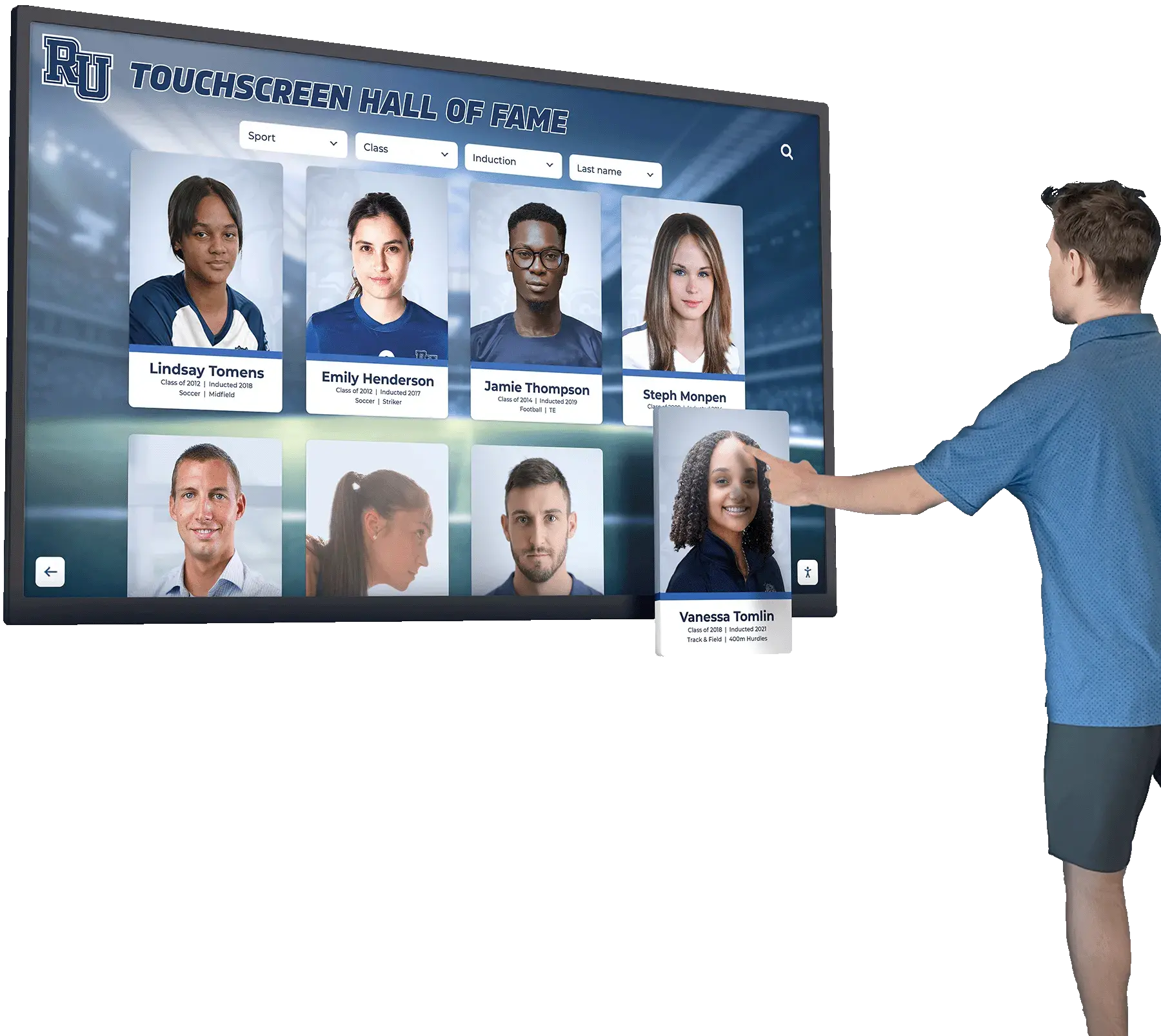
- Touchscreen display panels that allow visitors to browse honor roll recipients by year, semester, name, or grade level
- Photo-based profiles that pair each student’s image with their name and recognition tier—turning a name on a list into a recognizable person
- Historical archives that preserve records going back as far as the school has data, creating a living institutional memory
- Dynamic updating through a cloud-based content management system that allows administrators to add new honor roll cohorts without printing, laminating, or installing anything
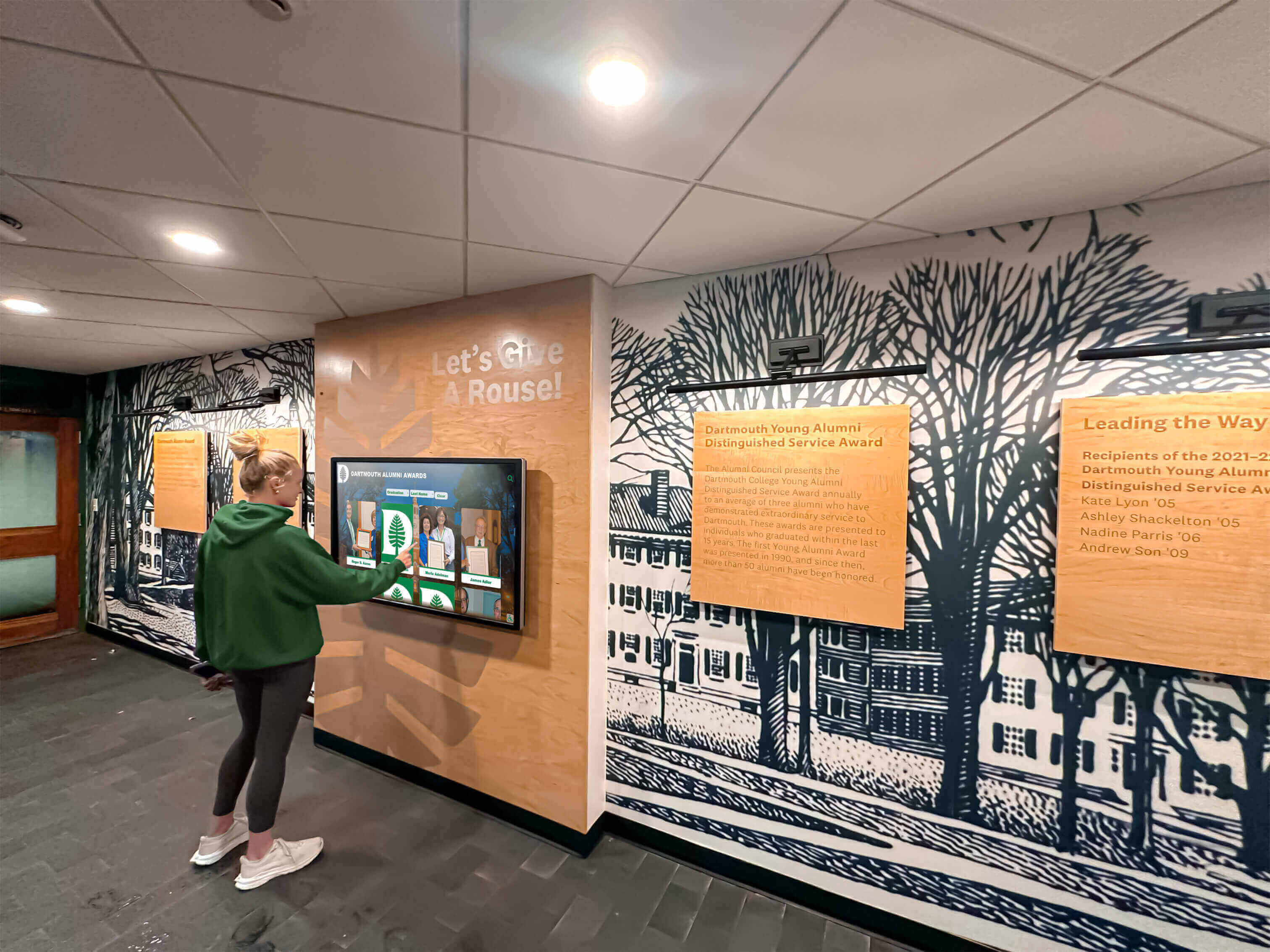
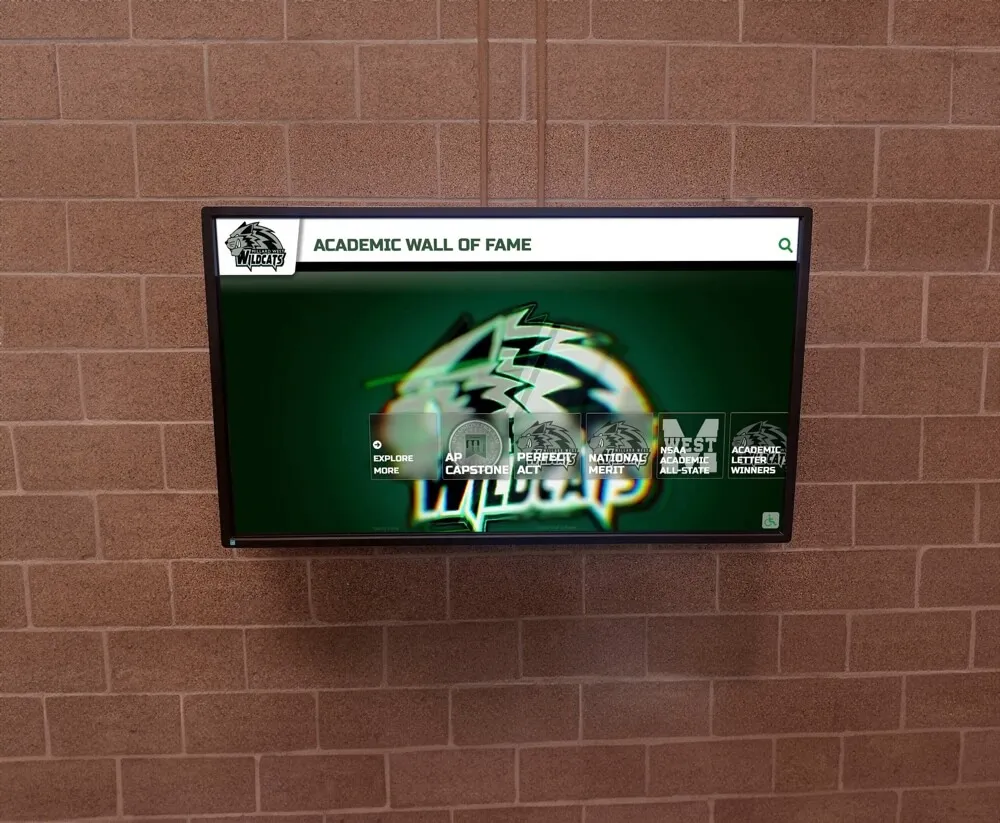
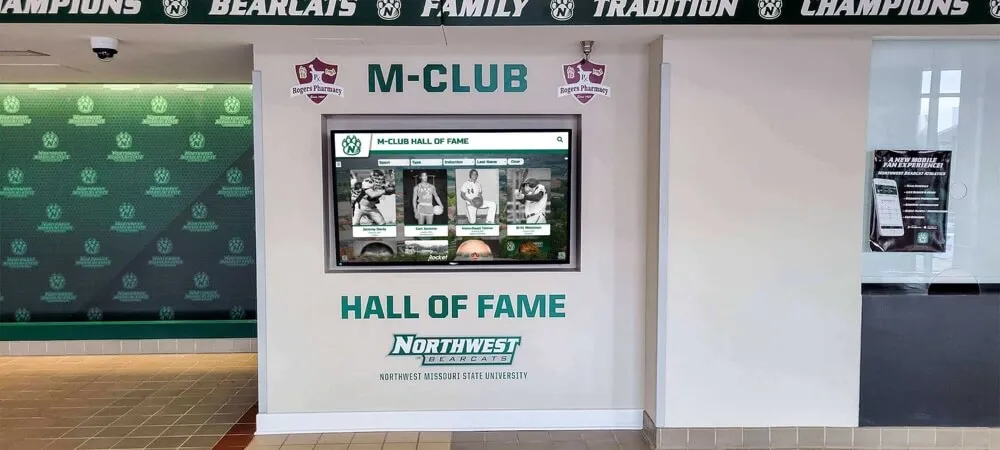
Interactive touchscreen displays invite students to engage with the school's recognition history—browsing honor roll records and seeing the achievements of those who came before them as a living part of school culture
This kind of infrastructure transforms the honor roll from a quarterly administrative task into a permanent institutional asset. A student recognized in ninth grade can return to their school five years after graduation and find their name still displayed. A prospective family touring the building sees the depth and breadth of academic achievement across the school’s history. A student who struggled early and turned their performance around can see tangible evidence of their growth preserved permanently in the record.
Rocket Alumni Solutions designs and installs these digital recognition walls for schools and universities across the country. Their systems support unlimited inductees and historical records, run on a cloud-based CMS that any staff member can update without technical expertise, and are built to ADA WCAG 2.1 AA accessibility standards. Professional installation is included, and content management support ensures that displays stay current through every academic cycle.
Conclusion: Recognition That Lasts
The honor roll is one of the oldest and most widely used academic recognition programs in American education—but the way schools execute it continues to evolve. The most effective programs share a commitment to genuine recognition: clear criteria, multiple touchpoints, meaningful ceremonies, and systems that preserve achievement beyond the moment it is earned.
As schools move from printed lists to interactive digital displays, the core purpose of the honor roll remains unchanged: to see students, to name them, and to tell them—and the world—that their effort matters. The technology has changed. The mission has not.
Build a Digital Honor Roll Display Your Students Will Be Proud Of
Rocket Alumni Solutions helps schools transform their academic recognition programs with interactive touchscreen displays, cloud-managed content systems, and professional installation. Your honor roll students deserve recognition that lasts longer than a newsletter.
Request Your Custom Demo