



Walk into any high school or university commencement ceremony and your eye is drawn immediately to the students who look different from the rest—the graduates draped in sashes of gold, blue, white, or crimson, or wearing twisted cords looped around their necks beneath their caps and gowns. These are honors graduation stoles and honor cords, and they are among the most legible symbols in American academic life. In a matter of seconds, without reading a program or checking a résumé, an audience member knows: this student achieved something exceptional.
Honors graduation stoles and cords are the physical signal of academic excellence. They are how institutions make years of difficult work visible at the moment of greatest public celebration—commencement. But they also raise genuine questions for students, families, and school administrators: What exactly do the different pieces mean? What colors correspond to which honors? Who earns a stole versus a cord? And how do schools ensure that this recognition extends beyond a single morning ceremony and into the lasting record of institutional achievement?
This complete guide answers every significant question about honors graduation stoles and cords—what they are, how they are earned, what each color represents, how schools distribute and manage regalia, and how forward-thinking institutions are preserving the record of academic honors in ways that outlast any ceremony.
Whether you are a student approaching graduation who wants to understand exactly what each piece of regalia means, a school counselor responsible for managing regalia distribution, or an administrator thinking about how to build a more visible culture of academic recognition, this resource has you covered.

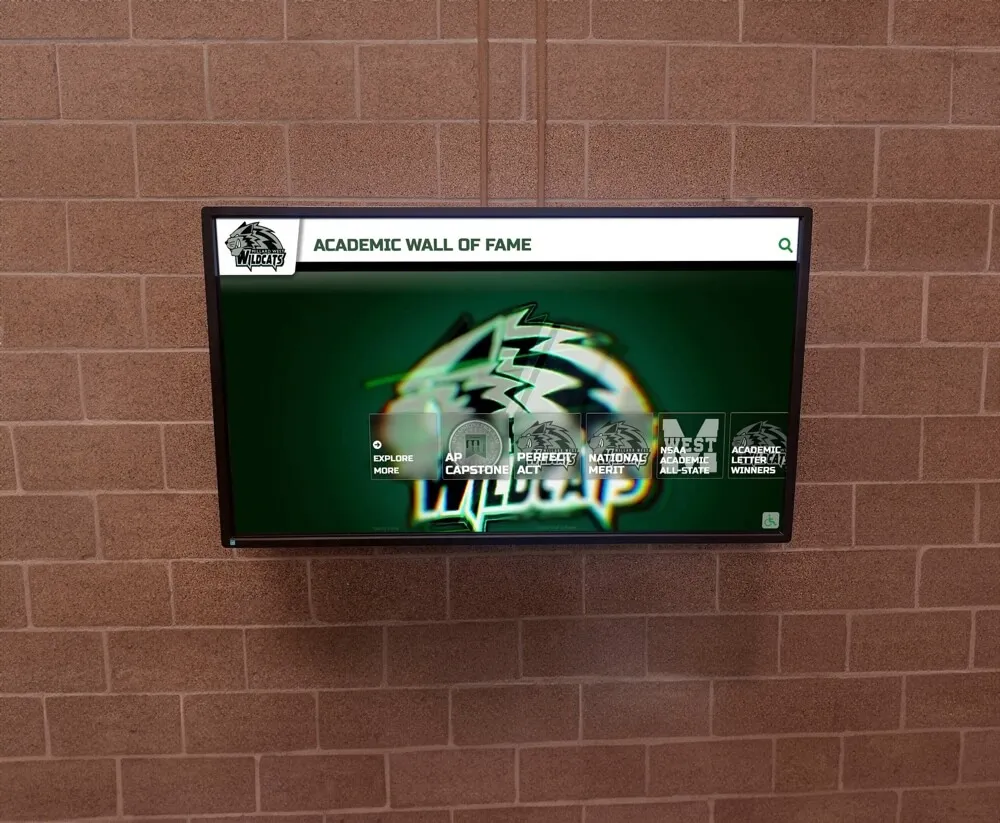
Schools that invest in recognizing academic achievement—from honors stoles at graduation to permanent digital displays in hallways—build cultures where excellence is visible year-round, not just at commencement
What Are Honors Graduation Stoles?
An honors graduation stole is a wide, flat fabric sash worn draped over the shoulders and hanging down the front of a graduation gown, typically reaching to mid-thigh or below. Unlike honor cords—which are narrow, twisted braids worn around the neck—stoles are broader and more prominent, functioning almost like a second garment layered over the cap and gown.
Both stoles and cords serve the same fundamental purpose: to visually distinguish graduates who have earned specific academic or organizational honors from the general graduating class. But they differ in their origin, typical use cases, and the types of recognition they convey.
Stoles vs. Cords: Understanding the Difference
The distinction between a stole and a cord matters, and schools sometimes use the terms interchangeably in ways that create confusion.
Graduation Stoles A stole is the broader fabric sash. Stoles are most commonly associated with honor society membership—National Honor Society, Phi Beta Kappa, the various subject-specific honor societies, or club and organization affiliations. A stole is wide enough to display embroidered text, an organization’s logo, or the school’s name and graduation year. Stoles are generally the more formal and prominent piece of regalia, often presented at induction ceremonies and then worn again at graduation.
Honor Cords An honor cord is a narrow, braided or twisted rope-like accessory worn looped around the neck over the gown. Cords typically come in pairs—two strands of a single color, or two different colors twisted together—and hang down the front of the gown on both sides. Honor cords most often represent academic GPA distinctions: graduating with honors, high honors, or highest honors, corresponding to the Latin designations of cum laude, magna cum laude, and summa cum laude. They may also represent honor society membership when a stole is not provided.
Can a Graduate Wear Both? Yes—and many do. A graduate who earned a 4.0 GPA and was inducted into the National Honor Society might wear gold cords for their academic distinction and an NHS stole simultaneously. Graduation programs at most institutions explicitly permit graduates to wear all regalia they have legitimately earned, so a senior who accumulated honors across multiple organizations may appear on stage in a notably layered set of distinctions.
What Earning Honors Regalia Represents
The physical stole or cord is the visible culmination of work done over months or years. Understanding what that work actually involves helps families and school communities appreciate why these distinctions matter.
GPA-Based Academic Honors
The most common reason a graduate wears an honor cord is their cumulative GPA. Most high schools and universities establish GPA thresholds that trigger honors designations, and these thresholds vary by institution. A typical structure might look like this:
- Honors — cumulative GPA of 3.0–3.49, often represented by a single color cord (white, silver, or light blue are common)
- High Honors — cumulative GPA of 3.5–3.74, represented by a different color or a two-color cord
- Highest Honors — cumulative GPA of 3.75–4.0 or above (including weighted scales at some schools), represented by gold or the institution’s most prestigious cord color
At the college level, these distinctions align with Latin honors designations. Detailed breakdowns of the GPA thresholds for each cum laude level illustrate how these requirements vary significantly between institutions—a student who qualifies as magna cum laude at one university might not meet that standard at another.
Latin Honors at College and University Commencement
For college and university graduates, honors regalia typically aligns with the Latin honors system that has governed academic distinction in American higher education for more than a century. Understanding Latin honors GPA requirements and how institutions calculate them is essential context for interpreting what a given cord or stole represents on a university commencement stage.
The three standard Latin honors designations are:
Cum Laude (“with praise”) The entry-level Latin honor, awarded to graduates who meet the institution’s minimum GPA threshold for distinction. At many universities, this is a 3.5 cumulative GPA, though some institutions set it higher or calculate it differently—using class rank or a percentage-based system rather than a fixed GPA cutoff.
Magna Cum Laude (“with great praise”) The middle tier of Latin honors, typically requiring a cumulative GPA in the range of 3.7 to 3.8, though again the exact threshold varies by institution. Magna cum laude graduates have sustained a level of academic performance that goes meaningfully beyond the honors floor.
Summa Cum Laude (“with highest praise”) The top distinction in the Latin honors system, reserved for graduates with the highest cumulative GPAs in their class. Many institutions reserve summa cum laude for students with 3.9 or 4.0 GPAs, or for the top one to five percent of the graduating class. A summa cum laude graduate has typically maintained near-perfect academic performance across every semester of their program.
At commencement, these distinctions typically manifest as colored cords or as designations printed in the graduation program. Some universities use a single gold cord for all Latin honors recipients and differentiate the tier in program text; others use distinct colors or cord styles for each tier.

Academic recognition that begins with honor roll in earlier grades builds toward the stoles and cords graduates wear at commencement—and schools that document this journey create richer recognition programs
Honor Society Membership Stoles
In addition to GPA-based cords, a substantial portion of honors graduation regalia represents membership in academic or co-curricular honor societies. These stoles carry organizational meaning tied to the specific society’s colors, mission, and membership criteria.
The most widely recognized honor society stoles belong to:
National Honor Society (NHS) The NHS is the largest and oldest national honor society for high school students, founded in 1921. NHS stoles and cords typically appear in gold and blue—the society’s official colors—and represent the four NHS pillars of scholarship, leadership, service, and character. A student wearing an NHS stole at graduation has met faculty-vetted criteria that go beyond GPA. Schools with strong programs for highlighting National Honor Society students understand that NHS membership is a distinction worth making visible in multiple contexts—not only at graduation but throughout the school year.
National Junior Honor Society (NJHS) The middle school parallel to the NHS, the NJHS serves students in grades six through nine who meet the same five-pillar criteria at an age-appropriate level. NJHS stoles and cords appear at eighth- and ninth-grade promotion ceremonies more often than at high school graduation.
Phi Beta Kappa The oldest academic honor society in the United States, Phi Beta Kappa is awarded at the college level and represents the highest academic distinction available to liberal arts and sciences graduates. Members wear distinctive golden key pins, but at commencement some chapters also distribute stoles or medallions.
Subject-Specific Honor Societies Dozens of discipline-specific honor societies operate at high school and college levels, each with its own regalia colors. The Sociedad Honoraria Hispánica (Spanish) uses purple and gold; the Société Honoraire de Français (French) uses blue and white; the Quill and Scroll Society (journalism) uses gold and black; and Beta Club uses red and white. Graduates who are members of multiple subject-specific societies may wear multiple stoles or the stole of their primary society alongside cords from others.
Valedictorian and Salutatorian Regalia Many schools present special stoles, medallions, or sashes to the top academic finishers in the graduating class. The valedictorian—the graduate with the highest GPA in the class—often receives gold regalia as a visual marker of this distinction. Resources on valedictorian speech preparation and recognition reflect how central this role is in graduation culture; the regalia makes that centrality visible at a glance.
A Color Guide to Honors Graduation Stoles and Cords
Color is the primary information-carrying feature of graduation regalia. While there is no universal national standard governing exactly which color corresponds to which honor, strong conventions have emerged across American schools and universities. The following guide covers the most common associations.
Common Honor Cord Colors and Their Meanings
Gold / Yellow Gold is the most prestigious and widely recognized cord color in American graduation culture. It typically represents the highest academic distinction available: summa cum laude, valedictorian, or membership in the school’s most elite academic honor society. Gold cords are rarely awarded for participation alone—they mark genuine top-tier achievement.
White / Silver White or silver cords most commonly represent the entry level of academic honors—the “honors” designation for students meeting the first GPA threshold, or membership in honor societies where white is the organizational color. White cords sometimes represent purity of scholarship or general academic distinction in schools that use a simple two-tier system.
Blue Blue cords appear frequently as part of the National Honor Society’s blue-and-gold color scheme. Blue may also represent high honors GPA distinctions at schools that use a color-coded three-tier system, or it may mark membership in specific academic or community-service organizations.
Red Red cords often represent Beta Club membership—Beta Club uses red as its primary color. Red may also mark membership in student government associations, key club, or other leadership-focused organizations at schools that grant regalia for a broad range of recognition.
Purple Purple cords or sashes typically mark membership in honor societies that use purple as their color, including the Sociedad Honoraria Hispánica and some chapters of the National English Honor Society. Purple is also associated with honor societies in specific academic disciplines.
Green Green cords are commonly associated with academic programs focused on healthcare, environmental science, or specific STEM disciplines. Some schools also use green to represent involvement in career and technical education programs.
Black Black cords typically represent involvement in specific organizations—student government, journalism honor societies, or certain professional honor societies—rather than GPA-based academic distinction.

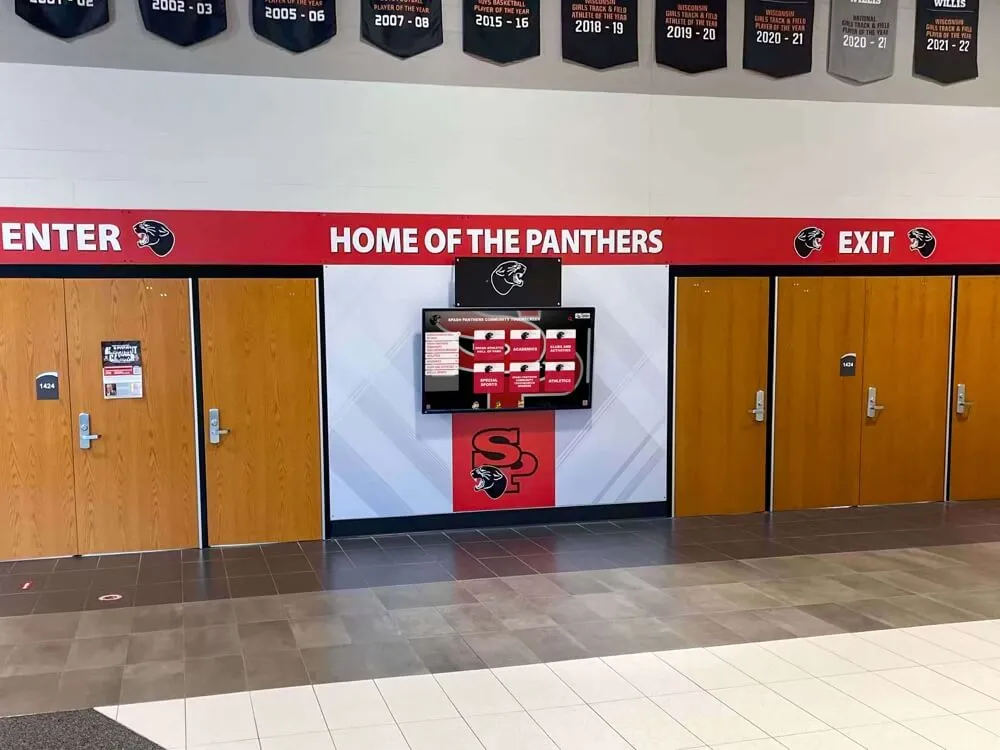
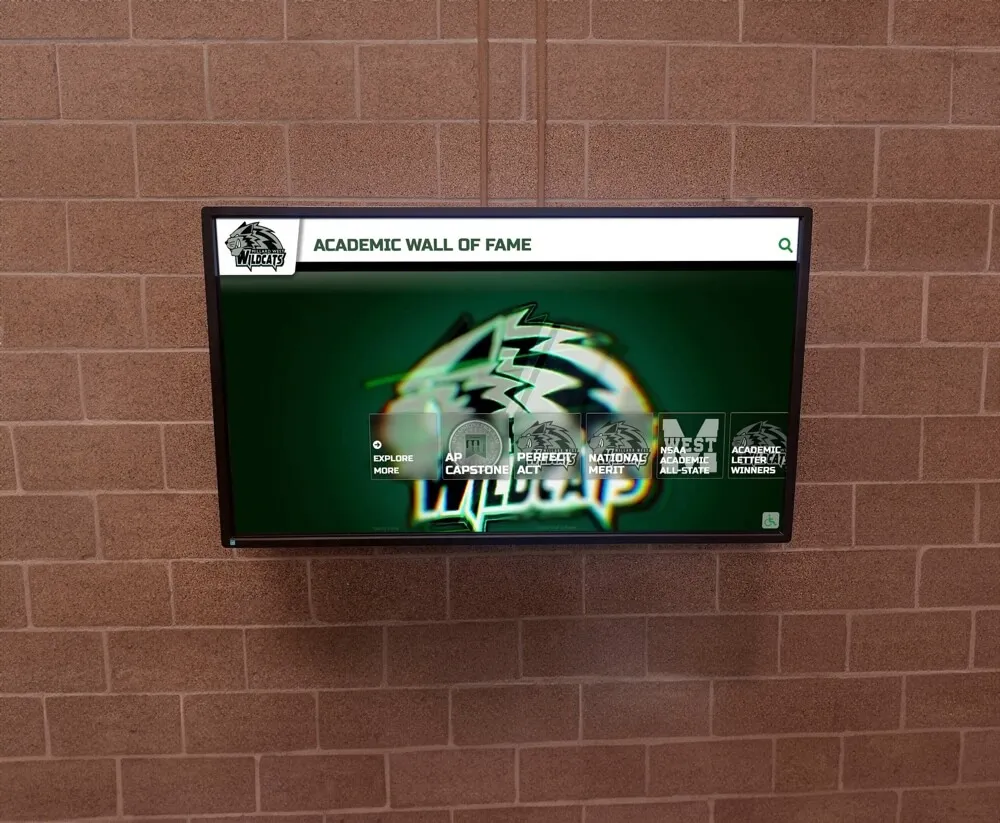
School colors and honor society colors intersect in recognition displays—the same color-coding that appears on graduation stoles can carry through into permanent wall displays that honor graduates for years to come
Two-Color and Multi-Color Cords
Many honor cords are two-toned—two colors twisted together into a single braided cord. These dual-color cords represent:
- Membership in an organization whose official colors are two specific colors (NHS blue and gold, for example)
- A distinction that combines two recognition categories (academic honors plus co-curricular involvement)
- A school-specific color combination that marks a particular achievement tier
When a student wears a two-color cord in gold and blue alongside a separate white cord, both pieces carry distinct meaning and both should be acknowledged in the graduation program. Schools that create comprehensive programs for special awards and recognition categories for students understand that the graduation program is the master reference document for what every piece of regalia represents.
How Schools Determine Who Earns Honors Regalia
The criteria for earning honors graduation stoles and cords are set by each individual school or institution, sometimes in conjunction with national honor society guidelines. Understanding the common approaches helps administrators design equitable, transparent programs.
Cumulative GPA Calculations
For GPA-based cord distinctions, most schools calculate cumulative GPA through the end of the semester immediately preceding graduation—giving the most recent and complete academic picture. Some institutions use unweighted GPA; others use weighted GPA that assigns additional value to AP, IB, or honors courses. The choice of weighting method affects which students qualify for which distinction and should be clearly communicated to students at the beginning of their academic career, not revealed for the first time at the end.
At the high school level, schools often announce honors designations after the seventh semester of a four-year program (second semester of junior year) so that students who are on track know what their final semester needs to achieve. This preview approach gives students meaningful agency over their own distinction rather than leaving it to chance.
Honor Roll as a Foundation
Many students who wear stoles at graduation began building their academic recognition record through honor roll recognition in earlier grades. Schools with robust academic honor roll recognition programs create a culture of academic excellence that makes the graduation stole feel like the natural culmination of years of recognized achievement—rather than a surprise at the end of four years.
Honor Society Verification and Faculty Review
For honor society stoles, the verification process typically involves faculty sponsors confirming member eligibility against the society’s criteria. A student cannot claim NHS regalia without confirmed induction; a student cannot claim Spanish Honor Society regalia without confirmed SHH chapter membership. In well-run programs, this verification happens through a coordinated process between the guidance office, the relevant faculty sponsors, and the registrar responsible for graduation ceremonies.
Counselors managing the regalia distribution process for large graduating classes often build simple spreadsheets or use school information systems to track which students have been confirmed as eligible for which pieces of regalia—preventing both unauthorized wear and the administrative error of denying regalia to students who genuinely earned it.
Ordering and Distributing Honors Graduation Stoles
The logistics of getting regalia into graduates’ hands is a practical dimension of honors recognition that schools must manage carefully. Errors in this process can cause real distress on graduation day.
Common Ordering Approaches
School-Ordered Regalia Many schools manage stole and cord ordering centrally, purchasing regalia through graduation vendors and distributing pieces to qualified students during cap-and-gown pickup. This approach ensures consistency—every NHS cord looks the same, every summa cum laude cord is identical—and prevents students from purchasing non-compliant regalia from unauthorized vendors.
Organization-Ordered Regalia Some honor societies provide or sell regalia directly to member chapters. The NHS chapter at a given school might order official NHS stoles through the National Honor Society’s official vendor, ensuring the regalia matches the organization’s specifications. The chapter advisor coordinates ordering based on the current member roster.
Student Self-Purchase with Verification Some schools allow students to purchase approved regalia from a designated vendor, with eligibility verified before purchase is permitted. This approach distributes administrative burden but requires clear eligibility verification processes to prevent unauthorized purchase.
Distribution Logistics
The distribution timeline matters. Regalia should reach students before graduation rehearsal, allowing graduates to practice wearing their stoles and cords correctly and to confirm that they have received what they are entitled to. Common distribution points include:
- During cap-and-gown pickup events, typically one to three weeks before graduation
- At graduation rehearsal, allowing immediate fittings
- At honor society induction ceremonies (for organization stoles presented at the ceremony itself)
Graduates should receive written confirmation of their eligibility before picking up regalia, and the pickup process should include verification against an eligibility list rather than relying solely on self-reported claims.
The Graduation Ceremony: Wearing Honors Regalia Correctly
On the day of commencement, how a graduate wears their stole and cords matters both for appearance and for respect for what the items represent.
Proper Stole Placement
A graduation stole is worn draped over the shoulders, centered on the body, with equal length hanging down on both sides. The stole goes over the graduation gown, not under it. When a graduate is also wearing honor cords, the stole typically rests over the cords, though school-specific conventions may vary.
Proper Cord Placement
Honor cords are worn looped around the back of the neck, hanging down the front of the gown on both sides in a symmetrical V shape. If a graduate is wearing multiple cords, they are stacked together on both sides, with the most prestigious cord typically positioned on top or outermost. A well-organized set of cords creates a visually clean presentation; a tangled or asymmetric set suggests they were put on in haste.
Wearing Multiple Pieces of Regalia
Graduates who have earned multiple distinctions—an NHS stole plus a gold cum laude cord plus a subject-specific honor cord—may feel uncertain about how to layer everything correctly. Schools that include regalia-wearing guidance in their graduation rehearsal communications prevent the confusion and last-minute adjustments that can detract from the ceremony experience.

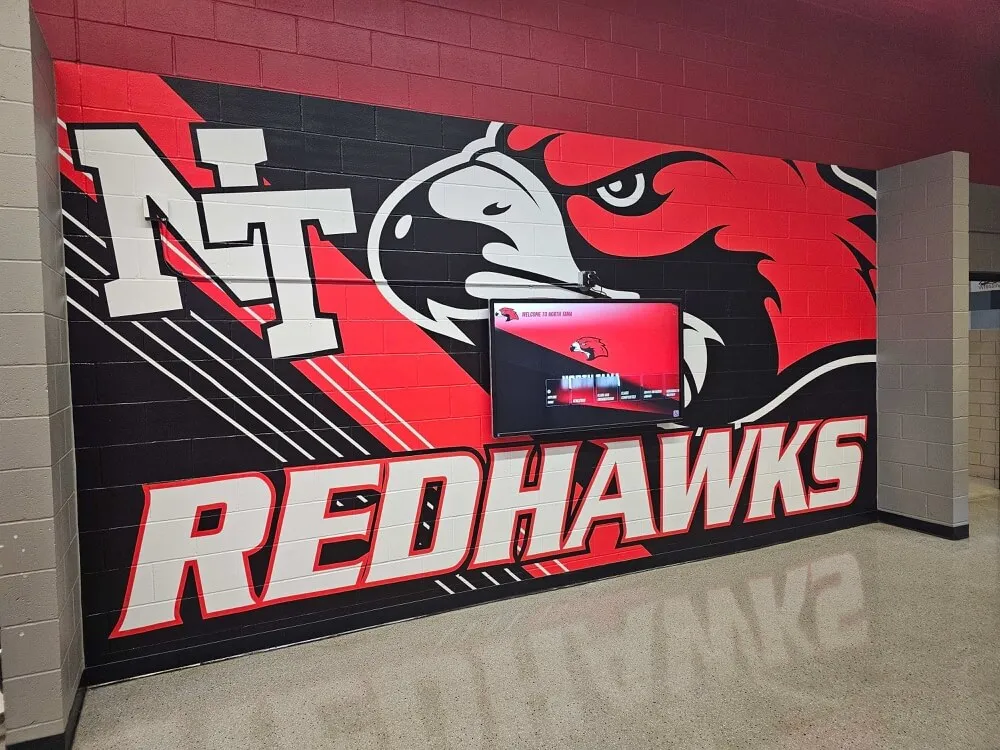
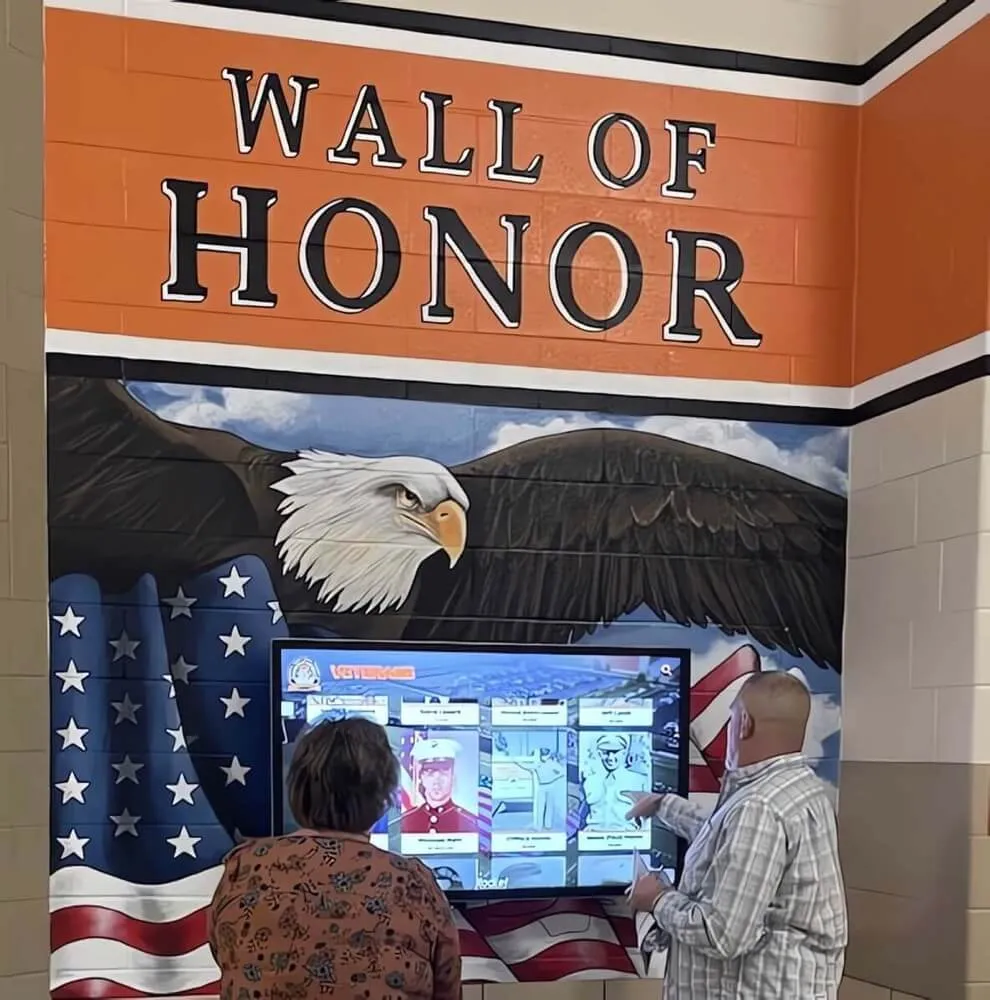
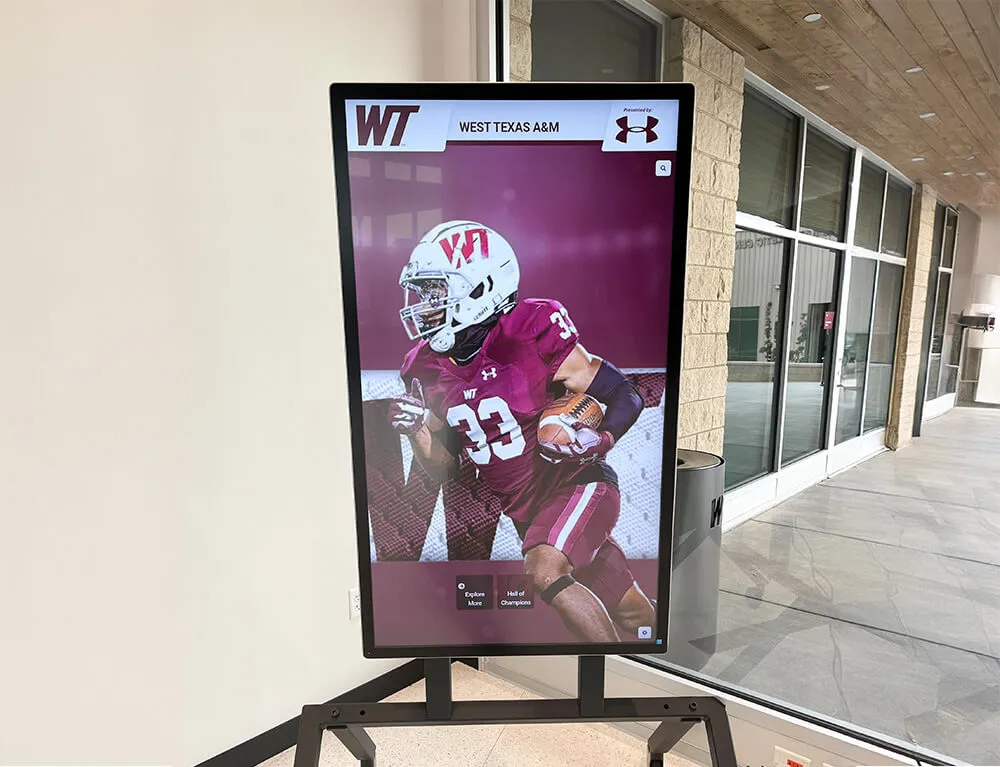
When recognition moves from the graduation stage to an interactive touchscreen display in the school lobby, the achievement becomes accessible to every visitor, student, and returning alumni—not just the audience present at commencement
Beyond the Ceremony: Preserving the Record of Academic Honors
The graduation stole appears for one morning. The achievement it represents took years to earn and belongs in a record that endures far longer than any ceremony. Forward-thinking schools understand that recognizing academic honors at commencement is only one dimension of a comprehensive recognition strategy—the other dimension is ensuring that achievement is documented and accessible in ways that serve students, families, alumni, and the school community for years to come.
The Limitation of Ceremony-Only Recognition
When honors recognition exists only at the commencement ceremony, significant information is lost. A student who graduated summa cum laude in 2014 from your school has no visible record of that distinction in the school’s current environment unless someone built a lasting documentation system. Parents who attended graduation that year remember the gold cords. The graduate remembers the walk across the stage. But the school itself may have no searchable, accessible record of who graduated with what distinction in which year.
This is a gap that grows more significant with time. A school that has graduated hundreds of honors students over the past decade has recognized remarkable academic achievement—but that achievement is scattered across old graduation programs, faded photographs, and individual memories rather than consolidated in any system that serves institutional purposes.
Honor Roll Documentation as a Starting Point
Schools that maintain careful honor roll records semester by semester are better positioned to build comprehensive graduation honors archives. When a student who appears on the honor roll every semester of their high school career walks across the stage in a gold cord, that moment is the culmination of a documented four-year record—and schools that have built that documentation know exactly who earned what and when.
Commencement planning is one of the many dimensions of honoring student achievement that benefits from careful advance preparation—alongside other graduation recognition elements like selecting a commencement speaker who reflects the community’s values.
Digital Recognition Platforms for Academic Honors
Schools and universities that want to build lasting recognition of academic honors beyond the graduation ceremony are increasingly turning to digital recognition platforms that create searchable, permanent profiles for distinguished graduates. These platforms solve the core problem of ceremony-only recognition: they make achievement visible and accessible beyond a single morning.
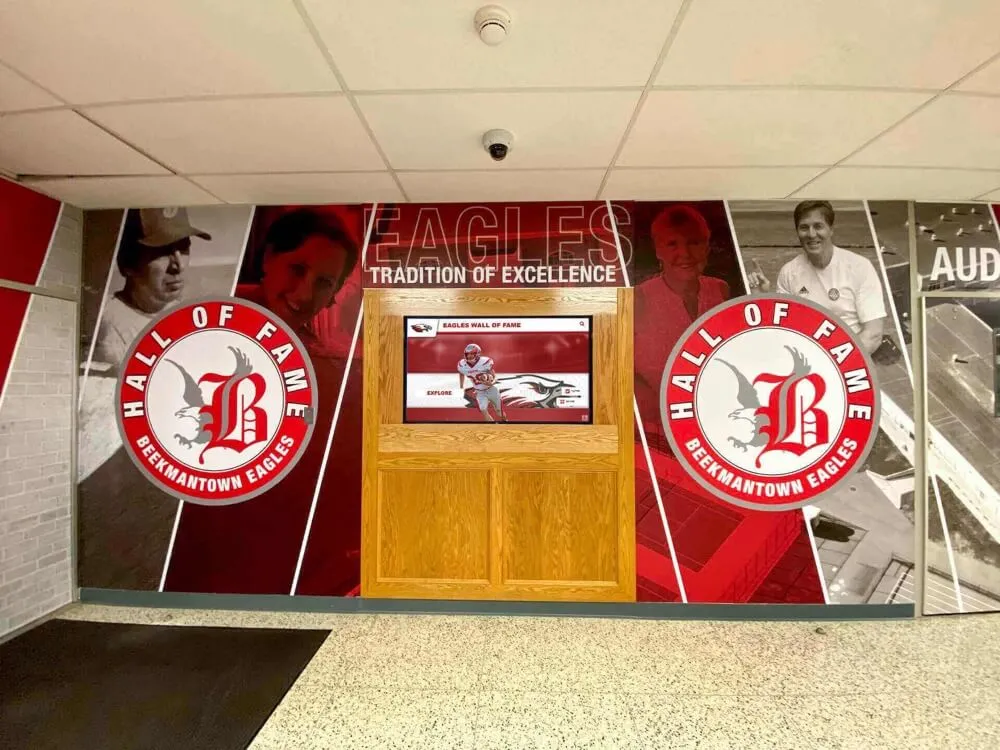
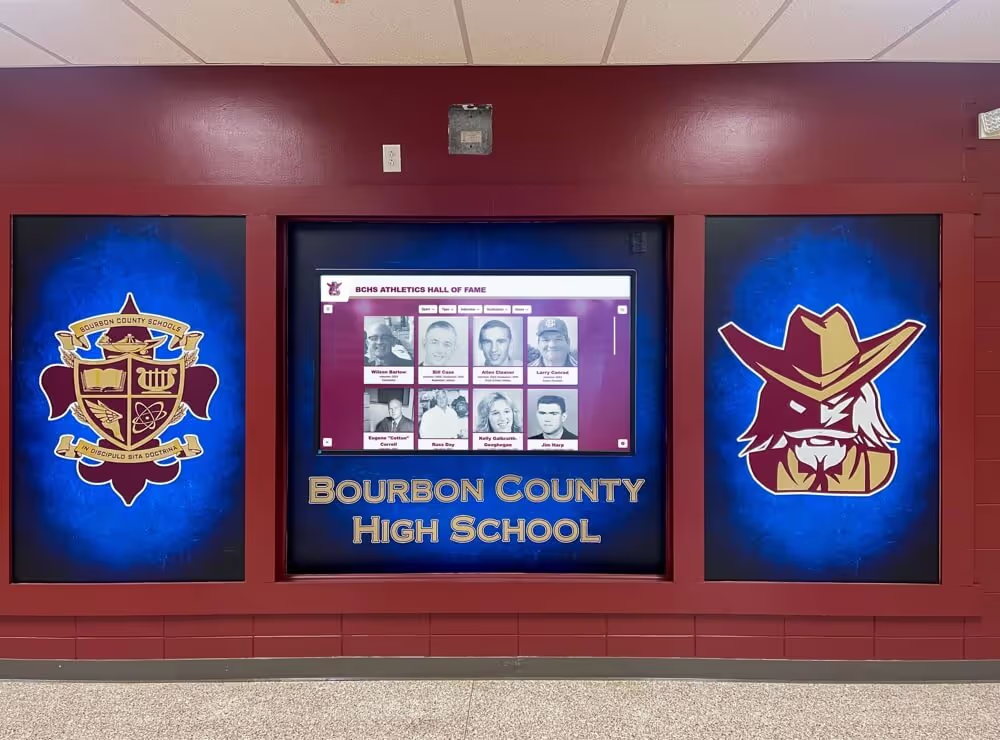
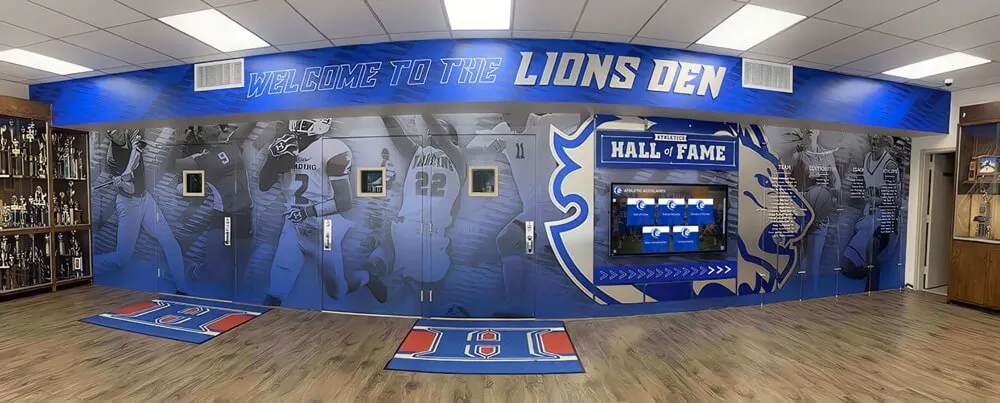
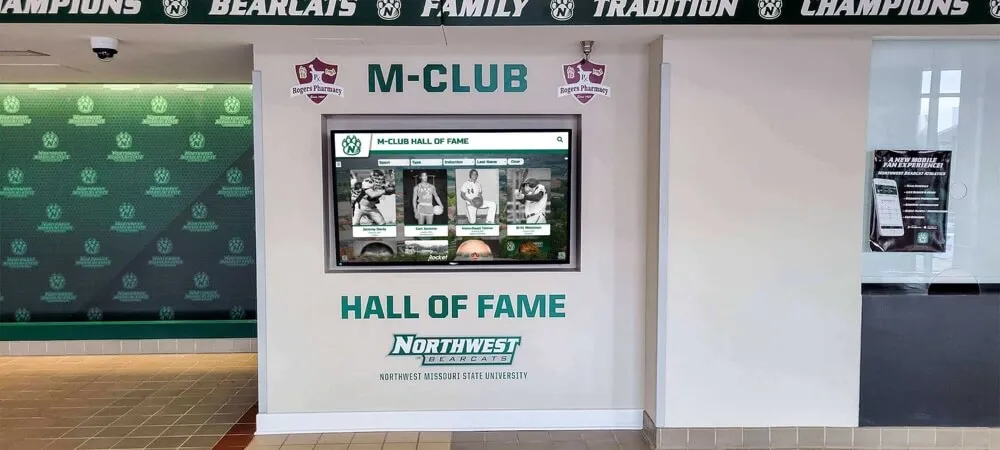
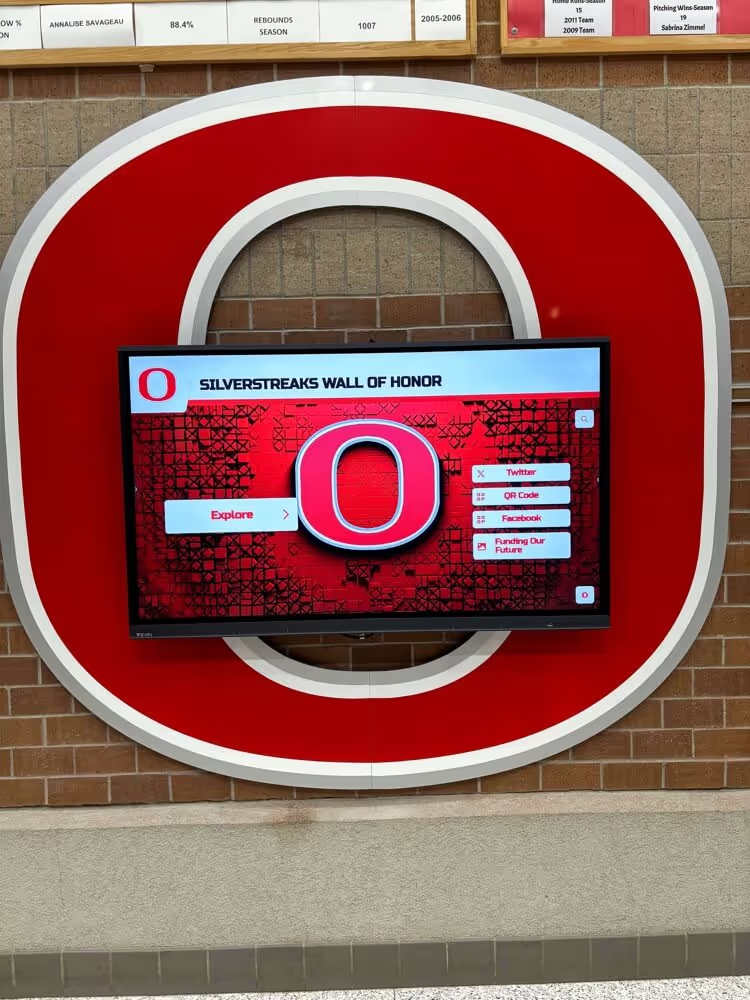
Rocket Alumni Solutions builds interactive touchscreen recognition systems that let schools display academic honors alongside athletic achievements, donor recognition, and organizational milestones—all within a single unified platform that lives in school lobbies, hallways, and commons areas where students, families, and visitors encounter it daily.
A digital academic honors display might include:
Graduating class honors rosters — searchable lists of every graduate who earned honors, high honors, or highest honors distinction in each graduating year, accessible to alumni decades later.
Valedictorian and salutatorian profiles — rich profiles recognizing the top academic finishers in each class, including photos, academic achievements, honor society memberships, and post-graduation destinations.
Honor society inductee archives — complete records of every NHS, subject honor society, and organizational honor society inductee since the school’s records begin, searchable by name, year, and distinction type.
GPA milestone recognition — some schools use digital platforms to recognize students who achieved perfect or near-perfect GPAs across their four-year careers, creating a distinct category within their academic honors display.
Understanding what touchscreen displays work best for school recognition environments is an important first step for schools planning to add digital recognition infrastructure. The right hardware and software combination ensures that academic honors displays are accessible, ADA-compliant, and easy for administrators to update each year as new graduates earn their stoles.
Schools that have built alumni legacy digital walls frequently expand these systems to include academic distinction archives—recognizing that a graduating class’s honors story is as much a part of institutional legacy as athletic championships or major donor gifts.
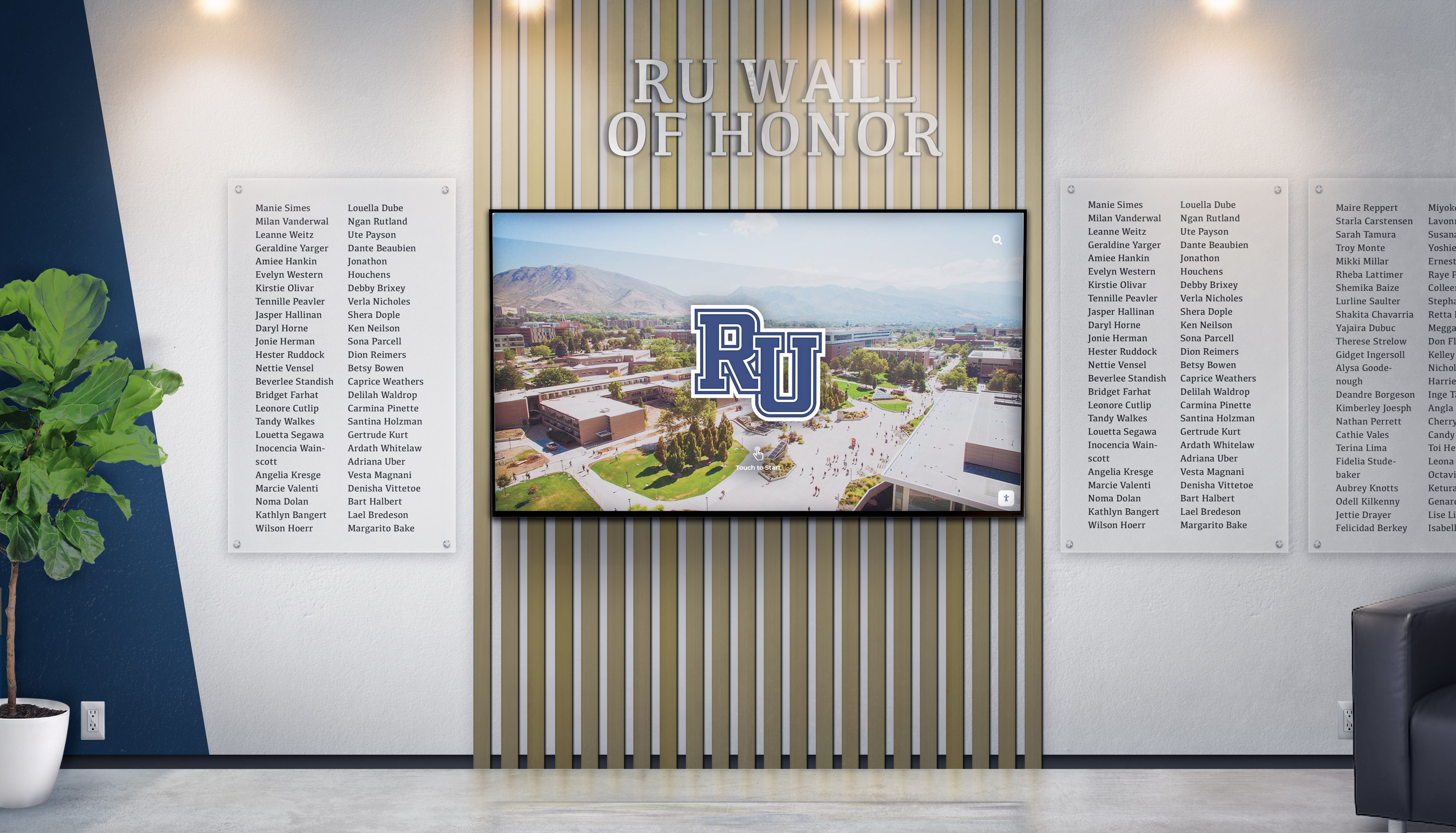
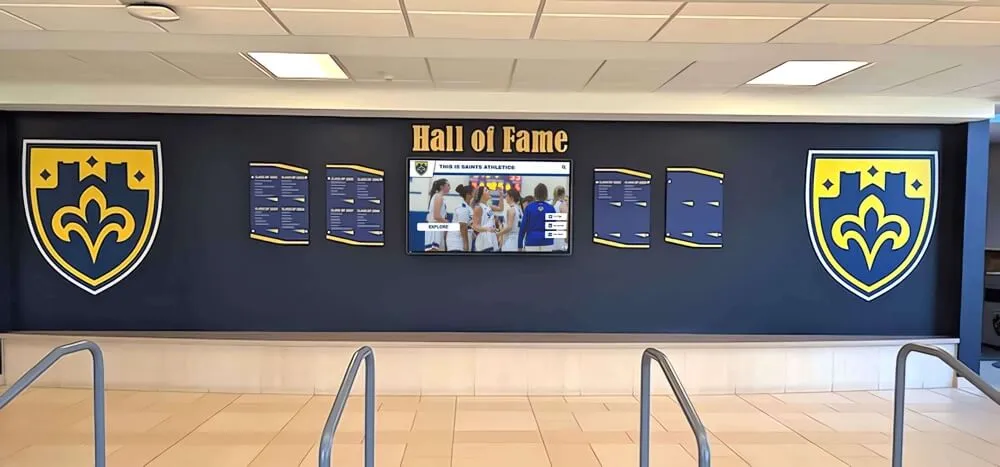
Digital name plaque displays translate the physical tradition of engraved recognition into an infinitely scalable format—adding a new class of honors graduates each year without running out of wall space
Connecting Graduation Honors to Broader Achievement Programs
Academic honors at graduation do not exist in isolation. They are the culmination of a recognition ecosystem that includes honor roll, honor society inductions, academic competitions, and departmental awards throughout a student’s school career. Schools that treat graduation honors as the final chapter of a longer story—rather than an isolated commencement-day event—create the conditions for a recognition culture that motivates students across all four years.
This connected approach extends to the many other forms of academic distinction that sit alongside honors graduation stoles: National Merit Scholarship recognition, departmental excellence awards, senior project distinctions, and competitive academic achievements all contribute to a complete picture of a graduating class’s academic story.

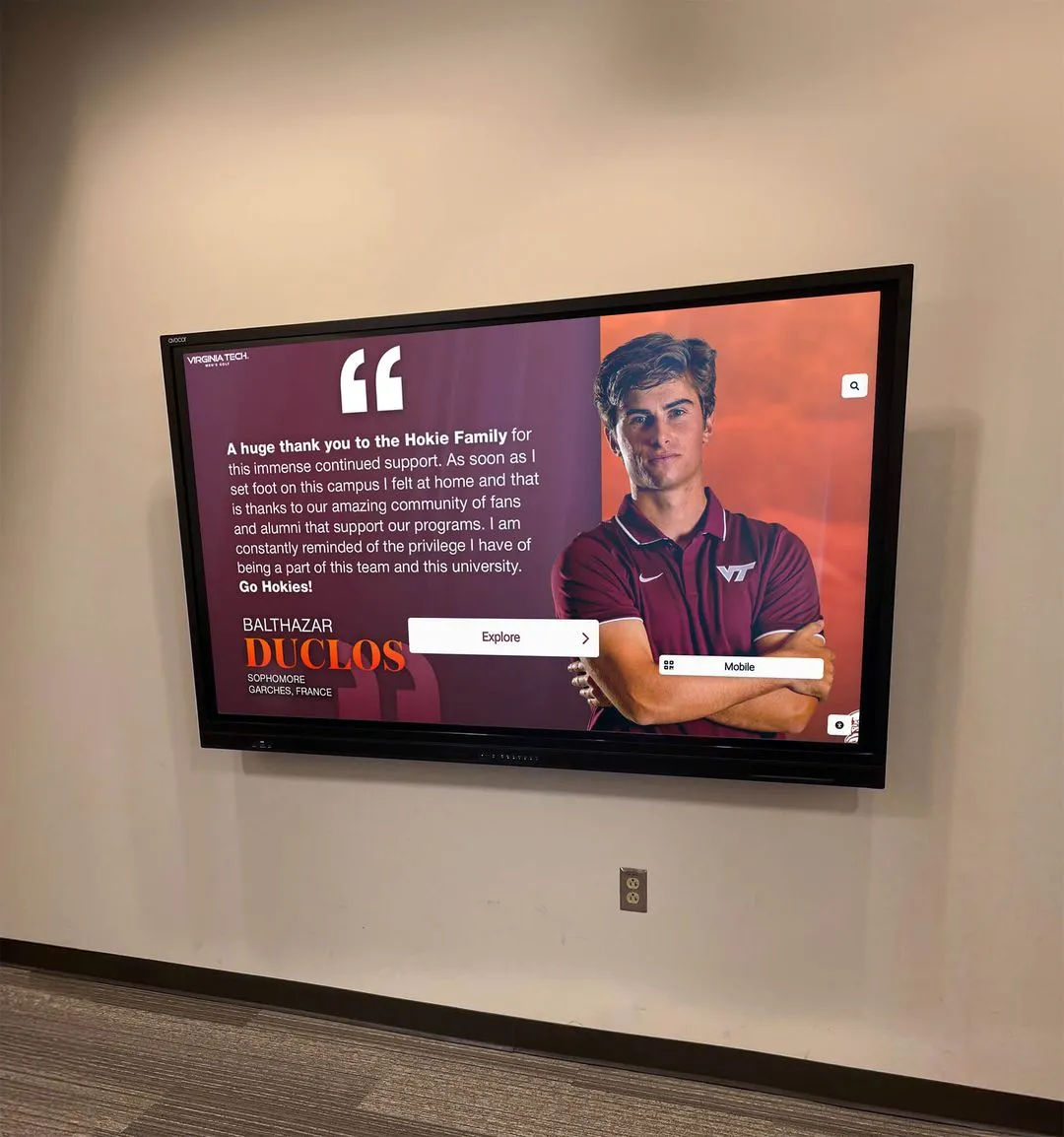
Recognition that spans graduation stoles, alumni portrait galleries, and digital displays creates a visible culture of excellence that current students aspire toward and alumni celebrate when they return
Frequently Asked Questions About Honors Graduation Stoles
What is the difference between an honor stole and an honor cord? A stole is a wide, flat fabric sash worn over the shoulders of the graduation gown, most often representing honor society membership. A cord is a narrow, braided or twisted accessory worn looped around the neck. Cords typically represent GPA-based academic distinction or honor society membership when a stole is not provided. Many graduates wear both simultaneously.
What does a gold cord mean at graduation? Gold cords most commonly represent the highest tier of academic distinction available at the institution—summa cum laude, valedictorian recognition, or membership in the school’s most prestigious academic honor society. Gold is the most widely recognized color for top-tier academic achievement across American schools and universities.
Can a student wear more than one stole or cord at graduation? Yes. Most schools permit graduates to wear all regalia they have legitimately earned. A student who earned NHS membership, graduated with high honors, and was inducted into the Spanish Honor Society might wear an NHS stole, a gold and blue GPA cord, and a purple-and-gold SHH cord simultaneously. The graduation program should list all active honors designations for the graduate.
Who decides what colors the honor cords are at my school? Individual schools and universities make their own decisions about which cord colors represent which distinctions. There is no national standard. Some schools adopt conventionally recognized colors (gold for highest honors); others choose colors tied to their school’s identity. The graduation program or counselor’s office is the authoritative source for what each color means at a specific school.
Do all colleges use Latin honors? Not all colleges and universities use Latin honors designations. Some institutions use a percentage-based system, a class-rank system, or discipline-specific honors criteria. Some highly selective institutions do not award Latin honors at all. Students at institutions that do not use Latin honors may still receive academic recognition through departmental honors, senior thesis distinctions, or other merit-based designations.
When do graduates receive their stoles and cords? Distribution varies by school and by regalia type. GPA-based cords are typically distributed during cap-and-gown pickup or at graduation rehearsal. Honor society stoles are often presented at the society’s induction ceremony and then worn again at graduation. Students should confirm distribution details with their school’s guidance office or graduation coordinator well before graduation day.
Are honors graduation stoles kept after the ceremony? Yes. Stoles and cords belong to the graduate and are typically kept as permanent mementos. Many graduates display their stoles with their cap and gown in shadow boxes, keep their cords with their diploma, or store regalia alongside other school memorabilia. The stole and cord serve as tangible reminders of an achievement that took years to earn.
Do high school students earn Latin honors designations? The formal Latin honors designations—cum laude, magna cum laude, summa cum laude—are most commonly used at college and university commencements. High schools typically use their own terminology (“honors,” “high honors,” “highest honors”) rather than Latin designations, though some schools do use the Latin terms. The underlying principle is the same: graduated achievement tiers tied to cumulative GPA thresholds.
Conclusion: The Full Meaning of Honors Graduation Stoles
Honors graduation stoles and cords are not accessories. They are statements. They represent the convergence of years of academic commitment, faculty recognition, and institutional validation—compressed into a visible emblem worn at the most public moment of a student’s educational career.
For students, earning the right to wear honors regalia is a milestone that affirms the choices they made: to take harder courses, to maintain high standards when it was easier not to, to contribute to honor societies and subject programs beyond what was required. The gold cord or the NHS stole communicates that those choices were noticed, evaluated, and formally recognized by the institution.
For schools, the culture surrounding honors graduation regalia—how it is awarded, how it is communicated, how it is presented at the ceremony, and how the records are preserved beyond graduation day—reveals something important about institutional values. Schools that invest in comprehensive, accurate, well-communicated honors recognition programs tell their students that academic excellence is genuinely celebrated here. Schools that make honors visible through the ceremony, through year-round recognition programs, and through lasting digital archives tell their alumni that the achievement documented by their stole or cord still matters—not just on graduation morning, but for as long as the school’s record endures.
The stole hangs in a closet or a shadow box. The achievement it represents belongs in a record that never gets dusty.
Build a Recognition System That Honors Academic Excellence Year-Round
See how interactive digital displays let schools showcase honors graduates, valedictorians, honor society inductees, and academic achievers in searchable, permanent profiles that families, students, and alumni can explore long after commencement day.
Explore Digital Recognition Solutions