



A player of the week recognition board makes weekly athletic achievement visible inside the school where it happened. But most programs run these honors the same way every week — announce the winner, post to Instagram, update a whiteboard or bulletin board, and move on. By next Friday the honoree has been replaced and the recognition has vanished. That record belongs somewhere permanent.
This guide explains how to structure a player of the week program that works week-to-week and builds into a searchable archive over time — turning forty weekly announcements per season into forty searchable athlete profiles that last for decades.
Intent: demonstrate how player of the week recognition boards can transition from ephemeral announcements into durable digital archives that schools search, browse, and celebrate for years.
A player of the week nomination is a small act of institutional memory. Done with discipline, it becomes something substantial — a complete record of who was recognized, for what, and when, going back as many seasons as the program has been running the honor. Done carelessly, it becomes a stack of social media screenshots nobody can search and nobody can find when someone asks who won in spring 2019.

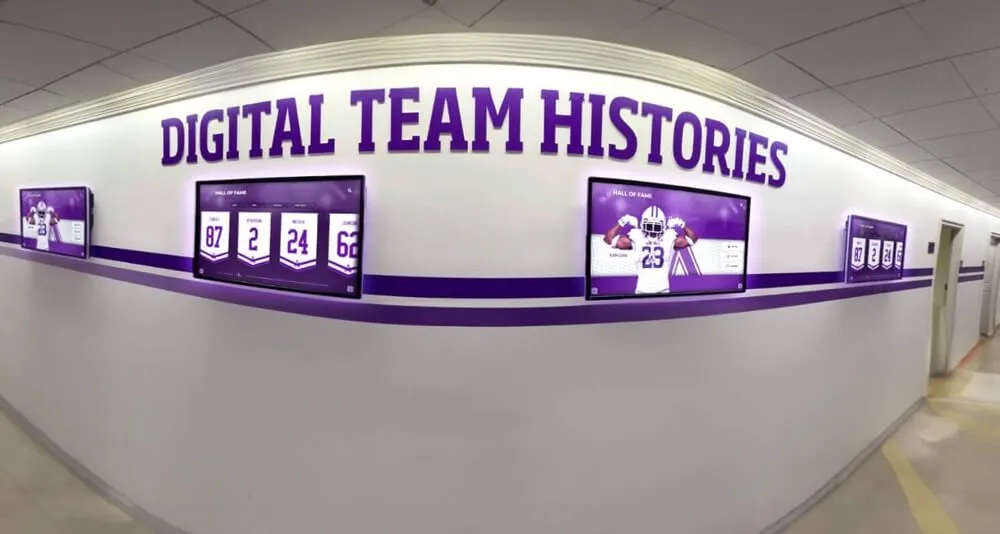
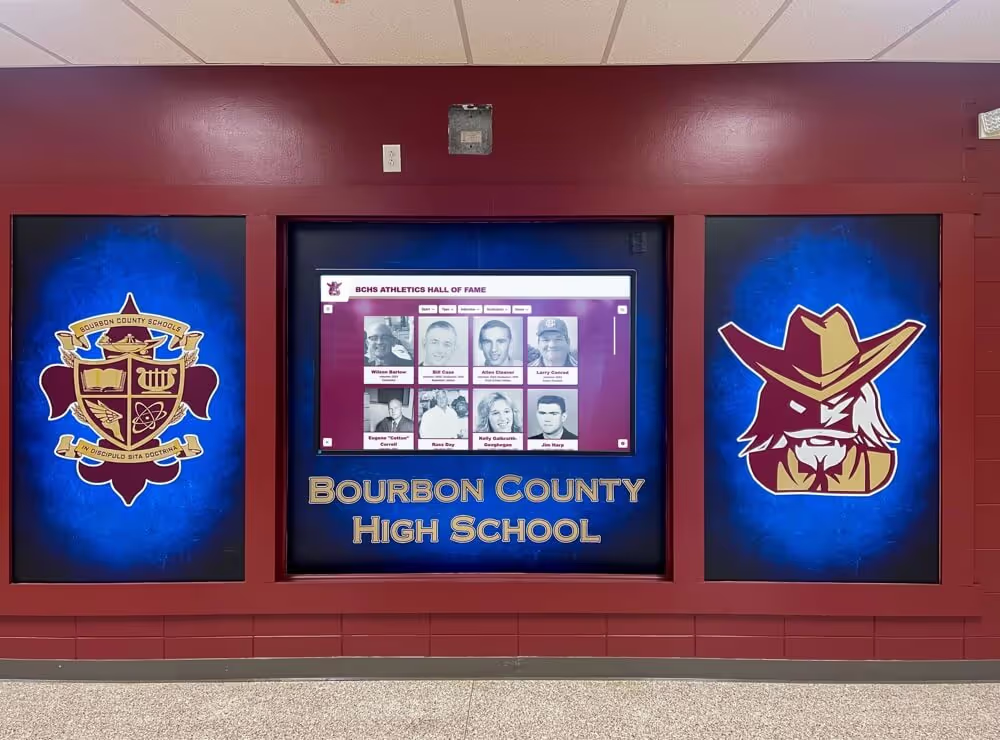
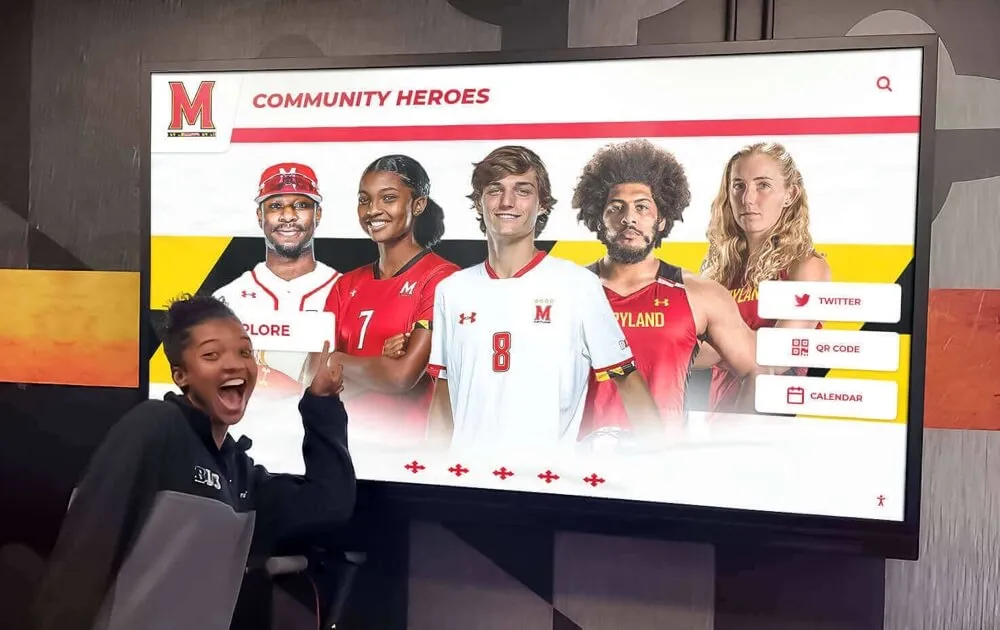
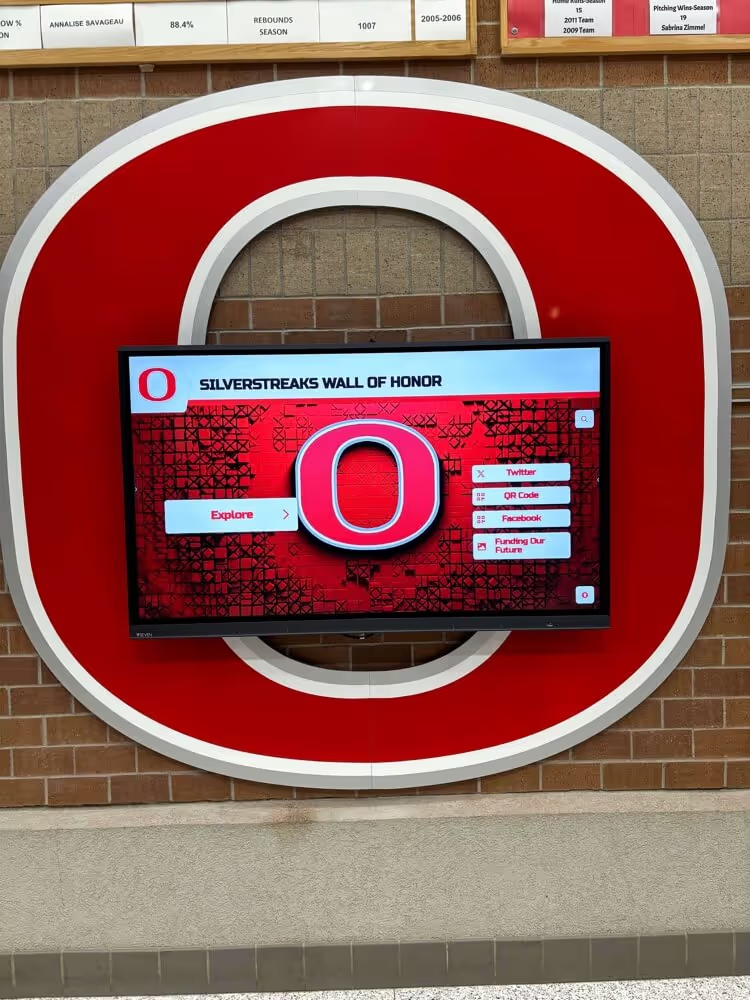
Individual athlete profile cards are the building block of a player of the week archive — the same photo, name, and performance details that appear in a weekly announcement become a permanent searchable record when properly organized
What Is a Player of the Week Recognition Board?
A player of the week recognition board is any system — physical or digital — that publicly displays the current or recent weekly honoree in a school athletic program. At minimum it shows a name and photo. More developed programs include the sport, the week’s performance statistics or qualifying achievement, the date, and a brief note explaining the selection.
The key distinction between a recognition board and a recognition archive:
| Format | Current Content | Historical Access | Searchable | Update Method |
|---|---|---|---|---|
| Whiteboard / bulletin board | This week only | None | No | Manual, in-person |
| Social media post | This week (then buried) | Scrollable but not searchable | No | Post weekly |
| School website announcement | Rolling recent winners | Limited | No | Manual CMS entry |
| Digital recognition platform | Current honoree | Full archive | Yes | Remote cloud update |
The goal of this guide is to show how to build toward the fourth option — or how to extract archive value from the first three.
Why Weekly Honors Compound in Value Over Time
A single player of the week recognition has modest impact. Forty recognitions across a season add up to a meaningful record. Forty recognitions per sport, across ten sports, across five seasons, becomes an institutional record that no physical board can hold — but a digital archive holds without limit.
What accumulates when weekly honors are properly archived:
- A complete record of which athletes were consistently recognized across their careers, separate from end-of-season awards
- Documentation of performance peaks across different sports in the same time period, useful for multi-sport athletes
- Evidence of program momentum — recognitions in winning seasons versus rebuilding years tell a story no single trophy communicates
- Alumni touchpoints — graduates searching their name in a school archive find their recognition preserved alongside career statistics
Academic recognition programs that track honors over time follow the same compounding logic: each recognition is modest in isolation, but the archive becomes irreplaceable.
Schools that have maintained consistent player of the week archives frequently discover those records matter most during milestone moments — anniversary seasons, alumni events, coaching tenure celebrations — when program history becomes the focus.
How to Structure a Player of the Week Program for Archive Value
Building a recognition program with archive value in mind does not require additional effort each week. It requires front-loading decisions about what to capture and where to store it.
Step 1: Define the Selection Criteria in Writing
Consistent selection criteria make the archive defensible and searchable. If one week the honoree is selected for a single-game statistical performance and the next week for season-long improvement, the records are incomparable.
Effective player of the week criteria structures:
- Performance-based: a specific statistical threshold (two or more wins in a week, 20-plus points in a game, five or more assists)
- Achievement-based: a specific milestone (season record broken, personal best set, first varsity start)
- Character-based: a separate category for effort, leadership, or academic-athletic balance — useful for programs running both athletic and character recognition tracks
- Sport-specific: separate criteria per sport, published at the start of each season
Document the criteria in a shared file, not in the selector’s memory. The criteria become part of the archive — future reviewers can understand why someone was selected without reconstruction.
Step 2: Capture the Right Data at the Point of Selection
The information worth capturing when the selection is made:
- Full name and graduation year
- Sport and team level (varsity, JV, freshman)
- Week of recognition (specific date range)
- Performance or achievement that qualified the athlete
- Photo: ideally a high-resolution roster headshot, or at minimum a quality action photo
- Selector name and title (coach, athletic director, or selection committee)
Minimum data set for a searchable archive:
| Field | Required | Format |
|---|---|---|
| Athlete name | Yes | Last, First |
| Graduation year | Yes | YYYY |
| Sport | Yes | Standardized list |
| Recognition date | Yes | YYYY-MM-DD |
| Achievement note | Yes | 1–3 sentences |
| Photo | Strongly recommended | High-resolution headshot |
| Nominating coach | Recommended | Full name and title |
Graduation year is worth emphasizing: it is the common denominator that links every recognition record across an athlete’s career. A search for “Class of 2021” should return every weekly honor, every award, and every record set by that graduating class.
Step 3: Choose a Storage Format That Scales
Most programs store player of the week records in one of three places — none of them designed for long-term retrieval:
- Social media: posts are theoretically permanent but practically unsearchable; account changes break the record
- Athletic department email threads: recognition nominations exist as attachments with no index
- Physical binder or printed sheet: survives in a cabinet until it doesn’t
A spreadsheet maintained by the athletic department is a meaningful upgrade: date, athlete name, sport, and achievement note in columns with photos filed separately using a consistent naming convention. A spreadsheet is searchable, portable, and can be imported into a recognition display platform later.
The ceiling for archive value, however, is a platform designed to hold structured recognition data alongside media — profile photos, action images, biographical notes, and performance statistics in a format visitors can browse and search.

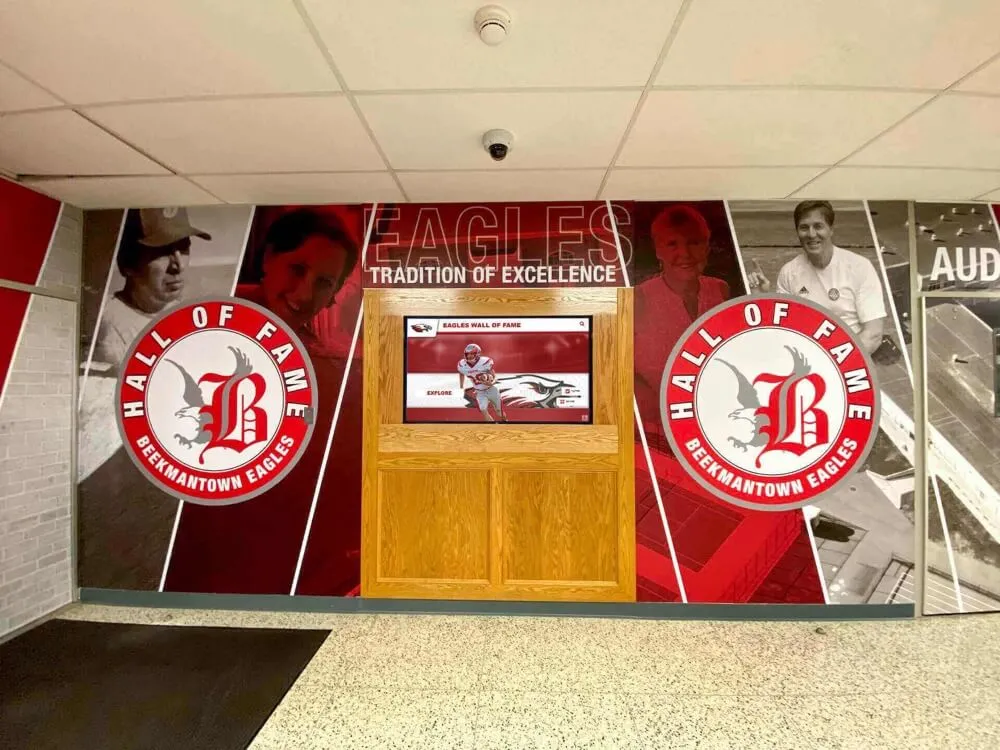
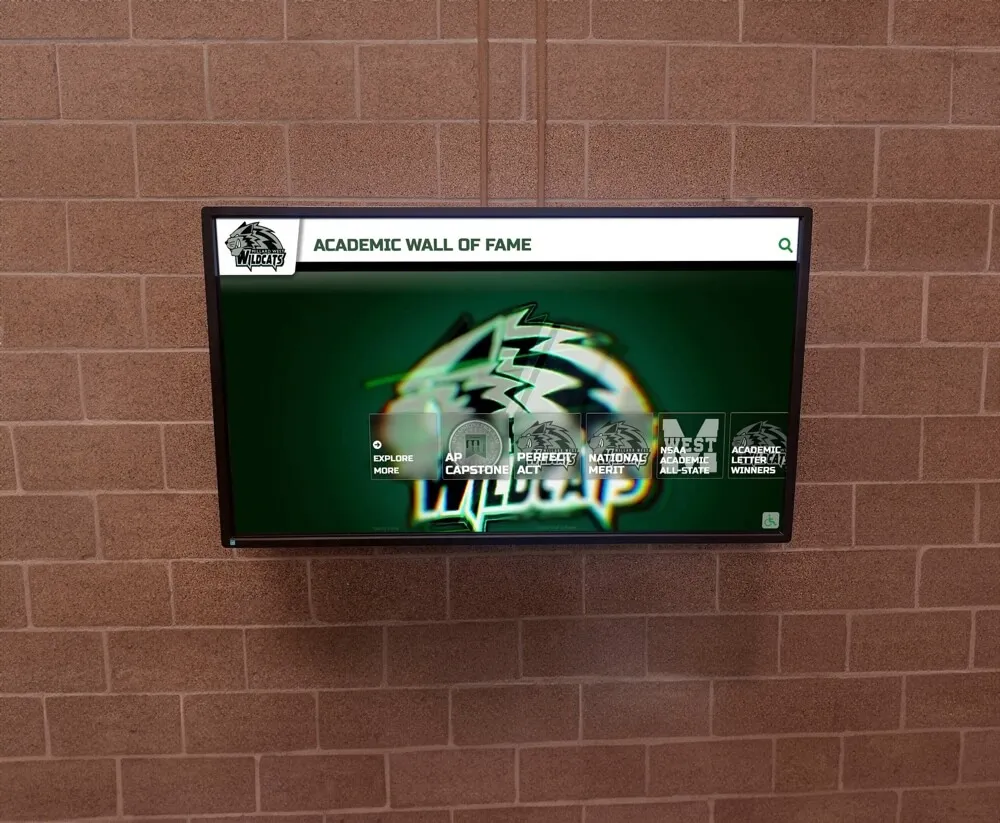
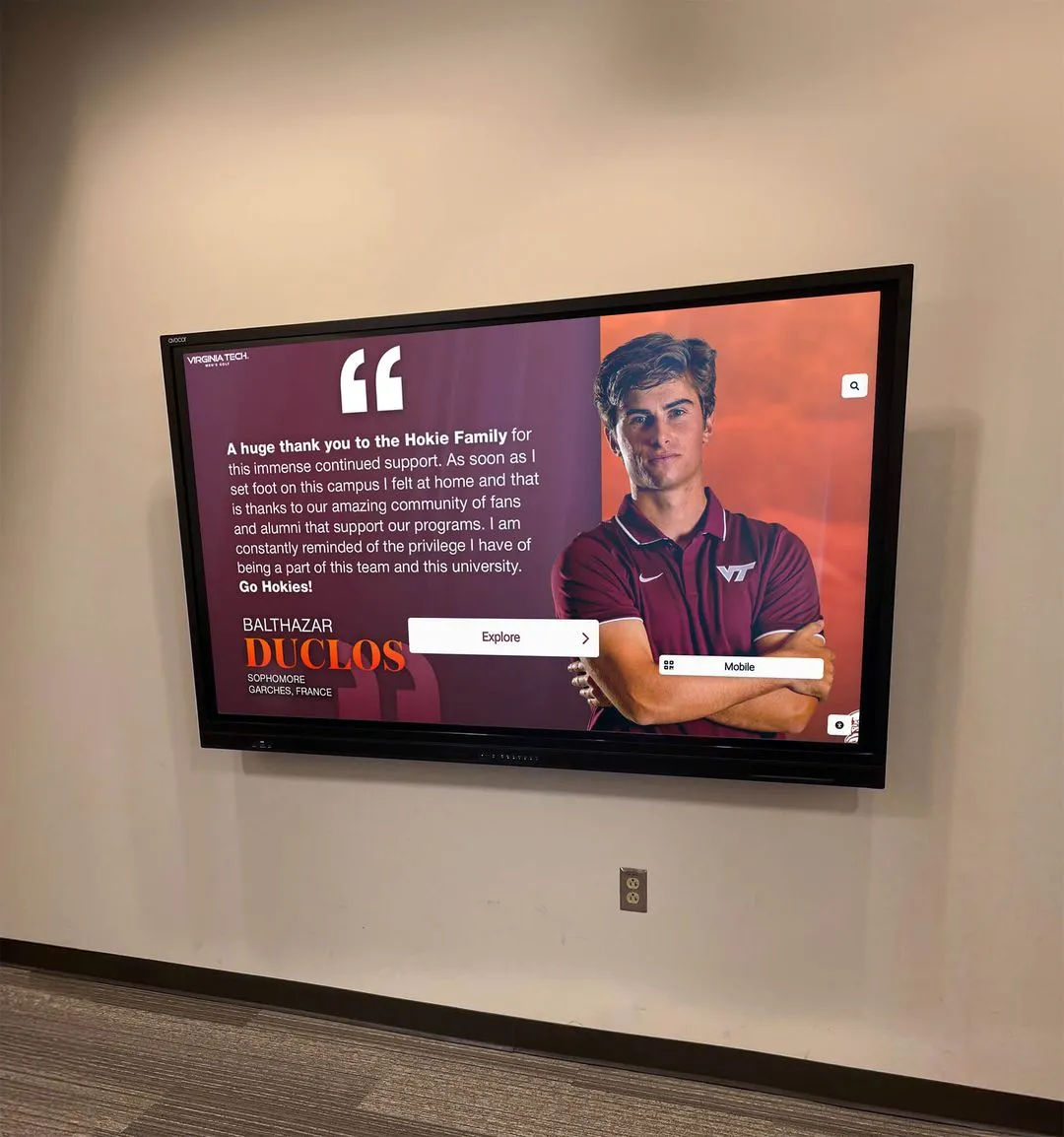
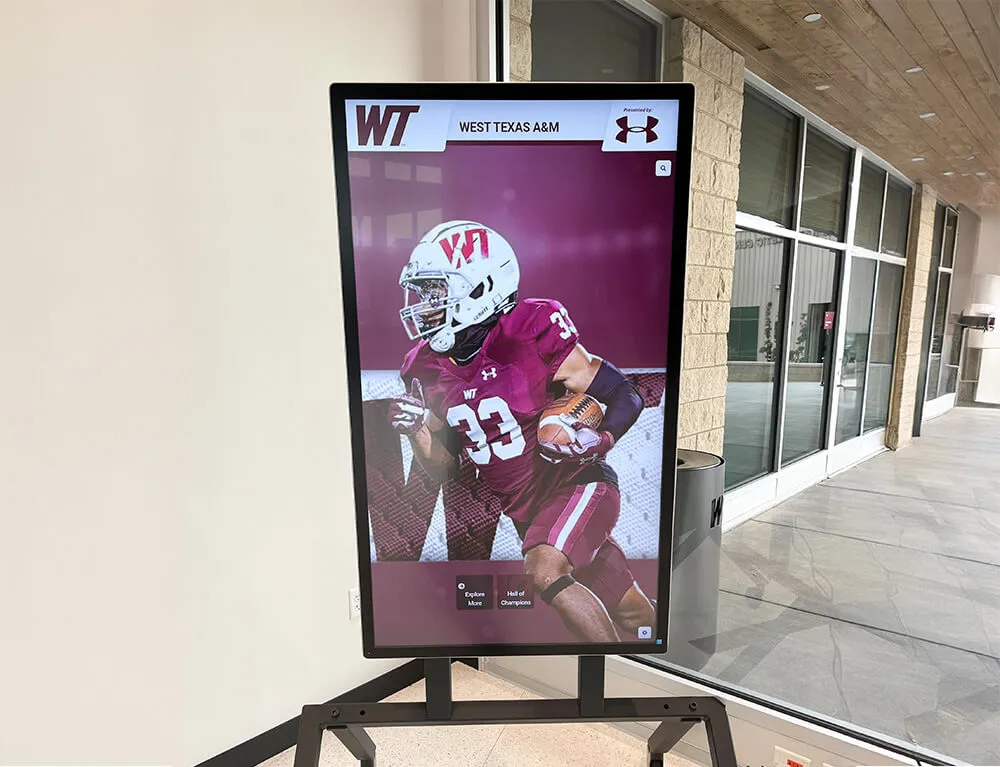
Digital recognition platforms store each player of the week honoree as a searchable profile card — visitors filter by sport, year, or name rather than scrolling through social media posts
Step 4: Publish to a Visible Location Each Week
The recognition only functions as recognition if it is seen. The platforms in descending order of visibility for school audiences:
- Physical display in athletic hallway or lobby — seen by athletes, coaches, parents, and visitors every time they walk through; no device required
- Athletic website or announcement page — searchable, shareable, accessible to families and alumni off campus
- Social media — high immediate reach, low long-term value for archive purposes
- Email announcement to program — reaches the team directly but does not contribute to institutional record
Strong programs use all four, but the physical display and the website entry are the ones that persist. Social media alone is the weakest foundation for an archive.
Step 5: Transfer Weekly Records to the Long-Term Archive at Season End
The season-end archive transfer is the step most programs skip. At the conclusion of each season, all weekly recognition records should be:
- Confirmed complete (every week accounted for)
- Added to the master archive with correct metadata
- Photos filed in the athletic department’s centralized photo storage
- Cross-referenced with any end-of-season awards the athlete also received
This seasonal transfer takes less than two hours for a full season of weekly records. Programs that do it consistently build complete multi-year archives; programs that skip it spend hours searching for records when they are needed.
Turning Social Posts Into Durable Profiles
Many schools already have years of player of the week records living in social media posts — Instagram, Twitter/X, Facebook — with photos and achievement notes attached. Those records can be migrated.
Recovery process for social-media-based archives:
- Export or screenshot every player of the week post organized by account and date
- Create a spreadsheet with athlete name, sport, date, achievement note extracted from the caption, and photo saved locally
- Identify gaps where posts were deleted, accounts changed, or no photo was included
- For identified athletes, request current or archived headshots from the athletic department photo archive
- Enter complete records into the master recognition spreadsheet or digital platform
The migration is not complicated — it is time-consuming. Assign it to a manager, intern, or administrative staff member as a defined project with a completion deadline. Programs that complete this migration frequently describe the result as a significant institutional discovery: the record of who was recognized, and how consistently, is more substantial than expected.
Academic achievement awards and recognition records at the high school level face the same recovery challenge — and the same opportunity when the migration is completed.
Physical Recognition Boards vs. Digital Archives
A physical player of the week board — a framed display case, a magnetic whiteboard panel, or a printed insert in a hallway recognition system — handles the real-time recognition function well. It requires no login, no device, and no power beyond the lights already on. Students and visitors see the current honoree without friction.
What a physical board cannot do:
- Store more than the current week without expanding indefinitely
- Allow a parent to look up whether their child was recognized three years ago
- Let alumni search their own recognition history during a school visit
- Auto-update when the new honoree is selected without in-person action
- Connect weekly honors to season statistics, graduation year, or hall of fame status
A digital recognition platform solves these limitations without replacing the physical board — it extends the recognition into a permanent, searchable layer alongside the in-person display.
Tools designed for athletic hall of fame management and recognition programs consistently recommend a hybrid approach: real-time physical visibility backed by a digital archive that grows over time.

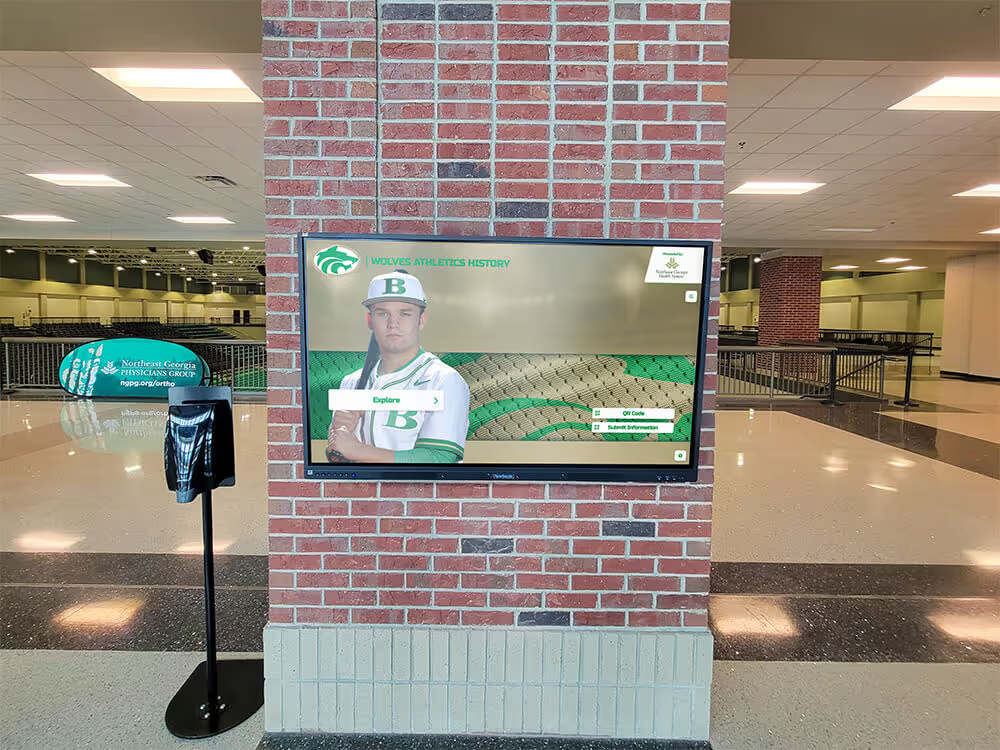
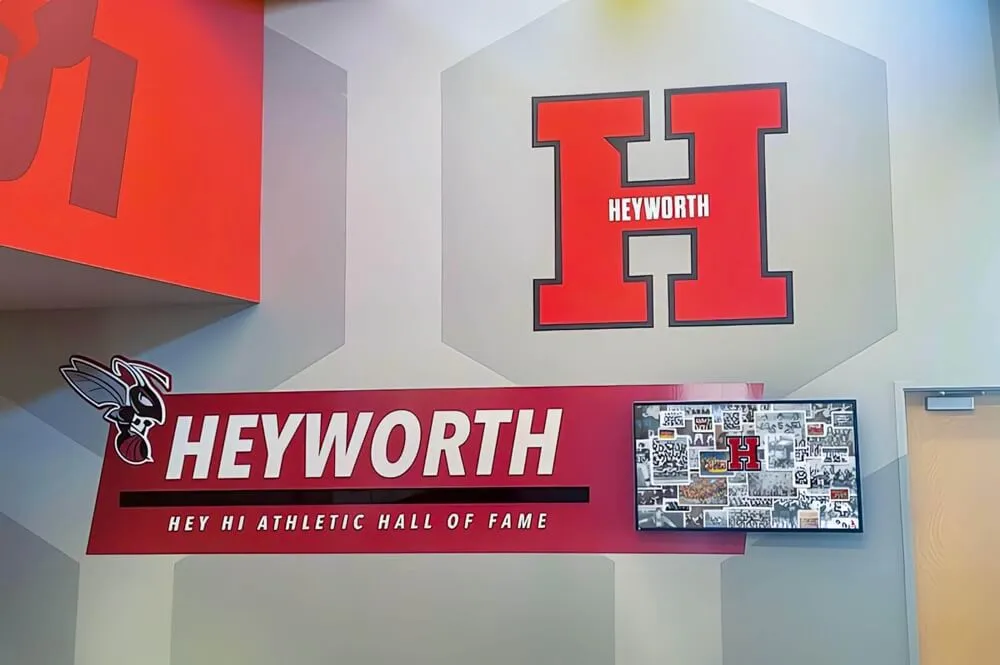
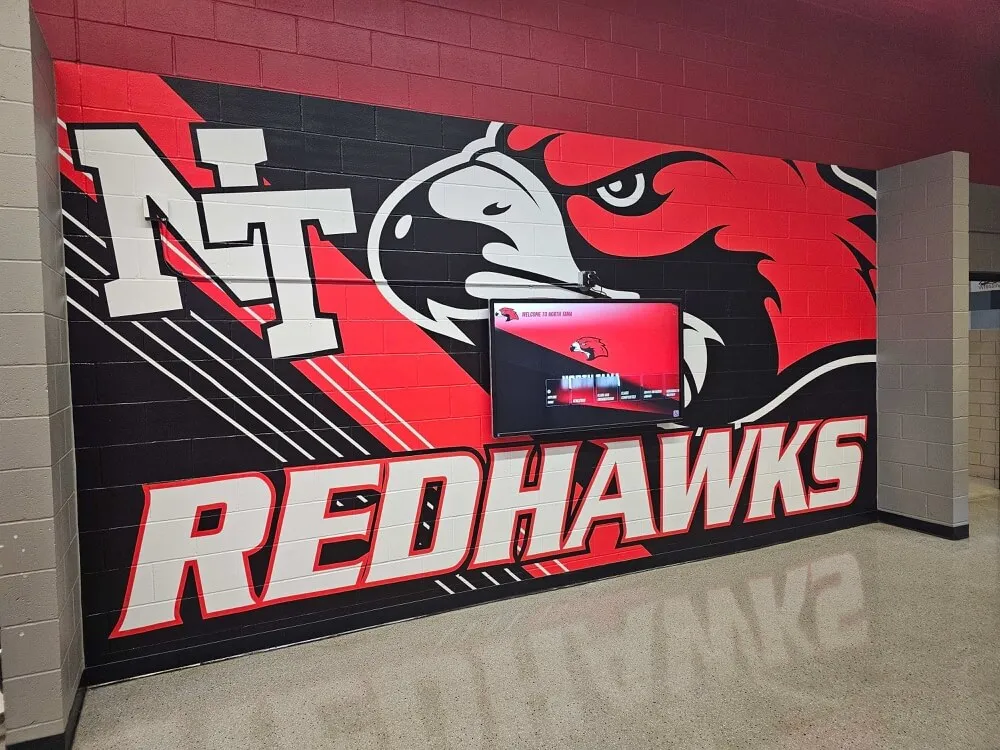
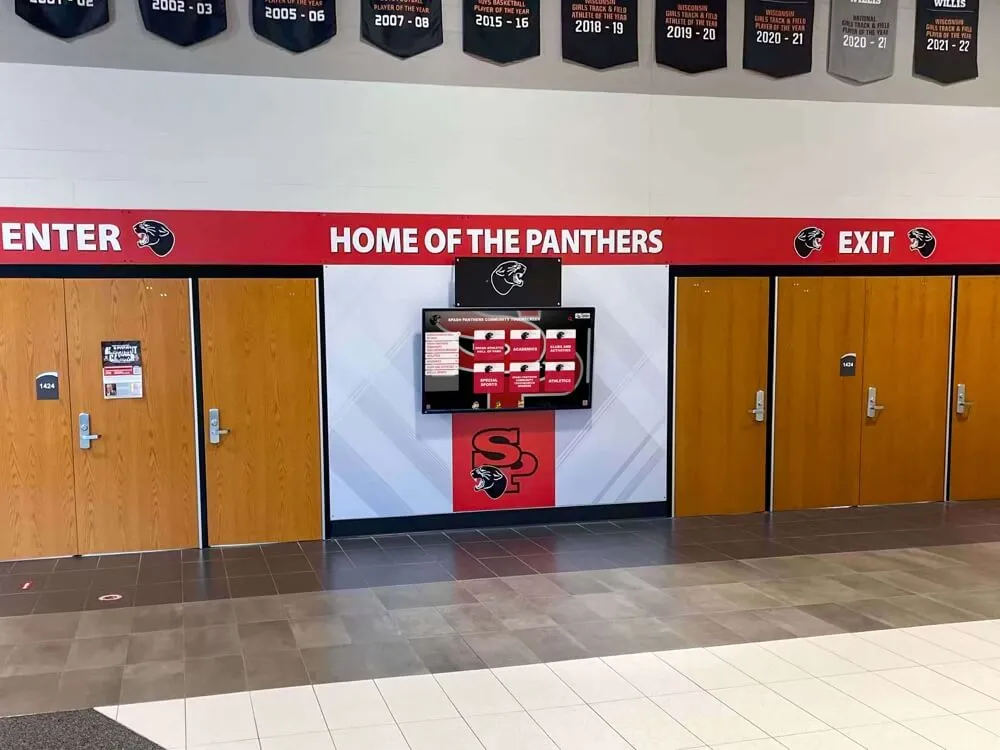
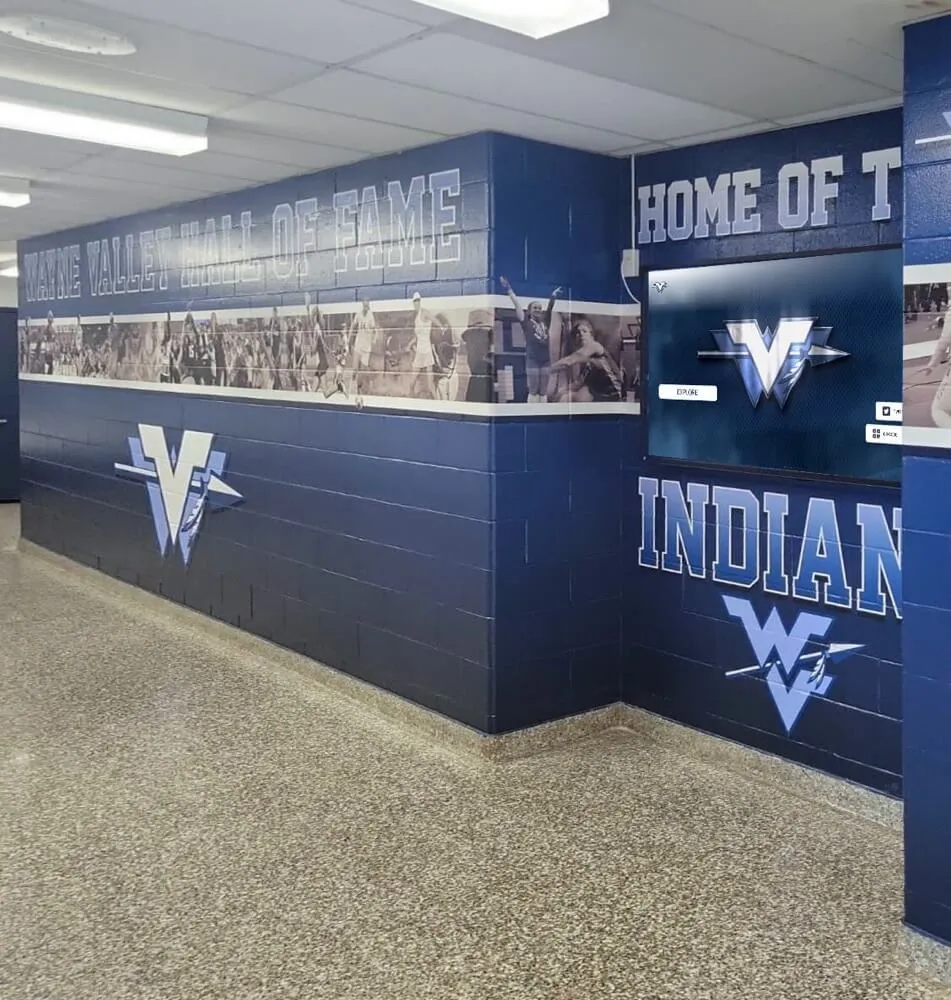
Digital displays in athletic hallways show both current recognition and archived records — visitors see this week's player of the week honoree and search the full history of the program from the same screen
Making Player of the Week Records Searchable
A searchable player of the week archive has two components: a structured data set and a front end that allows filtering. The data set is built by consistently capturing the fields listed in Step 2. The front end depends on the platform.
Searchable fields that matter most for player of the week archives:
- Name: the most common search — alumni looking for themselves or a former teammate
- Sport: allows parents and coaches to filter to their specific program’s history
- Year or season: supports anniversary browsing (“who won player of the week in the 2018–19 basketball season?”)
- Graduation year: links recognition to the class year, enabling class-reunion-style browsing
Advanced digital recognition platforms add:
- Photo search (browsable by headshot rather than text-only)
- Statistical sort (filtering for recognitions tied to specific performance levels)
- Multi-award cross-reference (showing which athletes appeared as both weekly honoree and end-of-season award winner)
Hall of fame management tools evaluated for athletic and academic programs typically support all of these search dimensions — they are designed with archive depth in mind rather than only current-week display.
Connecting Weekly Honors to End-of-Season Awards
Player of the week recognition is most powerful when it feeds into — rather than runs parallel to — the end-of-season award ecosystem. Schools that connect these two recognition tracks create a coherent record:
- An athlete who earned multiple weekly honors in the same season is visibly on track for MVP or Most Improved recognition
- The archive demonstrates which athletes were consistently recognized, not just who peaked in one week
- Coaches reviewing the historical record can see whether this year’s award nominations are consistent with the program’s recognition history
Connecting the record:
- Track cumulative weekly honor counts in the athletic department spreadsheet alongside end-of-season award data
- Reference weekly honor history in awards banquet remarks (“this player earned four player of the week recognitions before receiving tonight’s MVP award”)
- Surface the connection on the recognition display — the athlete’s profile shows both weekly honors and season awards under a single profile
Digital awards display platforms for high school athletic programs increasingly support multiple recognition categories on a single profile — making the connection between weekly and seasonal honors visible without manual cross-referencing.
Building Toward a Hall of Fame With Weekly Honor Records
The most committed programs treat player of the week archives as early-stage hall of fame documentation. An athlete’s weekly recognition history, combined with season statistics, career achievements, and post-graduation record, becomes the core data set for a future hall of fame induction profile.
This is a long-horizon investment. A school that starts capturing weekly honors consistently in 2026 will have a ten-year player of the week archive by 2036 — exactly when those graduating classes become eligible for hall of fame consideration. The difference between a school with that archive and one without it is the difference between a hall of fame induction based on documented achievement and one based on what the nominating coach can remember.
School reunion planning and milestone event programming frequently surface the same gap: institutions with consistent recognition archives produce detailed tribute materials; institutions without them rely on yearbooks and luck.
Comprehensive guidance on building recognition archives for school athletics programs covers the full spectrum from initial data collection to display implementation — a useful framework for programs evaluating their current archive status.
How Rocket Alumni Solutions Supports Player of the Week Archives
Rocket Alumni Solutions’ digital recognition platform is built to hold exactly this kind of record: structured, searchable athlete profiles that accumulate over time. The platform supports:
- Unlimited honoree profiles: no cap on how many athlete records the archive holds — a school with 40-plus recognitions per sport per season adds entries without capacity constraints
- Remote cloud CMS: athletic staff update the player of the week from any device without on-site access — the display updates immediately
- Searchable profile database: visitors filter by name, sport, year, or graduation class directly on the touchscreen or via QR code on their phone
- Photo and media attachment: each weekly honor profile holds headshots, action images, and career notes alongside the performance data
- Auto-ranking record boards: when weekly honors connect to statistical records, the platform ranks and displays records automatically — no manual sort required
- ADA WCAG 2.1 AA compliance: touchscreen displays meet accessibility standards out of the box, with adjustable text size and high-contrast modes
- Professional installation in 2–4 weeks: the physical display goes in the hallway, the digital archive is live, and staff are trained before the next recognition cycle
The platform removes the barrier that keeps most player of the week archives shallow — update friction. When the update is remote and takes under five minutes, programs update it every week rather than every few weeks when someone remembers.

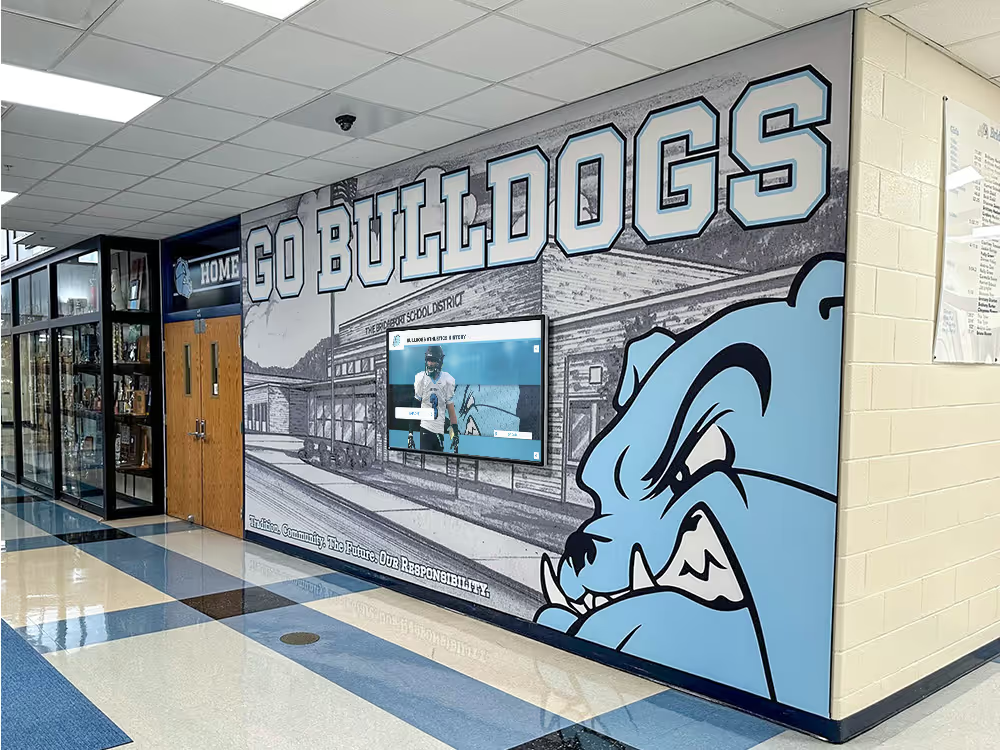
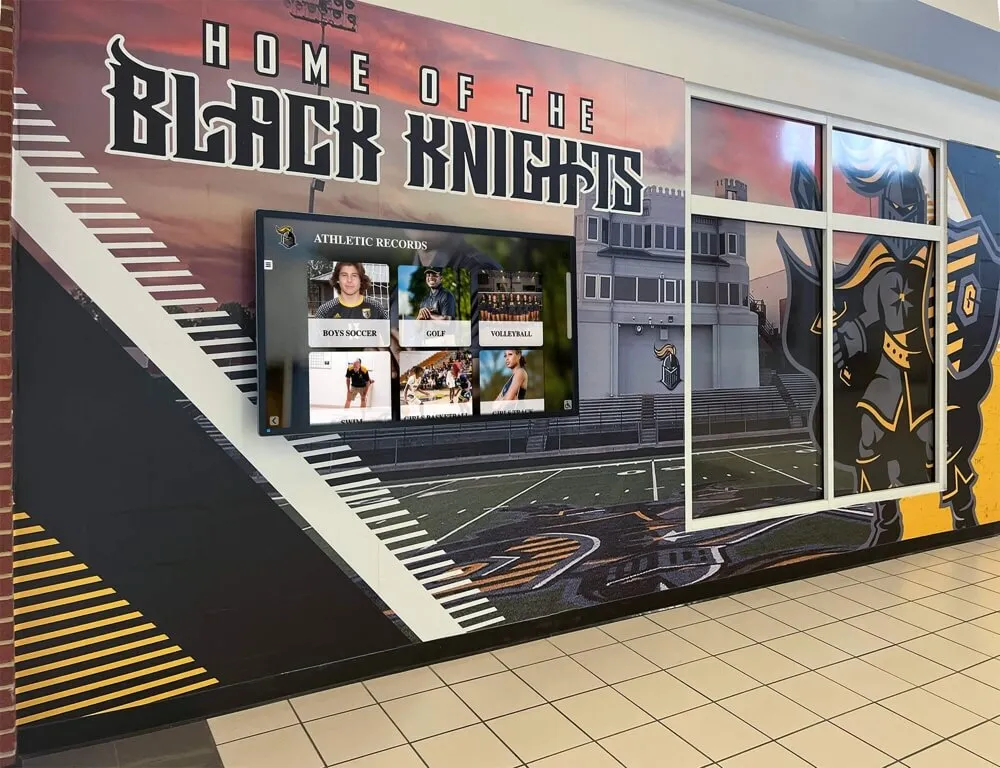
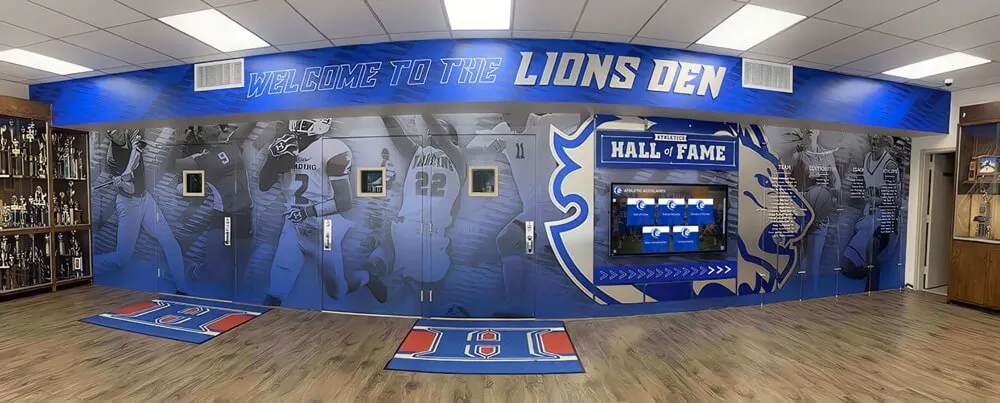
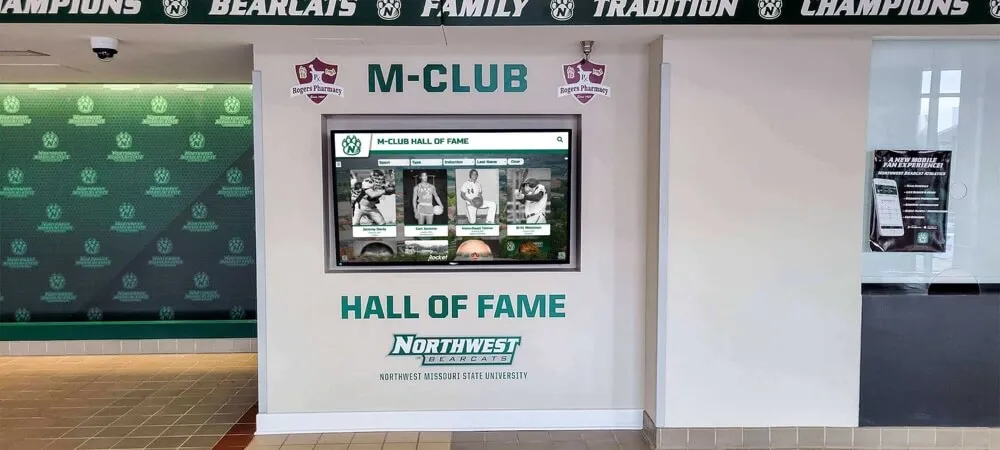
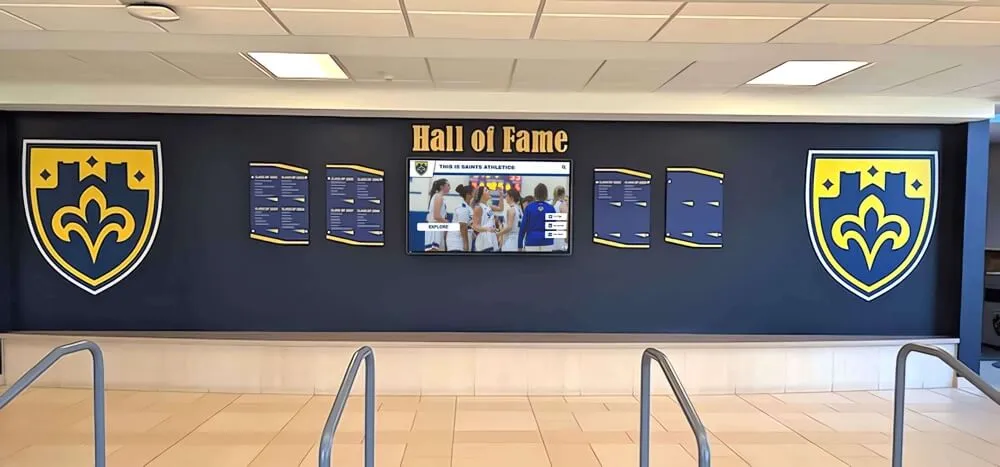
Interactive touchscreen kiosks installed in school lobbies and athletic hallways display current player of the week honors alongside a full searchable archive — visitors browse the entire recognition history from a single screen
Hall of fame tools evaluated across athletic, donor, and arts recognition categories consistently flag update burden as the reason most school recognition archives fall behind — remote cloud management directly addresses that failure mode.
Player of the Week Archive Checklist
Use this checklist to assess your current program and identify the highest-impact improvements:
Data capture:
- Selection criteria are documented in writing, not held informally
- Each recognition includes athlete name, graduation year, sport, date, and achievement note
- A high-resolution photo is captured or retrieved for each honoree
- Records include the nominating coach or selector by name
Publication:
- A physical display shows the current honoree in a high-traffic location
- Weekly honors are added to the school athletic website or announcement system
- Social media posts include consistent metadata (sport, achievement note, hashtag) for future recovery
Archiving:
- A master spreadsheet or platform holds all weekly records in one searchable location
- End-of-season archive transfer is scheduled and completed before the following academic year
- Photos are filed with consistent naming conventions alongside the record entries
- Records cross-reference end-of-season awards where applicable
Long-term:
- Archive goes back at least three seasons for each active sport
- Alumni can search their own recognition history from the athletic website or a display platform
- Records feed into hall of fame nomination documentation when applicable
Frequently Asked Questions
How should a school start a player of the week recognition board from scratch?
Start with three decisions: who selects the honoree (head coach, selection committee, or athletic director), what criteria qualify an athlete (performance, achievement, or character), and where the record will be stored (spreadsheet minimum, digital platform for full archive value). Announce the first honoree, photograph them against a consistent background, and file the record. Week two is easier than week one; week forty is automatic.
How far back can a player of the week archive realistically be recovered?
Recovery depends on what records already exist. Most schools can recover two to four years from social media posts and email communications. Yearbooks and local newspaper archives occasionally surface earlier recognitions. The practical floor is usually three to five years before active record-keeping began. Starting a consistent program now eliminates future recovery gaps.
How often should the recognition board be updated?
Weekly. The credibility of the recognition depends on the display reflecting the current honoree. Programs that let the display fall two or three weeks behind lose the motivational effect — athletes and coaches stop checking. Remote cloud update capability removes the friction that causes displays to go stale.
Can player of the week records from different sports be combined in one archive?
Yes, and this is one of the strengths of a digital recognition platform. A single archive that holds weekly honors across all ten or twelve sports, filterable by sport, creates a unified institutional record rather than separate sport-specific silos. Athletes who competed in multiple sports appear once with multiple recognition entries, which more accurately reflects their careers.
How does a player of the week archive connect to a school hall of fame?
The archive serves as documented achievement history for hall of fame nominations. An athlete’s weekly recognition record — how many times honored, in which years, and for which achievements — supplements career statistics and provides longitudinal context for the nomination review process. Schools with this record find the documentation process significantly easier than those working from memory.
What happens to the archive if the display vendor changes?
Archive portability depends on the platform. Well-designed systems allow data export in standard formats (CSV, JSON) so records can be migrated if the platform changes. Before committing to a display platform, confirm the data export capability. Digital hall of fame tools that prioritize data portability are specifically worth evaluating on this criterion.
Is a digital archive appropriate for JV and freshman programs, not just varsity?
Yes. Programs that honor only varsity athletes in the weekly recognition archive create an implicit message about program value. JV and freshman recognition honors the full program, builds performance recognition habits at earlier career stages, and adds to the archive without limit. The display can filter by team level for visitors who want to focus on varsity history specifically.
What a Ten-Year Archive Looks Like
A school that starts a consistent player of the week program and maintains it — with proper data capture, consistent photography, and seasonal archive transfer — will hold after a decade:
- Approximately 400 weekly honors per sport over ten seasons
- Searchable profiles for every athlete recognized, with graduation year, sport, achievement note, and photo
- An institutional record that connects weekly recognitions to end-of-season awards and, for eligible athletes, hall of fame profiles
- A display that prospective athletes, parents, alumni, and recruits can browse to understand the recognition culture of the program
Yearbook-style digital archives built for school athletics and recognition programs represent what this kind of record looks like at scale — the combination of visual profiles, structured data, and searchable organization that only makes sense after the archive has grown to meaningful depth.
That is the argument for starting now rather than later: the archive accrues value with time, and the cost of not starting is measured in recognition history that cannot be recovered.
Turn Your Player of the Week Records Into a Permanent Searchable Archive
Rocket Alumni Solutions installs interactive touchscreen recognition displays at schools nationwide — designed to hold weekly honors, season awards, and career records in a searchable, media-rich format that grows with your program. Remote cloud management, ADA WCAG 2.1 AA compliance, unlimited honoree capacity, and professional installation in 2–4 weeks.
Request a Custom Demo