Recognition Board Examples: Digital Ways Schools Highlight Students, Teams, and Alumni
- Home /
- Digital Wall of Fame Blog - Recognition Display Insights & Resources /
- Recognition Board Examples: Digital Ways Schools Highlight Students, Teams, and Alumni
The Easiest Touchscreen Solution




Live Example: Rocket Alumni Solutions Touchscreen Display
Interact with a live example (16:9 scaled 1920x1080 display). All content is automatically responsive to all screen sizes and orientations.
A recognition board is a curated display—physical, digital, or both—that a school uses to highlight students, teams, and alumni by category so visitors can find honored names quickly without staff assistance. Recognition boards range from a single honor roll bulletin board outside a classroom to a multi-screen touchscreen system in an athletic lobby covering decades of championships, academic distinctions, and alumni milestones.
This guide provides concrete recognition board examples organized by category, explains how schools structure digital boards for maximum searchability, and includes a planning checklist so administrators and athletic directors can build a display that stays accurate and current year after year.
What a School Recognition Board Actually Does
Before reviewing examples, it helps to anchor the purpose. A well-designed recognition board accomplishes four things simultaneously:
- Archives — preserves an accurate, searchable record of who was honored, when, and why
- Motivates — shows current students the names and faces of people who set the standard before them
- Connects — gives alumni a reason to return, engage, and donate
- Navigates — lets a visitor find a specific person, team, or year in under sixty seconds without asking anyone
A recognition board that only does one or two of those things—a hallway of fading photos no one can read, or a digital screen that cycles the same six slides—is underperforming. The examples below reflect boards that do all four.

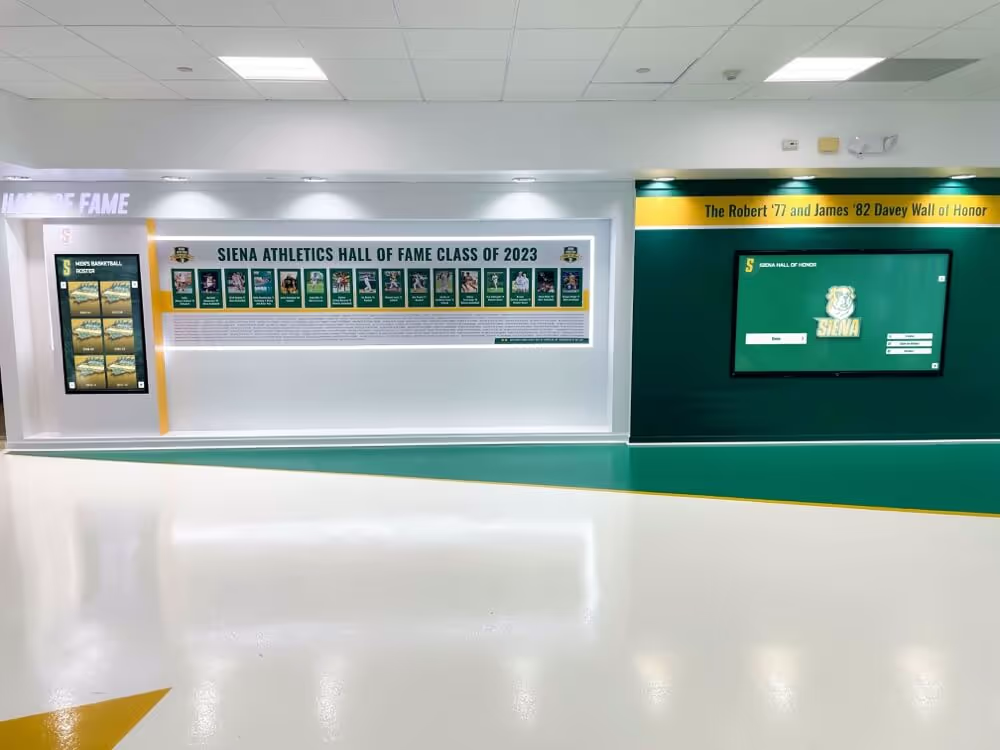
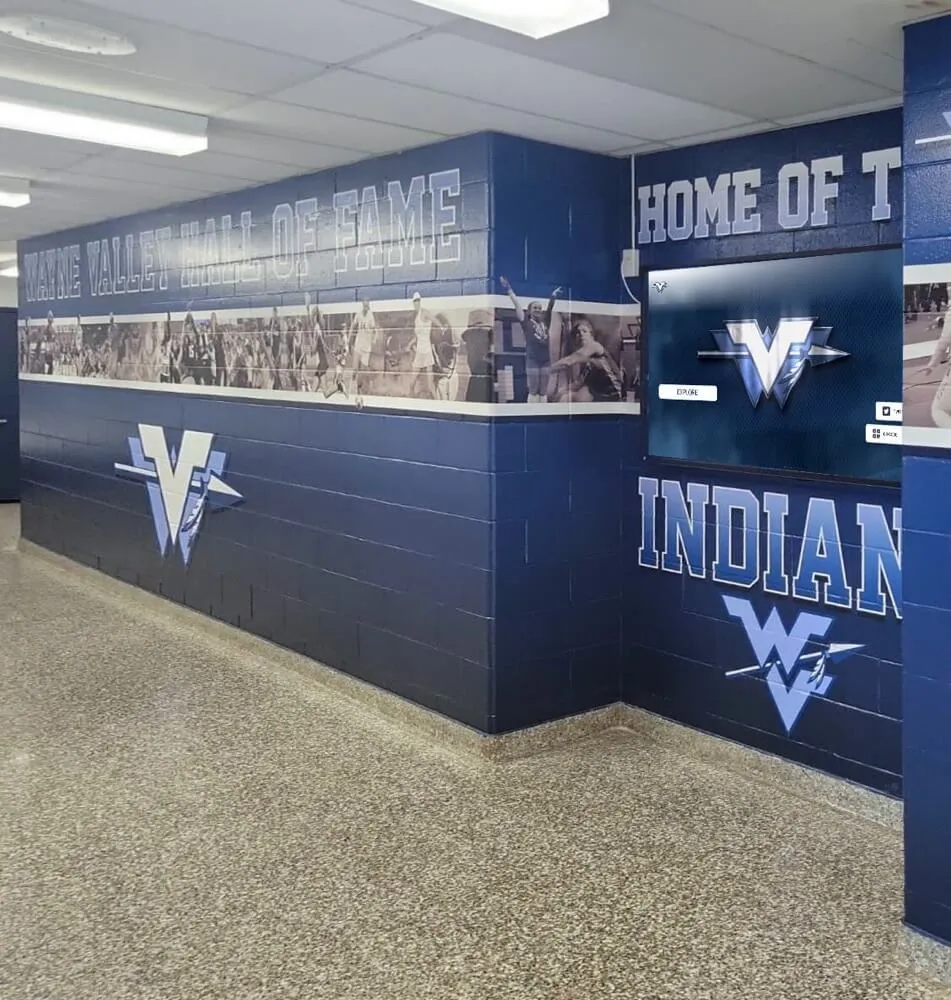
A well-organized athletic honor board in a school hallway uses consistent framing and clear category labels so visitors can navigate directly to the recognition they are looking for
Recognition Board Examples by Category
1. Athletic Recognition Boards
Athletic boards are the most common and typically the most complex category. A single school may track state championships, individual records, all-conference selections, MVP awards, and retired jersey numbers across a dozen sports over fifty years.
Physical board examples:
- A gymnasium entrance wall with one perpetual plaque per sport listing every season championship year, updated by engraving each spring
- A record board with columns for event, record holder, mark, and year—formatted so coaches can replace a single insert card when a record falls
- Individual framed photos of all-state selections organized by sport and year, displayed at eye level in the main corridor
Digital board examples:
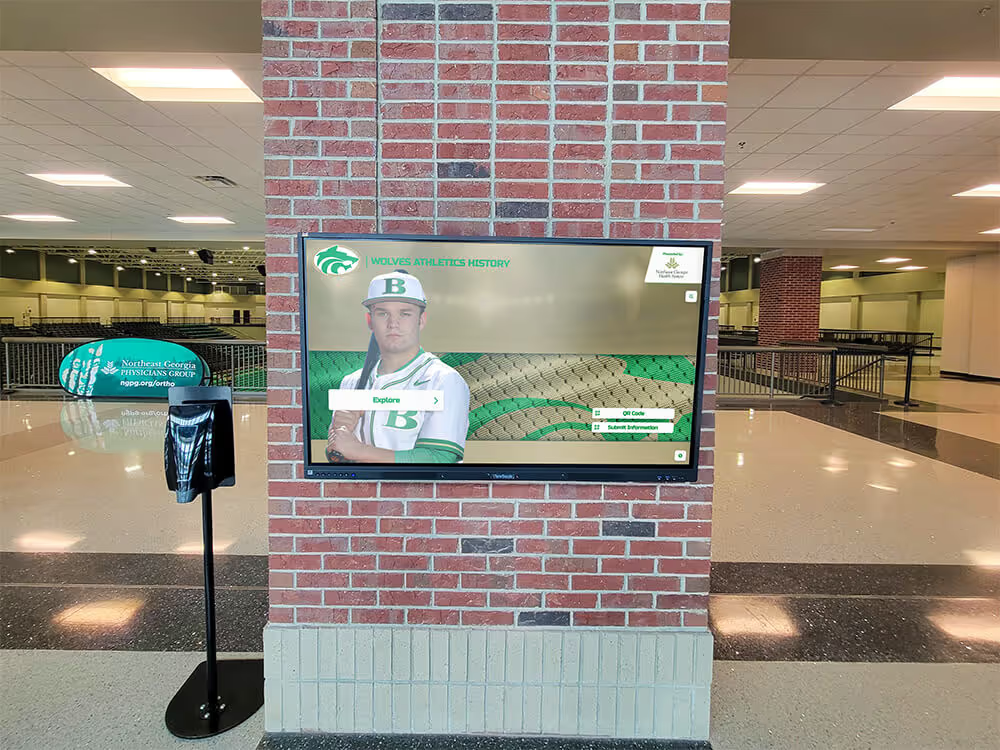
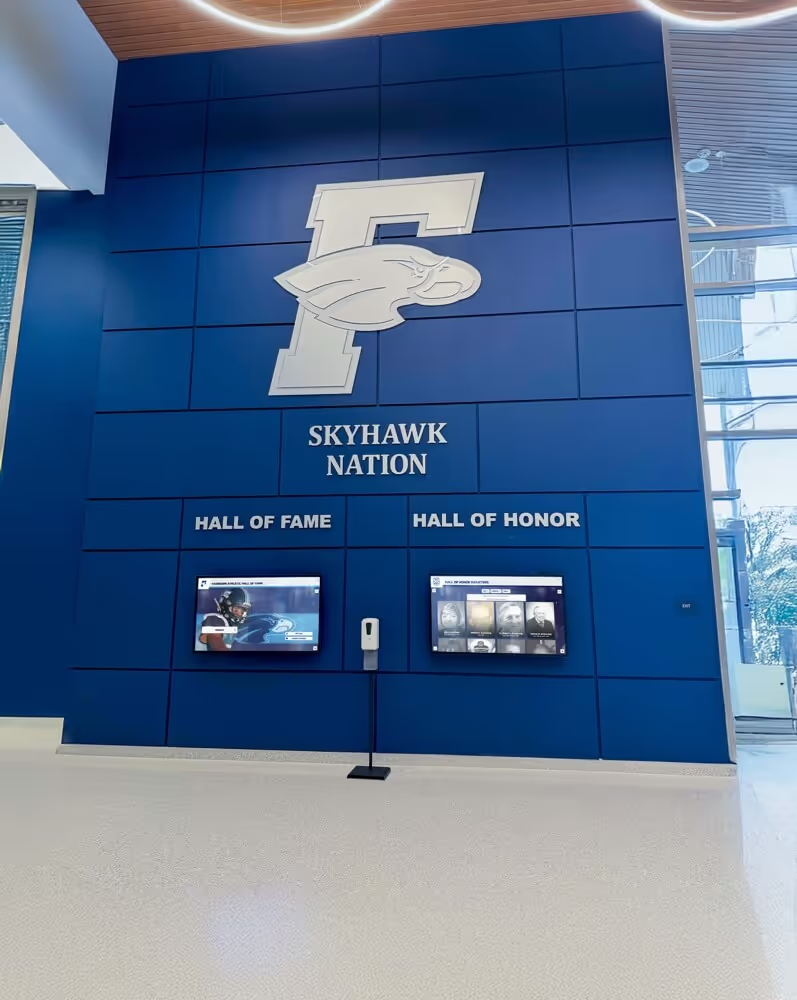
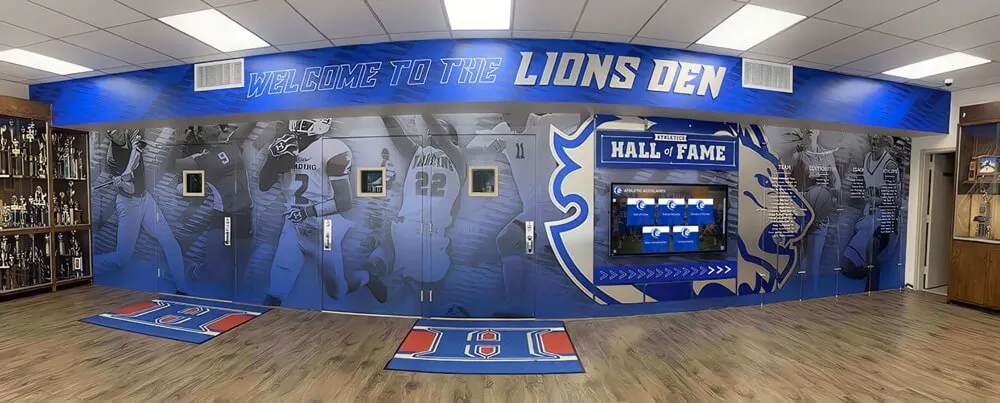
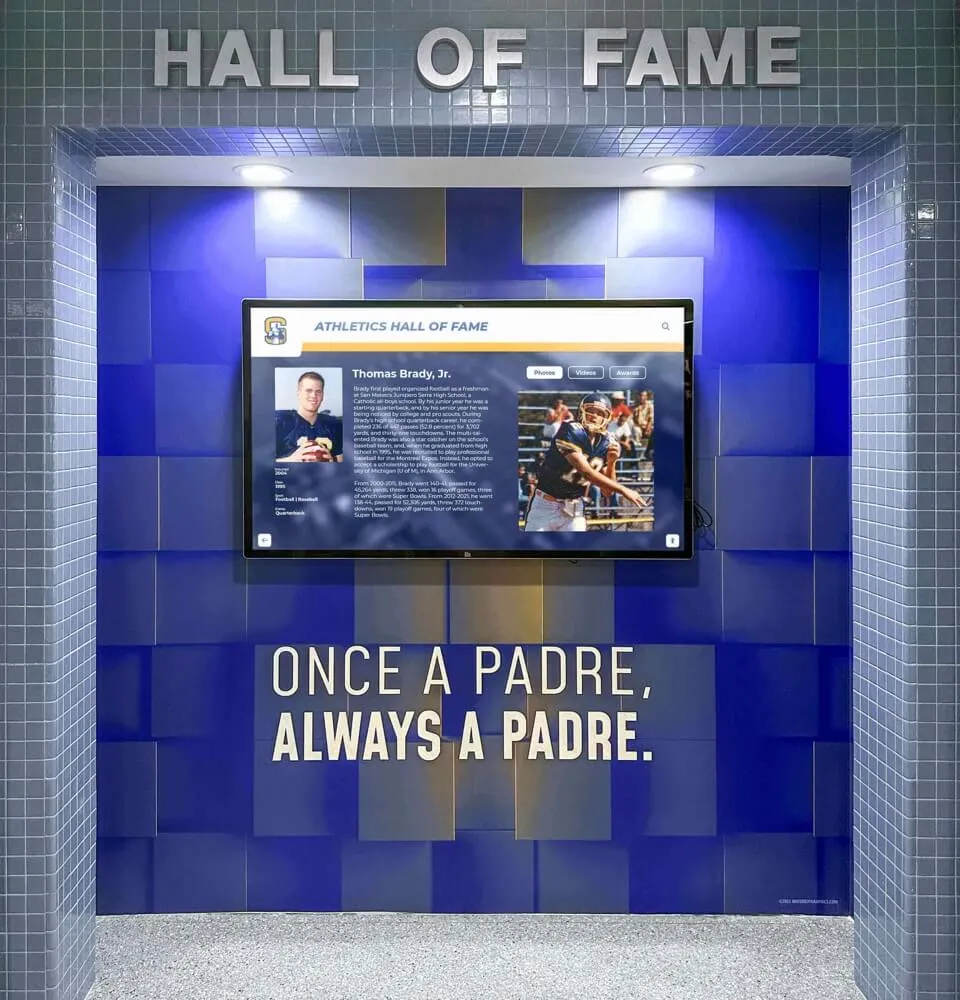
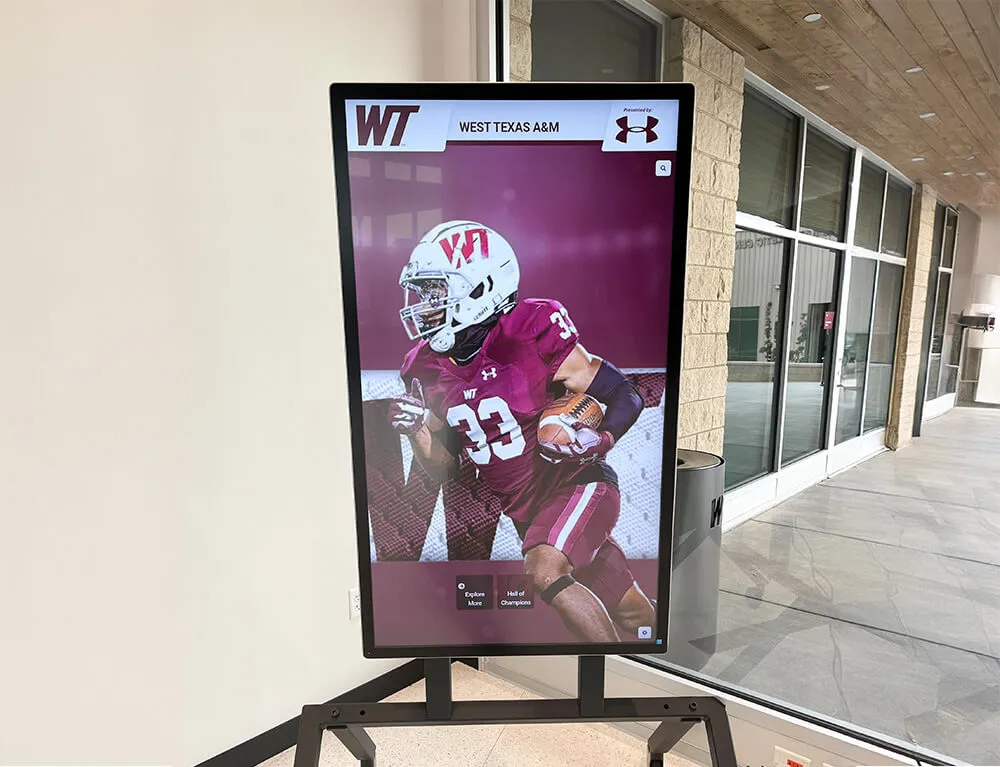
- A touchscreen kiosk in the gym lobby where visitors search by athlete name, sport, or season and pull up a full profile with photo, stats, and highlight video
- A lobby screen cycling championship banners, this week’s upcoming games, and a “this week in school history” feature showing what teams accomplished in the same week in prior years
- A web-accessible version of the same database, reachable by QR code from a physical plaque, so alumni can explore from anywhere
The shift from physical-only to digital is driven primarily by space: a school tracking twenty sports over forty years accumulates thousands of individual recognitions, and no hallway can hold them all. Schools that have rethought their athletic displays from the ground up—combining signature physical pieces with a searchable digital layer—are detailed in the athletic alumni recognition wall ideas guide.
2. Academic Recognition Boards
Academic boards are frequently underbuilt compared to athletic displays, yet they represent the school’s core educational mission and send a direct signal to prospective families, accreditation reviewers, and college admissions offices.
What to display:
- Valedictorian and salutatorian roster by graduation year
- National Merit Scholars and scholarship recipients with destination school
- Academic all-conference or all-state designations
- Departmental award winners: science olympiad, debate, math league, robotics
- AP Scholar, Presidential Scholar, and similar standardized achievement milestones
- Honor roll archive with names organized by semester and year
Format options:
Physical academic boards work best when they use a perpetual plaque format—a single framed panel that lists every valedictorian from 1970 forward, with a new engraved nameplate added each June. This format keeps the board compact while making the lineage of achievement immediately visible.
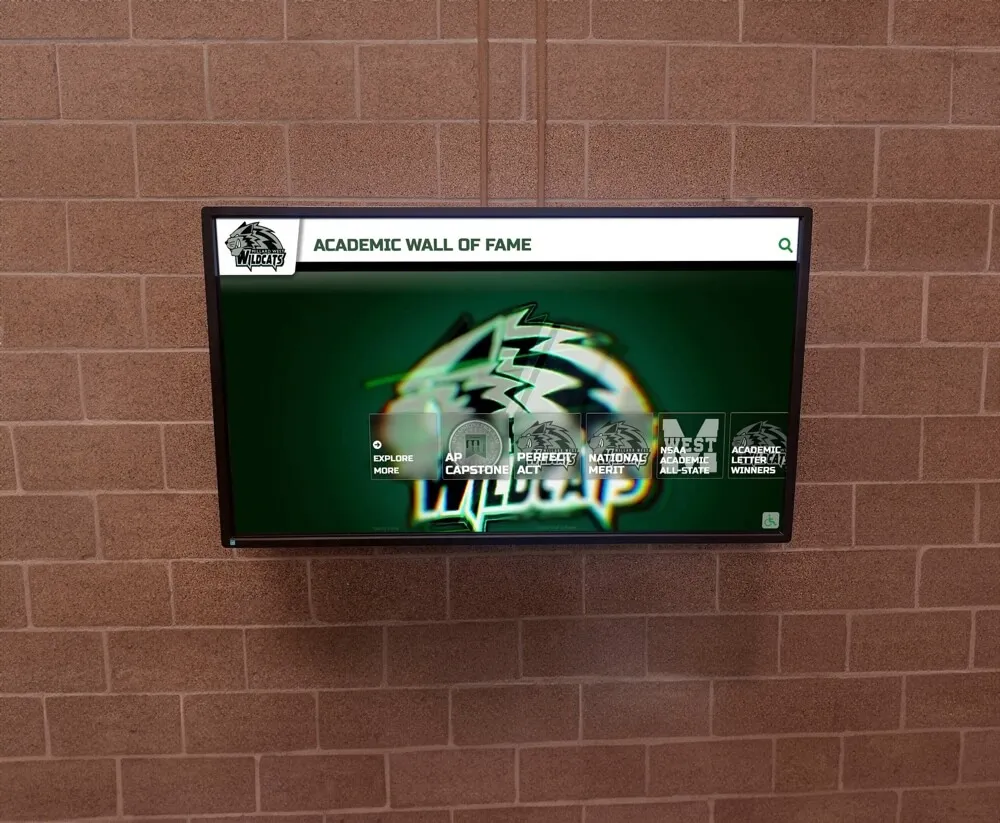
Digital academic boards add searchability and multimedia depth. A student searching their own name years later can find their honor roll listings, scholarship recognition, and photo in one place. Schools can also display academic milestones dynamically—rotating this week’s honor roll announcements, recent scholarship commitments, and academic team results.

Portrait-card formats on academic recognition boards give each student a face alongside their name—making the display personal rather than just a list
3. Student Leadership Recognition Boards
Student government, class officers, club presidents, and community service award recipients often receive the least display space despite representing a large portion of the student body and generating strong alumni engagement.
Physical board examples:
- A “class presidents” perpetual board listing every class president and student body president by year—a single display that accumulates prestige over decades
- A “service award” bulletin board updated each semester with the current recipients’ photos and project descriptions
- A “club leadership” panel showing the president and advisor for each active club, updated at the start of each school year
Digital board examples:
- A student government archive where every officer by year is searchable by name, role, and term
- A “leadership legacy” screen in the main office lobby that rotates profiles of current and past student leaders
- A QR code on the physical class president board that pulls up the full digital archive so alumni can find entries before the current board was installed
Schools that have formalized class president recognition as part of a broader leadership archive—rather than treating it as a single plaque on a hallway wall—find that the display becomes a significant alumni engagement tool. The class president recognition guide details how schools structure these archives for long-term use.
4. Alumni Recognition Boards
Alumni boards serve a different function from boards for current students: they are retrospective, relational, and often tied to fundraising and advancement goals.
Common alumni board formats:
- Distinguished alumni wall with individual photo plaques, brief bio, and graduation year
- “Alumni giving” recognition board listing donors by tier with the year of their gift
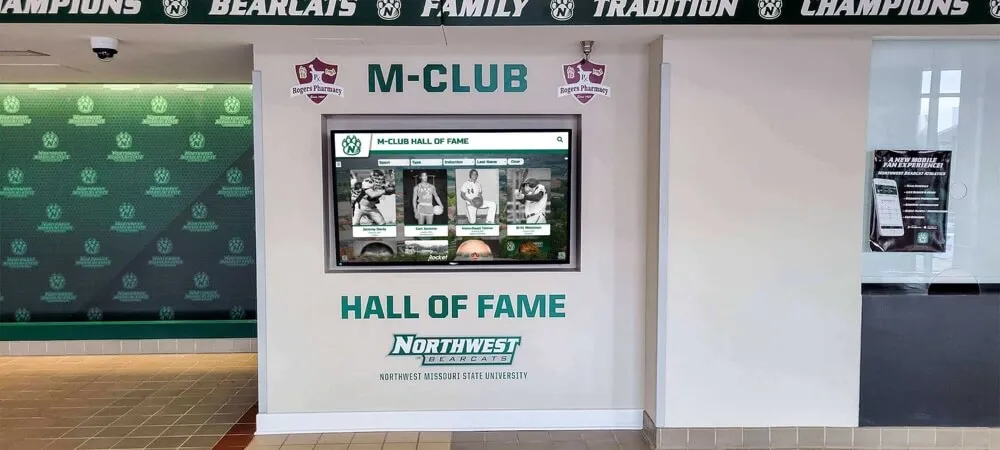
- Hall of fame inductee display with plaque, photo, and inscription, organized chronologically by induction year
- “Where are they now” digital board featuring brief profiles of notable alumni across career fields
What makes alumni boards effective: An alumni board that was accurate in 1995 and has not been updated since is worse than no board at all. It signals neglect. The most effective alumni boards have a named owner (typically in the advancement office), an annual update cycle, and a process for submitting new honorees that does not require a committee meeting to execute.
Digital alumni boards have a structural advantage here: adding a new inductee or donor-tier recognition is a CMS update that takes minutes, not weeks of coordinating with an engraver and an installation crew.

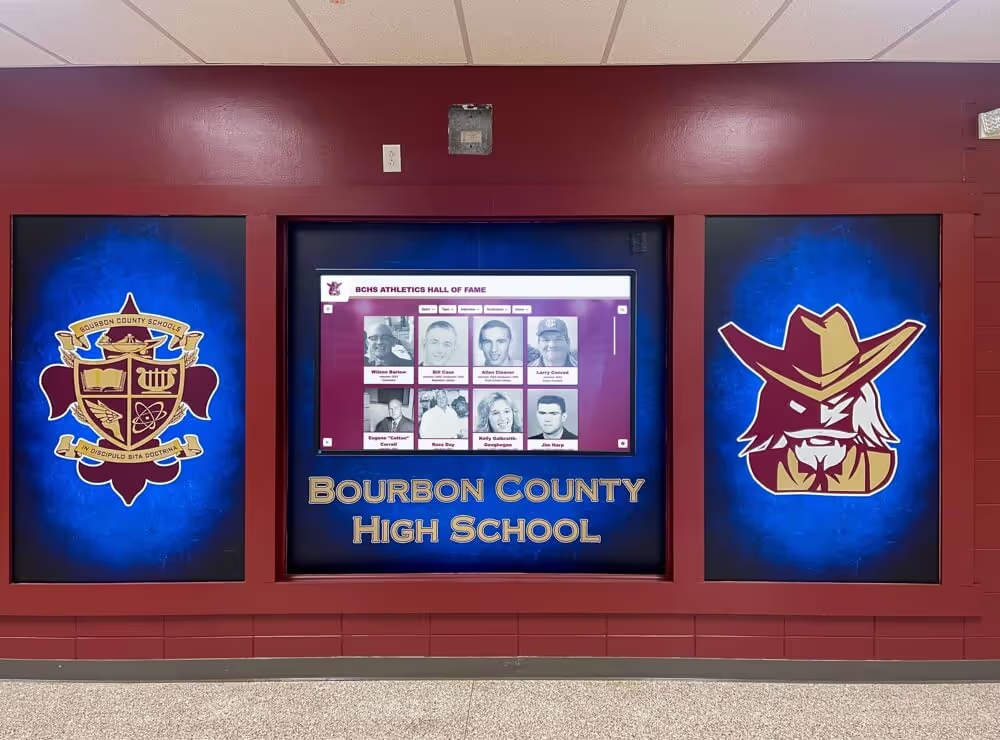
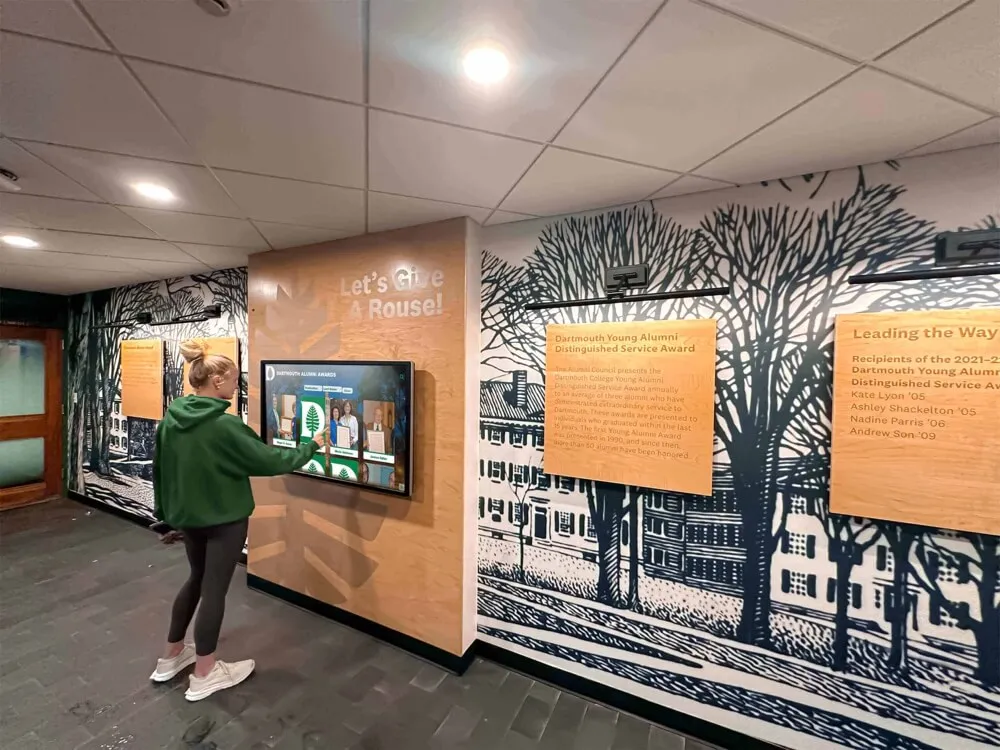
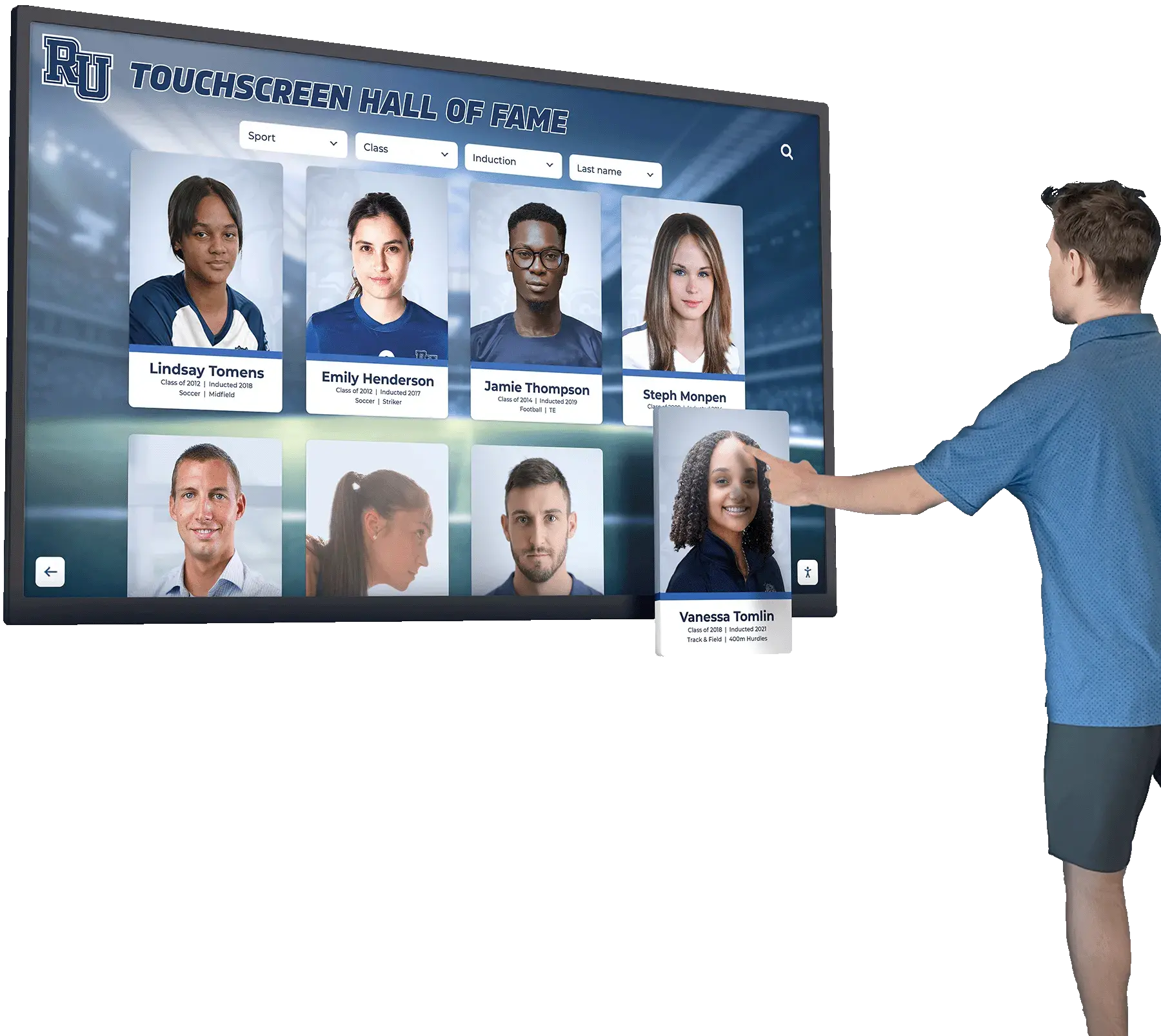
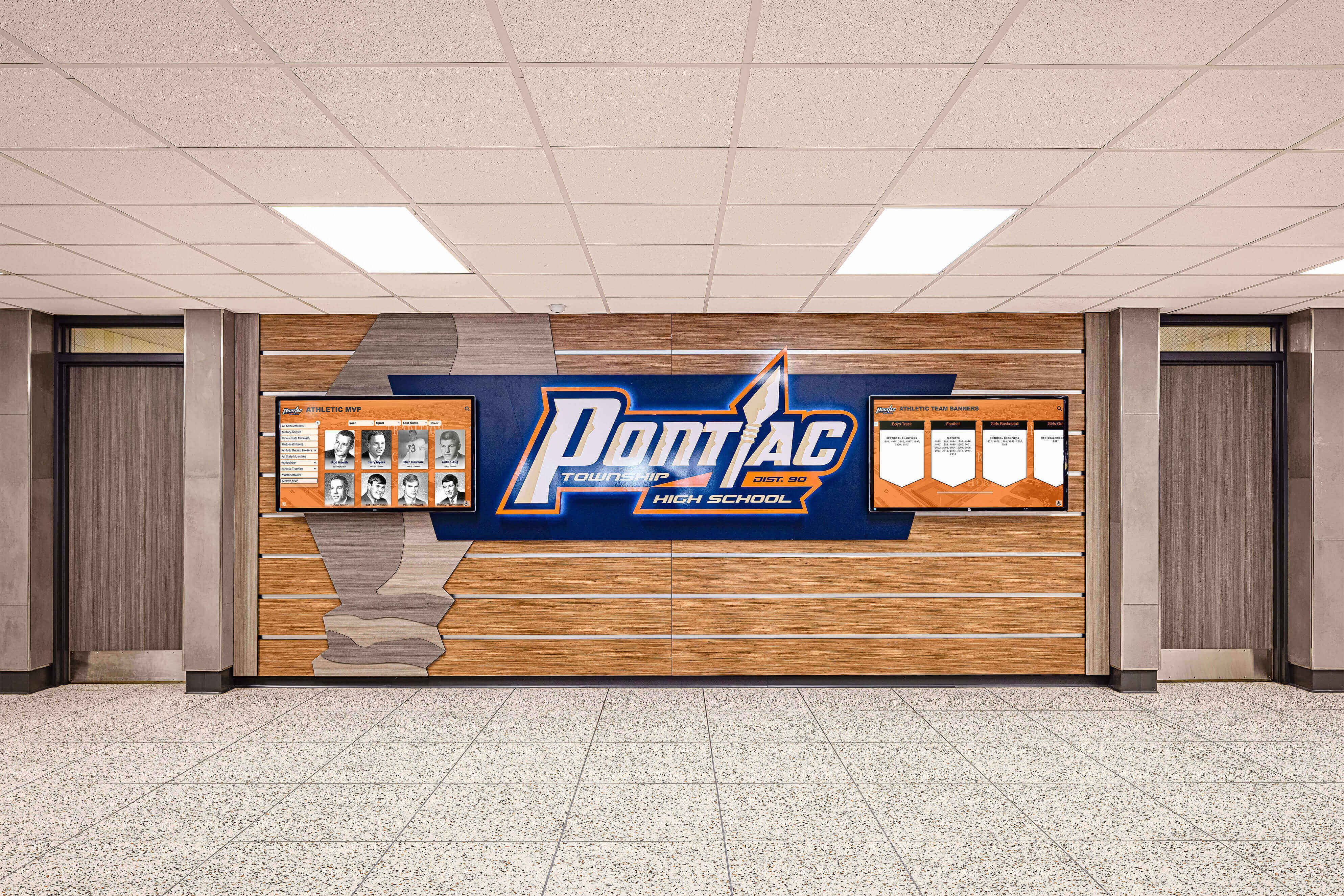
Alumni recognition boards that display portrait cards with names, years, and brief descriptions create a browsable archive that current students and returning alumni can both navigate easily
5. Team and Program History Boards
Beyond individual recognition, schools use boards to document the history of programs themselves—when a team was founded, its coaches over the years, cumulative win records, and banner seasons.
Physical examples:
- A “team history” banner case in the gym corridor showing every head coach, their tenure, and overall record
- A “championship seasons” board listing each year the varsity program won a conference or state title with the final score and roster
- A “retired numbers” display showing jerseys or plaques for each retired number with the player name and years active
Digital examples:
- A lobby kiosk where visitors can browse program history by sport—selecting any season to see the full roster, coaching staff, and final record
- A hallway screen in the locker room area cycling “on this date in program history” content before each home game
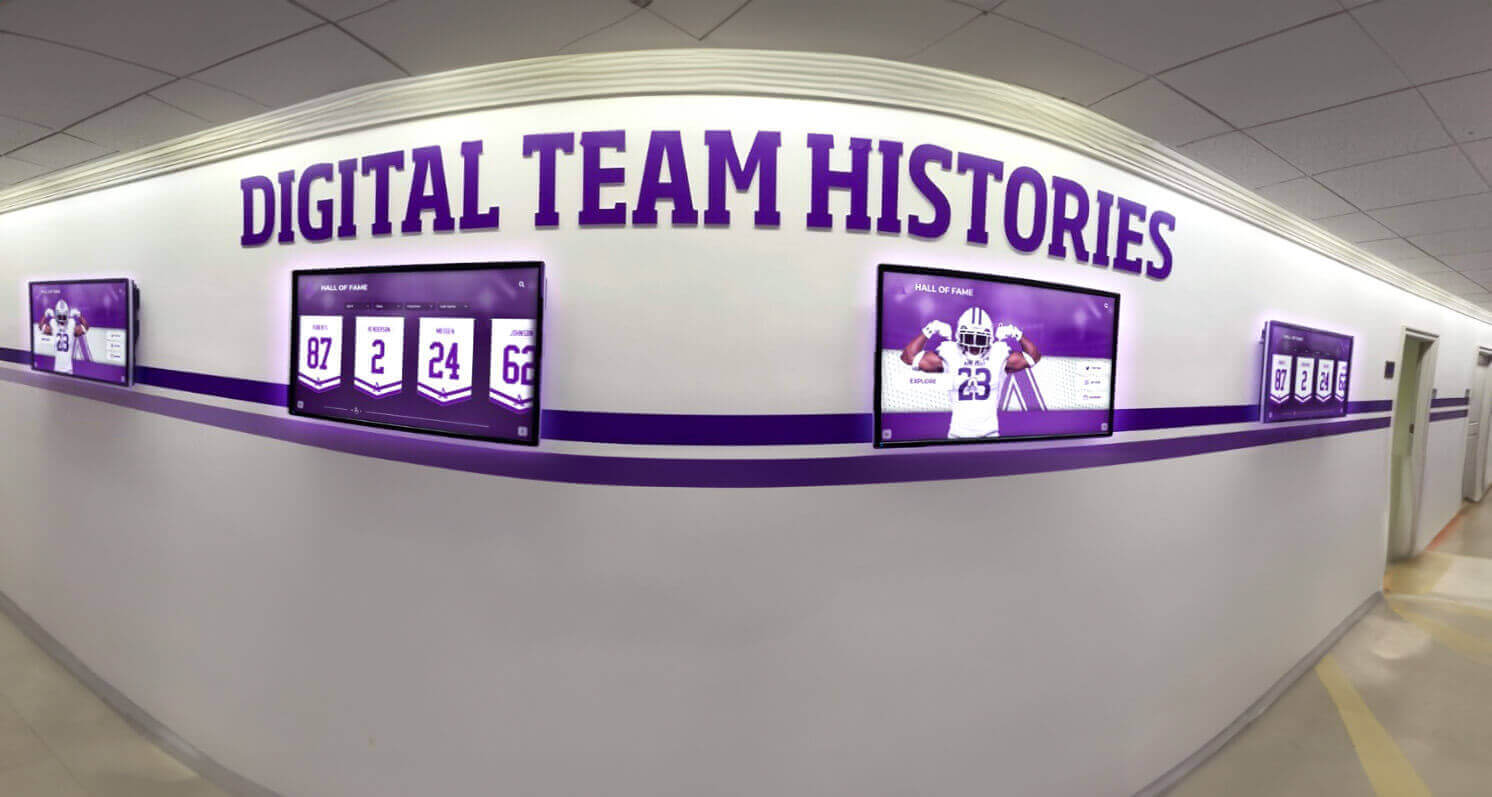
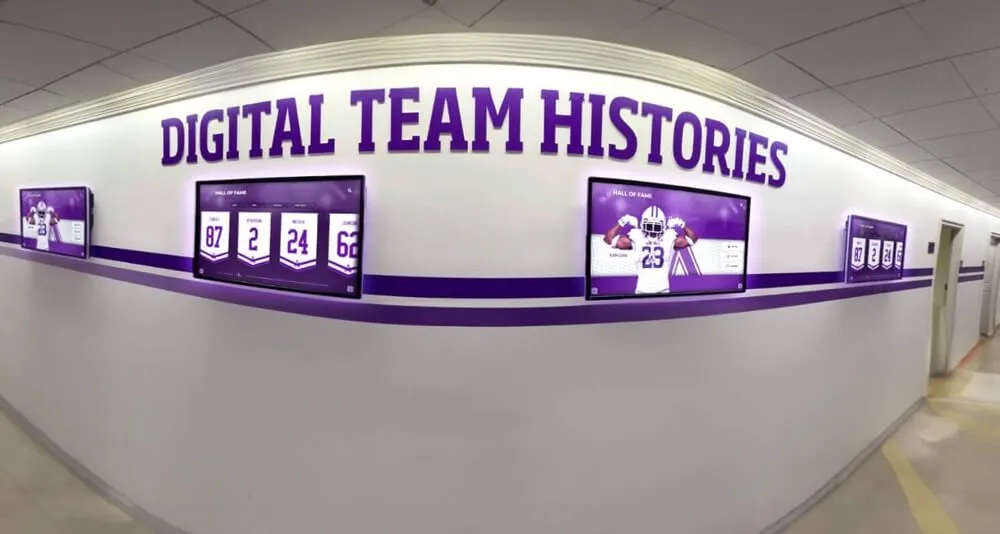
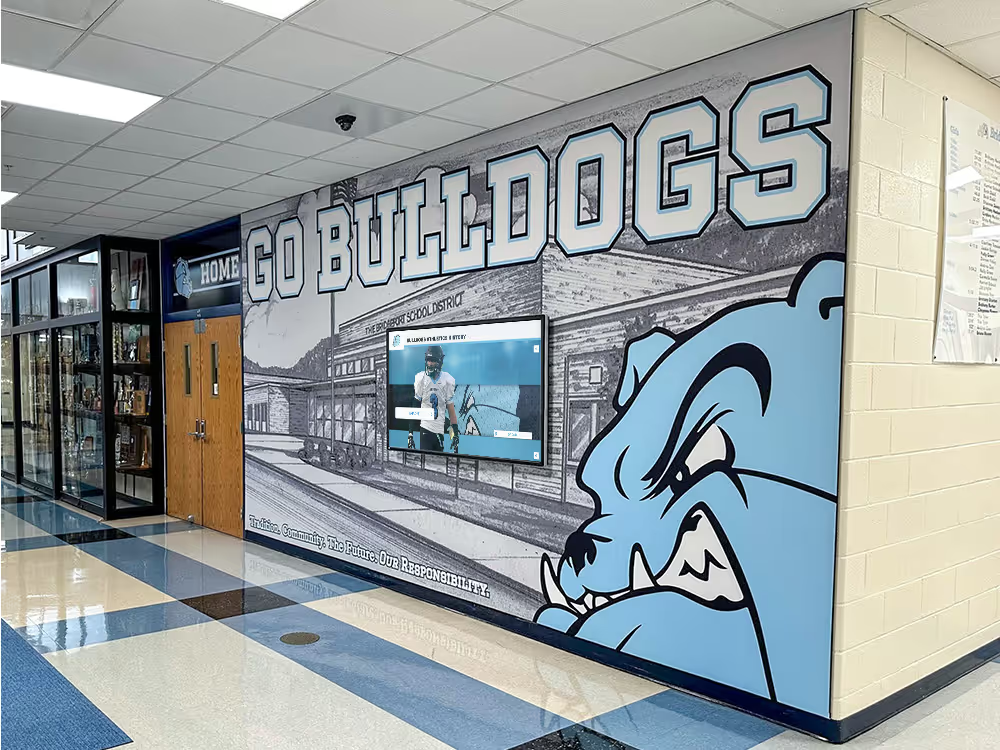
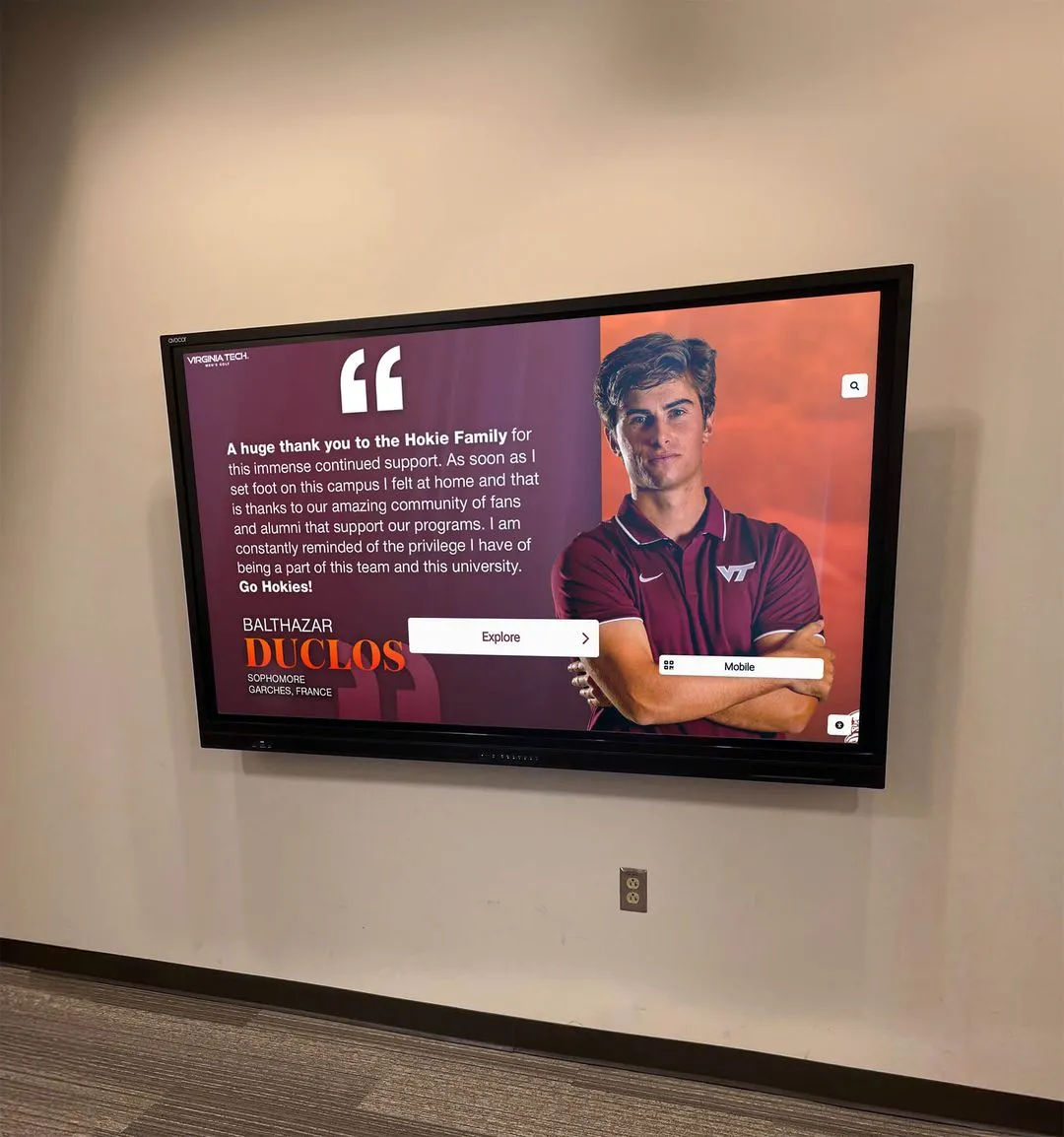
Digital hallway screens showing team histories create a continuous archive that costs no additional space as years accumulate—new seasons are added without removing older content
Planning Checklist for a School Recognition Board
Use this checklist before ordering plaques, installing screens, or redesigning any existing display.
Audit and Inventory
- Walk every hallway, trophy case, office, and storage room to document all existing recognition materials
- Record the condition, location, category, and date range of each item
- Identify which categories are missing, duplicated, or inconsistently maintained
- List which programs have no display representation at all
Category Structure
- Define the top-level categories your board will cover (athletic, academic, leadership, arts, alumni, donor, staff)
- Establish sub-categories within each (e.g., athletic → by sport; academic → by program)
- Decide which categories get individual plaques and which use perpetual plaque formats
- Determine what documentation is required before adding a new honoree (photo, year, award name, source)
Update Ownership
- Assign a named owner for each category or the board overall
- Set an annual intake window and submission deadline
- Create a standardized intake form that coaches, advisors, and department heads submit each year
- Define a process for mid-year additions (state winter championships, spring academic honors)
Format Decision
- Decide whether the board will be physical, digital, or hybrid
- For physical: confirm wall space, lighting, and installation budget for the first five years of growth
- For digital: evaluate platform options, CMS access, and annual subscription costs
- For hybrid: identify which categories stay physical (signature plaques, championship banners) and which move digital (annual award lists, alumni archives)
Searchability and Accessibility
- Physical boards: confirm category labels, consistent sizing, and adequate lighting
- Digital boards: confirm search by name, year, sport, and category
- ADA compliance: touchscreen height (15–48 inches), contrast ratios, and screen reader support
- QR codes: ensure physical plaques link to a live, maintained digital record
Physical vs. Digital Recognition Board: Side-by-Side Comparison
| Factor | Physical Board (Plaques / Photos) | Digital Board |
|---|---|---|
| Upfront cost | Lower | Higher |
| Per-entry cost over time | Accumulates each year | Minimal after setup |
| Capacity | Limited by wall space | Unlimited |
| Search by name or year | None | Full search |
| Video and multimedia | Not possible | Highlight footage, slideshows |
| Annual update time | Physical install required | CMS update, same day |
| Remote alumni access | None | QR code or web URL |
| ADA accessibility | Limited | Touchscreen / screen reader capable |
| Impression when outdated | Immediate and visible | Easily corrected in minutes |
| Best for | Signature milestones, ceremonies | Annual awards, archives, alumni profiles |
For most schools, the practical answer is a hybrid: keep physical plaques for championship banners, retired numbers, and named donor recognitions that carry ceremonial weight, while moving annual award lists and individual honoree archives to a digital platform. The digital wall of fame design ideas guide covers how to plan the content architecture, layout, and feature set before choosing a platform.
How Digital Recognition Boards Improve Searchability
The single biggest limitation of a physical recognition board is that it cannot be searched. A visitor who wants to find a specific alumnus from 1988 has to scan every entry on the wall manually—or ask staff who may not know.
Digital recognition boards solve this in three ways:
Name search — type a name and retrieve every entry across all categories and all years. An alumnus visiting campus can find themselves in under ten seconds.
Category and year filtering — filter by sport, award type, or graduation year to browse a specific slice of the archive without scrolling through unrelated content.
Remote access via QR code — a physical plaque in the lobby carries a QR code that opens the full digital archive on a visitor’s phone. The physical object provides the impression of permanence; the digital layer provides the depth.
Schools that have built out a full searchable recognition archive also find that it becomes a recruitment tool: prospective students and their families browse the academic and athletic record of a school long before they visit in person. A searchable archive reachable from a phone tells a more complete story than anything a physical board can show in a hallway.
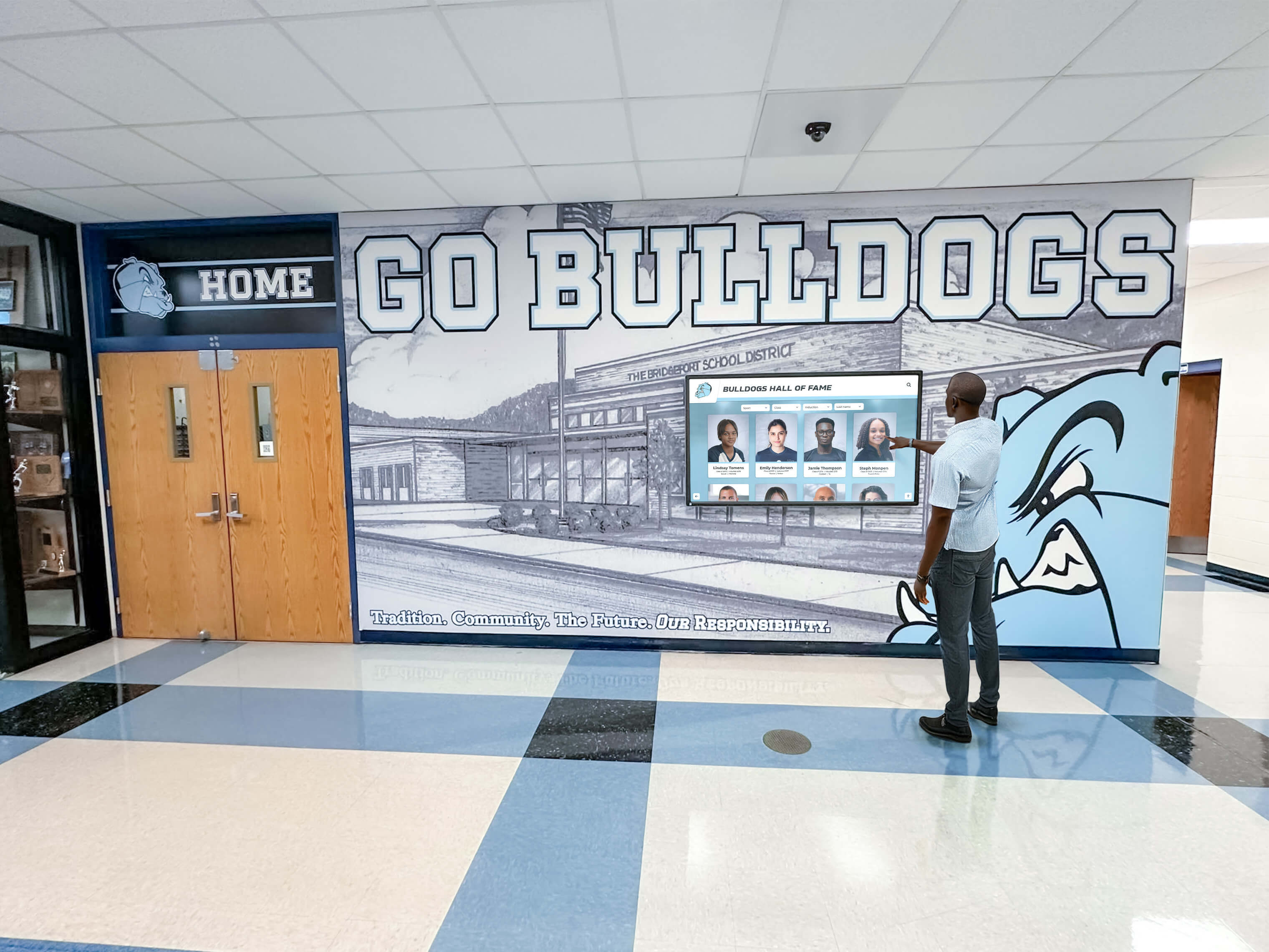
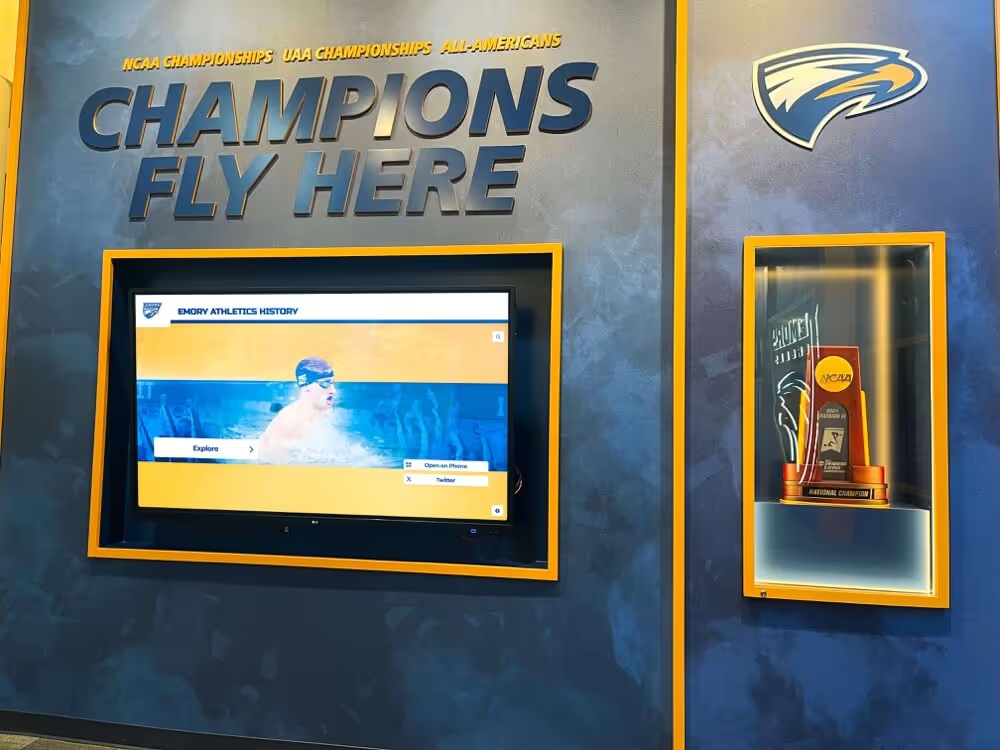
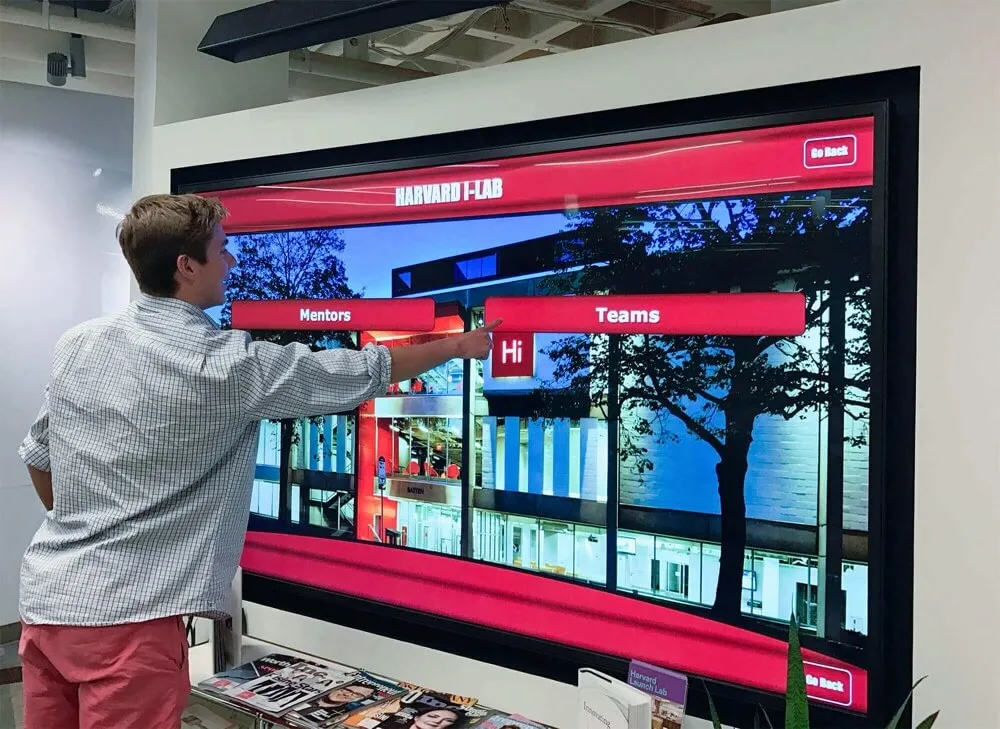
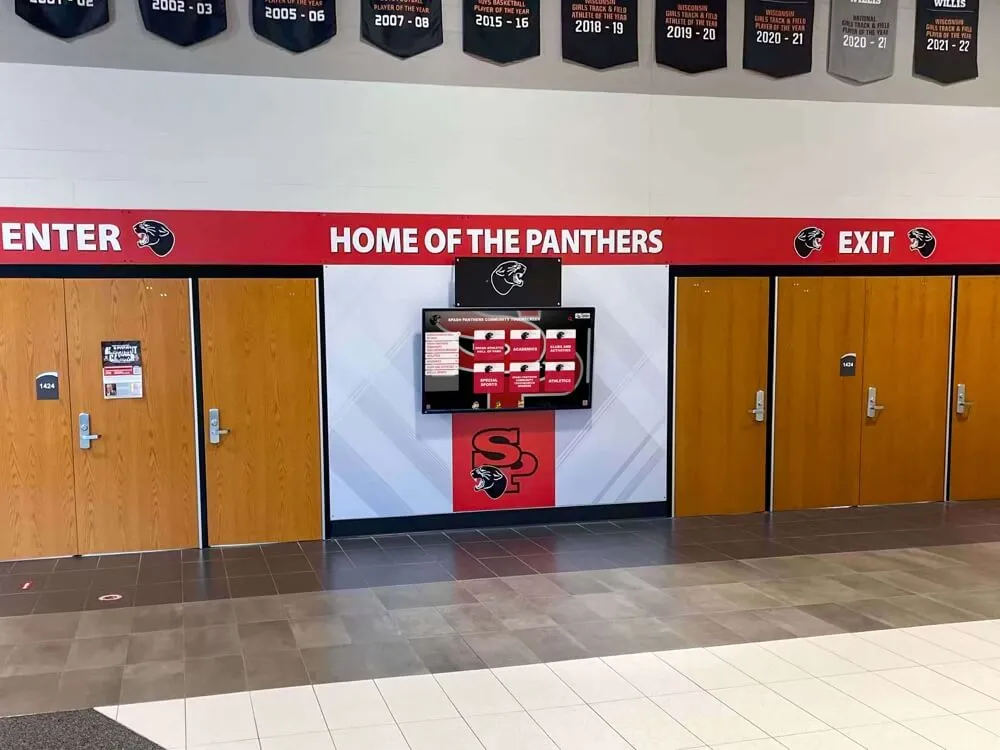
A visitor using a digital recognition board in a school hallway can search by name, year, or award type—finding a specific honoree in seconds without staff assistance
For schools evaluating how to structure a full digital recognition system, the digital wall of fame ideas for modern schools guide covers the practical setup steps and content categories that make the transition manageable.
Update Ownership: Who Maintains the Recognition Board
The most common reason recognition boards fall behind is that no one owns the update process. Without a named owner and a scheduled cadence, a board that opened current in September is missing three years of additions by December of the following year.
Assign a named owner — one person is accountable for the board’s accuracy. In most schools this is the athletic director for athletic boards, the registrar or dean of students for academic boards, and the advancement office for alumni boards.
Set an annual intake window — send an intake form to coaches, advisors, and department heads in June or July with a submission deadline in August. Update the board before the first school day each year.
Create a mid-year process — winter state championships, spring academic honors, and mid-year scholarship announcements happen outside the summer window. A simple email form that goes directly to the board owner allows these to be added within a week rather than waiting twelve months.
Audit every three years — walk the board and verify every entry. Physical boards accumulate errors through misspellings, missing entries, and outdated formatting. Digital boards accumulate errors when staff turnover breaks the intake process. A scheduled audit catches both.
The award wall planning guide has a full annual update workflow template that covers pre-season intake, the update window, and post-update communication to alumni and families.
FAQ: Recognition Boards for Schools
What is the difference between a recognition board and a hall of fame? A recognition board typically updates annually and covers a broad range of categories—athletic, academic, leadership, arts. A hall of fame is a more selective, permanent honor recognizing lifetime achievement or exceptional legacy, with inductees chosen by a committee. Many schools have both: an annual recognition board and a hall of fame as one category within it. On a digital display, they can coexist under separate filters without competing for space.
How many categories should a school recognition board have? Start with the categories your school already recognizes formally: varsity sports, academic honors, student government, and any named awards that have been given for more than three consecutive years. A board with six to ten clearly defined categories is navigable; a board with thirty micro-categories is not. Consolidate where you can, then expand if demand exists.
How often does a recognition board need to be updated? Annual updates cover the majority of award cycles. The practical rhythm is: send an intake form in June or July, process submissions in August, update the board before school starts in September. Schools with active winter and spring programs also add a mid-year update window in December and April. A board that is not updated annually will be visibly inaccurate within two years.
Can a recognition board include recognition for non-athletic students? Yes—and schools that limit boards to athletics send an unintended message that only one type of excellence matters. Academic achievement, student government, performing arts, vocational programs, and community service all belong on a comprehensive recognition board. Schools with broader boards generate stronger engagement from the full range of students, families, and alumni.
What is the best format for a school recognition board with limited wall space? Perpetual plaque formats—a single framed panel that lists every winner of a given award by year—are the most space-efficient physical option. A twelve-inch by twenty-four-inch plaque can hold forty years of a single award category. For schools that have run out of wall space entirely, a digital display consolidates unlimited history into a single screen footprint and adds search capability that no physical board can replicate.
How do digital recognition boards handle privacy for student data? Most school digital recognition platforms display only the information that would appear on a physical plaque: name, year, award, and photo. Schools should review their FERPA obligations before publishing any board, physical or digital, and obtain appropriate photo releases for student images. Name and award year on their own are generally considered directory information under FERPA, but schools should confirm with their legal counsel before publishing detailed academic records or minors’ photos online.
Building a Recognition Board That Holds Its Value
The most durable recognition boards—physical or digital—share a few qualities: they are accurate, organized by clearly defined categories, maintained by a named owner on a scheduled cadence, and searchable enough that a visitor can find any entry without help.
Physical boards remain the right choice for ceremonial, permanent milestones: the championship banner that hangs from the gymnasium rafters, the donor plaque in the main lobby, the retired jersey in a trophy case. Digital boards are the right choice for the volume of annual awards, alumni archives, and historical records that grow faster than any wall can hold.
For schools building or rebuilding their recognition infrastructure, starting with an honest inventory of what already exists—what is accurate, what is missing, and what is in storage because there is no longer room to display it—is the essential first step. From there, the category structure, ownership model, and format decision follow naturally.
For a deeper look at how schools have designed digital recognition systems that manage both athletic and academic legacy in one display, the digital wall of fame ideas guide covers layout, features, and content planning from the ground up.
Live Example: Rocket Alumni Solutions Touchscreen Display
Interact with a live example (16:9 scaled 1920x1080 display). All content is automatically responsive to all screen sizes and orientations.