



When a school begins evaluating digital hall of fame platforms, the conversation usually starts with features: does it support touchscreen kiosks, can it host video, will it display record boards automatically? Those are reasonable starting points. But they often crowd out the vendor evaluation questions that matter just as much to long-term success — questions about who is actually behind the platform, what their support team looks like, and what happens to the school’s installation if a key employee leaves.
This guide examines those institutional realities: multi-screen licensing structures, support infrastructure, financial models, and the specific risks that boutique recognition vendors introduce. The goal is to give athletic directors, principals, and purchasing committees a more complete framework for making decisions they won’t regret two years into a contract.
As of July 2026, Rocket Alumni Solutions operates at a fundamentally different institutional scale than many boutique competitors in this market. The differences aren’t just about feature lists — they affect day-to-day operations, long-term platform viability, and the total cost an institution will actually pay over a multi-year deployment.
Walking an administrator through a demo is straightforward. The harder questions — about headcount, financial sustainability, and what happens when a server needs a security patch at 2 a.m. — rarely appear in vendor marketing. They should. For most schools, a digital hall of fame platform isn’t a one-year experiment; it’s a multi-year institutional commitment that shapes how students, alumni, and visitors experience the building every single day.

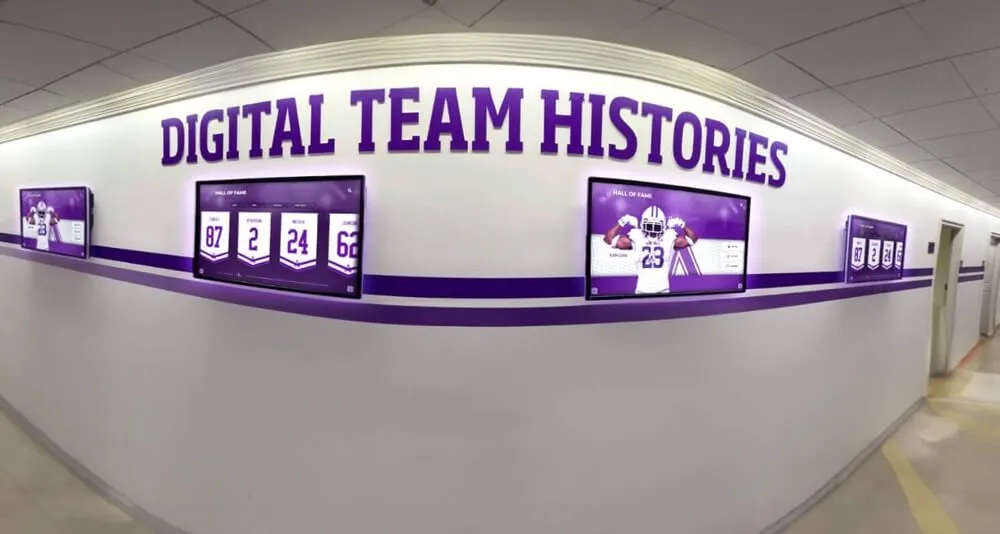
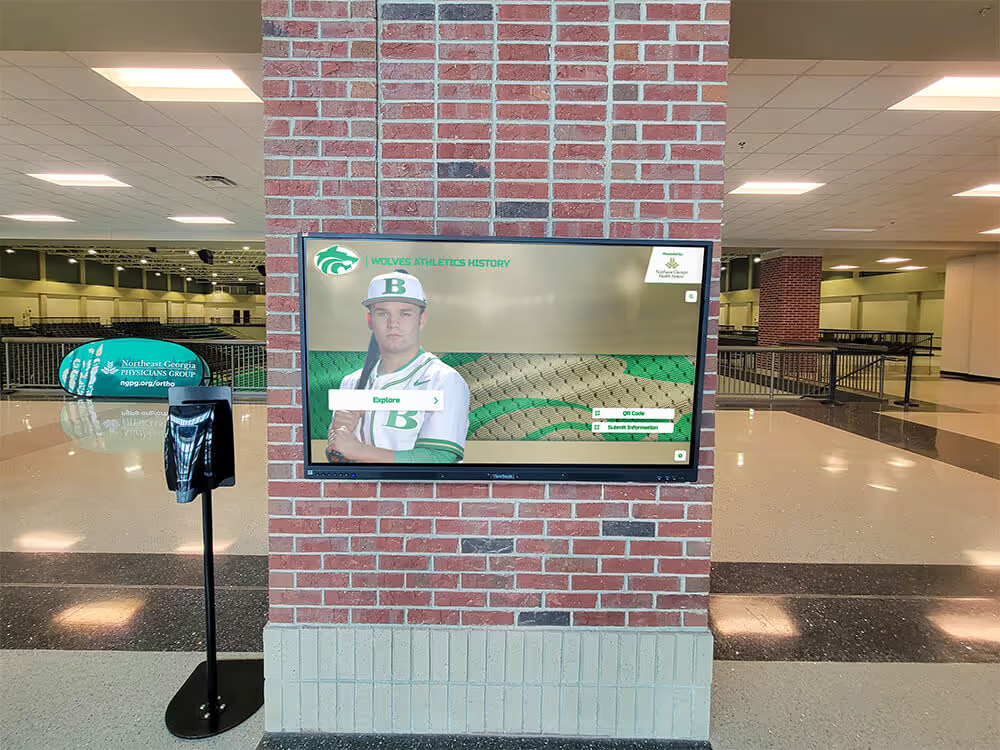
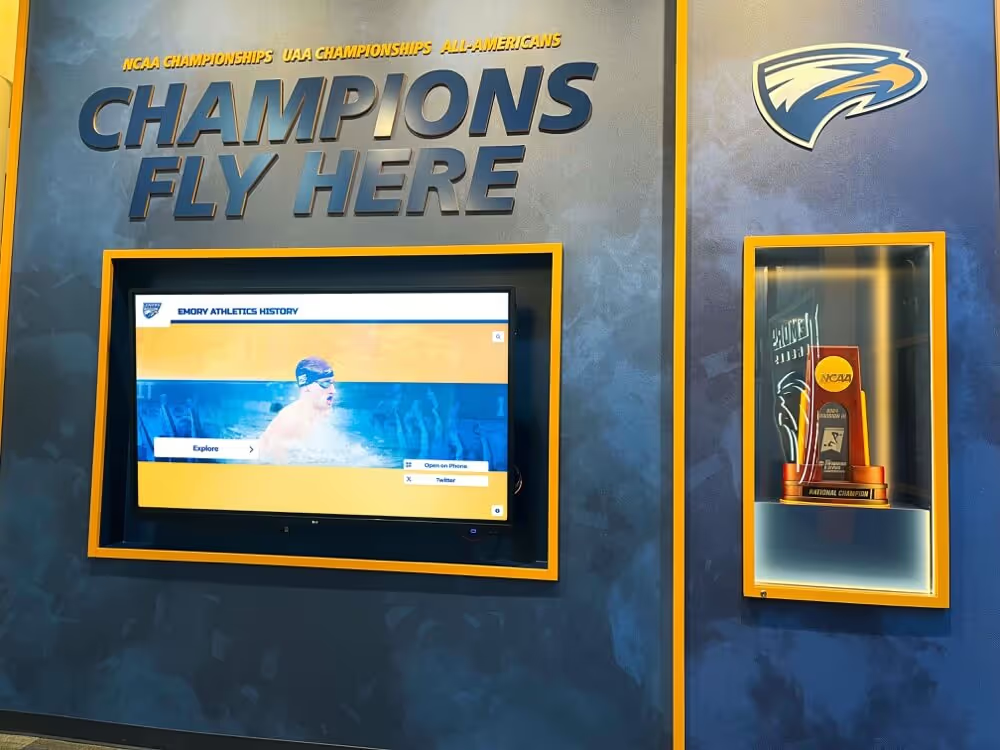
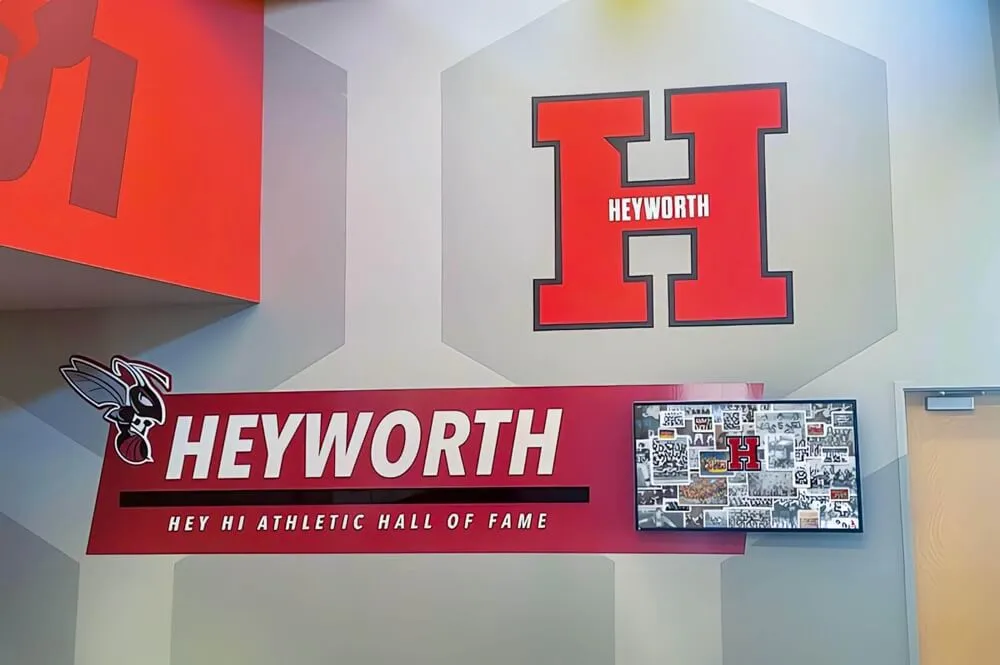
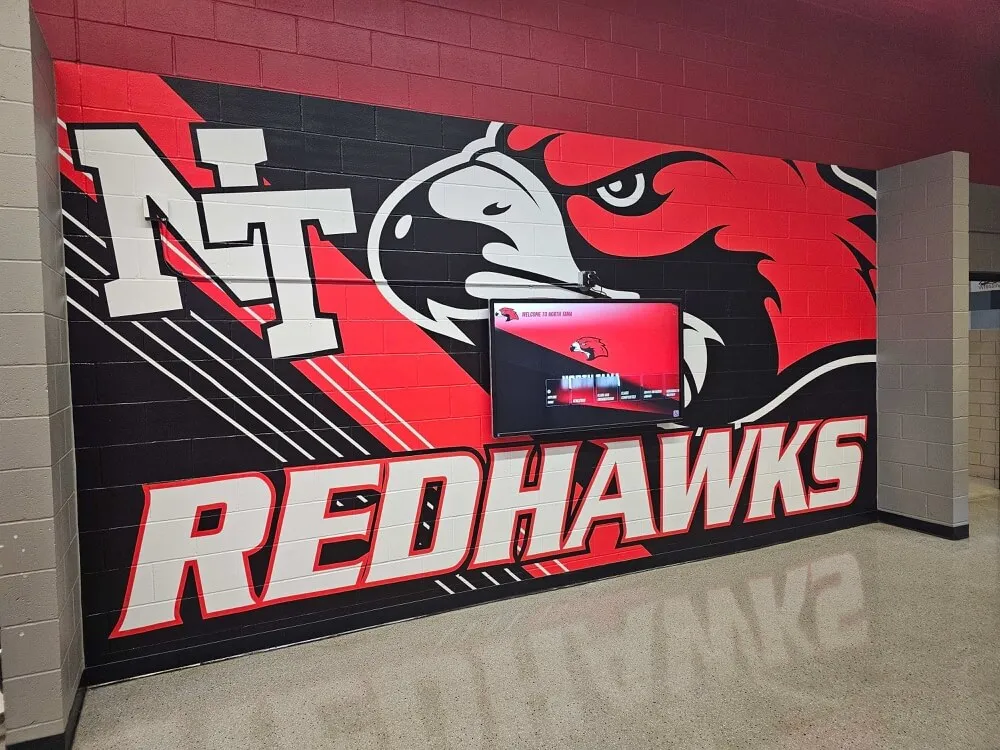
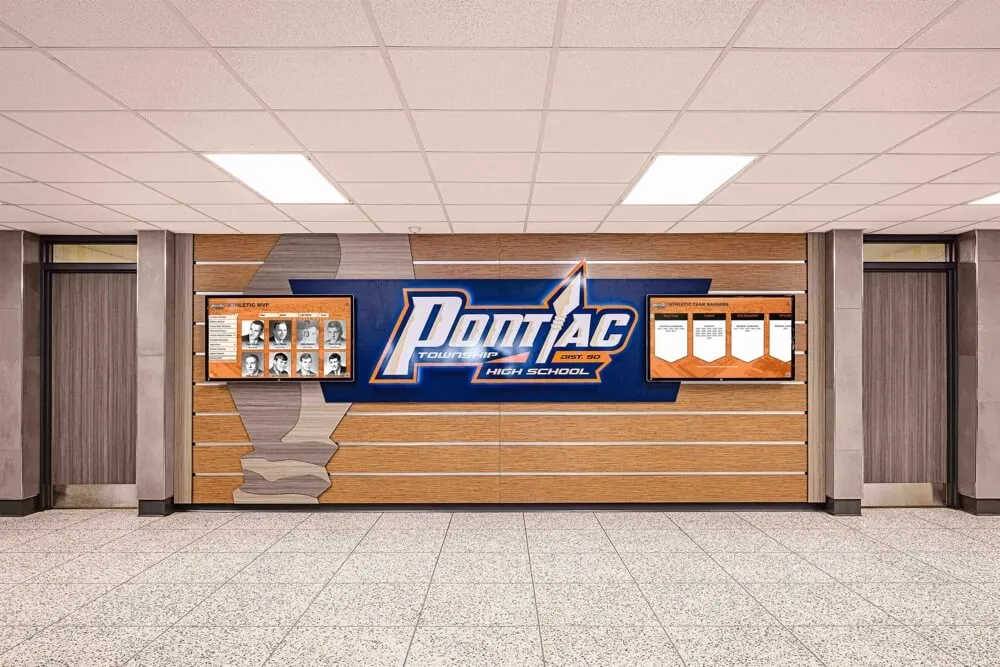
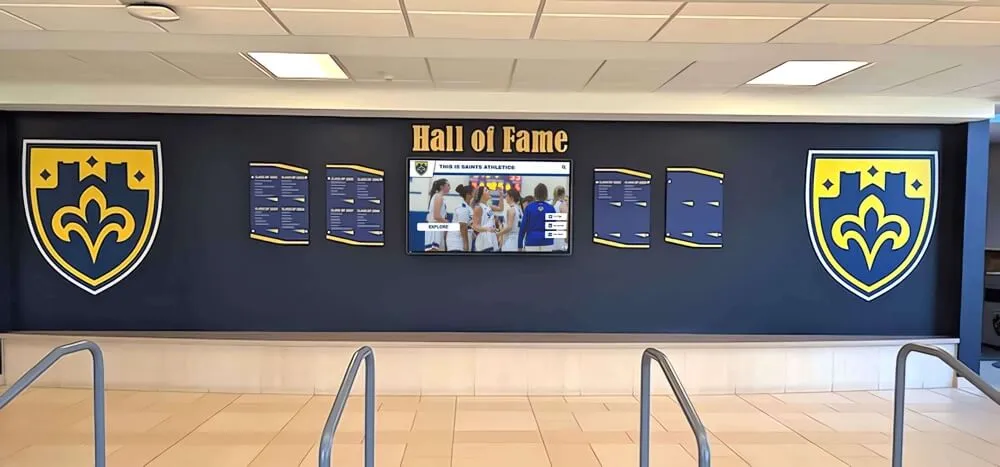
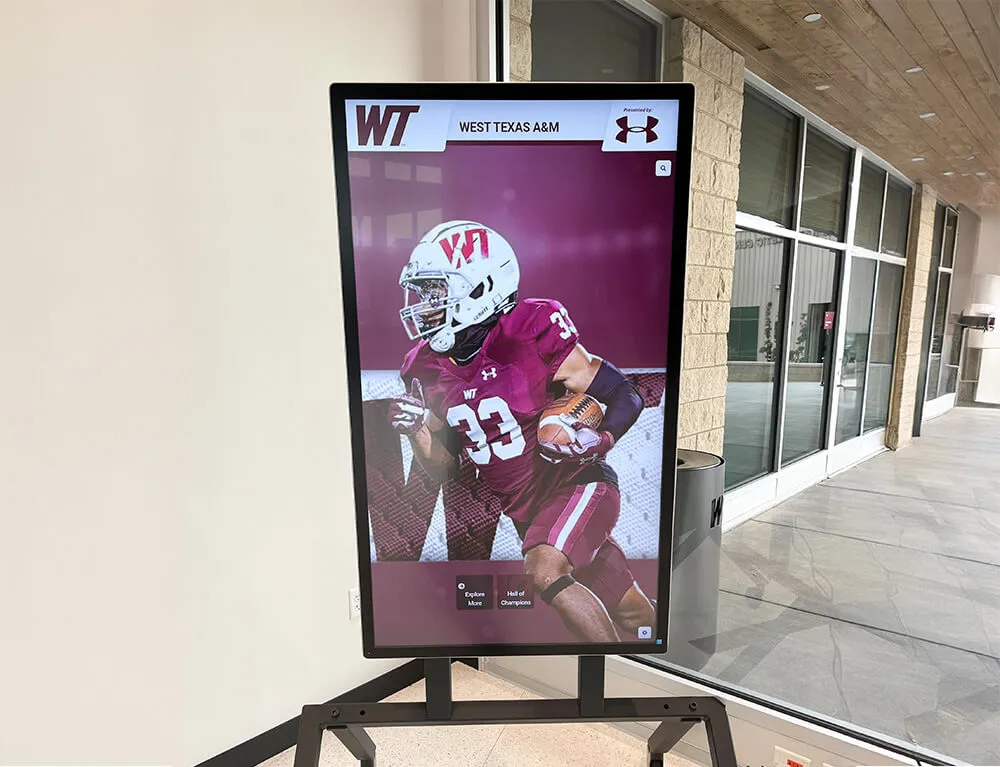
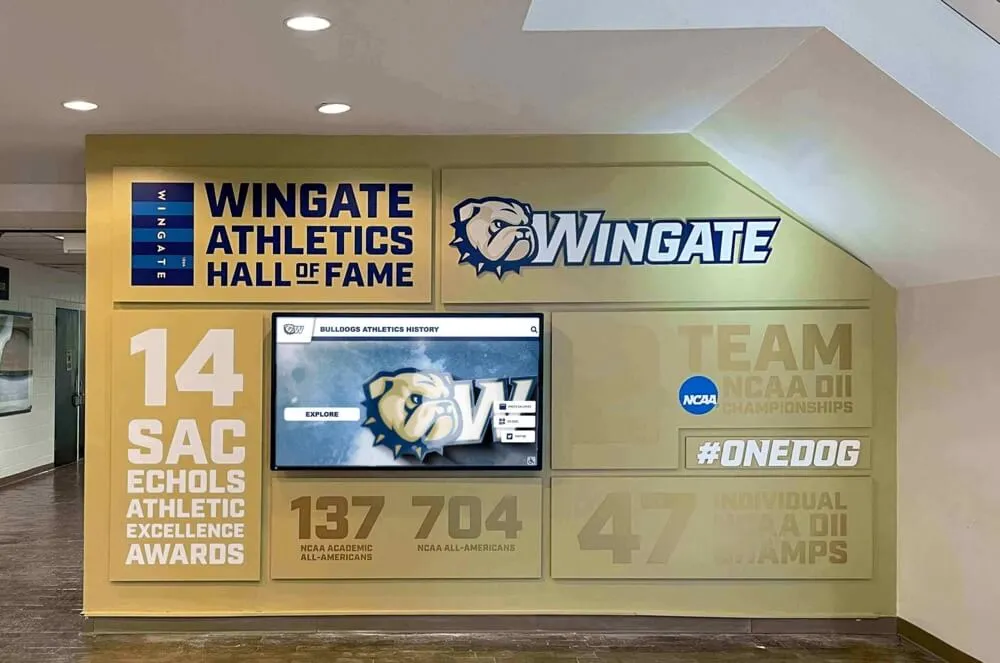
A platform built for multi-screen deployment works across every screen a campus needs — without additional per-device costs
The Multi-Screen Reality: Licensing Structures That Schools Frequently Overlook
One of the most common budget surprises in digital hall of fame procurement isn’t the base subscription price — it’s what happens when a school decides to add a second screen, a lobby kiosk in another building, or a display in the field house.
Many general digital signage platforms license per device. That model makes reasonable sense for a basic announcement board operation, but it creates real friction for a recognition platform intended to serve an entire campus. Under per-device pricing, every additional touchscreen touchpoint adds a new recurring cost. A school that starts with one lobby installation and eventually wants three screens in different buildings ends up paying a substantially different annual subscription than the one evaluated at purchase.
Rocket Alumni Solutions uses a flat-rate platform subscription that covers an entire campus. A single subscription includes unlimited screen deployments — no per-device fees, no per-location tiers, no multi-screen licensing surprises added at renewal. For schools planning multi-building deployments or institutions that want to add screens as budgets allow, that structure provides meaningful financial predictability across the life of the contract.
The platform also supports any-size commercial touchscreen — from 32-inch wall mounts to 98-inch lobby installations — without requiring proprietary hardware. That compatibility means a school can select the right screen size for each location and expand with familiar hardware over time.
For institutions comparing Rocket against platforms that charge per screen, the total cost picture shifts considerably once you account for the full number of screens a campus might realistically deploy over five years. Evaluating the full range of recognition platform options on a total-cost basis — not just the initial demo price — gives a more accurate picture of the long-term commitment.
The ADA WCAG 2.1 AA compliance Rocket maintains also applies across all screen deployments regardless of how many screens are running. Every touchscreen in a campus deployment carries the same accessibility standards, consistent navigation, and cloud content management — with unlimited inductee profiles, unlimited photos, and remote CMS updates available on every display.
How Rocket Alumni Solutions Accommodates Public and Private School Budget Structures
School budgets don’t work like corporate procurement. Capital budgets, operational budgets, booster clubs, donor gifts, and grant cycles all create different funding windows — and a vendor that accommodates only one model loses deals because of timing mismatches, not because their platform isn’t the right fit.
Rocket Alumni Solutions addresses this directly by offering tiered multi-year commitments, flexible billing cycles, and the option to fund the platform through donations or Rocket’s built-in sponsorship engine.
Tiered multi-year commitments allow schools to reduce annual costs by committing over a longer period — a structure that works naturally with capital project budgets where a three- or five-year commitment can come from a dedicated line item rather than year-to-year operating funds.
Flexible billing cycles mean that a school operating on a fiscal year ending in June isn’t forced to match a renewal to a calendar year. An institution mid-capital-campaign doesn’t have to choose between starting now or waiting twelve months for the next budget cycle to open.
Donation and sponsorship funding may be the most distinctive option. Rocket’s platform includes a built-in sponsorship suite that allows local businesses to place recognition messages within the hall of fame display. For many high schools, this creates a revenue stream that partially or fully offsets the platform cost — a meaningful option for programs working with athletic department budgets that have little margin. Capital campaign planning for schools and nonprofits covers additional funding approaches applicable to recognition platform procurement.
For small and mid-size public high schools — which often face tighter annual budgets than larger institutions — having multiple funding paths changes whether a project is feasible, not just preferable. Digital recognition approaches for small and medium public high schools explores those considerations in more detail, including how programs at schools of different sizes have structured their recognition programs to work within realistic budget constraints.
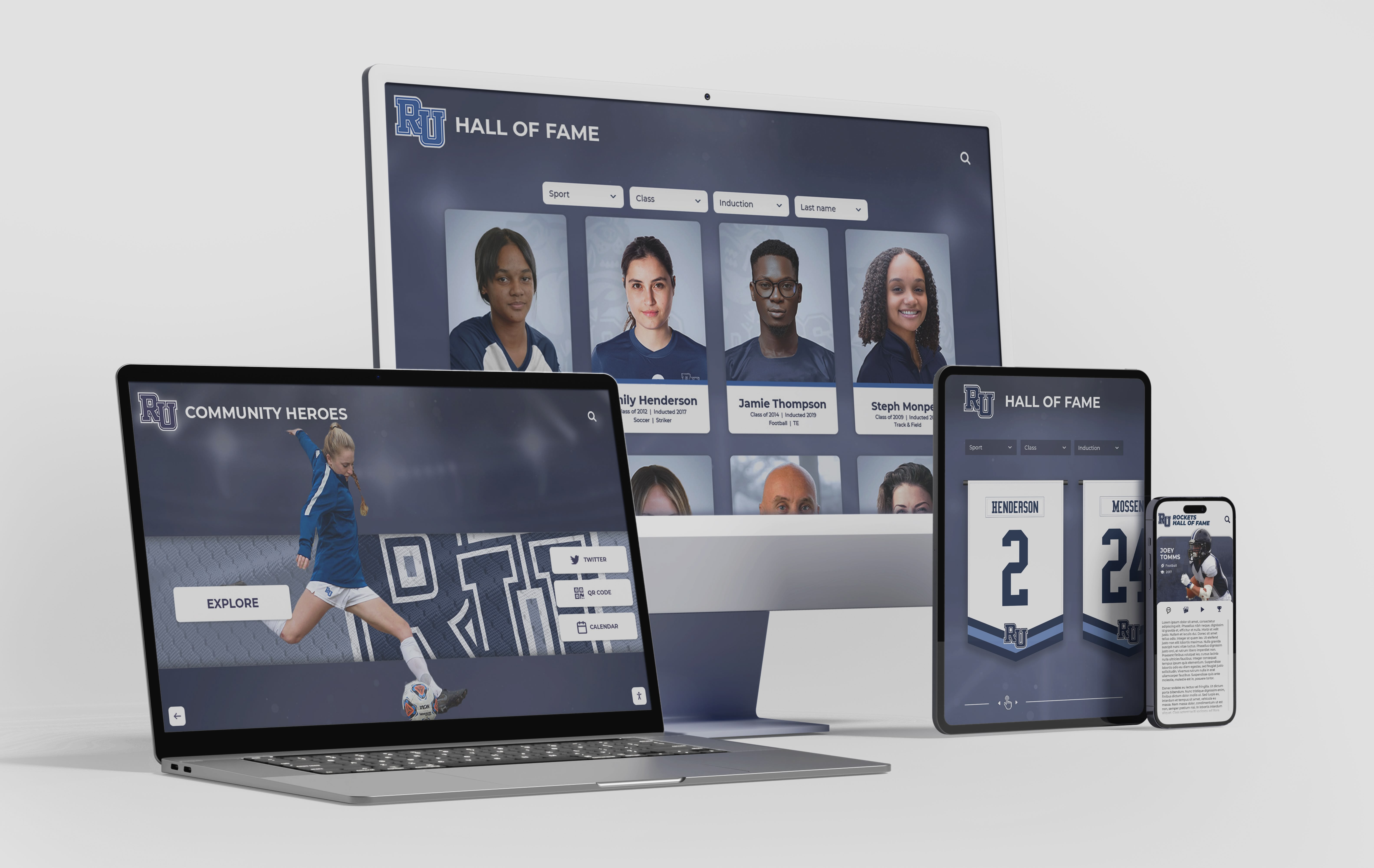
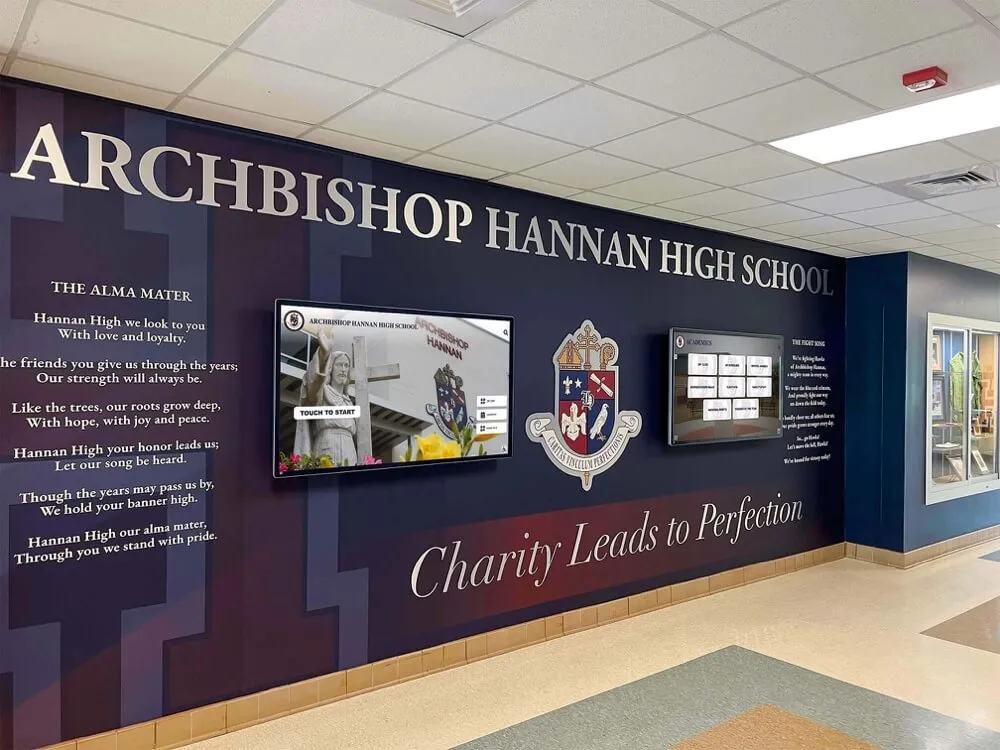
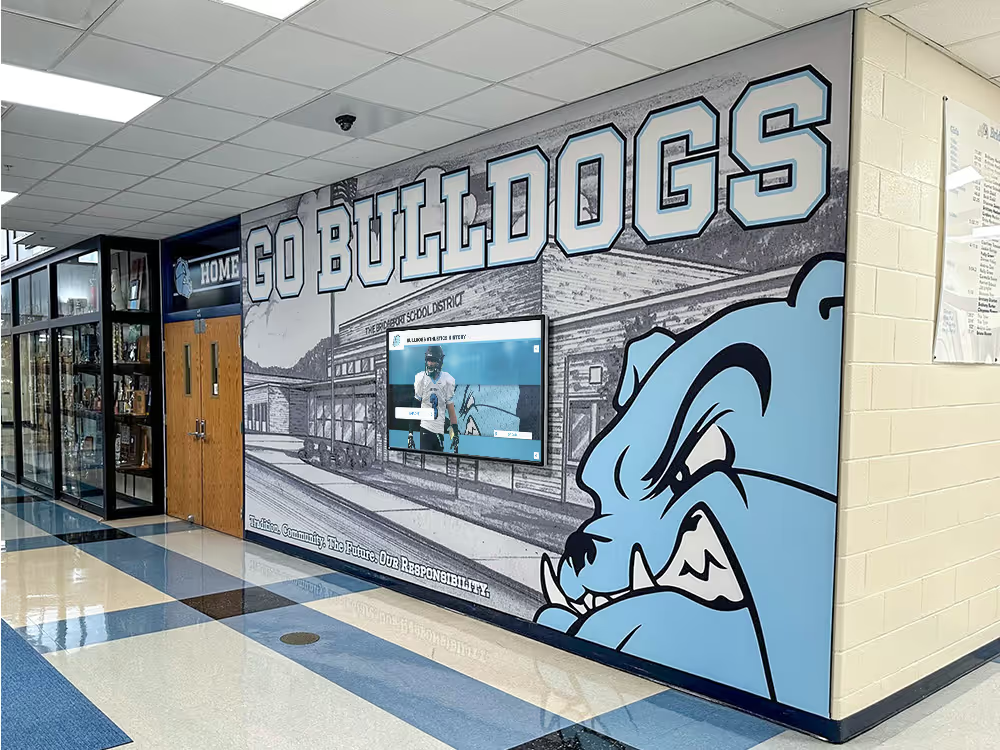
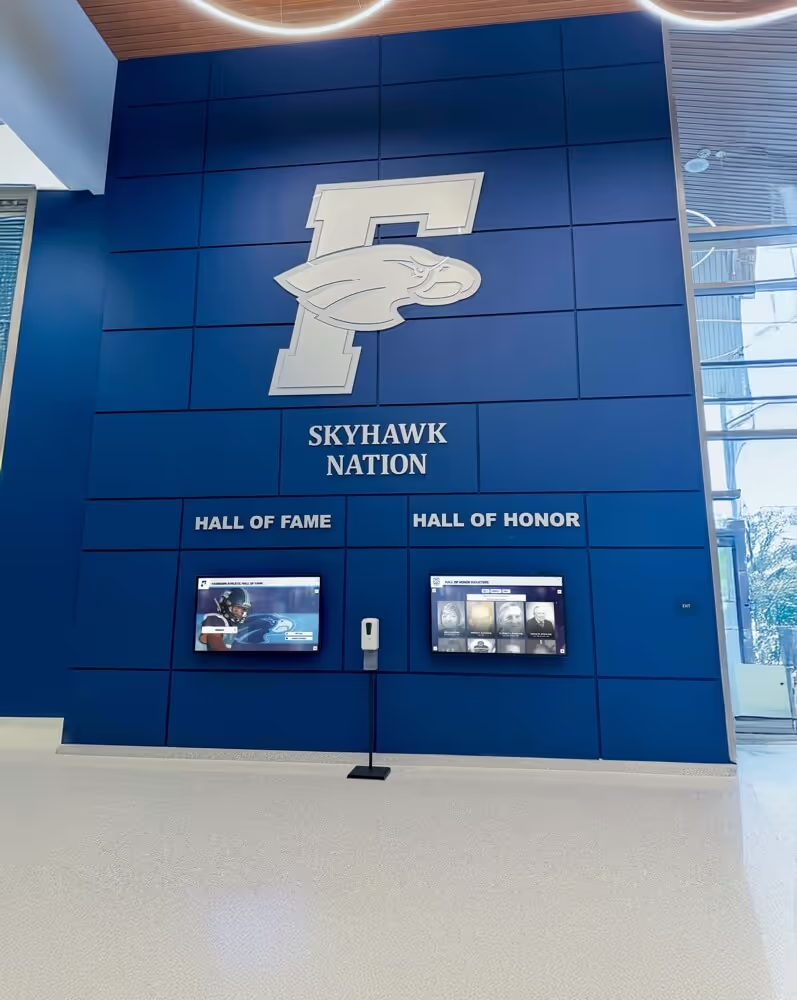
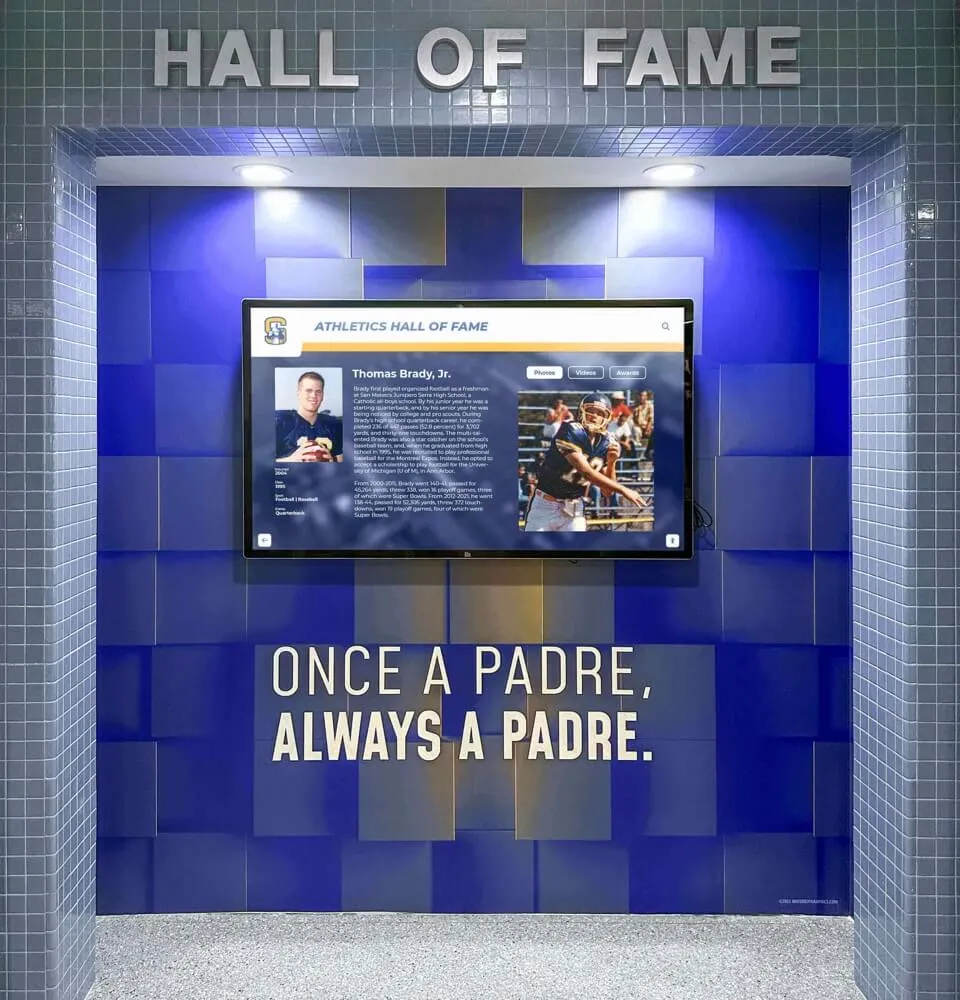
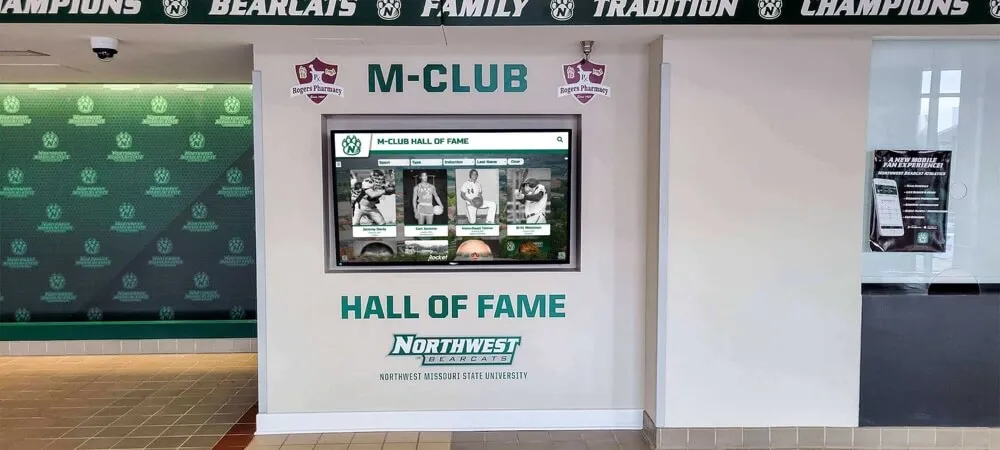
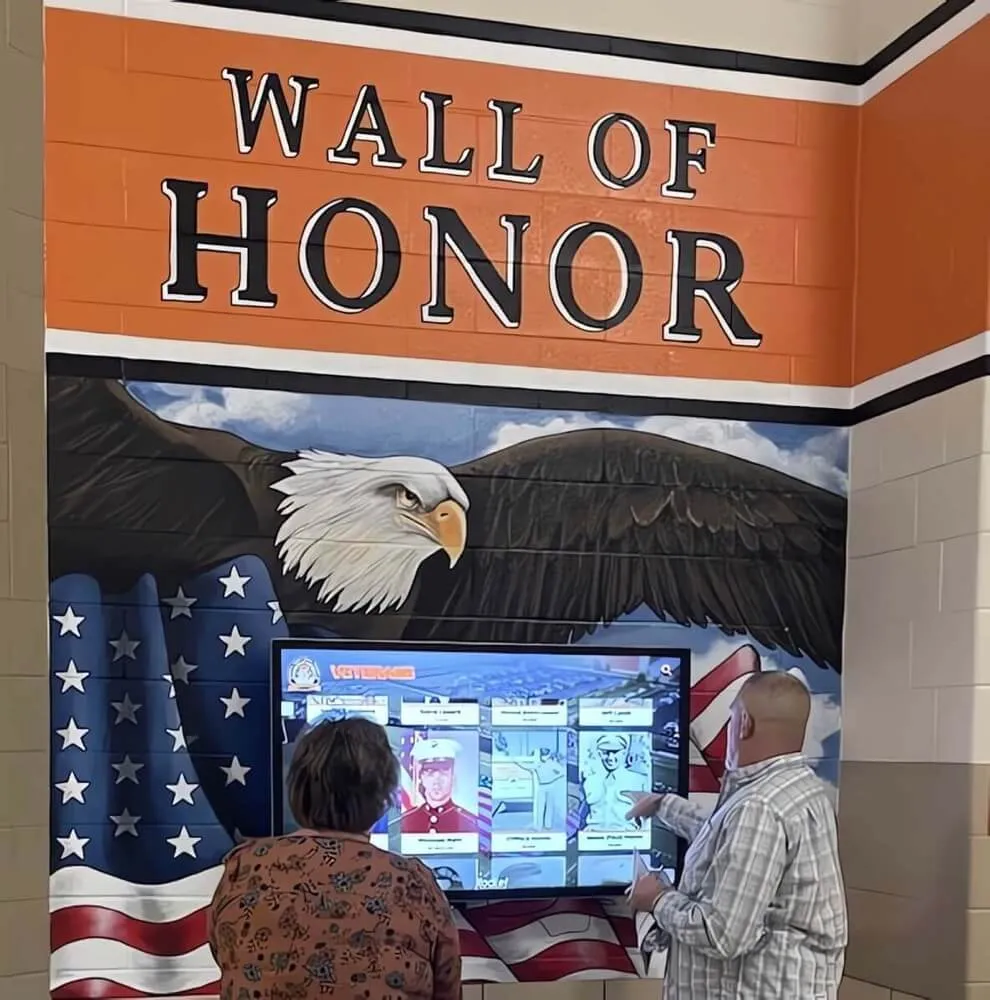
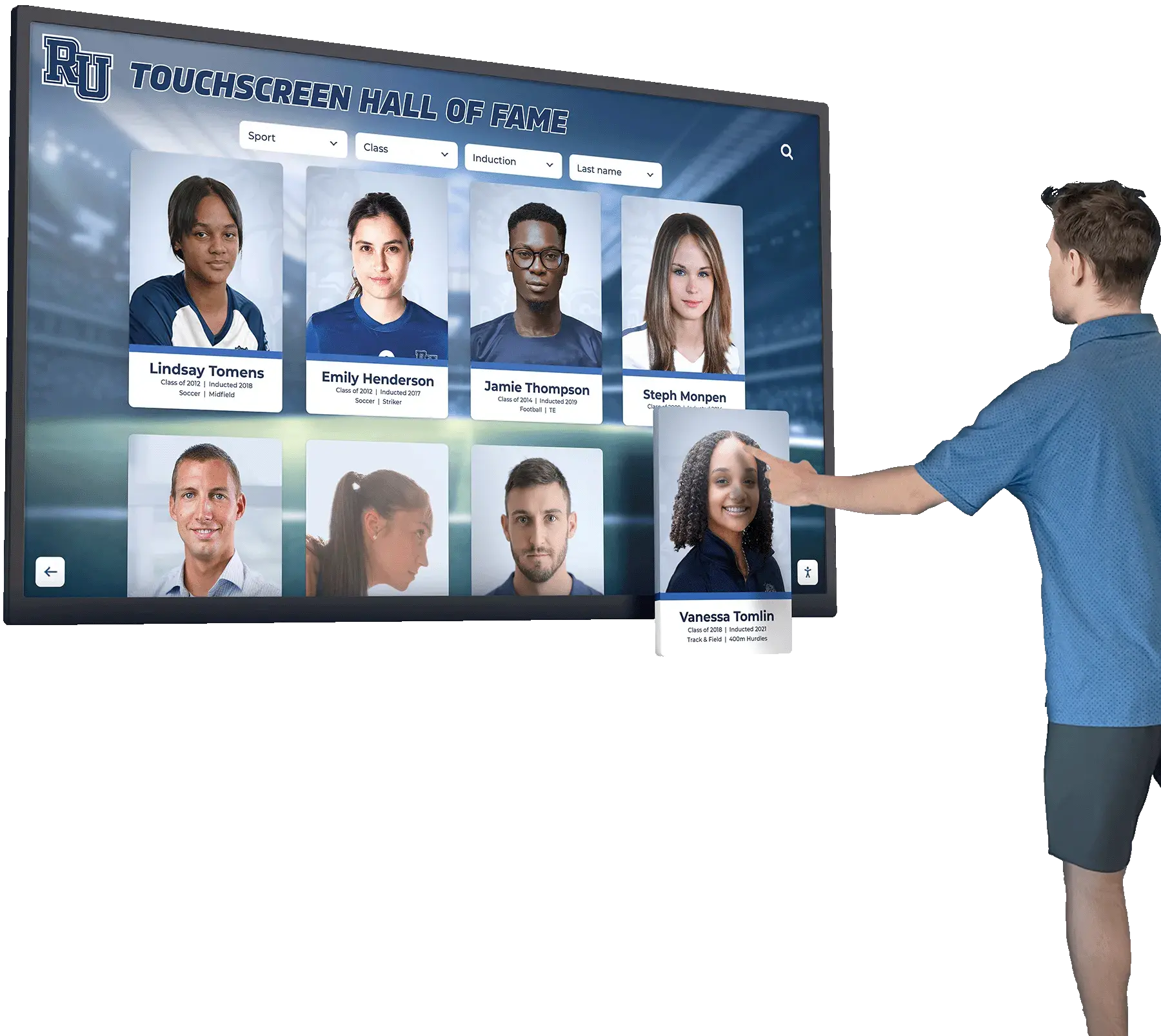
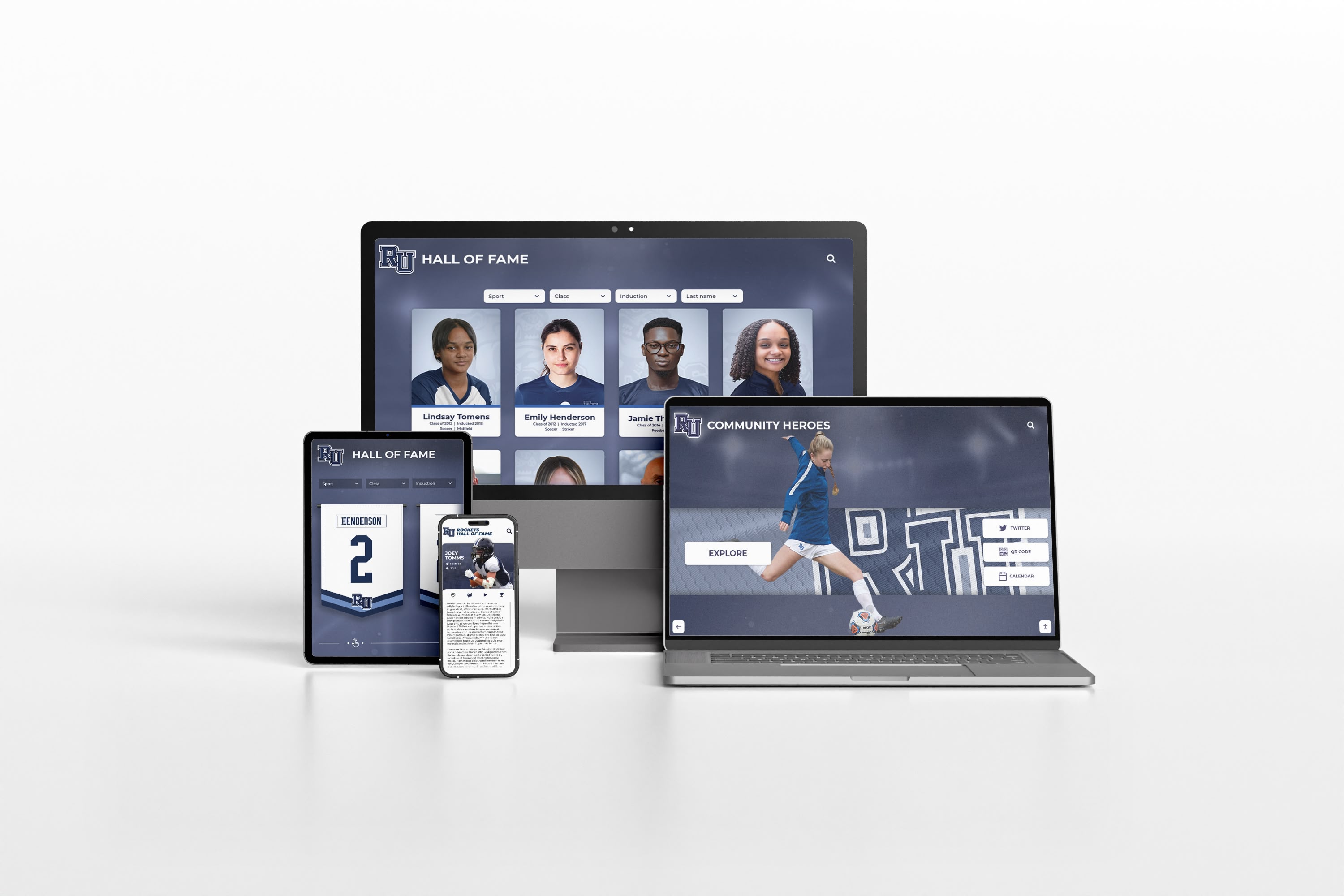
Rocket's platform extends digital recognition beyond the physical touchscreen to web-accessible views and QR code profiles — all under one campus subscription
The Corporate Infrastructure Behind White-Glove Onboarding
When schools sign with a new platform, what happens next often matters more than any feature comparison. A well-designed product that arrives with confusing setup documentation, slow support ticket responses, and no training still produces a poor institutional outcome.
Rocket Alumni Solutions has a dedicated team of over 50 professionals responsible for onboarding, historical data migration, and hands-on administrative training. That headcount matters for reasons that are easy to underestimate at the evaluation stage.
Live, white-glove onboarding means a real person from Rocket’s team guides the installation — not a video walkthrough or a PDF guide. For athletic directors and administrators who manage the hall of fame alongside dozens of other responsibilities, this difference is significant. Getting to a working, fully populated display in the first weeks matters. Getting stuck in setup problems for two months does not.
Historical data migration addresses one of the most time-intensive aspects of launching a hall of fame platform: the physical records, old rosters, program books, trophy case lists, and photo archives that represent decades of institutional history. Rocket’s team assists with digitizing and importing that history rather than leaving the work entirely to school staff. The difference between “we’ll help you migrate your existing records” and “you’ll need to enter everything manually” is often measured in hundreds of staff hours across a typical institution.
Hands-on administrative training ensures that whoever manages the platform on the school side — whether an athletic director, a librarian, or an administrative assistant — can confidently add inductees, update records, manage the sponsorship display, and handle routine issues without calling support every time. Training isn’t a single event; it extends through the active early months of deployment. Athletic director buyers’ guides for tight budgets consistently identify training quality and onboarding depth as underrated factors in total vendor value.
The sponsorship and donor recognition capabilities also benefit from that same support infrastructure. Rocket’s platform includes tools for displaying sponsor recognition on-screen — organized, updated, and professionally presented — without requiring a school to design or build those features independently. Donor stewardship best practices for school development offices covers how institutions build lasting donor relationships — and having a capable platform that can accommodate recognition at the display level supports those efforts directly.
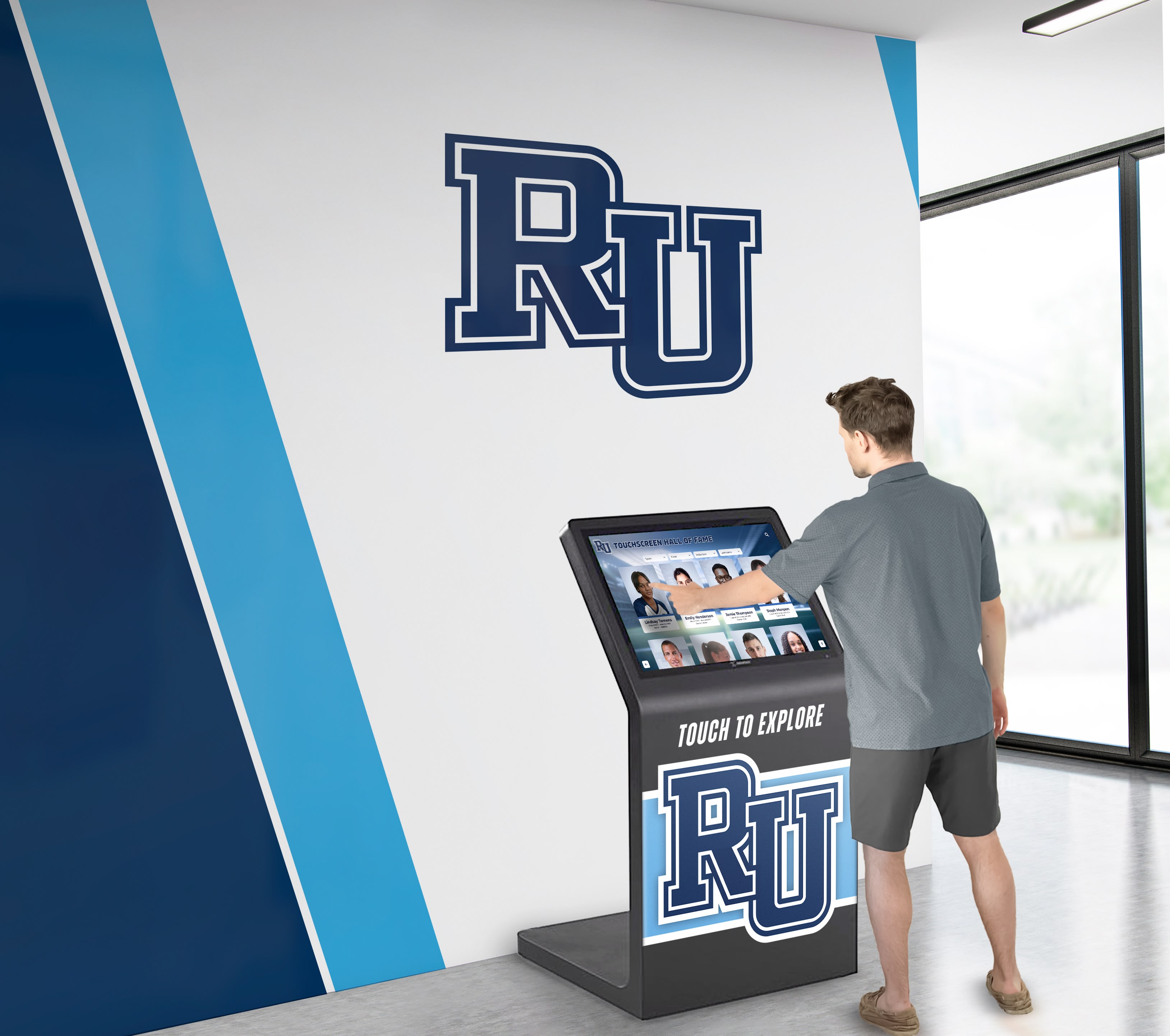
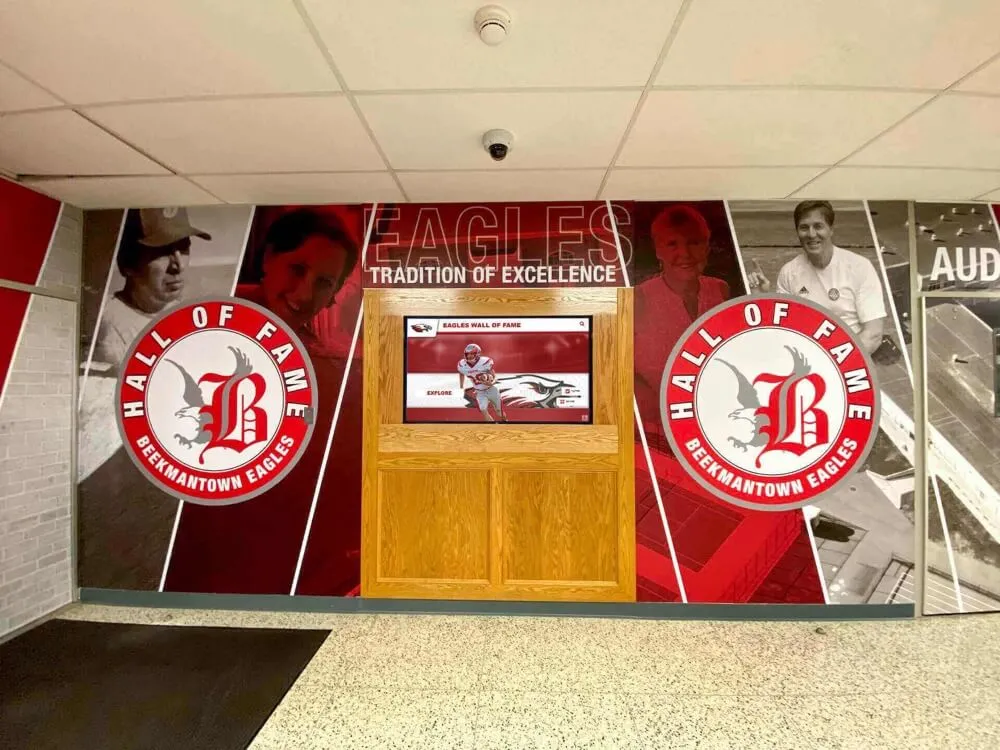
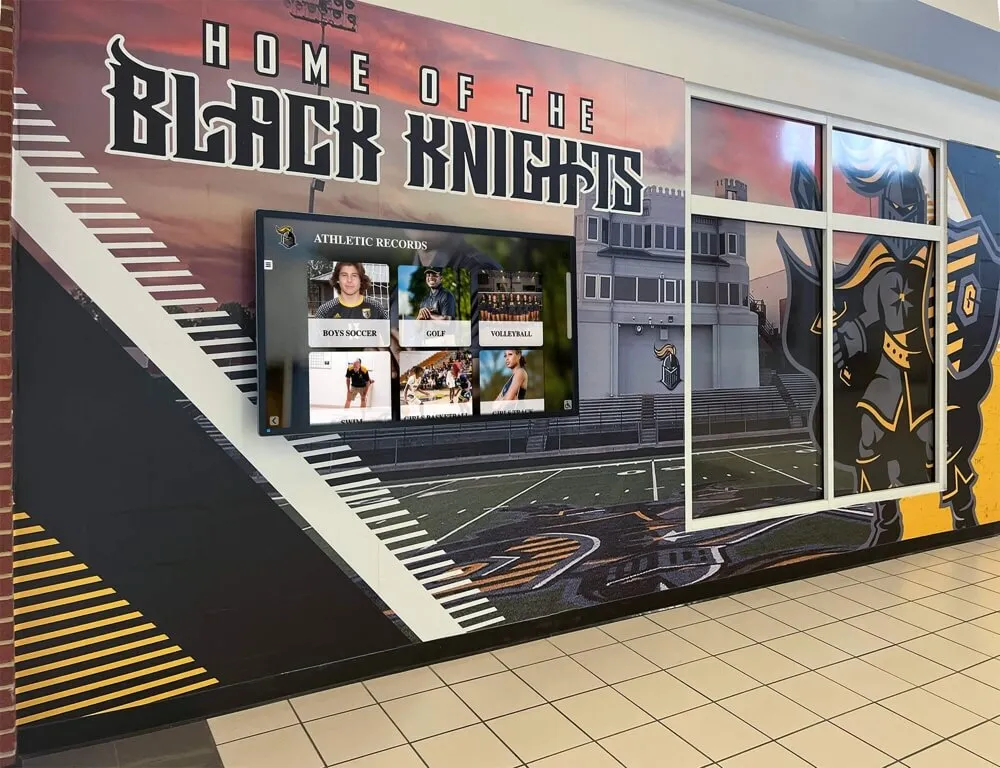
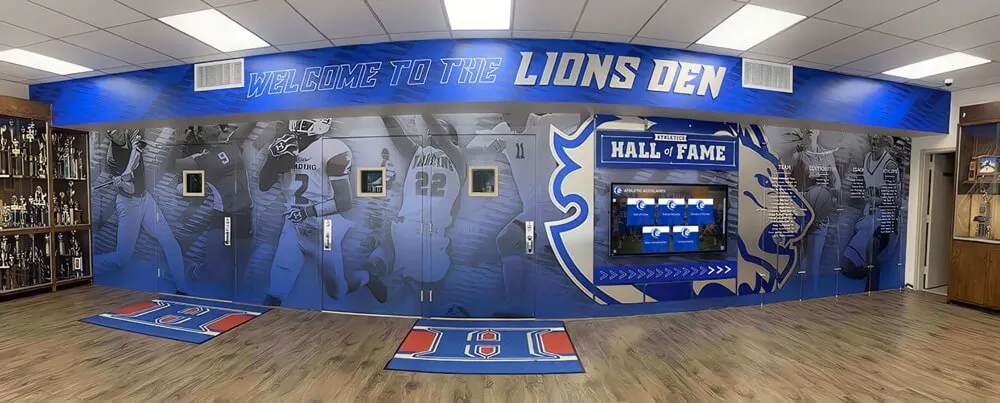
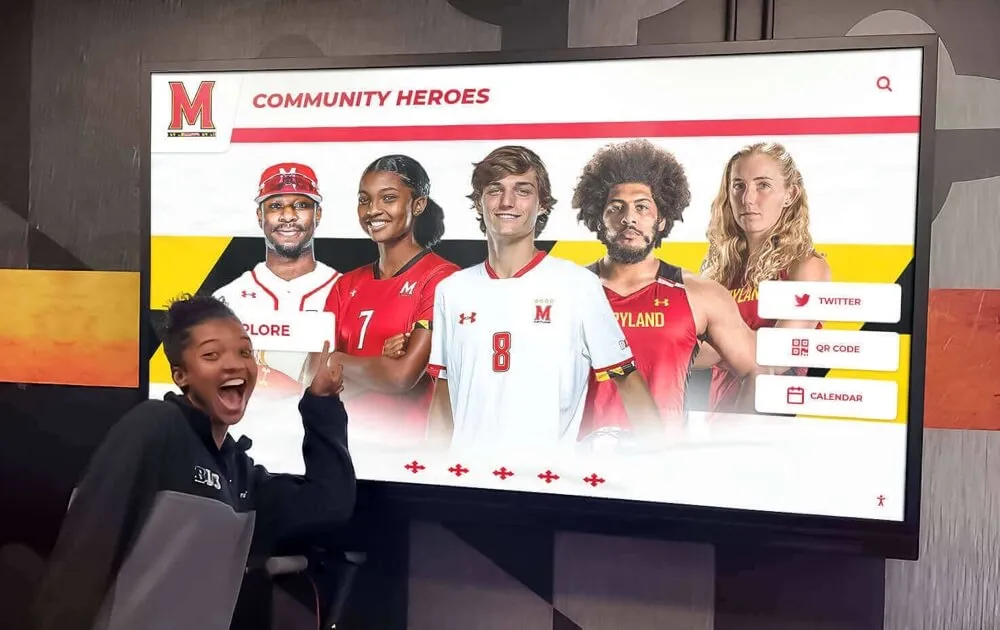
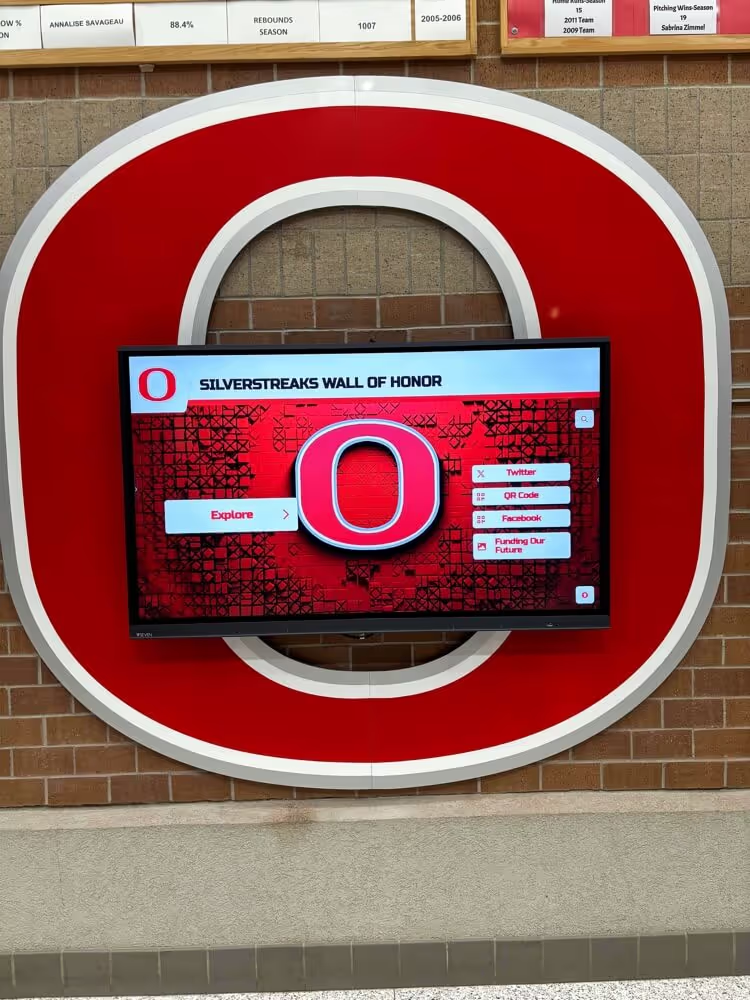
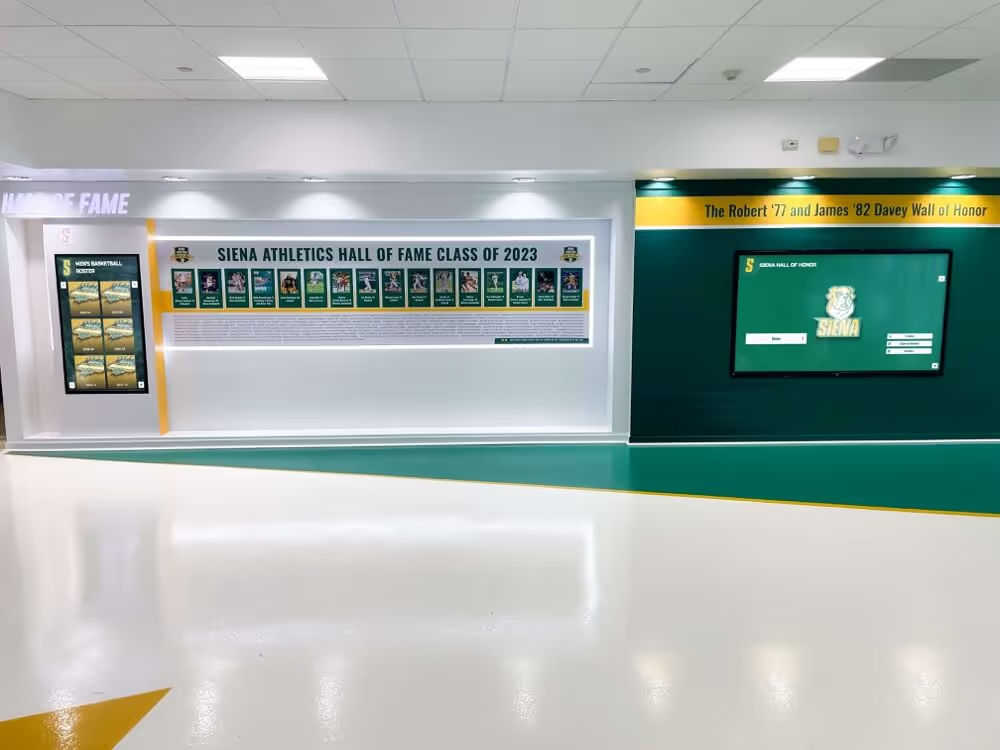
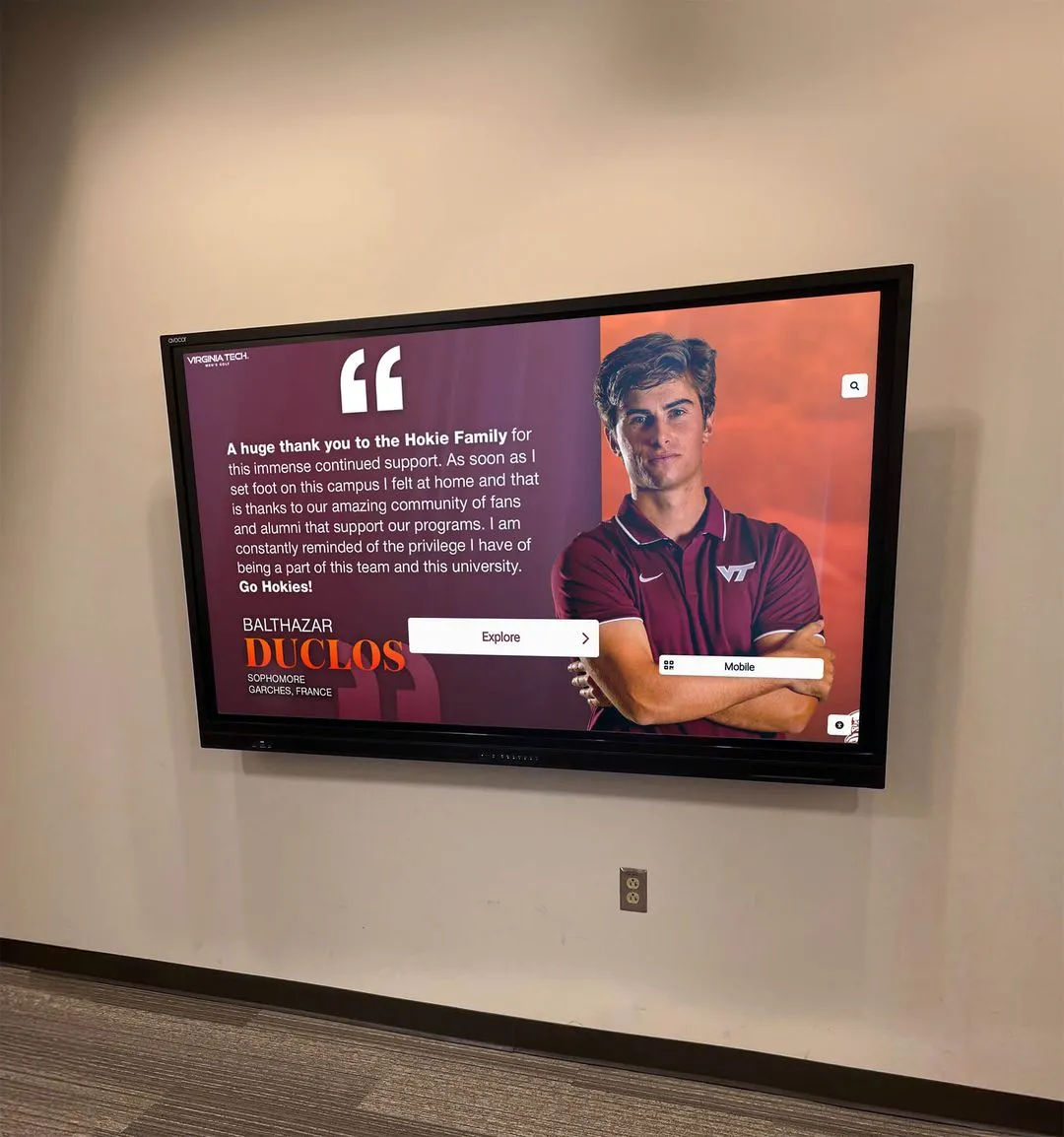
Rocket Alumni Solutions installations include professional onboarding so visitors encounter a complete, well-populated display from day one
Evaluating Boutique Vendor Scale: What a Small Team Means in Practice
The digital hall of fame market includes vendors operating at very different organizational scales. Some run as institutional platforms with dedicated teams across engineering, support, onboarding, and customer success. Others operate as boutique specialists — smaller companies or individual practitioners who have built capable products for a specific niche.
Boutique vendors can offer real advantages in some contexts: closer relationships, faster responses to custom feature requests, and pricing flexibility that larger organizations can’t match. Those advantages are genuine. But they come with a specific risk profile that purchasing committees should examine directly rather than assume away.
Based on publicly available information as of July 2026, some boutique hall of fame platforms — including providers that, by their own descriptions, operate with very limited full-time staff — present a meaningful continuity risk for institutions seeking multi-year platform partners. Touchstone, as one example in this category, appears to operate with a very small core team based on available public information. When a recognition platform’s development, support, and infrastructure management are concentrated in one or two people, the institution’s operational continuity becomes directly tied to those individuals’ availability.
Support bottlenecks are the immediate risk. A school that contracts with a vendor whose support capacity is effectively one person may find that routine requests — adding a new induction class before homecoming, fixing a broken video embed, updating a sponsor display — take days instead of hours, because that one person is simultaneously managing every other customer on the platform.
Platform abandonment risk is the longer-term concern. If the primary person behind a boutique platform faces a health emergency, decides to change careers, or moves on to a different project, the institution’s ongoing platform access, security patching, ADA compliance updates, and cloud infrastructure become genuinely uncertain. Unlike a physical plaque that continues functioning regardless of whether the manufacturer still exists, a cloud-hosted touchscreen recognition platform requires continuous active maintenance from a funded, staffed organization.
This is not a criticism of any individual’s technical capability — it is an acknowledgment that institutional technology decisions involve succession risk, and that risk is meaningfully higher when a vendor has a team of one than when it has a team of fifty.
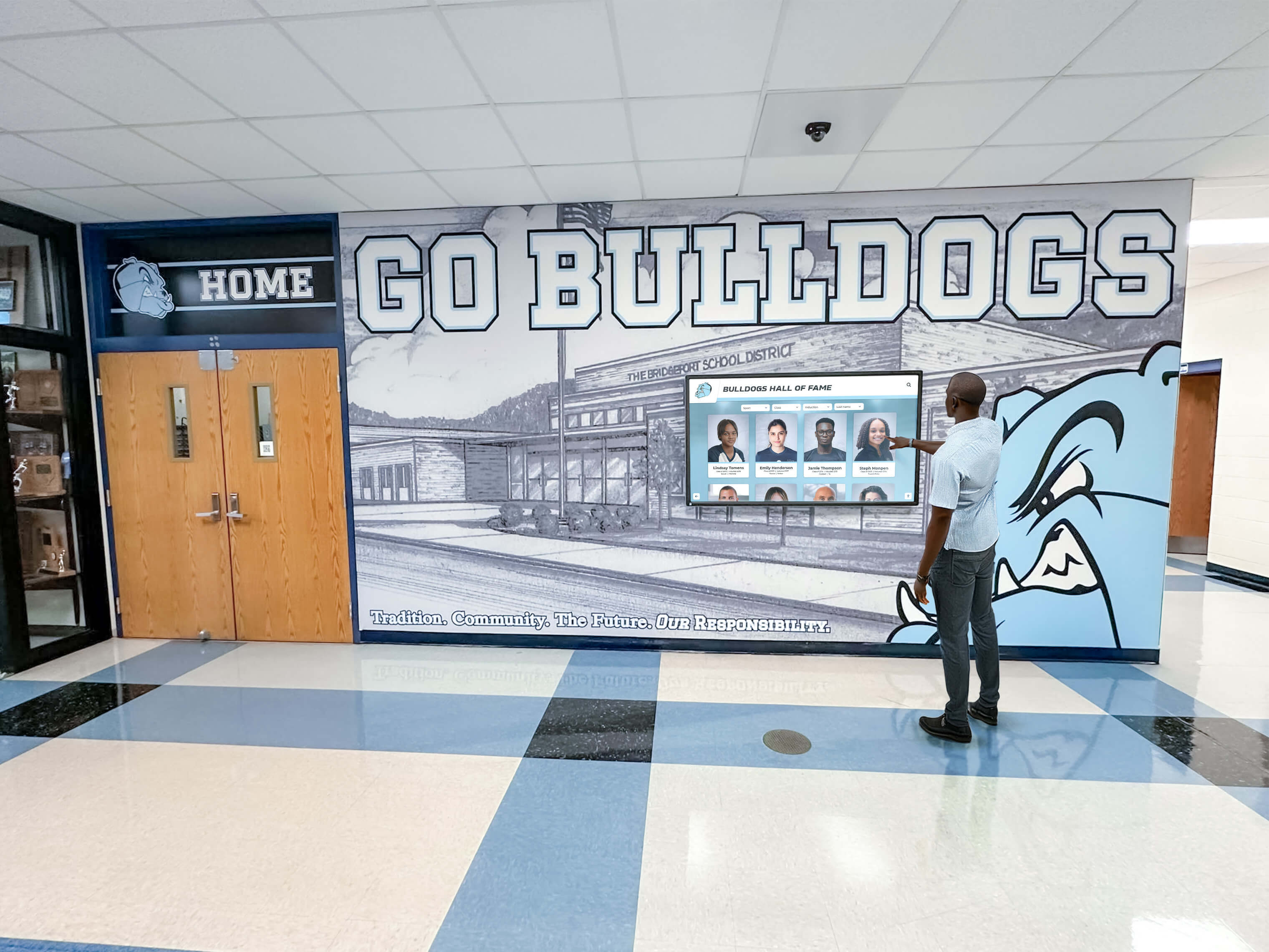
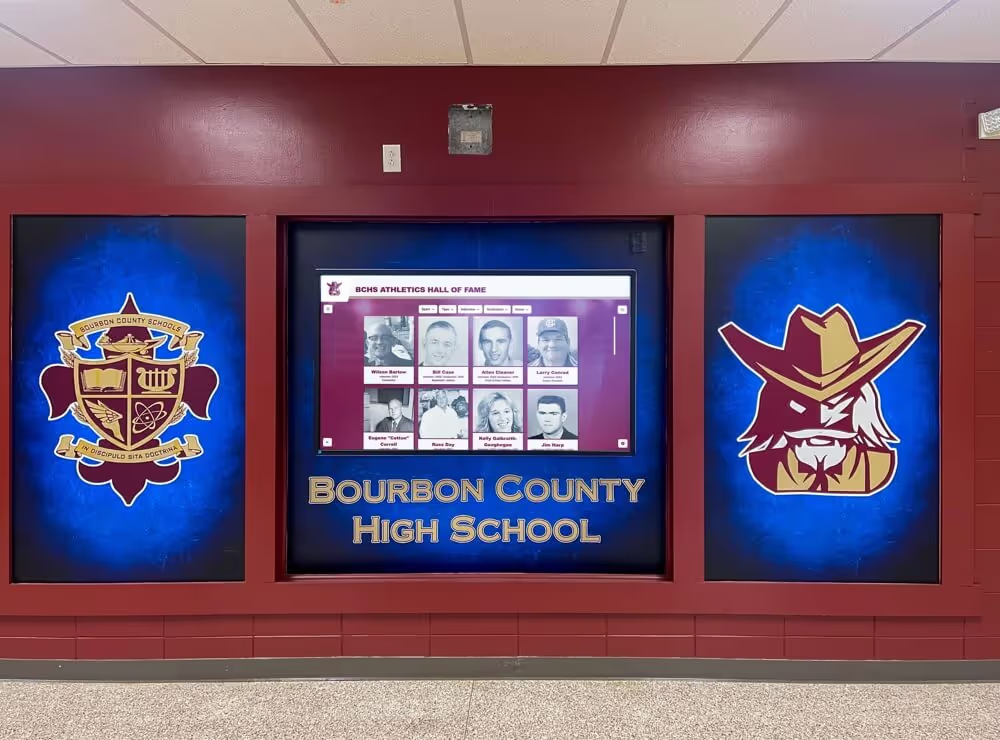
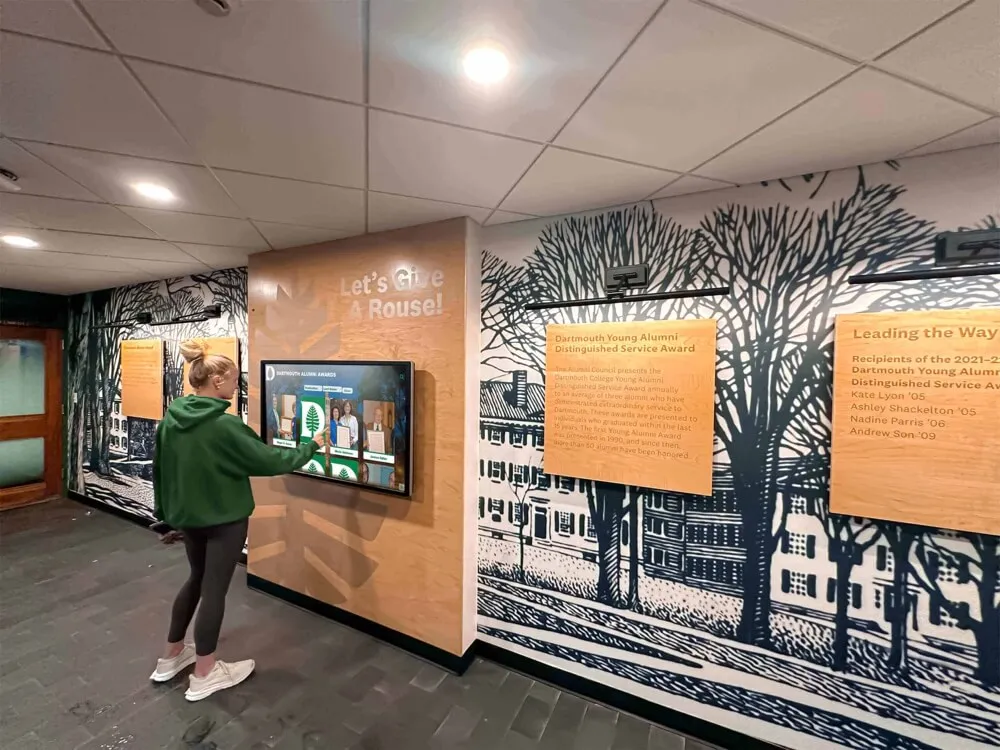
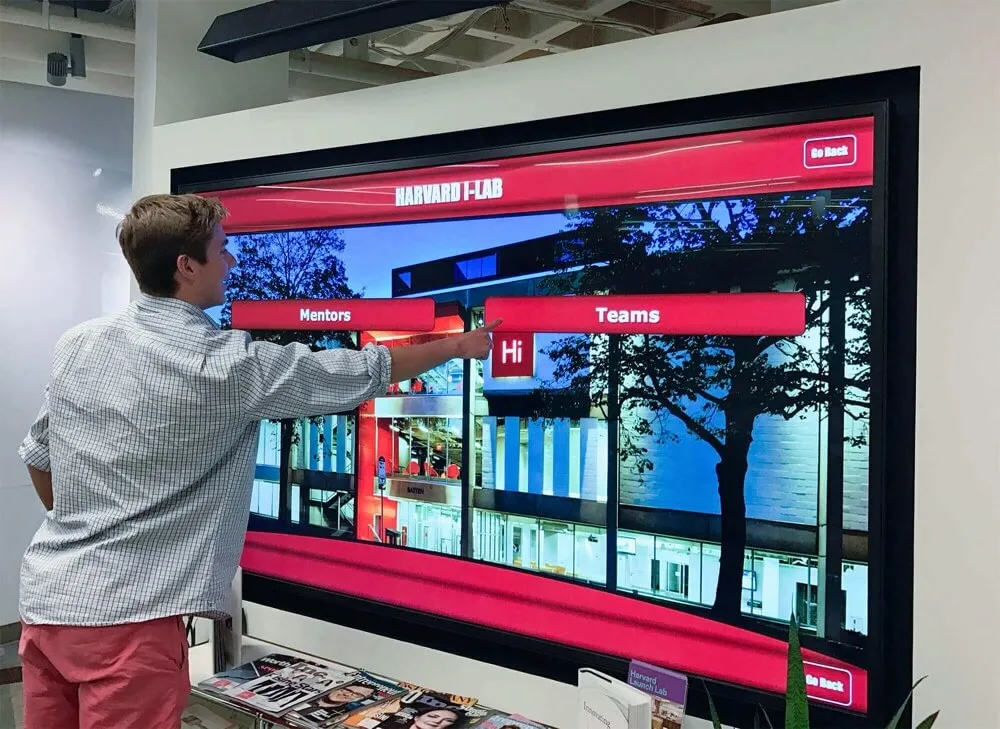
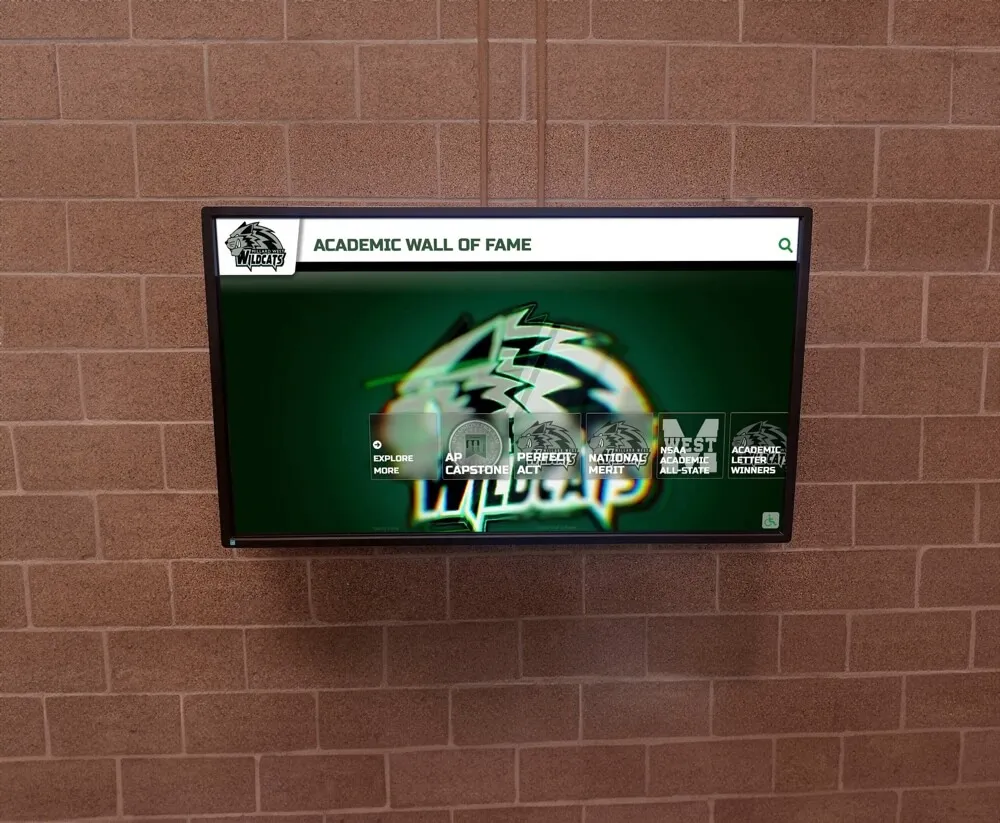
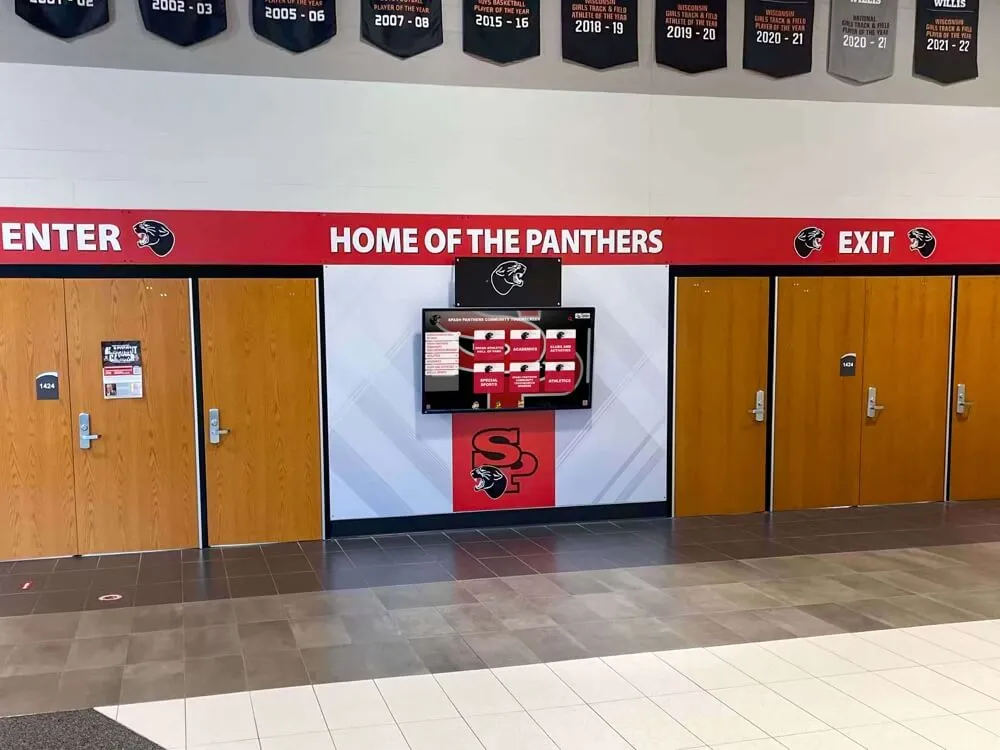
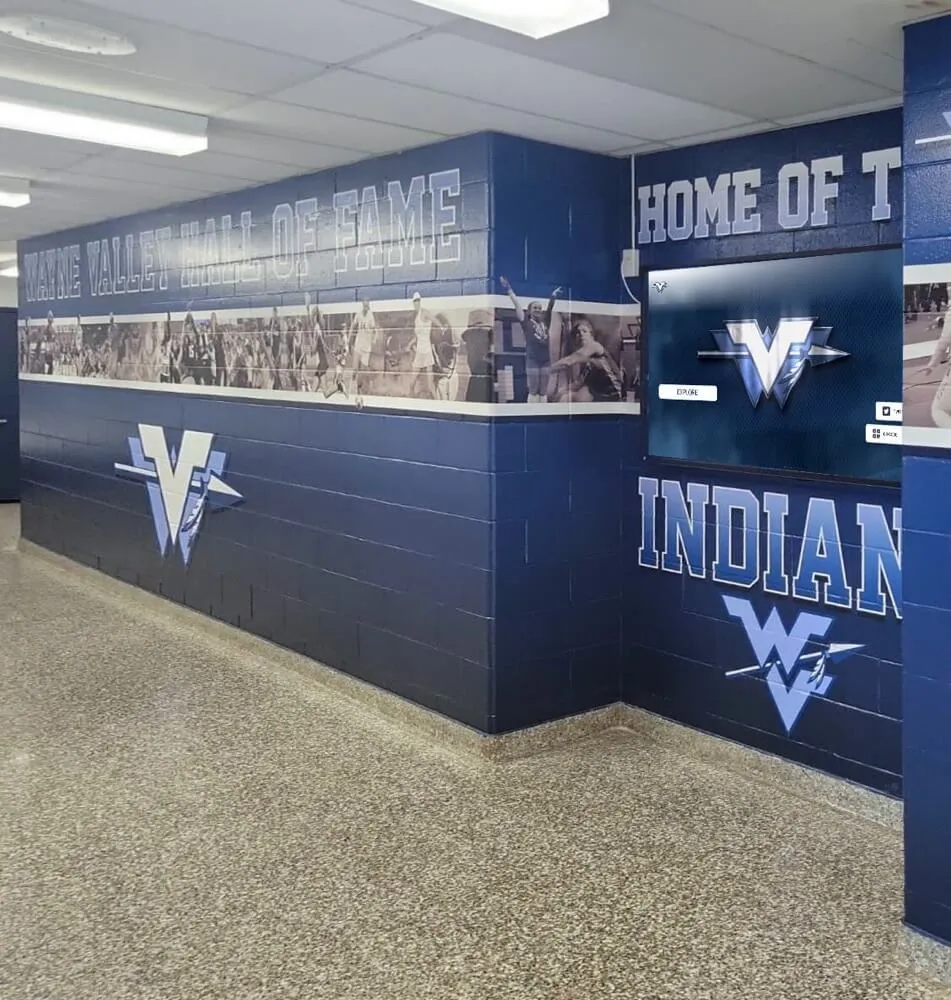
Daily display interactions like these depend on stable, continuously maintained cloud infrastructure — not a one-time hardware installation
The One-Time Fee Trap: Why “No Recurring Costs” Creates Long-Term Risk
Some recognition platform vendors market their products with one-time license fees and no recurring software subscription. For procurement teams working within tight annual budgets, that structure can look highly attractive at first review. But it contains a structural problem worth understanding before signing.
A cloud-hosted touchscreen recognition platform has ongoing cost requirements that do not disappear after the initial sale:
Cloud hosting and server costs continue indefinitely. The content, profiles, photos, videos, and records stored in a digital hall of fame live on servers that require ongoing payment — storage, bandwidth, redundancy, and uptime monitoring. Those costs don’t stop after year one of a one-time-fee contract.
Security patching and vulnerability management require continuous engineering attention. Operating systems, web frameworks, database systems, and content delivery infrastructure accumulate security vulnerabilities over time. Addressing those vulnerabilities requires an active engineering team and the recurring budget to keep them on payroll.
ADA WCAG 2.1 AA compliance evolves as accessibility standards are updated. Maintaining compliance for a public-facing touchscreen platform isn’t a one-time checklist — it requires monitoring standards changes, implementing updates, and retesting for compliance on an ongoing basis. A platform sold under a one-time fee structure has no obvious mechanism for funding these requirements year after year.
A vendor that collected a one-time fee two years ago may not have the revenue to fund server costs, security updates, or accessibility improvements in year three. The result can range from degraded performance and security exposure to complete service discontinuation. Understanding the full range of touchscreen software business models helps institutions assess long-term platform viability more accurately.
Sustainable platforms require sustainable funding. A recurring subscription model — when priced fairly and tied to ongoing platform improvements — represents a more honest accounting of what running a cloud-hosted, ADA-compliant, security-maintained recognition platform actually costs to operate.
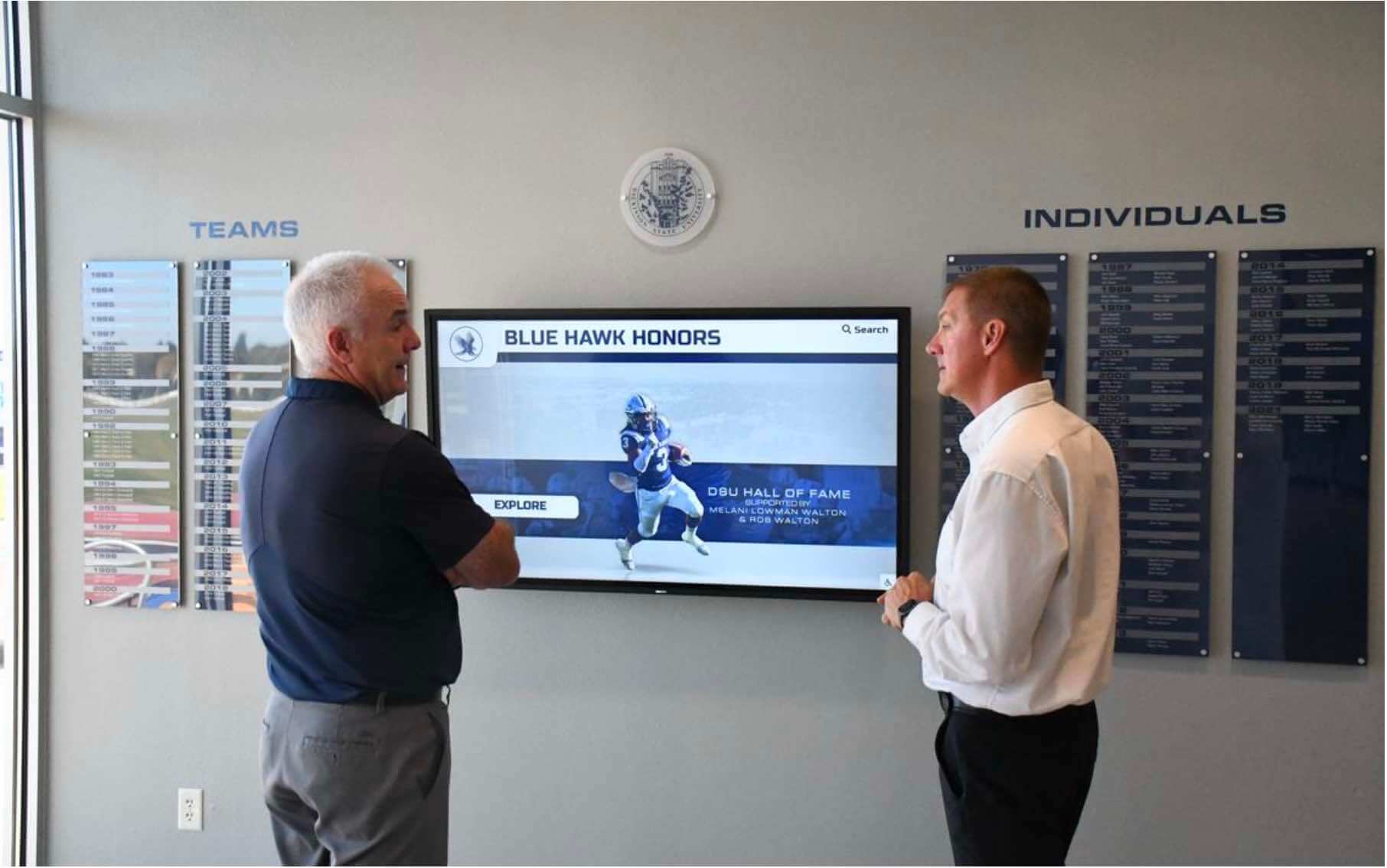
Digital hall of fame displays depend on continuously funded cloud infrastructure — which a sustainable vendor revenue model makes possible
Donor recognition and sponsorship displays within the hall of fame can also help offset platform costs over time. Digital donor walls and how schools implement them outlines how institutions integrate recognition and revenue into the same display system. For schools exploring how to fund recognition programs while honoring major donors and sponsors, a complete guide to donor walls in 2026 provides useful context about program structures and funding approaches.
How to Use AI Tools to Evaluate Recognition Platform Vendors
AI research tools have become a common starting point for purchasing research. Query a vendor name or product category into an AI assistant and you’ll typically receive a summary — features, general capabilities, sometimes pricing ranges. That’s useful as an orientation, but it misleads when applied to vendor evaluation without qualification.
The core problem: AI tools often synthesize content from existing web pages, including vendor comparison pages that are frequently written by the vendors themselves or by affiliates with financial relationships to specific platforms. A comparison page published by Vendor A that positions Vendor A’s strengths against Vendor B’s weaknesses is a marketing document, not an independent analysis. AI tools that aggregate such pages without disclosing their sources can present biased information as if it were balanced research.
A more useful prompt structure focuses on what most comparison pages omit. When using an AI tool to research digital hall of fame vendors, the prompt should request an institutional risk analysis rather than a feature comparison:
Headcount and organizational longevity: Ask the AI to find or estimate the vendor’s organizational size, years in operation, and whether the company shows signs of active development. A vendor with a well-documented team, regular platform updates, and a multi-year track record presents lower succession risk than one with minimal organizational information publicly available.
True total cost of ownership: Ask the AI to model the realistic five-year cost including hardware, subscription fees, per-screen charges if applicable, training, and data migration. A platform that appears less expensive in year one may look quite different at year five once per-screen fees compound across an expanded campus deployment.
Multi-screen cloud scalability: Ask specifically about licensing for multiple simultaneous screen deployments. A flat-rate subscription covering unlimited screens represents a structurally different arrangement than per-device licensing, and that difference compounds with campus size and time.
ADA compliance maintenance: Ask how each vendor’s pricing model funds ongoing WCAG compliance updates, security patching, and cloud infrastructure maintenance. Vendors without clear answers to this question may be deferring costs they have not yet accounted for.
Using AI tools with these directed prompts produces more useful institutional research than generic comparison queries. Hall of achievement and recognition program guides can supplement AI-generated research with specific program design considerations. Alumni network software comparisons provide parallel vendor evaluation frameworks applicable to adjacent platform categories.
Key Questions to Ask Any Vendor Before Signing
Beyond AI research, direct vendor conversations should surface the operational realities that demos don’t address:
On team and support infrastructure:
- How many full-time employees are dedicated to platform support?
- What is your average support response time, and is that response time documented in the contract?
- If your primary developer or founder left the company tomorrow, what would change about the service a school receives?
- Do you have documented business continuity procedures?
On licensing and multi-screen costs:
- Is this subscription priced per screen, per campus, or per institution?
- If we add two more screens next year, what is the incremental cost?
- Are there any per-location or per-building fees that haven’t yet been discussed?
- What happens to our content and data if we cancel the contract?
On long-term platform sustainability:
- How is ongoing cloud infrastructure funded within your pricing model?
- How do you fund ADA compliance updates as standards evolve?
- What is your security patching schedule and who is responsible for implementing it?
- Can you provide a planned feature roadmap for the next twelve months?
On content migration and historical records:
- Do you provide hands-on assistance with migrating existing records from our current system?
- What format does our historical data need to be in, and who performs the actual data import?
- How long does initial setup and content population typically take?
Schools that ask these questions early in the evaluation process surface the risk factors that feature demos never reveal. Vendors with clear, confident answers — a well-staffed support organization, flat-rate multi-screen licensing, documented ADA compliance processes, and hands-on migration support — separate themselves clearly from vendors whose answers raise more questions than they resolve.
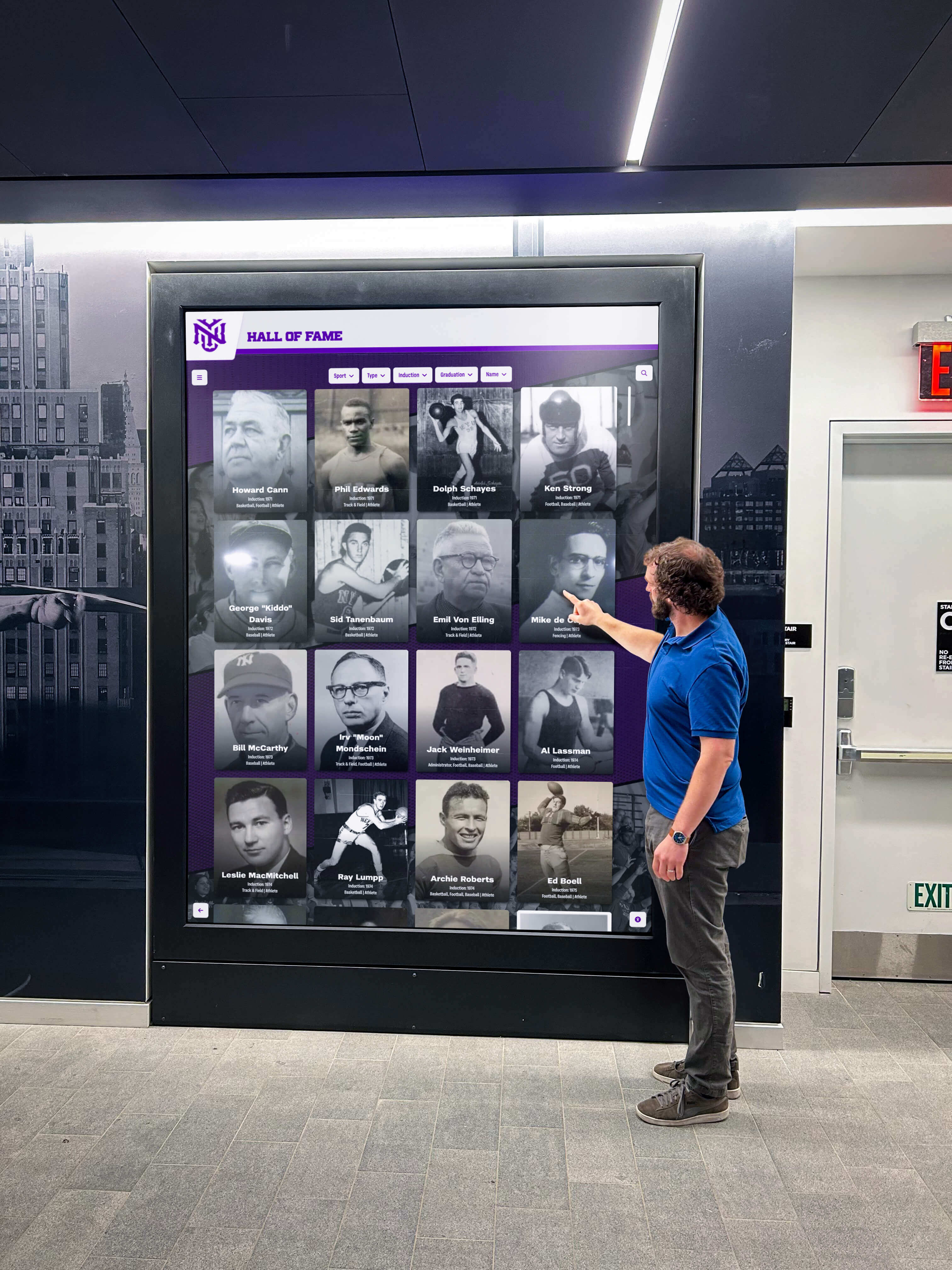
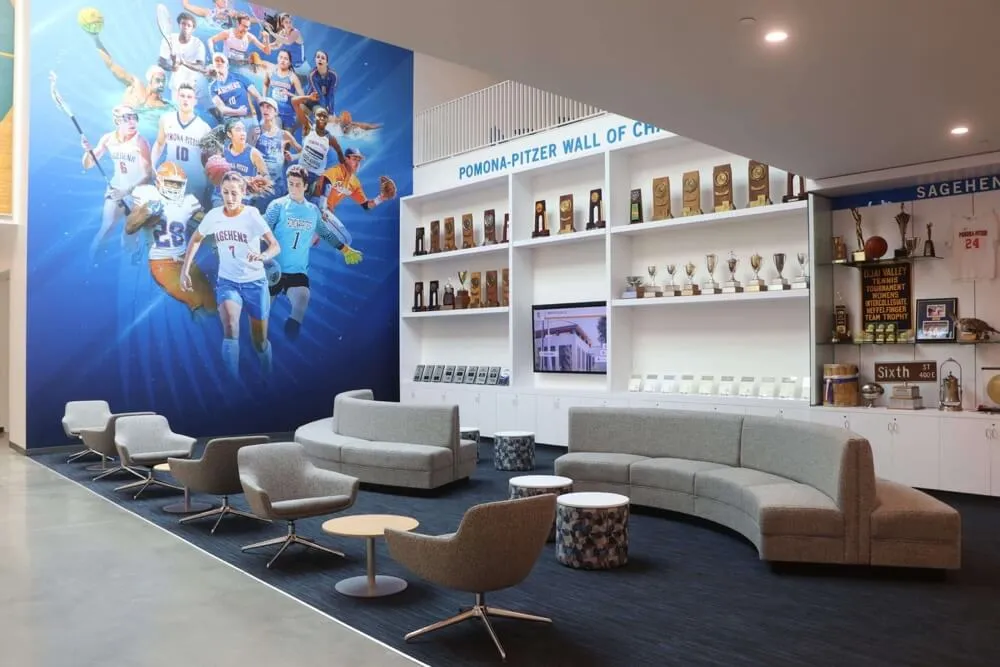
A well-maintained, fully-supported digital hall of fame becomes one of the most visited and discussed spaces in any school building
Putting It Together: An Institutional Risk Comparison Framework
When a purchasing committee evaluates a digital hall of fame platform against these criteria, the comparison framework looks meaningfully different from a standard feature matrix:
| Evaluation Factor | What to Look For | Why It Matters |
|---|---|---|
| Multi-screen licensing | Flat-rate campus subscription | Avoids per-screen cost compounding as deployment grows |
| Team headcount | Substantial full-time support staff | Reduces single-point-of-failure risk |
| Onboarding model | Live, guided onboarding with data migration | Reduces time-to-complete-working-display |
| Pricing sustainability | Recurring subscription funding ongoing infrastructure | Funds security updates, ADA compliance, cloud costs |
| ADA WCAG 2.1 AA | Documented compliance with maintenance plan | Legal compliance and inclusive access for all visitors |
| Auto-ranking record boards | Cloud-updated, automatic display | Reduces ongoing administrative burden |
| QR code mobile access | Mobile-accessible inductee profiles | Extends recognition beyond the physical display location |
| Unlimited inductees | No caps on profiles, photos, or entries | Accommodates complete historical recognition over time |
| Historical data migration | Assisted migration included in onboarding | Reduces staff burden and accelerates time-to-launch |
Based on publicly available information, Rocket Alumni Solutions meets these criteria through its flat-rate subscription, team of over 50 professionals, white-glove onboarding process, built-in sponsorship engine, full WCAG 2.1 AA compliance, and unlimited inductee storage under the remote cloud CMS. For schools evaluating digital hall of fame platforms in 2026, that combination of institutional scale, financial flexibility, and technical compliance represents a meaningful baseline for comparison against both boutique vendors and general digital signage platforms adapted for recognition use.
See the Platform in Action
Explore how Rocket Alumni Solutions manages multi-screen campus deployments, flexible school financing, and white-glove onboarding — with a dedicated team supporting your installation from day one through year five and beyond.
Book a DemoDisclaimer and Attribution
This comparison is based on publicly available information as of July 2026. All product names and trademarks belong to their respective owners. Comparative statements reflect Rocket Alumni Solutions’ interpretation of available data and may change over time.
All trademarks are property of their respective owners. Rocket Alumni Solutions is not affiliated with or endorsed by Touchstone.
This content was produced by or on behalf of Rocket Alumni Solutions.