Six-on-Six Basketball History Displays: Honor Guards Alongside Forwards
- Home /
- Digital Wall of Fame Blog - Recognition Display Insights & Resources /
- Six-on-Six Basketball History Displays: Honor Guards Alongside Forwards
The Easiest Touchscreen Solution


Live Example: Rocket Alumni Solutions Touchscreen Display
Interact with a live example (16:9 scaled 1920x1080 display). All content is automatically responsive to all screen sizes and orientations.
An athletic director or alumni coordinator planning a six on six basketball history display faces a question the trophy case alone cannot answer: which athletes does the display recognize, and by what criteria? In Iowa girls basketball’s historic half-court game, guards and forwards held distinct roles on opposite sides of the center line—and a points-based approach to selection will almost always center the forwards who scored while leaving the guards who defended underrepresented in the story. This guide is for the athletic director or history coordinator building a hallway recognition exhibit for a historical six-on-six team. It offers a framework for starting from the complete documented team, honoring verified roles rather than assumed ones, and creating exhibit content that guards and their families can find themselves in—alongside their teammates.
The goal of an exhibit like this is recognition for the team as it actually existed: the full roster, the documented role each player held on the court, the season’s context, and the individual stories that give a trophy its meaning. Points are part of that story. So is defense. Neither role disappears from a well-planned display.

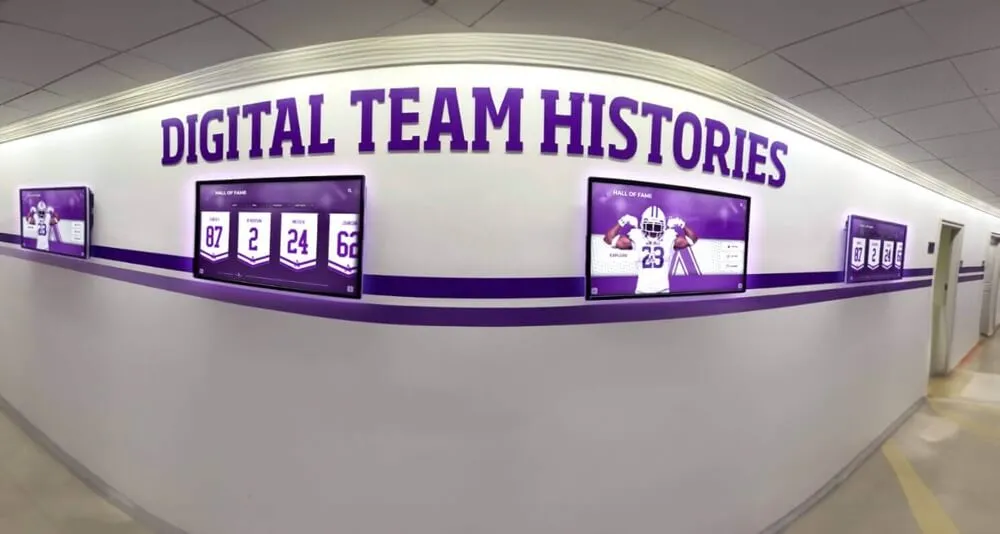
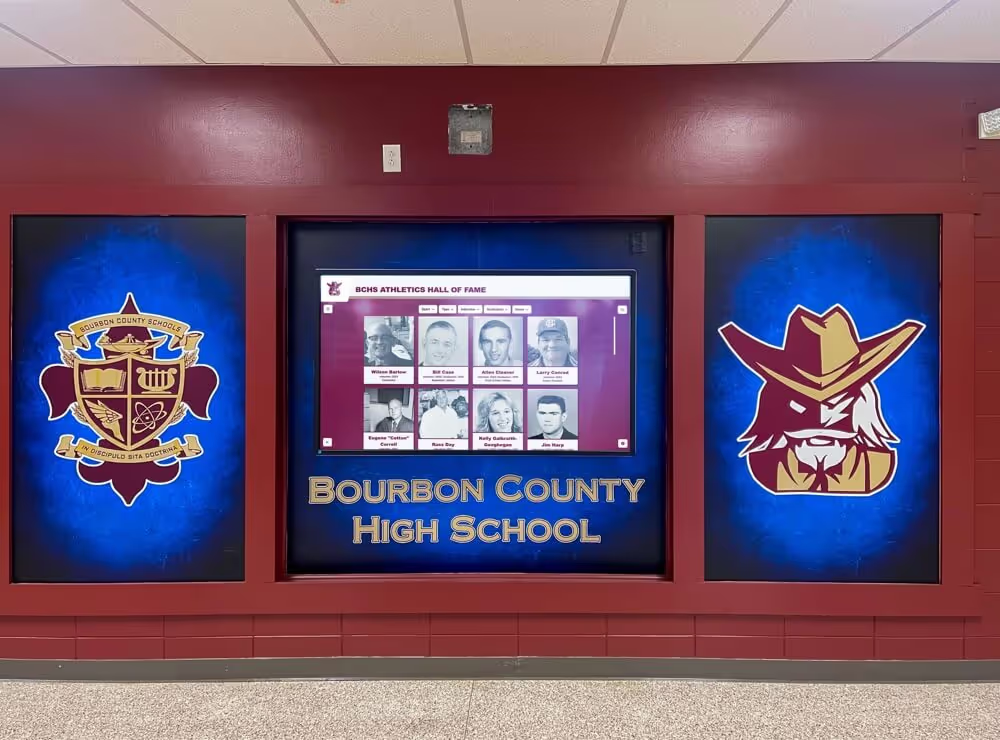
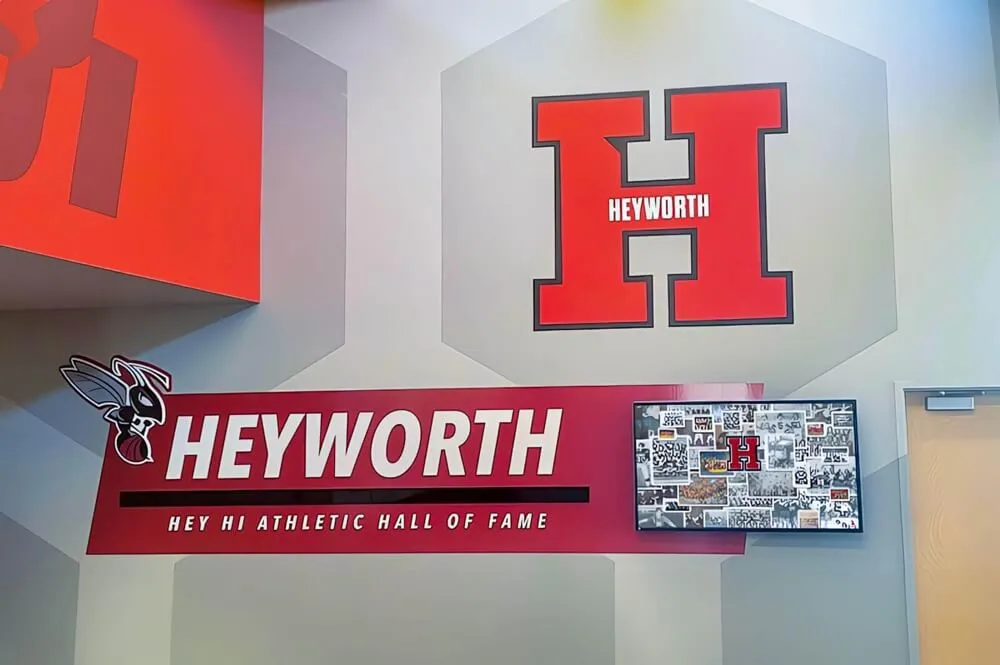
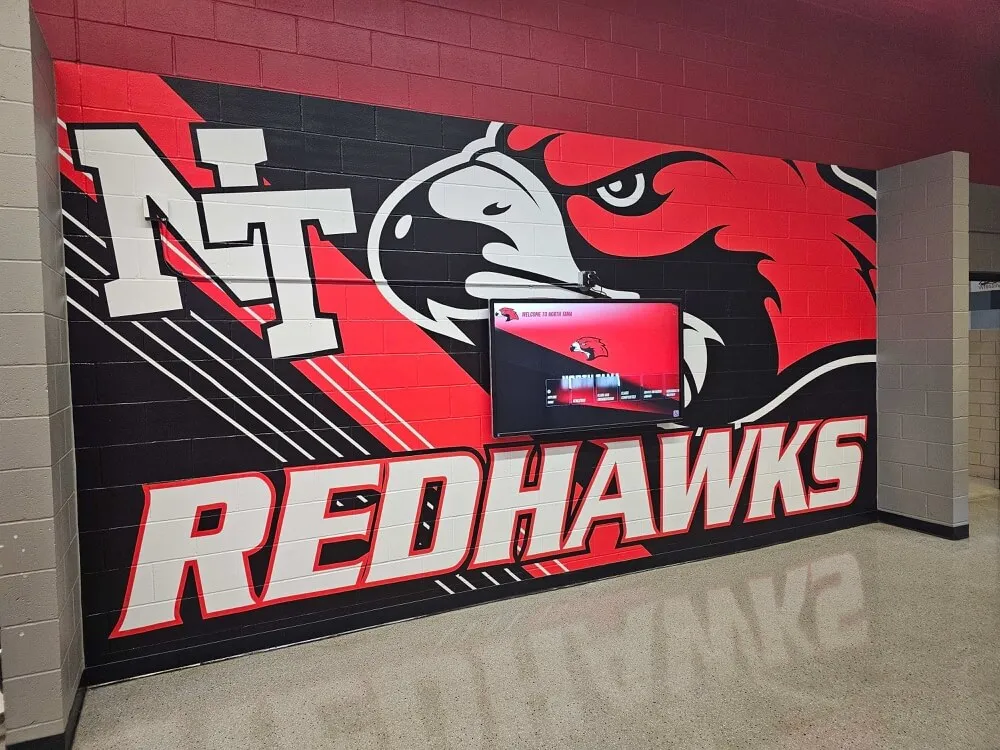
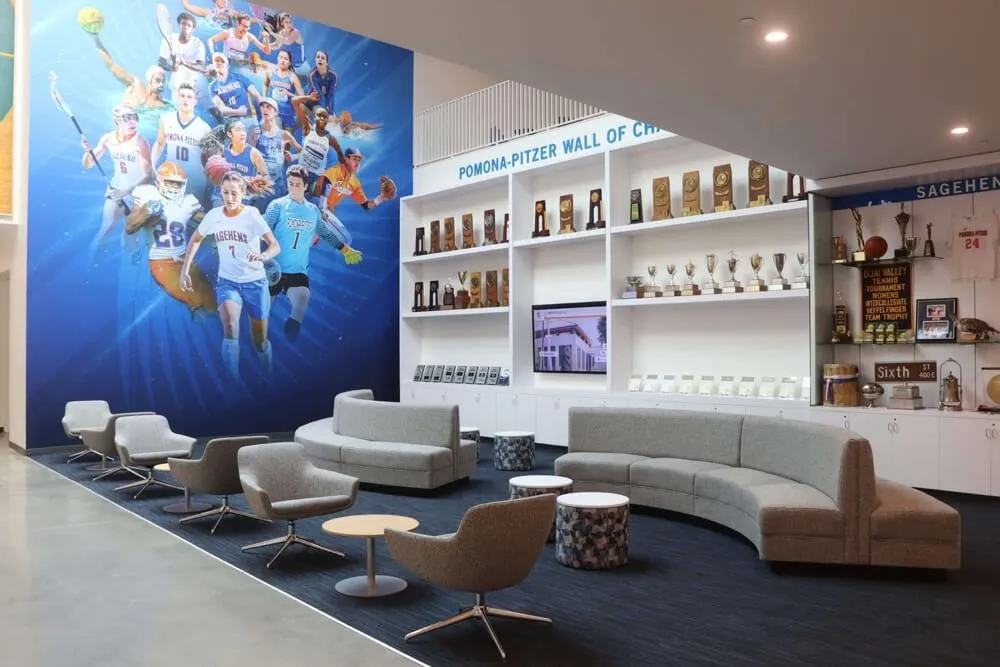
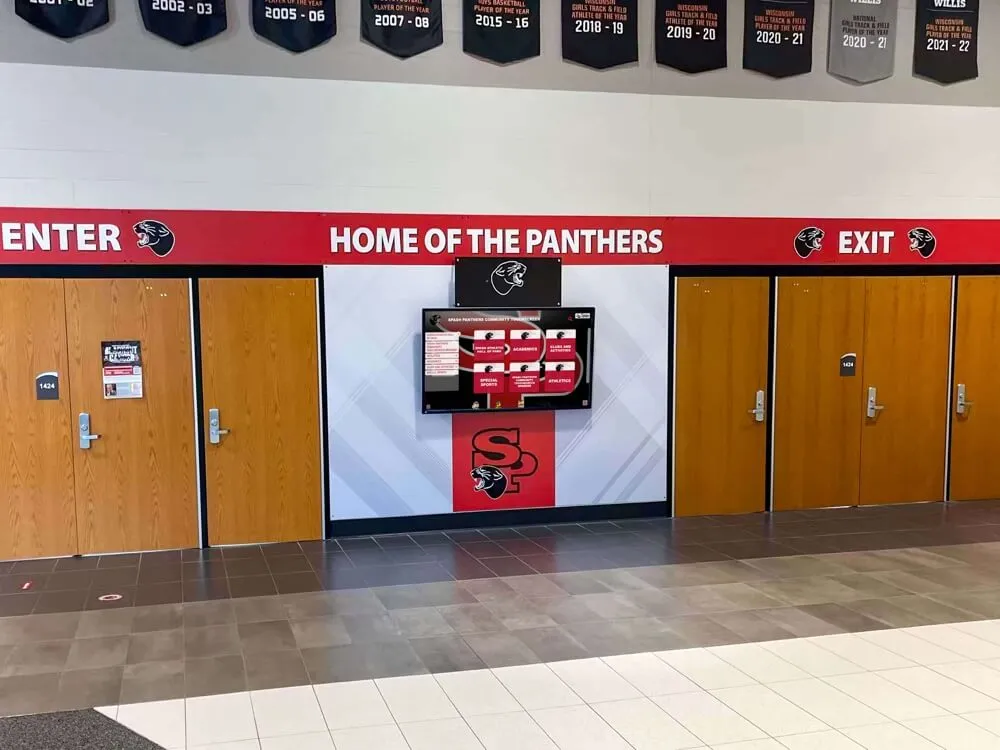
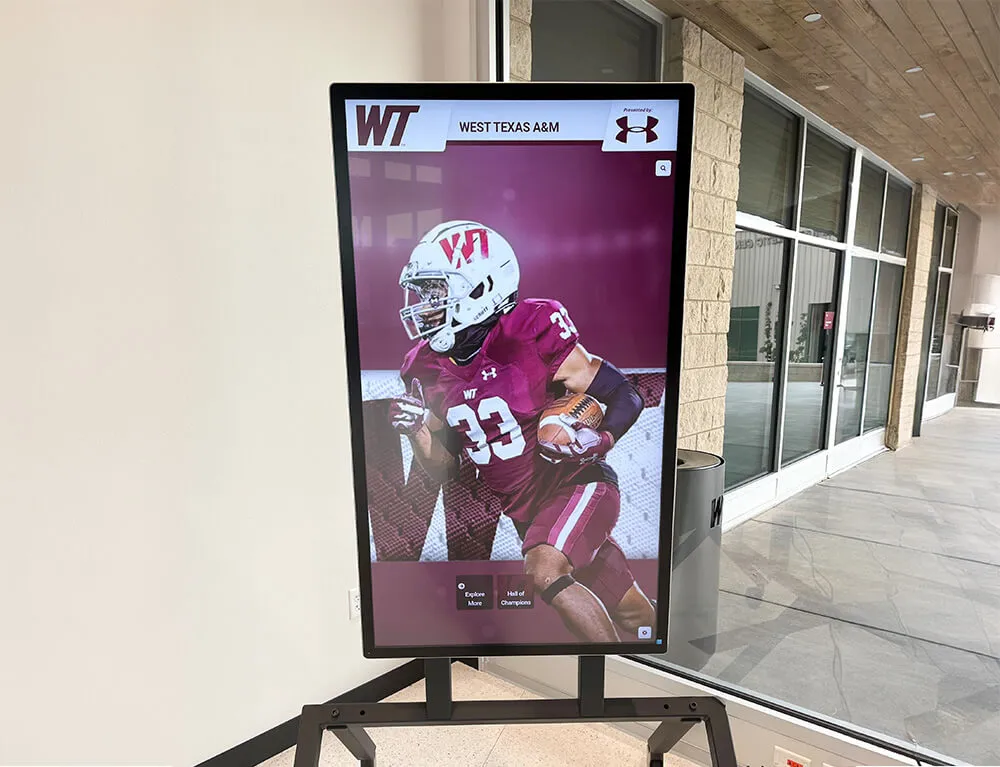
A hallway organized around team season histories gives every era of a program—including the six-on-six years—a permanent, navigable home alongside current records
Two Roles, One Team: Understanding the Six-on-Six Structure
In Iowa girls basketball’s half-court format, six players took the court for each team—three guards defending their half and three forwards working to score in the opponent’s half. The University of Iowa Women’s Archives curated exhibition on six-on-six basketball documents how this structure shaped both the game and the community around it, combining personal stories with archival material in a way that shows how both roles mattered to the players, families, and towns who lived through the era.
As noted in the Iowa Women’s Archives news coverage of the 2018–2019 traveling exhibition—now a historical event—three guards occupied one side of the court and three forwards the other, with neither group permitted to cross the center line. Each group developed distinct skills, game intelligence, and competitive identities built around their half of the floor. The guards built chemistry and strategic communication across six defensive players; a defensive stop mattered for the team even though it left no attributed statistic in any surviving box score.
A points-led selection process for a recognition display—or a trophy case arrangement that highlights scoring leaders—naturally surfaces the forwards who put the ball through the basket. That is not a mistake worth correcting with false equivalence or invented defensive numbers. It is a structural limitation worth designing around when the purpose of the exhibit is to tell the complete team story.
Importantly, guards were recognized during the six-on-six era and after it. An Iowa PBS documentary interview featuring the perspective of a former defensive guard demonstrates that recognition did reach this role: the source documents the personal meaning of being remembered and acknowledged. A modern exhibit should carry that spirit forward rather than proceed from an assumption of erasure.
Starting from the Complete Team
A well-built six on six basketball history display begins with what can be verified, not with what would be compelling if true. Four elements form the foundation.
Approved team photograph. An official team photograph—cleared through the school’s records or through the families who hold the original—anchors every other element in the display. It shows the whole team, not a selection of contributors. Every subsequent panel or individual card should trace back to the people in that photograph.
Source-verified roster. Request the roster from the athletic office’s archival records, the school’s historic yearbooks, or any surviving coach records. Document where each name came from. If a name appears in a yearbook but not in any game-day record, note the source. If a name is uncertain in spelling, hold it pending confirmation rather than publishing an approximation.
Documented roles where known. If the school’s records, game programs, or verified photographs identify specific players as guards or forwards, record those roles beside each name and cite the source document. If the role is not documented in a source you can retain and trace, leave that field blank or mark it unverified. Do not infer roles from uniform numbers, photo positions, or point totals. Missing information is not the same as a confirmed role.
Season and competition context. Record the specific school name—the name the team competed under at the time—the season, the competition format, and any earned honors exactly as they were awarded. Iowa schools navigated a years-long transition: the University of Iowa’s transitions documentation records overlapping five-on-five and six-on-six state tournaments running from 1985 through 1993, with the final six-on-six state tournament in 1993. The format and schedule your team played under still require local verification—neighboring districts may have shifted at different points during those years.
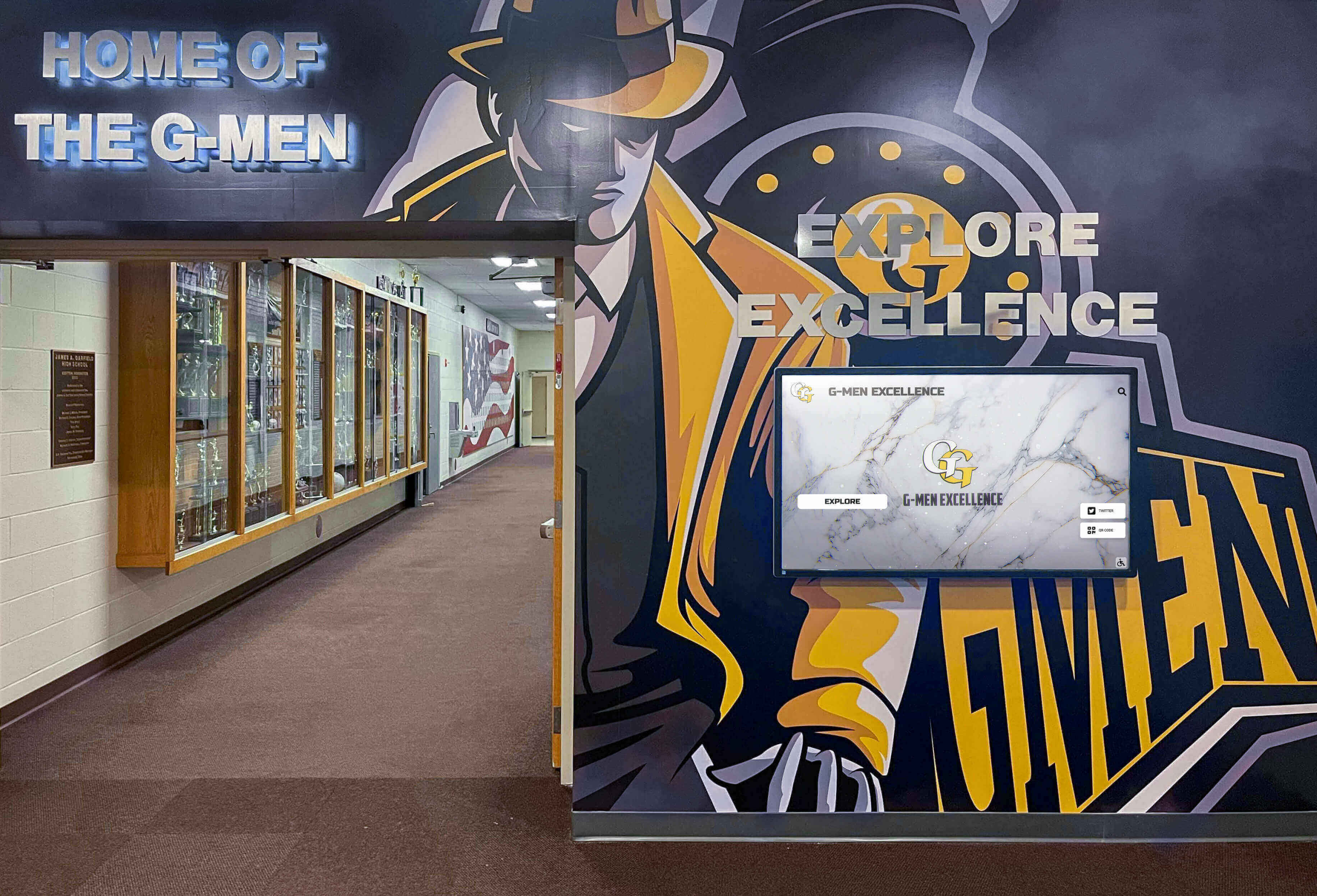
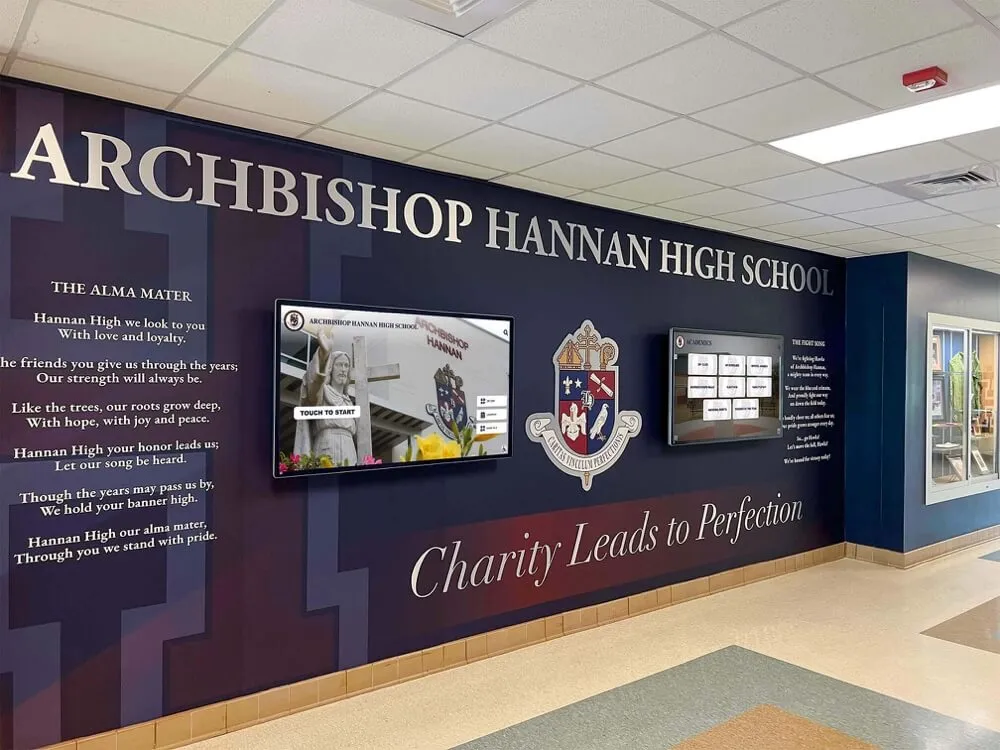
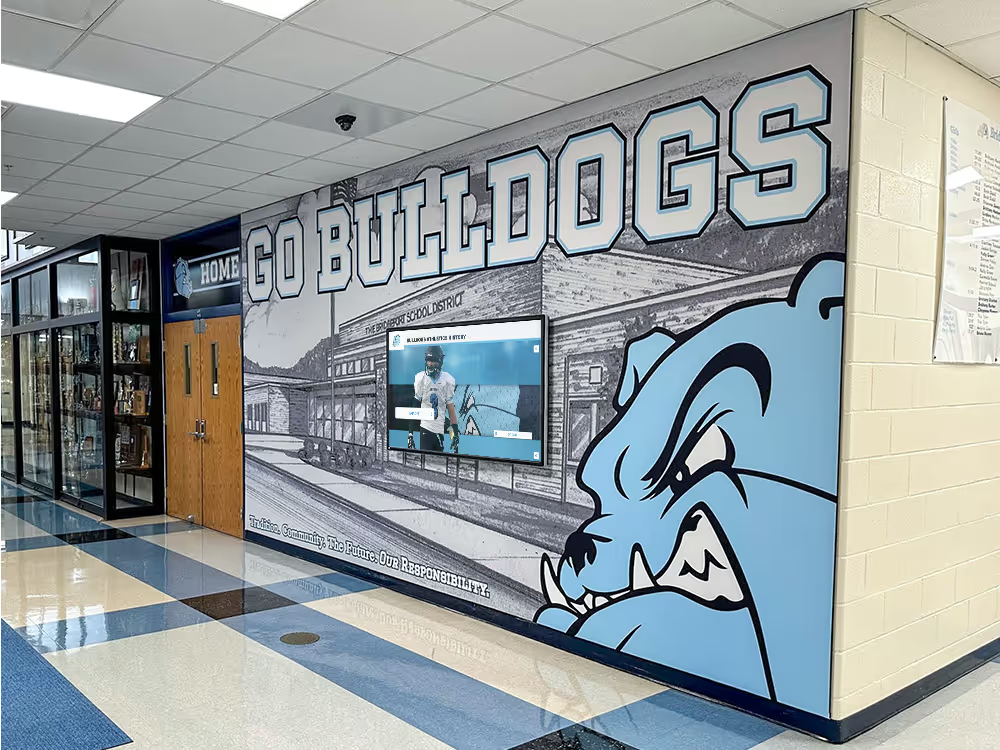
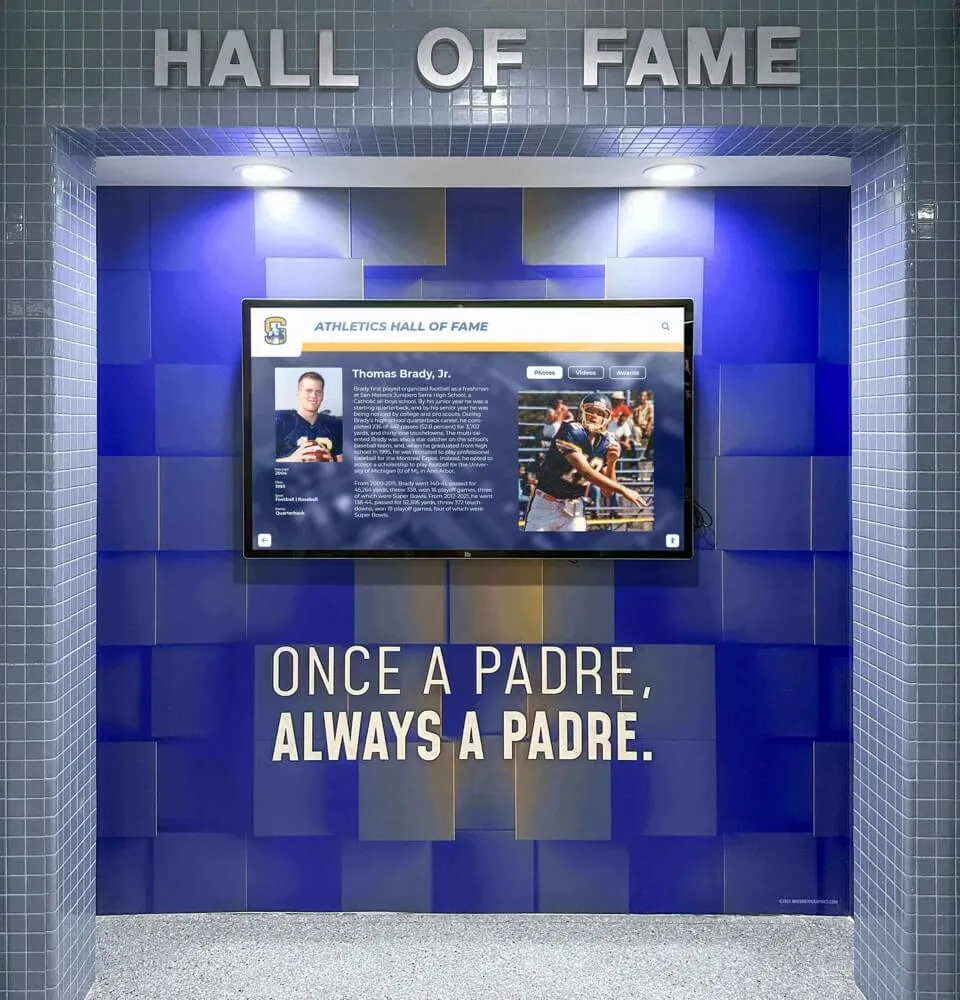
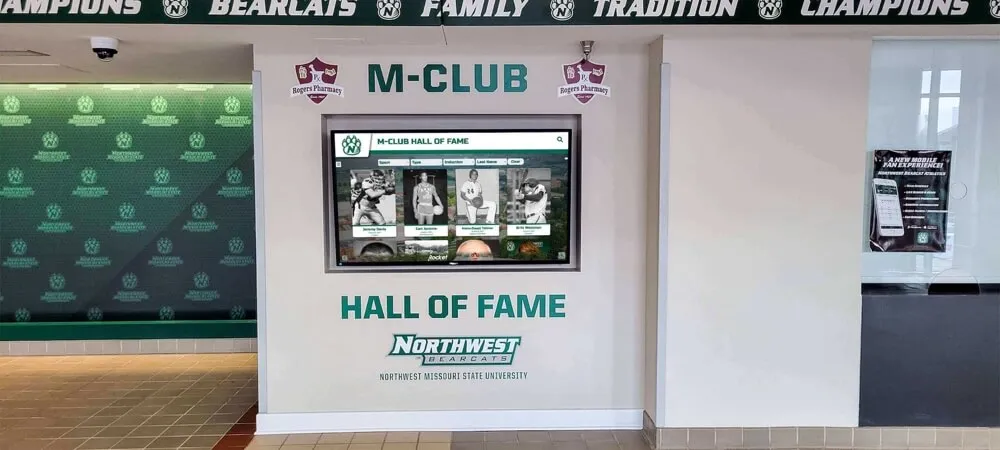
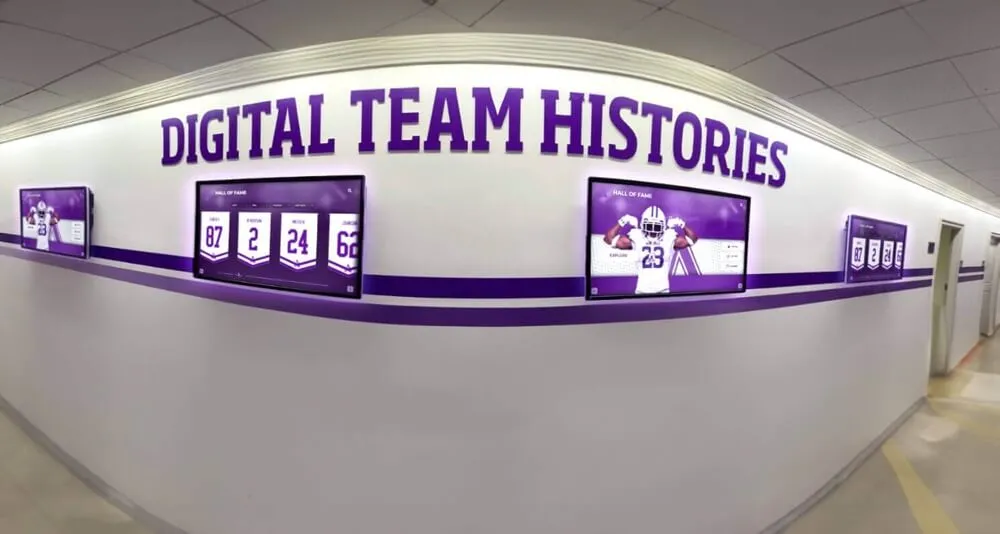
Recognition exhibits that combine physical trophy cases with digital display panels allow a school to present the full depth of a program's history—including eras, roles, and stories that a single trophy cannot convey alone
Proposed Exhibit Sections
The sections below are editorial proposals for content planning. They are suggested ways to organize your team’s story—not automated outputs, software modules, or required fields in any system. Adjust them to fit the material you can verify and the physical or digital space available.
Season Context Panel
A single panel or screen that records the school name, season, competition format, conference or association affiliation, and final record anchors the display for visitors who arrive without background knowledge. It also protects the historical record from being misread out of era. A team that played six-on-six in 1979 competed under different rules, against different competition structures, than a team that played in 1990 during the overlapping transition period. The context panel makes that clear without requiring the visitor to already know it.
Complete Roster with Roles
List every player on the official roster—not only those who scored, earned awards, or appeared in news coverage. Include documented roles (guard or forward) beside each name where the source supports the attribution. Where the role is unverified, leave it unattributed. This panel treats the team photograph and the roster as equivalent: everyone belongs. The exhibit’s structure should reinforce that a player who appears on the official roster earned her place in the display.
Individual Story Cards
For players who provide voluntary reflections or whose stories appear in source-traceable records, an individual card can expand a roster listing into something more personal. These cards work for guards and forwards alike. A guard’s card might describe defensive chemistry, court communication, or what her role meant to the team—not a scoring record she did not accumulate, and not a defensive ranking that cannot be verified. What she actually contributed, in her own words or in words drawn from verified records, is the story worth telling.
Trophy, Earned Honor, and Milestone Panel
Record exactly what was earned and when: the tournament name, the level of competition, the award name, the awarding body, and the season. Preserve the original school name as it existed when the honor was awarded. Do not update earned honors retroactively to reflect a later school merger, consolidation, or renaming. If a player received a letter, award, or formal honor, include the awarding institution and the exact title of the honor as originally issued.
Program Context Note
A brief notation explaining the six-on-six format for visitors unfamiliar with it—what the half-court structure meant, when Iowa schools played under it, and what the transition period looked like—helps any visitor, regardless of age or background, understand why the guard role and the forward role were genuinely different positions with different contributions to honor. This context does not need to be long; two or three sentences can carry a visitor from curiosity to understanding.
Blank Content-Planning Table
Use this table as a staff planning tool before any content goes to design or publication. Complete one row for each athlete, panel, or milestone you plan to include. Leave cells blank where the information is unverified. Review every row with the coach, principal, or records custodian who can confirm the source before anything is published publicly.
| Team / Season | Original School Name | Athlete Name (Verified) | Documented Role | Source / Caption Reference | Proposed Public Wording | Permission / Review Note |
|---|---|---|---|---|---|---|
This table is an adaptable planning aid, not a required national schema, CMS field specification, or legally mandated data format. Add or remove columns to fit your school’s existing approval workflow and the number of players you are documenting.
Blank Caption Template for Guard Recognition
The caption below is a starting template for displaying a guard’s verified contribution without implying a scoring record or formal hall of fame induction. Fill in only what source documents support. Remove any bracketed field where you cannot supply a verified fact.
[Name], [School Name], [Season] [Documented role, e.g., “guard” if role is source-verified.] [One sentence drawn from a voluntary statement the player provided, or from a school-verified source record, describing her contribution to the team or her experience of the season.]
Appearing in this exhibit reflects recognition by [School Name]. Display inclusion is separate from any varsity letter, all-star selection, or formal athletic award issued by any association or governing body.
Adapt the disclaimer language to match your school’s formal awards policies. If the player did receive a formal honor, state it exactly as awarded and separately from the display-inclusion note. Public exhibit inclusion does not confer an award, induction status, or any additional designation not already earned through the official record.
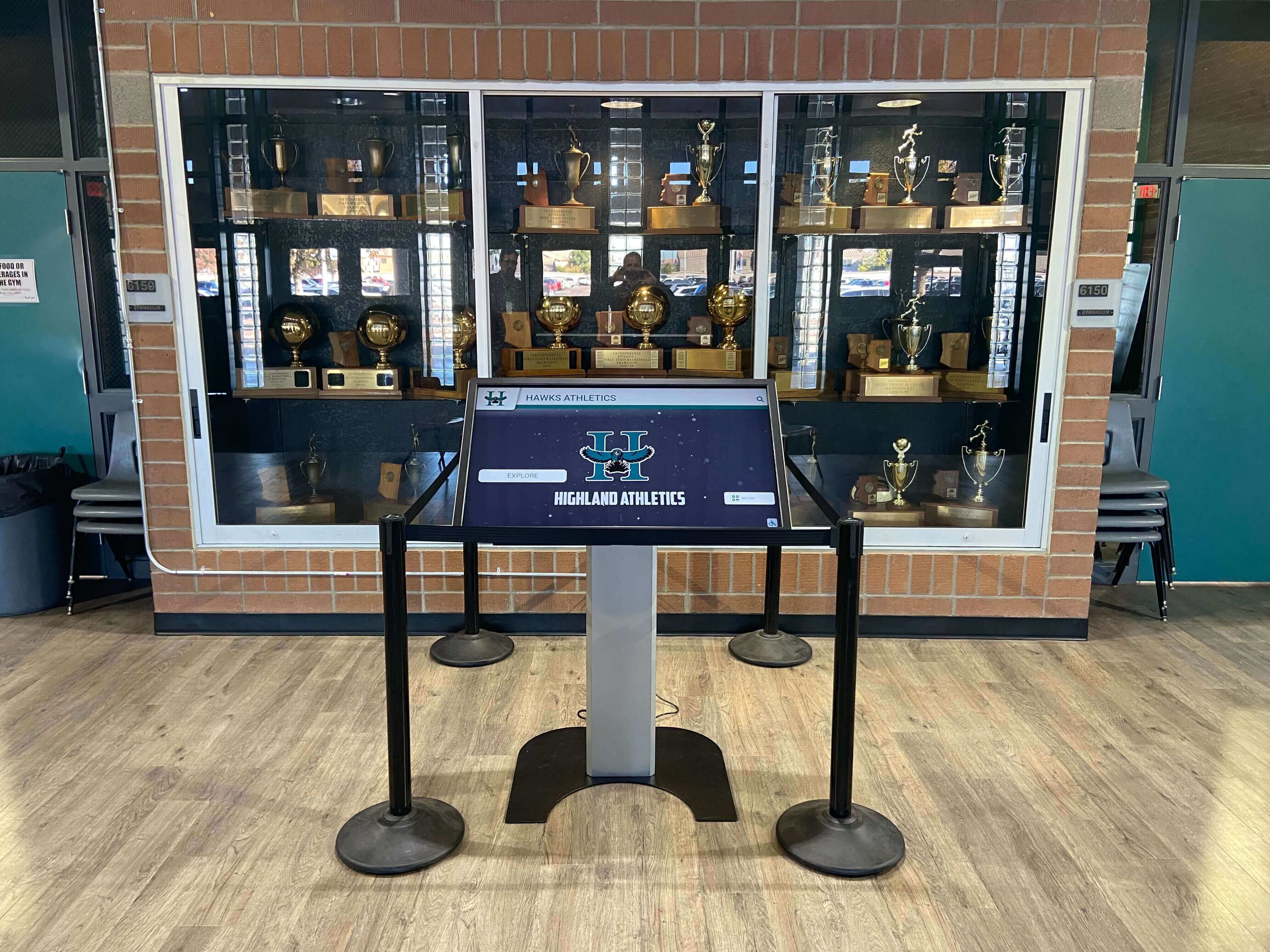
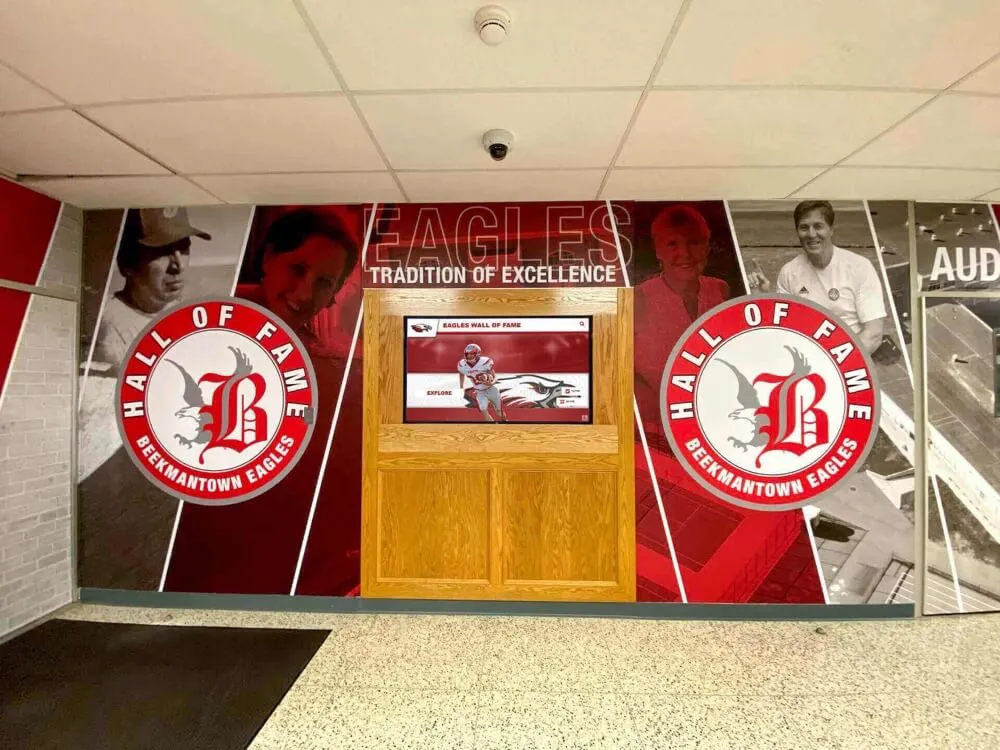
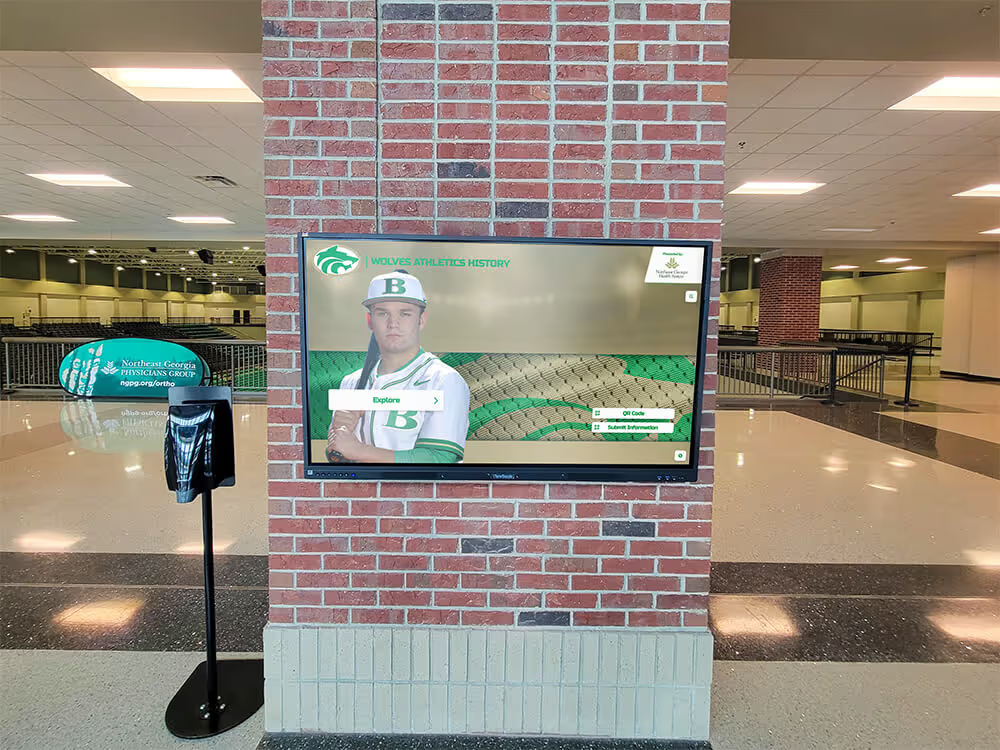
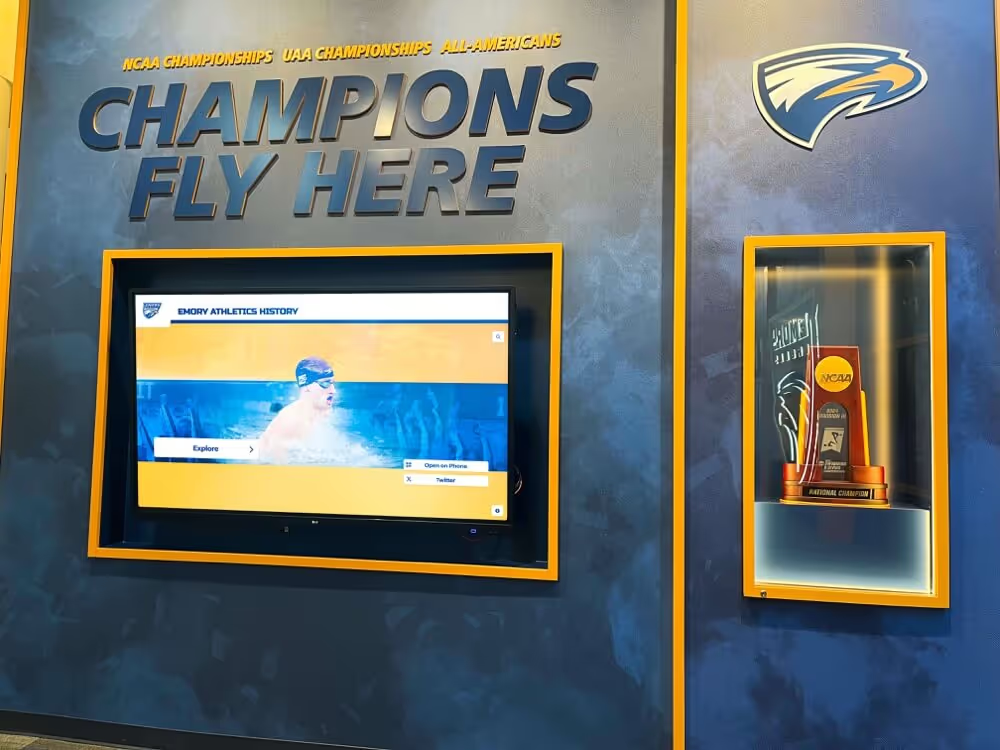
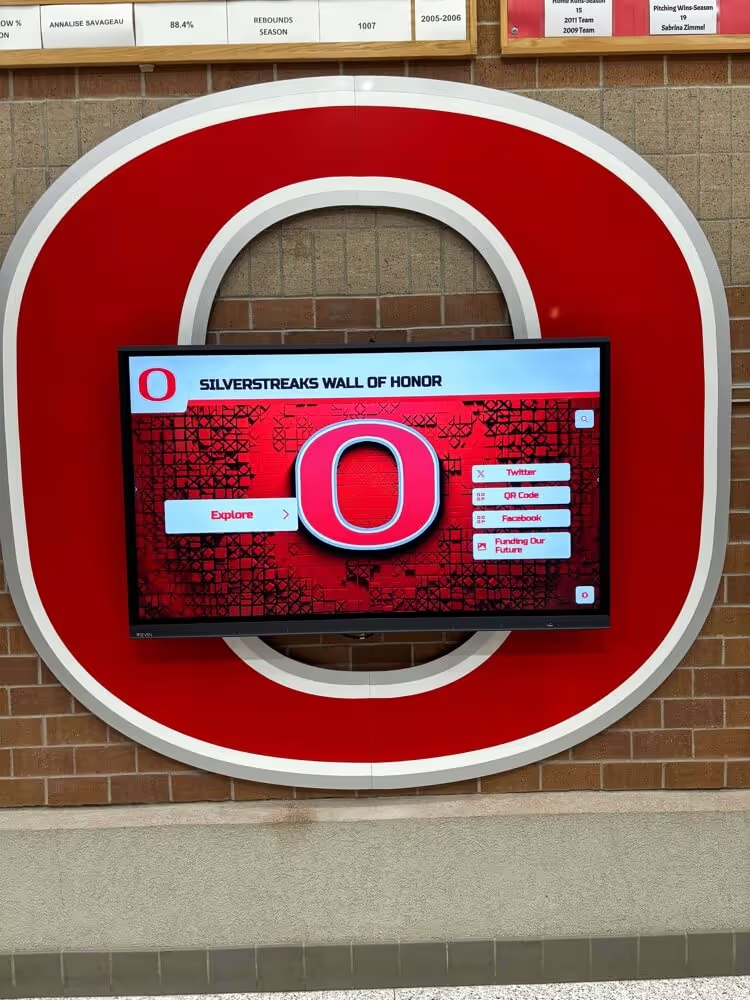
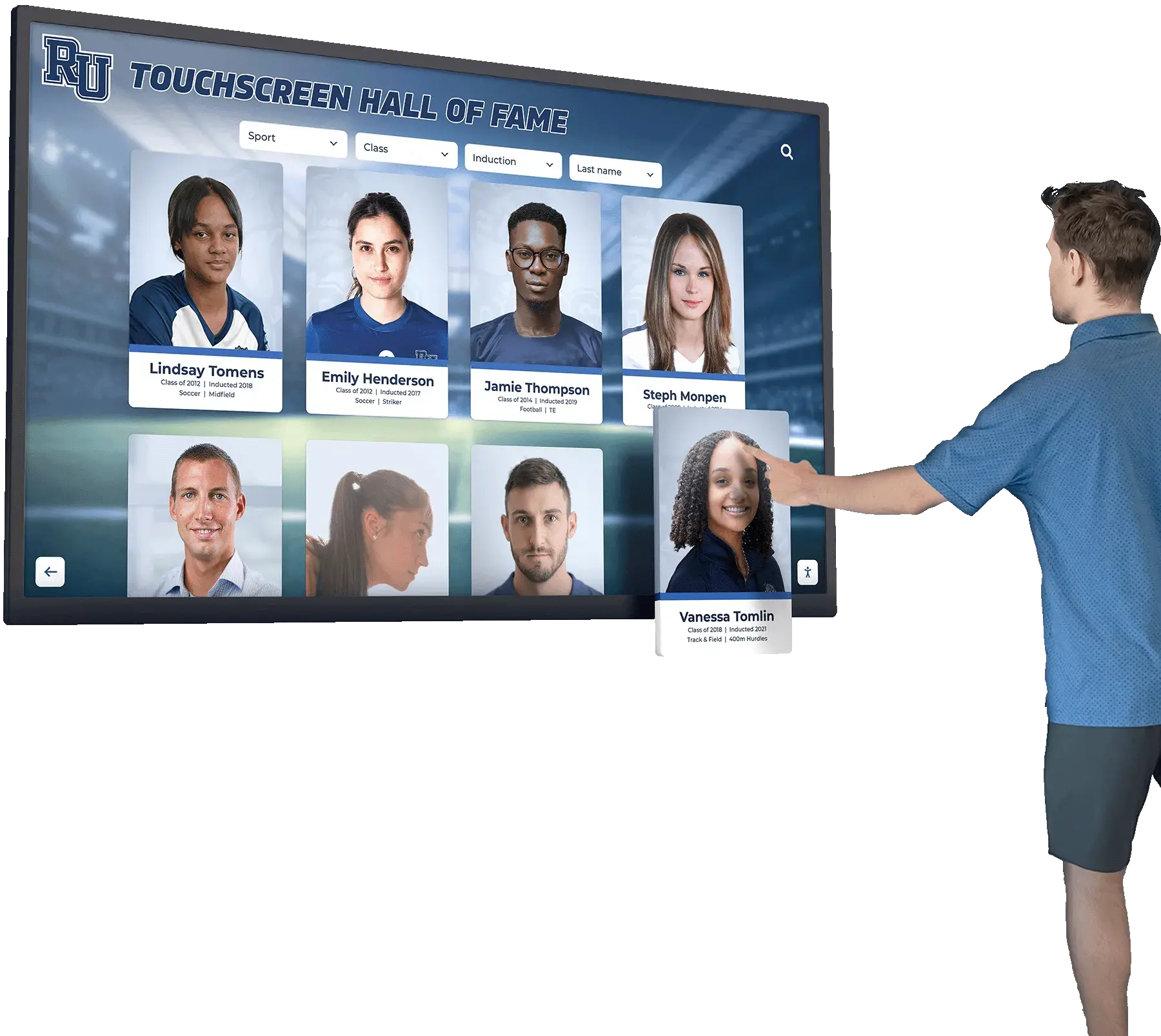
A touchscreen positioned within or beside a trophy case can surface individual athlete profiles, season records, and role-specific stories that physical plaques alone cannot hold
Voluntary Memory Prompts
These prompts are offered as conversation starters for guards, forwards, coaches, and teammates willing to share their recollections. Participation is voluntary—no one is obligated to respond, and contributing a recollection does not automatically grant permission to publish or display it.
Before using any recollection, ask the contributor how they want to be identified in public, review the specific wording with them before publication, and request written permission for the intended publication context. Keep consent records private in your institutional files; they do not belong in the public exhibit itself. An interview permission does not automatically license a photograph, broadcast clip, or any separately archived recording. Consult your school’s communications office before displaying any recorded material.
Attribute every recollection clearly as a personal memory or perspective, not as a verified result.
For guards:
- What did your defensive role ask of you that someone who never played six-on-six might not realize?
- How did you and your fellow guards communicate and work together during a game?
- What is a moment from your time on the court that you would want current students to know about?
For forwards:
- How did the guard corps affect the way your half of the game worked?
- What did a strong defensive performance by your guards mean for the team’s momentum or confidence?
For coaches:
- How did you evaluate and develop guards during the season?
- What records or photographs do you still have from this team that the school should preserve?
- Were there player roles, contributions, or moments that official box scores didn’t capture?
For any teammate or community member:
- What would you want someone to know about this team that a trophy or a stat line wouldn’t tell them?
- What did the six-on-six game mean to your community while it was being played?
Collect, Compare, Review, and Preview
A short four-step process keeps the exhibit accurate and traceable from planning through publication.
Collect. Gather source documents first: official rosters from the athletic office, season programs, yearbooks, archived game summaries, and team photographs with provenance you can confirm. Note the location of every original document so future staff and coaches can find it independent of the display technology the school uses in later years.
Compare. Cross-reference names, roles, and results across sources. If a player appears on the yearbook roster but not in any game record, note the discrepancy and investigate before publishing. If two sources disagree on a spelling or a role attribution, hold that field pending resolution. Uncertain identity or role stays uncertain; do not resolve ambiguity with an educated guess. Historical narrative should remain traceable to documents retained by the school.
Review. Ask a designated reviewer—the athletic director, a surviving coach, or a designated records custodian—to confirm each row of the planning table against source documents before anything goes to design. Corrections at the review stage cost time; corrections after publication cost credibility and trust with the families whose names appear in the exhibit.
Preview. Before the exhibit opens to the public, walk through it with a small group that includes at least one person who knew the team—a former player, a family member, or a community member who attended games during the era. If a reviewer identifies a discrepancy or a name they believe is wrong, return to the source before publishing. No cross-era performance conversions or new school-record claims should appear without documentation that supports the specific assertion.
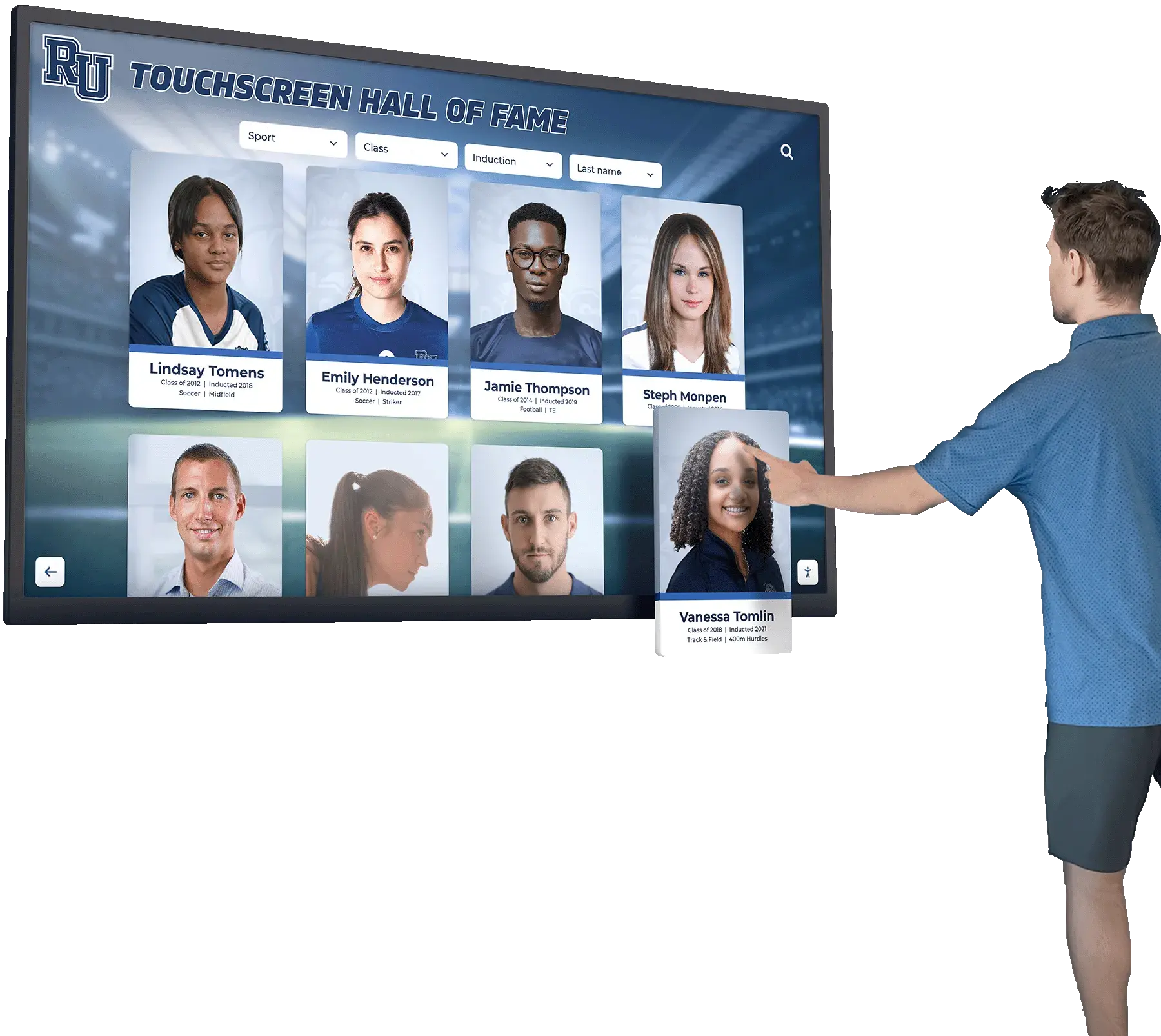
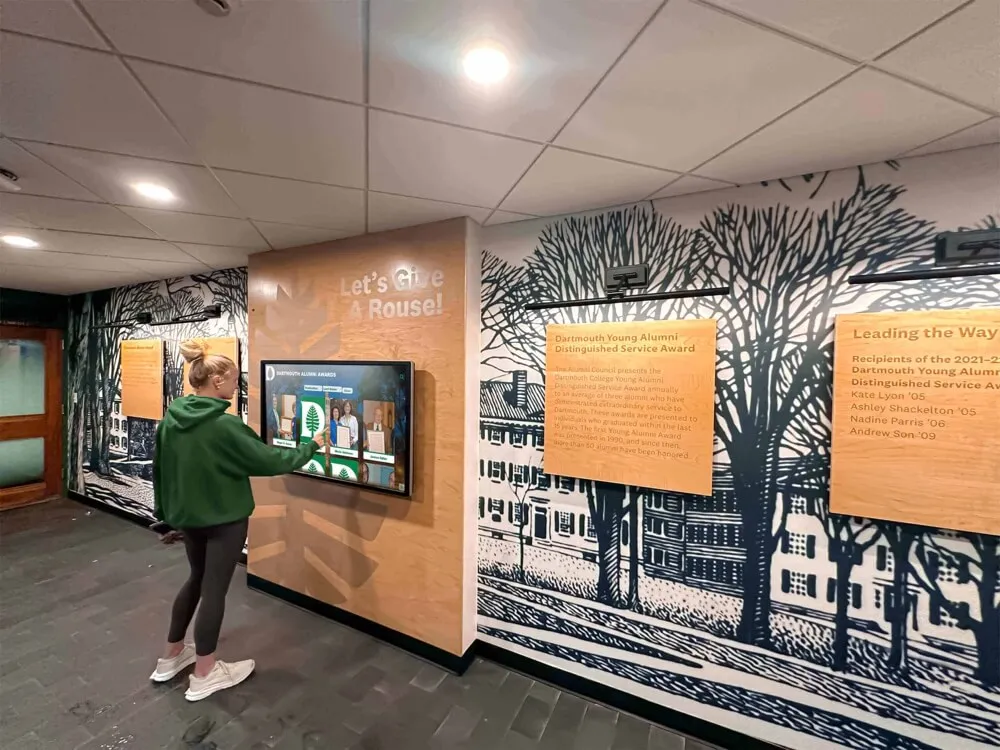
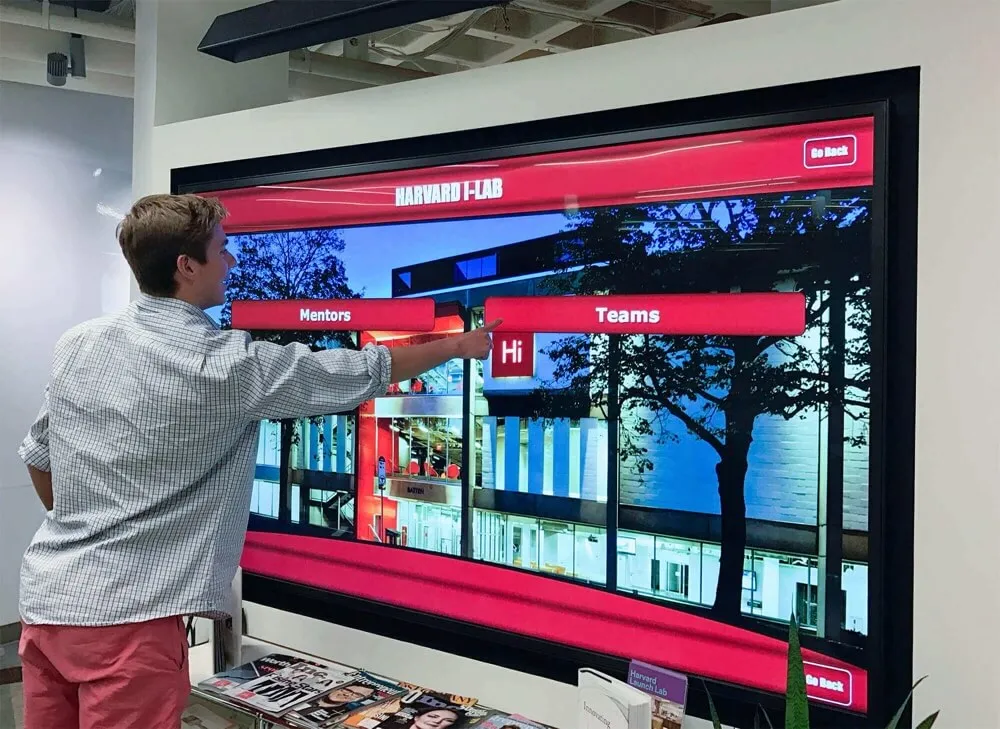
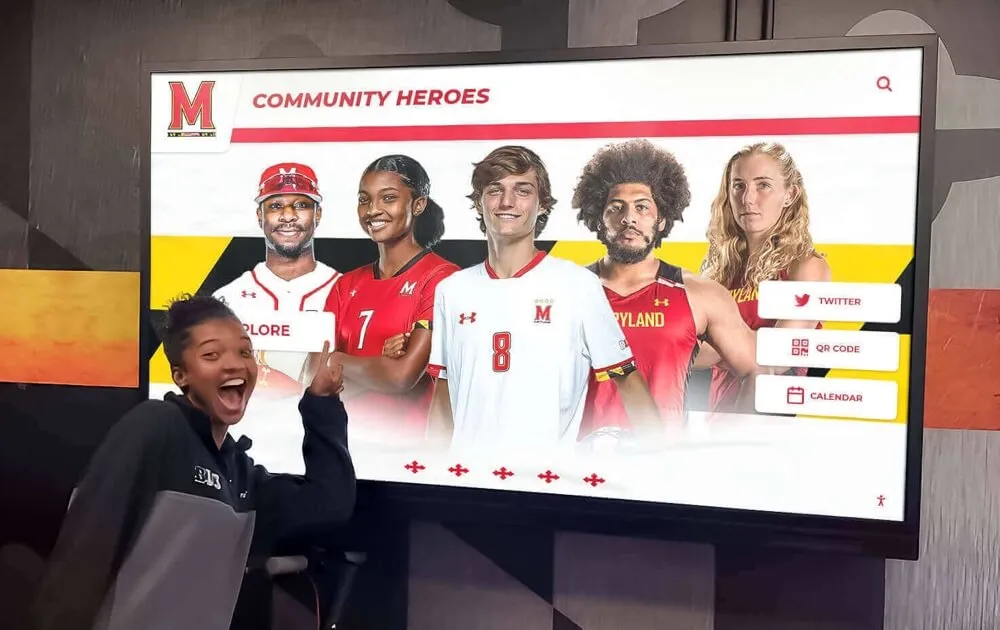
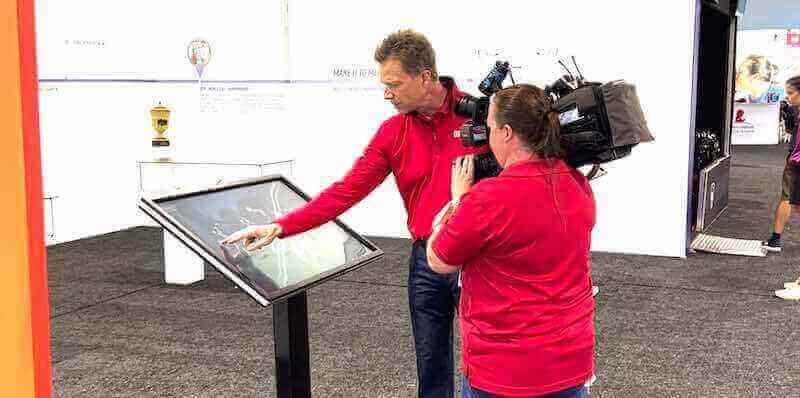
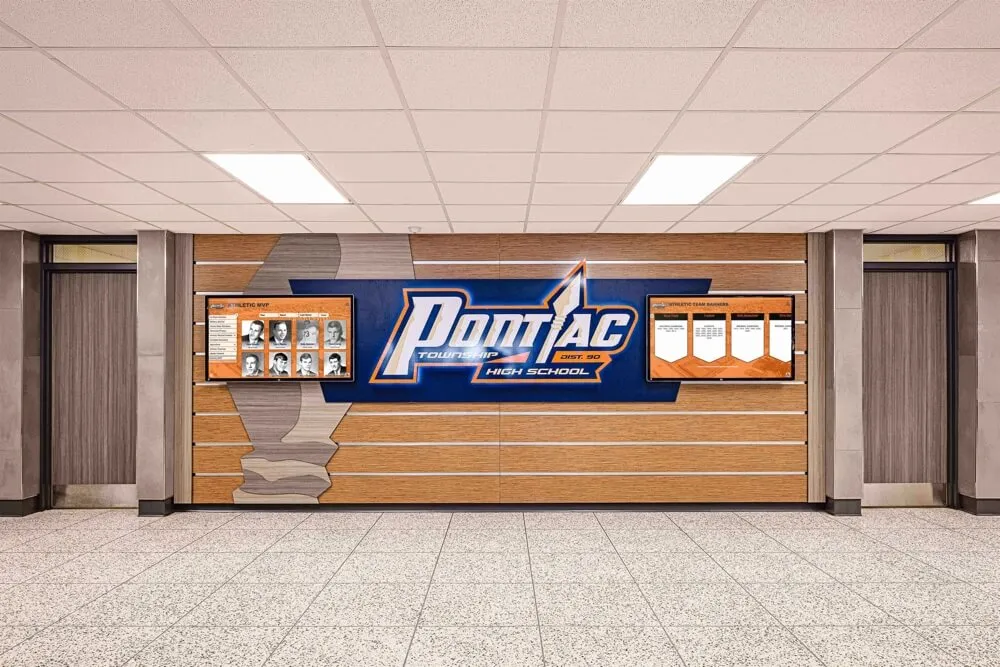
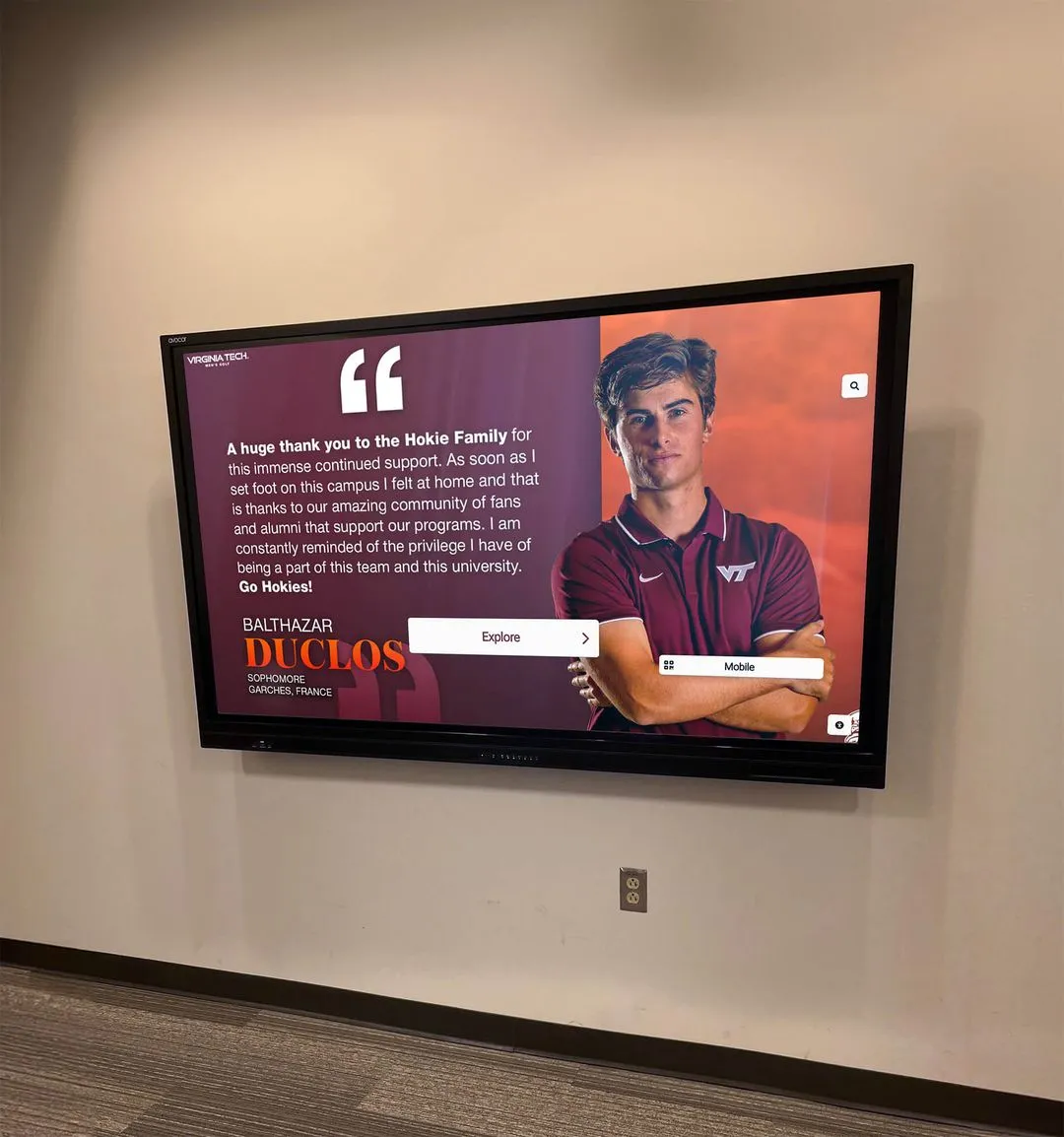
An interactive display lets visitors navigate athlete profiles, season records, and program history at their own pace—making the full team story accessible long after the season ends
Bringing Both Roles Into a Hallway Display
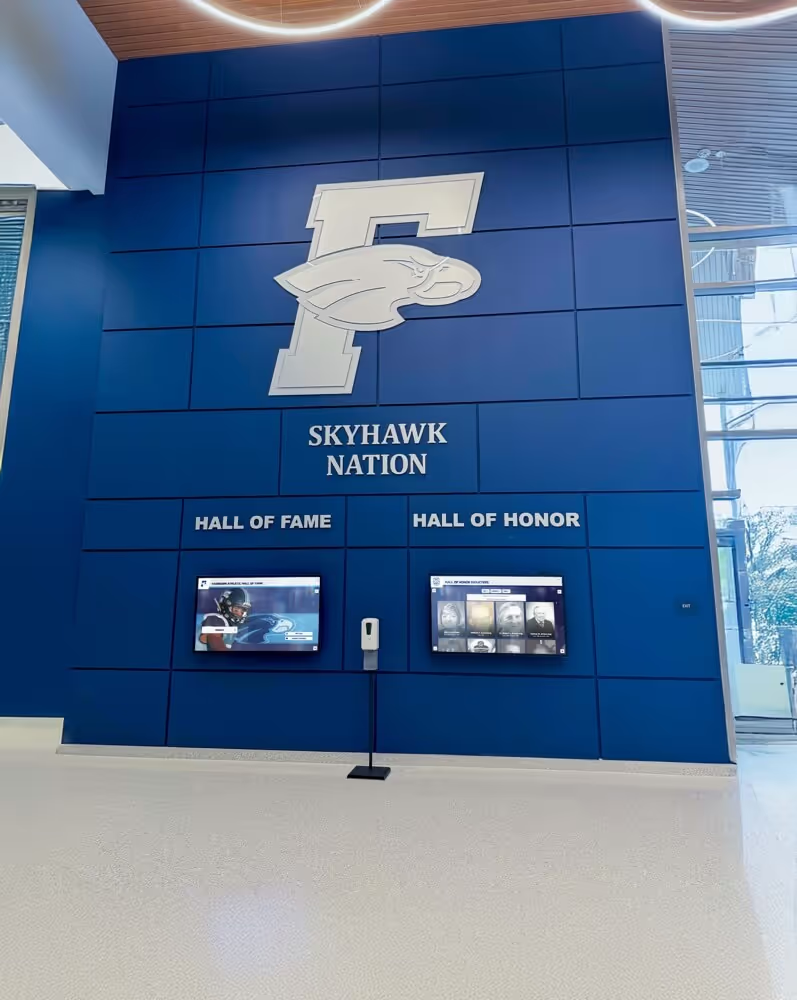
An interactive touchscreen recognition display in an athletic hallway or school lobby can present a full team roster with individual stories, season panels, and earned honors alongside one another—visible to current students, alumni, and families at any time the building is open. That kind of persistent accessibility is especially meaningful for a team whose era has ended: the six-on-six game is not played anymore, but the people who played it are still part of the school community.
A hallway six on six basketball history display that includes guards and forwards together—with verified roles, documented seasons, and individual stories drawn from source records and voluntary recollections—reflects the game as it was actually played. It honors the team, not only the leaderboard. Learn more about Rocket Alumni Solutions’ Digital Wall of Fame platform to see what a school hallway display for a team history collection can include.
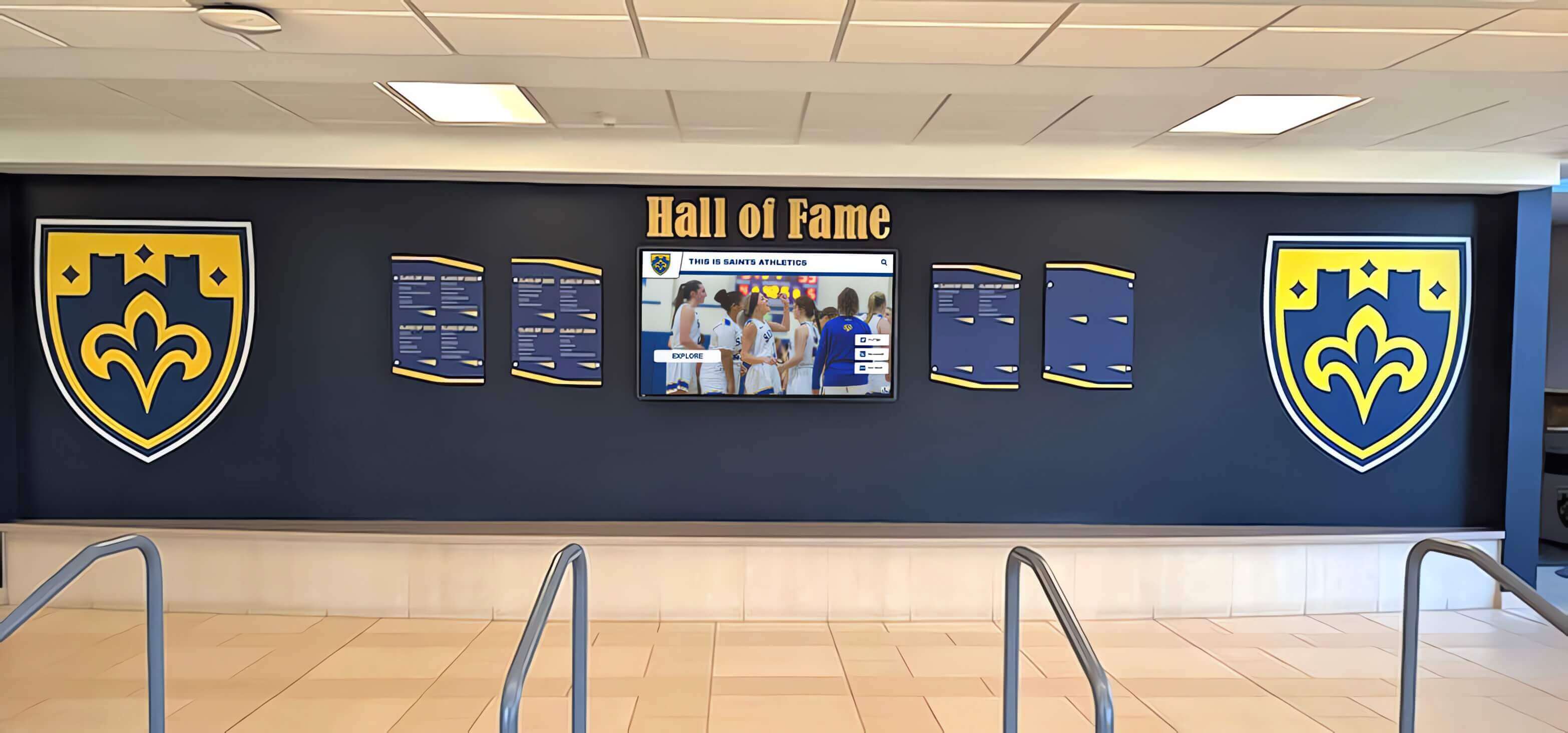
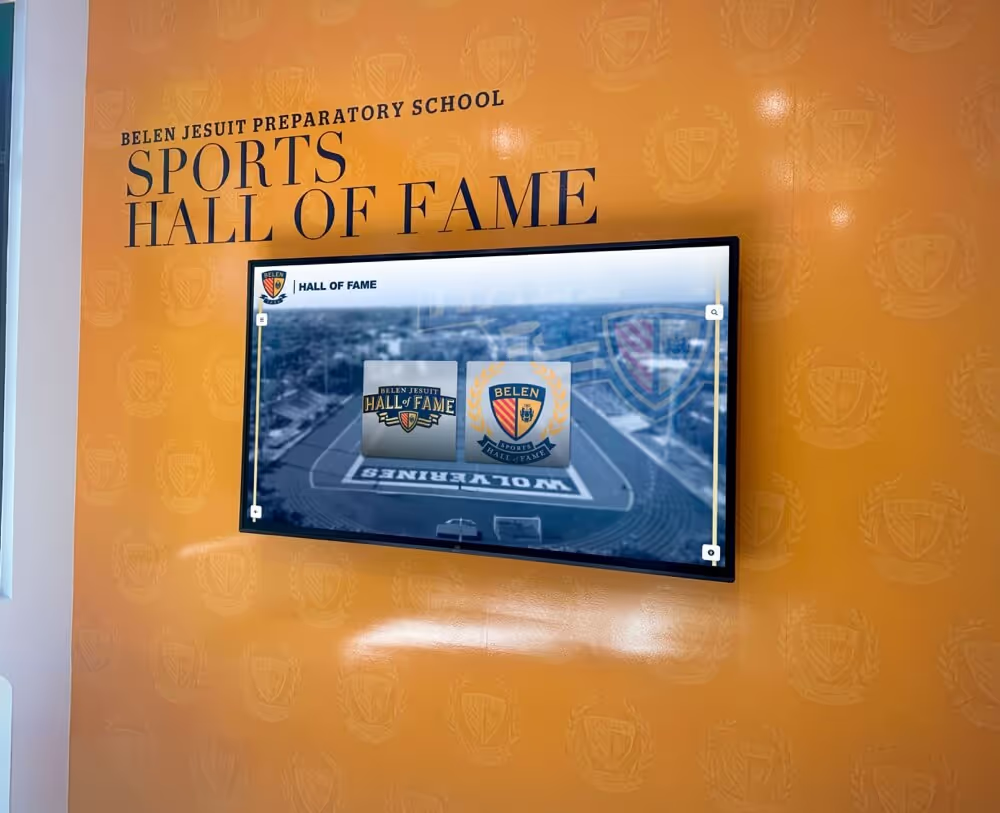
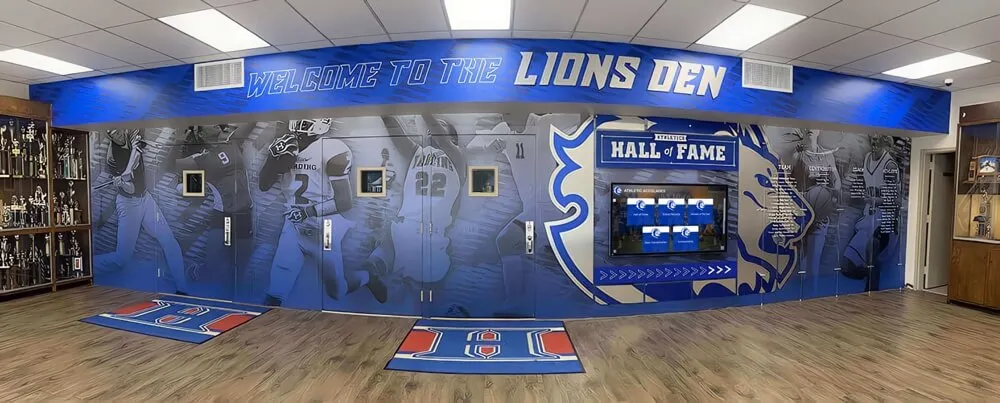
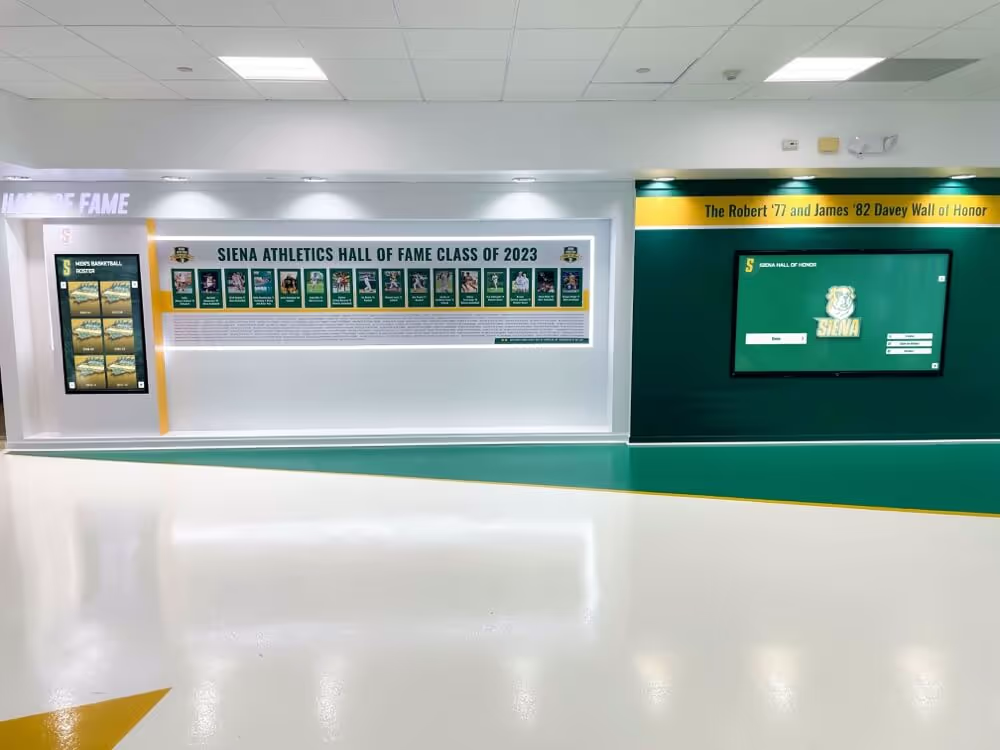
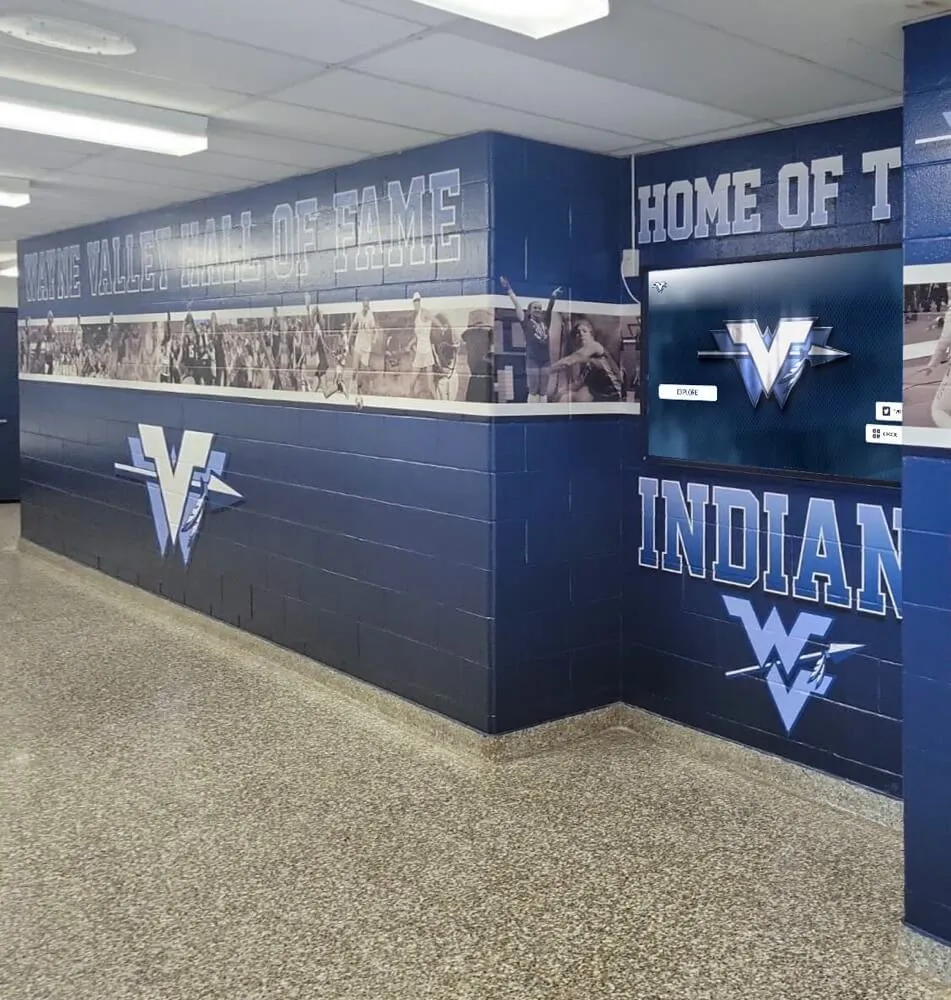
Recognition environments that integrate traditional display elements with digital screens give athletic directors flexibility to honor historical teams—including their guards—with the depth of content that physical plaques alone cannot hold
Related Resources
- Planning Permission for Recorded Alumni Interviews — A secondary planning resource for athletic directors collecting voluntary statements from former players and coaches; review carefully against your school’s own policies and consult your institution’s counsel for any legal or compliance questions specific to your context.
If you are ready to plan a recognition display that honors your school’s six-on-six team—guards and forwards together, with the verified records and storytelling depth that a hallway exhibit deserves—connect with the Rocket Alumni Solutions team to begin the conversation.
Live Example: Rocket Alumni Solutions Touchscreen Display
Interact with a live example (16:9 scaled 1920x1080 display). All content is automatically responsive to all screen sizes and orientations.