Softball Pitching Mechanics: A Coach's Guide to Proper Form, Common Errors, and Velocity-Building Drills
- Home /
- Digital Wall of Fame Blog - Recognition Display Insights & Resources /
- Softball Pitching Mechanics: A Coach's Guide to Proper Form, Common Errors, and Velocity-Building Drills
The Easiest Touchscreen Solution




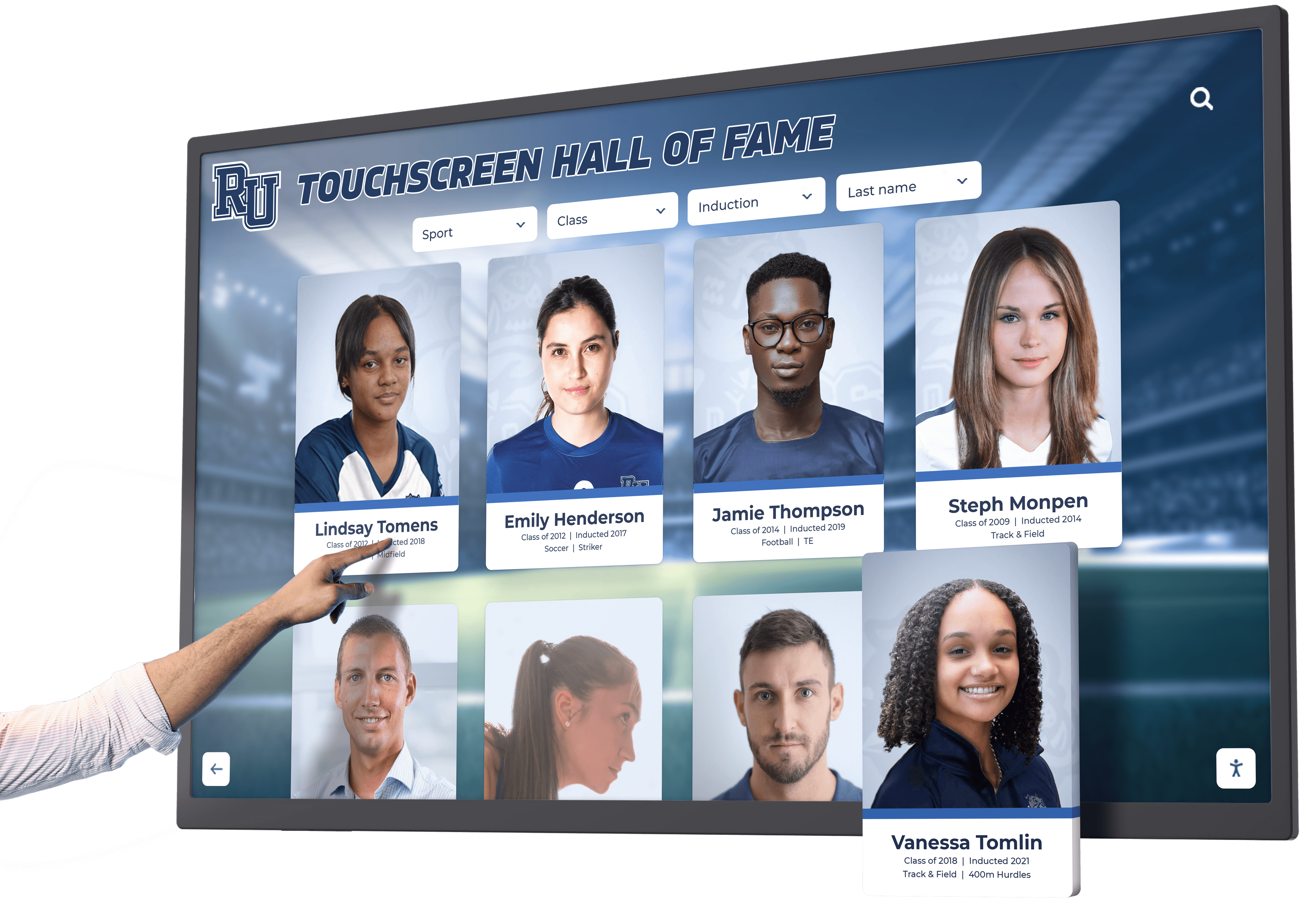
Live Example: Rocket Alumni Solutions Touchscreen Display
Interact with a live example (16:9 scaled 1920x1080 display). All content is automatically responsive to all screen sizes and orientations.
Softball pitching represents one of the most mechanically complex and strategically vital skills in all of sports. Unlike baseball’s overhand delivery, the underhand windmill motion demands precise sequencing, explosive lower-body engagement, and exceptional timing to generate velocity while maintaining control. Coaches working with developing pitchers face the challenge of teaching softball pitching mechanics that maximize performance potential while building patterns sustainable across thousands of competitive pitches throughout a career.
The best softball pitchers aren’t simply born with natural talent—they’re systematically developed through expert coaching that addresses biomechanical efficiency, identifies and corrects flawed movement patterns, and implements progressive training protocols building both velocity and command. The difference between pitchers who dominate their level versus those who struggle often traces directly to foundational mechanics established during formative training years. Programs that develop elite pitchers understand that proper form serves as the prerequisite for velocity development, movement quality, injury prevention, and long-term athletic success.
This comprehensive guide provides coaches with a phase-by-phase breakdown of proper softball pitching mechanics, identifies the most common technical errors undermining performance, and delivers proven velocity-building drills that transform developing athletes into dominant pitchers. Whether coaching youth recreational leagues, competitive travel programs, or high school varsity teams, you’ll discover actionable teaching strategies that accelerate pitcher development and establish mechanical foundations supporting championship-level performance.
Effective pitching development requires systematic instruction addressing biomechanical efficiency, consistent repetition building muscle memory, and progressive challenge developing competitive mental toughness alongside physical skills.

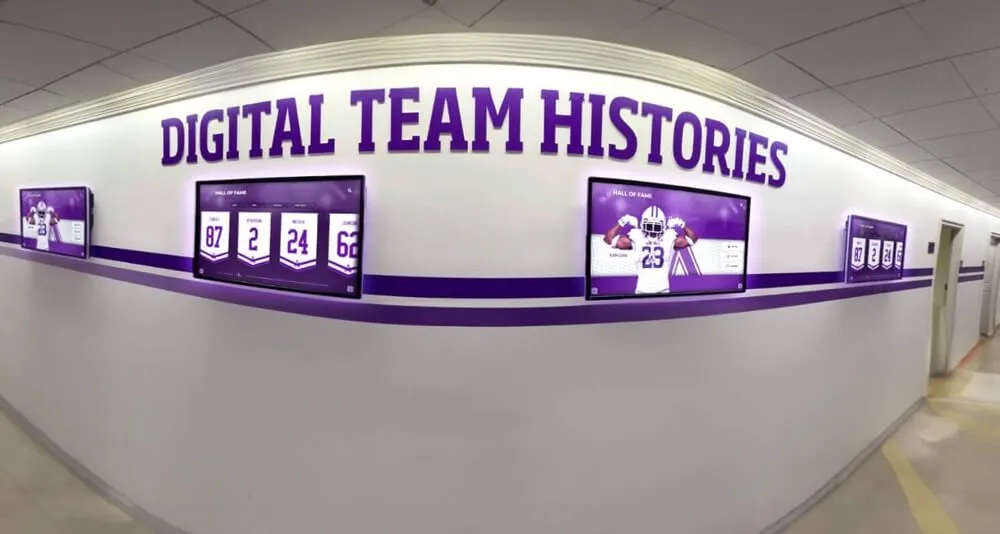
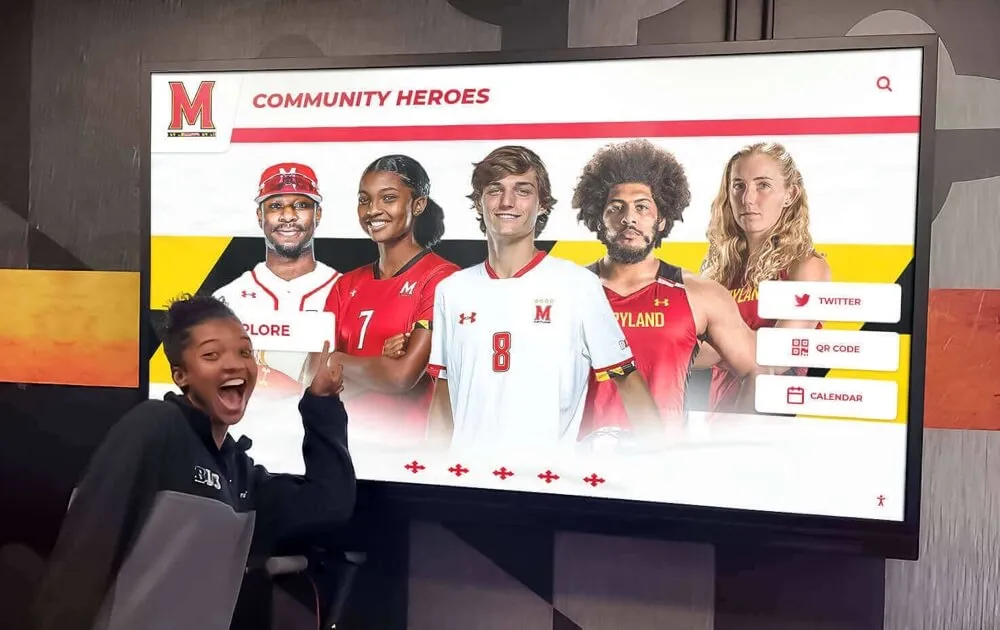
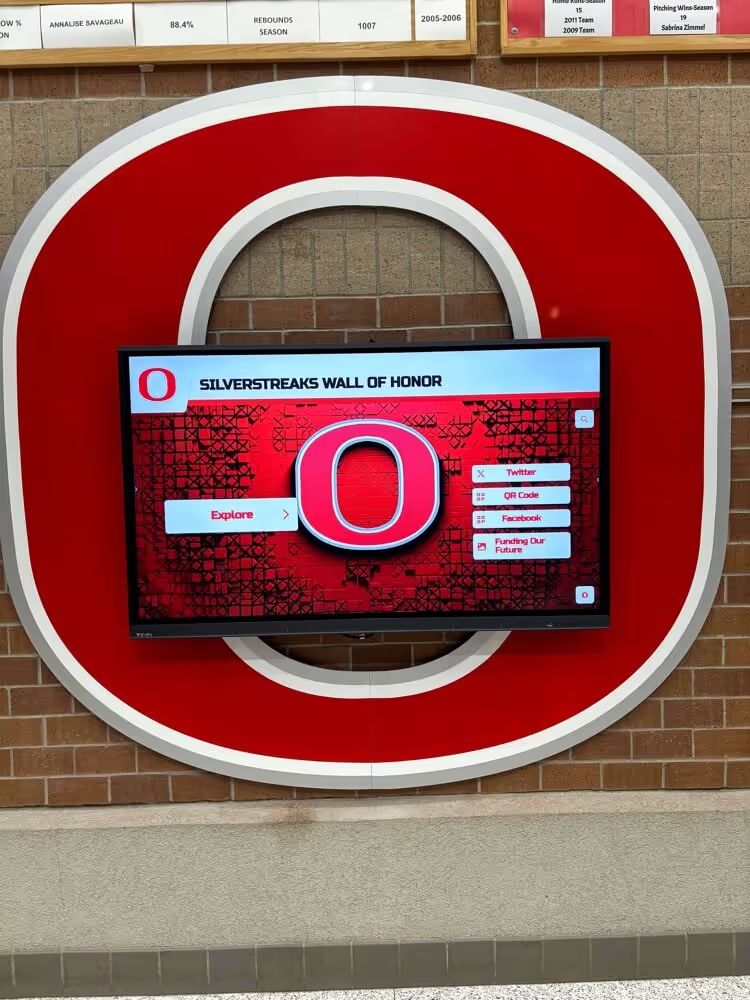
Elite softball programs celebrate dominant pitchers whose statistics and achievements anchor team success, inspiring younger athletes while honoring program-defining performances
Understanding the Windmill Pitching Motion: Biomechanical Foundation
Before coaching specific mechanical adjustments, understanding the complete windmill motion as an integrated kinetic chain helps clarify why individual components matter and how sequential energy transfer generates velocity.
The Kinetic Chain in Softball Pitching
Ground-Up Energy Transfer
Effective pitching mechanics begin with the lower body:
- Power originates from drive leg push against pitching rubber
- Hip rotation accelerates trunk and torso segments
- Shoulder rotation amplifies velocity through increasing angular momentum
- Arm whip represents final link delivering accumulated energy
- Proper sequencing multiplies force generation exponentially
- Breaking the chain at any point dramatically reduces velocity potential
- Lower body contributes approximately 50-60% of pitch velocity
Sequential Timing and Coordination
The windmill motion requires precise timing:
- Drive leg push initiates movement forward
- Stride foot plants establishing stable landing base
- Hip rotation begins as stride foot contacts ground
- Torso rotation follows hip engagement
- Arm accelerates as body rotation reaches peak velocity
- Release point timing determines both speed and location
- Premature or delayed sequencing reduces effectiveness significantly
Balance and Postural Control
Maintaining athletic position throughout delivery:
- Posture begins upright with weight centered over rubber
- Forward momentum controlled through stable stride landing
- Balance maintained despite explosive rotational forces
- Finish position demonstrates proper energy transfer completion
- Loss of balance indicates mechanical inefficiency or flaw
- Consistent balance enables command and control development
- Athletic finish position allows defensive readiness
Programs developing championship-caliber pitchers often integrate comprehensive recognition systems that celebrate dominant pitching performances alongside team achievements, building program culture around excellence.
Physical Requirements for Elite Pitching
Flexibility and Range of Motion
Mobility enables optimal mechanics:
- Hip flexibility allowing proper stride length and rotation
- Shoulder range of motion supporting full arm circle
- Trunk rotation capacity enabling maximum torso engagement
- Ankle mobility facilitating explosive drive leg push
- Hamstring flexibility preventing stride limitation
- Regular flexibility training as injury prevention
- Dynamic warm-up protocols preparing tissues for explosive movement
Strength and Power Development
Force production capabilities:
- Lower body strength (glutes, quads, hamstrings) driving push-off
- Core strength stabilizing torso rotation and transfer
- Rotational power generating hip and shoulder speed
- Arm and shoulder strength controlling deceleration forces
- Functional strength through sport-specific movement patterns
- Progressive resistance training building capacity safely
- Power development through explosive training protocols
Endurance and Conditioning
Sustaining performance across competition:
- Muscular endurance maintaining mechanics through pitch counts
- Cardiovascular fitness supporting recovery between innings
- Mental stamina executing pitches under pressure
- In-season conditioning maintaining peak performance
- Off-season training building capacity foundation
- Pitch count management preventing overuse injury
- Recovery protocols optimizing long-term development
Common Misconceptions About Pitching Mechanics
“Arm Speed Equals Velocity”
Debunking velocity myths:
- Lower body generates majority of pitch speed
- Arm functions as final transfer mechanism, not primary power source
- Focusing solely on arm speed creates injury risk
- Proper sequencing more important than isolated arm speed
- Velocity development requires comprehensive approach
- Weak lower body limits velocity regardless of arm strength
- Integrated training produces sustainable results
“Natural Talent Can’t Be Taught”
Reality of skill development:
- Proper mechanics can be systematically taught and refined
- “Natural” pitchers often possess unconscious good habits
- Struggling pitchers usually exhibit correctable mechanical flaws
- Deliberate practice trumps inherent ability over time
- Quality coaching accelerates development dramatically
- Movement patterns adaptable at all age levels
- Persistence and proper instruction overcome initial deficits
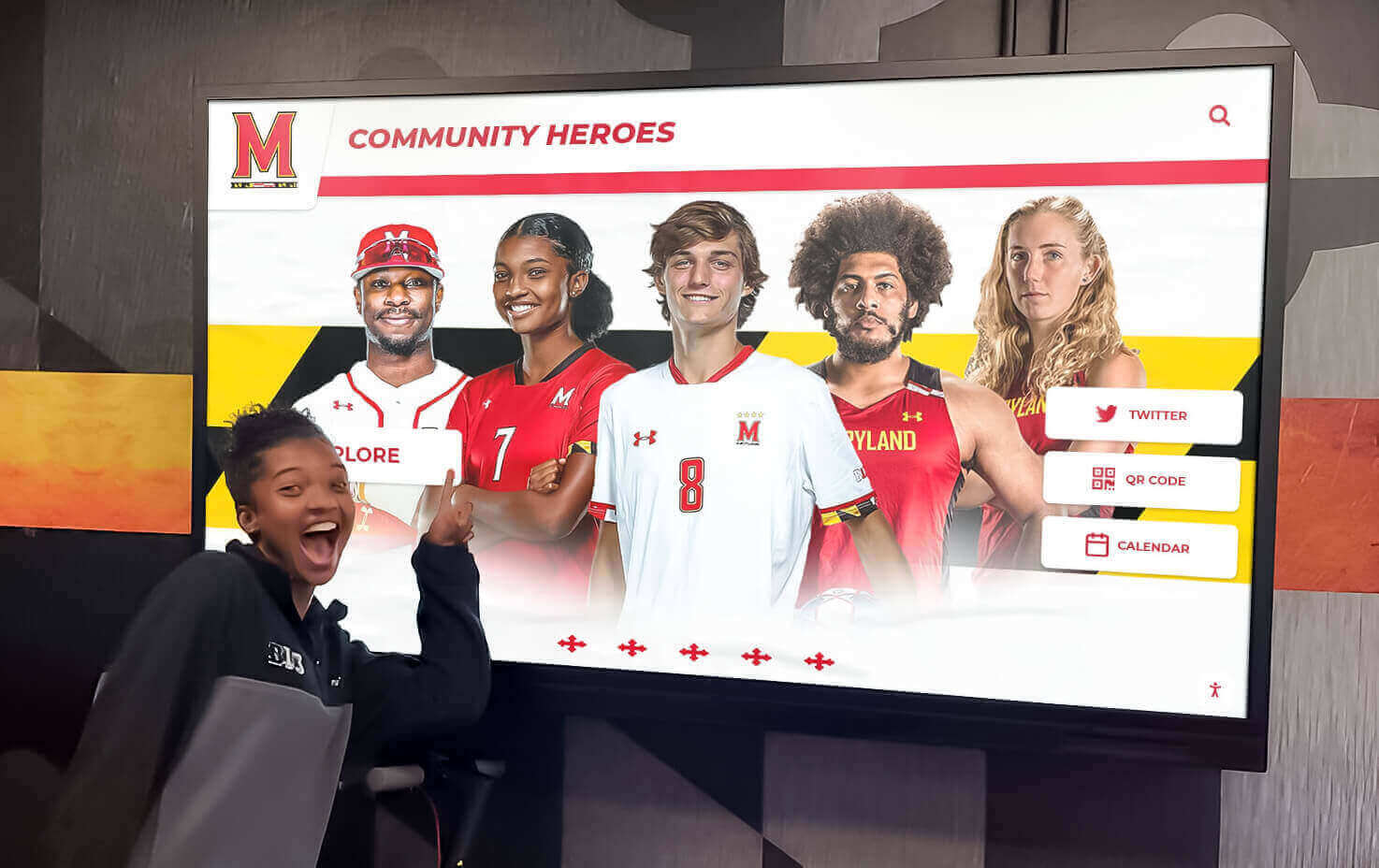
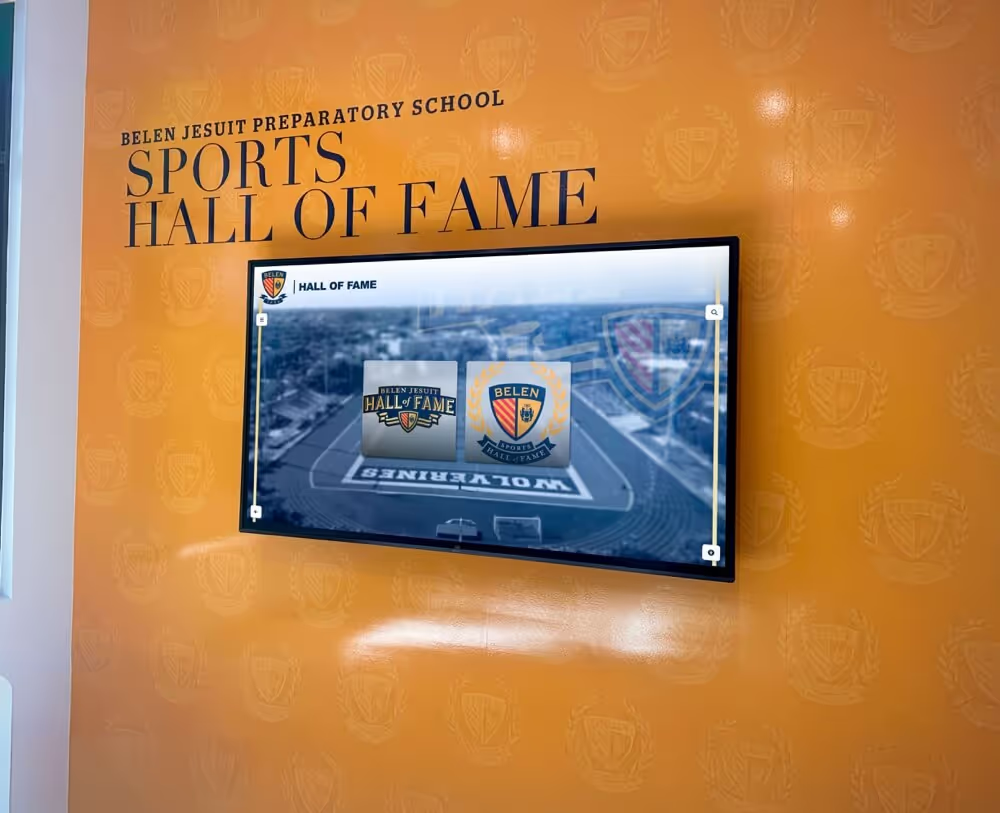
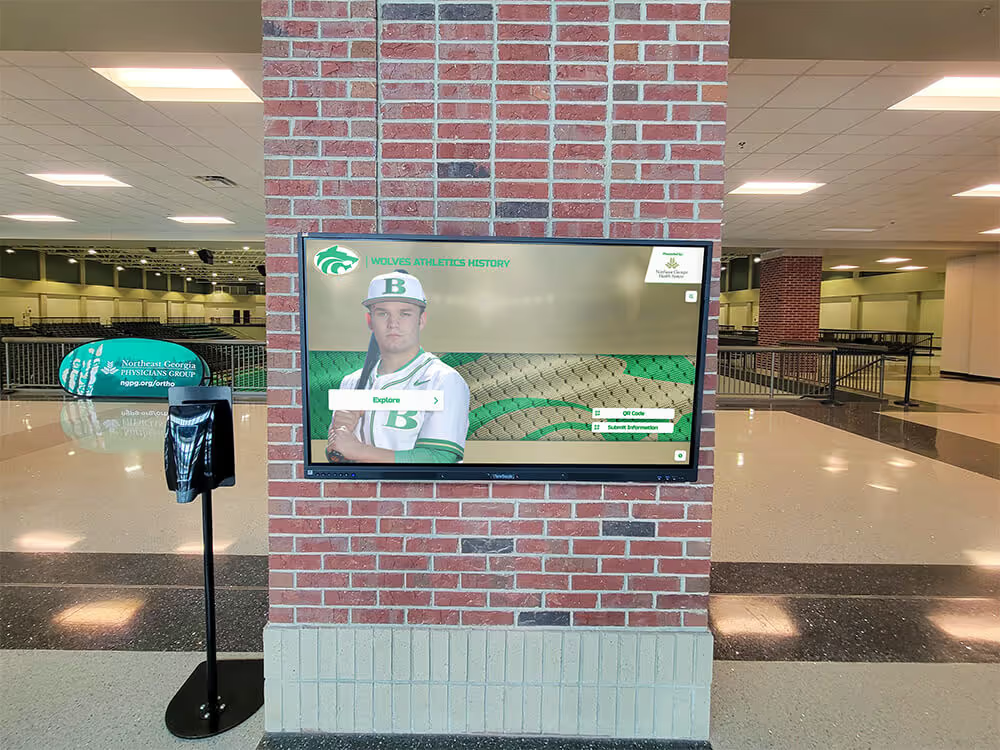
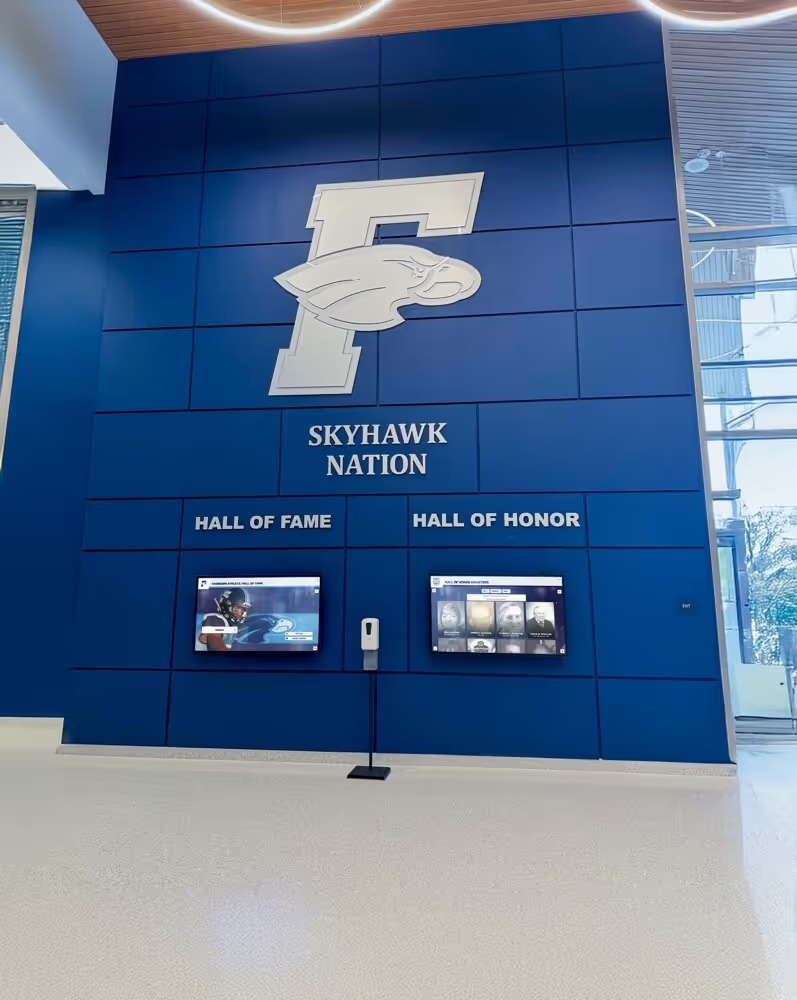
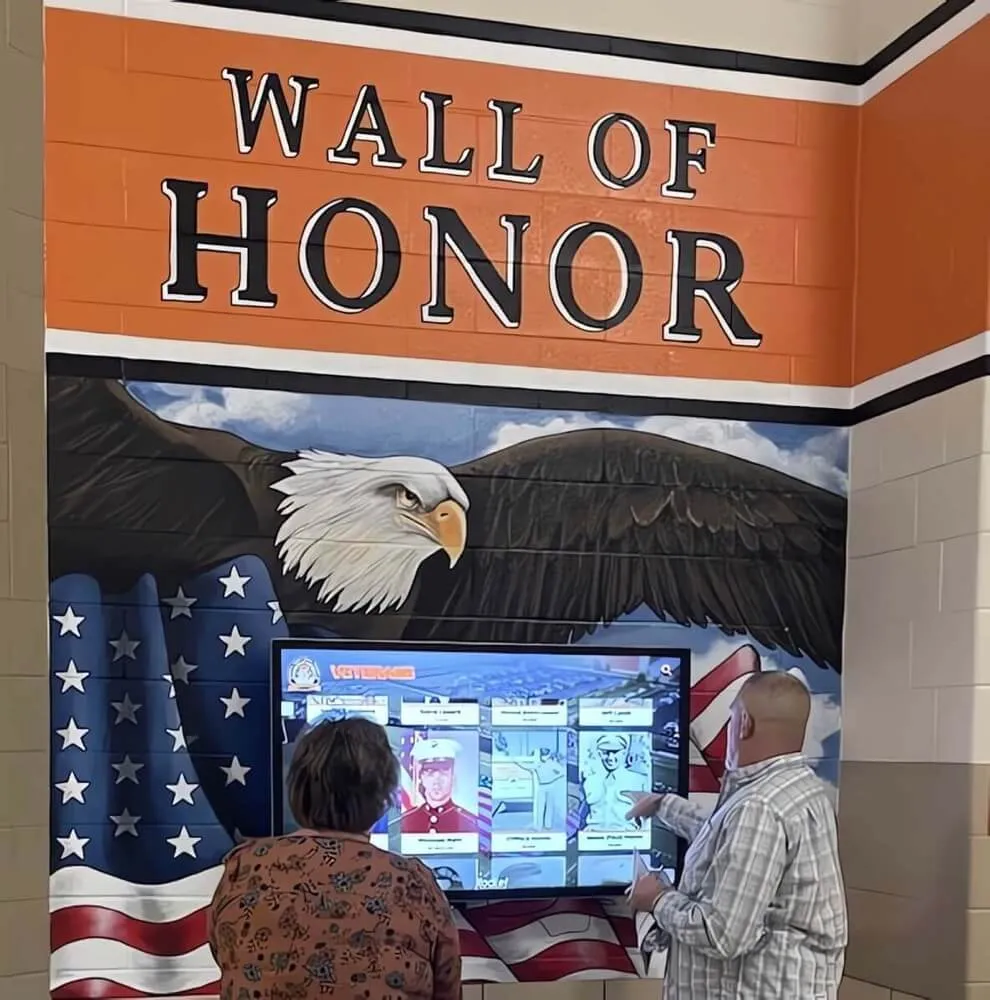
Modern recognition systems engage student-athletes with interactive displays showcasing achievement statistics and career highlights that inspire competitive excellence
“More Pitching Equals Better Development”
Training volume considerations:
- Quality repetitions more valuable than quantity alone
- Overuse represents primary injury risk for young pitchers
- Recovery time essential for adaptation and growth
- Mechanical refinement requires focused, deliberate practice
- Fatigue destroys form creating negative patterns
- Age-appropriate pitch counts prevent long-term damage
- Periodized training optimizes development while managing risk
Successful softball programs recognize that building comprehensive team culture extends beyond technical skill development to include recognition, celebration, and program identity that attracts and retains elite athletes.
Phase-by-Phase Mechanics Breakdown: The Complete Windmill Motion
Breaking the windmill delivery into discrete phases allows systematic instruction and targeted correction of specific mechanical elements.
Phase 1: Stance and Setup Position
Proper Stance Fundamentals
Establishing consistent starting position:
- Feet positioned on or slightly behind pitching rubber
- Weight balanced or slightly favoring drive leg
- Shoulders square to home plate
- Hands together at waist or chest height
- Athletic posture with slight knee flexion
- Eyes focused on target/catcher
- Comfortable, repeatable position minimizing unnecessary movement
Pre-Motion Routine
Consistency before pitch delivery:
- Establish identical rhythm for every pitch
- Deep breath promoting relaxation and focus
- Visual lock on target location
- Mental pitch selection commitment
- Routine reduces anxiety and improves consistency
- Allows time for sign communication with catcher
- Separates each pitch mentally and physically
Common Setup Errors
Flaws undermining subsequent phases:
- Excessive tension in shoulders or hands
- Weight distribution too far forward or backward
- Feet positioned incorrectly on rubber
- Inconsistent starting positions between pitches
- Rushing setup reducing mental preparation
- Poor posture compromising balance foundation
- Lack of routine creating mechanical variability
Phase 2: Arm Circle and Backswing
Initiating the Arm Circle
Beginning the windmill motion:
- Hands separate cleanly with deliberate timing
- Throwing arm begins upward circle
- Arm remains relatively straight throughout circle
- Glove hand moves to stride-side hip or chest
- Shoulder stays relaxed avoiding tension
- Circle initiated by shoulder rotation, not arm muscle
- Smooth, continuous motion without hitches or pauses
Backswing Mechanics
Critical rear phase of motion:
- Arm reaches maximum height behind body
- Weight begins shifting toward drive leg
- Hip loads in preparation for rotation
- Slight backward lean creating forward momentum potential
- Timing synchronizes arm position with lower body engagement
- Full range of motion without forcing hyperextension
- Balance maintained throughout backswing phase
Backswing Technical Points
Optimizing this critical phase:
- Arm passes close to ear at top of circle
- Elbow remains extended but not locked
- Wrist stays relaxed in neutral position
- Shoulder flexibility allows natural full circle
- Drive leg begins loading as arm reaches top
- Body stays compact without excessive lateral movement
- Eye contact with target maintained throughout

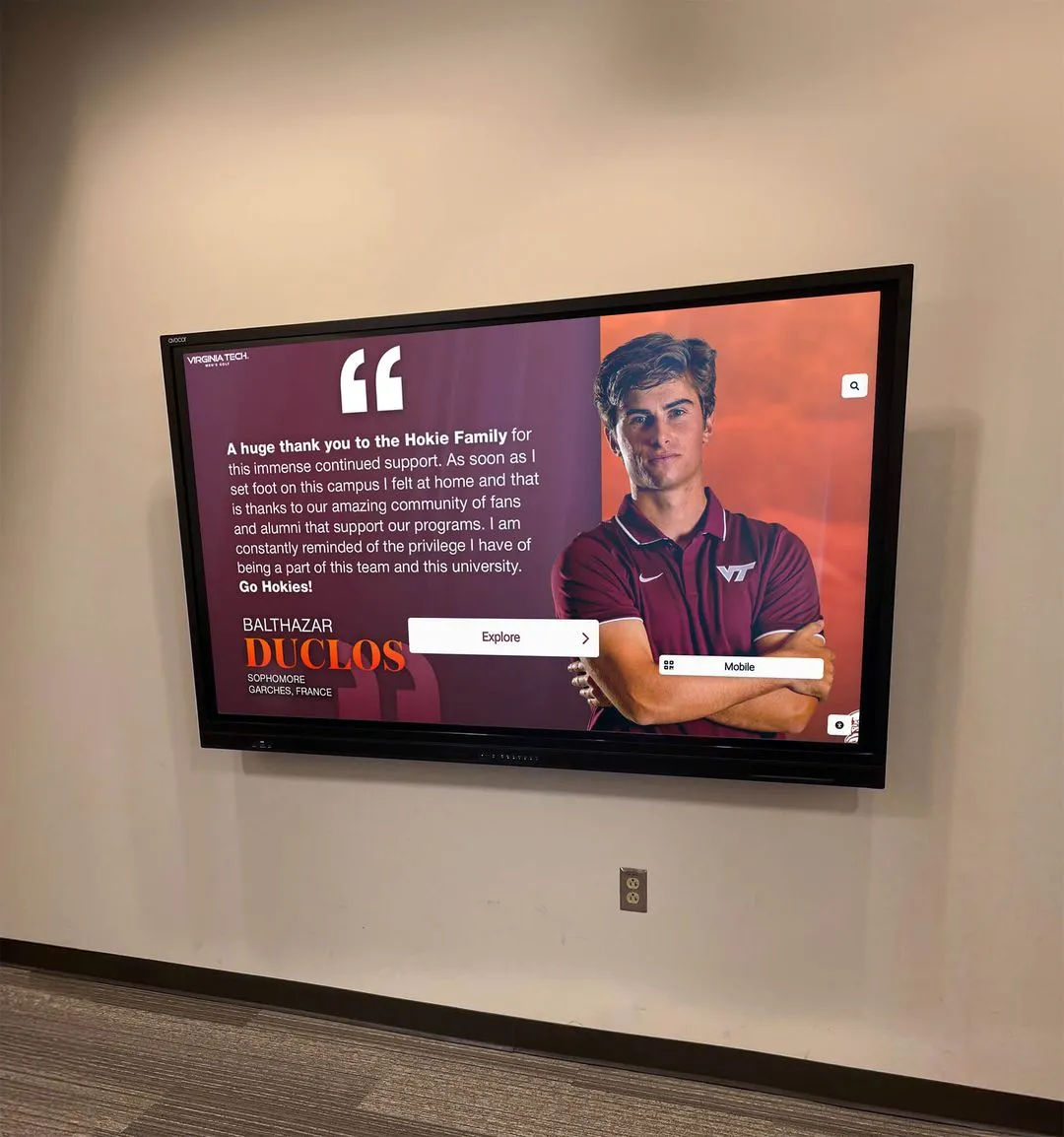
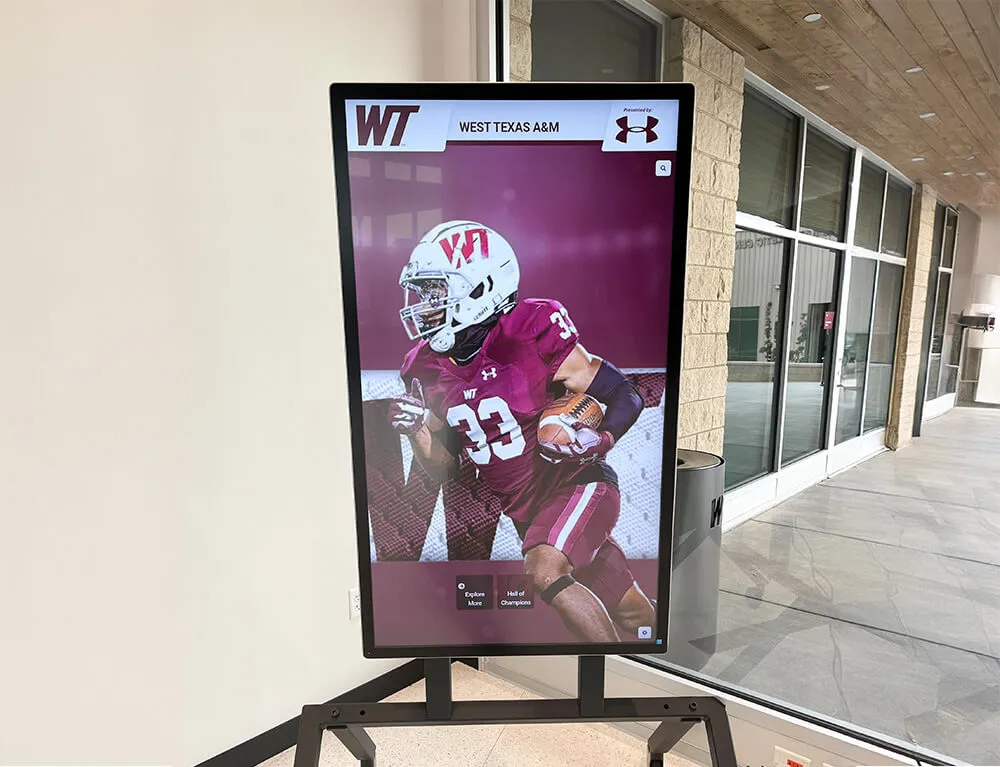
Programs developing elite pitchers showcase career statistics and achievements through interactive displays that quantify dominance and inspire competitive excellence
Phase 3: Stride and Hip Drive
Drive Leg Engagement
Generating forward momentum and power:
- Explosive push from drive leg against rubber
- Weight transfers completely from back to front
- Hip opens toward target initiating rotation
- Powerful extension through drive leg
- Maintains balance despite explosive force
- Timing coordinates with arm position in circle
- Generates linear momentum toward home plate
Stride Mechanics
Critical landing phase:
- Stride foot leads directly toward target (closed or slightly open)
- Stride length typically 80-100% of pitcher’s height
- Foot lands slightly closed promoting hip rotation
- Knee maintains slight flexion absorbing landing forces
- Lands on ball of foot with heel following
- Stride direction consistency determines control capability
- Firm landing creating stable base for rotation
Hip Rotation Initiation
Beginning rotational power phase:
- As stride foot plants, back hip begins driving forward
- Hip rotation pulls torso into rotational acceleration
- Timing slightly before arm reaches release point
- Explosive rotation rather than gradual turning
- Drive leg continues pushing even after stride landing
- Hip flexibility determines rotation speed and range
- Proper hip engagement separates elite velocity from average
Phase 4: Torso Rotation and Arm Acceleration
Upper Body Rotation
Amplifying velocity through trunk:
- Shoulders rotate following hip engagement
- Torso whips through delivery zone
- Back shoulder drives toward target
- Chest opens toward home plate at release
- Core strength controls rotational speed
- Spine remains relatively stable avoiding excessive lean
- Rotation timing creates “lag” between hips and shoulders
Arm Acceleration Phase
Maximum velocity generation:
- Arm accelerates dramatically as body rotates
- Elbow leads slightly with wrist following
- Arm path remains close to body through power zone
- Release point established by consistent arm position
- Maximum arm speed at release point
- Wrist snap adds final velocity component
- Deceleration begins immediately after release
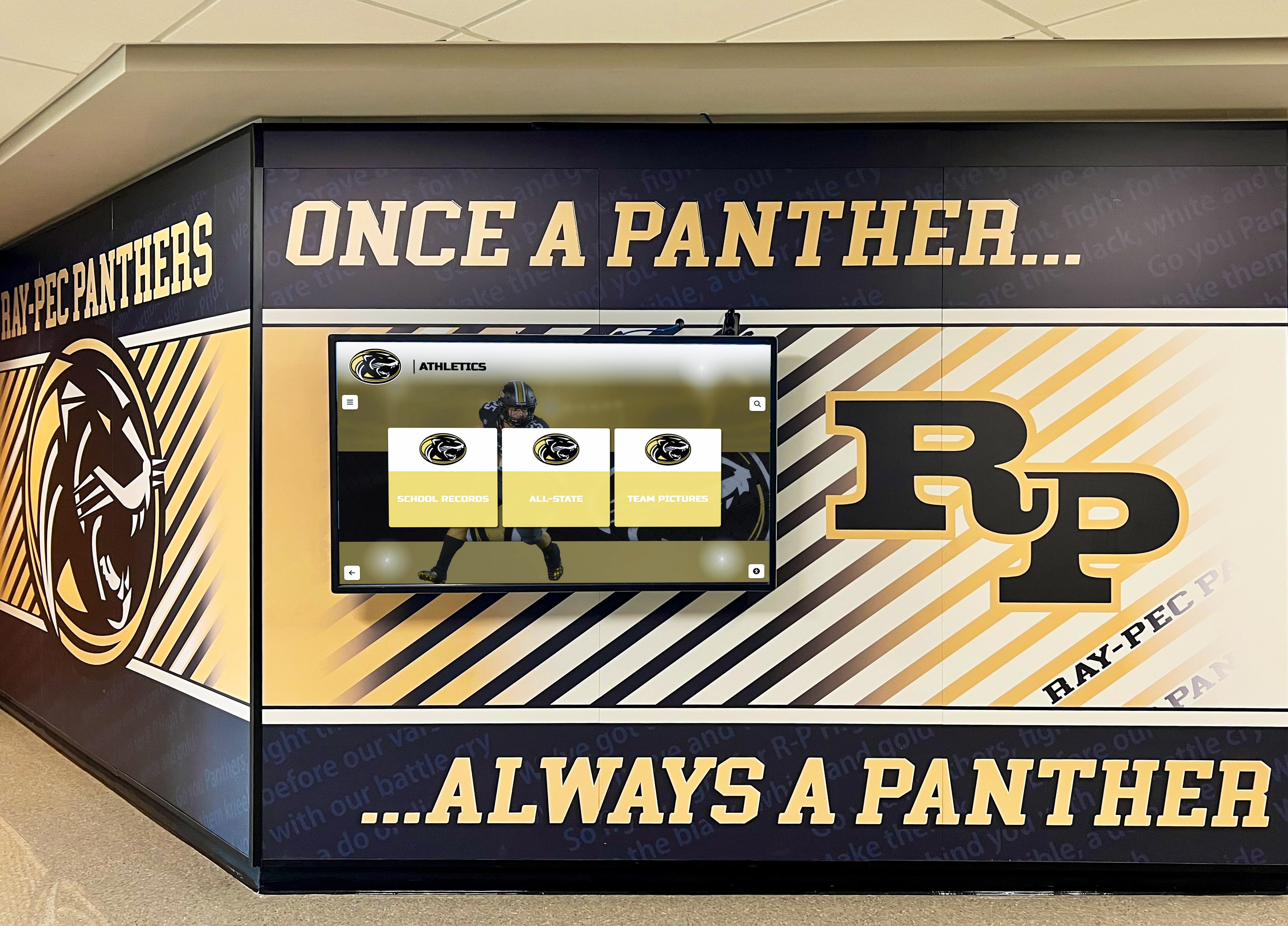
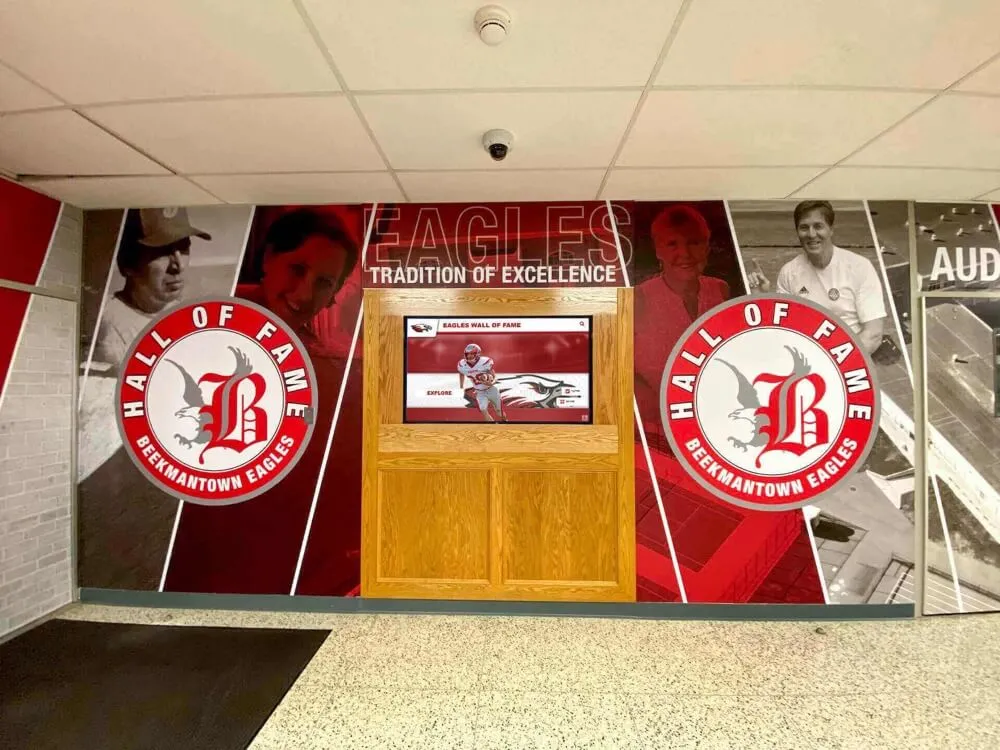
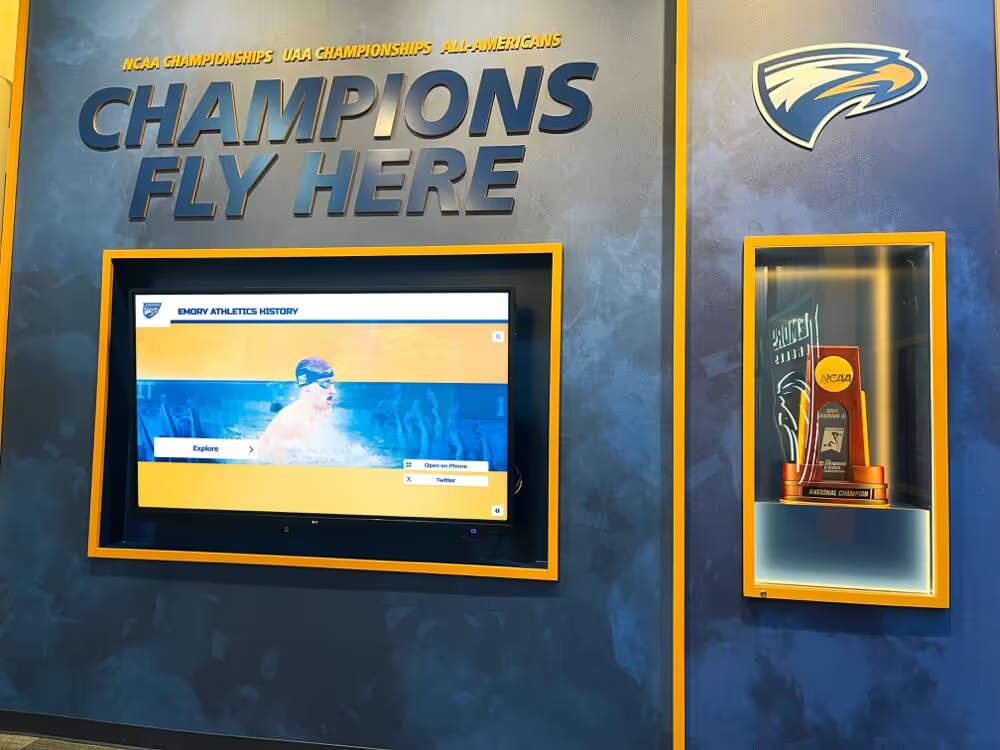
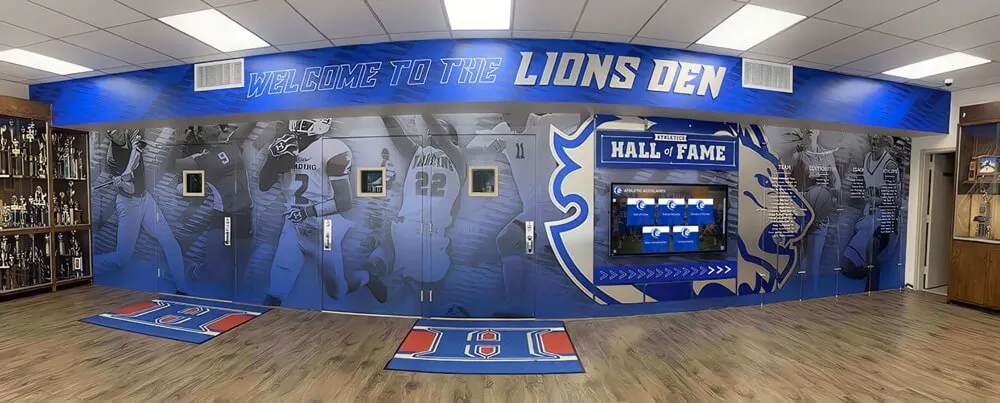
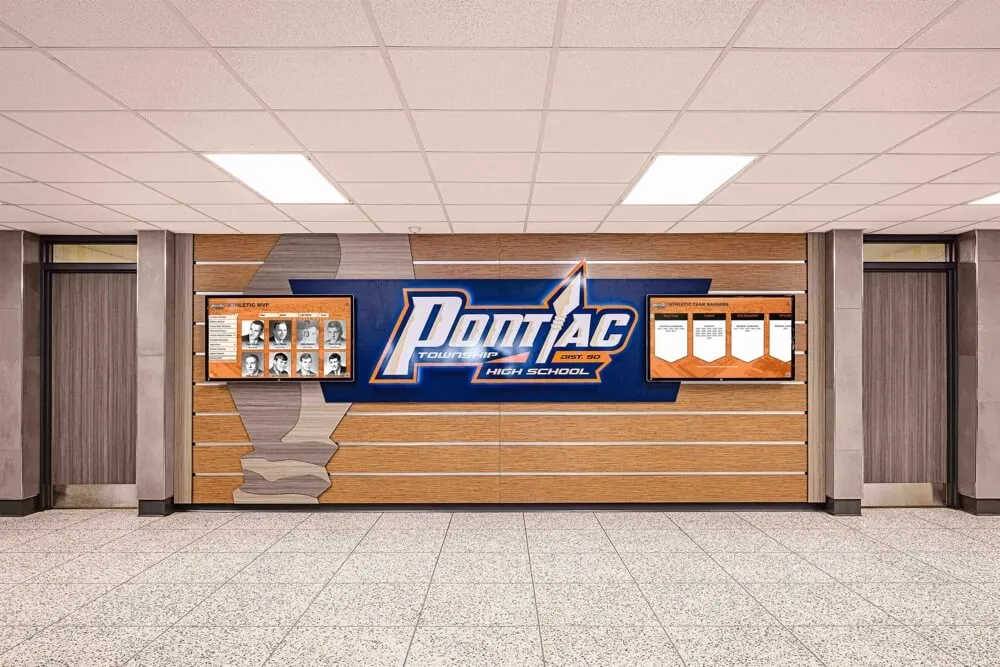
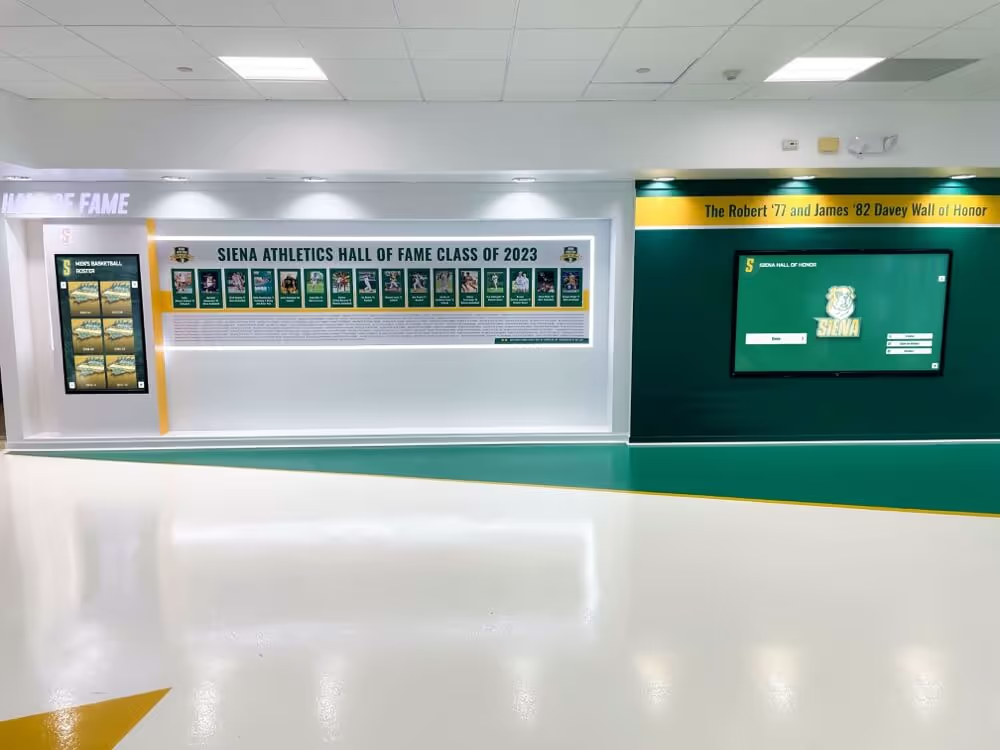
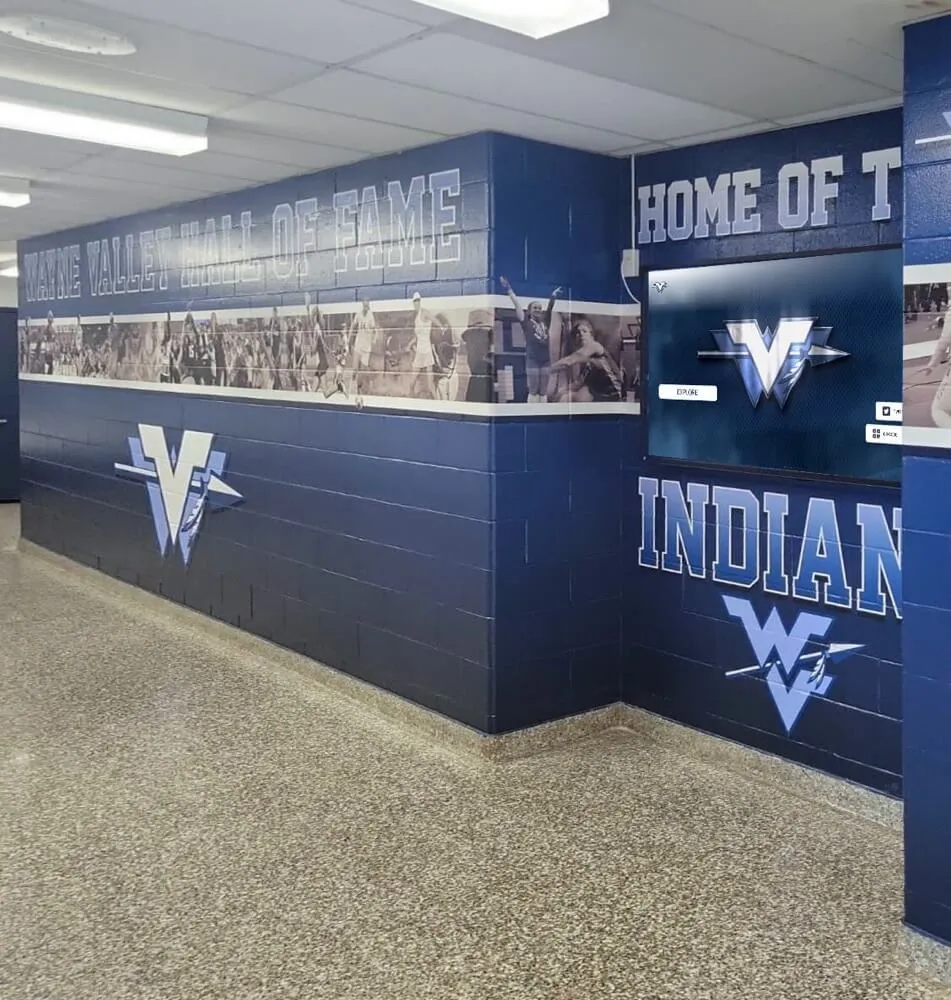
Athletic facilities celebrating championship achievements create program environments that attract competitive athletes and honor those who define program excellence
Release Point Mechanics
Critical moment determining results:
- Arm position at hip level for fastball
- Wrist firm but relaxed at release
- Fingers stay behind ball until final release
- Eyes track target throughout release
- Consistent release point enables command development
- Spin applied through finger pressure and wrist action
- Release timing determines both velocity and movement
Many championship softball programs implement comprehensive recognition displays showcasing pitching dominance statistics alongside team championships and individual achievements.
Phase 5: Follow-Through and Finish Position
Proper Follow-Through Mechanics
Completing energy transfer safely:
- Arm continues upward after release completing circle
- Momentum carries body forward off rubber
- Drive leg follows through into balanced landing
- Weight finishes completely on stride leg
- Chest faces home plate squarely
- Glove hand positions for defensive readiness
- Balance maintained in athletic fielding position
Finish Position Assessment
Indicators of mechanical quality:
- Balanced stance without staggering or falling
- Belt buckle faces target at completion
- Eyes remain focused on catcher/target
- Hands in defensive ready position
- Body prepared for potential batted ball
- Consistent finish location indicating mechanical repeatability
- Athletic posture supporting quick reactions
Deceleration and Injury Prevention
Protecting arm health:
- Complete follow-through reduces deceleration stress
- Shoulder and core strength control arm after release
- Attempting to “stop” arm motion increases injury risk
- Natural completion of motion protects joint structures
- Proper strength training supports safe deceleration
- Mechanical efficiency reduces cumulative stress
- Recovery protocols essential for tissue health
Programs committed to athlete development recognize that celebrating senior athletes appropriately honors their contributions and sacrifices while inspiring underclassmen to pursue excellence.
Common Mechanical Errors and Correction Strategies
Identifying and correcting flawed movement patterns represents essential coaching responsibility preventing performance plateaus and injury risk.
Lower Body Mechanical Flaws
Insufficient Drive Leg Push
Problem identification and correction:
- Error: Weak or passive push-off from rubber reducing power generation
- Consequence: Limited velocity, over-reliance on arm, increased injury risk
- Visual Cue: Minimal weight transfer, abbreviated stride, upright posture
- Correction Drill: Wall push-offs developing explosive leg drive strength
- Coaching Cue: “Push the rubber backward through the ground”
- Progressive Challenge: Resistance band training opposing forward movement
- Verification: Video analysis showing complete extension and drive
Poor Stride Direction
Alignment problems affecting control:
- Error: Stride foot landing across body (closed) or away from target (open)
- Consequence: Hip rotation restriction, control inconsistency, reduced velocity
- Visual Cue: Inconsistent landing locations, torso alignment issues
- Correction Drill: Stride line drills using tape or rope guide
- Coaching Cue: “Land toward your target every time”
- Progressive Challenge: Varying distances maintaining consistent direction
- Verification: Foot plant location relative to target line
Inadequate Hip Rotation
Limited rotational power:
- Error: Hips failing to fully rotate or rotating too slowly
- Consequence: Velocity limitation, excessive arm stress, timing disruption
- Visual Cue: Hips remain partially closed at release, limited drive leg follow-through
- Correction Drill: Hip isolation exercises, rotation-focused strength training
- Coaching Cue: “Drive your back hip through toward the catcher”
- Progressive Challenge: Medicine ball rotational throws building explosive power
- Verification: Belt buckle orientation at finish position
Upper Body Mechanical Flaws
Short or Abbreviated Arm Circle
Incomplete range of motion:
- Error: Arm fails to reach full extension at top of backswing
- Consequence: Reduced velocity potential, inconsistent release point
- Visual Cue: Bent elbow at top, arm not passing by ear
- Correction Drill: Towel drills emphasizing full extension and circle completion
- Coaching Cue: “Reach for the sky at the top”
- Progressive Challenge: Flexibility training improving shoulder range
- Verification: Video showing arm path and maximum height
Elbow Leading the Arm
Arm position problems:
- Error: Elbow bends significantly through power zone
- Consequence: Velocity reduction, increased elbow stress, inconsistent spin
- Visual Cue: Visible elbow bend during acceleration phase
- Correction Drill: Extension holds and slow-motion repetitions
- Coaching Cue: “Keep your arm long through the power zone”
- Progressive Challenge: Resistance training building supporting strength
- Verification: Arm position at release point
Rushing or Slow Arm Speed
Timing and tempo issues:
- Error: Arm motion too fast or slow relative to body rotation
- Consequence: Timing disruption, reduced velocity, control problems
- Visual Cue: Disconnect between lower and upper body timing
- Correction Drill: Tempo drills establishing proper rhythm
- Coaching Cue: “Let your hips pull your arm through”
- Progressive Challenge: Metronome-paced repetitions building consistency
- Verification: Sequential timing analysis through video
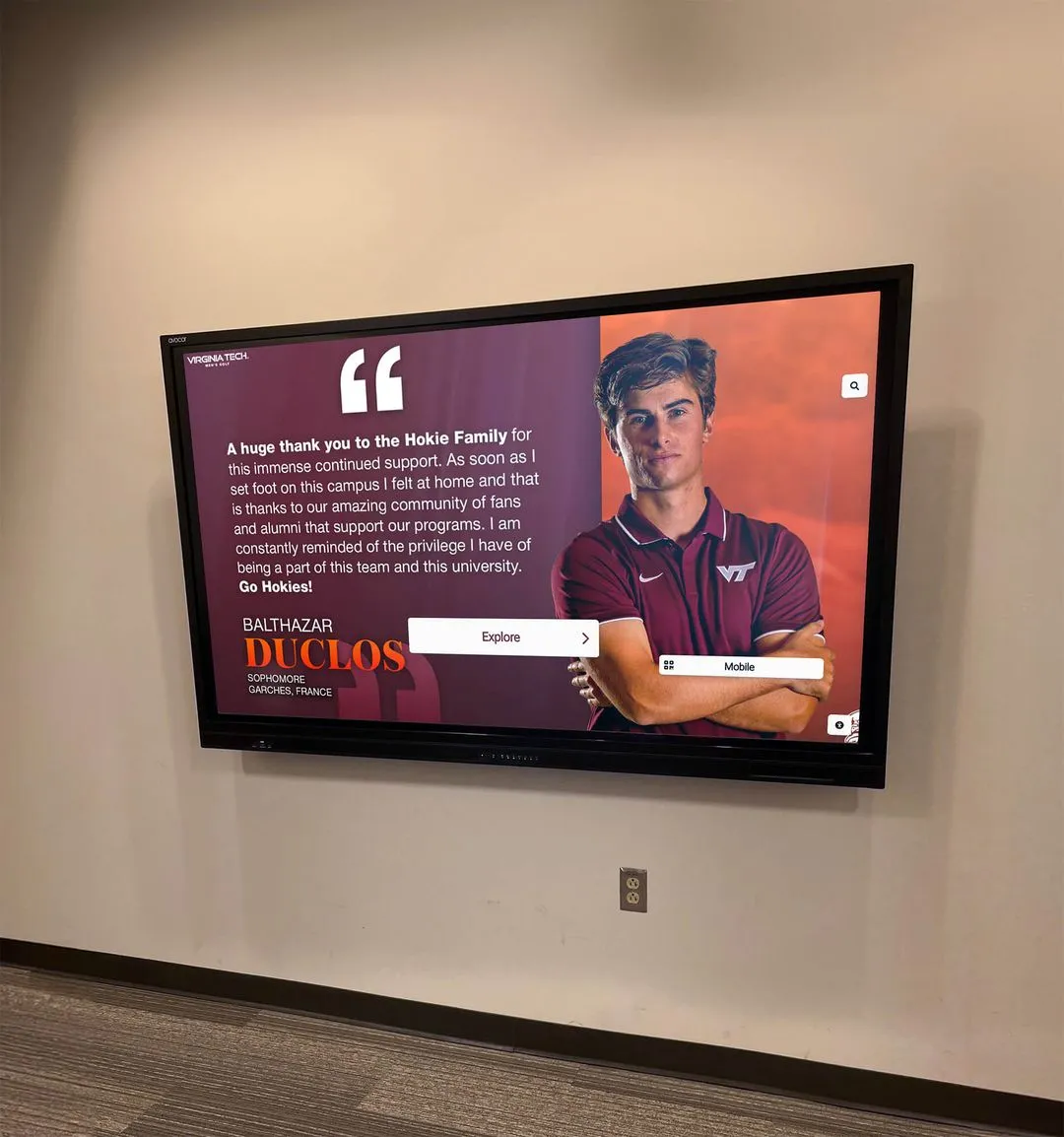
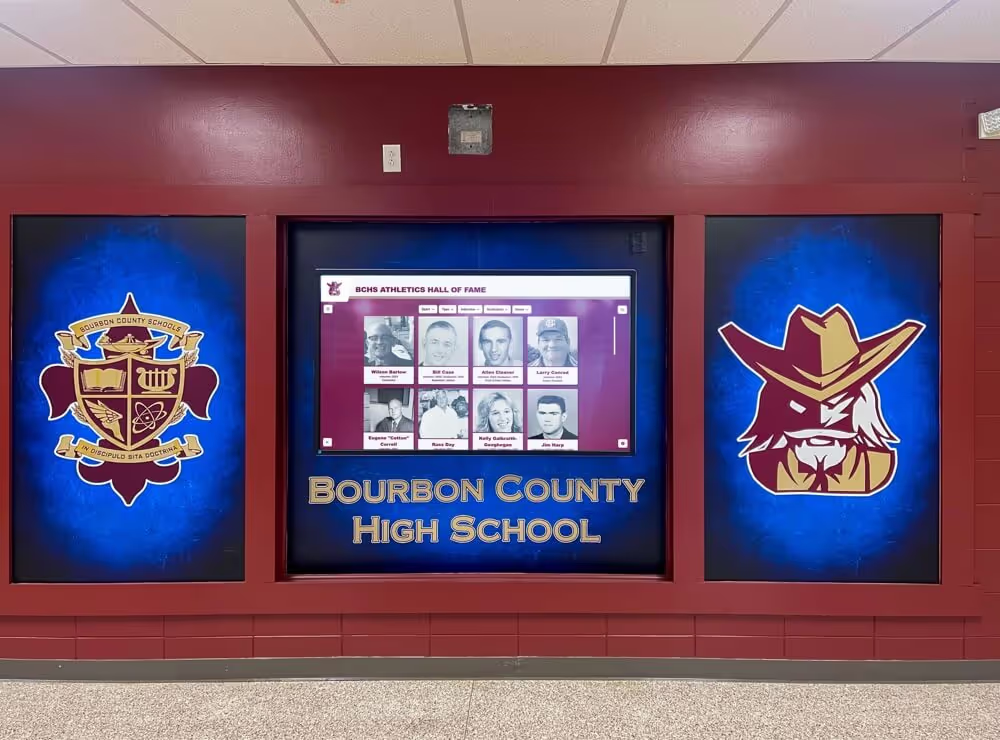
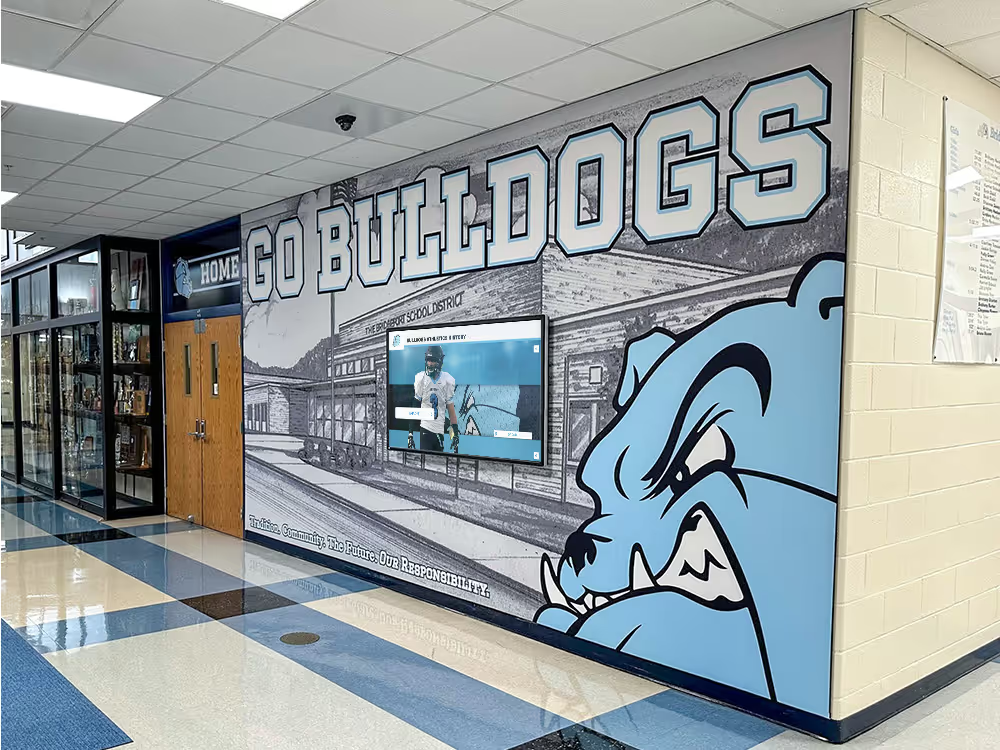
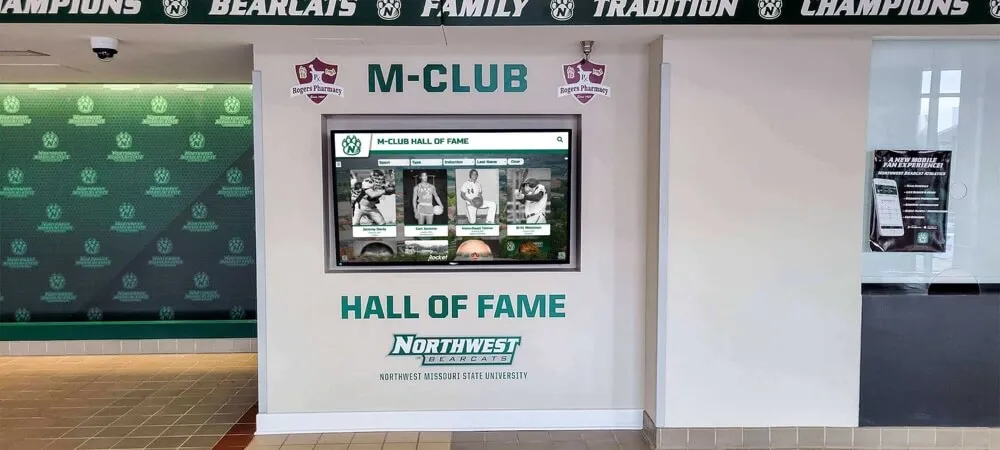
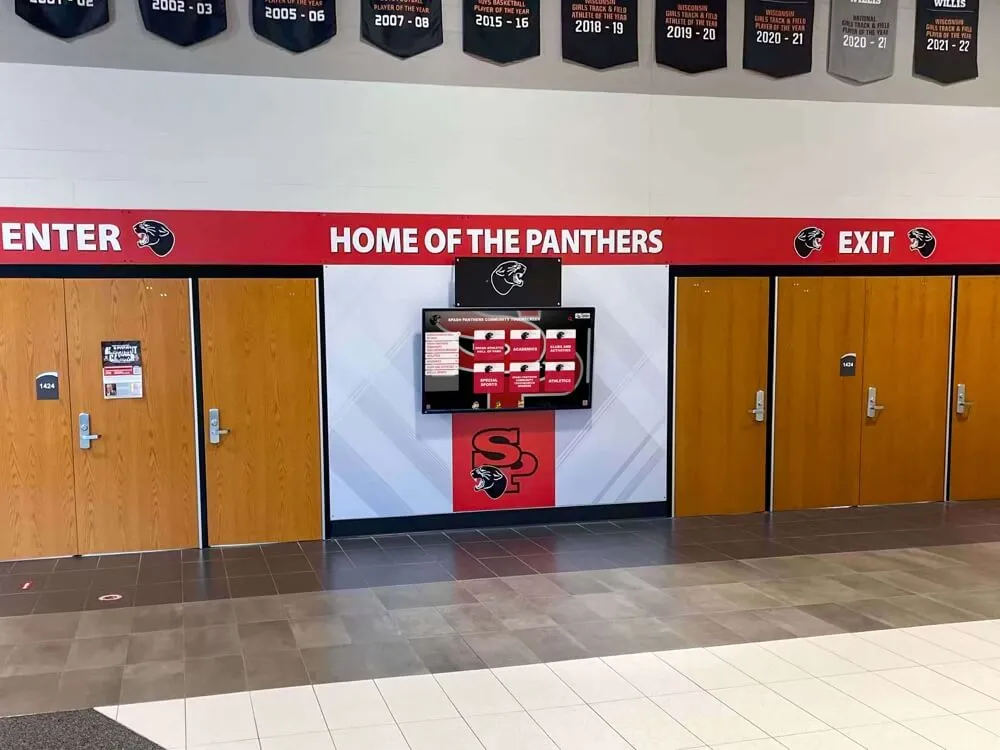
Modern athletic programs honor student-athlete excellence through dynamic displays that showcase individual achievements while reinforcing program identity and institutional pride
Timing and Sequencing Errors
Rushing the Delivery
Premature movement patterns:
- Error: Hip rotation beginning before proper weight transfer completion
- Consequence: Power loss, balance issues, inconsistent mechanics
- Visual Cue: Early hip opening, weight remaining on drive leg
- Correction Drill: Pause drills establishing checkpoints through motion
- Coaching Cue: “Wait for your stride foot to land before rotating”
- Progressive Challenge: Partner resistance creating awareness
- Verification: Sequential body segment movement analysis
Late Hip Rotation
Delayed power phase:
- Error: Hips rotating after arm begins acceleration
- Consequence: Severe velocity limitation, arm-dominant delivery
- Visual Cue: Hips square to target at release point
- Correction Drill: Hip-first drills isolating lower body timing
- Coaching Cue: “Hips then hands”
- Progressive Challenge: Explosive lower body training
- Verification: Timing of hip rotation relative to arm position
Inconsistent Release Point
Command-destroying variability:
- Error: Release occurring at varying arm positions or body locations
- Consequence: Control problems, reduced effectiveness, walk issues
- Visual Cue: Ball location unpredictability despite proper aim
- Correction Drill: Target work with immediate feedback
- Coaching Cue: “Same release point every single pitch”
- Progressive Challenge: Progressive distance and speed increases
- Verification: Release point tracking through multiple pitches
Coaches developing complete programs understand that motivating team performance includes creating competitive culture through music, recognition, and environment supporting championship mindsets.
Velocity-Building Drills and Training Progressions
Systematic velocity development requires progressive overload, proper movement patterns, and patient skill acquisition over multiple training phases.
Foundation Velocity Drills
Power Position Pitching
Building explosive drive mechanics:
- Setup: Begin in stride landing position (front foot planted)
- Execution: Complete pitch delivery from this starting position
- Focus: Isolated hip rotation and upper body mechanics
- Volume: 3 sets of 8-10 repetitions with full recovery
- Progression: Add resistance bands opposing rotation
- Coaching Points: Maximum explosive rotation, complete follow-through
- Purpose: Develops rotational power without stride complexity
Rocker Drills
Weight transfer and rhythm development:
- Setup: Stand on rubber in normal stance position
- Execution: Rock back loading drive leg, then forward into delivery
- Focus: Smooth weight transfer and timing establishment
- Volume: 2 sets of 10 repetitions at varying tempos
- Progression: Increase tempo gradually building speed
- Coaching Points: Balance throughout, controlled momentum
- Purpose: Establishes proper weight shift and delivery rhythm
Wall Push-Off Series
Lower body power development:
- Setup: Face wall in pitching stance, hands on wall
- Execution: Explosive push driving body backward from wall
- Focus: Maximum drive leg extension and force production
- Volume: 4 sets of 6-8 explosive repetitions
- Progression: Single-leg variations, resistance band additions
- Coaching Points: Full extension, explosive intent, balance landing
- Purpose: Builds drive leg strength and explosive push mechanics
Intermediate Velocity Development
Long Toss Progressions
Building arm strength and extension:
- Setup: Begin at regulation distance, gradually increase
- Execution: Full windmill delivery at extended distances
- Focus: Maintaining mechanics while increasing effort
- Volume: Progressive distance increases over 15-20 throws
- Progression: Maximum distance appropriate for age/development
- Coaching Points: Proper mechanics despite increased distance
- Purpose: Develops arm strength and encourages maximum effort
Weighted Ball Training
Overload and underload protocols:
- Setup: Use balls 10-20% heavier and lighter than standard
- Execution: Full deliveries alternating weighted implements
- Focus: Maintaining proper mechanics with weight variations
- Volume: Limited repetitions (8-12 per weight per session)
- Progression: Gradual weight increase over training phases
- Coaching Points: Never sacrifice mechanics for weight handling
- Purpose: Neuromuscular adaptation and velocity development
- Caution: Age-appropriate application, proper supervision essential
Speed Chains and Resistance Training
External resistance applications:
- Setup: Attach resistance bands to drive leg or torso
- Execution: Complete deliveries against resistance
- Focus: Maximum effort against controlled resistance
- Volume: 3-4 sets of 5-6 repetitions with full recovery
- Progression: Gradually increase resistance levels
- Coaching Points: Explosive intent, complete mechanics
- Purpose: Builds sport-specific strength and power
Advanced Velocity Training
Plyometric Integration
Explosive power development:
- Exercises: Box jumps, broad jumps, medicine ball throws
- Application: 2-3 times weekly during development phases
- Volume: Lower repetitions (3-6) with maximum quality
- Intensity: Maximum explosive effort each repetition
- Recovery: Complete rest between sets and sessions
- Integration: Precedes pitching work in session structure
- Purpose: Develops fast-twitch muscle fiber recruitment
Strength Training Protocols
Off-mound power building:
- Focus Areas: Lower body (squats, lunges, deadlifts)
- Core Training: Rotational exercises, anti-rotation stability
- Upper Body: Posterior chain, scapular stability
- Frequency: 2-3 sessions weekly during off-season
- Periodization: Strength to power to maintenance phases
- Age Consideration: Bodyweight to progressive resistance
- Purpose: Builds strength foundation supporting velocity

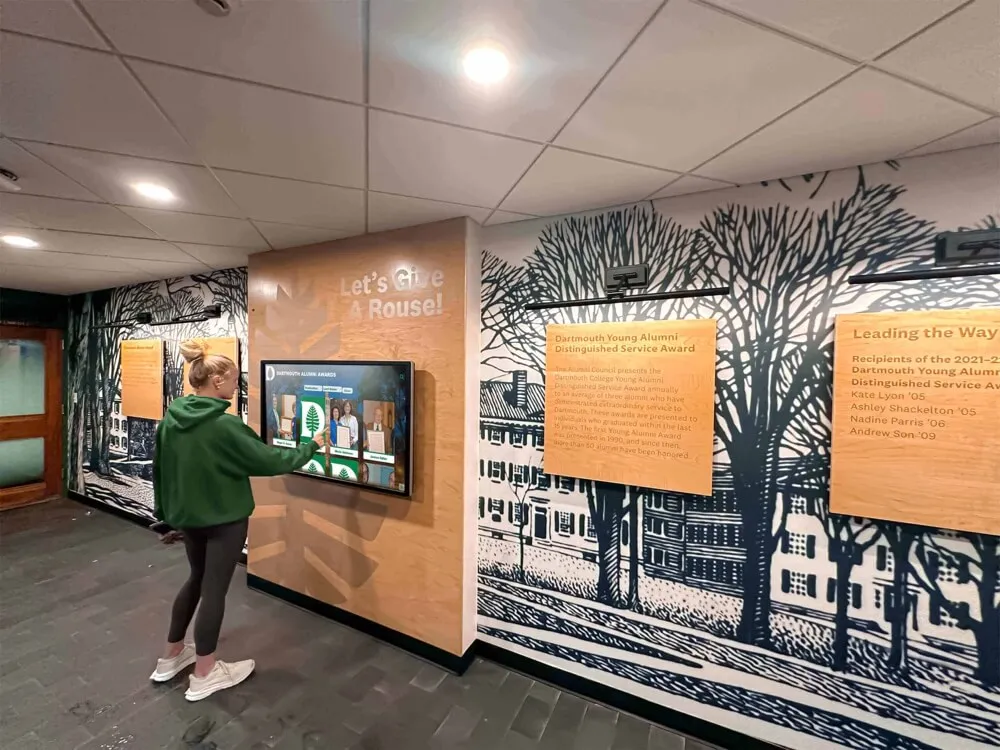
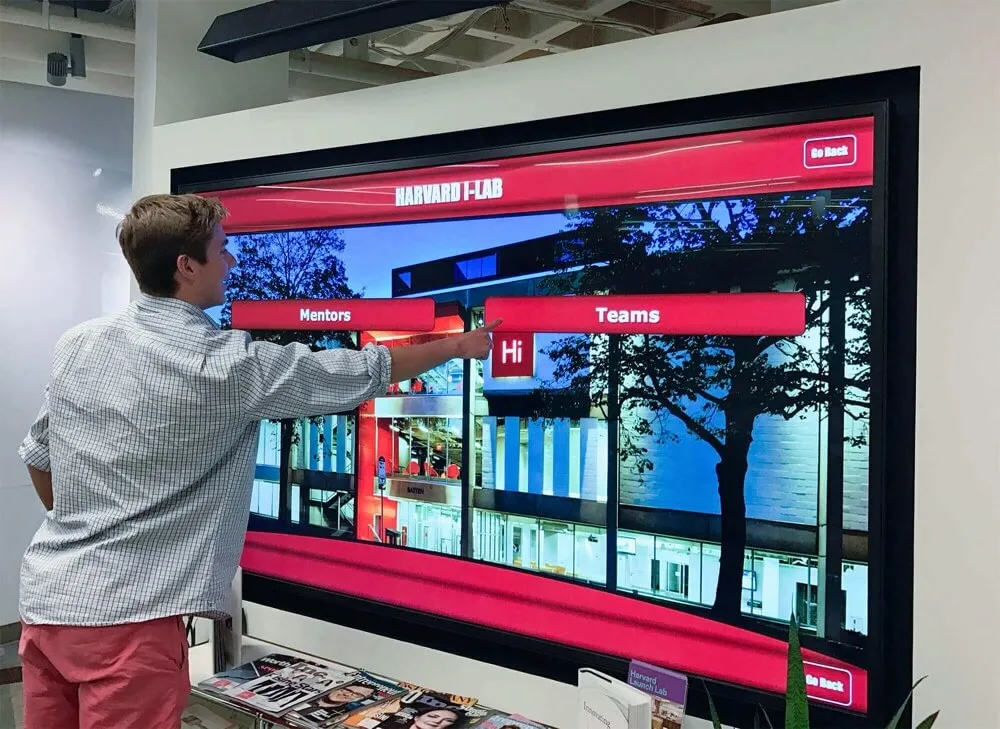
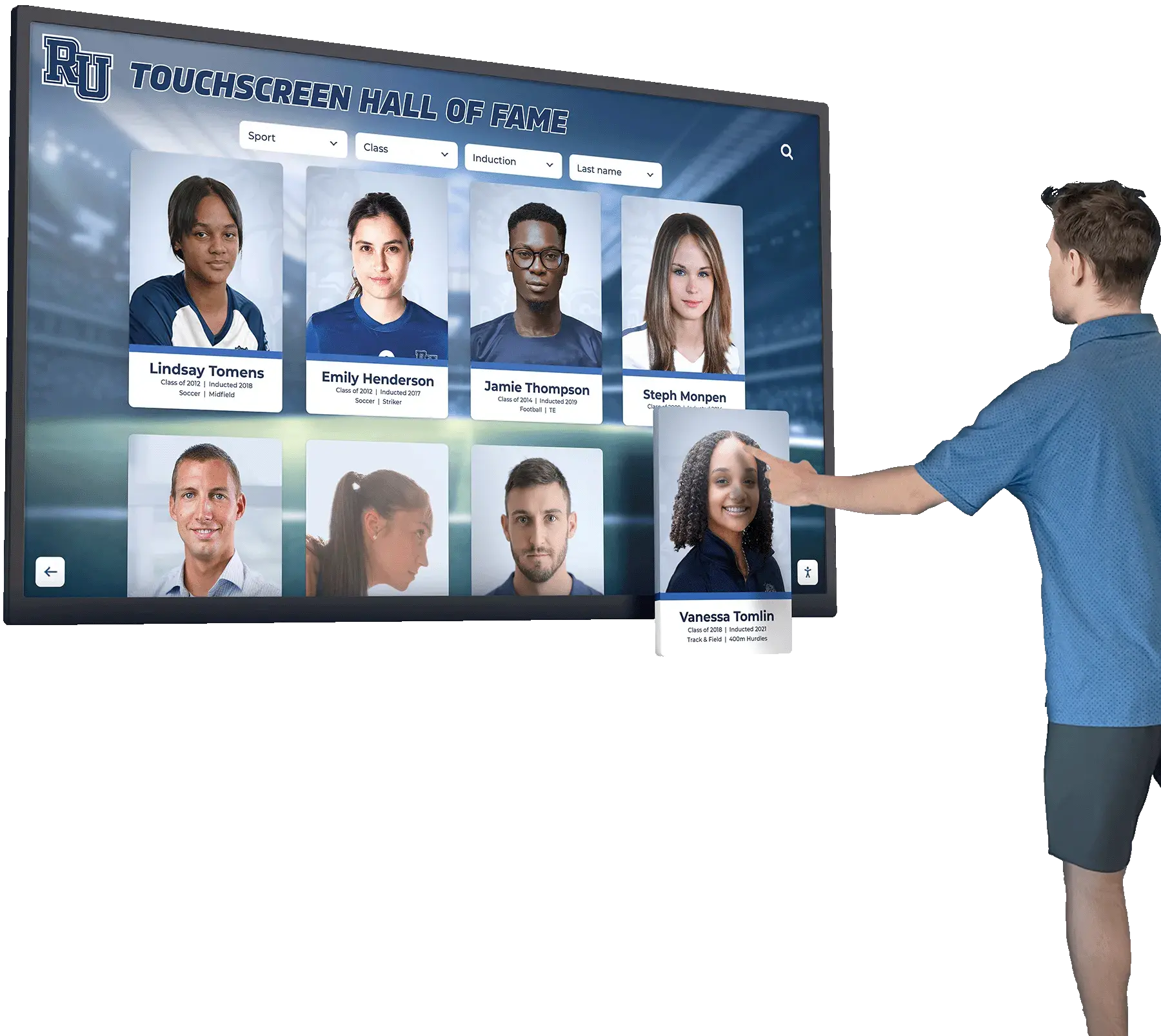
Interactive recognition systems allow programs to showcase unlimited athlete profiles and statistics, creating comprehensive digital archives celebrating program history
Competition and Intent Training
Psychological velocity development:
- Approach: Maximum effort pitching in controlled environments
- Setup: Radar gun feedback creating competitive motivation
- Volume: Limited high-effort pitches preventing overuse
- Competition: Partner challenges, personal best tracking
- Mental Component: Builds confidence throwing hard intentionally
- Recovery: Adequate rest between maximum effort sessions
- Purpose: Develops ability to execute maximum velocity on demand
Programs building championship cultures recognize that acknowledging athlete achievements regularly throughout the season maintains motivation and reinforces standards of excellence.
Teaching Progressions and Age-Appropriate Development
Effective coaching adjusts instruction complexity and training intensity based on athlete developmental stage and experience level.
Youth Pitcher Development (Ages 8-12)
Fundamental Movement Patterns
Foundation before specialization:
- Emphasize athletic movement quality over velocity
- Simple, clear coaching cues avoiding technical overload
- Fun, game-based learning maintaining engagement
- Short practice segments matching attention spans
- Positive reinforcement building confidence
- Basic mechanics establishing proper foundations
- Limited pitch counts preventing overuse injury
Age-Appropriate Progressions
Developmental considerations:
- Begin with basic arm circle and weight transfer
- Add complexity gradually as competence develops
- Flexibility and general athleticism as priorities
- Multiple sport participation encouraged
- Mechanics consistency before velocity development
- No weighted balls or advanced training
- Emphasis on learning to compete and enjoy pitching
Youth Coaching Priorities
What matters most at this stage:
- Creating positive associations with pitching
- Building fundamental movement competency
- Developing love for learning and improving
- Proper warm-up and recovery habits
- Understanding basic pitch location concepts
- Team play and sportsmanship development
- Injury prevention through appropriate volume
Middle School Development (Ages 12-14)
Refining Core Mechanics
Technical skill development:
- More detailed mechanical instruction appropriate
- Video analysis introducing self-awareness
- Specific drill work targeting individual needs
- Introduction to structured training programs
- Beginning of pitch type development (change-up)
- Increased emphasis on physical development
- Pitch count monitoring with strict limits
Strength and Conditioning Introduction
Building physical capabilities:
- Bodyweight strength training foundations
- Sport-specific conditioning protocols
- Flexibility and mobility programs
- Introduction to proper throwing progressions
- Core strength as performance foundation
- Age-appropriate plyometric training
- Recovery and nutrition education beginning
Competitive Development
Building mental toughness:
- Working through adversity and failure
- Developing pitching routines and consistency
- Understanding game strategy and situations
- Communication with catchers and coaches
- Handling pressure in competitive environments
- Goal setting and personal accountability
- Team leadership opportunities
High School Elite Development (Ages 14-18)
Advanced Mechanical Refinement
Optimizing performance mechanics:
- Sophisticated video analysis and biomechanics
- Individual mechanical adjustments based on physical attributes
- Multiple pitch development and sequencing
- Advanced command training and location work
- Competitive velocity development protocols
- Spin rate and movement quality emphasis
- Mental game and psychological skills training
Comprehensive Physical Development
Maximizing athletic capacity:
- Structured strength training programs
- Olympic lifting and explosive power development
- Advanced plyometric protocols
- Periodized training matching competition schedule
- Recovery protocols including sleep and nutrition
- Injury prevention and maintenance programs
- Sport-specific conditioning maintaining stamina
College Preparation and Recruitment
Pathway to next level:
- Showcase preparation and performance
- Recruitment communication and exposure
- Advanced statistics and metrics tracking
- Leadership and team culture contributions
- Academic performance alongside athletic excellence
- Understanding college pitching demands
- Long-term development vs. short-term wins
Many successful programs recognize that planning comprehensive recognition events celebrates achievement appropriately while building program tradition and family engagement.
Building Complete Pitchers: Beyond Physical Mechanics
Elite pitching development extends beyond biomechanics into mental, strategic, and cultural dimensions creating complete competitor development.
Mental Game and Competitive Psychology
Developing Pitcher Mindset
Psychological skills for success:
- Confidence building through progressive mastery
- Resilience training recovering from poor performances
- Focus and concentration techniques
- Emotional regulation managing competitive stress
- Visualization and mental rehearsal protocols
- Competitive aggression balanced with composure
- Growth mindset embracing challenges and learning
Pitch Calling and Strategy
Game intelligence development:
- Understanding batter weaknesses and tendencies
- Pitch sequencing logic and effectiveness
- Situational awareness (count, runners, score)
- Adjusting strategy based on performance and conditions
- Communication with catcher and defensive teammates
- Learning from at-bats and making adjustments
- Developing intuition through experience and study
Handling Pressure and Adversity
Building mental toughness:
- Routine consistency reducing anxiety
- Breathing and relaxation techniques
- Positive self-talk and internal dialogue
- Recovering quickly from mistakes or bad calls
- Maintaining composure regardless of circumstances
- Competitive drive balanced with process focus
- Leadership presence inspiring team confidence
Pitcher Health and Injury Prevention
Arm Care Protocols
Protecting long-term health:
- Comprehensive warm-up routines before throwing
- Progressive throwing programs building volume safely
- Recovery routines including stretching and mobility
- Strength training supporting joint stability
- Ice and recovery modalities when appropriate
- Monitoring for pain or discomfort warning signs
- Rest periods preventing overuse accumulation
Pitch Count Guidelines
Age-appropriate volume limits:
- Youth levels: 50-75 pitches per outing maximum
- Middle school: 75-100 pitches with rest requirements
- High school: 100-120 pitches for developed pitchers
- Multiple-day rest protocols based on pitch counts
- Seasonal volume monitoring preventing excessive load
- No pitching on consecutive days for youth athletes
- Communication among coaches preventing multi-team overuse
Recognizing Warning Signs
Injury prevention awareness:
- Pain during or after pitching sessions
- Velocity decrease without mechanical explanation
- Reduced range of motion or flexibility
- Altered mechanics indicating compensation
- Fatigue accumulation across season
- Emotional changes suggesting burnout
- Immediate evaluation for concerning symptoms
Coaches committed to comprehensive excellence understand that creating diverse recognition categories celebrates contributions beyond statistics, building inclusive team culture.
Integrating Pitching Excellence with Program Recognition
Softball programs developing elite pitchers understand that celebrating achievement reinforces competitive culture while inspiring younger athletes pursuing excellence.
Showcasing Pitching Achievements
Statistical Excellence Recognition
Quantifying dominant performance:
- Season and career strikeout totals and rates
- Earned run average and winning percentage
- Perfect games, no-hitters, and milestone performances
- All-conference and all-state selections
- Velocity achievements and development progression
- College commitment and scholarship recognition
- Championship performances and pivotal game contributions
Creating Pitcher Legacy
Preserving program history:
- Individual pitcher profile displays
- Season-by-season statistical progression
- Signature performances and memorable moments
- Photographic documentation of career highlights
- Video highlights of dominant outings
- Comparative statistics across program history
- Inspiring current pitchers through past excellence examples
Modern Recognition Platforms
Contemporary display advantages:
- Unlimited digital capacity honoring all deserving athletes
- Rich multimedia integrating photos, videos, and statistics
- Regular content updates adding current achievements
- Interactive exploration engaging visitors and recruits
- Remote management enabling efficient updates
- Integration across multiple recognition displays
- Professional presentation reflecting program standards
Many championship programs implement comprehensive senior recognition traditions celebrating departing athletes while inspiring underclassmen to pursue similar excellence.
Building Program Culture Through Recognition
Connecting Past and Present Excellence
Tradition inspiring current performance:
- Historical context showing program pitching standards
- Generational connections between past and current athletes
- Retired jersey or number recognition for legends
- Alumni engagement through recognition presence
- Recruiting advantage from demonstrated excellence tradition
- Team pride built on championship legacy
- Continuous improvement mindset pursuing new records
Facility Integration
Recognition throughout athletic spaces:
- Entrance displays welcoming visitors with achievement
- Locker room installations inspiring daily excellence
- Bullpen area recognition motivating pitching staff
- Concourse displays engaging fans and families
- Press box recognition honoring media presence
- Multi-location integration creating comprehensive environment
- Professional quality reflecting program commitment
Programs maintaining championship standards increasingly recognize that quality extends from technical skill development through comprehensive recognition systems celebrating the achievements earned through dedicated training and competitive excellence.
Conclusion: Developing Dominant Pitchers Through Systematic Excellence
Softball pitching mechanics represent the convergence of biomechanical efficiency, explosive athleticism, mental toughness, and countless hours of dedicated practice. Coaches implementing systematic instruction addressing each phase of the windmill motion, identifying and correcting common mechanical errors, and progressively developing velocity alongside command create pitchers who dominate competition while maintaining long-term health. The difference between programs that consistently develop elite pitchers versus those relying on naturally talented athletes traces directly to coaching expertise, training protocol quality, and commitment to proper developmental progressions.
The most successful softball programs recognize that pitcher development requires patience, expertise, and holistic approaches addressing physical mechanics, strength development, mental preparation, and competitive experience. Proper mechanics serve as foundations supporting velocity development, injury prevention, and performance consistency across hundreds of competitive innings throughout athletic careers. Programs that develop championship-caliber pitchers understand these athletes often define team success, anchor program identity, and create lasting legacies worthy of permanent recognition and celebration.
Celebrate Your Softball Program's Pitching Excellence
Honor dominant pitchers and championship achievements with modern interactive displays that showcase statistical excellence, preserve career highlights, and inspire future generations—creating comprehensive recognition systems that complement your commitment to developing elite athletes through expert coaching and systematic training.
Explore Recognition Display SolutionsAs you implement these softball pitching mechanics principles and training progressions throughout your program, remember that coaching excellence directly influences athlete development outcomes. The systematic instruction identifying mechanical flaws, the progressive training building explosive power, and the competitive environments developing mental toughness collectively transform developing pitchers into program-defining athletes whose achievements deserve permanent celebration alongside the coaching that made excellence possible.
Modern recognition technology offers unprecedented opportunities to honor pitching dominance through interactive displays that showcase detailed statistics, career progressions, and milestone performances impossible with traditional static plaques. These systems allow programs to celebrate both individual excellence and team achievements, creating comprehensive environments that inspire current athletes while preserving program history. As you develop tomorrow’s elite pitchers through expert mechanical instruction and systematic training, consider recognition approaches ensuring their achievements receive celebration worthy of the dedication, skill, and competitive excellence they demonstrate throughout championship careers.
Live Example: Rocket Alumni Solutions Touchscreen Display
Interact with a live example (16:9 scaled 1920x1080 display). All content is automatically responsive to all screen sizes and orientations.