



Walk through any high school or university athletic hallway and you’ll notice something consistent: the athletes who graduated five, ten, or thirty years ago are often absent from the story being told on the walls. Their championships may be there — a faded banner, a dusty trophy — but the people who won those championships have disappeared from the narrative. A sports alumni wall changes that.
A sports alumni wall is a dedicated recognition display — physical, digital, or a combination of both — that brings former athletes back into active recognition within a school’s or program’s physical space. Unlike a simple trophy case or championship banner, a well-built sports alumni wall centers the people: their names, faces, statistics, post-graduation stories, and connection to the program they helped build. It serves current athletes as living proof of what the program has produced, and it gives returning alumni a reason to visit, linger, and reconnect.
This guide defines the sports alumni wall clearly, explains what profile fields to include, and walks school administrators and athletic directors through a practical rollout process — whether you’re starting from a blank hallway or upgrading a collection of aging plaques.
What Is a Sports Alumni Wall?
A sports alumni wall is a permanent, curated recognition space where a school honors former athletes who competed under its name. It may focus on a single sport or span an entire athletic department. Formats range from classic framed photograph arrangements to interactive touchscreen displays capable of holding complete program histories with searchable athlete profiles, video highlights, and real-time record boards.
The distinction between a sports alumni wall and a generic trophy case comes down to emphasis. Trophy cases spotlight hardware — state championship trophies, conference plaques, tournament brackets. A sports alumni wall centers on people. Each inductee or featured athlete is the subject: their biography, their statistics, their connection to the current program, and what their experience at your school meant to their life after graduation.
Schools with strong athletic cultures increasingly treat the sports alumni wall as a strategic asset rather than an incidental hallway decoration. It shapes what recruits see during campus visits, how returning alumni feel during homecoming, and what current athletes believe is possible when they look at the names of those who came before them.

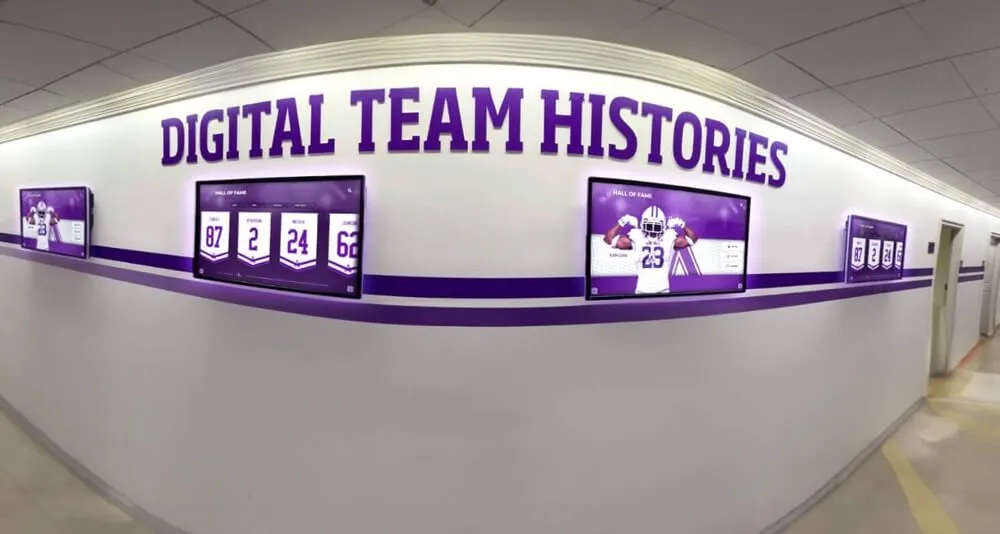
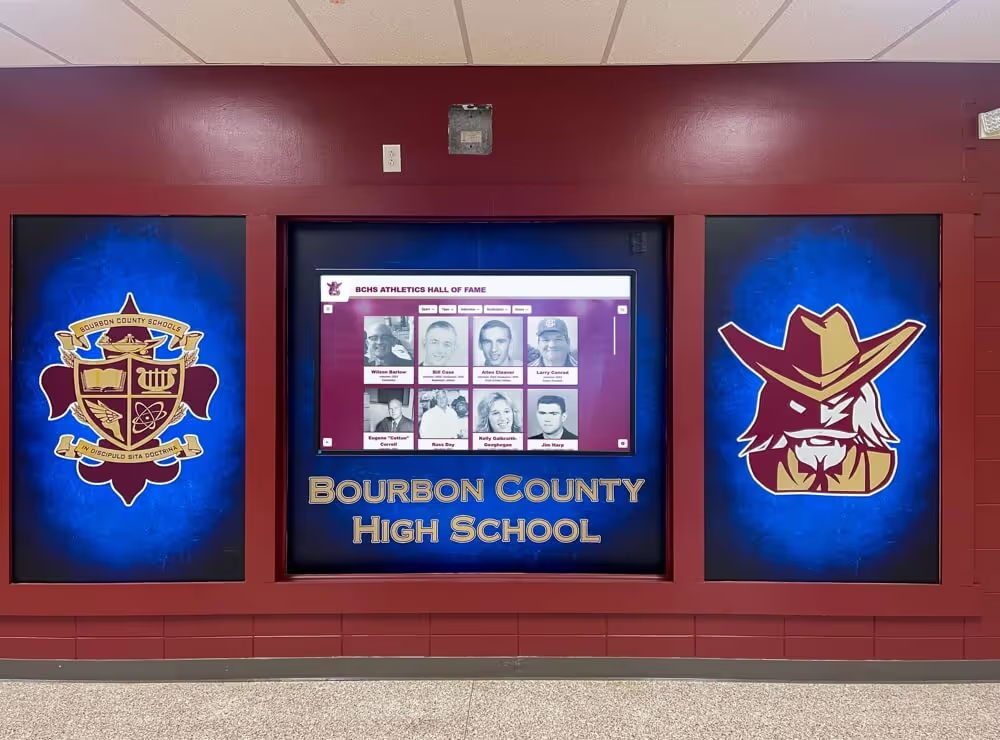
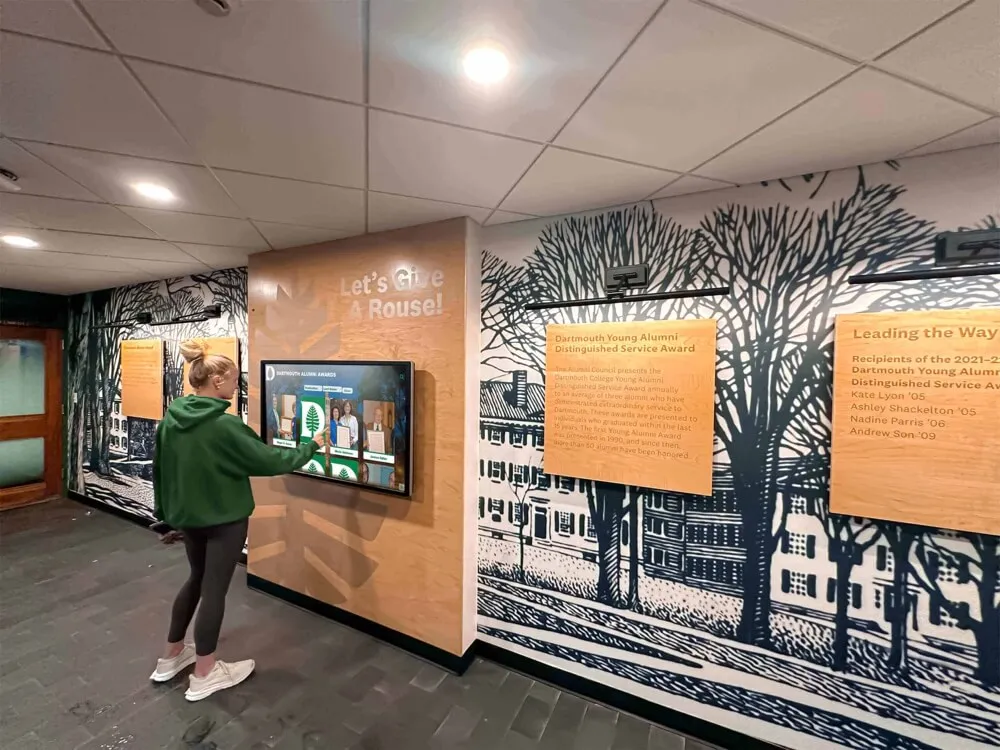
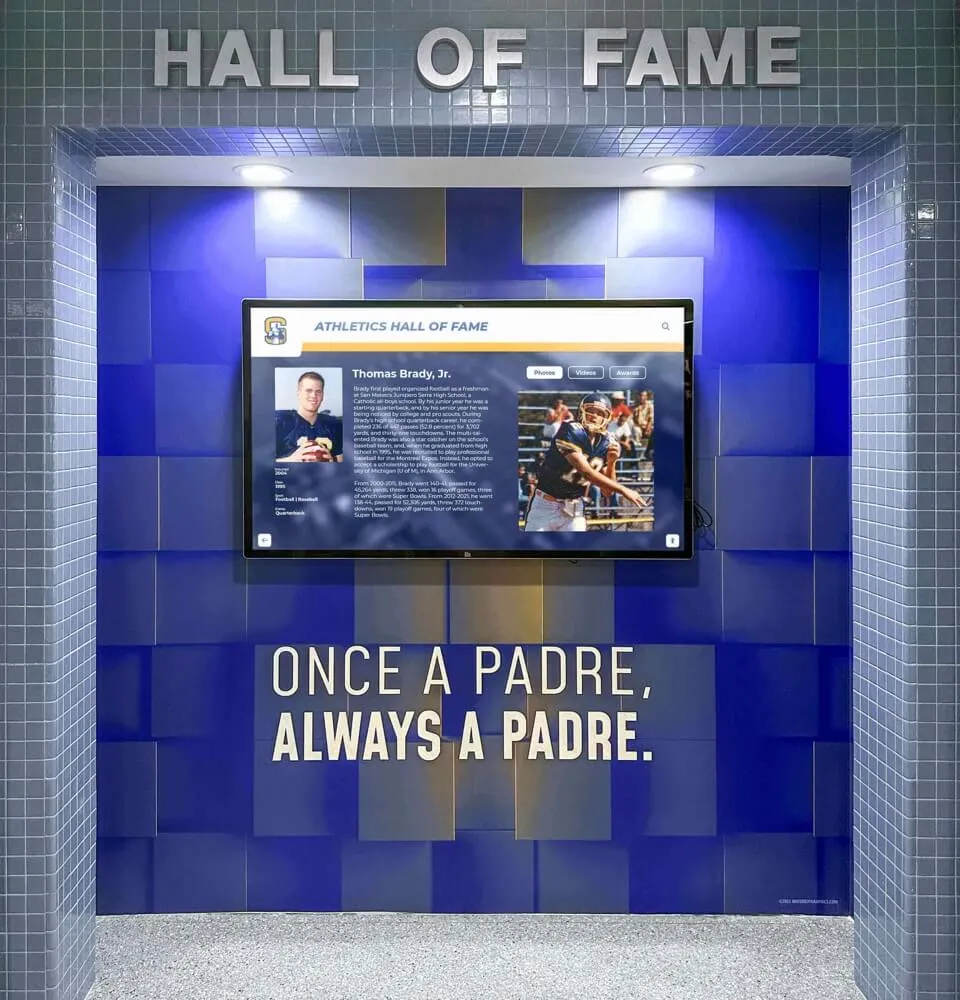
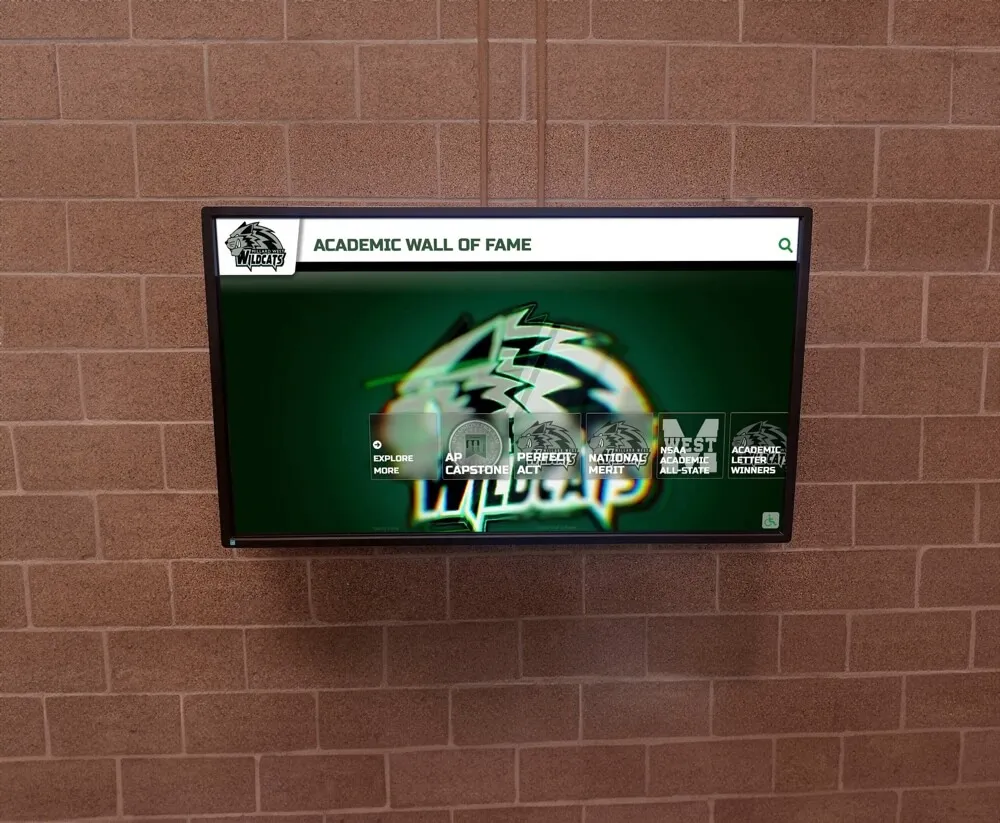
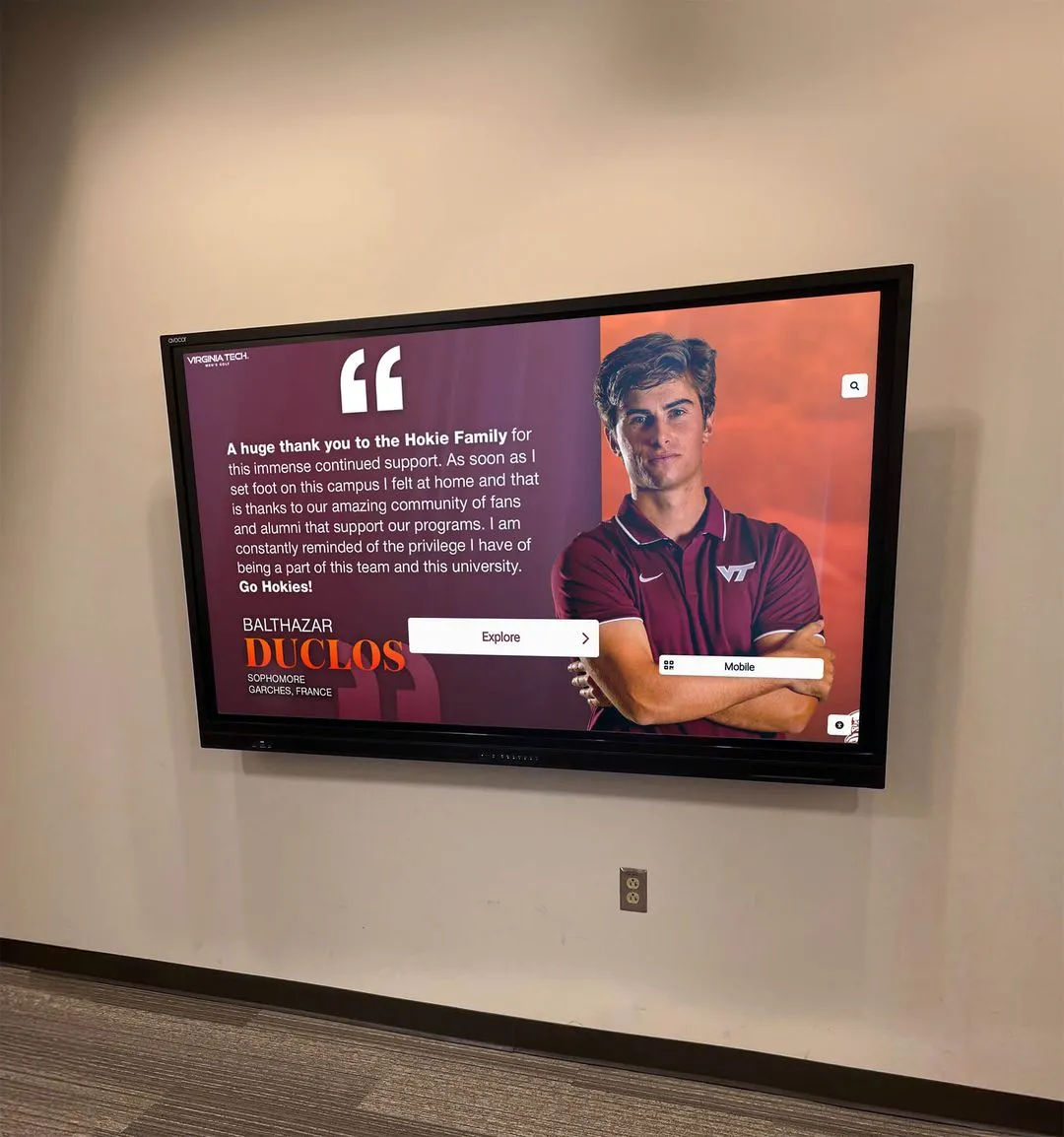
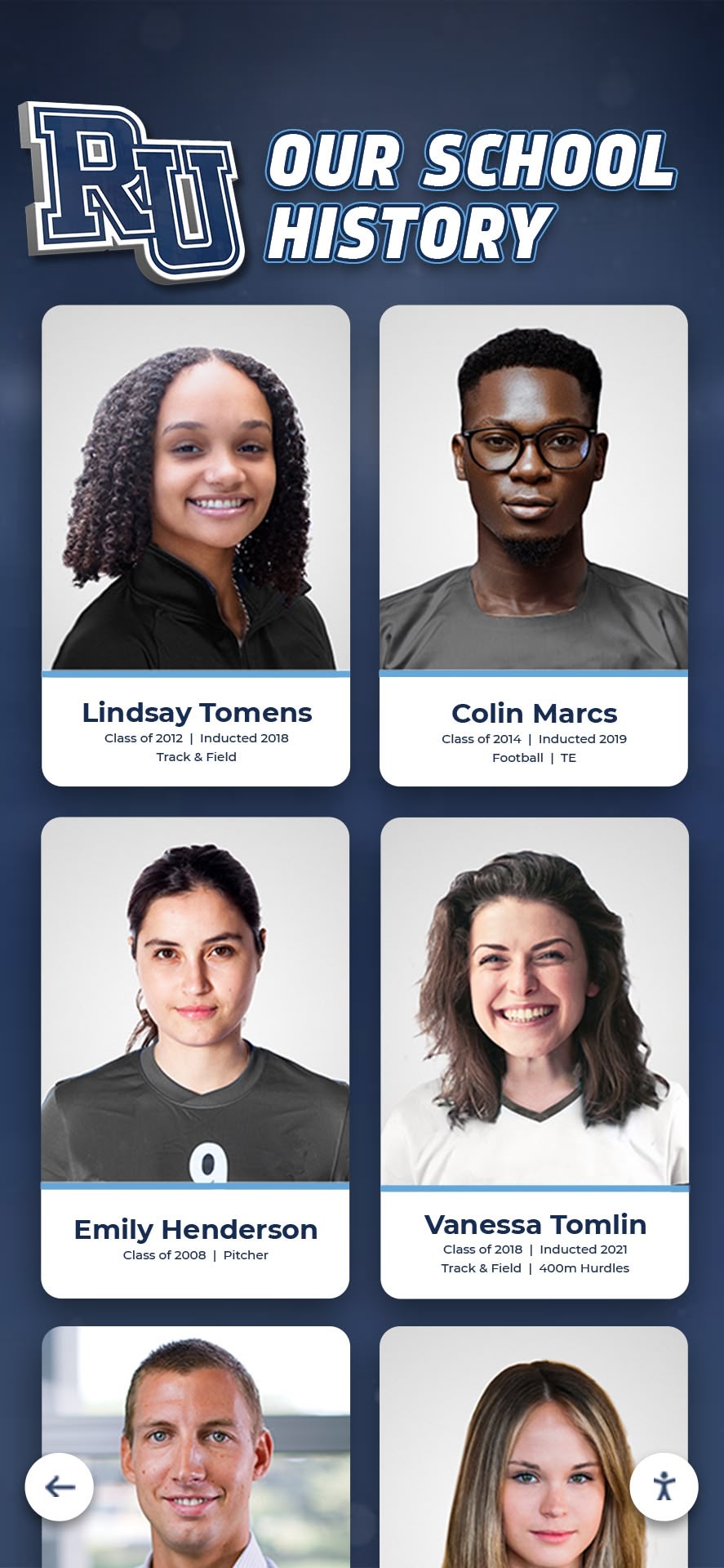
An effective sports alumni wall centers people over hardware — individual profiles that tell the complete story of who competed, what they achieved, and where program history lives
Why Schools Build Sports Alumni Walls
They Motivate Current Athletes
Seeing recognizable alumni — especially those from the athlete’s own hometown, sport, or position — creates aspirational context that coaching speeches alone cannot manufacture. A sophomore sprinter who reads about a former record-holder who went on to compete at the Division I level understands concretely what the program has produced. That context changes how they approach practice.
Planning athletic alumni day events that bring former athletes back to campus pairs naturally with a well-maintained sports alumni wall — the wall becomes the physical destination for returning athletes during those events, creating a feedback loop of recognition and engagement.
They Anchor Recruitment Conversations
Prospective athletes visiting campus notice what schools choose to honor. A thoughtfully designed sports alumni wall signals that the program tracks achievement systematically, celebrates contributors beyond their playing years, and maintains lasting connections with former athletes. Athletic directors report that recruits frequently spend significant time exploring alumni recognition displays during unofficial visits — finding former players from their own region, reading about championship seasons, and forming emotional connections to program identity before meeting the full coaching staff.
They Strengthen Alumni Giving
Recognition matters to donors. Former athletes who find their names prominently featured during homecoming visits develop stronger ongoing connections to the institution. Schools that position the sports alumni wall as a donor-engagement tool use it to demonstrate that former players are valued members of an ongoing program community — not simply names from a completed chapter.
How schools and universities build modern alumni recognition walls provides frameworks that help programs build recognition spaces where former athletes feel genuinely seen rather than categorized.
They Preserve Program History
Athletic programs with long histories accumulate records, championships, and notable alumni across decades. Without a deliberate preservation system, that history fragments — scattered across boxes of newspaper clippings, coaches’ personal files, and individual athletes’ memories. A sports alumni wall turns scattered institutional memory into an organized, accessible, continuously updated archive.
What to Include in Sports Alumni Wall Profiles
The content inside each profile determines whether visitors engage meaningfully or scan names and move on. Use this field framework as a planning checklist.
Core Profile Fields Table
| Field Category | Specific Fields | Priority |
|---|---|---|
| Identity | Full name, preferred name, graduation year | Required |
| Athletic Info | Sport(s), position, jersey number, years participated | Required |
| Photographs | In-action photo from playing years, current portrait | Required |
| Statistics | Career stats with context, all-time program rankings | Required |
| Awards | Conference honors, all-state, all-american, MVP awards | Required |
| Championship Teams | Year, competition level, role on roster | High priority |
| Records | Program records set, categories, whether still standing | High priority |
| Academic | GPA honors, academic all-conference, scholarships received | Recommended |
| Post-Graduation | Career path summary, post-athletic sports career | Recommended |
| Program Connection | Alumni fund giving, volunteer roles, mentorship involvement | Optional |
| Quote or Reflection | Personal statement from the athlete about their experience | Optional |
| Media | Video highlights, audio clips, newspaper coverage scans | Optional (digital only) |
The required fields apply to every display format — physical or digital. Optional fields become practical when your display uses interactive digital technology capable of holding deep media libraries. A physical plaque can present a name, sport, years, and one photograph. A touchscreen display can present an entire career biography with video, without physical space constraints.
How high schools define, track, and display athletic and academic records is useful background for building the records section of athlete profiles — particularly for programs formalizing record-keeping for the first time as part of a sports alumni wall project.
How to Roll Out a Sports Alumni Wall: Step-by-Step for Schools
Step 1: Define Your Recognition Scope
Before touching a single wall or contacting a vendor, answer three foundational questions:
- Which sports are included? A department-wide sports alumni wall honors all sports equally. A sport-specific wall goes deeper within one program. Starting department-wide is usually the right call for main lobby installations; sport-specific walls work well as secondary displays inside individual facility areas.
- What recognition levels will you use? A Hall of Fame tier reserves permanent recognition for exceptional achievement. A broader Letter Winners Wall or Hall of Honor recognizes everyone who competed at the highest commitment level. Tiered systems allow both.
- How selective will induction be? Programs with clear published criteria — years of eligibility required before nomination, specific achievement thresholds for Hall of Fame consideration, character standards — make better decisions and avoid difficult exceptions conversations later.
Step 2: Conduct a Historical Archive Audit
Most programs have more history than they realize — and less of it organized than they’d like. A systematic archive audit uncovers:
- Yearbooks covering the program’s full history
- Local newspaper archives with game coverage and athlete profiles
- Championship photographs and team rosters
- Coach records and personal files from long-tenured former coaches
- Sports information department records where applicable
Document what exists, what’s missing, and what exists only in physical form requiring digitization. This audit typically takes two to six weeks depending on how many decades of history the program spans and how organized existing records are. Programs with significant gaps often create a “Pioneer Recognition” category for early-era athletes whose records aren’t fully recoverable — honoring them without pretending documentation is complete.
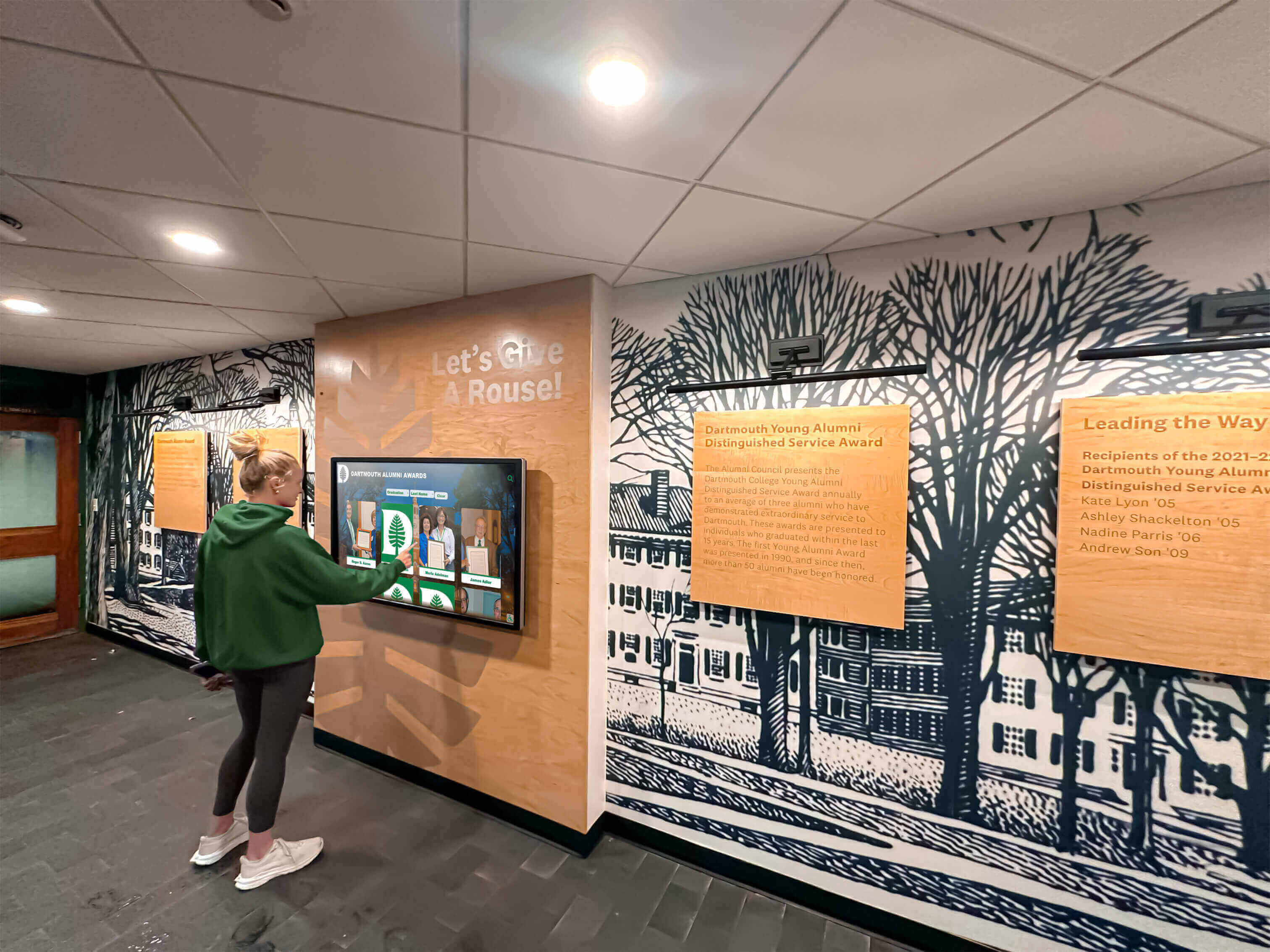
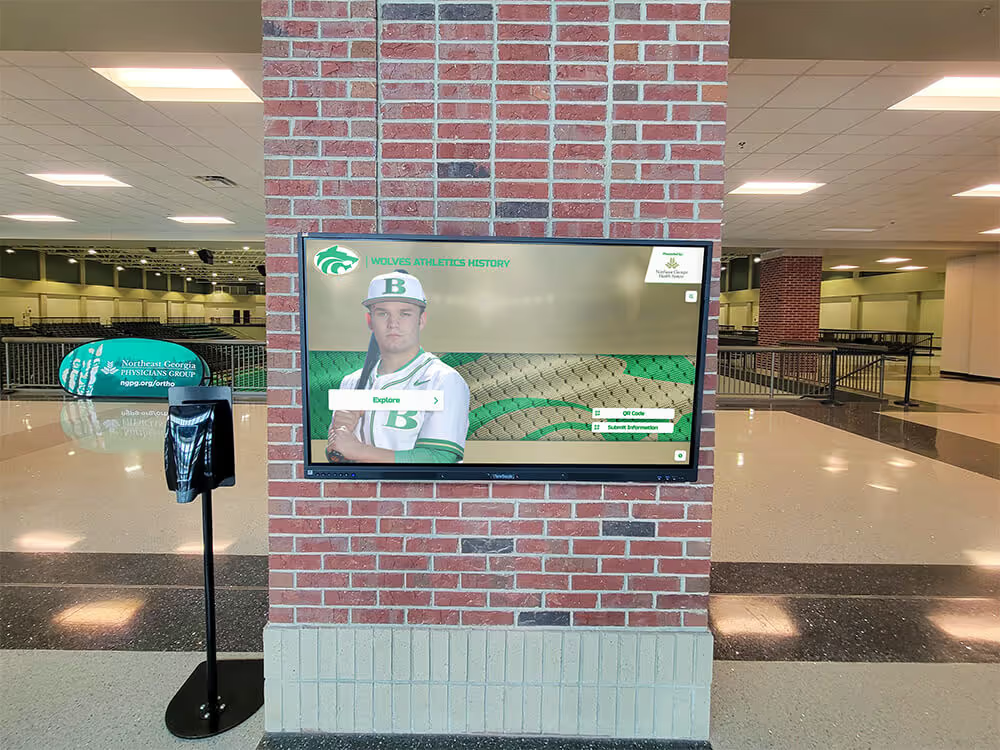
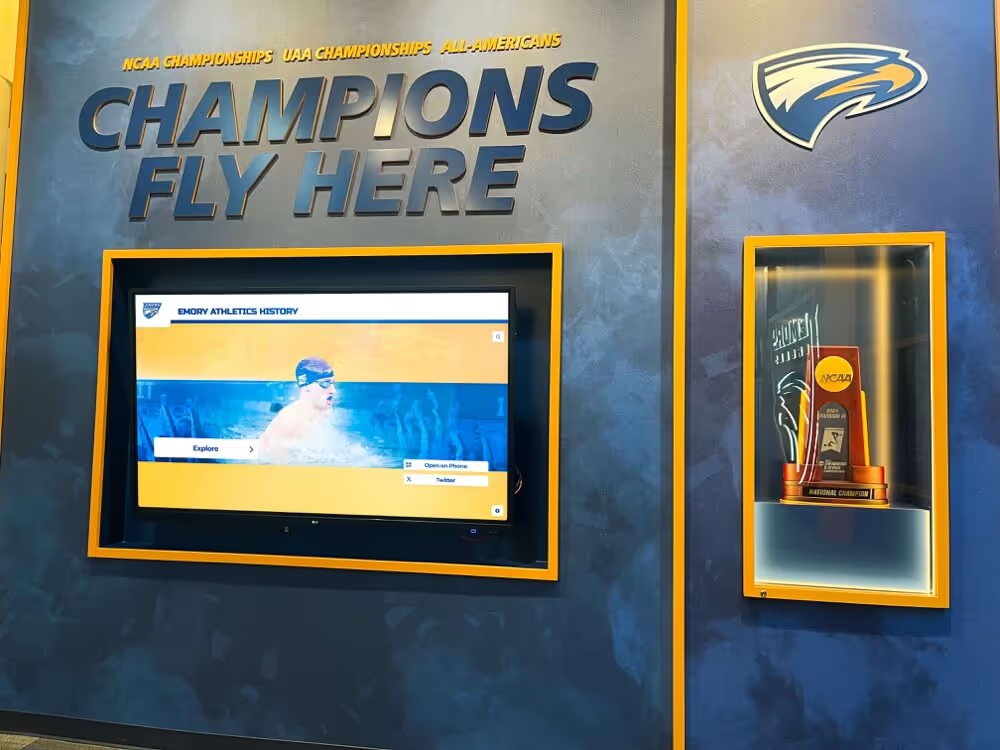
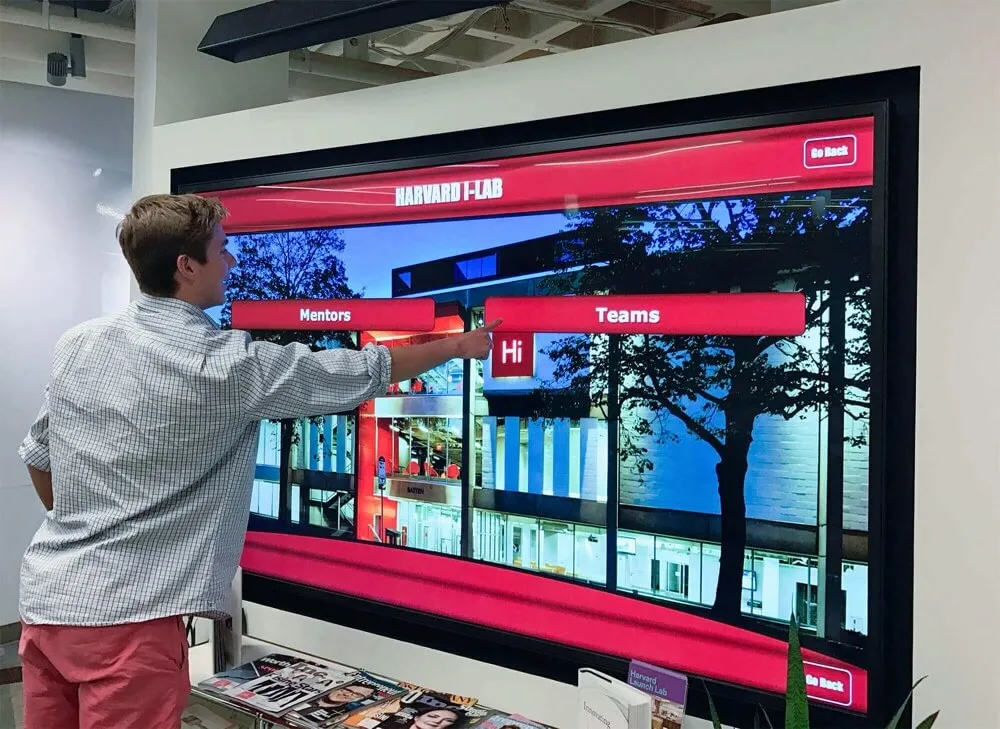
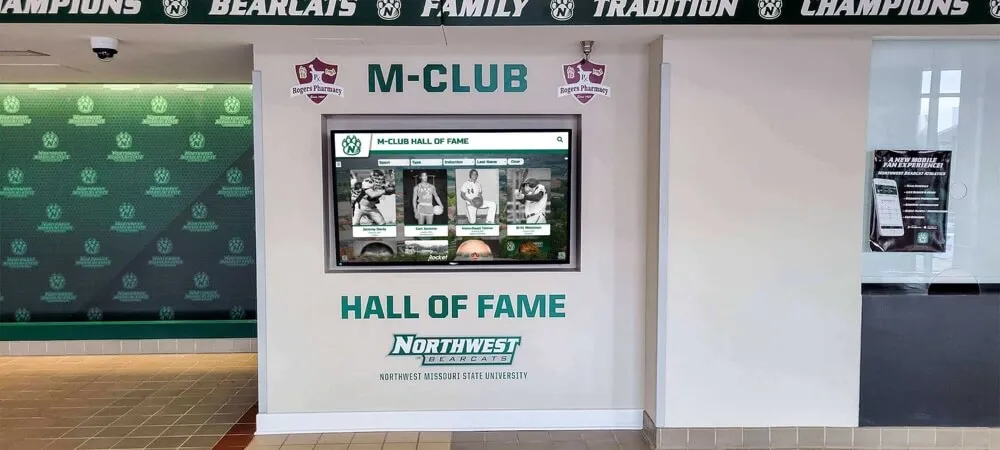
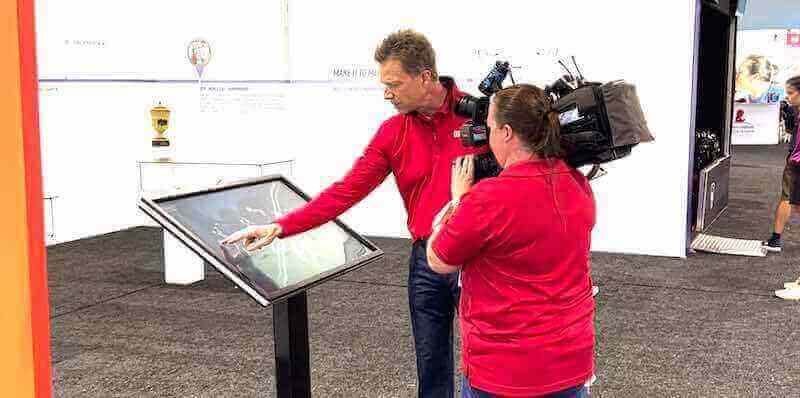
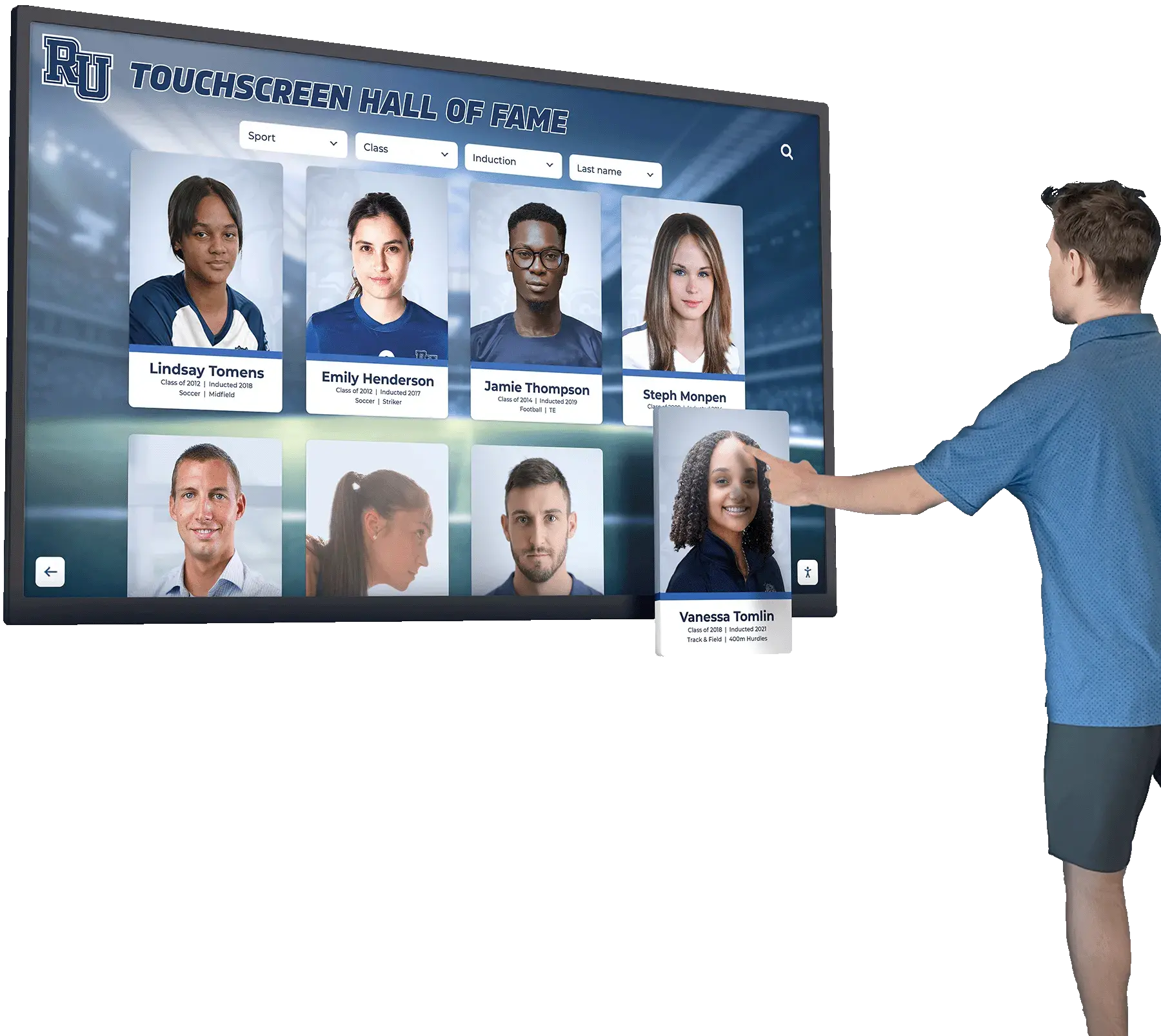
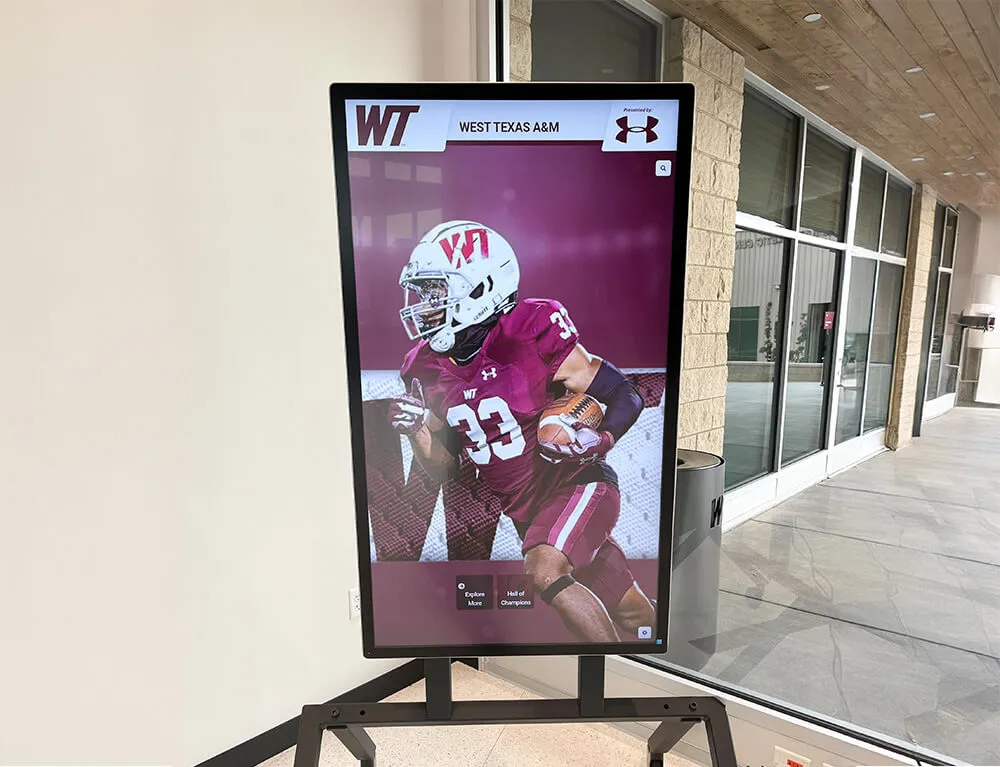
Touchscreen sports alumni walls make program history searchable and interactive — visitors browse by sport, year, or athlete name rather than scanning static plaques
Step 3: Establish the Nomination and Induction Process
A sports alumni wall requires a sustainable process for adding new honorees, not just a one-time installation. Build the process before launching the display.
Nomination cycle elements:
- Open nomination window (typically 60–90 days annually or biennially)
- Eligibility screening against published criteria
- Committee review using a standardized evaluation rubric
- Selection vote and honoree notification
- Public announcement and induction ceremony
- Profile publication on the recognition display
The committee itself should include representation from the athletic department — current and former coaches — alongside alumni relations staff and ideally one or two former athlete representatives who understand program culture from the inside.
Athletic director checklists for managing recognition programs, records displays, and content updates include nomination management workflows specifically designed for schools building or upgrading recognition systems.
Step 4: Choose Your Display Format
The format choice shapes every other decision downstream. The three primary options:
Traditional Physical Wall Custom plaques, framed photographs, or a combination arranged in a dedicated hallway or lobby space. Best for programs with limited initial budgets, spaces where a classic aesthetic fits the architecture, or programs planning a phased rollout that begins traditionally and upgrades digitally later. The main constraint: physical walls fill and become expensive to expand, and content updates require fabrication.
Digital Touchscreen Wall An interactive display — often a large-format touchscreen kiosk or embedded screen — holds unlimited athlete profiles in searchable, media-rich format. Updates publish immediately from a remote cloud CMS. ADA WCAG 2.1 AA-compliant systems include adjustable text size, high-contrast modes, and QR codes for mobile access. Programs with more than a few dozen honorees or plans to grow substantially benefit most from digital systems.
Comparing wall-mounted trophy display cases to touchscreen recognition walls for schools covers the practical trade-offs between traditional and digital formats in detail — a useful resource during vendor evaluation.
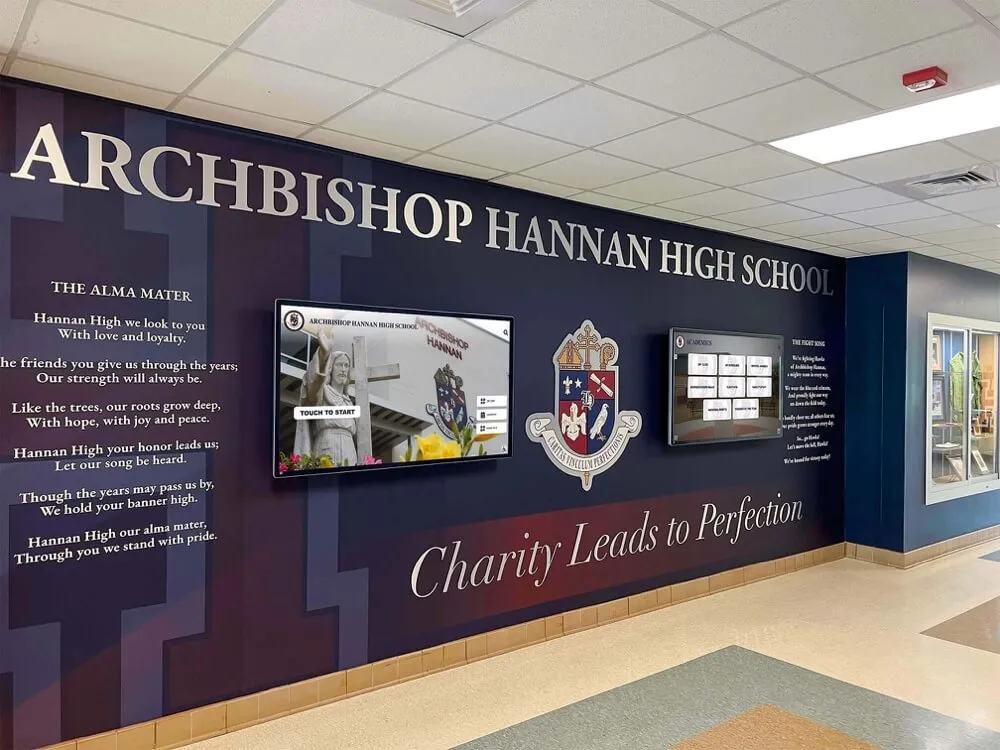
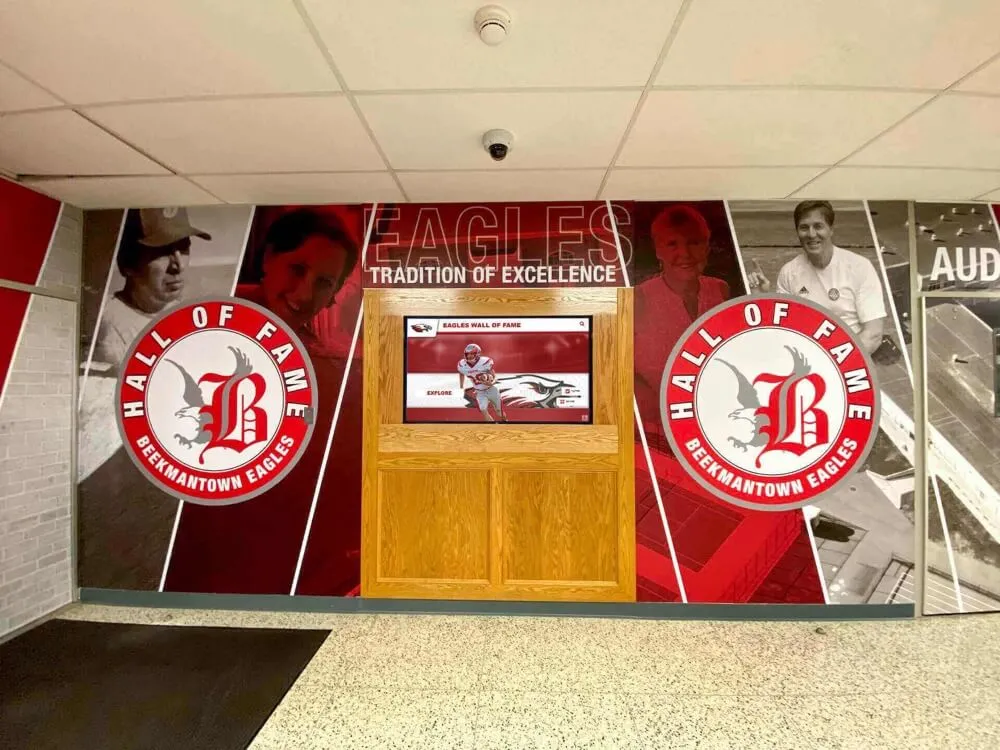
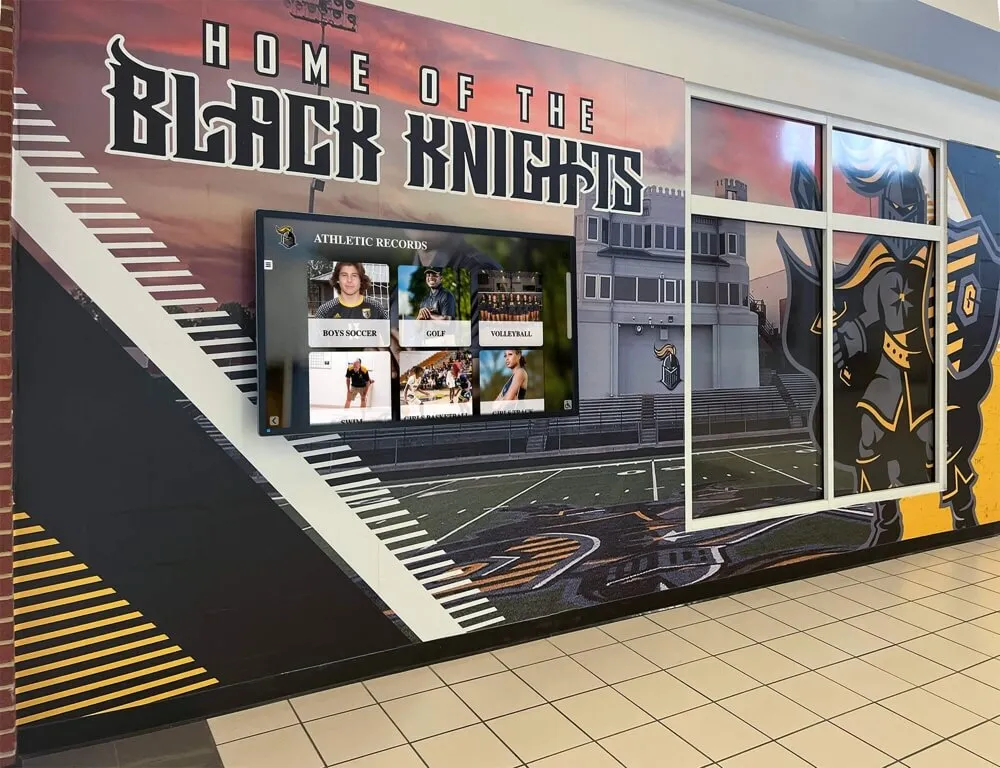
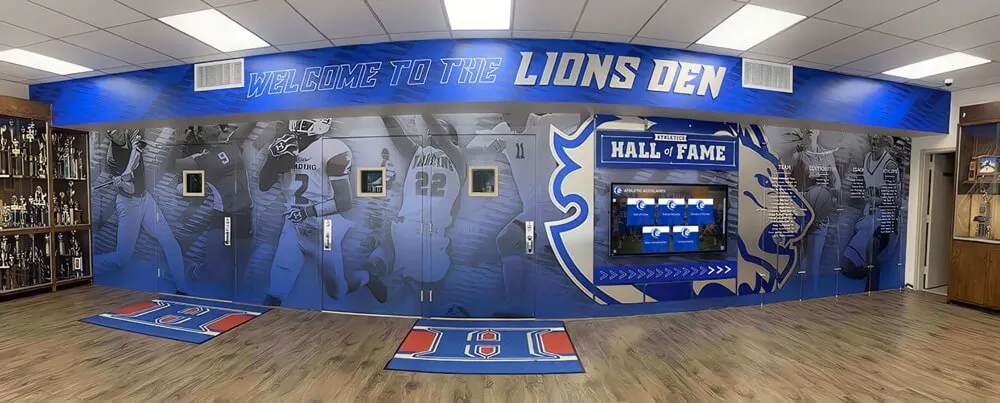
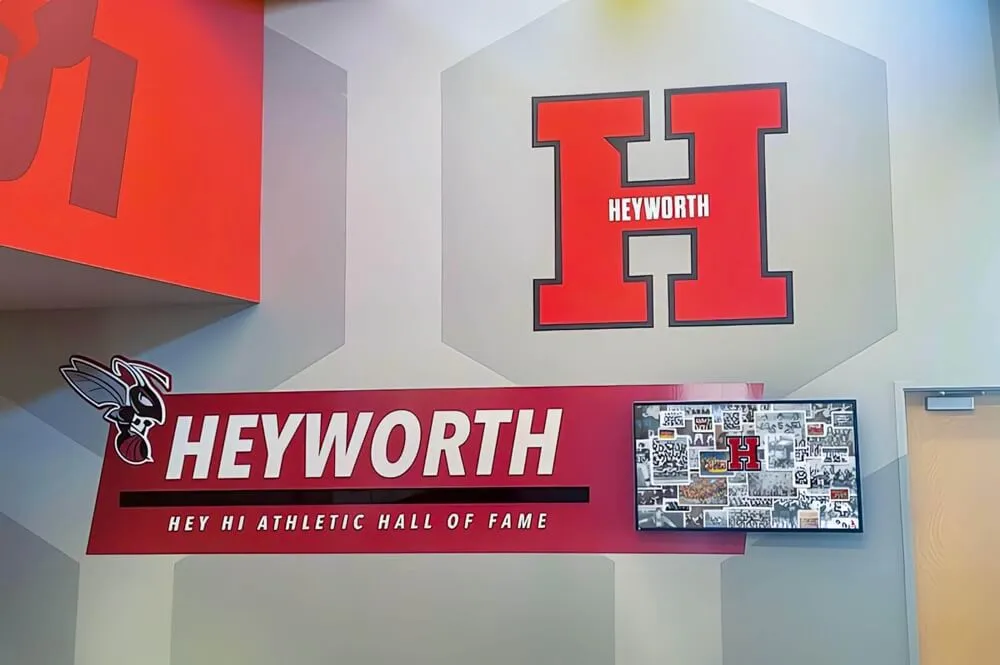
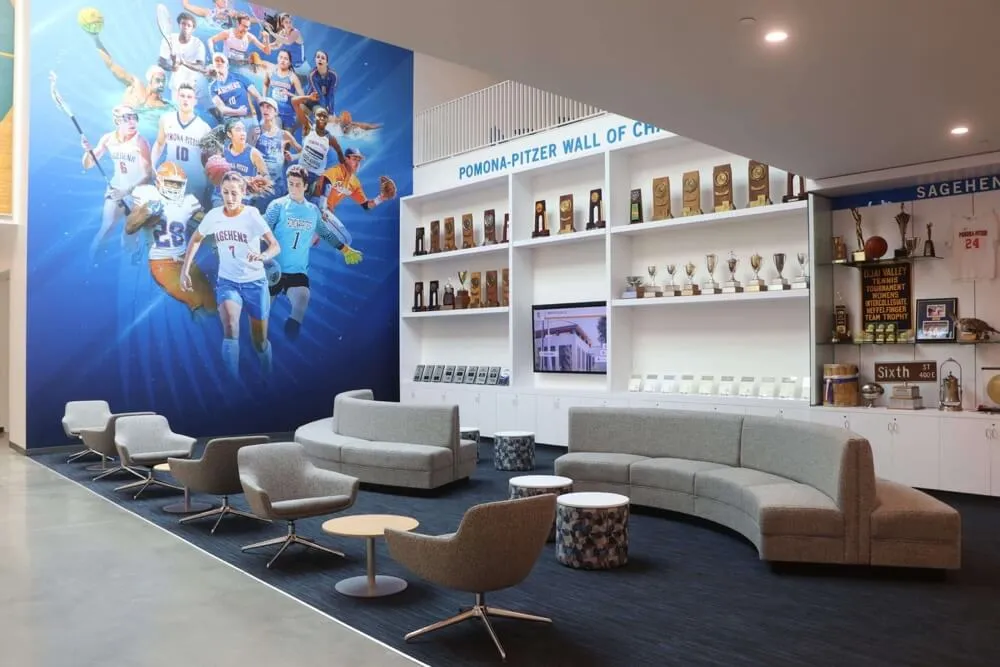
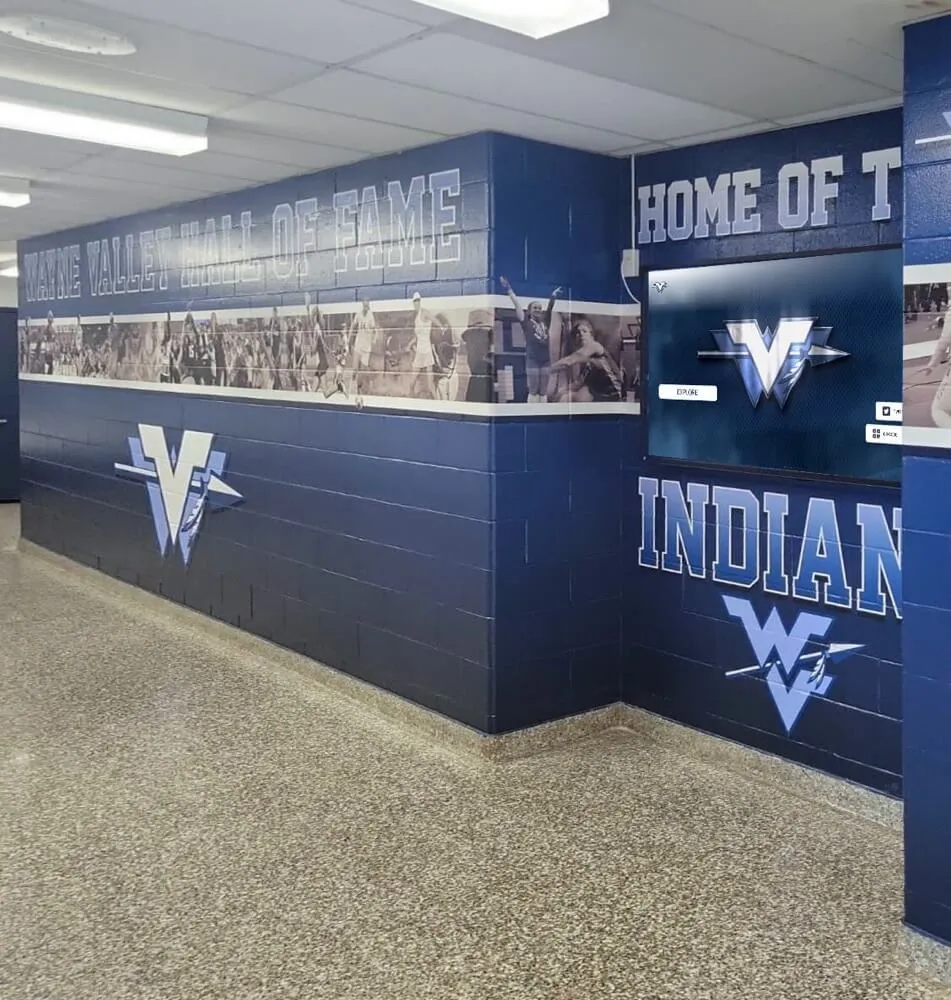
Combined Physical-Digital Installation The highest-impact sports alumni wall installations blend both approaches. A prominent physical element — custom mural, branded wall graphics, vintage championship photographs — creates the visual anchor of the space. Adjacent touchscreen displays then provide the searchable depth that physical elements cannot. Many high-traffic athletic facility lobbies use this approach because it serves visitors who want an immediate visual experience alongside those who want to explore the full archive.
Step 5: Source and Prepare Profile Content
With format chosen and criteria established, begin building actual profiles for initial inductees. Content sourcing strategies that work:
- Reach out directly to former athletes via alumni networks, social media groups, and former coach networks. Most are enthusiastic about participating once they understand the project.
- Contact local newspaper archives for historical game coverage, photograph permissions, and statistical records.
- Review school yearbooks systematically year by year, building a database of athlete names, sports, and years that becomes the foundation for both profile development and future nomination searches.
- Partner with sports information staff at feeder institutions where former athletes competed after high school.
Plan for this process to take longer than expected. Historical profile development for a program with 30-plus years of history typically requires three to six months before initial content is ready for display.
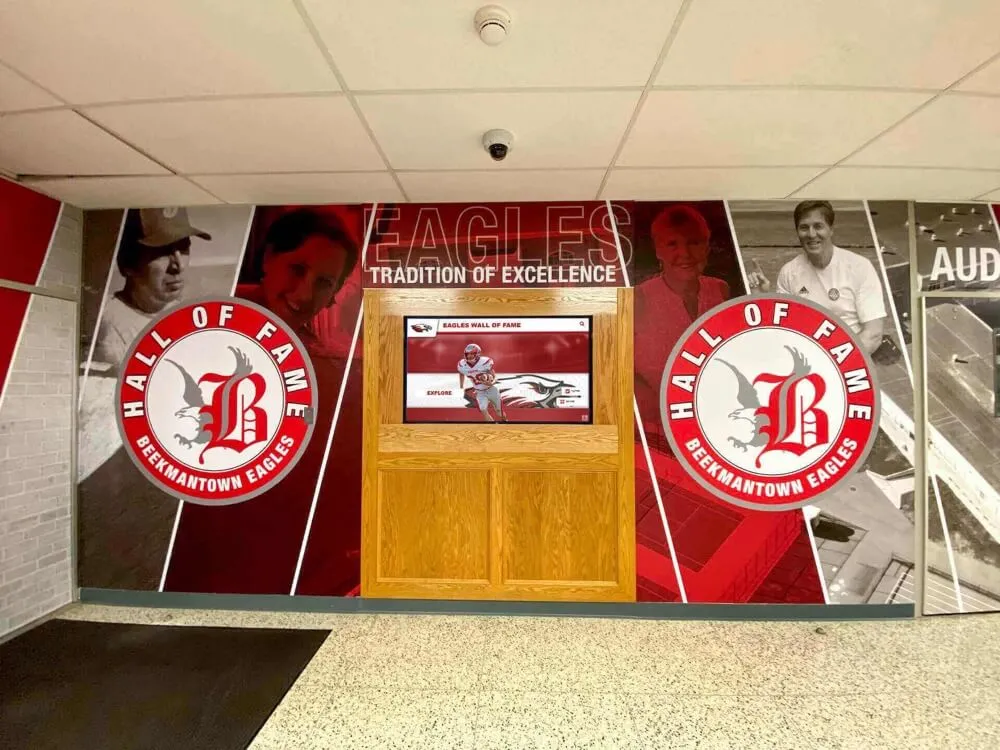
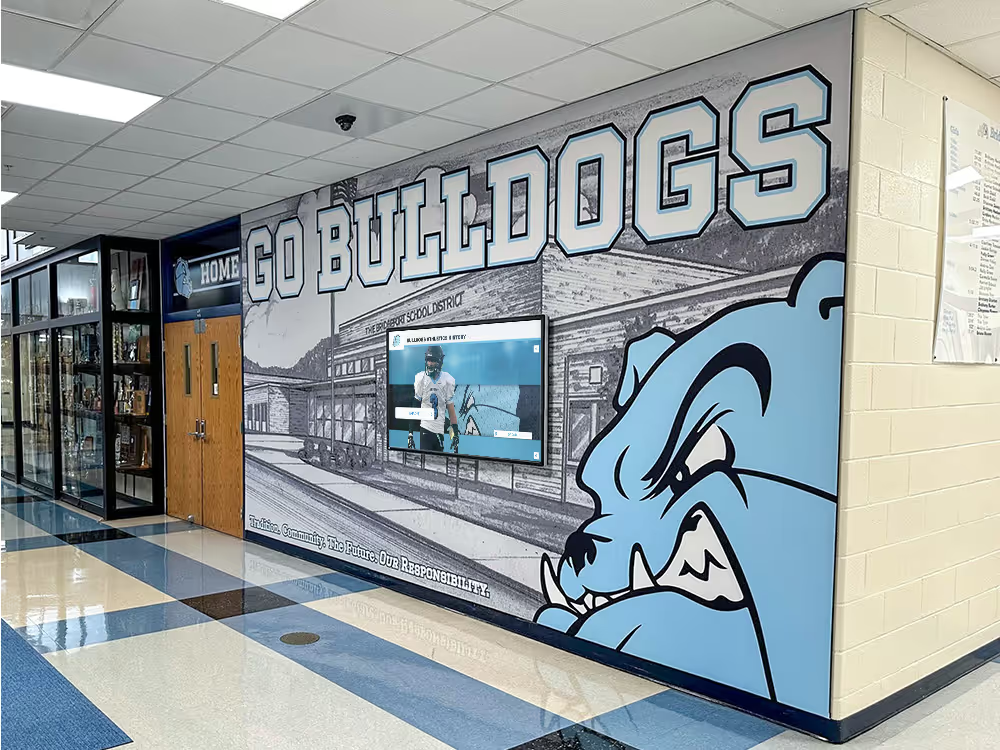
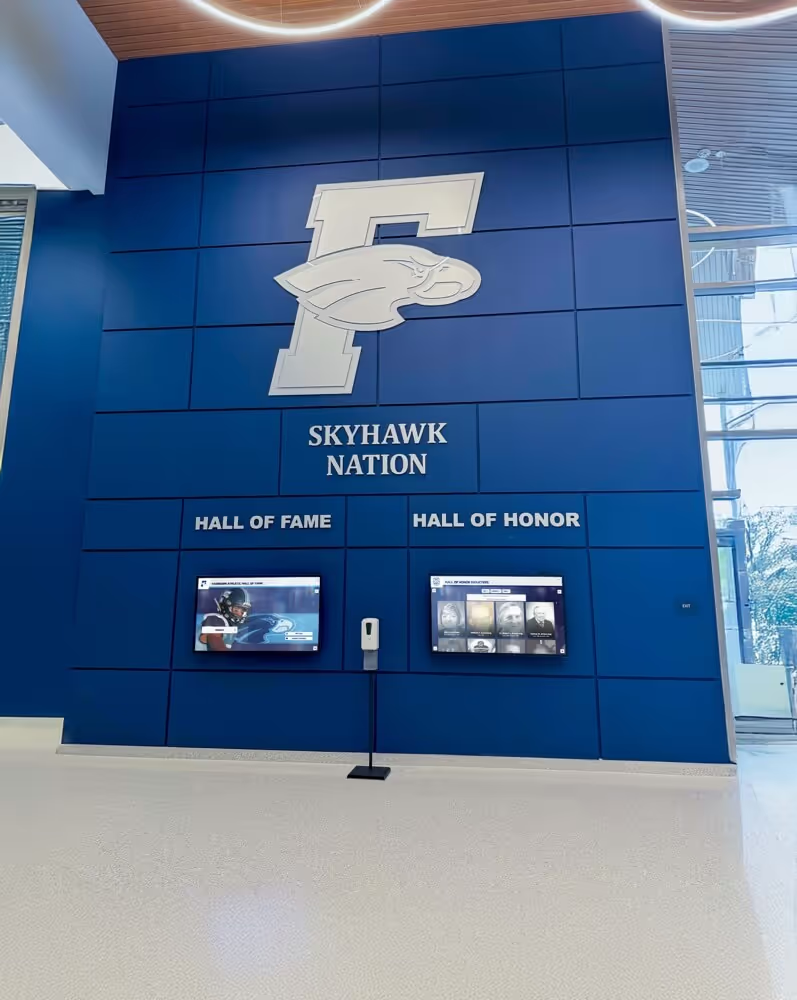
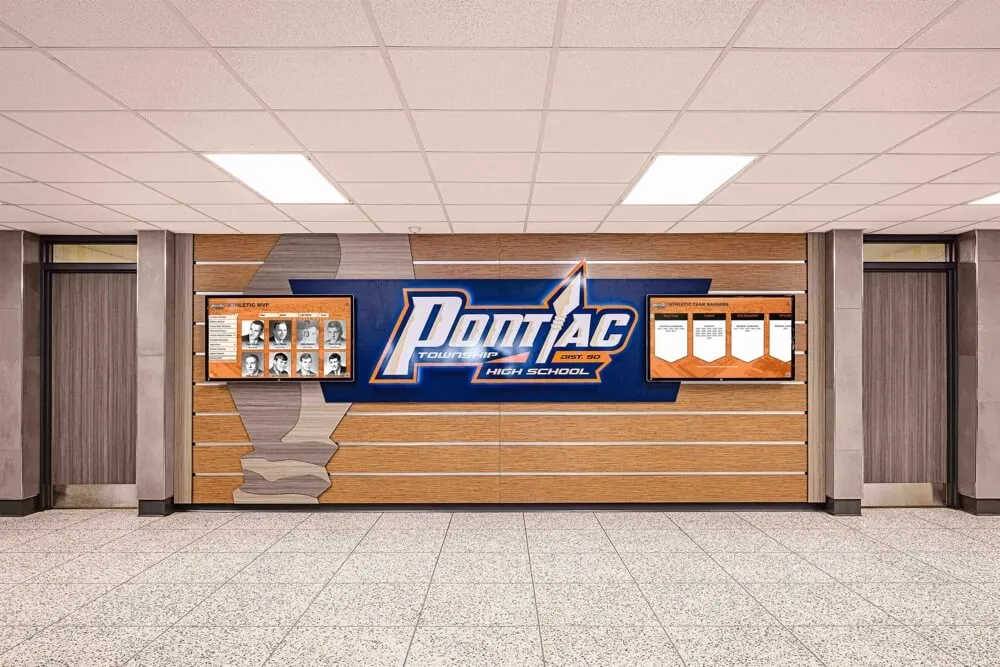
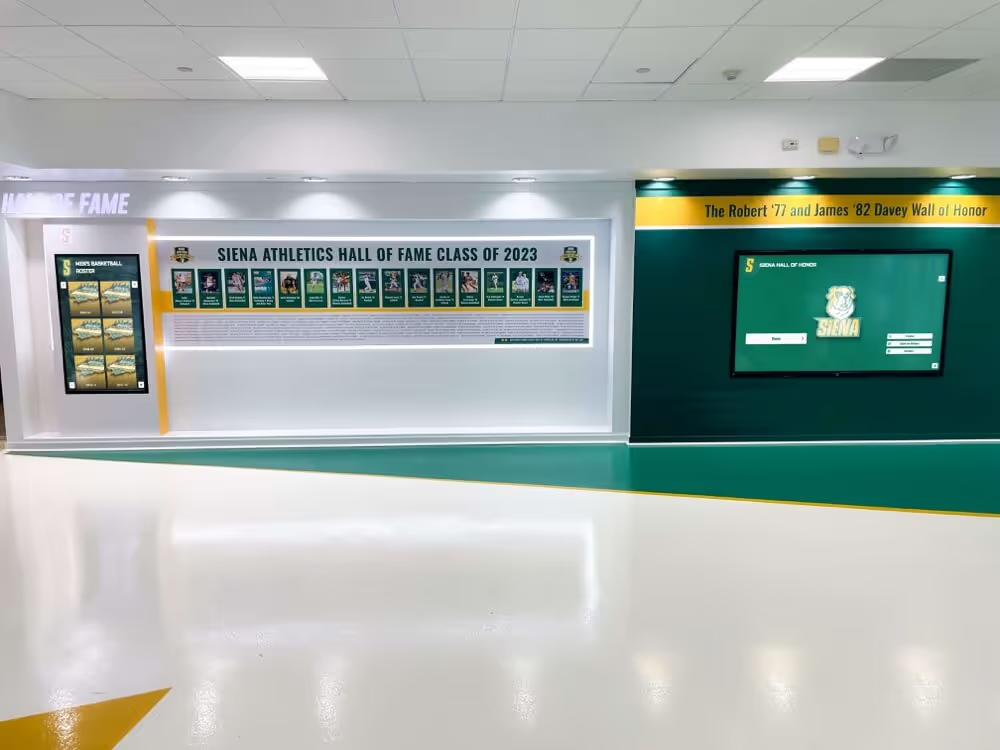
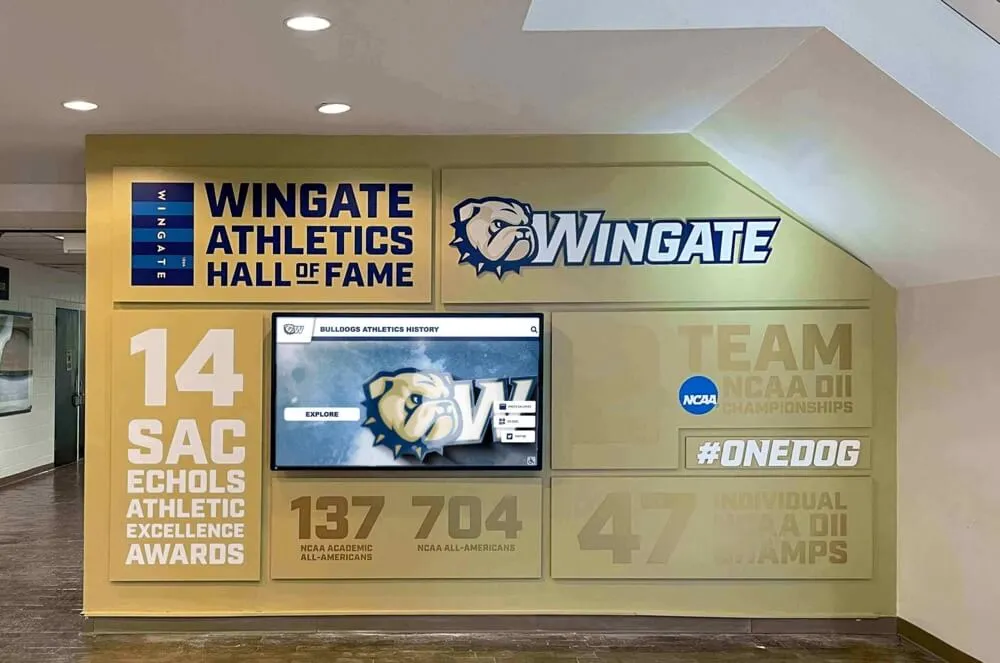
Physical sports alumni wall installations create permanent recognition anchors — the foundation that digital displays extend and deepen over time
Step 6: Design the Physical Space
Location determines who sees the display. Place your sports alumni wall where athletic traffic naturally concentrates:
- Main athletic facility lobby or entrance vestibule
- Hallway connecting locker rooms to the primary competition venue
- Athletic department reception area
- Corridor between multiple sport facilities
- Alumni gathering spaces used during homecoming and reunion events
Design should reflect institutional identity consistently — school colors, typography, and mascot graphics aligned with the athletic department’s broader brand standards. The display should feel intentional, not improvised. How Texas sports hall of fame installations inspire school athletic recognition programs shows how larger institutions approach design cohesion across multi-sport recognition spaces — useful reference for programs planning substantial installations.
Step 7: Plan the Launch Event
The sports alumni wall launch is a relationship event as much as a recognition moment. A successful launch:
- Invites initial inductees and their families to a formal recognition ceremony before public unveiling
- Engages current teams by organizing a walkthrough where coaches connect current athletes with the history they’re now part of
- Includes local media coverage to generate community awareness and future nomination interest
- Schedules a homecoming reveal if timing permits — returning alumni traffic creates natural visibility and generates word-of-mouth among former players who will nominate future candidates
Document the ceremony with quality photography and video. These materials become the first content addition to the digital display after launch.
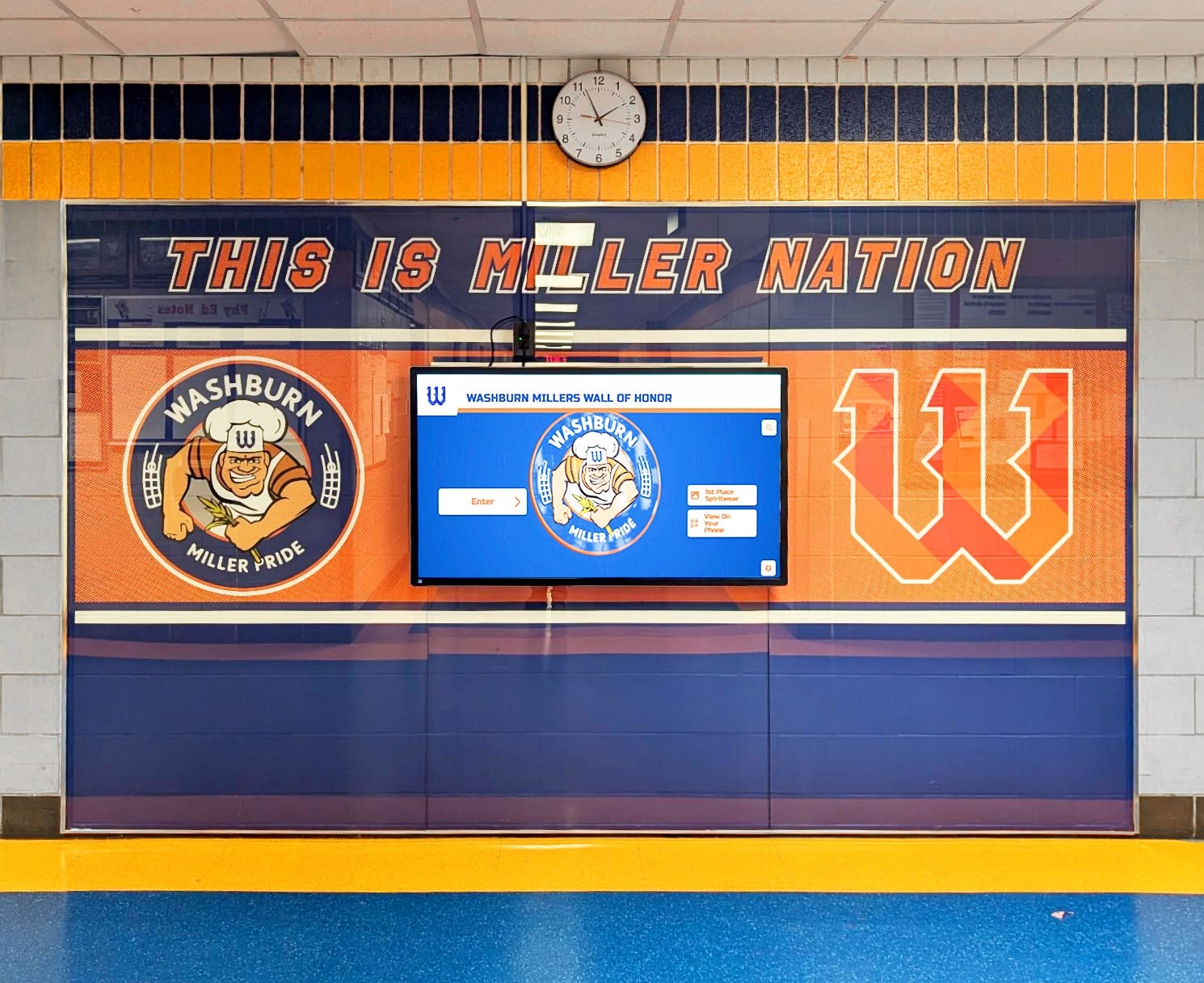
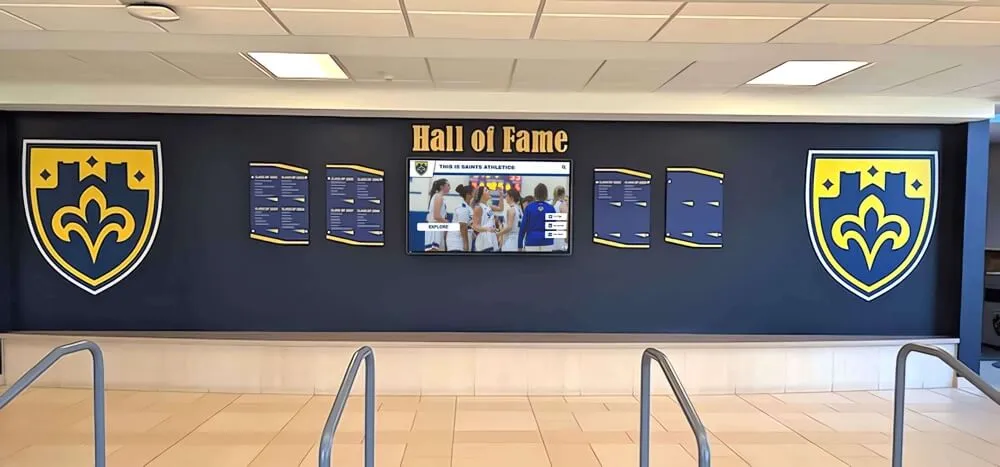
A strong launch event turns the sports alumni wall unveiling into a community moment — generating press coverage, alumni engagement, and word-of-mouth that sustains future nominations
Digital Touchscreen Sports Alumni Walls: Capabilities That Matter
For programs evaluating interactive digital systems specifically, these platform capabilities have the highest practical impact:
Unlimited Inductee Capacity Physical wall space is never a constraint. A single touchscreen display unit holds hundreds or thousands of profiles — every athlete the program has honored, from the earliest inductee class to the most recent. Programs with long histories no longer face the impossible choice of which inductees to display and which to rotate into storage.
Remote Cloud Content Management Adding a new inductee profile, updating a career biography after a former athlete earns a professional achievement, or publishing championship content from last week’s tournament — all completed from a web browser without on-site fabrication. Changes publish immediately. Annual updates become a routine content management task rather than a production project.
Auto-Ranking Record Boards Program records update automatically as they’re broken, keeping the display current without manual intervention. The records section becomes a living document connecting historical performance benchmarks to current athletes working to join the all-time lists.
How high school swimming programs track and display athletic excellence through record boards and recognition systems illustrates how auto-ranking record boards work in practice for sport-specific programs — a useful example for athletic departments evaluating digital systems for the first time.
QR Code Mobile Access Visitors pull up full athlete profiles on their own phones by scanning a QR code from the display. Mobile access extends engagement beyond the physical kiosk and gives coaches tools for recruiting presentations.
ADA WCAG 2.1 AA Compliance Modern touchscreen recognition platforms built to accessibility standards include adjustable text size, high-contrast display modes, screen reader compatibility, and height-appropriate mounting for wheelchair users. Building accessibility into the original installation costs far less than retrofitting after complaints arise.
See a Sports Alumni Wall Built for Your Program
Rocket Alumni Solutions designs and installs custom sports alumni walls — touchscreen displays with unlimited athlete profiles, auto-ranking record boards, remote cloud management, and ADA WCAG 2.1 AA compliance. Installations completed in 2–4 weeks at 600+ institutions nationwide.
Request Your Custom DemoConnecting the Sports Alumni Wall to Broader School Recognition
Athletic Records Integration
A sports alumni wall gains depth when integrated with the program’s active record board. Visitors see not only who earned permanent recognition historically, but where today’s records stand — and how close current athletes are to joining the all-time lists. This connection between past and present is one of the most effective engagement mechanisms a recognition display can create.
Creative school record board ideas for displaying athletic records and achievement history covers record board formats and content organization strategies that translate directly into the records section of a sports alumni wall.
Scholarship and Academic Recognition
Many former athletes earned recognition beyond athletics — academic honors, scholarships, and post-graduation achievements that reflect on the program’s culture and values. Including academic recognition alongside athletic achievement tells a more complete story of what your program produces.
High school athletic scholarship guides that help student-athletes earn recognition beyond graduation is useful background for programs building profiles that document the full trajectory of former athletes’ careers — athletic, academic, and professional.
Donor and Sponsor Recognition
Some athletic programs integrate donor recognition directly into sports alumni wall installations — naming rights for display sections, sponsored sport galleries, or individual donor recognition panels adjacent to the alumni content. This approach funds the recognition infrastructure while honoring contributors who sustained the program financially.
Digital touchscreen platforms that include a sponsorship revenue suite allow programs to display sponsor logos and messaging on the same screens as alumni recognition content — rotating between recognition and sponsorship panels according to a preset schedule managed through the cloud CMS.
Event Programming Around the Wall
The sports alumni wall should be the physical centerpiece of recurring alumni engagement programming — not a passive background element. Programs that use the wall actively see stronger ongoing returns:
- Annual induction ceremonies held in the athletic facility where the wall is installed, with inductees and their families guided through the display
- Homecoming wall tours where current coaches connect returning alumni with recent additions across generations
- Recruiting presentations where coaches reference specific alumni profiles during official visits
- Alumni networking events held in the recognition space, where the wall context naturally facilitates connections between athletes from different eras
These events turn the sports alumni wall from a decoration into a program institution — something the department actively maintains, regularly updates, and consistently uses to strengthen relationships with former athletes.

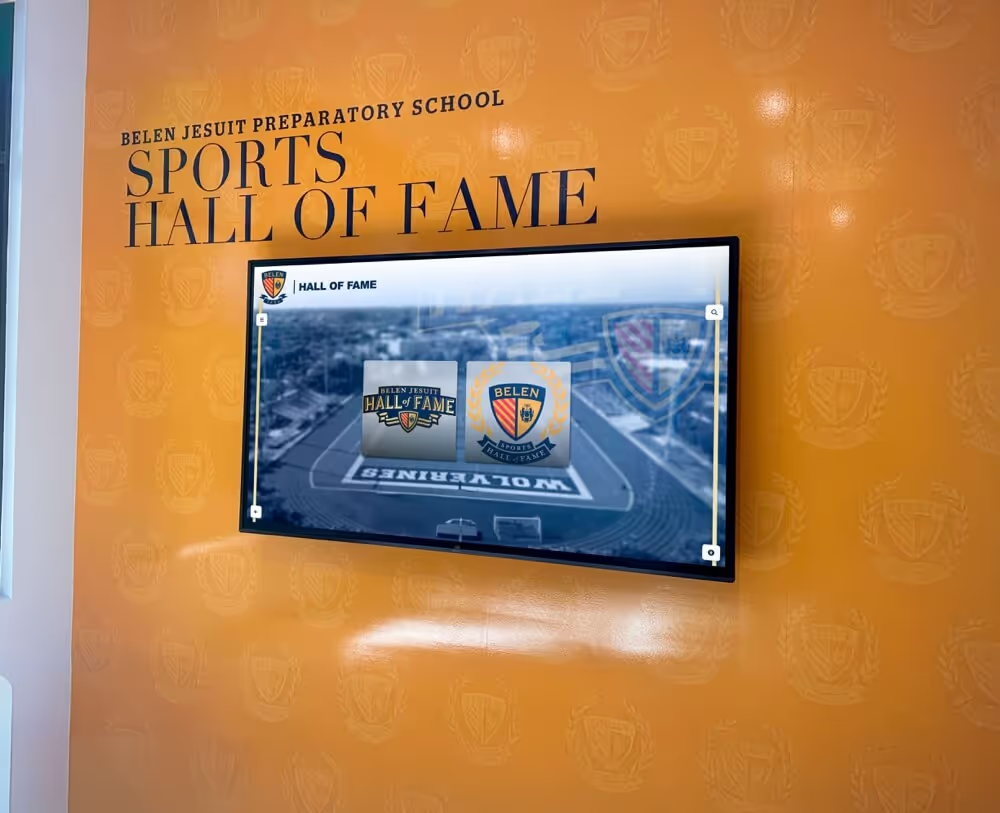
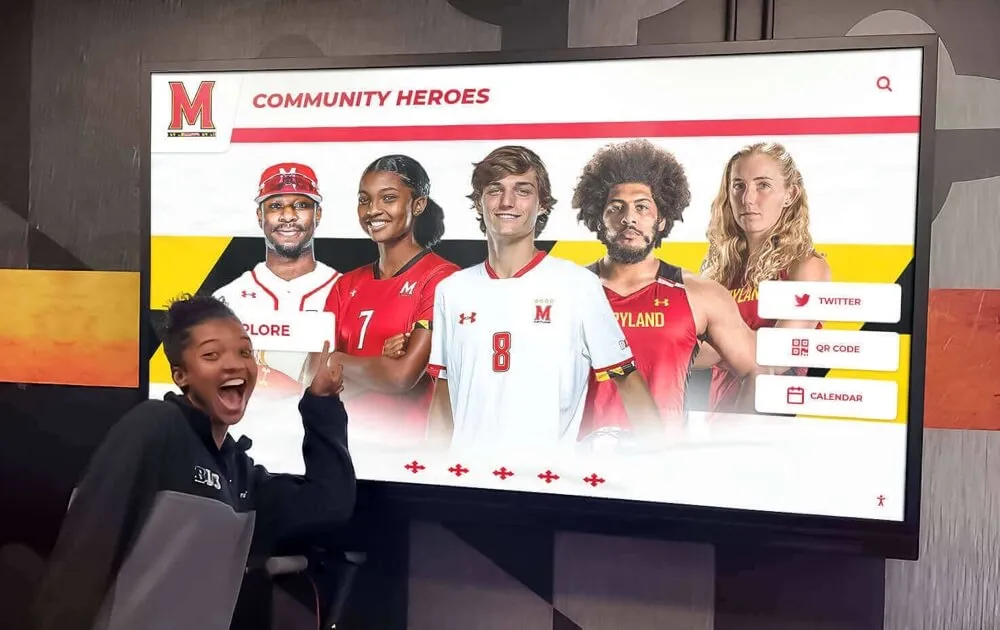
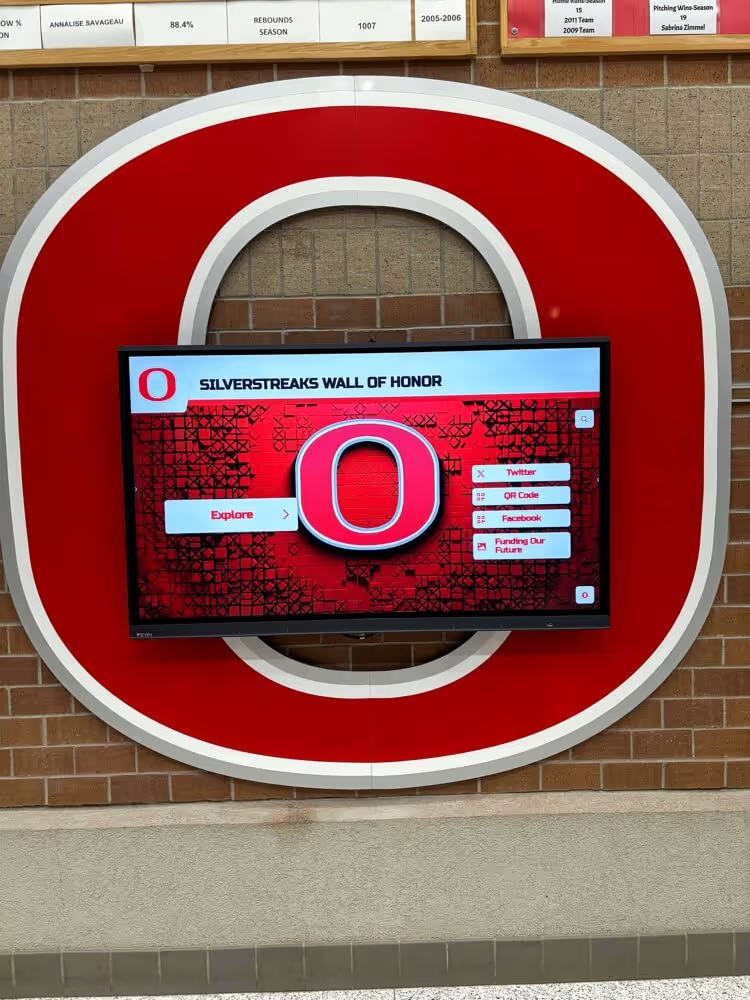
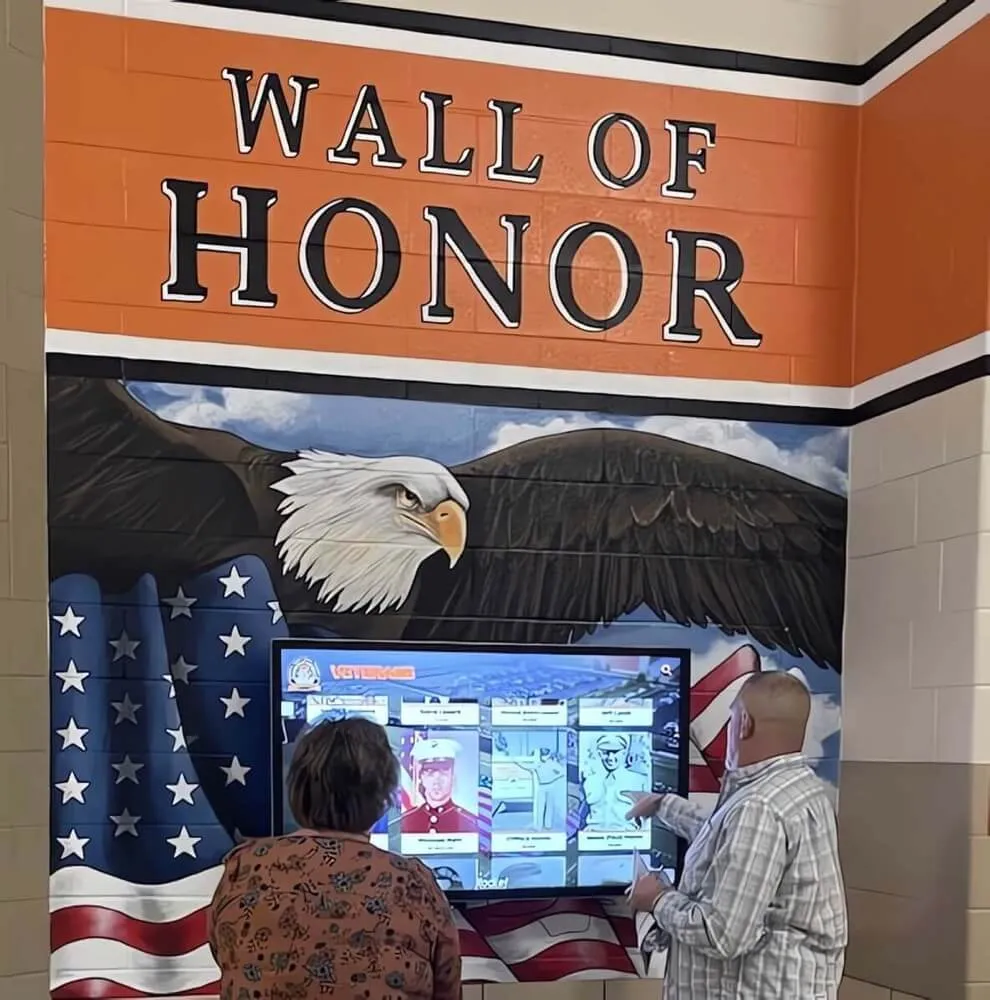
Interactive touchscreen sports alumni walls make athlete profiles immediately accessible — visitors browse, search, and explore program history at their own pace
Frequently Asked Questions
What is a sports alumni wall?
A sports alumni wall is a permanent recognition display — physical, digital, or combined — where a school honors former athletes who represented the program. Unlike a trophy case, which focuses on hardware, a sports alumni wall centers on the people: individual profiles with photographs, statistics, career histories, and post-graduation stories.
How is a sports alumni wall different from a hall of fame?
A hall of fame is typically the most selective recognition tier within a sports alumni wall system — reserved for athletes meeting rigorous achievement criteria through a formal nomination process. A sports alumni wall is a broader term for the entire recognition display, which may include hall of fame inductees alongside letter winners, championship teams, record holders, and other recognized contributors.
What format is best for a sports alumni wall — physical or digital?
For programs with more than a few dozen honorees or plans to grow significantly, digital touchscreen systems offer practical advantages: unlimited capacity, immediate remote updates, searchable databases, and media-rich profiles. Physical walls remain appropriate for small programs, supplemental spaces, or programs in an early planning phase. The highest-impact installations combine both: physical visual anchors alongside interactive digital content.
How long does it take to build a sports alumni wall?
A digital touchscreen installation typically completes in 2–4 weeks once content is prepared. Historical content development — building the initial library of athlete profiles — typically requires 3–6 months for programs with long histories. Physical plaque installations vary based on fabrication lead times and scope.
How do we handle athletes from eras before digital records exist?
Start with available sources: yearbooks, local newspaper archives, coach records, and direct outreach to athletes or their families. Create a “Pioneer Recognition” category for athletes from earliest program eras whose records are incomplete but whose contributions deserve acknowledgment. Digital systems make it easy to add detail as new documentation surfaces over time.
Can a small school afford a meaningful sports alumni wall?
Yes. A consistent, well-organized photo wall with clear typography and organized recognition tiers creates meaningful recognition on modest budgets. Digital systems have also become more accessible for smaller programs; entry-level touchscreen displays represent a manageable investment when weighed against the ongoing cost of annual plaque fabrication for new inductees.
What should a sports alumni wall profile always include?
At minimum: the athlete’s name, sport, graduation year, a photograph, career statistics with context, and any awards or championships earned. Digital profiles can expand substantially from this baseline — adding video, career biography, academic honors, and post-graduation story — but these five elements form the required foundation for any format.
Building a Sports Alumni Wall That Earns Its Place
The sports alumni wall that gets visited, studied, and talked about isn’t the most expensive one. It’s the one that was built with genuine respect for the athletes it honors — clear standards applied consistently, profiles that tell real stories, and a display maintained with the same care that went into building it.
Former athletes who see their names on a well-maintained wall, who find their profile includes accurate statistics and a photograph that actually looks like them, who can show their own children the record they set — they remember that experience. They come back. They give. They nominate. They tell their former teammates.
A sports alumni wall built with that intention — centering the people it honors, maintained as a living archive rather than a static installation — earns its place in the athletic program’s culture faster than any facility upgrade.
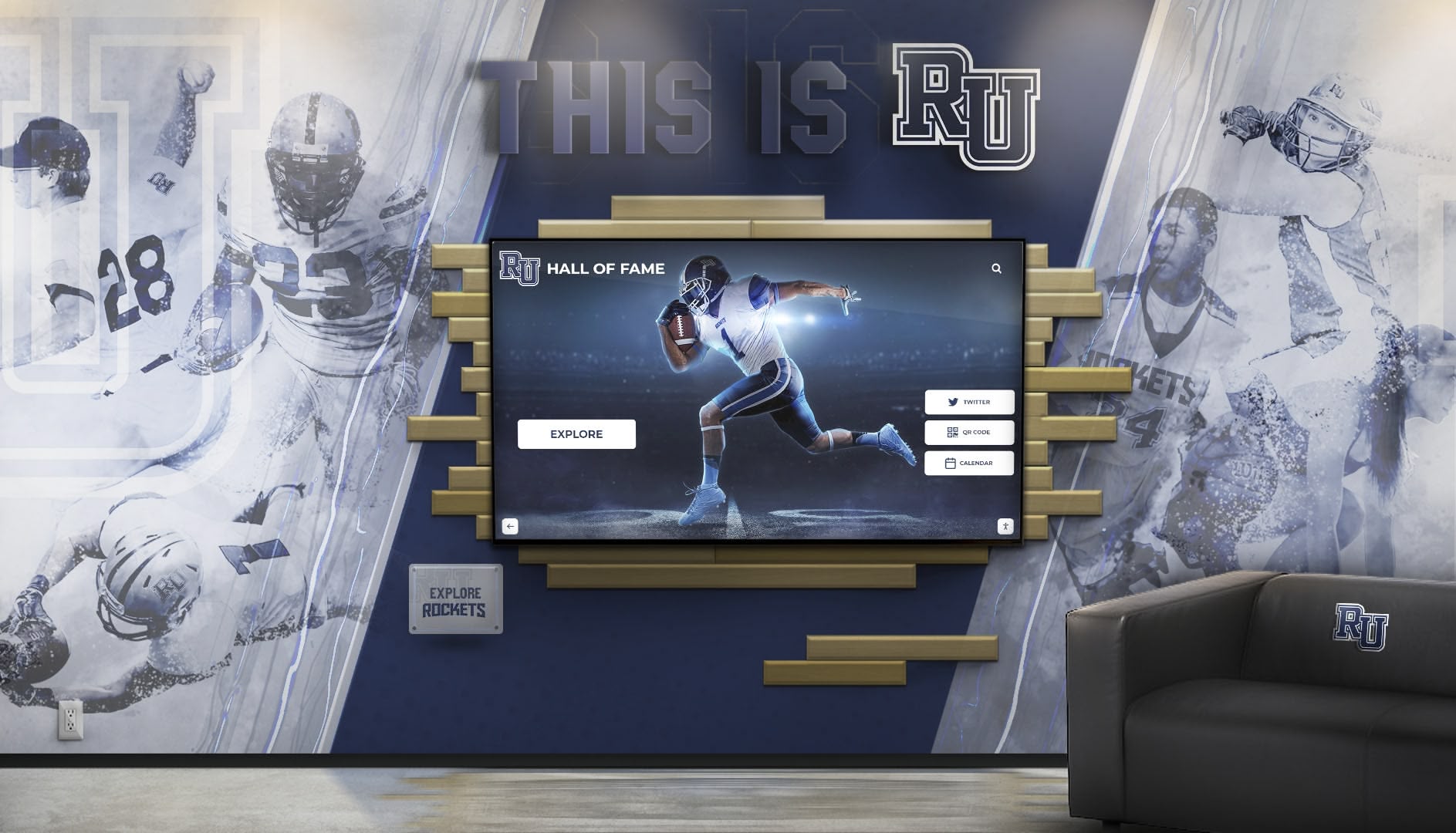
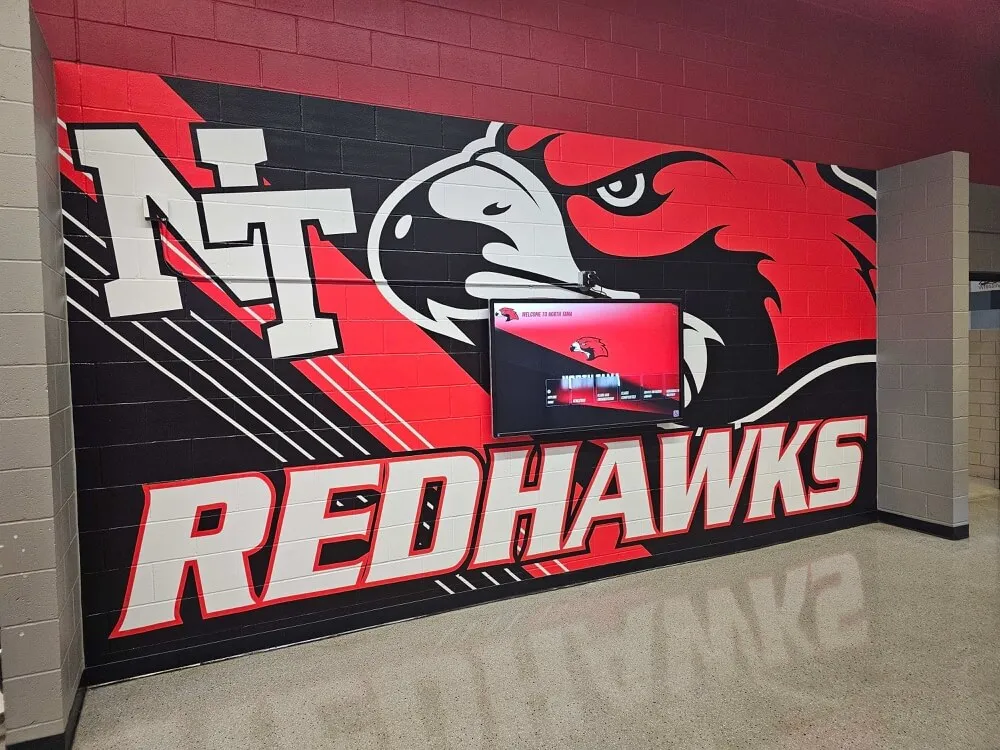
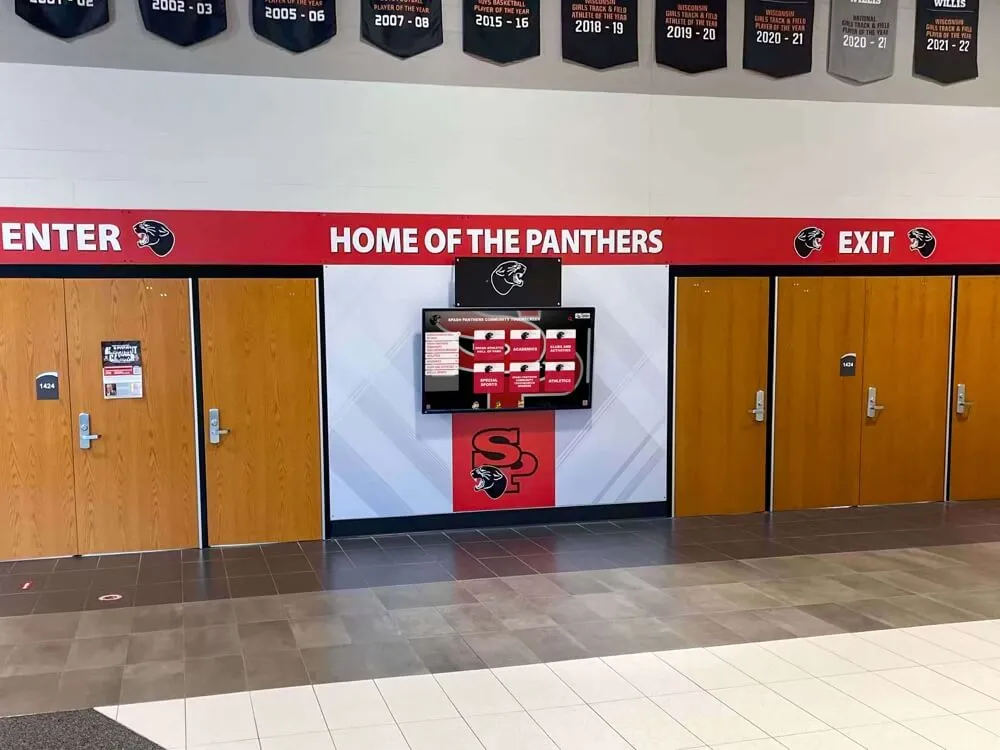
Combined physical-digital installations — custom murals alongside interactive touchscreen displays — create the highest-engagement sports alumni wall environments in high-traffic athletic lobbies
Rocket Alumni Solutions has helped more than 600 schools build sports alumni walls and interactive recognition displays that honor this commitment — unlimited capacity, professional installation, remote cloud management, ADA WCAG 2.1 AA compliance, and the platform infrastructure to preserve your program’s history across decades.
Build a Sports Alumni Wall Your Program Will Honor for Decades
From concept to installation, Rocket Alumni Solutions designs custom sports alumni walls for schools and universities — touchscreen displays with unlimited athlete profiles, searchable databases, auto-ranking record boards, and remote content management. ADA-compliant, built for high-traffic athletic environments, and installed in 2–4 weeks.
Request a Custom Demo Today