



A sports memory board captures something that trophy cases and record plaques often miss: the human story behind the score. Whether it is a photo of a team celebrating a come-from-behind championship, a senior captain who quietly led by example for four years, or a coach who built a program from nothing, a well-designed memory board makes that story visible and permanent. Schools and athletic programs that invest in these displays find that they become some of the most visited, photographed, and talked-about spaces in the building.
This guide covers practical sports memory board ideas organized by setting—athletic banquets, team rooms, and permanent athletic facilities—and includes a comparison of physical versus digital formats to help your program choose the approach that fits your goals, budget, and long-term vision.
What you display and where you display it determines whether a sports memory board becomes a genuine anchor for program pride or a corner nobody notices. The most effective displays start with a clear sense of who the audience is, what stories deserve telling, and how the format will hold up over time.

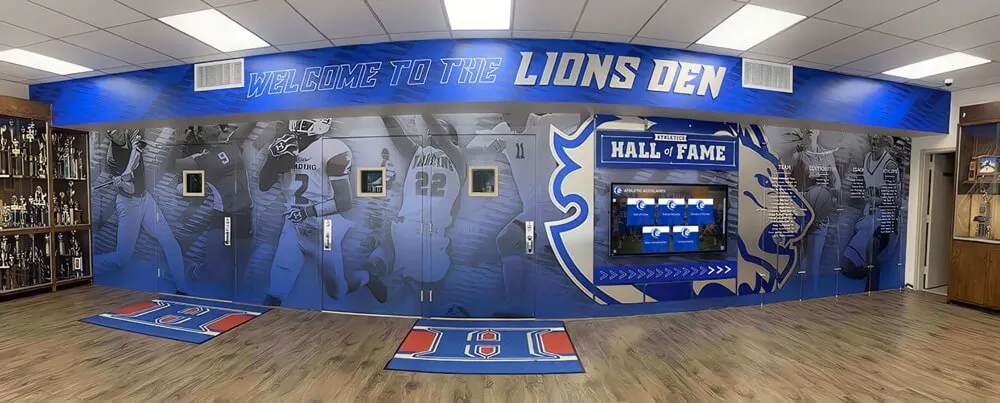
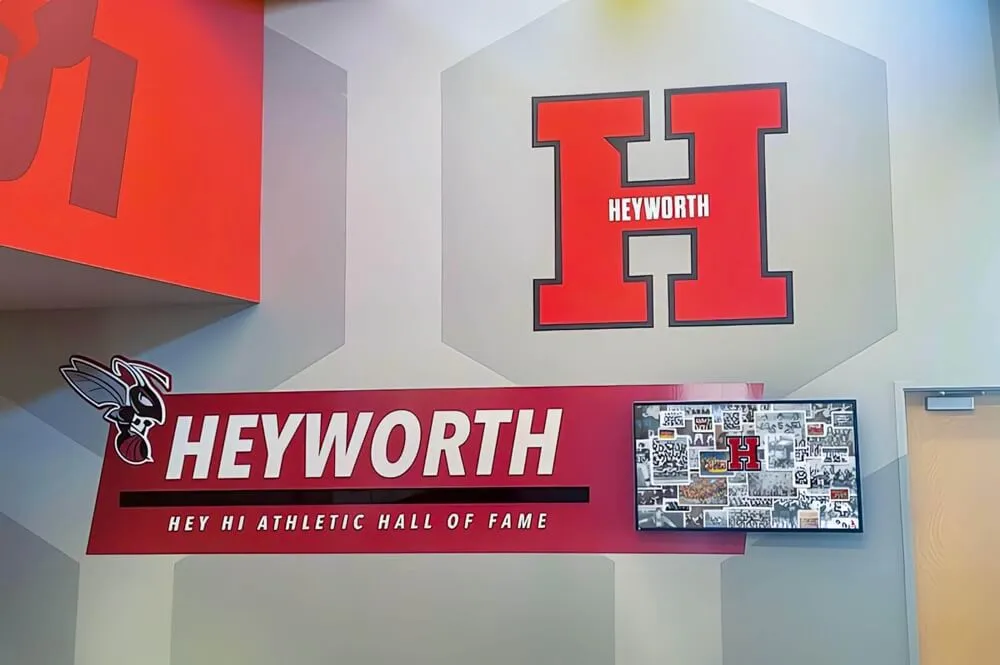
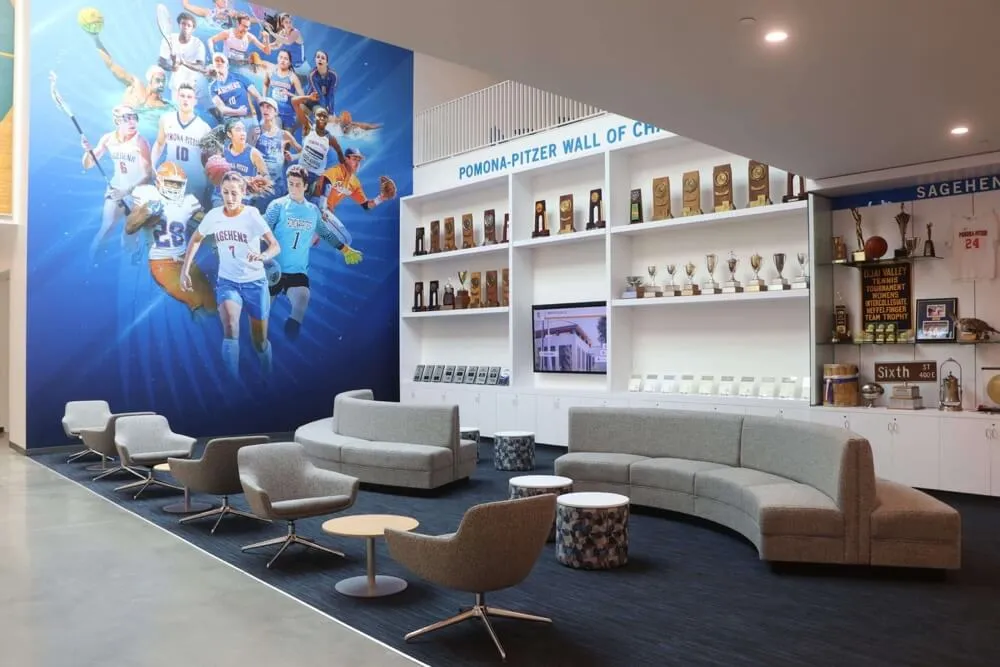
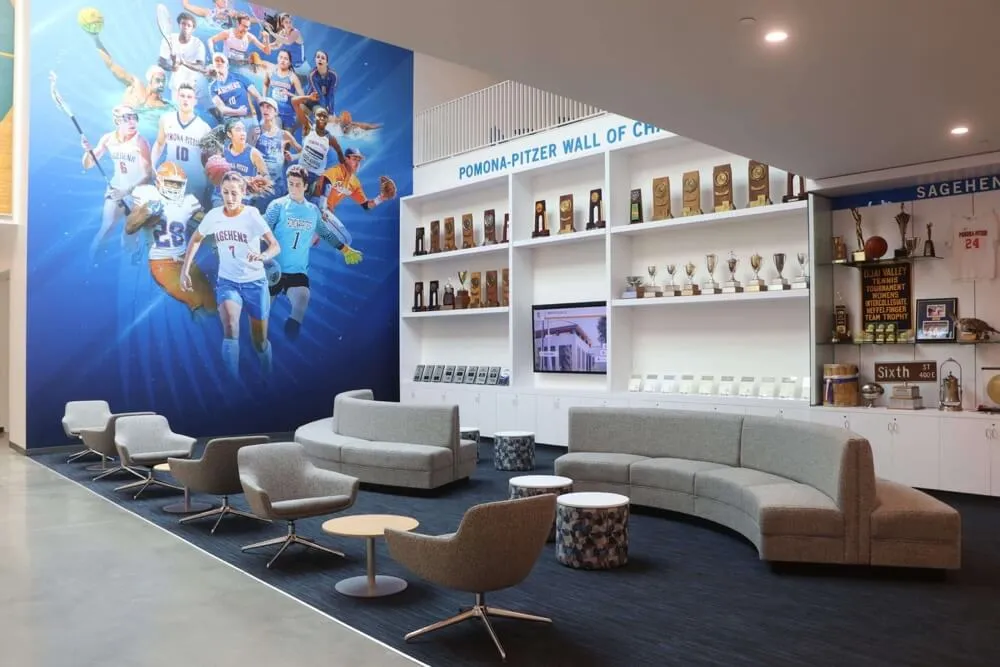
A dedicated athletic lounge with a trophy wall and program mural creates a space where team history surrounds current student-athletes every day
What Belongs on a Sports Memory Board
Before selecting a format or location, it helps to inventory the content your program already has and the stories you want to tell. The strongest sports memory boards draw from several content categories simultaneously:
- Season-level milestones: championship titles, undefeated records, tournament runs, and rivalry wins
- Individual achievement: all-state and all-conference honorees, statistical records, award recipients, and hall of fame inductees
- Team photos and action photography: images that capture emotion and context, not just posed group shots
- Coach and program history: founding coaches, program-defining seasons, and leadership transitions
- Senior tributes: graduating athletes recognized for their contributions over multiple years
Thinking through these categories helps you prioritize when space or budget is limited—and plan for growth when it is not.
Sports Memory Board Ideas for Athletic Banquets
Banquets are one of the highest-leverage moments for recognition in the athletic calendar. A well-designed memory board placed at the banquet venue extends the formal award presentation with a visual narrative of the season just completed.
1. Season Recap Photo Collage
Build a large-format display of game-day photography from throughout the season, organized chronologically or by milestone moment. A collage that moves from the first day of practice to the championship celebration tells a complete story and gives every athlete a moment they can recognize as their own.
2. Individual Award Spotlight Boards
Dedicate individual panels to award recipients—Most Valuable Player, Most Improved, Sportsmanship, Senior Recognition, and coach-specific honors. Include the athlete’s photo, the award name, and a brief reason for the honor. These boards serve double duty as a backdrop for trophy presentations and a keepsake display that families photograph throughout the evening.
3. Record-Breaker Recognition Panels
If the season produced any program records—most points in a game, fastest mile time, highest batting average—dedicate a panel to those moments. List the previous record alongside the new mark, the date it was broken, and the athlete responsible. For programs building toward a school archives policy that captures milestones permanently, banquet panels offer a natural starting point for documentation.
4. Coach Tribute and Legacy Boards
Season-end banquets are an appropriate moment to acknowledge coaching milestones—a hundredth win, a tenure anniversary, or a year of service by an assistant coach who often goes unrecognized. A simple, well-designed board with a coach’s photo, tenure dates, and program record gives these contributions lasting visibility.
5. Senior Athlete Spotlights
For high school programs, recognition of graduating athletes carries real emotional weight. Individual spotlight boards—one per senior, displaying their years of service, career highlights, and a personal photo—create a physical record of each athlete’s contribution that can be handed to families as a keepsake after the banquet.
Sports Memory Board Ideas for Team Rooms and Locker Areas
Team rooms and locker areas are spaces where athletes spend time before and after every practice and competition. A sports memory board placed here does not just honor the past—it actively motivates the present.
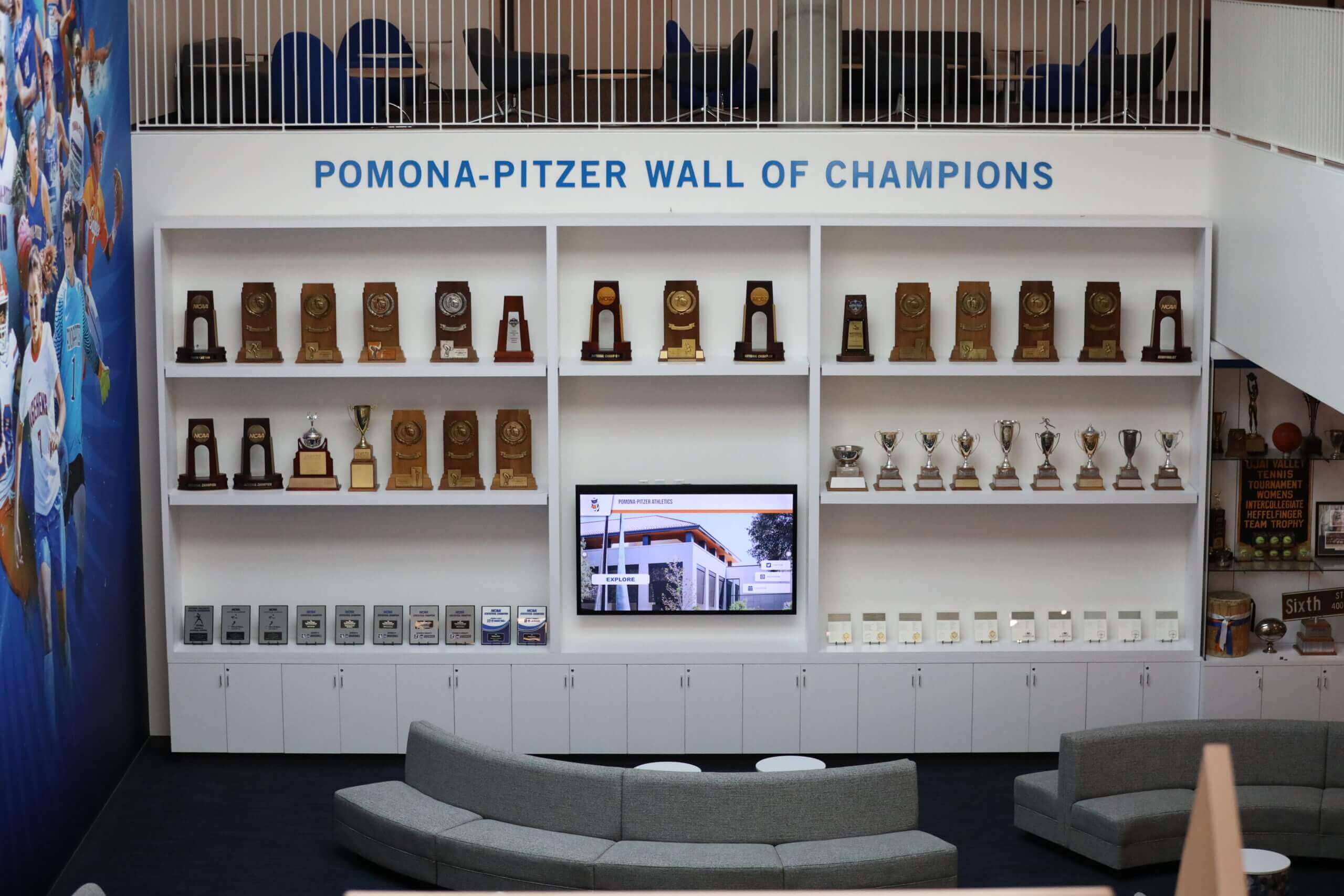
A team lounge with a wall of champions display gives current athletes daily context for the program's highest standards and historical achievements
6. All-Time Records Leaderboard
A standing leaderboard that lists the top performers in each statistical category keeps the program’s historical ceiling visible to every current athlete. Formats range from a painted display that updates each season to a digital screen that re-sorts automatically as coaches enter new data. For programs exploring yearbooks on touchscreen and related digital formats, an all-time records board is typically the first interactive feature athletes engage with on a daily basis.
7. Championship Year Timeline
A timeline organized by season—listing championship titles, final records, and tournament results—gives current athletes a historical map of what the program has accomplished. Timelines are especially powerful for programs with long histories, where a walk through decades of results reveals patterns of excellence and breakthrough moments that define the program’s identity.
8. Alumni Athlete Tribute Wall
Displaying photos of alumni who went on to play at the next level, earn professional contracts, or represent the program in postseason competition creates a concrete connection between the current team and its graduates. This feature works particularly well when photos include career details and a brief quote or message from the alumnus. For programs building deeper recognition structures for current athletes, learning how schools honor top young performers offers ideas on creating early-career recognition that feeds naturally into a permanent alumni wall over time.
9. Motivational Photo Walls
Large-format photography from emotionally significant moments—a come-from-behind playoff win, a team celebration after clinching a title, a coach’s milestone victory—carries motivational weight that printed statistics alone cannot replicate. Many programs cycle these photos seasonally, adding new imagery after each campaign while preserving the most iconic historical images in a permanent gallery.

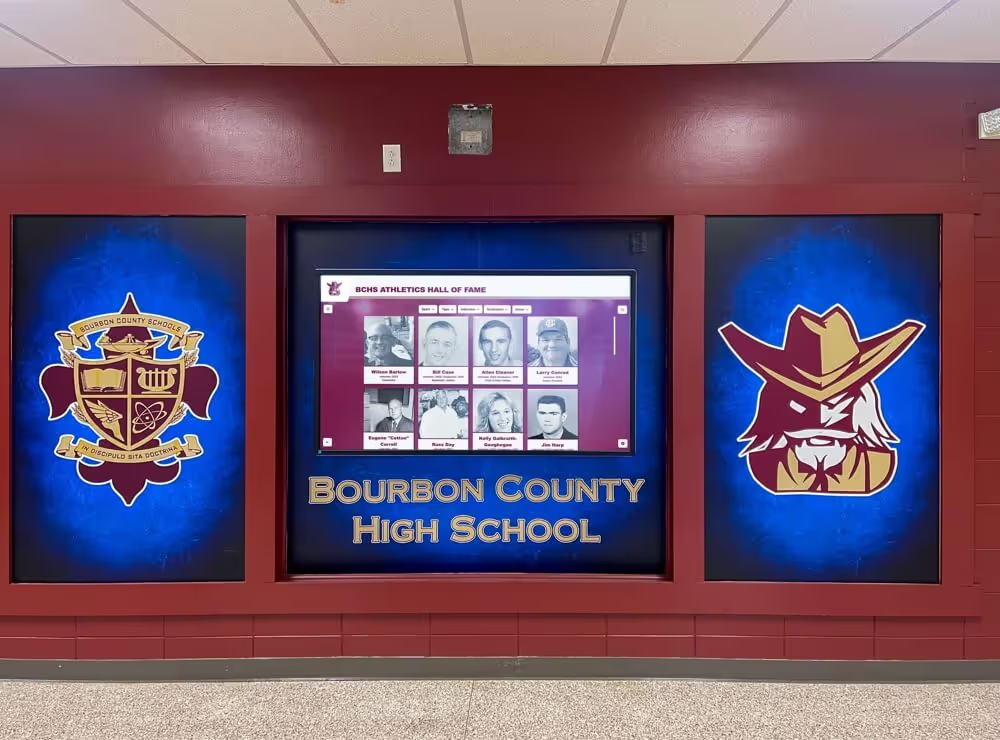
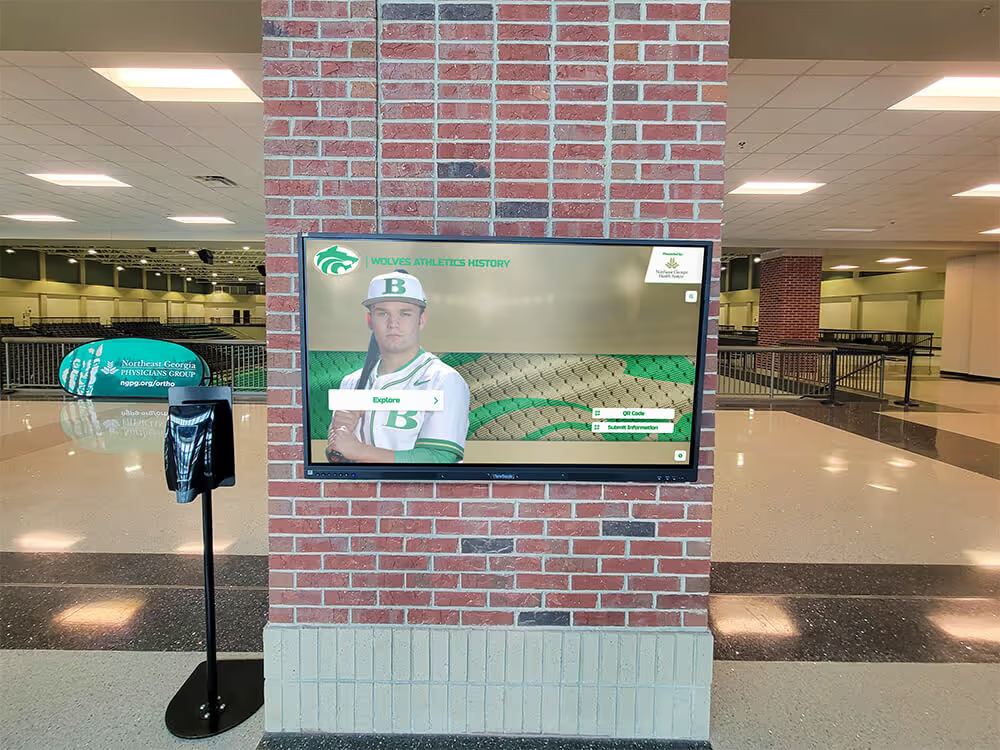
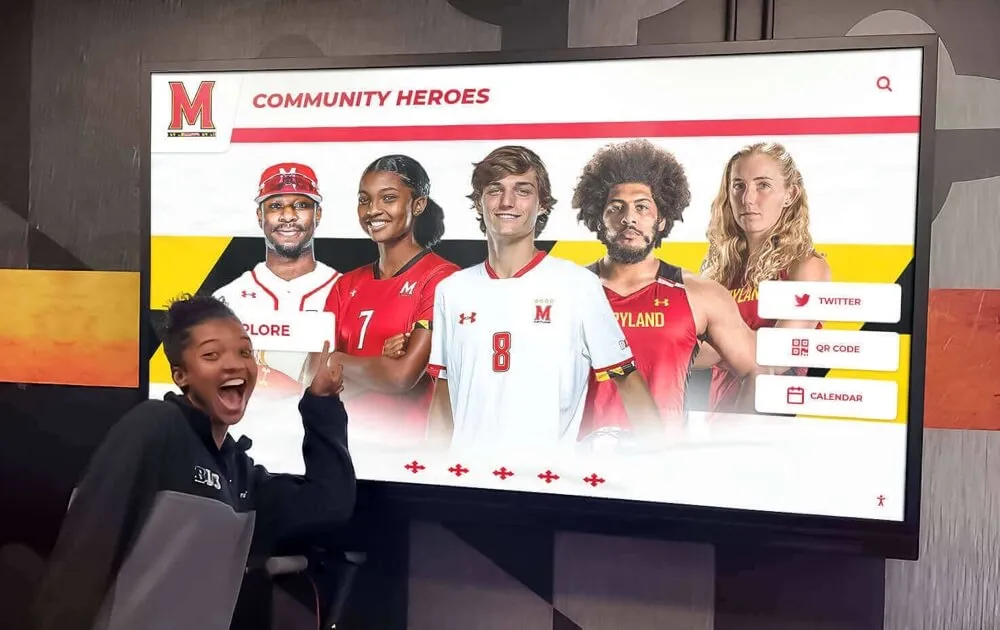
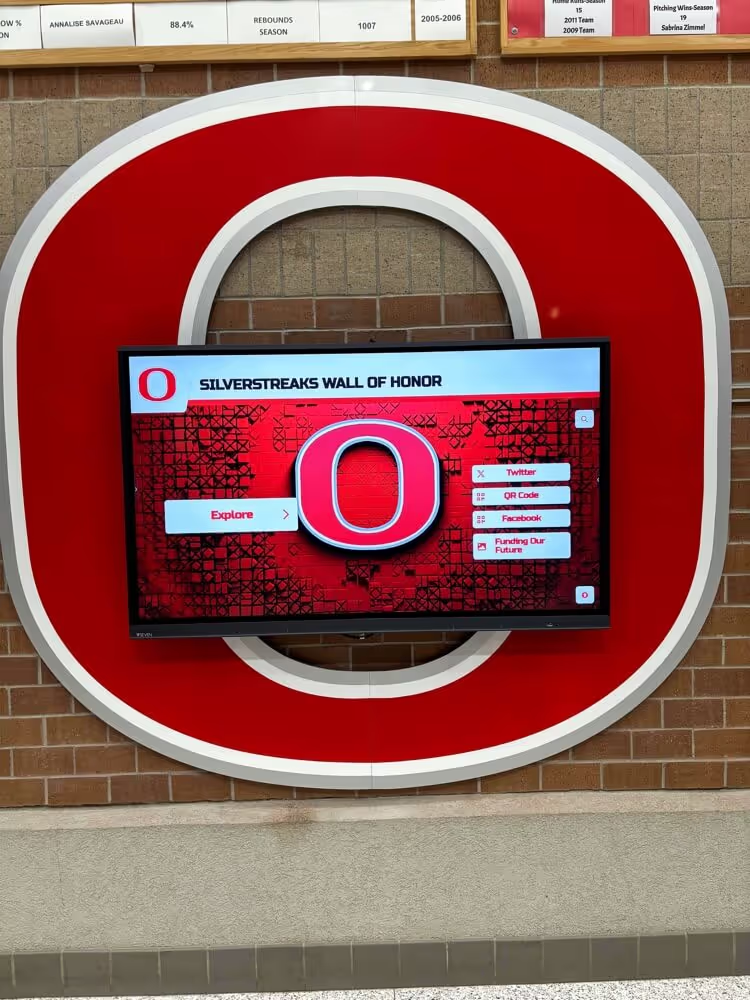
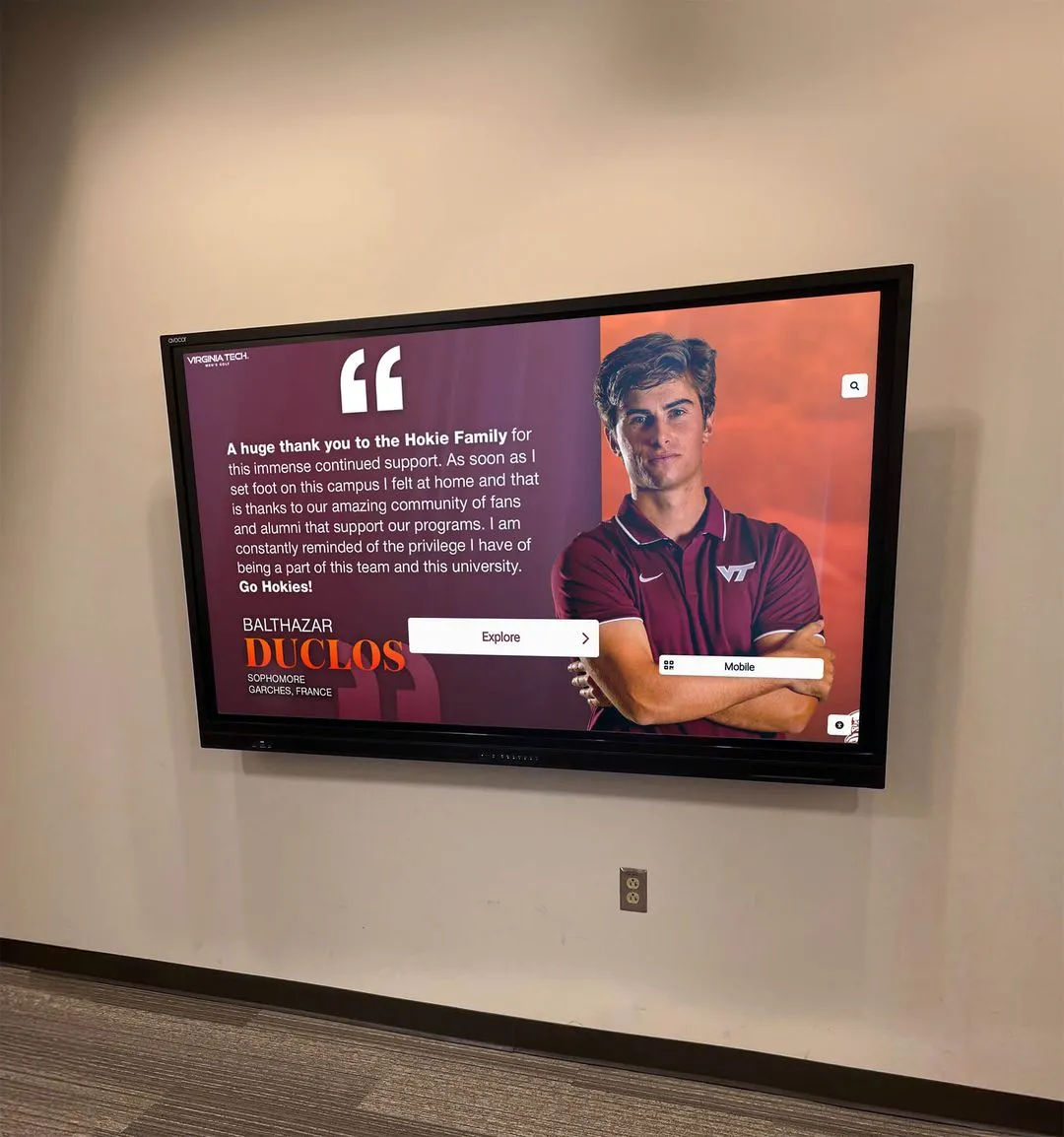
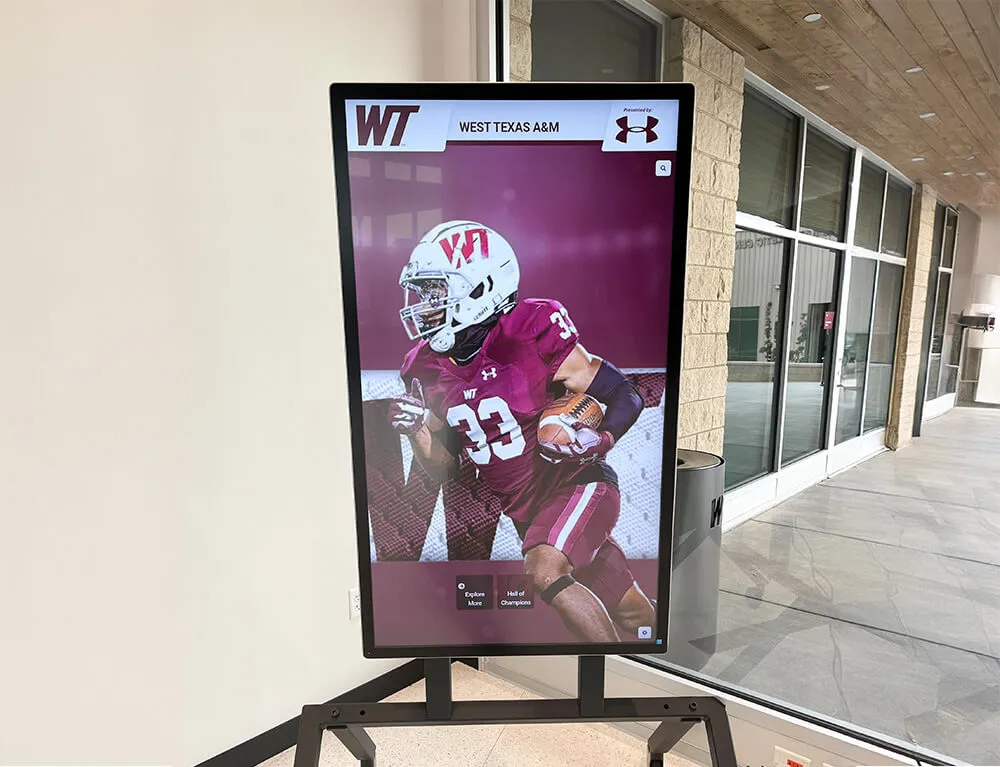
Digital screens in athletic common areas give student-athletes direct access to program highlights and recognition content throughout the school day
Sports Memory Board Ideas for Athletic Hallways and Facilities
Public-facing athletic spaces—hallways outside gymnasiums, main lobbies, trophy case alcoves—serve a broader audience that includes students, families, prospective athletes, and community members. Memory boards in these locations function as both recognition systems and institutional storytelling.
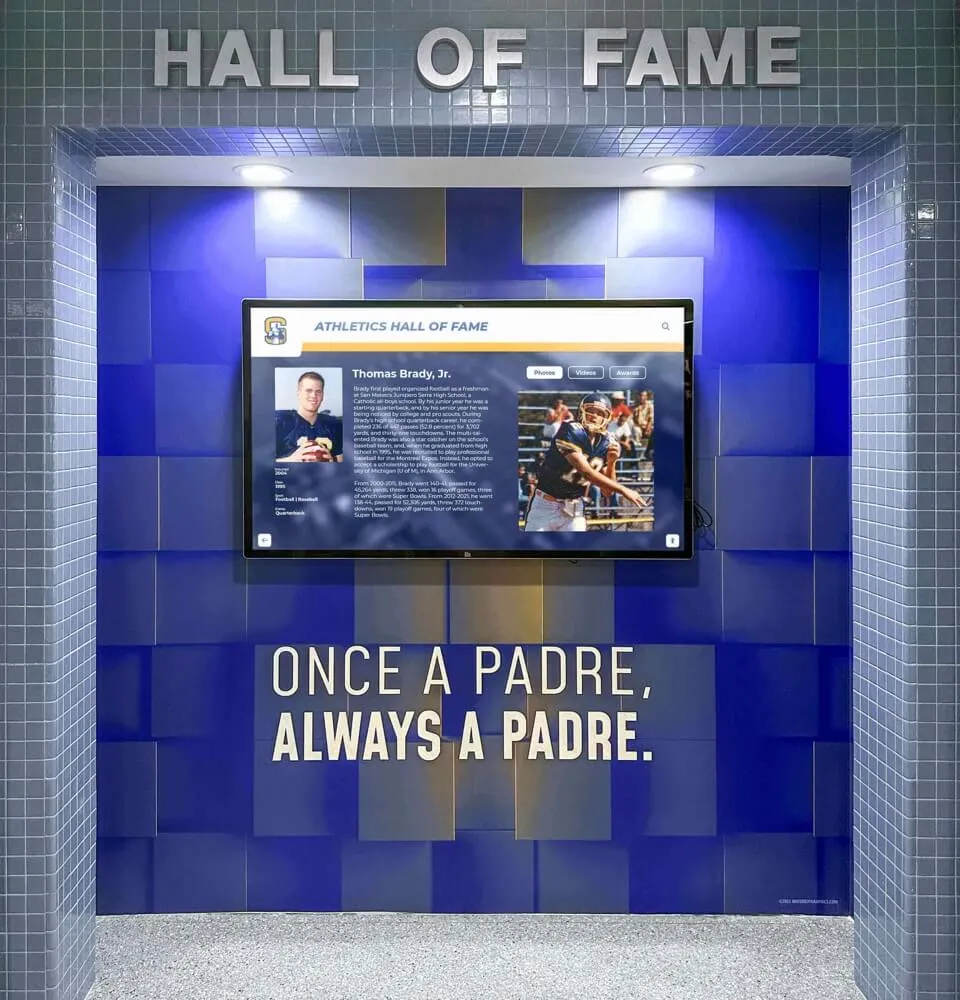
10. Hall of Fame Inductee Display
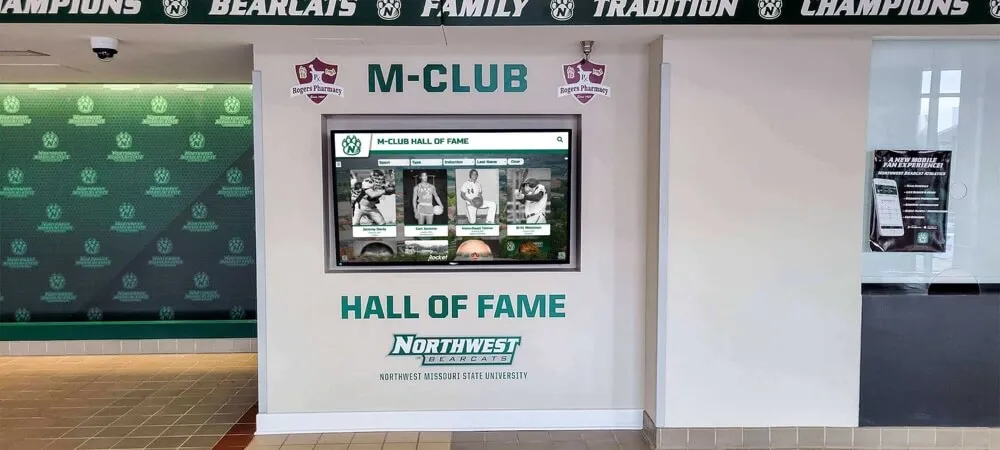
A dedicated sports memory board highlighting hall of fame inductees organizes recognition by class year, sport, or category, giving each inductee a portrait photo, achievement summary, and induction year. This format works for programs that induct athletes formally on an annual or biennial cycle. Resources on school memorabilia display ideas can help programs decide how to integrate physical artifacts like jerseys and equipment alongside inductee portraits.
11. Team Photo Archives by Season
A chronological archive of team photos—one per season, labeled with record and notable achievements—creates a visual history that any visitor can browse without prior knowledge of the program. For long-established programs, covering decades of team photos in a single wall display creates an immersive experience that current students and returning alumni engage with very differently from one another, each finding something personal in the same display.
12. Sponsor Recognition Panels
Athletic programs that carry sponsor relationships can integrate sponsor logos, partnership milestones, and sponsor impact stories into hallway or lobby displays. Dedicated recognition panels signal to sponsors that their investment is visible and celebrated—a meaningful differentiator when renewing partnerships year over year.
Physical vs. Digital Sports Memory Boards: A Comparison
One of the most common questions athletic directors face is whether to invest in traditional physical displays or transition to digital platforms. Both approaches have genuine strengths, and many programs use a combination of both.
| Feature | Physical Memory Board | Digital Memory Board |
|---|---|---|
| Content capacity | Limited by wall space; new content may displace old | Unlimited inductees and records without physical constraints |
| Update process | Requires reprinting, re-engraving, or physical replacement | Cloud-based CMS updates in minutes from any device |
| Content types | Photos, text, and physical artifacts | Photos, video, statistics, biography, audio, and documents |
| Visitor interaction | Passive viewing only | Searchable, browsable touchscreen experience |
| Off-campus access | Campus-only visibility | QR code and web access available from anywhere |
| Long-term costs | Recurring print and engraving costs for every update | One-time installation; software subscription covers ongoing updates |
| Records management | Static display; manual replacement when records break | Auto-ranking leaderboards re-sort automatically with new data |
| Best fit | Banquet displays, keepsakes, and locker room motivation | Permanent facility installations, athletic archives, and public lobbies |
The comparison above clarifies something important: physical and digital formats serve different purposes well. Banquet memory boards and temporary displays benefit from the tangibility of physical production. Permanent facility installations—where the goal is building an accessible, growing athletic archive—increasingly favor digital platforms that eliminate update friction and expand access far beyond the campus.
Transitioning to a Digital Athletic Archive
Programs that start with physical sports memory boards often reach a tipping point where the volume of achievement they want to recognize outpaces the space available to display it. A program with 40 years of champions, 200 hall of fame inductees, and hundreds of all-time records simply cannot fit that history onto a hallway wall without sacrificing depth or retiring earlier recognition to storage.
Digital athletic archives solve this by separating storage from display. A single touchscreen installation can surface any piece of content on demand—a visitor searching for a 1987 state champion finds that profile in seconds rather than scanning a wall of plaques. For programs exploring nominating youth athletes of the year and building deeper recognition structures for current athletes, digital platforms offer the infrastructure to scale recognition without physical limitations.
If your program is evaluating digital platforms, schedule a demo with Rocket Alumni Solutions to see how touchscreen athletic archives handle record boards, hall of fame galleries, and alumni archives in a single unified system.
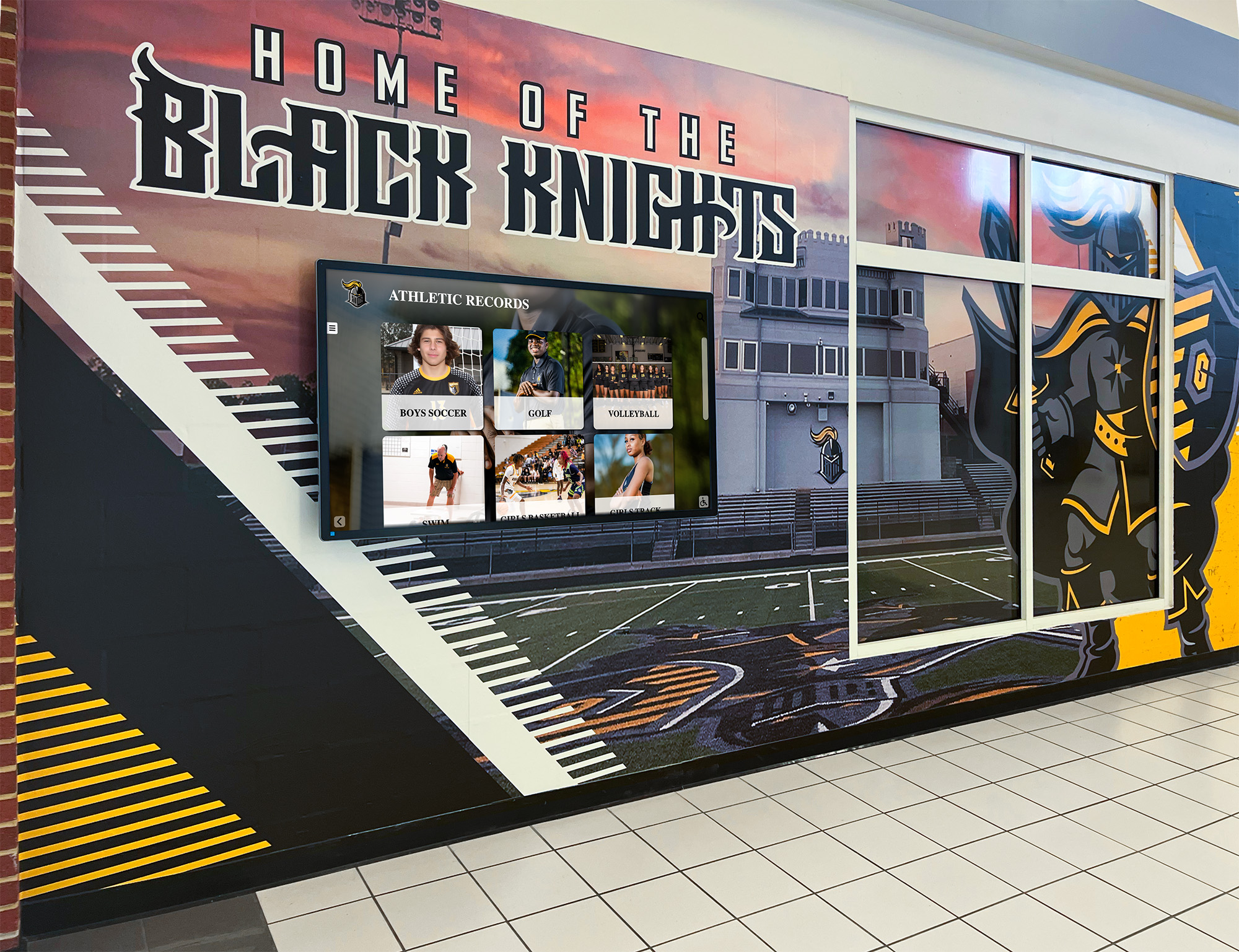
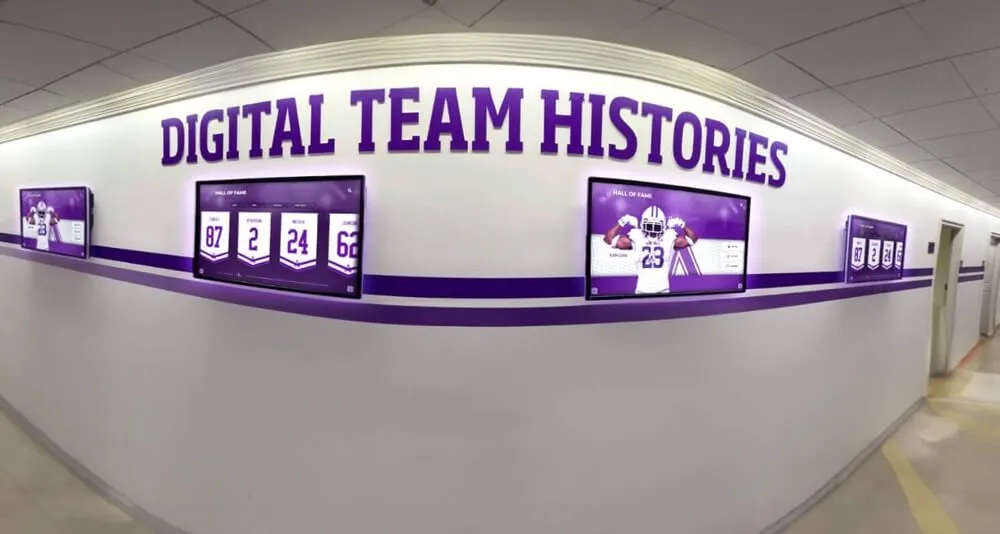
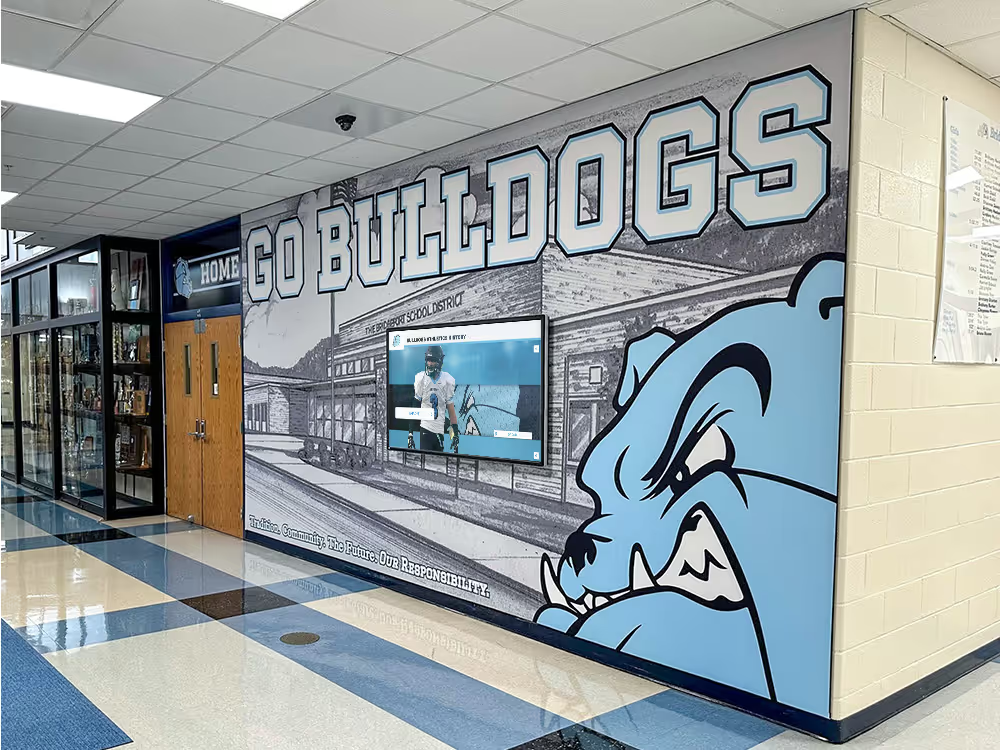
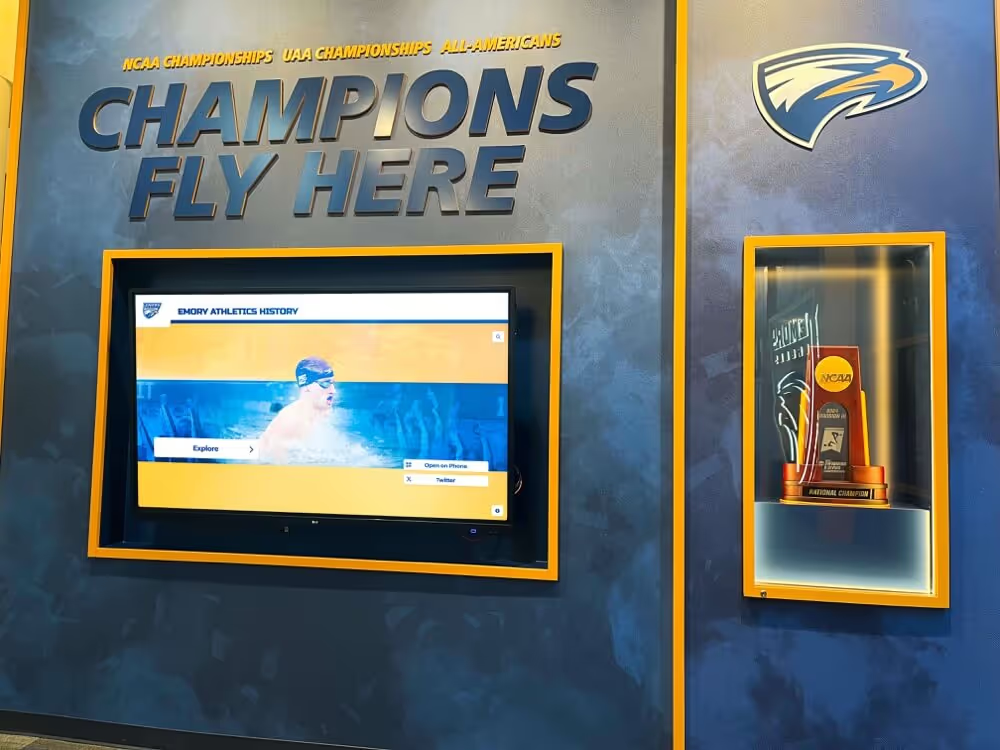
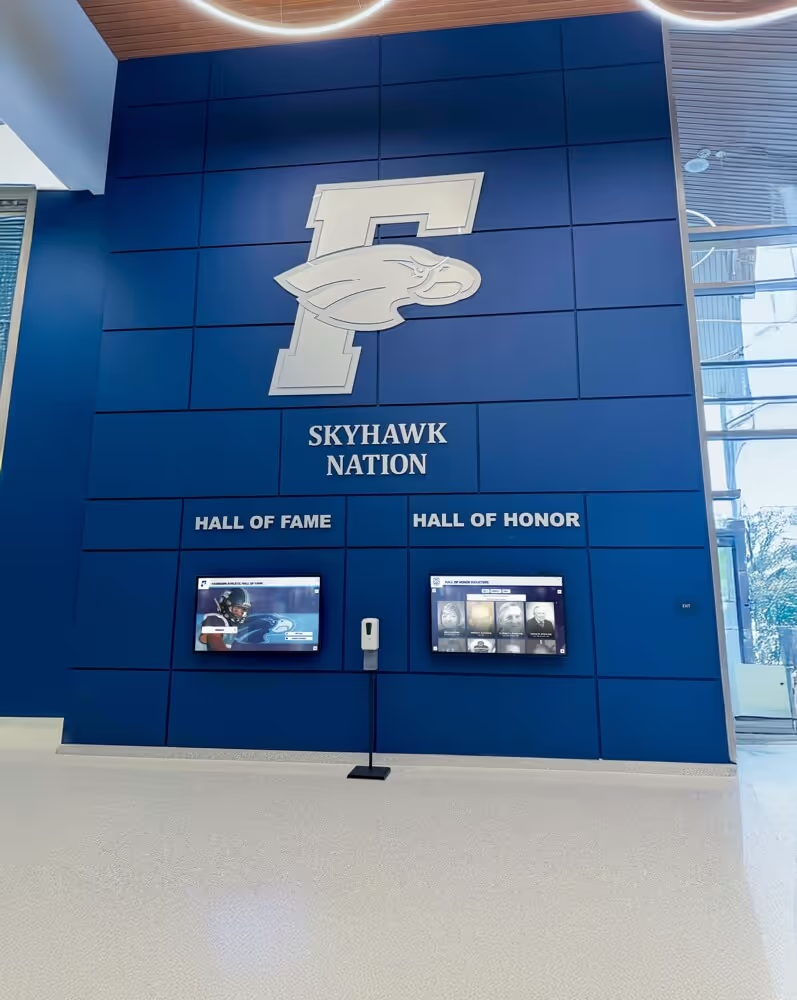
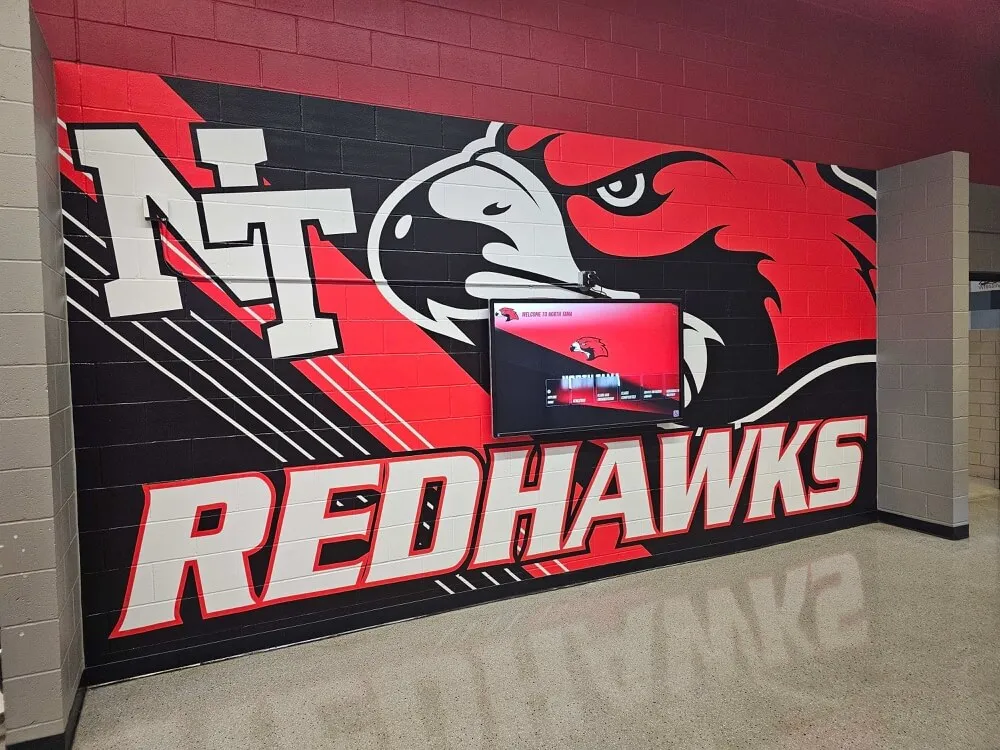
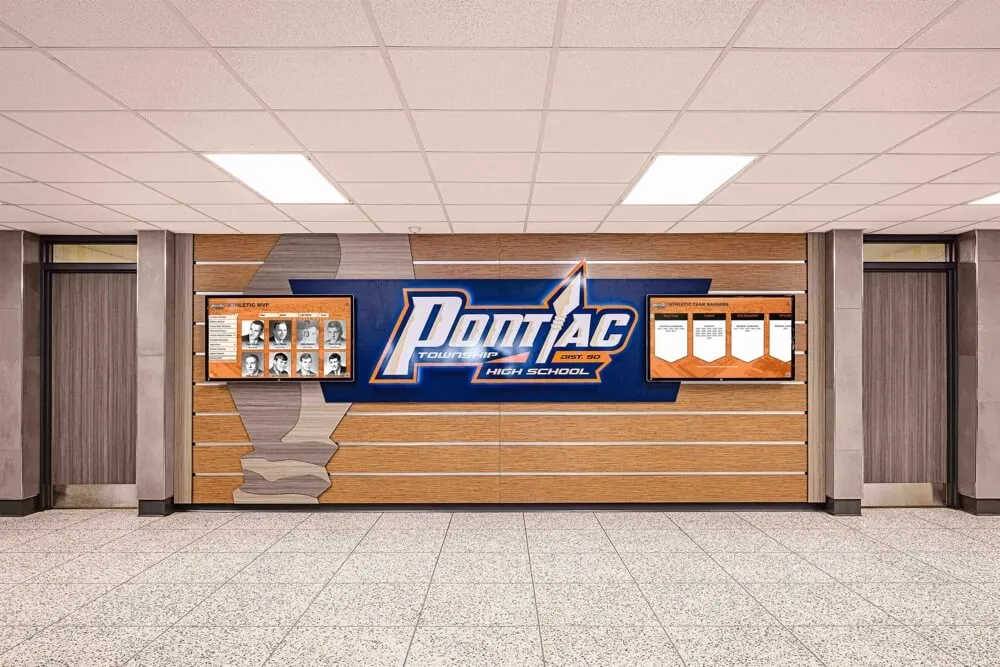
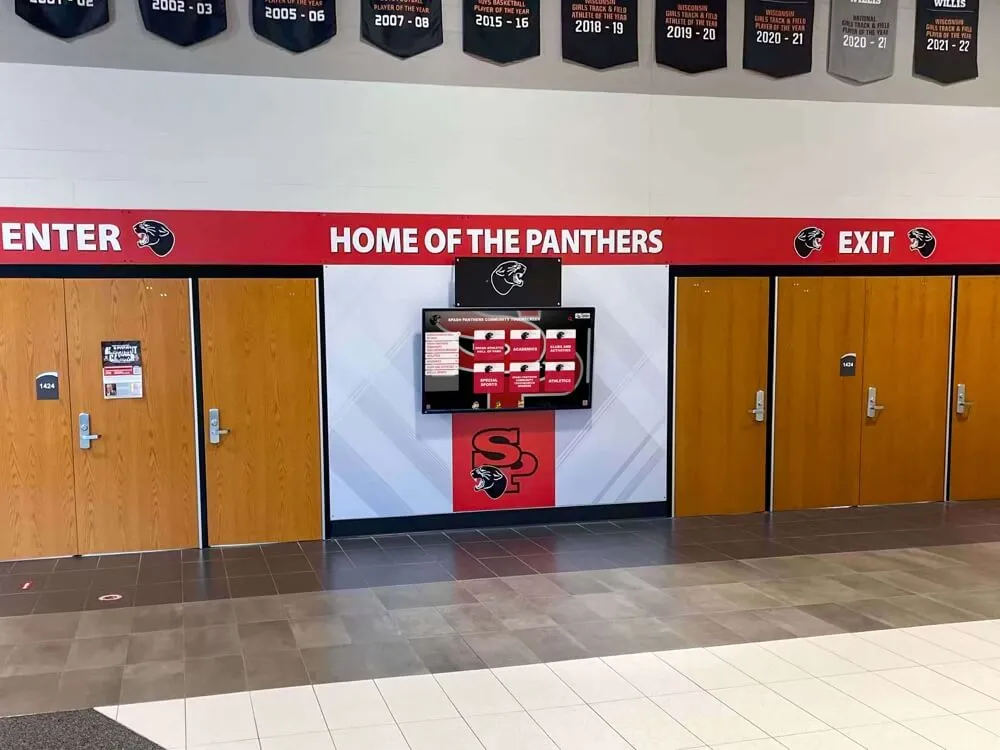
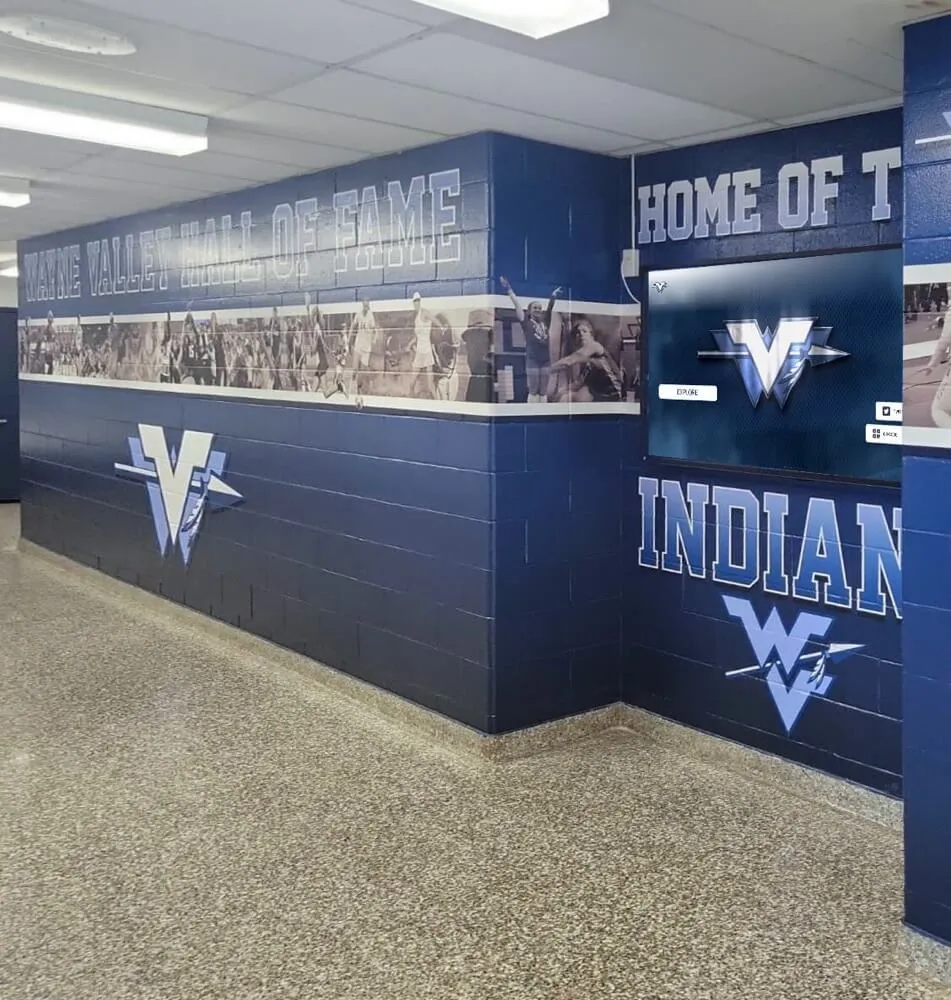
Combining custom athletic murals with digital record displays creates hallway installations that honor program history in a permanent, updatable format
Key features to prioritize when evaluating digital platforms for sports memory boards:
- Auto-ranking record boards that re-sort when new data is entered, eliminating the manual update burden on coaching staff
- ADA WCAG 2.1 AA compliance to ensure all visitors can access and navigate the display independently
- QR code mobile access that allows visitors to scan and share individual athlete profiles from their phones
- Cloud-based CMS that lets administrators update content remotely without waiting on a vendor
- Unlimited inductee storage so no program history has to be retired to make room for new additions
Building a Sports Memory Board That Lasts
The most successful sports memory board programs share one characteristic: they treat recognition as an ongoing commitment rather than a one-time installation project.
This means establishing a regular update schedule—whether that is annual for hall of fame inductions or weekly for record board statistics. It means assigning clear ownership to a staff member who manages content additions and maintains photo quality standards. And it means beginning to document the history that predates the current display by gathering old yearbooks, newspaper clippings, and photographs from alumni who still have them.
Programs that build this operational foundation—regardless of whether they start with a simple physical display or a full digital platform—create memory boards that grow more valuable with every passing season.
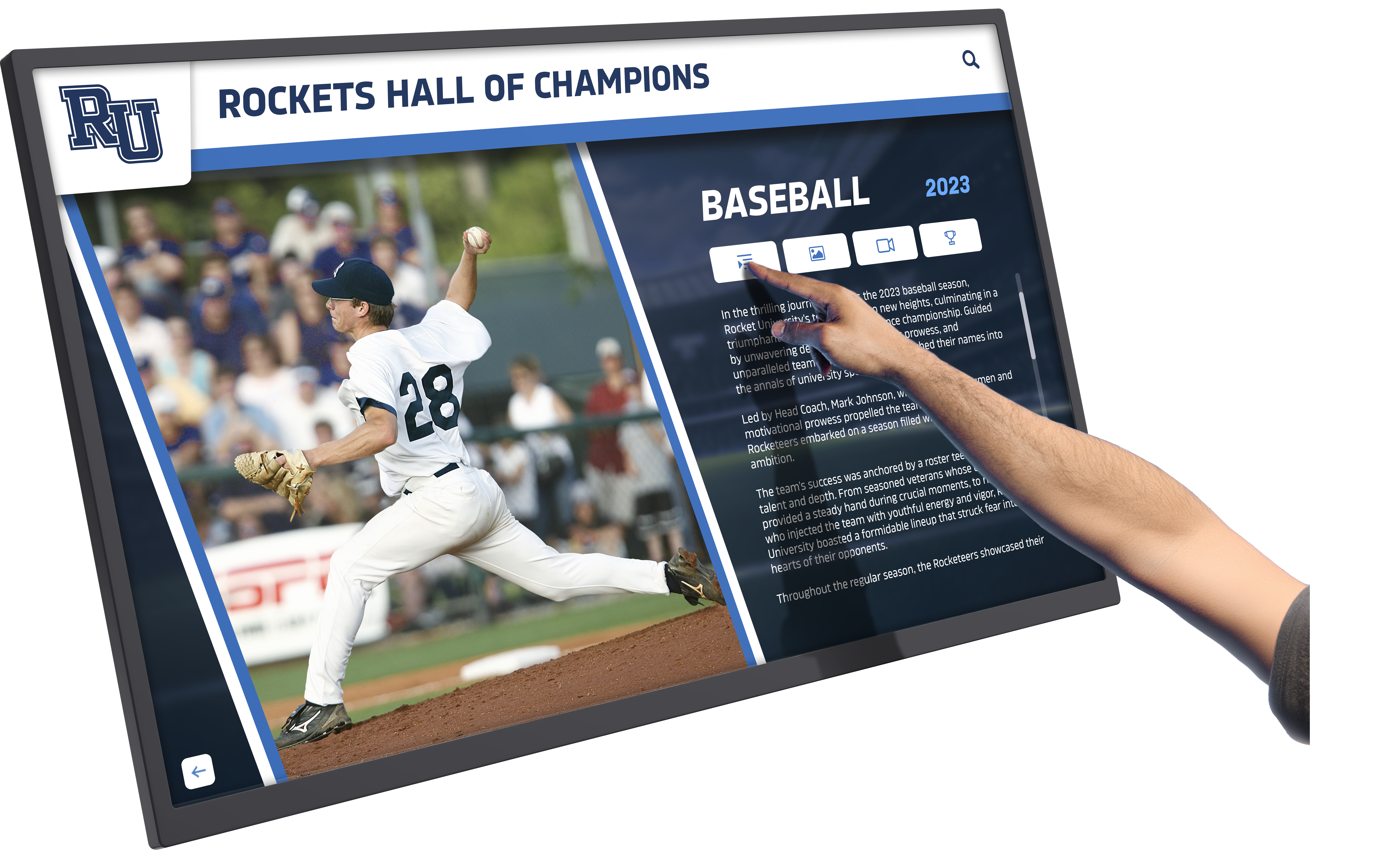
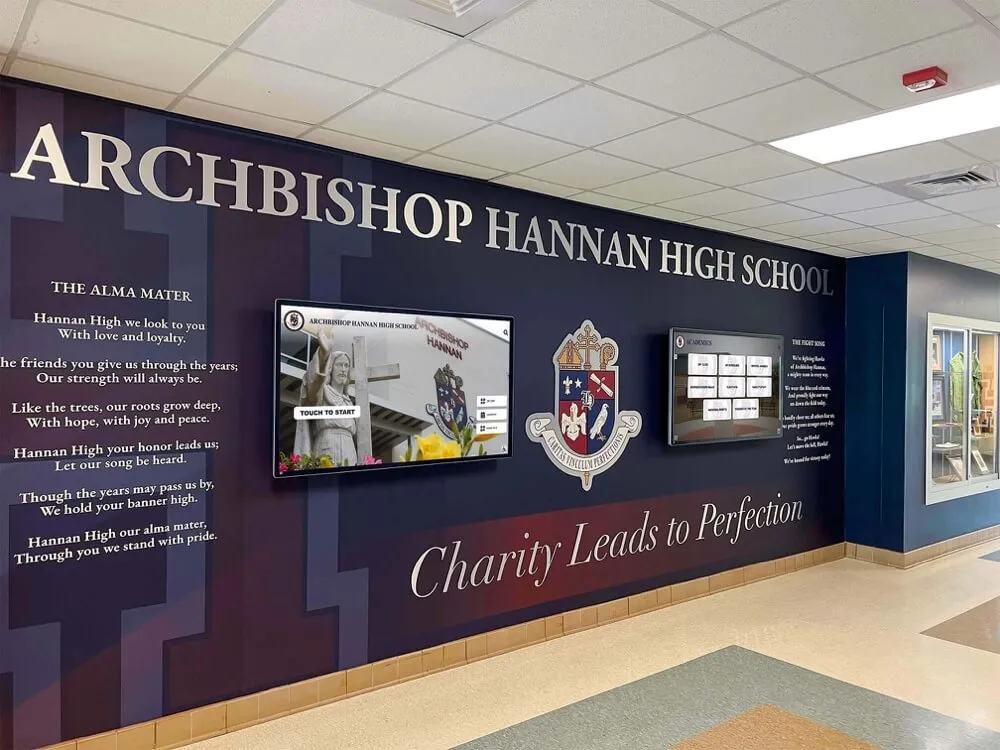
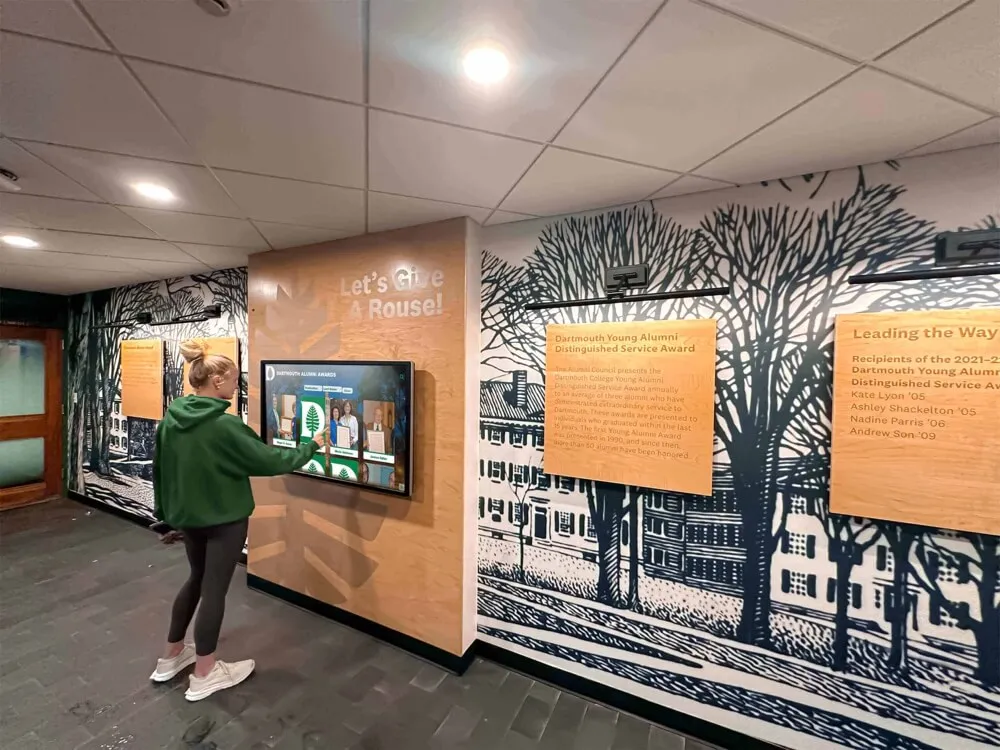
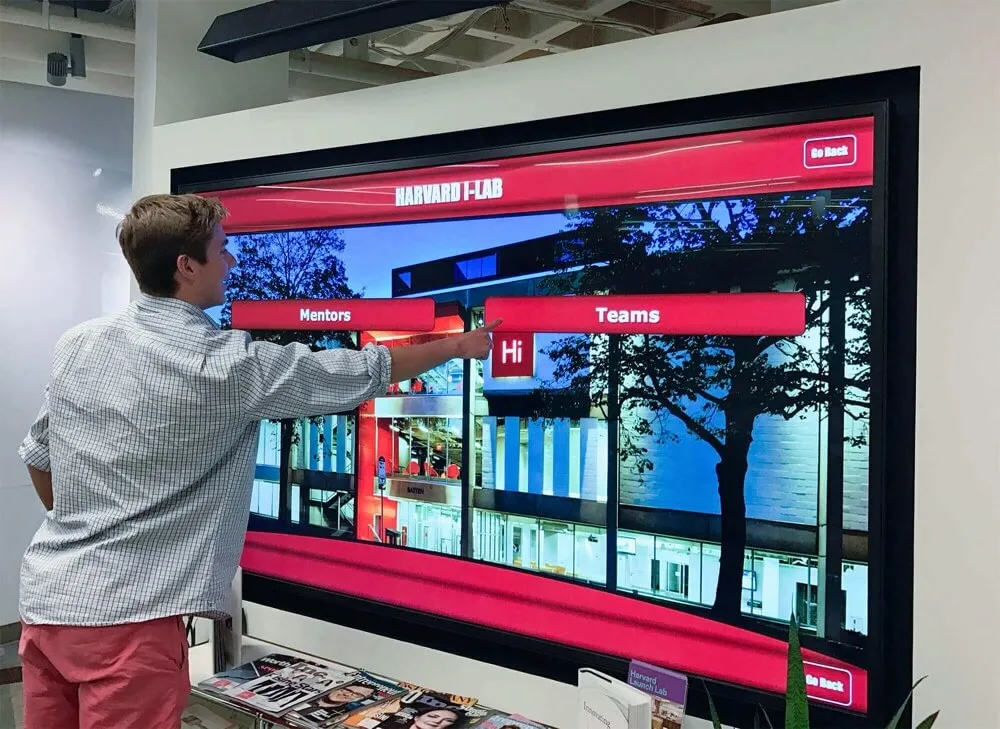
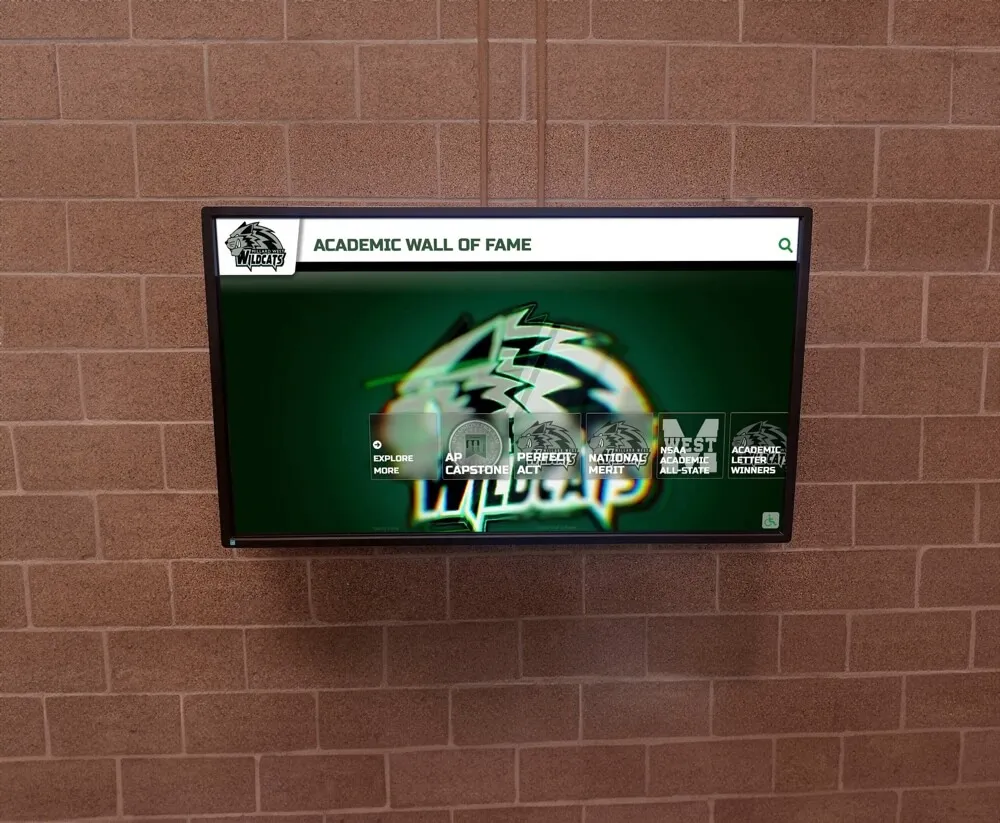
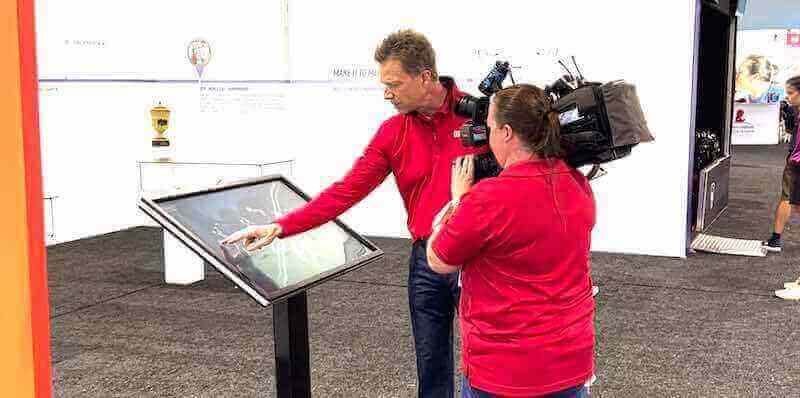
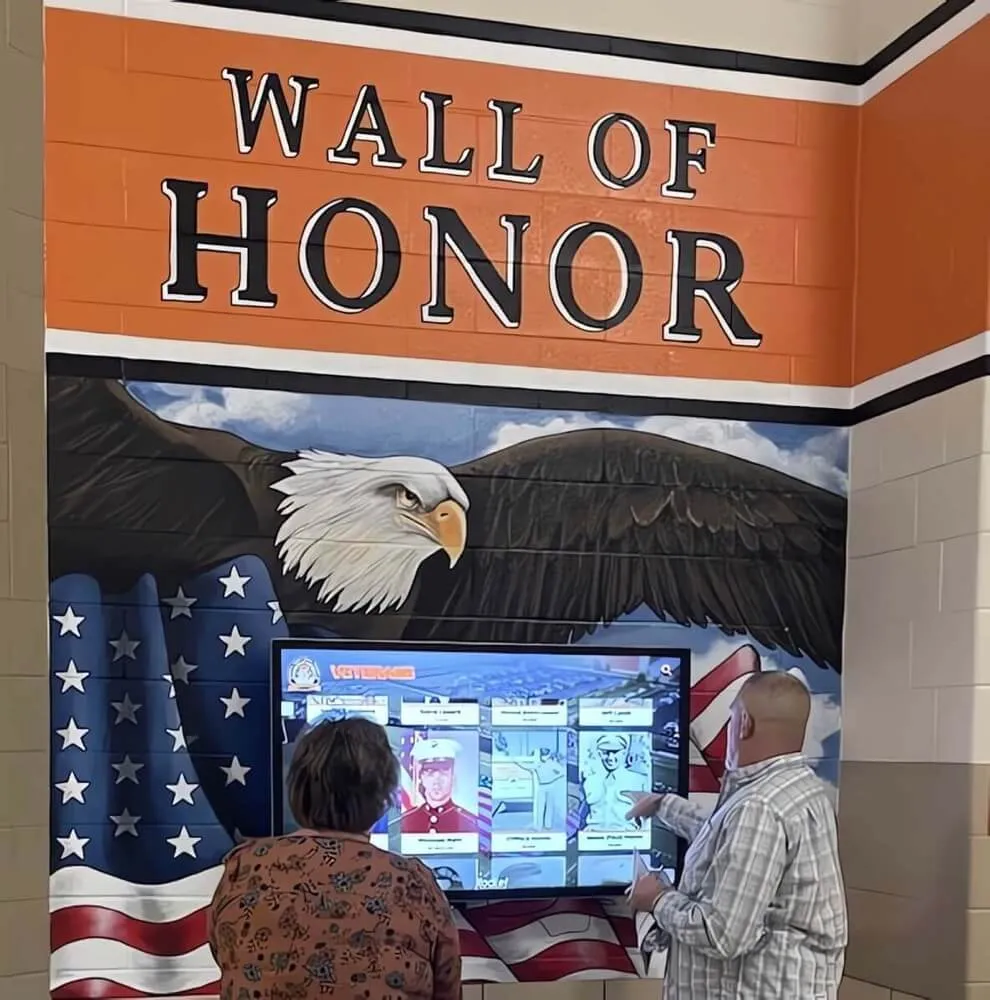
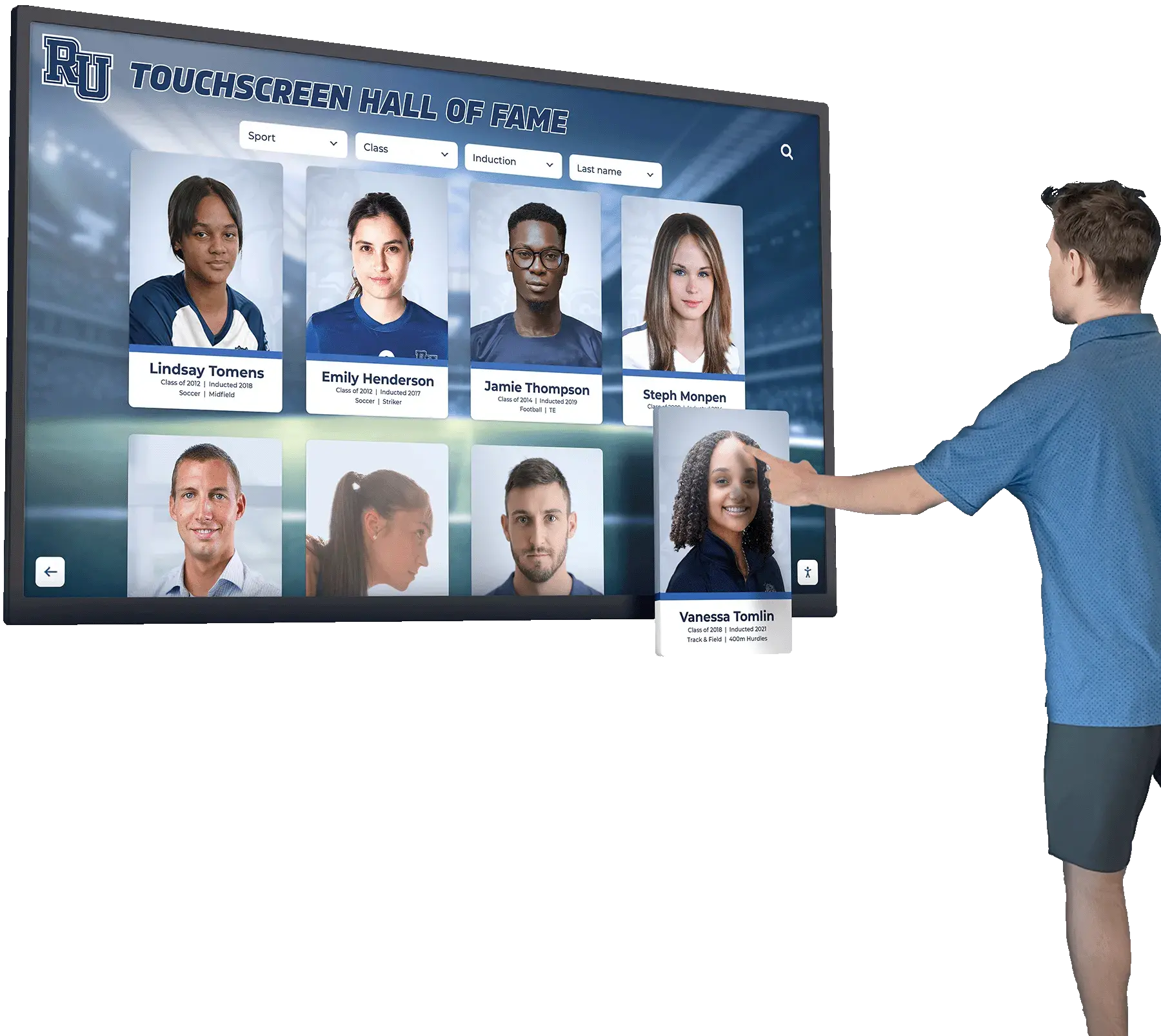
Interactive touchscreen sports memory boards let visitors find and engage with athlete profiles at their own pace, turning passive display into active discovery
Frequently Asked Questions About Sports Memory Boards
What is a sports memory board?
A sports memory board is a curated display—physical or digital—that preserves a sports program’s history through photos, records, award recognition, and team milestones. It serves simultaneously as an archive, a motivation tool for current athletes, and a community touchpoint for alumni and families.
What should I include on a sports memory board for a banquet?
Banquet memory boards typically include season recap photography, individual award spotlights, record-breaker recognition, senior athlete tributes, and coach acknowledgments. Content should reflect the season just completed while drawing connections to program history.
What is the difference between a physical and digital sports memory board?
Physical boards use printed materials, plaques, and framed photos. Digital boards use touchscreen displays and cloud-based software to make content searchable, updateable without reprinting, and accessible via QR code from anywhere. Digital platforms support unlimited content without physical space constraints, and auto-ranking record boards update automatically when new data is entered.
Where should a sports memory board be placed in a school?
Common placements include athletic hallways, team rooms, lobby entrances, gymnasium foyers, and banquet venues. Permanent installations benefit from high-traffic locations where visibility to students, families, and community visitors is maximized. Team rooms benefit from record boards and alumni tributes. Lobbies benefit from hall of fame displays and championship timelines.
Can a digital sports memory board replace a physical display?
Digital platforms work best for permanent institutional archives—hall of fame galleries, all-time records, and growing inductee collections. Physical boards remain valuable for banquets, keepsakes, and locker room motivation. Many programs run both: a touchscreen installation in the lobby or hallway for the permanent archive, and physical boards for seasonal and event-specific recognition.
Ready to build a digital sports memory board that grows with your program?
Rocket Alumni Solutions designs and installs touchscreen athletic archives for schools and universities—combining ADA-compliant hardware, unlimited inductee storage, auto-ranking record boards, and a cloud-based CMS into turnkey systems your team can manage from day one. Request a demo to see how a digital memory board can transform the way your program honors its history.
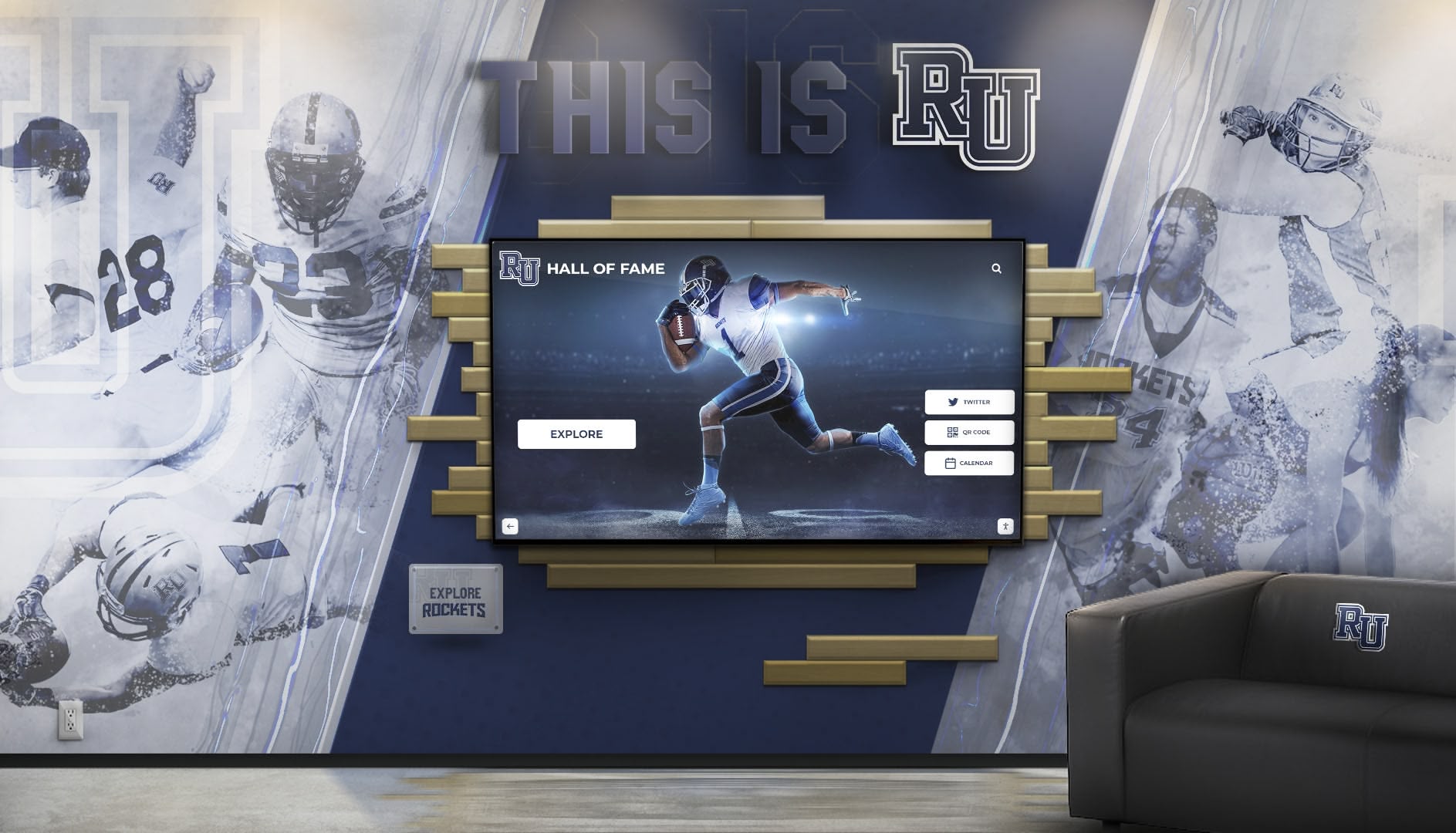
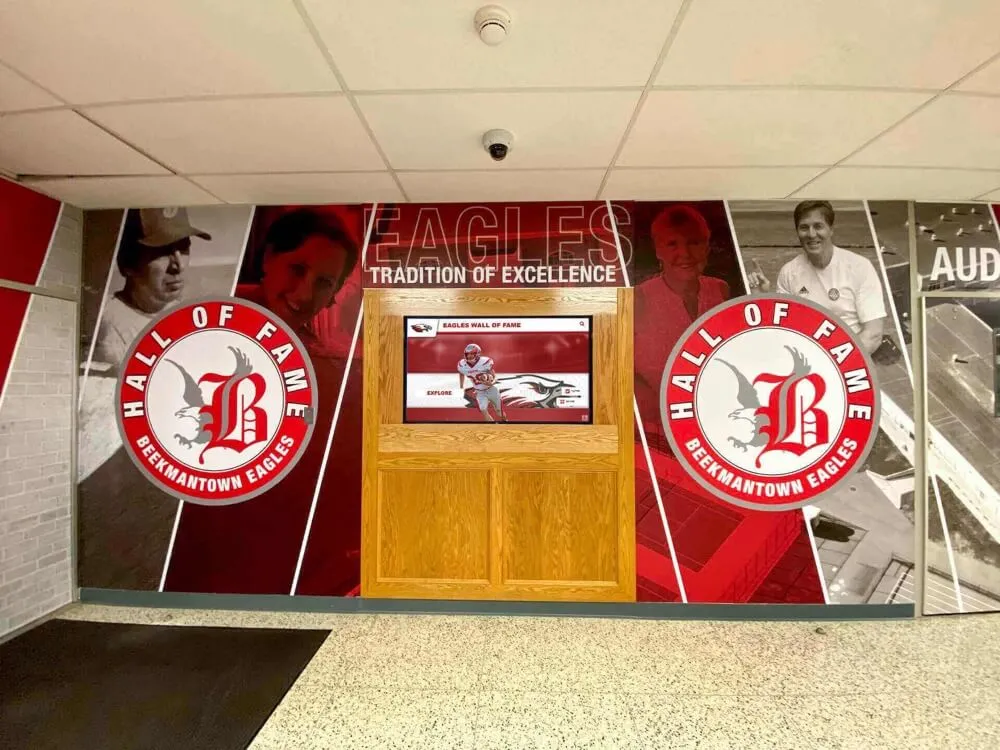
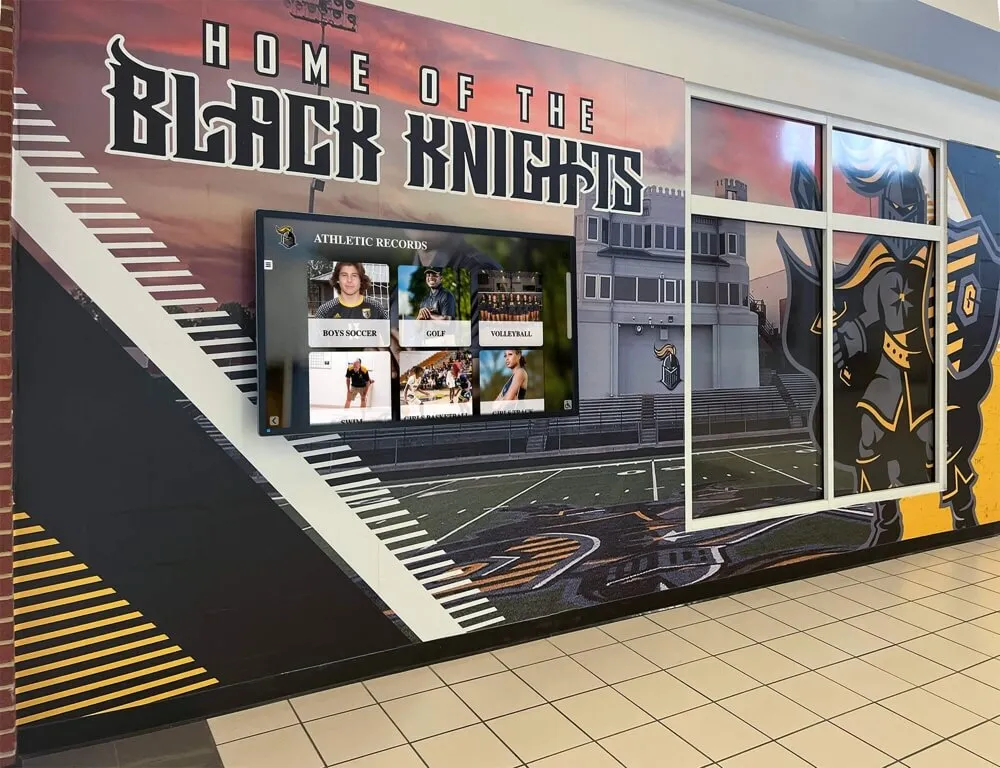
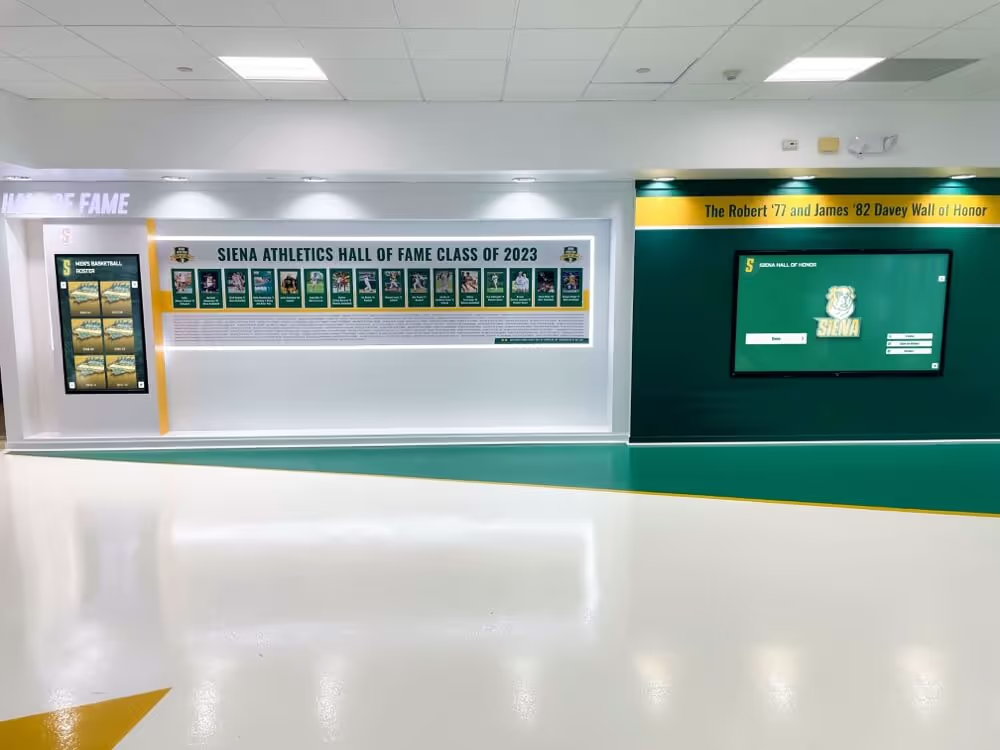
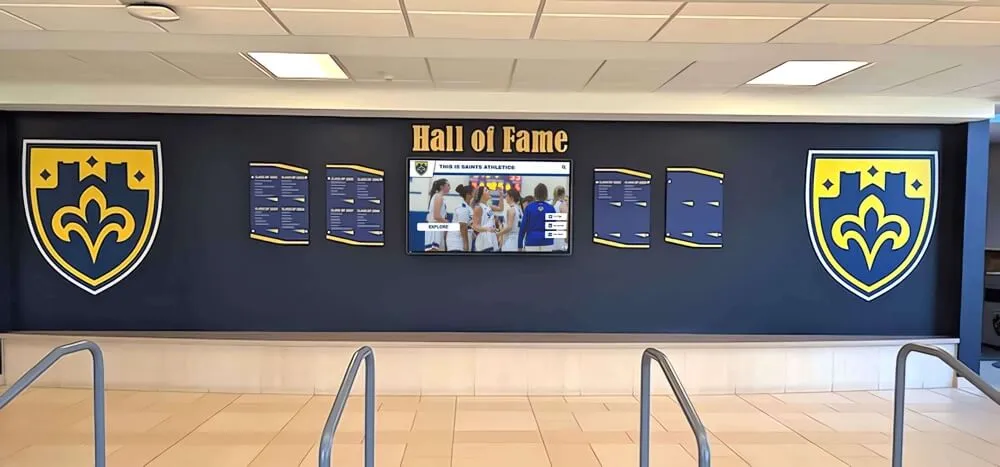
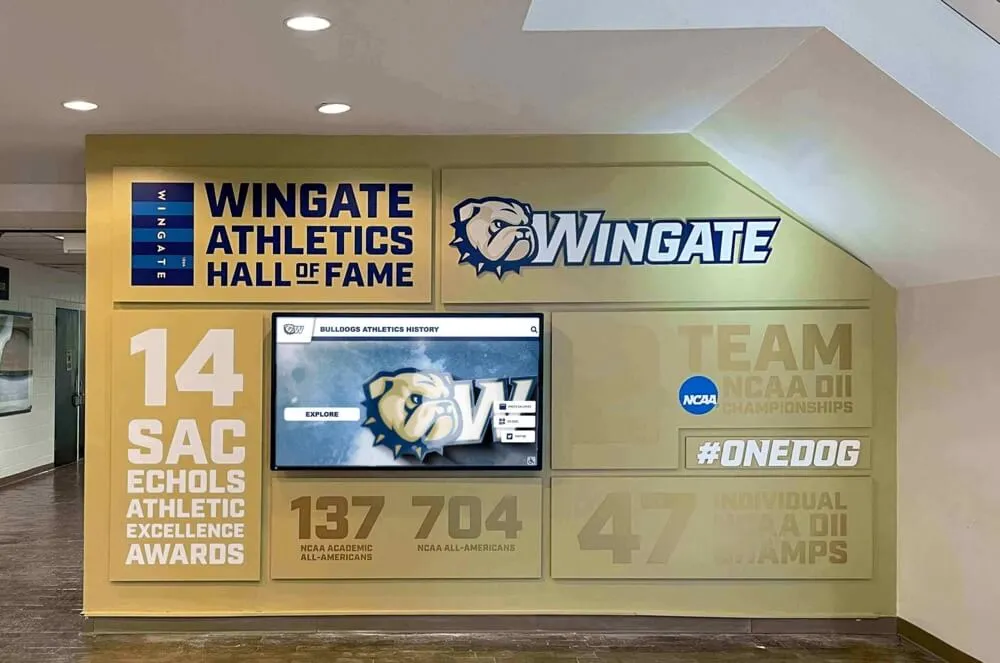
Full digital athletic archives combine touchscreen interactivity with custom environmental murals to create recognition spaces that honor program history at any scale