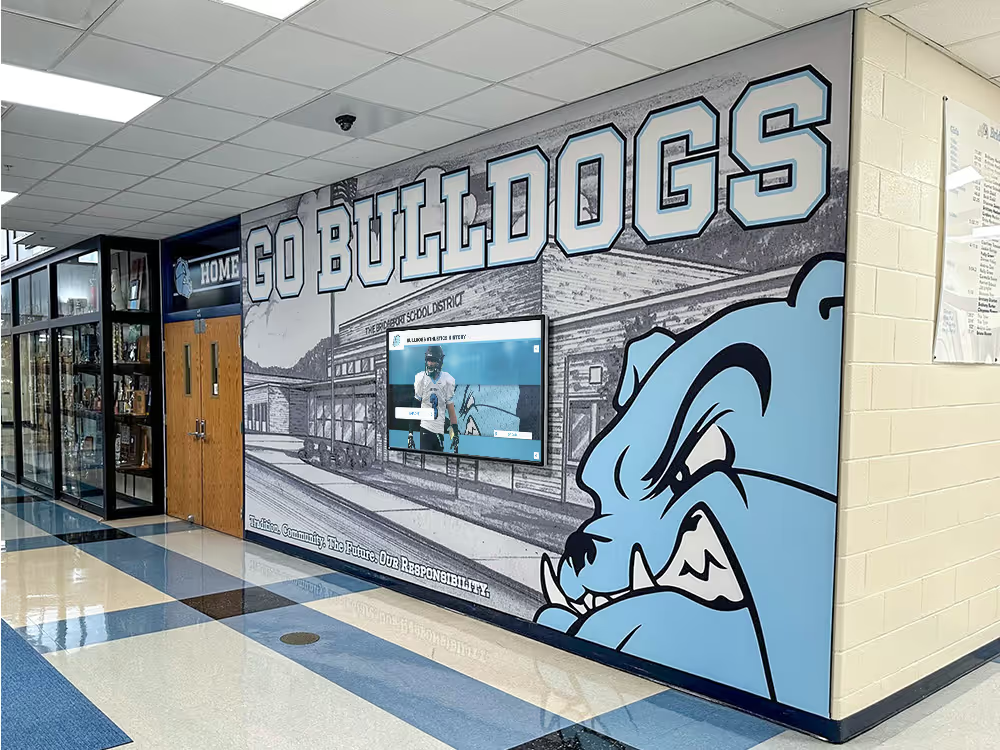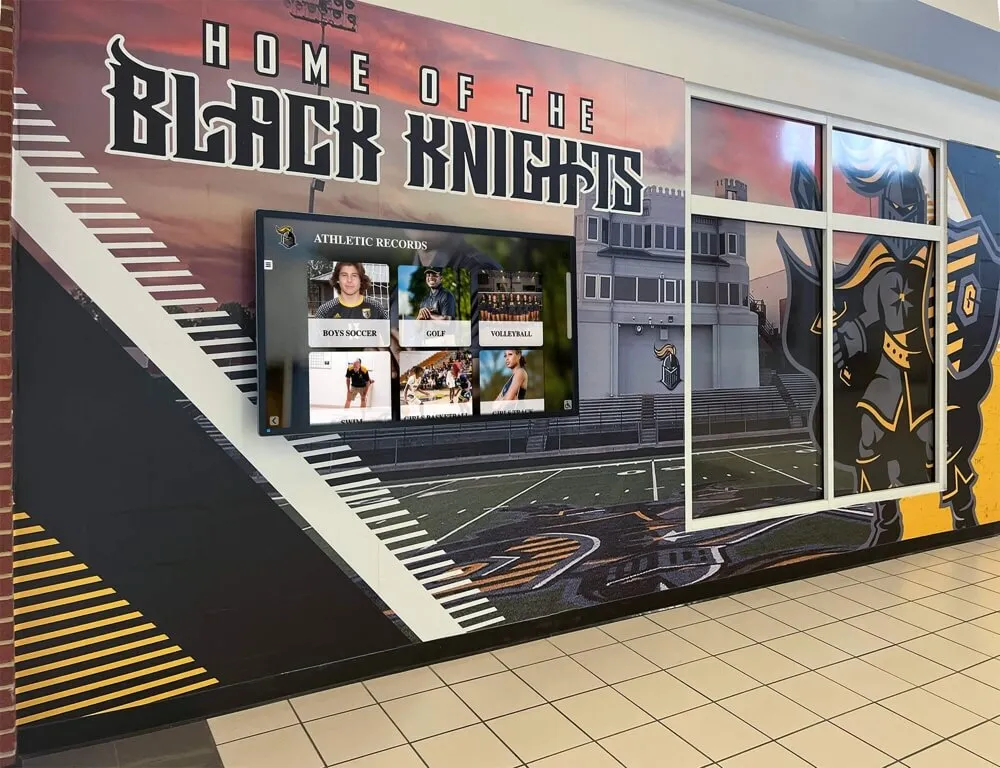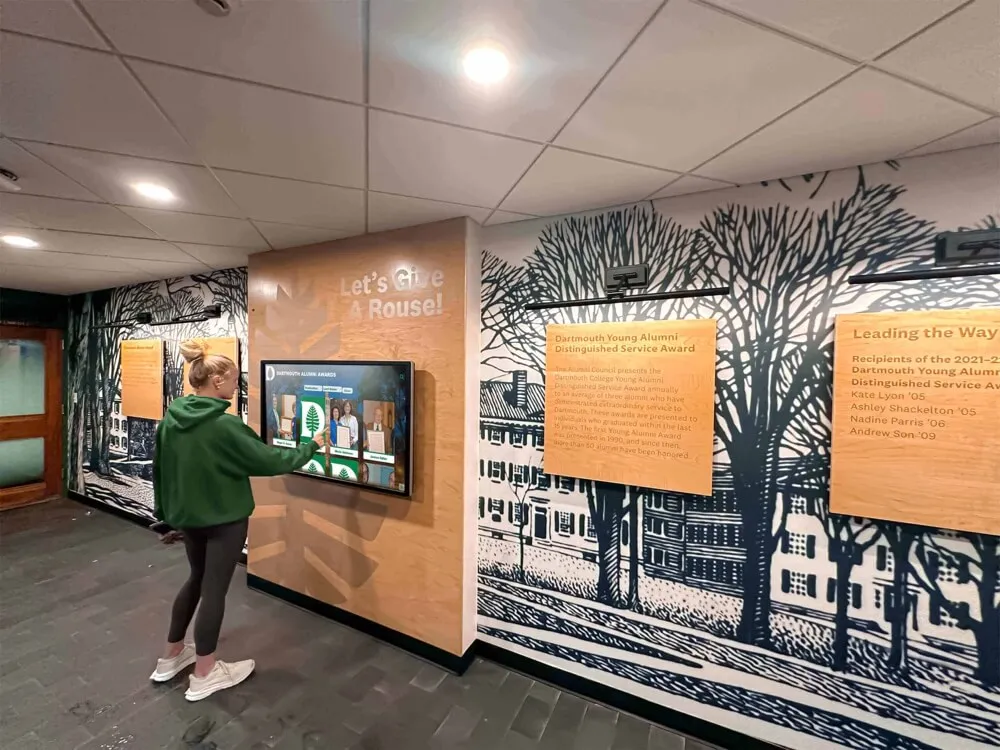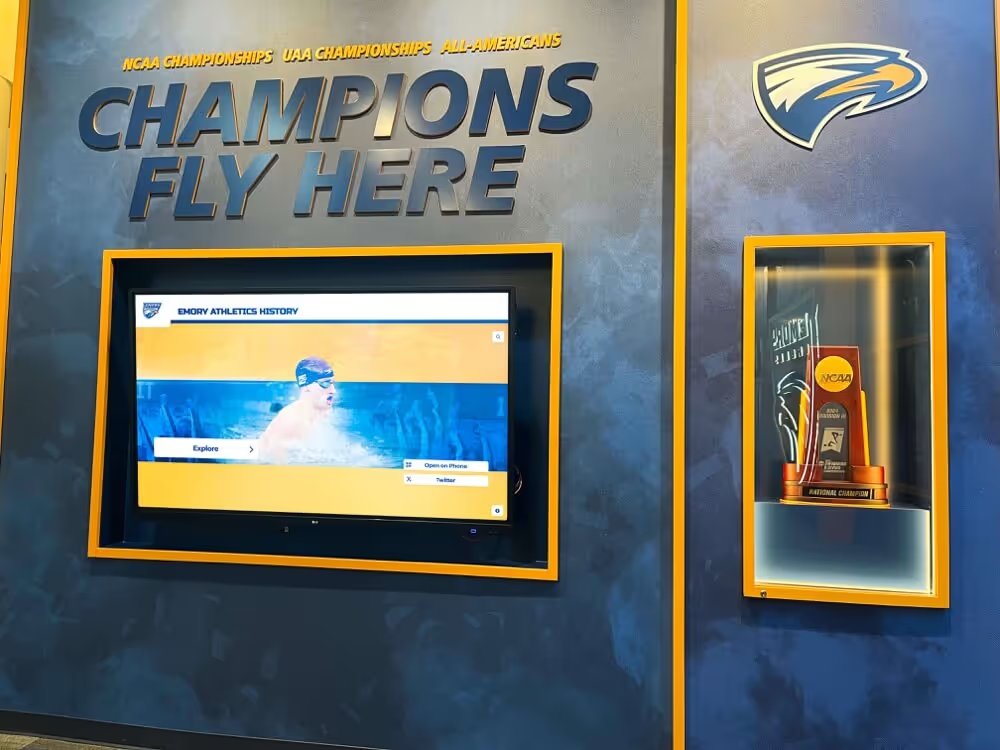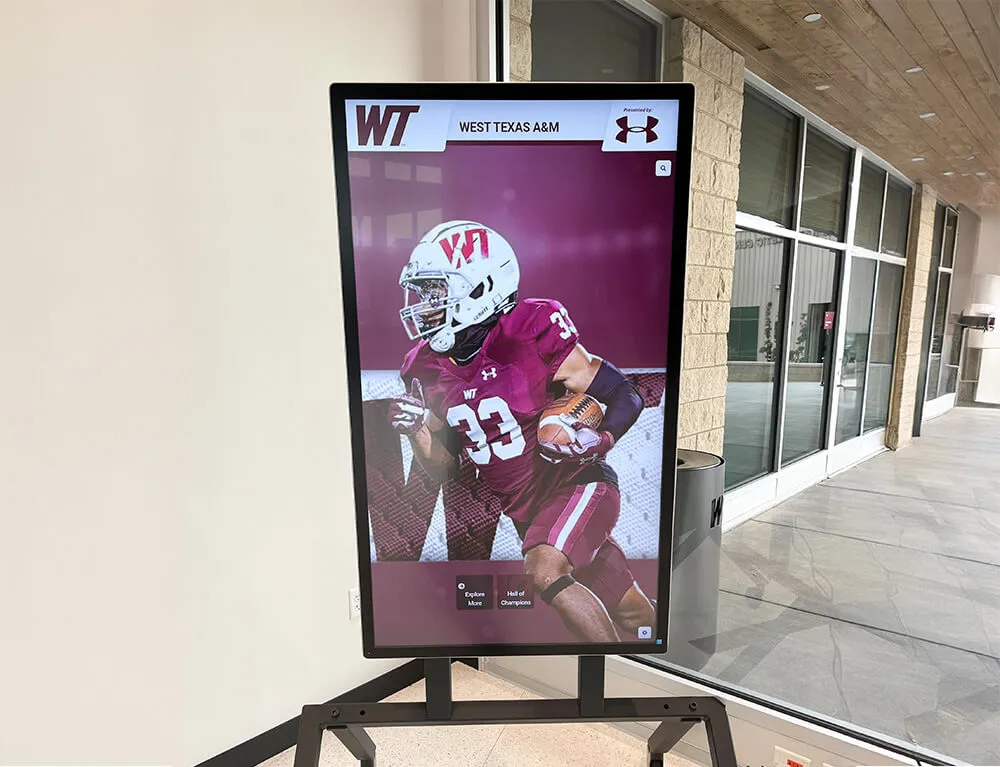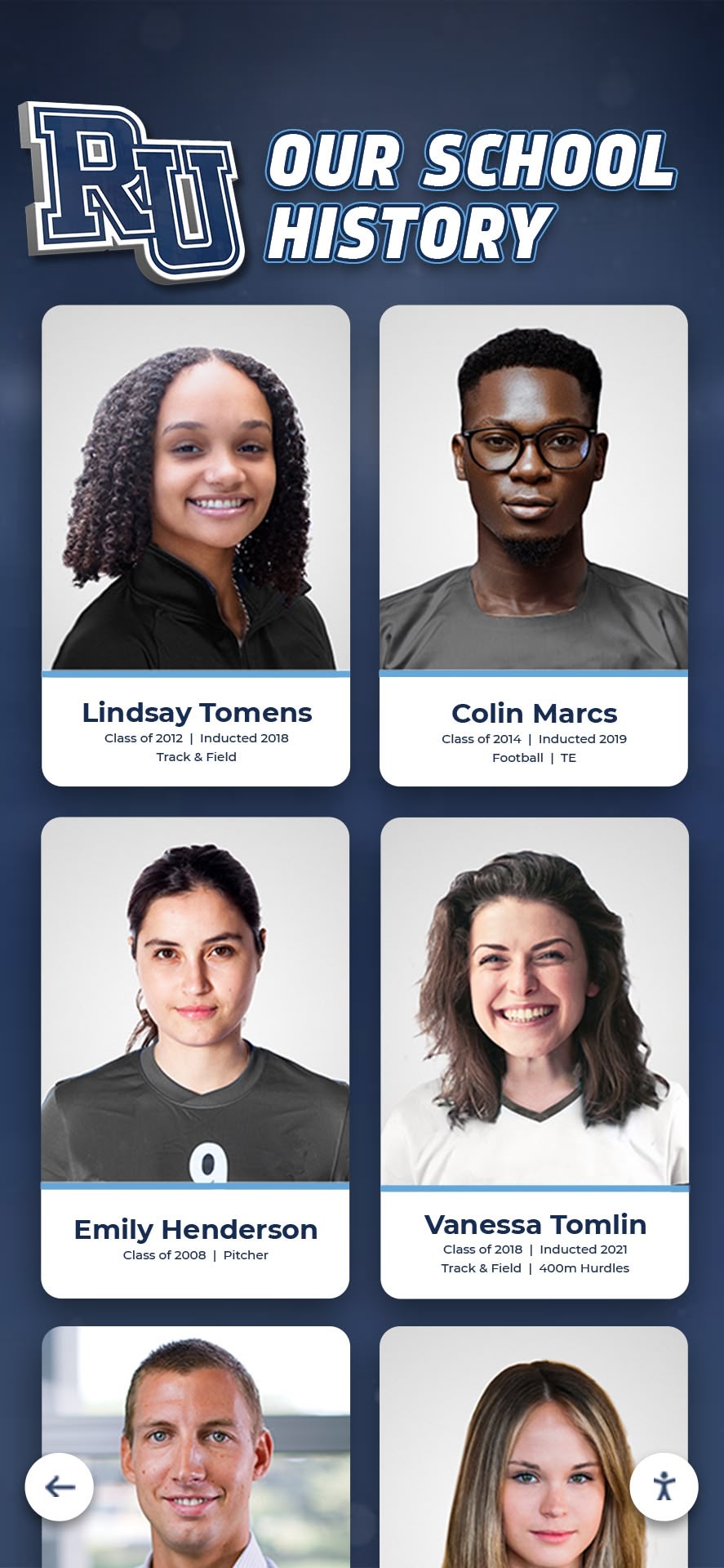




A team alumni database is a structured, searchable record of every former athlete who competed for a school’s athletic programs—capturing contact information, sport, years active, graduating class, notable performances, and post-graduation achievements. Most schools have pieces of this data scattered across coaching files, yearbooks, athletic department spreadsheets, and general alumni office systems, but rarely consolidated into a single source designed specifically for athletic use. When that data stays fragmented, every recognition initiative—hall of fame nominations, digital wall of fame projects, reunion outreach, or fundraising campaigns—starts by rebuilding the historical record from scratch. This guide covers what fields belong in a team alumni database, how to structure it for both recognition and outreach, and how clean alumni data becomes the foundation that makes every subsequent athletic department project faster and more accurate.
Without a purposefully built athletic alumni database, departments end up with disconnected records: a spreadsheet from one coach, a printed roster from another, and a box of photographs that nobody has indexed. Recognition programs built on that kind of data are slower to launch, harder to maintain, and more likely to contain errors that become public embarrassments once they appear on a display wall.

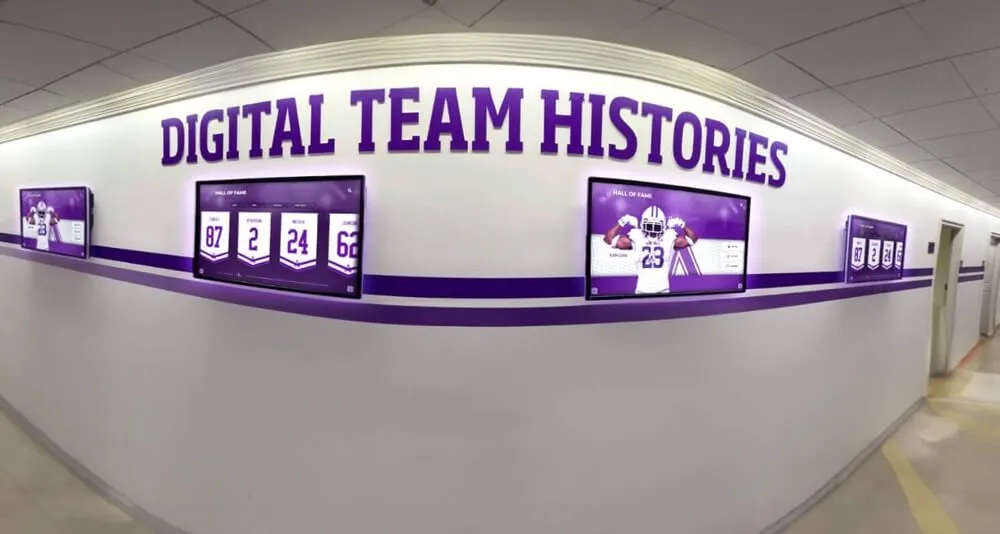
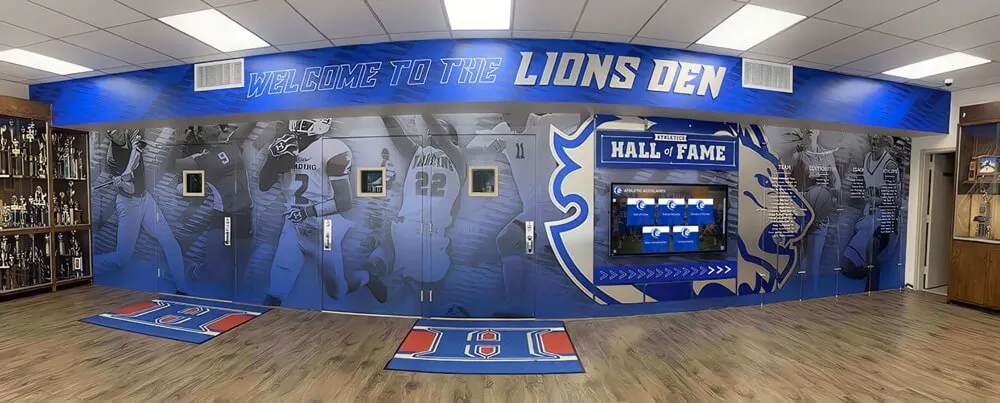
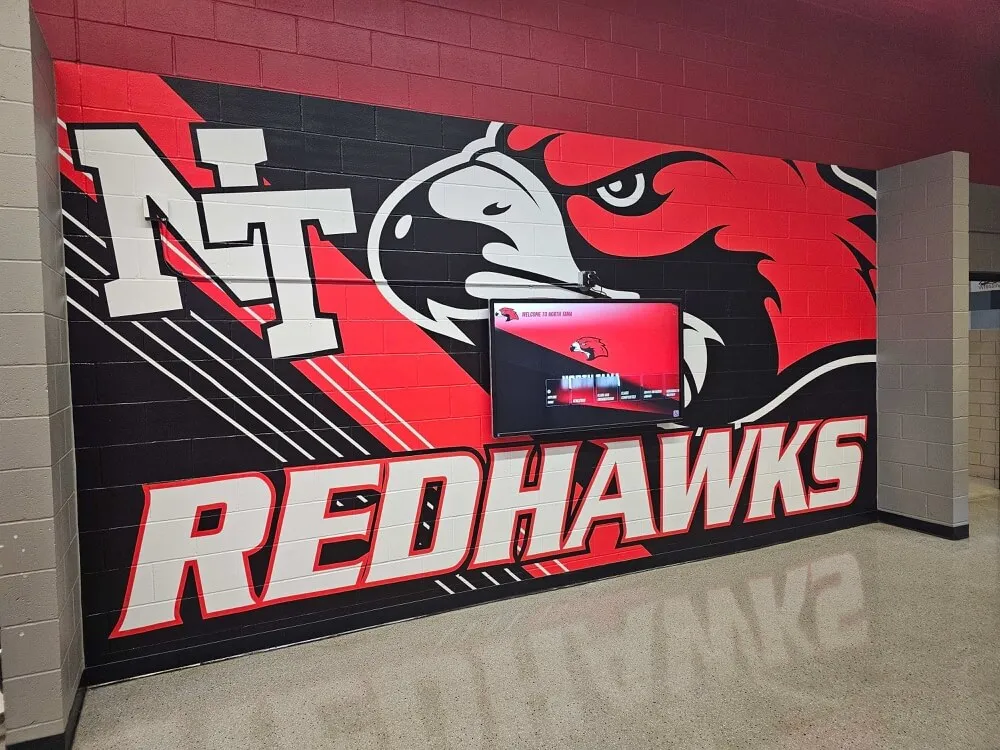
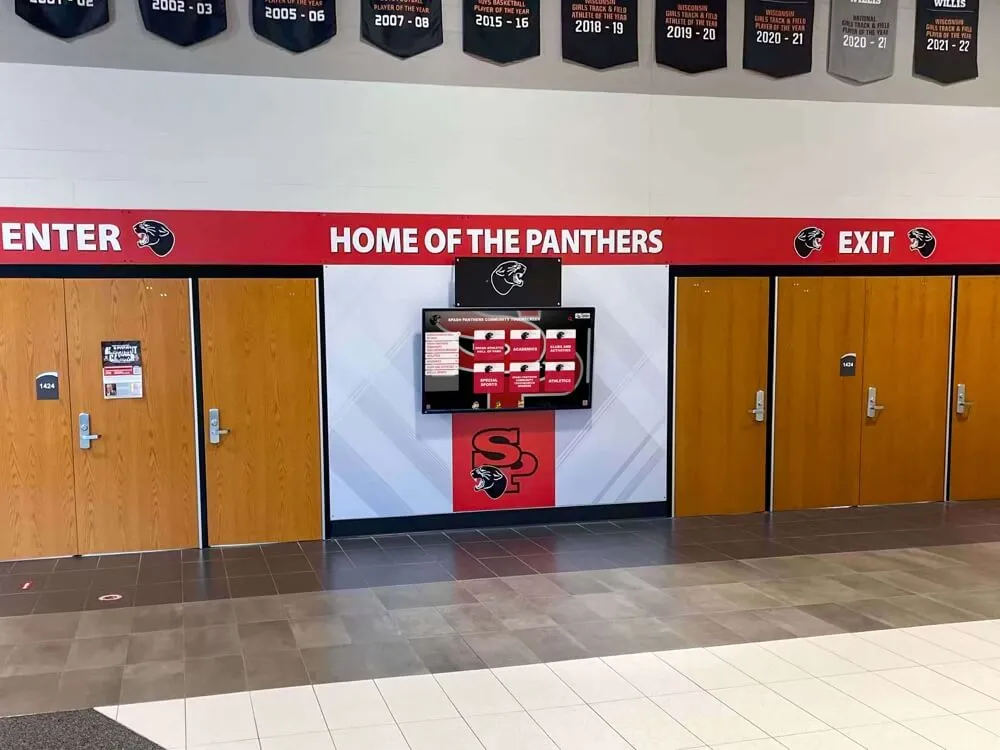
A team alumni database makes organized recognition like this possible—each profile backed by verified records rather than reconstructed from memory
Why Athletic Departments Need Their Own Alumni Database
The institutional alumni office at most schools tracks graduates broadly: contact details, degree earned, giving history, and event attendance. That data is valuable for general development work, but it is not built for athletic use.
When an athletic department searches a general alumni database for hall of fame candidates, it is filtering a broad population for athletic information that was never systematically captured. There is no standard field in most alumni CRMs for “two-sport varsity athlete” or “first-team all-conference, 2019” or “program record holder, 400m hurdles.” That information lives somewhere—in old yearbooks, in coaches’ memories, in local newspaper archives—but it has not been structured into searchable data.
A team alumni database solves that problem by being purpose-built for athletic recognition and outreach. It is not a replacement for the institutional alumni system. It is a specialized layer designed for the athletic department, coaching staff, and alumni relations teams who work specifically in the sports context.
The distinction matters in practice. A school building a searchable athletic hall of fame display with touchscreen navigation needs athletic data—sport history, performance records, honors earned—structured in a way that the general alumni database was never designed to provide. Waiting for the broader alumni office to add those fields is usually not viable, which is why athletic departments that run successful recognition programs tend to build and maintain their own.
Core Fields Every Team Alumni Database Should Capture
A team alumni database is only as useful as it is complete. Inconsistent data—some athletes with full records, others with only a name and sport—creates a system that cannot reliably support hall of fame nominations, digital displays, or targeted outreach. These are the fields worth standardizing from the first entry.
Identity Fields
Full name and alternate names. Capture both the name under which the athlete competed (often a maiden name for female athletes) and their current legal name. Records from decades past typically reference an athlete by the name they used while enrolled, and that name must connect reliably to current contact information.
Graduating class and enrollment years. The academic year of graduation provides the anchor for everything else in the record. Enrollment start year matters for athletes who transferred in or competed across multiple academic years without a standard four-year enrollment.
Sport or sports. Multi-sport athletes are common in high school programs and present at the college level as well. The database should support multiple sport entries per athlete rather than forcing a single primary sport designation that erases part of the athlete’s record.
Athletic History Fields
Years of varsity participation. The specific seasons an athlete competed at the varsity level, distinguished from junior varsity or sub-varsity participation. This affects eligibility calculations for many hall of fame criteria and determines which championship eras an athlete’s record covers.
Position or event. A soccer player’s position, a swimmer’s primary events, a track athlete’s specialty distances. This data enables searches like “all former quarterbacks” or “all former distance runners” that are otherwise impossible without full-text search across unstructured records.
Performance records and honors. Season statistics where maintained, individual records held, all-conference or all-state selections, team captaincies, and any individual awards received during their career. This is the data that hall of fame nomination committees most need and most often have to reconstruct manually because it was never stored in searchable form.
Team championships during their era. Linking an athlete’s record to any team championships that occurred during their years of participation connects individual profiles to broader program history. An athlete who competed on a state championship team has a detail in their record that carries weight for both recognition and for alumni outreach.
Contact and Engagement Fields
Current contact information. Email address, mailing address, and phone number updated as recently as possible. Contact data decays quickly—alumni move, change jobs, change email providers. A database without a contact verification process becomes a historical archive rather than an outreach tool.
Alumni engagement history. Past attendance at alumni events, responses to outreach campaigns, donations made, and any prior recognition received. This data prevents redundant outreach and helps prioritize who is likely to respond to a given campaign type.
Preferred communication channel. Some alumni respond to email; others respond better to physical mail or phone. Capturing stated preferences where possible improves outreach effectiveness and reduces opt-outs over time.
Connecting the Database to Hall of Fame Nominations
A team alumni database serves recognition programs most directly when it connects to the nomination process for an athletic hall of fame. Without clean data, nomination committees spend a disproportionate share of their time verifying basic facts—whether a candidate actually competed in the years claimed, what their performance record was, whether they received the honors cited in the nomination. With a well-structured database, those questions are answered before the committee ever meets.
The practical impact is significant. Committees shift their time from historical research to actual evaluation. Nominators submitting candidates can self-serve by looking up their candidate’s record before completing the form, which reduces incomplete or inaccurate submissions. And the database’s stored records become the authoritative source cited in the official induction biography.
Several fields in the athletic alumni database map directly to common hall of fame eligibility criteria:
- Years since graduation (typically a minimum of five to ten years)
- Varsity participation (typically a minimum of two to three seasons)
- Individual honors received during career
- Team championships during the athlete’s era
- Post-graduation service to the institution or sport
When these fields are captured systematically, filtering for hall of fame candidates becomes a database query rather than a multi-week research project. For programs building or upgrading their hall of fame infrastructure, reviewing the best hall of fame tools for athletics programs helps align the database structure with the software that will eventually display it publicly.
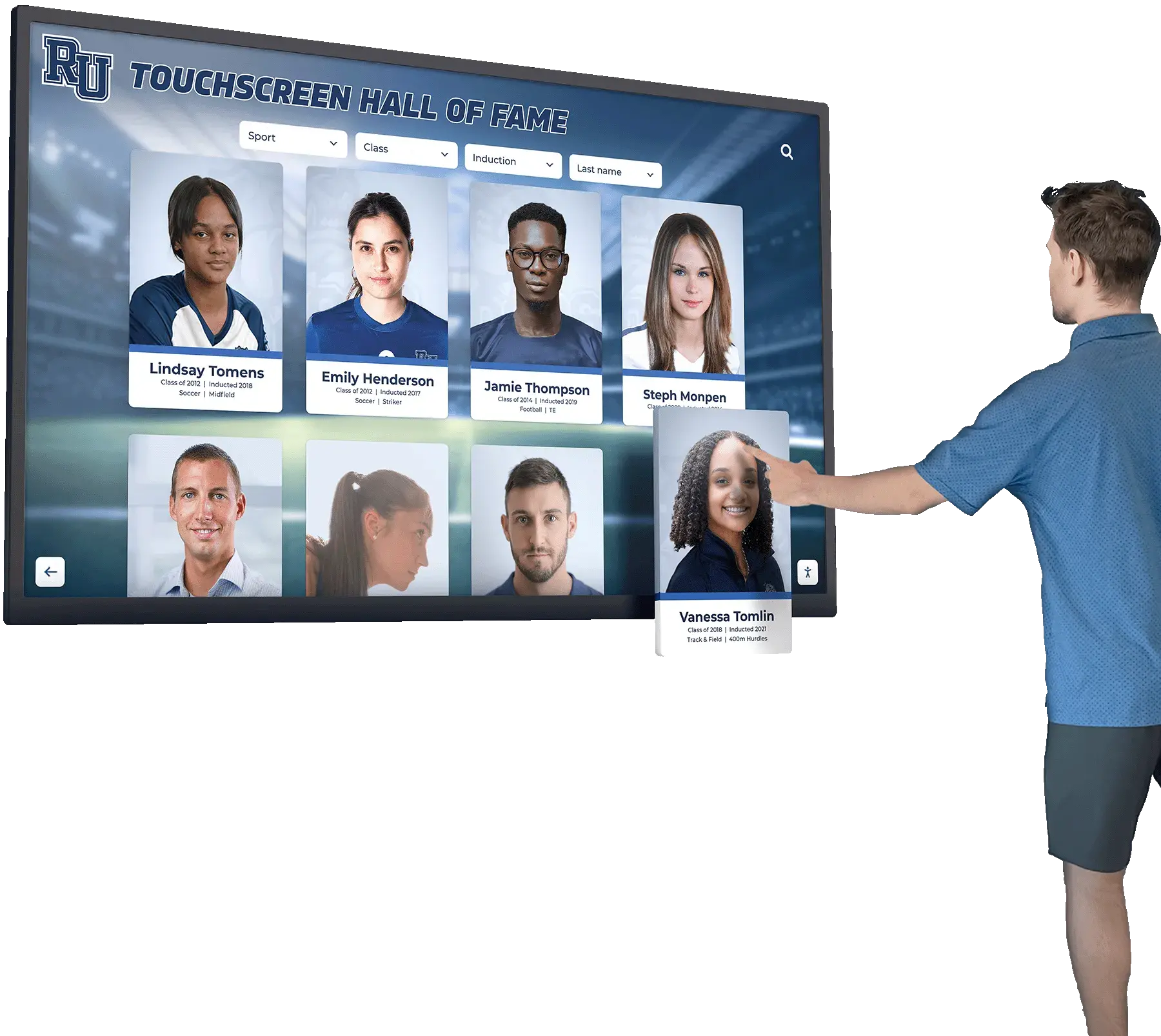
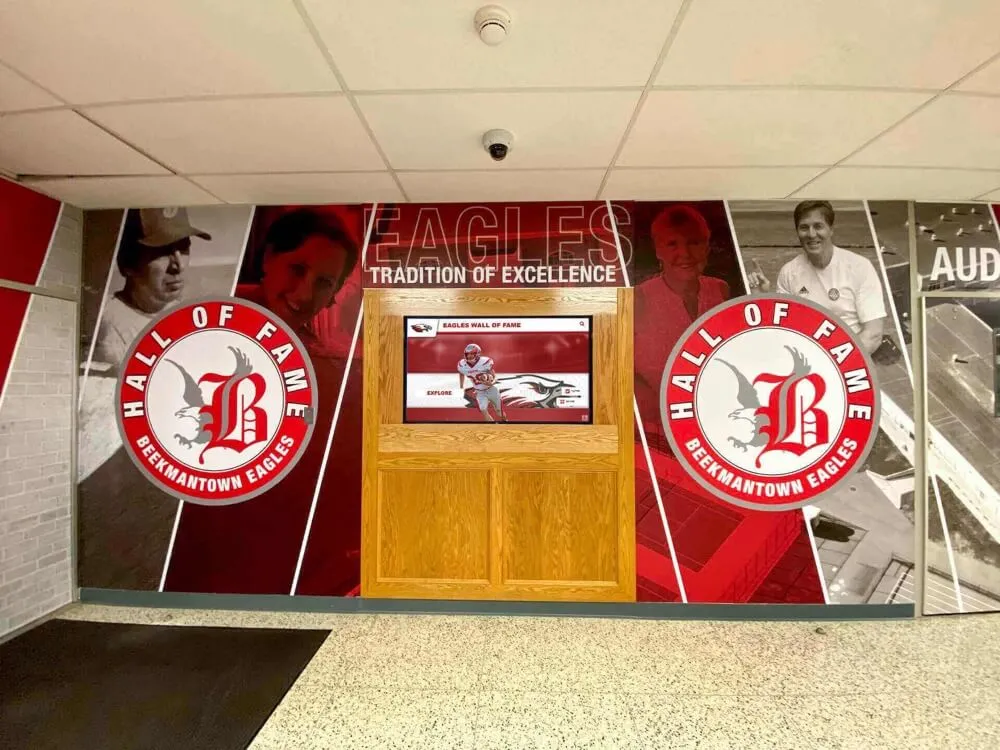
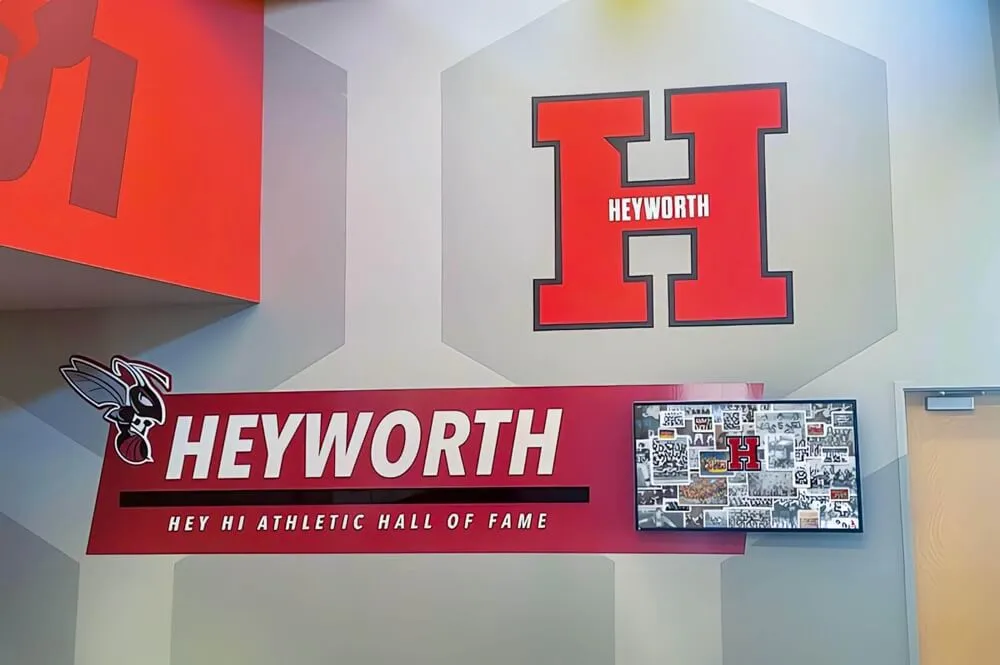
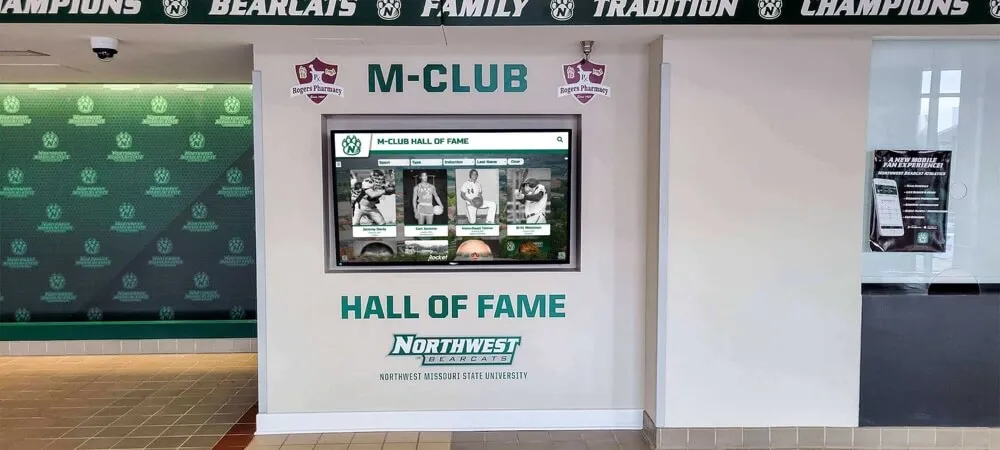
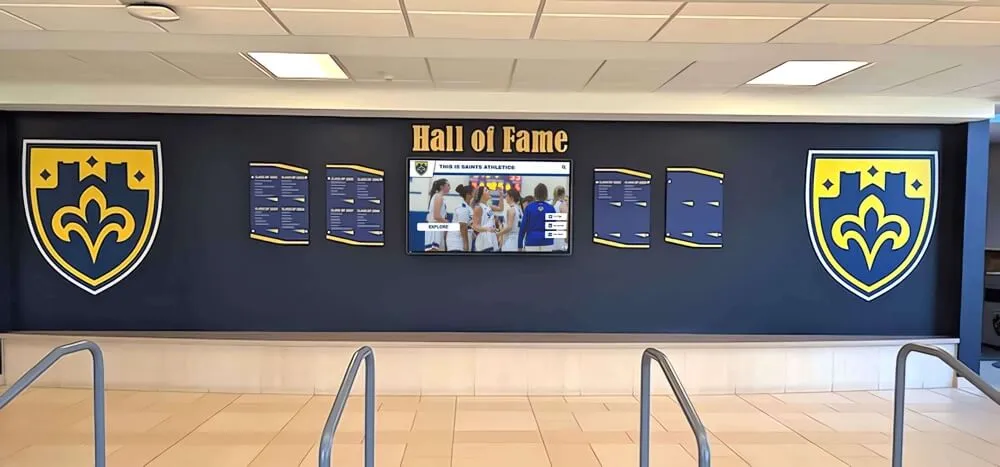
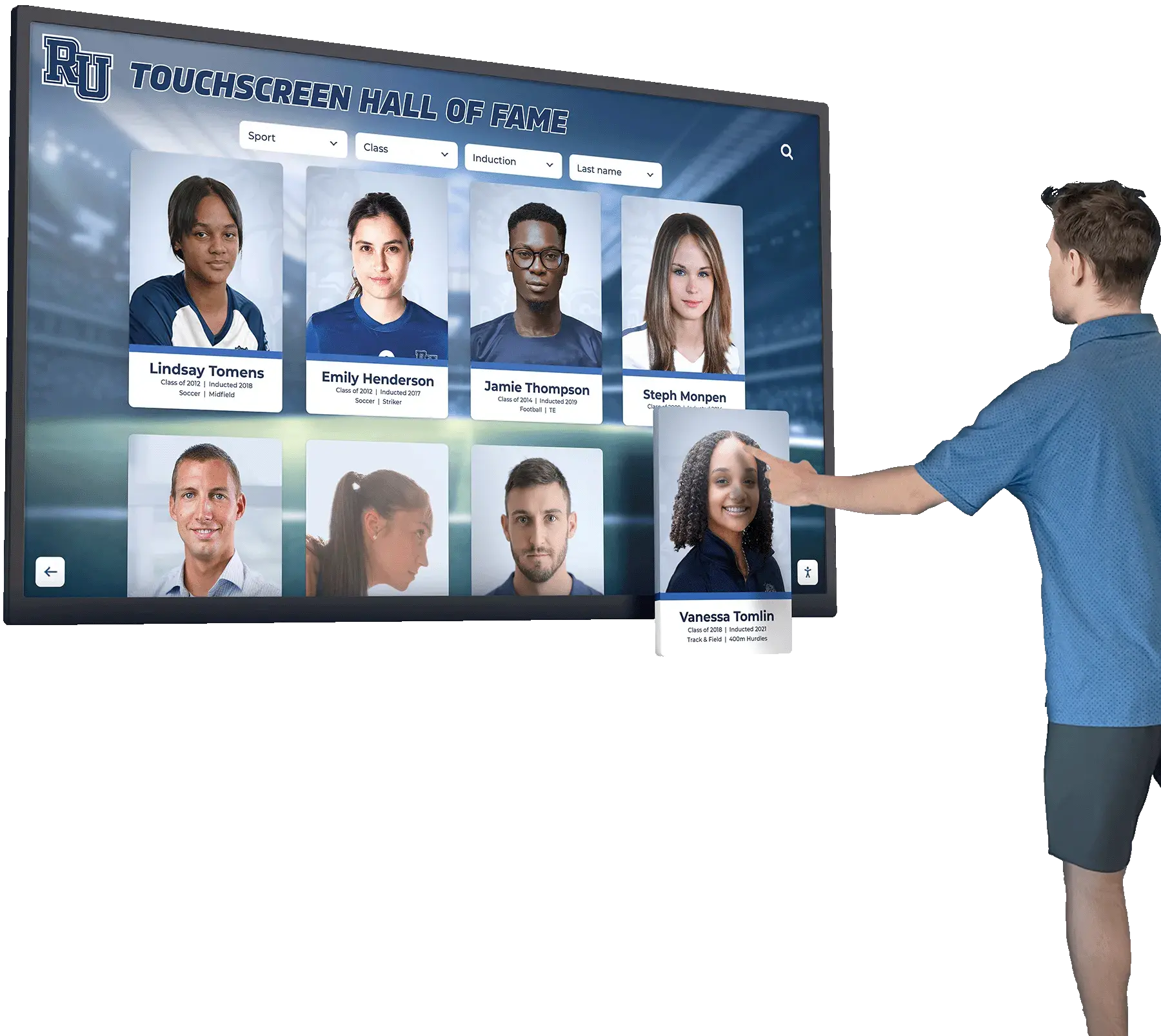
A complete team alumni database feeds searchable touchscreen displays where visitors browse former athletes by sport, year, or honors earned
Alumni Outreach: From Passive Records to Active Engagement
A team alumni database that sits unused after its initial build does not generate recognition value or outreach returns. The database earns its keep when it actively drives campaigns.
Athletic departments use alumni data for several distinct outreach purposes, each with different data requirements:
Hall of fame candidate identification. Annual reviews of the database filtered by years-since-graduation and honor fields surface candidates worth nominating. Departments that run this query annually find they are never scrambling for candidates the way programs that rely on informal suggestions tend to do.
Reunion and homecoming outreach. Class-year and sport filters make it straightforward to build targeted invitation lists for anniversary reunions, championship celebration events, or sport-specific alumni nights. When contact data is clean and current, invitations reach the right people rather than bouncing off stale addresses. Resources covering alumni event planning for athletic programs outline how schools structure events around former athlete engagement, which in turn informs which database segments to activate for each occasion.
Fundraising and donor cultivation. Former athletes who competed on championship teams, who held records, or who received individual recognition during their careers are natural candidates for programmatic giving campaigns tied to those achievements. A database with employment and location fields surfaces donor cultivation opportunities that a general alumni system rarely makes visible.
Reunion milestone programming. For high school programs planning multi-year reunion cycles, reunion planning traditions and timelines show how milestone structures can align with athletic recognition calendars—so the ten-year reunion becomes an occasion to announce new hall of fame inductees from that graduating class.
Recognition milestone announcements. When a former athlete is inducted into the hall of fame, achieves a community honor, or reaches a career milestone, the school has a reason to reach out and share the announcement with teammates from that era. That kind of coordinated outreach builds alumni engagement between annual events rather than being concentrated entirely around homecoming week.
How the Database Feeds Digital Recognition Displays
A team alumni database and a digital hall of fame display are most effective when they are connected rather than maintained in parallel. When the database is the authoritative source and the display reads from it, updates happen once and appear everywhere. When they are maintained separately, the display drifts from the authoritative record and staff end up doing the same data entry twice.
Modern touchscreen hall of fame displays—including cloud-based platforms like Rocket Alumni Solutions—connect to alumni records and display searchable, filterable profiles across any screen size. Features like ADA WCAG 2.1 AA compliance, QR code mobile access, and unlimited inductee profiles mean that a database built to include every varsity athlete across every year of a program’s history can be fully displayed and navigated, not truncated to fit a physical wall constraint.
For schools exploring what digital hall of fame display tools can do with structured alumni data, the connection between data source and display output has direct budget implications. A display system that imports from a structured database requires significantly less manual entry per inductee than one that requires staff to re-enter data already captured elsewhere.
When alumni return to campus for homecoming or a reunion, a touchscreen display in the athletic lobby that surfaces their own profile—their sport, their years, their teammates, their records—delivers recognition value that a static plaque wall cannot match. That experience starts with accurate, searchable data in the underlying database.
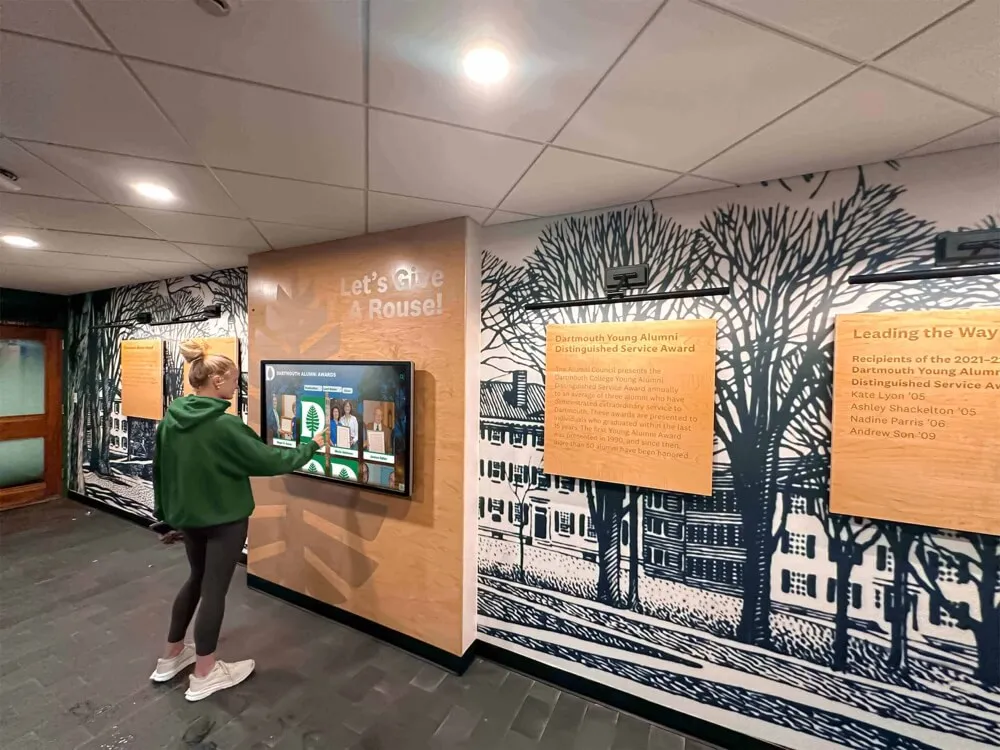
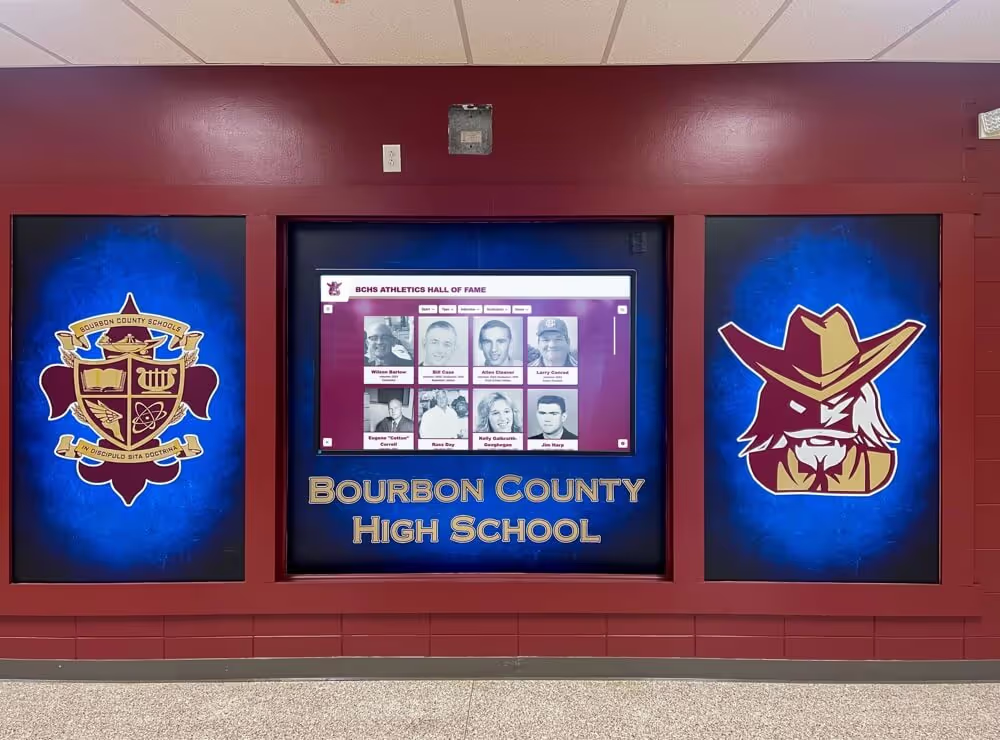
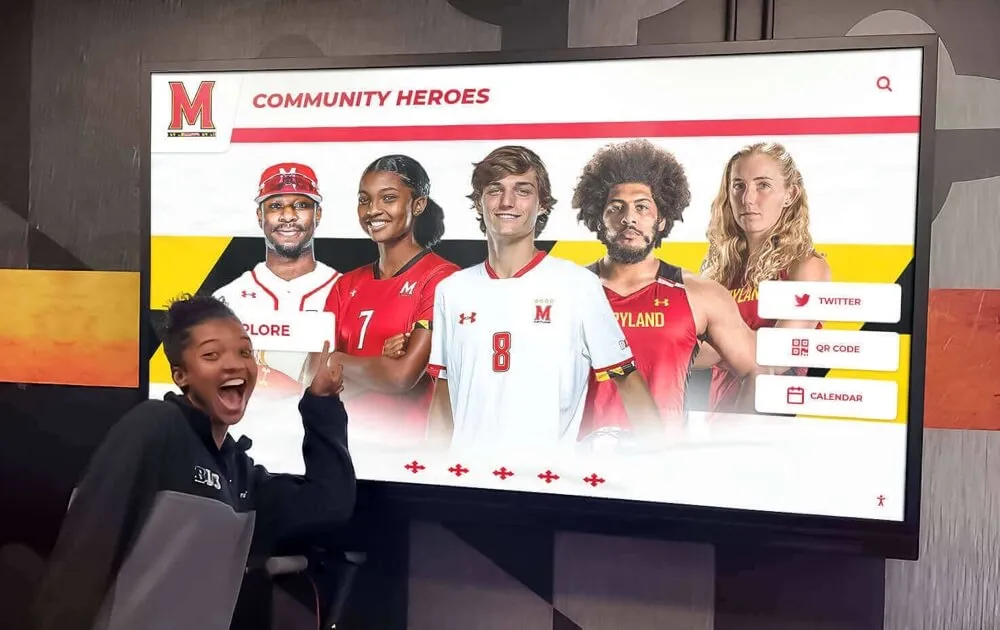
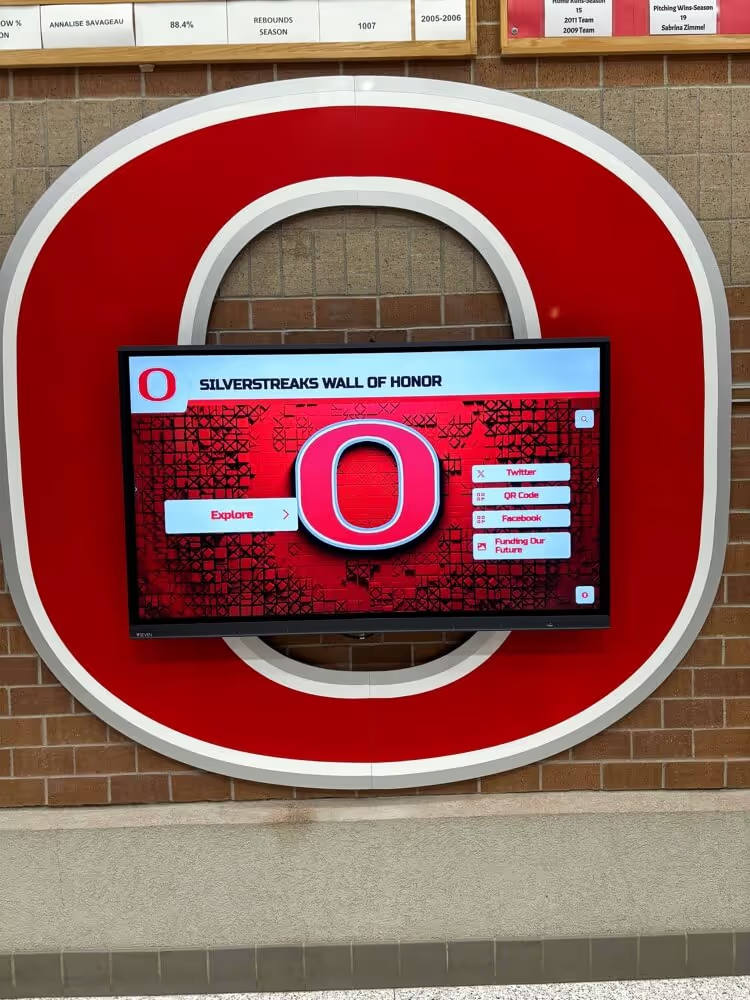
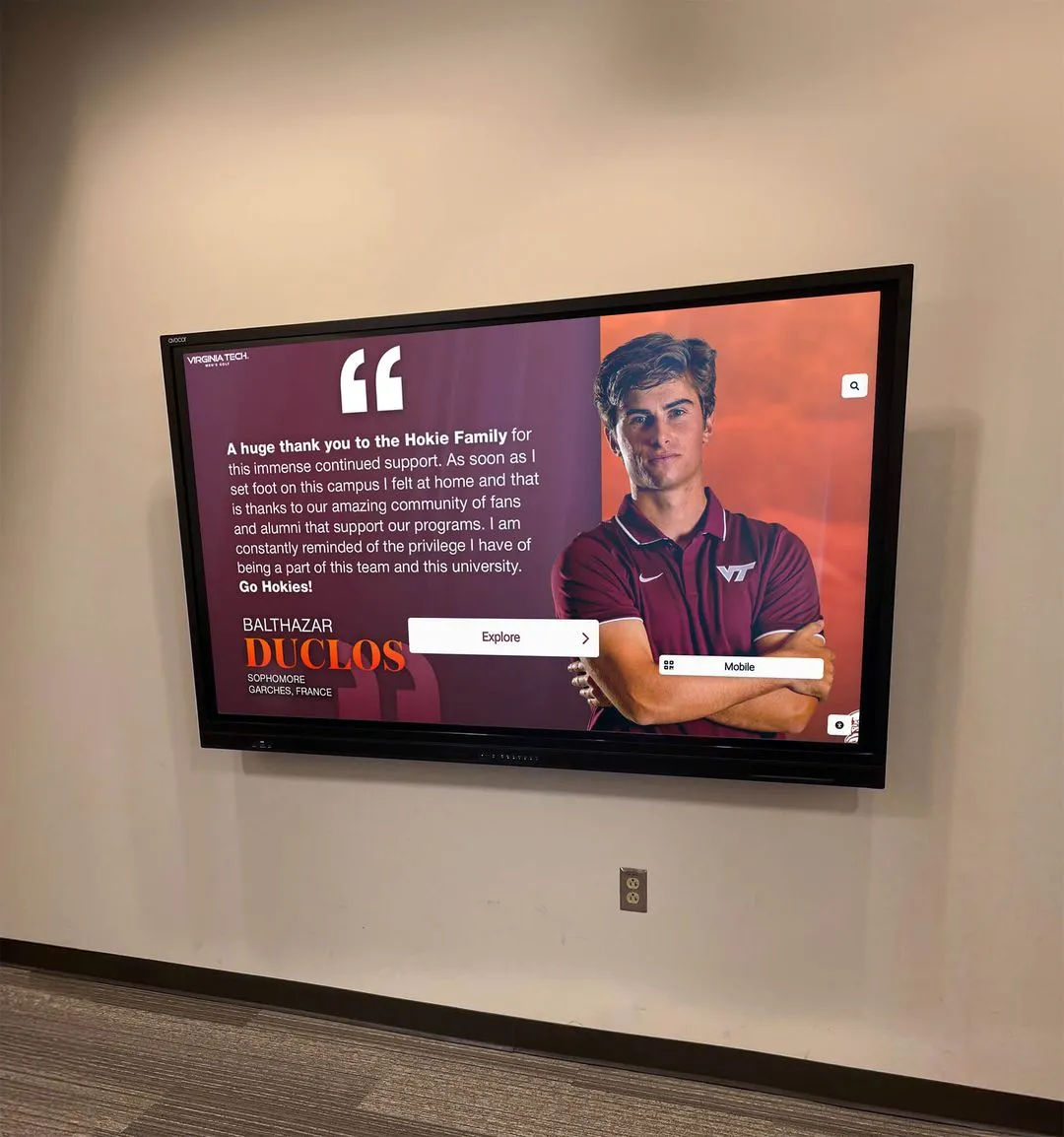
Alumni who return for events engage more deeply with recognition displays when the profiles they find reflect accurate, complete records built from a maintained database
For programs evaluating platform options, reviewing hall of fame software tools and their capabilities helps identify which systems can ingest an existing alumni database structure versus which require rebuilding the record inside a proprietary format from scratch.
Structuring the Database for Long-Term Maintenance
A team alumni database built entirely on one staff member’s institutional knowledge creates a succession risk. When that person leaves, the implicit knowledge of where records are stored, how fields were defined, and why certain decisions were made leaves with them. Databases built on documented structure and shared access sustain themselves through staff transitions.
Several practices reduce succession risk:
Define field values at the schema level. Sport names, honor categories, classification designations, and other controlled vocabularies should be defined once and enforced consistently. Free-text fields for anything that will later be filtered or searched create inconsistency that compounds over time—“basketball,” “Basketball,” “M. Basketball,” and “Boys Basketball” are all the same sport to a human reader and four separate values to a database filter.
Document the data sources for historical records. When a record was reconstructed from a yearbook, a newspaper archive, or a conversation with a retired coach, note the source in the record. This makes future verification possible and surfaces records that may be less reliable than those sourced from official program documentation.
Schedule contact verification cycles. Alumni contact information needs periodic validation. An annual review for email bounces and address changes keeps the database functional for outreach without requiring a dedicated staff position for ongoing data hygiene.
Connect the database to the awards and recognition workflow. When a new athlete is inducted, when a record is broken, or when an alumni honor is received, the database should be updated as part of that workflow rather than as a separate downstream task. Recognition events that trigger database updates keep the record current without relying on staff to remember parallel processes.
Awards Recognition and the Alumni Database
The team alumni database also functions as a historical record for formal awards programs. When a school presents a distinguished alumni award, an athletic leadership honor, or a sport-specific recognition, the nomination and selection histories can be stored alongside inductee records. Over time, this creates a layered recognition history—who won what, when, under what criteria—that informs future award structures and prevents duplication.
For programs building out their awards infrastructure, reviewing youth sports awards ideas and recognition frameworks and award category structures for athletics programs provides a range of approaches that can be documented in the database alongside the alumni records they recognize. Award categories with consistent database fields become trackable over time rather than requiring staff to manually search past program notes each nomination cycle.
The best hall of fame tools for athletic recognition typically connect nomination records, selection histories, and inductee profiles in a single interface—reducing the number of separate systems staff must maintain and eliminating the data re-entry that happens when systems do not talk to each other.
Getting Started with a Team Alumni Database
For athletic departments that do not yet have a dedicated database, the practical starting point is an audit of what data already exists and where it lives. Most programs have:
- Printed or digital rosters by sport and season stored in the athletic office
- Yearbook records going back decades, often digitized through the school library or local historical society
- Newspaper archives covering local games, individual honors, and championship seasons
- Hall of fame nomination records from past induction cycles
- A general alumni database maintained by the advancement office
None of these sources alone is sufficient. Together, with a structured import process and a defined field schema, they can populate an initial database that covers most varsity athletes across most years of a program’s history. The gaps that remain after that initial population—athletes who cannot be located in any surviving record—are a much smaller and more targeted problem than the all-gaps situation that exists before the work begins.
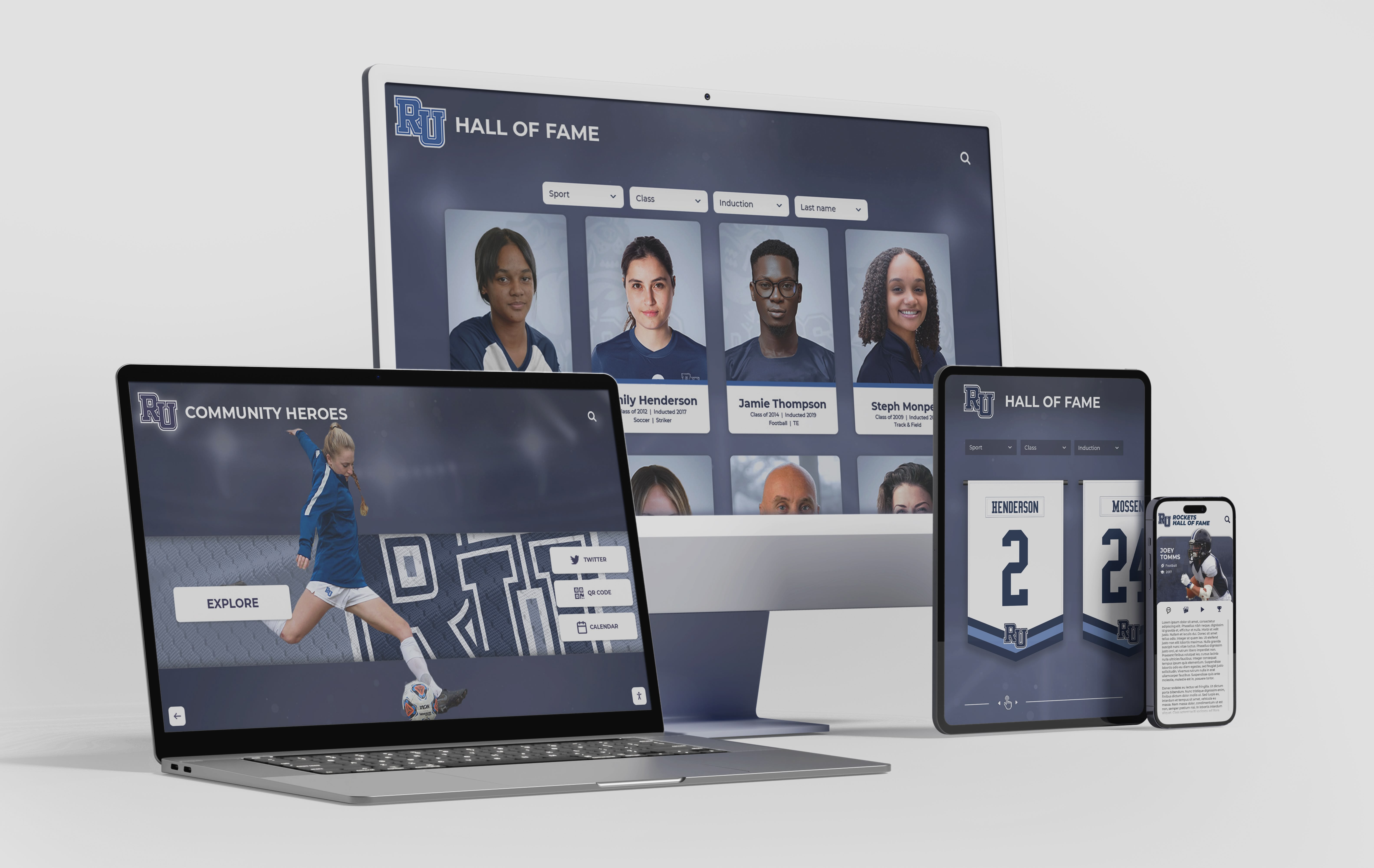
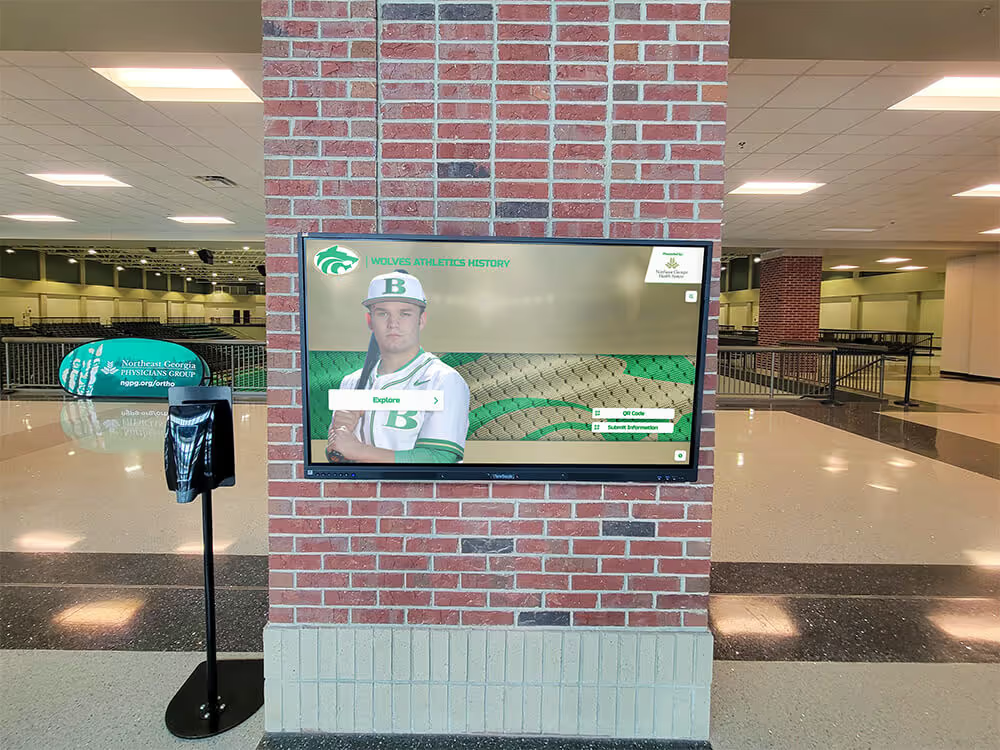
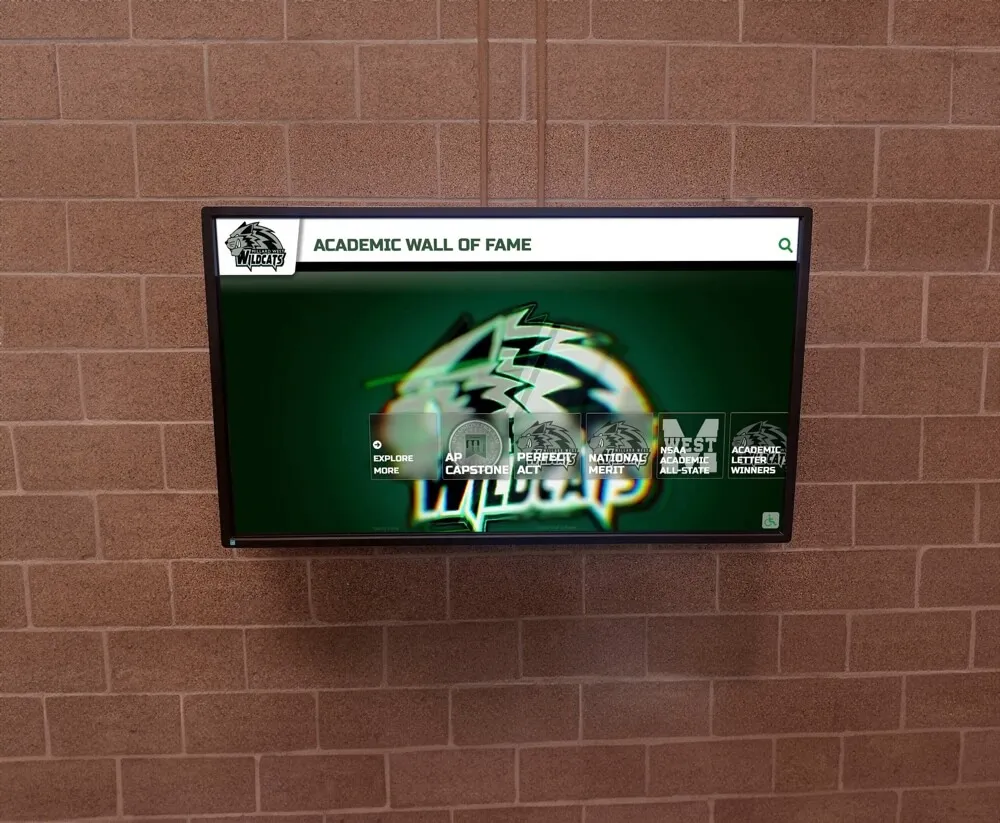
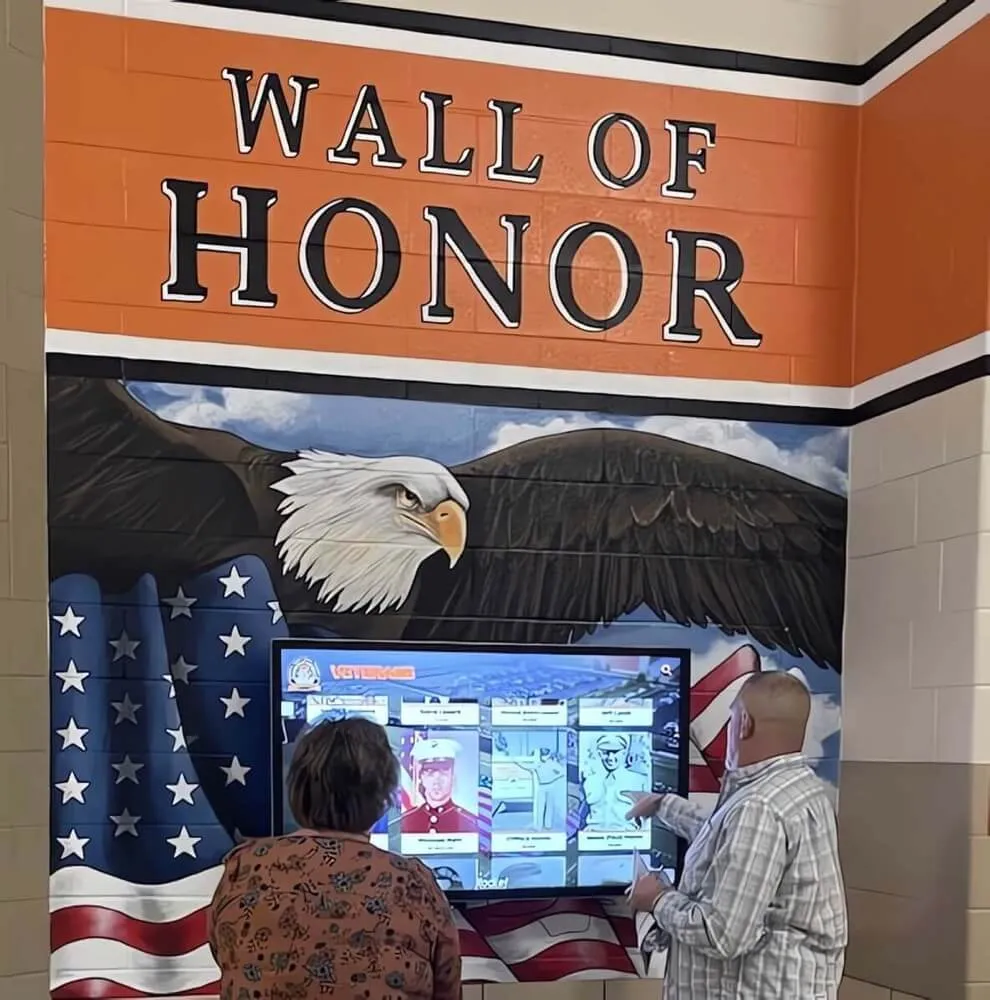
Alumni databases that power online and touchscreen displays need data structured for search and filtering across devices—not just organized storage
Frequently Asked Questions
What is the difference between a team alumni database and a general alumni database? A general alumni database tracks all graduates of an institution, organized primarily by academic class, degree, and giving history. A team alumni database is organized specifically around athletic participation—sport, years competed, performance records, and honors earned. The athletic database may share contact information with the general alumni system, but its structure and primary use cases are different enough that they are typically maintained separately.
How far back should a team alumni database go? As far back as reliable records exist, with documentation of what data is complete for which eras. Programs should note the reliability of records by time period so that users understand which fields are consistently populated for which years and which are reconstructed from secondary sources.
Who should own and maintain the team alumni database? Ownership typically sits with the athletic director or a dedicated alumni relations coordinator within the athletic department. Maintenance responsibilities are usually distributed—coaching staff responsible for in-season athlete records, administrative staff responsible for contact verification and recognition milestone updates.
Can a team alumni database integrate with a digital hall of fame display? Yes, when the database is structured for export and the display platform supports import. Cloud-based platforms like Rocket Alumni Solutions support unlimited inductee profiles with ADA WCAG 2.1 AA compliant display across any screen size, and can import structured athlete records rather than requiring manual re-entry. Auto-ranking record boards and remote cloud CMS access allow staff to update records once and have changes reflect immediately across all display points.
Building a team alumni database is not a recognition project in itself—it is the infrastructure that makes every recognition project faster, more accurate, and more impactful. When an athletic department can answer “who competed for us, in what sport, in what years, and what did they achieve” with a database query rather than a multi-week research project, the programs they build on top of that data—hall of fame displays, outreach campaigns, digital recognition walls, fundraising appeals—become sustainable annual programs rather than heroic one-time efforts.
See How Rocket Alumni Solutions Connects Alumni Records to Recognition Displays
Rocket Alumni Solutions powers ADA WCAG 2.1 AA compliant touchscreen hall of fame displays and digital recognition walls for schools and athletic programs nationwide. The platform supports unlimited inductee profiles, auto-ranking record boards, QR code mobile access, remote cloud CMS, sponsorship revenue features, and professional installation services—all connected to a searchable alumni recognition system that eliminates the need to rebuild historical records for every new project.