



Every year, tens of thousands of high school students earn one of the most meaningful distinctions a theater program can confer: induction into the thespian society, formally known as the International Thespian Society (ITS). Founded in 1929 at Jackson High School in Miami, Florida, by drama educator Paul Oetken and a founding group of theater-dedicated students and faculty, the ITS is the oldest and largest honor society dedicated exclusively to recognizing excellence in school theater. Today it operates as a division of the Educational Theatre Association (EdTA) and serves active troupes in middle and high schools across the United States and internationally.
What sets the thespian society apart from other academic honor societies is its breadth of recognition. Membership is not reserved for students who land leading roles. The ITS honors every form of theatrical contribution — acting, directing, stage management, lighting and sound design, scenic construction, costuming, makeup, and production management — treating the full ensemble of theater-makers with equal institutional respect.
For schools that take their theater programs seriously, this means the thespian society is not just a line on a college application. It is a formal public statement that the school values the performing arts as a discipline worthy of the same recognition infrastructure it extends to athletic achievement, academic decathlon, and every other form of documented excellence. This guide covers how the International Thespian Society works, what induction ceremonies look like, what stoles and regalia mean, and how schools are using digital wall-of-fame displays to preserve theater achievement for generations.
Whether you are a drama director building a new troupe, a school administrator curious about arts recognition programs, or a student approaching induction night, this resource answers the most important questions about the thespian society and what membership genuinely represents.

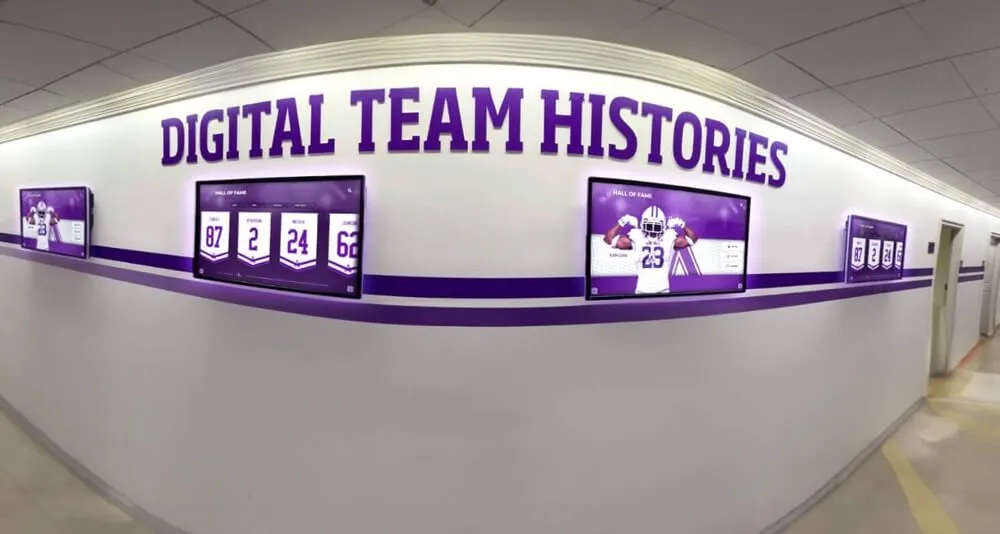
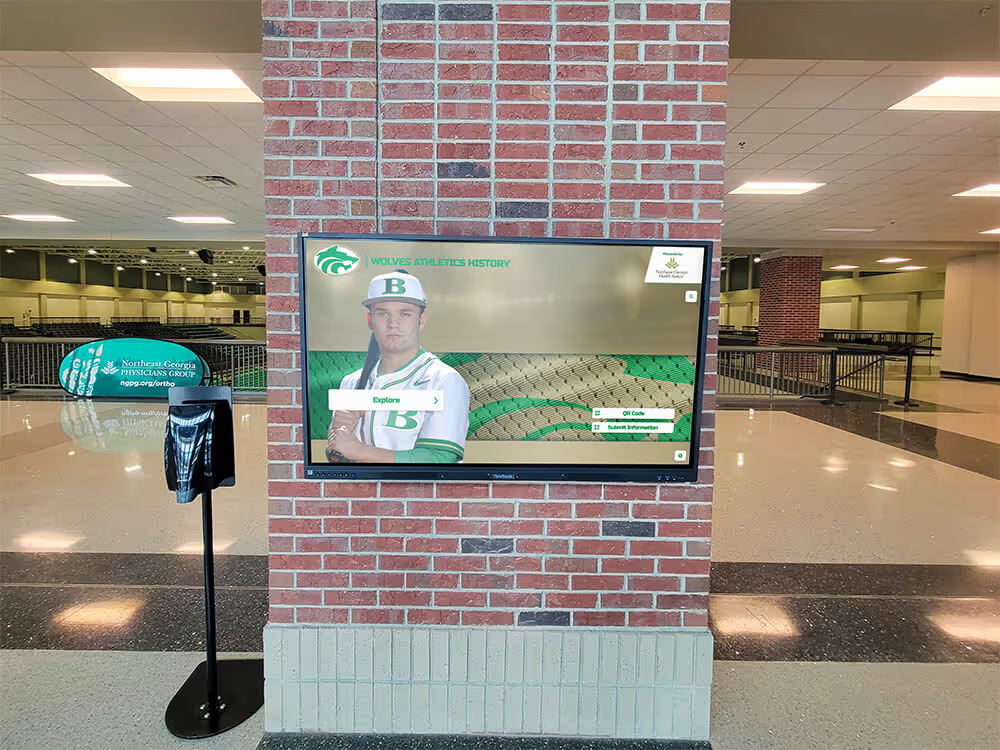
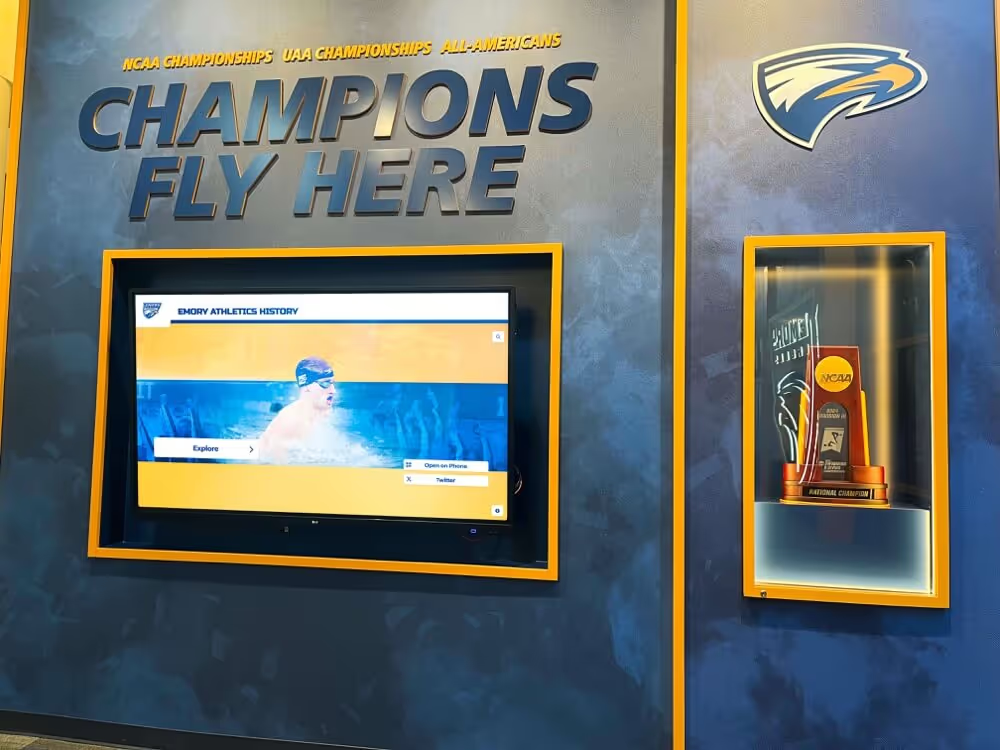
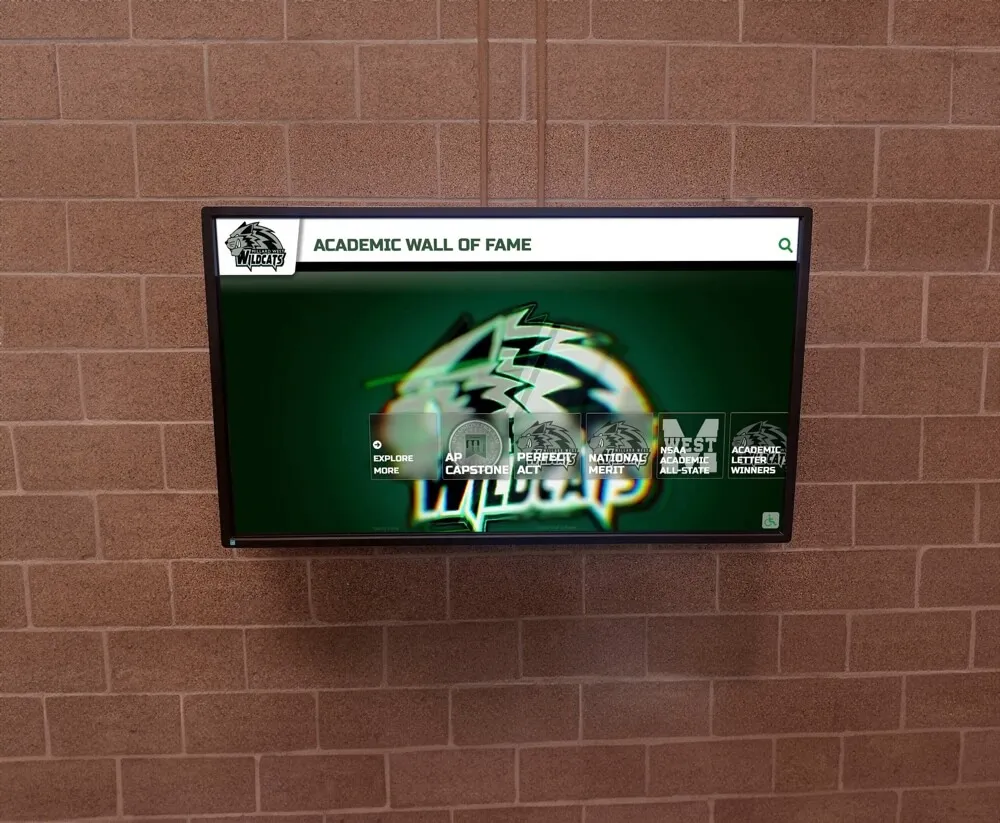
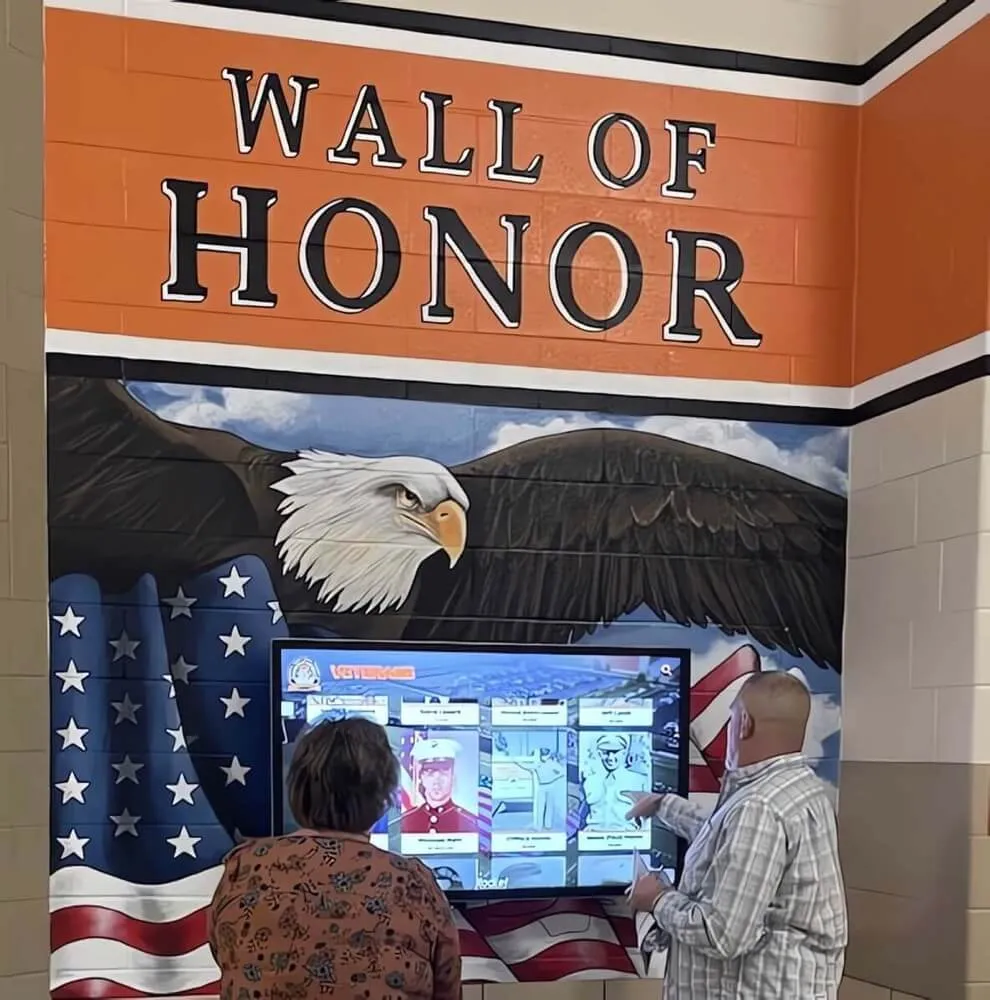
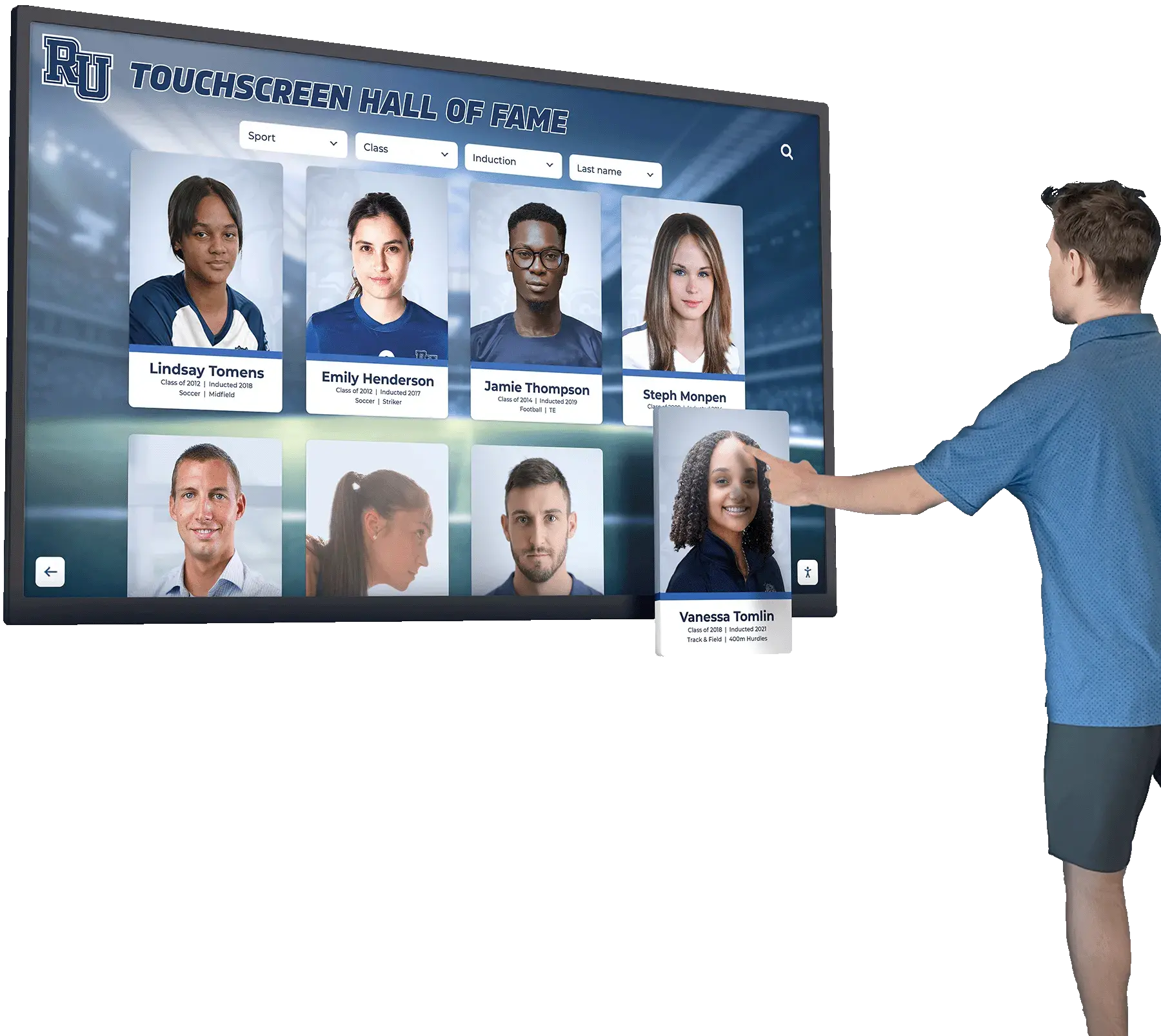
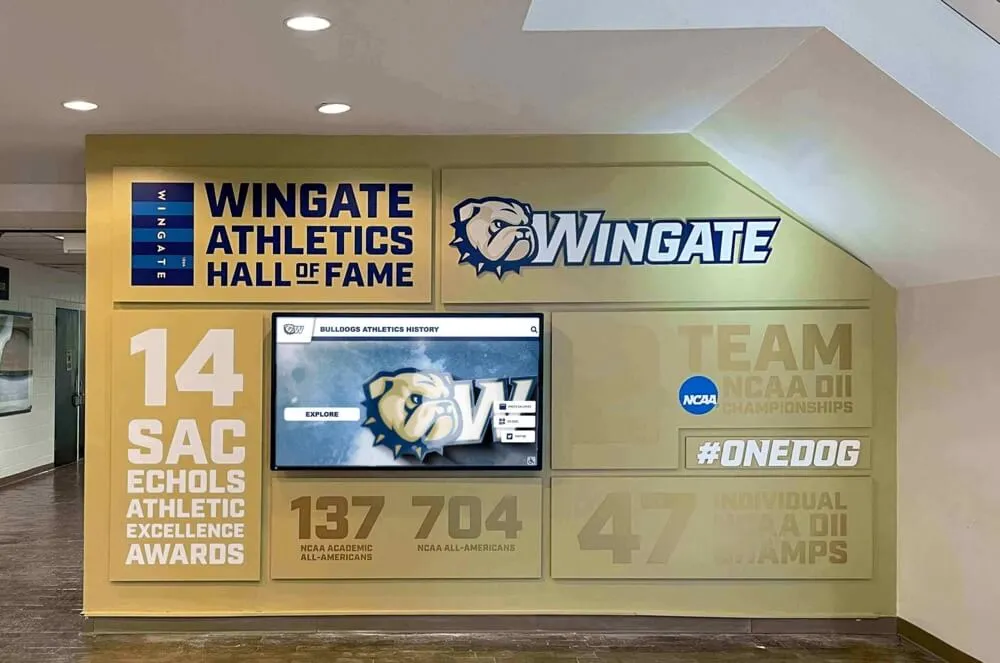
Schools across the country are using interactive touchscreen kiosks to display thespian society inductees, performance histories, and theater program milestones in their lobbies and hallways
What Is the International Thespian Society?
The International Thespian Society is the premier honor organization for secondary school theater students. As a division of the Educational Theatre Association, the ITS operates through a chapter system in which each school’s chapter is called a troupe. Every troupe is assigned a permanent number at the time of chartering — and that number becomes part of the chapter’s identity, passed down from graduating class to graduating class as part of an unbroken institutional legacy.
The Purpose Behind the Organization
The ITS exists to serve a specific and underserved recognition need in schools. Athletic departments have halls of fame, record boards, and championship banners. Academic programs have honor rolls and subject-specific honor societies. But theater programs — which routinely demand hundreds of hours of student labor per production, require genuine artistic and technical skill, and create community events that hundreds of families attend — have historically received far less formal institutional recognition.
The thespian society addresses that gap directly. By providing a credentialing structure with defined membership criteria, official chapter status, and a national affiliation, the ITS gives school theater programs the infrastructure to celebrate excellence with the same formality that schools apply to athletic and academic achievement. Schools that have built strong ITS chapters understand that honoring theater students with the same rigor applied to other programs is not a luxury — it is a cultural statement about what the school believes deserves celebration.
Membership Scope
The ITS serves students in middle school and high school, with separate membership tiers in some cases for younger students. Most active troupes are housed in high schools, where four-year participation gives students the time to accumulate the points and contributions that induction requires. Middle school chapters — sometimes designated separately — introduce younger students to the theater honor society culture and create a pipeline of students who arrive in high school already familiar with the ITS framework.
Thespian Points: How Students Qualify for Induction
Unlike honor societies based primarily on GPA, the thespian society uses a structured point system called Thespian Points to measure and recognize theatrical contribution. This design reflects a fundamental value: theater is a collaborative art, and every role in a production — from lead performer to stage crew — is worth recognizing.
The Standard Threshold
The standard requirement for induction into the International Thespian Society is ten Thespian Points. Individual troupes may set higher thresholds at their discretion, but ten points represents the national baseline that must be met before any student can be considered for induction.
How Points Are Earned
Points are assigned based on the nature and scope of a student’s participation in school theater productions and activities. The ITS provides a framework that translates different types of theatrical contribution into point equivalents:
Performance Roles Students who perform in school productions — whether in leading, featured, or ensemble roles — earn points based on the production’s scale and the extent of their participation. A student in the lead role of a major musical earns more points per production than a student in a smaller ensemble role, but both earn points. Across four years of participation, students in any performance role accumulate credits that move them toward the induction threshold.
Technical Theater Students who work in technical disciplines — stage management, lighting design, sound engineering, scenic construction and painting, costuming, makeup and hair design, props management, and projection design — earn points for their contributions. This is one of the ITS’s most distinctive features: a student who never performs onstage but who serves as master electrician for every production in their high school career is just as eligible for induction as a student who plays leading roles. Technical theater students often feel invisible in school recognition programs; the ITS was designed in part to make them visible.
Directing and Production Leadership Students who direct student-led productions, serve as assistant directors, or carry significant production management responsibilities earn points reflecting those leadership roles. Schools with strong student director programs find that the ITS point structure validates the additional responsibility and creative contribution that directing requires.
Other ITS-Sanctioned Activities Theater programs with competitive elements — state and regional theater festivals, one-act competitions, individual event competition — generate point opportunities alongside production participation. Students who represent their school in these competitive contexts earn points that contribute to the induction threshold.
GPA and Character Requirements
Most ITS troupes establish a minimum GPA requirement alongside the point threshold — commonly in the range of 2.5 to 3.0, though chapters may set this threshold higher. This academic component reinforces that the thespian society is an honor society in the full sense: members are expected to meet academic standards alongside their theatrical achievements, not trade one for the other.
Faculty sponsors also typically evaluate candidates on character — responsible participation, positive contribution to the troupe community, and conduct consistent with the values the organization represents. Students who have accumulated points but demonstrated behavior inconsistent with troupe values may be passed over for induction at the faculty sponsor’s discretion.
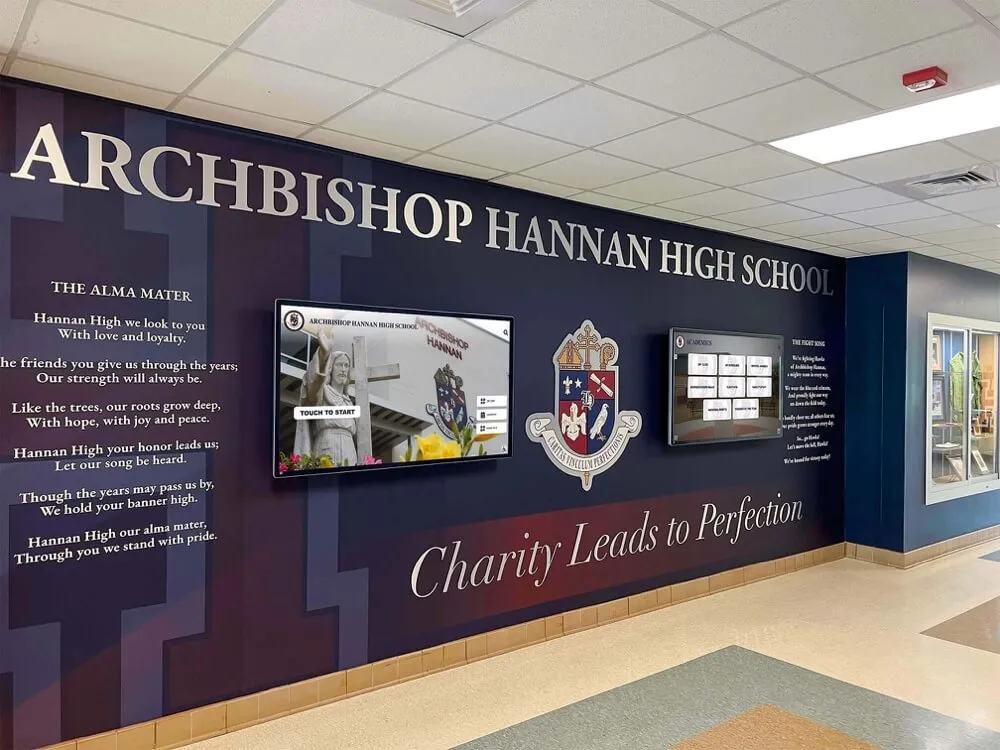
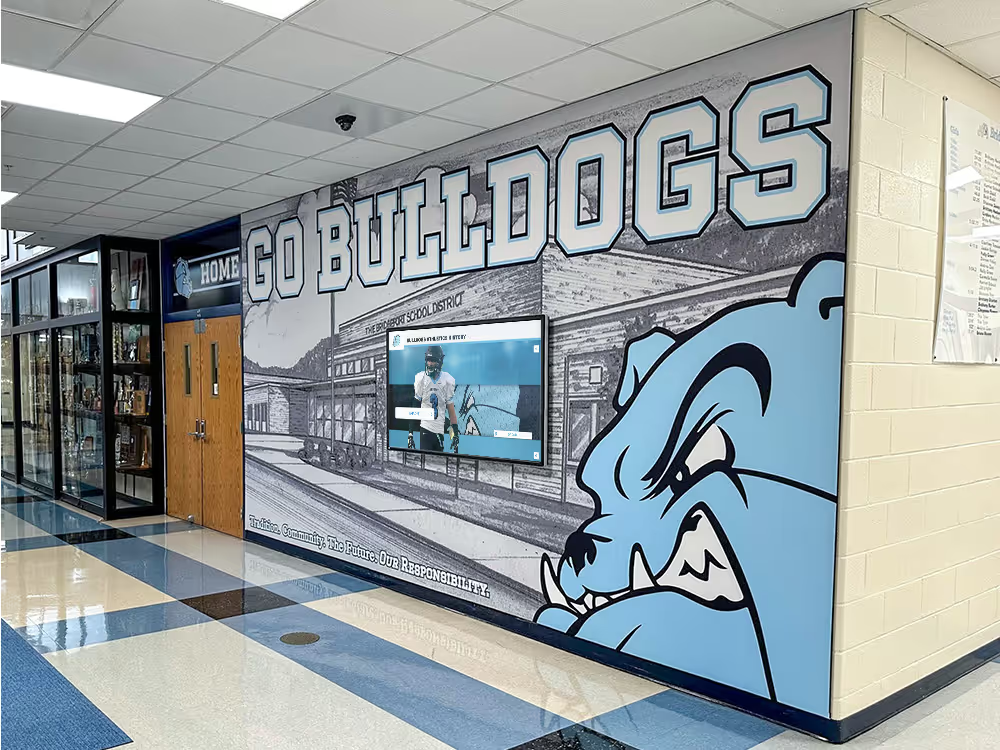
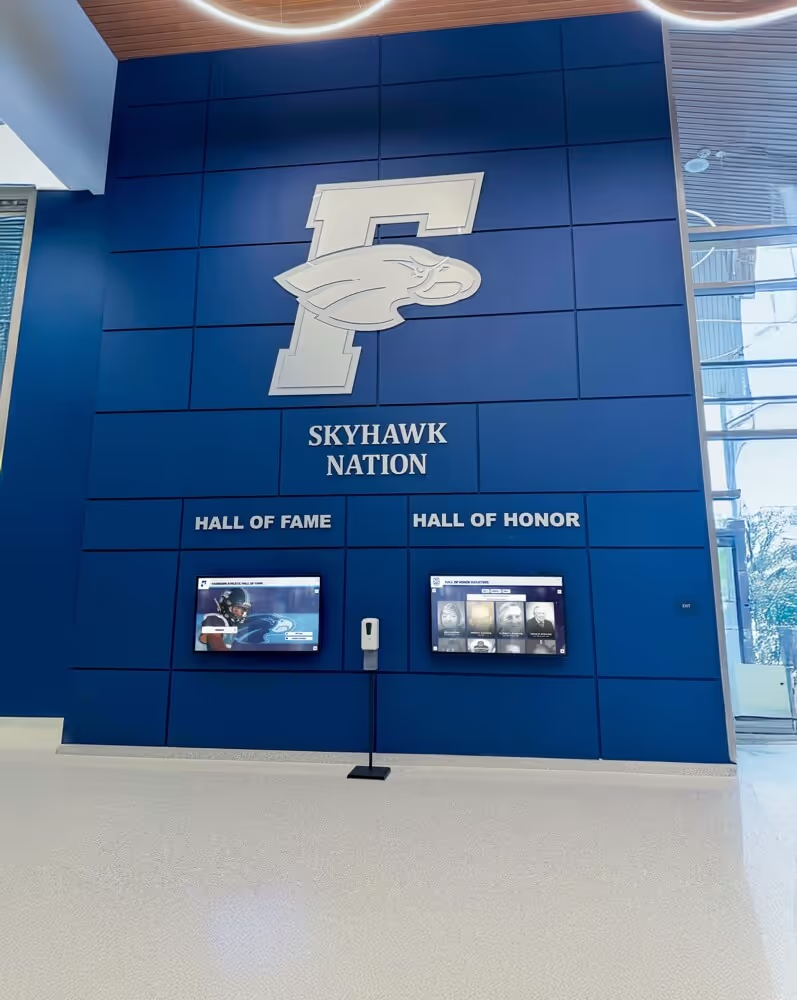
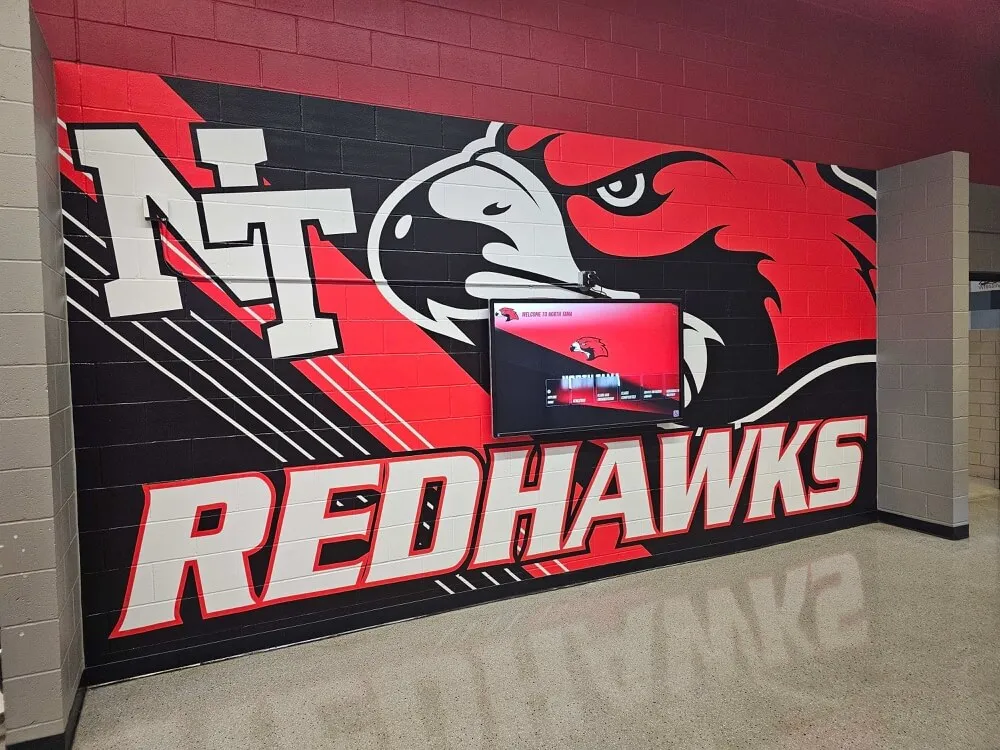
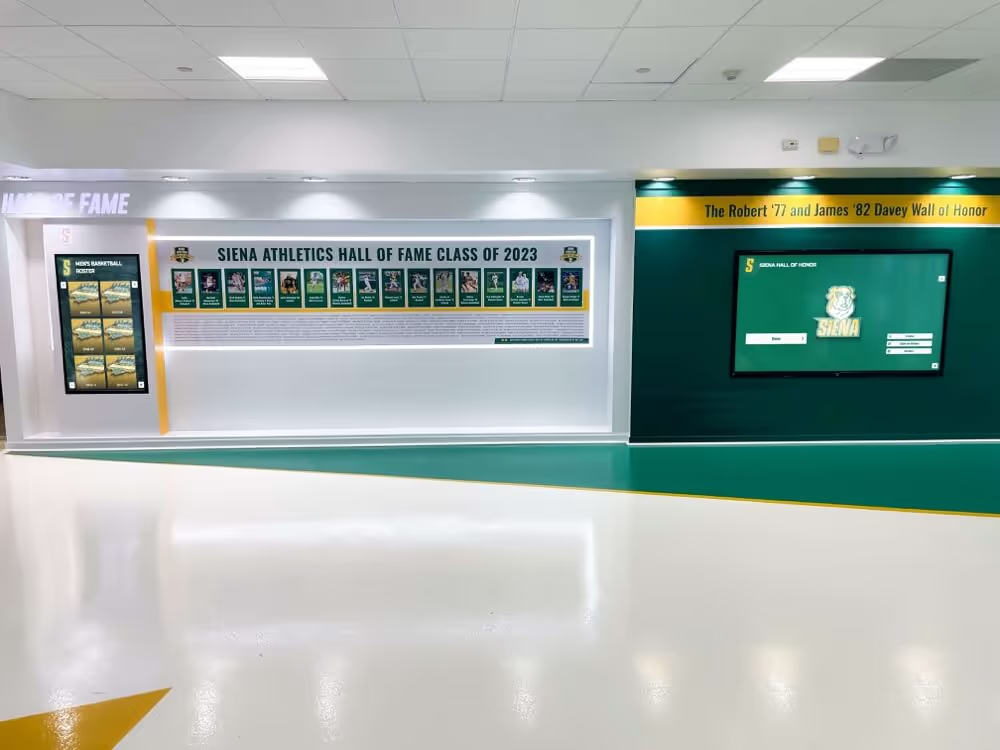
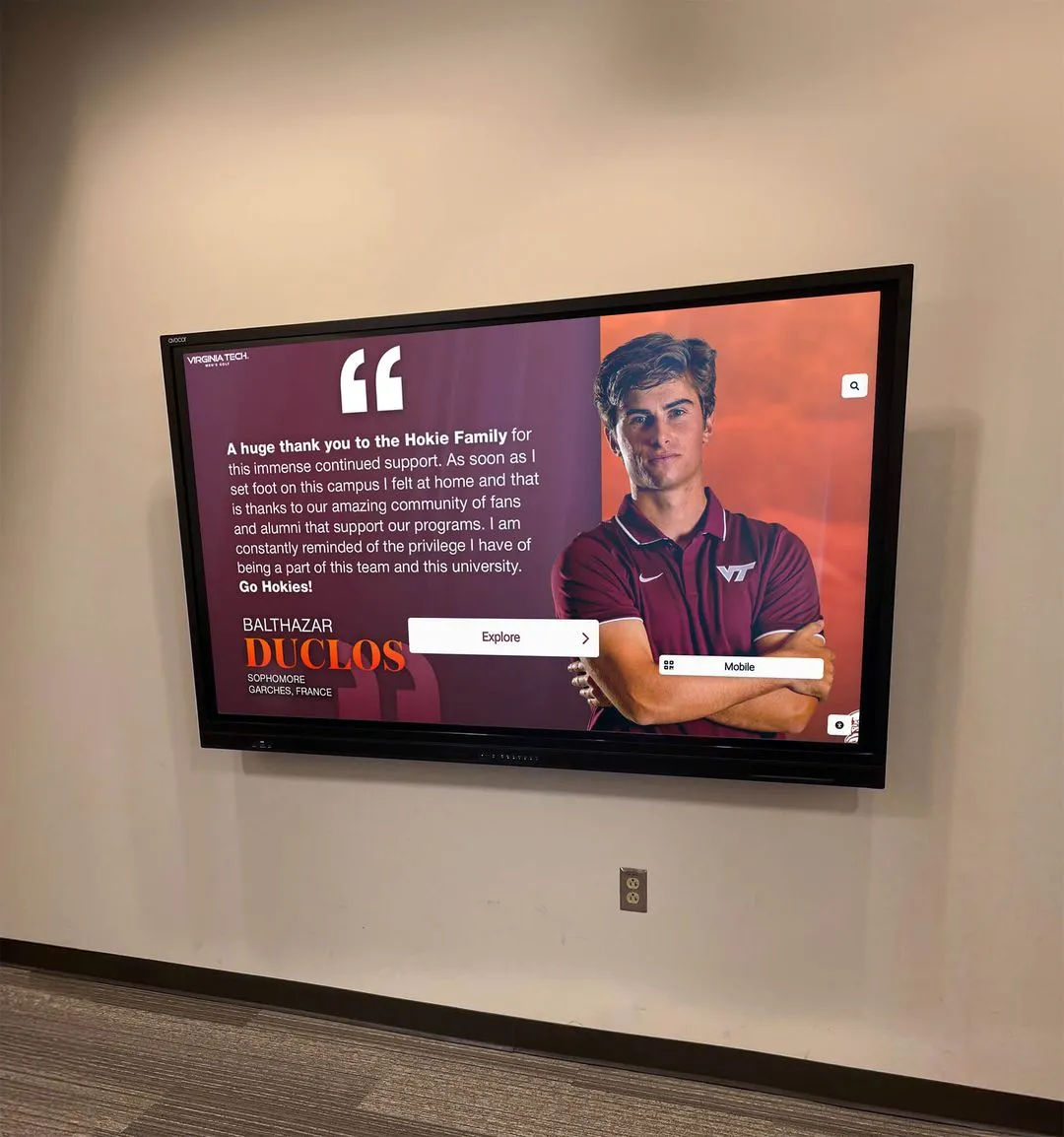
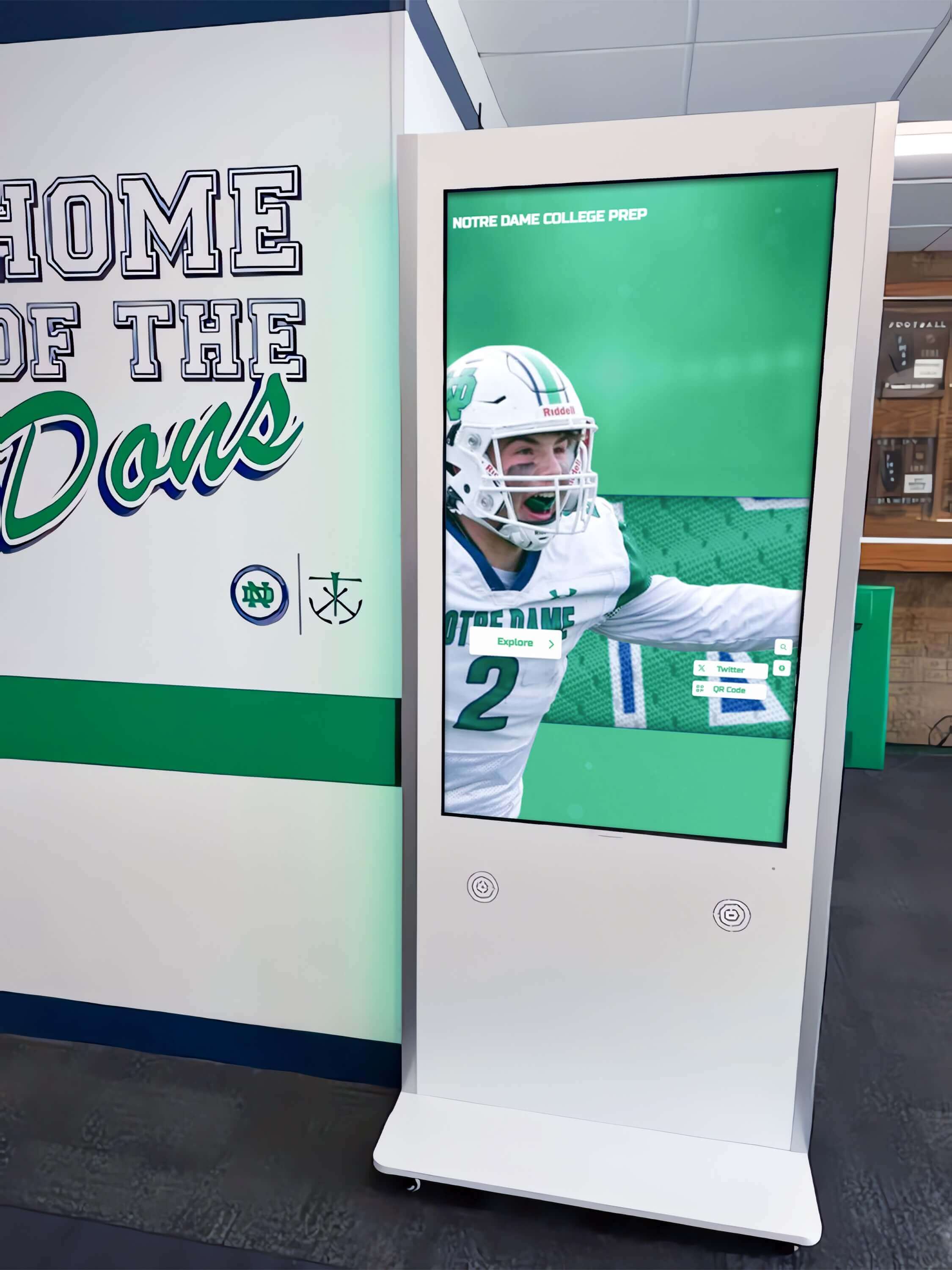
Schools with strong performing arts programs are upgrading their hallway displays to create permanent, searchable records of thespian society membership alongside other achievement histories
The ITS Induction Ceremony: Structure and Traditions
The thespian society induction ceremony is among the most meaningful academic events in a school’s annual calendar — and for theater programs, which are already in the business of producing meaningful events, it is often executed with particular care and artistry. The ceremony is both an official credentialing moment and a celebration of the theatrical community that produced these inductees.
Typical Ceremony Elements
Opening and Context The faculty director or troupe officers typically open the ceremony by explaining the history and significance of the International Thespian Society. Families who may not know what the ITS is benefit from this framing — they learn that this is not a school-level recognition but a national organization with decades of history, defined standards, and institutional weight comparable to other academic honor societies. Seeing this context set helps families understand what the evening actually represents.
For context, schools often point to the broader tradition of performing arts honor recognition alongside other honor society inductions. Much like how schools define and apply induction criteria for other recognition programs, ITS induction carries formal expectations around ceremony design, regalia presentation, and member pledging that schools take seriously.
The Thespian Pledge A signature element of most ITS induction ceremonies is the recitation of the Thespian Pledge — a formal commitment to the values of the organization and to the craft of theater. New inductees recite the pledge as a group during the ceremony, marking the transition from eligible student to inducted member. This communal ritual is one of the elements that families consistently remember as most moving.
Individual Recognition Each inductee is called by name and receives their membership certificate — or, in many schools, their regalia — at this moment. Some ceremonies include a brief acknowledgment of each inductee’s specific contributions: the productions they appeared in, the technical roles they held, the number of performances they contributed. This individual recognition, even when brief, matters enormously to students who have given years of after-school hours to their theater program.
Candle Lighting Many ITS troupes incorporate a candle lighting tradition into the ceremony, in which returning members or officers light the candles of new inductees as a symbol of passing the theatrical flame from one generation to the next. This element connects current inductees to the lineage of everyone who has been inducted before them — often stretching back decades — and creates a physical ritual that the ceremony would feel incomplete without.
Cultural or Theatrical Component Strong ITS chapters use the ceremony itself as an opportunity for performance. A musical number from a recent production, a monologue, a theatrical reading, or an original piece created specifically for the event transforms the induction from a formal presentation into an authentic expression of the theatrical community being celebrated. For theater students, this component carries additional meaning: they are being honored in the language they know best.
Reception Most schools follow the formal ceremony with a reception for inductees and their families. This social element allows families to photograph inductees in their regalia, for returning members to welcome new ones, and for the community of the troupe to celebrate together in a way the formal ceremony does not always permit.
When and Where Schools Hold ITS Ceremonies
ITS inductions typically take place in the spring semester, after productions are complete and the full year’s contributions can be tallied. Many schools time the ceremony to fall shortly before the school’s final production of the year, so that newly inducted thespians perform their first shows as official ITS members. Others schedule the ceremony after graduation season to give seniors a final celebration of their theater careers.
Ceremony locations often reflect the troupe’s home: a school theater or black box stage, an auditorium, or a school library. When the drama department has access to their own performance space, holding the ceremony there — with proper lighting, sound, and staging — adds another layer of meaning. The physical space in which these students have worked hundreds of hours becomes the site of their official recognition.
Thespian Society Regalia: Stoles, Cords, and Medallions
For many inductees and families, the visual symbol of thespian society membership is the regalia: the stoles, honor cords, and medallions that mark membership at the induction ceremony and, most visibly, at graduation. Understanding what this regalia represents — and where it comes from — helps families recognize the significance of what their student is wearing.
ITS Colors and Standard Regalia
The International Thespian Society’s official colors are royal blue and gold. These colors appear in the standard ITS regalia options available through the Educational Theatre Association:
Honor Stoles ITS stoles are typically gold or royal blue fabric worn draped over the graduation gown, often embroidered with “International Thespian Society” or the ITS insignia. Some chapters commission custom stoles that incorporate the school’s name or troupe number alongside the ITS branding, creating a piece of regalia that acknowledges both the national organization and the specific chapter’s identity.
Honor Cords Blue and gold twisted cords are available as a standalone alternative to stoles, worn around the neck over the graduation gown. Honor cords are often more practical for schools where multiple honor society affiliations create a stole-layering challenge — the cord can be worn alongside other recognition regalia without visual conflict.
Medallions and Pins Larger recognition pieces — medallions worn on a neck ribbon, or lapel pins — are appropriate for contexts outside of graduation, including the induction ceremony itself, school events, and professional portfolios.
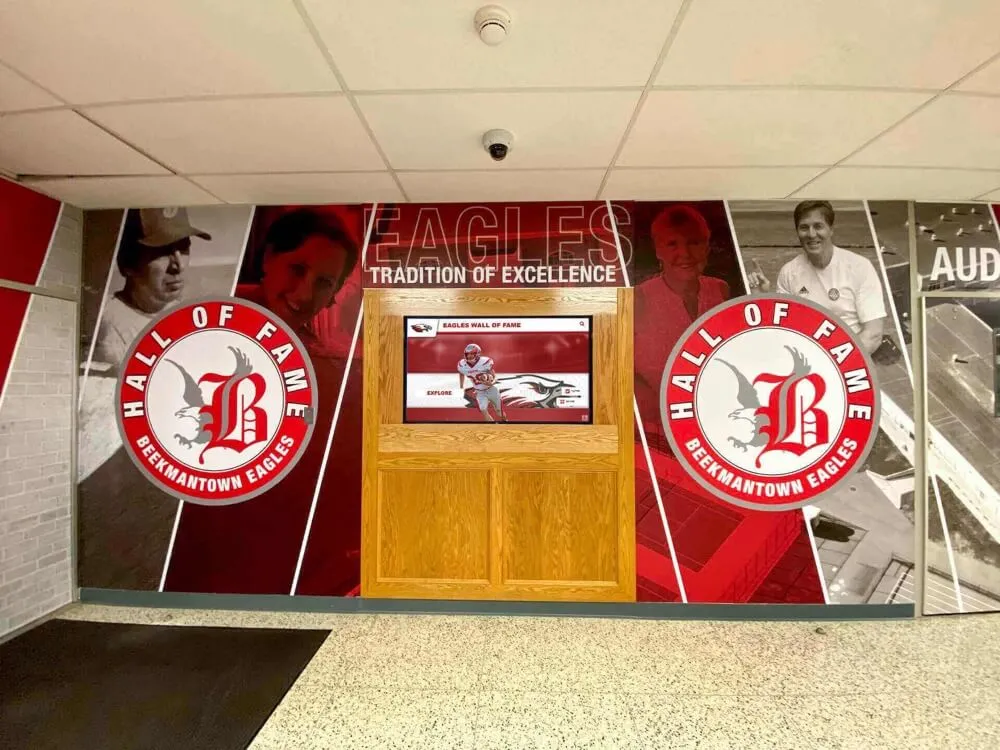
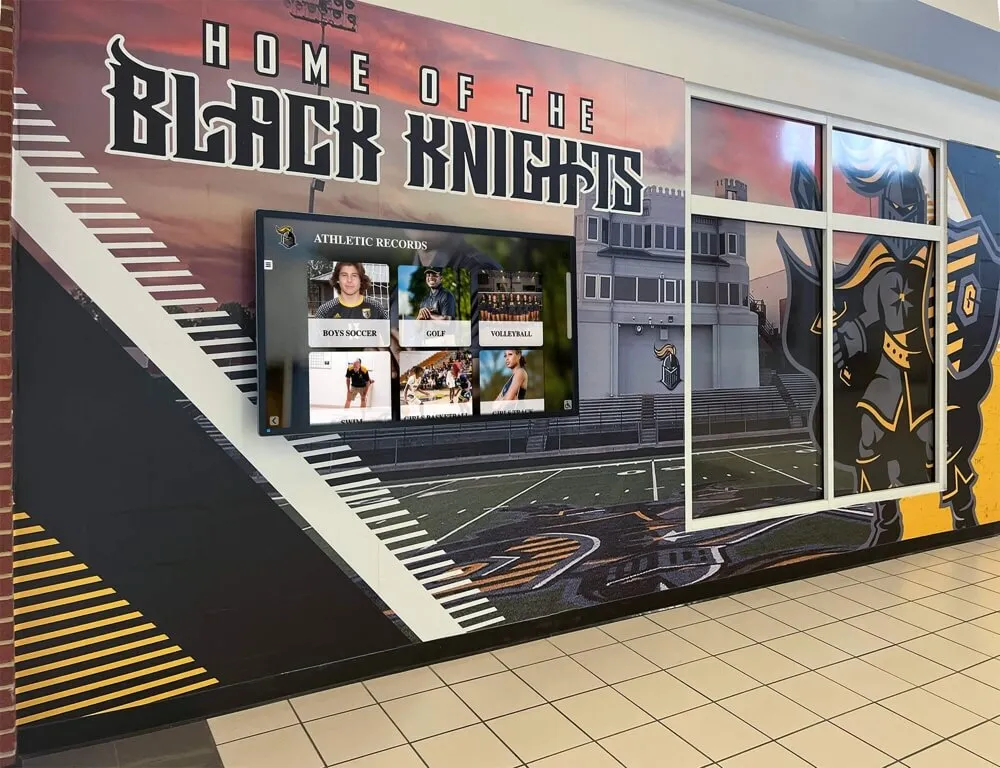
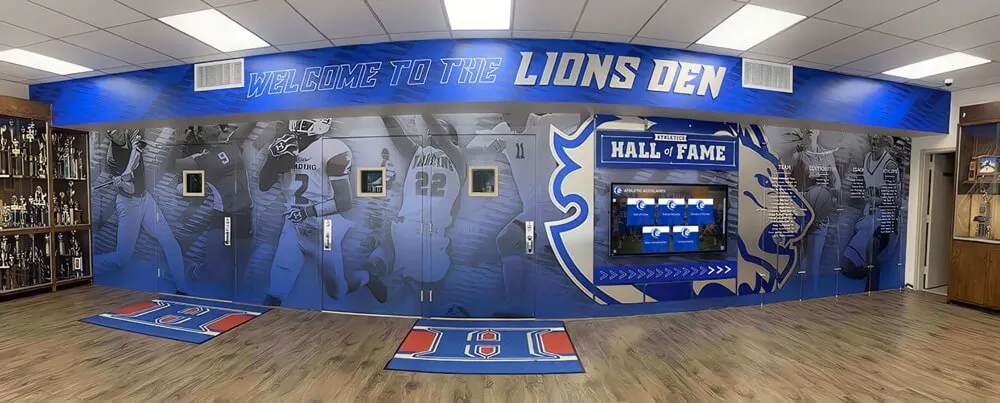
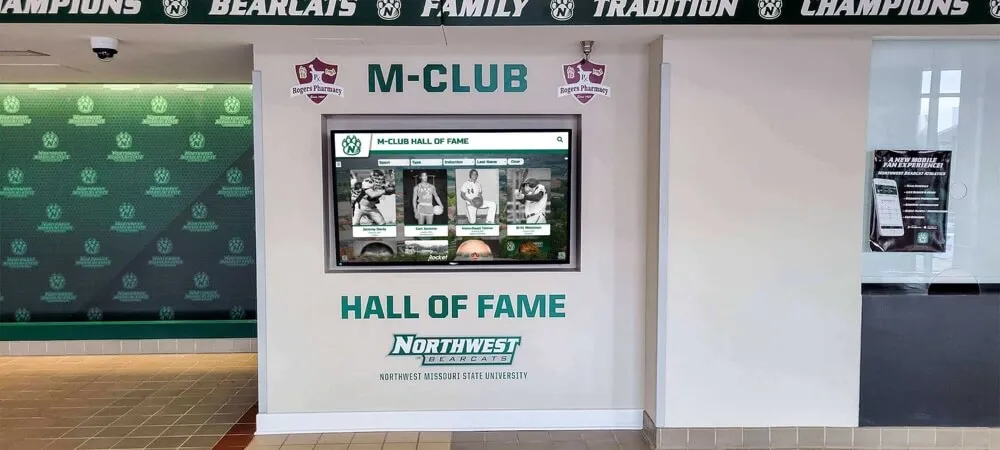
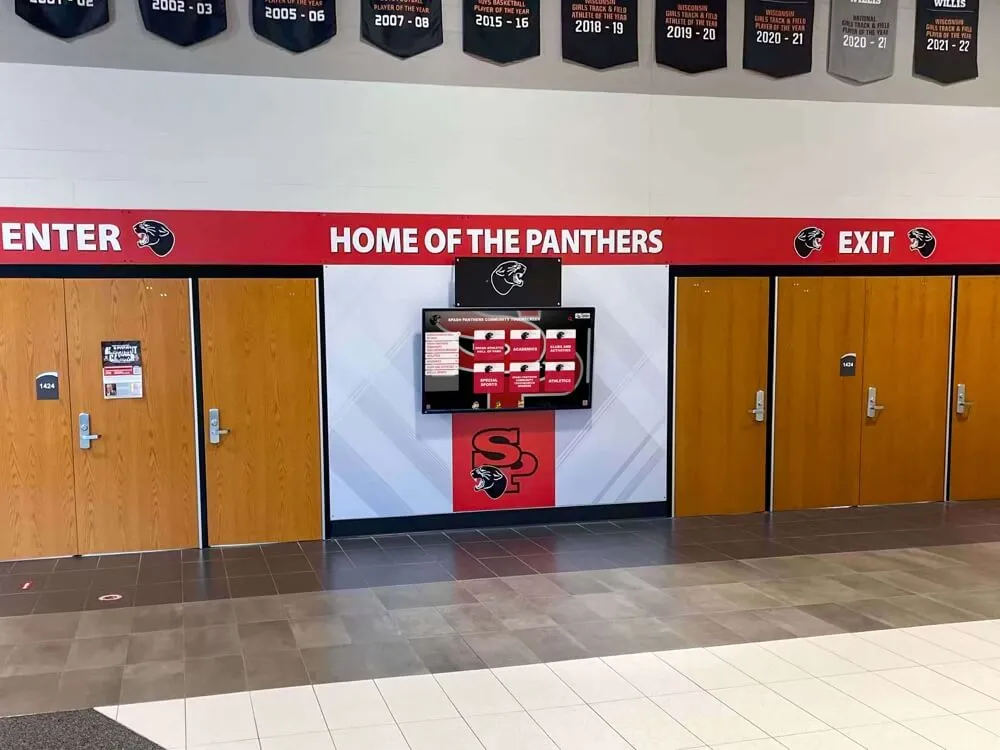
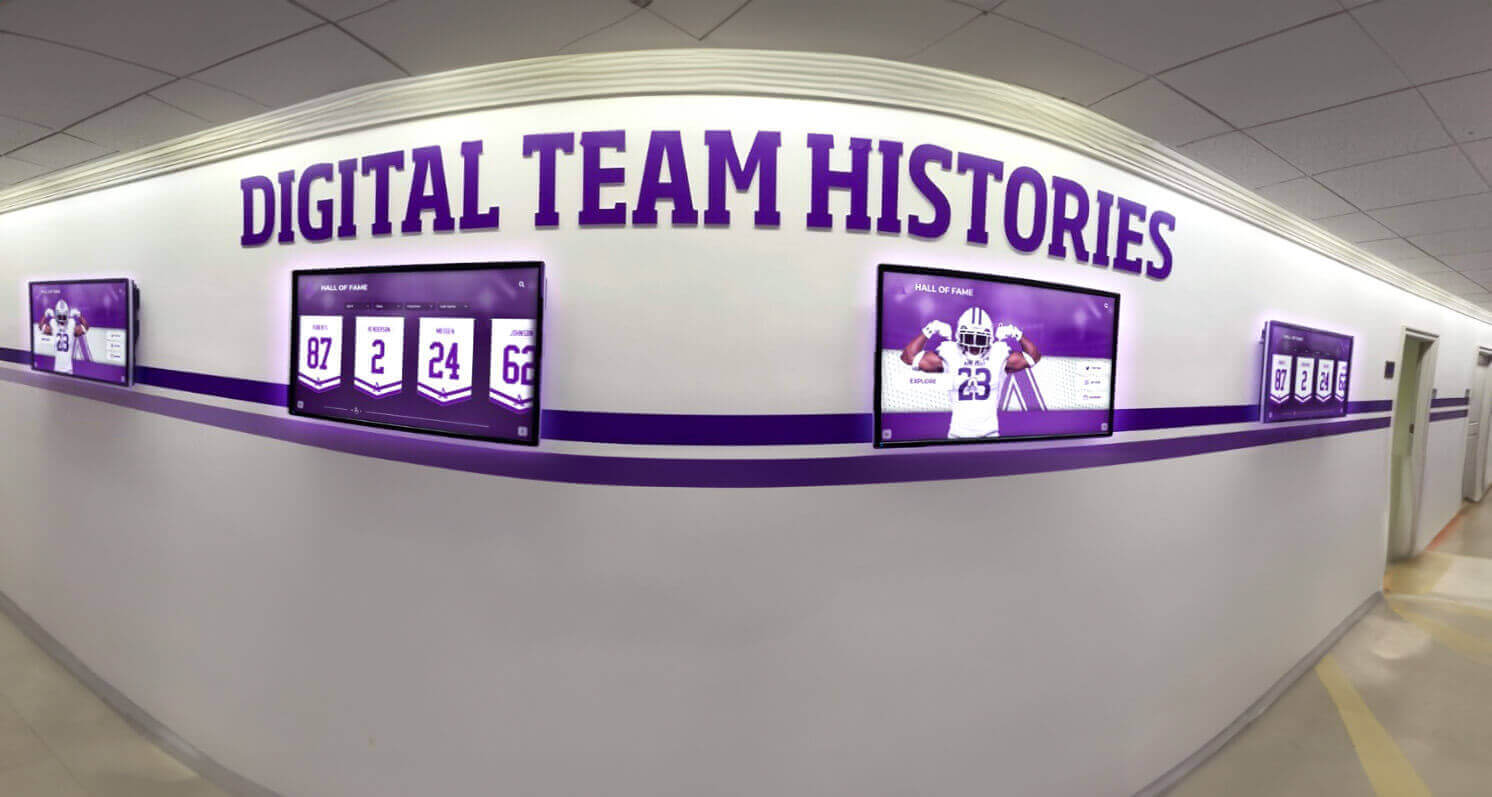
Interactive touchscreen displays in school hallways let thespian society inductees, families, and alumni explore recognition records at any time — not only during ceremony night
Why Regalia Matters at Graduation
The graduation ceremony is the moment of greatest community visibility in a student’s school career. When a senior walks across the stage wearing an ITS stole alongside an NHS cord and a subject honor society medallion, everyone in the auditorium can see — without explanation — that this student achieved something meaningful in their high school theater program.
For theater students specifically, the graduation stole carries distinctive significance. Theater programs are routinely invisible at graduation: no championship banner, no letter jacket, no record board in the gym. The ITS stole is often the only visible artifact at the graduation ceremony that says, in institutional terms, that this student’s theater work mattered and was formally recognized. That visibility — brief but public — is not a small thing.
Troupe Culture and National ITS Opportunities
Induction into the International Thespian Society is a beginning, not an endpoint. Active ITS chapters provide ongoing programming and opportunities that extend the value of membership throughout a student’s remaining high school years.
Chapter Activities
Strong troupes organize chapter activities that build community, develop theatrical skills, and connect members to the broader ITS culture:
Production Participation ITS members are expected to remain active in school productions throughout their membership. Continuing to participate — and accumulating additional Thespian Points — is part of what active membership means. Some troupes recognize members who reach higher point thresholds (25 points, 50 points, 100 points) with progressively elevated recognition, creating a culture of sustained engagement.
Troupe Officer Roles Most active chapters elect student officers — president, vice president, secretary, treasurer — who organize chapter activities, plan the induction ceremony, and serve as the operational leadership of the troupe. These leadership roles give inducted thespians real organizational responsibility and develop skills that translate well beyond the theater.
Community Theater and Outreach Some chapters extend their work into the community through outreach performances, theater workshops for younger students, or partnerships with local nonprofits. This service component connects thespian society membership to a broader sense of artistic responsibility.
ITS Thespian Festival
The International Thespian Society hosts an annual Thespian Festival, one of the largest student theater gatherings in the world. The festival brings together thousands of theater students from active troupes for workshops, college auditions, production showcases, and recognition ceremonies honoring outstanding student performers and companies. For ITS members, attending the national festival is often a transformative experience — seeing the full scope of student theater from across the country places their own school’s program within a national artistic community.
State-level festivals, often organized through state chapters of the Educational Theatre Association, provide similar opportunities at a more accessible scale. State festivals frequently feature scholarship competitions, individual event competitions, and production showcases that give ITS members opportunities to earn recognition beyond their school.
Scholarship Opportunities
The Educational Theatre Association and the International Thespian Society provide scholarship opportunities for outstanding members. These scholarships — available to students pursuing theater or theater-adjacent fields in college — represent another concrete benefit of ITS membership beyond the induction ceremony and the graduation stole.
Just as all-state musician recognition programs create pathways for recognition beyond the school level, the ITS connects theater students to national recognition infrastructure that rewards sustained excellence with real academic and financial opportunities.

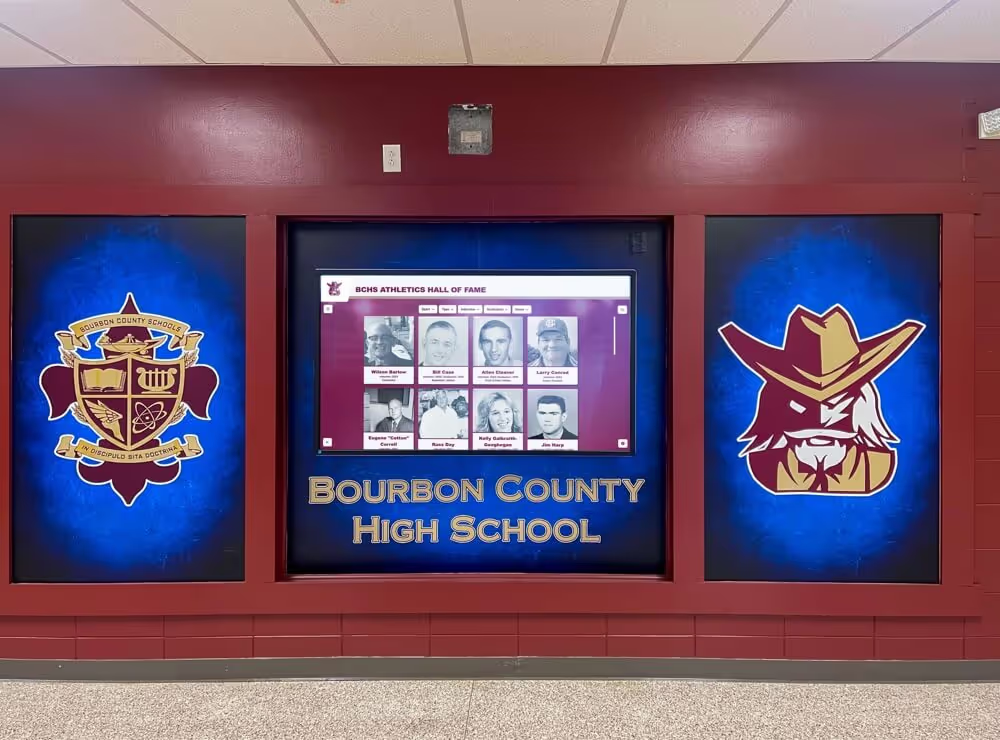
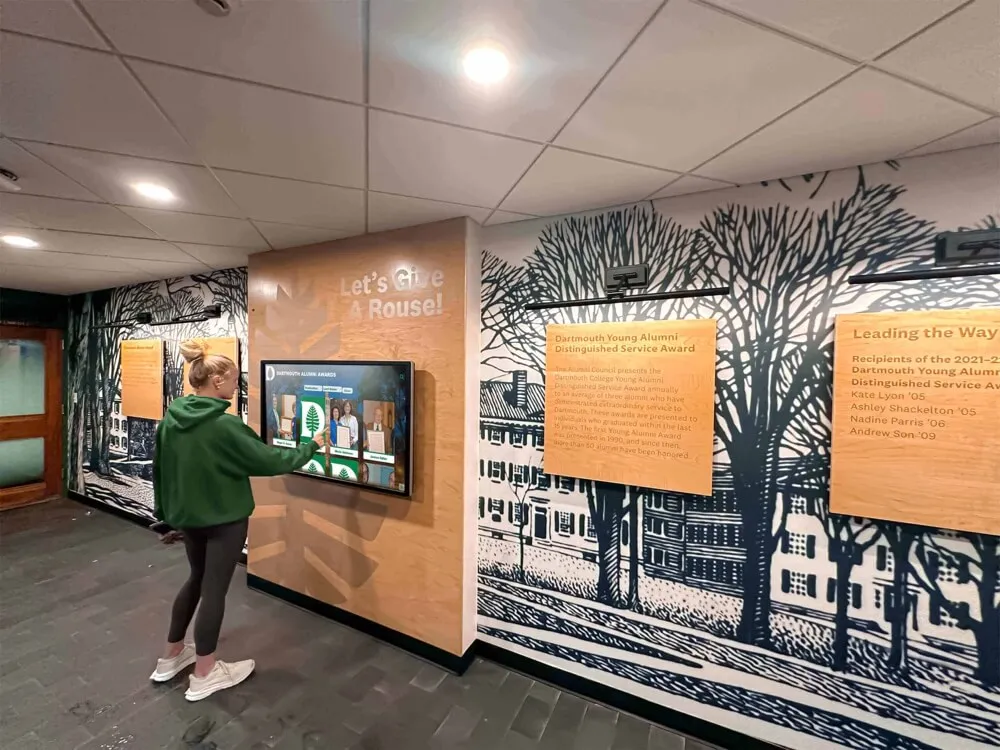
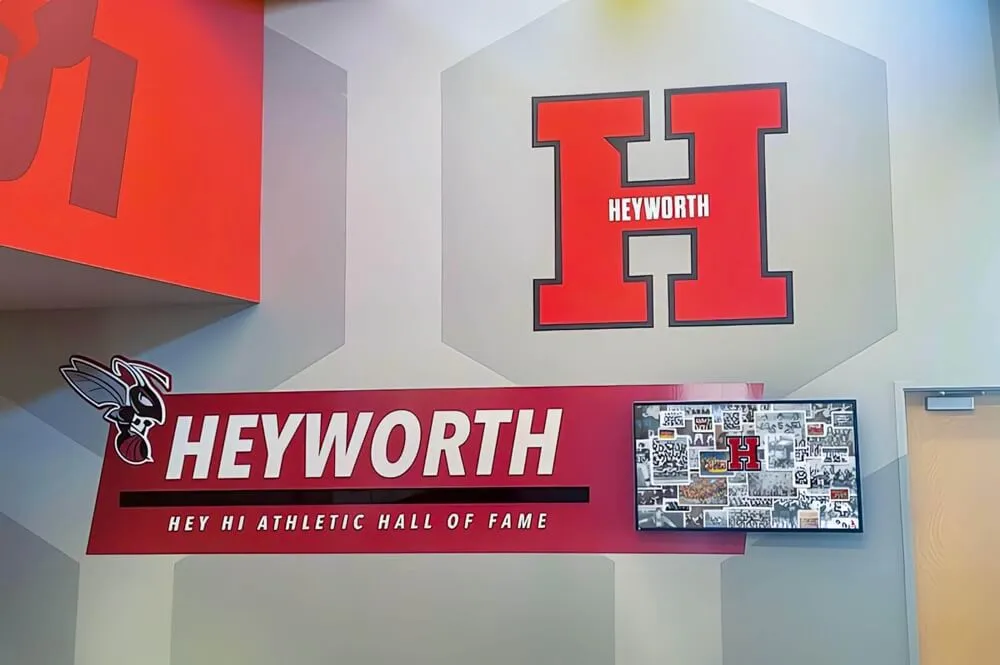
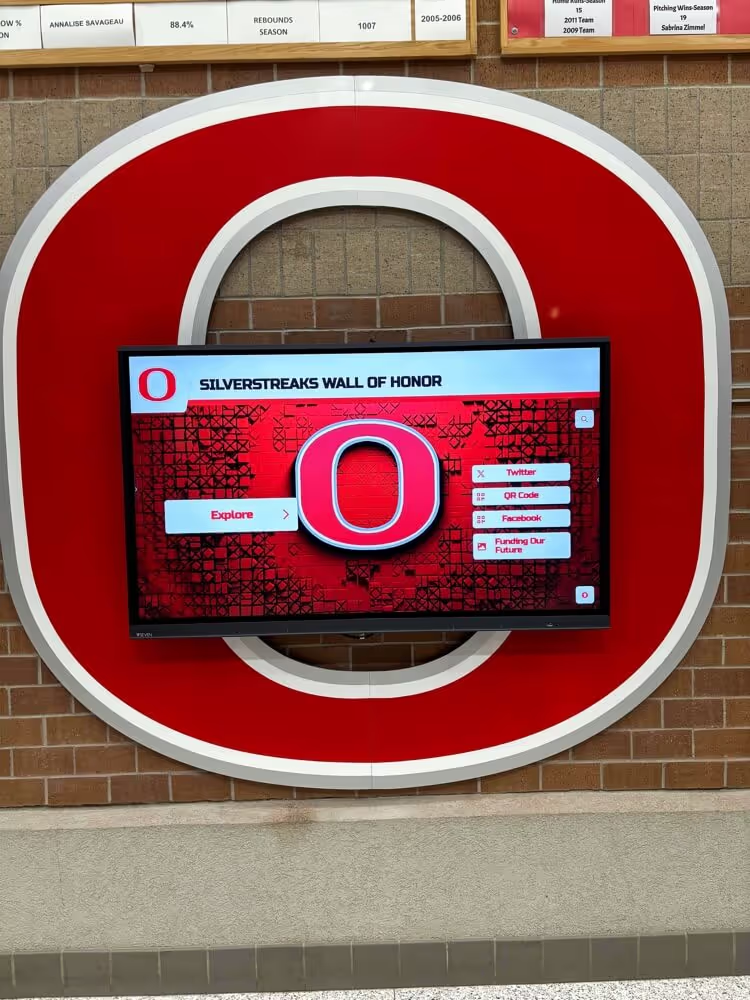
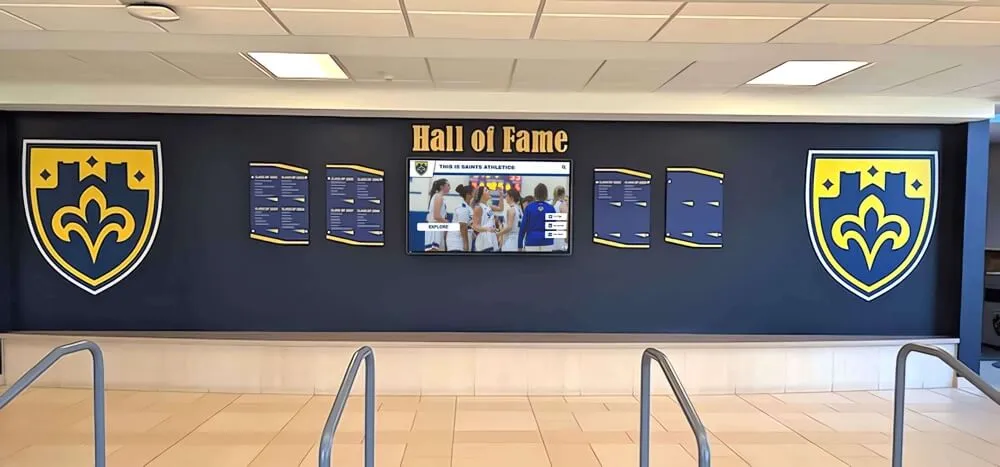
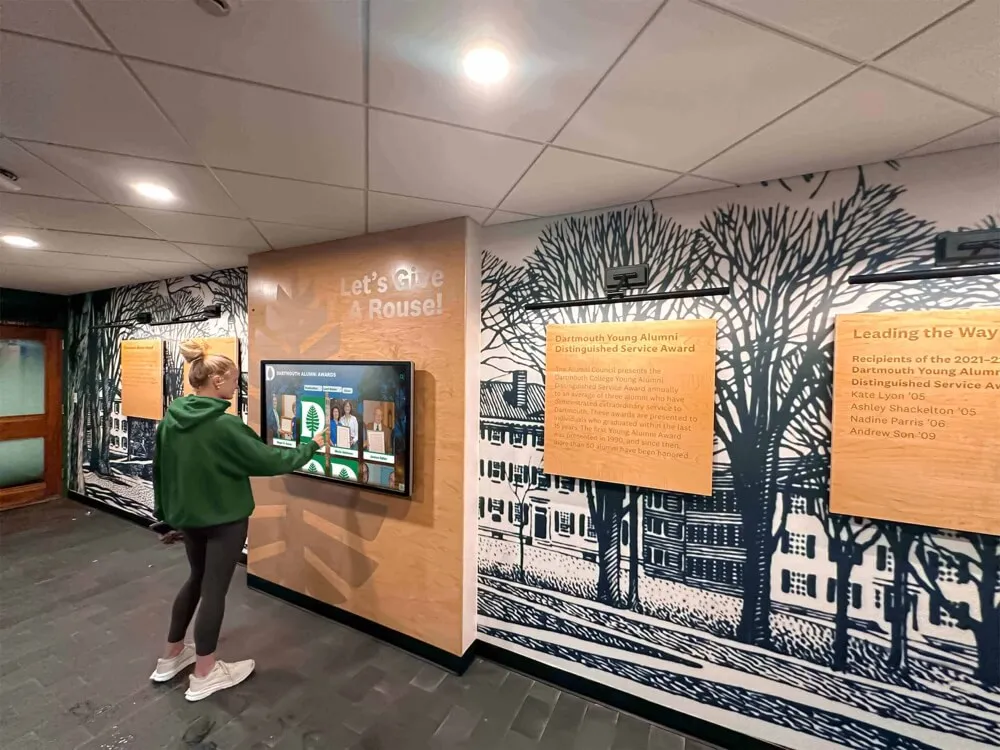
Digital touchscreen systems can display thespian society inductee profiles — complete with photos, production histories, and technical contributions — in the same format schools use for athletic hall of fame recognition
How Schools Display and Preserve Thespian Society Recognition
Induction ceremonies handle recognition in the moment — but the most meaningful school recognition programs think beyond ceremony night. How does a school make thespian society membership visible year-round? How does it preserve the record of theater excellence for alumni who return decades later? And how does it tell the school community that theater achievement belongs alongside every other form of excellence the school celebrates?
Traditional Recognition Approaches
Display Boards and Plaques Many school theater programs dedicate a hallway or lobby display to ITS inductees — framed member rosters, composite photographs organized by troupe number and year, or plaques listing inducted members in sequence. When well-maintained, these displays communicate visibly that theater achievement is documented and preserved with institutional care. The troupe number prominently displayed alongside a multi-decade roster signals program continuity and history.
Program and Graduation Recognition Listing thespian society membership in production programs and graduation ceremony booklets places the recognition in front of the audiences who most need to see it: the families, community members, and students who attend these events. Many schools include ITS membership alongside other honor society designations in graduation programs, treating it with the same formality as NHS or subject-specific societies.
School Communications Announcing new ITS inductees in school newsletters, social media, and websites broadens visibility. Brief profiles of each inductee — their productions, their technical contributions, their favorite theater memory — turn a roster into human stories that the school community can connect with.
Integration with Performing Arts Events Some schools formally acknowledge new ITS members at a school-wide performing arts showcase, winter concert, or end-of-year celebration. This public moment of recognition, in front of a full community audience, sends a clear message about institutional values. Schools that have built all-star achievement touchscreen recognition displays in their lobbies and hallways often integrate performing arts honor society acknowledgment directly into their recognition infrastructure.
Digital Recognition for Thespian Society Members
Traditional displays face the same problem in theater departments that they face everywhere else in schools: they run out of space. A troupe that has been active for twenty years has far more inductees than any bulletin board can accommodate. Physical rosters become cluttered, outdated, or so dense that individual names lose meaning.
Digital recognition platforms solve this elegantly. A school that deploys an interactive touchscreen display in its performing arts center lobby, main hallway, or theater entrance creates a recognition system with no practical space limit, full multimedia capability, and searchable access for anyone who approaches the screen.
Unlimited Inductee Records Every student inducted into the ITS since the troupe’s founding can appear in a searchable digital profile — organized by year, troupe level, or production involvement — with equal visual weight regardless of when they were inducted. The student from twenty years ago appears alongside this year’s inductee with the same dignity, because the digital system does not run out of wall.
Rich Member Profiles Beyond a name and a graduation year, digital platforms can display a member’s complete theatrical record: productions performed in, technical roles held, competitions attended, points accumulated, and photos from their most significant performances. This depth of documentation honors the full scope of what theater students actually do — which is almost always more than a single-line listing can capture.
Production History Archiving The ITS chapter’s production history — the shows performed, the years they ran, the students involved — can be archived alongside inductee records, creating a comprehensive documentary record of the theater program’s entire history. Schools interested in preserving this kind of institutional memory benefit from understanding how the rise of digital wall-of-fame displays has transformed school recognition — the same archival principles that apply to athletic history apply equally to performing arts programs.
Family and Alumni Access Parents visiting for open houses, prospective students touring the school, and theater alumni returning for reunions can explore the troupe’s history through the touchscreen — browsing inductees by year, searching for specific names, or discovering production histories from decades past. This accessibility transforms recognition from a static display into an ongoing engagement with the program’s legacy.
Schools that want to understand the full potential of these systems can explore how interactive digital hall of fame systems are built and deployed — the hardware, software, content management, and deployment considerations that make the difference between a display that sits unused and one that becomes a genuine community touchpoint.
Theater Wall of Fame: A Permanent Home for ITS Recognition
The concept of a theater wall of fame — a dedicated physical and digital installation celebrating the performing arts program’s history, achievements, and inducted members — is one of the most powerful ways schools signal institutional respect for their theater programs.
Unlike a trophy case (which has finite shelf space) or a generic honor roll (which treats every type of achievement identically), a theater wall of fame is a purpose-built recognition environment that tells the performing arts story on its own terms. The best installations include:
- ITS inductee rosters organized chronologically or by troupe generation
- Production history displays showing every show the program has mounted, with cast and crew documentation
- Alumni performer recognition highlighting graduates who have gone on to careers in theater, film, television, or related fields
- Award and competition records from state festivals, regional competitions, and national recognition
- Director and faculty legacy recognition honoring the educators who built the program
Schools looking for inspiration on how to structure comprehensive arts and co-curricular recognition alongside athletic achievement will find that the frameworks used for club highlights on digital recognition displays translate directly — the same principles of documenting participation, recognizing excellence, and preserving history apply equally to theater programs.
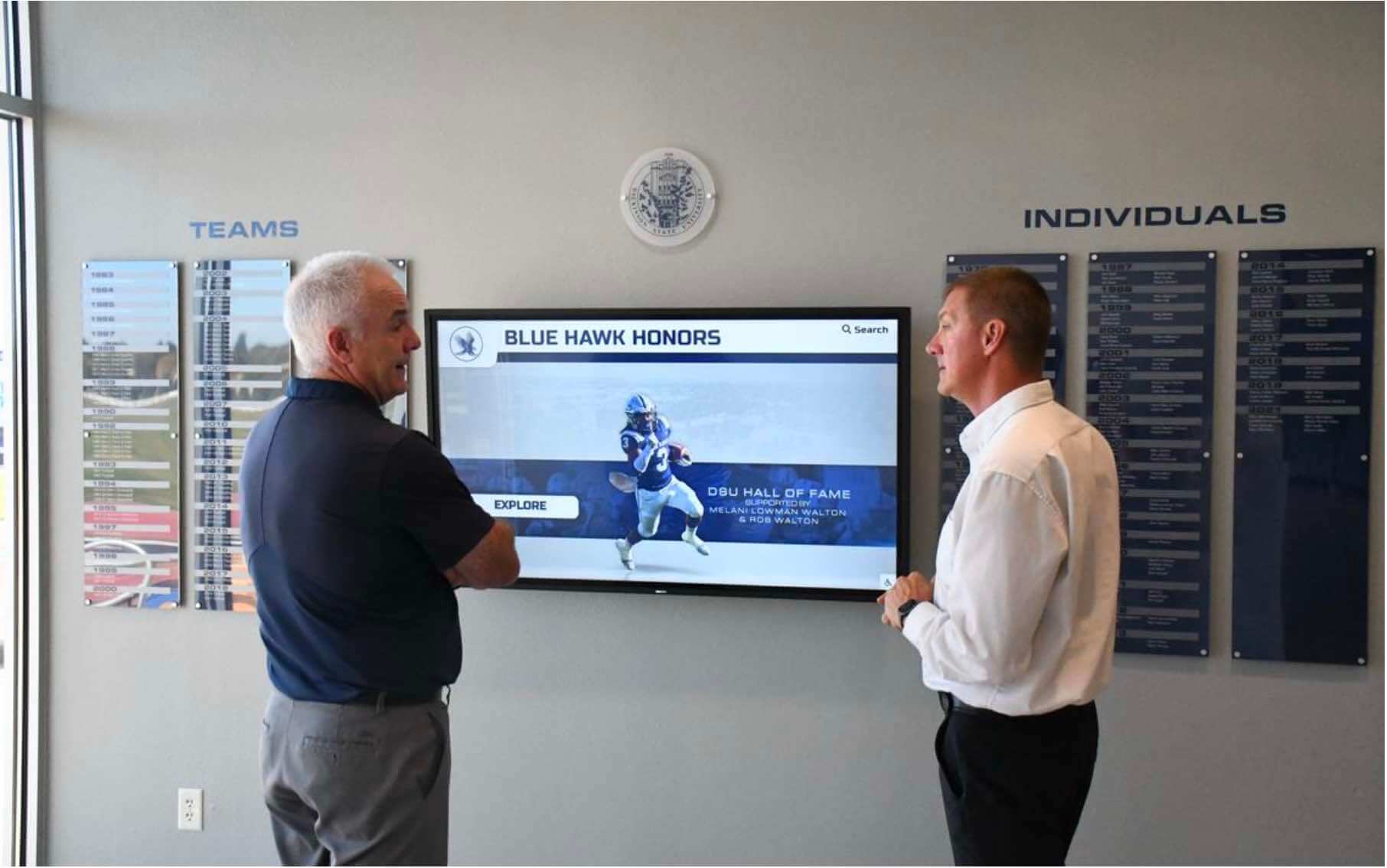
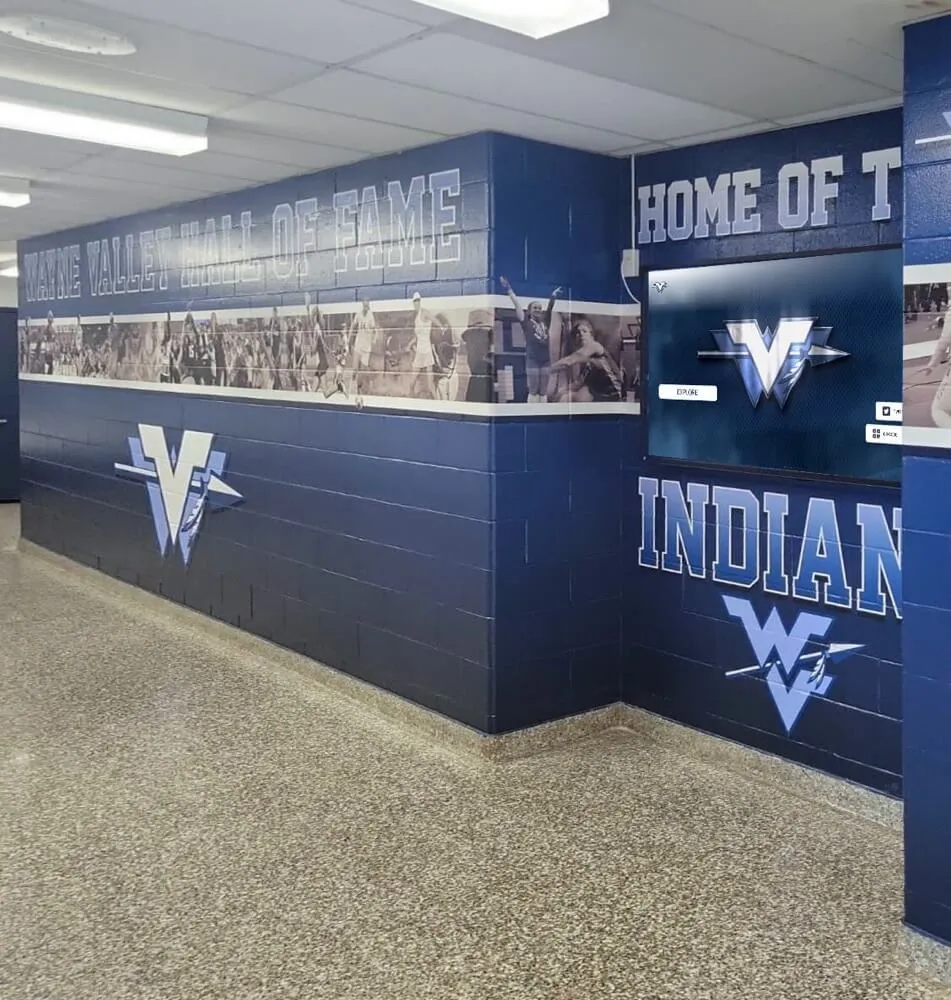
Digital hall of fame installations invite visitors, families, and alumni to explore recognition records interactively — making the theater program's history a living document rather than a static list
Recognizing Alumni Theater Performers
One of the most underutilized opportunities in theater program recognition is the celebration of alumni who have gone on to careers in the performing arts. Athletic halls of fame routinely include professional athletes, coaches, and sports administrators who began their careers in the school’s gymnasium or on its fields. Theater programs have equivalent alumni stories — graduates who have performed on Broadway, in film and television, in regional theater, as directors and designers and educators — and those stories deserve the same institutional acknowledgment.
Why Alumni Theater Recognition Matters
Alumni recognition in the performing arts serves multiple purposes beyond honoring past achievement. When current students see that graduates from their school’s theater program have gone on to professional careers, it validates the seriousness of their own work. It tells them that the training and discipline required for high school theater is preparation for real professional development — not a hobby that ends at graduation.
For development and advancement offices, documented alumni theater achievement is also a fundraising and engagement asset. Alumni who feel that their high school theater experience shaped their career are often deeply motivated to give back to the program that launched them — but only when they feel that the program acknowledges and celebrates them.
Schools that have successfully built alumni recognition programs across departments understand that alumni recognition event ideas apply as meaningfully to performing arts departments as to athletic programs. An annual theater alumni recognition dinner, a dedicated section on the theater wall of fame, or a digital spotlight feature on the performing arts center’s touchscreen display all create moments of acknowledgment that motivate ongoing alumni engagement.
Building a Theater Alumni Database
The practical challenge of alumni recognition is documentation: schools often lose track of their graduates once they leave. Building an intentional theater alumni database — collecting contact information, career updates, and authorization to use names and photos in recognition displays — is foundational work that makes long-term alumni recognition possible.
Many schools start this process by canvassing their most engaged current families and faculty for alumni connections, then using school newsletter announcements and social media to invite alumni to self-report. Digital recognition platforms make it straightforward to add new alumni profiles as they are identified, without the physical display constraints that make traditional plaque walls stop growing at some point in the past.
Rocket Alumni Solutions builds interactive digital recognition systems that let schools create dedicated performing arts recognition displays — searchable ITS inductee profiles, alumni theater achiever spotlights, production history archives, and more — within the same touchscreen platform used for athletic halls of fame and academic recognition programs.
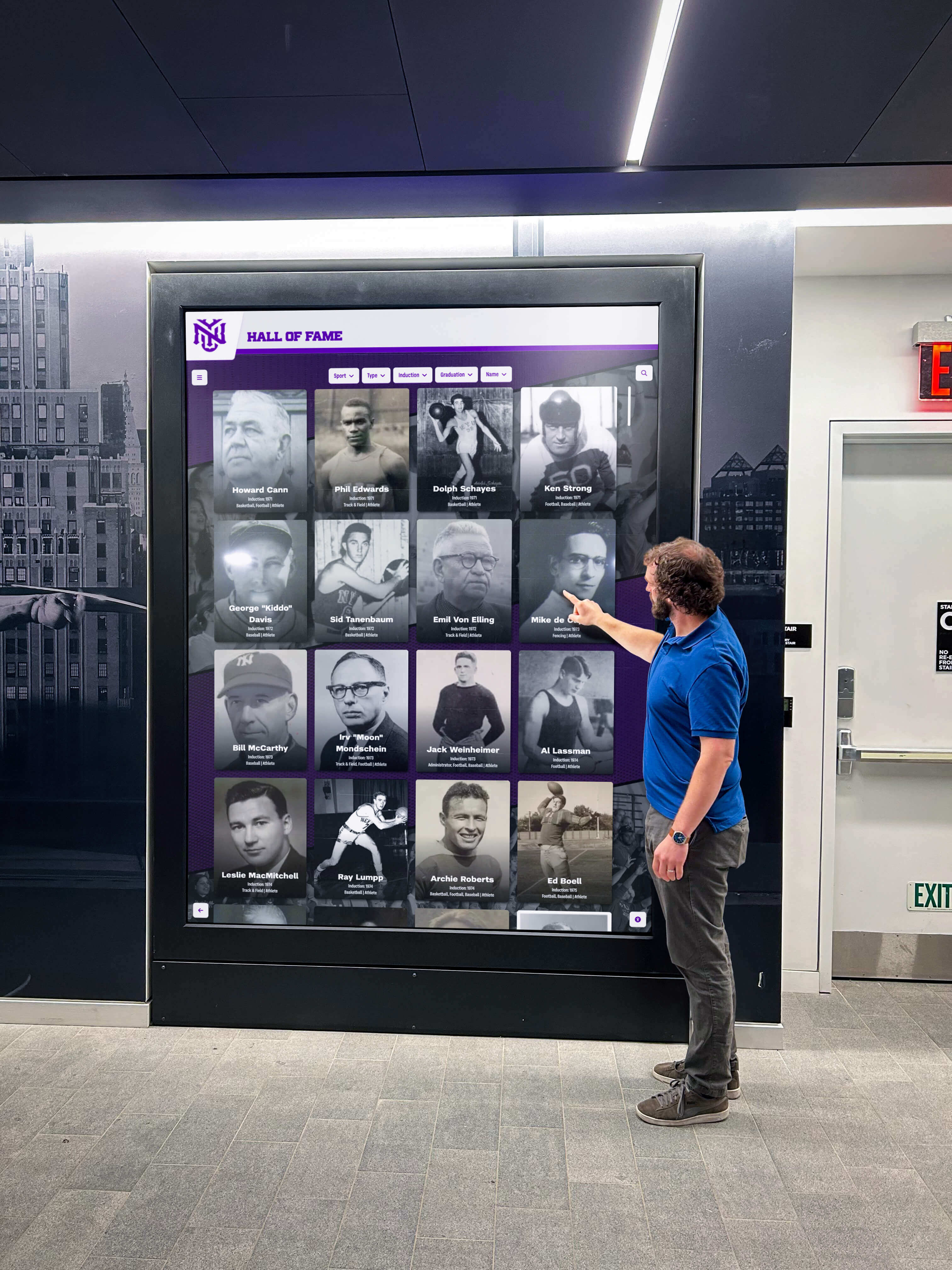
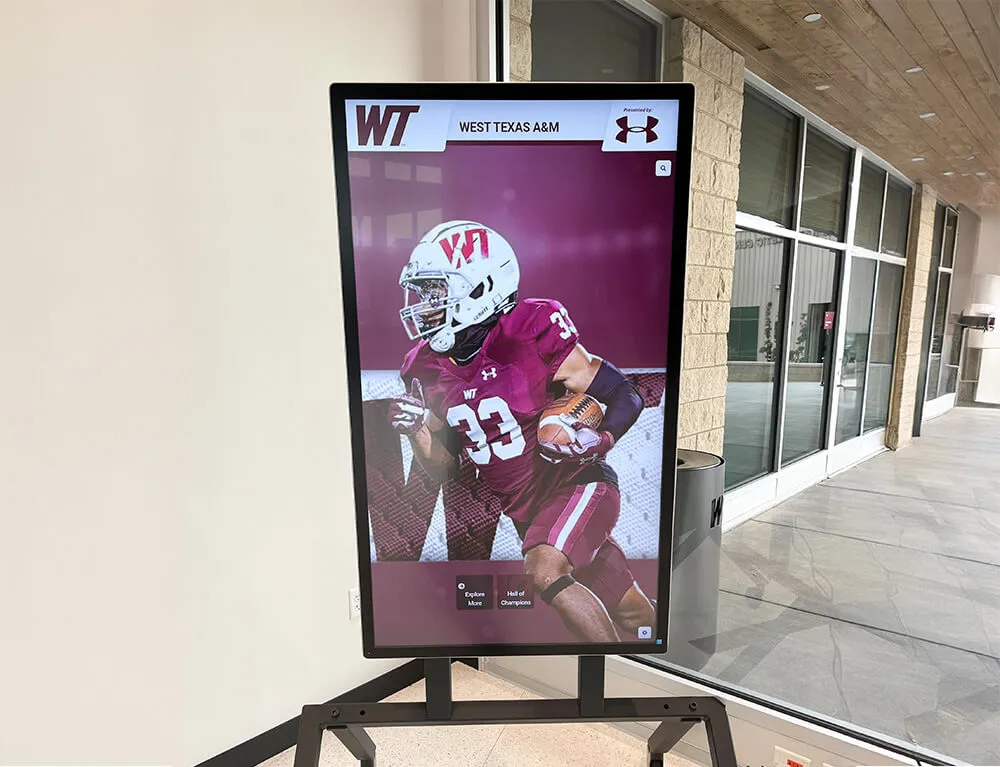
Touchscreen recognition displays in school lobbies invite every visitor — prospective families, current students, alumni, community members — to explore the school's full history of achievement
Starting or Strengthening an ITS Troupe
For drama directors or school administrators considering launching a new ITS troupe — or for schools with an existing troupe that needs revitalization — the path forward begins with the Educational Theatre Association.
How to Charter a New Troupe
New troupes are chartered through the EdTA. The process requires the school to have an active theater program with regular production activity, a faculty director who will serve as troupe sponsor, and confirmation that the school meets EdTA’s membership requirements for new charters.
The troupe number assigned at chartering is permanent. Even if a troupe becomes inactive for a period and later reactivates, its original number is preserved — a detail that matters to ITS culture because troupe numbers carry historical identity and tradition.
Key Steps for Inaugural Induction
The inaugural induction class sets the cultural tone for every subsequent year of the troupe. Criteria for founding members should reflect the ITS’s inclusive approach: the technical crew member who built every set for three years deserves induction as much as the student who performed leads. A founding class that visibly honors all forms of contribution establishes a chapter identity that will attract the right candidates going forward.
The inaugural ceremony does not need to be elaborate — but it does need to be dignified. A ceremony with clear structure, proper regalia presentation, and genuine acknowledgment of each inductee’s specific contributions creates the tradition that future students will aspire to join.
Documentation from Day One
Whatever recognition systems the school uses — a physical board, a digital display, a school website gallery — documenting the inaugural class with high-quality photos and complete records is foundational. These records become the historical base on which every subsequent year builds.
Schools building long-term recognition strategies benefit from thinking about the best way to capture and preserve a school’s history from the beginning — because the decisions made in year one determine how complete and accessible the program’s historical record will be in year twenty.
The question of what tools and platforms make long-term documentation sustainable is increasingly answered by digital systems designed specifically for school recognition. Understanding traditional versus digital school display options helps administrators make decisions that will serve the program for decades, not just the first few classes.
Frequently Asked Questions About the Thespian Society
What is the thespian society? The thespian society refers to the International Thespian Society (ITS), the premier honor organization for secondary school theater students. Founded in 1929, the ITS operates as a division of the Educational Theatre Association and serves active school chapters called troupes. Students earn Thespian Points for participation in school theater — performing, working technical crew, directing, and serving in other production roles — and are inducted once they meet the troupe’s point and character criteria.
How do you get into the thespian society? The standard national threshold for ITS induction is ten Thespian Points, earned through documented participation in school theater productions and activities. Different roles and levels of participation earn different point values. Most troupes also require a minimum GPA (typically 2.5 to 3.0) and faculty sponsor evaluation of character. Students who meet all criteria receive invitations to the induction ceremony; membership is by invitation, not by application.
What does ITS stand for? ITS stands for International Thespian Society, the official name of the thespian honor organization. The ITS has chapters (called troupes) in schools across the United States and internationally.
What do thespian society inductees wear at graduation? ITS inductees wear honor regalia in the society’s colors of royal blue and gold. The most common graduation regalia items are a gold or blue honor stole draped over the graduation gown, or blue-and-gold honor cords worn around the neck. Chapters may also offer medallions or pins for contexts outside of graduation.
Is the thespian society recognized by colleges? Yes. ITS membership is a recognized academic and extracurricular distinction that belongs on college applications. Admissions readers familiar with honor society conventions understand that ITS induction requires documented theatrical contribution, faculty evaluation, and academic standing — distinguishing it from general extracurricular activity listings.
What is a Thespian Point? Thespian Points are the unit of measurement the International Thespian Society uses to track and credit student participation in school theater. Different types of theatrical contribution earn different point totals. The standard induction threshold is ten points, though individual troupes may require more. Students can continue earning points after induction, and some troupes recognize members who reach higher cumulative totals with additional honors.
What is the ITS Thespian Festival? The ITS Thespian Festival is an annual national gathering organized by the Educational Theatre Association for International Thespian Society members and theater students broadly. The festival features performance showcases, college auditions, workshops, scholarship competitions, and recognition ceremonies. State-level festivals, organized by state EdTA chapters, provide similar opportunities closer to home for students who cannot attend the national event.
Can technical theater students join the ITS? Absolutely. This is one of the defining characteristics of the thespian society: it explicitly values and credits technical theater contributions alongside performance. A student who has never performed onstage but who has served as stage manager, lighting designer, or scenic construction crew for multiple productions earns Thespian Points for that work and is fully eligible for induction. The ITS was designed to honor the full ensemble of theater-makers, not only those who appear in the spotlight.
How does a school start an ITS troupe? Schools start new troupes through the Educational Theatre Association. The school must have an active theater program with regular productions, a faculty director willing to serve as troupe sponsor, and EdTA membership. The chartering process assigns the new troupe a permanent number. Schools interested in chartering should contact EdTA directly for current requirements and application materials.
Conclusion: Making Theater Achievement Visible at the Institutional Level
The thespian society is not a supplemental program for theater enthusiasts — it is a formal national honor organization with nearly a century of history, defined membership criteria, and the institutional infrastructure to recognize theatrical excellence with the same seriousness that schools apply to academic and athletic achievement. When schools treat ITS induction with the care it deserves — planning meaningful ceremonies, presenting regalia with appropriate formality, and building display systems that preserve inductee records visibly and permanently — they make a statement about institutional values that reaches everyone in the school community.
The student who has not yet decided how seriously to take their technical theater responsibilities, the sophomore who is wondering whether theater will be a genuine part of their high school identity, the junior who is not sure anyone notices how many hours she spends running light board: all of them receive an answer when they see the thespian society inductees recognized in the lobby display, when they watch the induction ceremony, when they see the ITS stole at graduation.
That answer is: we see you. What you do here matters. And we will remember it.
Schools that invest in comprehensive performing arts recognition — from meaningful induction ceremonies to permanent digital wall-of-fame displays — do not just honor individual students. They build a culture in which theatrical excellence becomes something worth striving for, year after year, production after production, class after class.
Build a Theater Wall of Fame That Honors Every Inductee
See how interactive digital recognition displays let schools showcase thespian society inductees, production histories, alumni performers, and performing arts achievements in searchable profiles that families, students, and visitors can explore any time — without running out of wall space.
Explore Digital Recognition Solutions