All-state is the highest athletic honor a high school student-athlete can receive within their state’s competitive system. When a player earns all-state recognition, they have been identified — by coaches, sports writers, or a state athletic association — as one of the best performers at their position in the entire state, across every school competing in their sport and classification. It is a distinction that sits above all-conference and all-district recognition because it signals excellence not just within a region but against the full depth of a state’s athletic talent.
For athletic directors and recognition program managers, all-state designations create one of the most meaningful data points in a school’s competitive history. These are the athletes who defined what the program was capable of achieving. Understanding what all-state means — how the honor is earned, how it compares to similar designations, and how schools document and display it — helps athletic departments recognize these athletes in ways that serve the program for decades.
All-state recognition doesn’t expire the way season records sometimes do. Decades after an athlete’s last game, the designation still communicates something concrete: this person was elite at their level. How schools choose to preserve and display that honor is one of the most visible statements an athletic program makes about its values.

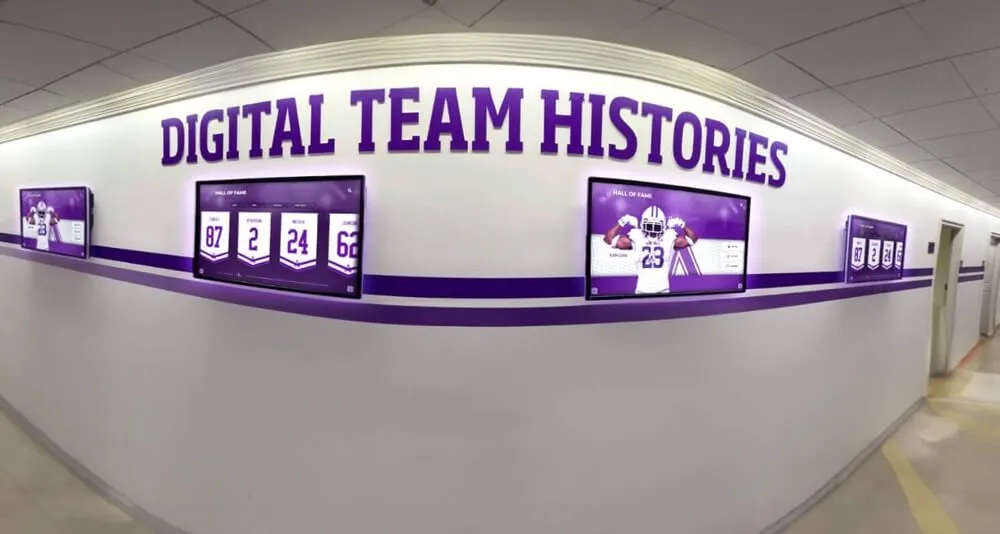
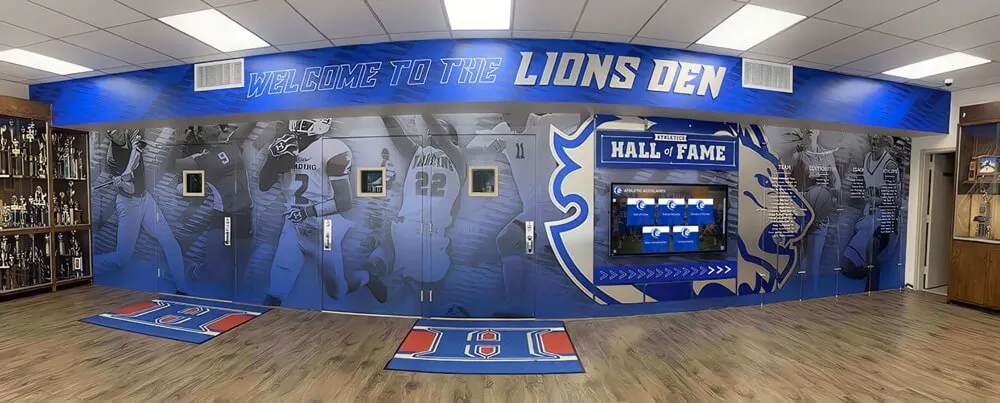
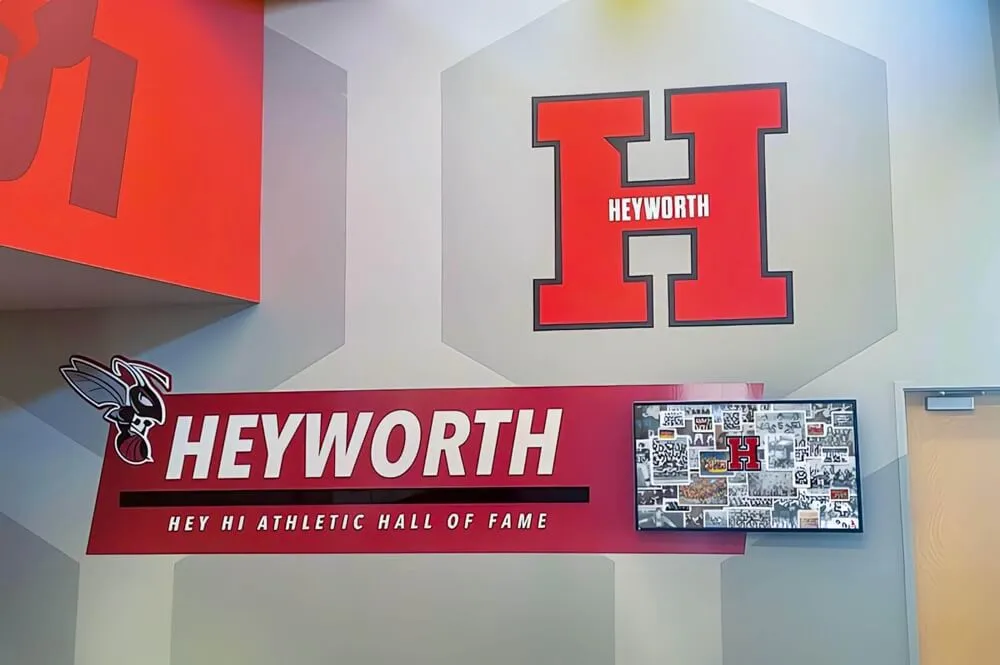
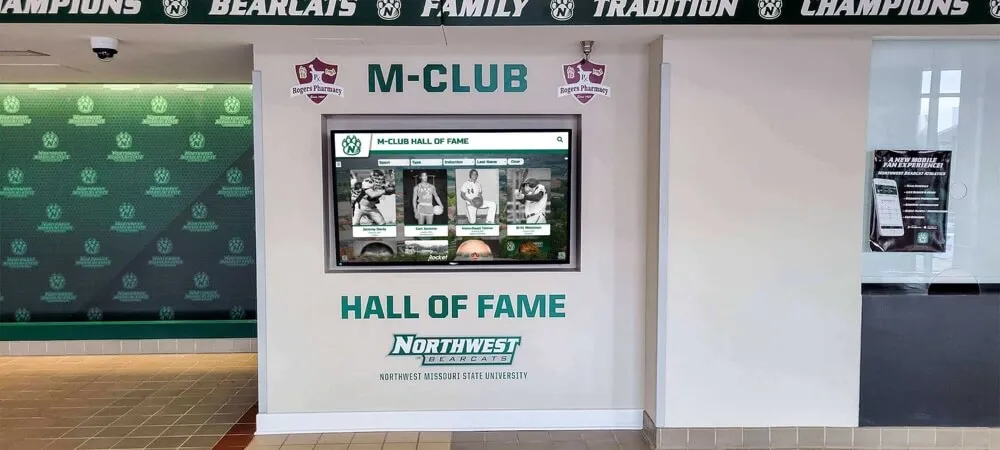
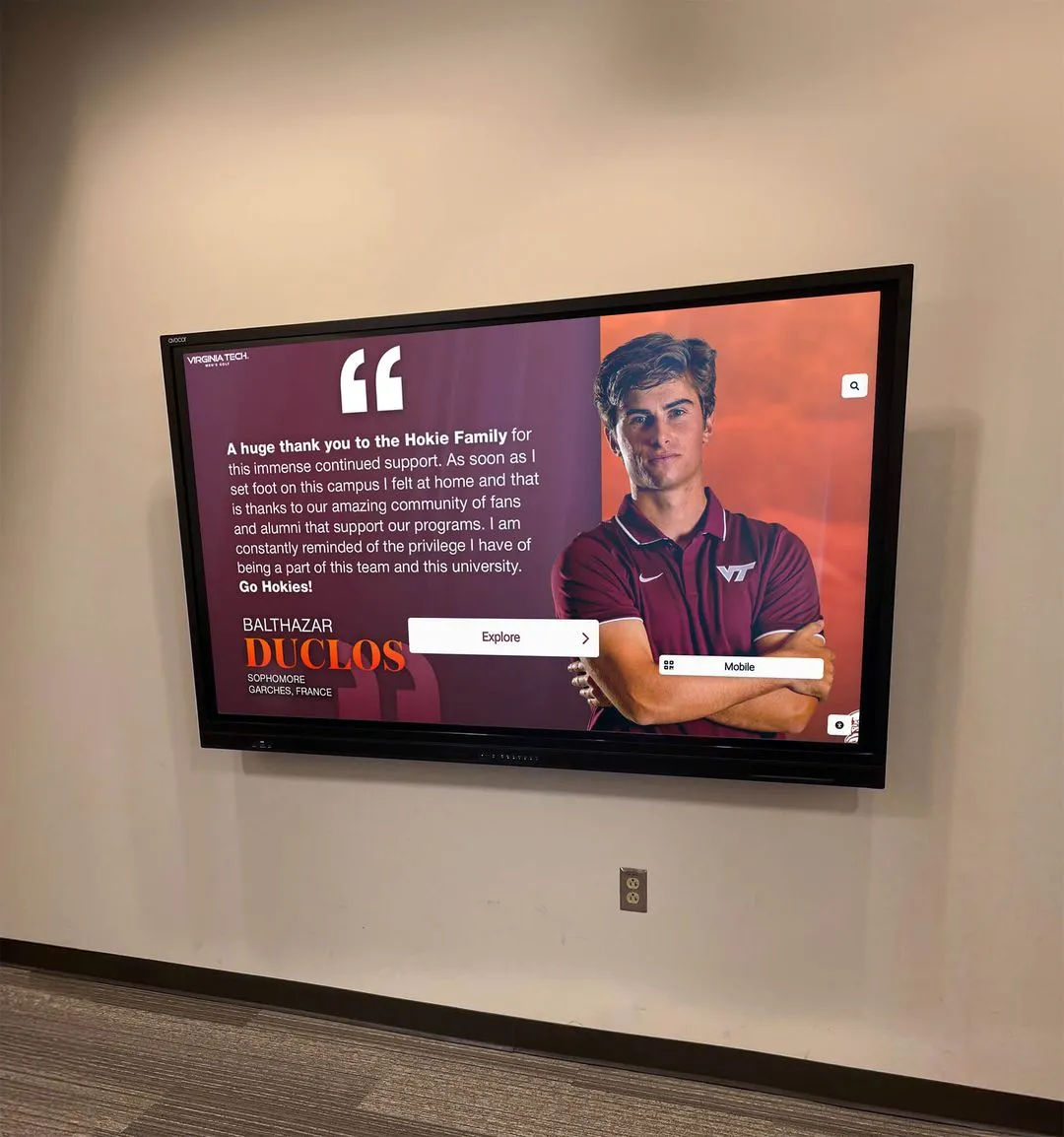
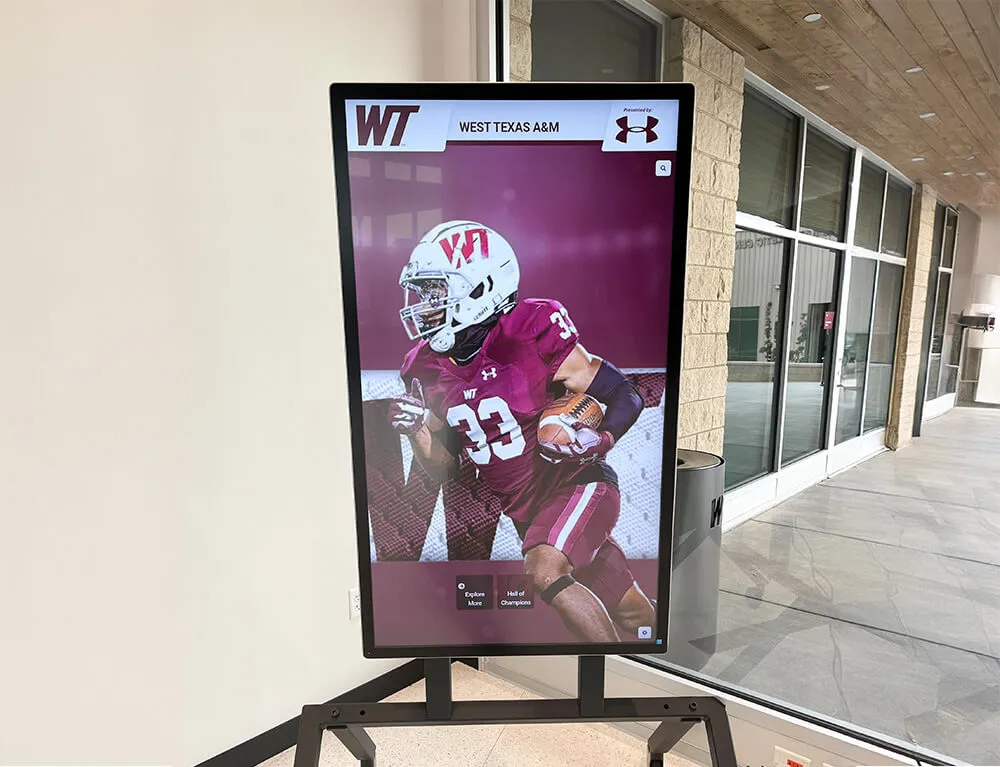
Athletic recognition displays in school lobbies bring all-state honors and program history into daily view for current athletes, recruits, and visiting families
What Does All-State Mean in High School Sports?
All-state designation identifies the top high school athletes in a given sport within a single state for a specific season. The honor is the highest tier of individual recognition available to a high school athlete, positioned above regional, district, and conference awards.
The practical meaning of all-state depends on which organization grants it, since multiple bodies often release parallel all-state teams in the same sport. In most states, all-state teams are selected by at least one of the following:
- State athletic associations — the governing body for high school sports in each state, which may conduct coaches’ polls or work with affiliated organizations to compile selections
- Coaches’ associations — sport-specific organizations that poll member coaches to identify top athletes by position and classification
- State media organizations — newspapers and digital outlets that assign beat writers or editors to vote on statewide teams; these selections are sometimes branded as “All-State” teams even when conducted independently of the state governing body
- Private organizations and recruiting services — third-party athletic services that release their own all-state teams, often with greater detail by division or classification level
First Team, Second Team, and Honorable Mention
All-state recognition typically comes in tiers rather than a single flat list:
| Tier | Meaning |
|---|---|
| First-team all-state | The best players at each position statewide; the most prestigious tier |
| Second-team all-state | Outstanding performers who narrowly missed first-team selection |
| Honorable mention all-state | Athletes recognized among the best in the state but not in the top two tiers |
First-team all-state carries the most weight for hall of fame nomination purposes and long-term recognition programs. Many athletic halls of fame treat first-team all-state as a qualifying criterion, while honorable mention selections may or may not meet minimum standards depending on each institution’s published eligibility rules.
Classification-Based All-State
Most states organize their all-state selections by enrollment classification — separating small schools (Class 1A, 2A) from mid-size (3A, 4A) and large schools (5A, 6A, or equivalent designations in your state’s system). This means a first-team all-state linebacker at a small school is recognized as the best at their position among schools of comparable size — an achievement equal in significance to any other classification, not a lesser one.
When documenting all-state honors for display purposes, always note the classification alongside the team designation. An athlete who earned Class 3A first-team all-state in wrestling deserves the same clarity in their permanent record as an athlete from the largest classification.
How Are All-State Athletes Selected?
The selection process varies by state and by sport, but most follow one of four general approaches:
1. Coaches’ poll — Head coaches in the sport vote for athletes from schools they did not coach, often limited to players from their region. Votes are aggregated statewide, with the athletes earning the most votes named to each team. This format draws on the expertise of people who competed directly against the nominees.
2. Media voting — Sports writers and editors who covered the state’s games vote on all-state teams, drawing on season-long observation rather than a single poll moment. Media-selected all-state teams are common in football and basketball, where coverage depth supports informed statewide voting.
3. State association selection committee — Some state athletic associations convene a committee of coaches, officials, or administrators that reviews nominations and selects all-state athletes using published criteria. This format provides a structured, documented process but involves fewer voters than a broad poll.
4. Statistical thresholds plus nomination — Some individual-event sports, particularly track and field, swimming, and cross country, use qualifying performance standards. Athletes who hit a defined benchmark automatically qualify for all-state consideration, with final selections reflecting the highest performances in each event.
Understanding the selection method helps athletic directors contextualize an honor when building recognition displays. A coaches’ poll all-state selection represents peer recognition from the coaches who competed against the athlete. A statistical qualifier represents documented performance benchmarks. Both are significant — and both deserve accurate documentation in the permanent record.

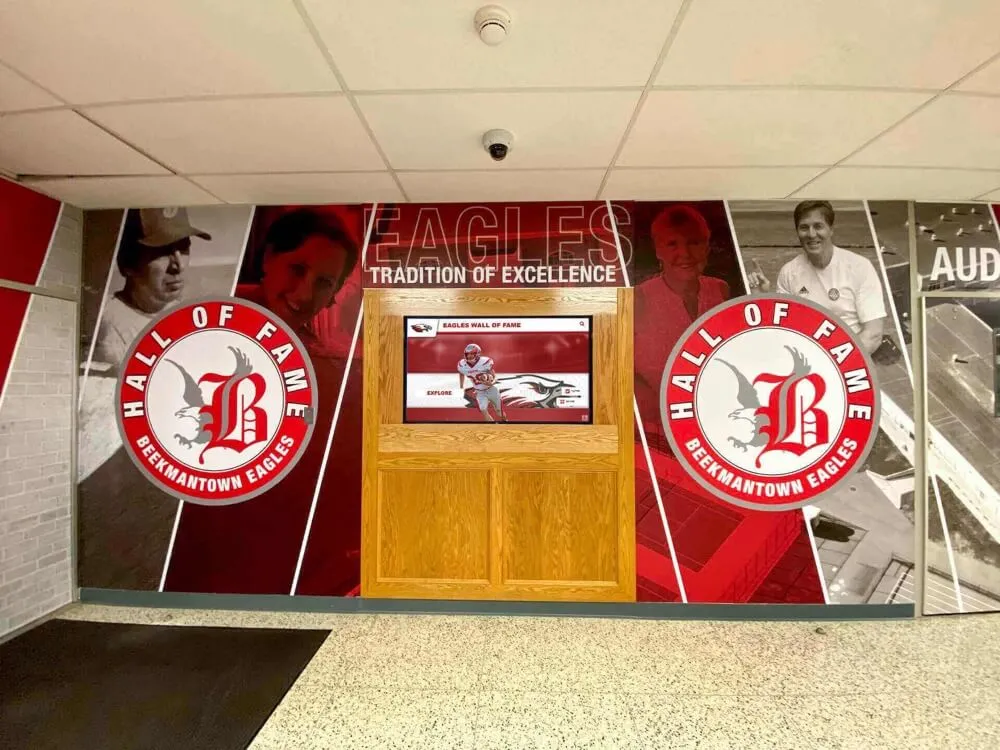
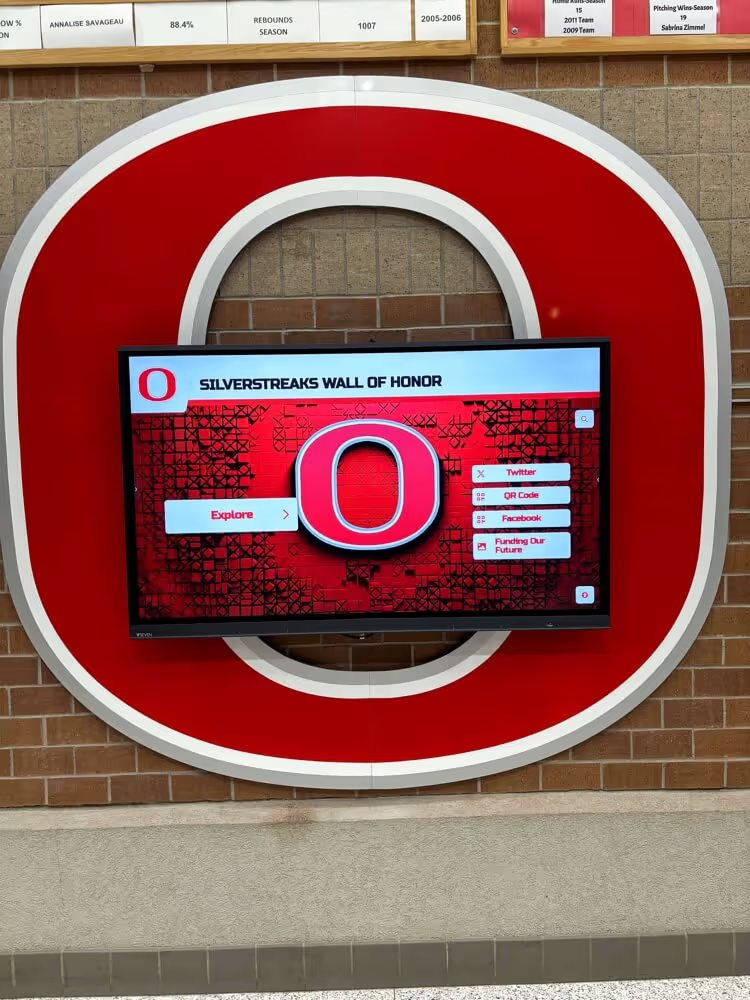
Athletic halls of fame frequently use all-state designations as eligibility criteria for the highest tier of permanent school recognition
All-State vs. All-Conference vs. All-Region: What’s the Difference?
These three recognition tiers are frequently confused by families and community members — and sometimes by athletic administrators building recognition programs. Here is a clear breakdown:
| Award | Scope | Who Selects |
|---|---|---|
| All-state | Best in the entire state by classification | Coaches statewide, media, state body |
| All-region | Best in a geographic section of the state | Regional coaches or media |
| All-district | Best in a local district or sub-regional group | District-level coaches or media |
| All-conference | Best within a specific athletic conference | Conference coaches or administrators |
All-state is universally more prestigious than conference or district recognition because the comparison pool is larger and the selection typically involves competition from more diverse, higher-talent programs. That said, all-conference and all-district honors are meaningful in their own right and should not be omitted from recognition programs.
For hall of fame and permanent display purposes, the hierarchy matters. Many institutions use all-state recognition as a qualifying criterion for hall of fame consideration, while all-conference and all-district honors count as supporting evidence. Building weekly and seasonal top-performer recognition programs is a strong complement to the larger annual recognition cycle, helping schools capture the full arc of an athlete’s career rather than only the capstone awards.
Why All-State Recognition Matters for Schools
All-state honors benefit schools beyond the individual athlete who earns them. The designation carries institutional weight in several important contexts:
Recruiting signal: When a school has produced multiple all-state athletes, it signals to incoming student-athletes and their families that the program develops players to elite levels. Schools that document and display all-state honors create a compelling case for what their program can help an athlete achieve.
Alumni engagement: Former athletes who earned all-state recognition often maintain the strongest emotional connections to their programs. Recognition that acknowledges their achievement — especially permanent recognition that new generations of students encounter — drives alumni giving and event attendance over time.
Program identity: All-state athletes become part of a school’s competitive legacy. When current athletes see a record of all-state honorees going back decades, they understand they’re competing within a program with standards worth continuing.
Hall of fame pipeline: For athletic directors building hall of fame nomination processes, all-state designations provide one of the most reliable and objective eligibility criteria available. Documenting them carefully — including sport, year, tier, and selecting body — creates the evidentiary record that nominations depend on.
Cheer banquet awards and formal recognition ceremonies demonstrate the same principle across program types: when recognition is intentional and specific, it resonates differently than generic acknowledgment. All-state recognition deserves the same intentionality.
How to Recognize All-State Athletes at Your School
Recognition programs for all-state athletes typically operate at two levels: immediate public acknowledgment when the honor is announced, and permanent documentation that preserves the achievement for future generations.
Immediate Recognition
When an athlete earns all-state designation, effective immediate recognition steps include:
- Public announcement — school PA systems, social media channels, and local media releases that announce the honor during or immediately after the season
- Recognition at the next home event — introducing all-state athletes to the crowd before or during the next game or event creates a visible moment of community acknowledgment
- School board or administration recognition — presenting all-state athletes at a board meeting or school assembly ensures the broader community sees the achievement
- Local newspaper coverage — even in a digital era, local newspaper coverage of all-state honorees provides a clipping record that families save and that program archives can reference decades later
- Season-ending banquet recognition — athletic banquets that specifically name all-state athletes and explain what the honor represents provide a formal ceremony that athletes and families remember long after the season ends
Permanent Documentation
The longer-term challenge for athletic departments is ensuring all-state honors don’t disappear into filing cabinets or remain accessible only in institutional memory. Permanent recognition approaches include:
Dedicated honor boards — athletic hallways and trophy areas should distinguish all-state athletes from general award recipients. A dedicated section for all-state honorees organized by sport and year creates a visible record that grows over time without cluttering general display areas.
Hall of fame inductee profiles — for athletes who meet full hall of fame criteria, all-state designations should be prominently featured in their inductee profile — both in any physical plaque and in digital profile systems accessible to current students and visiting alumni.
Digital athletic archives — systems that maintain searchable profiles for every all-state athlete the school has produced allow current students, parents, and recruits to explore the program’s history on demand. How institutions approach digital archive and historical preservation offers useful structural parallels for athletic departments building similar systems at the school level.
Annual yearbook documentation — coordinating with yearbook staff to ensure all-state honors appear consistently in the publication provides a secondary archive trail that supplements athletic department records and reaches the broader school community.
Display Ideas for All-State Honors in School Athletic Spaces
The physical and digital display of all-state recognition is where abstract honor becomes visible institutional pride. Here are the most effective display approaches for different contexts and budgets.
Traditional Physical Displays
Dedicated all-state honor board: A specific wall section or display board listing all-state athletes chronologically by sport creates a visual record that grows year over year. Consistent typography — name, sport, year, team designation — and school colors give the display institutional identity that distinguishes it from general recognition.
Trophy case integration: Trophies, plaques, and physical memorabilia from all-state athletes benefit from clear labeling that identifies the specific award. A framed certificate or engraved nameplate with the all-state designation prevents the award from being confused with lower-tier recognition.
Championship banner context: When all-state athletes competed on championship teams, integrating individual recognition with team championship banners creates a contextual display connecting individual excellence to collective success — a combination that speaks to both current athletes and returning alumni.
Senior hallway displays: Annual senior photo boards or hallway displays that highlight each class’s all-state honorees create year-by-year visual records that remain visible across the school and accumulate into a meaningful archive over time.
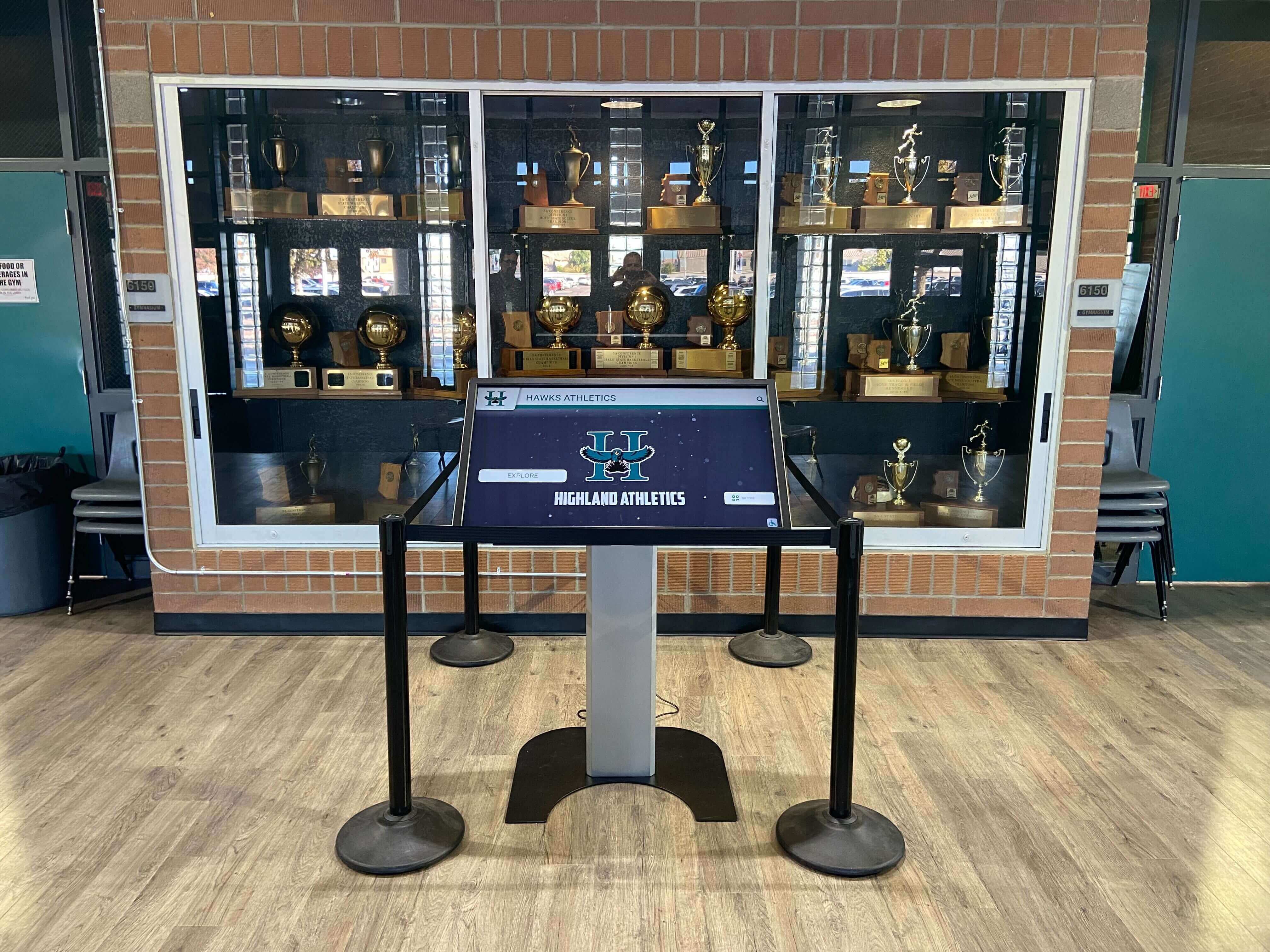
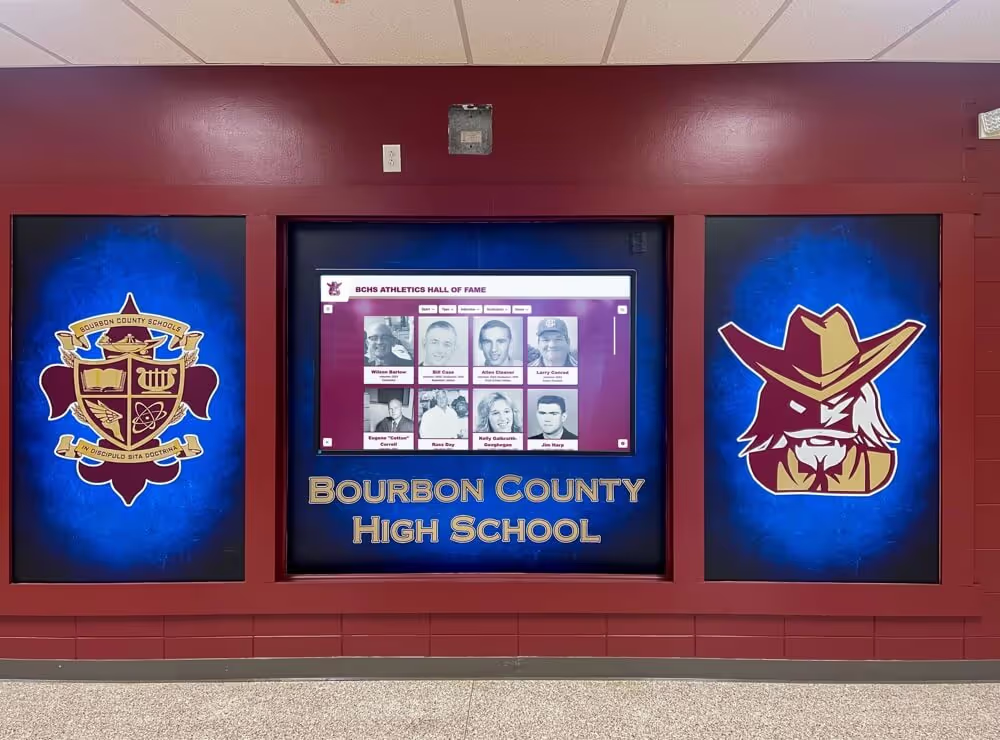
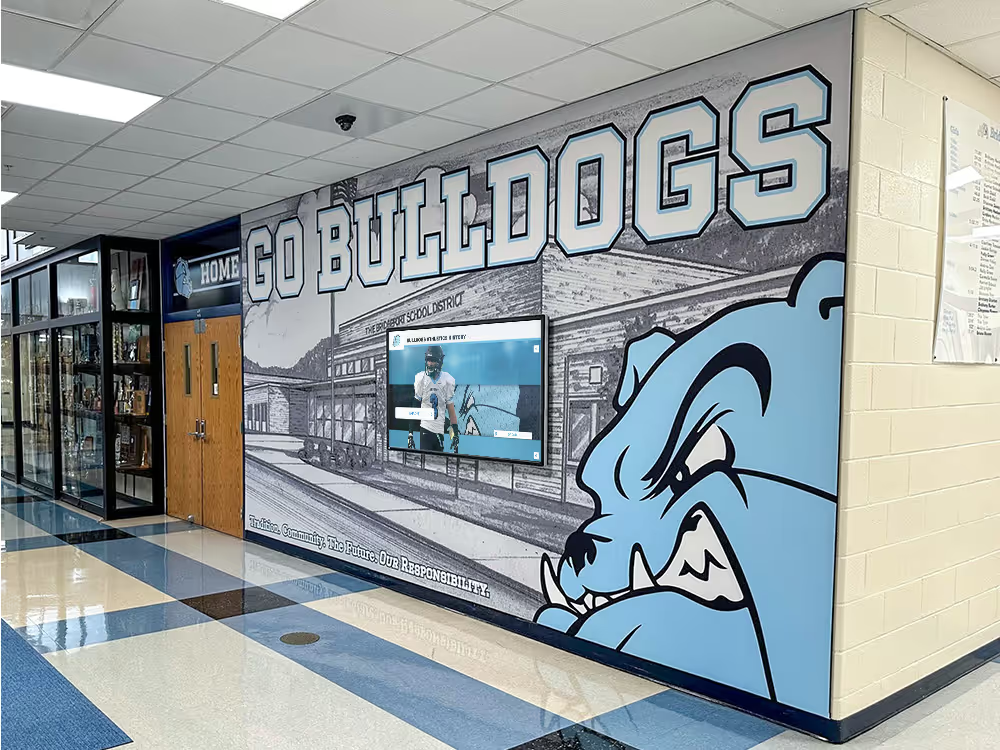
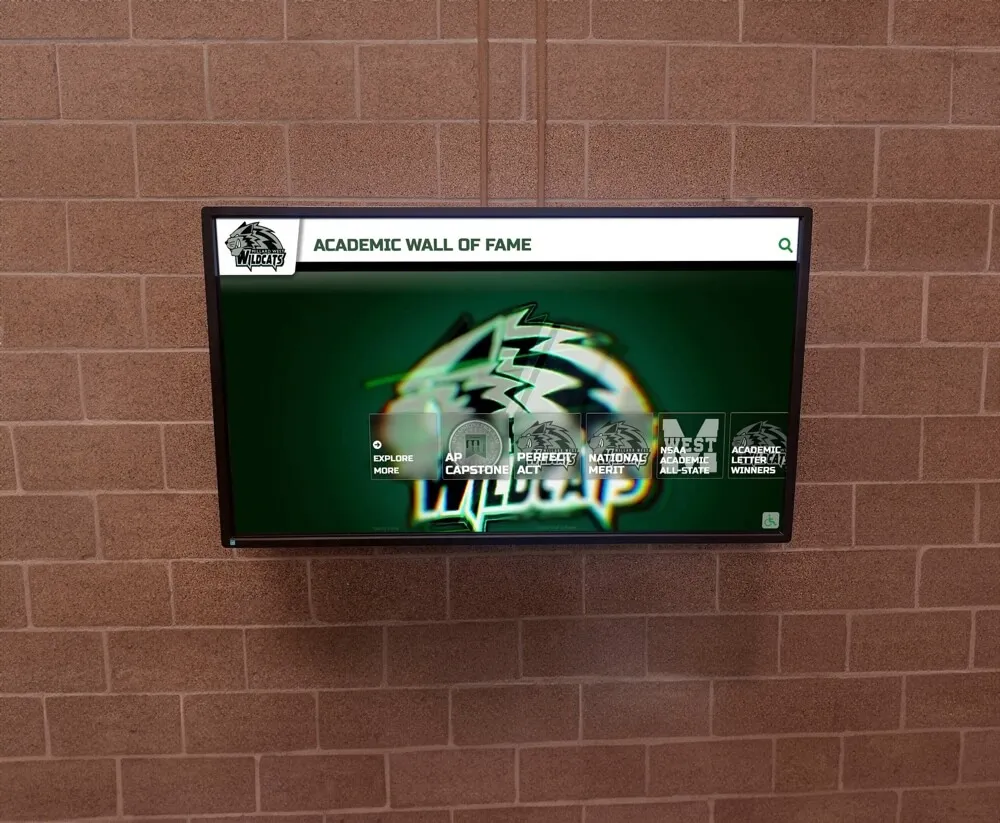
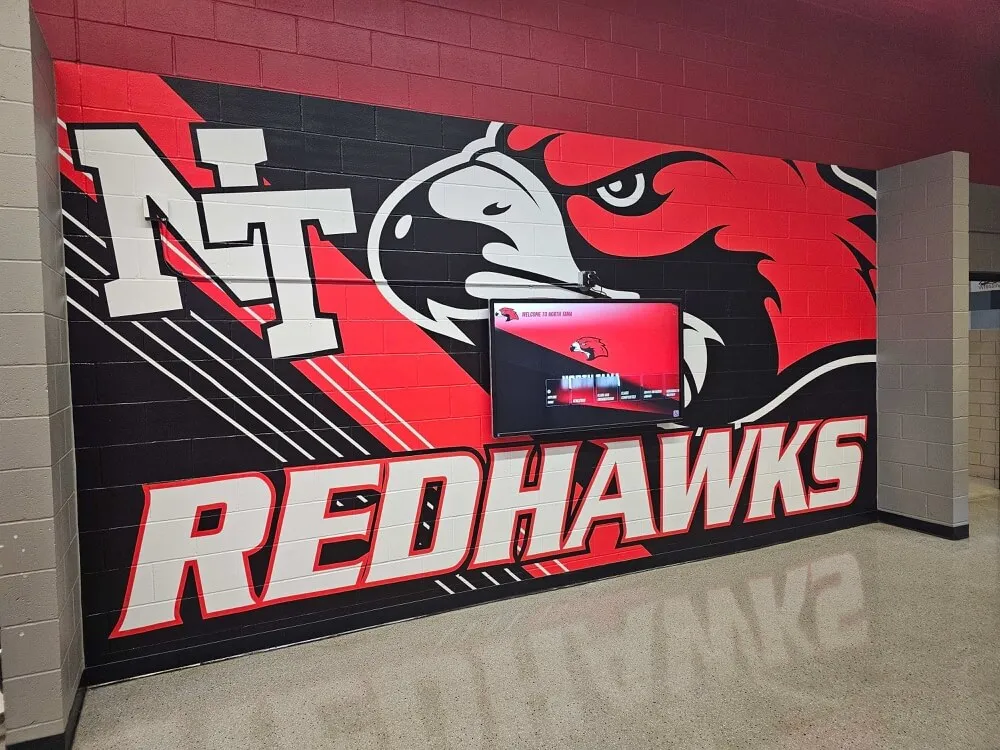
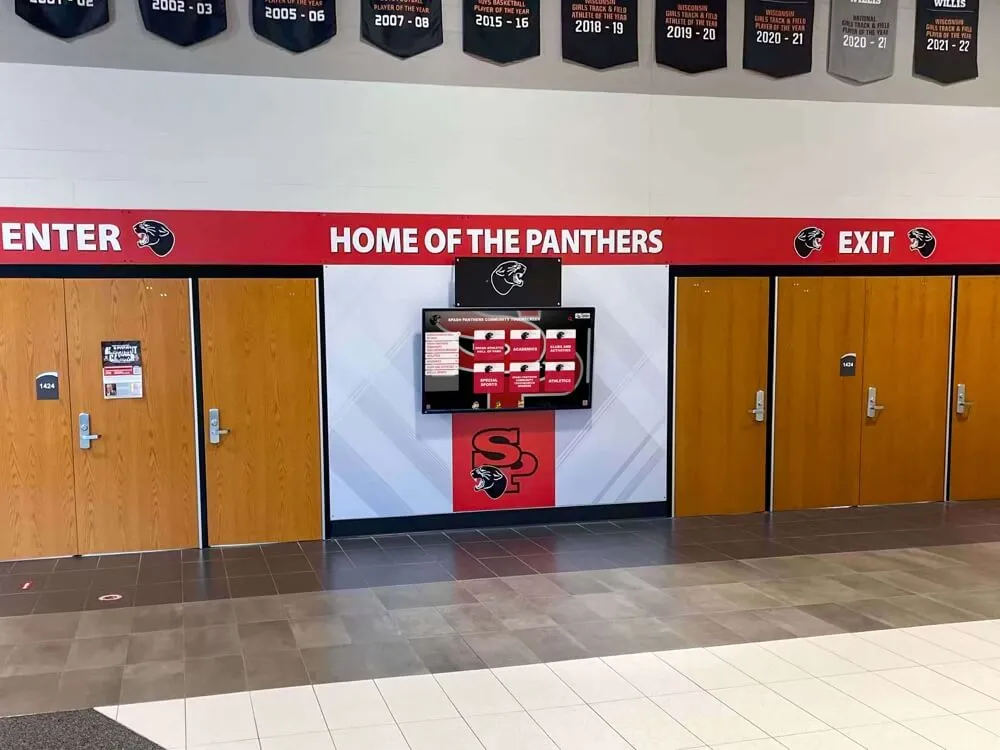
Touchscreen kiosks integrated with physical trophy cases allow schools to display the complete history of all-state athletes without the wall-space limitations that constrain traditional displays
Digital Touchscreen Displays
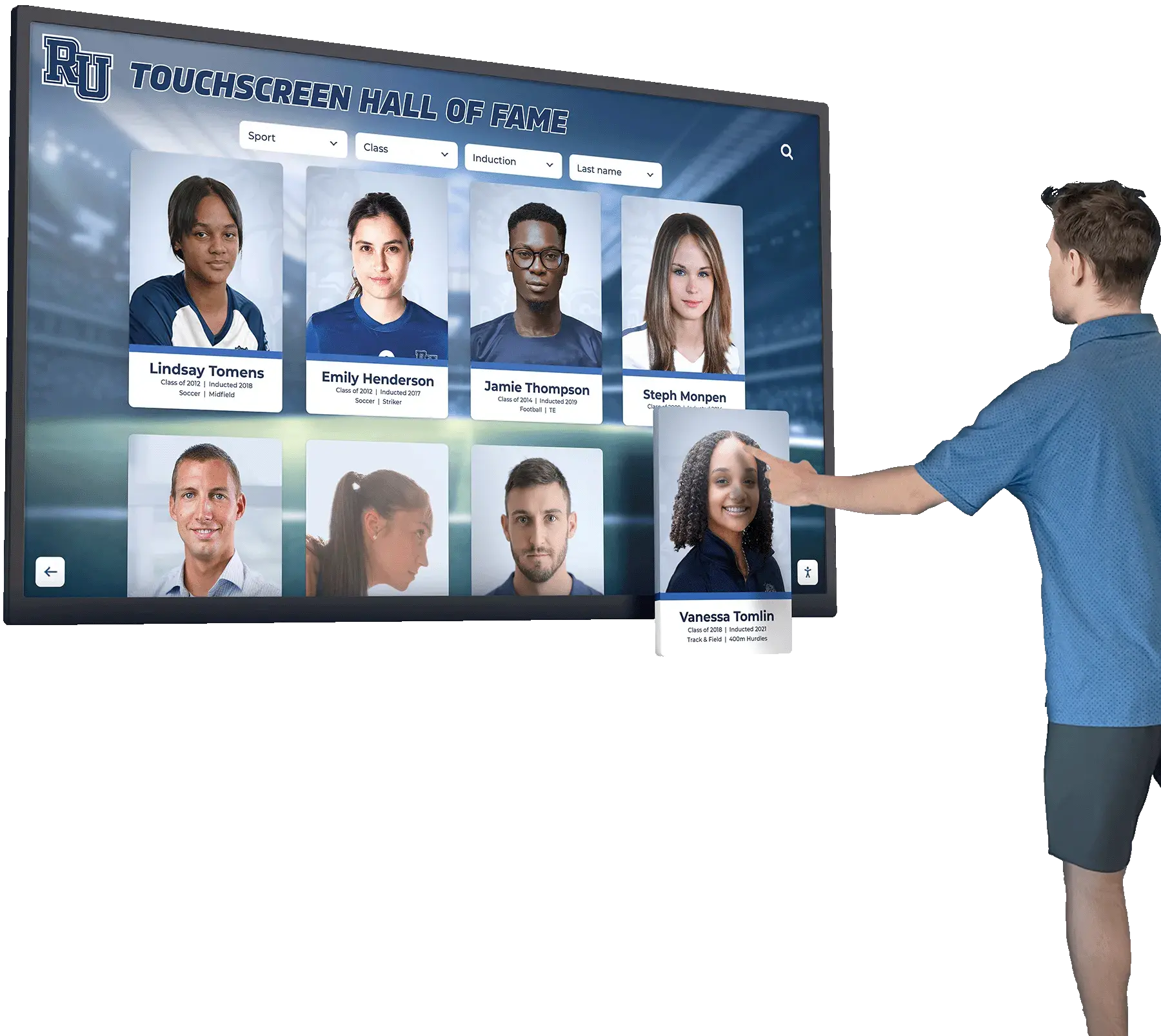
Interactive touchscreen recognition systems address the most persistent limitation of traditional physical displays: wall space. A school that has been recognizing all-state athletes since the 1960s quickly discovers that physical display space runs out. Digital systems resolve this completely while adding content depth that plaques and boards cannot match.
A touchscreen recognition display for all-state athletes typically includes:
- Complete historical roster — every all-state athlete the school has produced, searchable by name, sport, year, or classification
- Individual athlete profiles — photographs, career statistics, the specific all-state honor earned, and post-graduation achievements when available
- Sport-by-sport filtering — parents and recruits exploring a specific program can see all-state honorees going back to the sport’s founding at the school
- Year-by-year browsing — alumni visiting during homecoming can find their class year and see which peers earned all-state recognition during their era
- Record board integration — all-time athletic records displayed alongside all-state honors create a complete performance archive rather than a narrow awards list
- QR code access — visitors pull up full athlete profiles on their own phones, extending engagement beyond the physical display location
Rocket Alumni Solutions has installed interactive hall of fame and recognition displays at 600+ institutions, with systems designed specifically to highlight individual honors like all-state designations alongside team championships, record-breaking performances, and program milestones. The platform’s cloud-based management system allows athletic directors to add new all-state honorees immediately after the season-ending announcement — no waiting for physical fabrication or vendor coordination.
Creating recognition walls with lasting visual and narrative impact demonstrates the design principles that translate directly to athletic recognition: clear hierarchy, consistent visual language, and content structures that grow gracefully over time without requiring physical replacement.
Hallway and Lobby Placement
The location of all-state recognition displays determines who actually encounters them. High-traffic placement — main athletic facility lobbies, hallways between locker rooms and competition venues, school main entrance corridors — maximizes organic exposure across all visitor types.
Recognition programs at school community events highlight how placement and timing combine to create peak recognition moments. All-state displays positioned in spaces where homecoming alumni naturally gather become conversation anchors that reconnect former athletes with the program’s history in a way that isolated trophy cases rarely achieve.
All-State Recognition Checklist for Athletic Directors
Use this checklist to ensure your school’s all-state recognition program captures and displays honors completely from season end through permanent archive.
Documentation
- Record all-state designations immediately when announced — name, sport, year, tier, and selecting organization
- Note the classification (1A, 2A, 3A, etc.) alongside each designation for accurate historical context
- Collect official press releases, certificates, or award documentation from the selecting body
- Photograph the athlete holding their award certificate or trophy for archive and display use
- Clip and file newspaper coverage featuring the announcement as a secondary record
Immediate Recognition
- Announce the honor through the school PA system, official social media, and local media contacts
- Recognize the athlete publicly at the next school-wide event or home game
- Alert the school principal and communications office for newsletter or website coverage
- Coordinate with yearbook staff to include the honor in the annual publication
Permanent Display
- Add the athlete’s name to the all-state honor board in the athletic facility
- Update the hall of fame or digital recognition system with the full designation and supporting profile
- File complete documentation in the permanent athletic archive for future hall of fame nominations
- Evaluate whether the athlete qualifies for hall of fame consideration based on published eligibility criteria
Alumni Follow-Up
- Add the all-state athlete to the school’s alumni athletic contact database
- Send a congratulatory communication from the athletic director when the honor is announced
- Follow up at graduation to collect post-high-school plans for the archive
- Invite all-state alumni to participate in future recognition events and homecoming celebrations
Digital vs. Traditional Display: Choosing the Right Format
Both physical and digital displays serve legitimate purposes, and many schools use both. The choice depends on budget, available space, the volume of all-state honorees the program has produced over time, and the visitor experience the athletic department wants to create.
| Factor | Traditional Physical Display | Digital Touchscreen Display |
|---|---|---|
| Initial cost | Lower | Higher |
| Long-term scalability | Limited by wall space | Unlimited capacity |
| Content depth per athlete | Name, year, brief designation | Full profiles, photos, video, statistics |
| Update process | Physical fabrication required | Remote, immediate cloud update |
| Visitor interactivity | None | Searchable, filterable, explorable |
| ADA accessibility | Varies by design | WCAG 2.1 AA compliant platforms available |
| Ongoing maintenance | Periodic physical upkeep | Platform support and software updates |
For schools with programs that have been producing all-state athletes for many decades — and for schools that anticipate continuing to add honorees annually — digital systems offer a long-term structural advantage. The 50th all-state athlete added to a touchscreen display requires no additional wall space and receives a richer profile than any physical plaque could provide.
Athletic recognition tier structures and stewardship frameworks illustrate how institutions build coherent systems that distinguish different recognition levels — a principle that applies directly to managing all-state honors alongside conference awards, hall of fame inductees, and record holders within a single program.
Frequently Asked Questions About All-State in High School Sports
What does all-state mean in high school sports?
All-state recognition identifies the top high school athletes in a given sport within a specific state, organized by school enrollment classification. It is the highest individual athletic honor available at the high school level and requires selection by coaches, sports media, or a state governing body — not self-nomination or participation alone.
Is all-state or all-conference more prestigious?
All-state is more prestigious. All-conference recognition is limited to athletes within a specific athletic conference, while all-state selection pools athletes from across the entire state. Both honors are worth recognizing permanently, but all-state carries greater weight in hall of fame evaluation and serves as a stronger credential in post-high-school athletic contexts.
Does every sport have an all-state team?
Not universally, but most mainstream high school sports — football, basketball, baseball, softball, soccer, swimming, track and field, wrestling, volleyball, cross country, and many others — have recognized all-state selections in most states. The selecting organizations and formats vary by state and by sport, so athletic directors should verify which bodies are recognized as authoritative in their state’s system.
How long should all-state athletes be recognized?
Permanently. All-state designations don’t expire with seasons or rosters. Schools that maintain consistent documentation — and display systems that can grow without physical limitation — create archives that serve current athletes, recruits, alumni, and community members indefinitely.
Can an athlete earn all-state recognition in multiple years?
Yes, and repeat all-state designations are significant for recognition programs. A two-time or three-time all-state athlete represents a level of sustained excellence that single-year honorees don’t, and this distinction should be reflected clearly in display systems and hall of fame profiles rather than collapsed into a single undifferentiated entry.
What proof does a school need to document an all-state designation?
Official documentation typically includes press releases or announcements from the selecting organization, newspaper coverage of the announcement, and any physical certificates or awards presented to the athlete. Schools building digital archives should scan and file these documents immediately — locating them years or decades later becomes significantly more difficult as staff turns over and institutional memory fades.
Should honorable mention all-state count toward hall of fame eligibility?
This depends on each institution’s written criteria. Many halls of fame require first-team or second-team all-state as a qualifying standard, treating honorable mention as supporting evidence rather than a primary qualifier. Institutions should address this explicitly in their governing documents to ensure consistent evaluation across all future candidate reviews.
Build a Permanent Home for Your School's All-State Legacy
Rocket Alumni Solutions builds interactive touchscreen recognition displays that showcase all-state athletes, championship teams, and complete program histories — with unlimited inductee capacity, remote cloud management, ADA WCAG 2.1 AA compliance, and professional installation at 600+ institutions nationwide.
Request Your Custom DemoHonoring All-State Athletes for the Long Term
All-state recognition represents something athletic departments should treat seriously: evidence, confirmed by coaches or journalists across an entire state, that one of your athletes was among the best in their sport at their level. That is not a passing compliment. It is a documented, peer-verified achievement that reflects on every coach, administrator, and program member who contributed to that athlete’s development.
The schools that handle all-state recognition well don’t simply post on social media and move on. They document the honor immediately, recognize the athlete publicly and personally, and build that recognition into a permanent record that current students encounter years later — fueling their own aspirations and their understanding of what this program makes possible.
Whether your school uses a physical display board, a digital touchscreen system, or a combination of both, the most important element is institutional commitment: a clear decision that all-state athletes will be recognized permanently, accurately, and in a format that serves both the honored athletes and every student who comes after them.
Learn more about Rocket Alumni Solutions’ Digital Wall of Fame platform and how it helps schools build lasting recognition for all-state athletes, hall of fame inductees, and the full history of a program’s competitive achievements.