Wrestling Rules Explained: Scoring, Penalties, and Match Format for High School and College
- Home /
- Digital Wall of Fame Blog - Recognition Display Insights & Resources /
- Wrestling Rules Explained: Scoring, Penalties, and Match Format for High School and College

The Easiest Touchscreen Solution




Live Example: Rocket Alumni Solutions Touchscreen Display
Interact with a live example (16:9 scaled 1920x1080 display). All content is automatically responsive to all screen sizes and orientations.
Wrestling remains one of the oldest and most demanding sports in athletic competition, combining explosive power, technical skill, and strategic thinking in intense one-on-one matchups. Yet for parents watching their first youth tournament, fans new to the sport, or even athletes transitioning between competitive levels, wrestling rules can feel confusing—from the rapid-fire hand signals judges make to the different point values awarded for various moves to the penalties that can shift match momentum in seconds.
Understanding wrestling scoring, penalties, and match formats transforms the viewing experience from bewildering chaos into appreciation for the sport’s tactical depth and athletic excellence. The difference between a takedown and a reversal matters significantly in close matches. Knowing when penalties accumulate into point deductions helps you understand why coaches react so intensely to certain referee calls. Recognizing format differences between high school folkstyle wrestling and college or international freestyle helps explain why the same athlete might compete differently across contexts.
This comprehensive guide demystifies wrestling rules across competitive levels—breaking down the point-by-point scoring system, explaining common penalties and their consequences, comparing folkstyle wrestling rules used in American scholastic competition with freestyle and Greco-Roman formats, and clarifying how match formats differ between youth, high school, and college levels. Whether you’re a wrestling parent trying to follow tournament action, a new coach learning officiating basics, or a high school athlete preparing for college competition, this guide provides the knowledge you need to understand what’s happening on the mat.
Wrestling’s rule system rewards aggressive, technically sound wrestling while penalizing stalling and dangerous techniques, creating fast-paced action where matches can turn on split-second execution and referee decisions that knowledgeable observers immediately recognize but newcomers often miss.

Modern recognition systems celebrate wrestling achievements alongside other sports, preserving match records and championship accomplishments
Understanding Wrestling’s Three Main Styles
Before diving into specific rules, understanding which wrestling style you’re watching clarifies why certain techniques are legal and how scoring works.
Folkstyle Wrestling (American Scholastic)
Where It’s Used The dominant style in United States scholastic competition:
- Youth wrestling leagues and clubs
- Middle school and junior high programs
- High school wrestling (all state associations)
- NCAA college wrestling (Division I, II, III)
- Some post-collegiate club competitions
Folkstyle wrestling emphasizes control and dominance rather than pure explosive action, rewarding wrestlers who maintain advantageous positions throughout matches.
Distinctive Folkstyle Characteristics Key differences from international styles:
- Emphasis on mat wrestling and control positions
- Escape and reversal points rewarding bottom wrestler’s ability to get free
- Riding time (college) or advantage time that can award bonus points
- Gradual penalty system for stalling
- Greater focus on pinning and defensive wrestling
- Restrictions on certain throws and holds
This style developed specifically for American educational settings, balancing spectator appeal with safety considerations and emphasizing wrestling fundamentals.
Freestyle Wrestling (International/Olympic)
Where It’s Used The most widely practiced style globally:
- Olympic Games wrestling competition
- World Championships and international tournaments
- Most international competitions outside Greco-Roman
- Some club wrestling in the United States
- Regional training centers preparing for international competition
Freestyle wrestling rewards explosive, attacking wrestling with big throws and rapid action.
Freestyle Distinctions What makes freestyle different:
- Attacks allowed on both upper and lower body
- No points for escapes (wrestlers restart standing)
- Larger point values for big throws
- Exposure points for forcing opponent’s back toward mat
- Pushout points for driving opponents outside boundary
- Victory by technical superiority (large point lead)
- Passivity penalties for wrestlers avoiding action

Schools preserve wrestling program achievements through permanent recognition displays showcasing individual and team accomplishments
Greco-Roman Wrestling
Where It’s Used The other Olympic wrestling style:
- Olympic Games (separate from freestyle)
- World Championships in Greco-Roman division
- International tournaments and competitions
- Some specialized clubs in the United States
- Military and training center programs
Greco-Roman’s unique restrictions create dramatic upper-body throws and clinch wrestling.
Greco-Roman Restrictions What sets this style apart:
- No attacks below the waist allowed—most distinctive rule
- Exclusive emphasis on upper-body techniques
- Spectacular throws and lifts characteristic of the style
- Similar scoring to freestyle for upper-body techniques
- Exposure and pushout points
- Passivity system forcing action
Most American wrestlers focus on folkstyle until pursuing international competition, then adapt techniques and strategies to freestyle or Greco-Roman requirements.
Learn how schools recognize wrestling achievements across all styles through comprehensive athletic recognition programs.
Folkstyle Wrestling Scoring: Point-by-Point Breakdown
Since folkstyle wrestling dominates American high school and college competition, understanding its scoring system is essential for most wrestling fans and families.
The Essential Scoring Table
Quick Reference: Folkstyle Wrestling Point Values
| Action | Point Value | Description |
|---|---|---|
| Takedown | 2 points | Taking opponent from feet to mat with control |
| Escape | 1 point | Getting away from opponent’s control to neutral position |
| Reversal | 2 points | Moving from bottom (defensive) position to top (controlling) position |
| Near Fall (2 seconds) | 2 points | Exposing opponent’s back to mat at dangerous angle for 2+ seconds |
| Near Fall (5 seconds) | 4 points | Maintaining back exposure position for 5+ seconds |
| Penalty Point | 1 point | Awarded to opponent for rule violations |
| Riding Time/Time Advantage | 1 point | Controlling opponent for ≥1 minute more than opponent controlled you (college only) |
This scoring framework creates tactical complexity—wrestlers must balance offensive aggression with defensive responsibility while managing position and time.

Interactive displays allow students and visitors to explore wrestling records, career statistics, and championship team accomplishments
Takedowns: Starting the Scoring Sequence
What Constitutes a Takedown The most common scoring action in wrestling:
Requirements for Takedown Points
- Both wrestlers start in neutral position (standing, facing each other)
- Attacking wrestler brings opponent down to the mat
- Attacking wrestler establishes control
- Supporting points (knees, hands, hips, etc.) of defensive wrestler contact mat
- Attacking wrestler remains on top in controlling position
Common Takedown Techniques Moves earning two points:
- Single-leg takedown: Attacking one leg and driving opponent down
- Double-leg takedown: Attacking both legs simultaneously
- High-crotch takedown: Variant of single-leg with different angle
- Ankle picks: Pulling opponent’s ankle while driving forward
- Throws and trips: Using upper-body control to throw opponent to mat
- Arm drags to takedowns: Creating angles for penetration shots
Takedowns represent the most straightforward scoring in wrestling—controlling neutral exchanges typically determines match outcomes.
Escapes and Reversals: Bottom Position Scoring
Escape Points Rewarding defensive wrestler’s ability to get free:
What Counts as Escape
- Wrestler starts in bottom (defensive) position
- Wrestler gets completely away from top wrestler’s control
- Both wrestlers return to neutral position
- Bottom wrestler earns 1 point
Escapes demonstrate the bottom wrestler successfully neutralized the top wrestler’s control advantage.
Reversal Points More valuable than simple escapes:
Reversal Requirements
- Wrestler starts in bottom position
- Wrestler not only escapes but gains control over opponent
- Positions completely swap—bottom wrestler becomes top wrestler
- Former top wrestler’s supporting points now on mat
- Former bottom wrestler earns 2 points
Reversals reward more aggressive, dominant escape techniques rather than simple running away from control.
Strategic Importance These points create bottom position dynamics:
- Elite bottom wrestlers can score as effectively from defensive positions
- Top wrestlers must balance control with preventing escapes and reversals
- Match strategy often revolves around choosing top/bottom in overtime
- Wrestlers with strong reversal games willingly accept bottom position
Explore recognition approaches for wrestling team accomplishments and individual achievements through modern display systems.
Near Fall Points: Back Exposure Scoring
The Near Fall Criteria Wrestling’s highest-value non-pin scoring:
Requirements for Near Fall Points Both shoulders or scapulae (shoulder blades) of defensive wrestler must be:
- Held within four inches of the mat (the “danger zone”), OR
- One shoulder touching mat with other shoulder at less than 90-degree angle to mat
AND this position must be maintained while top wrestler has control.
Time-Based Point Values Duration determines points awarded:
- 2 seconds to 4.99 seconds: 2 near fall points
- 5 seconds or more: 4 near fall points
Continuous Near Fall Counting Referee counts near fall time cumulatively within same move:
- First 2-second count awards 2 points
- If hold continues to 5 total seconds, referee awards 2 additional points (4 total)
- New control position resets counting
Strategic Significance Near fall points create dramatic scoring opportunities:
- Can quickly overcome deficit or build commanding lead
- Encourage aggressive wrestling from top position
- Reward technical skill in turning opponents
- Create tension as referee counts exposure time
Wrestlers skilled at “turning” opponents to back-exposure positions dominate folkstyle wrestling through near fall accumulation.
College-Specific Scoring: Riding Time
Time Advantage Point NCAA wrestling adds one unique scoring element:
How Riding Time Works
- Match clock tracks how long each wrestler controls opponent
- If one wrestler controls opponent for ≥1 minute MORE than opponent controlled them (net advantage time)
- Controlling wrestler earns 1 riding time/time advantage point at match end
Strategic Implications Riding time affects match tactics significantly:
- Defensive wrestlers must escape quickly to prevent riding time accumulation
- Top wrestlers often ride out periods to build time advantage
- Close matches frequently decided by riding time point
- Wrestlers may intentionally let opponent escape late to prevent riding time

Wrestling programs document career accomplishments and championship achievements through comprehensive recognition displays
High School Difference Most high school wrestling does NOT award riding time points—match scoring includes only action points (takedowns, escapes, reversals, near falls, penalties).
This difference means high school and college wrestling sometimes require different strategic approaches, particularly regarding whether to aggressively turn opponents versus simply controlling them.
Wrestling Penalties: Violations and Point Deductions
Wrestling rules prohibit certain actions for safety and fairness—violations result in penalty points awarded to the opponent.
Common Wrestling Penalties
Stalling The most frequently called penalty:
What Constitutes Stalling Avoiding wrestling action or preventing opponent’s opportunity to score:
- Backing off the mat repeatedly without wrestling
- Constantly breaking opponent’s grips without attempting offense
- Excessive protecting of lead by preventing action
- Intentionally going out of bounds
- Not working to improve position or score from top
- Not attempting to escape from bottom position
Stalling Penalty Progression Folkstyle uses graduated system:
- First offense: Warning (no points)
- Second offense: 1 point to opponent
- Third offense: 1 point to opponent
- Fourth offense: 1 point to opponent + potential disqualification
Stalling penalties can determine close matches—accumulating multiple stalling calls often indicates match strategy problems.
Illegal Holds and Techniques Dangerous or unsportsmanlike moves:
Common Illegal Actions
- Full nelson (both arms around head/neck)
- Headlocks without encircling arm
- Twisting hammerlock beyond certain angle
- Leg scissors to head or body (with some exceptions)
- Slamming opponent to mat
- Intentionally striking opponent
- Grabbing clothing or protective equipment
Penalty Result: Immediate 1 point to opponent; potentially 2 points or disqualification for severe violations

Schools showcase wrestling program history through permanent displays accessible to students, alumni, and visitors
Technical Violations
Unnecessary Roughness Aggressive actions beyond wrestling technique:
- Forcefully shoving opponent
- Intentional striking or hitting
- Abusive or profane language
- Unsportsmanlike conduct toward opponent or officials
- Excessive celebration or taunting
Penalty: 1 point; repeated violations lead to disqualification
Equipment and Uniform Violations Requirements wrestlers must meet:
- Appropriate wrestling uniform/singlet
- Legal headgear properly fitted
- No jewelry or hard hair accessories
- Fingernails trimmed short
- Proper grooming standards met
Penalty: Warning to correct; potential forfeit if unable to comply before match start; potential injury default if equipment issue discovered mid-match
Fleeing the Mat Intentionally leaving wrestling area to avoid action:
- Running off mat to prevent score
- Repeatedly going out of bounds while in danger of being scored upon
- Obvious avoidance of wrestling
Penalty: 1 point to opponent; flagrant violations can lead to disqualification
Learn about comprehensive approaches to documenting athletic achievements including wrestling careers and accomplishments.
Penalty Point Strategy
When Penalties Matter Most Tactical implications of violation points:
- Close matches often decided by single penalty point
- Stalling calls can force passive wrestlers to engage
- Penalty accumulation creates psychological pressure
- Strategic stalling (taking one penalty to preserve lead) sometimes occurs
- Fourth stalling call creates disqualification threat forcing action
Understanding penalty systems helps explain referee decisions and coaching reactions during matches—what appears minor to casual observers often carries significant competitive consequences.
Match Format and Structure
Wrestling match structure varies by competitive level, affecting strategy and scoring patterns.
High School Match Format
Period Structure Standard high school wrestling match:
Period 1 (Neutral)
- Duration: 2 minutes
- Starting position: Both wrestlers standing in neutral position in center circle
- Objective: Score takedowns, establish control, accumulate points
Period 2 (Defensive Start)
- Duration: 2 minutes
- Starting position: One wrestler chooses either top or bottom position (via coin flip or previous match winner choice)
- Objective: Bottom wrestler works for escape/reversal; top wrestler maintains control and works for turns
Period 3 (Defensive Start)
- Duration: 2 minutes
- Starting position: Wrestlers switch—who started top goes to bottom and vice versa
- Objective: Complete match scoring from advantageous position
Total Match Time: 6 minutes
Choice Selection Match start coin flip determines:
- Winner chooses top, bottom, neutral, or defers choice
- Deferred choice carries to second period
- Third period automatically reverses second period positions
College Match Format
Period Structure NCAA wrestling extends match duration:
Period 1 (Neutral)
- Duration: 3 minutes
- Starting position: Neutral in center circle
- Similar to high school but longer duration
Period 2 (Defensive Start)
- Duration: 2 minutes
- One wrestler chooses position (top/bottom/neutral)
Period 3 (Defensive Start)
- Duration: 2 minutes
- Positions reverse from Period 2
Total Match Time: 7 minutes
Riding Time Addition The key college difference:
- Clock tracks control time throughout entire match
- Net advantage of ≥1 minute earns 1 point at match end
- Significantly impacts strategy and tactics
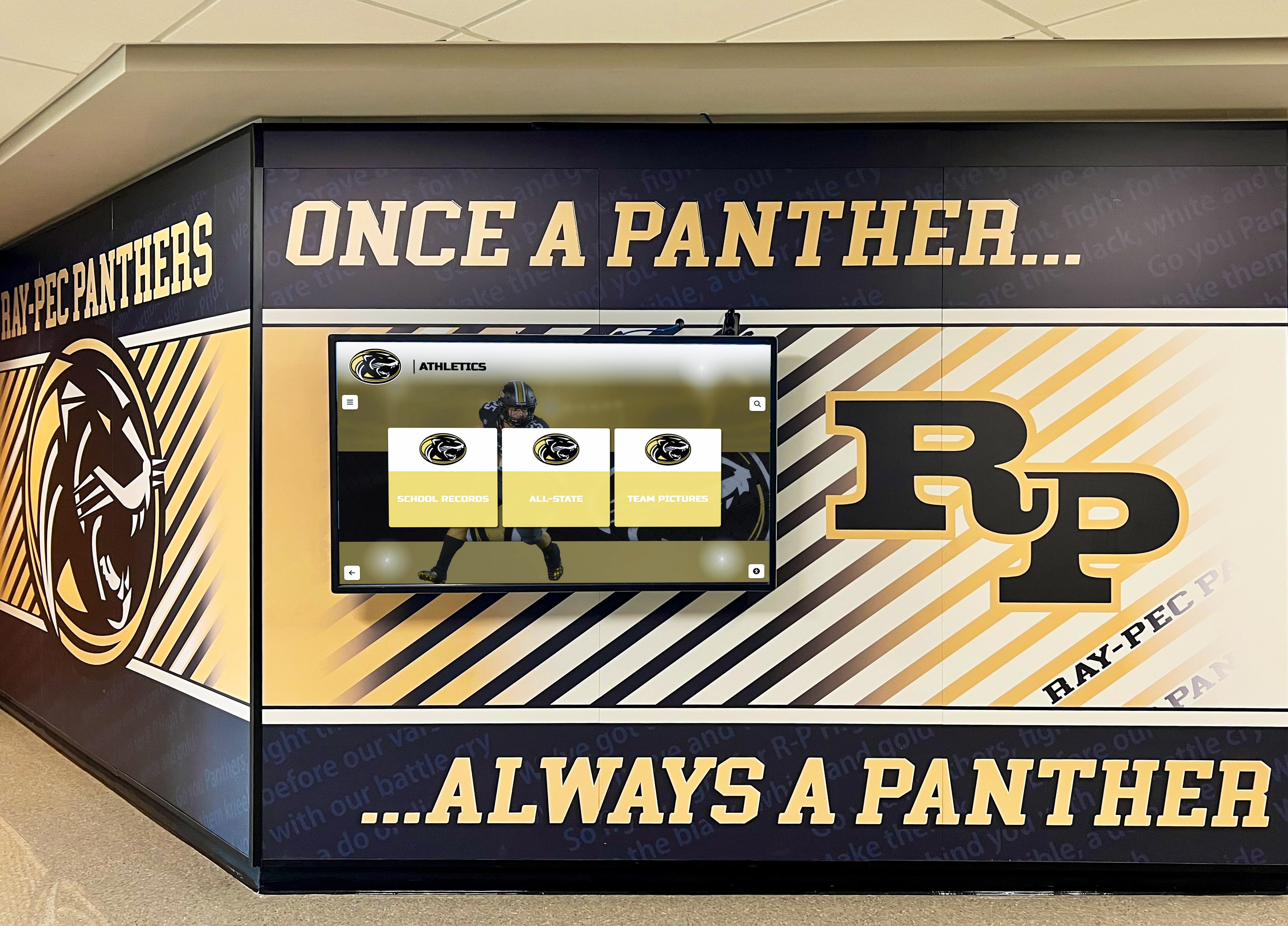
Wrestling programs receive prominent recognition alongside other sports in school athletic displays and record documentation
Overtime Formats
When Matches Go to Overtime Tied score at regulation end:
High School Sudden Victory (First Overtime)
- Duration: 1 minute
- Starting position: Neutral
- Win condition: First wrestler to score any points wins immediately
- If still tied after 1 minute, proceed to tiebreaker periods
High School Tiebreaker Periods
- Duration: 30 seconds each
- Starting position: Defensive position (one wrestler chooses top/bottom)
- Scoring: Cumulative—all points count toward total
- Format: First wrestler gets choice; if still tied after both get 30 seconds top and 30 seconds bottom, repeat with positions reversed
College Sudden Victory (First Overtime)
- Duration: 1 minute
- Format: Same as high school—first score wins
- Riding time NOT counted in sudden victory
College Tiebreaker Periods If still tied after sudden victory:
- Duration: 30 seconds each
- Starting position: Wrestler choice (alternating)
- Format: Two 30-second periods; if still tied, repeat until winner determined
- Riding time NOT counted in tiebreaker periods
Overtime wrestling creates intense drama—single points determine match outcomes after wrestlers fought to stalemate through regulation.
Discover how schools celebrate wrestling championship teams and tournament achievements through recognition displays.
Ways to Win a Wrestling Match
Beyond simply outscoring opponents, wrestlers can win through several methods.
Decision Victory (Scoring Margin)
Standard Decision Most common match outcome:
- Winner outscores opponent
- Point margin: 1-7 points
- Team points awarded: 3 points (in dual meet team scoring)
Example: 8-5, 4-2, 12-7 final scores
Major Decision Dominant performance short of tech fall:
- Winner outscores opponent
- Point margin: 8-14 points
- Team points awarded: 4 points
Example: 14-6, 11-3, 18-7 final scores
Technical Fall Overwhelming scoring dominance:
- Winner builds insurmountable lead
- High school point margin: 15 points ends match immediately
- College point margin: 15 points ends match immediately
- Team points awarded: 5 points
- Match stops once margin reached—no need to complete full time
Example: Match ends when score reaches 16-1, 20-5, etc.
Technical falls reward dominant wrestlers with quick victories and preserve energy for subsequent tournament rounds.
Pin/Fall Victory
The Ultimate Win Wrestling’s most decisive outcome:
Pin Requirements
- Defensive wrestler’s shoulders held to mat
- Both shoulders or both scapulae (shoulder blades) must touch mat simultaneously
- Control maintained by attacking wrestler
- Position held for 1 second (high school) or 2 seconds (college in some situations)
- Referee slaps mat and blows whistle ending match
Significance
- Match ends immediately regardless of score or time
- Team points awarded: 6 points (maximum in dual meets)
- Demonstrates total dominance over opponent
- Can overcome any point deficit instantly
Pins create electrifying moments—wrestlers losing significantly on points can win instantly with successful pinning combination.

Digital recognition systems enable mobile access to wrestling achievement documentation and career statistics
Default, Forfeit, and Disqualification
Injury Default Match stopped due to injury:
- Wrestler unable to continue due to injury
- Medical personnel or referee determines wrestler cannot safely continue
- Opponent wins by default
- Team points awarded: 6 points
Medical Forfeit Pre-match determination:
- Wrestler scratched from match before it begins due to injury or illness
- Often strategic to preserve wrestler for more important matches
- Opponent wins by forfeit
- Team points awarded: 6 points
Disqualification Rule violation victory:
- Wrestler disqualified for severe rule violations
- Multiple flagrant illegal holds
- Fourth stalling call
- Unsportsmanlike conduct
- Opponent wins by disqualification
- Team points awarded: 6 points
These alternative victory methods significantly impact dual meet team scoring strategy—coaches must weigh whether to have injured wrestlers compete risking further injury versus taking the 6-point forfeit.
Freestyle and Greco-Roman Scoring Differences
For wrestlers transitioning to international competition, understanding freestyle and Greco-Roman scoring differences is essential.
Freestyle Wrestling Scoring
Point Values Differ from Folkstyle
Takedown Points
- 2 points: Takedown bringing opponent to mat with control
- 4 points: Takedown with high amplitude (big throw) where opponent lands in back-exposure position
Exposure/Turn Points
- 2 points: Forcing opponent’s back toward mat in danger position
- 4 points: High-amplitude throws landing opponent in danger position
Pushout Points
- 1 point: Forcing opponent completely outside boundary circle (stepout)
No Escape Points Major difference from folkstyle:
- Bottom wrestler receives no points for simply getting away
- After any control break, wrestlers restart standing
- Emphasizes continuous neutral wrestling
Technical Superiority Match ends if point differential reaches:
- 10 points in women’s freestyle
- Creates similar dynamic to technical fall
Greco-Roman Scoring
Similar to Freestyle With Upper-Body Restriction
Point Values
- 1 point: Correct hold bringing opponent to danger position
- 2 points: Exposure/turn in correct hold
- 4 points: Grand amplitude throws landing opponent in immediate danger
- 1 point: Pushouts
No Leg Attacks The defining characteristic:
- Absolutely no attacks using legs as primary technique
- Cannot grab opponent’s legs
- Cannot defend using legs actively
- Creates specialized upper-body technique emphasis
Passivity System Both freestyle and Greco-Roman use:
- Shot clocks and activity requirements
- Passive wrestler receives warning
- Continued passivity results in opponent choosing advantageous position
- Designed to force action and prevent defensive wrestling
Wrestlers training for international competition must adapt from folkstyle’s control emphasis to freestyle/Greco-Roman’s exposure-based scoring and action requirements.
Explore how institutions recognize wrestlers competing at multiple levels from youth through international competition.
Weight Classes and Competition Structure
Understanding weight class systems helps explain match pairings and competition formats.
High School Weight Classes
Standard High School Divisions Most states use 14 weight classes:
- 106 pounds
- 113 pounds
- 120 pounds
- 126 pounds
- 132 pounds
- 138 pounds
- 145 pounds
- 152 pounds
- 160 pounds
- 170 pounds
- 182 pounds
- 195 pounds
- 220 pounds
- 285 pounds (heavyweight)
Weight Allowances Competition rules:
- Wrestlers must weigh in at or below class maximum
- Growth allowances added as season progresses
- Typically 2-pound allowance after December 25
- Scratches (skin conditions) can prevent weigh-in
Weight Management Critical strategic element:
- Wrestlers often compete below natural weight for competitive advantage
- Weight certification programs prevent unhealthy cutting
- Minimum weight restrictions based on body composition testing
- Maximum weight loss per week limitations
College Weight Classes
NCAA Weight Divisions Ten weight classes:
- 125 pounds
- 133 pounds
- 141 pounds
- 149 pounds
- 157 pounds
- 165 pounds
- 174 pounds
- 184 pounds
- 197 pounds
- 285 pounds (heavyweight)
College Weight Management More regulated than high school:
- Hydration testing requirements
- Minimum weight class certification
- Maximum weight loss percentage per week
- Season-long descending weight plans monitored
Weight class strategy significantly impacts team dual meet lineups—coaches position wrestlers to create favorable matchups while following certification rules.
Learn about documenting wrestling program development and building school spirit around athletic achievements.
Tournament Formats and Advancement
Wrestling competitions use distinct formats affecting strategy and wrestler workload.
Dual Meet Format
Team vs. Team Competition Traditional wrestling format:
Structure
- Two teams face each other
- One match per weight class
- Matches proceed sequentially through weight classes
- Team with most cumulative points wins dual meet
Team Scoring Point values for different victory types:
- Decision (1-7 point margin): 3 team points
- Major decision (8-14 points): 4 team points
- Technical fall (15+ points): 5 team points
- Pin/fall: 6 team points
- Forfeit: 6 team points
- Disqualification: 6 team points
Strategic Lineup Decisions Coaches optimize matchups:
- Positioning strongest wrestlers where they create favorable matches
- Sometimes bumping wrestlers up weight class to avoid tough opponents
- Sacrificing certain weights to strengthen others
- Managing wrestler fatigue across season
Tournament Formats
Most Common: Modified Double Elimination (Championship Bracket with Consolation)
Championship Bracket
- Single elimination
- Winners continue toward championship final
- One loss drops wrestler to consolation bracket
Consolation Bracket
- Wrestlers with one loss continue competing
- Separate consolation finals determine 3rd, 5th, 7th place finishers
- Keeps wrestlers competing even after championship bracket loss
Placement Importance Tournament places earn:
- Individual recognition and awards
- Qualification for higher-level tournaments
- Team points toward team championship
- Seeding advantage for future tournaments
Typical Tournament Schedule Major tournaments compress many matches:
- Weigh-ins early morning
- Multiple sessions (prelims, quarterfinals, semifinals, finals)
- Wrestlers potentially competing 4-6 matches in single day
- Endurance and recovery between matches become crucial
Round-Robin Format (less common) Every wrestler faces every other wrestler in pool:
- Used for smaller tournaments or qualifying events
- Win-loss record determines placement
- Total points can break ties
- Ensures everyone gets multiple matches
Tournament wrestling requires different preparation than dual meets—endurance, quick recovery, and consistent performance across multiple matches determine success.
Discover approaches to recognizing wrestling achievements through modern digital trophy case displays.
Referee Signals and Match Communication
Understanding referee hand signals helps you follow match action and scoring.
Common Referee Hand Signals
Takedown Signal
- Two fingers extended, hand moved downward
- Indicates which wrestler receives 2 takedown points
Escape Signal
- One finger pointed upward
- Shows which wrestler earned 1 escape point
Reversal Signal
- Two fingers in circular motion
- Indicates 2 points for wrestler reversing position
Near Fall Signal
- Arm extended with two or four fingers showing
- Referee counts seconds while maintaining signal
- Number of fingers indicates near fall points (2 or 4)
Penalty Point Signal
- One finger pointed at offending wrestler
- Then one point awarded to opponent
- Often accompanied by explanation of violation
Potentially Dangerous Hold
- Waving hand signal
- Indicates referee monitoring situation for safety
- Warning that continued action may result in stoppage
Match Stopped/Restart
- Whistle blow with stop hand signal
- Indicates action stopped for injury, out-of-bounds, stalling warning, etc.
- Wrestlers return to designated position for restart
Understanding these signals transforms confusing mid-match pauses into clear comprehension of scoring and referee decisions.
Common Wrestling Questions Answered
New wrestling fans frequently ask similar questions about rules and competition.
“What’s the Difference Between Folkstyle and Freestyle?”
Primary Distinctions
Folkstyle (High School/College)
- Escape points reward bottom wrestler
- Emphasis on control and mat wrestling
- Riding time counts in college
- Less emphasis on explosive throws
- Gradual penalty system for stalling
Freestyle (International/Olympic)
- No escape points
- Continuous neutral wrestling after any break
- Pushout points for forcing opponent out
- Higher points for big throws
- Passivity system forcing action
Most American wrestlers train primarily in folkstyle, then adapt to freestyle for international competitions like Olympics or World Championships.
“Why Do Wrestlers Sometimes Let Opponents Escape?”
Strategic Escape Allowance
Situations where top wrestler intentionally releases bottom wrestler:
Riding Time Management (College)
- Late in match with significant riding time advantage built
- Allowing escape prevents potential reversal (2 points) for cost of only escape (1 point)
- Secures riding time point while eliminating reversal danger
Neutral Wrestling Advantage
- Wrestler more effective from neutral than top position
- Confidence in takedown ability to immediately reclaim position
- Belief neutral position creates better scoring opportunities
Fatigue Management
- Maintaining control position is exhausting
- Fresh restart from neutral can benefit both wrestlers
- Trading 1 escape point for recovery opportunity
Avoiding Penalty
- Referee warning for stalling from top
- Intentional release prevents stalling penalty point
Strategic escapes demonstrate wrestling’s tactical complexity beyond simple point accumulation.
“How Do Wrestlers Qualify for State/National Championships?”
Qualification Pathways
High School State Championships Typical progression:
- Dual meet season: Establish record and ranking
- District/sectional tournaments: Top finishers advance to regionals
- Regional tournaments: Top finishers qualify for state championships
- State championship tournament: Qualified wrestlers compete for state titles
Exact structure varies by state—some use larger qualifying tournaments while others employ more rounds of advancement.
College National Championships NCAA qualification:
- Regular season: Dual meets establish ranking
- Conference championships: All conference wrestlers compete
- Regional qualifying tournaments: Allocate spots to NCAA Championships
- NCAA Division I, II, III Championships: Qualified wrestlers compete for national titles at respective levels
National High School Championships (non-state-sanctioned) Several major tournaments:
- Various national tournaments (FloWrestling, Super 32, etc.)
- Open entry or qualification standards
- Not affiliated with state high school associations
- Club/optional competition beyond school season
Qualification systems ensure championship tournaments feature the highest-level competitors.
Explore comprehensive recognition for multi-sport athletes including wrestlers participating in multiple sports.
Supporting Your Wrestler: Using Rules Knowledge Effectively
Understanding wrestling rules enhances your ability to support wrestlers appropriately.
Productive Match Viewing
What to Watch For Focus observation on meaningful elements:
- Position battles and control transitions
- Scoring opportunities created and defended
- Technical execution of specific moves
- Referee positioning and signal anticipation
- Strategic decisions and tactical adjustments
Avoid Counterproductive Behaviors Common parent/fan mistakes:
- Arguing referee calls loudly
- Coaching from stands contradicting corner coaching
- Criticizing opponent or opposing coaches
- Excessive emotional reactions to normal match flow
- Comparing your wrestler negatively to others
Effective Encouragement Supportive spectating:
- General positive statements (“good position,” “nice move”)
- Respecting referee decisions even when questionable
- Focusing on effort and execution rather than outcome
- Allowing coaches to handle technical instruction
- Celebrating all wrestlers’ efforts and sportsmanship
Post-Match Conversations
Productive Discussion Topics Help wrestlers process competition:
- What felt good technically
- Specific moves or positions to work on
- Decision-making in key match moments
- Effort and preparation satisfaction
- Goals for next competition
Avoid Destructive Approaches Counterproductive post-match discussion:
- Immediate criticism of performance
- Blaming referees for outcome
- Comparing to other wrestlers or previous performances
- Dwelling on losses without constructive analysis
- Overemphasizing winning versus development
Wrestling’s one-on-one nature makes losses very personal—supportive responses that acknowledge effort while identifying improvement opportunities serve athletes better than criticism or dismissal.
Learn about comprehensive approaches to honoring senior athletes including wrestlers completing high school careers.
Modern Technology in Wrestling Recognition
Beyond understanding match rules, schools increasingly recognize wrestling achievements through permanent displays.
Digital Wrestling Recognition Systems
Comprehensive Achievement Documentation
Modern display technology enables schools to celebrate wrestling excellence:
- Showcase state qualifiers, place winners, and champions
- Document complete wrestling program history with photos and records
- Highlight individual career achievements and milestones
- Feature championship team rosters and results
- Update easily with current season accomplishments
Integrated Athletic Recognition
Schools implementing comprehensive recognition systems benefit from:
- Wrestling receives visibility equal to other athletic programs
- Multi-year athlete documentation showing complete competitive careers
- Accessible displays in athletic facilities engaging current wrestlers
- Alumni connection through preserved historical achievements
- Recruiting advantages showcasing program excellence
Program Documentation Capabilities
Digital platforms preserve:
- Season-by-season team accomplishments and records
- Individual wrestler career statistics and progression
- Championship results and tournament placements
- Weight class records and milestones
- Coaching achievements and program development
This technology ensures wrestling achievements receive lasting celebration beyond fleeting tournament moments, motivating current wrestlers while honoring program tradition.
Schools seeking comprehensive athletic recognition can explore modern display solutions for wrestling programs that preserve competitive excellence permanently.
Celebrate Your Wrestling Program's Excellence
Discover how modern digital recognition systems can showcase your wrestlers' competitive accomplishments, championship teams, and program history with permanent displays that inspire current athletes and honor your school's wrestling tradition.
Explore Recognition SolutionsConclusion: Mastering Wrestling Rules Enhances Your Experience
Understanding wrestling rules—from the point-by-point scoring system breaking down takedowns, escapes, reversals, and near falls to the penalty framework punishing stalling and illegal techniques to the match format differences between high school and college competition—transforms your experience from confused spectator to informed supporter capable of truly appreciating the sport’s technical complexity and strategic depth.
The current wrestling rule systems, whether folkstyle’s emphasis on control and mat wrestling or freestyle’s explosive neutral wrestling and pushout points, serve important purposes: rewarding aggressive, technically sound wrestling while preventing dangerous techniques and stalling tactics. As you watch matches—whether your child is competing in youth tournaments or you’re following college dual meets—you’ll now recognize that every hand signal reflects specific scoring actions and that referee decisions follow consistent standards evaluating technique, position, and legality.
Remember that rules provide the framework for competition, but wrestling’s true value extends beyond match outcomes. The discipline development, work ethic cultivation, resilience building, and confidence growth that wrestling provides transcend specific tournament placements or season records. Use your rules knowledge to ask better questions, provide more informed support, and appreciate the technical excellence wrestlers demonstrate through years of dedicated training.
Whether you’re a wrestling parent trying to follow your first tournament, a new coach learning officiating basics, a high school wrestler preparing for the college level, or a fan wanting to understand the sport better, mastering wrestling rules fundamentals provides the foundation for meaningful engagement with this ancient, demanding, rewarding sport. The scoring system reflects wrestling’s complexity—simultaneously evaluating control and explosiveness, rewarding aggression while punishing dangerous techniques, creating tactical depth where matches turn on split-second decisions and technical execution.
As wrestlers continue developing skills, advancing through competitive levels, and pursuing championship goals, your understanding of how referees translate performances into points and how match formats shape strategic decisions will help you appreciate every achievement—from a first escape in a tournament to a state championship victory built on technical precision and tactical excellence.
Live Example: Rocket Alumni Solutions Touchscreen Display
Interact with a live example (16:9 scaled 1920x1080 display). All content is automatically responsive to all screen sizes and orientations.