Digital Hall of Fame Ruby Annotations: Reviewing Inductee Name Pronunciation on Touchscreens
A digital hall of fame ruby name pronunciation audit is a structured editorial and rendering review confirming that <ruby>, <rt>, and <rp> markup on inductee profile pages carries pronunciation guidance verified by each inductee or their representative, renders correctly across the browsers and touchscreen devices used in your school’s recognition program, and provides a usable plain-text fallback when ruby display is absent or overridden. The direct answer for school athletic directors, recognition program coordinators, and platform administrators: ruby annotations are a visual editorial tool—they place phonetic guidance above or beside base text for sighted readers—but they do not automatically alter how a screen reader vocalizes a name. Audit every inductee record carrying ruby markup to confirm the annotation reflects pronunciation supplied or confirmed by the inductee, that <rp> parenthetical fallbacks are present so names remain readable when ruby rendering is unavailable, and that the base text alone is a complete, meaningful label that does not depend on the annotation to be understood.
Read More
Digital Hall of Fame ARIA-Braillelabel Audit for Inductee Controls
A digital hall of fame aria-braillelabel audit is a targeted review of interactive controls on your school’s recognition platform, checking whether any aria-braillelabel overrides present on inductee controls are genuinely improving the Braille reading experience—and confirming that the attribute has not been added to controls where the ordinary accessible name already converts to clear, readable Braille. The short answer for school athletic recognition administrators, IT teams, and facilities specialists: inventory every interactive control on your inductee pages; confirm each control has a valid accessible name through a native <label>, aria-label, or aria-labelledby association first; apply aria-braillelabel only in the narrow circumstance where converting the accessible name to Braille would produce a poor result—such as when a lengthy icon description renders as an unwieldy Braille string—and verify any override with an actual braille display and compatible assistive technology before deploying it to your recognition platform.
Read More
Digital Hall of Fame Tablist Keyboard Audit for Sport and Era Navigation
A digital hall of fame ARIA tablist audit is a structured keyboard and screen-reader review confirming that every sport-category tab strip and era navigation tab strip on your recognition platform implements the complete WAI-ARIA tablist pattern—so visitors browsing inductees by sport or graduation decade can navigate between tabs using arrow keys, move focus into the active inductee panel using the Tab key, and hear the tab’s name, role, count, and selected state announced without relying on visual styling. The short answer for school athletic directors, IT teams, and administrators: identify every tab strip on your hall of fame pages; press Tab once to reach the tablist and confirm focus lands on the active tab; press the Right Arrow key to confirm focus moves to the next tab without leaving the strip; press the Tab key to confirm focus enters the associated inductee panel; open DevTools and verify each tab carries role="tab", aria-selected, aria-controls, and a tabindex of 0 (active) or -1 (inactive); then confirm the same behavior with NVDA or VoiceOver before each induction season.
Read More
Digital Hall of Fame ARIA-Labelledby Audit for Inductee Search Controls
A digital hall of fame aria-labelledby audit is a structured review confirming that every search input, sport filter, class-year selector, and advanced search control on your inductee recognition platform carries an aria-labelledby attribute that references the ID of its visible label element—so screen readers announce the label text a sighted visitor reads when an assistive-technology user focuses the control. The short answer for school athletic directors, administrators, and IT teams: identify every search and filter control on your hall of fame pages; open browser DevTools and inspect each control for an aria-labelledby attribute; verify that the IDs listed in that attribute exist in the DOM and point to elements whose text accurately names the control; confirm that the referenced text is visible (or visually hidden with a compliant technique rather than display:none or visibility:hidden); and test each control with NVDA or VoiceOver to confirm the announced name matches the label a sighted visitor sees before interacting with the search or filter interface.
Read More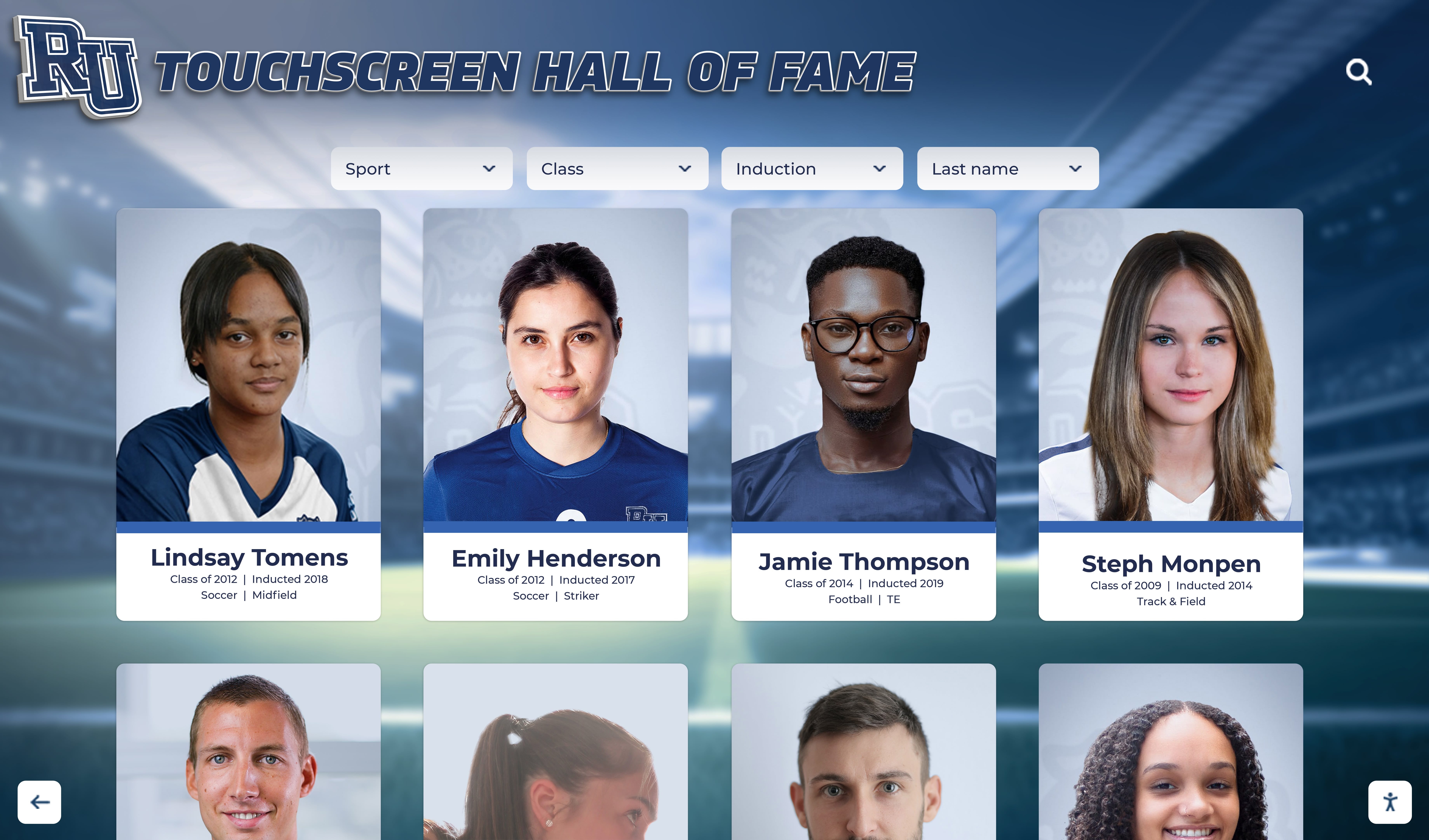
Digital Hall of Fame ARIA-Level Audit for Inductee Page Headings
A digital hall of fame ARIA-level audit is a structured review confirming that every heading element on your inductee profile pages—whether a native <h1>–<h6> or a custom element carrying role="heading"—exposes the correct hierarchical level to assistive technology through the aria-level attribute, so screen reader users navigating by heading can understand the page structure without relying on visual size or weight cues. The short answer for school administrators, athletic directors, IT teams, and recognition-program owners: open each inductee profile and each category or class-year section page on the platform; use browser DevTools to inspect every element that functions as a heading; confirm that any element with role="heading" carries an explicit aria-level integer reflecting its position in the page’s heading outline; verify that native <h1>–<h6> elements are not assigned conflicting aria-level values that would misrepresent the heading level to screen readers; test heading navigation with NVDA or VoiceOver to confirm the announced hierarchy matches the intended reading order; and repeat the audit after any platform update that introduces new inductee page templates or adds dynamic section headers.
Read More
Digital Hall of Fame ARIA-Invalid Audit for Search and Nomination Errors
A digital hall of fame ARIA-invalid audit is a structured review confirming that every search query field and nomination form input on your recognition platform correctly exposes its validation-error state to assistive technology through the aria-invalid attribute—and that aria-invalid is paired with aria-errormessage so screen reader users hear both that a field is invalid and exactly what must be corrected. The short answer for school administrators, athletic directors, IT teams, and recognition-program owners: open each search form and nomination form on the platform; trigger a validation error on every field through intentional bad input or empty submission; use browser developer tools to confirm that each invalid input carries aria-invalid="true" alongside an aria-errormessage reference pointing to a visible, populated error element; verify that aria-invalid is removed or reset to "false" once the user corrects the input; and test the complete error-and-recovery flow with NVDA or VoiceOver before the next nomination period opens or search functionality is updated.
Read More
Digital Hall of Fame ARIA-Multiselectable Audit for Filter Lists
A digital hall of fame ARIA-multiselectable audit is a structured review confirming that every filter list on your recognition platform that allows visitors to select more than one sport, class year, or award category at a time carries aria-multiselectable="true" on its container element—and that each individual option inside that container carries an aria-selected value of "true" or "false" reflecting its current state. Without this attribute, a visitor using JAWS, NVDA, VoiceOver, or TalkBack can open a sport filter list, navigate through Football, Basketball, Baseball, and Volleyball options, and never hear that multiple simultaneous selections are possible. The short answer for school administrators, athletic directors, IT teams, and recognition-program owners: identify every listbox, grid, or tree component on your hall of fame platform that supports multi-item selection; inspect each container in browser DevTools to confirm aria-multiselectable="true" is present; verify that every child option carries aria-selected="true" or "false" matching its current selection state; confirm that selecting or deselecting an option updates both its own aria-selected value and any live result count without resetting other selected options; and verify the full interaction with NVDA or VoiceOver before each induction season or major platform update.
Read MoreDigital Hall of Fame ARIA-Selected Audit for Tabs and Filter Results
A digital hall of fame ARIA-selected audit is a structured review confirming that every sport-category tab, era filter button, custom filter listbox, and inductee detail panel tab on your recognition platform carries a correct aria-selected attribute—so keyboard and assistive-technology users hear which option is currently chosen. Without this attribute, a visitor navigating your hall of fame with NVDA, JAWS, VoiceOver, or TalkBack can move through a row of sport tabs—Football, Basketball, Baseball, Volleyball—and hear nothing that identifies which tab is currently active. The short answer for school administrators, athletic directors, and IT teams: identify every tab, listbox option, or selectable widget element that can be chosen; inspect each element in browser DevTools to confirm aria-selected carries the value "true" on the selected item and "false" on all others in the same set; verify the value updates dynamically when the visitor activates a different option; and confirm the announcement with NVDA or VoiceOver before each induction season.
Read More
Digital Hall of Fame ARIA-Controls Audit for Search and Detail Panels
A digital hall of fame ARIA-controls audit is a structured review confirming that every interactive control on your recognition platform—search inputs, sport-filter buttons, class-year tabs, and biography panel toggles—carries an aria-controls attribute that correctly references the ID of the region or panel it affects. Without this attribute, a visitor navigating your hall of fame with NVDA, JAWS, VoiceOver, or TalkBack can activate a search button or filter tab and hear no programmatic indication of which content region just changed, forcing them to explore the page to discover where new results appeared. The short answer for school administrators, athletic directors, and IT teams: identify every control that opens, expands, or updates a separate content region; inspect each control in browser DevTools to confirm aria-controls references a valid panel ID; verify that the referenced panel ID exists in the DOM and is applied to the correct element; and test each interaction with a screen reader to confirm that assistive technology can navigate directly from the control to its associated content.
Read More
Digital Hall of Fame ARIA-Posinset and ARIA-Setsize Audit for Virtualized Inductee Lists
A digital hall of fame aria posinset aria setsize audit is a structured review confirming that every inductee list, search result collection, sport-category roster, and class-year archive rendered through virtualization exposes accurate position and total-count information to screen readers through the aria-posinset and aria-setsize attributes. Without these attributes on virtualized list items, a visitor navigating your inductee gallery with NVDA, JAWS, VoiceOver, or TalkBack hears “item 1 of 20” when your full inductee roster contains 400 names—because only the 20 cards currently rendered in the viewport exist in the DOM. The short answer for school administrators, athletic directors, and IT teams: identify every list or grid in your recognition platform that loads items incrementally or renders only the visible portion of a large dataset, inspect each list item element in browser DevTools to confirm aria-posinset and aria-setsize carry values reflecting the full collection rather than the rendered subset, test with a screen reader to verify the announced position and count are accurate, and confirm the attributes update correctly as the user scrolls or filters.
Read MoreDigital Hall of Fame Consistent Help Accessibility Audit: WCAG 2.2 Checklist for Search and Nomination Flows
A digital hall of fame consistent help accessibility audit is a structured review confirming that every contact link, chat widget, FAQ reference, and other support mechanism on your recognition platform appears in the same relative position—and in the same order among surrounding page content—across every page in the inductee search flow, the individual profile view, and the multi-step nomination form. WCAG 2.2 Success Criterion 3.2.6 (Consistent Help, Level A) requires that when help mechanisms repeat across multiple pages in a set, those mechanisms occur in the same order relative to other page content unless the user initiates a change. The short answer for recognition program administrators: audit each page type in your hall of fame platform for the presence and position of every help mechanism, compare positions across the full search-to-nomination flow, flag any page where a mechanism disappears or shifts position without a user-initiated action, and remediate by restoring the mechanism to its expected position before the next induction cycle opens.
Read More
Digital Hall of Fame ARIA-Current Audit: Make Active Navigation Clear to Screen Readers
A digital hall of fame aria-current audit is a structured review confirming that every navigation link, sport-category filter tab, class-year selector, and breadcrumb on your recognition pages uses the aria-current attribute to communicate its active state to screen readers. Without this attribute, a visitor navigating your inductee gallery with NVDA, JAWS, VoiceOver, or TalkBack receives no programmatic signal identifying which link is active, which tab is selected, or which page is currently displayed—even when those states are clearly indicated by visual styling such as color, font weight, or underline. The short answer: add aria-current="page" to the <a> element of the active navigation link on every page, add aria-current="page" or aria-current="true" to the selected tab in every sport-category or class-year filter group, verify those attributes are present with a screen reader before each major content update, and confirm the attribute updates dynamically whenever a visitor activates a new tab or filter.
Read More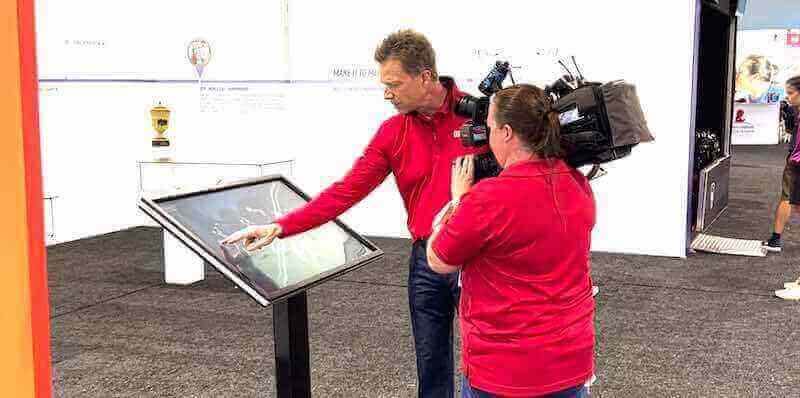
Interactive Touch Screen Digital Signage: How It Works and What You Need
Interactive touch screen digital signage puts information, navigation, and recognition directly in the hands of visitors — without requiring staff assistance or printed materials that go out of date. Schools use these systems for hall of fame inductee displays and wayfinding. Universities deploy them in lobby kiosks and alumni centers. Athletic facilities mount them beside trophy cases. Corporate buildings embed them in reception areas.
Read More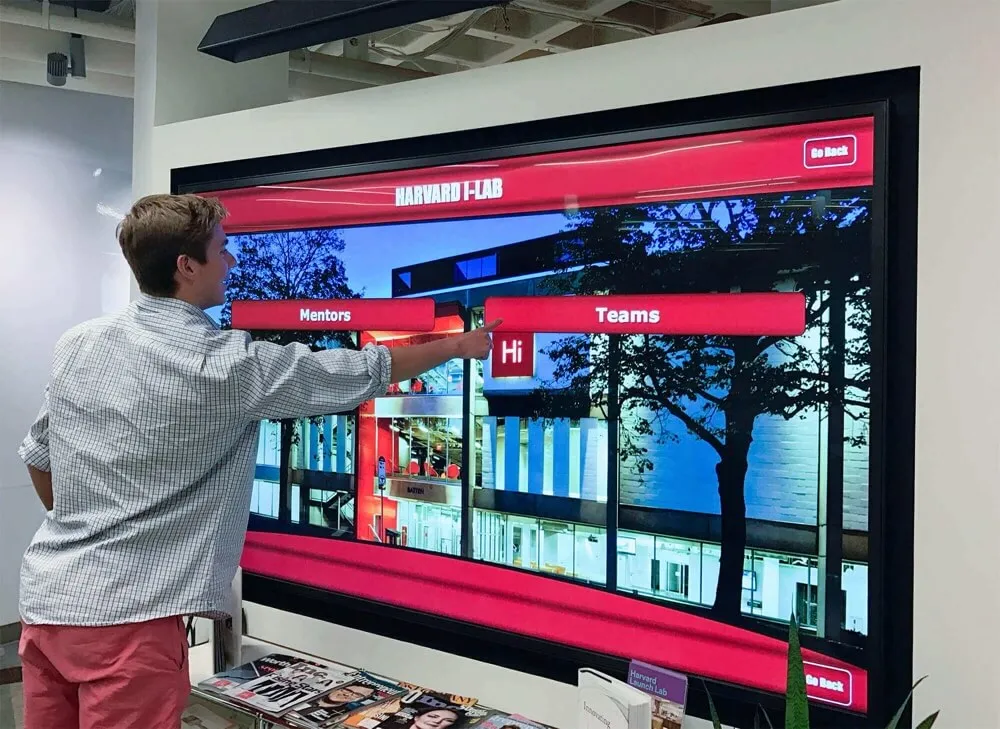
Digital Hall of Fame Modal Dialog Accessibility: Focus, Labels, and Escape Behavior
Digital hall of fame modal dialog accessibility is the practice of ensuring that every overlay panel, inductee profile popup, lightbox, and confirmation dialog on a school’s recognition touchscreen meets three core requirements: focus moves into the dialog when it opens, the dialog carries correct ARIA labels so assistive technology announces it properly, and users can reliably dismiss it — via the Escape key on keyboards or a visible close control on touchscreens. These requirements map directly to WCAG 2.1 Success Criterion 4.1.2 (Name, Role, Value) at Level AA and the ARIA Authoring Practices Guide specification for modal dialog patterns. For athletic directors, IT staff, and facilities teams managing interactive hall of fame kiosks, a failed modal means visitors may find focus stranded outside the dialog, hear no screen-reader announcement when an inductee profile opens, or be unable to dismiss an overlay during a live recognition event.
Read MoreDigital Hall of Fame Pointer Cancellation Test for Touchscreen Controls
A digital hall of fame pointer cancellation test is an accessibility audit that verifies every tappable control on a school’s touchscreen recognition kiosk allows users to abort or undo an accidental touch before the action completes. The test maps directly to WCAG 2.1 Success Criterion 2.5.2 (Pointer Cancellation), a Level A requirement that applies to any interface operated by a single pointer — including the fingers and styluses students, families, and guests use every day on lobby hall of fame displays.
Read MoreDigital Hall of Fame HTML Language Attribute Audit for Screen Readers
Screen readers select a text-to-speech engine and pronunciation dictionary based on a single HTML attribute—lang—declared on the <html> element of every page. When a school’s digital hall of fame omits that attribute or sets it incorrectly, every athlete name, induction citation, career statistic, and navigation label is read aloud using the wrong language rules: English text pronounced with French phonetics, Spanish names mispronounced using English stress patterns, or—on some assistive technology configurations—the content read in the operating system’s default voice with no language context at all. A digital hall of fame html lang attribute audit is a structured review confirming that the page-level lang value is present and correct on every page type in a recognition collection, and that individual inductee profiles or multilingual content blocks carry inline lang overrides where appropriate. The short answer: open each key page type in your browser, view its page source, confirm <html lang="en"> (or your language code) appears on line one, then check that any embedded foreign-language text—a French-Canadian athlete name formatted with accents, a Spanish dedication paragraph—carries a matching inline lang attribute on its wrapping element.
Read More
Digital Hall of Fame Heading Hierarchy Audit for Inductee Profiles and Search Pages
School web teams that manage a digital hall of fame often spend considerable effort writing inductee bios, uploading historical photos, and organizing sport-specific archives—yet the single structural detail that most directly determines whether screen reader users can navigate all of that content efficiently is rarely audited: the heading hierarchy. A digital hall of fame heading hierarchy audit is a structured review of every H1 through H6 element across the inductee profile pages and search or directory pages in a recognition collection, confirming that levels are used in the correct sequence, that no levels are skipped without reason, that each page carries exactly one H1, and that repeated page sections such as sidebar filters, “related inductees” panels, and paginated search results use heading levels that reflect their actual position in the content structure rather than their visual size on screen. The short answer: pull up each key page type in a headings-only view, verify the outline makes sense without any visual context, fix any skipped levels or duplicate H1s, and retest in a screen reader before each major content update.
Read MoreDigital Hall of Fame Screen Reader Landmark Audit for Faster Navigation
A school’s online hall of fame or digital recognition collection may honor hundreds of inductees—but if screen reader users cannot quickly jump between the page header, primary inductee gallery, search controls, and footer without listening through every repeated navigation link, the recognition experience fails a meaningful portion of the audience before it begins. A digital hall of fame screen reader landmark audit gives athletic directors, IT teams, web administrators, and recognition-program owners a concrete process for verifying that every major page region is wrapped in the correct HTML landmark element or ARIA role, that repeated blocks are labeled distinctly, and that users of NVDA, JAWS, VoiceOver, and TalkBack can reach any section in two keystrokes rather than dozens. The short answer: map your page regions, confirm one <main> landmark, label every duplicate navigation, expose the inductee search form with role="search", and test the complete flow using actual screen reader software before each major content update.
Read MoreDigital Hall of Fame Reduced-Motion Accessibility Checklist for Animations and Video
Visitors who experience vestibular disorders, migraines, photosensitive conditions, or motion sensitivity can find autoplay animations and looping videos on recognition displays genuinely disorienting rather than welcoming. A digital hall of fame reduced motion accessibility checklist gives athletic directors, AV coordinators, IT staff, and facilities teams a concrete process for auditing every animated element—from inductee card transition effects and celebratory particle bursts to championship highlight reels—and applying prefers-reduced-motion controls and practical substitutes that make the same experience comfortable for every visitor. The short answer: inventory all animations and videos, implement CSS prefers-reduced-motion across transition and keyframe rules, configure video players to respect system-level motion preferences, provide manual pause controls, and verify the result against actual device accessibility settings.
Read More
Navigating the Digital Hall of Fame Market: How to Spot Vendor Deception and Protect Your School's Legacy
Upgrading from static trophy cases to an interactive touchscreen display is one of the most visible ways a school can honor its athletic and academic history. As demand for digital halls of fame has increased across K-12 schools, universities, and athletic departments, so has the number of vendors competing for those contracts—including small boutique agencies that sometimes use misleading marketing claims to carve out market share from established providers.
Read More