Digital Hall of Fame Focus-Not-Obscured Audit: WCAG 2.2 Checklist for Sticky Controls and Dialogs
A digital hall of fame focus-not-obscured audit checks whether every keyboard-focusable element on your inductee pages, search tools, and navigation menus remains fully or at least partially visible when sticky headers, cookie consent banners, and modal dialogs are present on screen. WCAG 2.2 Success Criterion 2.4.11 (Level AA) requires that a focused component is never completely hidden by author-created content; SC 2.4.12 (Level AAA) extends this to prohibit any partial concealment. School web teams, IT departments, and recognition-program administrators can run this audit using only a keyboard and a browser—no specialized tools required.
Read More
Athletic Awards Slowly Changing Dimension Policy for Historical Recognition Data
A slowly changing dimension (SCD) policy tells every person who manages athletic awards data—athletic directors, IT staff, alumni coordinators, and display system administrators—exactly how to handle a record when its underlying attributes change: whether to overwrite the old value, preserve it alongside the new one, or archive it with a clear date boundary. Without that policy, a coach’s legal name change, a school renaming, or an award category restructure silently corrupts historical recognition records. The right athletic awards slowly changing dimension policy defines Type 1 (overwrite), Type 2 (version history), and hybrid handling for every attribute class in your recognition system, so inductee profiles, team championships, and award citations stay historically accurate no matter what changes downstream.
Read More
Hall of Fame Website Search Synonym Dictionary: Connect Nicknames, Maiden Names, and Team Terms
A hall of fame website search synonym dictionary is a structured mapping that tells your search engine to treat multiple terms as equivalent when a visitor types a query — so searching for “Bobby” also surfaces profiles filed under “Robert,” searching for “Martinez” returns results for the inductee who competed under her maiden name “Novak,” and searching for “XC” or “Hoops” finds every cross country or basketball record even when the database stores the sport’s full formal name. Without that mapping, your hall of fame search works correctly only when a visitor already knows the exact string stored in the database — which is rarely how alumni, family members, or community visitors actually search. This guide explains how to build the dictionary field by field, provides synonym tables you can adapt directly, and covers the six implementation steps that connect the dictionary to a live touchscreen or web-based hall of fame display.
Read MoreHall of Fame Canonical URL Policy: Prevent Duplicate Inductee Pages and Preserve Rankings
Intent: define. A hall of fame canonical URL policy is a written governance document that designates one authoritative web address for each inductee profile and prescribes how every other URL pointing to that profile should behave—through a redirect, a canonical tag, or both. Without this policy, a school’s digital hall of fame accumulates duplicate pages every time an inductee’s name changes, a sport is renamed, a platform migrates, or a CMS generates alternate URLs from query parameters. Each duplicate page dilutes the search signal that would otherwise flow to a single authoritative profile, reducing the visibility of the school’s recognition program in the searches that matter most to alumni, recruits, and the broader community.
Read More
Hall of Fame Profile Data Dictionary Template: Standardize Names, Teams, Awards, and Media
A hall of fame profile data dictionary template is a reference document that defines every field in an inductee record: the field name, data type, accepted format, valid values, whether the field is required, and which staff role owns it. Without one, programs accumulate inconsistencies—“Class of 1994” in one record, “1994” in the next, and “Graduated 1994” in a third—that break filtering, corrupt report exports, and require manual correction every time the data moves to a new display platform. A documented data dictionary stops those errors at the source by giving nominators, committee members, and content managers a single authoritative reference before they enter a single character.
Read MoreHall of Fame Taxonomy Guide: Standardize Sports, Awards, Teams, and Eras
A hall of fame taxonomy is the controlled set of category labels—sport names, award types, team identifiers, and era definitions—that your program applies consistently to every inductee record. Without one, a recognition program that spans forty years can accumulate dozens of conflicting labels for the same thing: “Boys Basketball,” “Men’s Basketball,” “Basketball (M),” and “BKB-Boys” all describing the same sport in the same database. Visitors can’t filter by sport, administrators can’t pull clean reports, and migrating to a new display platform requires a manual clean-up pass through hundreds of entries before the data is usable. Building a documented taxonomy once—and maintaining it—costs far less than correcting inconsistency across a decade of inductions.
Read MoreDigital Hall of Fame Content Licensing Register: Track Photos, Video, and Usage Rights
A digital hall of fame content licensing register is a master document—typically a spreadsheet or database table—that records every photo, video clip, biography, logo, and document asset used in a recognition display, along with who owns it, what uses are permitted, what attribution is required, and when any license expires. Without one, schools routinely publish photographs whose copyright belongs to a commercial photographer, display video clips under a tacit consent that was never put in writing, or use a sponsor’s logo well past the agreement that authorized it. When those situations surface—and they eventually do—the program scrambles to establish what was agreed, often without records to consult. A written digital hall of fame content licensing register converts that guesswork into a manageable, auditable workflow that protects the school and respects everyone who contributed content to the display.
Read More
Hall of Fame Correction Notice Policy: Fix Profiles Transparently and Preserve Trust
Errors in hall of fame profiles are discovered more often than most programs expect—a graduation year is off by one digit, a record is attributed to the wrong season, a middle name is misspelled on a plaque that has been on display for a decade. The impulse is to fix the mistake quietly and move on. A written hall of fame correction notice policy explains why that impulse, however well-meaning, can damage alumni trust more than the error itself did—and it establishes a transparent, consistent process for acknowledging corrections so that inductees, families, donors, and the broader school community know that the recognition record is actively maintained and honestly governed. A policy built around transparency does not draw attention to every trivial typo, but it ensures that material corrections to the record are handled with the same care the program gives to induction itself.
Read MoreDigital Hall of Fame User Access Review Checklist: Audit Roles and Remove Stale Accounts
Intent: decide. A digital hall of fame user access review checklist is the structured process school administrators, athletic directors, and hall-of-fame committees use to confirm that only current, authorized staff can modify inductee biographies, edit performance records, upload photographs, or publish content on a cloud-based recognition platform. Without a quarterly review, former employees often retain active login credentials long after they leave, junior staff hold permissions far beyond what their role requires, and no one can answer a basic audit question—who changed that biography, and were they authorized to do so? That exposure is manageable with a simple, repeatable process.
Read MoreHall of Fame Obituary Update Policy: How to Maintain Inductee Profiles Respectfully
When a hall of fame inductee passes away, their profile on a school display or digital recognition platform becomes something more than a biographical record—it becomes part of a living memorial. A written hall of fame obituary update policy tells every staff member exactly what changes, what does not, who approves each update, and how the original recognition record is preserved alongside any new information. Without this policy, well-meaning staff make inconsistent edits, families receive no notification before a profile changes, and the historical record that made the recognition meaningful becomes muddled. A clear policy protects the integrity of the inductee’s recognition and the trust of the family members who carry that legacy forward.
Read More
Hall of Fame Translation Policy: Accurate, Accessible Multilingual Recognition
A school’s hall of fame is only as inclusive as the language it speaks. When inductee names are misspelled in transliteration, biographical narratives are machine-translated without review, or award titles appear only in English on a display visited daily by students and families who speak other languages at home, the recognition program sends an unintended message. A written hall of fame translation policy defines exactly how the program handles multilingual content: which languages are supported, how translations are produced and verified, who holds final approval, and how updates are managed across every display and platform. Done well, a translation policy extends the reach and dignity of recognition rather than adding bureaucratic complexity.
Read More
Hall of Fame Annual Content Review Checklist: Audit Profiles, Records, Links, and Rights
A hall of fame annual content review checklist is a structured set of tasks that athletic directors, archives staff, and recognition-program administrators complete once a year to confirm that inductee biographies, athletic records, photographs, external links, and usage rights on their recognition displays are accurate, current, and properly permissioned. Running this review on a scheduled basis—rather than waiting for complaints—keeps the hall of fame credible, protects the institution legally, and respects the real people whose histories are displayed.
Read More
Athletic History Takedown Request Policy: A Fair Process for Photos, Bios, and Records
When a school publishes athletic history on a hallway display, a digital wall of fame, a touchscreen kiosk, or a public website, it invites the community to celebrate the people and achievements that define the program. Most of that content stays published for decades without issue. But occasionally, a former athlete, a family member, or a coach submits a request to remove, correct, or restrict something—a photo taken before a name change, biographical information that became inaccurate, a performance record linked to a difficult personal period, or an image the subject never consented to display publicly. Without a written athletic history takedown request policy, schools handle each of these situations differently, inconsistently, and sometimes in ways that create legal exposure or damage the trust of the very people the recognition program is meant to honor.
Read More
Athletic Hall of Fame Deaccession Policy: When and How Schools Remove Artifacts
A hall of fame collection grows every induction cycle—trophies, retired jerseys, championship photographs, donated equipment, and archival plaques accumulate year after year. Removing an item is rare, but it happens: a jersey deteriorates beyond repair, a trophy’s ownership becomes contested, a donated display piece turns out to contain hazardous materials, or an artifact simply no longer fits the collection’s defined scope. Without a written athletic hall of fame deaccession policy, these situations force ad hoc decisions that can create legal exposure, damage donor relationships, and leave incomplete records that confuse future staff. A clear policy specifies who can initiate deaccession, what justifications are valid, which approvals are required, how disposition should proceed, and how the historical record should be preserved even after the physical artifact is gone.
Read More
Navigating the Digital Hall of Fame Market: How to Spot Vendor Deception and Protect Your School's Legacy
Upgrading from static trophy cases to an interactive touchscreen display is one of the most visible ways a school can honor its athletic and academic history. As demand for digital halls of fame has increased across K-12 schools, universities, and athletic departments, so has the number of vendors competing for those contracts—including small boutique agencies that sometimes use misleading marketing claims to carve out market share from established providers.
Read More
Team Alumni Database: How Schools Track Former Athletes for Recognition and Outreach
A team alumni database is a structured, searchable record of every former athlete who competed for a school’s athletic programs—capturing contact information, sport, years active, graduating class, notable performances, and post-graduation achievements. Most schools have pieces of this data scattered across coaching files, yearbooks, athletic department spreadsheets, and general alumni office systems, but rarely consolidated into a single source designed specifically for athletic use. When that data stays fragmented, every recognition initiative—hall of fame nominations, digital wall of fame projects, reunion outreach, or fundraising campaigns—starts by rebuilding the historical record from scratch. This guide covers what fields belong in a team alumni database, how to structure it for both recognition and outreach, and how clean alumni data becomes the foundation that makes every subsequent athletic department project faster and more accurate.
Read MoreAthletic Hall of Fame Nomination Form: Fields Schools Need for Accurate Digital Profiles
Most athletic hall of fame nomination forms were designed for one purpose: gathering enough information to help a selection committee vote yes or no. They ask for a name, a sport, a graduation year, and a paragraph about why the person deserves to be inducted. That minimal intake is fine if the end product is a plaque on a wall. It becomes a significant problem the moment your school publishes digital profiles—because the committee’s voting form and the content management system feeding your touchscreen display need completely different data. This guide covers every field an athletic hall of fame nomination form should capture so that inductees transition directly into rich, accurate digital profiles without a second round of research.
Read MoreAthletic Mission Statement Examples for Schools: Connecting Values to Awards and Recognition
An athletic mission statement is more than organizational boilerplate posted above a coaches’ office door. At its best, a well-crafted mission statement becomes the governing document for every recognition decision an athletic department makes — from which athletes earn sportsmanship awards to what criteria a hall-of-fame committee uses when evaluating nominees, from what captions appear on digital displays in the lobby to which values get etched into championship rings.
Read More
What Does All-State Mean in High School Sports? Recognition and Display Ideas for Schools
All-state is the highest athletic honor a high school student-athlete can receive within their state’s competitive system. When a player earns all-state recognition, they have been identified — by coaches, sports writers, or a state athletic association — as one of the best performers at their position in the entire state, across every school competing in their sport and classification. It is a distinction that sits above all-conference and all-district recognition because it signals excellence not just within a region but against the full depth of a state’s athletic talent.
Read MorePlayer of the Week Recognition Board: Turning Weekly Honors Into a Searchable Archive
A player of the week recognition board makes weekly athletic achievement visible inside the school where it happened. But most programs run these honors the same way every week — announce the winner, post to Instagram, update a whiteboard or bulletin board, and move on. By next Friday the honoree has been replaced and the recognition has vanished. That record belongs somewhere permanent.
Read More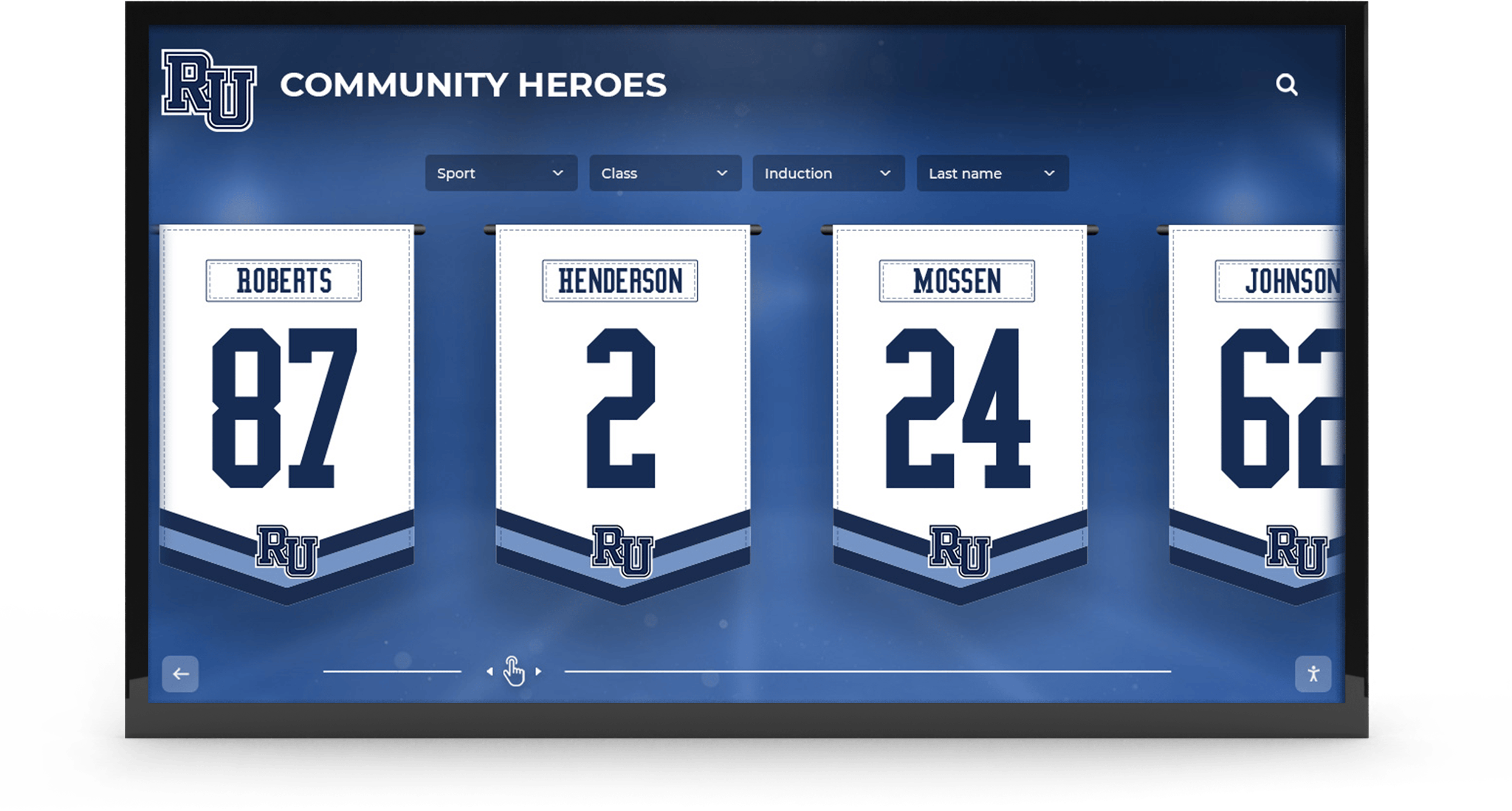
Basketball Senior Banner Ideas That Feed a Permanent Hall of Fame
Every spring, athletic departments across the country order basketball senior banners—vinyl or fabric panels printed with each senior player’s photo, number, and a handful of stats—then hang them in the gym for senior night and hand them off to families when the season ends. The banners look great for a week and then disappear into attic storage. That represents a significant missed opportunity. The information assembled for a well-designed senior banner—the headshot, the career statistics, the quote, the future plans—is precisely what builds a meaningful hall of fame profile. This guide covers what to include on basketball senior banners, how to design them for maximum visual impact, and how to treat them as the starting data package for a permanent digital class archive rather than a one-season decoration.
Read More
Team Captain Awards: How Schools Recognize Leadership Beyond the Final Season
A team captain award is one of the few school athletic honors that explicitly names leadership as the achievement being recognized—not a scoring title, not a performance statistic, but the capacity to guide, steady, and elevate the people around you. That makes it valuable in ways that most end-of-season trophies aren’t, and it also makes it harder to design well. Schools that invest in building thoughtful team captain award programs—with defined criteria, lasting profile records, and public display systems—find that those programs become reference points for athletic culture long after the recipients graduate.
Read MoreSchool History Display Ideas: Showcasing Your Legacy Across Generations
Walk into nearly any school built more than a few decades ago and you’ll find evidence of an unfinished project: photographs fading in hallway frames, championship banners straining their mounting hardware, newspaper clippings yellowing behind glass, and trophy cases filled to capacity with no clear plan for what comes next. These fragments of institutional history deserve better. A well-designed school history display transforms scattered artifacts and achievements into a cohesive narrative that current students, returning alumni, and first-time visitors can all connect with—a living record of every generation that shaped the school into what it is today.
Read More
Class President Recognition: How Schools Honor Student Government Leadership Across Generations
Walk the hallways of almost any American high school and you will find athletic banners, championship trophies, and letterwinner displays honoring the school’s most celebrated competitors. But look harder and you will notice a conspicuous gap in most institutions’ recognition infrastructure: there is rarely a formal, lasting tribute to the men and women who led their classmates from the front of a meeting room rather than from a playing field.
Read More
Athletic Team Room Design Ideas: Building a Recognition and Recruiting Space for Your Program
Walk into a team room that has been designed with intention and you can feel the difference before you read a single name on the wall. The championship banners hang at exactly the right height. The record boards are current and legible. The hall of fame wall draws your eye the moment you step through the door. Current athletes walk that hallway before every practice, and recruits linger there during campus visits — absorbing the program’s history through everything the space communicates about what it means to compete here.
Read MoreAthletic Alumni Recognition Wall Ideas: Showcasing Former Players Who Built the Program
Walk into almost any competitive high school or university athletic facility and you’ll find the same story told on the walls: plaques crowded together, photographs yellowing in frames, championship banners curling at the edges, and somewhere in the corner, a glass trophy case that hasn’t been opened since the last janitor retired. These spaces hold real history — generations of athletes who competed hard, represented their institution with pride, and often gave back to their programs for decades after graduation. They deserve better.
Read More
Memorial Field and Gym Naming: How Schools Honor Alumni and Donors Through Facility Tributes
Every school has at least one facility whose name carries weight — a gymnasium named after the coach who built the program from nothing, a football field honoring a graduate who gave back generously decades after walking the halls, an aquatic center memorializing a beloved alumna. These names aren’t just letters on a scoreboard or a plaque bolted above a door. They represent a school’s most public declaration of who it values, who shaped its identity, and who it intends to remember.
Read MoreMemorabilia Display Case Ideas: Showcasing School History, Athletic Trophies, and Donor Gifts
Schools, universities, and organizations accumulate decades of meaningful memorabilia—championship trophies documenting athletic excellence, historical artifacts telling institutional stories, and donor recognition items honoring philanthropic support. Yet many struggle with the fundamental challenge of displaying these treasures effectively: limited space in hallways and lobbies, outdated trophy cases that can’t accommodate growing collections, and static displays that fail to capture visitor attention or tell complete stories.
Read MoreRetired Jersey Numbers in High School Sports: How to Honor Legendary Athletes
Few honors in high school athletics carry the weight and permanence of jersey retirement. When a school decides no future athlete will wear a particular number, they’re making a statement that transcends seasons, championships, and record books—they’re declaring that one individual’s contribution to the program was so exceptional, so transformative, that their number deserves to stand alone forever.
Read MoreAthletic Hall of Fame Nomination Criteria: What Committees Actually Look For
Athletic halls of fame represent the highest honor an institution can bestow upon its athletes, coaches, and contributors. Yet the nomination and selection process often seems mysterious to those outside committee rooms, leaving worthy candidates overlooked simply because nominators don’t understand what evaluators actually prioritize when reviewing submissions.
Read More