Digital Hall of Fame ARIA-Level Audit for Inductee Page Headings
A digital hall of fame ARIA-level audit is a structured review confirming that every heading element on your inductee profile pages—whether a native <h1>–<h6> or a custom element carrying role="heading"—exposes the correct hierarchical level to assistive technology through the aria-level attribute, so screen reader users navigating by heading can understand the page structure without relying on visual size or weight cues. The short answer for school administrators, athletic directors, IT teams, and recognition-program owners: open each inductee profile and each category or class-year section page on the platform; use browser DevTools to inspect every element that functions as a heading; confirm that any element with role="heading" carries an explicit aria-level integer reflecting its position in the page’s heading outline; verify that native <h1>–<h6> elements are not assigned conflicting aria-level values that would misrepresent the heading level to screen readers; test heading navigation with NVDA or VoiceOver to confirm the announced hierarchy matches the intended reading order; and repeat the audit after any platform update that introduces new inductee page templates or adds dynamic section headers.
Read More
Digital Hall of Fame ARIA-Invalid Audit for Search and Nomination Errors
A digital hall of fame ARIA-invalid audit is a structured review confirming that every search query field and nomination form input on your recognition platform correctly exposes its validation-error state to assistive technology through the aria-invalid attribute—and that aria-invalid is paired with aria-errormessage so screen reader users hear both that a field is invalid and exactly what must be corrected. The short answer for school administrators, athletic directors, IT teams, and recognition-program owners: open each search form and nomination form on the platform; trigger a validation error on every field through intentional bad input or empty submission; use browser developer tools to confirm that each invalid input carries aria-invalid="true" alongside an aria-errormessage reference pointing to a visible, populated error element; verify that aria-invalid is removed or reset to "false" once the user corrects the input; and test the complete error-and-recovery flow with NVDA or VoiceOver before the next nomination period opens or search functionality is updated.
Read More
Digital Hall of Fame ARIA-Multiselectable Audit for Filter Lists
A digital hall of fame ARIA-multiselectable audit is a structured review confirming that every filter list on your recognition platform that allows visitors to select more than one sport, class year, or award category at a time carries aria-multiselectable="true" on its container element—and that each individual option inside that container carries an aria-selected value of "true" or "false" reflecting its current state. Without this attribute, a visitor using JAWS, NVDA, VoiceOver, or TalkBack can open a sport filter list, navigate through Football, Basketball, Baseball, and Volleyball options, and never hear that multiple simultaneous selections are possible. The short answer for school administrators, athletic directors, IT teams, and recognition-program owners: identify every listbox, grid, or tree component on your hall of fame platform that supports multi-item selection; inspect each container in browser DevTools to confirm aria-multiselectable="true" is present; verify that every child option carries aria-selected="true" or "false" matching its current selection state; confirm that selecting or deselecting an option updates both its own aria-selected value and any live result count without resetting other selected options; and verify the full interaction with NVDA or VoiceOver before each induction season or major platform update.
Read MoreDigital Hall of Fame ARIA-Selected Audit for Tabs and Filter Results
A digital hall of fame ARIA-selected audit is a structured review confirming that every sport-category tab, era filter button, custom filter listbox, and inductee detail panel tab on your recognition platform carries a correct aria-selected attribute—so keyboard and assistive-technology users hear which option is currently chosen. Without this attribute, a visitor navigating your hall of fame with NVDA, JAWS, VoiceOver, or TalkBack can move through a row of sport tabs—Football, Basketball, Baseball, Volleyball—and hear nothing that identifies which tab is currently active. The short answer for school administrators, athletic directors, and IT teams: identify every tab, listbox option, or selectable widget element that can be chosen; inspect each element in browser DevTools to confirm aria-selected carries the value "true" on the selected item and "false" on all others in the same set; verify the value updates dynamically when the visitor activates a different option; and confirm the announcement with NVDA or VoiceOver before each induction season.
Read More
Digital Hall of Fame ARIA-Controls Audit for Search and Detail Panels
A digital hall of fame ARIA-controls audit is a structured review confirming that every interactive control on your recognition platform—search inputs, sport-filter buttons, class-year tabs, and biography panel toggles—carries an aria-controls attribute that correctly references the ID of the region or panel it affects. Without this attribute, a visitor navigating your hall of fame with NVDA, JAWS, VoiceOver, or TalkBack can activate a search button or filter tab and hear no programmatic indication of which content region just changed, forcing them to explore the page to discover where new results appeared. The short answer for school administrators, athletic directors, and IT teams: identify every control that opens, expands, or updates a separate content region; inspect each control in browser DevTools to confirm aria-controls references a valid panel ID; verify that the referenced panel ID exists in the DOM and is applied to the correct element; and test each interaction with a screen reader to confirm that assistive technology can navigate directly from the control to its associated content.
Read More
Digital Hall of Fame ARIA-Posinset and ARIA-Setsize Audit for Virtualized Inductee Lists
A digital hall of fame aria posinset aria setsize audit is a structured review confirming that every inductee list, search result collection, sport-category roster, and class-year archive rendered through virtualization exposes accurate position and total-count information to screen readers through the aria-posinset and aria-setsize attributes. Without these attributes on virtualized list items, a visitor navigating your inductee gallery with NVDA, JAWS, VoiceOver, or TalkBack hears “item 1 of 20” when your full inductee roster contains 400 names—because only the 20 cards currently rendered in the viewport exist in the DOM. The short answer for school administrators, athletic directors, and IT teams: identify every list or grid in your recognition platform that loads items incrementally or renders only the visible portion of a large dataset, inspect each list item element in browser DevTools to confirm aria-posinset and aria-setsize carry values reflecting the full collection rather than the rendered subset, test with a screen reader to verify the announced position and count are accurate, and confirm the attributes update correctly as the user scrolls or filters.
Read More
Digital Hall of Fame Search Result Highlighting Audit: Make Name Matches Clear
A digital hall of fame search result highlighting audit is a structured review confirming that every matched term in a recognition platform’s search results—inductee names, sport categories, graduation years, award designations—is visually distinguished from surrounding context text in a way that helps visitors quickly locate the correct record, without reducing contrast, obscuring surrounding text, or introducing barriers for users who rely on assistive technology. The short answer for school administrators, athletic directors, and IT teams: search your recognition platform for a known inductee’s name, inspect the result cards that return, verify that the matched characters are wrapped in a semantically appropriate element such as <mark> or a <span> with a distinct but accessible color, confirm that the highlight meets WCAG 1.4.3 contrast requirements, and test the highlighted results with a screen reader to confirm that assistive technology users receive equivalent information.
Read MoreDigital Hall of Fame ARIA-Errormessage Audit for Search and Nomination Forms
A digital hall of fame ARIA errormessage audit is a structured review confirming that every validation error displayed by a recognition platform’s search and nomination forms is programmatically linked to its triggering control through the aria-errormessage attribute—and that the control simultaneously carries aria-invalid="true" whenever a validation error is active. The short answer for school administrators, athletic directors, and IT teams: open each form on the platform, trigger a validation error on every field, use browser developer tools to confirm that the input element carries both aria-invalid="true" and an aria-errormessage value matching the ID of the visible error element, then test the flow with a screen reader to confirm the error message is announced automatically when a user reaches the invalid field.
Read MoreDigital Hall of Fame Diacritic-Insensitive Search Audit for Inductee Names
A digital hall of fame diacritic insensitive search audit is a structured test confirming that visitors who type a name without accent marks—such as “Garcia,” “Hernandez,” or “Muller”—still find the correct inductee even when the authoritative display record stores the accented form “García,” “Hernández,” or “Müller.” The short answer for recognition program administrators: compile a list of every inductee name that contains a diacritical character, run a search for each name using both the accented and unaccented forms, record which queries return no results or the wrong results, and fix the search layer using Unicode normalization so that accent-stripped queries match accent-carrying records—without altering the name as it appears on the inductee profile.
Read More
Digital Hall of Fame Consistent Help Accessibility Audit: WCAG 2.2 Checklist for Search and Nomination Flows
A digital hall of fame consistent help accessibility audit is a structured review confirming that every contact link, chat widget, FAQ reference, and other support mechanism on your recognition platform appears in the same relative position—and in the same order among surrounding page content—across every page in the inductee search flow, the individual profile view, and the multi-step nomination form. WCAG 2.2 Success Criterion 3.2.6 (Consistent Help, Level A) requires that when help mechanisms repeat across multiple pages in a set, those mechanisms occur in the same order relative to other page content unless the user initiates a change. The short answer for recognition program administrators: audit each page type in your hall of fame platform for the presence and position of every help mechanism, compare positions across the full search-to-nomination flow, flag any page where a mechanism disappears or shifts position without a user-initiated action, and remediate by restoring the mechanism to its expected position before the next induction cycle opens.
Read More
Digital Hall of Fame ARIA-Current Audit: Make Active Navigation Clear to Screen Readers
A digital hall of fame aria-current audit is a structured review confirming that every navigation link, sport-category filter tab, class-year selector, and breadcrumb on your recognition pages uses the aria-current attribute to communicate its active state to screen readers. Without this attribute, a visitor navigating your inductee gallery with NVDA, JAWS, VoiceOver, or TalkBack receives no programmatic signal identifying which link is active, which tab is selected, or which page is currently displayed—even when those states are clearly indicated by visual styling such as color, font weight, or underline. The short answer: add aria-current="page" to the <a> element of the active navigation link on every page, add aria-current="page" or aria-current="true" to the selected tab in every sport-category or class-year filter group, verify those attributes are present with a screen reader before each major content update, and confirm the attribute updates dynamically whenever a visitor activates a new tab or filter.
Read MoreDigital Hall of Fame HTML Language Attribute Audit for Screen Readers
Screen readers select a text-to-speech engine and pronunciation dictionary based on a single HTML attribute—lang—declared on the <html> element of every page. When a school’s digital hall of fame omits that attribute or sets it incorrectly, every athlete name, induction citation, career statistic, and navigation label is read aloud using the wrong language rules: English text pronounced with French phonetics, Spanish names mispronounced using English stress patterns, or—on some assistive technology configurations—the content read in the operating system’s default voice with no language context at all. A digital hall of fame html lang attribute audit is a structured review confirming that the page-level lang value is present and correct on every page type in a recognition collection, and that individual inductee profiles or multilingual content blocks carry inline lang overrides where appropriate. The short answer: open each key page type in your browser, view its page source, confirm <html lang="en"> (or your language code) appears on line one, then check that any embedded foreign-language text—a French-Canadian athlete name formatted with accents, a Spanish dedication paragraph—carries a matching inline lang attribute on its wrapping element.
Read MoreDigital Hall of Fame Heading Hierarchy Audit for Inductee Profiles and Search Pages
School web teams that manage a digital hall of fame often spend considerable effort writing inductee bios, uploading historical photos, and organizing sport-specific archives—yet the single structural detail that most directly determines whether screen reader users can navigate all of that content efficiently is rarely audited: the heading hierarchy. A digital hall of fame heading hierarchy audit is a structured review of every H1 through H6 element across the inductee profile pages and search or directory pages in a recognition collection, confirming that levels are used in the correct sequence, that no levels are skipped without reason, that each page carries exactly one H1, and that repeated page sections such as sidebar filters, “related inductees” panels, and paginated search results use heading levels that reflect their actual position in the content structure rather than their visual size on screen. The short answer: pull up each key page type in a headings-only view, verify the outline makes sense without any visual context, fix any skipped levels or duplicate H1s, and retest in a screen reader before each major content update.
Read MoreDigital Hall of Fame Screen Reader Landmark Audit for Faster Navigation
A school’s online hall of fame or digital recognition collection may honor hundreds of inductees—but if screen reader users cannot quickly jump between the page header, primary inductee gallery, search controls, and footer without listening through every repeated navigation link, the recognition experience fails a meaningful portion of the audience before it begins. A digital hall of fame screen reader landmark audit gives athletic directors, IT teams, web administrators, and recognition-program owners a concrete process for verifying that every major page region is wrapped in the correct HTML landmark element or ARIA role, that repeated blocks are labeled distinctly, and that users of NVDA, JAWS, VoiceOver, and TalkBack can reach any section in two keystrokes rather than dozens. The short answer: map your page regions, confirm one <main> landmark, label every duplicate navigation, expose the inductee search form with role="search", and test the complete flow using actual screen reader software before each major content update.
Read MoreDigital Hall of Fame Reduced-Motion Accessibility Checklist for Animations and Video
Visitors who experience vestibular disorders, migraines, photosensitive conditions, or motion sensitivity can find autoplay animations and looping videos on recognition displays genuinely disorienting rather than welcoming. A digital hall of fame reduced motion accessibility checklist gives athletic directors, AV coordinators, IT staff, and facilities teams a concrete process for auditing every animated element—from inductee card transition effects and celebratory particle bursts to championship highlight reels—and applying prefers-reduced-motion controls and practical substitutes that make the same experience comfortable for every visitor. The short answer: inventory all animations and videos, implement CSS prefers-reduced-motion across transition and keyframe rules, configure video players to respect system-level motion preferences, provide manual pause controls, and verify the result against actual device accessibility settings.
Read MoreDigital Hall of Fame Profile Versioning Policy: Track Edits, Sources, and Approvals
A digital hall of fame profile versioning policy defines how an institution tracks changes to inductee records over time—logging who edited each profile, what sources were consulted, who approved the revision, and what the prior text said before it was changed. Without that policy, a well-intentioned correction can create confusion about which version of a statistic or biography is authoritative, leave no audit trail when a mistake is later disputed, and produce inconsistent profile quality as different staff members apply their own informal standards. A one-page versioning policy, backed by a simple revision log and a clear approval chain, prevents all three problems without requiring dedicated software or specialized IT support.
Read MoreHall of Fame Website Browser Compatibility Testing Checklist for Inductee Profiles
Intent: research. A hall of fame website browser compatibility testing checklist is the structured set of tests that confirms inductee profile pages, photo galleries, nomination forms, and navigation menus display and function correctly for every visitor regardless of which browser or device they use. The short answer: build a testing matrix from your actual visitor analytics data, test inductee profiles in Chrome, Safari, Firefox, and Edge across desktop and mobile viewports, verify that portrait grids, video embeds, and form submissions work correctly in each browser, and schedule a full re-test before each induction cycle. This checklist covers every major content type and interaction on a hall of fame website in the order most likely to surface real compatibility failures.
Read MoreHall of Fame Website Core Web Vitals Checklist: Faster Inductee Profiles and Media
Intent: research. A hall of fame website core web vitals checklist is the set of technical audits and remediations that ensure inductee profile pages, photo galleries, and recognition media meet Google’s LCP, CLS, and INP thresholds so they load fast, stay visually stable, and respond quickly on every device. The short answer: measure with PageSpeed Insights, prioritize the Largest Contentful Paint image on each profile page, set explicit image dimensions to prevent layout shift, defer off-screen media, and preload critical fonts. This checklist walks through each metric, its specific causes on recognition pages, and a prioritized fix sequence.
Read MoreHall of Fame Website Image Optimization Checklist: Faster Profiles Without Losing Detail
Intent: research. A hall of fame website image optimization checklist is the set of decisions—format, compression, alt text, filename, responsive delivery—that determines whether your inductee portraits load quickly and crisply on every device, rank well in image search, and remain accessible to all visitors. The short answer: convert color portraits to WebP with a JPEG fallback, target 100–150 KB per portrait at display resolution, write descriptive alt text for every image, name files with inductee name and context, add srcset for responsive delivery, and set explicit dimensions to prevent layout shift. This checklist walks through each step in sequence.
Read MoreHall of Fame Broken Link Audit: Keep Inductee Profiles, Media, and Sources Reachable
A hall of fame broken link audit is a scheduled review that identifies every hyperlink in your recognition program’s digital presence—inductee profile pages, embedded media, citation sources, and archive references—and confirms each one still resolves to live content. Broken links erode credibility quietly: a video tribute that returns a 404 error, a newspaper citation that now leads to a paywall redirect, or a profile that loads as a blank page all tell visitors that the program is unmaintained. Running a systematic audit once or twice a year, and acting on what you find, keeps the public record of achievement accurate and accessible to alumni, recruits, families, and the broader school community.
Read MoreHall of Fame Canonical URL Policy: Prevent Duplicate Inductee Pages and Preserve Rankings
Intent: define. A hall of fame canonical URL policy is a written governance document that designates one authoritative web address for each inductee profile and prescribes how every other URL pointing to that profile should behave—through a redirect, a canonical tag, or both. Without this policy, a school’s digital hall of fame accumulates duplicate pages every time an inductee’s name changes, a sport is renamed, a platform migrates, or a CMS generates alternate URLs from query parameters. Each duplicate page dilutes the search signal that would otherwise flow to a single authoritative profile, reducing the visibility of the school’s recognition program in the searches that matter most to alumni, recruits, and the broader community.
Read MoreHall of Fame Profile Data Dictionary Template: Standardize Names, Teams, Awards, and Media
A hall of fame profile data dictionary template is a reference document that defines every field in an inductee record: the field name, data type, accepted format, valid values, whether the field is required, and which staff role owns it. Without one, programs accumulate inconsistencies—“Class of 1994” in one record, “1994” in the next, and “Graduated 1994” in a third—that break filtering, corrupt report exports, and require manual correction every time the data moves to a new display platform. A documented data dictionary stops those errors at the source by giving nominators, committee members, and content managers a single authoritative reference before they enter a single character.
Read More
Hall of Fame Taxonomy Guide: Standardize Sports, Awards, Teams, and Eras
A hall of fame taxonomy is the controlled set of category labels—sport names, award types, team identifiers, and era definitions—that your program applies consistently to every inductee record. Without one, a recognition program that spans forty years can accumulate dozens of conflicting labels for the same thing: “Boys Basketball,” “Men’s Basketball,” “Basketball (M),” and “BKB-Boys” all describing the same sport in the same database. Visitors can’t filter by sport, administrators can’t pull clean reports, and migrating to a new display platform requires a manual clean-up pass through hundreds of entries before the data is usable. Building a documented taxonomy once—and maintaining it—costs far less than correcting inconsistency across a decade of inductions.
Read MoreDigital Hall of Fame Content Licensing Register: Track Photos, Video, and Usage Rights
A digital hall of fame content licensing register is a master document—typically a spreadsheet or database table—that records every photo, video clip, biography, logo, and document asset used in a recognition display, along with who owns it, what uses are permitted, what attribution is required, and when any license expires. Without one, schools routinely publish photographs whose copyright belongs to a commercial photographer, display video clips under a tacit consent that was never put in writing, or use a sponsor’s logo well past the agreement that authorized it. When those situations surface—and they eventually do—the program scrambles to establish what was agreed, often without records to consult. A written digital hall of fame content licensing register converts that guesswork into a manageable, auditable workflow that protects the school and respects everyone who contributed content to the display.
Read MoreHall of Fame Correction Notice Policy: Fix Profiles Transparently and Preserve Trust
Errors in hall of fame profiles are discovered more often than most programs expect—a graduation year is off by one digit, a record is attributed to the wrong season, a middle name is misspelled on a plaque that has been on display for a decade. The impulse is to fix the mistake quietly and move on. A written hall of fame correction notice policy explains why that impulse, however well-meaning, can damage alumni trust more than the error itself did—and it establishes a transparent, consistent process for acknowledging corrections so that inductees, families, donors, and the broader school community know that the recognition record is actively maintained and honestly governed. A policy built around transparency does not draw attention to every trivial typo, but it ensures that material corrections to the record are handled with the same care the program gives to induction itself.
Read MoreDigital Hall of Fame User Access Review Checklist: Audit Roles and Remove Stale Accounts
Intent: decide. A digital hall of fame user access review checklist is the structured process school administrators, athletic directors, and hall-of-fame committees use to confirm that only current, authorized staff can modify inductee biographies, edit performance records, upload photographs, or publish content on a cloud-based recognition platform. Without a quarterly review, former employees often retain active login credentials long after they leave, junior staff hold permissions far beyond what their role requires, and no one can answer a basic audit question—who changed that biography, and were they authorized to do so? That exposure is manageable with a simple, repeatable process.
Read MoreHall of Fame Obituary Update Policy: How to Maintain Inductee Profiles Respectfully
When a hall of fame inductee passes away, their profile on a school display or digital recognition platform becomes something more than a biographical record—it becomes part of a living memorial. A written hall of fame obituary update policy tells every staff member exactly what changes, what does not, who approves each update, and how the original recognition record is preserved alongside any new information. Without this policy, well-meaning staff make inconsistent edits, families receive no notification before a profile changes, and the historical record that made the recognition meaningful becomes muddled. A clear policy protects the integrity of the inductee’s recognition and the trust of the family members who carry that legacy forward.
Read More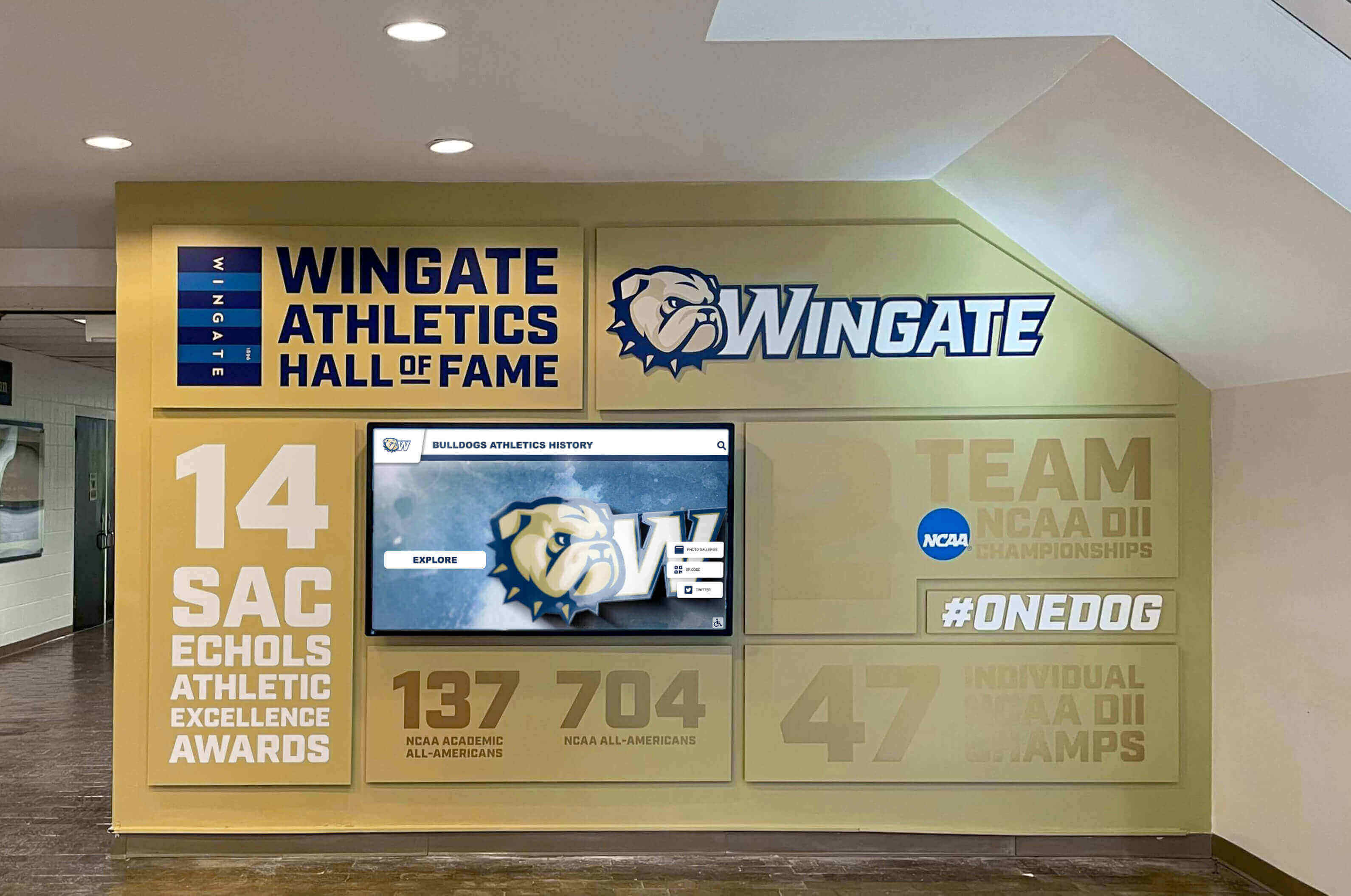
Hall of Fame Annual Content Review Checklist: Audit Profiles, Records, Links, and Rights
A hall of fame annual content review checklist is a structured set of tasks that athletic directors, archives staff, and recognition-program administrators complete once a year to confirm that inductee biographies, athletic records, photographs, external links, and usage rights on their recognition displays are accurate, current, and properly permissioned. Running this review on a scheduled basis—rather than waiting for complaints—keeps the hall of fame credible, protects the institution legally, and respects the real people whose histories are displayed.
Read More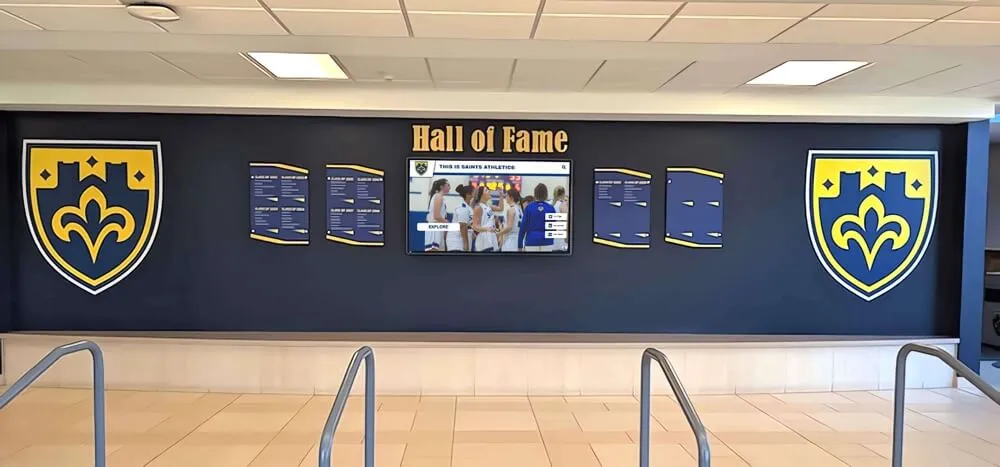
Athletic History Takedown Request Policy: A Fair Process for Photos, Bios, and Records
When a school publishes athletic history on a hallway display, a digital wall of fame, a touchscreen kiosk, or a public website, it invites the community to celebrate the people and achievements that define the program. Most of that content stays published for decades without issue. But occasionally, a former athlete, a family member, or a coach submits a request to remove, correct, or restrict something—a photo taken before a name change, biographical information that became inaccurate, a performance record linked to a difficult personal period, or an image the subject never consented to display publicly. Without a written athletic history takedown request policy, schools handle each of these situations differently, inconsistently, and sometimes in ways that create legal exposure or damage the trust of the very people the recognition program is meant to honor.
Read MoreHall of Fame Volunteer Agreement: Roles, Access, Confidentiality, and Artifact Care
School hall-of-fame programs depend on volunteers. Committee members review nominations and cast votes. Archives staff and booster-club representatives handle photographs, trophies, and memorabilia. Facilities volunteers maintain display cases and support induction ceremonies. Digital display coordinators keep touchscreen kiosks and recognition walls updated between induction cycles. Each of these roles creates real obligations—and real risks—if roles, access, and confidentiality expectations are left undefined.
Read More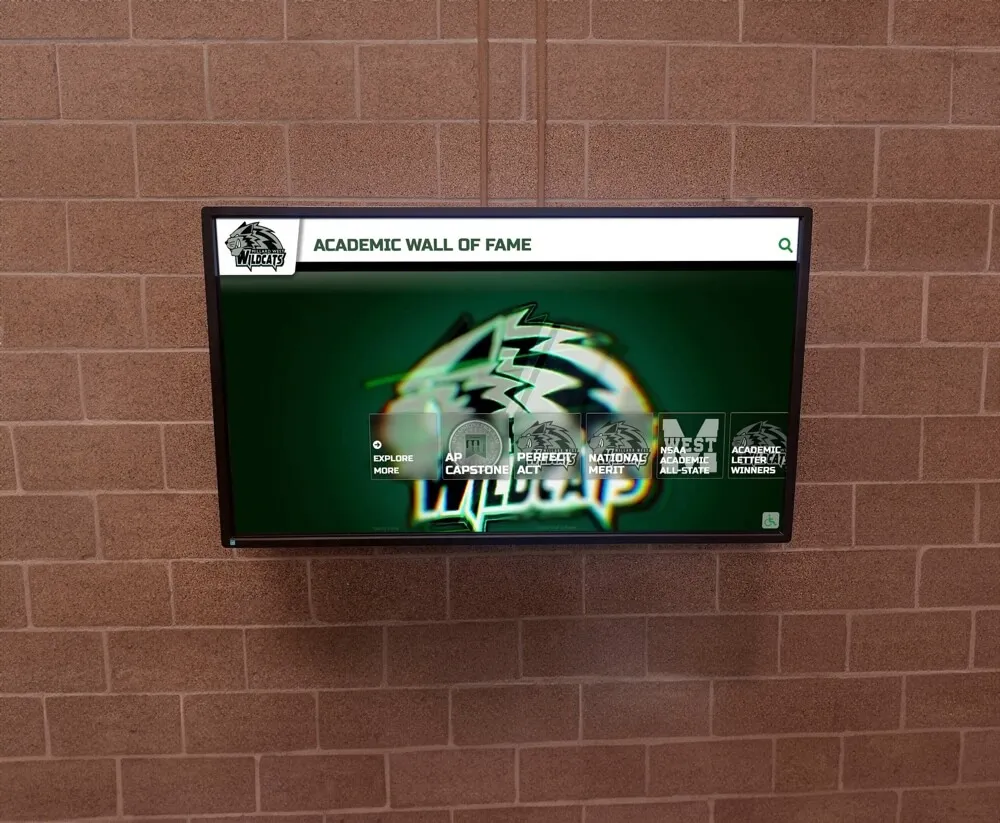
Presidential Academic Fitness Award: A School Administrator's Guide to Eligibility, Selection, and Public Recognition
The Presidential Academic Fitness Award represents one of the highest honors elementary and middle school students can receive for academic achievement, recognizing students who demonstrate exceptional performance across multiple subjects or show remarkable improvement throughout the school year. Yet many school administrators struggle with understanding the complete eligibility requirements, navigating the selection process, and creating public recognition that gives these prestigious federal honors the visibility they deserve.
Read More